Wicca, Witchcraft or Paganism? c. 2013

Wicca, Witchcraft or Paganism?

What’s the Difference, Anyway?

By , About.com

If you’re reading this page, chances are you’re either a Wiccan or Pagan, or you’re someone who’s interested in learning more about the modern Pagan movement. You may be a parent who’s curious about what your child is reading, or you might be someone who is unsatisfied with the spiritual path you’re on right now. Perhaps you’re seeking something more than what you’ve had in the past. You might be someone who’s practiced Wicca or Paganism for years, and who just wants to learn more.

For many people, the embracing of an earth-based spirituality is a feeling of “coming home”. Often, people say that when they first discovered Wicca, they felt like they finally fit in. For others, it’s a journey TO something new, rather than running away from something else.

Paganism is an Umbrella Term

Please bear in mind that there are dozens of different traditions that fall under the umbrella title of “Paganism”. While one group may have a certain practice, not everyone will follow the same criteria. Statements made on this site referring to Wiccans and Pagans generally refer to MOST Wiccans and Pagans, with the acknowledgement that not all practices are identical.

Not All Pagans are Wiccans

There are many Witches who are not Wiccans. Some are Pagans, but some consider themselves something else entirely.

Just to make sure everyone’s on the same page, let’s clear up one thing right off the bat: not all Pagans are Wiccans. The term “Pagan” (derived from the Latin paganus, which translates roughly to “hick from the sticks”) was originally used to describe people who lived in rural areas. As time progressed and Christianity spread, those same country folk were often the last holdouts clinging to their old religions. Thus, “Pagan” came to mean people who didn’t worship the god of Abraham.

In the 1950s, Gerald Gardner brought Wicca to the public, and many contemporary Pagans embraced the practice. Although Wicca itself was founded by Gardner, he based it upon old traditions. However, a lot of Witches and Pagans were perfectly happy to continue practicing their own spiritual path without converting to Wicca.

Therefore, “Pagan” is an umbrella term that includes many different spiritual belief systems – Wicca is just one of many.

Think of it this way:

Christian >  Lutheran or Methodist or Jehovah’s Witness

Pagan >  Wiccan or Asatru or Dianic or Eclectic Witchcraft

As if that wasn’t confusing enough, not all people who practice witchcraft are Wiccans, or even Pagans. There are a few witches who embrace the Christian god as well as a Wiccan goddess – the Christian Witch movement is alive and well! There are also people out there who practice Jewish mysticism, or “Jewitchery”, and atheist witches who practice magic but do not follow a deity.

What About Magic?

There are a number of people who consider themselves Witches, but who are not necessarily Wiccan or even Pagan. Typically, these are people who use the term “eclectic Witch” to apply to themselves. In many cases, Witchcraft is seen as a skill set in addition to or instead of a religious. A Witch may practice magic in a manner completely separate from their spirituality; in other words, one does not have to interact with the Divine to be a Witch.

One View on – What Does It Mean To Be A Witch?

What Does It Actually Mean To Be A Witch?


By: Laurie Rihiimaki | Feb. 11, 2019

The term, ‘witch’ gets thrown around in everyday life soaked with a long history of negative connotation.‘Witch’ derives from the Old English noun, ‘wicca’ meaning a male witch and ‘wice’ meaning a female witch or sorceress. However, this negative stigma has recently been viewed as outdated and tired. So, what does it mean to be a witch?

Definition of A Witch

In general, witches today can be defined in three ways: someone who actively practices magical rituals or spells, someone who has a spiritual connection such as a psychic medium or a tarot reader, or someone who worships the Pagan gods.

The reality of what it means to be a witch today carries many traditions of the Pagan religion; something which was previously thought to be tied to the devil or satanic rituals. Modern day witchcraft often includes the lighting of candles, meditation, yoga, incense, the smudging of sage, crystals, dream analysis, and other rituals connected to Pagan roots.

However, witchcraft is simply about using the power of the universe and the mind to attract wants and desires. It’s about being in tune with Earth’s natural resources and using them to mystically quench a spiritual thirst.

How to Spot A Witch

Spotting a witch today compared to the 1600s is an entirely different puzzle. Nowadays, it’s rather easy to determine who’s a witch because they are generally proud of their mystical practice. We now know you can’t simply label someone a witch based on their physical appearance or outspokenness.

But, in the late-1500s to mid-1600s in Eastern Europe and early colonial America, witches were named purely based on societal suspicion. For example, if a woman was outspoken, she was a witch. If she owned land or had a great deal of assets, she was a witch. If a woman was widowed or a spinster, she was considered out of the ordinary, therefore, she was deemed a witch.

After the label ‘witch’ was plastered on a woman in the community, there were many ways to theoretically prove her connection to the feared and mysterious craft. One of these tests included the bizarre witch cake; a rye flour cake baked with the urine of the accused, which was then fed to a local dog that the community observed to determine if it showed the same behaviors as the ‘witch.’ People believed the urine would transmit satanic juices to the dog because of its supposed association with the devil.

There were many other devised strategies to determine the presence of a witch in the community including:

  • Weighing the accused against a stack of bibles
  • Asking them to recite the Lord’s prayer
  • Counting the number of pets they had
  • Counting the number of marriages they had
  • Asking them if they had dreams that included Native Americans or their culture
  • Observing if they talk to themselves


These tests and many others determined a community member’s right to continuing living.

The accused was also searched for the physical mark of a witch, including birthmarks, scars, or extra nipples. These mysterious physical marks, which we now discern as common biological features, were considered signs of the devil’s presence. The accused were pricked with knives on these marks; if the mark did not bleed, they were deemed a witch.

The Destigmatization of Witches

Witchcraft is not as highly feared as it once was. There are no widespread witch hunts or constant fear associated with the neighborhood spinsters and widows. The destigmatization of witches is seen more and more in our everyday lives as popular stores sell tarot cards and crystals. While smudging with sage and owning a spell book is a trending lifestyle add-on visible all over Instagram.

While this destigmatization of witches may seem trendy on the surface, as it’s popularly marketed, the spread of witch-awareness is closely related to a greater cause: the women’s empowerment movement rapidly spreading across the world.

Today, people recognize the need for a change in energy relating to the female’s place in society, but often women are feared for being strong-willed and outspoken. Then, like now, powerful women or those with important titles often face greater challenges than their male counterparts. In the 1600s they were burned at the stake or stoned to death; today, they can face belittlement of their accomplishments, their morality questioned, or reputations intentionally tarnished.

With that being said, one could argue that witchcraft is a necessary addition to modern society as it illuminates the daily struggles of women on various levels. With that feminist insight in mind, it’s vital to remember that witchcraft is not just one single thing across the board. It’s certainly not just the performance of spell casting or the donning of crystals. It’s an understanding of one’s own spirituality. And, at this period in time, which is faced with drastically polarizing viewpoints, it is essential to have beliefs that we can mold to our own specific needs.

From gaia.com

Can you be a Christian Witch? (1 Persons Opinion)

The short answer is yes…

The long answer is: No, not really, depending on which “brand” of Christianity you subscribe to.

The other disclaimer I would like to give is that there is honestly so much to this topic. This article is likely to barely scratch the surface, which is one of the reasons I have put off writing about it. The other reason is that I am honestly afraid of being targeted and attacked by Christians & the Christian-Witch community… because they don’t exactly have a good track record of being understanding, or civil.

So if I am burned at the stake for writing this, we’ll know for sure that nothing’s changed in the last few hundred years…

A brief history of Christianity & Witchcraft: … 

Tension in the communities: …

Inculturation: …

Personal Practice vs Organized Religion: …

Before We Get Into The Spells, We Are Going To Talk About Getting Rid of the Magickal Leftover from our Workings c. 2018

The First Way to Rid Your Home of Magickal Residue

Reaving


There are lots of unwanted and random energies and entities floating around one’s environment. The following techniques which we are getting ready to discuss are required understandings for any Witch. You will need to keep you own environment clear of these unwanted wraiths, and you may also, over time, be called on by others to clear these things from their houses or their lives.


Nothing ever goes away, you must understand. Things that are made of matter are not made only of matter, and can just as easily be energetic. Matter does not imply intelligence, soul does (and that’s a rather ineffable concept). So why is it considered that intelligence inhabits only things of a material nature ( like biological species)?


Entities can be either material or non-material. They can be left over from extreme emotional discharges. They can be other and therefore, not of a recognizable origin.


Reaving – Clearing a Place

To psychically clear unwanted entities is also called Reaving. Banishing often accompanies Reaving, but Reaving can also be performed to tranquilize a house or an environment that has been cluttered by a previous occupants.

You will require a container of consecrated water, your athame, incense, and censer, a candle for each room, and a vacuum cleaner. It’s often preferable to work with another person, but not strictly necessary. You are better to get rid of any occupants of the property. You are to work privately whenever possible. The energies of Cowans can be unpredictable.

Every psychic knows that accumulated psychic grunge is heavier than air and will fall to the floor (and sometimes stick to windows). So the first thing that you should do is vacuum the floors with intent. A vacuum cleaner is one’s contemporary besom (broom stick), and much quicker than the manual tool; There’s no point having the house occupants do it, it just never feels as clean. Then you should set up a candle in each room, light it, and close off whatever doors there are. Then get the charcoal burning, and then take a shower with intent of purificaton.

Each room, from one end of the house to the other, is to be lightly encircled with your dagger ( these encirclements are meant to be embracing rather than encapsulating), encircled with the smoke of the incense, and encircled with the consecrated water. With each action you perform, you will raise aloft each implement to the four directions, calling on their powers of protection and harmony. As you exit each room, you will extinguish the candle with your fingers ( don’t blow it out, pinch it or snuff it out with a candle snuffer), and leave the door open.

When you are done, you are to pack up all your things and leave without entering into conversation with anyone.

Part 2 – Banishng (Getting Rid Of A Thing)

Let’s Talk Witch – Sigils and Symbols Used In Magick c. 2014

Let’s Talk Witch – Sigils and Symbols Used In Magick

Sigils, symbols and names are often carved into candles to add to the intent, power and purpose of the spell.

To draw something to you carve your symbol or sigil into the candle by starting from the bottom and make your sigil ‘grow’ moving it upwards. To banish something start your carving from the top of the candle moving downwards.

If you are drawing letters you can stack them, by drawing each letter one over the top of another. Again if you are drawing something to you start to carve at the bottom of the candle and if you are banishing something start at the top.

The spiral method means you start your carving at the bottom of the candle and move to the right, spiralling the letters of your carving upwards to bring something towards you, or start at the top and spiral downwards to banish something.

For a straightforward carving just draw your design in the middle of the candle, it could be a heart for a love spell or a pound/ dollar sign to draw money.

To reverse a spell or when banishing negativity, you could try writing a word backwards on the candle.

If you don’t want anyone to see what you have carved into the candle use a needle as this makes a very fine line and even you probably won’t be able to make out the end result, but the important thing is that spirit will.

Another way of hiding what you are doing is by carving your intent on the base of the candle so that no one can see it.

Source:

Pagan Portals – Hoodoo: Folk Magic
Patterson, Rachel

Crystals for Empaths

Key Features Needed To Make A Ritual Work c. 2014

WOTC Extra  – Key Features Needed To Make A Ritual Work

Wiccan rituals fit together a variety of tried-and-true magickal methods to form a congruous whole, rather like a spiritual jigsaw puzzle. Dancing around a ritual fire, singing, chanting, meditating, communicating with deities, casting spells, crafting charms, making wishes, pouring libations, asperging the participants or the sacred space — every part of a ritual has purpose and meaning in relation to the whole.

In Wiccan rituals, great care is taken to make sure there are no meaningless words or actions. A ritual without meaning becomes a liturgy to which the participants have no connection, and therefore cannot effect magick.

Not every ritual you create or attend will contain all of the following elements. However, any of these features applied in meaningful combinations will help generate similarly meaningful results.

Location

Where a ritual transpires has a tremendous effect on the participants and the resulting magick. Many witches enjoy enacting rituals outdoors. This allows participants to connect with nature and to recognize their place in the universe. If you’re a solitary witch, you have more options than a group of thirty people might. If you live in a heavily populated city, you may not have as many sites to choose from as rural witches do.

Accept your limitations and plan with the goals of the ritual in mind. Make sure that your space, whether indoors or outside, can comfortably hold all the people participating in the ritual and allow for the process to take place. If you’re going to do a spiral dance, you need a lot of room. Sitting and meditating, by comparison, requires far less space.

Ambiance

The right environment for your ritual is essential. Ideally, the place where you perform ritual should be a sacred space dedicated to this purpose. You don’t want anything to distract, interrupt, or otherwise take you away from the ritual at an important juncture — it should go without saying that ritual space is a cell-phone-free zone. Set the right mood by using appropriate decorations, aromatics, altar configuration, and so on. All of these components should reflect the ritual’s purpose.

Seasonal rituals usually include decorative and symbolic touches that reflect the cycle being commemorated. Fresh blossoms might grace an Ostara ritual; evergreen boughs compliment a Yule celebration. Well-chosen music, incense, and thematic items can make a big difference in the ambiance of a ritual. These touches affect your senses, which in turn influence both the conscious and subconscious mind.

Personal Preparation

Everyone in attendance should be in the right frame of mind, for their combined thoughts and emotions generate the ritual’s energy. When you participate in a ritual, you set aside daily concerns and mundane thoughts to focus on the goal of the ritual.

Before beginning a ceremony, many witches take ritual baths to cleanse themselves in body and mind. Salt is usually added to the bathwater (symbolizing purification) and sometimes essential oils. Ideally, you should bathe in a stream, lake, or the ocean; however, most ritual baths take place in an ordinary indoor tub.

Witches gather in circles to demonstrate visually and spatially each participant’s equal responsibility and relevance in the ritual. Everyone who chooses to participate should feel wholly comfortable with the ritual and its components. They should understand the ritual’s significance, its goals, and the steps involved, and be ready to contribute mentally and physically to the ritual’s purpose.

For the good of all, anyone who cannot fulfill these conditions is better off not participating. One person’s lower energies or distractions become a weak link in the circle of the power of creation and the direction of magickal energy.

Tools and Components

Do you need a complete altar setup? Do you want to wear costumes? What about a special altar cloth? A ritual might require any of the following tools:

Asperger

Athame

Broom

Candles

Cauldron

Chalice

Circumference-marking material (such as chalk)

Crystals or stones

Drum or other musical instruments

Essential oils

Feather or fan

Foods or beverages

Incense

Incense burner

Masks (or other props)

Objects representing the four elements

Offerings

Pentagram

Plants or flowers

Salt

Smudge wand

Statuary

Sword

Wand

Everything that will be used in the ritual should be cleansed in advance. In addition, each ritual object should be charged for its task in the ritual. (Refer to the cleansing and charging methods described in Chapter 13.) Bring all the items you’ll need for the ritual into the area where you’ll be working before you cast a circle.

Progression

A ritual follows a logical progression, like a play. The ritual’s progression creates the pattern — the actions and words that become tradition.

Each ritual should have a defined beginning, such as creating sacred space. The beginning of a ritual sets the tone for everything to follow. In particular, it transports the participants to that place between the worlds and unifies their hearts and spirits, directing them toward the ritual’s goal. A typical beginning in a group setting might include breathing in unison, holding hands, and calling the Watchtowers. Practitioners of solitary rituals might take a moment for prayer or meditation, followed by invoking the circle.

After the ritual space reaches this juncture, what happens varies dramatically, depending on the ritual and its goals. As mentioned previously, this middle portion might involve weaving spells, dancing, singing, drumming, meditations, visualization, divination, enactments, and so on. Whatever takes place should be congruent with the beginning of the ritual.

As is the case with spellcraft, the more sensual aspects you include, the more energy a ritual is likely to raise. As participants work their way through the ritual, everything perceived through their senses helps them maintain focus and direct energy. When the members of the circle are raising energy, drumming might get faster or chanting might grow louder, for example. Each cue communicates the goals of the ritual to the individual’s awareness and to the Divine, and therefore nourishes the magick.

“I think the highest purpose of ritual or magickal work is to seek our gods, to commune with the cosmic ‘mirror’ and the spirits of nature in order to learn more of the divinity within ourselves and reach evermore toward personal growth in its highest expression.”

— Maria Kay Simms, A Time for Magick

Human beings like closure; solid endings also bring the participants’ attention back to mundane matters. A ritual without a defined ending is like omitting the last chapter in a book; it leaves both the participants and the energy hanging. It’s also important to thank and release the Watchtowers who have been present during the ritual. Furthermore, participants need this time to gear down a bit (or ground out, as witches say). End the ritual by deconstructing the circle, saying a closing prayer, or stating a parting wish. Some circles end with a chant:

The circle is open, but unbroken May the peace of the Goddess be forever in your heart. Merry meet and merry part And merry meet again.

Author:
Sky Alexander
netplaces>>>>>Wicca and Witchcraft
Enhanced by Zemanta

Let’s Talk Witch – Warnings and Cautions For The New Wiccan or Witch c. 2014


Let’s Talk Witch – Warnings & Cautions For The New Wiccan or Witch

If you’ve looked at this site at all, you’ve seen the wonderful things that happen when you begin following a Wiccan path. I’ve been asked to discuss the not-so-nice things that can happen. I’m not trying to scare anyone off, just give you enough information so you can make an informed decision.

The Shadows are out there:

They exist, in the invisible world that parallels our own, living creatures. Unlike creatures from our world, they lack physical form, and feed on energy instead of matter. They are as varied as the animal life on our world. They range in size (power) from the equivalent of insects and rodents to the equivalent of magically trained humans, and beyond to the Great Old Ones. (My land is inhabited by one of these-it gives the psychic impression of a mountain with legs. It is not unfriendly, but an elephant is not unfriendly toward ants either. I stay out of our woods when it is about.) I mentioned that these creatures feed on energy. Most are content to graze on the random energy fields that leak from humans and other creatures in our world. Others, however, are a little more sinister. These, the ones you have to worry about, I call the Shadows.

Shadows come in three basic varieties. First are the little ones that feed off the energy in negative emotions. If you are emitting strong negativity, they will be drawn to you like flies to rotten meat. If you aren’t magically protected, they will happily latch onto your energy field (aura) and snack on it. They are usually not much more troublesome than leeches or mosquitoes; however, a thousand leeches could weaken a person severely.

Next come the more dangerous variety, more like rats or vultures than mosquitoes. These are attracted both by negative emotions and the energy of magical workings. They are stronger, and can push past weak or flawed defenses to get to you. And they are much harder to peel loose once they have their teeth into you.

Last are the intelligent variety. Their favorite meal is human life energy, the ‘heart-fire’ that burns in each of us. They are relatively rare even in their own realm, but they exist. The terms ‘Imp’ , ‘Evil Spirit’ and ‘Demon’ are fairly accurate. They are very strong. The more intelligent ones are capable of working their own Magic to breach your defenses. The most intelligent variety , being as lazy as humans, prefer to talk you into dropping your defenses and linking your energy field to theirs. (“Open yourself to me, and I will grant you power beyond your wildest dreams.” Yeah, right.) They also are capable (if someone is helpful enough to open a doorway for them) of entering our world. Once here, if they can get past all your defenses unless you are very strong at warding. They can enter your body and feast at will, even asserting a degree of control over you. Yes, this is exactly like the old stories of Demon possession.

You – yes, you can be a Vampire:

There exist in this world evil creatures. They are highly intelligent, capable of working magic, and extremely devious. They are capable of not only psychic magical attacks, but physical ones as well. As a species, they tend to be amoral, murderous animals. I call them ‘humans’. Humans are also capable of ‘feeding’ off the energies of other humans- Herne (owner of this website) calls them “Psychic Vampires”. They do this to gain more magical power, to control others, or to replace the energies they are losing by dealing with the Shadows. Some humans can even do this while traveling astrally. So that Evil Spirit that tried to get into your last circle may not have been from the other side; it could have been your next-door neighbor.

Oops! Did I just do that?

Magic is an art form. Despite the best efforts of Ritual Magicians and Technopagans, it remains as unpredictable and powerful as the weather unless you are highly skilled and focused. Scientists studying weather prediction in the 1970’s discovered something amazing. Weather, they found, is so unstable as to be impossible to predict more than a day or two in advance. In fact, computer models suggested something they called the Butterfly Theory. It seems that the air disturbed by a butterfly taking off from a cactus in Mexico, if it happened at the right time and place, could in theory cause devastating storms and tornadoes in the U.S. Midwest. Magic is very similar. Each action we take, magical or mundane, has consequences that spread out from it like the ripples in a pond.

They spread out, touching everything- and reflect back to converge on the source. Be very sure, then, before you work magic, exactly what the consequences may be. Ask yourself, “If this spell backfires on me, and affects me instead of the intended target, can I live with the result?” Thus, I tend to use magic “only in direst need, and then must the cause be just” (author unknown).

Some Wiccans counsel about how rain on your fields could cause drought elsewhere. This might be true, if you are trying with your own personal power to ‘squeeze’ the rain clouds as they pass over. But asking the Lady and Lord for the blessing of rain for everybody’s crops is a different thing entirely. Selfish magic has negative consequences: Loving, giving magic only positive ones. For Selfishness is the true root of all evil. “I want it! Destroy the world, let Chaos take the universe, as long as I get what I want!” Be careful of what you ask, you just may get it…

Power corrupts:

So, you’ve studied hard, learned all about Wiccan magic, and now you find you can really do things. All the power of the Elements is yours to command. Love, money, power, respect- all these are yours. You are special. You are powerful. You are a God! Now, you must convince others to worship you, to lend you their energy so that your power can grow. But that’s OK, because you are a loving God, and you want only what’s best for your worshipers. And you know what’s best for them, for you know all, and see all. For you alone are God of this world you have created.

Can’t happen? Do the names Jim Jones, Sun Myung Moon or David Koresh ring a bell? It is important to remember that the gift of magical power is just that- a gift from the Lady and Lord. It must never be abused. And glorifying yourself because of something lent to you is like showing up at your class reunion in a borrowed suit and a rented Jaguar. This reason and this reason alone is why you will not find the Council of this site posting or trading spells and rituals. We don’t hand out loaded guns here.

Basic Principles and Concepts of Wicca c. 2014

Basic Principles and Concepts of Wicca

By , About.com

Introduction:

There’s an old saying that if you ask any ten Wiccans about their religion, you’ll get at least fifteen different answers. That’s not far from the truth, because with nearly half a million Americans practicing Wicca today, there are dozens — perhaps even hundreds — of different Wiccan groups out there. There is no one governing body over Wicca, nor is there a “Bible” that lays down a universal set of guidelines. While specifics vary from one tradition to the next, there are actually a few ideals and beliefs common to nearly all modern Wiccan groups.

Do keep in mind that this article is primarily focused on Wiccan traditions, rather than on the principles of non-Wiccan Pagan belief systems. Not all Pagans are Wiccans, and not all Pagan traditions have the same set of principles as the core beliefs of modern Wicca.

Origins of Wicca:

Wicca as a religion was introduced by Gerald Gardner in the 1950s. Gardner’s tradition was oathbound, initiatory, and secret. However, after a few years splinter groups began forming, and new traditions were formed. Today, many Wiccan groups owe their basic foundation to the principles laid out by Gardner. Wicca is not an ancient religion, but Gardner did incorporate some old esoteric knowledge into his original tradition, including Eastern mysticism, Kabballah, and British legend.

Who Is a Wiccan, and How Do You Find Them?:

Wiccans come from all walks of life. They are doctors and nurses, teachers and soccer moms, writers and firefighters, waitresses and computer programmers. In other words, anyone can be Wiccan, and people become Wiccan for many reasons. In fact, there are nearly half a million Wiccans in the United States today. As to where to find them, that might take a bit of digging — as a mystery religion that doesn’t proselytize or actively recruit, it can sometimes be difficult to find a group in your area. Never fear, though — the Wiccans are out there, and if you ask around enough, you’ll bump into one eventually.

Calling Upon the Divine:

Wicca acknowledges the polarity of the Divine, which means that both the male and female deities are often honored. A Wiccan may honor simply a non-specific god and goddess, or they may choose to worship specific deities of their tradition, whether it be Isis and Osiris, Cerridwen and Herne, or Apollo and Athena. In Gardnerian Wicca, the true names of the gods are revealed only to initiated members, and are kept secret from anyone outside the tradition.

Initiation and Degree Systems:

In most Wiccan covens, there is some form of initiation and a degree system. Initiation is a symbolic rebirth, in which the initiant dedicates themselves to the gods of their tradition. Typically, only an individual who has attained the rank of Third Degree dedicant may act as a High Priest or High Priestess. Study is required before an individual may advance to the next degree level, and often this is the traditional “year and a day” period.

Someone who is not a member of a coven or formal group may choose to perform a self-dedication ritual to pledge themselves to the gods of their path.

Magic Happens:

The belief in and use of magic and spellwork is nearly universal within Wicca. This is because for most Wiccans, there’s nothing supernatural about magic at all — it’s the harnessing and redirection of natural energy to effect change in the world around us. In Wicca, magic is simply another skill set or tool. Most Wiccans do use specific tools in spellcrafting, such as an athame, wand, herbs, crystals, and candles. Magical workings are often performed within a sacred circle. The use of magic is not limited only to the priesthood — anyone can craft and perform a spell with a little bit of practice.

The Spirit World is Out There:

Because the concept of an afterlife of some sort is typical in most branches of Wicca, there is a general willingness to accept interaction with the spirit world. Seances and contact with the unknown are not uncommon among Wiccans, although not all Wiccans actively seek communication with the dead. Divination such as tarot, runes, and astrology are often used as well.

What Wicca Isn’t:

Wicca does not embrace the concepts of sin, heaven or hell, the evils of sex or nudity, confession, Satanism, animal sacrifice, or the inferiority of women. Wicca is not a fashion statement, and you do not have to dress a certain way to be a “real Wiccan.”

Basic Beliefs of Wicca:

While not exclusive to every single tradition, the following are some of the core tenets found in most Wiccan systems:

  • The Divine is present in nature, and so nature should be honored and respected. Everything from animals and plants to trees and rocks are elements of the sacred. You’ll find that many practicing Wiccans are passionate about the environment.
  • The idea of karma and an afterlife is a valid one. What we do in this lifetime will be revisited upon us in the next. Part of this idea of a cosmic payback system is echoed in the Law of Threefold Return.
  • Our ancestors should be spoken of with honor. Because it’s not considered out of the ordinary to commune with the spirit world, many Wiccans feel that their ancestors are watching over them at all times.
  • The Divine has polarity — both male and female. In most paths of Wicca, both a god and goddess are honored.
  • The Divine is present in all of us. We are all sacred beings, and interaction with the gods is not limited just to the priesthood or a select group of individuals.
  • Holidays are based on the turning of the earth and the cycle of the seasons. In Wicca, eight major Sabbats are celebrated, as well as monthly Esbats.
  • Everyone is responsible for their own actions. Personal responsiblity is the key. Whether magical or mundane, one must be willing to accept the consquences — either good or bad — of their behaviour.
  • Harm none, or something like it. While there are a few different interpretation of what actually constitutes harm, most Wiccans follow the concept that no harm should intentionally be done to another individual.
  • Respect the beliefs of others. There’s no Recruiting Club in Wicca, and the Wiccans are not out to preach at you, convert you, or prosetylize. Wiccan groups recognize that each individual must find their spiritual path on their own, without coercion. While a Wiccan may honor different gods than you do, they will always respect your right to believe differently.


The Various Paths of Witchcraft: Celtic Witchcraft

Celtic Witchcraft


The History of Celtic Magic

Celtic witchcraft has as its basis a strong sense of spirituality and a love of the earth. Central to this love are the Goddesses and Gids, who play a strong role in Celtic worship. The Celtric religion recognises two main deities; the Earth Mother Goddess and the Horned God. But Celtic Wiccans also worship many othre minor deities who each represent specific qualities important to Celtic individuals. Celtic worshippers celebrate the same Sabbaths, perform rituals and magic, and have a strong faith in their spirituality, just like any member of the Craft. The main differences between Celtic witchcraft and other forms of the Craft is that with Celts, magic is everywhere. Magic is woven into their jewellery, their tattoos and all their artwork and everyday items such asclothing and cutlery.

The Druids are the religious leaders of the Celtic people,the wise and magical priestd and priestesses whose special blend of wisdom and magic provided a powerful role model for all the Celtic people. The Druidic priesthood was orginally all-female, which male initiates only becoming accepted after many years.

According to Laurie Cabot, Druidesses were divided into three levels, or classes: the highest class were celibate and lived in convents, and were eventually assimilated into Christianity as nuns. The other two levels could be married and lived either with their husbands, or in the temples. With the onset of Christianity these wise women were called witches.

Spirituality is of primary import to Celtis, and their devotion to the earth, their goddesses and gods and the effeort which they put into their worship is proof of their highly spiritual nature. Although the names of the deities worshipped and the titles of the SAbbats may be different to other Pagan practices, despite the regional dialects which occur in the Celtic rituals, there are strong similarities between Celtic witchcraft and Wicca practiced elsewhere on the globe.

Faerie Magic

Despite the interest in the Celts, there is a great deal of confusion as to who the Celtic people actually were, and where they came from. DJ Conway in her book Celtic Magic explains that the Celts were not only inhabitants of Wales Ireland and Scotland, as is commonly thought, but resided in much of Western Europe. They were a strongly spiritual, artistic and creative people, with a distinctive artwork, orginal alphabet (the Ogham) and a deep respect for faeries, elves, pixies and gnomes.

One need not be of Celtic heritage to practice Celtic magic. Each person who is interested in Paganism will follow a basic set of guidelines, but will adapt the rituals and spells to suit her/himself. One aspect which sets Celtic magic apart from others is their respect for the “little people”: faeries, elves and gnomes, whom the Celts called “Good Neighbours” and treated with honour. Much of the Celtic magic calls for the assistance of their Good Neighbours, with those who were familiar often using the little folks’ fairy circles of mushrooms found in fields, rather than casting their own magic circle. However the Celts realised that it is very important to use another’s circle with respect, and with permission, they are aware that you should never encroach upon another’s magic.

The Warrior Goddess

The Celts were unique in the level of power they attributed to their female Gods. Warrior Goddesses were relatively common, and it was not unusual for Celtic women to fight alongside the male warriors during wartime. Subsequently, women were highly regarded in the Celtic community, with children taking their mother’s name, and daughters inheriting the mother’s property upon her death.

Celtic magic is rooted strongly in the four natural elements: earth, air,fire and water, with many spells and rituals corresponding to at least one of these elements. As in all Wiccan magic, each of the elements is associated with a colour, and with certain powers. For the Celts the colours were North, black; South, white; East, red and West, grey. The Celts also placed a great deal of faith in stones and plants and in their ability to heal. Therefore any practitioner of Celtic magic would be well versed in plants and herbal medicine.

Ritualsinterwined the use of colours, stones, incense and elements representing the natural elements, which are all extremely powerful tools in Celtic magic.

Magical Lives

With the Celts, magic was a common part of everyday life, completely accepted and never questioned. In order to practice Celtic magic one needs to suspend disbelief, turn around the conventional ideas and accept magic into your life. Magic becomes s natural as breathing, sleeping and smiling : a completely normal part of life. As one becomes more familiar with magic, the more accepting one becomes, until there’s not even a second thought about the magic in one’s life.

The White Moon Goddess and the Honrned God are the two deities which personify nature for the Celts, and while the Celts, like Wiccans, believe that all Gods and Goddesses are one God united, is is these two which are the most prominent. Celts worship the triple Goddess: the deity recognised as the maiden, mother, crone. The maiden is Anu, the mother Badb and the crone Ceridwen: each representing woman at three important phases of her llife cycle.

Just as the lunar calendar is important to all witches, it plays a strong role in the Celtic lifestyle. The thirteen lunar months in the Celtic calendar are all named after certain plants and trees. The new year for the Celts starts the day after Samhain (on November 1, its origins being in the Northern hemisphere). Nights were counted, not days, and feasts, rituals and celebrations were always based around the moon. The Celtic day began at midnight.

The Celts were an extremely spiritual people, so when Christian leaders looked down upon their magical tradition, the Celts moved underground: or more specifically to the nearest forest. The Celts were not a sexually repressed people, sexuality was encouraged, and women with children were paid a higher dowery than virgins to become wives – so much was fertility prized. Beltane was considered a most auspicious festivals were often held during this time.

Celtic Rituals

In Celtic witchcraft, rituals honour the essential elements of earth, air, fire and water, and the deities that personify them. Rituals are held in honour of the seasons, the Sabbats and to celebrate auspicious moments in pagan history. Numbers are extremely important to the Celts, with three, five, seven, nine and thirteen holding special significance. Therefore it is auspicious to repeat rituals or affirmations a specific number of times.

Ritual is vital for Celtic magic. The wearing of ceremonial robes, the burning of incense and candles, and the tools on the ceremonial altar – all play an important role in setting the scene for magic. Magic is an oft overused term, but those in the Craft know that it works. With spellcraft one can practice and see the results of magic, constantly gaining strength with each day that passes.

Candle magic was greatly favoured by the Celts, although they preferred tallow lamps and bonfires using specific woods to modern candles we use today. Candle rituals are specific to the individual, but there are a few simple rules to follow unless the ritual specifies otherwise. To perform a spell to increase or obtain, burn during a waxing moon (the period leading up to the full moon). To decrease or remove, burn during a waning moon (the period after the full moon).

Use candles of a specific colour relevant to your spell. Anoint the candle with incense or oil, working from bottom to top for a spell to increase or from top to bottom for a spell to remove. You may also wish to etch words, such s your desires or the name of the deity to whom you are appealing, along the side of the candle to strengthen the purpose of the spell. When performing a ritual with a candle, unless otherwise stipulated, allow the candle to burn out to the end.


*******************


Celtic Witchcraft – A Distinct Tradition

In the last decade or so, people have been obsessed with anything that is Celtic, from myth to music.

While witchcraft based on the Celtic tradition has been increasing in popularity, there are many followers who are still not very sure about how this kind of witchcraft is different from the other types of Pagan worship.

This is the kind of witchcraft that loves the earth and it also believes strongly in theology. As such, Gods and Goddesses are important to the followers of this form of Wicca.

The Celtic witchcraft identifies two chief deities. These are the Horned God and the Mother Goddess. Celtic Wiccans do worship other deities as well apart from these two deities, but these are by far the most prominent figures in this tradition.

The Celtic Wiccans are of the opinion that all goddesses and gods are one – but that the Horned God and the Earth Mother Goddess possess real authority. Another deity who is worshipped to a similar degree the Triple Goddess who is identified as the maiden, the mother and the crone. This underlines the female aspect to Celtic Mythology.

The followers of this religion carry out the same magic/rituals as other Wiccans. They tend to celebrate the same holidays or sabbats and they are also very dedicated to spirituality – just like any other Craft member.

Perhaps the main difference between the Celtic followers and other Wiccans is that when it comes to the Celtic tradition, their brand of Magick pervades everything, and it has a very ancient sense of history. Celtic-themed tattoos, jewelry, everyday items and artworks have the presence of magic and they hark back to an ancient but much cherished past.

The religious leaders of the Celts were the druids, a profession that now has a strong modern follower. Those were intelligent priestesses and priests that possessed the perfect blend of magic and wisdom. Only the most respected members of Celtic society rose to the level of becoming a druid. There was a time when the priesthood of the druids included only the females. However, this changed later on and the druidic orders started to accept males too. Again, this points to the very strong female basis that underpins the Celtic outlook on life.

Druidesses were said to be of three classes or categories.

DruidsThe first class was the celibate class and the priestesses of this class lived in convents. The other two levels of Druidesses had the freedom to marry and live with their husbands. They could also live in the temples.

The Celtic Wiccans of today are extremely spiritual people and you will be able to see this when you see how much work they put in to their worship. They are also very dedicated to earth as well as their gods and goddesses. While at first glance there seems to be very little difference between the Celtic followers and other Wiccans from all over the world, they have an outlook and a world view that is quite unique.

However, the fact remains that the Celtic Wiccans have a lot in common with non-Celtic Wiccans worldwide. The philosophy and ‘world view’ which emphasizes the power of nature remains central amongst all Wiccans.

When it comes to Magick, the Celts have woven it into each and every aspect of their lives. This outlook often has complete acceptance amongst all followers. If a person wishes to become a Celtic Wiccan then he or she will have to completely believe in magic and accept it into his or her life. People consider magic as normal as smiling, sleeping and breathing.

The Celts honor the earth’s essential elements like air, water, earth and fire in their rituals and they also pay respect to the deities that represent these elements. Rituals are held by the Celtic Wiccans to pay respect to the Sabbats, the different solstices and the various seasons. Harking back and celebrating the ancient past in a constant in these ceremonies.

The Celts believe that numbers are of vital importance to them and some of the numbers that have special meaning. These include 13, 9, 7, 5 and 3. The Celts are also of the opinion that rituals are of vital importance for their magic.

They pay attention to each and every minute aspect when it comes to creating a setting for Magick, such as using candles and incense, the necessary tools and wearing the correct ceremonial robes.

What you may not know is that the Celts are very religious people. In the ancient Celtic nations, women who had children were given a higher ranking in society than women who were virgins. This was because the Celts prized fertility.

For many, the Celts represent a freedom and an alternative society to the modern day one. The ancient Celts of northern Europe strongly resisted the advance of ‘civilization’, in the form of the Roman Empire, upon their lands.

They were outsiders and connected directly to the land, so the idea of instead aligning themselves with a foreign emperor clashed directly with their beliefs. It is this free-spirited nature that still attracts people to the Celtic ideal.


Reference

Cormac O’Dwyer, Librarian and Senior Witch
7 Witches Coven

The Various Colors of Witchcraft – White Magick

44e685_7404d214ce79438baa1959c38d8184c5~mv2

The Various Colors of Witchcraft – White Magick

The White Witch

O brothers mine, take care! Take care!
The great white witch rides out to-night.
Trust not your prowess nor your strength,
Your only safety lies in flight;
For in her glance there is a snare,
And in her smile there is a blight.

The great white witch you have not seen?
Then, younger brothers mine, forsooth,
Like nursery children you have looked
For ancient hag and snaggle-tooth;
But no, not so; the witch appears
In all the glowing charms of youth.

Her lips are like carnations, red,
Her face like new-born lilies, fair,
Her eyes like ocean waters, blue,
She moves with subtle grace and air,
And all about her head there floats
The golden glory of her hair.

But though she always thus appears
In form of youth and mood of mirth,
Unnumbered centuries are hers,
The infant planets saw her birth;
The child of throbbing Life is she,
Twin sister to the greedy earth.

And back behind those smiling lips,
And down within those laughing eyes,
And underneath the soft caress
Of hand and voice and purring sighs,
The shadow of the panther lurks,
The spirit of the vampire lies.

For I have seen the great white witch,
And she has led me to her lair,
And I have kissed her red, red lips
And cruel face so white and fair;
Around me she has twined her arms,
And bound me with her yellow hair.

I felt those red lips burn and sear
My body like a living coal;
Obeyed the power of those eyes
As the needle trembles to the pole;
And did not care although I felt
The strength go ebbing from my soul.

Oh! she has seen your strong young limbs,
And heard your laughter loud and gay,
And in your voices she has caught
The echo of a far-off day,
When man was closer to the earth;
And she has marked you for her prey.

She feels the old Antaean strength
In you, the great dynamic beat
Of primal passions, and she sees
In you the last besieged retreat
Of love relentless, lusty, fierce,
Love pain-ecstatic, cruel-sweet.

O, brothers mine, take care! Take care!
The great white witch rides out to-night.
O, younger brothers mine, beware!
Look not upon her beauty bright;
For in her glance there is a snare,
And in her smile there is a blight.

James Weldon Johnson, 1871 – 1938
Published on Poets.org

_____________________________________

White Witchcraft

White magic has traditionally referred to the use of supernatural powers or magic for selfless purposes. With respect to the philosophy of left-hand path and right-hand path, white magic is the benevolent counterpart of malicious black magic. Because of its ties to traditional pagan nature worship, white magic is often also referred to as “natural magic”.

In his 1978 book, A History of White Magic, recognised occult author Gareth Knight traces the origins of white magic to early adaptations of paleolithic religion and early religious history in general, including the polytheistic traditions of Ancient Egypt and the later monotheistic ideas of Judaism and early Christianity.

In particular, he traced many of the traditions of white magic to the early worship of local “gods and goddesses of fertility and vegetation who were usually worshipped at hill-top shrines” and were “attractive to a nomadic race settling down to an agricultural existence”. He focuses in particular on the nomadic Hebrew-speaking tribes and suggests that early Jews saw the worship of such deities more in terms of atavism than evil. It was only when the polytheistic and pagan Roman Empire began to expand that Jewish leaders began to rally against those ideas.

During the Renaissance
By the late 15th century, natural magic “had become much discussed in high-cultural circles”. “Followers” of Marsilio Ficino advocated the existence of spiritual beings and spirits in general, though many such theories ran counter to the ideas of the later Age of Enlightenment. While Ficino and his supporters were treated with hostility by the Roman Catholic Church, the Church itself also acknowledged the existence of such beings; such acknowledgement was the crux of campaigns against witchcraft. Ficino, though, theorised a “purely natural” magic that did not require the invocation of spirits, malevolent or malicious. In doing so, he came into conflict with Johannes Trithemius who refused to believe in Ficino’s theory but created spells and incantations of his own related to beneficial communication with spirits. His works, including the Steganographia, were not published until the 17th century and were then immediately placed on the Index Librorum Prohibitorum where they remained until the 20th century. Trithemius’ “disciple” Heinrich Cornelius Agrippa was responsible for publishing some of his work and in turn created his own. His work included the De occulta philosophia libri tres which contained an outline of, among other things, classical elements, numerology, astrology and kabbalah and detailed ways of utilizing these relationships and laws in medicine, scrying, alchemy and rituals and ceremonies. Giambattista della Porta expanded on many of these ideas in his Magia Naturalis.

It is the coming-together of these ideas – early “natural” religions and later philosophical thinking – that Knight suggests is “at the root of the Western tradition of white magic”. Also at the root of white magic are symbols and religious symbolism in particular. The star, Knight gives as example, was of critical importance to Jewish tradition and then to early Christians (like the Star of David) and to later Masonic tradition and Neo-paganism.It continues to be of importance of white magic practitioners in the form of the pentagram and night-time ritual.

Zambelli goes further and suggests that white magic – though then not specifically distinct from its counterpart black magic – grew as the more acceptable form of occult and pagan study in the era of the Inquisition and anti-witchcraft sentiment. If black magic was that which involved Trithemius’ invocation of demons, Ficino’s “purely natural” white magic could be framed as the study of “natural” phenomena in general with no evil or irreligious intent whatsoever. Zambelli places academics like Giordano Bruno in this category of “clandestine” practitioners of magic.

Modern interpretations
In his 2009 book, Magic and Alchemy, Robert M. Place provides a broad modern definition of both black and white magic, preferring instead to refer to them as “high magic” (white) and “low magic” (black) based primarily on intentions of the practitioner employing them. His modern definition maintains that the purpose of white magic is to “do good” or to “bring the practitioner to a higher spiritual state” of enlightenment or consciousness. He acknowledges, though, that this broader definition (of “high” and “low”) suffers from prejudices as good-intentioned folk magic may be considered “low” while ceremonial magic involving expensive or exclusive components may be considered by some as “high magic”, regardless of intent.

According to Place, effectively all prehistoric shamanistic magic was “helping” white magic and thus the basic essence of that magic forms the framework of modern white magic: curing illness or injury, divining the future or interpreting dreams, finding lost items, appeasing spirits, controlling weather or harvest and generating good luck or well-being.

Goddess worship
Though not exclusively a female pursuit, modern white magic is often associated with stereotypically feminine concepts like that of a Mother goddess, fae, nature spirits, oneness with nature and goddess worship.In modern stories or fairy tales, the idea of “white witchcraft” is often associated with a kindly grandmother or caring motherly spirit. The link between white magic and a Mother Earth is a regular theme of practitioner Marian Green’s written work.

__________________________________

White Witchcraft

Practiced to provide good intentions to the people around you.

The practitioners are often said to have a Wiccan faith. This is a religion which is guided by modern pagan beliefs. It allows one to look in the earth and aspire for its development.

Practitioners believe in the threefold return. This belief says that for every good action you make, the return of this is three times in magnitude. This also applies in the bad side. However Wiccan practice does not encourage bad practices in life.

Practitioners normally utilize prayers and rituals. They use spells to provide luck to the people around them.

Practitioners also use objects which are highly useful for witchcraft. Some witches utilize talismans and crystals. They are said to benefit a lot from such objects.

_______________________________________

Understanding White Witchcraft

White witchcraft is a common theme in movies and TV stories, but it’s a bit more of a tricky subject than you might think. If you have already done some study into Wicca or witchcraft, you probably already have a little introduction into the differences between black and white magic spells.

If you have decided to work with white witchcraft, that generally means you will only cast spells with positive intention and not do any hexing or curses. Of course, not everything can be labelled quite so neatly and you may have some thinking to do about your intentions when it gets into some of those in-between gray areas.

A curse is a clear type of “black magic” but what about a binding to just keep someone away from you? Some would say that it’s not harmful, but some might still see it as a negative approach to interfering with another person’s free will.
Some people feel that the whole concept of white magic is impossible to achieve anyway because everything you do will effect someone else, and that can end up with all kinds of consequences that go way beyond your original intentions.

Instead of worrying about the details, just live your life in a good way and don’t deliberately try to hurt people. That’s usually good enough. Of course, sometimes other people deserve some negative energy but that’s another topic altogether.

Sometimes people add the “white witchcraft” label to themselves just to make other people feel less nervous. So many people misunderstand what witchcraft is that they need a little (meaningless) assurance that we’re not evil.

So if you are looking to get involved in white witchcraft, that really just means you have a positive attitude when you cast spells and that you never seek to harm another person. Pretty much all the spells on this site would fall into that category, but I do have a few pages specifically on white magick spells that you can check out.

________________________________

White Witches

White magic is different from black magic because of its purposes. While the latter induces harm or pain from the other party, white magic is cast for the welfare or the good of the person who will benefit from it. Fortunately, a white witch has more power than a black witch. In this case, we can expect that the good will always win over the bad.

For what purpose do White witches use White Magic?
For its great deal of power, white magic is used to bring good or protect people from black magic curses or spells. A white witch also uses her power to destroy or break any types of black magic. White magic protects an individual from the harms caused by black magic.

There are certain spells and magic that white witches can do for you. One of them is the love spell which is the most popular among other spells because we all deserved to feel love and to love. It is the most in-demand forms of white magic as it is to cast love spells on the apple of your eyes. Also, it is used to bring back lost love, to strengthen an existing bond, or to attract a new lover.

In addition, it also protects people in a relationship. For instance, couples can get the services of a white witch to protect their marriage and prevent them from getting separated or divorced. Aside from that, there are also specific cases you can be helped by white witches like lost love, soul mate, anti-lying spells, and lust, among others.

Aside from relationship spells, there are also things your white witch can do when it comes to money and finances. It is another in-demand branch of white magic that is commonly used- money spells.

If you want to become a successful businessman, it is one of the beat spells that you can have because it can take your business and financial status to the next level especially if you follow procedure instructed by your white witch. This type of white magic is one of the most commonly requested by people when it comes to their economic status.

This type of spell will drive money to you; thus, adding more fund onto your bank account. If you need some financial gain this year, hire an expert witch to perform this spell for you. Aside from helping you get more money, you will also have the chance to manage your business effectively.

Moreover, there is also the healing spell that your white witch can perform for you in order to get you rid off your sickness. It is also one of the most requested types of white spells that you can ask from your expert witch.

If you’re loved one is sick, you can also consult this witch to help him recover from his sickness, pain, or injury. This type of healing spell is used to help people who are affected by a certain disorder in their emotional, mental, or physical being.

These are three of the most prominent spells that your white witch can perform for you. To guarantee perfect and desired results, you have to make sure that you also have the pure intention.

_______________________________

Reference:
Wikipedia 
Awaken the witch within 
Free Witchcraft Spells 

An Invaluable Herbal Grimoire Reference Guide

By Graphia, The Wordsmith Witch

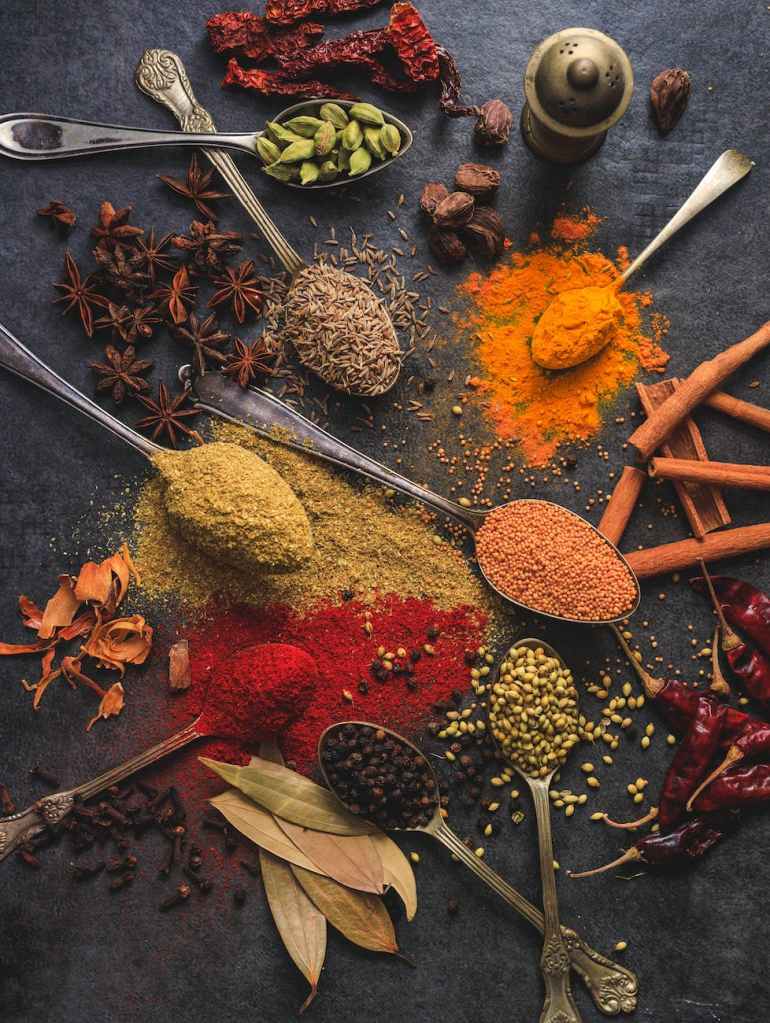
No matter what your spiritual path looks like, every Witch can benefit from possessing a thorough, comprehensive Herbal Grimoire. Many practitioners include such contents as a guide for the magical correspondences of different herbs, a list of various herbal substitutions for spellcrafting, and last, but not least – a reference section that lists commonly found baneful herbs and their toxicity levels.

Photo by Skitterphoto on Pexels.com

This herb correspondence chart is the culmination of years of research. We hope this reference guide will help you to understand the magical properties of herbs, roots, flowers, barks and resins. It is our goal to provide others with accurate sources of information to enrich their lives and their Craft. What are some ways you can implement the information in the following guide into your own practice?  Click on the link below to view the chart.

Herbal Grimoire

A to Z – A Wiccan Glossary (Flashback from Lady Abyss)

A to Z – A Wiccan Glossary

AKASHA: the spiritual ether (or Aether); the omnipresent fifth occult element which embraces the other four-earth, air, fire, and water; and from which they stem. This is the realm of “pattern” or causality, from which the realm the normally thought of “five senses manifests. Some define it is the “other” of the “two worlds” that the witch or magician walks between.


ARADIA: Daughter of the Goddess Diana, and a name for the Goddess used by Italian Witches or Strega, commonly used in many Wiccan traditions today.

ASPECTING: Any advanced magickal activity in which a practitioner manifests a particular aspect of the Goddess or God, in thought, feelings, behavior, appearance, etc.; Often as a direct result of a “Drawing Down”. Often a minor variation of this phenomena occurs with the selection of a “Magical Name”, of Craft Name.

ASPECTS: Forms, facets, or personas of Deity: for example, Brighid, Iseult,Eos, and Kore are all aspects of the Maiden, and the Maiden is an aspect of the Goddess


ATHAME: black handled, double edged dagger. Principally used to cast and dissolve the circle, for which purposes it is interchangeable with the magic sword. A tool of the “Element” of Fire in the Georgian Tradition and some others.


BELTANE: May Eve festival. One of the Ancient Celtic “Fire Festivals.” on this night, the cattle were driven between two bonfires to protect them from disease. Couples wishing for fertility would ” jump the fires” on Beltane night. Also the traditional Sabbath where the rule of the “Wheel of the Year” is returned to the Goddess. This Festival also marks the transition point of the threefold Goddess energies from those of Maiden to Mother.


BOOK OF SHADOWS: Traditionally hand copied book of rituals, recipes, training techniques, guidelines, and other materials deemed important to a Witch or a coven. Each tradition has it’s own standard version of the Book and each Witch’s book will be different as he or she adds to it with time from many different sources. Only another Witch can see your book of shadows. Also, traditionally, it may never leave your hands or possession until death, when it should be destroyed, or (in some traditions) returned to the coven to be disposed of.


BURNING TIMES: a term used by some Witches for the period of persecution in the Middle Ages and later. It is in fact a misnomer in some places, as Witches were only burned in Scotland, and on the continent of Europe. In England and the U.S., they were hanged.


CANDLEMAS: Festival held on Feb. 1. One of the 4 Celtic “Fire Festivals. Commemorates the changing of the Goddess from the Crone to the Maiden. Celebrates the first signs of Spring. Also called “Imbolc” (the old Celtic name). This is the seasonal change where the first signs of spring and the return of the sun are noted, i.e. the first sprouting of leaves, the sprouting of the Crocus flowers etc. In other words, it is the festival commemorating the successful passing of winter and the beginning of the agricultural year.This Festival also marks the transition point of the threefold Goddess energies from those of Crone to Maiden.


CARDINAL POINTS: North, South, East, and West, marked in the Georgian Tradition by candles of green, red, yellow, and blue, respectively. The Circle is drawn to connect these four points.

CHALICE: one of the tools of the Witch. Placed on the altar to represent the element of Water.


CHARGE OF THE GODDESS: The Traditional words of the Goddess to her followers, or “hidden children”. Normally declaimed by the HPS at every coven Circle.


CIRCLE: the area in which the magickal worship and spells takes place. Can also be used to designate a particular group of Witches or Pagans such as “Silver Acorn Circle”.


CONE OF POWER: power raised in the circle by the Witches assembled, and sent out into the world to work magick, is usually visualized as being retained and built in the form of a “cone” prior to release.


COVEN: an organized group of Witches, led by a High priestess and/or a High Priest who meet regularly for worship and fellowship. The traditional membership is 13, but in fact most covens number considerably less. 3 is the minimum in the Georgian Tradition. In Middle English, “Covin” a group of confederates; In Old French “Covine” a band or group with a single purpose; Latin “Com”-together, “Venire”-to come or move.


COVENSTEAD: regular meeting place for a coven. Usually the home of the High Priestess or High Priest.


COWAN: a non-Witch. Formerly used in a very derogatory manner. Still used in Masonic Ritual to indicate the non initiate and/or pretender to “real craft”. Not often used today among most Witches.


COYOTE ENERGY: trickster energies. Named for the American Indian Trickster, Coyote, who tricks man into learning what he needs to learn. Applies to one who constantly jokes and clowns. Also applies to the concept of “Holy Fool” in many traditions.


CROSS QUARTER DAYS: The modern name for the Celtic Fire Festivals of Samhain, Imbolc, Beltane, and Lammas.

———————————————————————————————————————————————————–


Abracadabra- A word from the Jewish mystical tradition of Qabala. Its root is the name of the Gnostic deity Abraxas, meaning “hurt me not”. It is said to possess magickal powers, especially of protection from illness.


Adept- An individual who through serious study and accomplishments is highly prficient in a praticluar magickal way.


Aeromancy- Divination by the stars.


Aisling– Ireland: Dream or Vision. In the many Irish tales having this title, the person who dreams sees a speir-bhean or vision-woman from the Otherworlds, pronounced “ash-leen”.


Aka- The cord between the astral body and the physical body, most likely this concept is derived from the biblical reference to a “silver cord” connected the body and the soul

Akashic Records- Edward Cayce’s concept which states that somewhere there is a universal hall of data about past lives, magic, healing, and spirituality. It does not exist on the physical plane but rather on a more psychic level. Some believe it can be accessed on the astral plane, others feel it can only be accessed through a visualization journey in the mind.


Alba– The Isle of Skye; Scotland


Alchemist- One who practices alchemy.

Alchemy- A form of high magick which stems from the middle ages noted by the attempts of alchemists to make lead turn into gold.


Alexandrian Tradition– A form of Garderian Wiccan practice developed by Alex and Maxine Sanders in Britain in the 1960s.


Alignment- Synchronization of mental and spiritual vibrations with a god, goddess, or astronomical body. Often the complete balance and centering of the chakras is called an alignment.


Altar- A small working area and shrine many pagans maintain, where they perform most of their ritual and spell work.

Amulet- An object charged with personal energies through ritual or meditation often used to ward off a certain force or person.

Aradia-
The Italian goddess Diana’s daughter, said to be the origin of all witches. The book “Aradia, Gospel of the Witches” was written by Leland about Aradia and the practice of witchcraft

Arcana
– The two halves of the tarot deck.The major arcana consists of 22 cards showing dominant occurrences in our lives.The minor arcana consists of 56 suit cards (commonly called the lesser arcana) that assists the major arcana cards,or shows smaller influences in our lives.

Archetype- Symbolic imagery seen in visions, dreams, meditation, and mind quests. Used to interpret the meaning of the vision thereby betting understanding and communicating with the subconscious.

Arthurian Tradition- A Welsh tradition of paganism based on the lore of King Arthur (the “Once and Future King”), Merlin the Magician, and Guinevere.

Asatru- Modern worship of the old Norse gods.

Aspecting- An advanced magical practice which is seen most commonly in a coven as opposed to solitary. The practitioner attempts to manifest an aspect of the Goddess or the God. This is seen in the pagan ritual of Drawing Down the Moon as well as in other pagan religions such as Vodou, where the priest often allows the deity to speak through his or her body.

Asperger- A bundle of fresh herbs either carrying dew or dowsed with spring water, used to sprinkle the water during ritual purification.

Astral– Another dimension of reality.


Astral Plane- A plane parallel to the physical world, traveled through by the astral body during projection.

Astral Projection/Travel
– The proccess of separating your astral body from your physical body to accomplish travel in the astral. 

Astrology- The practice of revealing the future by interpreting the arrangement of stars and planets in relation to astrological theory and the zodiac.


Athame– A Wiccan ritual knife. Generally double edged with a black handle, but not always. This knife is seldom used for physical cutting, if at all, and need not be sharp. It is *never* used to draw blood and Wicca do not draw blood or use blood in ritual. Its primary use is as an energy directing device, much like the wand, though with different common uses. compare: Boline, Wand

Attune- To bring different psyches into harmony.


Augury- Divination based on “signs” or omens.
Aura- An energy field which surrounds living beings. An aura is most often visible only to those born with the skill to see it, or those who developed this ability. A visible aura contains various colors and tells about the spiritual and emotional persona of the plant, human, or creature surrounded by it. However, an aura can also be felt, heard, or sensed through other means.

DEOSIL: clockwise, or sunwise. Traditional direction for working “building” magick.

DRAWING DOWN THE MOON: Ritual invocation of the spirit of the Goddess into the body of the High Priestess by the High Priest.

DIVINATION: magical method of exploration or inquiry into a situation via such methods as Tarot cards, runestones, I-Ching, etc.

ELEMENTS: Earth, air, fire, and water, plus spirit, which includes them all. These are regarded as realms or categories of nature (both material and non-material) and are not to be confused with the physicists table of elements, which the modern witch, of course, accepts.

ESBAT: weekly or biweekly meeting of a coven. Traditionally held either on the full moon or the new moon.

FAMILIARS: Either a Witch’s pet animal which has been trained to be a magickal helper, or an artificially created “elemental” which performs the same functions as the animal friend.

FIVEFOLD KISS, FIVEFOLD SALUTE: The Witches’ ritual salute, with kisses; (1) on each foot, (2) on each knee, (3) above the pubic hair, (4) on each breast, and (5) on the lips-really 8 kisses in all. It is only used within the Circle, but the words that go with it are the origin of “Blessed Be.”

GARDNERIANS: Tradition of Witchcraft descended from the teachings of Gerald Gardner

GNOMES: an “entity” or “elemental” that dwells in the plane of Earth or is associated with the EARTH Element.

GREAT RITE: The rite which is the main feature of the third degree initiation, and which is also laid down for certain festivals. It is sexual in nature, but may be `actual’ (and private to the couples concerned) or symbolic, as the participants wish.

HALLOWS: name used by some traditions for Samhain, or Halloween

HANDFASTING: Wiccan equivalent of a wedding. It can be made legal if the Priestess and/or Priest are registered as clergy with the local authorities, or it may only be considered binding within the coven.

HIGH PRIEST/ESS: Technically speaking, a Witch who has received the 3rd. degree initiation. More usually, the male and female leaders of a coven.
IMBOLC: Celtic name for Candlemas.
INVOCATION: The ritual “calling-in” of an entity (or energies) higher than human, either for communication with the caller through a medium or by visible manifestation or else to enter into a human body as in the Drawing Down the Moon. In some traditions, a Prayer

LAMMAS: August 1st. Witch Festival. The Old Celtic name for this festival is Lughnassadh. It is the Festival of the First Fruits, and is the first of the 3 harvests. This festival also marks the change of the Threefold Goddess energies from that of Mother to Crone.

PENTACLE: a disc shaped talisman; in particular, the metal disc which represents the earth element among the witch’s working tools.

PENTAGRAM: The five-pointed star. With a single point uppermost, it represents the human being. Inverted, with two points uppermost, it can have Satanist associations; but not necessarily. Some traditions of Wicca use the inverted pentagram to signify an initiate of the second degree.

QUARTERS: The North, East, South, and West parts of a magickal circle or other ritual area. (See also “Watchtowers”)

REDE: rule or law

SABBAT: one of the Eight festivals or high holy days of Wicca.

SALAMANDER: an entity that dwells in the realm of Fire.

SAMHAIN: The festival of remembrance for the dead, held on the eve of Nov. 1st. It is the last of the three harvests. This festival also marks the transition of rulership of the “Wheel of the Year from that of the Goddess to that of the God.

SCRYING: divination, usually using such methods as crystal gazing, or divination via incense smoke, or water as opposed to tarot or other manipulative means.

SPELL: a prayer, or verbal direction of magickal energies toward the accomplishment of some goal.
SUMMONER: The male officer of the coven who corresponds to the Maiden. He is the assistant High Priest

SYLPH: an “entity” or “elemental” that dwells in the plane of Air or is associated with the AIR Element.

TRADITIONS: any of the various “sects” of Wicca such as Gardnerian, Alexandrian, Georgian, Seax, etc.

UNDINE: an “entity” or “elemental” that dwells in the plane of Water or is associated with the WATER Element.


WAND: A rod or staff that is prepared so that it may be used for magickal or psychic purposes, usually to project some form of power

WARLOCK: a term coined in the Burning Times . It was used to denote a traitor to the Craft, or one who had betrayed the followers of the Old Religion. It’s origin is Scottish. Because of the negative connotations, it is not used by most Wiccans today.

WATCH TOWERS: Originally from the Enochian branch of Ceremonial Magick, now incorporated into many “Traditions” of Wicca, these are the four elemental “directions” or “quarters” (corresponding to the appropriate points on the compass) called to protect the Circle during its establishment. Each of them have a correspondence between the compass point, an element, and (varying amongst different traditions) color associated with them.

WICCA: the name most modern day Witches use for the Craft. It comes from the Anglo-Saxon word Wicce, meaning to bend or to shape. This is the root word from which we get wicker.

WIDDERSHINS: counter clock wise. Used for “tearing down” OR BANISHING magick.

WHITE HANDLED KNIFE: the working knife of a Witch. It is used to carve candles, and for fashioning the other tools. Traditionally, it can only be used in a circle.

September 4th Daily Correspondence Digest

Daily Horoscope

Moon Alert

There are no restrictions to shopping or important decisions today. The Moon is in Leo.

Aries (March 21-April 19)

This is a productive day, especially in regards to conversations with partners and close friends. These exchanges will be practical but useful. You might also get help or advice from someone older or more experienced. A good thing!

Taurus (April 20-May 20)

You can get a lot done today because you are detail oriented and your mind is focused. Roll up your sleeves and dig in to any kind of job that appeals to you because you make great progress and avoid mistakes. “Measure twice, cut once.”

Gemini (May 21-June 20)

Today your ruler Mercury is dancing nicely with Saturn, which will help you make practical plans for vacations and social events – including sports. This is the right frame of mind to coach or teach with children. Whatever you do today, you will do with patience and care.

Cancer (June 21-July 22)

This is an excellent day for family discussions, especially discussions about home improvements. You might also discuss the care of an older family member or parent. You will be in a more objective frame of mind, which is why others will listen to you.

Leo (July 23-Aug. 22)

This is an excellent day to do mental work because your mind is focused. You will persevere and finish whatever task you begin. Furthermore, you won’t overlook details. You’ll be like a dog with a bone! Good day to explore problem-solving.

Virgo (Aug. 23-Sept. 22)

This is a good day to discuss financial matters with others. You might be rather conservative and concerned about protecting limited resources. If shopping, you will be more inclined to buy long-lasting, practical items. “A penny saved, is a penny earned.”

Libra (Sept. 23-Oct. 22)

Today Mercury is in your sign dancing nicely with Saturn, which is a stable, helpful influence for you. This will make you reasonable in all your relations with others because you recognize that everyone puts their pants on one leg at a time, just like you. You might focus on duties and obligations.

Scorpio (Oct. 23-Nov. 21)

This is an excellent day to do research of any kind or focus on finding solutions to old problems. You won’t mind digging through details, especially details related to the past to look for helpful facts or items. Whatever you do might help an older family member today.

Sagittarius (Nov. 22-Dec. 21)

This is the perfect day for a serious discussion with a friend or a member of a group. People will listen to you. Everyone wants a practical solution to things. Furthermore, they will be protective and conservative about resources. (You can get a lot done.)

Capricorn (Dec. 22-Jan. 19)

You will impress bosses, parents, teachers and the police today because your style of speech will be solid, reliable and conservative. You will be realistic, which makes others respect you. This is a good day to look at all angles of a problem to see what is doable and viable.

Aquarius (Jan. 20-Feb. 18)

This is an excellent day to make detailed plans for future travels. Likewise, it’s also an excellent day to study because your mind is focused and your attention is steady and clear. The study of history and foreign places will intrigue you.

Pisces (Feb. 19-March 20)

You can make great headway if you are dealing with details regarding shared property, insurance matters, inheritances and anything that you own jointly with others – including debt. This is a good day to establish a budget. It’s also a good day to see how you can reduce debt and save money in the future. Ka-ching!

If Your Birthday Is Today

Singer, songwriter Beyonce Knowles (1981) shares your birthday today. You are creative and talented. You have excellent business savvy; plus, you are spiritual. You notice details. This is your final year of a nine-year cycle, which means you are wrapping up and completing important things. Now is the time to let go of people and situations that have been holding you back. Next year you will begin something fresh and new!

Birthday Horoscope

Zodiac Sign Is Virgo

To read anyone’s birthday horoscope

September 4 birthday horoscope shows that you are gifted with a creative side that is unique and distinct. You make an awesome lover, as you are playful and generous. As the zodiac sign for September 4th birthday is Virgo, you can be sensitive and tight with your money although you will help someone in need.

The September 4th horoscope predicts that you are easy to talk to as you enjoy the exchange of thoughts and ideas. Besides, you are sharp-witted and can offer anyone a challenge intellectually. You are hard workers and realize that it takes money to live and more so if you want to live comfortably.

These Virgo birthday people are likely to take a risk or two. Normally, very independent, you have charm and a smile that is very attractive. You can make friends with ease and confidence.

Often you live vicariously through your friends who tend to live life on the edge. This Virgo may have an assorted love life, as you are likely to have too many friends. Marriage for you may come at a later time in life.

At the same time, you may or may not get along with your siblings or parents for that matter. The September 4 astrology predicts that you have a different take on how your children should be raised and this could present conflicts within your family unit. However, you understand what it’s like being a teen and know that there are times when kids will be somewhat rebellious.

This September 4 birthday personality is kind and giving. You can show your love for your partner, but you have a difficult time accepting the fact that sex is good for you. There’s more to it than meets the eye. This Virgin has great potential for interior design.

If today is your birthday, you are not suited for traditional jobs that require hitting the time clock. It’s normal for a Virgo to have a few occupations before settling on one particular profession. Usually, you like to be creative and want to have some level of “healthy” stress.

In other words, you like to be busy and have a feeling of accomplishment when you resolve the daily crisis. You may have little concern about the pay and more enthusiastic about the job description. Typically, you will not miss out on either.

Let’s talk about your health. People with this zodiac birthday are likely to concern themselves with unfamiliar health practices. All things in moderation. Remember that as you tend to take things to the extreme. You should watch what you eat and perhaps, link up with a nutritionist that can give you good professional advice.

Maybe take a walk in the country or let your top down and take a road trip. Typically, the fresh air will do you good, but mostly, it‘s a well-balanced diet that will make a marked improvement in your health

The September 4 zodiac suggests that you are talented. You have a creative style that carries a unique and distinctive flavor. Additionally, you are clever, independent and charming. The Virgin has perspective when it comes to child rearing as you put family first although; you are not in a hurry to marry and have children of your own.

It may be later in life that you decide on the perfect career. This September 4 birthday personality may need to relax more. It is likely a beautiful day, and a bike ride could be an enjoyable way to exercise and get your mind off things that stress you out.

Famous People And Celebrities Born On September 4

Jason David Frank, Paul Harvey, Lawrence Hilton Jacobs, Dr. Drew Pinsky, Damon Wayans, Richard Wright, Dick York

See: Famous Celebrities Born On September 4

This Day That Year – September  In History

1885 – NYC’s first cafeteria opens
1930 – In London, the Cambridge Theater opens to the public
1953 – The Yankee’s fifth straight championship win
1967 – In Koyna Dam, India a massive earthquake kills 200 people

September 4 Kanya Rashi (Vedic Moon Sign)
September 4 Chinese Zodiac ROOSTER

September 4 Birthday Planet

Your ruling planet is Mercury that symbolizes how you relate information and put it across the table to others.

September 4 Birthday Symbols

The Virgin Is The Symbol For The Virgo Star Sign

September 4 Birthday Tarot Card

Your Birthday Tarot Card is The Emperor. This card symbolizes power, ambition, stability, authority and inner strength. The Minor Arcana cards are Nine of Disks and King of Pentacles

September 4 Birthday Zodiac Compatibility

You are most compatible with people born under Zodiac Sign Capricorn: This can match that is stable and compatible.
You are not compatible with people born under Zodiac Sign CancerThis love match will always be on tenterhooks.

See Also:

September 4 Lucky Number

Number 4 – This number signifies a responsible, articulate and methodical person.

Read about: Birthday Numerology

Lucky Colors For September 4 BirthdayI

White: This color stands for purity, completeness, receptivity, and innocence.
Blue: This is a color that stands for expansion, freedom, trust, and stability.

Lucky Days For September Birthday

Sunday – This is the day of Sun that symbolizes a day of noble acts and ambitious planning for the future.
Wednesday – This day ruled by the planet Mercury represents essential communication necessary for getting through problems.

September 4 Birthstone Sapphire

Your lucky gemstone is Sapphire that reduces confusion and improves your mental clarity.

Ideal Zodiac Birthday Gifts For People Born On September 4th

A deluxe tool kit for the man and a classy white shirt for the woman. The September 4 birthday horoscope predicts that you are very good with your hands.

Moon Goddess’ Current Phase


The Moon’s current phase for today and tonight is a Waning Crescent phase. In this phase the Moon’s illumination is growing smaller each day until the New Moon. During this part of the Moon cycle, the Moon is getting closer to the Sun as viewed from Earth and the night side of the Moon is facing the Earth with only a small edge of the Moon being illuminated. This phase is best viewed an hour or 2 before the sunrise and can be quite beautiful if you’re willing to get up early. It can also be a great time to see the features of the Moon’s surface. Along the edge where the illuminated portion meets the dark side, the craters and mountains cast long shadows making them easier to observe with a telescope or binoculars.

Visit the September 2021 Moon Phases Calendar to see all the daily moon phase for this month.

Today’s Waning Crescent Phase

The Waning Crescent on September 4 has an illumination of 7%. This is the percentage of the Moon illuminated by the Sun. The illumination is constantly changing and can vary up to 10% a day. On September 4 the Moon is 26.94 days old. This refers to how many days it has been since the last New Moon. It takes 29.53 days for the Moon to orbit the Earth and go through the lunar cycle of all 8 Moon phases.

The 8 Lunar Phases

There are 8 lunar phases the Moon goes through in its 29.53 days lunar cycle. The 4 major Moon phases are Full Moon, New Moon, First Quarter and Last Quarter. Between these major phases, there are 4 minor ones: the Waxing Crescent, Waxing Gibbous, Waning Gibbous and Waning Crescent. For more info on the Moon Cycle and on each phase check out Wikipedia Lunar Phase page.

Custom Planetary Positions

If you need to calculate the planetary positions for a specific use and time, click on this link

Currentplanetarypositions.com

To figure out GMT (Greenwich Mean Time) to your local time use this link

Northern Hemisphere

The time for the Custom Planetary Positions is from the local time in Chicago, Illinois, United States of America
September 04, 2021

08:00 pm GMT 3:00 PM CDT
Zodiac: Tropical (Standard Western)

Sun:12 Virgo 30
Moon:15 Leo 02
Mercury:07 Libra 37
Venus:23 Libra 02
Mars:23 Virgo 27
Jupiter:25 Aquarius 13 Rx
Saturn:07 Aquarius 55 Rx
Uranus:14 Taurus 41 Rx
Neptune:22 Pisces 03 Rx
Pluto:24 Capricorn 33 Rx
True Lunar Node:05 Gemini 45 Rx
Mean Lunar Node:05 Gemini 47 Rx
Lilith (Black Moon):05 Gemini 22
Chiron:11 Aries 53 Rx
Ceres:08 Gemini 45
Pallas:20 Pisces 11 Rx
Juno:11 Sagittarius 06
Vesta:22 Libra 01
Eris:24 Aries 37 Rx

Fire:4
Earth:4
Air:9
Water:2
Cardinal:6
Fixed:4
Mutable:9

Southern Hemisphere

The time for the Custom Planetary Positions is from the local time in Melbourne, Victoria, Australia.
CurrentPlanetaryPositions.com logo

Custom Planet Position Calculations

Custom Planetary Positions
5 September 2021
05:00 am GMT 3:00 PM AEST
Zodiac: Tropical (Standard Western)

Sun:12 Virgo 52
Moon:19 Leo 57
Mercury:08 Libra 06
Venus:23 Libra 28
Mars:23 Virgo 41
Jupiter:25 Aquarius 10 Rx
Saturn:07 Aquarius 54 Rx
Uranus:14 Taurus 41 Rx
Neptune:22 Pisces 02 Rx
Pluto:24 Capricorn 33 Rx
True Lunar Node:05 Gemini 41 Rx
Mean Lunar Node:05 Gemini 46 Rx
Lilith (Black Moon):05 Gemini 25
Chiron:11 Aries 52 Rx
Ceres:08 Gemini 49
Pallas:20 Pisces 05 Rx
Juno:11 Sagittarius 10
Vesta:22 Libra 12
Eris:24 Aries 37 Rx
Fire:4
Earth:4
Air:9
Water:2
Cardinal:6
Fixed:4
Mutable:9

Witchcraft/Magical

From Spell 8

Saturday

Candle

Light a black candle to symbolize the heat of the hearth. Meditating with a black candle brings spiritual protection as it absorbs hostility, unfriendliness, curses and more. Black candles aren’t evil, they help us stay protected from harm.

Ruling Deities

Wiccan Goddess Bast Wiccan Goddess Hecate Wiccan Goddess Hestia Wiccan God SaturnBast, Hecate, Hestia and Saturn are rulers of Saturdays.

Crystals

Sapphire, Black Tourmaline, or Amethyst.

Carrying these gemstones today can bring success and fulfillment of your goals. Wear them as a talisman or simply keep them close to you to harness their energy.

Potion

Drink a cup of Black Tea to connect with Saturday’s infallible inspiration. Black tea has a higher rate of theine than other teas, so it is a powerful stimulant. Its rich aroma promotes an awakening of the senses and its fluorine contents can help prevent cavities! ¹.