Goddess of the Day – Venus


Venus, Goddess of Love and Beauty

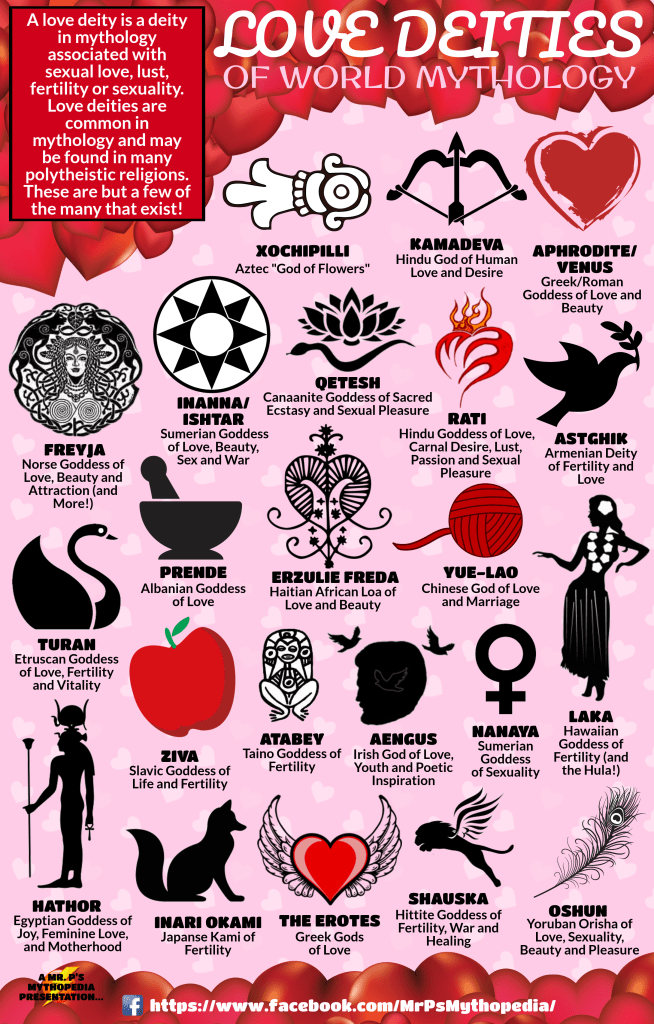
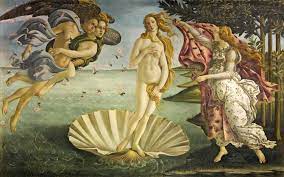
The Roman equivalent of Aphrodite, Venus was a goddess of love and beauty. Originally, she was believed to be associated with gardens and fruitfulness, but later took on all the aspects of Aphrodite from the Greek traditions. She is considered by many to be the ancestor of the Roman people, and was the lover of the god Vulcan, as well as of the warrior god Mars.

Worship and Celebration

The earliest known temple to Venus was dedicated on the Aventine hill in Rome, around 295 b.c.e. However, her cult was based in the city of Lavinium, and her temple there became the home of a festival known as the Vinalia Rustica. A later temple was dedicated after the defeat of the Roman army near Lake Trasimine during the Second Punic War.

Venus appears to have been very popular amongst the plebian class of Roman society, as evidenced by the existence of temples in areas of the city which were traditionally plebian rather than patrician. A cult to her aspect of Venus Erycina existed near Rome’s Colline gate; in this guise, Venus was a goddess primarily of fertility.

Another cult honoring Venus Verticordia also existed between the Aventine hill and Circus Maximus.

As often found in Roman gods and goddesses, Venus existed in many different incarnations. As Venus Victrix, she took on the aspect of warrior, and as Venus Genetrix, she was known as the mother of the Roman civilization. During the reign of Julius Caesar, a number of cults were started on her behalf, since Caesar claimed that the family of the Julii were directly descended from Venus. She is also recognized as a goddess of fortune, as Venus Felix.

Brittany Garcia of Ancient History Encyclopedia says, “Venus’ month was April (the beginning of spring and fertility) when most of her festivals were held. On the first of April a festival was held in honor of Venus Verticordia called Veneralia. On the 23rd, Vinalia Urbana was held which was a wine festival belonging to both Venus (goddess of profane wine) and Jupiter. Vinalia Rusticia was held on August 10th. It was Venus’ oldest festival and associated with her form as Venus Obsequens. September 26th was the date for the festival of Venus Genetrix, the mother and protector of Rome.”

The Lovers of Venus

Similar to Aphrodite, Venus took a number of lovers, both mortal and divine. She bore children with Mars, the god of war, but doesn’t seem to have been particularly maternal in nature. In addition to Mars, Venus had children with her husband, Vulcan, and when conflated with Aphrodite, is commonly believed to be the mother of Priapus, conceived during a fling with the god Bacchus (or one of Venus’ other lovers).

Scholars have noted that Venus doesn’t have many myths of her own, and that many of her stories are borrowed from the tales of Aphrodite.

Venus in Art and Literature

Venus is nearly always portrayed as young and lovely. Throughout the Classical period, a number of statues of Venus were produced by different artists. The statue Aphrodite of Milos, better known as the Venus de Milo, depicts the goddess as classically beautiful, with womanly curves and a knowing smile. This statue is believed to have been done by Alexandros of Antioch, around 100 b.c.e.

During the European Renaissance period and beyond, it became fashionable for upper class ladies to pose as Venus for paintings or sculptures. One of the best known is that of Pauline Bonaparte Borghese, younger sister of Napoleon. Antonio Canova sculpted her as Venus Victrix, reclined on a lounge, and although Canova wanted to sculpt her in a robe, Pauline apparently insisted on being portrayed nude.

Chaucer wrote regularly of Venus, and she appears in a number of his poems, as well as in The Knight’s Tale, in which Palamon compares his lover, Emily, to the goddess. In fact, Chaucer uses the turbulent relationship between Mars and Venus to represent Palamon, the warrior, and Emily, the lovely maiden in the flower garden.

Author

Patti Wigington, Paganism/Wicca Expert
Originally published on & owned by About.com


Another Look at the Detities of Love anf Lust – Printable

10 “Mythological” Deities Of Love And Lust

While the standards of beauty may have changed throughout the centuries, all humans share an inescapable biological urge to procreate. Feelings of love and lust are therefore extremely important and have influenced even our deities—who, after all, are usually reflections of our own characteristics.

10 Xochiquetzal – Aztec Mythology


With a name meaning “precious feather flower” the Nahuatl language, it’s no surprise that Xochiquetzal was an Aztec goddess of love. Various other aspects of Aztec life, such as flowers, pregnancy, and prostitutes, also fell under her domain, making her one of the more popular deities of the time—a feast in which her devotees dressed up in animal masks was held every eight years. Because of her affinity for marriage, she was often believed to be the wife of the rain god Tlaloc.

Unlike most Aztec fertility goddesses, Xochiquetzal was usually depicted as a beautiful young woman, which caused her problems with some of the more misogynistic gods of their pantheon. While still married to Tlaloc, she was kidnapped by Tezcatlipoca, the god of the night, and forced to marry him, after which she was enthroned as the goddess of love. By another of her husbands she was also the mother of Quetzalcoatl, the feathered serpent god of Aztec mythology.

9 Clíodhna – Irish Mythology


Clíodhna was an Irish goddess sometimes depicted as a banshee or even Queen of the Banshees (or Fairies, depending on the translation). However, she was also the goddess of love, perhaps because she was considered the most beautiful woman in the world. Unlike many other love deities, Clíodhna remained chaste, keeping her love locked away until she met the mortal Ciabahn—who, in a lucky coincidence, just happened to be among the most handsome men ever to have walked the Earth. Clíodhna loved him so much that she left Tir Tairngire, the land of the gods, to be with him.

However, when the other Irish deities found out about this, they conspired to get her back. While Ciabahn was away, Clíodhna was lulled to sleep by the music played by a local minstrel and was subsequently taken by a wave (the tide in the area is still referred to as “Clíodhna’s wave”). Depending on the source, she was either returned to Tir Tairngire or drowned in the sea.

8 Tu Er Shen – Chinese Mythology

A relatively minor deity of Chinese mythology, Tu Er Shen—or Hu Tianbao, as he was known when he was mortal—is the god of homosexual love and marriage. Born during the Qing dynasty, Hu Tianbao found himself attracted to an official of the local government, spying on him naked through a hole in his bathroom wall. When his peeping was discovered, Tianbao was beaten to death. Moved by his unrequited love, the gods of the underworld took pity on him and restored him to life as the deity of homosexual relationships.

Perhaps because they were used as a slang term for homosexual men, rabbits are considered a symbol of homoerotic love in China, and Tu Er Shen is often depicted as a rabbit in the few shrines dedicated to him. Sadly, in many of the places where he is worshiped, homosexual activity remains a punishable criminal offense.

7 Hathor – Egyptian Mythology

One of the most popular, and longest-lasting, of the Egyptian goddesses, Hathor was mentioned as early as the second dynasty (around 2890-2686 BC), and perhaps even before that. Since she survived for so long, Hathor took on a number of roles, including spells as the goddess of love, beauty, mining, and music. However, it was her time as the Eye of Ra which led to her most interesting stories. The Eye of Ra is the term Egyptians used for the feminine counterpart to Ra, a role filled by a number of goddesses, including Ra’s daughter, Hathor.

Found in King Tut’s tomb, a story known as “The Destruction of Mankind” tells of a time when Hathor, at Ra’s insistence, became the war goddess Sekhmet in order to punish humans for their sinful ways. When the bloodthirsty goddess got out of control, Ra tried to stop his daughter—but failed. Just before she killed every last person on Earth, Ra managed to get her drunk. Hathor immediately forgot what she was doing and returned to normal. In another, possibly equally disturbing story, she performed a striptease for her father in order to cheer him up.

6 Eros – Greek Mythology

The Greek version of Cupid, Eros was Aphrodite’s son and the god of desire and attraction (although, he was sometimes depicted as one of the Protogenoi, or primeval gods). Much like his Roman counterpart, he often took the form of a young winged boy, complete with bow and arrow. He was fiercely loyal to his mother—although he was prone to fits of disobedience. That rebellious aspect of the god showed up prominently in his most famous myth.

A young woman named Psyche was born and proclaimed to be so beautiful as to be the second coming of Aphrodite. As was her nature, the goddess was angered and sent Eros to shoot her with her arrow and cause her to fall in love with the ugliest man on Earth as punishment. However, her beauty was so great that Eros fell in love and ignored his mother’s wishes, whisking Psyche away. Eros never revealed his identity but Psyche’s curiosity got the better of her and she peeked in on him when he was sleeping. Betrayed by his love, the god fled and Psyche wandered the Earth until Zeus agreed to let them get married.

5 Rati- Hinduism

More popularly known as the wife of Kama, the god of love, Rati herself plays a large role in love and lust in Hinduism. With a number of names, most of which speak to her immense beauty, it seems obvious Rati would be the goddess of desire. Depending on the source, she is the daughter of either Daksha or Brahma. In the case of the latter, she was the reason for the god’s suicide, after he lusted after her. Rati immediately killed herself as well (they were both quickly resurrected).

But Rati’s biggest claim to fame was successfully changing Shiva’s mind. The Destroyer, sworn to ascetic ways after his first wife’s death, had been forced to fall in love again. In revenge, he killed Kama, turning him to ash with his third eye. The best known version of the story has Rati persuade Shiva to revive her husband, with the caveat that Kama is to be invisible for eternity.

4 Oshun – Yoruba

The goddess of beauty and love, especially of the erotic kind, Oshun is extremely popular among the West African followers of the Yoruba religion. Renowned for her beauty, she is usually depicted as a woman adorned with jewelry, although she is sometimes shown as a mermaid. Oshun is also preeminent among the female deities of the Yoruba religion and demands the respect that title deserves. When the gods were first creating the Earth, and they neglected to ask Oshun to assist, she made it impossible for them to make anything until they came to her for help.

Due to her reputation for complete purity, Oshun is also often associated with fresh water, an extremely important resource for the people of Western Africa. In addition, she also protects women and children during childbirth and is also seen as a protector from diseases, especially smallpox.

3 Hymen- Greek Mythology

The god of married love, Hymen was a lesser-known god of the Greek pantheon. Either the son of Apollo and a Muse or Dionysus and Aphrodite, he led a charmed life thanks to his beauty, until he fell in love with a unnamed maiden, who didn’t feel the same way. While Hymen was trying to court her, she was kidnapped by pirates, along with a number of other young women (some versions of the myth even have Hymen taken by the pirates because his beauty made them mistake him for a woman).

Whatever the reason, Hymen found himself on the ship and killed the pirates, saving the girls, and convincing his love to marry him. Their marriage was so successful that it became the ideal to which every Greek couple aspired—his name was included in the wedding songs in order to invoke his blessing.

2 Yue Lao – Chinese Mythology

Yue Lao, otherwise known as “The Man under the Moon,” is a popular figure in Chinese mythology, as he is the matchmaker and overseer of heterosexual marriage. Widely connected with the red thread of destiny, Yue Lao is often seen as benevolent deity, binding two people’s hearts together in love and marriage.

The best known story involving Yue Lao is that of Wei Gu and his quest to find a wife. After years of unsuccessful attempts, Wei Gu came upon Yue Lao reading from the book of marriages. Insisting he know who his future wife was, Wei Gu was shown a vision of an old woman with a young child, living in poverty. Distraught that the old woman was to be his wife, Wei Gu ordered his servant to kill the young child, though she escaped serious injury. After years passed, he finally found a suitable wife and noticed she had a scar. When Wei Gu asked about it, he was astonished to find that she had been the young child he tried to have killed (although he probably never told her; some secrets are best kept hidden).

1 Freyja – Norse Mythology

Freyja, which translates as “lady,” had a number of roles in the Norse belief system. As well as the goddess of love, she was Queen of Fólkvangr, a place similar to Valhalla, where half of those who died in battle would go after death. However, unlike most of the other deities on this list, Freyja had a vicious bad side, full of greed, jealousy, and evil deeds. Among other things, she’s credited with teaching witchcraft to humans, a practice seen as evil by the Norse.

She was often at odds with Loki, who sought to torment the goddess and steal items from her, including her famed necklace Brísingamen, which was later retrieved by Heimdall. In addition, Freyja would constantly scour the Earth for her husband, who would go missing from time to time, crying tears of red gold as she searched. She did have one tremendous advantage over the other deities on this list—her favored mode of transportation was a chariot pulled by cats.

From listverse.com

Spell for Today – Brighid Invocation Prayer and Goddess Offerings

Known by many names, Bríg is the High One in Celtic religion, ancient goddess of the poetic arts, crafts, prophecy, and divination.

From spells8.com

Video Devotional

Prayer to Brighid, Goddess of Spring (Bríg) Invocation/Wiccan Worship

Light

Red candle during this prayer to Brighid

Incense to Brighid:

Jasmine, Lavender, Rosemary, Chamomile

Offerings to Brighid:

Water, Bread, Coins, Milk, Blackberries, Herbal tea

Brigid, also known as Brigit, Brighid or Bríg, is a goddess of pre-Christian Ireland. She is considered to be a triple goddess (poet, healer, and smith) especially in Wicca and other forms of Neopaganism where she is sometimes worshipped in conjunction with Cernunnos as the God and Goddess.

Devotional text

Blessed Bríg, keeper of the Sacred Flame,
Mother to all, and Lady of the Spring, I call to you.
Daughter of Dagda and Morrighan, born with
the rays of the sun, I call to you.

You who were nursed on the milk of the Sacred Cow,
whose footsteps bring flowers and shamrocks.
Blessed Bríg, whose flame burns evermore
with the light of the world, I call to you.

Blessed Bríg, weaver of webs and teller of stories, I call to you.
Blessed Bríg, healer of wounds and scars, I call to you.

As the light from your flame covers the skies as the sun rises,
I call to you to spread your blessings across this land as you once spread your
mantle.

Envelop all you touch with your healing grace.
Bring newborn babies into this world with love and hope. Grant the poet the words they seek
to spread your peace far and wide.

Weave a web and tell a story, oh Bríg, so that
those who weave as well may understand.

Blessed Bríg, grant your peace and patience across the land.
Every hill, every valley, every river, and stream shall sing your praise.

Lady Bríg, I call to you.
Come into my home and sit upon my hearth.

Bless my home and family with the protection you have to offer.
A bed is always here for you, Lady Bríg, if you would have it.

I call to you as I weave my web, paint my picture, and write my story.
May your blessings be ever present in my life.

I call to you, Lady Bríg, to instill in me the creativity and inspiration
that follows you wherever your feet may take you.

I stand at your feet, Blessed Bríg, and tend the hearth fire in your honor.

May your Sacred Flame burn always and never extinguish.

Blessed Bríg, I call to you. Purify me within the Sacred Well.
Heal me from all wounds and injuries. Bless and protect my hearth and kin.

Blessed Bríg, whose cattle are sacred to the land, I call to you.
Bless my hearth and kin with your nurturing hand. Allow us to live freely
in your light.

Blessed Bríg, Keeper of the Mysteries of Women, I call to you.
Lend me your guiding light. Keep me safe from all who would do me harm.

Blessed Bríg, mother of all and mother to none,
I call to you to keep
the old traditions alive.
Help me keep your Sacred Flame lit and
spread your unity across the land.

Blessed Bríg, daughter of Dagda and Morrighan, sister to Oghma, lover of
Bres, mother of Ruadan, Iuchar, and Uar.

Weaver of webs. Teller of stories. I call to you.
Come into my home.
Wear your crown and gem.

Lay your mantle over my home so that we may be enveloped in your peace, in
your unity, and your compassion. Envelop us with your inspiration,
Lady Bríg.

I call to you, Lady Bríg, that you may bless us so we may be as fruitful as
the Earth.

What is Brigid the goddess of?

Brigid is the goddess of the flame and the well, patroness of healing, poetry and smithcraft. She is a solar deity so her attributes are related to fire, light, and the hearth. 🔥

Brighid is the Celtic goddess of inspiration and also carries various powers related to inspiration, such as the art of healing, and divination. She was the patroness of sacred perpetual flames, such as that held by 19 nuns in a sanctuary in Kildare, Ireland (now in honor of St. Brigit).

The tradition of female priestesses who tend to eternal sacred flames is prevalent in ancient Indo-European spirituality. Other examples include the goddess Hestia, who watches over the hearth of the home, or Minerva.

Celtic Gods and Goddesses: Exploring the Pantheon and Mythology of the Ancient Celts

This article is not a complete list of the Celtic Goddesses and Gods. It seems to be the more popular ones in modern pagan traditions. They will also correspondence to some of the other ancient pantheons in other parts of the ancient world.

To read about the different Gods and Goddesses please click on their hyperlink this comes from historycooperative.org

You’ve always wanted to stroll across the beautiful landscape of Ireland. To make sure that you don’t miss out on the best spots, you decide to make use of a local touring company.

Suddenly one appears before you. How strange that you didn’t notice this building before, but heck, the banner outside claims it’s five-star and that you’ll meet Celtic gods and goddesses in person. They are probably just actors in costume — a little cheesy — but you don’t see any other places that are open at the moment.

To your surprise, you realize that your hiking companions are the actual Celtic gods and goddesses. While you fight off the sudden faint feeling, you remember that the ridiculously steep deposit is only refundable at the end of the trip. There’s no turning back now.

A big guy claps his hand on your shoulder and says, “Fear not, tiny mortal. You’re going to have a fun time learning all about the ancient Celtic pantheon and the people who worshipped us.”

You just want your deposit back. So when the group picks up their backpacks and heads out, you follow.

Table of Contents

Dagda – The Good Father God of Ireland, Knowledge, Weather, Wise Druids, and Wariors

Name: The Dagda – the good god
Realms: Father god of Ireland; knowledge, weather, fertility, druids, warriors
Family: Father of Aengus, Brigid, and Danu, member of the Tuatha Dé Dannan
Fun Fact: In Dorsetshire is an enormous drawing of a man. Some believe that the chalk creation is meant to show this deity…

Ériu – The Patron Goddess of Ireland

Name: Ériu
Realms: Patron goddess of Ireland
Family: Daughter of Ernmas and Fiachna Mac Delbáeth; has two sisters called Banba and Fódla; mother of Bres
Fun Fact: Her sisters’ names are sometimes used as poetic titles for Ireland…

Lugh – The God of Crafts, Light, and Sun

(Side Note: This is the God who is honored during a Lammas/Lughnasadh celebration)

Name: Lugh
Realms: God of crafts, light, and Sun
Family: Son of Eithne and Cian; father of Cú Chulainn
Fun Fact: His full name is a little strange — Lugh of the Long Arms…

Epona’s Horses Aren’t Fond of Mortals (Don’t Get Too Close)

(Side Note: Epona is also considered the Goddess of all domestic animals in modern times. I work with her closely when teaching a puppy or an older dog manners to get along better in the human world)

Name: Epona
Realms: Patron goddess of horses, mules, fertility, and cavalry
Family: ???
Fun Fact: In the Gaulish tradition, Epona was never shown in human form; only as a mule or a horse. The Romans showed her as a woman on a throne, standing between horses or driving a chariot…

The Group’s Healer Is Kind of a Reaper

(Side Note: This is the Goddess who is honored during a Imbolc celebration)

Name: Brigid
Realms: Goddess of poetry, fertility, motherhood, passion, dawn, healing, smithing, fire, invention, and life
Family: Married to Bres; mother of Ruadán; daughter of the Dagda
Fun Fact: She inspired a goddess in Haiti, called Maman Brigitte

Danu Knows All About Death and Daffodils

Name: Danu
Realms: A mother goddess; the earth, nature, wind, fertility, death, wisdom, cattle, regeneration, wealth
Family: She was the consort of both the Sun god, Belenos, and the sea god, Beli; daughter of the Dagda, member of the Tuatha De Dannan.
Fun Fact: Danu is another geographical smash hit. Among the places named after this goddess is the River Danube, the Paps of Anu, a region in Ireland’s County Kerry, and possibly the Dane Hills in Leicestershire…

The God of Love Has Daddy Issues (Rightfully So)

Name: Aengus
Realms: God of love and youth
Family: Son of Boann and the Dagda, member of the Tuatha Dé Dannan
Fun Fact: Four birds surround him at all times and, according to mythology, they symbolize his smooches (Yep. His kisses)…

There’s a Confused God Looking for Some Guy Called “Asterix”

Name: Toutatis
Realms: Possibly the guardian god of the Gauls
Family: ???
Fun Fact: Ancient writers suggested that he was the equivalent of the Roman god, Mars…

There’s a Wolf Wearing Bloody Armor

Name: The Morrigan, the Great Queen, the Phantom Queen.
Realms: Goddess of war, fate, death, and destiny
Family: Great-granddaughter of King Nuada, member of the Tuatha Dé Dannan
Fun Fact: In some versions of Celtic mythology, Ireland was named for this Irish goddess…

You Don’t Mess With This Healer — He’ll Knock You Out (Then Put an Ice Pack on It)

Name: Belenus
Realms: God of the Sun, spring festivals, healing, medicine, and guardianship
Family: ???
Fun Fact: According to Roman sources, Belenus was the popular kid in the Celtic mythology during the 3rd century…

This God Adores Wheels and Human Sacrifices

Name: Taranis
Realms: Wheels, thunder, weather, the sky
Family: ???
Fun Fact: Archaeologists have discovered thousands of votive wheels in Gaul. They were popular offerings to Taranis…

Cernunnos Refuses to Show Himself, Because No One Remembers Him

(Side Note: This is the God who is honored during a Beltane celebration)

Name: Cernunnos
Realms: Forests, wildlife, wealth, fertility, and possibly the underworld
Family: ???
Fun Fact: This Celtic god is more of an entity today, in modern Wiccan traditions, than during the past…


7500 years old ancient goddess relic discovered in Israel

Cover picture for the article

During an excavation in Eilat, Israel, archaeologists found an extremely ancient idol. It is believed to represent an important Semitic goddess.

In Eilat, situated in the south of Israel, archaeologists have discovered an idol dating back several thousand years. Carved from a tree trunk, this artefact is believed to be an object designed in honour of Asherah, the goddess who was the wife of the creator god Yahweh, as reported by Arkeonews.

Asherah, a symbol of fertility

According to Geo, before turning to monotheism, the Hebrew people were polytheistic, meaning that they worshipped a multitude of gods. In ancient times, they idolised Asherah, a goddess who is said to have been the mother of 70 other divine entities. She was given various names and functions. Asherah is also known as Ashratum or Baalat and is sometimes associated with the supreme god El or Baal. Her name is also mentioned in the Bible. A symbol of fertility, it is represented as a female figure, a tree or a pole. In Eilat, archaeologists have (re)discovered a 30 cm relic carved from a trunk.

An ancient archaeological site

The Red Sea is definitely rich in artefacts. Just after the Blemmyes Tomb found in Egypt, this relic is another great archaeological find. The site where the relic was found has been excavated by scientists since 1978. According to Arkeonewsit contained 11 simple tombs and 20 burial mounds. The site adds that:

The presence of the juniper trunk clearly shows that the site was reserved for the worship of goddesses, and it is probably the oldest Asherah idol found in the region (it has been carbon-dated to 4540 BC).

This article is translated from Gentside FR.

Flashback 2004 Lammas

(This is written for the Northern Hemisphere in 2004. The date of August 7th is wrong for 2022 the Southern or Northern Hemisphere)

Lammas

Lammas is the first of the harvest festivals, a celebration of ripening grains and grapes. If you celebrate traditionally on the second, the planetary energies offer a for great creative energy, drama, and joy. If you celebrate on the astrologically on August 7 at 15 degrees of Leo, the Moon will aid a ceremony with great magic and mystery.

The Sun is wanning, but still holding sway in the sky. A day of circle dances and foot races will honor the Sun; be certain the music encourages exuberant joy. If you planted wheat in a pot or plot, this is the day to ritually harvest it. Use some to make a Brigid’s cross; save a few stalks to return to the earth as compost next spring and lend continuity from harvest to sowing to harvest.

If corn is your grain of choice, bring ripe ears to the altar and use the husks to make corn dollies for use at Imbolc. Indian corn can be dried, ground, and used in corn bread. Make a fiery incense with dragon’s blood and hot herbs like ginger or galangal. Do a ritual at a sacred spot — a well or tree or sacred hill. Use the colors of green and gold and orange for your altar, and encourage everyone to wear them. The harvest has just begun.

Copyright By K. D. Spitzer in Llewellyn’s Witches’ Datebook 2004 Page 89

Flashback 2004 Imbolc

 Imbolc

Celebrate this festival by draping the altar in white and silver. Kepp the entire altar white — white candlesticks, white incense bowls, etc. Represent the Goddess with a figure of a horned cow. If you wear robes in ritual, honor Brigid in her guise as the goddess of the dairy by wearing white. With Neptune lending the glamour to your robes to the Sun this time, as glitter to your robes with sliver and “diamonds.” Let your imagination run wild.

Save snow from the last storm, or use crushed ice, and put it out in bowls on the altar. Scrub clean an old milke bottle or cream jar and fill it with fresh milk; freshly made mozzarella cheese will round out your cakes and ale. Nestle all bowls in the snow.

The planetary energies are particularly favorable this sabbat for working magic for world peace. Place all the candles you’ll be using this year on the altar and start this ritual in the dark — this is, without lights. Add your magic to the returning Sun. Dedicate and consecrate all your candles during this festival of lights, and consecrate your agricultural tools for use in the coming cycle of growth. This is the festival of new beginnings.

Copyright By K. D. Spitzer in Llewellyn’s Witches’ Datebook 2004 Page 39

41 Greek Gods and Goddesses: Family Tree and Fun Facts

You’re Invited to Olympus Mall Where the Greek Gods Dwell and Sell

Far away on Mount Olympus lives the… Well, the Olympians — the twelve most important Greek dieties.

In ancient times, the Olympians and the rest of their family were an important part of daily Greek culture. Each god and goddess ruled certain realms and also played their part in mythology; fascinating stories that helped ancient Greeks to grasp the world around them, including the weather, religious beliefs, and their own social system.

That being said, even the Olympian gods must earn a living.

Possessing so many powers and abilities, they all agreed that they would make excellent business owners, and so opened a grand mall and invited all the mortals.

Let’s grab a shopping bag and go explore the Greek god family tree!

Table of Contents

Zeus the Mall Manager

Suspect Infidelity? Hera’s Private Eye Business Can Help

Book a Trip at the Atlas Traveling Agency

Find Variety at Apollo’s Flea Market

The Eros Lounge for Lonely Hearts

There’s Even a Wine-Tasting Event

Stay Away From the Security Booth

Rejuvenate With Sleep Therapy to Continue Your Shopping

There’s a Shuttle Service for Tired Shoppers

Ares Runs the Army Surplus Shop

There’s a Creepy Dude on a Boat

Pan’s Pet and Sacrifice Shop

This Family’s Failing Business Sells Air Fresheners

There’s Free Counseling for Disturbed Mortals

This Hardware Shop Has All the Mist You Need

This Paramedic Will Fix Your Bones After Kratos Jumps You

The Mall Has a Mini-Jail Called Tartarus

The Cinema Shows Back-To-Back 3D Horror Movies

The Helios Car Dealership Sells Golden Bowls

The Ghost Tour Has Real Ghosts

Poseidon Runs the Black Market

Please Claim Your Kids at the Lost and Found Tent

Aphrodite’s Kissing Booth

Learn How to Chop Necks at Athena’s Karate Club

Hyperion’s Laser Tag Arena

You Can Buy Bottled Air From Aether

Alastor’s Restaurant Serves All the Revenge You Can Eat

There’s an Old Guy That Sells Answers (But You Probably Won’t Get Them)

Pick a Tour Package at the Extreme Adventure Club

There’s a God in the Mini-Jail

There’s a Celebrity Signing Photos of Himself

Enjoy Free Muffins at the Bingo Hall

You’ll Win Every Race With Nike’s Sports Equipment

The Hypno-Therapist Makes Your Problems Worse

The Water-Girl Might Knock You Out

Hecate’s Hex & Herb Shop 

The Mall’s Casino Doubles as a Human Resources Office

The Archery Range Is Fun (But Deadly If You Upset Artemis) 

The Art Gallery Is Full of Living Things and Violence

Mania Is Too Mad to Have a Business

Get Your Face Peeled by Persephone

Get Your Napalm at the Fire-Starter’s Shop

Thank You for Shopping at the Mount Olympus Mall!

Click here to more of this article from historycooperative.org

When Isis Was Queen

Ancient Egyptian Goddess Isis and God Osiris

At the ancient Egyptian temples of Philae, Nubians gave new life to a vanishing religious tradition.

Hathor.When the Romans conquered Egypt in 30 B.C., the country’s system of temples, which had sustained religious traditions dating back more than 3,000 years, began to slowly wither away. Starved of the funds that pharaohs traditionally supplied to religious institutions, priests lost their vocation and temples fell into disuse throughout the country. The introduction of Christianity in the first century a.d. only hastened this process. But there was one exception to this trend: In the temples on the island of Philae in the Nile River, rites dedicated to the goddess Isis and the god Osiris continued to be celebrated in high style for some 500 years after the Roman conquest. This final flowering of ancient Egyptian religion was only possible because of the piety and support of Egypt’s neighbors to the south, the Nubians.

Philae lies just south of the Nile’s first cataract—one of six rapids along the river—which marked the historical border between ancient Egypt and Nubia, also known as Kush. In this region of Kush, called Lower Nubia, the temple complex at Philae was just one of many that were built on islands in the Nile and along its banks. Throughout the long history of Egypt and Nubia, Lower Nubia was a kind of buffer zone between these two lands and a place…

Information About Some of the Gods and Goddesses

Sun Gods

Cat Gods

Roman Gods and Goddesses

Water Gods and Gods of the Sea

Japanese Gods and Mythology: The Shinto Religion

10 Gods of Death and the Underworld From Around the World

Celtic Gods and Goddesses: Exploring the Pantheon and Mythology of the Ancient Celt

41 Greek Gods and Goddesses: Family Tree and Fun Facts

Norse Gods and Goddesses Pantheon: The Mythology of the Nordic Viking Deities

Ancient Egyptian Gods and Goddesses Pantheon: The Mythology of the Nubian Deities


From HistoryCooperative.org – To read the rest of the article about Gods and Goddesses

Lakshmi PujaDiwali 2021: All you need to know about Lakshmi Puja

Diwali or Deepawali 2021: The festival of lights is celebrated during the Amavasya of the Kartik month. This year Lakshmi Puja will be celebrated on Thursday, November 4, 2021.

Deepawali is one of the biggest festivals in India. According to the Hindu calendar, the festival is celebrated during the Amavasya of the Kartik month. The festival symbolises the victory of light over darkness. As per the Hindu epic Ramayana, Diwali marks the victory of Lord Rama over evil as he defeated King Ravana and returned to his homeland Ayodhya along with his wife Sita and brother Lakshman after spending 14 years in exile.null

The villagers of his homeland welcomed him with full celebration…

https://www.indiatoday.in/information/story/diwali-2021-all-you-need-to-know-about-lakshmi-puja-1873121-2021-11-04

History Cooperative – Countryside Festivals

Click here to read more about Countryside Festivals

As the Romans saw many natural thigns such as trees, rocks and other matters as possible hosts to spirits or bearers of some other religious significance, then the countryside bustled with spiritual hints by gods, ghosts and spirits. There was also not a thing which wasn’t somehow guarded by a deity.

Read More: Roman gods

There was gods who watched over fields, groves, orchards, vineyards, springs, woods and any other matter. Jupiter for example watched over oak trees which were sacred to him. As country life was inevitably connected to agriculture, which was at the whim of nature, religious life in the country therefore consisted primarily of appeasing he many gods around one, ensuring that they would guard the harvest and be merciful.

As the ancient calendar, before later changes by the Romans, began on waht is now 15 March, the first traditional festival of the country calendar was the liberalia on 17 March. It was held to honour Liber, the god of fertile crops and vineyards. (The liberalia was also the traditional date when a boy could become a man by being given his toga virilis.)

On 15 April came the fordicia in honour of the earth goddess Tellus. For this pregnant cows were slaughtered in sacrifice and in Rome animal fetuses were burnt on altars. The parilia festival which took place the week after the fordicia, saw sheep being herded and forced to jump across burning bales of straw, in order to be purified.

Another festival was that celebrating the goddess Ceres which took place on 19 April. Ceres was especially connected with agriculture, the harvest and, especially, grain. So her festival was no doubt of significance to farmers. There would be a ritual march around the boundaries of the land, the so called lustration, to purify it and to honour the goddess. In the earlier times of Rome the festival of Ceres would see faxes let loose with torches tied to their tails where later the grand arena of the Circus Maximus would stand.

After the festival of Ceres followed the vinalia rustica which was a wine feast to celebrate…

Ancient Roman God Terminus

Terminus

From Pantheon.org – For Sources and References Roman God Terminus

“Border.” A Roman divinity presiding over boundaries and frontiers. His worship is said to have been instituted by Numa who ordered that every one should mark the boundaries of his landed property by stones to be consecrated to Jupiter (Ζεὺς ὅριος), and at which every year sacrifices were to be offered at the festival of the Terminalia.1 These sacred boundaries existed not only in regard to private property, but also in regard to the state itself, the boundary of which was not to be transgressed by any foreign foe. But in later times the latter must have fallen into oblivion, while the termini of private property retained their sacred character even in the days of Dionysius, who states that sacrifices of cakes, meal, and fruit (for it was unlawful to stain the boundary stones with blood), still continued to be offered.

The god Terminus himself appears to have been no other than Jupiter himself, in the capacity of the protector of boundaries.2 The Terminus of the Roman state originally stood between the fifth and sixth milestone on the road towards Laurentum, near a place called Festi, and that ancient/boundary of the Ager Romanus (“the field of Rome“) continued to be revered with the same ceremonies as the boundaries of private estates.3 Another public Terminus stood in the temple of Jupiter in the Capitol, and above it there was an opening in the roof, because no Terminus was allowed to be under cover.4 This is another proof that Terminus was only an attribute of Jupiter, although tradition gave a different reason for this circumstance; for when that temple was to be founded, and it was necessary to exaugurate other sanctuaries standing on the same site, all the gods readily gave way to Jupiter and Juno, but the auguries would not allow the sanctuaries of Terminus and Juventas to be removed. This was taken as an omen that the Roman state would remain ever undiminished and young, and the chapels of the two divinities were inclosed within the walls of the new temple. Here we may ask, what had a Terminus to do on the Capitol, unless he was connected or identical with Jupiter?

September 2nd Daily Correspondence Digest

Daily Horoscope

Click here for Georgia Nicols’ Daily Horoscopes

Moon Alert

There are no restrictions to shopping or important decisions today until 10:30 PM PDT. The Moon is in Cancer.

Aries (March 21-April 19)

It’s curious, but even though you have had lots of energy to work hard and get things done; today, you feel like you’re losing steam. Your energy might feel lower, especially regarding your work and your health in general. (That’s why something might feel like it’s too much bother.) This is temporary.

Taurus (April 20-May 20)

Although you have been vigourous with social activities recently, today your energy is flagging. Your enthusiasm for sports, social activities, the arts and dealing with children is a bit less and perhaps even confused? Relax. This is temporary.

Gemini (May 21-June 20)

Increased chaos and activity on the home front have kept you hopping! Today however, you feel unsure about something at home or within the family? You might even hide your feelings or your actions to avoid an uncomfortable confrontation.

Cancer (June 21-July 22)

Lately, you have been proactive and eager to communicate to others and state your case or your beliefs. Today however, you feel less sure of things. You might not know what to do. You might feel you have to hide something? Fortunately, this is a fleeting influence.

Leo (July 23-Aug. 22)

This is a poor day for important financial decisions because some kind of confusion, possibly deceit, might be in the air. Perhaps you don’t have the complete picture? It’s possible that someone is purposely leading you astray? Tread carefully.

Virgo (Aug. 23-Sept. 22)

Today Mars is in your sign at odds with your ruler Neptune, which is a fuzzy combination. Even though you have had high energy lately, today – not so much. You might feel indecisive and not sure about what to do or when to act. That’s okay. This is temporary.

Libra (Sept. 23-Oct. 22)

Today secrets and something going on behind the scenes might concern you. You might wonder if you are being purposely left out of the information loop. Are you being toyed with? Do you have all the facts? This is the classic day for someone to be deceptive with others. Keep your eyes open.

Scorpio (Oct. 23-Nov. 21)

You have been enthusiastic and positive in your relations with friends and groups lately. In fact, your leadership qualities are showing! Today however, a very different vibe is briefly present, which makes you feel unsure about directing others. Listen to your gut instincts.

Sagittarius (Nov. 22-Dec. 21)

You are enjoying great press lately because the Sun is shining down on you from the top of your chart; plus, Mars (also at the top) arouses your ambition! Today however, you feel vaguely unsure about something. You might decide not to press your point or make a big deal about anything. This could be wise.

Capricorn (Dec. 22-Jan. 19)

Travel, further education and training, plus opportunities in publishing, the media, medicine and the law are all things that interest you lately. However, today these are the very areas where you might feel confused or hesitant. Actually, you might be deceived by something. Tread carefully.

Aquarius (Jan. 20-Feb. 18)

Be careful if you are making decisions about shared property, insurance issues, inheritances, taxes and debt today because you might not have the correct facts. Information could be wrong. An element of deceit is possible. Best to delay these decisions for another day.

Pisces (Feb. 19-March 20)

Relations with partners and close friends might be a bit confusing today. This could lead to a misunderstanding. If this is a case, be aware that someone might not have the right facts. Admittedly, someone might not be hundred percent honest. Oops.

If Your Birthday Is Today

Actress Selma Hayek (1966) shares your birthday today. You are an idealist with humanitarian values. You always look for ways to help others, which is why people seek your advice. You are interested in many things, and very often, you trust your intuition. This is a year of learning and teaching for you. Do what you can to learn new things through self-discovery or formal education. You might also teach.

To read anyone’s birthday horoscope

Birthday Horoscope

Zodiac Sign Is Virgo

September 2 birthday horoscope predicts that you are likely to be a Virgo who is practical and detailed. You can be analytical. Sometimes, you overthink. Don’t waste your time in going through the nitty-gritty. You may be setting yourself up for disappointment and conflict when you do this especially when your expectations don’t measure up to reality.

The September 2nd birthday personality may be equipped with a lot of energy. You’ll need this to reach and maintain a level of success. You are often seen in service occupations such as the healthcare industry or even as a minister.

The September 2nd horoscope predicts that Virgos born on this day are not very friendly. This is mainly due to your shyness. Because of this, you stick to the friends that you already have instead of making new ones. This is unlike most of the other Virgins.

As a September 2 Virgo birthday person, you are likely to make a good parent. You may not be able to show how you feel, but you can be sympathetic to the problem at hand. People like to feel that you understand what they are going through.

Your lack of concern can be a problem for those who need your approval and support. It makes your partners unsure and occasionally, you push people away with this attitude. If today September 2 is your birthday, your partner should know that you could be moody but need their support and love.

In the romance department, there are disappointments as you can be vulnerable and easily intimidated. You prefer personal and up-close conversations rather than speaking to a group about your feelings.

The September 2 astrology shows that you are curious people. You like to explore and take things apart to see how they work. For this reason, you would make a sound engineer, chemist or even a private investigator. You just need a new adventure every day.

More than likely, you would be interested in pursuing any field that would satisfy your inquisitive nature and has a comparable salary. When it comes to spending money, you incline to spend on impulse. Because of this, your account balance may suffer an unnecessary loss.

The September 2 birthday meaning predicts that you like to keep your ambitions and dreams to yourself. You don’t want to let anyone know because you feel you may fail. Therefore, you would let your family down. Even the best of the best have lost a round or two. It’s what makes us grow as individuals as there can be only one winner at a time. You have what it takes to be a successful attorney or therapist.

People born on this September 2 birthday, typically worry too much. Any health issues are mostly related to this characteristic. Your stomach tends to be tied up in knots; you are not able to digest your food properly.

Typically, Virgos should relax and stop making a big deal out of little things. It only upsets you and occasionally, your friends and family. You could learn how to relax and how to present a still image. Furthermore, those born on this birthday should watch what you eat. Avoid hot and spicy foods, so they don’t upset your stomach.

The September 2 zodiac personality are Virgos who are generous and inquisitive people with a good head on their shoulders. You can sympathize with anyone and can give good advice.

Naturally, people will come to see you when they need assistance. Also, you may be someone who is an idealist. However intelligent, you make mountains out of molehills. You would do yourself good if you learned to relax.

Famous People And Celebrities Born On September 2

Terry Bradshaw, Mark HarmonSalma HayekLennox Lewis, Nikki Taylor Melton, Keanu Reeves, Katt Williams

See: Famous Celebrities Born On September 2

This Day That Year – September 2 In History

1867 – Haarlem Neth’s first all-girl school established
1897 – First time McCall’s magazine published
1926 – Yemen and Italy sign treaty
1952 – First time freezing is used in heart surgery under Dr. Floyd J Lewis

September 2 Kanya Rashi (Vedic Moon Sign)
September 2 Chinese Zodiac ROOSTER

September 2 Birthday Planet

Your ruling planet is the Mercury that represents our way of expressing ourselves in different circumstances.

September 2 Birthday Symbols

The Virgin Is The Symbol For The Virgo Zodiac Sign

September 2 Birthday Tarot Card

Your Birthday Tarot Card is The High Priestess. This card tells you to pay heed to your sixth sense before making decisions. The Minor Arcana cards are Nine of Disks and King of Pentacles

September 2 Birthday Zodiac Compatibility

You are most compatible with people born under Zodiac Sign ScorpioThis relationship will be passionate, mysterious and exciting.
You are not compatible with people born under Zodiac Sign Aquarius: This relationship will be troubled and strained.

See Also:

September 2 Lucky Number

Number 2 – This is a number that symbolizes balance, harmony, expression, calmness, and trust.

Read about: Birthday Numerology

Lucky Colors For September 2 Birthday

Silver: This is an elegant color that symbolizes happiness, prosperity, innocence, and freedom.
Indigo: This color is a secretive color that symbolizes nobility, luck, wisdom, and happiness.

Lucky Days For September Birthday

Wednesday – This day is ruled by the Mercury and stands for vital interaction and communication between people.
Monday – This day ruled by Moon stands for an emotional exchange of ideas with people.

September 2 Birthstone Sapphire

Sapphire gemstone is symbolic of intuition, meditation, cleansing of chakras and mental clarity.

Ideal Zodiac Birthday Gifts For People Born On September 2nd

A pair of sapphire cuff links for the man and a sapphire bracelet for the woman. The September 2 birthday horoscope predicts that anything blue will do for you.

Moon Goddess’ Current Phase

From Moongiant.com –  You can use this link to go forward or backward in time for Moon phase information. If you are curious you can even find out what phase the Moon was in when you or anyone else, you know was on the date the person was born.

The Moon’s current phase for today and tonight is a Waning Crescent phase. In this phase the Moon’s illumination is growing smaller each day until the New Moon. During this part of the Moon cycle, the Moon is getting closer to the Sun as viewed from Earth and the night side of the Moon is facing the Earth with only a small edge of the Moon being illuminated. This phase is best viewed an hour or 2 before the sunrise and can be quite beautiful if you’re willing to get up early. It can also be a great time to see the features of the Moon’s surface. Along the edge where the illuminated portion meets the dark side, the craters and mountains cast long shadows making them easier to observe with a telescope or binoculars.

Visit the September 2021 Moon Phases Calendar to see all the daily moon phase for this month.

Today’s Waning Crescent Phase

The Waning Crescent on September 2 has an illumination of 21%. This is the percentage of the Moon illuminated by the Sun. The illumination is constantly changing and can vary up to 10% a day. On September 2 the Moon is 25.04 days old. This refers to how many days it has been since the last New Moon. It takes 29.53 days for the Moon to orbit the Earth and go through the lunar cycle of all 8 Moon phases.

The 8 Lunar Phases

There are 8 lunar phases the Moon goes through in its 29.53 days lunar cycle. The 4 major Moon phases are Full Moon, New Moon, First Quarter and Last Quarter. Between these major phases, there are 4 minor ones: the Waxing Crescent, Waxing Gibbous, Waning Gibbous and Waning Crescent. For more info on the Moon Cycle and on each phase check out Wikipedia Lunar Phase page.

Custom Planetary Positions

If you need to calculate the planetary positions for a specific use and time, click on this link 

Currentplanetarypositions.com

To figure out GMT (Greenwich Mean Time) to your local time use this link

For Your Local Time and Date

Northern Hemisphere

The time for the Custom Planetary Positions is from the local time in Chicago, Illinois, United States of America

September 02, 2021
08:00 pm GMT 3:00 PM CDT
Zodiac: Tropical (Standard Western)

Sun:10 Virgo 34
Moon:19 Cancer 35
Mercury:05 Libra 00
Venus:20 Libra 42
Mars:22 Virgo 10
Jupiter:25 Aquarius 27 Rx
Saturn:08 Aquarius 02 Rx
Uranus:14 Taurus 43 Rx
Neptune:22 Pisces 06 Rx
Pluto:24 Capricorn 35 Rx

True Lunar Node:06 Gemini 02 Rx

Mean Lunar Node:05 Gemini 54 Rx

Lilith (Black Moon):05 Gemini 09
Chiron:11 Aries 57 Rx

Ceres:08 Gemini 22
Pallas:20 Pisces 42 Rx
Juno:10 Sagittarius 48
Vesta:21 Libra 02

Eris:24 Aries 38 Rx
Fire:3
Earth:4
Air:9
Water:3
Cardinal:7
Fixed:3
Mutable:9

Southern Hemisphere

The time for the Custom Planetary Positions is from the local time in Melbourne, Victoria, Australia  

CurrentPlanetaryPositions.com logo

Custom Planet Position Calculations

Custom Planetary Positions
3 September 2021
05:00 am GMT 3:00 PM AEST
Zodiac: Tropical (Standard Western)

Sun:10 Virgo 55
Moon:24 Cancer 15
Mercury:05 Libra 30
Venus:21 Libra 08
Mars:22 Virgo 24
Jupiter:25 Aquarius 25 Rx
Saturn:08 Aquarius 00 Rx
Uranus:14 Taurus 43 Rx
Neptune:22 Pisces 06 Rx
Pluto:24 Capricorn 34 Rx

True Lunar Node:06 Gemini 00 Rx

Mean Lunar Node:05 Gemini 52 Rx

Lilith (Black Moon):05 Gemini 11
Chiron:11 Aries 57 Rx

Ceres:08 Gemini 27
Pallas:20 Pisces 36 Rx
Juno:10 Sagittarius 51
Vesta:21 Libra 13

Eris:24 Aries 38 Rx
Fire:3
Earth:4
Air:9
Water:3
Cardinal:7
Fixed:3
Mutable:9

Witchcraft/Magical

From Spell 8

Thursday

Candle

Light a green candle to promote growth, fertility and abundance. Meditating with a green candle encourages us to improve in personal projects such as studies, work and self-development. It is great for casting prosperity or good luck spells, and also when invoking the healing energies of Nature.

Ruling Deities

Cernunnos, Gaia, Osiris, Pan, Poseidon and Zeus are rulers of Thursdays.

Crystals

Amethyst, Lapis Lazuli, Turquoise, Tiger’s Eye, and Sugilite.

Carrying these gemstones today can bring success and fulfillment of your goals. Wear them as a talisman or simply keep them close to you to harness their Energy.

Potion

Drink a cup of Green Tea today to strengthen your focus. Green tea is loaded with beneficial antioxidants, and, besides caffeine, green tea contains aminoacids that help boost brain function. It has a large amount of L-theanine, an amino acid that is beneficial for memory, attention, concentration and learning.

MULTIFAITH CALENDAR – September 2021

Thanks for visiting Sewanee’s Multifaith Calendar! Created as a project of the Interfaith Advisory Council, this resource is meant to help our campus community know about some of the diverse religious and ethical holidays celebrated by members of the Sewanee community. Use it as you plan programming and schedule events, or to learn about the rich religious diversity that exists at Sewanee.

Though we’ve made every effort to be inclusive, this calendar is not exhaustive; we focused primarily on major holidays identified by practitioners of the traditions represented on campus. If we’ve missed something you’d like to see included, or if you see something you’d like to have corrected, please email Cassie Meyer, Director of Dialogue Across Difference Programs.

If you would like to observe an important religious or ethical holiday, but are struggling to find the resources to do so on campus, please email Cassie Meyer, Director of Dialogue Across Difference Programs and the University Chaplain, the Rev. Peter Gray. We want to work with you to help the Mountain feel like a religious and spiritual home for all.

September 2021

9/4-11 Jain: Paryushana, also known as the Festival of Forgiveness, lasts either eight or ten days and is a time of intensive study, reflection, and purification. It culminates with a day focused on confession and asking for forgiveness.


9/6-8 Jewish: Rosh Hashanah begins at sundown, and begins the Jewish New Year and the Days of Awe, a period of reflection on the past year and the year to come.


9/11 Coptic Orthodox Christian: Nayrouz (Coptic New Year) begins the new year for the Coptic Orthodox Church of Egypt.


9/15-16 Jewish: Yom Kippur (Day of Atonement) begins at sundown on the 27th and ends at sundown on the 28th. A day of fasting and repentance, Yom Kippur marks the end of the Days of Awe or Days of Repentance, and is the holiest day in Judaism.


9/20-27 Jewish: Sukkot, or the Festival of Booths, begins at sundown on 9/20 and goes until 9/27. It is celebrated by the building of sukkot (sing. sukkah; outdoor shelters covered with greenery) as a commemoration of the autumnal harvest.


9/20 – 10/6 Hindu: Pitra Paksha is a 16 day holiday where many Hindus observe an all-vegetarian diet while also offering food to those in need.


9/21 – Various: Zhongqiu Jie (China), Chuseok (Korea), Tết Trung Thu (Vietnam) or Sampeah Preah Khae (Cambodia) is a harvest festival celebrated in much of East Asia and Southeast Asia. Traditions include viewing the full moon with family, eating moon cakes, reunions, and boat races.


9/21- 9/22 Pagan and Wiccan: Modron/Mabon (Autumnal Equinox) begins at sundown; sabbat is observed on the autumnal equinox. It is the first harvest holiday.


9/27-28 Muslim: Arba‘een, observed by Shi’a Muslims, begins at sundown and marks the end of the 40-day mourning period following Ashura, the anniversary of the martyrdom of Hussein ibn Ali, grandson of Islam’s prophet Muhammad.


9/28-29 Jewish: Simchat Torah marks the end of the annual cycle of Torah readings and the beginning of the new cycle.

Life As The Witch – Recognizing Our Goddess, HEKATE (Hecate)


Hekate: A Modern Implications

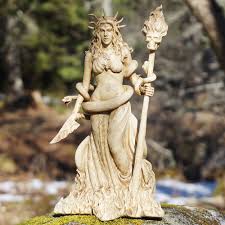
These days, Hekate is often still seen as the Goddess of Witchcraft and Dark Magick, a Dark Crone, because of her connection to the line between life and death. Her chthonic roots are attributed to her aspects as a Death Goddess, but in truth she is not solely death aspected. Her nature is one of transformation, and though change can be terrifying and damaging, it can also be beatific. To think of Her only as a chthonic, Underworld Goddess is to ignore part of her nature.

These days we too often see things in terms of diametric, opposites (light/dark, masculine, feminine, God/Goddess, as if the vast universe is written in binary, nothing more than ones and zeros. While these dichotomies play a role in the nature of the universe, they are also simplified depictions. Deity cannot be contained in the use of dichotomy, because deity transcends those terms.

Hekate is neither light nor dark; she is the very scale of graduation, present at the exact point at which one type of gray becomes another, between every gradient and at either end of the spectrum. Each change is her territory, and there are billions of transformations every day.

Hekate’s connection to magic is another aspect of her nature. Through magic we take what is only potential and pull it into reality, imprinting the mundane world with what could be. And this is one of the biggest changes of all, the transformation for which Hekate has always been particularly revered. Magick is transformation, and it’s from this that Hekate’s association with it is.

In invoking Heckate we can learn to accept changes in our lives, both positive and negative, and we can also create change in our own worlds. She aids the completion and manifestation of spells and when called for divinatory purposes she can help to reveal the truth more readily. She can part the Veil, to allow clearer vision or communion with the dead. Hekate is a protector of children, especially when they walk hard paths, but also in the journey into adulthood.

Hekate guards the crossroads, both those that line our physical reality and those that mark our passage through life, through our spirituality, and through the journey that is existence.

Reference:

Excerpt from:”The Transformative Nature of Hekate”

by Marion Sipe

Llewellyn’s 2012 Magical Living Companion

Tuesday–The Day of Tiu


Tuesday–The Day of Tiu

Tuesday is the first day of the week which is named after a god of the Angles and Saxons–Tiu, the God of War. The Angles and Saxons, like the Greeks and Romans, worshiped many gods, and though these gods were in a great number of ways similar to those of the Greeks and Romans, we also find very great differences. These differences are due to the fact that the Angles and Saxons lived in a very different kind of country, led a very different kind of life, and consequently had different ideas. Their chief enemies were frost and cold, and they imagined the freezing winds to be caused by frost-giants who lived in a land of ice and waged continual warfare with the gods who befriended man and protected him as far as they could against the frost-giants and all the suffering which they caused. The chief of these gods was Woden or Odin, the All-father, of whom we read in the following chapter, and next to him in importance came Thor, the God of Thunder, the bitterest enemy of the giants. The god after whom Tuesday is named was known as Tiu among the Angles and Saxons, and as Tyr among the Norsemen. He was the God of War, and corresponds to Mars among the Romans, whose name for this day was Dies Martis, the day of Mars. The French have kept the Roman name in the form mardi.

Tiu was a great fighter and knew no fear, and was naturally always called upon in time of battle. He was usually represented as having no right hand, owing to a misfortune which befell him in the following way. From his lofty throne Odin, the chief of the gods, one day saw in the land of the giants three terrible monsters, which grew so rapidly that he was filled with fear lest they should invade the home of the gods. Accordingly he determined to get rid of them before they became any stronger. One Hel, an enormous giantess, he flung into the Underworld, where, as the Goddess of Death, she ruled over the kingdom of the dead. Another, Iormungandr, a serpent, he cast into the sea, where it grew so huge that it encircled the whole earth. The third was Fenrir, a wolf, whom Odin brought to Asgard, the home of the gods, hoping that he might eventually tame him. Fenrir, however, grew stronger and fiercer each day, until the gods, of whom Tiu alone was brave enough to go near him, decided at last to bind him in such a way that he could do no harm. A very strong chain was obtained, and the gods suggested to Fenrir, who often boasted of his great strength, that he should allow himself to be bound with it in order to prove whether he was really as strong as he claimed to be. Fenrir agreed, and then by merely stretching himself easily brohe his bonds. Again the gods put him to the test with a still stronger chain, but as before he succeeded in breaking it. Seeing that no ordinary chain would be strong enough to bind Fenrir, the gods sent one of their servants to the home of the dwarfs, a race of little people who lived underground, and who were very clever workers in metal. They also possessed great powers of magic, as we shall see in a later story. At the bidding of the gods, the dwarfs made a silken rope out of the voice of fishes, a woman’s beard, the roots of a mountain, and the footsteps of a cat, which was so strong that no power could break it! A third time the gods challenged Fenrir to show his strength by allowing himself to be bound with this new cord, but Fenrir became suspicious, and at last consented only on condition that one of the gods should put his hand in his mouth, and hold it there as a pledge that the gods were not deceiving him. This condition greatly alarmed the gods, who began to fear that their trick was not going to succeed, but the bold war-god Tiu stepped forward and, without any hesitation, placed his right hand in the wolf’s mouth. The gods at once bound Fenrir with the magic cord made by the dwarfs, and, in spite of all his struggles, the wolf was unable to free himself. Great was the delight of the gods at their success, a delight shared by all but Tiu, who had little cause to be pleased with the result of the trick, for Fenrir, finding he was trapped, immediately bit off the hand of the god. Thus Tiu was deprived of his sword hand, but so clever was he that he wielded his sword equally well with his left hand, and still remained invincible in battle.

On one occasion Tiu and Thor, the God of Thunder, set out for the land of the giants to obtain an enormous kettle, which the gods required for a feast. They came at last to the home of a giant, Hymir, who possessed a kettle a mile deep and a mile wide, and were hospitably received by the giant’s wife. When she learned the errand on which they had come, she warned them that her husband was very fierce and hot-tempered, and advised them to hide themselves when Hymir returned, lest he should kill them with a glance. No sooner had the gods taken refuge behind some kettles, which were kept on a beam at the end of the hall, than Hymir came in. When he heard that visitors had called, he flashed his eyes round the hall so fiercely that, as his glance lighted on the gods’ hiding-place, the beam split in two, the kettles came crashing to the ground, and Tiu and Thor were discovered. Hymir, however, was persuaded by his wife to receive the gods kindly; he prepared a meal of three oxen in their honour, but was astonished and dismayed to see Thor eat two of them himself. The next day the gods gave the giant many proofs of their great strength and skill, and Hymir consented to give them the kettle they were seeking. Tiu at once tried to lift it but failed; then Thor, after a mighty struggle, raised it from the ground, and, as he gave the final pull, his feet broke through the floor of the giant’s house. As soon as the gods had departed, Thor carrying the kettle on his head, Hymir called his brothers together, and pursued after them. Thor, however, attacked them with his famous hammer, and killed them one by one. Tiu and Thor then continued their journey, and brought the huge kettle safely to their own land.

There are few stories told of Tiu, yet he held a high place among the gods, as the name Tuesday shows. He is most famous for his share in the binding of Fenrir, whereby was put off the dreaded Ragnarok, the day of the final battle between the gods and the giants.

The Witches Guide To Tuesdays

Tuesday is the day to work any magick that falls in the category of increasing strength, courage, bravery, and passion. All of these intense emotions are linked to this day’s energies, and spells designed around these themes will have extra punch when performed on this magickal day

So, let’s add a little passion and conviction into your life! Break out the daring red pieces of your wardrobe, and put a little pizzazz into your day. Work with Lilith, and see what she has to teach you about personal power and sexuality. Meditate onTiw/Tyr and Mars, and see what those ancient warrior gods will show you about new tactics, strategies, and claiming personal victories in your life. Practice conjuring up that astral weapon from the meditation and use it wisely for protection and for courage.

Create a philter for courage and protection or handcraft your own Witch’s jar to remove negativity from your home. See what other Witch crafts you can conjure up with Tuesday’s magick. Create some kitchen magick on this Tuesday by whipping up a spicy stew-add in a few Mars-associated ingredients such as carrots, peppers, and garlic. Empower the stew for success, and then treat yourself and your family to a good, hearty meal. Try working with a little aromatherapy and burn some spicy or coffee-scented candles to increase your energy level.

Check the sky at night, and see if you can find the reddish planet Mars up in the heavens. Not sure where to look? Check an astronomy magazine or search the Web for more information. Become a magickal warrior and move forward in your life with strength, courage, and compassion. Embrace the side of yourself that loves a good challenge and that is passionate and daring! Banish fear, and face your future with strength and conviction. Believe in yourself and in your dreams, work hard, and you will win every time.
Source

Book of Witchery: Spells, Charms & Correspondences for Every Day of the Week
Ellen Dugan

MOTHER EARTH/GAIA/ALL EARTH GODDESS’ EARTH DAY April 22, 2021

ALWAYS TRY TO LEAVE THE PLACES YOU TRAVEL CLEANER THAN WHEN YOU GOT THERE!

The theme of this year’s Earth Day is “Restore or Earth” As Pagans and/or Witches it is our duty to help clean up, plant new life, etc. for the Earth Goddess (Whatever name you may caller by). We are conservationists working at ground level to restore and keep the Earth Goddess clean. This way she can continue providing us with all living things that we make our shelter from the weather from, the clothes we wear, and the food we eat.

Remember to pick up after your dog as their scat has E.coli in it which if enough of it seeps into the ground our water and food sources could be come contaminated. Making our water undrinkable and our food inedible.

Treat her with love and respect

We thank you (insert the Earth Goddess’ name you use) for nourishing all living things that help to protect and nourish our physical bodies.

May we always strive to make you a beautiful and healthy in our every day lives.

These are our words to offer our help. This is our will to make our word rings true.

So Mote It Be ( Use whatever words you end your spellcasting and/or prayers with.)

Goddess Calendar for February 2020 by Kimberly F. Moore

“The Sun’s path has returned to where it was at Samhain. Take some time to notice the quality of the light, for it is the same now as that shimmering magical glow of late October. But instead of the season of dark and silence before us, in the Northern Hemisphere, the season of light and growth lies ahead. And so we prepare ourselves with rites of renewal, cleansing, and commitment. We celebrate the first stirrings of Spring.” – Beth Owl’s Daughter, “The Days of Imbolc”

Welcome February!

While Spring Equinox marks the official start of Spring, there is another festival that marks the unofficial “stirrings” of Spring called Imbolc (celebrated February 1-2). It is the quickening of the Goddess as she prepares to cast off Winter and turn her energy to the renewal of Earth. Think of a seed deep within Gaia, the promise of new growth. This is the time when those seeds are quickening, preparing to burst, and eventually bloom into the fertility of Spring. The light grows as well, pulling us steadily out of the darkness of winter. We know Spring is coming even as we remain deep in the womb of Goddess. The church appropriated this ancient Feast and calls it Candlemas and it also coincides with our Beloved Goddess Brigid’s Day.

Here in the Northern Hemisphere, we are entering the in-between Winter time. Could be snow, could be a crocus. Could be 5 degrees, could be 50 degrees. HolyDays and celebrations mark another turn on the Goddess Wheel of the Year and usher in the early Spring festivals like Chinese New Year, Vasant Panchami (Saraswati’s birthday), and Ganesha’s Spring celebration that all occurred at the end of January.

To check out the rest of this month’s Goddesses please click here.