Summer Solstice vs. Winter Solstice

Summer Solstice vs. Winter Solstice

What’s the Difference?

Summer Solstice and Winter Solstice are two significant astronomical events that mark the extremes of the Earth’s axial tilt. Summer Solstice occurs around June 21st in the Northern Hemisphere and December 21st in the Southern Hemisphere, while Winter Solstice takes place around December 21st in the Northern Hemisphere and June 21st in the Southern Hemisphere. During Summer Solstice, the hemisphere tilted towards the Sun experiences the longest day of the year, with the Sun reaching its highest point in the sky. In contrast, Winter Solstice brings the shortest day of the year, with the Sun at its lowest point in the sky. These solstices have cultural and historical importance, often celebrated with various rituals and festivals around the world.

Comparison

Attribute Summer Solstice Winter Solstice
Date June 20-22 December 20-23
Duration of Daylight Longest day of the year Shortest day of the year
Duration of Darkness Shortest night of the year Longest night of the year
Position of Sun Highest in the sky Lowest in the sky
Season Summer Winter
Hemisphere Northern Hemisphere Southern Hemisphere
Celebrations Midsummer, bonfires Winter festivals, Christmas

Further Detail

Introduction

The solstices are significant astronomical events that mark the changing of seasons. The Summer Solstice and Winter Solstice are two of the most well-known solstices, occurring in opposite hemispheres of the Earth. While the Summer Solstice represents the longest day of the year in the Northern Hemisphere, the Winter Solstice marks the shortest day of the year. In this article, we will explore the attributes of both solstices, highlighting their unique characteristics and the impact they have on various aspects of life.

Summer Solstice

The Summer Solstice, also known as Midsummer, is a time when the Northern Hemisphere experiences the longest day and shortest night of the year. It usually falls on June 20th or 21st. This astronomical event occurs when the tilt of the Earth’s axis is most inclined towards the sun, resulting in the sun reaching its highest point in the sky.

One of the most notable attributes of the Summer Solstice is the extended daylight hours. The sun rises early and sets late, providing ample time for outdoor activities and enjoyment of the warm weather. This extended daylight has a significant impact on agriculture, as it allows for increased photosynthesis and growth of crops. Farmers take advantage of this period to maximize their harvests and ensure bountiful yields.

Furthermore, the Summer Solstice holds cultural and spiritual significance in many societies. It is celebrated in various ways around the world, often with festivals, bonfires, and rituals. For example, the ancient monument of Stonehenge in England attracts thousands of visitors who gather to witness the sunrise on this special day. The solstice is seen as a time of renewal, abundance, and connection with nature.

Additionally, the Summer Solstice has a profound impact on wildlife. Many animals, such as birds, migrate during this time, taking advantage of the extended daylight to find food and build nests. It is also a crucial period for plant pollination, as the longer days provide more opportunities for insects and birds to carry out this essential process.

In terms of climate, the Summer Solstice brings warmer temperatures and the onset of summer. It is a time when people flock to beaches, lakes, and other outdoor destinations to enjoy the sun and engage in recreational activities. The longer days and increased sunlight also have positive effects on human health, as exposure to sunlight stimulates the production of vitamin D, which is essential for bone health and overall well-being.

Winter Solstice

The Winter Solstice, also known as Midwinter, is the counterpart to the Summer Solstice. It occurs around December 21st in the Northern Hemisphere when the Earth’s axis is tilted furthest away from the sun. As a result, the Winter Solstice represents the shortest day and longest night of the year.

One of the most prominent attributes of the Winter Solstice is the limited daylight hours. The sun rises late and sets early, leading to longer periods of darkness. This reduced sunlight has implications for various aspects of life, including agriculture, human activities, and wildlife behavior.

In terms of agriculture, the Winter Solstice marks a period of dormancy for many crops. The limited sunlight and colder temperatures slow down plant growth, and farmers often use this time to prepare for the upcoming spring season. It is a time for planning, maintenance, and reflection on the previous year’s harvest.

From a cultural perspective, the Winter Solstice holds significant meaning in many societies. It is often associated with celebrations and festivals that embrace the return of light and the promise of longer days. For example, the ancient Roman festival of Saturnalia and the modern-day celebration of Christmas both coincide with the Winter Solstice. These festivities bring people together, fostering a sense of warmth, joy, and hope during the darkest time of the year.

Furthermore, the Winter Solstice affects wildlife behavior in various ways. Many animals adapt to the limited daylight by hibernating or migrating to warmer regions. The scarcity of food during this time also influences the feeding patterns of certain species. Additionally, the Winter Solstice provides unique opportunities for observing nocturnal animals and appreciating the beauty of the night sky.

In terms of climate, the Winter Solstice brings colder temperatures and the official start of winter. It is a time when people bundle up in warm clothing, gather around fireplaces, and engage in indoor activities. The limited daylight can have an impact on mental health, as some individuals may experience seasonal affective disorder (SAD) due to reduced exposure to sunlight. However, the Winter Solstice also offers a chance for introspection, rest, and rejuvenation.

Conclusion

The Summer Solstice and Winter Solstice are two significant astronomical events that mark the changing of seasons in the Northern Hemisphere. While the Summer Solstice represents the longest day and brings extended daylight, warmth, and abundance, the Winter Solstice marks the shortest day and brings limited daylight, colder temperatures, and a time for reflection. Both solstices hold cultural, agricultural, and ecological importance, shaping various aspects of life on Earth. Whether it’s celebrating the sun’s zenith during the Summer Solstice or embracing the return of light during the Winter Solstice, these celestial events remind us of the cyclical nature of our planet and the interconnectedness of all living beings.

Spell For the Winter Solstice – 10 Winter Solstice Rituals to Welcome the Season’s Magic

(YOU CAN COPY AND PASTE ANY SPELLS POSTED TO A DOCUMENT TO PRINT AND/OR SAVE ON YOUR COMPUTER FOR PERSONAL USE ONLY)

10 Winter Solstice Rituals to Welcome the Season’s Magic

As the wheel of the year once again turns toward the chill of winter, I find myself eagerly anticipating the quiet hush that descends with the snow. The Winter Solstice, a time of equal night and day, beckons us into a world of stillness, a pause in the breath of the earth before the slow exhale into longer days.

This celestial event marks a pivotal point in our journey around the sun, a moment of balance before the scales tip towards the growing light. It’s a perfect moment to pause and think about what this change brings to our lives. Remember, everything in life is cyclical – there’s always something ending and something else beginning. Today, we’ve got a list of some of our favorite Winter Solstice Rituals to help you celebrate the end of long dark days.

What is the Winter Solstice?

The winter solstice is a point in time when the night is at its longest and the day its shortest. It is marked by the Sun’s most southerly position relative to the celestial equator, an occurrence that takes place around December 21 or 22 in the Northern Hemisphere and around June 20 or 21 in the Southern Hemisphere. This celestial event signifies the start of winter, a period that extends until the spring equinox.

Embracing the Stillness

The Winter Solstice invites us to embrace the stillness and the introspective nature of the season. It’s a profound time to gather close, sharing the warmth of hearth and home while feasting on winter’s offerings like root vegetables, hearty stews, nuts, and citrus fruits.

The winter solstice, also known as Yule, is the deepest part of winter – a time for rest and renewal. It’s celebrated with quiet reflection, cozy gatherings, and rituals that honor the longest night and the rebirth of the sun. It’s a moment to light candles, share stories, and set intentions for the returning light.

Each chapter of our lives brings its unique lessons, just as the seasons change and bring their own forms of energy. Honoring the winter solstice helps us to cultivate inner strength and resilience as we navigate life’s colder, more reflective times.

The Wheel of the Year turns, and with it, we find guidance for living a life of harmony. It teaches us to flow with the natural rhythms of the earth, celebrating our connection to the cycles of nature. By observing these ancient traditions, we align ourselves with the natural world, finding a more balanced approach to life that honors our need for rest, reflection, and connection during the winter months.

10 Winter Solstice Rituals

In the spirit of this introspective season, I invite you to join me in embracing the stillness through ten heartfelt Winter Solstice rituals that honor the quietude and depth of winter:

1) Welcome the Dawn

One of my favorite winter solstice rituals is to greet the new dawn. On the morning of the solstice, rise while the stars still twinkle in the pre-dawn sky, finding your place in the world’s hushed tones before the day begins. Stand in the crisp air, feeling the stillness of the earth, and watch with reverence as the horizon slowly brightens.

Engage all your senses as the first light creeps across the sky, expressing silent gratitude for the sun’s return after the longest night. Notice as the world transitions from night to day—perhaps it’s the frost sparkling on the grass, the early birds’ tentative chirping, or the fresh scent of pine in the cold morning air.

With the light’s gentle increase, offer your words of appreciation and love to the dawn. Speak of the beauty found in the quiet, the peace of the world at rest, and the promise of the lengthening days to come. You might leave behind a heartfelt gift to the morning—a written verse, a hand-drawn sketch, or a splash of water on the earth—anything that feels like a fitting tribute to the solstice morn.

As the sun rises, take a deep breath, filling your lungs with the cold, pure air, and then retreat indoors to enjoy a warm mug of winter spice herbal tea. This act of welcoming the dawn on the winter solstice is a profound reminder of the ever-turning wheel of the year and the continuous cycle of renewal and rebirth.

2) Candle Vigil

3) Take a Nature Walk

4) Sacred Smoke Bundle Creation

5) Journaling by Firelight

6) Craft Some Herbal Brews

7) Prepare an Ancestral Feast

8) Restorative Yoga

9) Night Sky Gazing

10) Bathe with the Herbs of the Winter Solstice

Some of the Witchcraft/Magickal Correspondence for Yule – 103 Yule Correspondences For An Amazing Winter Solstice Ritual

(YOU CAN COPY AND PASTE ANY COROSPONDENCES POSTED TO A DOCUMENT TO PRINT AND/OR SAVE ON YOUR COMPUTER)

103 Yule Correspondences For An Amazing Winter Solstice Ritual

Yule, or the Winter Solstice, is one of our favorite Pagan holidays! The vitality of red, the abundance of green, and the protection and guidance of white make up the most memorable vibes and colors of this winter celebration!

As the longest night and shortest day of the year, this wintertime sabbat is also known as the Winter Solstice to many, while some people call it Pagan Christmas. Regardless of what you call it, this beautiful second stop on the new Wheel of the Year represents the rebirth of the Sun!

The History of Yule & The Winter Solstice

Yule, also known as the Winter Solstice, is a time for celebrating the renewal and rebirth of life. It is a season that emphasizes the importance of family, with traditions such as feasting and gift-exchanging playing a central role. Gifts symbolize generosity and connection among family and friends, reflecting the spirit of giving during this joyous time. Yule is a period for strengthening bonds with loved ones, honoring family and friends, and reflecting on themes of generosity and unity.  Click the hyperlinks above to read the rest of this article

Spell For Summer Solstice – 10 Beautiful Rituals for Summer Solstice

(YOU CAN COPY AND PASTE ANY SPELLS POSTED TO A DOCUMENT TO PRINT AND/OR SAVE ON YOUR COMPUTER FOR PERSONAL USE ONLY)

10 Beautiful Rituals for Summer Solstice

Celebrate the first day of summer on December 21st with these rituals for summer solstice. May they bring you joy, love, and light in your life.

In nature-based faiths, the summer solstice is known as Litha and is considered one of the most sacred sabbats of the year. It marks the start of the summer months and the longest day of the year before the nights start to grow longer again.

People gather at Stonehenge for day and night long celebrations watching the sun align and shine through a certain point in the structure. In its most basic essence, this day is a celebration of the sun and that it is still shining on us. It will go out one day—but we should revel in our good fortune that we were born at this point in Earth’s evolution. The solstice also holds deeper nature metaphors for life, fertility, and the cycle of time and seasons. No matter what your view of spirituality or nature, it’s always worth celebrating when there’s sunshine involved!

It’s Summer Solstice!

What better time to get together with friends, family, and loved ones, and celebrate the source of all life? What better time to acknowledge the life force energy within us and give back to Creation some of the energy and blessings that we are always receiving. The Earth constantly provides for all of us with her incredible bounty, and the Sun’s warmth provides the light necessary for all living beings to thrive and prosper.

Creating ceremonies, celebrations, or rituals for summer solstice is a way for humans to express gratitude for these gifts. We have so many things to be thankful for—our families, our friends, our homes—and there are so many ways we can express our gratitude for those things: through words and actions, through gifts and offerings, through celebration.

The summer solstice is a great day on which to create your own ceremony or ritual of gratitude. It’s also a good time to connect with nature; find someplace where you can sit in silence with just yourself and your thoughts. There’s something invigorating about spending time alone in nature; it helps us reconnect with ourselves as well as with the natural world around us.

Rituals for Summer Solstice

1. Gather herbs

One of my favorite rituals for summer solstice is to gather plants and healing herbs as our ancestors did. Five common Celtic sacred plants associated with Midsummer are St. John’s Wort, Vervain, Yarrow, Fern, and Mugwort.

Manifold ceremonial features are associated with the Midsummer celebrations, but the lore of herbs and plants traditionally took the center spotlight around this special festivity. Herbs constitute a strong element for celebrating the Midsummer solstice due to their strong connections with magical and healing powers.

2. Have a Bonfire

3. Watch the Sun Rise and Set

4. Decorate Your Alter

5. Prepare a Summer Solstice Gathering

6. Bathe in the Light and Warmth of the Sun

7. Set Your Intentions

8. Spend Time in Nature

9. Leave Fairy Offerings

10. Create a Prayer Tree

Spell For Tomorrow – Cernunnos’ Abundance Prayer

(YOU CAN COPY AND PASTE ANY SPELLS POSTED TO A DOCUMENT TO PRINT AND/OR SAVE ON YOUR COMPUTER FOR PERSONAL USE ONLY)

Cernunnos’ Abundance Prayer

Light a green candle during this prayer to Cernunnos

Incense for Cernunnos: Cedar, Musk, Pine, Sandalwood.

Offerings to Cernnunos: Bones, Fruit, Grains, Red meat, Wine, Milk, Water, Moss, Fresh soil.

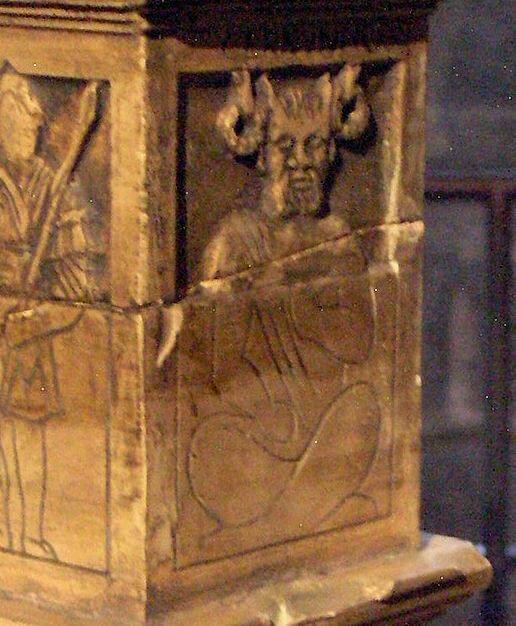
The Celtic Forest God, Cernunnos, gets his name from a Latin word which means “the horned one”. His original name was lost but the name Cernunnos was inscribed in the Pilier des Nautes, a Gaelic-Roman monument found under the Notre Dame cathedral, in Paris, France in 1711.

As a Horned God, he can take the place of consort of the Goddess in the Wiccan Pantheon (God and Goddess). And as a primordial deity in Neopagan traditions, his male principality makes him often be merged with other gods such as Pan and the Green Man.

He is believed to be the god of abundance and ruler of wild animals. His nature is essentially earthly. He is usually depicted with the ears and horns of a deer and wearing a “torque”, the sacred neck ornament of Celtic gods and heroes.

Devotional text

Cernunnos, Guardian of the cauldron of plenty, I call to You.
Horned One, Dark One, Receiver of the Dead, Granter of Rest, I call to You.
God of freedom, God of sexuality, God of cleansing, God of rebirth, I call to You.
Mighty Lord of the Woods and Animals, Hunter and Hunted, I call to You.

I pray you to be present with me in this Sacred Space.
Let Your gaze fall upon this Sacred Ground.
In-dwell my rite and give me Your blessing.
Great Horned One, come into the Circle!

Pour over me the gift of your wealth, and place in my hands the spirit of fortune.
Let the gold and silver come from the four corners of the world and bless me.

Because you are a god that creates and multiplies,
From the top of my head to the soles of my feet,
Surround me with a stream of wealth.
Unleash your prosperity and let health and protection accompany me.

I hear your words, Cernunnos, the voice of the Horned One,  Whose names are uncountable:
You are the wild hunter of the forest deep,
You are the fire upon the hill, And the sower of the seed,

The wilderness is your shrine.
You wield the oaken staff, the elements at your call.
By day you are the sun, by night you ride upon the wild winds
For all things wild and free are in your keeping.

And all things of beauty and freedom and love delight you.
You are the Ancient One. Your faces outnumber the stars.
I am the Horned One of uncountable names, you are the gentle and the fierce
You are Cernunnos, the Ancient One, Lord and Sire of the Universe.

Some of the Witchcraft/Magickal Correspondence for Thursday

(YOU CAN COPY AND PASTE ANY COROSPONDENCES POSTED TO A DOCUMENT TO PRINT AND/OR SAVE ON YOUR COMPUTER)

Thursday Source: smudgemetaphysical.com

Planet: Jupiter

Colour: blue, purple, green

Plants: oak, wheat

Stone: Amethyst, Lepidolite, Sugilite, Tin

Herbs: Clove, Oakmoss, Cinnamon, Musk, Nutmeg, and Sage

Oils:manifest oil

Gods: Thor, Jupiter, Zeus, Taranis, Perun, and Perkunas.

Thursdays are ruled by the planet Jupiter. It is also associated with the Norse god Thor and the Roman God Jupiter. Jupiter is the largest planet and therefor the most powerful. 

Thursday is the best day to perform manifesting magic. Prepare that money magic, ask for that raise, have fun with friends and loved ones. 

Spells and rituals: luck, happiness, health, legal matters, male fertility, treasure, wealth, honour, riches, clothing, money, desires, business, group pursuits, joy, laughter, and expansion.

Thrifty Thursday spells:

Write what you want to manifest on a bay leaf and burn it.

Start your morning with a slice of whole wheat toast. Add butter or your choice of spread in the form of a dollar symbol ($) and feel the abundance and prosperity entering your life. 

Have a meal with a good friends or family. Laugh a lot and feel how abundant your life is with the love and friendships you have. 

Thursday Source: whitewitchgrimoire.com

Planet: Jupiter
Colors: Blue and Metallic

Ahhh Jupiter, you giant dick. While he is the go-to for power, money and good fortune, he’s about the long game. Fast money? Nope. He will give you more of what you have, so if you’re broke, you may be even more impoverished if you use any of his influence. Be careful with them herbs. Looking for justice? Thursday. Signing contracts or making big money moves? Thursday. Abundance looks different to everyone, but this is the day of plenty….sometimes that is just plenty of what you already have man. I’m serious here. My money spells done in the past before I got my shit together created lasting wounds. Expansion is painful when it comes from a space of lack. I said “I need money! I am broke” and he said “Hold my beer you desperate witch” and then I cried. Great money day if you are attracting what you are, but not what you want. I speak from my own experience and yours may differ, but if your money spells have backfired, look at the day and associations. If you see anything, take note. Everyone is different but I am not even ashamed to say that it took me years to figure this one out for my own magic. Good day for court and child support I must say.

Some of the Witchcraft/Magickal Correspondence for the Last Quarter Moon

(YOU CAN COPY AND PASTE ANY CORRESPONDENCES POSTED TO A DOCUMENT TO PRINT AND/OR SAVE ON YOUR COMPUTER)

LAST QUARTER Source: thehoodwitch.com

Moon rises at midnight and sets at noon; best effects between these times

Moon is 7-10 1/2 days after the full moon.

Workings: Addictions, divorce, endings, health and healing (banishing), stress, protection, and ancestors.

Purpose: Absolute destruction

Pagan Holiday: Fall Equinox

Goddess Name: The Morrigan’s Moon

Goddess Energy: harvest goddesses

Offering: Incense

Theme: Banishing

Tarot Trump: Judgement

Spell For Tomorrow – Sunshine Power Candle Dressing

(YOU CAN COPY AND PASTE ANY SPELLS POSTED TO A DOCUMENT TO PRINT AND/OR SAVE ON YOUR COMPUTER FOR PERSONAL USE ONLY)

Sunshine Power Candle Dressing

Kate Freuler Llewellyn’s Witches’ Datebook 2023 Page 49

This candle dressing harnesses the power of the Sun and is best used on a yellow or orange candle. This recipe can include spells for success, inspiration, and growth of all kinds. It can also be put on a candle and burned in a place that simply needs a boost of joy.

For anointing, you’ll need

1 drop sunflower oil

1 drop cedar oil

Dry ingredients include

1 teaspoon dried crushed sunflower petals

1 teaspoon hot chili powder

1 teaspoon dried marigold or calendula petals

Combine dry ingredients in a bowl or on a plate. Use an orange or yellow marker to draw a picture of the Sun on a piece of paper. If you like, you can add words of affirmation to the drawing that align with your goals. Place the paper outdoors or in a window where it will be in direct sunlight for an hour or more. Put the bowl of plant mixture in the center of the Sun drawing and let the warm rays empower them with solar energy.

Some of the Witchcraft/Magickal Correspondence for a Full Moon

(YOU CAN COPY AND PASTE ANY CORRESPONDENCES POSTED TO A DOCUMENT TO PRINT AND/OR SAVE ON YOUR COMPUTER)

Source: lunasgrimoire.com

The Full Moon: Your Heart’s Desire Seek

A powerful energy for rituals of prophecy, divination and protection. Any spellwork that requires extra energy, such as finding a new job or healing serious conditions, is best begun during the full moon. Also for love, gaining sacred knowledge, legal matters, attracting money and prophetic dreams.

This is a time to really go for what you want. When the moon is full, her energy is very powerful and you can ask her to help you to accomplish almost anything. The energy of the full moon is great for magick involving divination, dreams, love and whatever else you desire. Some say full moon energy is available three days before the actual date of the full moon and three days after that date. I personally say the day before and the day after the full moon is most potent.

We use the power of the full moon to cleanse and empower tools by leaving them to soak up lunar rays. You can do this by leaving them outside or in a windowsill that gets moonlight on it.

Spell For Tuesday – Energy Building: Quick Chant to Manifest your Need

(YOU CAN COPY AND PASTE ANY SPELLS POSTED TO A DOCUMENT TO PRINT AND/OR SAVE ON YOUR COMPUTER FOR PERSONAL USE ONLY)

Energy Building: Quick Chant to Manifest your Need

Want to help your need manifest faster? The key to helping your spells and intentions manifest faster is to have emotion and energy behind the intent! One of our favorite ways to raise energy, aside from drumming and dancing, is chanting! The elements are used heavily within this charm because they are the building blocks of existence on our plane.

This quick chant will help you find the rhythm of your circle’s energy, harness it, and add it to your spell. Simply:

  1. Begin chanting the following chant plus your spell.
  2. Feel the elemental building blocks of energy inside of your space.
  3. Know that they are aiding in your spell’s manifestation!
  4. When you feel the speed and energy of the chant mounting, dare to be silent and know that the charm has worked.

Quick Chant to Manifest your Need

This chant can be said with visualization or by passing your written spell over and through the elements as you say them. Always follow your heart and intuition.

As always, spells are worked best within a protective circle where energy can be contained and released intentionally.

Air for intellect

Fire to warm

Water for emotion

Earth to form

[Say your spell or intention for manifestation here]

Repeat as necessary.

(One Person’s View Point) A Look at Today’s USA Military’s Views on Wicca and Other Pagan Paths

Today’s Military Views on Wicca US Army Chaplain’s Manual from wicca.com

Excerpt from the U.S. Army’s Religious Requirements and Practices of Certain Selected Groups: A Handbook for Chaplains (pgs 231-236). Available from:

USAF Chaplain’s Service Institute
Resource Division

WICCA

OTHER NAMES BY WHICH KNOWN:
Witchcraft; Goddess worshippers; Neo-Paganism, Paganism, Norse (or any other ethnic designation) Earth Religion, Old Religion, Druidism, Shamanism.

Note: All of these groups have some basic similarities and many surface differences of expression with Wicca.

LEADERSHIP:
No central leadership. The Covenant of the Goddess annually elects a First Officer and there is a constitutional limit of two consecutive terms, but in practice officers have almost always served for one year only. In 1991, there are two Co-First Officers, Phoenix Whitebirch and Brandy Williams.

Note: This Covenant does not govern any Coven other than its’ own.

MEMBERSHIP:
Because of the complete autonomy of covens, this cannot be determined. There are an estimated of 50,000 Wiccans in the United States.

Hernes note: This number is now substantially higher and estimated at over 200,000 (now over 1.5 million in 2020). Wicca is currently the fastest growing spiritual path in the U.S.

HISTORICAL ORIGIN:
Wicca is a reconstruction of the Nature worship of tribal Europe, strongly influenced by the Living Nature worship traditions of tribal peoples in other parts of the world.

The works of such early twentieth century writers as Margaret Murray, Robert Graves and Gerald B. Gardner began the renewal of interest in the Old Religion. After the repeal of the anti-Witchcraft laws in Britain in 1951, Gardner publicly declared himself a Witch and began to gather a group of students and worshipers.

In 1962, two of his students, Raymond and Rosemary Buckland (religious names: Lady Rowen and Robat), emigrated to the United States and began teaching Gardnerian Witchcraft here. At the same time, other groups of people became interested through reading books by Gardner and others. Many covens were spontaneously formed, using rituals created from a combination of research and individual inspiration. These self-created covens are today regarded as just as valid as those who can trace a “lineage” of teaching back to England.

In 1975, a very diverse group of covens who wanted to secure the legal protections and benefits of church status formed Covenant of the Goddess (CoG), which is incorporated in the State of California and recognized by the Internal Revenue Service. CoG does not represent all, or even a majority of Wiccans. A coven or an individual need not be affiliated with CoG in order to validly practice the religion. But CoG is the largest single public Wiccan organization, and it is cross-Traditional (i.e. non-denominational).

BASIC BELIEFS:
Wiccans worship the sacred as immanent in Nature, often personified as Mother Earth and Father Sky. As polytheists, they may use many other names for Deity. Individuals will often choose Goddesses or Gods from any of the world’s pantheons whose stories are particularly inspiring and use those Deities as a focus for personal devotions.

Similarly, covens will use particular Deity names as a group focus, and these are often held secret by the groups. It is very important to be aware that Wiccans do not in any way worship or believe in “Satan,” “the Devil,” or any similar entities. They point out that “Satan” is a symbol of rebellion against and inversion of the Christian and Jewish traditions.

Wiccans do not revile the Bible. They simply regard it as one among many of the world’s mythic systems, less applicable than some to their core values, but still deserving just as much respect as any of the others. Most Wiccan groups also practice magic, by which they mean the direction and use of “psychic energy,” those natural but invisible forces which surround all living things. Some members spell the word “magick,” to distinguish it from sleight of hand entertainments.

Wiccans employ such means as dance, chant, creative visualization and hypnosis to focus and direct psychic energy for the purpose of healing, protecting and aiding members in various endeavors. Such assistance is also extended to non-members upon request.

Many, but not all, Wiccans believe in reincarnation. Some take this as a literal description of what happens to people when they die. For others, it is a symbolic model that helps them deal with the cycles and changes within this life. Neither Reincarnation nor any other literal belief can be used as a test of an individual’s validity as a member of the Old Religion.

Most groups have a handwritten collection of rituals and lore, known as a Book of Shadows. Part of the religious education of a new member will be to hand copy this book for him or herself. Over they years, as inspiration provides, new material will be added. Normally, access to these books is limited to initiated members of the religion.

PRACTICES AND BEHAVIORAL STANDARDS:
The core ethical statement of Wicca, called the “Wiccan Rede” states “an it harm none, do what you will.” The rede fulfills the same function as does the “Golden Rule” for Jews and Christians; all other ethical teachings are considered to be elaborations and applications of the Rede. It is a statement of situational ethics, emphasizing at once the individual’s responsibility to avoid harm to others and the widest range of personal autonomy in “victimless” activities. Wicca has been described as having a “high-choice” ethic.

Because of the basic Nature orientation of the religion, many Wiccans will regard all living things as Sacred, and show a special concern for ecological issues. For this reason, individual conscience will lead some to take a pacifist position. Some are vegetarians. Others will feel that, as Nature’s Way includes self-defense, they should participate in wars that they conscientiously consider to be just. The religion does not dictate either position, but requires each member to thoughtfully and meditatively examine her or his own conscience and to live by it. Social forces generally do not yet allow Witches to publicly declare their religious faith without fear of reprisals such as loss of job, child custody challenges, ridicule, etc. Prejudice against Wiccans is the result of public confusion between Witchcraft and Satanism. Wiccans in the military, especially those who may be posted in countries perceived to be particularly intolerant, will often have their dog tags read “No Religious Preference.” Concealment is a traditional Wiccan defense against persecution, so non-denominational dog tags should not contravene a member’s request for religious services.

Wiccans celebrate eight festivals, called “Sabbats,” as a means of attunement to the seasonal rhythms of Nature. These are January 31 (Called Oimelc, Brigit, or February Eve), March 21 (Ostara or Spring Equinox), April 30 (Beltane or May Eve), June 22 (Midsummer, Litha or Summer Solstice), July 31 (Lunasa or Lammas), September 21 (Harvest, Mabon or Autumn Equinox), October 31 (Samhain, Sowyn or Hallows), and December 21 (Yule or Winter Solstice.)

Some groups find meetings within a few days of those dates to be acceptable, others require the precise date. In addition, most groups will meet for worship at each Full Moon, and many will also meet on the New Moon.

Meetings for religious study will often be scheduled at any time convenient to the members, and rituals can be scheduled whenever there is a need (i.e. for a healing). Ritual jewelry is particularly important to many Wiccans. In addition to being a symbol of religious dedication, these talismans are often blessed by the coven back home and felt to carry the coven’s protective and healing energy.

ORGANIZATIONAL STRUCTURE:
Most Wiccans meet with a coven, a small group of people. Each coven is autonomous. Most are headed by a High Priestess, often with the assistance of a High Priest. Some are headed by a High Priestess or High Priest without a partner, and some regard themselves as a gathering of equals. Covens can be of mixed gender, or all female or male, depending on the preferences of the members. Every initiate is considered to be a priestess or priest.

Most covens are small. Thirteen is the traditional maximum number of members, although not an absolute limit. At that size covens form a close bond, so Wiccans in the military are likely to maintain a strong affiliation with their covens back home. There are many distinct “Traditions” of Wicca, just as there are many denominations within Christianity.

The spectrum of Wiccan practice can be described as ranging from “traditional” to “eclectic,” with Traditions, covens and individuals fitting anywhere within that range. A typical difference would be that more traditional groups would tend to follow a set liturgy, whereas eclectic groups would emphasize immediate inspiration in worship.

These distinctions are not particularly important to the military chaplain, since it is unlikely that enough members of any one Tradition would be at the same base. Worship circles at military facilities are likely to be ad-hoc cross-Traditional groups, working out compromise styles of worship for themselves and constantly adapting them to a changing membership.

Therefore, the lack of strict adherence to the patterns of any one Tradition is not an indicator of invalidity. While many Wiccans meet in a coven, there are also a number of solitairies. These are individuals who choose to practice their faith alone. The may have been initiated in a coven or self initiated. They will join with other Wiccans to celebrate the festivals or to attend the various regional events organized by the larger community.

ROLE OF MINISTERS:
Within a traditional coven, the High Priestess, usually assisted by her High Priest, serves both as leader in the rituals and as teacher and counselor for coven members and unaffiliated Pagans. Eclectic covens tend to share leadership more equally.

WORSHIP:
Wiccans usually worship in groups. Individuals who are currently not affiliated with a coven, or are away from their home coven, may choose to worship privately or may form ad-hoc groups to mark religious occasions. Non-participating observers are not generally welcome at Wiccan rituals.

Some, but not all, Wiccan covens worship in the nude (skyclad) as a sign of attunement with Nature.

Most, but not all, Wiccan covens bless and share a cup of wine as part of the ritual. Almost all Wiccans use an individual ritual knife (an “athame”) to focus and direct personal energy. Covens often also have ritual swords to direct the energy of the group. These tools, like all other ritual tools, are highly personal and should never leave the possession of the owner.

Other commonly used ritual tools include a bowl of water, a bowl of salt, a censer with incense, a disk with symbols engraved on it (a “pentacle”), statues or artwork representing the Goddess and God, and candles. Most groups will bless and share bread or cookies along with the wine. All of these items are used in individual, private worship as well as in congregate rituals.

DIETARY LAWS OR RESTRICTIONS:
None.

FUNERAL AND BURIAL REQUIREMENTS:
None. Recognition of the death of a member takes place within the coven, apart from the body of the deceased. Ritual tools, materials, or writings found among the effects of the deceased should be returned to their home coven (typically a member will designate a person to whom ritual materials should be sent). It is desirable for a Wiccan priest or priestess to be present at the time of death, but not strictly necessary. If not possible, the best assistance would be to make the member as comfortable as possible, listen to whatever they have to say, honor any possible requests, and otherwise leave them as quiet and private as possible. (Sind Note Pagans can now have a pentagram on their headstone in any official USA military cemetary)

MEDICAL TREATMENT:
No medical restrictions. Wiccans generally believe in the efficacy of spiritual or psychic healing when done in tandem with standard medical treatment. Therefore, at the request of the patient, other Wiccan personnel should be allowed visiting privileges as though they were immediate family, including access to Intensive Care Units. Most Wiccans believe that healing energy can be sent from great distances, so, if possible, in the case of any serious medical condition, the member’s home coven should be notified.

OTHER:
With respect to attitude toward military service, Wiccans range from career military personnel to conscientious objectors. Wiccans do not proselytize and generally resent those who do. They believe that no one Path to the Sacred is right for all people, and see their own religious pattern as only one among many that are equally worthy. Wiccans respect all religions that foster honor and compassion in their adherents, and expect the same respect. Members are encouraged to learn about all faiths, and are permitted to attend the services of other religions, should they desire to do so.

GENERAL SOURCE BOOKS:

Note by Herne: Since this was written by the military, the list of books available has grown subtantially. For more topics and titles, see our Suggested Reading List.

The best general survey of the Wiccan and neo-Pagan movement is: Adler, Margot. Drawing Down the Moon. Boston: Beacon Press, 1986. 595pp

For more specific information about eclectic Wicca, see: Starhawk. The Spiral Dance. New York: Harper & Row, 1979.

For more specific information about traditional Wicca, see: Farrar, Janet, and Stewart Farrar. Eight Sabbats for Witches. London: Robert Hale, 1981. 192pp.

The Witches’ Way. London: Robert Hale, 1984. 394pp.

FOR MORE INFORMATION, CONTACT:

Pagan Military Newsletter c/o Terri Morgan, Editor, 829 Lynnhaven Parkway 114-198 Virginia Beach, VA 23452

Because of the autonomy of each coven and the wide variance of specific ritual practices, the best contact person would be the High Priestess or other leader of the member’s home coven.

Some of the Witchcraft/Magickal Correspondence for Friday

(YOU CAN COPY AND PASTE ANY COROSPONDENCES POSTED TO A DOCUMENT TO PRINT AND/OR SAVE ON YOUR COMPUTER)

Friday Source: flyingthehedge.com

Friday comes from the Old English name frigedaeg, which comes from the Norse goddess Frigga. Frigga, like Venus, is associated with love, making this a great day to focus on romance, passion, fertility, and friendship.
Color: Pink, aqua,
Planet: Venus
Deities: Freya, Venus, Aphrodite
Crystals: Coral, emerald, rose quartz
Herbs: Strawberries, apple blossoms, feverfew
Associations: Love, birth, romance, fertility, passion, friendship, pregnancy

Friday Source: spells8.com

Deities

Fridays are ruled by Venus, Aphrodite, Isis, Hathor, and Eros among others.

Tea

Drink a cup of Hibiscus Tea to connect with Friday’s loving energy.

Hibiscus is a flavorful herb which is packed with antioxidants. It promotes weight loss and may help lower blood pressure. Traditionally, it has been used to make love potions and aphrodisiac charms.

Herbs

Apple, Birch, Myrtle, Saffron, Sandalwood, Feverfew, Raspberry, Rose, Strawberry, Thyme, Violet

Crystals

Love Activation”>Rose Quartz, Aventurine, Emerald, Jade, Pink Tourmaline, Peridot, Amber, Ruby.

Spells

Friday color correspondences are Pink and Green. A simple spell is: Burn a pink candle and meditate as you repeat self-love affirmations.

(One Person’s View Point) Calling In Of The Four Directions

(One Person’s View Point) Arts of Witchcraft: Magickal Uses of the Four Elements c. 2018


Arts of Witchcraft: Magickal Uses of the Four Elements

There are four basic systems which are useful in creating magical influences related to the four elements of earth, air, fire and water. Fire works through combustion, water through mixture, air through evaporation, and earth through decomposition. These aspects are incorporated in the completion of a spell or other magical work. Generally you will have some material left over to dispose of (wax, ashes, and so forth) and it is correct to use one of the elemental methods to complete the final stages.

If your spell was to influence a person then the earth element is used. If it was to accomplish a specific goal then fire is good. Romantic works are best with water and matters concerning mental creativity employ the element of air.

The following examples can be used to complete whatever spell you were working on.

FIRE:
Take a piece of paper or cloth and moisten it with the universal condenser. Place this in front of you and concentrate on the work of magic. Strongly imagine your thoughts to be filling the material. Imagine your desire being “written” by your thoughts across the material. When your concentration is breaking then the material is fully saturated. Now simply burn the cloth or paper in an open fire. While it is burning concentrate on your desire. The fire releases the charge and merges it with the element.

AIR:
Take a small metal container and fill it about half full. Add 3 drops of universal condenser. Put the container over a flame and concentrate upon your desire as you gaze into the water. As the steam begins to rise, imagine your desire being drawn up and carried off. Continue until all the water has been evaporated.

WATER:
Take a container and fill it about half full with fresh water. Add 3 drops of universal condenser and 3 drops of rubbing alcohol. Now impregnate the water with your concentrated desire. When you feel that it is full pour the water into a stream, river or any moving body of water.

EARTH:
With this element your concentration is centered on the universal condenser which you place in a jar after it has been loaded. Then this is poured out over a selected spot of earth to be absorbed directly into the element of earth.

Source: JANA HOLLINGSWORTH A good, useful, practical note. It seems people often use the four elements only for casting a circle, or simply have them represented on their altars. It’s a good idea to use a specific element for a specific purpose, rather than always calling on all four. I suspect these spells would be best performed outdoors, making the elements seem more real. Pouring one’s spell-water into a stream would feel better than pouring it down the drain.

Some of the Witchcraft/Magickal Correspondence for Thursday

(YOU CAN COPY AND PASTE ANY COROSPONDENCES POSTED TO A DOCUMENT TO PRINT AND/OR SAVE ON YOUR COMPUTER)

Thursday Source: amagickalpath.co.uk

THURSDAY

Planet – Jupiter

Spells/Magic – money, prosperity, holiday, travel, business, luck, growth, self improvement, generosity, health, wealth

Magical aspects: controlled optimism, energetic growth, physical well-being, material success, expansion, money/wealth, prosperity, leadership, and generosity.

Oils – lime, magnolia, strawberry, vanilla

plants and trees – sage, nutmeg,oak tree,meadowsweet, hyssop,borage,butterfly weed,clove,dandelion chestnut,maple tree, anise .

Stones – Amethyst, laptis lazuli, sapphire

Colours – blue, metallic colours, green, turquoise, white, purple.

Metal – Tin

Energy Type – Male

Dieties – dedicated to Thor, god of thunder and agricultural work. his parallels in various European Traditions include Zeus, Taranis, Perun, and Perkunas.

Thursday is the best time to deal with such matters as: Business, Gambling, Logic, Social Matters, Political Power, Material Wealth, Publishing, Collage Education, Long Distance Travel, Foreign Interests, Religion, Philosophy, Forecasting, Broadcasting, Publicity, Expansion, Luck, Growth, Sports, Horses, The Law, Doctors, Guardians, Merchants, Psychologists, Charity, Correspondence Courses, Self-improvement, Researching, Reading and Studying.

Thursday Source: flyingthehedge.com

Thursday

Taking its name from the Norse god Thor, this is a great day to work magic regarding growth, expansion, prosperity, business, abundance, and success. See my prosperity candle magic spell.
Color: Royal blue, green, purple
Planet: Jupiter
Deities: Thor, Zeus, Jupiter, Juno
Crystals: Turquoise, amethyst, lapis lazuli
Herbs: Honeysuckle, oak, cinquefoil
Associations: Honor, loyalty, harvest, prosperity, abundance, wealth, healing

A Witch By Any Other Name (The Great Wicca vs. Witchcraft Debate) c.2016

A Witch By Any Other Name (The Great Wicca vs. Witchcraft Debate)

Author: Mike Nichols

“A difference that makes no difference is not a difference.” –Ambassador Spock

It took more than twenty years before I first ran across the notion that Witchcraft and Wicca were not the same thing. I don’t remember where I first read it, but I do remember feeling bemused at such an assertion, and assumed the author had failed to do adequate research into the origins of the word “witch”. I also assumed I’d heard the last of it. I assumed wrong!

Over the years, I’ve seen this sentiment turning up more and more, in conversations, in online discussions and websites, and even in published works on Witchcraft. It is often stated with such conviction that one might conclude it is the very least one needs to know on the subject. The author is usually at pains to convey the distinction that Wicca designates a religion, whereas Witchcraft is merely the practice of magic. In recent years, I have come across three further amplifications: The first is that some groups identify themselves as practicing Wicca exclusively, as a religious or spiritual path. As such, they do not hold with the more “debased” practice of Witchcraft or other magic! The second is that some groups claim that Witchcraft predates Wicca (which they apparently believe was invented by Gerald Gardner) and is therefore more “authentic”. The third is that only practitioners who are in a lineal descent from Gardner or one of his covens may use the word Wicca to describe their tradition. All others would have to default to the word Witchcraft for their praxis.

Needless to say (or is it?), this so-called “distinction” between Witchcraft and Wicca came as a huge surprise, and a bit of a shock, to those of us who embarked upon this path back in the 1960s and ’70s. Although the term Wicca was known (as the origin of the word Witch), it was seldom used. We were Witches, pure and simple. And we practiced Witchcraft, or sometimes “the Craft”, or (based on a popular but incorrect etymology) “the Craft of the Wise”, or “the Old Religion”. But nobody practiced “Wicca”. Even Gardnerians called themselves Witches, typically modified by others to Gardnerian Witches. On the rare occasion when the word Wicca did come up, it was used interchangeably with Witchcraft. Most often, it was when someone was trying to dodge the issue. Potential father-in-law: “So what is this weird cult my daughter says you’re into?” Boyfriend (blood draining from face): “Uhhhhh….. OH! I think you must mean Wicca? yeah, that’s it… Say, how about those Dodgers?”

The attempt to make a distinction between the spiritual, devotional, or celebrational side of our religion, and the more utilitarian use of ritual and ceremony to effect desired changes in our world, would never have occurred to us. One of the principle tenets of Witchcraft is that the spiritual and material sides of life interpenetrate one another and cannot be meaningfully separated. To attempt to do so is to encourage the sort of Neo-Platonic dualism that has bedeviled our Western society for centuries and led to, among other things, the demonizing of sex and the body, and disdain for our environment. In fact, any attempt to separate Wicca from Witchcraft, the religious practice from the magical practice, is not only historically misguided, but politically dangerous. It plays us directly into the hands of our detractors. But I am getting ahead of myself.

The first question to tackle is where this idea came from. It clearly wasn’t there in the 1960s. Nor can it be found in the writings of the 1970s. In fact, an unambiguous reference to this idea does not occur until the late1980s! So the first thing to realize is that this notion is of far more recent vintage than most people would believe. Books about Witchcraft (such as Sybil Leek’s Diary of a Witch, in which she speaks of Witchcraft as a religion) began to be published frequently from the 1960s onward, yet they used the word Wicca quite sparingly. In fact, the first popular book to use the word Wicca in the title did not appear until 1988! This was Scott Cunningham’s Wicca: A Guide for the Solitary Practitioner. Had this title appeared in bookstores in the ’60s or ’70s, the most likely reaction, even from Witches themselves, would have been “Huh?!” They would have recognized the word, but would have wondered why such an obscure term should have been preferred to a common one. Not coincidentally, Scott Cunningham was among the first writers to claim there is a difference between Wicca and Witchcraft.

But is there really a difference? In point of fact, “wicca” and “witch” are the same word. This cannot be overstated because few people today believe it. Nonetheless, it is true. Wicca is simply the earlier form of the word witch. Proof of this can easily be found in the twenty-volume Oxford English Dictionary. The O.E.D. (as it is known by scholars) is the highest court of appeals for questions of etymology. “Witch” comes from the Saxon word “wicca”. That is a noun with a masculine ending, and (hold on to your pointy hats!) it should properly be pronounced “witch’-ah”, not “wick’-ah”! In the Saxon tongue, nouns had either masculine or feminine endings, depending on their referents. The feminine form was “wicce”, properly pronounced “witch’-eh”. Note the same word was applied to both males and females (no ‘warlocks’ here!), with only the ending changed. As the word evolved into modern English, the gender ending was dropped, leaving us with a word that is pronounced “witch”, and ultimately spelled that way.

When you consider that the Saxon “cc” was pronounced “tch”, it becomes easier to understand how the modern word “witch” is derived from the Old English “wicca”, and how, ultimately, they are the same word. To say that they are different words, with a different provenance, and different meanings, is to ignore these simple facts. While we’re at it, here’s one more surprise: the word “wiccan”, although typically used by modern Witches to modify a noun (“This is a Wiccan ceremony.”), is not an adjective. It’s a plural noun. One wicca, two wiccan. That’s the masculine plural ending, obviously. The feminine plural form would be “wiccen” (rhymes with bitchin’). 😉 Although in modern English, the “s” or “es” plural ending is the most common, the “an” or “en” plural is not unknown, the most obvious example being child > children.

So how is it that Wicca came to be seen as distinct and separate from Witch, in both provenance and meaning? One might speculate that Gerald Gardner himself played a role. Not only did Gardner revive and popularize the craft of the witch, he also revived and popularized the older Saxon form of the word, wicca. In doing so, however, he spelled it with only one “c”, rendering it as “wica” in his writings. This tended to undermine the correct “tch” pronunciation of the original “wicca”, and thus to obscure its obvious connection with the word “witch”. Further, it may have encouraged the now common pronunciation of “wicca” as “wick’-ah”, an entirely new critter in our English lexicon. This criticism of Gardner’s spelling may actually be too harsh considering “wicca” dates to a time before dictionaries or standardized orthography were invented.

Incidentally, there are some authors today who are so convinced that Gardner invented modern Wicca, or Witchcraft (as opposed to simply reviving it), that they also mistakenly believe that he invented the word “wicca” itself! (Even more amusing, an article on a well-known Wiccan website recently claimed that Selena Fox invented the word Wicca in the 1960s!) Again, anyone who takes the trouble to do a modicum of research will discover the antiquity of the word. According to the O.E.D. (and as noted by Doreen Valiente), the oldest extant appearance of the word “wicca” can be found in the Law Codes of Alfred the Great, circa 890 C.E. Alfred was a Christian and zealous about converting everyone under his rule to his faith. Those who followed the pre-Christian “superstitious” practices of their Pagan ancestors were called Wiccan, whether they were Alfred’s own countrymen, or the Celtic people in the areas Alfred was conquering. What did the Celts themselves call these people, in 890? Not Wiccan, because that was the Saxon word for it. Very probably, they used some form of the modern word “druid”. That being the case, we have a scenario dating back over a thousand years, where the word “Witch” was applied to people who called themselves “Druid”. This is one reason I have always believed that Druidism is one of the tributaries (and a large one!) of modern Witchcraft. (This will no doubt give hissy-fits to all those authors who have written Wicca-Isn’t-Celtic articles.)

So now the question becomes, did the word Wicca become totally extinct at some time before Gardner resurrected it? The answer will come as a shock to many. It may have been “extinct” in the sense of being replaced by “witch” in common usage, but it continued to be known in its earlier form, “wicca”, even before Gardner came onto the scene. One quick and obvious proof of this is that J.R.R. Tolkien, author of The Lord of the Rings trilogy, used the word “wicca” when drafting his earliest manuscript of The Two Towers. We know this because Tolkien’s son Christopher has meticulously documented his father’s creative process throughout twelve volumes of analysis. In volume seven, “The Treason of Isengard”, Ch. XX, “The Riders of Rohan”, Christopher mentions, in a passing footnote, that Tolkien uses the word “wicca” apparently to identify the characters Gandalf and Saruman, who were otherwise called “wizards” throughout the trilogy. The word “wicca” is written in the margin next to the scene discussing the identity of a mysterious old bearded man wondering Rohan. Tolkien was writing this draft in 1942, ten years before Gardner published his first treatise on Wica. So it is impossible for Gardner to have influenced Tolkien’s use of the term. Nor did Tolkien influence Gardner, since this marginalia was unpublished. These were totally independent uses of the same word by different authors working in different fields, with Tolkien giving the more common spelling a full decade before Gardner.

Therefore, if Wicca is merely an earlier form of the word Witch, and still extant in the decades before Gardner, it seems highly unlikely that Wicca and Witchcraft mean two different things. Of course, to make them perfectly parallel, one should give the latter the fuller Saxon form, Wicce-cræft. But what did the word Wicca actually mean? How does one define it? Before traveling too far down that road, it will be necessary to dismiss a couple of pop etymologies that have gained favor in recent decades. The first is that “wicca” is the origin of our modern words “wisdom” and “wise”. Hence, Wicce-cræft is the “Craft of the Wise”. This is a lovely concept, and one embraced by many practicing Witches today who call their religion “the Craft of the Wise”, or simply “the Craft” for short. Sadly, this etymology is no longer supportable. Still, it is easy to see how the confusion arose, since the two concepts touch each other at many historical points. It was a common practice for many centuries to refer to the village herbalist or midwife as either a “witch” or a “wise woman”. As Reginald Scott says in his Discoverie of Witchcraft (published in 1584), “At this day it is indifferent to say in the English tongue, ‘she is a witch,’ or ‘she is a wise woman.'” We also know that the male equivalent of such a person was often termed a “wizard” (remember Tolkien’s wizards, also designated “wicca”), and wizard is etymologically connected to the words “wisdom” and “wise”. Finally, it will be recalled that King Alfred applied the word “wiccan” to people who very probably referred to themselves by a variant of the word “Druid”, which has been translated as “oak wisdom” or “oak wise”. So the connection between “witch” and “wisdom”, if not linguistic, is a long-standing and stubborn one.

A slightly more recent attempt at the etymology of “wicca” relates it to an ancient word that meant “to twist or bend”. Supporters of this theory “explained” it by saying that Witches are people who “twist or bend” reality ˆ a reference to their magical workings. The only thing that seems twisted or bent about this explanation is that it is strained almost to the breaking point. So if “wicca” doesn’t mean either “twisted” or “wisdom” (or Twisted Wisdom ˆ which would be a great name for a Pagan rock band), what does it mean? My own inclination is to follow the lead of historian Jeffrey Burton Russell and trace the word wicca back to its ultimate origin in the Indo-European root word, *weik2. Linguists now believe that *weik2 had a meaning that was about halfway between our modern concepts of “religion” and “magic”. It might best be explained by drawing a Venn diagram of two overlapping circles, one labeled “religion” and one labeled “magic”. *Weik2 would apply to the area where the two circles overlap. And this meaning is just what one would logically expect. (Interestingly, the only other word in any modern Indic language that is also traced back to weik2 is the word “Veda”, a word used to designate Hindu sacred scriptures, once again underscoring its connection to religious tradition.)

So then, is Wicce-cræft or Witchcraft a religion? Is someone designated as Wicca or Witch a follower of that religion? The short answer is that it all depends on what you mean by “religion”. Scholars of comparative religion will already know where I’m going with this. In our Western culture, we tend to think of religion in very narrow terms. We suppose it always comes with certain trappings and structures, and that it remains highly consistent over time. We might assume a religion must have specific beliefs, that it has sacred scriptures, that it has a recognizable clergy, that it has some connection to a God or Gods, that is has a specific set of rituals, that is has a hierarchy of followers, or that it champions a certain set of moral precepts. Surprisingly, as travelers to the Orient have discovered, many of the world’s great religions break one or more of these rules. All the more so do the hundreds of smaller, tribal, and aboriginal religions break them. Some of these religions are little more than a loose collection of rituals and devotions that change dramatically over time. They are not the large-scale, well-funded, organized religions typical of the West. Rather, they might best be described as “folk religions”. It is in this sense that Witchcraft is a religion. And always has been. And always will be.

No, of course Witches don’t practice their rituals the same way their Pagan ancestors did two thousand years ago. Neither do Christians still gather in catacombs to hold their agapes. But that doesn’t mean they aren’t followers of Christianity. Any more than Witches aren‚t followers of their own ancient religion. Of course Witches didn’t call their religion “Witchcraft” two thousand years ago. Neither did Christians call theirs “Christianity”. They didn’t even speak the same language! Any more than Witches did! Nor did they worship the same Gods! The Jewish religion once had many Gods (and Goddesses! ˆ see the work of Raphael Patai) and, according to archeological evidence, kept them well into Roman times, long after the monotheistic reforms were supposed to have taken place. (There’s something you won’t hear from your local Rabbi!) Early Christians had many Gods and Goddesses, too, as anyone familiar with the Nag Hammadi Library knows only too well. Yes, I’m speaking of “Gnostic” Christians, but remember they probably outnumbered the proto-orthodox Christians by the second century and, as recent archeological discoveries have shown, spread as far as the British Isles! What eventually became “normative” Christianity had to be painfully hammered out at Nicea and similar Church councils over the centuries. Most religions, including Christianity, have gone through just as many changes down the centuries as Witchcraft has, and yet we don’t doubt their continuity. Why should Witchcraft be held to a different standard?

When Christianity and Witchcraft first began to clash, Christianity certainly regarded Witchcraft as a competing religion. In the “Canon Episcopi”, a part of official Church doctrine, which may date back to the fourth century, Witches were accused of following the Goddess Diana. It wasn’t until later that the Church shifted its stance and began accusing Witches of devil-worship, instead. Although Margaret Murray is the scholar usually credited with the thesis that European Witchcraft was the remnants of the old, pre-Christian Pagan faith, she was by no means the first to suggest this. That honor should probably go to German linguist and folklorist Jacob Grimm (yep, that Jacob Grimm, of Grimm’s Fairy Tales fame). However discredited some of Murray’s ideas may have become, to jettison her core thesis (and Grimm’s) may be throwing the baby out with the bath. Modern historian Carlo Ginzburg, in his exploration of the “Benandanti” in sixteenth and seventeenth century Italy, has unearthed much well-documented evidence of the survival of ancient European Pagan spiritual practices well into the Christian era. Since this material has been widely accepted even by skeptics, could it also throw new light on that pivotal 1899 publication by Charles Godfrey Leland, Aradia, or The Gospel of the Witches, which examines the survival of Witchcraft practices in Tuscany? If one defines “religion” in the broad sense used by scholars of comparative religion, it seems clear that Witchcraft does indeed meet the criteria. But Witchcraft is even more than that.

It is also the practice (or the “craft”) of magic. As we have seen, “wicca” may have come from a word that mixes elements of religion and magic in equal parts. Why is this so important? Because it underscores the idea that religion and magic are not mutually exclusive, that they can exist side by side harmoniously: that religious people can use magic to improve their lot, and that people who use magic can be spiritual, religious, “good” people. Academics had long tried to drive a wedge between religion and magic. This can be traced back to the pioneering work of Sir James Frazer and The Golden Bough. Although modern occultists may honor him for codifying the “laws” of magic, he had another agenda. Like most social scientists of his day, he was overwhelmed by Darwinian thinking and began applying evolutionary theory to everything, even to areas where it didn’t fit. Consequently, magic, in Frazer’s view, was nothing more than a debased precursor to “true” religion. As he saw it, the evolution went something like this: Mankind started with a flawed version of cause and effect, called sympathetic and contagious magic. Then, as he evolved, he became animistic, invoking the spirits that inhabit every river, tree, and rock. Then, as he became still more enlightened, he became polytheistic, believing in many Gods and Goddesses, each with different functions. Finally, as man evolved into the paragon of reason that he is today (sic!), he became monotheistic, realizing there could be only One True God.

Granted, this model was quickly dismantled, at least in academic circles. Theodore Gastor, professor of comparative religion, took Frazer to task for this idea, in his preface to a newer critical edition of Frazer’s The Golden Bough. Gastor rightly points out that even the most “primitive” magician does not typically perform magic without invoking a God or Goddess. And in even the most “sophisticated” monotheistic religions, there is still a goodly amount of magic, although it may be re-christened as “liturgy” and “prayer”. (In the West, the Catholic Mass is the parade example of magic as liturgy.) In fact, Gastor goes on to posit that religion and magic are inescapably found together throughout all cultures of the world, throughout all periods of history. Although academics have accepted this revision, non-specialists have been slower to catch on, and the Frazerian model still holds sway for many. It especially appeals to those “sophisticated” monotheists who believe they have already attained the zenith of theological ideals, and that the practice of magic could not possibly have a place in it. Apparently, there are even some new “Wiccan” groups that buy into this, seeing themselves as religious only, and holding themselves above such practices as magic.

To sum up, it seems that the current drive to separate Wicca from Witchcraft, to say that one refers to religion while the other refers to magic, is full of “Frazerian residue”. It appeals to those who are uncomfortable with the thought that religion and magic can happily co-exist. (I suspect that it appeals mainly to Witches who are recent converts from monotheistic creeds, yet have ported a certain amount of their previous belief system into their new faith.) Yet both historically and linguistically, it can be shown that Witch and Wicca are the same word, and that they both mean the same thing, a combination of religion and magic. I am perfectly aware, however, of something that linguists call the “etymological fallacy”, i.e. that a word means its etymology. We all know that the meaning of words can change over time. Maybe this has already happened to the word Wicca. Maybe too many people have too often repeated the newborn platitude, “Wicca and Witchcraft are not the same thing.” Perhaps it is already too late to turn the tide of opinion. Nonetheless, supporting this view would be a catastrophic mistake for a religion like ours. And more to the point, it could be politically dangerous.

It wasn’t long ago that Witches were sometimes arrested for the “crime” of “fortune telling”, e.g. for reading Tarot cards, etc. In many such cases, Witches were able to mount a successful defense by arguing that such magical practices were part of their religion. However, I can envision a scenario in the not-too-distant future where the prosecutor will counter with, “That’s not true! Her religion may be Wicca, but she was merely practicing Witchcraft!” In a culture like ours, in which all magic is seen as suspect by the increasingly political majority religion, it is perilous to allow a dark line to be drawn between religion and magic. Words like Witch and Wicca present us with a unique opportunity to erase that line. These words are the linguistic equivalent of a petri dish in which the cultures of religion and magic have been allowed to mix in equal proportions. I believe it is important for us to champion this unique mix of beliefs. When I first embraced Witchcraft as my path, I knew I was embracing both a religion and a practice of magic. Therefore, I will continue to proclaim that I am a Witch, and I am Wiccan, for it means the same thing. It is my religion, and it is my craft. It is my life.

____________________________________________
Footnotes:
Most Recent Text Revision: February 25, 2006 c.e.

Proofing and editing courtesy of Acorn Guild Press.

Permission is given to re-publish this document only as long as no information is lost or changed, credit is given to the author, and it is provided or used without cost to others.
Other uses of this document must be approved in writing by Mike Nichols.

For THE website related to the Witches Holidays…
Surf to and bookmark, Mike Nichols’s wonderful:

Spell For Wednesday – How to Cast a Communication Spell for Boosting Confidence

(YOU CAN COPY AND PASTE ANY SPELLS POSTED TO A DOCUMENT TO PRINT AND/OR SAVE ON YOUR COMPUTER FOR PERSONAL USE ONLY)

How to Cast a Communication Spell for Boosting Confidence

Do you often find yourself struggling to speak your mind or communicate with those around you? Are you looking for a way to boost your confidence and improve your communication skills? If so, then a communication spell might just be the solution you’ve been searching for! In this article, we’ll explore the power of communication spells and guide you through the step-by-step process of casting one for yourself. But first, let’s take a closer look at how these spells work and the benefits they offer.

(One Person’s View Point) Why Light a Candle

Light A Candle

In many different traditions lighting candles is a sacred action.
It expresses more than words can express.
It has to do with gratefulness.
From time immemorial, people have lit candles in sacred places. Why should cyberspace not be sacred?

You may want to begin or end your day by the sacred ritual of lighting a candle or in memory of a loved one … to send healing thoughts … in prayer … it’s all about your intent.
Just follow link below ~

Love & Blessings xxx

http://www.gratefulness.org/candles/candles.cfm?l=eng&gi=AMP

Some of the Witchcraft/Magickal Correspondence for Thursday

(YOU CAN COPY AND PASTE ANY CORRESPONDENCE POSTED TO A DOCUMENT TO PRINT AND/OR SAVE ON YOUR COMPUTER)

Thursday Source: spells8.com

Candle

Light a green candle to promote growth, fertility and abundance. Meditating with a green candle encourages us to improve in personal projects such as studies, work and self-development. It is great for casting prosperity or good luck spells, and also when invoking the healing energies of Nature.

Ruling Deities

Cernunnos, Gaia, Osiris, Pan, Poseidon and Zeus are rulers of Thursdays.

Crystals

Amethyst, Lapis Lazuli, Turquoise, Tiger’s Eye, and Sugilite.

Carrying these gemstones today can bring success and fulfillment of your goals. Wear them as a talisman or simply keep them close to you to harness their energy.

Potion

Drink a cup of Green Tea today to strengthen your focus. Green tea is loaded with beneficial antioxidants, and, besides caffeine, green tea contains aminoacids that help boost brain function. It has a large amount of L-theanine, an amino acid that is beneficial for memory, attention, concentration and learning.

Herbs

Cinnamon, Clove, Sage, Fig, Hyssop, Maple, Nutmeg, Star Anise, Cinquefoil, Honeysuckle, Musk, Oakmoss.

Thursday Morning Rituals & Spells

Thursday color correspondences are Blue, Purple and Green. A simple spell is: Light a green candle to promote growth, fertility and abundance. Here are some more spells to do on Thursday: …

Thursday

Thursday Source: learnreligions.com

Thursday is a day of royal blues and greens, associated with the planet Jupiter and metals like tin. When it comes to deities, look at leader type gods like Thor, Zeus, and Jupiter. Gemstone correspondences for Thursday include turquoise, amethyst and lapis lazuli, and plant associations can be found in honeysuckle, cinquefoil, and even oak trees.

This is a day for honor, fealty and family loyalty, as well as harvesting, success, and prosperity. Take advantage of Thursday’s different aspects and do spellwork that brings abundance to you, declares your allegiance, and embraces prosperity.

In Memory of WOTC Founder Lady of the Abyss

I type this with tears flowing because I still think about our Lady Abyss everyday. I have her picture on my desk and ask her for guidance often with the website. I had very few people in my life that helped and guided me as a sister and friend as much as she did when I was lost after my mother crossed in 2015. Lady A has touched the hearts and minds of so many people both face to face and through WOTC. She would find time to reply to emails from people needing help or just to say hi to her.

Her and I had a running joke that she twisted my arm hard to come out of retirement and once again help people who want to learn about witchcraft, and/or attend an online coven gathering. She comes to me in my dreams and first kicks my ass for even thinking of throwing in the towel on WOTC than gives me a pep talk about all the people I have helped become a safe practicing witch.

I am thankful for all the years I got to know and love our Lady. I am trying to keep WOTC the kind of website she would be proud of. I might not have everything posted every day that she had but I am trying to do my best for her and all of you dear Sisters, Brothers, and Guests. Am I succeeding?

Please leave your thoughts and memories of Lady of the Abyss in the comments section below as we honor her crossing into the Summerlands 6 years ago.

Blessed be from Lady of the Abyss and myself.