

Tag: Life in The Craft
Spell for Saturday – Setting Boundaries
(YOU CAN COPY AND PASTE ANY SPELLS POSTED TO A DOCUMENT TO PRINT AND/OR SAVE ON YOUR COMPUTER FOR PERSONAL USE ONLY)
Setting Boundaries
| Today is a good time to renew the physical boundaries of your home or property. You will need a few small stones to set along the edges of the property. You can use smokey quartz, black obsidian, black tourmaline, or any protective stone you connect with. You will need to walk the boundaries of your property. As you do this, set the stones in the corners of your property line. You may bury them if they are outdoors, so they will not be disturbed. If you live in an apartment, you can simply place them near the doors or windows of your home where they will not be in the way. As you walk the boundaries, at each point where you are placing a stone, say:
Only those who are welcome may When the last stone has been placed, the ward is sealed and the property protected. |
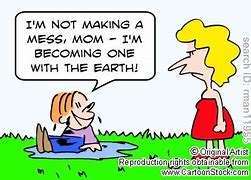
A Little Humor for Your Day
I hope the rest of your day and evening is relaxing, filled with fun and love.
Merry part until we merry meet again!
Merry Meet Dear Sisters, Brothers, and Friends, Welcome to WOTC! A Thought for Today

If you want to see some information on any tradition of witchcraft, please put it in the comment section or email Lady Carla Beltane at ladybeltane@witchesofthecraft.com. I will try to find some information to post about it.
May your and your family’s lives be filled with all things positive!
Blessed be.
Merry Meet Dear Sisters, Brothers, and Friends, Welcome to WOTC! A Thought for Today
I Believe I Can Fly
I used to think that I could not go on
And life was nothing but an awful song
But now I know the meaning of true love
I’m leaning on the everlasting arms
And life was nothing but an awful song
But now I know the meaning of true love
I’m leaning on the everlasting arms
If I can see it, then I can do it
If I just believe it, there’s nothing to it
If I just believe it, there’s nothing to it
I believe I can fly
I believe I can touch the sky
I think about it every night and day
Spread my wings and fly away
I believe I can soar
I see me running through that open door
I believe I can fly
I believe I can fly
I believe I can fly (woo)
I believe I can touch the sky
I think about it every night and day
Spread my wings and fly away
I believe I can soar
I see me running through that open door
I believe I can fly
I believe I can fly
I believe I can fly (woo)
See I was on the verge of breaking down
Sometimes silence can seem so loud
There are miracles in life I must achieve
But first I know it starts inside of me
Sometimes silence can seem so loud
There are miracles in life I must achieve
But first I know it starts inside of me
If I can see it, then I can be it
If I just believe it, there’s nothing to it
If I just believe it, there’s nothing to it
I believe I can fly
I believe I can touch the sky
I think about it every night and day
Spread wings and fly away
I believe I can soar
I see me running through that open door
I believe I can fly
I believe I can fly
I believe I can fly (woo!)
I believe I can touch the sky
I think about it every night and day
Spread wings and fly away
I believe I can soar
I see me running through that open door
I believe I can fly
I believe I can fly
I believe I can fly (woo!)
Hey, ’cause I believe in you
Oh
Oh
If I can see it (woo!), then I can do it (I can do it)
If I just believe it, there’s nothing to it (hey)
If I just believe it, there’s nothing to it (hey)
I believe I can fly (woo!)
I believe I can touch the sky
I think about it every night and day
Spread my wings and fly away
I believe I can soar
I see me running through that open door
I believe I can fly (I can fly)
I believe I can fly (I can fly)
I believe I can fly (I can fly)
I believe I can touch the sky
I think about it every night and day
Spread my wings and fly away
I believe I can soar
I see me running through that open door
I believe I can fly (I can fly)
I believe I can fly (I can fly)
I believe I can fly (I can fly)
If I just spread my wings (I can fly)
I can fly (I can fly)
I can fly (I can fly)
I can fly (I can fly)
If I just spread my wings (I can fly)
I can fly (I can fly, I can fly)
Woo (I can fly)
Hm-mm… fly, fly, fly
I can fly (I can fly)
I can fly (I can fly)
I can fly (I can fly)
If I just spread my wings (I can fly)
I can fly (I can fly, I can fly)
Woo (I can fly)
Hm-mm… fly, fly, fly
I Believe I Can Fly video with lyrics
To me this song/poem says a lot about accepting life on how I choose to live it. It is used as the theme song for Star Trek Enterprise. Great prequel television series for the Star Trek many of us grew up with.
If you want to see some information on any tradition of witchcraft, please put it in the comment section or email Lady Carla Beltane at ladybeltane@witchesofthecraft.com. I will try to find some information to post about it.
May your and your family’s lives be filled with all things positive!
Blessed be.
A Little Humor for Your Day – Signs That You Drink Too Much Coffee c. 2019
Signs That You Drink Too Much Coffee
|
Wicca and Neo-Paganism
Neopaganism covers a wide range of belief systems which have emerged in the past 50 years, primarily in the UK, Europe, and the United States. This includes the better known Wicca, which is a synthesis of traditions from the British Isles, as well as many less visible groups which draw inspiration from other parts of the world. Based on folk-lore, traditional spiritual practices, anthropology, and a synthesis of esoteric systems, Neopaganism does not have any sacred texts of the same vintage as other religions, although unverifiable claims have been made in a couple of cases (e.g. Aradia, and The Gardnerian Book of Shadows).
Rather, the books presented here are source texts of Neopaganism, and other books which deal with related topics. Many of these books contain outdated or speculative material, and some of the texts here are the product of the Renaissance witch hunters. As a whole, the books here are of historical importance rather than a roadmap to modern pagan practice, and shouldn’t be construed as such. As always, we encourage readers to think critically.
Descriptions of contemporary Neopagan practice and beliefs can be found in the Internet Book of Shadows section of this site.
Twentieth Century
The Gardnerian Book of Shadows
The Book of Shadows is a Wiccan text which is maintained by the initiated in manuscript form. A Book of Shadows contains description of rituals, spells, and other knowledge. This tradition was carried on by Gerald Gardner, who (depending on the account) either synthesized Wicca, or took it public, during the 1950s.
The White Goddess
Robert Graves’ primary contribution to modern Neopaganism.
The works of Margaret Murray
An essay by J.B. Hare.
The Witch-Cult in Western Europe
by Margaret Murray [1921]
Were there ever REAL witches? If not, what were all the witch trials about? And how about those fairies? Murray tries to answer these and other questions objectively with plenty of documentary evidence. She is often cited as a primary source for Gerald Gardners’ ideology.
The Golden Bough
by Sir James Frazer [1922]
A massive study of the mythological cycle of the Godesses’ lover, the solar God who dies and is reborn. The Golden Bough had a huge influence on Margaret Murray, Robert Graves and Gardner.
Victorian
Aradia, Gospel of the Witches
by Charles G. Leland [1899]
Evidence of a surviving underground Italian pagan religion?
Etruscan Roman Remains in Popular Tradition
by Charles G. Leland [1893]
Stregheria is Italian traditional witchcraft. These are considered historical source documents of the Wicca movement. Some contemporary scholars have questioned the authenticity of Lelands’ scholarship. Recent publications by Raven Grimassi have also added a great deal of depth to the subject of Italian witchcraft. See www.stregheria.com [external site] for more information.
Gypsy Sorcery and Fortune Telling
by Charles G. Leland [1891]
Leland investigates another traditional system of magic, that of the Rom, or Gypsies.
Letters on Demonology and Witchcraft
by Sir Walter Scott [1885].
Scott covers much of the same evidence for the Witch cult as Murry (albeit in a more popular style). Scott draws few conclusions other than that our ancestors were extremely superstitous.
The Sorceress
by Jules Michelet, tr. by Alfred Richard Allinson [1939]
The story of witchcraft from the medieval to the 17th century, as a covert women’s rebellion which led to modern science and medicine.
The Burning Times
From the 14th to the 17th Century a hysteria spread across Europe which involved torturing and executing people based on accusations that they were witches. Whether any actual practicioners of a pre-Christian pagan tradition were persecuted as the result of a witch trial is up for debate. These books and texts are period documents which illustrate the methods, rationale (such as it was) and history of this persecution. They shouldn’t be taken as illustrative of Neopaganism, but as a warning about religious tolerance and the fragile nature of justice.
The Malleus Maleficarum
[1486], translated by Montague Summers [1928]
The best known witch-hunt manual, a primary source of information on this chilling subject.
Dæmonology
by King James the First. [1597] With Newes from Scotland [1591]
Two texts, one an essay on demons and other denizens of the night, the second a broadside with an account of a famous witch trial from the same period.
The Witch-Persecutions
Edited by George L. Burr [1896].
A short collection of translations of historical documents of the witch craze.
Druids
Although little is actually known about the Druids, that didn’t stop 18th and 19th century intellectuals from building a romantic mythology around them. This was closely associated with the rebirth of Celtic nationalism, as well as the Romantic and Gothic movements. This body of fact and speculation later became a central source of modern Wicca and Neo-Pagan belief and practice.
Irish Druids and Old Irish Religions
by James Bonwick [1894].
A scholarly perspective on the Druids in Ireland, weaving together strands of mythology and anthropology to build a picture of ancient Irish paganism.
The Veil of Isis or Mysteries of the Druids
By W. Winwood Reade [1861]. 277,613 bytes
A typical example of the romantic and misconcieved mid-19th Century literature about Druidry. We now know that the construction of Stonehenge preceded the historical Celts by many centuries.
The Religion of the Ancient Celts
by J. A. MacCulloch [1911]
An authoritative and factual study of ancient Celtic religion, including extensive material on what is actually known about the Druids.
The Barddas of Iolo Morganwg, Vol. I [1862]
The Barddas of Iolo Morganwg, Vol. II [1874]
Iolo Morganwg was one of the first to revive Druidry in the 18th century; however, it is questionable whether these texts are as old as they claim to be. These are nevertheless considered primary source material for the modern Druid revivial.
Antiquity
The Syrian Goddess
translated by Herbert A. Strong [1913]
Lucian of Samosata’s late classical account of Goddess worship, referenced by Robert Graves and other writers as a primary source of information on worship of the Ancient Near Eastern Goddess.
Miscellaneous
The Book of Hallowe’en
by Ruth Edna Kelley [1919]
Learn about Halloween and its pagan roots.
Irish Witchcraft and Demonology
by St. John D. Seymour [1913].
This is a fascinating study of the witch-persecutions in Ireland, along with accounts of paranormal activity.
Pagan Prayers
by Marah Ellis Ryan [1913]
Traditional spirituality from around the world.
Click on hyperlinks for more detailed information
Merry Meet Dear Sisters, Brothers, and Friends, Welcome to WOTC! A Thought for Today
Today I am sharing a poem about an author I became familiar with in my high school drama club. We put on the play The Night Thoreau Spent in Jail written by Henry David Thoreau. His book Walden; or, Life in the Woods is one of the best I have ever read. So, I thought I would share one of his poems with you today.
I Am The Autumnal Sun
Sometimes a mortal feels in himself Nature
— not his Father but his Mother stirs
within him, and he becomes immortal with her
immortality. From time to time she claims
kindredship with us, and some globule
from her veins steals up into our own.
I am the autumnal sun,
With autumn gales my race is run;
When will the hazel put forth its flowers,
Or the grape ripen under my bowers?
When will the harvest or the hunter’s moon
Turn my midnight into mid-noon?
I am all sere and yellow,
And to my core mellow.
The mast is dropping within my woods,
The winter is lurking within my moods,
And the rustling of the withered leaf
Is the constant music of my grief…
If you want to see some information on any tradition of witchcraft, please put it in the comment section or email Lady Carla Beltane at ladybeltane@witchesofthecraft.com. I will try to find some information to post about it.
May your and your family’s lives be filled with all things positive!
Blessed be.
Printable Witchcraft Book for Charms, Spells and Herbs
Charms, Spells, and Herbs PDF from witchcraftsecretmanual.com
I found a few interesting things I want to try in this Witchcraft book that is free to save and/or print. I think it will be a nice addition to my Grimoire.
A Little Humor for Your Day – You know you’re getting older when c. 2013
You know you’re getting older when…
Everything hurts, and what doesn’t hurt, doesn’t work.
The gleam in your eyes is from the sun hitting your bifocals.
You feel like the night before, and yo9u haven’t been anywhere.
Your little black book contains only names ending in M.D.
You get winded playing chess.
Your children begin to look middle-aged.
You finally reach the top of the ladder, and you find it leaning against the wrong wall.
You join a health club and don’t go.
You begin to outlive enthusiasm
You decide to procrastinate but never get around to it.
Your mind makes contracts your body can’t meet.
A dripping faucet causes uncontrollable bladder urge.
You know all the answers, but nobody asks you the questions.
You look forward to a dull evening.
You walk with your head held high trying to get used to your bifocals.
Your favorite part of the newspaper is “Twenty-five Years Ago Today.”
You turn out the light for economic rather than romantic reasons.
You sit in a rocking chair and can’t get it going.
Your knees buckle but your belt won’t.
You regret all those temptations you resisted.
You’re 17 around the neck and 44 around the waist, and 105 around the golf course.
You stop looking forward to your next birthday.
After painting the town red, you have to take a long rest before applying a second coat.
Dialing long distance wears you out.
You are startled the first time someone’s calls you Old-timer.
You remember today that yesterday was your wedding anniversary.
You just can’t stand people who are intolerant.
The best part of your day is over when the alarm clock goes off.
You burn the midnight oil after 9:00 p.m.
Your back goes out more often than you do.
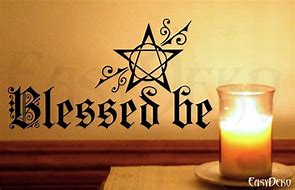
One Meaning for Blessed Be
From moonlitpriestess.com
Blessed be:
Phrase generally indicating blessings upon a person, object, etc. (example “blessed by thy feet’); frequently used at the end of prayers and the like similarly to “amen” from Christian-based practices. Some Wiccans and Pagans report using the phrase as a greeting or parting. (see also Merry Meet and Merry Part)
Spell for Thursday – Cinnamon Money Spell
(YOU CAN COPY AND PASTE ANY SPELLS POSTED TO A DOCUMENT TO PRINT AND/OR SAVE ON YOUR COMPUTER FOR PERSONAL USE ONLY)

Spell for Tuesday – Cold Fire (Spell to Decrease a Fever) – For Advanced Witchcraft Practitioners
(YOU CAN COPY AND PASTE ANY SPELLS POSTED TO A DOCUMENT TO PRINT AND/OR SAVE ON YOUR COMPUTER FOR PERSONAL USE ONLY)
Cold Fire (Spell to Decrease a Fever)
“A doctor discovered that I could bring fevers down. It takes a little practice, but I’ll bet most natural witches can do it. Use the Cornish invocation to St. Brigt:
Three ladies came from the East
One with fire and two with frost
Out with thee, fire, and in with thee, frost
This can be used in conjunction with a laying-on of hands. To remove a fever from someone, summon energy like cold fire from your body. I usually do this by invoking the Snow Queen, who was always a goddess to me.
Direct energy into your hands, then lay them on the person’s neck or forehead. Make cold fire flow into the person until you feel it confront the fever. When you feel the fever, set up a second channel to draw it into your own body. It maybe easiest for you to use your receptive hand to draw the fever, the other to deliver the cold fire. Do this until you feel the cold fire has overcome the fever. If the person is shivering with the fever, direct heat out of the body and onto the skin while you fight the fever. It may help to wrap your arms around the subject.
This technique is not a substitute for aspirin or other fever-reducers. It is something you can do while waiting for the medication to kick in. It can also be used in an emergency when there is no medication. You may feel a bit flushed for a while afterward, but you will not actually take on the fever. Fevers are cyclical, so you may need to repeat the spell whenever the fever spikes.”
This spell is from The Wicca Handbook 2000, 2008
by Eileen Holland Pages 91 and 92.
Review of this spell by Lady Beltane: I have even used this spell on myself. I sit in the Lotus position with my right hand on my neck and my left hand on the floor, sending tendrils down into Mother Earth to take the energy and heat from my fever. I have used this on almost all of my 9 grandchildren while waiting for a fever-reducer to start working. I was amazed each time their fever lower or disappeared! I am also able to use pictures to do hands on healing through, but this spell does its best work if the person is there with you.
Spell for Monday – CROSSROADS SPELL
(YOU CAN COPY AND PASTE ANY SPELLS POSTED TO A DOCUMENT TO PRINT AND/OR SAVE ON YOUR COMPUTER)
A Crossroads candle spell is used when you cannot choose the left fork in the road or the right. This spell is for MAJOR decisions like moving, career, etc. I would strongly not suggest this spell for a choice between two men or women.
CROSSROADS SPELL
1 white candle1 black candle
1 red candle A packet of Cornnuts (original recipe) Toasted Corn
21 caramels
1 small bottle of rum
three cigars (unwrapped)
Three stick matches
21 pennies
Write a letter to the spirit of the Crossroads and tell him the situation that you cannot decide or which road or path to choose. Lay it out in good detail which is which – meaning, what will happen if you choose this road and what will happen if you choose that path.
Go to a 4 way crossroads at 11:30 pm preferably on a Sunday night, but any night will do if you need it NOW. Place letter in center of a 4 way crossroads (must be 4 way) that extends beyond 7 blocks in each direction. Place three candles in a triangle shape on letter, surrounded by the 21 pennies. Lay one cigar each at base of the candle. Place one of each of the stick matches in between each candle. Place caramels and open pack of Cornnuts and pour in center. Take a good draw of the rum into your mouth, swish it around, spit it in a spray-like pattern over all. Set rest of open bottle of rum down on paper. Light candles and walk away.
Do not, do not, DO NOT look back or look into rear view mirror when driving away.
Accept what happens and where this takes you.
Spell for Thursday – A Spell to Release the Past
(YOU CAN COPY AND PASTE ANY SPELLS POSTED TO A DOCUMENT TO PRINT AND/OR SAVE ON YOUR COMPUTER)
A Spell to Release the Past
Also known as the cord-cutting ritual, this spell helps release emotional, mental and spiritual ties that rob you of growth, peace and happiness. By using the power of your calm, clear mind and amplifying it, this spell helps end any unwanted relationships and ties in your life, leaving no harm behind if performed correctly. It doesn’t have to be directed towards another person – you can also release any part of your own energy that is ridden with doubt and darkness, such as harmful habits or negative beliefs.
The most important part of this sacred ritual is staying true to yourself. While you perform it, allow yourself to feel any feelings that come up in your heart, and allow the resulting energy to become the foundation of your work. If you wish, you can also call for help from any friendly spirits or deceased relatives (preferably those you worked with before). To perform this releasing spell, acquire the following items: Three candles: one red (representing your passion for life), one white (representing the purity of your intentions), and one blue (representing wisdom and calmness) A bundle of fresh basil A deep glass bowl filled with rain water (if you don’t have access to rain water, filtered water is a suitable alternative) This is how to perform the spell to cut cords and release your past: This ritual is best performed outdoors – however, if not possible, find a well-lit, quiet space. Light the candles – first, the white one , focusing on the divine pure light; then, the blue one, appreciating the wisdom of the universe; and finally, the red one, finding the passion within. Place basil in the bowl, and wash your face with the basil water. Clear your mind, focus and say the following: Cutting cords, releasing ties For my past, it’s just goodbyes Blow the candles and take as much time as you need to meditate and reflect on the ritual.
Some of the Witchcraft/Magickal Correspondence for Thursday
(YOU CAN COPY AND PASTE ANY COROSPONDENCES POSTED TO A DOCUMENT TO PRINT AND/OR SAVE ON YOUR COMPUTER)
Thursday Source: from FlyingTheHedge.com
Taking its name from the Norse god Thor, this is a great day to work magic regarding growth, expansion, prosperity, business, abundance, and success. See my prosperity candle magic spell.
Color: Royal blue, green, purple
Planet: Jupiter
Deities: Thor, Zeus, Jupiter, Juno
Crystals: Turquoise, amethyst, lapis lazuli
Herbs: Honeysuckle, oak, cinquefoil
Associations: Honor, loyalty, harvest, prosperity, abundance, wealth, healing

Thursday Source: whitewitchgrimoire.com
Planet: Jupiter
Colors: Blue and Metallic
Ahhh Jupiter, you giant dick. While he is the go-to for power, money and good fortune, he’s about the long game. Fast money? Nope. He will give you more of what you have, so if you’re broke, you may be even more impoverished if you use any of his influence. Be careful with them herbs. Looking for justice? Thursday. Signing contracts or making big money moves? Thursday. Abundance looks different to everyone, but this is the day of plenty….sometimes that is just plenty of what you already have man. I’m serious here. My money spells done in the past before I got my shit together created lasting wounds. Expansion is painful when it comes from a space of lack. I said “I need money! I am broke” and he said “Hold my beer you desperate witch” and then I cried. Great money day if you are attracting what you are, but not what you want. I speak from my own experience and yours may differ, but if your money spells have backfired, look at the day and associations. If you see anything, take note. Everyone is different but I am not even ashamed to say that it took me years to figure this one out for my own magic. Good day for court and child support I must say.
Spell for Monday – Herbs of Communication Spell
(YOU CAN COPY AND PASTE ANY SPELLS POSTED TO A DOCUMENT TO PRINT AND/OR SAVE ON YOUR COMPUTER FOR PERSONAL USE ONLY)
Herbs of Communication Spell
This is one of my charms, easy to the herbs and cast I’ve listed are herbs you may have on your spice rack at home or if not they can be found in the local supermarket. Enjoy.
You will need the following items for this spell:
You use to comunicate with. Example : your mobile phone, home phone or even netbook or laptop.
A small bit of paper the size of a stamp.
A Pen
Dill
Oregano
Caraway
Casting Directions for ‘Herbs of Communication spell’
This isnt just a love spell, A good example of when I throw it was when I was waiting to hear about a project and that I was reckless with worry, everytime my mobile buzzed I would jump on it thinking it was a call to inform me that I had got it, I checked my emails twise a day, everyday. I waited and waited. I was going the way many girls go when they’ve been out on a few dates with someone they REALLY fancy and… not even so much as a like on Facebook or an email from him since and no explaination as to why he hasnt got in touch. I was like that over work. CALM DOWN! And do to whatever it is your obsessing about something none related. But rather than having any money, It was hard for me or a job at the time got me down. So I cast a spell. You need your comunication instrument or why not use more then one. Your phone or Notebook will do or use anything you desire. Write on the tiny piece of paper the initials of the person you need to call you or the name of this place if you are waiting for a phone call from to get work and dont know the name of the person who will ring you.Put this bit of paper beneath your telephone or laptop then slowly scatter the herbs in a clockwise direction around your phone.Picture that individual picking up their phone and texting phoning or calling your telephone or walking to your computer. What do you want this person do you just want them to see how you are with a friendly phone call or to say in their message to you? Consider it and concentrate. Say: Herbs or Mercury, speed to me the call I wish to receive or you may change the term call to text or email because we live in a busy modern world and texting has, in some instances replaced telephone calls and its some prefer comunicate. No worries. Leave your phone using the herbs scattered around it while you sleep, it to turn off not because of the spell but its good every time and concentrate on you. Not the person you need to call you or what results you want but you. Plus, getting facebook updates can be somewhat annoying when you are trying to get your forty winks! Turn the phone on in the morning. DO NOT ATTACH you’ll get your call and any feelings into the situation go on with your day/ text/ letter/ email. Ive tried this charm with friends I havnt heard from in years, Would – be employers and even men and It works. I get a response and I don’t call them I leave them to get in contact. Enjoy.
Goddesses- Egyptian Maat Goddess of Truth, Justice and Morality

Maat The Ancient Egyptian Goddess of Truth, Justice and Morality
Maat, also known as Ma’at or Mayet, was a female goddess in the ancient Egyptian religion who represented truth, justice, balance and morality. The daughter of the Egyptian sun deity Ra and wife of the moon god Thoth, she served a kind of spirit of justice to the Egyptians. She decided whether a person would successfully reach the afterlife, by weighing their soul against her feather of truth, and was the personification of the cosmic order and a representation of the stability of the universe. The earliest writings where she is mentioned date back to the Old Kingdom of Egypt more than 2,300 years ago.
The Egyptian culture was centered on order, everything had its due place in the world. This included religion, society and seasonal changes. The goddesses Ma’at came to represent the concept of balance and order because many Egyptians needed to explain the world around them. She was the one that kept the stars in motion, the seasons changing and the maintaining of the order of Heaven and Earth. The opposing force of this was known in ancient terms as “isfet” or chaos. Ancient Egyptians considered the desert beyond the Nile River to be chaotic; whereas, the area close to the Nile was considered orderly. Together, these two forces brought balance to the world in which they lived and was an important part of everyday Egyptian life
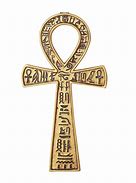
Ma’at is usually depicted in the form of a woman seated or standing with outstretched wings attached to both her arms. In other instances she is seen holding a scepter in one hand and an ankh (the symbol of life) in the other. Her statue was a stone platform depicting a stable foundation on which order was built. A common symbol associated with her is an ostrich feather, which she is almost always shown as wearing in her hair. Often, the Feather of Ma’at was a distinctive feature of her headdress. Less frequently images of the goddess showed her without a head, instead replaced by the feather. In other images the feather alone conveyed her presence. This feather has come to symbolize her being, as well as the representation of balance and order, it became a hieroglyph for “truth.”
Ma’at was associated with the law in ancient Egypt. From the 5th dynasty (c. 2510-2370 BC) onwards, the Vizier responsible for justice was called the Priest of Maat and in later periods judges wore images of her. The ‘Spirit of Maat’ was embodied by the chief judge in charge of the Egyptian law courts. He had a dual role, serving as both a priest and working directly in the law courts and justice system. The “Priest of Ma’at” began court hearings whilst wearing the feather of Ma’at and all other court officials wore small golden images of the goddess as a sign of their judicial authority, also as a symbol that their judgement would be balanced and fair. Priests drew the Feather of Ma’at on their tongues with green dye, so that the words they spoke were truth. The priest would rule on the earthly punishment according to the nature of the law that had been broken. Punishments included imposing fines, corporal punishment and in extreme cases capital punishment. It was considered a crime against Ma’at if a person engaged in jealousy, dishonesty, gluttony, laziness, injustice, and ungratefulness. The guilty Egyptian was deemed to have violated the Spirit of Ma’at and would face a further judgment in the Underworld during the ceremony of justification in the Hall of the Two Truths. The ‘Spirit of Ma’at’ detailed in the wisdom literature contained practical guidance with examples and some rules applied in previous law cases. These kinds of instructional texts have been described as “Ma’at Literature”.
The Book of the Dead is a collection of funerary texts and spells from ancient Egypt designed to assist a person’s journey through the underworld, into the afterlife. Without these spells, it was believed a person could not proceed. In the book is a spell called the “Forty-Two Declarations of Purity” or the “Negative Confessions”. This spell is comprised of confessions the tomb owner believed he committed throughout his life. It was believed that any crimes committed against Ma’at should be written down as they could easily be forgiven. In the Hall of Ma’at is where the judgement of the dead was performed in which Ma’at played an important role. The ceremony, called the “Judgment of Osiris,” was named after Osiris, the god of the dead. When the dead were judged, it was the feather of Ma’at that their hearts were weighed against. If a balanced scale was struck, the deceased was deemed worthy to meet Osiris in Paradise. The weightlessness of their hearts indicated that their souls were not burdened with sin and evil. If the heart of the deceased was found to be heavier than the feather of Ma’at, it would be devoured by Ammit, the soul-eating monster depicted with the head of a crocodile, the forequarters of a lion and the hindquarters of a hippopotamus. Other gods in the judgement hall who were part of the tribunal overseeing the weighing of the heart were also pictured holding a feather but the scales always represented Ma ́at.
Ancient Egyptians worshipped many gods, one was certainly Ma’at, although Egyptian archaeologists now believe she was perhaps more of a concept or an ideal. It’s reasonable to assume her principles aided the people of Egypt in being better individuals and that she could be compared to the conscience of a person. There was a small temple dedicated to Ma’at by Hatshepsut, the fifth pharaoh of the Eighteenth dynasty of Egypt, Egypt’s first female pharaoh, at the Karnak temple complex in Luxor Egypt. Largely in ruins, it still preserves inscriptions of some of the viziers of Ramesses III and XI. A previous Ma’at temple existed in this area, indicated by reliefs and stelae belonging to the reign of Amenhotep III. The temple is inside the Precinct of Montu, the smallest of three enclosures at Ipet-Isut.
Ma’at
Ma’at (pronounced may-et) is the ancient Egyptian goddess of truth, justice, harmony, and balance (a concept known as ma’at in Egyptian) who first appears during the period known as the Old Kingdom (c. 2613 – 2181 BCE) but no doubt existed in some form earlier. She is depicted in anthropomorphic form as a winged woman, often in profile with an ostrich feather on her head, or simply as a white ostrich feather. The feather of Ma’at was an integral part of the Weighing of the Heart of the Soul ceremony in the afterlife where the heart of the soul of the dead person was weighed in the scales of justice against the feather. Historian Margaret Bunson writes:
She maintained a vital role in the mortuary rituals of Egypt where she weighed the hearts of the deceased. This mortuary role evolved over the decades into the principle of ma’at, the desired right attitude, which remained the ethical and moral foundation of the Egyptian people. (152)
NAME & SIGNIFICANCE
Ma’at is said to have been born of the sun god Ra (Atum) at the beginning of creation through the power of Heka, who was magic personified. Her name means “that which is straight” implying order, justice, and harmony. She is thought to have been present from the beginning of time when, from the primordial waters of Nun, the ben-ben (first mound of dry land) rose with Atum (or Ra, the sun god) standing upon it in the presence of the invisible Heka. In the moment that Ra spoke the world into creation, Ma’at was born. Her spirit of harmony and balance infused the creation and caused the world to operate rationally according to purpose. The principle of ma’at was the operational function of life and that of heka (magic) the power source which allowed for it. It is for this reason that she is considered more of a concept than a goddess with a specific personality and story like Isis or Hathor. Ma’at’s spirit is the spirit of all creation, and if one is in tune with that spirit, one will live well and have good reason to hope for eternal peace in the afterlife; if one refused to live in accordance with the principles of Ma’at, then one suffered the consequences which one would have brought upon one’s self. Margaret Bunson comments on this, writing:
Ma’at was the model for human behavior, in conformity with the will of the gods, the universal order evident in the heavens, cosmic balance upon the earth, the mirror of celestial beauty. Awareness of the cosmic order was evident early in Egypt; priest-astronomers charted the heavens and noted that the earth responded to the orbits of the stars and planets. The priests taught that mankind was commanded to reflect divine harmony by assuming a spirit of quietude, reasonable behavior, cooperation, and a recognition of the eternal qualities of existence, as demonstrated by the earth and the sky. All Egyptians anticipated becoming part of the cosmos when they died, thus the responsibility for acting in accordance with its laws was reasonable. Strict adherence to ma’at allowed the Egyptians to feel secure with the world and with the divine plan for all creation. (152)
Her importance is signified by one of the means by which the Egyptians wrote her name. Although she was often identified by the feather symbol, she was also designated by a plinth. The plinth was commonly seen below the thrones of deities but not used to relay their personal names. The fact that Ma’at was signified by a plinth suggests, according to Egyptologist Geraldine Pinch, that Ma’at was considered the foundation upon which Egyptian society was built (160). Her significance is also demonstrated in iconography showing her constantly at the side of Ra in his heavenly barge sailing with him across the sky during the day and helping him defend the boat against the serpent Apophis by night.
The ancient Egyptians also invoked her name in stories of a long-lost past on earth when all things were beautiful and there was no injustice. Such stories usually have to do with the time of Osiris and Isis and their just and benevolent rule of the earth before Osiris was murdered by Set. In some cases, though, it is Ma’at who rules the earth alone as Pinch notes:
Egyptian myths of a golden age included a period when Ma’at was ruler of earth. She was sometimes said to have withdrawn to the heavens because she was grieved by the wicked behavior of humanity. Ma’at could still be thought of as living with an individual like his or her good angel and accompanying that person into the afterlife. Eventually “joining Ma’at” became a euphemism for dying. (160)
It is in her mortuary role that Ma’at is best known to most people in the modern day. One of the most iconic images of ancient Egypt is the ceremony known as The Weighing of the Heart of the Soul in which Ma’at and her white feather of truth were most important.
MA’AT’S WHITE FEATHER OF TRUTH
The Egyptians believed strongly that every individual was responsible for his or her own life and that life should be lived with other people and the earth in mind. In the same way that the gods cared for humanity, so should humans care for each other and the earth which they had been provided with. This philosophy is evident in every aspect of Egyptian culture from the way they constructed their cities to the balance and symmetry of their temples and monuments. If one lived harmoniously in the will of the gods, then one was living in harmony with the concept of ma’at and the goddess who embodied that concept. One was free to live however one wanted, of course, and completely ignore the principle of ma’at, but eventually one would face the trial which awaited everyone: judgment in the Hall of Truth (also known as The Hall of Two Truths) in the afterlife. Wilkinson comments on this:
Her role was multifaceted but embraced two major aspects. On the one hand, Ma’at represesnted the universal order or balance – including concepts such as truth and right – which was established at the time of creation. This aspect is the basis of her relationship with Ra – for she is the order imposed upon the cosmos created by the solar demiurge and as such is the guiding principle who accompanied the sun god at all times…As a natural corollary of her identity with right balance and harmony Ma’at also actively represented the concept of judgement. In the Pyramid Texts the goddess appears in this role in dual form as ‘the two Ma’ats’ judging the deceased king’s right to the thrones of Geb [the rule of the earth] and in the later funerary literature it is in the Hall of the Two Truths (the dual form of Ma’at) that the judgment of the deceased occurs. The gods themselves, acting as the judges of the divine tribunal, are called ‘the council of Ma’at.’ (150)
To the Egyptians, the soul consisted of nine separate parts: the Khat was the physical body; the Ka one’s double-form; the Ba a human-headed bird aspect which could speed between earth and the heavens; Shuyet was the shadow self; Akh the immortal, transformed self; Sahu and Sechem aspects of the Akh; Ab was the heart, the source of good and evil; Ren was one’s secret name. All nine of these aspects were part of one’s earthly existence. When one died, the Akh (with the Sahu and Sechem) appeared before the god Osiris in the Hall of Truth and in the presence of the Forty-Two Judges to have one’s heart (Ab) weighed in the balance on a golden scale against Ma’at’s white feather of truth.
One would need to recite the Negative Confession (those actions one could honestly claim one had never committed in life) and then one’s heart was placed on the scale. If one’s heart was lighter than Ma’at’s feather, one waited while Osiris conferred with the Forty-Two Judges and the god of wisdom, Thoth, and, if considered worthy, was allowed to pass on through the hall and continue one’s existence in paradise; if one’s heart was heavier than the feather, it was thrown to the floor where it was devoured by the monster Ammut (the gobbler), and one then ceased to exist. No one could escape judgment, and the king of the land would have to stand before the scales of Ma’at and Osiris just as the lowest slave of field hand would also.
If one passed through judgment and avoided any of the pitfalls and traps set by demons and the forces of chaos, one arrived at The Field of Reeds, a paradise where one was greeted by those loved ones who had gone before and which was a mirror image of one’s life on earth. Margaret Bunson describes this afterlife:
Eternity itself was not some vague concept. The Egyptians, pragmatic and determined to have all things explained in concrete terms, believed that they would dwell in paradise, in areas graced by lakes and gardens. There they would eat the “cakes of Osiris” and float on the Lake of Flowers. The eternal kingdoms varied according to era and cultic belief but all were located beside flowing water and blessed with breezes, an attribute deemed necessary for comfort. The Garden of A’Aru was one such oasis of eternal bliss. Another was Ma’ati, an eternal land where the deceased buried a flame of fire and a scepter of crystal – rituals whose meanings are lost. The goddess Ma’at, the personification of cosmic order, justice, goodness, and faith, was the protector of the deceased in this enchanted realm, called Hehtt in some eras. Only the pure of heart, the uabt, could see Ma’at. (86-87)
In some images, the goddess is seen atop the scales at the moment of judgment and, in others, she is present near Osiris but she is always there even if only in the form of her feather placed on the scales. In the afterlife, she was thought to help those who had stood for her principles and lived their lives accordingly.
WORSHIP OF THE GODDESS
Although she was considered a very important deity, Ma’at had no temples and no official clergy (as was the case with Heka). She was honored by a small shrine set up in the temples of other gods. Even the one temple known to be erected in her honor by Queen Hatshepsut (1479-1458 BCE) was built within the temple precinct of the god Montu. The people venerated the goddess by living according to her principles and bringing whatever gifts they wanted to offer to her shrines in the temples of the other gods. Wilkinson writes,
Even the title ‘priest of Ma’at’ is often regarded as an honourific which may have been given to those who served as magistrates or who dispensed judicial decisions on her behalf and who apparently wore small golden images of the goddess as a sign of their judicial authority. (152)
The only “official” worship of Ma’at was when the king of Egypt made sacrifice to her upon ascending to the throne and “presented Ma’at” to the gods by offering a small image of her. In doing so, the king was asking for her help in maintaining divine balance in his rule. If the king could not achieve balance and promote harmony, then it was a clear sign that he was not fit to rule. Ma’at – and the vital concept she embodied – was crucial to the king’s success.
She was an important and all-pervasive figure in the Egyptian pantheon, even though very few stories are told of her and she had no temple or cultic following. The gods were said to live off Ma’at and, as the scholar Richard H. Wilkinson notes, most of the images of the king presenting Ma’at to the other gods at his coronation “are essentially identical to those in which the king presents food, wine, or other forms of sacrifice to the gods” (152). The gods would have, in fact, lived off Ma’at in that they were all bound by their own laws to observe harmony and balance and encourage those values in the human beings they cared for.
Temples to Ma’at were the temples of all the other gods because Ma’at was the underlying cosmic principle which made the lives of humans and gods possible. One worshiped the goddess Ma’at by living a life in accordance with the highest principles of justice, order, and harmony keeping in mind one’s neighbors and the earth one had been given to tend. Although goddesses like Hathor and Isis were more popular, and even eventually took on many of Ma’at’s attributes, she remained an important deity throughout Egypt’s history and defined the cultural values of the country for centuries.
__________________________________________
*First article*
By Bryan Hilliard
Published on Ancient Origins
References
“Ancient Egyptian Gods | Ma’at.” Ancient Egyptian Gods | Ma’at. http://www.kingtutone.com/gods/maat/
“Ma’at, Goddess of Egypt.” Egyptian Goddess Maat ***. http://www.landofpyramids.org/maat.htm
Seawright, Caroline. “Ma’at, Goddess of Truth, Balance, Order.” Ma’at, Ancient Egyptian Goddess of Truth and Order.
“Ancient Egypt: The Mythology – Feather.” Ancient Egypt: The Mythology – Feather. http://www.egyptianmyths.net/feather.htm
“Ancient Egypt: The Mythology – Ma’at.” Ancient Egypt: The Mythology – Ma’at. http://www.egyptianmyths.net/maat.htm
*Second article*
APA Style
Mark, J. J. (2016, September 15). Ma’at. Ancient History Encyclopedia. Retrieved from https://www.ancient.eu/Ma’at/
Chicago Style
Mark, Joshua J. “Ma’at.” Ancient History Encyclopedia. Last modified September 15, 2016. https://www.ancient.eu/Ma’at/.
MLA Style
Mark, Joshua J. “Ma’at.” Ancient History Encyclopedia. Ancient History Encyclopedia, 15 Sep 2016. Web. 13 Aug 2018.
License
Written by Joshua J. Mark, published on 15 September 2016 under the following license: Creative Commons: Attribution-NonCommercial-ShareAlike. This license lets others remix, tweak, and build upon this content non-commercially, as long as they credit the author and license their new creations under the identical terms.
Some of the Witchcraft/Magickal Correspondence for Friday
(YOU CAN COPY AND PASTE ANY COROSPONDENCES POSTED TO A DOCUMENT TO PRINT AND/OR SAVE ON YOUR COMPUTER)
Friday Source: moonlitpriestess.com
Celestial influence – Venus
Color correspondences – aqua, green, pink
Herb correspondences – lime, saffron, sandalwood, thyme
Misc. influences – love, friendship, social activities, strangers, pleasure, art, music, incense, and other scents (i.e. perfumes)

Friday Source: amagickalpath.co.uk
Planet – Venus
Spells/Magic – love, friendship, socialising, affection, harmony, relationships, reconciliation, beauty, romance.
Magical aspects: love, friendship, reconciliation, beauty
Oils – African Violet, Cherry, Lilac, Rose ,Opium Poppy, Patchouly,
Plants and Trees – adler tree,daisy,apple tree,aster,birch tree,blackberry,catnip,cherry tree,crocus,elderberry,feverfew,foxglove,geranium,goldenrod,hollyhock,lady`s mantel,lilac,mugwort,plumtree,rose,spiderwort,strawberry,tansy,thyme,vanilla,violet, yarrow, pansy.
Stones – Emerald, jade, malachite, rose quartz, torquoise
Colours – green, pink, white, rose, coral.
Metal – Coper
Energy Type – Female
Dieties – Friday takes its name from Frigga, the Goddess of Love and Transformation. She rules the spiritual aspects of people as they manifest on the physical. because of this, Friday is sometimes thought of as unpredictable.
Friday is the best time to deal with such matters as: Romantic Love, Friendship, Beauty, Soul-mates, Artistic Ability, Affection, Partners, Alliances, Grace, Luxury, Social Activity, Marriage, Decorating, Cosmetics, Gifts, Income, Gardening, Architects, Artists, Beauticians, Chiropractors, Dancers, Designers, Engineers, Entertainers, Fashion, Music, Painting, Poetry, Courtship, Dating, Household Improvements, Planning Parties, Shopping, Herbal Magick, Luck, Fertility, Physical Healing, Balance, Prosperity, Courage, Change, Material Things, Peace, Harmony, Relationships and Success.
Gods – Ra Egyptian Sun God

Ra The Sun God of Egypt
The ancient Egyptians revered Ra as the god who created everything. Also known as the Sun God, Ra was a powerful deity and a central god of the Egyptian pantheon. The ancient Egyptians worshiped Ra more than any other god and pharaohs often connected themselves with Ra in their efforts to be seen as the earthly embodiment of the Sun God.
Ra Mythology
The ancient Egyptians believed that as the sun god, Ra’s role was to sail across the heavens during the day in his boat called the “Barque of Millions of Years.” In the morning when Ra emerged from the east, his boat was named, “Madjet” which meant “becoming strong.” By the end of the day the boat was called, “Semektet” which meant “becoming weak.” At the end of the day, it was believed that Ra died (swallowed by Nut) and sailed on to the underworld, leaving the moon in his place to light up the world. Ra was reborn at dawn the very next day. During his journey across the heavens during the day, he fought with his main enemy, an evil serpent named Apep, or also, The Lord of Chaos. In some stories, Ra, in the form of a cat named Mau, defeats the evil serpent, Apep. This is part of the reason why cats are so highly-revered in Egypt.
Ra created himself from the primordial chaos. He is also known as Re and Atum. His children are Shu, the God of Dry Air and Father of the Sky, and his twin sister Tefnut, the Goddess of Moisture and Wetness. As a lion-headed goddess, Tefnut is responsible for dew and freshness. Humans were created from Ra’s tears.
Although Ra was highly revered and devoutly worshiped by the ancient Egyptians, there is a story to suggest he eventually grew weak. In the Legend of Ra, Isis and the Snake, as Ra grew old, he dribbled saliva. Isis knew that Ra’s power was hidden in his secret name. Isis gathered Ra’s saliva and created a snake out of it. She set the snake in Ra’s path and it bit him. Isis wanted the power Ra had always enjoyed, but she knew she had to get him to tell her his secret name. Eventually, because of the pain he was in, Ra allowed Isis to “search through him” and in so doing, she healed him and Ra’s power was transferred over to her.
The Tree of Life is an important religious symbol to the Egyptians. The Tree of Life was located within Ra’s sun temple in Heliopolis and was considered sacred. The fruit that sprang from this tree was not available to humans, but only in aging-rituals reserved for pharaohs. The Tree of Life is also referred to as the mythical, sacred Ished tree. Eternal life came to those who ate the fruit from the Tree of Life.
Another important ancient Egyptian symbol connected to Ra is the “Bennu”. Bennu is the name of the bird that represented Ra’s soul. This bird is a phoenix and it was seated at the Tree of Life in Ra’s Sun Temple in Heliopolis. Inside the temple, on top of an obelisk, sat the Benben Stone. This pyramid-shaped stone served as a beacon to Bennu and is also an important ancient Egyptian religious symbol.
Worship of the Sun God
Solar temples were built for Ra but did not contain a statue of the god. Instead, they were created to be open to the sunlight that Ra represented. The earliest known temple built in honor of Ra exists in Heliopolis (what is now a Cairo suburb). This solar temple is known as “Benu-Phoenix” and is believed to have been erected in the exact spot where Ra emerged into creation.
Although Ra dates back to the second dynasty, he is not the oldest of the Egyptian gods. It wasn’t until the fifth dynasty that Ra became closely associated with the pharaoh. As the king and leader of Egypt, the pharaoh was seen as the human manifestation of Horus, so the two gods became connected. This new deity fusion was then referred to as “Ra-Horakhty” meaning Ra is Horus of the Horizon. Ra’s relationship with other gods did not stop there. As the powerful creator of mankind and the sun god, he also became associated with Atum to make “Atum-Ra.”
Fifth Dynasty and subsequent pharaohs were all known as “The son of Ra” and Ra became incorporated into every pharaoh’s name from then onward. During the Middle Kingdom, the new deity, Amun-Ra was formed. Amun was one of the gods who formed the Ogdoad (the assembly of eight gods who represented eight elements of creation).
The New Kingdom brought new heights of worship to Ra. Many tombs in the Valley of the Kings portray depictions of Ra and his journey through the underworld. During this time, many solar temples were built.
Eye of Ra
Present in the ancient Egyptian mythology is the Eye of Ra, shown as the sun disk with two ‘uraeus’ cobras coiled around it, next to the white and red crowns of Upper and Lower Egypt. Initially associated with Horus (similarly to the wadjet, the Eye of Horus), the Eye of Ra shifted positions in the myths, becoming both an extension of Ra’s power and a separate entity altogether.
Click here to learn more about The Eye of Ra
Ra God Facts
- The ancient Egyptians worshiped Ra to such an extent above other gods that some historians have argued that ancient Egyptian religion was indeed a monotheistic one with Ra as the singular god.
- Historians believe that the pyramids might represent rays of sunlight, further connecting the pharaohs with Ra, the sun god.
- During Ra’s journey through the heavens he was accompanied by several other gods including Thoth, Horus, Hathor, Maat, Abtu, and Anet.
- Nut, goddess of the sky and heavens, is sometimes referred to as Ra’s mother, because he emerges from her and is reborn every morning.
- The morning manifestation of Ra is known as “Khepri the scarab God.”
- The evening manifestation of Ra is known as the ram-headed god, Khnum.
- The sacred cobra that encircled Ra’s crown symbolized royalty, sovereignty and divine authority.
- The right eye of Ra represented the Sun; while the left eye of Ra represented the moon.
- Ra is also closely associated with the Tree of Life myth, the Ben-Ben Stone and the Bennu Bird myths.
- Ra’s glory came to an end during the time when the Roman’s conquered Egypt in 30BC.
Who is Ra?
Ra (pronounced ray) represents sunlight, warmth and growth. It was only natural that the ancient Egyptians would believe him to be the creator of the world, as well as part of him being represented in every other god. The ancient Egyptians believed that every god should illustrate some aspect of him, while Ra himself should also represent every god.
Ra’s Appearance
Ra was usually depicted in human form. He had a falcon head which is crowned with a sun disc. This sun disc was encircled by a sacred cobra named Uraeus. Ra has also been depicted as a man with the head of a beetle and also a human man with the head of a ram. The ancients also depicted Ra in full species form such as a serpent, heron, bull, lion, cat, ram, hawk, beetle, phoenix and others. His main symbol, however, is the sun disk.
 Witches Of The Craft®
You must be logged in to post a comment.