Sunday’s Witchery c. 2012


Sunday’s Witchery

Those ambitious, successful spells and charms will be heightened by working on the day of the week that has the planetary influence of the sun. So light those sunny candles, wear some luminous colors, and break out the gold jewelry! Bake up some cinnamon rolls or low-fat cinnamon muffins for an enchanting family breakfast. Take an orange with you to eat at lunch today. Try using a little magickal aromatherapy and burn some cinnamon-scented incense to encourage success and wealth today. Make the talisman to keep your solar magick with you. Sprinkle some dried marigold petals around your house-or across the threshold-to pull triumph and protection toward you and your family.

Get outside and tip up your face to the sun. Take a walk outside, and soak up some sunshine! Acknowledge the power of Sunna or Helios as they blaze across the sky and bring courage and motivation into your life. Sit outside at sunrise on a Sunday morning and bask in its warm, rosy-golden glow Acknowledge Brigid as the inner, creative spark of imagination and inspiration. She can help these gifts burn brightly within your own soul. Use your imagination and create your own brand of witchery and magick. Here comes the sun, and it’s your turn to shine!

—–Book of Witchery: Spells, Charms & Correspondences for Every Day of the Week
Ellen Dugan

Magick Symbols – SQUARE c. 2018

SQUARE

In contrast to the circle which often symbolizes the sacred and spiritual (including the sacred earth), the square represents the physical world. Like the quartered circle, it points pagans to the four compass directions: north, east, south and west. While the circle and “spiral” symbolize female sexuality in many earth-centered cultures, the square represents male qualities.

The (Cursed?) Original Book of Witchcraft

This article was co-researched and co-written by digital library specialist Elizabeth Gettins, who also had the brilliant idea for the piece.

An ancient tome delving into the dark arts of witchcraft and magic…a book of doom…yet it lives…at the Library of Congress.

You’re forgiven if you think we’re talking about H.P. Lovecraft’s fictional book of magic, “Necronomicon,” the basis for the plot device in “The Evil Dead” films, or something Harry Potter might have found in the Dark Arts class at Hogwarts.

But, as the darkness of Halloween descends, we’re not kidding. A first edition of “The Discouerie of Witchcraft,” Reginald Scot’s 1584 shocker that outraged King James I, survives at your favorite national library in the Rare Book and Special Collections Reading Room. (The Library has a copy of the original edition, as well as a 1651 edition.)

It is believed to be the first book published on witchcraft in English and extremely influential on the practice of stage magic. Shakespeare likely researched it for the witches scene in “Macbeth.” It was consulted and plagiarized by stage magicians for hundreds of years. Today, you can peruse its dark secrets online. How could your wicked little fingers resist? Scot promises to reveal “lewde dealings of witches and witchmongers”! The “pestilent practices of Pythonists”!  The “vertue and power of natural magike”!

Also, juggling.

It is one of the  foundational examples of grimoire, a textbook on magic, groundbreaking for its time and nearly encyclopedic in its information. Scot’s research included consulting dozens of previous thinkers on various topics such as occult, science and magic, including Agrippa von Nettesheim’s “De Occulta Philosophia,” in 1531 and John Dee’s “Monas Hieroglyphica” in 1564. The result is a most impressive compendium.

But Scot wasn’t lurking about in a hooded cape, looking for eyes of newts and toes of frogs to bewitch mortals. A skeptic, he wrote to make it plain that “witches” were not evil, but instead were resourceful and capable women who practiced the art of folk healing as well as sleight of hand. Their apparently miraculous feats were in no way wicked. He wrote, “At this day it is indifferent to say in the English tongue, ‘she is a witch’ or ‘she is a wise woman.’ ”

Born in 1538 in Kent under the rule of Henry VIII, Scot was landed gentry. He was educated and a member of … Click here to read the rest of this article from blogs.loc.gov/loc

Magick Symbols – ITALIAN HORN

ITALIAN HORN

Also called the Cornu, Cornicello, Wiggly Horn, Unicorn horn, Lucifer’s horn, or Leprechaun staff. The ancient magical charm or amulet worn in Italy as protection against “evil eye” has also been linked to Celtic and Druid myths and beliefs. Other traditions link it to sexual power and good luck. It is often worn with a cross for double protection or luck. In pre-Christian Europe, animal horns pointed to the moon goddess and were considered sacred.

c. 2018

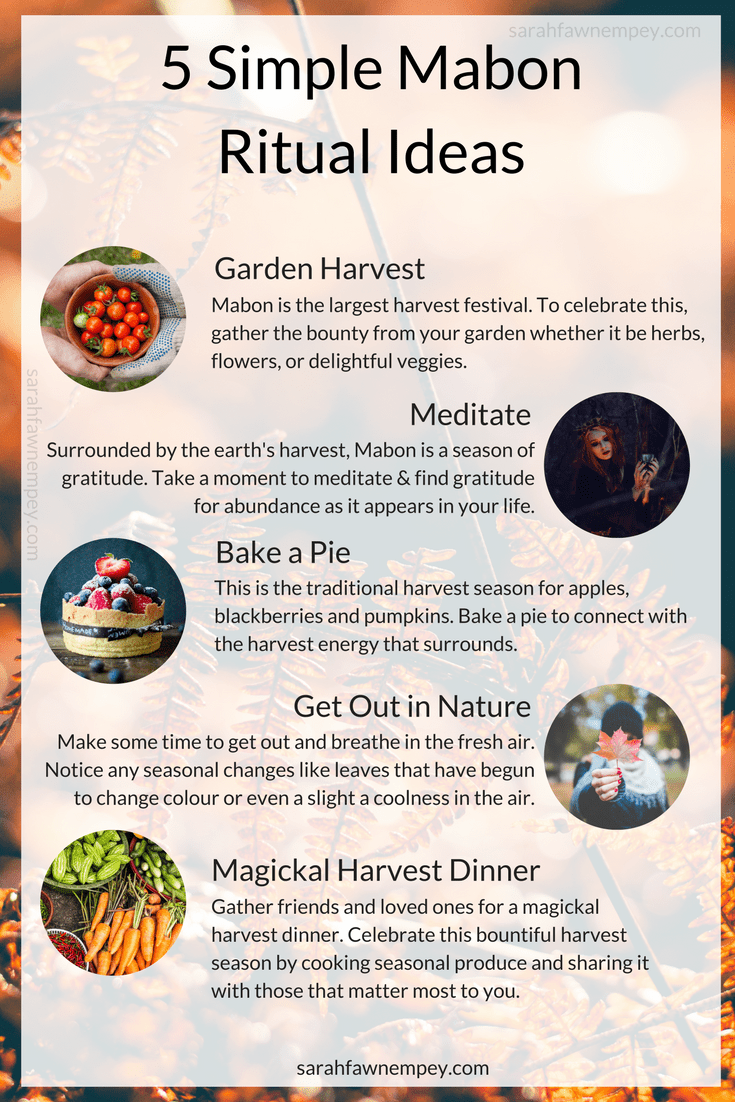
Spell for Today – 5 Simple Mabon Rituals – Printable

Before We Get Into The Spells, We Are Going To Talk About Getting Rid of the Magickal Leftover from our Workings c. 2018

The First Way to Rid Your Home of Magickal Residue

Reaving


There are lots of unwanted and random energies and entities floating around one’s environment. The following techniques which we are getting ready to discuss are required understandings for any Witch. You will need to keep you own environment clear of these unwanted wraiths, and you may also, over time, be called on by others to clear these things from their houses or their lives.


Nothing ever goes away, you must understand. Things that are made of matter are not made only of matter, and can just as easily be energetic. Matter does not imply intelligence, soul does (and that’s a rather ineffable concept). So why is it considered that intelligence inhabits only things of a material nature ( like biological species)?


Entities can be either material or non-material. They can be left over from extreme emotional discharges. They can be other and therefore, not of a recognizable origin.


Reaving – Clearing a Place

To psychically clear unwanted entities is also called Reaving. Banishing often accompanies Reaving, but Reaving can also be performed to tranquilize a house or an environment that has been cluttered by a previous occupants.

You will require a container of consecrated water, your athame, incense, and censer, a candle for each room, and a vacuum cleaner. It’s often preferable to work with another person, but not strictly necessary. You are better to get rid of any occupants of the property. You are to work privately whenever possible. The energies of Cowans can be unpredictable.

Every psychic knows that accumulated psychic grunge is heavier than air and will fall to the floor (and sometimes stick to windows). So the first thing that you should do is vacuum the floors with intent. A vacuum cleaner is one’s contemporary besom (broom stick), and much quicker than the manual tool; There’s no point having the house occupants do it, it just never feels as clean. Then you should set up a candle in each room, light it, and close off whatever doors there are. Then get the charcoal burning, and then take a shower with intent of purificaton.

Each room, from one end of the house to the other, is to be lightly encircled with your dagger ( these encirclements are meant to be embracing rather than encapsulating), encircled with the smoke of the incense, and encircled with the consecrated water. With each action you perform, you will raise aloft each implement to the four directions, calling on their powers of protection and harmony. As you exit each room, you will extinguish the candle with your fingers ( don’t blow it out, pinch it or snuff it out with a candle snuffer), and leave the door open.

When you are done, you are to pack up all your things and leave without entering into conversation with anyone.

Part 2 – Banishng (Getting Rid Of A Thing)

Some of the Witchcraft/Magickal Correspondence Conjuring By Colors and The Serenity Spectrum and Spell c. 2018


Witchcraft 101: Conjuring By Colors & The Serenity Spectrum

Color Magick is a basic tenet for working spells. The properties of each color determine how it impacts your mood, frame of mind, and the potency of your spell casting.

Be mindful of the color of the candle, gemstone, and flower you choose; carefully pick the hues of your clothing, furniture, and even the paint on the walls.

For example, if you are given to moodiness or anger, remove all RED from your home décor. If you are predisposed to melancholia, a VIOLET scheme may depress you.

The Serenity Spectrum

For a Peaceful Home
Burn blue candles on Thursday

To Overcome Fear
Burn red candles on Sunday

For Inner Peace
Burn silver candles on Monday

For Self-Confidence
Burn red candles on Sunday

For Physical Wellbeing
Burn green candles on Friday

To Overcome Regret or Guilt
Burn white candles on Wednesday

For Mental Clarity
Burn yellow candles on Wednesday

To Let Go of Anger
Burn orange candles on Monday

For Success at Work
Burn green candles on Friday

This part was originally posted by Lady Abyss in June of 2016.

Click on the hyperlinks to get all the information about Find Inner Peace and Renewal

Inner Peace is a state of mind that is free from worry, anxiety, fear, anger, frustration, envy, jealousy, hatred, resentment, greed, lust, pride, vanity, gluttony, sloth, envy, avarice, arrogance, conceit, self-pity, malice, revenge, and all other forms of evil. This spell is perfect for anyone that needs to remove negativity from their life.

Whether that’s negative thoughts, people, or actions, this spell will help you to do just that.

Table Of Contents


The Symbols and Substance of Magick c. 2019

Symbols Of Magick

Although you can carry out rituals using absolutely anything, you may like to create a special set of
symbols for a variety of rituals. These you can keep in a separate box within your main store of magick
artefacts so they do not get scattered or broken.

You may include a thimble to symbolise domestic affairs, a tiny padlock for security at home, a
wooden toy boat for travel, a silver locket for fidelity, a key charm for a house, tiny painted wooden
eggs for fertility in any venture – just to suggest a few. You can also use small fabric dolls to represent
people, for example in a love spell.

Tarot cards also provide excellent symbols for magick: the Emperor for power, the Empress for
fertility, the Ten of Pentacles for prosperity, the Lovers for romance, the World or the Eight of Wands
for travel, Temperance for harmony, Justice for matters of law, etc. Even if you do not use Tarot cards
for divination, a brilliantly illustrated pack, such as the Rider Waite or the Morgan Greer, will by their
pictures suggest all kinds of images for your work. My book Tarot Talks to the Woman Within
(Quantum, 2000) contains many examples of Tarot spells and in spite of its title, the book is very male-
friendly. The Tarot is also very portable.

You may also find a supply of white clay useful for creating impromptu symbols and if the clay is soft
you can empower it with written words or symbols. I am not suggesting you create waxen images of
the kind you see in B-movies, and I certainly don’t want you to collect nail clippings or hair in an
attempt to harm anyone in any way; this is merely a representation of a person or desired object. It may
be possible to find a natural source of clay.

A beach near my home provides me with an abundant supply. You can also buy the natural, untreated
potters’ material. After using the clay in a ritual, you can return it to the soil. Clay is especially good in
binding spells or banishing spells when the actions to be bound or the destructive habit are to be reabsorbed by the Earth. It is also excellent in group rituals as a number of people can mould into it their collective energies.

The Substances Of Magick

The substances of magick for formal rituals are the same as those used in informal magick. I have
already described their magical associations in informal spells and in ritual magick the correspondences in colour and fragrance are exactly the same. Each is set in its own quarter of the circle and used to charge the focus of the ritual with power. They can also be used for empowering and cleansing your ritual tools.

If you make your own candles or incense for your rituals, you can endow energies by chanting the
purpose for which they are being made. Some practitioners prepare their ritual substances the day or
the evening before the ceremony, at the right planetary or angelic hour for its purpose. But you do not
need to do this – the days of apprentices and long hours devoted to a single ritual are gone and even the
most complex ceremony need take no more than an hour, many much less.

Salt
Salt rituals are among the oldest forms of magick and salt can form the focus of magick for health and
prosperity ceremonies as well as for psychic protection. The kind used is most usually sea salt and
represents the Earth element. It should be kept covered and separate from domestic salt and it must be
empowered before use.

The salt should be placed on the altar to the left of your Earth ritual tools, in a small ceramic dish with
a silver spoon. Use new salt for each ritual and tip any remaining into flowing water, watching it
carrying away your wishes to fruition.

A very simple crescent moon ritual for attracting money involves piling magically charged salt in a
central cone, surrounding this with coins and filling them all with power. Then take the empowered
coins and leave them in an open jar in the moonlight until the full moon. On the day after the full
moon, spend them on giving happiness to others.

After the ritual, dissolve the salt in sacred water and tip it into a flowing source of water to get the
money energies moving.

In a formal ritual for the same purpose, focus the energies by casting a formal circle, inviting the
guardians of the elements (see page 200) to lend their power to the endeavour. Pass the elemental
tools, incense, candles and water over the salt and money, thus concentrating the energies. Dissolve
and tip the salt away in a tub of water that has been swirled nine times to get the power flowing as the
climax of the ritual. The difference is one of degree of intensity.

Incense
Incense is placed in the East of the altar to the left of the ritual tools.

Incense is, as well as an elemental substance, an easy but powerful way of marking the boundaries
between the everyday world and the magick. Frankincense, myrrh or sandalwood is sometimes burned
on the altar before a ceremony to purify the area, especially if the room is used for other purposes, and
to raise the vibrations from the mundane to the more spiritual. If you are using the granular kind you
burn on charcoal, you will need a censer, but a bowl containing sand will serve for incense sticks or
cones.

As the incense is burned, so the energies are released.

Candles
All rituals and spells use a number of candles but they are particularly significant in formal magick. I
will repeat very briefly the basic information you need for a formal ritual, but you might like to read
through again Chapter 5, as candles are such an important part of magic.

You will need one or two altar candles in white, cream or natural beeswax. From the altar candle(s),
you will light all the other candles used in your rituals. If you have only one, it will stand in the centre.
If two, they are usually placed symmetrically to the right and left of the altar, the god candle on the left
and the goddess candle on the right.

You will also need four elemental candles, to represent Fire, Air, Water and Earth, in appropriate
colours, though if you are carrying out a ceremony in which the power of one element predominates,
you could use four candles of this same element. If you are working entirely on the altar, these can be
small candles, placed in a line nearer to the perimeter. More usually, however, the candles mark the
outer perimeter of the circle at the four compass points. You can, place these on small tables or plinths,
or have floor-standing candle-holders.

Green is for Earth, midnight, winter and the North. Place the candle at the 12 o’clock position on a
clock, aligned with magnetic North (use a compass if necessary).

Yellow is for Air, dawn, spring and the East. Place the candle at the three o’clock position.

Red, orange or gold is for Fire, noon, summer and the South. Place the candle in the six o’clock
position.

Blue is for Water, dusk, autumn and the West. Place the candle in the nine o’clock position.

Light elemental candles after the altar candles if they are within the circle, but before any wish or
astrological candles, and begin in the North. If you wish, you can light each candle as its Guardian of
the Quarter is invoked (see page 200) and thus called in the ascending flame.

You may also use a candle to represent the petitioner in the ritual. This may be yourself or the person
for whom you are performing a ritual. The candle should be in the appropriate zodiacal colour
according to the petitioner’s birth date and one the colour of the need.

In love rituals, light two candles, one for each lover, and place them slightly in front of the altar
candle(s): the male lover’s candle should be placed next to the goddess candle and the female’s by the
god candle, if applicable.

If you have a central cauldron, you can stand any candles of need or petitioners’ candles in it.

Empowering Candles
Usually candles are so powerful that they are already full of magical energies, However, in more
formal and elaborate magical ceremonies, you may wish to inscribe or anoint those candles
representing a need or person with either olive oil or a ready-prepared, fragrant, anointing.

Inscribing Candles
Carving your wishes and intentions into a candle endows the candle with your special energies and as
you etch each letter or symbol, these energies become concentrated.

If you anoint a candle, you should engrave it afterwards, although you may feel that inscribing it is
sufficient. Engraving candles is not difficult, but you must use a very light touch and choose good quality candles. Beeswax is not so easy to inscribe, but because it is very malleable, you can push tiny
symbols, such as coins, etc., into the wax or you can buy sheets of beeswax and even if you do not
fashion your own candles, you can add tiny beeswax symbols. You can also buy beeswax candles – and
some ordinary ones – in different shapes, for example entwined lovers for a love ritual, or a beehive for
abundance.

Anointing Candles With Oil
You can anoint, or dress, candles with scented oil or use candles that have fragrance already added.
When you anoint candles with oils, they become more flammable, so you need to be extra cautious
about sparks. For safety, stand your candlesticks on a fireproof tray.

Generally, the anointing is performed in silence. You can use virgin olive oil for dressing candles for
any need. Some people add a pinch of salt for purification and life-giving properties.

Before beginning, pour a small quantity of the oil into a clear glass or ceramic dish and gently swirl it
nine times deosil with a ceramic or glass spoon, visualising light pouring into it and endowing it with
healing and magical energies. You need use only a small quantity as the anointing action is symbolic.

Rub the oil into the candle in an upward motion, starting in the middle of your candle. Use a
previously unlit candle as this will not have absorbed any energies apart from those with which you
endow it. Rub in only one direction, concentrating on the purpose of your ritual. See the qualities of
your oil and your need entering the candle.

Then, starting in the middle again, rub the candle downwards, again concentrating on your goal. A few
practitioners will rub from base to top for attracting magick and from top to bottom for banishing
magick; it is also usual to use a white candle for attracting energies and a black for banishing.

By physically touching the candle with the oil, it is said that you are charging the candle with your
personal vibrations so that when it is lit, it becomes an extension of your mental power and life energy.

If the candle represents another person and they are present, ask them to anoint their own candle.
If you light a candle for a formal ritual on successive days, you should re-anoint the candle each time,
visualising the partial completion of the goal.

Water
Water represents its own element and stands in the West in a dish to the left of the chalice. See page
163 for instructions on how to make and empower sacred water. You can also use water to which rose
petals have been added or you can float lavender or rose essential oil on top (this water should not be
consumed internally).


Practical Guide to Witchcraft and Magic Spells By Cassandra Eason

Magick Symbols – SPIRAL c. 2018

SPIRAL

Linked to the “circle”. Ancient symbol of the goddess, the womb, fertility, feminine serpent force, continual change, and the evolution of the universe.

Happy Witchy Wednesday WOTC Family and Friends – Charge of the Goddess – Part 2

(I am trying something new today to see if you like it or not. Instead of a short thing for “A Thought for Today” I decided to bring you something with a little more background on a piece of poetry and how it came about. Let me know in the comments if you like to see more of this type of post please. Thank you for your help!)

The Sources of the Charge of the Goddess

(Warning this a very informative but long article. You will find a link at the bottom of this post to read the entire thing if you wish to)

The Charge of the Goddess is the closest thing to scripture that Wicca possesses. Like scripture, it is used in rituals and to support beliefs. And like scripture, its origins are obscure.

The Charge itself claims to be the words of the Goddess, beginning “Listen to the words of the Great Mother.” When Gerald Gardner first published an excerpt from it in Witchcraft Today (1954, p. 42), he claimed it came from the Roman era . He also speculated that “a similar charge was a feature of the ancient mysteries.”

Fairly early, however, the age and origin of the Charge was questioned. Stewart Farrar, in 1971 (p. 34), pointed out that a large part of it was quoted from Charles Godfrey Leland’s Aradia. Since then more work has been done in ferreting out the Charge’s sources, especially in Farrar and Farrar (1981, p. 42) and Kelly (1991, pp. 52 – 4, 114 – 5). The purpose of this essay will be to gather this work together, add more sources to it, and then analyze the relative contributions of the authors of the Charge.

The earliest form of the Charge (given by Kelly, 1991, p. 53), was a prose version put together by Gerald Gardner, called “Leviter Veslis” (“The Lifting of the Veil”). It consists mainly of the Leland material with large quotations from Aleister Crowley added, along with very small amount of original material. Kelly dates this version to before 1948. According to Doreen Valiente’s own account (1989, 60 – 62), some time after her initiation in 1953 she wrote first a rhyming version, and then the prose version used by most Wiccans. The first prose and the rhyming versions may be found in Kelly (p. 53) and Valiente (pp. 61-2), respectively. The first prose version reads:

Listen to the words of the Great mother, who of old was also called among men Artemis, Astarte, Dione, Melusine, Aphrodite, and by many other names.

“At mine Altars the youth of Lacedaemon in Sparta made due sacrifice.

[Whenever ye have need of anything, once in the month, and better it be when the moon is full, then ye shall assemble in some secret place and adore the spirit of Me who am Queen of all Witcheries.]

[“There ye shall assemble, ye who are fain to learn all sorcery, yet have not won its deepest secrets. To these will I teach things that are yet unknown.]

[“And ye shall be free from slavery, and as a sign that ye be really free, ye shall be naked in your rites, both men and women, and ye shall dance, sing, feast, make music, and love, all in my praise.]

For ecstasy is mine, and joy on earth. For ‘love is my law.’ Keep pure your highest ideal: strive ever toward it. Let naught stop you or turn you aside.

{There is a Secret Door that I have made to establish the way} to taste even on earth the elixir of immortality.}

Say {‘let ecstasy be mine, and joy on earth even to me, To Me} For I am a gracious Goddess. {I give unimaginable joys on earth, certainty, not faith, while in life! And upon death, peace unutterable, rest, and ecstacy, nor do I demand aught in sacrifice.”}

Hear ye the words of the {Star Goddesss}.

{“I love you: I yearn for you: pale or purple, veiled or voluptuous.}

{“I who am all pleasure, and purple and drunkenness of the innermost senses, desire you, put on the wings, arouse the coiled splendor within you, ‘Come unto me.’}

{“For I am the flame that burns in the heart of every man, and the core of every Star.}

“Let it be your inmost divine self who art lost in the constant rapture of infinite joy.

{“Let the rituals be rightly performed with joy and beauty.} Remember that all acts of love and pleasure are my rituals. So let there be {beauty and strength, leaping laughter, force and fire} within you.

(“And if thou sayest, I have journeyed unto thee, and it availed me not, Rather shalt thou say, ‘I called upon thee, and I waited patiently, and Lo, Thou wast with me from the beginning,’

For they that ever desired me, shall ever attain me, even to the end of desire.)

(The text is as published in Kelly, with corrections from Kelly, unpublished manuscript.)

The words within square brackets ([ ]) are from Leland, those within brackets ({ }) are from Aleister Crowley’s Book of the Law, and those within parentheses (( )) are from Crowley’s Liber LXV,. The passages in italics are found in Crowley’s essay “The Law of Liberty.”

The line “Hear ye the words of the Star Goddess” is not exactly the same as the line from The Law of Liberty, which reads “We have heard the voice of the Star Goddess.” However, the line in The Law of Liberty is followed by the same material as is found here, so we can be confident that that is its source. The first thing that should be noticed is how little of this version cannot be traced to published sources. Except for the introduction, this version is essentially quotations linked with a small number of connecting phrases.

The large number of quotations from “The Law of Liberty” illustrates Gardner’s method of composition especially well. He must have had that essay in front of him as he wrote, since his quotations from it are in the same order as they appear in the essay. This is especially striking in the case of the sections of the Charge wherein quotations from the essay are followed by excerpts from The Book of the Law. In all cases, these quotations are also found together in the essay.

Further, all but one of the quotations from The Book of the Law are also found in “The Law of Liberty.” In fact, except for that one phrase, all of this prose version of the Charge (except for the introduction and the short connectors) can be traced to three sources: Leland, “The Law of Liberty,” and Liber LXV. The significance of these Crowley sources will be discussed later.

In my earlier version of this article (Serith, 1996), I suggested that the only line from The Book of the Law which is found in the Charge but is not in “The Law of Liberty” (“There is a Secret Door that I have made to establish the way) would be found quoted in another of Crowley’s works. I have indeed found that work, Khabs Am Pekht. At the time that Gardner was composing the first prose version, it was to be found in The Equinox Vol. III:1, commonly called The Blue Equinox because of the color of its binding. Also published in The Blue Equinox were “The Law of Liberty” and Liber LXV.

There has been a fair amount of speculation on the connection between Crowley and Gardner. Some have gone so far as to suggest that Crowley wrote the Gardnerian rituals (Adler, 1979, 1986, p. 64, gives some examples).

Those wishing to see a strong Crowley influence have often pointed to the Charge. As I have shown, there is at this early point a fair amount of Crowley in it. Words from Crowley’s works are also found in the Great Rite and the Drawing Down the Moon rituals, as published by Stewart Farrar (1971, pp. 93-94 and 68 respectively). These are taken from the Gnostic Mass. It should come as no suprise at this point that the Gnostic Mass was published by Crowley in The Blue Equinox.

All of this material comes from the first, the earliest, layer of the Book of Shadows (Kelly’s 1949 version, and Farrar and Farrar’s (1984) Text A). There is one other identifiable quotation from Crowley in this layer, taken from “Two Fragments of Ritual” (Equinox I:10, Kelly, p. 56). The next layer (Kelly’s 1953 and Farrar and Farrar Text B) is that used by Gardner at the time of Valiente’s initiation. It contains one more piece by Crowley, the Amalthean Horn prayer (given in Kelly, p. 81, and Farrar and Farrar, 1981, p. 41), which is a slightly altered version of the poem “La Fortune,” from his Collected Works, Vol. III (p. 120). More Crowley was to enter later, under the editing of Valiente, as will be seen later. To be blunt: with one exception, all of the material taken from Crowley that has been attributed in print to the Book of Shadows in the phase during which Gardnerian Wicca was first taking shape (the 1949/Text A version) comes from one book – The Blue Equinox. Rather than there having been a strong connection between the Gardner and Crowley, then, their contact is likely to have been extremely limited.

The first entry into print of the Charge was an excerpt published In Witchcraft Today (p. 42), which reads:

Listen to the words of the Great Mother, who of old was also called among men Artemis, Astarte, Dione, Melusine, Aphrodite and many other names. At mine altars the youth Lacedaemon made due sacrifice. Once in the month, and better it be when the moon is full, meet in some secret place and adore me, who am queen of all the magics….For I am a gracious goddess, I give joy on earth, certainty, not faith, while in life; and upon death, peace unutterable, rest and the ecstasy of the goddess. Nor do I demand aught in sacrifice…. (The ellipses are in the original.)

This is the version that Gardner says he thinks “came from the time when Romans or sirangers came in.” It should be noted that since it was published in 1954 it dates from after Valiente’s inititiation in 1953. In light of that it seems a bit odd that, as seen below in the textual comparison, it deviates quite significantly from the first prose version, and that the second prose version follows the first prose rather than the published excerpt. It is likely from this that Gardner did not consider this published version authoritative, and may have been working from memory, resulting in the differences.

Most interesting is the phase with which Gardner introduces this fragment: “Before an initiation a charge is read beginning:”That he mentions this document specifically in the context of an initiation ritual is clear evidence that the idea of a “charge” and, of course, the term itself, originated in Gardner’s Masonic roots, where such charges are part of inititiation rituals.

The sources of the final version of the Charge, as edited by Valiente, are more complex. In the following analysis, I give the exact quotations from her sources, along with the Charge itself, so that Valiente’s editing may be seen more clearly. I have included as well those sections of Gardner’s Charge (both the first prose and the Witchcraft Today versions) which survived into the final form.

I have used these abbreviations for the sources:

AL: The Book of the Law (Liber AL vel Legis).
AP: Alipilli
AR: Aradia: Gospel of the Witches.
GD: The Golden Dawn (ed. Israel Regardie, III, p. 245). (The second half of this passage, “From me … return,” is also found in Milton’s “Paradise Lost,” Book V, but since the first part is not, it is unlikely that Valiente took it from Milton.)
KJV: King James Version of the Bible KP: “Khabs Am Pekht.”
LL: “The Law of Liberty” (including quotations ultimately from The Book of the Law.)
P1: Gardner’s prose version.
P2: Valiente’s prose version
65: Liber LXV II: 59-60 (Crowley).
V: This is material that could have been drawn from any number of sources. VV: The Vision and the Voice, chapters 19 and 5 (Crowley).
WT: The Witchcraft Today version.

Full bibliographical information will be found at the end of this article.

For the text itself I have relied on Kelly,1991, pp. 114-5 (correcting what appears to be an error by changing “ideals” to “ideal”). The few differences between this and other published versions do not affect my results in any substantial manner. (Other versions may be found in Farrar, 1971, pp. 197-198; Lady Sheba, 1971, pp. 65-67; and Leek, 1971, pp. 189-191. Excerpts from it are found in Holzer, 1971, pp. 16-17; Huson, 1970, p. 221; and Johns, 1969, p. 143. Starhawk, 1979, pp. 76-77, gives an awkardly edited version in which she has removed every phrase that has the word “man” in it.) I have used the abbreviation “P2” for this version.

P2: Listen to the words of the Great mother,
P1: Listen to the words of the Great mother,
WT: Listen to the words of the Great Mother,

P2: who was of old also called among men,
P1: who … of old was also called among men
WT: who … of old was also called among men

P2: Artemis, Astarte, Dione, Melusine,
P1: Artemis, Astarte, Dione, Melusine,
LL: Melusine
WT: Artemis, Astarte, Dione, Melusine,

P2: Aphrodite, Cerridwen, Diana, Arianrhod, Bride,
P1: Aphrodite,
WT: Aphrodite

P2: and by many other names. “At mine Altars the youth
P1: and by many other names. “At mine Altars the youth
WT: and many other names. At mine altars the youth

P2: of Lacedaemon in Sparta made due sacrifice.
P1: of Lacedaemon in Sparta made due sacrifice.
WT: of Lacedaemon made due sacrifice.

P2: “Whenever ye have need of anything, once in the month, and
P1: Whenever ye have need of anything, once in the month, and
WT: Once in the month, and
AR: Whenever ye have need of anything, Once in the month, and

P2: better it be when the moon is full. Then ye shall assemble
P1: better it be when the moon is full, ye shall assemble
WT: better it be when the moon is full, meet
AR: when the moon is full, Ye shall assemble

P2: in some secret place
P1: in some secret place
WT: in some secret place
AR: in some desert place, Or in a forest all together join,

P2: and adore the spirit of Me
P1: and adore the spirit of Me
WT: and adore me,
AR: To adore the potent spirit of your

P2: who am Queen of all Witcheries.
P1: who am Queen of all Witcheries.
WT: who am queen of all the magics
AR: queen, My mother, great Diana.

P2: “There ye shall assemble, ye who are fain to learn all
P1: There ye shall assemble, ye who are fain to learn all
AR: ye shall assemble She who fain would learn all

P2: sorcery, yet who have not won its deepest secrets. To
P1: sorcery, yet have not won its deepest secrets. To
AR: sorcery yet has not won Its deepest secrets,

P2: these will I teach things
P1: these will I teach things
AR: them my mother will teach all things

P2: that are yet unknown.
P1: that are yet unknown.
AR: as yet unknown.

P2: “And ye shall be free from slavery,
P1: “And ye shall be free from slavery,
AR: And ye shall all be freed from slavery, And so ye

P2: and as a sign that ye
P1: and as a sign that ye
AR: be free in everything; And as a sign that ye

P2: be really free, ye shall be naked in your rites,
P1: be really free, ye shall be naked in your rites, both
AR: are truly free, Ye shall be naked in your rites, both

P2: and ye shall dance, sing, feast,
P1: men and women, and ye shall dance, sing, feast,
AR: men And women also they shall dance, sing

P2: make music, and love, all in my praise.
P1: make music, and love, all in my praise.
AR: make music and then love in her praise

P2: “For mine is the ecstasy of the Spirit, and mine is also joy
P1: Let ecstasy be mine, and joy
LL: But ecstasy be thine and joy
AL: ecstasy be thine and joy

P2: on earth. For my Law is Love unto all beings.
P1: on earth. For “love is my law.”
LL: of earth Love is the Law
AL: of earth Love is the Law

P2: “Keep pure your highest ideal. Strive ever towards it.
LL: Keep pure your highest ideal; strive ever toward it

P2: Let naught stop you or turn you aside.
LL: without allowing aught to stop you or turn you aside,

P2: “For mine is the secret which opens upon the door of
P1: There is a Secret Door which I have made…
KP: There is a Secret door that I shall make
AL: There is a Secret door that I shall make

P2: youth and mine is the cup of the Wine of Life:

P2: and the Cauldron of Cerridwen,

P2: which is the Holy Grail of Immortality.

P1: to establish the way to taste even on earth the elixir of immortality.

P1: Say, “Let ecstacy be mine, and joy on earth even to me, To Me.

P2: “I am the Gracious Goddess who gives the gift of Joy
P1: For I am a gracious Goddess. I give unimaginable joys,
WT: For I am a gracious Goddess, I give joy
LL: Gracious Goddess I give unimaginable joys
AL: I give unimaginable joys

P2: unto the heart of Man.

P2: “Upon Earth I give the knowledge of the Spirit Eternal,
P1: on earth, certainty
WT: on earth
LL: on earth:
AL: on earth:

P2: and beyond death I give peace and freedom, and reunion
P1: And upon death, peace unutterable, rest and ecstacy,
WT: and upon death, peace
LL: upon death; peace
AL: upon death; peace

P2: with those who have gone before.

P2: Nor do I demand aught in sacrifice, for behold, I am the Mother of
P1: nor do I demand aught in sacrifice.”
WT: nor do I demand aught in sacrifice
LL: Nor do I demand aught in sacrifice.
AL: nor do I demand aught in sacrifice.

P2: all things, and my love is poured out upon earth.”

P2: Hear ye the words of the Star Goddess,
P1: Hear ye the words of the Star Goddess.
LL: We have heard the voice of the Star Goddess

P2: She in the dust of whose feet are

KJV:           dust of      feet

P2: the hosts of Heaven, whose body encircleth the universe.

KJV: host of heaven

P2: “I who am

P2: the beauty of the green earth; and the White Moon

V: the beauty of the green earth P2: amongst the Stars; and the mystery of the Waters;

P2: and the desire of the heart of man. I call unto thy soul:
VV: the blind ache within the heart of man
LL: the heart of every man
AL: the heart of every man

P2: arise and come unto me.
P1: arouse … “come unto me.”
LL: arouse … come unto me!
AL: arouse … come unto me!

P2: “For I am the Soul of nature who giveth life to the
P1: ‘For I am the
GD: O Soul of Nature giving life and energy to the

P2: Universe; 詮rom me all things proceed; and unto me, all
GD: Universe. From thee all things do proceed. Unto Thee all

P2: things must return.’
GD: must return.

P2: Beloved of the Gods and men
P2: thine inmost divine self shall
P1: Let it be your inmost divine self…
LL: He is then your inmost divine self…

P2: be enfolded in the raptures of the infinite
P1: in the constant rapture of the infinite
LL: in the constant rapture of the embraces of Infinite Beauty

P2: “Let my worship be within the heart that rejoiceth, for
VV: the heart that rejoiceth,

P2: behold: all acts of love and pleasure are my rituals;
P1: Remember that all acts of love and pleasure are my rituals.
LL: Remember that all acts of love and pleasure are rituals,

P2: and therefore let there be Beauty and Strength, Power
P1: So let there be beauty and strength,…
AL: beauty and strength

P2: and Compassion, Honour and Humility, Mirth and reverence within you.

P2: “And thou who thinkest to seek me, know that thy seeking and yearning
P1: “And if thou sayest, I have journeyed unto thee,
65: I have journeyed unto Thee,

P2: shall avail thee not
P1: and it availed me not…
65: and it availed me not.

P2:unless thou know the mystery,

P2: ‘That if that which thou seekest
AP: If that which thous seekest

P2: thou findest not within thee, thou wilt never find it without thee,
AP: thou findest not within thee, thou wilt never find it without thee,

P2: for behold; I have been with thee from the beginning,
P1: Thou wast with me from the beginning,’…
65: and Thou wast with me from the beginning.

P2: and I am that which is attained at the end of desire.”
P1: shall ever attain me the end of desire.”

The line attributed here to Alipilli, “That if that which thou seekest thou findest not within thee thou wilt never find it without thee” most likely was taken from L. A. Cahagnet’s Magnetic Magic, where it appears on the title page. It is found in other sources, such as Madame Blavatsky’s , vol. II, p. 617, where she credits it to “Abipili.” (It is more correctly Ali Puli.) However, it is Cahagnet which is found in Gardner’s library, and is therefore almost certainly Gardner’s source.

The material attributed to “Various sources” is that which is found in a number of works with which Gardner and/or Valiente could have been familiar with, and could therefore be thought of as “being in the air.” “The beauty of the green earth” is itself found in various sources. d’Este and Rankine (2008, 155) give two late 19th century examples. It is interesting that in both of their examples the phrase is used to complement “starry heavens,” and here it complements “White Moon amongst the Stars.” The opposition of earth and heaven is an obvious one, but the fact that in both cases the opposition mentions the stars makes me wonder.

“Dust of whose feet” is probably based on the King James Version of the Bible, where variations on it are found certainly four times: “dust of thy feet” (Isaiah 49:23), “dust of his feet” (Nahum 1:3), “dust of your feet” (Matthew 10:14) and “dust of their feet” (Acts 13:51). “Hosts of heaven” is easily formed from “host of heaven,” which is found 19 times in the KJV (Deut 4:19, 17:3; 1 Kings 22:19; 2 Kings 17:16, 21:3, 21:5, 23:4, 23:5; 2 Chron 18:18, 33:3, 3:5; Nehemiah 9:6; Isaiah 34:4; Jeremiah 8:2, 19:13, 33:22; Daniel 8:10; Zephaniah 1:5; Acts 7:42). “Whose body encircleth the universe” is a description of the Egyptian star/night sky goddess Nut, who, as Nuit, formed an important part of Crowley’s system, whose nature is described and name used in “The Law of Liberty.” She is depicted in the “Stele of Revealing,” upon which Crowley based his “Book of the Law.” A depiction of the stele may be found here. There are a total of 498 words in the version given by Kelly. The following table shows how many came from each source:

Valiente: 168 – (33.7%)
Leland: 93 – (18.7%)
Crowley: 83 – (16.7%)
Gardner: 66 – (13.3%)
Crowley
(edited by either Gardner or Valiente): 40 – (8.0%)
Alipilli: 18 – (3.6%)
Gardner (edited by Valiente): 12 – (2.4%)
Golden Dawn: 12 – (2.4%)
King James Version: 6 – (1.2%)

Before going on to discuss the sources further, there is a non-source that I need to address, Apuleius’s The Golden Ass. In this Roman novel the main character is turned into an ass as a punishment for spying on Click here to read the rest of this article from ceisiwrserith.com

Happy Witchy Wednesday WOTC Family and Friends – Charge of the Goddess – Part 1

(I am trying something new today to see if you like it or not. Instead of a short thing for “A Thought for Today” I decided to bring you something with a little more background on a piece of poetry and how it came about. Let me know in the comments if you like to see more of this type of post please. Thank you for your help!)

Charge of the Goddess History and Variations

From learnreligions.com

Charge of the Goddess is perhaps one of the best-known pieces of ritual poetry in today’s magical community, and is often credited to author and priestess Doreen Valiente. The charge itself is a promise, made by the Goddess to her followers, that she will guide them, teach them, and lead them when they need her the most.

However, before Valiente, there were earlier variants, dating back at least as far as Charles Leland’s Aradia: Gospel of the Witches. Because, like so many other writings in today’s Pagan world, Charge of the Goddess has evolved over time, it’s almost impossible to attribute it to one single author. Instead, what we have is a constantly changing and fluid piece of ritual poetry, that each contributor has changed, modified, and rearranged to suit their own tradition.

Did You Know?

The Charge of the Goddess first appeared in an early form during the late nineteenth century.

Doreen Valiente’s version, released in the late 1950s, is the most commonly referenced variation today.

Today, several traditions use unique versions that pay tribute to their own deities of a number of different pantheons.

Leland’s Aradia

Charles Godfrey Leland was a folklorist who roamed about the Italian countryside collecting legends during the final decade of the nineteenth century. According to Leland, he met a young Italian woman called Maddalena, who provided him with a manuscript about ancient Italian witchcraft and then promptly vanished, never to be heard from again. This, obviously, led some scholars to question the existence of Maddalena, but regardless, Leland took the information he claimed to have obtained from her and published it as Aradia: Gospel of the Witches in 1899.

Leland’s text, which reads as follows, is a speech that Aradia, daughter of Diana, delivers to her pupils:

When I shall have departed from this world,
Whenever ye have need of anything,
Once in the month, and when the moon is full,
Ye shall assemble in some desert place,
Or in a forest all together join
To adore the potent spirit of your queen,
My mother, great Diana.She who fain
Would learn all sorcery yet has not won
Its deepest secrets, them my mother will
Teach her, in truth all things as yet unknown.
And ye shall all be freed from slavery,
And so ye shall be free in everything;
And as the sign that ye are truly free,
Ye shall be naked in your rites, both men
And women also: this shall last until
The last of your oppressors shall be dead;
And ye shall make the game of Benevento,
Extinguishing the lights, and after that
Shall hold your supper thus…

Gardner’s Book of Shadows and the Valiente Version

Doreen Valiente played an instrumental part in twentieth-century Pagan practice, and her deeply evocative version of Charge of the Goddess may be the best known. In 1953, Valiente was initiated into Gerald Gardner’s New Forest coven of witches. Over the next several years, they worked together in expanding and developing Gardner’s Book of Shadows, which he claimed was based on ancient documents passed down through the ages.

Unfortunately, much of what Gardner had at the time was fragmented and disorganized. Valiente took on the task of re-organizing Gardner’s work, and more importantly, putting into a practical and usable form. In addition to finishing things up, she added her poetic gifts to the process, and the end result was a collection of rituals and ceremonies that are both beautiful and workable – and the foundation for much of modern Wicca, some sixty years later.

Although Valiente’s version, released in the late 1950s, is the most commonly referenced version today, there was an incarnation that appeared a decade or so earlier in Gardner’s original Book of Shadows. This variant, from around 1949, is a blend of Leland’s earlier work and a portion of Aleister Crowley’s Gnostic Mass. Jason Mankey at Patheos says,

“This version of the Charge was originally known as Lift Up the Veil, though I’ve heard it referred to as “Gardner’s Charge” on a number of occasions… Doreen Valiente’s version of The Charge of the Goddess dates back to sometime around 1957 and was inspired by Valiente’s desire for a less Crowley influenced charge.”

Some time after writing the Charge poem that has become well known to today’s Pagans, Valiente also crafted a prose variant, at the request of some members of her coven. This prose version has also become immensely popular, and you can read it over at the official Doreen Valiente website.

Newer Adaptations

As the Pagan community grows and evolves, so do the various forms of ritual texts. A number of contemporary authors have created their own versions of the Charge that reflect their own magical beliefs and traditions.

Starhawk included her own form of the work in The Spiral Dance, first published in 1979, which reads in part:

Listen to the words of the Great Mother,
Who of old was called Artemis, Astarte, Dione, Melusine, Aphrodite, Cerridwen, Diana, Arionrhod, Brigid, and by many other names:
Whenever you have need of anything, once a month, and better it be when the moon is full,
you shall assemble in some secret place and adore the spirit of Me Who is Queen of all the Wise.
You shall be free from slavery,
and as a sign that you be free you shall be naked in your rites.
Sing, feast, dance, make music and love, all in My Presence,
for Mine is the ecstasy of the spirit and Mine also is joy on earth.

The Starhawk version, which forms one of the cornerstones of her Reclaiming tradition, may be the one that newer Pagans are the most familiar with, but – as with any other piece of poetry or ritual – it is one that many have continuously adapted to suit their own needs. Today, several traditions use unique versions that pay tribute to their own deities of a number of different pantheons.

For a complete and in-depth breakdown of the various influences upon the different versions of the Charge, author Ceisiwr Serith has a great piece on his website*, comparing Aradia, Valiente’s work, and the Crowleyan variants.

(*Appears in a post for northern hemisphere’s Wednesday morning.)

Spell for Today – A FULL OR WAXING MOON SPELL TO REVIVE A WITCHES MAGICKAL POWERS

(YOU CAN COPY AND PASTE ANY SPELLS POSTED TO A DOCUMENT TO PRINT AND/OR SAVE ON YOUR COMPUTER)

A FULL OR WAXING MOON SPELL TO REVIVE A WITCHES MAGICKAL POWERS


At the Full or Waxing moon phase just before midnight anoint a PURPLE candle with real VANILLA essential oil or extract. Raise energy by tightening yourself up and pumping your hands, fingers to palms, up and down, and envisioning the moonlight as entering your body and flowing to the candle whilst you anoint it. Do this outside or before a window opened to the moonlight. Place the candle on the ground or windowsill and light it. Say:- 


“Fair Selene, Goddess of the Moon, love and light, I ask you to send me your magickal 
powers this moon lit night, By the power of the myriad starlight above me. 
And your moonlit heavens, so shall it be! ” 


Visualize your outstretched arms as soaking up the moonlight and the moonbeams being absorbed into you. You will feel the Goddess giving you her awesome power, snuff (NEVER blow out) your candle and leave it overnight on your altar or where it is. 


Either at the sunrise, or just before mid-day. Place the candle in the same place and 
stand arms outstretched towards the sun soaking up the energy of its heat and sunbeams, Say: 


“Great Ra, Lord of the sky and solar power, Lend your fiery magick to me. 
Let this witches powers be reawakened and be as powerful as the forces of the cool Moon and burning sun, By soil, wind, flame and sea, 
Grant my desire. So mote it be! ” 


Now your Magickal powers and your desire to use them will have been reawakened. 
Take your snuffed out candle to your altar and relight it there to burn out as a mark of 
respect to the God and Goddess. Spells are far more powerful if you write them yourself.

Let’s Talk Witch – Sigils and Symbols Used In Magick c. 2014

Let’s Talk Witch – Sigils and Symbols Used In Magick

Sigils, symbols and names are often carved into candles to add to the intent, power and purpose of the spell.

To draw something to you carve your symbol or sigil into the candle by starting from the bottom and make your sigil ‘grow’ moving it upwards. To banish something start your carving from the top of the candle moving downwards.

If you are drawing letters you can stack them, by drawing each letter one over the top of another. Again if you are drawing something to you start to carve at the bottom of the candle and if you are banishing something start at the top.

The spiral method means you start your carving at the bottom of the candle and move to the right, spiralling the letters of your carving upwards to bring something towards you, or start at the top and spiral downwards to banish something.

For a straightforward carving just draw your design in the middle of the candle, it could be a heart for a love spell or a pound/ dollar sign to draw money.

To reverse a spell or when banishing negativity, you could try writing a word backwards on the candle.

If you don’t want anyone to see what you have carved into the candle use a needle as this makes a very fine line and even you probably won’t be able to make out the end result, but the important thing is that spirit will.

Another way of hiding what you are doing is by carving your intent on the base of the candle so that no one can see it.

Source:

Pagan Portals – Hoodoo: Folk Magic
Patterson, Rachel

16 Common Witchcraft Spell Casting Essentials c. 2018

These common witchcraft spell casting essentials are not listed in any particular order. They are listed in the order in which they came to me for the purpose of writing this article.

These are not the only common witchcraft spell casting essentials, however, they are some of the ones that I feel are the main ones.

THE most important witchcraft spell casting essential is intent. Without intent, you have nothing but words and actions, and not really a spell cast at all.

In no particular order, a list of Common Witchcraft Spell Casting Essentials

1. Salt
Used for cleansing and banishing. It is also used for protection during cleansing and banishing spells. Salt is a natural antiseptic. Salt is commonly used for circles for standing or sitting in while casting. It also ensures a clean spell.

2. Broom
Brooms are highly symbolic. Brooms symbolize the sweeping away of anything unwanted. They are used physically, as well as symbolically. You would use a broom to physically sweep away in a cleansing spell, banishing spell, also in some protection spells (ones that would rid unwanted energy from your home to keep it out).

3. Candles
Candles are used for focus and mood. Candles should be readily available in as many colors as you can get a hold of. Different colored candles hold symbolism for a variety of spells. Colors are chosen based on the nature of the spell and what feels right. White can be substituted for any color in the absence of the chosen color.

For example, some people like to use the color Red for love spells, or the colors Green or Gold for money spells, or Blue for healing spells, etc.

You can choose what colors feel right for you for any spell of your choosing. You do not have to go with the commonly used color associations if you feel another color will work better for you in a certain spell or ritual.

4. Crystals and Stones
You should have a variety of stones and crystals for different purposes. Crystals and stones contain a charge for various things so you will want to choose wisely based on your spell. In the absence of the proper crystal, Quartz can be charged with the necessary properties. I find Quartz to be quite powerful and quite generic because of its nature.

Important: You do not want to use crystals or stones of any kind (even wedding rings or other jewelry) when doing banishing spells. When you are working to banish (especially with entities), crystals and stones can absorb the energy of the entity, keeping the entity attached to that stone forever.

Be selective in what spells you use crystals and stones in.

5. Incense
Incense comes in a wide variety of scents /odors. You will always want to choose what suits the spell best and what feels right for you at the time of casting.

Incense can be used to trigger certain emotions or invoke a mindset. Different smells for different purposes.

I prefer vanilla for most spells, as it is very soothing and calming, and helps to set the mood for casting.

6. Anointing Oils and Essential Oils
Oils are used for various purposes. Some are for scent and feeling, and others are for cleansing or blessing. The different oils are chosen based on items they are needed for and for the spell they are being used in.

7. Silence

Silence is optimal for casting any spell. You need to be able to focus on your spell without distraction. If you have children, especially young ones, you need to choose your timing wisely.

8. Isolation

Unless you are with a coven, isolation is a preferable. (If you are with a coven, then the coven should be isolated.) Being alone goes hand-in-hand with silence.

9. Book of Shadows (Spell Book)

A book with your spells written inside it. It is important to always write down your spells that you cast in the event that you want to perform a certain spell again. This is something that you will always have and should keep protected. A notebook can be used, but you should transfer your spells into something more permanent. Spells, although written down in this book can be altered at any time.

10. Intent

THE most important thing you need when casting any spell. Witchcraft is based on intent. Make sure that your intentions are known before you even begin casting your spell. Know what you want to achieve and focus on it.

11. Focus

Focus works alongside intent. You want to focus on your intentions and on what it is that you are doing throughout the spell to make those intentions be your outcome.

12. Confidence

You must have confidence in order for your spells to take effect. The more confident you are, the stronger your casting will be. Know in your heart and in your mind that what you are doing within the spell has worked, is working, and will work. Believe it and so shall it be.

13. Altar

A place where you have all of your essentials gathered together to perform your rituals and castings. Usually a table or desk dedicated to your collection of Witchcraft items. This is also where you would perform offerings to the Gods or Goddesses that you are calling upon to help you. For lack of a table or desk, you can use the top of a dresser or a shelving unit, a shelf, or even a window sill.

14. Herbs and Flowers

You will want to have various herbs and flowers on hand at all times for various spells. Herbs and flowers can be used fresh or dried. If burning the herbs or flowers, you will of course want to use dried. Fragrance from fresh herbs and flowers may be needed depending on the spell to be cast and the ritual to be performed. Also, if being used for symbolism, you would choose fresh or dried accordingly. (eg. dried to symbolize old, and fresh to symbolize new)

15. Cauldron

A fireproof container for burning various objects, incense, images, herbs, etc. When a spell calls for it, you will need to burn certain things, so a cauldron will make the perfect venue for this. A cauldron is not used only for burning; it is also used for mixing. In your cauldron, you can mix any of your “ingredients” that you need to bring together for your spell or ritual. You may want to heat some mixtures in your cauldron, so this is another reason it should be fireproof. It should also be food-safe if you are mixing potions
Go with your instinct no matter what kind of spell you are casting or ritual you are performing. Use your instincts when choosing every element and every word to a spell or ritual. Only you know what is right for your spell or ritual, no one can tell you what should be used and what shouldn’t. Go with your instinct every time, even if you have a spell previously written. If that spell feels like it should be changed, then change it. Instincts will get you very far with witchcraft.

This is not a complete list of everything that you will ever need or that you will ever use in your spells and rituals, and it is not meant to be. It is simply a list of some of the most common witchcraft spell casting essentials that are important to ensure a great spell.

You don’t need all of these things for each spell. You want to use any combination of the essentials (and anything else that you feel is necessary) in each individual spell.
Source
Unhypnotize.com Wicca/Witchcraft

Magick Symbols – SUN GOD FACE c. 2018

SUN GOD FACE

The sun face is a symbol that has been central to most major spiritual systems throughout history. Since the sun god usually reigned over a pantheon of lesser gods. His symbol played a vital part in pagan worship (and in the rituals of occult secret societies) around the world. In Inca myths, the sun was worshipped as the divine ancestor of the nation. The sun was worshipped as a personified, life-giving deity in Babylonian, Egyptian, Greek, Roman, and other major civilizations of history. The more common symbol is the familiar face in the center of the sun’s rays. A dot or point in the center of a circle symbolizes the blending of male and female forces. Hindus call the midpoint in a circle the bindu – the spark of masculine life within the cosmic womb.

WHICH WITCH ARE YOU? FIVE WAYS TO HARNESS THE CRAFT c. 2019

WHICH WITCH ARE YOU? FIVE WAYS TO HARNESS THE CRAFT


Witchcraft seems like a particularly buzzy topic these days, with books, blogs, and more delivering ancient magic to a modern audience. But while stylized Tarot cards and light-catching crystals have their place, the shift from intrigued observer to practicing pagan can be a daunting one. So why not start the process by determining which brand of witchery resonates with you?

Read on to learn about five specialized takes on witchcraft—and where the variants came from.


COSMIC WITCH

A comic witch is a witch who uses planetary and celestial energy in their practice. They study and feel a personal and spiritual connection with not only the main planets in our solar system, but with asteroids, meteors, supernovas, stars, constellations, galaxies, and black holes. Cosmic witches pay particular attention to astrology, horoscopes, and zodiac signs—but that only gives us a picture of how the cosmic forces influence the individual. Cosmic witches are focused on how celestial energy influences the inner self, but also the world.

Cosmic witches have been around since the study of planets. According to the American Federation of Astrologers, the Babylonians are credited with the birth of astrology. They used their astrological charts to predict the “recurrence of seasons and certain celestial events.” Around 2000 B.C., Babylonian astrologers believed that the sun, moon, and the five known planets (Uranus, Neptune, and Pluto had yet to be discovered) all had distinct character traits (Mercury representing communication, Venus representing affection, and so on). Cosmic witches use these planetary traits to call upon their energy. For example, many witches choose to perform spells on a full moon because the full illumination can create an extra magical boost and enchantment—and the rock itself is said to align with emotions and the soul.

A present-day cosmic witch may not be using astrology to predict the weather, but rather to predict future events or influences. For example, it’s beneficial for a cosmic witch to know when Mercury is in retrograde, and in which sign, because it will allow them to determine where communication breakdowns will occur, and in what guise. If a cosmic which was planning to perform a love spell, their best chance of having it being successful during a new moon which corresponds with new beginnings and relationships.   


DIVINATION WITCH

A divination witch uses their magic to try to predict the future, often employing a variety of tools—or one that resonates. There are so many mediums with which to connect into the magic of the world: think Tarot, oracle cards, a pendulum, the I Ching, palmistry, and tasseography, and more.

Divination and divination witches have existed in just about every time period in history. In ancient Greece, divination witches were known as Oracles, and it was believed that deities spoke through them. A famous oracle was high priestess Pythia—known as the Oracle of Delphi—who was thought to be the mouthpiece of the god, Apollo. Every culture has its own form of divination. In ancient China, the diviner would carve out their question onto an ox bone until it cracked, and then the cracks were analyzed.

Today, divination witches don’t claim to be the mouthpiece of the gods, instead using divination predict likely answers to simple queries like, “Am I on the right career path?” or “Does this relationship stand a chance?” And in true modern fashion, divination methods like Tarot can even be found on our phones.


GREEN WITCH

A green witch works with magical properties found in the natural world. Their craft is based on respecting nature and all living things. Green witches focus on the magical correspondence of herbs, plants, and flowers. This incorporates herbalism, which is the study of botany and use of plants intended for medicinal purposes.

Herbalism is found in many cultures, but Chinese herbal medicine is one of the ancient variations still practiced today. Chinese herbology is based on the concepts of yin, yang, and Qi energy, where the herbs can either cool (yin) or stimulate (yang) certain parts of the body, the concept used for ritual and spiritual practices as well as medicinal. In parts of Africa, an herb known as purslane was used for purification during and after ritual ceremonies, while in some Scandinavian countries, clover was once used to ward off evils spirits and help develop psychic ability. In folk magic tradition, chamomile is said known to bring luck.

Today, green witches still take herbal magic very seriously, using essential oils and creating small physic gardens in their own apartment. Be aware that this is a learned art: it’s extremely important to know the health effects of the herbs you plan to use or ingest as well as the magical benefits.


KITCHEN WITCH

A kitchen witch practices magic within their own home. Their magic is not based on any divine power or spiritual guidance, but that magic that can be found in the everyday routine. Their craft comes out while cooking, baking, and nesting while tapping into the power of their own intention.

Witchcraft and cooking have always gone hand-in-hand. During the late 15th and mid-18th century many of the 200,000 witches (mostly women) were tortured, hanged, or burned at the stake were accused of poisoning food. Even now, our classic image of a witch persists as a woman stirring her cauldron. There has always been a magical and ritualistic nature surrounding food. Like green witchcraft, kitchen witches use herbalism in their food-based magic—but kitchen witchery isn’t just about food. It can also be making a homemade offering to a deity, cleansing and protection your home, and so on.


SEA WITCH

A sea witch, also known as a water witch, works with the element water in order to tap into their magic. They feel a deep, powerful connection to the water—whether it is the ocean, sea, or lake. This powerful pull leads them to be more aware of their own mystical energies.

Sea witches have been found in many cultures throughout history. From the sea nymph Calypso of The Odyssey; Sycorax of Shakespeare’s play The Tempest; even Ursula in Disney’s The Little Mermaid. However, sea witches have a deeper history in mythology. In Norse mythology, sea witches were magical, malevolent feminine spirits who often took the form of mermaidsThese witches believed that their power and bond over the sea and tides was born of their worship for the moon. The triple goddess symbol holds particularly deep meaning for sea witches, as it represents the three phases of the monthly lunar cycle: waxing, full, and waning.

Along with praying to the moon, sea witches have had a long history with practicing dowsing, a method of divination for finding water, metals, even grave sites underground by using a Y-shaped stick made of hazel. Dowsing has been around since the Middle Ages, used frequently in Europe until its association with witchcraft caused the practice to be shunned; its legitimacy as a science is still up for debate. Contemporary sea witches may not be luring sailors to their deaths, but they are still incorporating water, weather, and the moon into their practices, finding their own magical connection with the sea.


Astrology.com

Crystals for Empaths

The True Legal Horror Story of the Salem Witch Trials

More than 300 years ago, twenty people were put to death for the “crime” of witchcraft during the Salem Witch Trials. The most horrific part? The Salem Witch Trials happened under the auspices of “the law.”

To understand and commemorate this dark period in our country’s legal history, we’re looking back at the court proceedings and laws during the Salem Witch Trials and their impact on the American legal system.

From Hocus Pocus to The Chilling Adventures of Sabrina, it’s clear that people love witches. In fact, witches are the most popular adult Halloween costume year after year. But those frivolous and fanciful witches we know today—cackling in black garb and pointy hats with broomstick in hand—have evolved a great deal over the past several centuries.

More than 300 years ago, it was a felony to practice witchcraft in the American colonies, defined by English law as acting with magical powers bestowed by the Devil. But it wasn’t until legal failings, mass paranoia, and Puritan religious and societal rules converged against a backdrop of economic and political uncertainty that the most horrifying witch-hunt against innocent people occurred in Colonial Massachusetts.

During the Salem Witch Trials of 1692, more than 200 people were accused of practicing witchcraft. Twenty of those people were executed, most by hanging. One man was pressed to death under heavy stones, the only such state-sanctioned execution of its kind. Dozens suffered under inhumane conditions as they waited in jail for months without trials; many of the imprisoned were also tortured, and at least one died in jail before the hysteria abated in 1693.

So much of the tragedy of the Salem Witch Trials comes down to the failure of the court and the laws during that time: Laws that made such things as visions, dreams, and even the testimony of spirits permissible evidence. And a court that accepted accusations so flimsy they would seem laughable today if they weren’t so horrifyingly unjust…

Accusations Spread

The Salem Witch Trials occurred just as Europe’s “witchcraft craze’’ from the 14th to 17th centuries was winding down, where an estimated tens of thousands of European witches, mostly women, were executed.

The chilling mayhem unfolded during the winter of 1692 in Salem Village, now the town of Danvers, Massachusetts, when three girls allegedly having strange visions and fits were “diagnosed” with bewitchment by a doctor.

“Many modern theories suggest the girls were suffering from epilepsy, boredom, child abuse, mental illness, or even a disease brought on by eating rye infected with fungus,” according to The History of Massachusetts blog. Sheer vindictiveness is now considered a plausible explanation as well.

The girls blamed their odd behavior on three women considered social outcasts, including Tituba, a slave, whose confession may have been coerced. Soon a wave of witchcraft allegations throughout the year swept up more than 200 accused witches, including at least one child.

Local magistrates questioned the accused and determined whether any charges were to be brought against them. As paranoia spread, residents of Salem soon found themselves facing accusations from friends, neighbors, and families.

“Bearing false witness and committing perjury were considered felonies in Salem; under normal conditions, those convicted of such charges were prosecuted in public forums. During the witch trials, however, individuals convicted of perjury could save themselves from public humiliation by accusing their neighbors,” according to the First Amendment Encyclopedia.

The Puritans believed physical realities had spiritual causes. For example, if the crops failed, the Devil may have played a role. With this worldview, it was not a stretch for them to accept ‘spectral evidence’ of spirits and visions—which was the primary evidence used as proof of guilt during the Salem Witch Trials.

Evidence points to several factors that may have contributed to the mass hysteria: “An influx of refugees from King William’s War with French colonists, a recent smallpox epidemic, the threat of attack from Native Americans, a growing rivalry with the neighboring seaport of Salem Town, and the simmering tensions between leading families in the community created the perfect storm of suspicion and resentment.” Many historians believe the “witches” were also victims of scapegoating, personal vendettas, and social mores against outspoken, strong women.

Of course, underpinning it all was the Puritans’ deeply held and extraordinarily influential religious beliefs—which were also central to their legal system.

Early Witchcraft Laws

The so-called Witchcraft Act of 1604 served as the primary English law for witchcraft, deeming it a felony. A witch convicted of a minor offense could be imprisoned for a year; a witch found guilty twice was sentenced to death.

In 1641, the General Court, the legislative body of the colony of the Massachusetts Bay, wrote the Body of Libertiesthe first legal code established in New England. This collection of civil and criminal laws and rights included witchcraft among its capital offenses. Citing Biblical sources for its authority, it stated: “If any man or woman be a witch that is, hath, or consulteth with a familiar spirit, they shall be put to death. Exod, 22. 188; Deut. 13.6, 10; Deut. 17. 2, 6.”

In practice, few witches were executed in Colonial America prior to the Salem Witch Trials. In the English tradition, clear and convincing proof of a crime was needed for a conviction. Confessions, especially with other evidence and testimony of at least two trustworthy people, constituted the best proof.

Though the Salem Witch Trials predated the U.S. Constitution and its Bill of Rights protections by almost a century, legal scholars say the accused witches were largely “deprived of the rights to which they should have been entitled under English common law.”

Changes in the American Legal System

During the epidemic of witchcraft accusations in Salem, the legal process changed. The trials followed the temporary suspension of the Colony Charter due to political and religious tension between the colony and England. A new governor and a new charter from England arrived in 1692, but the General Court did not have enough time to create any laws.

On May 27, 1692, Governor William Phips ordered the establishment of a Special Court known as the Court of Oyer and Terminer (which translate to “to hear” and “to determine,” respectively) to decide the cases. Without specific colony laws, the judges accepted “spectral evidence,” which included testimony about dreams and visions.

The Puritans believed that physical realities had spiritual causes. For example, if the crop failed, the Devil may have played a role—and Satan could not take the form of an unwilling person. So if anyone claimed to have seen a ghost or spirit in the form of the accused, that person must be a witch. With this worldview, it was not a stretch for Puritans to believe in spectral evidence, which was the primary evidence used as proof of guilt.

In October, Increase Mather, then president of Harvard, denounced the use of spectral evidence: “It were better that ten suspected witches should escape than one innocent person be condemned,” he said. Not long after, Governor Phips dissolved the Court of Oyer and Terminer.

In January 1693, the newly created Superior Court of Judicature began hearing the remaining witch trials. The judges could not accept spectral evidence and most of the remaining trials ended in acquittal. Phips pardoned the rest.

Enduring Lessons

In 1957, Massachusetts formally apologized for the events of 1692: “The General Court of Massachusetts declares its belief that such proceedings, even if lawful under the Province Charter and the law of Massachusetts as it then was, were and are shocking, and the result of a wave of popular hysterical fear of the Devil in the community…” The Massachusetts state legislature was still exonerating accused witches as recently as the early 2000s.

Today, the Salem Witch Trials continue to capture popular imagination. Less than 20 miles from Boston, Salem has turned its dark history into a thriving tourism industry, with witchcraft-themed shops, eateries, tours, and several museums.

The town commemorates the tragedy of that era with the Salem Witch Trial Memorial and has preserved many buildings and other historic sites associated with the trials, so future generations—and jurists—can learn how mass hysteria can lead to mass injustice.

From nesl.edu

Spell for Today – 6 New Moon Spells

New moon spells are always done during the new moon and are used to drawn in a desired outcome.  New moon love spells will bring in a new love or solidify an existing relationship.  New moon money spells are used to draw in money versus decrease bills.  Focus on bringing in your desires versus pushing away something you don’t want during the new moon phase.  New moon magick can be as simple as a bath ritual to draw in good fortune and new blessings. We wish you many blessings using these spells for tonight’s new moon. We hope you get everything you desire!

New Moon Wicca Protection Spell

Before beginning create a calm environment. Do this by meditating, listening to calm music, taking a bath or something else that helps you to create a safe and calm environment.

Take three deep breaths, imagine a silver light that flows into your body. This is the energy of the Moon Goddess.

Take three deep breaths and imagine a golden light flowing into your body, this is the energy of the Sun God.

Take three deep breaths and imagine a white light flowing into your body, this is the joint energy of the Universal Life Force. Then say the below three times.

“Blessed be my feet that walk the path of mystery. Blessed are my knees bending before the sacred altar.  Blessed be my heart, molded in beauty and love. Blessed be my lips, who pronounce sacred names. Open your arms to welcome protection and love. 

Head over to our Protection Spells page more.

New Moon Wish Spell

Items needed:

  • Piece of paper
  • Candle – chose the color based on your wish
  • Write your wish on a piece of paper.  Then light your candle.
  • While looking at the new moon chant the below three times.

New moon so dark in the night sky.  That cannot be seen with a naked eye.  Grant me your dark energy to see.  The new and good coming to me.  Grant me the power of dreams so true so I can start my life anew.  Grant me strength day by day.  Mistress of darkness, show me the way.  Grant me love in my life.  Take away trouble and strife.  Grant me peace I ask of you.  On bad times help me through.  O’ Goddess of Night so divine.  If you have heard me show me a sign.”

Burn the paper in the flame, imagine your wish and look into the night sky.

New Moon Money Spell

Items Needed:

  • 3 Shiny Silver Coins
  • Piece of Paper or Tissue

Wrap the three coins in the paper.  Make sure they can’t fall out.  Hold the package in your hand, close your eyes and focus on the coins multiplying.  Ask that no harm comes to anyone.  Bury the coins in the earth.  If you cannot bury the coins, you can use a pot filled with soil.  When the money arrives, you can remove the coins if you wish. 

For more money magical spells, check out our Wiccan Spells

New Moon Bath Ritual for Restoration and Replenishment

Items needed:

  • Bath
  • Salt
  • Candles
  • Herbs: mugwart, rosemary, cardamom, ginger, basil, bay leaf, yarrow
  • Oil: rose, cedarwood, sandalwood
  • Flower petals: lavender, marigold, rose
  • Crystals: rose quartz, black tourmaline, clear quartz, florite

Fill your bath, add salt, surround the tub with candles and crystals. Add the herbs, oils and flower petals of your choice and relax.  Say the below while you melt into relaxation.

“I am renewed with this new moon. I am replenished  I am open to new beginnings.”

“I am restored by sacred cosmic vibration. I am divinely protected. I relinquish the weight of that which no longer serves me. My spirit is awake, My path is revealed, I am open to receive.”

“I welcome transformation, I welcome growth, I welcome abundance, I know what I need.  I am ready.”

Let Go: New Moon Ritual

Items needed:

  • Bath
  • Candle
  • Crystals
  • Incense
  • Sage

Set intensions: Plan, Visualize, Find Focus, Dream, Make a Vision Board

During bath:  LET GO, relax, take deep breaths

Visualize what doesn’t serve you, write it down and destroy it.

Imagine it flies away or burns.

FORGIVE yourself and others

This is a great spell to cast in combination with our Healing Spells

New Moon Love Spell

Items Needed:

  • Pink Cord or Yarn around 12”
  • Pink Candle
  • Salt and Pepper Shaker
  • Jasmine Incense
  • Atraction Oil
  • Dragons Blood Incense

New moon rituals for love are focuses on drawing in the love you desire. New moon love spells free yourself and drawn in what you desire.

Begin by casting a circle at your altar with the help of some salt and mark an outline of the circle. Take the pink candle and rub it with your attraction oil.  Place the candle in the center of the circle.

Place one of the incenses on the left and the other on the right of the circle.  Now light the incense and candle.  Hold the pink cord and bind it to the salt shaker and say the below:

“Goddess be with me, the salt shaker is me.”

Take the pepper shaker and tie it on the other end of the cord and say the below:

“The pepper shaker is the love I seek.”

Tie the shakers together and keep them in front of the candle.  Meditate, wish and pray for pure love to come to you.  Imagine a good life with your partner, imagine doing all the things you want to do with them.  Meditate well and once you feel you have meditated enough, blow out the candle.  The next morning, untie the shakers and light the candle.  Then retie them again.  Do this again for seven days.  By the end of the seventh day your lover will enter your life in some way.

This spell can be done in combination with our Obsession SpellsCharmed Spells and Free Love Spells for a Specific Person.

From ezspells.com

Why Do Witches Ride Brooms? The History Behind the Legend

From pagan fertility rituals to hallucinogenic herbs, the story of witches and brooms is a wild ride.

The evil green-skinned witch flying on her magic broomstick may be a Halloween icon—and a well-worn stereotype. But the actual history behind how witches came to be associated with such an everyday household object is anything but dull.

It’s not clear exactly when the broom itself was first invented, but the act of sweeping goes back to ancient times, when people likely used bunches of thin sticks, reeds and other natural fibers to sweep aside dust or ash from a fire or hearth. As J. Bryan Lowder writes, this household task even shows up in the New Testament, which dates to the first and second centuries A.D.

The word broom comes from the actual plant, or shrub, that was used to make many early sweeping devices. It gradually replaced the Old English word besom, though both terms appear to have been used until at least the 18th century. From the beginning, brooms and besoms were associated primarily with women, and this ubiquitous household object became a powerful symbol of female domesticity.

Despite this, the first witch to confess to riding a broom or besom was a man: Guillaume Edelin. Edelin was a priest from Saint-Germain-en-Laye, near Paris. He was arrested in 1453 and tried for witchcraft after publicly criticizing the church’s warnings about witches. His confession came under torture, and he eventually repented, but was still imprisoned for life.

By the time of Edelin’s “confession,” the idea of witches riding around on broomsticks was already well established. The earliest known image of witches on brooms dates to 1451, when … click here to read the rest of this article