Category: Daily Posts
A Laugh for Today

Some of the Witchcraft/Magickal Correspondence for Thursday
From lightwarriorslegion.com
| Thursday | Use this day to cast spells for wealth, success, business, luck, health, protection, legal matters, male fertility,money, desires and laughter. | Jupiter | Blue. Additionally: Purple | Zeus and Thor. Gods of thunder |
![]()
From modernwellnesswitch.com
THURSDAY
Thursdays are best for asserting needs, deciding on plans, or making career and business moves. A great day for working on big projects and beating the odds. Start of a journey or travel is supported this day as well as pursuing creative works or innovative concepts.
Planet: Jupiter
Element: Earth
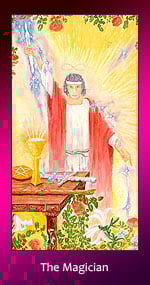
Tarot Card: Chariot
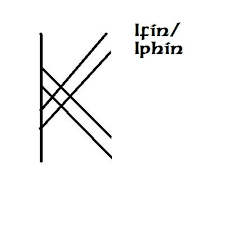
Rune: Ehwaz
Colors: Deep Blue, Purple, Green
Plants*: Anise, Banyan, Borage, Chestnut, Cinquefoil, Clove, Dandelion, Endive, Fig, Honeysuckle, Hyssop, Liverwort, Maple, Meadowsweet, Nutmeg, Sage, Sarsaparilla, Sassafras, Star Anise, Witch Grass
Stones: Amethyst, Sugilite, Blue Howlite, Kyanite, Lapis Lazuli, Iolite, Celestite, Azurite, Blue Topaz, Hawk’s Eye, Apatite, Tektite
Magical Uses: Expansion, Luck, Abundance, Protection, Stability, Joy, Pleasure, Employment, Leadership
Crystal, Gems, and Stones Meanings and Magickal Usage – Bloodstone
Disclaimer: This stone it not meant to be used instead your health care professional but can be a compliment to with your health care professional prescribes. WitchesofTheCraft.com, any staff member of WitchesofTheCraft.com, and Lady Carla Beltane are not responsible for any type of a negative reaction when using this stone for any reason.

From thecrystalcouncil.com
Chakras
Planets
Zodiacs
Elements
Science & Origin of Bloodstone
Bloodstone, also known as Heliotrope or Piedra Del Sol, is an opaque cryptocrystalline Quartz and member of the Chalcedony family. The green color found within this stone is caused by tiny inclusions of Chlorite and Pyroxene, while the red is small concentrated areas of iron oxide minerals, most commonly Hematite. The word Heliotrope derives from the Greek word meaning “to turn the sun”. In today’s age, the most abundant deposits of Bloodstone are found in India, China, Madagascar, Brazil, Australia, and the United States.
Indian Aphrodisiac
In Indian culture, Bloodstone is considered an aphrodisiac. Within the culture, Bloodstone would be ground up into a fine powder and sold for a high price. The price of this ground-up powder would oftentimes even be sold for a higher price than the raw Bloodstone material. This makes top-quality Bloodstone that much more valuable.
Historical Uses
Bloodstone has been revered through different cultures and history. The red spots were said to be a representation of Christ’s blood and thus used as an amulet for Christianity. It was often used to check for blood hemorrhages. It is said that the famous Italian painter Giorgio Vasari was afflicted by a violent hemorrhage and a piece of bloodstone was placed between his shoulder blades to stop the ailment. When this stone is placed into water it will add a reddish hue that will be intensified when the sun’s rays hit it. Ancient cultures believed that it was able to turn the sun itself, blood red.
Leyden Papyrus
The Leyden Papyrus, written in Greek at the end of the 3rd century A.D. states that Bloodstone will give the wearer whatever he may ask for and “whatever thou wearer says, he will be believed. Whoever bears this stone, which is a gem, and pronounces the name engraved upon it, will find all doors open, while bonds and stone walls will rent asunder”. – Kropatchek, 1907
Meaning & Energy
Bloodstone activates our inner strength, willpower, and courage that has been masked by fear. This crystal is a purifier of our negative energies and aids to convert these thoughts and feelings into positive ones. Bloodstone helps break the mold of our endless monotonous cycles by helping us aspirate to who we truly want to be. This crystal is a reminder that the only judge of our thoughts and actions should be no one other than ourselves. The direction you choose to go in this life will only be decided by you. Heliotrope provides us with the necessary confidence and fortitude to move past hard times and see the growth ahead.
Great Affirmation Tool
Bloodstone is a thought-provoking amulet that aids in the process of manifesting our subconscious ideas into reality. These thoughts and emotions have been vastly hidden from the open-world due to their true power and our own insecurities. Trusting in our intuition and allowing it to be channeled through experiences and moments will only lead us onto the path of revolution.

Bloodstone – The Powerful Healer from wiccanow.com
Disclaimer for this website. The content provided on this is website is for informational purposes only and DOES NOT CONSTITUTE THE PROVIDING OF MEDICAL ADVICE and is not intended to be a substitute for independent professional medical judgment, advice, diagnosis, or treatment.
Always seek the advice of your physician or other qualified health providers with any questions or concerns you may have regarding your health.
Bloodstone is also know as Helioptrope or blood jasper.
Hi and welcome to Wicca Now. As you may already know, Wicca Now is a site where Amaria and I write about all things Witchcraft, Wicca and Magick. Lately, we’ve been covering a lot of crystal related topics, like this post on crystal witchcraft, this guide to crystal correspondences or this article on jasper. Today I thought we’d focus on another beautiful crystal, namely bloodstone.
About Bloodstone
Bloodstone is readily available and found throughout Australia, Brazil, China, the Czech Republic, Russia and India. The use of bloodstone dates to the prehistoric people of Scotland who used the stone to shape arrowheads, blades and scrapers. The Ancient Greeks believed that bloodstone could turn red from the suns rays, hence naming it heliotrope which comes from the Greek helios and tropos meaning ‘sun turner’. The stone was used throughout Ancient Greece and Rome to fashion a wide variety of decorative objects from jewellery to seal stones. Throughout the Middle Ages bloodstone was understood as a powerful healing stone and it was believed to give the wearer the gift of prophecy. The stone itself is multicoloured green or bluish-green with flecks of red. It can range from translucent to opaque and has a waxy lustre.
Bloodstone Magickal Benefits and Meaning
Bloodstone is believed to possess powerful healing properties. It is a stone of guidance, intuition and divination.
Attracts luck, money and success
Bolsters strength
Reduces aggression
Boosts the power of spells
Boosts the power of other crystals
Boosts confidence
A deeply spiritual stone
Aids healing
Enhances faith
Excellent for grounding
Keeps out undesirable influences
Helps us to avoid dangerous situations
Stimulates dreaming
Powerfully revitalising
Assists in connecting with the present moment
Revitalises and rejuvenates the body
Stimulates the mind
Dispels confusion
Elemental Correspondences
It is associated with the element of fire and the goddesses Morrigan and Badb
Astrological Influence
It’s astrological influence comes from Mars. Bloodstones zodiac correspondences are Aries, Capricorn, Libra, Pisces and Scorpio.
Magickal Tips for Bloodstone
- To aid sleep, place a piece of bloodstone into a bowl of water and keep this …
Herb Magickal and Medicinal Uses – Peppermint
Disclaimer: No herb should be used for medicinal use until you have check with your health care professional to ask if it safe for you to use it for any reason. WitchesofTheCraft.com, any staff member of WitchesofTheCraft.com, and Lady Carla Beltane are not responsible for any type of a negative reaction when using this herb for any reason.

(Side Note from Lady Beltane: While it has many uses Peppermint will take over anywhere outside it is planted including using an outdoor planter. I have found it is best to grow this herb indoors in a planter. Starting with a small 3-inch potted plant I replanted in my herb garden with in 2 years it took over my entire herb garden and was very difficult to get rid of it planted in this way. When it goes to seed it spreads itself even into the grass.)
SCROLL DOWN FOR MAGICKAL USEAGE
Benefits, uses, forms, and precautions of peppermint from medicalnewstoday.com
Peppermint is an aromatic plant, a cross between water mint and spearmint. Besides adding flavor to foods and drinks, it may help manage digestive problems, nausea, headaches, and other health issues.
Peppermint is used to add flavor or fragrance to foods, cosmetics, soaps, toothpaste, mouthwashes, and other products, and it may have some medicinal uses.
A person can also use dried or fresh peppermint (Mentha piperita) leaves to brew tea.
Peppermint is originally from Europe, but now people cultivate it all over the world. This article is part of a collection of articles on the health benefits of popular foods.
Uses and health benefits
Peppermint is a popular traditional remedy for a number of conditions.
Research shows it may be effective in alleviating:
- flatulence (gas)
- menstrual pain
- diarrhea
- nausea
- depression-related anxiety
- muscle and nerve pain
- symptoms of the common cold
- indigestion
The different forms of peppermint may be good for helping different ailments. These forms and the conditions they may help include:
Peppermint oil
Indigestion
Peppermint oil can help calmTrusted Source the stomach muscles and improve the flow of bile. This makes it suitable for people who have indigestion.
However, it should not be used by people with gastroesophageal reflex disease (GERD), which has different causes of indigestion.
Irritable bowel syndrome …
Skin conditions …
Headaches and migraine …
Nausea and vomiting during pregnancy …
Relieving chemotherapy-induced vomiting …
Peppermint steam
Colds and flu …
Peppermint capsules
Treating and healing chronic wounds …
Forms of peppermint
Although research suggests that essential oils may have some health benefits, it is important to remember that the Food and Drug Administration (FDA) does not monitor or regulate the purity or quality of these. A person should talk with a healthcare professional before using essential oils, and they should be sure to research the quality of a brand’s products. A person should always do a patch test before trying a new essential oil.
Peppermint can consist of fresh or dry leaves for use in food or as tea. A person can find peppermint essential oil as an ingredient in tinctures, chest rubs, and creams.
A person can also swallow it in the form of enteric-coated capsules. This allows the peppermint to pass into the intestine.
Peppermint essential oil is a concentrated oil that is extracted from the peppermint plant by steam distillation. The whole fresh or partly dried plant is used before it starts to flower.
The amounts of the chemical components in peppermint oil may vary depending on the batch, and where and how it was produced. 2019 research showed the following component amounts:
- menthol (38.45%)
- menthone (21.8%)
- 1,8-cineole (5.62%)
- neo-menthol (4.19%)
Like other essential oils, a person should not take peppermint essential oil orally. It is important to make sure to dilute it with a carrier oil before applying it to the skin.
Peppermint vs. spearmint …
Risks and precautions
Peppermint, like many other herbs, can interact with other herbs, supplements, or drugs. Peppermint can also trigger side effects in some individuals. It is possible to be allergic to peppermint.
Anyone who already receives medication should talk with their doctor before using peppermint. Peppermint should not be used by young children. When applied to a child’s face, peppermint can cause life threatening breathing problems.
Peppermint is not recommended for people who:
- have a hiatus hernia
- have gastroesophageal reflux disease (GERD)
- have an irregular heartbeat (arrhythmia)
- have hemolytic anemia
What medications does peppermint interfere with?
Peppermint may interact with some drugs, including:
- cyclosporine, takenTrusted Source by transplant recipients to prevent organ rejection
- drugs that reduce stomach acid
- ulcer medications
- calcium channel blockers and other drugs usedTrusted Source for hypertension or high blood pressure
People should also not use it with antacids. This is because some peppermint supplements are in capsule form. Their coating may break down too rapidly if the patient is also taking an antacid, increasing the risk of heartburn.
Summary
Peppermint is a plant that is a combination of water mint and spearmint. A person can drink it as a tea, use it as an essential oil, or as take it as a herbal medicine in the form of a capsule.
Research shows peppermint can help alleviate a variety of ailments, including gastrointestinal problems, headaches, and nausea.

Peppermint Plant Gone to Seed
What Are The Magical Properties Of Peppermint? from enchantedaromatics.com
The magical properties of peppermint (Mentha piperita) are highly valued in magickal circles because the properties of peppermint far exceed the potency of many other plants and herbs.
The metaphysical powers of peppermint do not cease to amaze me. To access the magical powers, you could use peppermint by itself, as part of a ritual or potion, or use peppermint in conjunction with uttering a magical word such as “Abracadabra”.
The approaches we offer are mere suggestions of how to access the magical properties of peppermint. Your imagination is a very powerful tool when conjuring up magic. What works for one person may not work for another person.
As a general rule, peppermint has magical and spiritual powers that include 8 Main Properties:
Ability to cleanse
Promotes clarity
Provides protection
Promotes healing
Increases intuition and psychic abilities
Promotes visions and dreams
Incites love
Table of Content
Brief History Of The Magical Properties Of Peppermint
9 Magical Properties Of Peppermint
-
- Can peppermint be used for magical and spiritual cleansing?
- Can peppermint increase clarity?
- Can peppermint be used to provide protection from dark energies?
- Can peppermint be used for healing?
- Can peppermint increase intuition and psychic abilities?
- Can peppermint enhance the ability to have visions and dreams?
- Can peppermint be used to incite love?
- Can peppermint be used to attract money and prosperity?
Other Magical Properties Of Peppermint
Flower Meaning, Symbol and Spiritual Meaning – Daffodil
(Side Note from Lady Beltane: My dad would buy my mom a bouquet of Daffodil’s in various colors every year from a street vendor. After his crossing in 1970 I did the best, I could to carry on the tradition. In my childhood home the bouquet symbolized the start of Spring!)
Daffodil Flower Meanings & Symbolism + Mythology & Folklore from uniguide.com
Daffodil flower meanings and symbolism include revival, rebirth, hope, joy, resilience, good luck, prosperity, memories, and forgiveness. Is it possible to grow sunshine? Flower enthusiasts would insist that it is. With the exception of the sunflower, few other flowers radiate bright sunshine as the daffodil does, and not to mention, the welcoming of spring after a cold, dark winter.
But there’s more to daffodils than lovely cut flowers. In this post, you’ll learn about daffodil symbols and meanings, daffodil mythology and folklore, daffodil spiritual meanings, and more.
A Thought for Today – Elements Among Us
Elements Among Us by Magena on paganpoetry.tripod.com
Your cool breeze invites us out
With passion that burns like a raging fire
A gentle rush of the spring water
Shows your light amongst the land
The wind allows for playful games
While the campfire keeps us warm
Quiet splashes raise up from beyond
And children dance beneath the trees
The cool air blows about the smoke
As the fire crackles in the night
The ground grows cold as dewdrops form
Grass is soft upon our feet
We dance the rhythm of the wind
And move to the motion of the flames
Kicked about, the water on our toes
Among the earth, a pattern appears
Within our souls, your Spirit grows
Bringing the wind to take us forth
Lighting the fire to make us dance
Watering the grass to keep us cool
Giving us earth, in night were freed
A Laugh for Today

Some of the Witchcraft/Magickal Correspondence for Thursday
From awithintime.weebly.com
Thursday- Ruled by Jupiter. Good luck, wealth, healing, male fertility, legal matters.
Day – Thursday
Planet – Jupiter
Sign – Sagittarius, Pisces
Angel – Sachiel
Color – Purple, Green, Royal Blue
Plant – Cinnamon, Beech, Buttercup, coltsfoot, oak
Stone – Sugilite, amethyst, turquoise, lapis lazuli, sapphire
Intention – Business, logic, gambling, social matters, political power, material wealth
Element – Fire, water
More Qualities – expansion, luck, success, higher education, the law, career, finances, wealth, publishing, college education, long distance travel, foreign interests, religion, philosophy, forecasting, broadcasting, publicity, expansion, luck, growth, sports, horses, the law, doctors, guardians, merchants, psychologists, charity, correspondences courses, self-improvement, researching, reading, studying
A Thought for Today

Namaste dear Sisters, Brothers and Honored Guests
A Laugh for Today

Along with a virtual hug
Some of the Witchcraft/Magickal Correspondence for Thursday
From WitchSwap.com
Thursday
is associated with the planet Jupiter, the planet that rules over expansion and optimism, amplifying attraction work of any kind.
Prosperity and Road Opening spells are two of the most commonly associated with this day.
The corresponding zodiac signs are Capricorn and Pisces. Using the same line of thought as I did with Wednesday’s associations, I also add Sagittarius to the list of signs corresponding with Thursday, because that is the zodiac sign analogous with Jupiter.
Elements that are associated with Thursday include Air and Fire, but arguably Earth could be mentioned as well due to Capricorn being an earth sign.
Although finances are typically associated with Thursday, all spell work relating to matters of success will be fortuitous. Luck, overcoming obstacles (block busting or road opening), legal matters and personal success are all spells with enhanced effectiveness on this day of the week.
Gods/Goddesses: Hera, Juno, Jupiter, Thor, Zeus. If you work with the Ancient Greek or Ancient Roman pantheon, this would be a good day to pay homage to the Queen and King counterparts of both respective systems: Juno and Jupiter (Roman) and Hera and Zeus (Greek).
Angel: Selaphiel
God of the Day – Osiris
Osiris
Osiris the god of the afterlife, the underworld, and rebirth in ancient Egyptian religion. He was classically depicted as a green-skinned deity with a pharaoh’s beard, partially mummy-wrapped at the legs, wearing a distinctive atef crown, and holding a symbolic crook and flail. (He was one of the first to be associated with the mummy wrap. When the brother cut him up into pieces after killing him Isis, his wife, found all the pieces and wrapped his body up.) Osiris was at times considered the eldest son of the god Geb and the sky goddess Nut, as well as being brother and husband of Isis, with Horus being considered his posthumously begotten son. He was also associated with the epithet Khenti-Amentiu, meaning “Foremost of the Westerners”, a reference to his kingship in the land of the dead. As ruler of the dead, Osiris was also sometimes called “king of the living”: ancient Egyptians considered the blessed dead “the living ones”. Through syncretism with Iah, he is also the god of the Moon.
Osiris was considered the brother of Isis, Set, Nephthys, and Horus the Elder, and father of Horus the Younger. The first evidence of the worship of Osiris was found in the middle of the Fifth dynasty of Egypt, although it is likely that he was worshiped much earlier; the Khenti-Amentiu epithet dates to at least the first dynasty, and was also used as a pharaonic title. Most information available on the myths of Osiris is derived from allusions contained in the Pyramid Texts at the end of the Fifth Dynasty, later New Kingdom source documents such as the Shabaka Stone and the Contending of Horus and Seth, and much later, in narrative style from the writings of Greek authors including Plutarch and Diodorus Siculus.
Osiris was the judge of the dead and the underworld agency that granted all life, including sprouting vegetation and the fertile flooding of the Nile River. He was described as “He Who is Permanently Benign and Youthful” and the “Lord of Silence”. The Kings of Egypt were associated with Osiris in death – as Osiris rose from the dead so would they in union with him, and inherit eternal life through a process of imitative magic. By the New Kingdom all people, not just pharaohs, were believed to be associated with Osiris at death, if they incurred the costs of the assimilation rituals.
Through the hope of new life after death, Osiris began to be associated with the cycles observed in nature, in particular vegetation and the annual flooding of the Nile, through his links with the heliacal rising of Orion and Sirius at the start of the new year. Osiris was widely worshipped until the decline of ancient Egyptian religion during the rise of Christianity in the Roman Empire.
Etymology of the name
Osiris is a Latin transliteration of the Ancient Greek Ὄσιρις IPA: [ó.siː.ris], which in turn is the Greek adaptation of the original name in the Egyptian language. In Egyptian hieroglyphs the name appears as wsjr, which some Egyptologists instead choose to transliterate ꜣsjr or jsjrj. Since hieroglyphic writing lacks vowels, Egyptologists have vocalized the name in various ways as Asar, Yasar, Aser, Asaru, Ausar, Ausir, Wesir, Usir, Usire or Ausare.
Several proposals have been made for the etymology and meaning of the original name; as Egyptologist Mark J. Smith notes, none are fully convincing. Most take wsjr as the accepted transliteration, following Adolf Erman:
- John Gwyn Griffiths (1980), “bearing in mind Erman’s emphasis on the fact that the name must begin with an [sic] w“, proposes a derivation from wsr with an original meaning of “The Mighty One”. Moreover, one of the oldest attestations of the god Osiris appears in the mastaba of the deceased Netjer-wser (from nṯr-wsr “Powerful God”).[citation needed]
- Kurt Sethe (1930) proposes a compound st-jrt, meaning “seat of the eye”, in a hypothetical earlier form *wst-jrt; this is rejected by Griffiths on phonetic grounds.
- David Lorton (1985) takes up this same compound but explains st-jrt as signifying “product, something made”, Osiris representing the product of the ritual mummification process.
- Wolfhart Westendorf (1987) proposes an etymology from wꜣst-jrt “she who bears the eye”.
- Mark J. Smith (2017) makes no definitive proposals but asserts that the second element must be a form of jrj (“to do, make”) (rather than jrt (“eye”)).
However, recently alternative transliterations have been proposed:
- Yoshi Muchiki (1990) reexamines Erman’s evidence that the throne hieroglyph in the word is to be read ws and finds it unconvincing, suggesting instead that the name should be read ꜣsjr on the basis of Aramaic, Phoenician, and Old South Arabian transcriptions, readings of the throne sign in other words, and comparison with ꜣst(“Isis”).
- James P. Allen (2000) reads the word as jsjrt but revises the reading (2013) to jsjrj and derives it from js-jrj, meaning “engendering (male) principle”.
Appearance
Osiris is represented in his most developed form of iconography wearing the Atef crown, which is similar to the White crown of Upper Egypt, but with the addition of two curling ostrich feathers at each side (see also Atef crown (hieroglyph)). He also carries the crook and flail. The crook is thought to represent Osiris as a shepherd god. The symbolism of the flail is more uncertain with shepherds whip, fly-whisk, or association with the god Andjety of the ninth nome of Lower Egypt proposed.
He was commonly depicted as a pharaoh with a complexion of either green (the color of rebirth) or black (alluding to the fertility of the Nile floodplain) in mummiform (wearing the trappings of mummification from chest downward).
Early mythology
The Pyramid Texts describe early conceptions of an afterlife in terms of eternal travelling with the sun god amongst the stars. Amongst these mortuary texts, at the beginning of the 4th dynasty, is found: “An offering the king gives and Anubis”. By the end of the 5th dynasty, the formula in all tombs becomes “An offering the king gives and Osiris“.
Father of Horus
Osiris is the mythological father of the god Horus, whose conception is described in the Osiris myth (a central myth in ancient Egyptian belief). The myth describes Osiris as having been killed by his brother, Set, who wanted Osiris’ throne. His wife, Isis finds the body of Osiris and hides it in the reeds where it is found and dismembered by Set. Isis retrieves and joins the fragmented pieces of Osiris, then briefly brings Osiris back to life by use of magic. This spell gives her time to become pregnant by Osiris before he again dies. Isis later gives birth to Horus. As such, since Horus was born after Osiris’ resurrection, Horus became thought of as a representation of new beginnings and the vanquisher of the usurper Set.
Ptah-Seker (who resulted from the identification of Creator god Ptah with Seker) thus gradually became identified with Osiris, the two becoming Ptah-Seker-Osiris. As the sun was thought to spend the night in the underworld, and was subsequently “reborn” every morning, Ptah-Seker-Osiris was identified as king of the underworld, god of the afterlife, life, death, and regeneration.
Ram god
Osiris’ soul, or rather his Ba, was occasionally worshipped in its own right, almost as if it were a distinct god, especially in the Delta city of Mendes. This aspect of Osiris was referred to as Banebdjedet, which is grammatically feminine (also spelt “Banebded” or “Banebdjed“), literally “the ba of the lord of the djed, which roughly means The soul of the lord of the pillar of continuity. The djed, a type of pillar, was usually understood as the backbone of Osiris.
The Nile supplying water, and Osiris (strongly connected to the vegetable regeneration) who died only to be resurrected, represented continuity and stability. As Banebdjed, Osiris was given epithets such as Lord of the Sky and Life of the (sun god) Ra, since Ra, when he had become identified with Atum, was considered Osiris’ ancestor, from whom his regal authority is inherited. Ba does not mean “soul” in the western sense, and has to do with power, reputation, force of character, especially in the case of a god.
Since the ba was associated with power, and also happened to be a word for ram in Egyptian, Banebdjed was depicted as a ram, or as Ram-headed. A living, sacred ram was kept at Mendes and worshipped as the incarnation of the god, and upon death, the rams were mummified and buried in a ram-specific necropolis. Banebdjed was consequently said to be Horus’ father, as Banebdjed was an aspect of Osiris.
Regarding the association of Osiris with the ram, the god’s traditional crook and flail are the instruments of the shepherd, which has suggested to some scholars also an origin for Osiris in herding tribes of the upper Nile. The crook and flail were originally symbols of the minor agricultural deity Andjety, and passed to Osiris later. From Osiris, they eventually passed to Egyptian kings in general as symbols of divine authority.
Mythology
Plutarch recounts one version of the Osiris myth in which Set (Osiris’ brother), along with the Queen of Ethiopia, conspired with 72 accomplices to plot the assassination of Osiris. Set fooled Osiris into getting into a box, which Set then shut, sealed with lead, and threw into the Nile. Osiris’ wife, Isis, searched for his remains until she finally found him embedded in a tamarisk tree trunk, which was holding up the roof of a palace in Byblos on the Phoenician coast. She managed to remove the coffin and retrieve her husband’s body.
In one version of the myth, Isis used a spell to briefly revive Osiris so he could impregnate her. After embalming and burying Osiris, Isis conceived and gave birth to their son, Horus. Thereafter Osiris lived on as the god of the underworld. Because of his death and resurrection, Osiris was associated with the flooding and retreating of the Nile and thus with the yearly growth and death of crops along the Nile valley.
Diodorus Siculus gives another version of the myth in which Osiris was described as an ancient king who taught the Egyptians the arts of civilization, including agriculture, then travelled the world with his sister Isis, the satyrs, and the nine muses, before finally returning to Egypt. Osiris was then murdered by his evil brother Typhon, who was identified with Set. Typhon divided the body into twenty-six pieces, which he distributed amongst his fellow conspirators in order to implicate them in the murder. Isis and Hercules (Horus) avenged the death of Osiris and slew Typhon. Isis recovered all the parts of Osiris’ body, except the phallus, and secretly buried them. She made replicas of them and distributed them to several locations, which then became centres of Osiris worship.
Worship
Annual ceremonies were performed in honor of Osiris in various places across Egypt. These ceremonies were fertility rites which symbolised the resurrection of Osiris. E.A. Wallis Budge stated “Osiris is closely connected with the germination of wheat; the grain which is put into the ground is the dead Osiris, and the grain which has germinated is the Osiris who has once again renewed his life.”
Death or transition and institution as god of the afterlife
Plutarch and others have noted that the sacrifices to Osiris were “gloomy, solemn, and mournful…” (Isis and Osiris, 69) and that the great mystery festival, celebrated in two phases, began at Abydos commemorating the death of the god, on the same day that grain was planted in the ground (Isis and Osiris, 13). The annual festival involved the construction of “Osiris Beds” formed in shape of Osiris, filled with soil and sown with seed.
The germinating seed symbolized Osiris rising from the dead. An almost pristine example was found in the tomb of Tutankhamun by Howard Carter.
The first phase of the festival was a public drama depicting the murder and dismemberment of Osiris, the search of his body by Isis, his triumphal return as the resurrected god, and the battle in which Horus defeated Set.
According to Julius Firmicus Maternus of the fourth century, this play was re-enacted each year by worshippers who “beat their breasts and gashed their shoulders…. When they pretend that the mutilated remains of the god have been found and rejoined…they turn from mourning to rejoicing.” (De Errore Profanorum).
The passion of Osiris was reflected in his name ‘Wenennefer” (“the one who continues to be perfect”), which also alludes to his post mortem power.
Ikhernofret Stela
Much of the extant information about the rites of Osiris can be found on the Ikhernofret Stela at Abydos erected in the 12th Dynasty by Ikhernofret (also I-Kher-Nefert), possibly a priest of Osiris or other official (the titles of Ikhernofret are described in his stela from Abydos) during the reign of Senwosret III (Pharaoh Sesostris, about 1875 BC). The ritual reenactment of Osiris’s funeral rites were held in the last month of the inundation (the annual Nile flood), coinciding with Spring, and held at Abydos/Abedjou which was the traditional place where the body of Osiris/Wesir drifted ashore after having been drowned in the Nile.
The part of the myth recounting the chopping up of the body into 14 pieces by Set is not recounted in this particular stela. Although it is attested to be a part of the rituals by a version of the Papyrus Jumilhac, in which it took Isis 12 days to reassemble the pieces, coinciding with the festival of ploughing. Some elements of the ceremony were held in the temple, while others involved public participation in a form of theatre. The Stela of I-Kher-Nefert recounts the programme of events of the public elements over the five days of the Festival:
- The First Day, The Procession of Wepwawet: A mock battle was enacted during which the enemies of Osiris are defeated. A procession was led by the god Wepwawet (“opener of the way”).
- The Second Day, The Great Procession of Osiris: The body of Osiris was taken from his temple to his tomb. The boat he was transported in, the “Neshmet” bark, had to be defended against his enemies.
- The Third Day: Osiris is Mourned and the Enemies of the Land are Destroyed.
- The Fourth Day, Night Vigil: Prayers and recitations are made and funeral rites performed.
- The Fifth Day, Osiris is Reborn: Osiris is reborn at dawn and crowned with the crown of Ma’at. A statue of Osiris is brought to the temple.
Wheat and clay rituals
Contrasting with the public “theatrical” ceremonies sourced from the I-Kher-Nefert stele (from the Middle Kingdom), more esoteric ceremonies were performed inside the temples by priests witnessed only by chosen initiates. Plutarch mentions that (for much later period) two days after the beginning of the festival “the priests bring forth a sacred chest containing a small golden coffer, into which they pour some potable water…and a great shout arises from the company for joy that Osiris is found (or resurrected). Then they knead some fertile soil with the water…and fashion therefrom a crescent-shaped figure, which they cloth and adorn, this indicating that they regard these gods as the substance of Earth and Water.” (Isis and Osiris, 39). Yet his accounts were still obscure, for he also wrote, “I pass over the cutting of the wood” – opting not to describe it, since he considered it as a most sacred ritual (Ibid. 21).
In the Osirian temple at Denderah, an inscription (translated by Budge, Chapter XV, Osiris and the Egyptian Resurrection) describes in detail the making of wheat paste models of each dismembered piece of Osiris to be sent out to the town where each piece is discovered by Isis. At the temple of Mendes, figures of Osiris were made from wheat and paste placed in a trough on the day of the murder, then water was added for several days, until finally the mixture was kneaded into a mold of Osiris and taken to the temple to be buried (the sacred grain for these cakes were grown only in the temple fields). Molds were made from the wood of a red tree in the forms of the sixteen dismembered parts of Osiris, the cakes of ‘divine’ bread were made from each mold, placed in a silver chest and set near the head of the god with the inward parts of Osiris as described in the Book of the Dead (XVII).
Judgment
The idea of divine justice being exercised after death for wrongdoing during life is first encountered during the Old Kingdom in a 6th dynasty tomb containing fragments of what would be described later as the Negative Confessions performed in front of the 42 Assessors of Ma’at.
With the rise of the cult of Osiris during the Middle Kingdom the “democratization of religion” offered to even his humblest followers the prospect of eternal life, with moral fitness becoming the dominant factor in determining a person’s suitability.
At death a person faced judgment by a tribunal of forty-two divine judges. If they led a life in conformance with the precepts of the goddess Ma’at, who represented truth and right living, the person was welcomed into the kingdom of Osiris. If found guilty, the person was thrown to a “devourer” (such as the soul-eating demon Ammit) and did not share in eternal life.
The person who is taken by the devourer is subject first to terrifying punishment and then annihilated. These depictions of punishment may have influenced medieval perceptions of the inferno in hell via early Christian and Coptic texts.
Purification for those who are considered justified may be found in the descriptions of “Flame Island“, where they experience the triumph over evil and rebirth. For the damned, complete destruction into a state of non-being awaits, but there is no suggestion of eternal torture.
Divine pardon at judgement was always a central concern for the ancient Egyptians.
During the reign of Seti I, Osiris was also invoked in royal decrees to pursue the living when wrongdoing was observed, but kept secret and not reported.
Greco-Roman era
Hellenization
The early Ptolemaic kings promoted a new god, Serapis, who combined traits of Osiris with those of various Greek gods and was portrayed in a Hellenistic form. Serapis was often treated as the consort of Isis and became the patron deity of the Ptolemies’ capital, Alexandria. Serapis’s origins are not known. Some ancient authors claim the cult of Serapis was established at Alexandria by Alexander the Great himself, but most who discuss the subject of Serapis’s origins give a story similar to that by Plutarch. Writing about 400 years after the fact, Plutarch claimed that Ptolemy I established the cult after dreaming of a colossal statue at Sinope in Anatolia. His councillors identified as a statue of the Greek god Pluto and said that the Egyptian name for Pluto was Serapis. This name may have been a Hellenization of “Osiris-Apis”. Osiris-Apis was a patron deity of the Memphite Necropolis and the father of the Apis bull who was worshipped there, and texts from Ptolemaic times treat “Serapis” as the Greek translation of “Osiris-Apis”. But little of the early evidence for Serapis’s cult comes from Memphis, and much of it comes from the Mediterranean world with no reference to an Egyptian origin for Serapis, so Mark Smith expresses doubt that Serapis originated as a Greek form of Osiris-Apis’s name and leaves open the possibility that Serapis originated outside Egypt.
Destruction of cult
The cult of Isis and Osiris continued at Philae until at least the 450s CE, long after the imperial decrees of the late 4th century that ordered the closing of temples to “pagan” gods. Philae was the last major ancient Egyptian temple to be closed.
Source
c. 2018
Herb Magickal and Medicinal Uses – Rosemary
No herb should be used for medicinal use until you have check with your health care professional to ask if it safe for you to use it for any reason. Witches of The Craft and Lady Carla Beltane are not responsible for any negative reaction when using this herb for any reason.

Flower Meaning, Symbol and Spiritual Meaning
Yellow Rose Meaning in the Language of Flowers from petalrepublic.com
When you think of gifting a bouquet of flowers, what springs to mind? For many people, it’s roses. These lovely flowers have long been among the most popular blossoms gifted to loved ones, family, and friends. And when you need to add a little cheer to someone’s day, yellow roses are often the flower of choice. These happy flowers are associated with friendship, joy, warmth, care, appreciation, and remembrance. But the meaning of yellow roses has changed over time. Read on to learn more about the symbolism and meaning of the yellow rose.
Table of Contents:
A Thought for Today

A Laugh for Today

Goddess Of The Day – Hexe
Hexe
Saint Hildegard Dies
Themes: Health, Banishing:Magic
Symbols: Healing Herbs and Charms
About Hexe: This ancient Germanic witch’s goddess rules over health, banishing curses and teaching
people the effective use of spells, charms and other mystical procedure for improving well being, Thus
we come by the old phrase “hex doctor”.
To Do Today: Living in the 1100’s St Hildegard was a renowned Benedictine nun living in Bingen and
ministering to people with herbal preparations received in visions. Many of these had magical overtone,
perhaps guided by Hexe’s influence. In any case, today’s theme is learning the art of weaving, “Hexes”
for physical, mental and spiritual health.
On the physical level take a natural object like a cut potato and rub it against an inflicted area. Bury the
potato to “bury” the malady and decompose it. Or carry a jet stone to absorb the problem, then cleanse
the rock in saltwater to wash the bas energy away. For mental well being, enjoy a soothing cup of mint
tea stirred countercockwise so tensions and negativity will wane. Or, carry a flourite stone with you
throughout the day to strengthen your mental powers. For spiritual health, sprinkle nutmeg-laden water
clockwise throughout your aura to empower your physic self. Or, carry a lapis or amethyst stone to draw
goddess centered thinking and action into your day.
By Patricia Telesco
A Thought for Today

Sounds of the Forest
Rustling, creaking, cracking, snapping
Nibbling, pecking, chirping, squeaking
Bristling, brushing, chaffing, rubbing
Squelching, sloshing, swishing, plodding
Breathing, echoing, whispering…………….silence
Moonwillow 08/09/02
From paganpoetry.tripod.com
A Laugh for Today


You must be logged in to post a comment.