41 Greek Gods and Goddesses: Family Tree and Fun Facts

You’re Invited to Olympus Mall Where the Greek Gods Dwell and Sell

Far away on Mount Olympus lives the… Well, the Olympians — the twelve most important Greek dieties.

In ancient times, the Olympians and the rest of their family were an important part of daily Greek culture. Each god and goddess ruled certain realms and also played their part in mythology; fascinating stories that helped ancient Greeks to grasp the world around them, including the weather, religious beliefs, and their own social system.

That being said, even the Olympian gods must earn a living.

Possessing so many powers and abilities, they all agreed that they would make excellent business owners, and so opened a grand mall and invited all the mortals.

Let’s grab a shopping bag and go explore the Greek god family tree!

Table of Contents

Zeus the Mall Manager

Suspect Infidelity? Hera’s Private Eye Business Can Help

Book a Trip at the Atlas Traveling Agency

Find Variety at Apollo’s Flea Market

The Eros Lounge for Lonely Hearts

There’s Even a Wine-Tasting Event

Stay Away From the Security Booth

Rejuvenate With Sleep Therapy to Continue Your Shopping

There’s a Shuttle Service for Tired Shoppers

Ares Runs the Army Surplus Shop

There’s a Creepy Dude on a Boat

Pan’s Pet and Sacrifice Shop

This Family’s Failing Business Sells Air Fresheners

There’s Free Counseling for Disturbed Mortals

This Hardware Shop Has All the Mist You Need

This Paramedic Will Fix Your Bones After Kratos Jumps You

The Mall Has a Mini-Jail Called Tartarus

The Cinema Shows Back-To-Back 3D Horror Movies

The Helios Car Dealership Sells Golden Bowls

The Ghost Tour Has Real Ghosts

Poseidon Runs the Black Market

Please Claim Your Kids at the Lost and Found Tent

Aphrodite’s Kissing Booth

Learn How to Chop Necks at Athena’s Karate Club

Hyperion’s Laser Tag Arena

You Can Buy Bottled Air From Aether

Alastor’s Restaurant Serves All the Revenge You Can Eat

There’s an Old Guy That Sells Answers (But You Probably Won’t Get Them)

Pick a Tour Package at the Extreme Adventure Club

There’s a God in the Mini-Jail

There’s a Celebrity Signing Photos of Himself

Enjoy Free Muffins at the Bingo Hall

You’ll Win Every Race With Nike’s Sports Equipment

The Hypno-Therapist Makes Your Problems Worse

The Water-Girl Might Knock You Out

Hecate’s Hex & Herb Shop 

The Mall’s Casino Doubles as a Human Resources Office

The Archery Range Is Fun (But Deadly If You Upset Artemis) 

The Art Gallery Is Full of Living Things and Violence

Mania Is Too Mad to Have a Business

Get Your Face Peeled by Persephone

Get Your Napalm at the Fire-Starter’s Shop

Thank You for Shopping at the Mount Olympus Mall!

Click here to more of this article from historycooperative.org

When Isis Was Queen

Ancient Egyptian Goddess Isis and God Osiris

At the ancient Egyptian temples of Philae, Nubians gave new life to a vanishing religious tradition.

Hathor.When the Romans conquered Egypt in 30 B.C., the country’s system of temples, which had sustained religious traditions dating back more than 3,000 years, began to slowly wither away. Starved of the funds that pharaohs traditionally supplied to religious institutions, priests lost their vocation and temples fell into disuse throughout the country. The introduction of Christianity in the first century a.d. only hastened this process. But there was one exception to this trend: In the temples on the island of Philae in the Nile River, rites dedicated to the goddess Isis and the god Osiris continued to be celebrated in high style for some 500 years after the Roman conquest. This final flowering of ancient Egyptian religion was only possible because of the piety and support of Egypt’s neighbors to the south, the Nubians.

Philae lies just south of the Nile’s first cataract—one of six rapids along the river—which marked the historical border between ancient Egypt and Nubia, also known as Kush. In this region of Kush, called Lower Nubia, the temple complex at Philae was just one of many that were built on islands in the Nile and along its banks. Throughout the long history of Egypt and Nubia, Lower Nubia was a kind of buffer zone between these two lands and a place…

Information About Some of the Gods and Goddesses

Sun Gods

Cat Gods

Roman Gods and Goddesses

Water Gods and Gods of the Sea

Japanese Gods and Mythology: The Shinto Religion

10 Gods of Death and the Underworld From Around the World

Celtic Gods and Goddesses: Exploring the Pantheon and Mythology of the Ancient Celt

41 Greek Gods and Goddesses: Family Tree and Fun Facts

Norse Gods and Goddesses Pantheon: The Mythology of the Nordic Viking Deities

Ancient Egyptian Gods and Goddesses Pantheon: The Mythology of the Nubian Deities


From HistoryCooperative.org – To read the rest of the article about Gods and Goddesses

History Cooperative – Countryside Festivals

Click here to read more about Countryside Festivals

As the Romans saw many natural thigns such as trees, rocks and other matters as possible hosts to spirits or bearers of some other religious significance, then the countryside bustled with spiritual hints by gods, ghosts and spirits. There was also not a thing which wasn’t somehow guarded by a deity.

Read More: Roman gods

There was gods who watched over fields, groves, orchards, vineyards, springs, woods and any other matter. Jupiter for example watched over oak trees which were sacred to him. As country life was inevitably connected to agriculture, which was at the whim of nature, religious life in the country therefore consisted primarily of appeasing he many gods around one, ensuring that they would guard the harvest and be merciful.

As the ancient calendar, before later changes by the Romans, began on waht is now 15 March, the first traditional festival of the country calendar was the liberalia on 17 March. It was held to honour Liber, the god of fertile crops and vineyards. (The liberalia was also the traditional date when a boy could become a man by being given his toga virilis.)

On 15 April came the fordicia in honour of the earth goddess Tellus. For this pregnant cows were slaughtered in sacrifice and in Rome animal fetuses were burnt on altars. The parilia festival which took place the week after the fordicia, saw sheep being herded and forced to jump across burning bales of straw, in order to be purified.

Another festival was that celebrating the goddess Ceres which took place on 19 April. Ceres was especially connected with agriculture, the harvest and, especially, grain. So her festival was no doubt of significance to farmers. There would be a ritual march around the boundaries of the land, the so called lustration, to purify it and to honour the goddess. In the earlier times of Rome the festival of Ceres would see faxes let loose with torches tied to their tails where later the grand arena of the Circus Maximus would stand.

After the festival of Ceres followed the vinalia rustica which was a wine feast to celebrate…

Ancient Roman God Terminus

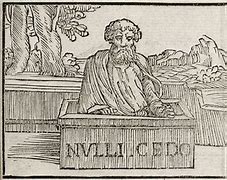
Terminus

From Pantheon.org – For Sources and References Roman God Terminus

“Border.” A Roman divinity presiding over boundaries and frontiers. His worship is said to have been instituted by Numa who ordered that every one should mark the boundaries of his landed property by stones to be consecrated to Jupiter (Ζεὺς ὅριος), and at which every year sacrifices were to be offered at the festival of the Terminalia.1 These sacred boundaries existed not only in regard to private property, but also in regard to the state itself, the boundary of which was not to be transgressed by any foreign foe. But in later times the latter must have fallen into oblivion, while the termini of private property retained their sacred character even in the days of Dionysius, who states that sacrifices of cakes, meal, and fruit (for it was unlawful to stain the boundary stones with blood), still continued to be offered.

The god Terminus himself appears to have been no other than Jupiter himself, in the capacity of the protector of boundaries.2 The Terminus of the Roman state originally stood between the fifth and sixth milestone on the road towards Laurentum, near a place called Festi, and that ancient/boundary of the Ager Romanus (“the field of Rome“) continued to be revered with the same ceremonies as the boundaries of private estates.3 Another public Terminus stood in the temple of Jupiter in the Capitol, and above it there was an opening in the roof, because no Terminus was allowed to be under cover.4 This is another proof that Terminus was only an attribute of Jupiter, although tradition gave a different reason for this circumstance; for when that temple was to be founded, and it was necessary to exaugurate other sanctuaries standing on the same site, all the gods readily gave way to Jupiter and Juno, but the auguries would not allow the sanctuaries of Terminus and Juventas to be removed. This was taken as an omen that the Roman state would remain ever undiminished and young, and the chapels of the two divinities were inclosed within the walls of the new temple. Here we may ask, what had a Terminus to do on the Capitol, unless he was connected or identical with Jupiter?

MULTIFAITH CALENDAR – September 2021

Thanks for visiting Sewanee’s Multifaith Calendar! Created as a project of the Interfaith Advisory Council, this resource is meant to help our campus community know about some of the diverse religious and ethical holidays celebrated by members of the Sewanee community. Use it as you plan programming and schedule events, or to learn about the rich religious diversity that exists at Sewanee.

Though we’ve made every effort to be inclusive, this calendar is not exhaustive; we focused primarily on major holidays identified by practitioners of the traditions represented on campus. If we’ve missed something you’d like to see included, or if you see something you’d like to have corrected, please email Cassie Meyer, Director of Dialogue Across Difference Programs.

If you would like to observe an important religious or ethical holiday, but are struggling to find the resources to do so on campus, please email Cassie Meyer, Director of Dialogue Across Difference Programs and the University Chaplain, the Rev. Peter Gray. We want to work with you to help the Mountain feel like a religious and spiritual home for all.

September 2021

9/4-11 Jain: Paryushana, also known as the Festival of Forgiveness, lasts either eight or ten days and is a time of intensive study, reflection, and purification. It culminates with a day focused on confession and asking for forgiveness.


9/6-8 Jewish: Rosh Hashanah begins at sundown, and begins the Jewish New Year and the Days of Awe, a period of reflection on the past year and the year to come.


9/11 Coptic Orthodox Christian: Nayrouz (Coptic New Year) begins the new year for the Coptic Orthodox Church of Egypt.


9/15-16 Jewish: Yom Kippur (Day of Atonement) begins at sundown on the 27th and ends at sundown on the 28th. A day of fasting and repentance, Yom Kippur marks the end of the Days of Awe or Days of Repentance, and is the holiest day in Judaism.


9/20-27 Jewish: Sukkot, or the Festival of Booths, begins at sundown on 9/20 and goes until 9/27. It is celebrated by the building of sukkot (sing. sukkah; outdoor shelters covered with greenery) as a commemoration of the autumnal harvest.


9/20 – 10/6 Hindu: Pitra Paksha is a 16 day holiday where many Hindus observe an all-vegetarian diet while also offering food to those in need.


9/21 – Various: Zhongqiu Jie (China), Chuseok (Korea), Tết Trung Thu (Vietnam) or Sampeah Preah Khae (Cambodia) is a harvest festival celebrated in much of East Asia and Southeast Asia. Traditions include viewing the full moon with family, eating moon cakes, reunions, and boat races.


9/21- 9/22 Pagan and Wiccan: Modron/Mabon (Autumnal Equinox) begins at sundown; sabbat is observed on the autumnal equinox. It is the first harvest holiday.


9/27-28 Muslim: Arba‘een, observed by Shi’a Muslims, begins at sundown and marks the end of the 40-day mourning period following Ashura, the anniversary of the martyrdom of Hussein ibn Ali, grandson of Islam’s prophet Muhammad.


9/28-29 Jewish: Simchat Torah marks the end of the annual cycle of Torah readings and the beginning of the new cycle.

Life As The Witch – Recognizing Our Goddess, HEKATE (Hecate)


Hekate: A Modern Implications

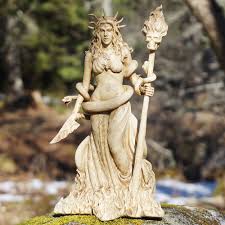
These days, Hekate is often still seen as the Goddess of Witchcraft and Dark Magick, a Dark Crone, because of her connection to the line between life and death. Her chthonic roots are attributed to her aspects as a Death Goddess, but in truth she is not solely death aspected. Her nature is one of transformation, and though change can be terrifying and damaging, it can also be beatific. To think of Her only as a chthonic, Underworld Goddess is to ignore part of her nature.

These days we too often see things in terms of diametric, opposites (light/dark, masculine, feminine, God/Goddess, as if the vast universe is written in binary, nothing more than ones and zeros. While these dichotomies play a role in the nature of the universe, they are also simplified depictions. Deity cannot be contained in the use of dichotomy, because deity transcends those terms.

Hekate is neither light nor dark; she is the very scale of graduation, present at the exact point at which one type of gray becomes another, between every gradient and at either end of the spectrum. Each change is her territory, and there are billions of transformations every day.

Hekate’s connection to magic is another aspect of her nature. Through magic we take what is only potential and pull it into reality, imprinting the mundane world with what could be. And this is one of the biggest changes of all, the transformation for which Hekate has always been particularly revered. Magick is transformation, and it’s from this that Hekate’s association with it is.

In invoking Heckate we can learn to accept changes in our lives, both positive and negative, and we can also create change in our own worlds. She aids the completion and manifestation of spells and when called for divinatory purposes she can help to reveal the truth more readily. She can part the Veil, to allow clearer vision or communion with the dead. Hekate is a protector of children, especially when they walk hard paths, but also in the journey into adulthood.

Hekate guards the crossroads, both those that line our physical reality and those that mark our passage through life, through our spirituality, and through the journey that is existence.

Reference:

Excerpt from:”The Transformative Nature of Hekate”

by Marion Sipe

Llewellyn’s 2012 Magical Living Companion

MOTHER EARTH/GAIA/ALL EARTH GODDESS’ EARTH DAY April 22, 2021

ALWAYS TRY TO LEAVE THE PLACES YOU TRAVEL CLEANER THAN WHEN YOU GOT THERE!

The theme of this year’s Earth Day is “Restore or Earth” As Pagans and/or Witches it is our duty to help clean up, plant new life, etc. for the Earth Goddess (Whatever name you may caller by). We are conservationists working at ground level to restore and keep the Earth Goddess clean. This way she can continue providing us with all living things that we make our shelter from the weather from, the clothes we wear, and the food we eat.

Remember to pick up after your dog as their scat has E.coli in it which if enough of it seeps into the ground our water and food sources could be come contaminated. Making our water undrinkable and our food inedible.

Treat her with love and respect

We thank you (insert the Earth Goddess’ name you use) for nourishing all living things that help to protect and nourish our physical bodies.

May we always strive to make you a beautiful and healthy in our every day lives.

These are our words to offer our help. This is our will to make our word rings true.

So Mote It Be ( Use whatever words you end your spellcasting and/or prayers with.)

Goddess Calendar for February 2020 by Kimberly F. Moore

“The Sun’s path has returned to where it was at Samhain. Take some time to notice the quality of the light, for it is the same now as that shimmering magical glow of late October. But instead of the season of dark and silence before us, in the Northern Hemisphere, the season of light and growth lies ahead. And so we prepare ourselves with rites of renewal, cleansing, and commitment. We celebrate the first stirrings of Spring.” – Beth Owl’s Daughter, “The Days of Imbolc”

Welcome February!

While Spring Equinox marks the official start of Spring, there is another festival that marks the unofficial “stirrings” of Spring called Imbolc (celebrated February 1-2). It is the quickening of the Goddess as she prepares to cast off Winter and turn her energy to the renewal of Earth. Think of a seed deep within Gaia, the promise of new growth. This is the time when those seeds are quickening, preparing to burst, and eventually bloom into the fertility of Spring. The light grows as well, pulling us steadily out of the darkness of winter. We know Spring is coming even as we remain deep in the womb of Goddess. The church appropriated this ancient Feast and calls it Candlemas and it also coincides with our Beloved Goddess Brigid’s Day.

Here in the Northern Hemisphere, we are entering the in-between Winter time. Could be snow, could be a crocus. Could be 5 degrees, could be 50 degrees. HolyDays and celebrations mark another turn on the Goddess Wheel of the Year and usher in the early Spring festivals like Chinese New Year, Vasant Panchami (Saraswati’s birthday), and Ganesha’s Spring celebration that all occurred at the end of January.

To check out the rest of this month’s Goddesses please click here.

Happy and Blessed Beltane to Our Sisters, Brothers, and Guests in the Southern Hemisphere

Goddess Knowledge – The Bird Goddess/Valkyrie

The Bird Goddess is one of the most ancient goddesses, both a living-giving creator and goddess of death and regeneration. The Valkyrie, a northern European goddess, is a representation of this goddess as death wielder, The bird guise of the Valkyrie is that of a raven, long associated with death and magic. The name Valkyrie means “chooser of the slain”; the face and form of the Valkyrie are the last thing a person sees before death, Valkyries are the psychopomps who lead the soul to the afterworld. For ancient people death was part of a cyclical process leading again to rebirth; black was a positive color, a symbol of fertility and abundance, The Valkyrie represents that part of us that is unafraid of dark places; she can lead into and through them. She reminds us that seeds germinate in the darkness, that sometimes we need darkness in order to grow.

More Information on The Bird Goddess

Images of The Bird Goddess

Goddess Calendar for January 2020 by Kimberly Moore

May I be happy.
May I be healthy.
May I be free of suffering.
May I be free of mental anxiety.
May I live in peace.
May my life be blessed with ease.

May you be happy.
May you be healthy.
May you be free from suffering.
May you be free of mental anxiety.
May you live in peace.
May your life be blessed with ease.

May we be happy.
May we be healthy.
May we be free from suffering.
May we be free of mental anxiety.
May we live in peace.
May our lives be blessed with ease.

~ Metta Bhavana – The Loving Kindness Prayer

HAPPY NEW YEAR! WELCOME 2020!

Winter is the Time of the Crones and Wisdom Women…

To read the rest of this article

Goddess Knowledge – Rhiannon

Rhiannon is the Great Goddess as worshiped by the Welsh.  without regeneration. She is an embodiment of life, death, and rebirth, for in her realm there is no death without regeneration. Her name derives from Rigantona, which means great “queen.” A shape-shiftier, can assume any form she want; she often appears as a white horse. She is a muse goddess and is accompanied by three sweetly singing birds who can revive the dead or put the living to sleep.The source of the King’s power derived from Rhiannon, the queen, and a candidate for knighthood met Rhiannon dressed as a stag a regal figure symbolic of rejuvenation, beauty, strength, and instinctual masculine energy. In alter myth she a or as Vivien, the Lady of the Lake. Rhiannon is a beautiful queen of the night, a reminder of the close balance between death and rebirth. She demands that we honor our instinctual and animal selves as a source of creativity, abundance, and order.

For more information on the Goddess Rhiannon

To see images of the Goddess Rhiannon

Goddess Calendar for November 2019 by Kimberly Moore

November 1 – All Saints Day

November 1 – Cailleach’s Day – Day of the Banshees

November 1 – Ancient Roman Festival honoring Pomona

November 2 – Día de los Muertos (although celebrations may begin 10/31)

November 2 – Feast Day of Santa Muerte (Santa Muerte is in Rituals of the Dark Goddess)

November 2 – All Souls Day

November 2 – White Tara Day

November 2, 2019 – Marian Devotion Day

November 3, 2019 – FALL BACK – Daylight Saving Ends

November 3 – Feast Day of St. Martin of Porres who syncretizes to the Orisha Eleggua

November 6 – Birthday of the Babylonian Goddess Tiamat – Primordial Goddess of the Sea

November 7, 2019 Astrological Samhain

November 8. 2019 Tulasi Vivah for the union of Krishna and the Goddess Tulsi (Holy Basil)

November 8 – Immaculate Conception

November 8 – Japanese Hearth Festival celebrating the Goddess Kamui Fuchi

November 8 – TARA Day

November 10 – Ancient Egyptian Month of Hathor begins (ends 12/9)

November 10 – Day of the Scottish Nicneven/Nicnevin (also Samhain Eve)

November 11 – Day of the Fairy Sidhe (Old Samhain)

November 11 – Day of Sacrificial Offerings to the Morrighan (Morrighan is in Meeting the Dark Goddess)

November 12, 2019 FULL MOON IN TAURUS at 8:35am (eastern time)

November 12, 2019 – Full Moon Feast of Baba Yaga (November Full Moon belongs to her – also in Meeting the Dark Goddess)

November 13 – Runic Half Month of Nyd/Nauthiz begins (Need)

November 16 – Thracian Hekate Night – Greek Goddess of Magic and Crossroads (Hekate Online Course)

November 20, 2019 – Mercury Stations Direct in Scorpio (Shadow ends 12/7)

November 20 – Day of Sekhmet and the Purifying Flame (Sekhmet Online Course)

November 22, 2019 – Sun enters Sagittarius

November 22 – Feast Day of St. Cecelia who syncretizes to the Orisha Goddess Oshun

November 24 – Day of Offerings to Sekhmet

November 25 – Feast Day of St. Catherine of Sienna who syncretizes to the Orisha Goddess Obba

November 25 – Celtic Tree Month of Ruis (Elder) begins

November 26, 2019 – New Moon in Sagittarius at 10:06am (eastern time)

November 27, 2019 – Neptune stations Direct in Scorpio

November 27 – Day of Hindu Goddess Parvati (I cannot find a source for this but it is always good to celebrate!)

November 28, 2019 – USA Thanksgiving Day

November 28 – Start of Runic Half Month of ISA (meaning: ice)

November 28 – Day of Egyptian Goddesses Hathor and Sekhmet

November 30 – Day of Mawu – African Creatrix Goddess

November 30 – Day of Norse Goddess Skad

From MotherhouseoftheGoddess.com

Goddess Knowledge – High Priestess

The high priestess is the direct representative of the goddess on earth. She has direct responsibility for functions that ensure fertility and ongoing creation. Priestess often were responsible for ensuring rain, for the goddess was the giver of few and of rain. They often tended a sacred flame, the embodiment of the creative spark of life.

The High Priestess is the Great Goddess herself, a universal figure founder in such diverse guides as Isis in Egypt, Juan Yin throughout all of Asia, Athens in Greece, and Rhiannon among the Celtics. This goddess is all-knowing and all-wise; she creates life out of herself and bestows life-giving waters. At the proper time she takes life away so that the divine spark in each person may be freed to continue on its journey. The High Priestess is a reminder of the innate wisdom in each of us. She demands that we connect to the divine within and manifest it in the world.


I did not purposely pull this week’s card. It was on top after I shuffled the unposted Goddess Knowledge Cards. I personally do not look at myself as “the direct representative of the goddess on earth.”  The reason being is my dearest sister has pointed out to me something I let go to the way side which is the Goddess lives in all who ask. This goes for he God Consort also.


Christian/The Biblical Lilith

rose

Christian/The Biblical Lilith

When the Almighty created the first, solitary man, He said: It is not good for man to be alone. And He fashioned for man a woman from the earth, like him (Adam), and called her Lilith. Soon, they began to quarrel with each other. She said to him: I will not lie underneath, and he said: I will not lie underneath but above, for you are meant to lie underneath and I to lie above. She said to him: We are both equal, because we are both created from the earth. But they did not listen to each other.

When Lilith saw this, she pronounced God’s avowed name and flew into the air. Adam stood in prayer before his Creator and said: Lord of the World! The woman you have given me has gone away from me. Immediately, the Almighty sent three angels after her, to bring her back.

The Almighty said to the Angels: If she decides to return, it is good, but if not, then she must take it upon herself to ensure that a hundred of her children die each day. They went to her and found her in the middle of the Red Sea. And they told her the word of God. But she refused to return. They said to her: We must drown you in the sea. She said: Leave me! I was created for no other purpose than to harm children, eight days for boys and twenty for girls.

When they heard what she said, they pressed her even more. She said: I swear by the name of the living God that I, when I see you or your image on an amulet, will have no power over that particular child. And she took it upon herself to ensure that, every day, a hundred of her children died. That is why we say that, every day, a hundred of her demons die. That is why we write the names Senoi, Sansenoi and Semangloph on an amulet for small children. Andwhen Lilith sees it, she remembers her promise and the child is saved.

Notes: This version of the myth is one of many, most of which have small translation flaws. Often the bible has been translated from Hebrew to Latin to German and then finally to English.

According to accompanying legends, Lilith was cursed and turned into a succubus. God created Eve as an afterthought out of Adam’s rib, in order to make her more submissive. Lilith’s descendants and Eve’s descendants mingled together and bred, and God decreed that Lilith is to kill all of her descendants, except for those protected by an amulet. This belief that Lilith will come to slay young children is still held in awe today in many cultures. As the mother of all other succubi, Lilith’s daughters (succubi, or simply Liliths according to some tales) are also held to this and cannot harm any child protected by the amulet. This is Lilith’s curse for being too dominating according to many tales, although it is also questioned as to whether the real reason is because she spoke God’s avowed name and stole some of gods powers

Another legend says that Jehovah (god) and Lilith are actually god and goddess. Although usually the feminine half of god is known as Yahweh.

Suggestions also say that because Lilith never ate the forbidden fruit, like Adam and Eve did, Lilith is not tainted by original sin, and thus can never die. She is immortal like an angel. Angels can be destroyed however. As can demons. Begging the question of whether Lilith is invincible also.

Other Biblical and non-Biblical legends portray Lilith as being a terrible mother-goddess. Her clergy is described as being temple prostitutes according to some historians. This belief changed over time, with Lilith (or succubi in general) becoming the “divine whore” according to clergy men, described as being a tall beautiful, obsidian-skinned, bat-winged female with long red (some legends say black) hair and sharp blue eyes. This creature then seduces men and kills them. This is a perfect example of men describing ONLY the physical characteristics of women, and also their obvious fear of being powerless against a woman and controlled by them.

Study of the Goddess: Lilith

rose

Study of the Goddess: Lilith

An Introduction to Lilith

By Alan Humm
Lilith is the most important of a small collection of named female demons in Jewish legend. Historically, she is actually older than Judaism (at least Judaism as defined as a post-restoration phenomenon). Her earliest appearance is probably in ancient Sumer. Although it is far from certain, she may be a minor character in a prologue to the Epic of Gilgamesh. In the ancient world she also sometimes appears in magical texts, amulets, etc., intended to thwart her activities. She appears once in the Bible (Isaiah), in a context that associates her with demons of the desert, and again in some Dead Sea Scroll passages clearly based on the Isaiah reference.

We see somewhat more of her in late Roman/early medieval Judaism. She appears frequently on prophylactic magical bowls. In this context, she is clearly associated with childbirth (e.g. as a threat), and perhaps also as a succubus against which men need protection. In these bowls she is often countered by invoking the powers of her nemesis angels: Snvi, Snsvi, and Smnglof (we don’t know what vowels to use with these names, but presumably they were intended to be pronounceable). She also shows up in the Talmud, and is clearly linked with the demonic world. Here also, her role as succubus begins to take clear shape.

Somewhere between the eighth and tenth centuries, CE, she makes an appearance in a satirical work entitled the Alphabet of Ben Sira. It is here that she is first given what has become her most famous persona: the first wife of Adam (before Eve). In this story, she is created at more or less the same time as Adam, and, as was Adam, out of the ground. Because of this she tries to assert her equality — an assertion which Adam rejects. Refusing to conform to Adam’s desires, she escapes from Eden, and is subsequently replaced by the more subservient Eve (who has less claim to equality, since she was made out of Adam’s side). Having escaped Eden, Lilith takes on her renowned role as baby-stealer and mother of demons. She also promises to leave babies alone who are protected by amulets with the names of the three angels mentioned above.

While it is true that there was a rabbinic tradition that Adam briefly had another wife before the creation of Eve (Genesis Rabbah), there is a great deal of doubt as to whether Lilith had any connection at all to this first wife of Adam story prior the publication of the Alphabet. The satirical nature of the Alphabet casts further doubt on the authenticity of this Lilith connection. But whatever its origins, the connection between Lilith and the first Eve seems to have struck a chord with Jewish folk imagination and it is now an inexorable part of those traditions. It has been able to function both as a ‘woman’s story’ (in which Lilith is a role model for uppity women), and as a patriarchal story (in which we see the dire consequences of being an uppity woman). As a midrash, it also helps to solve a problem that arises from the fact that Genesis 1 has mankind created “male and female,” but when we get to Genesis 2, Adam seems to be alone and in need of a partner.

Kabbalistic literature is occasionally aware of the Alphabet story, but more frequently not. Here Lilith usually appears as a partner for Samael (=Satan), and as the chief feminine expression of the Left (evil) Emanation. In some passages, she participates in the temptation of Eve/Adam, and, after the expulsion, she serves as succubus to Adam, generating hoards of demons from his seed. She is also the personification of temptation, and is for all intents and purposes identified with the woman Folly from the early chapters of Proverbs. In one story, she actually serves as consort to the Holy One.

She also appears in Christian iconography. Most late medieval and renaissance paintings of the temptation of Adam and Eve have portrayed the serpent as having a woman’s head and often torso as well. This is usually referred to by art historians as ‘Lilith,’ but there is no Jewish story which easily corresponds to the pictorial representations (the one exception is Bacharach, ‘Emeq haMelekh 23c-d, but it is confusing, and problematic at best). I am led to presume that there were Christian versions of the Lilith myth in which the identification between her and the Serpent were made explicit. Unfortunately, none of these versions have survived in either text or known folklore.

Lilith enjoyed something of a revival in literature beginning in the mid 19th century. Usually she represents the feminine dark side (the part that men subliminally fear). Carl Jung made use of her as prime expression of the anima in men (the suppressed feme within), and the best monograph on her still belongs to one of Jung’s disciples (Siegmund Hurwitz).

She has also been embraced by many modern, particularly Jewish, feminists. Based mainly, or entirely, on the Alphabet, she is presented as the proto-feminist, willing to sacrifice even the paradise of Eden as the necessary cost of freedom and equality. Of course, her role as baby-stealer is usually down-played (or assigned to a patriarchal layer of the tradition). Some neo-pagan groups have taken up her cause as well, either accepting her dark nature as part of larger sacred reality, or finding the erotic goddess within after removing the clutter of what they argue are patriarchal and monotheistic condemnations.

Finally, she has a place in vampire lore either as the first and most powerful of the vampires, or at least as their queen. She is sometimes presented as either the daughter or the consort of Dracula. In her role as succubus, she has, of course, particular control of nightmares and erotic dreams. She also rules a horde of other succuba and incubi.