Goddess of the Day – Badb

Badb – The Celtic Goddess of War from symbolsage.com

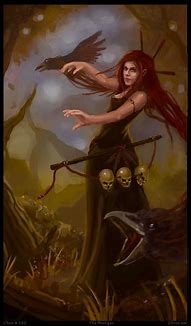
In Celtic mythology, Badb, also known as Battle Crow or Death-Bringer, was the goddess of death and war, creating confusion and fear on battlefields in favor of the victors. She was one aspect of the Celtic triple goddess of war, death, and prophecy, called the Morrigan.

Table of Contents

Prayers, Symbols, Books and More for the Goddess Hecate or Hekate –

Goddess Hekate: Prayers, Symbols, Books & More

From magickalspot.com

Today I want to start exploring the incredible magical realm of gods and goddesses with you, and I could not start from any other than Hekate, the mother of all witches! If you want to get to know this mysterious, fascinating goddess, keep reading this article!

Contents

Who is Hekate?

The myth of Hekate: from its origins to ancient Greece

How do you know that Hekate is calling you?

What are Hekate’s symbols?

Best books about Hekate

My favorite Hekate ritual for guidance

Hekate artwork

Conclusion

Dawn’s Thoughts on The Goddess Hecate

History and Origins

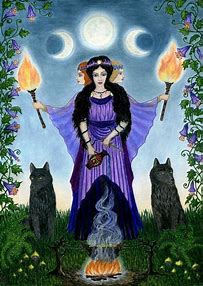
Threefold Hecate

Hecate’s Companions

Hecate’s Spheres of Influence

Worship of Hecate

Symbols of Hecate

Goddess of the Day – Frigg

Frigg

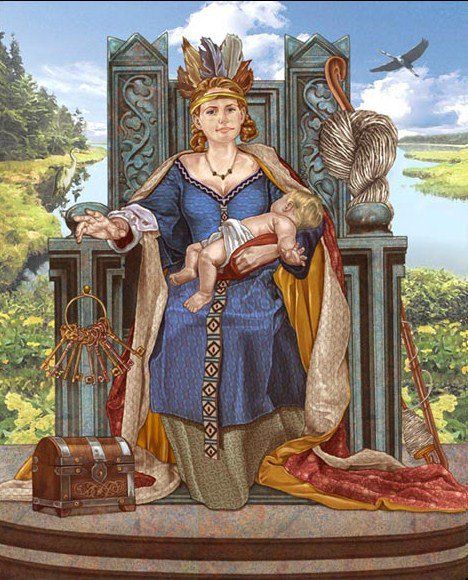
Areas of Influence: Frigg was the Norse Goddess of marriage, childbirth, motherhood, wisdom, household management and weaving and spinning.

She was the Queen of Aesir and the only one permitted to sit on the high seat other than her husband Odin.

This Goddess’s home was Fensalir (Marsh hall) in Asgard. All marshy and boggy ground was sacred to this Goddess.

As Goddess of weaving she was associated with weaving clouds and the threads of fate, known as Wyrd in the Nordic tradition. Despite this and the gift of prophecy she is unable to save her own son from his fate. The Goddess made him invincible to everything other than mistletoe but unfortunately Loki disguised himself and tricked her in to revealing this weakness.

She has more than ten handmaidens who assist her, the most well known of these are Hlin (Goddess of Protection), Gna (a messenger Goddess) and Fulla (a fertility Deity). Some academics have suggested that the attendants represent different faces of this particular Deity.

Barren women would invoke this Goddess and ask her to bless them with children.

Her name means “beloved one.” Other spellings of this Goddesses name include Frea, Fija, Friia, Frig and Friggja.

Origins and Genealogy: She was the daughter of Fjorgynn (the male personification of the earth) and was married to Odin with whom she had two sons, Balder and Hodr.

She was briefly married to Odin’s brother’s Vili and Ve as Odin had been away travelling a long time and was believed to be dead. When he finally returned, the marriage to Odin’s brothers was dissolved and she returned to her husband’s side.

Strengths: A loving mother and home maker.

Weaknesses: Unable to save her son.

Symbolism
Like Freya she wears a ravens clock.

She is associated with constellation the Orion’s Belt which was known as the Frig’s Distaff upon which she winds the threads of fate and weaves the clouds.

Sacred Birds: Ravens, hawks and falcons.

Sacred Plants: Frigg’s grass is a plant was traditionally used as a sedative during birth. Mistletoe is also sacred to her.

Frigg’s Archetype
The Mother
The Mother is a life-giver and the source of nurturing, devotion, patience and unconditional love. The ability to forgive and provide for her children and put them before herself is the essence of a good mother.
In its shadow aspect the Mother can be devouring, abusive and abandoning. The shadow Mother can also make her children feel guilty about becoming independent and leaving her. It is not necessary to be a biological Mother to have this stereotype. It can refer to anyone who has a lifelong pattern of nurturing and devotion to living things.

This Goddess was a devoted mother who was unable to prevent the death of her son. She is also a great domestic Goddess looking after the home.

How to Work With This Archetype
The Mother

You are exhibiting the features of the shadow Mother if you smother your children and are over protective. Encourage independence and allow children to make mistakes but be available to give care and advice when it’s needed.

The other shadow Mother is the one that abandons her children, or is so busy that she has no time for nurturing her young.

Source:

Goddess-Guide.com

Goddess Of The Day: IRIS

IRIS

Halcyon Days (Greece)

Themes: Winter; Peace; Protection; Air; Meditation; Promises; Beginnings

Symbols: Rainbow; Water

About Iris:

This Greek messenger to the gods traverse between earth and heavens, appearing as a winged maiden on a shining, hopeful rainbow. In this form she represents the calm after the storm – the end of the year’s activities and the advent of a new beginning. Traditional offerings to her include figs, cakes, wheat, and honey. In some stories it was Iris’s job to gather water from the underworld for use in taking sacred oaths.

To Do Today

The word halcyon comes from a legendary bird that builds its nest on the ocean in the winter, sedating the winds with its song to safeguard its young. Thus, the week before and after the winter solstice are said to bear both the halcyon’s and Iris’s calm ambiance and hopeful demeanor.

To inspire an improved outlook, find a rainbow sun catcher and put it in a window today so that Iris’s radiance can fill your home. Get an extra one for your car (or maybe a rainbow-colored air-freshener). so you can keep the energy with you throughout the day.

For another aromatic approach, open a window briefly today and let Iris fly on the wings of change and refreshment. Burn some violet or lavendar incense as you do. These two aromatics accentuate this goddess’s vibration.


By Patricia Telesco


Goddess Of The Day: BENTEN

BENTEN


Shigato Hajime (Japan)

Themes: Luck; Wealth; Beauty

Symbols: Boats; Dragons; Guitars; Snakes; Saltwater

About Benten:

As the Japanese goddess steering the New Year’s Treasure Ship, Benten is a perfect figure to call on for financial improvements this year. She is the only goddess of luck in Japan and is referred to as queen of the seas and patroness of gamblers.

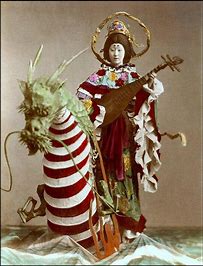
Japanese women invoke her to bring beauty and fortune into their lives. Benten is depicted as riding a golden dragon, playing a biwa (guitar), and sending out white snakes with her missies. Her robe bears a jewel that grants wishes.

To Do Today:

To welcome Benten’s prosperity into your home, sprinkle a little saltwater on the threshold today. Or, to generate beauty within and without, soak in a bath of Epsom salts while listening to guitar music. The Shigato Hajime festival honors the beginning of the work week

in Japan, where it is believed that good omens for work begin today. If you want to get a peek at how your employment will fare this year, try divination by dice (a traditional gambler’s tool). Hold one die in your hand, ask for Benten to provide a sign, then roll it. The results can be interpreted as follows:

(1) a negative omen; (2) feeling torn between two good options; (3) a good omen; (4) financial security (5) not much material change, but improvements in interoffice relationships (6) an excellent omen; roll again. If you get two more sixes, Benten’s treasures will be yours!

By Patricia Telesco

Goddess Of The Day: ARACHNE

ARACHNE

Saint Distaff’s Day (Europe)

Themes: Work; Weaving Destiny

Symbols: Web; Spinning Wheel; Needle

About Arachne:

Arachne, the Greek Spider goddess, inspires positive changes in your destiny for the new year. Legend tells us that Arachne challenged Athena to a weaving contest and won. In anger, Athena destroyed the girl’s tapestry. Arachne, grief-stricken, took her destiny in hand and turned herself into a spider, but she continues to use her weaving talents to spin and pattern the lives of mortals.To Do Today:

According to lore, Saint Distaff, the patroness of weaving, was a fictional persona made up to mark the resumption of normal activity after the holidays. Instead of this imaginary figure, we turn to Arachne to help us take the strands of our fate in hand and begin weaving a year filled with goddess energy.To direct your spiritual focus toward the goddess, wear something woven today, or display it proudly. If you have no such items, braid together three strands of thread or yarn saying:

Arachne, bless this magick braid, so on you my mind is staid.

Carry this as a charm to keep your thoughts and actions goddess-centered.

Finally, mend any work clothes in need of repairs to improve your job standing. As you make the final knot in a button or hem, bind the magick by saying:

This tread I wind, the magick bind.

Visualize your professional goals as you work.

By Patricia Telesco

Goddess OF The Day: MIELIKKI

MIELIKKI

Tyvendedagen (Norway)

Themes: Change; Providence
Symbols: Bear; Grain; Woodland Plants

About Miellikki: The Finnish Goddess of game, hunting, and the forest,
Mielikki protects our resources during the remaining cold season by
keeping the pantry filled. As the Goddess of abundant grain, she also
encourages the return of fertility to the earth.
To Do Today: Go into your kitchen and get a small handful of any
grain-based cereal. Take this outside and release a pinch of it to the
earth, saying,
Mielikki, see this grain and bless, return to earth in fruitfulness.
Hear the prayer that fills my heart; to my home, providence impart.
Take the remaining pinch back in the house and store it in an airtight
container, symbolically preserving your resources.
Tyvendedagen means “twentieth day after Christmas.” In Norway, today
marks the official end of the Yule season. It’s celebrated with races,
sleigh rides and the storage of ornaments and by burning the Christmas
tree to drive away winter. So, when you dismantle your Yule tree, keep a
jar full of its needles handy. Burn these throughout the year to banish
frosty feelings or to warm up a chilly relationship. The pine smoke,
being from a woodland tree, also draws Mielikki’s attention to any
pressing needs you may have.
By Patricia Telesco

Goddess Of The Day: VESTA

(I could not get the font to go larger, sorry about that)

Vesta

Feast of Vesta (Rome)

 Themes: Home; Love; Fertility; Peace

Symbols: Fire; Donkey; Veils

 About Vesta: In Roman mythology, Vesta was part of every fire. As such, Vesta commands the sacred fires of the hearth, the heart of spiritual and emotional stability in your home. Today was one other festival days, Christianized as the Feast of the Ass, which is a sacred animal to her. Traditional offerings for Vesta include homemade bread and salt cakes.

 In works of art, Vesta was never shown directly but always depicted her in veils, possibly to honor her importance in Roman society. The vestal priestess was one of the few people considered suited to negotiating peace during war threats.

 To Do Today: The first month of the year is a good time to think about the spiritual warmth in your living space. Ask Vesta to kindle those fires anew. Do this by lighting any fire source you have handy-a match, a candle, the oven, a pilot light-or, alternatively, just turn on a light as a symbolic fire. Be sure to keep this lit all day. When a fire goes out on Vesta’s day, it’s considered a bad omen, indicative of love being lost. To encourage peace on any battleground you’re facing this year, light a white candle (the color of truce) and put it in a window to invite Vesta’s presence (being sure it’s safe to do so, of course). Then take a piece of bread outside, breaking it into small bits so the birds can carry your wish of harmony across the earth.

By Patricia Telesco

Goddess Of The Day – Callisto

CALLISTO


Themes: Instinct; Protection; Flexibility


Symbols: A Bear; a Willow Branch; the Constellation Ursa Major


About Callisto:

Appearing sometimes as a she-bear guarding her cubs, the Greek goddess Callisto reinspires the natural instincts with which we have lost touch and illustrates the intensity of maternal love. Her other name is Helic, which means “to turn” or “willow branch”; she thus has the power to help with personal transformations. In mythology, Callisto became Ursa Major while pregnant with Zeus’s child. Artemis changed her into a bear, along with her son, who became Ursa Minor.

To Do Today:

In Korea, the festival of Chilsong-je begins at midnight with an offering of white rice and water to the seven stars (Ursa Major). This gift ensures Callisto’s assistance when needed throughout the coming months. If you can’t stay up till midnight, just leave the rice and water in a special spot before you go to bed.

From her celestial home, Callisto stands ready to protect us in the new year and provide us with adaptability as a coping mechanism. To encourage this, carry a silver or white stone bear, or a piece of dried willow wood. Bless this token, saying:

Callisto, release in me the power of flexibility.
Where’er I carry this little charm, keep me ever safe from harm.

If these tokens aren’t handy, you can substitute any white or silver item, or a hand-drawn picture of Ursa Major (the Big Dipper).


By Patricia Telesco


Goddess Of The Day: SARASVATI

SARASVATI

Festival of Sarasvati (India)

Themes: Learning; Wisdom; Communication
Symbols: White Flowers (especially Lotus); Marigolds; Swans

About Sarasvati:

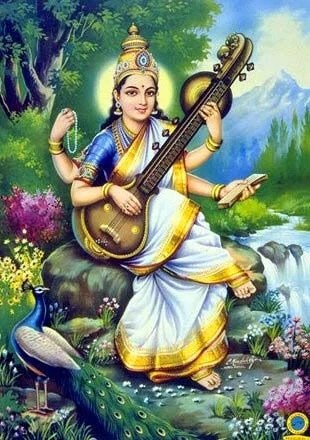
A Hindu goddess of eloquence and intelligence, Sarasvati extends a refreshing drink from her well of knowledge to complete the month with aptitude. In Hindu tradition, Sarasvati invented all sciences, arts, and writing. In works of art she is depicted as white-skinned and graceful, riding on a swan or sitting on an open lotus blossom.

To Do Today:Today is an excellent time to embark on any course of study or to reinforce your learning in a specific area. In Hindu tradition, Sarasvati’s festival is held on or around this date. During the celebration, students gather in the Katmandu Valley (Nepal) bearing gifts for the goddess, who visits here today. Traditional offerings at the temples include lotus and marigold blossoms and incense, while students bring pens or books to invoke Sarasvati’s aid with their studies. Adapting this a bit, try dabbing your personal tools or educational books with a little lotus oil, and burn any sweet-scented incense to improve your awareness (rosemary is a good choice).

.
To generate Sarasvati’s assistance in matters of communication, find a white flower and remove its petals. Place these in any moving water source, saying:

Sarasvati, let my words bear gentle beauty and truth,
falling gently on other’s ears, even as these petals to the water.

Let the water (which also represents this goddess) carry your wish.

By Patricia Telesco

Goddess of the Day – Blodeuwedd

Blodeuwedd


Blodeuwedd was created out of flowers by Gwydion to wed Llew Llaw Gyffes. She betrayed Llew, either because she had no soul, being non-human, or because she resented being his chattel, or because the triplet of one woman and two men must play itself out in Welsh myth, and Llew Llaw Gyffes must die. At any rate, she fell in love with Goronwy and, wishing to be rid of Llew, she tricked out of him the clearly supernatural and ritual manner in which only he could be killed: neither by day nor night, indoors nor out of doors, riding nor walking, clothed nor naked, nor by any weapon lawfully made. She asked him to explain this, and he did: he could be killed only if it were twilight, wrapped in a fish net, with one foot on a cauldron and the other on a goat, and if the weapon had been forged during sacred hours when such work was forbidden. Blodeuwedd convinced him to demonstrate how impossible such a position was to achieve by chance, and when he was in it, het lover Goronwy leapt out and struck. Llew was transformed into an eagle and eventually restored to human form, after which he killed Goronwy. Blodeuwedd was transformed into an owl, to haunt the night in loneliness and sorrow, shunned by all other birds.

Goddess of the Day – The Moirae

Goddess of the Day – The Moirae

 
The Moirae, also known as the Fates
“O Fates of Life, I ask your aid.
To clear my path and set me free.”
(Prayer to the Fates)
 

The Greek Goddess of Fate is a daughter of Nyx, Goddess of the Night. In Her singular form, the Goddess of Fate is called Moira; and in Her triple form She becomes three sisters known as the Moirae. The Moirae are: Klotho the Spinner, who spins the thread of a person’s life; Lachesis the Measurer, who decides how much time is to be allowed each person, and Atropos the Cutter, who cuts the thread when you are supposed to die. The name ‘Moira’ actually means ‘part and in fact, the triple form of the Fates mimics the triple moon phases and the three phases of life – maiden, mother and crone. Moira is known to the Romans as Fortuna, to the Scandinavians as Norns, to the Anglo-Saxons as Wyrd, and to the Celts as Morrigan. During the middle ages, the Fates became known as the Parcae.

As the spinner of Fate, Moira spins out the days of our lives as yarn and weaves it into a tapestry. The length of the yarn – hence your life span – is decided solely by the Goddess of Fate. All the Gods are subject to the whims of the Fates as are mortal man. Because of this, even though the other Gods are almighty, and supposedly immortal, even Hera has reason to fear Moira. Moira’s function is to see that the natural order of things is respected and She possesses the gift of prophecy – Her priests and priestesses are always oracles or soothsayers (seers of the future). Moira is often accompanied by the Keres (Dogs of Hades), who are three beings with sharp teeth and who are robed in red. In ancient times, the Fates were honored by sacrifices of honey and flowers.

Moira is associated with December’s full moon – which is often called the Cold Moon or the Wolf Moon. The colors of Moira are red, black and white.

Goddess of The Day – Minerva

Goddess of The Day: MINERVA

Terminalia (Rome)

Themes: Earth; Home 0

Symbols: Owl; Geranium

About Minerva: This Etruscan/Italic Goddess blended the odd attributes of being a patroness of household tasks, including arts and crafts, and also being the patroness of protection and of war. Today she joins in pre-spring festivities by helping people prepare their lands for sowing and embracing the figurative lands of our hearts, homes, and spirits with her positive energy.

To Do Today: In ancient times, this was a day to bless one’s lands and borders. Gifts of corn, honey, and wine were given to the earth and its spirits to keep the property safe and fertile throughout the year. In modern times, this equates to a Minerva-centered house blessing.

Begin by putting on some spiritually uplifting music. Burn geranium-scented incense if possible; otherwise, any pantry spice will do. Take this into every room of your home, always moving clockwise to promote positive growing energy. As you get to each room, repeat this incantation:

Minerva, protect this sacred space and all who live within. By your power and my will, the magic now begins!

Wear a geranium today to commemorate Minerva and welcome her energy into your life.

)0(

By Patricia Telesco and GrannyMoon’s Morning Feast Archives

Goddess of the Day – Venus


Venus, Goddess of Love and Beauty

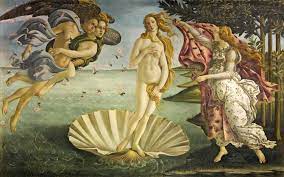
The Roman equivalent of Aphrodite, Venus was a goddess of love and beauty. Originally, she was believed to be associated with gardens and fruitfulness, but later took on all the aspects of Aphrodite from the Greek traditions. She is considered by many to be the ancestor of the Roman people, and was the lover of the god Vulcan, as well as of the warrior god Mars.

Worship and Celebration

The earliest known temple to Venus was dedicated on the Aventine hill in Rome, around 295 b.c.e. However, her cult was based in the city of Lavinium, and her temple there became the home of a festival known as the Vinalia Rustica. A later temple was dedicated after the defeat of the Roman army near Lake Trasimine during the Second Punic War.

Venus appears to have been very popular amongst the plebian class of Roman society, as evidenced by the existence of temples in areas of the city which were traditionally plebian rather than patrician. A cult to her aspect of Venus Erycina existed near Rome’s Colline gate; in this guise, Venus was a goddess primarily of fertility.

Another cult honoring Venus Verticordia also existed between the Aventine hill and Circus Maximus.

As often found in Roman gods and goddesses, Venus existed in many different incarnations. As Venus Victrix, she took on the aspect of warrior, and as Venus Genetrix, she was known as the mother of the Roman civilization. During the reign of Julius Caesar, a number of cults were started on her behalf, since Caesar claimed that the family of the Julii were directly descended from Venus. She is also recognized as a goddess of fortune, as Venus Felix.

Brittany Garcia of Ancient History Encyclopedia says, “Venus’ month was April (the beginning of spring and fertility) when most of her festivals were held. On the first of April a festival was held in honor of Venus Verticordia called Veneralia. On the 23rd, Vinalia Urbana was held which was a wine festival belonging to both Venus (goddess of profane wine) and Jupiter. Vinalia Rusticia was held on August 10th. It was Venus’ oldest festival and associated with her form as Venus Obsequens. September 26th was the date for the festival of Venus Genetrix, the mother and protector of Rome.”

The Lovers of Venus

Similar to Aphrodite, Venus took a number of lovers, both mortal and divine. She bore children with Mars, the god of war, but doesn’t seem to have been particularly maternal in nature. In addition to Mars, Venus had children with her husband, Vulcan, and when conflated with Aphrodite, is commonly believed to be the mother of Priapus, conceived during a fling with the god Bacchus (or one of Venus’ other lovers).

Scholars have noted that Venus doesn’t have many myths of her own, and that many of her stories are borrowed from the tales of Aphrodite.

Venus in Art and Literature

Venus is nearly always portrayed as young and lovely. Throughout the Classical period, a number of statues of Venus were produced by different artists. The statue Aphrodite of Milos, better known as the Venus de Milo, depicts the goddess as classically beautiful, with womanly curves and a knowing smile. This statue is believed to have been done by Alexandros of Antioch, around 100 b.c.e.

During the European Renaissance period and beyond, it became fashionable for upper class ladies to pose as Venus for paintings or sculptures. One of the best known is that of Pauline Bonaparte Borghese, younger sister of Napoleon. Antonio Canova sculpted her as Venus Victrix, reclined on a lounge, and although Canova wanted to sculpt her in a robe, Pauline apparently insisted on being portrayed nude.

Chaucer wrote regularly of Venus, and she appears in a number of his poems, as well as in The Knight’s Tale, in which Palamon compares his lover, Emily, to the goddess. In fact, Chaucer uses the turbulent relationship between Mars and Venus to represent Palamon, the warrior, and Emily, the lovely maiden in the flower garden.

Author

Patti Wigington, Paganism/Wicca Expert
Originally published on & owned by About.com


Another Look at the Detities of Love anf Lust – Printable

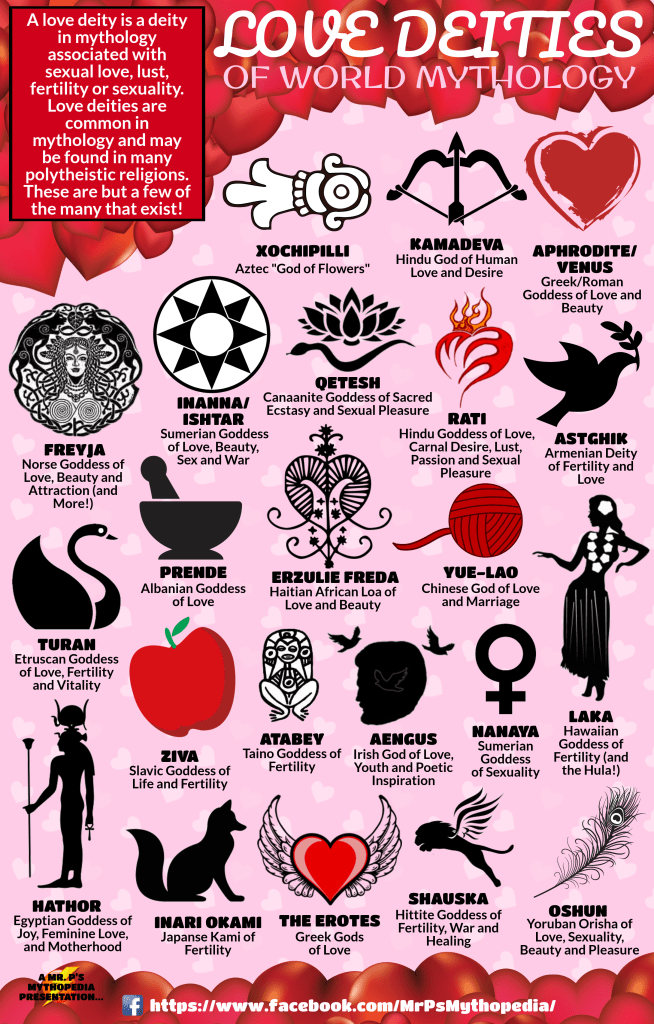
10 “Mythological” Deities Of Love And Lust

While the standards of beauty may have changed throughout the centuries, all humans share an inescapable biological urge to procreate. Feelings of love and lust are therefore extremely important and have influenced even our deities—who, after all, are usually reflections of our own characteristics.

10 Xochiquetzal – Aztec Mythology


With a name meaning “precious feather flower” the Nahuatl language, it’s no surprise that Xochiquetzal was an Aztec goddess of love. Various other aspects of Aztec life, such as flowers, pregnancy, and prostitutes, also fell under her domain, making her one of the more popular deities of the time—a feast in which her devotees dressed up in animal masks was held every eight years. Because of her affinity for marriage, she was often believed to be the wife of the rain god Tlaloc.

Unlike most Aztec fertility goddesses, Xochiquetzal was usually depicted as a beautiful young woman, which caused her problems with some of the more misogynistic gods of their pantheon. While still married to Tlaloc, she was kidnapped by Tezcatlipoca, the god of the night, and forced to marry him, after which she was enthroned as the goddess of love. By another of her husbands she was also the mother of Quetzalcoatl, the feathered serpent god of Aztec mythology.

9 Clíodhna – Irish Mythology


Clíodhna was an Irish goddess sometimes depicted as a banshee or even Queen of the Banshees (or Fairies, depending on the translation). However, she was also the goddess of love, perhaps because she was considered the most beautiful woman in the world. Unlike many other love deities, Clíodhna remained chaste, keeping her love locked away until she met the mortal Ciabahn—who, in a lucky coincidence, just happened to be among the most handsome men ever to have walked the Earth. Clíodhna loved him so much that she left Tir Tairngire, the land of the gods, to be with him.

However, when the other Irish deities found out about this, they conspired to get her back. While Ciabahn was away, Clíodhna was lulled to sleep by the music played by a local minstrel and was subsequently taken by a wave (the tide in the area is still referred to as “Clíodhna’s wave”). Depending on the source, she was either returned to Tir Tairngire or drowned in the sea.

8 Tu Er Shen – Chinese Mythology

A relatively minor deity of Chinese mythology, Tu Er Shen—or Hu Tianbao, as he was known when he was mortal—is the god of homosexual love and marriage. Born during the Qing dynasty, Hu Tianbao found himself attracted to an official of the local government, spying on him naked through a hole in his bathroom wall. When his peeping was discovered, Tianbao was beaten to death. Moved by his unrequited love, the gods of the underworld took pity on him and restored him to life as the deity of homosexual relationships.

Perhaps because they were used as a slang term for homosexual men, rabbits are considered a symbol of homoerotic love in China, and Tu Er Shen is often depicted as a rabbit in the few shrines dedicated to him. Sadly, in many of the places where he is worshiped, homosexual activity remains a punishable criminal offense.

7 Hathor – Egyptian Mythology

One of the most popular, and longest-lasting, of the Egyptian goddesses, Hathor was mentioned as early as the second dynasty (around 2890-2686 BC), and perhaps even before that. Since she survived for so long, Hathor took on a number of roles, including spells as the goddess of love, beauty, mining, and music. However, it was her time as the Eye of Ra which led to her most interesting stories. The Eye of Ra is the term Egyptians used for the feminine counterpart to Ra, a role filled by a number of goddesses, including Ra’s daughter, Hathor.

Found in King Tut’s tomb, a story known as “The Destruction of Mankind” tells of a time when Hathor, at Ra’s insistence, became the war goddess Sekhmet in order to punish humans for their sinful ways. When the bloodthirsty goddess got out of control, Ra tried to stop his daughter—but failed. Just before she killed every last person on Earth, Ra managed to get her drunk. Hathor immediately forgot what she was doing and returned to normal. In another, possibly equally disturbing story, she performed a striptease for her father in order to cheer him up.

6 Eros – Greek Mythology

The Greek version of Cupid, Eros was Aphrodite’s son and the god of desire and attraction (although, he was sometimes depicted as one of the Protogenoi, or primeval gods). Much like his Roman counterpart, he often took the form of a young winged boy, complete with bow and arrow. He was fiercely loyal to his mother—although he was prone to fits of disobedience. That rebellious aspect of the god showed up prominently in his most famous myth.

A young woman named Psyche was born and proclaimed to be so beautiful as to be the second coming of Aphrodite. As was her nature, the goddess was angered and sent Eros to shoot her with her arrow and cause her to fall in love with the ugliest man on Earth as punishment. However, her beauty was so great that Eros fell in love and ignored his mother’s wishes, whisking Psyche away. Eros never revealed his identity but Psyche’s curiosity got the better of her and she peeked in on him when he was sleeping. Betrayed by his love, the god fled and Psyche wandered the Earth until Zeus agreed to let them get married.

5 Rati- Hinduism

More popularly known as the wife of Kama, the god of love, Rati herself plays a large role in love and lust in Hinduism. With a number of names, most of which speak to her immense beauty, it seems obvious Rati would be the goddess of desire. Depending on the source, she is the daughter of either Daksha or Brahma. In the case of the latter, she was the reason for the god’s suicide, after he lusted after her. Rati immediately killed herself as well (they were both quickly resurrected).

But Rati’s biggest claim to fame was successfully changing Shiva’s mind. The Destroyer, sworn to ascetic ways after his first wife’s death, had been forced to fall in love again. In revenge, he killed Kama, turning him to ash with his third eye. The best known version of the story has Rati persuade Shiva to revive her husband, with the caveat that Kama is to be invisible for eternity.

4 Oshun – Yoruba

The goddess of beauty and love, especially of the erotic kind, Oshun is extremely popular among the West African followers of the Yoruba religion. Renowned for her beauty, she is usually depicted as a woman adorned with jewelry, although she is sometimes shown as a mermaid. Oshun is also preeminent among the female deities of the Yoruba religion and demands the respect that title deserves. When the gods were first creating the Earth, and they neglected to ask Oshun to assist, she made it impossible for them to make anything until they came to her for help.

Due to her reputation for complete purity, Oshun is also often associated with fresh water, an extremely important resource for the people of Western Africa. In addition, she also protects women and children during childbirth and is also seen as a protector from diseases, especially smallpox.

3 Hymen- Greek Mythology

The god of married love, Hymen was a lesser-known god of the Greek pantheon. Either the son of Apollo and a Muse or Dionysus and Aphrodite, he led a charmed life thanks to his beauty, until he fell in love with a unnamed maiden, who didn’t feel the same way. While Hymen was trying to court her, she was kidnapped by pirates, along with a number of other young women (some versions of the myth even have Hymen taken by the pirates because his beauty made them mistake him for a woman).

Whatever the reason, Hymen found himself on the ship and killed the pirates, saving the girls, and convincing his love to marry him. Their marriage was so successful that it became the ideal to which every Greek couple aspired—his name was included in the wedding songs in order to invoke his blessing.

2 Yue Lao – Chinese Mythology

Yue Lao, otherwise known as “The Man under the Moon,” is a popular figure in Chinese mythology, as he is the matchmaker and overseer of heterosexual marriage. Widely connected with the red thread of destiny, Yue Lao is often seen as benevolent deity, binding two people’s hearts together in love and marriage.

The best known story involving Yue Lao is that of Wei Gu and his quest to find a wife. After years of unsuccessful attempts, Wei Gu came upon Yue Lao reading from the book of marriages. Insisting he know who his future wife was, Wei Gu was shown a vision of an old woman with a young child, living in poverty. Distraught that the old woman was to be his wife, Wei Gu ordered his servant to kill the young child, though she escaped serious injury. After years passed, he finally found a suitable wife and noticed she had a scar. When Wei Gu asked about it, he was astonished to find that she had been the young child he tried to have killed (although he probably never told her; some secrets are best kept hidden).

1 Freyja – Norse Mythology

Freyja, which translates as “lady,” had a number of roles in the Norse belief system. As well as the goddess of love, she was Queen of Fólkvangr, a place similar to Valhalla, where half of those who died in battle would go after death. However, unlike most of the other deities on this list, Freyja had a vicious bad side, full of greed, jealousy, and evil deeds. Among other things, she’s credited with teaching witchcraft to humans, a practice seen as evil by the Norse.

She was often at odds with Loki, who sought to torment the goddess and steal items from her, including her famed necklace Brísingamen, which was later retrieved by Heimdall. In addition, Freyja would constantly scour the Earth for her husband, who would go missing from time to time, crying tears of red gold as she searched. She did have one tremendous advantage over the other deities on this list—her favored mode of transportation was a chariot pulled by cats.

From listverse.com

Spell for Today – Brighid Invocation Prayer and Goddess Offerings

Known by many names, Bríg is the High One in Celtic religion, ancient goddess of the poetic arts, crafts, prophecy, and divination.

From spells8.com

Video Devotional

Prayer to Brighid, Goddess of Spring (Bríg) Invocation/Wiccan Worship

Light

Red candle during this prayer to Brighid

Incense to Brighid:

Jasmine, Lavender, Rosemary, Chamomile

Offerings to Brighid:

Water, Bread, Coins, Milk, Blackberries, Herbal tea

Brigid, also known as Brigit, Brighid or Bríg, is a goddess of pre-Christian Ireland. She is considered to be a triple goddess (poet, healer, and smith) especially in Wicca and other forms of Neopaganism where she is sometimes worshipped in conjunction with Cernunnos as the God and Goddess.

Devotional text

Blessed Bríg, keeper of the Sacred Flame,
Mother to all, and Lady of the Spring, I call to you.
Daughter of Dagda and Morrighan, born with
the rays of the sun, I call to you.

You who were nursed on the milk of the Sacred Cow,
whose footsteps bring flowers and shamrocks.
Blessed Bríg, whose flame burns evermore
with the light of the world, I call to you.

Blessed Bríg, weaver of webs and teller of stories, I call to you.
Blessed Bríg, healer of wounds and scars, I call to you.

As the light from your flame covers the skies as the sun rises,
I call to you to spread your blessings across this land as you once spread your
mantle.

Envelop all you touch with your healing grace.
Bring newborn babies into this world with love and hope. Grant the poet the words they seek
to spread your peace far and wide.

Weave a web and tell a story, oh Bríg, so that
those who weave as well may understand.

Blessed Bríg, grant your peace and patience across the land.
Every hill, every valley, every river, and stream shall sing your praise.

Lady Bríg, I call to you.
Come into my home and sit upon my hearth.

Bless my home and family with the protection you have to offer.
A bed is always here for you, Lady Bríg, if you would have it.

I call to you as I weave my web, paint my picture, and write my story.
May your blessings be ever present in my life.

I call to you, Lady Bríg, to instill in me the creativity and inspiration
that follows you wherever your feet may take you.

I stand at your feet, Blessed Bríg, and tend the hearth fire in your honor.

May your Sacred Flame burn always and never extinguish.

Blessed Bríg, I call to you. Purify me within the Sacred Well.
Heal me from all wounds and injuries. Bless and protect my hearth and kin.

Blessed Bríg, whose cattle are sacred to the land, I call to you.
Bless my hearth and kin with your nurturing hand. Allow us to live freely
in your light.

Blessed Bríg, Keeper of the Mysteries of Women, I call to you.
Lend me your guiding light. Keep me safe from all who would do me harm.

Blessed Bríg, mother of all and mother to none,
I call to you to keep
the old traditions alive.
Help me keep your Sacred Flame lit and
spread your unity across the land.

Blessed Bríg, daughter of Dagda and Morrighan, sister to Oghma, lover of
Bres, mother of Ruadan, Iuchar, and Uar.

Weaver of webs. Teller of stories. I call to you.
Come into my home.
Wear your crown and gem.

Lay your mantle over my home so that we may be enveloped in your peace, in
your unity, and your compassion. Envelop us with your inspiration,
Lady Bríg.

I call to you, Lady Bríg, that you may bless us so we may be as fruitful as
the Earth.

What is Brigid the goddess of?

Brigid is the goddess of the flame and the well, patroness of healing, poetry and smithcraft. She is a solar deity so her attributes are related to fire, light, and the hearth. 🔥

Brighid is the Celtic goddess of inspiration and also carries various powers related to inspiration, such as the art of healing, and divination. She was the patroness of sacred perpetual flames, such as that held by 19 nuns in a sanctuary in Kildare, Ireland (now in honor of St. Brigit).

The tradition of female priestesses who tend to eternal sacred flames is prevalent in ancient Indo-European spirituality. Other examples include the goddess Hestia, who watches over the hearth of the home, or Minerva.

Celtic Gods and Goddesses: Exploring the Pantheon and Mythology of the Ancient Celts

This article is not a complete list of the Celtic Goddesses and Gods. It seems to be the more popular ones in modern pagan traditions. They will also correspondence to some of the other ancient pantheons in other parts of the ancient world.

To read about the different Gods and Goddesses please click on their hyperlink this comes from historycooperative.org

You’ve always wanted to stroll across the beautiful landscape of Ireland. To make sure that you don’t miss out on the best spots, you decide to make use of a local touring company.

Suddenly one appears before you. How strange that you didn’t notice this building before, but heck, the banner outside claims it’s five-star and that you’ll meet Celtic gods and goddesses in person. They are probably just actors in costume — a little cheesy — but you don’t see any other places that are open at the moment.

To your surprise, you realize that your hiking companions are the actual Celtic gods and goddesses. While you fight off the sudden faint feeling, you remember that the ridiculously steep deposit is only refundable at the end of the trip. There’s no turning back now.

A big guy claps his hand on your shoulder and says, “Fear not, tiny mortal. You’re going to have a fun time learning all about the ancient Celtic pantheon and the people who worshipped us.”

You just want your deposit back. So when the group picks up their backpacks and heads out, you follow.

Table of Contents

Dagda – The Good Father God of Ireland, Knowledge, Weather, Wise Druids, and Wariors

Name: The Dagda – the good god
Realms: Father god of Ireland; knowledge, weather, fertility, druids, warriors
Family: Father of Aengus, Brigid, and Danu, member of the Tuatha Dé Dannan
Fun Fact: In Dorsetshire is an enormous drawing of a man. Some believe that the chalk creation is meant to show this deity…

Ériu – The Patron Goddess of Ireland

Name: Ériu
Realms: Patron goddess of Ireland
Family: Daughter of Ernmas and Fiachna Mac Delbáeth; has two sisters called Banba and Fódla; mother of Bres
Fun Fact: Her sisters’ names are sometimes used as poetic titles for Ireland…

Lugh – The God of Crafts, Light, and Sun

(Side Note: This is the God who is honored during a Lammas/Lughnasadh celebration)

Name: Lugh
Realms: God of crafts, light, and Sun
Family: Son of Eithne and Cian; father of Cú Chulainn
Fun Fact: His full name is a little strange — Lugh of the Long Arms…

Epona’s Horses Aren’t Fond of Mortals (Don’t Get Too Close)

(Side Note: Epona is also considered the Goddess of all domestic animals in modern times. I work with her closely when teaching a puppy or an older dog manners to get along better in the human world)

Name: Epona
Realms: Patron goddess of horses, mules, fertility, and cavalry
Family: ???
Fun Fact: In the Gaulish tradition, Epona was never shown in human form; only as a mule or a horse. The Romans showed her as a woman on a throne, standing between horses or driving a chariot…

The Group’s Healer Is Kind of a Reaper

(Side Note: This is the Goddess who is honored during a Imbolc celebration)

Name: Brigid
Realms: Goddess of poetry, fertility, motherhood, passion, dawn, healing, smithing, fire, invention, and life
Family: Married to Bres; mother of Ruadán; daughter of the Dagda
Fun Fact: She inspired a goddess in Haiti, called Maman Brigitte

Danu Knows All About Death and Daffodils

Name: Danu
Realms: A mother goddess; the earth, nature, wind, fertility, death, wisdom, cattle, regeneration, wealth
Family: She was the consort of both the Sun god, Belenos, and the sea god, Beli; daughter of the Dagda, member of the Tuatha De Dannan.
Fun Fact: Danu is another geographical smash hit. Among the places named after this goddess is the River Danube, the Paps of Anu, a region in Ireland’s County Kerry, and possibly the Dane Hills in Leicestershire…

The God of Love Has Daddy Issues (Rightfully So)

Name: Aengus
Realms: God of love and youth
Family: Son of Boann and the Dagda, member of the Tuatha Dé Dannan
Fun Fact: Four birds surround him at all times and, according to mythology, they symbolize his smooches (Yep. His kisses)…

There’s a Confused God Looking for Some Guy Called “Asterix”

Name: Toutatis
Realms: Possibly the guardian god of the Gauls
Family: ???
Fun Fact: Ancient writers suggested that he was the equivalent of the Roman god, Mars…

There’s a Wolf Wearing Bloody Armor

Name: The Morrigan, the Great Queen, the Phantom Queen.
Realms: Goddess of war, fate, death, and destiny
Family: Great-granddaughter of King Nuada, member of the Tuatha Dé Dannan
Fun Fact: In some versions of Celtic mythology, Ireland was named for this Irish goddess…

You Don’t Mess With This Healer — He’ll Knock You Out (Then Put an Ice Pack on It)

Name: Belenus
Realms: God of the Sun, spring festivals, healing, medicine, and guardianship
Family: ???
Fun Fact: According to Roman sources, Belenus was the popular kid in the Celtic mythology during the 3rd century…

This God Adores Wheels and Human Sacrifices

Name: Taranis
Realms: Wheels, thunder, weather, the sky
Family: ???
Fun Fact: Archaeologists have discovered thousands of votive wheels in Gaul. They were popular offerings to Taranis…

Cernunnos Refuses to Show Himself, Because No One Remembers Him

(Side Note: This is the God who is honored during a Beltane celebration)

Name: Cernunnos
Realms: Forests, wildlife, wealth, fertility, and possibly the underworld
Family: ???
Fun Fact: This Celtic god is more of an entity today, in modern Wiccan traditions, than during the past…


7500 years old ancient goddess relic discovered in Israel

Cover picture for the article

During an excavation in Eilat, Israel, archaeologists found an extremely ancient idol. It is believed to represent an important Semitic goddess.

In Eilat, situated in the south of Israel, archaeologists have discovered an idol dating back several thousand years. Carved from a tree trunk, this artefact is believed to be an object designed in honour of Asherah, the goddess who was the wife of the creator god Yahweh, as reported by Arkeonews.

Asherah, a symbol of fertility

According to Geo, before turning to monotheism, the Hebrew people were polytheistic, meaning that they worshipped a multitude of gods. In ancient times, they idolised Asherah, a goddess who is said to have been the mother of 70 other divine entities. She was given various names and functions. Asherah is also known as Ashratum or Baalat and is sometimes associated with the supreme god El or Baal. Her name is also mentioned in the Bible. A symbol of fertility, it is represented as a female figure, a tree or a pole. In Eilat, archaeologists have (re)discovered a 30 cm relic carved from a trunk.

An ancient archaeological site

The Red Sea is definitely rich in artefacts. Just after the Blemmyes Tomb found in Egypt, this relic is another great archaeological find. The site where the relic was found has been excavated by scientists since 1978. According to Arkeonewsit contained 11 simple tombs and 20 burial mounds. The site adds that:

The presence of the juniper trunk clearly shows that the site was reserved for the worship of goddesses, and it is probably the oldest Asherah idol found in the region (it has been carbon-dated to 4540 BC).

This article is translated from Gentside FR.

Flashback 2004 Imbolc

 Imbolc

Celebrate this festival by draping the altar in white and silver. Kepp the entire altar white — white candlesticks, white incense bowls, etc. Represent the Goddess with a figure of a horned cow. If you wear robes in ritual, honor Brigid in her guise as the goddess of the dairy by wearing white. With Neptune lending the glamour to your robes to the Sun this time, as glitter to your robes with sliver and “diamonds.” Let your imagination run wild.

Save snow from the last storm, or use crushed ice, and put it out in bowls on the altar. Scrub clean an old milke bottle or cream jar and fill it with fresh milk; freshly made mozzarella cheese will round out your cakes and ale. Nestle all bowls in the snow.

The planetary energies are particularly favorable this sabbat for working magic for world peace. Place all the candles you’ll be using this year on the altar and start this ritual in the dark — this is, without lights. Add your magic to the returning Sun. Dedicate and consecrate all your candles during this festival of lights, and consecrate your agricultural tools for use in the coming cycle of growth. This is the festival of new beginnings.

Copyright By K. D. Spitzer in Llewellyn’s Witches’ Datebook 2004 Page 39