Herb and Essential Oils Magickal Uses

Disclaimer: No herb should be used for medicinal purpose until you have checked with your health care professional to ask if it is safe for you to use it for any reason. The content provided on this website is for informational purposes only and DOES NOT CONSTITUTE THE PROVIDING OF MEDICAL ADVICE and is not intended to be a substitute for independent professional medical judgment, advice, diagnosis, or treatment. Always seek the advice of your physician or other qualified health providers with any questions or concerns you may have regarding your health. WitchesofTheCraft.com, any staff member of WitchesofTheCraft.com and/or Lady Carla Beltane are not responsible for any type of negative reaction when using this herb for any reason.

Working with herbs in magick can have a powerful effect. They can enhance the magick, enhance the energies and enhance the direction. Understanding what herbs to work with and which to avoid is key in making sure your magick does not go awry in the Universe.

Plants can lend healing to a spell, can renew life in the energy you are summoning and can have powerful and beneficial effects to those it touches on its journey through the cosmos and back.

Goddess Herbs include:

Aloe, Apple, Catnip, Comfrey, Daisy, Elder, Eucalyptus, Fern, Henbane, Honeysuckle, Jasmine, Lemon Balm, Lemon Verbena, Lilac, Mugwort, Myrrh, Nutmeg, Periwinkle, Poppy, Rose, Thyme, Valerian, Vervain, Violet, and Willow. (Not a full list)

God Herbs include:

Angelica, Anise, Ash, Basil, Bay Leaves, Caraway, Chamomile, Cinnamon, Clover, Clove, Cypress, Dragons Blood, Eyebright, Fennel, Frankincense, Ginger, Ginseng, Hawthorne, Hazel, Mandrake, Mint, Oak, Parsley, Patchouli, Pine, Rosemary, Witch Hazel, and Wormwood. (Not a full list)

Some Magickal workings and spells can be enhanced, as I said before, with the use of herbs. We use herbs such as Jasmine to represent Prosperity and we use herbs like Pine to help with healing and cleansing as well as attunement to nature. Understanding the herb and the uses is essential.

When working a spell for Protection or Purification, Anise is the herb to use. Anise has a Masculine quality, the planets that align with this herb are Juptier or the Moon and the Element its associated with is Air. There are also healing qualities to this particular herb. If used in a bath, it serves as a cleansing. Having a satchet of Anise seeds next to your bed will also help to keep nightmares at bay.

If you have a familiar that is feline, then Catnip is the herb for you. Catnip has a Female quality, the planet that aligns with this herb is Venus, and its element is Water. Using catnip to perform Cat Magick, to either choose your familiar, or to get closer to them will help to enhance and boost that magick. This herb is also associated with joy and friendship and of course, love.

Mugwort is a very powerful herb. It is used for clairvoyance, enhancing psychic dreams and astral projection. Mugwort has a Feminine quality, the planet is Venus and the element is Air. But be very careful with working with this herb. If you are looking for a Soul Journey, ensure you have a partner that remains grounded to pull you back from the Astral Plane. Taking the leaves and rubbing them directly on your Crystal Ball will help to enchance or strengthen your divinatory work.

Rosemary is another powerful herb. They say (and no, I don’t know who “they” are) if you plant Rosemary by your Garden Gate, you will always have healthy plants. Rosemary has a Masculine quality and the planet that is aligned with this powerful herb is the Sun itself. The element, of course, is Fire! Rosemary also has healing qualities. Improving memory, helping sleep, enhancing power and helping to heal and protect.

High John the Conqueror Root is another herb that has a Masculine quality. Its planet is Saturn and the element, Earth. This herb, if used in Magick, can help to enhance the strength and power. Used as an annointing oil for candles and charms to enhance the strength of the power being directed into them.

Remember, when using herbs, you have to understand what the herb can do, as well as understand the direction/element that the herb attunes to. You would insult the magick if you used Rosemary and asked the element of Water to enhance the power, as this is Fire herb. Understanding comes with research and practice. For a more expanisive list, please reach out to Lady Beltane or to Lady Rhiannon.

Blessed Be Brothers & Sisters!

Happy spellcasting!

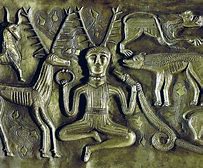
Gods – Celtic Cernnunos

Celtic God Cernnunos

The God In The Wild Wood

At the Sacred Centre, in the Grove of all Worlds, He sits with legs crossed beneath an ancient Oak. Entranced, connecting the three worlds Earth, Sea, and Sky, and the worlds behind the worlds, the god and the Great Tree are One, His immense limbs widespread, stretching into distant sky and starry space.
His massive trunk, spine of the Middleworld, is the heart of the Ancient Forest around which all Life, all worlds turn; His limitless root web growing deep into secret earth and Underworld; above him the great turning circles of Sun, Moon, and Stars. All around Him subtle movements of the leaves in melodious, singing air; everywhere the pulsing, gleaming Green awash in drifts of gold and shimmering mist; beneath Him soft moss creeping over the dark, deep, moist of spawning earth. At His feet is the great Cauldron from which the Five Rivers Flow.

Through the forest stillness they come, whispering wings and secret glide, rustling leaves, and silent step, the first Ancestors, the Oldest Animals, to gather around Him: Blackbird, Keeper of the Gate; Stag of Seven Tines, Master of Time; Ancient Owl, Crone of the Night; Eagle, Lord of the Air, Eye of the Sun; and Salmon, Oldest of the Old, Wisest of the Wise leaping from the juncture of the Five Springs. He welcomes them and blesses them, and they honour Him, Cernnunos of the nut brown skin and lustrous curling hair; the god whose eyes flash star-fire, whose flesh is a reservoir of ancient waters, His cells alive with Mystery, original primeval essence. Naked, phallus erect, He wears a crown of antlers limned in green fire and twined with ivy. In his right hand the Torq of gold, testament of his nobility and his sacred pledge; in his left hand the horned serpent symbol of his sexual power sacred to the Goddess. Cernnunos in His Ancient Forest, His Sacred Temple, His Holy Grove, Cernnunos and His children dream the Worlds.

The Origins of Cernnunos

Cernnunos, a nature and fertility god, has appeared in a multitude of forms and made himself known by many names to nearly every culture throughout time. He is perhaps best known to us now in his Celtic aspects of the untamed Horned God of the Animals and the leaf-covered Green Man, Guardian of the Green World, but He is much older. Cernnunos worked his magic when the first humans were becoming. Our prehistoric ancestors knew him as a shape-shifting, shamanic god of the Hunt. He is painted in caves and carved everywhere, on cliffs, stones, even in the Earth Herself. Humans sought to commune with Him and receive his power and that of his animal children by dressing themselves in skins and skulls, adorning themselves with feathers and bones, by dancing His dance. Yet He is older still. In the time of the dinosaurs, the great swamps and subtropical forests of cycads, seed ferns and conifers, and later in the time of the deciduous plants and flowers, when the pollinators came and the first tiny mammals were creeping up from beneath the ground, Cernnunos was the difference and diversity of life, the frenzy and ferment of evolution. But, He is much older still. He is oldest of the Ancient Ones, first born of the Goddess. At the time of First Earth, Cernnunos grew in the womb of the All Mother, Anu, waiting to be born, to come forth to initiate the everlasting, unbroken Circle of Life.

The Many Faces & Natures Of Cernnunos

Cernnunos, as The Horned God, Lord of the Animals is portrayed as human or half human with an antler crown. Though he wears a human face his energy and his concerns are non-human. He is protector of animals and it is Cernnunos who is the law-sayer of hunting and harvest. While He is recognized most often through his connection to animals and our own deeply buried, dimly recalled, instinctual animal natures, Cernnunos is also a tree, forest, and vegetation god in his foliate aspect of The Green Man, Guardian of the Green World. His branching antlers symbolize the spreading treetops of the forest as well as his animal nature. As Master of the Sacrificial Hunt, His is the life that is given in service of new life. His wisdom is that the old must pass away to make way for the new.

In his Underworld aspect Cernnunos is The Dark Man, the god who dwells in the House Beneath the Hill, the Underworld. He is the one who comforts and sings the souls of the dead to their rest in the Summerlands of the Otherworld. Cernnunos, as Master of the Wild Hunt, who pursues the souls of evil doers, is not associated with a biblical or even modern morality, but with the protection and continuance of the Land and Nature and the spirits that dwell therein.

Pan, lusty Satyr god of the Greeks is another aspect of the Horned God. ‘Pan is a proud celebration of the liberating power of male erotic energy in its purest and most beautiful form.’ (5) He is portrayed as playful and cunning, but He also has a darker, dangerous nature. The panic or terror often associated with Pan is not related to human violence, but to the Life and Death of the natural world. In this form he is called the “All Devourer.” However, Pan, as Protector of the Wilderness and as a god prone to fits of madness and violence, can induce panic or wild fear in those who threaten his domain.

Cernnunos appears again in Elizabethan England, and is mentioned by Shakespeare, as Herne the Hunter, the demon and guardian of Windsor Forest, the Royal Wood. In this aspect it is said that he appears as Guardian of the Realm during times of National emergency and crisis. In modern times he is often called the God of the Witches and embodies uncorrupted masculine energy. A masculine energy that is fully-developed and in balance with the natural world

Cernnunos & The Sacred Wheel Of The Year

We celebrate and honour Cernnunos as the Green Man in spring and summer, the light half of the year and as the Dark One or the Dark God in autumn and winter, the dark half of the year. He appears in spring as the young Son, child of the Goddess, embodiment of the budding, growing, greening world. In summer He is the Green Man, vibrant, pulsing with life essence, the consort of the Green Lady Goddess. It is in autumn, the dying time, that perhaps we see the Horned God most clearly. He is the sacrificed one, who, wounded unto death begins his journey to the Underworld, returning to the Earth from which he was born and where the seeds of light released from his decaying body will quicken Her womb with a new Sun once again.

The Path To Cernnunos

The path to Cernnunos is both through the natural world: seeking out the wild places and a deep understanding of the processes of growth, bounty, decay, rest, and rebirth, and through Otherworld journeys to the Middleworld forest of which he is guardian. One may experience this both actually and symbolically by following the path that disappears over the horizon into the distance and moves away from the ‘civilized’ world and into the heart of the Wild Wood. Often experienced as traveling away from the centre to the perimeter, this is in actuality a return to the Centre. When the seeker reaches the god’s forest the track ends, and her/his pathways are found by other means. After entering the Wildwood the seeker cannot be followed, nor can s/he follow another. Whatever pathways are discovered disappear in passing, and the Wood is trackless once again, for each one’s way is different. In the Forest of Cernnunos there is a stillness, an otherworldly feeling, as if one has passed out of time. Here the mind is not supreme. It is instinct, the innate wisdom of the body that guides us to Him.

The Way Of Cernnunos

The way of Cernnunos is the way of the shaman or any person who truly seeks Communion with the Land. Yet, one cannot speak of Cernnunos without speaking of Anu or Don, the All Mother who gave Him birth. The way of Cernnunos is through the One. Like Her, Cernnunos is a Being or Power that existed before time and before the gods, the Shining Ones. Together they are First Mother and First Father, All Mother and All Father who brought the gods into being. Limitless and everlasting His energy permeates Her matter through every aspect of life to the sub-atomic. As Lord of the Dance He is present in the billions and billions of infinitely small movements that make up the seemingly chaotic Dance of Life, the Dance of Making and Unmaking. He is truly the Life that never, never dies, for even as nothingness he is self-originating. He is triple as She is triple. He is Cernnunos: Father, Son, and Wild Spirit.

Cernnunos Chant

Cern-nu-noh-oh-oh-oh-os
Stag Horned Hunter, Hunted One
Join Us Now
Cer-nu-noh-oh-oh-oh-os
Greenwood Lord of Life and Death
Join Us Now
Cern-nu-noh-oh-oh-oh-os
Herne and Pan and Every Man
Join Us Now

Spell for Saturday – Undo Other Curses or Spells Placed on You c. 2015

(YOU CAN COPY AND PASTE ANY SPELLS POSTED TO A DOCUMENT TO PRINT AND/OR SAVE ON YOUR COMPUTER FOR PERSONAL USE ONLY)

Spell to Undo Other Curses or Spells Placed on You

A lemon curse magic spell is cast for the purpose of un-doing another curse or hex that has been cast upon your or someone you love. This magic lemon curse spell is cast after knowing a curse has been placed on you. Try this free black magic lemon curse magic spell to void another s hex or evil magic spell cast upon you.

Items needed:
1 lemon
1 black candle
9 nails
Cursing Oil
Picture of person (to be cursed)
Athame
Black bowl


Light the candle.
Cut a slit into the lemon.
Place the picture of the person inside the slit.
Take one if the nails and feel your anger rise. Visualize your anger.
Pierce the nail into the lemon.
Do the same for the remaining nails.
With each nail your anger should rise for this person getting blacker and
blacker.
When you reach the last nail, place the lemon in the bowl.
Pour cursing oil onto the lemon filling the bowl until the lemon is half
covered (with oil.)
Let the lemon rot in this bowl on your altar.
As the lemon rots, so too will the life and luck of the person!!


Remember, curses are only used when you have been wronged and cannot come up
with a fix!! Do not curse people for the fun of it or the rule of three will
haunt you.

Goddess/Muse – Calliope

THE MUSE CALLIOPE IN GREEK MYTHOLOGY

THE MUSE CALLIOPE

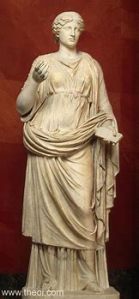
Calliope is a famous name from Greek mythology, for Calliope was one of the Younger Muses, the beautiful goddesses who would inspire writers, artists and artisans.

Calliope the Muse of Epic Poetry, and hers was a name invoked by many writers and poets in antiquity; for they would give praise to the Muse for their ability to bring forth words of great eloquence.

CALLIOPE DAUGHTER OF ZEUS

As one of the Younger Muses, Calliope is the daughter of Zeus and the Titan goddess Mnemosyne; making her sister to Clio, Erato, Euterpe, Melpomene, Terpsichore, Thalia, Polyhmnia and Ourania.

Calliope was named as the eldest of the Younger Muses, conceived on the first night that Zeus lay with Mnemosyne.

CALLIOPE GODDESS OF MUSIC

Calliope was a Greek goddess of music, song and dance, and was specifically named as the Muse of Epic Poetry. In this role, Calliope was normally depicted with a writing tablet in her hand.

Calliope was also said to be the muse who bestowed the gift of eloquence about mortal kings, coming to them when they were a baby, and anointing their lips in honey.

​As a result of Calliope’s actions, when adults, the anointed ones would spout gracious words, and utter true judgements.

Calliope was also considered to be the leader of the Muses, the wisest of the sisters, and also the most assertive.

CALLIOPE MOTHER OF ORPHEUS

Stories from Greek mythology would tell of the marriage of Calliope to the Thracian king Oeagrus, with the wedding taking place at Pimpleia. The marriage of Calliope and Oeagrus was said to have brought forth two notable individuals Orpheus and Linus.  Orpheus was the great musical hero of Greek mythology, and Linus was the inventor of rhythm and melody; alternatively the father of Orpheus and Linus is named as the Olympian god Apollo.

Initially, Calliope and Orpheus were said to reside at Pimpleia, but later Calliope and her son were to be found with the other Younger Muses upon Mount Parnassus. For here Apollo visited to continue the musical training of Orpheus, which had been commenced by Calliope.

CALLIOPE IN GREEK MYTHOLOGY

Calliope was rarely spoken of as an individual but she is named as present, and spoken to by Thetis, when the Muses sang their dirges during the funeral rites of Achilles. Calliope was also certainly present when the Younger Muses were victorious in their contests with the Sirens and Pierides. Indeed, Calliope was said to be the Muse who caused the Pierides to be transformed into magpies after they had had the impudence to challenge Calliope and her sisters. 

Beltane

Beltane

Beltane’s energy is about sexuality, beauty, and manifestation. Make aphrodisiacs, love charms, and potions during this sabbat. Charm your beauty products and makeup and adding botanicals that can boost their magickal properties. Make charms manifesting your goals. Leave them in your wallet, your car, or even every room in your house. Soak orange peels in white vinegar for two weeks, strain, and add the same amount of Moon-blessed water as the vinegar to a bottle. Use it as a mirror cleanser so that whenever you look at your reflection, you see your inner and outer beauty reflected back on you. Make rosewater to add to your laundry wash to imbue your clothes with passionate energies. Put away your winter blankets and clothes. Tuck sachets of cloves, rosemary, and thyme in with them to keep them safe and to ward off moths until you need them again. Place carnelian in any space where you want more passionate energy to reside.

Source: Rachel Henderson Llewellyn’s Witches’ Datebook 2023 page 71

Spell for Sunday – To Call Blood to Blood

(YOU CAN COPY AND PASTE ANY SPELLS POSTED TO A DOCUMENT TO PRINT AND/OR SAVE ON YOUR COMPUTER FOR PERSONAL USE ONLY)

Some of the Witchcraft/Magickal Correspondence for Thursday

(YOU CAN COPY AND PASTE ANY COROSPONDENCES POSTED TO A DOCUMENT TO PRINT AND/OR SAVE ON YOUR COMPUTER)

Thursday Source: flyingthehedge.com

Taking its name from the Norse god Thor, this is a great day to work magic regarding growth, expansion, prosperity, business, abundance, and success. See my prosperity candle magic spell.
Color: Royal blue, green, purple
Planet: Jupiter
Deities: Thor, Zeus, Jupiter, Juno
Crystals: Turquoise, amethyst, lapis lazuli
Herbs: Honeysuckle, oak, cinquefoil
Associations: Honor, loyalty, harvest, prosperity, abundance, wealth, healing

Thursday Source: spells8.com

Candle

Light a green candle to promote growth, fertility and abundance. Meditating with a green candle encourages us to improve in personal projects such as studies, work and self-development. It is great for casting prosperity or good luck spells, and also when invoking the healing energies of Nature.

Ruling Deities

Cernunnos, Gaia, Osiris, Pan, Poseidon and Zeus are rulers of Thursdays.

Crystals

Amethyst, Lapis Lazuli, Turquoise, Tiger’s Eye, and Sugilite.

Carrying these gemstones today can bring success and fulfillment of your goals. Wear them as a talisman or simply keep them close to you to harness their energy.

Potion

Drink a cup of Green Tea today to strengthen your focus. Green tea is loaded with beneficial antioxidants, and, besides caffeine, green tea contains aminoacids that help boost brain function. It has a large amount of L-theanine, an amino acid that is beneficial for memory, attention, concentration and learning.

Flower or Plant Meaning, Symbolizes, Medicinal Uses and Spiritual Meaning – Aloe Vera

Disclaimer: No flower or plant should be used for medicinal purposes until you have checked with your health care professional to ask if it is safe for you to use it for any reason. The content provided on this website is for informational purposes only and DOES NOT CONSTITUTE THE PROVIDING OF MEDICAL ADVICE and is not intended to be a substitute for independent professional medical judgment, advice, diagnosis, or treatment. Always seek the advice of your physician or other qualified health providers with any questions or concerns you may have regarding your health. WitchesofTheCraft.com and/or any staff member of WitchesofTheCraft.com and/or Lady Carla Beltane are not responsible for any type of negative reaction when using this flower or plant for any reason.

Aloe Vera Plant from almanac.com

Aloe Vera Plant Care: How to Take Care of Aloe Vera

Learn all about aloe vera plant care—from how to care for aloe vera to how to grow this succulent both outdoors and indoors in your home. Aloe vera is so rewarding! The juice from their leaves can even be used to relieve pain from scrapes and burns. See our Aloe Vera Plant Guide.

About Aloe Vera

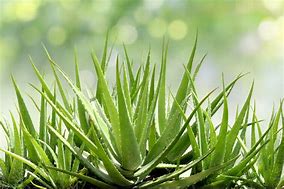
Aloe vera is a succulent plant species of the genus Aloe. The plant is stemless or very short-stemmed with thick, greenish, fleshy leaves that fan out from the plant’s central stem. The margin of the leaf is serrated with small teeth.

Before you buy an aloe, note that you’ll need a location that offers bright, indirect sunlight (or artificial sunlight). Direct sunlight can dry out the plant too much and turn its fleshy leaves yellow, so you may need to water more often if your aloe lives in an especially sunny spot.

Keep the aloe vera plant in a pot near a kitchen window for periodic use.

WARNING: The gel from aloe vera leaves can be used topically, but should NOT be eaten by people or pets. It can cause unpleasant symptoms such as nausea or indigestion and may even be toxic in larger quantities.

PLANTING

Before Planting Aloe Vera

  • It’s important to choose the right type of container. A pot made from terra-cotta or similar porous material is recommended, as it will allow the soil to dry thoroughly between waterings and will also be heavy enough to keep the plant from tipping over. A plastic or glazed pot may also be used, though these will hold more moisture.
  • When choosing a container, be sure to pick one that has at least one drainage hole in the bottom. This is key, as the hole will allow excess water to drain out. Aloe vera plants are hardy, but a lack of proper drainage can cause rot and wilting, which is easily the most common cause of death for this plant.
  • Select a container that’s about as wide as it is deep. If your aloe plant has a stem, choose a container that is deep enough for you to plant the entire stem under the soil.
  • Aloe vera plants are succulents, so use a well-draining potting mix, such as those made for cacti and succulents. Do not use gardening soil. A good mix should contain perlite, lava rock, chunks of bark, or all three.
  • A layer of gravel, clay balls, or any other “drainage” material in the bottom of the pot is not necessary. This only takes up space that the roots could otherwise be using. A drainage hole is drainage enough!
  • (Optional) To encourage your aloe to put out new roots after planting, dust the stem of the plant with a rooting hormone powder. Rooting hormone can be found at a local garden center or hardware store or bought online.

How to Plant (or Repot) an Aloe Vera Plant

If your aloe plant has grown leggy, has gotten too large, or simply needs an upgrade, it’s time to repot it. Here’s how:

  1. Prepare your pot. After giving the new pot a quick rinse (or a good scrub if it’s a pot you’ve used before) and letting it dry thoroughly, place a small piece of screen over the drainage hole; this will keep the soil from falling out the bottom and will allow water to drain properly. A doubled-up piece of paper towel or newspaper can also work in a pinch, though these will break down over time.
  2. Prepare your plant. Remove the aloe vera plant from its current pot and brush away any excess dirt from the roots, being careful not to damage the roots.
    • If your plant has any pups, remove them now. (See the “Care” section of this page for instructions on removing and potting pups.)
    • If your plant has a very long, spindly stem that won’t fit in the pot, it is possible to trim the stem off partially. Note that this is risky and could kill the plant. To trim the stem: Cut off part of the stem, leaving as much as possible on the plant. Next, take the bare plant and place it in a warm area that gets indirect light. After several days, a callous will form over the wound. At this point, continue with the repotting instructions below.
  3. Plant your plant. Fill the pot about a third of the way with a well-draining potting mix, then place your plant in the soil. Continue filling in soil around the plant, bearing in mind that you should leave at least 3/4 of an inch of space between the top of the soil and the rim of the pot. The bottom leaves of the aloe plant should rest just above the soil, too. Do not water after planting.
  4. Ignore your plant (temporarily). After you’ve placed your aloe in its new pot, don’t water it for at least a week. This will decrease the chance of inducing rot and give the plant time to put out new roots. Until the plant seems to be rooted and happy, keep it in a warm place that receives bright but indirect light.

How to Care for an Aloe Vera Plant

  • Lighting: Place in bright, indirect sunlight or artificial light. A western or southern window is ideal. Aloe that are kept in low light often grow leggy.
  • Temperature: Aloe vera do best in temperatures between 55 and 80°F (13 and 27°C). The temperatures of most homes and apartments are ideal. From May to September, you can bring your plant outdoors without any problems, but do bring it back inside in the evening if nights are cold.
  • Fertilizing: Fertilize sparingly (no more than once a month), and only in the spring and summer, with a balanced houseplant formula mixed at 1/2 strength.
  • Repotting: Repot when root bound, following the instructions given in “Planting” above.

Watering Aloe Vera

Watering is the most difficult part of keeping aloe vera healthy, but it’s certainly not rocket science! The aloe is a succulent plant that’s accustomed to arid environments, but its thick leaves still need sufficient water nonetheless.

  • Water aloe vera plants deeply, but infrequently. In other words, the soil should feel moist after watering, but should be allowed to dry out to some extent before you water again. If the soil stays overly wet, the plant’s roots can rot.
  • To ensure that you’re not overwatering your plant, allow the top third of potting soil to dry out between waterings. For example, if your plant is kept in 6 inches of potting soil, allow the top 2 inches to dry out before watering again. (Use your finger to test the dryness of the soil.)
  • Generally speaking, plan to water your aloe plant about every 2-3 weeks in the spring and summer and even more sparingly during the fall and winter. One rule of thumb for fall and winter watering is to roughly double the amount of time between waterings (as compared to your summer watering schedule). In other words, if you water every two weeks in summer, water every four weeks in winter.
  • When watering, some excess water may run out of the bottom of the pot. Let the pot sit in this water so that the soil absorbs as much as possible. Wait 10-15 minutes, then dump any remaining water.

Removing & Replanting Aloe Vera Offsets (Pups)

Mature aloe vera plants often produce offsets—also known as plantlets, pups, or “babies”—that can be removed to produce an entirely new plant (a clone of the mother plant, technically).

  1. Find where the offsets are attached to the mother plant and separate them using pruning shears, scissors, or a sharp knife. Leave at least an inch of stem on the offset.
  2. Allow the offsets to sit out of soil for several days; this lets the offset form a callous over the cut, which helps to protect it from rot. Keep the offsets in a warm location with indirect light during this time.
  3. Once the offsets have formed callouses, pot them in a standard succulent potting mix. The soil should be well-draining.
  4. Put the newly-potted pups in a sunny location. Wait at least a week to water and keep the soil on the dry side.

How to Get Your Aloe Vera to Flower

(SIDE NOTE from Lady Carla Beltane – I have been growing an Aloe Vera plant for many years it is very big but probably root bound. I have never seen it flower. Maybe transplanting some of it into a few other planters will help this come about.)

Mature aloe vera plants occasionally produce a tall flower spike—called an inflorescence—from which dozens of tubular yellow or red blossoms appear. This certainly adds another level of interest to the already lovely aloe!

Unfortunately, a bloom is rarely achievable with aloes that are kept as houseplants, since the plant requires nearly ideal conditions to produce flowers: lots of light, sufficient water, and the right temperature range. Due to these requirements (mainly lighting), aloe flowers are usually only seen on plants grown outdoors year-round in warm climates.

To give your aloe the best shot at flowering:

  • Provide it with as much light as possible, especially during spring and summer. Aloes can be kept outdoors in full sun during the summer when temperatures are above 70°F (21°C). If nighttime temps threaten to drop below 60°F (16°C), bring the aloe inside.
    • Note: Don’t move your aloe from indoors to full sun right away; it needs time to adjust to the intense light, or it may sunburn. Allow it to sit in partial shade for about a week before moving it to a brighter location.
  • Make sure the plant is getting the right amount of water—enough to keep it from drying out completely, but not enough to drown it! If the plant’s being kept outdoors, make sure that it’s not getting consistently soaked by summer rains.
  • Give your aloe a proper dormancy period in the fall and winter. Aloe tend to bloom in late winter or early spring, so giving them a period of rest consisting of less frequent watering and cooler temperatures may encourage them to flower.
  • Don’t be surprised if it still doesn’t flower. Despite our best efforts, indoor conditions just aren’t ideal for most aloes, so don’t be surprised if yours simply refuses to bloom!

HARVESTING

Aloe Vera Gel

To make use of the aloe vera plant’s soothing properties, remove a mature leaf from the plant and cut it lengthwise. Squeeze the gel out of the leaf and apply it to your burn, or simply lay the opened leaf gel-side–down on top of the affected area. Learn more about aloe vera’s healing properties.

Do not ingest the gel, as it can cause nausea and other unpleasant symptoms.

WIT AND WISDOM

  • Aloe vera will decorate a kitchen shelf with quiet grace while doing double duty as a self-regenerating first-aid kit.
  • One of aloe’s most famous uses is to soothe sunburnt skin, and it can be also used for cold sores.

PESTS/DISEASES

Aloe vera plants are most susceptible to the usual indoor plant pests, such as mealybugs and scale.

Common diseases include:

  • Root rot
  • Soft rot
  • Fungal stem rot
  • Leaf rot

Avoid overwatering to keep these conditions from developing or worsening.

Merry Meet Dear Sisters, Brothers, and Friends, Welcome to WOTC! A Thought for Today

If you want to see some information on any tradition of witchcraft, please put it in the comment section or email Lady Carla Beltane at ladybeltane@witchesofthecraft.com. I will try to find some information to post about it.

May your and your family’s lives be filled with all things positive!

Blessed be.

Spell for Wednesday – A Witch’s Lucky Candle

(YOU CAN COPY AND PASTE ANY SPELLS POSTED TO A DOCUMENT TO PRINT AND/OR SAVE ON YOUR COMPUTER FOR PERSONAL USE ONLY)

A Witch’s Lucky Candel

At midnight, anoint a candle with cinnamon oil,

Light it and say:

Brimstone, Moon , and witch’s fire,

Candlelight’s bright spell

Good luck shall I aquire.

Work thy magic well,

Midnight twelve the witching hour,

Bring the luck that I seek.

By wax and wick now work thy power

As these words I speak.

Harming now,

This spell is done

By law of three,

So mote it be


A Little Humor for Your Day

I hope the rest of your day and evening is relaxing, filled with fun and love.

Merry part until we merry meet again!

A Little Humor for Your Day

I hope the rest of your day and evening is relaxing, filled with fun and love.

Merry part until we merry meet again!

Spell for Monday – Sea Witch Destiny and Dreams Spell

(YOU CAN COPY AND PASTE ANY SPELLS POSTED TO A DOCUMENT TO PRINT AND/OR SAVE ON YOUR COMPUTER FOR PERSONAL USE ONLY)

SeaWitch Destiny and Dreams Spell

ITEMS NEEDED

  • driftwood collected from the beach

  • small sharp knife

INSTRUCTIONS

1. Collect a small piece of driftwood from the beach.

2. Carve your wish into the driftwood.

3. Clean up some litter from the beach and leave the driftwood in its place.

4. Recite the incantation.

“Gods of the deep here my plea,

I cast this dream unto the sea

So it may find my destiny”

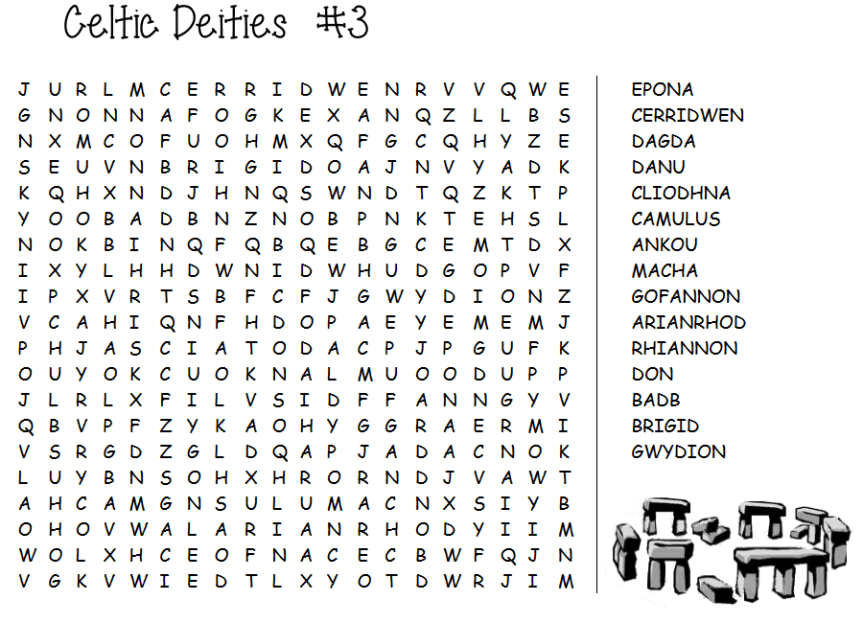
Printable Celtic Deities Word Search

Yes, my inner child picked this for today. It is a day for having fun and enjoying this lifetime!

Spell for Saturday – Setting Boundaries

(YOU CAN COPY AND PASTE ANY SPELLS POSTED TO A DOCUMENT TO PRINT AND/OR SAVE ON YOUR COMPUTER FOR PERSONAL USE ONLY)

Setting Boundaries

Today is a good time to renew the physical boundaries of your home or property. You will need a few small stones to set along the edges of the property. You can use smokey quartz, black obsidian, black tourmaline, or any protective stone you connect with. You will need to walk the boundaries of your property. As you do this, set the stones in the corners of your property line. You may bury them if they are outdoors, so they will not be disturbed. If you live in an apartment, you can simply place them near the doors or windows of your home where they will not be in the way. As you walk the boundaries, at each point where you are placing a stone, say:

Only those who are welcome may
stay. All others must go away.

When the last stone has been placed, the ward is sealed and the property protected.

A Little Humor for Your Day

I hope the rest of your day and evening is relaxing, filled with fun and love.

Merry part until we merry meet again!

Merry Meet Dear Sisters, Brothers, and Friends, Welcome to WOTC! A Thought for Today

I Believe I Can Fly

I used to think that I could not go on
And life was nothing but an awful song
But now I know the meaning of true love
I’m leaning on the everlasting arms
If I can see it, then I can do it
If I just believe it, there’s nothing to it
I believe I can fly
I believe I can touch the sky
I think about it every night and day
Spread my wings and fly away
I believe I can soar
I see me running through that open door
I believe I can fly
I believe I can fly
I believe I can fly (woo)
See I was on the verge of breaking down
Sometimes silence can seem so loud
There are miracles in life I must achieve
But first I know it starts inside of me
If I can see it, then I can be it
If I just believe it, there’s nothing to it
I believe I can fly
I believe I can touch the sky
I think about it every night and day
Spread wings and fly away
I believe I can soar
I see me running through that open door
I believe I can fly
I believe I can fly
I believe I can fly (woo!)
Hey, ’cause I believe in you
Oh
If I can see it (woo!), then I can do it (I can do it)
If I just believe it, there’s nothing to it (hey)
I believe I can fly (woo!)
I believe I can touch the sky
I think about it every night and day
Spread my wings and fly away
I believe I can soar
I see me running through that open door
I believe I can fly (I can fly)
If I just spread my wings (I can fly)
I can fly (I can fly)
If I just spread my wings (I can fly)
I can fly (I can fly, I can fly)
Woo (I can fly)
Hm-mm… fly, fly, fly

I Believe I Can Fly video with lyrics

To me this song/poem says a lot about accepting life on how I choose to live it. It is used as the theme song for Star Trek Enterprise. Great prequel television series for the Star Trek many of us grew up with.

If you want to see some information on any tradition of witchcraft, please put it in the comment section or email Lady Carla Beltane at ladybeltane@witchesofthecraft.com. I will try to find some information to post about it.

May your and your family’s lives be filled with all things positive!

Blessed be.

Merry Meet Dear Sisters, Brothers, and Friends, Welcome to WOTC! A Thought for Today

Today I am sharing a poem about an author I became familiar with in my high school drama club. We put on the play The Night Thoreau Spent in Jail written by Henry David Thoreau. His book Walden; or, Life in the Woods is one of the best I have ever read. So, I thought I would share one of his poems with you today.

I Am The Autumnal Sun

Sometimes a mortal feels in himself Nature

— not his Father but his Mother stirs
within him, and he becomes immortal with her
immortality. From time to time she claims
kindredship with us, and some globule
from her veins steals up into our own.

I am the autumnal sun,
With autumn gales my race is run;
When will the hazel put forth its flowers,
Or the grape ripen under my bowers?
When will the harvest or the hunter’s moon
Turn my midnight into mid-noon?
I am all sere and yellow,
And to my core mellow.
The mast is dropping within my woods,
The winter is lurking within my moods,
And the rustling of the withered leaf
Is the constant music of my grief…


If you want to see some information on any tradition of witchcraft, please put it in the comment section or email Lady Carla Beltane at ladybeltane@witchesofthecraft.com. I will try to find some information to post about it.

May your and your family’s lives be filled with all things positive!

Blessed be.

Some of the Witchcraft/Magickal Correspondence for Thursday

(YOU CAN COPY AND PASTE ANY COROSPONDENCES POSTED TO A DOCUMENT TO PRINT AND/OR SAVE ON YOUR COMPUTER)

Thursday Source:  from FlyingTheHedge.com

Taking its name from the Norse god Thor, this is a great day to work magic regarding growth, expansion, prosperity, business, abundance, and success. See my prosperity candle magic spell.
Color: Royal blue, green, purple
Planet: Jupiter
Deities: Thor, Zeus, Jupiter, Juno
Crystals: Turquoise, amethyst, lapis lazuli
Herbs: Honeysuckle, oak, cinquefoil
Associations: Honor, loyalty, harvest, prosperity, abundance, wealth, healing

Thursday Source: whitewitchgrimoire.com

Planet: Jupiter
Colors: Blue and Metallic

Ahhh Jupiter, you giant dick. While he is the go-to for power, money and good fortune, he’s about the long game. Fast money? Nope. He will give you more of what you have, so if you’re broke, you may be even more impoverished if you use any of his influence. Be careful with them herbs. Looking for justice? Thursday. Signing contracts or making big money moves? Thursday. Abundance looks different to everyone, but this is the day of plenty….sometimes that is just plenty of what you already have man. I’m serious here. My money spells done in the past before I got my shit together created lasting wounds. Expansion is painful when it comes from a space of lack. I said “I need money! I am broke” and he said “Hold my beer you desperate witch” and then I cried. Great money day if you are attracting what you are, but not what you want. I speak from my own experience and yours may differ, but if your money spells have backfired, look at the day and associations. If you see anything, take note. Everyone is different but I am not even ashamed to say that it took me years to figure this one out for my own magic. Good day for court and child support I must say.

Gods – Ra Egyptian Sun God

Ra The Sun God of Egypt

The ancient Egyptians revered Ra as the god who created everything. Also known as the Sun God, Ra was a powerful deity and a central god of the Egyptian pantheon. The ancient Egyptians worshiped Ra more than any other god and pharaohs often connected themselves with Ra in their efforts to be seen as the earthly embodiment of the Sun God.

Ra Mythology

The ancient Egyptians believed that as the sun god, Ra’s role was to sail across the heavens during the day in his boat called the “Barque of Millions of Years.” In the morning when Ra emerged from the east, his boat was named, “Madjet” which meant “becoming strong.” By the end of the day the boat was called, “Semektet” which meant “becoming weak.” At the end of the day, it was believed that Ra died (swallowed by Nut) and sailed on to the underworld, leaving the moon in his place to light up the world. Ra was reborn at dawn the very next day. During his journey across the heavens during the day, he fought with his main enemy, an evil serpent named Apep, or also, The Lord of Chaos. In some stories, Ra, in the form of a cat named Mau, defeats the evil serpent, Apep. This is part of the reason why cats are so highly-revered in Egypt.

Ra created himself from the primordial chaos. He is also known as Re and Atum. His children are Shu, the God of Dry Air and Father of the Sky, and his twin sister Tefnut, the Goddess of Moisture and Wetness. As a lion-headed goddess, Tefnut is responsible for dew and freshness. Humans were created from Ra’s tears.

Although Ra was highly revered and devoutly worshiped by the ancient Egyptians, there is a story to suggest he eventually grew weak. In the Legend of Ra, Isis and the Snake, as Ra grew old, he dribbled saliva. Isis knew that Ra’s power was hidden in his secret name. Isis gathered Ra’s saliva and created a snake out of it. She set the snake in Ra’s path and it bit him. Isis wanted the power Ra had always enjoyed, but she knew she had to get him to tell her his secret name. Eventually, because of the pain he was in, Ra allowed Isis to “search through him” and in so doing, she healed him and Ra’s power was transferred over to her.

The Tree of Life is an important religious symbol to the Egyptians. The Tree of Life was located within Ra’s sun temple in Heliopolis and was considered sacred. The fruit that sprang from this tree was not available to humans, but only in aging-rituals reserved for pharaohs. The Tree of Life is also referred to as the mythical, sacred Ished tree. Eternal life came to those who ate the fruit from the Tree of Life.

Another important ancient Egyptian symbol connected to Ra is the “Bennu”. Bennu is the name of the bird that represented Ra’s soul. This bird is a phoenix and it was seated at the Tree of Life in Ra’s Sun Temple in Heliopolis. Inside the temple, on top of an obelisk, sat the Benben Stone. This pyramid-shaped stone served as a beacon to Bennu and is also an important ancient Egyptian religious symbol.

Worship of the Sun God

Solar temples were built for Ra but did not contain a statue of the god. Instead, they were created to be open to the sunlight that Ra represented. The earliest known temple built in honor of Ra exists in Heliopolis (what is now a Cairo suburb). This solar temple is known as “Benu-Phoenix” and is believed to have been erected in the exact spot where Ra emerged into creation.

Although Ra dates back to the second dynasty, he is not the oldest of the Egyptian gods. It wasn’t until the fifth dynasty that Ra became closely associated with the pharaoh. As the king and leader of Egypt, the pharaoh was seen as the human manifestation of Horus, so the two gods became connected. This new deity fusion was then referred to as “Ra-Horakhty” meaning Ra is Horus of the Horizon. Ra’s relationship with other gods did not stop there. As the powerful creator of mankind and the sun god, he also became associated with Atum to make “Atum-Ra.”

Fifth Dynasty and subsequent pharaohs were all known as “The son of Ra” and Ra became incorporated into every pharaoh’s name from then onward. During the Middle Kingdom, the new deity, Amun-Ra was formed. Amun was one of the gods who formed the Ogdoad (the assembly of eight gods who represented eight elements of creation).

The New Kingdom brought new heights of worship to Ra. Many tombs in the Valley of the Kings portray depictions of Ra and his journey through the underworld. During this time, many solar temples were built.

Eye of Ra

Present in the ancient Egyptian mythology is the Eye of Ra, shown as the sun disk with two ‘uraeus’ cobras coiled around it, next to the white and red crowns of Upper and Lower Egypt. Initially associated with Horus (similarly to the wadjet, the Eye of Horus), the Eye of Ra shifted positions in the myths, becoming both an extension of Ra’s power and a separate entity altogether.

Click here to learn more about The Eye of Ra

Ra God Facts

  • The ancient Egyptians worshiped Ra to such an extent above other gods that some historians have argued that ancient Egyptian religion was indeed a monotheistic one with Ra as the singular god.
  • Historians believe that the pyramids might represent rays of sunlight, further connecting the pharaohs with Ra, the sun god.
  • During Ra’s journey through the heavens he was accompanied by several other gods including Thoth, Horus, Hathor, Maat, Abtu, and Anet.
  • Nut, goddess of the sky and heavens, is sometimes referred to as Ra’s mother, because he emerges from her and is reborn every morning.
  • The morning manifestation of Ra is known as “Khepri the scarab God.”
  • The evening manifestation of Ra is known as the ram-headed god, Khnum.
  • The sacred cobra that encircled Ra’s crown symbolized royalty, sovereignty and divine authority.
  • The right eye of Ra represented the Sun; while the left eye of Ra represented the moon.
  • Ra is also closely associated with the Tree of Life myth, the Ben-Ben Stone and the Bennu Bird myths.
  • Ra’s glory came to an end during the time when the Roman’s conquered Egypt in 30BC.

Who is Ra?

Ra (pronounced ray) represents sunlight, warmth and growth. It was only natural that the ancient Egyptians would believe him to be the creator of the world, as well as part of him being represented in every other god. The ancient Egyptians believed that every god should illustrate some aspect of him, while Ra himself should also represent every god.

Ra’s Appearance

Ra was usually depicted in human form. He had a falcon head which is crowned with a sun disc. This sun disc was encircled by a sacred cobra named Uraeus. Ra has also been depicted as a man with the head of a beetle and also a human man with the head of a ram. The ancients also depicted Ra in full species form such as a serpent, heron, bull, lion, cat, ram, hawk, beetle, phoenix and others. His main symbol, however, is the sun disk.