March 18, 2026 Daily Horoscope

You can read today’s horoscope by clicking on the hyperlink.

Click here to read your daily and weekly horoscope Source: georgianicols.com

Click here to read your daily and weekly Source: horoscope.com

Click here to read more about anyone’s Birthday or Daily or Monthly Horoscopes Source: thehoroscope.co

Who Was St. Patrick?

Who Was St. Patrick?

St. Patrick, the patron saint of Ireland, is one of Christianity’s most widely known figures. But for all of his prevalence in culture, namely the holiday held on the day of his death that bears his name, his life remains somewhat of a mystery. Many of the stories traditionally associated with St. Patrick, including the famous account of his banishing all the snakes from Ireland, are false, the products of hundreds of years of exaggerated storytelling.

St. Patrick: Taken Prisoner By Irish Raiders

It is known that St. Patrick was born in Britain to wealthy parents near the end of the fourth century. He is believed to have died on March 17, around 460 A.D. Although his father was a Christian deacon, it has been suggested that he probably took on the role because of tax incentives and there is no evidence that Patrick came from a particularly religious family. At the age of 16, Patrick was taken prisoner by a group of Irish raiders who were attacking his family’s estate. They transported him to Ireland where he spent six years in captivity. (There is some dispute over where this captivity took place. Although many believe he was taken to live in Mount Slemish in County Antrim, it is more likely that he was held in County Mayo near Killala.) During this time, he worked as a shepherd, outdoors and away from people. Lonely and afraid, he turned to his religion for solace, becoming a devout Christian. (It is also believed that Patrick first began to dream of converting the Irish people to Christianity during his captivity.)

St. Patrick: Guided By Visions

After more than six years as a prisoner, Patrick escaped. According to his writing, a voice—which he believed to be God’s—spoke to him in a dream, telling him it was time to leave Ireland.

To do so, Patrick walked nearly 200 miles from County Mayo, where it is believed he was held, to the Irish coast. After escaping to Britain, Patrick reported that he experienced a second revelation—an angel in a dream tells him to return to Ireland as a missionary. Soon after, Patrick began religious training, a course of study that lasted more than 15 years. After his ordination as a priest, he was sent to Ireland with a dual mission: to minister to Christians already living in Ireland and to begin to convert the Irish. (Interestingly, this mission contradicts the widely held notion that Patrick introduced Christianity to Ireland.)

St. Patrick: Bonfires and Crosses

Familiar with the Irish language and culture, Patrick chose to incorporate traditional ritual into his lessons of Christianity instead of attempting to eradicate native Irish beliefs. For instance, he used bonfires to celebrate Easter since the Irish were used to honoring their gods with fire. He also superimposed a sun, a powerful Irish symbol, onto the Christian cross to create what is now called a Celtic cross, so that veneration of the symbol would seem more natural to the Irish. Although there were a small number of Christians on the island when Patrick arrived, most Irish practiced a nature-based pagan religion. The Irish culture centered around a rich tradition of oral legend and myth. When this is considered, it is no surprise that the story of Patrick’s life became exaggerated over the centuries—spinning exciting tales to remember history has always been a part of the Irish way of life.

Reference

The History Show


History of St. Patrick’s Day

History of St. Patrick’s Day

St. Patrick’s Day is celebrated annually on March 17, the anniversary of his death in the fifth century. The Irish have observed this day as a religious holiday for over 1,000 years. On St. Patrick’s Day, which falls during the Christian season of Lent, Irish families would traditionally attend church in the morning and celebrate in the afternoon. Lenten prohibitions against the consumption of meat were waived and people would dance, drink and feast–on the traditional meal of Irish bacon and cabbage.

ST. PATRICK’s Death AND THE FIRST ST. PATRICK’S DAY PARADE

Saint Patrick, who lived during the fifth century, is the patron saint and national apostle of Ireland. Born in Roman Britain, he was kidnapped and brought to Ireland as a slave at the age of 16. He later escaped, but returned to Ireland and was credited with bringing Christianity to its people. In the centuries following Patrick’s death (believed to have been on March 17, 461), the mythology surrounding his life became ever more ingrained in the Irish culture: Perhaps the most well known legend is that he explained the Holy Trinity (Father, Son and Holy Spirit) using the three leaves of a native Irish clover, the shamrock.

Since around the ninth or 10th century, people in Ireland have been observing the Roman Catholic feast day of St. Patrick on March 17. Interestingly, however, the first parade held to honor St. Patrick’s Day took place not in Ireland but in the United States. On March 17, 1762, Irish soldiers serving in the English military marched through New York City. Along with their music, the parade helped the soldiers reconnect with their Irish roots, as well as with fellow Irishmen serving in the English army.

GROWTH OF ST. PATRICK’S DAY CELEBRATIONS

Over the next 35 years, Irish patriotism among American immigrants flourished, prompting the rise of so-called “Irish Aid” societies like the Friendly Sons of Saint Patrick and the Hibernian Society. Each group would hold annual parades featuring bagpipes (which actually first became popular in the Scottish and British armies) and drums.

In 1848, several New York Irish Aid societies decided to unite their parades to form one official New York City St. Patrick’s Day Parade. Today, that parade is the world ‘s oldest civilian parade and the largest in the United States, with over 150,000 participants. Each year, nearly 3 million people line the 1.5-mile parade route to watch the procession, which takes more than five hours. Boston, Chicago, Philadelphia and Savannah also celebrate the day with parades involving between 10,000 and 20,000 participants each.

THE IRISH IN AMERICA

Up until the mid-19th century, most Irish immigrants in America were members of the Protestant middle class. When the Great Potato Famine hit Ireland in 1845, close to 1 million poor and uneducated Irish Catholics began pouring into America to escape starvation. Despised for their alien religious beliefs and unfamiliar accents by the American Protestant majority, the immigrants had trouble finding even menial jobs. When Irish Americans in the country’s cities took to the streets on St. Patrick’s Day to celebrate their heritage, newspapers portrayed them in cartoons as drunk, violent monkeys.

The American Irish soon began to realize, however, that their large and growing numbers endowed them with a political power that had yet to be exploited. They started to organize, and their voting block, known as the “green machine,” became an important swing vote for political hopefuls. Suddenly, annual St. Patrick’s Day parades became a show of strength for Irish Americans, as well as a must-attend event for a slew of political candidates. In 1948, President Harry S. Truman attended New York City ‘s St. Patrick’s Day parade, a proud moment for the many Irish Americans whose ancestors had to fight stereotypes and racial prejudice to find acceptance in the New World.

THE CHICAGO RIVER Dyed Green ON ST. PATRICK’S DAY

As Irish immigrants spread out over the United States, other cities developed their own traditions. One of these is Chicago’s annual dyeing of the Chicago River green. The practice started in 1962, when city pollution-control workers used dyes to trace illegal sewage discharges and realized that the green dye might provide a unique way to celebrate the holiday. That year, they released 100 pounds of green vegetable dye into the river–enough to keep it green for a week! Today, in order to minimize environmental damage, only 40 pounds of dye are used, and the river turns green for only several hours.

Although Chicago historians claim their city’s idea for a river of green was original, some natives of Savannah, Georgia (whose St. Patrick’s Day parade, the oldest in the nation, dates back to 1813) believe the idea originated in their town. They point out that, in 1961, a hotel restaurant manager named Tom Woolley convinced city officials to dye Savannah’s river green. The experiment didn’t exactly work as planned, and the water only took on a slight greenish hue. Savannah never attempted to dye its river again, but Woolley maintains (though others refute the claim) that he personally suggested the idea to Chicago’s Mayor Richard J. Daley.

ST. PATRICK’S Day Celebrations AROUND THE WORLD

Today, people of all backgrounds celebrate St. Patrick’s Day, especially throughout the United States, Canada and Australia. Although North America is home to the largest productions, St. Patrick’s Day is celebrated in many other locations far from Ireland, including Japan, Singapore and Russia.

In modern-day Ireland, St. Patrick’s Day was traditionally been a religious occasion. In fact, up until the 1970s, Irish laws mandated that pubs be closed on March 17. Beginning in 1995, however, the Irish government began a national campaign to use interest in St. Patrick’s Day to drive tourism and showcase Ireland and Irish culture to the rest of the world. Today, approximately 1 million people annually take part in Ireland ‘s St. Patrick’s Festival in Dublin, a multi-day celebration featuring parades, concerts, outdoor theater productions and fireworks shows.

Reference

The History Show

(One Person’s View Point) St. Patrick’s Day Facts


St. Patrick’s Day Facts

When did the first St. Patrick’s Day parade take place? And just how much corned beef and cabbage is consumed in the U.S. each year? Find out how many Americans trace their lineage to Ireland and more fun facts about St. Patrick’s Day food and traditions.

When is St. Patrick’s Day?

St. Patrick’s Day takes place each year on March 17, the traditional religious feast day of Saint Patrick.

Did You Know?

There are 34.7 million U.S. residents with Irish ancestry. This number is more than seven times the population of Ireland itself.
St. Patrick’s Day Celebration

Corned beef and cabbage is a traditional St. Patrick’s Day dish. In 2009, roughly 26.1 billion pounds of beef and 2.3 billion pounds of cabbage were produced in the United States.

Irish soda bread gets its name and distinctive character from the use of baking soda rather than yeast as a leavening agent.
Lime green chrysanthemums are often requested for St. Patrick’s Day parades and celebrations.

St. Patrick’s Day Parade

The first St. Patrick’s Day parade took place in the United States on March 17, 1762, when Irish soldiers serving in the English military marched through New York City.

More than 100 St. Patrick’s Day parades are held across the United States. New York City and Boston are home to the largest celebrations.
At the annual New York City St. Patrick’s Day parade, participants march up 5th Avenue from 44th Street to 86th Street. Each year, between 150,000 and 250,000 marchers take part in the parade, which does not allow automobiles or floats.

Places to Spend St. Patrick’s Day

There are seven places in the United States named after the shamrock, the floral emblem of Ireland including Mount Gay-Shamrock, WV; Shamrock, TX; Shamrock Lakes, IN; and Shamrock, OK.

Sixteen U.S. places share the name of Ireland’s capital, Dublin. With 44,541 residents, Dublin, CA, is the largest of the nice, followed by Dublin, OH, with 39,310.

Other towns with the luck of the Irish include Emerald Isle, North Carolina and Irishtown, Illinois.

Facts about Irish Americans

There are 34.7 million U.S. residents with Irish ancestry. This number is more than seven times the population of Ireland itself.
Irish is the nation’s second most frequently reported ancestry, ranking behind German.

Across the country, 11 percent of residents lay claim to Irish ancestry. That number more than doubles to 23 percent in the state of Massachusetts.
Irish is the most common ancestry in 54 U.S. counties, of which 44 are in the Northeast. Middlesex County in Massachusetts tops the list with 348,978 Irish Americans, followed by Norfolk County, MA, which has 203,285.

Irish ranks among the top five ancestries in every state except Hawaii and New Mexico. It is the leading ancestry group in Delaware, Massachusetts and New Hampshire.

There are approximately 144,588 current U.S. residents who were born in Ireland.


Reference The History Show

Some of the Witchcraft/Magickal Correspondence for Friday

(YOU CAN COPY AND PASTE ANY CORRESPONDENCES POSTED TO A DOCUMENT TO PRINT AND/OR SAVE ON YOUR COMPUTER FOR PERSONAL USE ONLY)

March 18, 2026 Current Southern Hemisphere/Tomorrow’s Northern Hemisphere Moon Phase

You can find more moon phase details on both of the websites used in this post by clicking on each hyperlink.

Source: nineplanets.org

The Moon phase for March 18th, 2026 is a Waning Crescent phase. This is the phase where the moon is less than 50% illuminated but has not yet reached 0% illumination (which would be a New Moon).

In this part of the moon cycle, it is getting closer and closer to the Sun as viewed from Earth and the night side of the Moon is facing earth with a decreasingly thin crescent being illuminated.

The waning (shrinking) crescement Moon will rise at around midnight, transit the meridian after sunrise, before setting after noon. This phase is best viewed 1-2 hours before sunrise and is a great time to see the features of the Moon’s surface. Along the illuminated crescent you can see the craters and mountains of the moon casting long shadows.

The Waxing Gibbous phase, like all moon phases, will last for just over 7 days. The actual length will vary because of the elliptical shaped orbit of the moon. During this Waxing Gibbous phase the moon will rise in the east in the mid- to late-afternoon and will be high in the eastern sky at sunset.

Assuming it’s a clear night, the Waxing Gibbous moon will then be visible through most of the night before setting just before sunrise.

Fun fact:

Phase Details:

Phase: Waning Crescent

Moon age: 28.79 days

Moon illumination: 0.6%

Moon tilt: -66.539°

Moon angle: 0.53

Moon distance: 376,319.03 km

Moon sign: Pisces

Source: MoonGiant.com

You can use this link to go forward or backward in time for Moon phase information. If you are curious, you can even find out what phase the Moon was in when you or anyone else was born.

Visit the March 2026 Moon Phases Calendar to see all the daily moon phase for this month.

Today’s Moon Phase

The on March 18 has an illumination of 0%. This is the percentage of the Moon illuminated by the Sun. The illumination is constantly changing and can vary up to 10% a day. On March 18 the Moon is 29.11 days old. This refers to how many days it has been since the last New Moon. It takes 29.53 days for the Moon to orbit the Earth and go through the lunar cycle of all 8 Moon phases.

Phase Details:

Illumination: 0%
Moon Age: 29.11 days
Moon Angle: 0.53
Moon Distance: 378,552.66 km
Sun Angle: 0.54
Sun Distance: 148,932,615.84 km

Divination Journal

Lady Carla Beltane picks out the symbol, rune, tarot card, etc., but the information is from the website in the hyperlink or from a book. The description of these is one person’s view on them.

Tarot

Source: The Celtic Dragon Tarot by D. J. Conway. With art done by Lisa Hunt. This deck is unique as the cards are never read in reverse. Pages 66 and 67

Five of Wands

Obstacles; opposition.

Five robed magicians (some men, some women) are battling each other with their wands. Flashes of magickal energy come from the wands, as the magicians either defend themselves or attack others. These magicians represent two types of people in the world: those who are overly ambitious and jealous of what others accomplish, and those who must learn to defend themselves against such attacks by others. Jealous people often attack those who have worked hard and gained positive things from their efforts; unfortunately it is a common human failing. Life is difficult enough (symbolized by the rocky landscape and twisted tree roots), without complicating it with unnecessary battles brought on by misunderstandings, jealousy, and twisted ethics. Only a cool head, spiritual guidance, and resistance to foes will help balanced person win the day. Tiny Air dragons dart above them, their fiery breath intermingling with flashes of energy. They represent the astral guardians who try to bring peace to such a situation.

Divinatory Meaning: Obstacles and opposition from others may complicate your life; you will have to struggle to overcome this.. Harmful gossip could damage your reputation and/or ccareer. You may find yourself in trouble with the law.

Animal Spirit Guide or Helper

Source: the PsychicLibrary.com

Antelope

Antelope medicine is one of right action. If you were to visit Northern Plains today, you would see groups of antelope scattered about the fields and hills. However they are so quiet and unmoving that (from a distance) they resemble stones. But, get too close and they move like lightening. Antelope asks you: are you being still when you should be moving, or moving when stillness is required?

Celtic Ogham

Source: ireland-calling.com

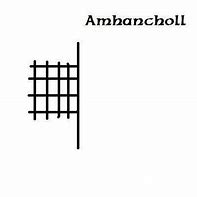
Gort

G

Ivy, a symbol of strength and determination to the Druids, is the twelfth letter of the ogham alphabet, gort, and the eleventh month in the Celtic tree calendar, representing September 30th to October 27th.

Gothic Rune

Source: The Rune Site

Aihs/Waer

Sound: “e” as in “egg”
Stands for: Staff cut from a Yew Tree
Casting meaning: Aihs represents a double-ended staff of life and death cut from a yew tree. Waer symbolizes sacrifice.

Witch’s Rune

Source: OtherWorldlyOracle.com

Harvest

Abundance, reaping, manifesting, wealth, family security, finances

What happens during the harvest? We collect all we’ve been growing. This rune represents manifestation and reaping the rewards. Finances and security.

I Ching

Source: IChingOnline.net

Hexagram Twenty-Nine/29

K’an / Dangerously Deep

Water follows Water, spilling over any cliff, flowing past all obstacles, no matter the depth or distance, to the Sea.
The Superior Person learns flexibility from the mistakes he has made, and grows strong from the obstacles he has overcome, pressing on to show others the Way.

SITUATION ANALYSIS:

You are facing a crucial trial along your Journey.
The danger of this challenge is very real.
It is a test of your mettle.
If you can maintain your integrity and stay true to your convictions, you will overcome.
That’s not as easy as it seems when you are faced with the sacrifice of other things you’ve come to depend upon or hold dear.

Numerology

Source: worldnumerology.com

Thirty

It is communication and creativity. It is a high octave 3. It has a great sense of humor, is jovial and warm, but also a bit superficial. Easily distracted, lacks staying power.

Angel Number

Source: InformationSeries.com

Thirty/30

Angel number 30 has the vibration of the numbers 3 and 0.

3 is related to communication, self-expression, spontaneity, charisma, dedication, vitality, expansion, rise, inspiration, creativity.

He has also been involved with statements and ascended masters.

The number 0 means eternity, infinity, oneness, wholeness, a continuous cycle or flow, or a starting point, increasing the energy of the numbers that come together with messages related to the development of your spiritual side.

Angel number 0 signifies the beginning of a spiritual journey and highlights the uncertainty necessarily caused by it.

He says that on his journey to the inner side , listening to intuition, inner wisdom, and higher self will reveal the answer.

In Angel Number 30, it means increasing the power of 3 and having joy, creativity, society, spiritual awakening, and spiritual connection to the source.

March 17, 2026 Daily Horoscope

You can read today’s horoscope by clicking on the hyperlink.

Click here to read your daily and weekly horoscope Source: georgianicols.com

Click here to read your daily and weekly Source: horoscope.com

Click here to read more about anyone’s Birthday or Daily or Monthly Horoscopes Source: thehoroscope.co

March 17, 2026 Current Southern Hemisphere/Tomorrow’s Northern Hemisphere Moon Phase

You can find more moon phase details on both of the websites used in this post by clicking on each hyperlink.

Source: nineplanets.org

The Moon phase for March 17th, 2026 is a Waning Crescent phase. This is the phase where the moon is less than 50% illuminated but has not yet reached 0% illumination (which would be a New Moon).

In this part of the moon cycle, it is getting closer and closer to the Sun as viewed from Earth and the night side of the Moon is facing earth with a decreasingly thin crescent being illuminated.

The waning (shrinking) crescement Moon will rise at around midnight, transit the meridian after sunrise, before setting after noon. This phase is best viewed 1-2 hours before sunrise and is a great time to see the features of the Moon’s surface. Along the illuminated crescent you can see the craters and mountains of the moon casting long shadows.

The Waxing Gibbous phase, like all moon phases, will last for just over 7 days. The actual length will vary because of the elliptical shaped orbit of the moon. During this Waxing Gibbous phase the moon will rise in the east in the mid- to late-afternoon and will be high in the eastern sky at sunset.

Assuming it’s a clear night, the Waxing Gibbous moon will then be visible through most of the night before setting just before sunrise.

Fun fact:

Phase Details:

Phase: Waning Crescent

Moon age: 27.76 days

Moon illumination: 3.64%

Moon tilt: -72.471°

Moon angle: 0.52

Moon distance: 381,141.11 km

Moon sign: Pisces

Source: MoonGiant.com

You can use this link to go forward or backward in time for Moon phase information. If you are curious, you can even find out what phase the Moon was in when you or anyone else was born.

Visit the March 2026 Moon Phases Calendar to see all the daily moon phase for this month.

Today’s Waning Crescent Phase

The Waning Crescent on March 17 has an illumination of 2%. This is the percentage of the Moon illuminated by the Sun. The illumination is constantly changing and can vary up to 10% a day. On March 17 the Moon is 28.07 days old. This refers to how many days it has been since the last New Moon. It takes 29.53 days for the Moon to orbit the Earth and go through the lunar cycle of all 8 Moon phases.

Phase Details:

Phase: Waning Crescent
Illumination: 2%
Moon Age: 28.07 days
Moon Angle: 0.52
Moon Distance: 383,400.96 km
Sun Angle: 0.54
Sun Distance: 148,891,055.12 km

March 16, 2026 Current Northern Hemisphere Moon Phase

You can find more moon phase details on both of the websites used in this post by clicking on each hyperlink.

Source: nineplanets.org

The Moon phase for today is a Waning Crescent phase. This is the phase where the moon is less than 50% illuminated but has not yet reached 0% illumination (which would be a New Moon).

In this part of the moon cycle, it is getting closer and closer to the Sun as viewed from Earth and the night side of the Moon is facing earth with a decreasingly thin crescent being illuminated.

The waning (shrinking) crescement Moon will rise at around midnight, transit the meridian after sunrise, before setting after noon. This phase is best viewed 1-2 hours before sunrise and is a great time to see the features of the Moon’s surface. Along the illuminated crescent you can see the craters and mountains of the moon casting long shadows.

The Waxing Gibbous phase, like all moon phases, will last for just over 7 days. The actual length will vary because of the elliptical shaped orbit of the moon. During this Waxing Gibbous phase the moon will rise in the east in the mid- to late-afternoon and will be high in the eastern sky at sunset.

Assuming it’s a clear night, the Waxing Gibbous moon will then be visible through most of the night before setting just before sunrise.

Fun fact:

Phase Details:

Phase: Waning Crescent

Moon age: 26.73 days

Moon illumination: 8.92%

Moon tilt: -72.75°

Moon angle: 0.52

Moon distance: 386,353.87 km

Moon sign: Aquarius

Source: MoonGiant.com

You can use this link to go forward or backward in time for Moon phase information. If you are curious, you can even find out what phase the Moon was in when you or anyone else was born.

Visit the March 2026 Moon Phases Calendar to see all the daily moon phase for this month.

Today’s Waning Crescent Phase

The Waning Crescent on March 16 has an illumination of 7%. This is the percentage of the Moon illuminated by the Sun. The illumination is constantly changing and can vary up to 10% a day. On March 16 the Moon is 27.09 days old. This refers to how many days it has been since the last New Moon. It takes 29.53 days for the Moon to orbit the Earth and go through the lunar cycle of all 8 Moon phases.

Phase Details:

Phase: Waning Crescent
Illumination: 7%
Moon Age: 27.09 days
Moon Angle: 0.51
Moon Distance: 388,061.95 km
Sun Angle: 0.54
Sun Distance: 148,851,413.43 km

March 16, 2026 Daily Horoscope

You can read today’s horoscope by clicking on the hyperlink.

Click here to read your daily and weekly horoscope Source: georgianicols.com

Click here to read your daily and weekly Source: horoscope.com

Click here to read more about anyone’s Birthday or Daily or Monthly Horoscopes Source: thehoroscope.co

Weekly Horoscopes Sunday, March 15 to Saturday, March 21, 2026

Click on the hyperlinks below to read your horoscope for the coming week.

Click here to read your daily and weekly horoscope Source: georgianicols.com

Click here to read your weekly horoscope Source: horoscope.com

(One Person’s View point) Friday the 13th Origins, History, Folk Lore

Long considered a harbinger of bad luck, Friday the 13th has inspired a late 19th-century secret society, an early 20th-century novel, a horror film franchise and not one but two unwieldy terms—paraskavedekatriaphobia and friggatriskaidekaphobia—that describe fear of this supposedly unlucky day.

The Fear of 13

Just like walking under a ladder, crossing paths with a black cat or breaking a mirror, many people hold fast to the belief that Friday the 13th brings bad luck. Though it’s uncertain exactly when this particular tradition began, negative superstitions have swirled around the number 13 for centuries.

CONTENTS

  1. The Fear of 13
  2. Why is Friday the 13th Unlucky?
  3. The Thirteen Club
  4. Friday the 13th in Pop Culture
  5. What Bad Things Happened on Friday 13th?
  6. Sources

Click on the hyperlinks for more Information Source:History.com

Spell for Friday the 13th Chant

(One Person’s View point) Friday The 13th: Origins and Witchcraft Associations

For spooky people everywhere, Friday the 13th has taken on the life of a holiday. Parties, tattoo specials, horror movies, and mostly around the belief that Friday is either lucky or unlucky. There’s no 13th floor in buildings, 13th aisle on airplanes. It’s Taylor Swift’s famously lucky number, yet there’s still a phobia, triskaidekaphobia, named for people who are afraid of the number 13. So which is it? And why is it associated with witches??

Friday the 13th’s exact unlucky origins are unclear.

In modern times, Friday the 13th is often associated with the movie, Friday the 13th. And honestly, it has nothing to do with the number, the day or witches and more so to do with frisky teens who aren’t attending to their summer camp jobs.

Modern witchcraft has really reclaimed the number 13 from its unlucky origins and associations with witches. In the 50s and 60s with the rise of Wicca and paganism up to now, many believe that 13 was the ideal number of coven members, likely because of the sort of 13 (its like 12 and some fractions or something) lunar phases in a year.

The association with witchcraft and Friday the 13th is also sort of unclear. Some believe it has to do with the witch trials when some were forced to “confess” that they met with their covens on Good Friday as like an insult to the puritans or … Click here to read the rest of this article – Source: xristiwitch.com

(One Person’s View Point) The Enigma of Friday the 13th: Sacred Symbolism for Witches and Women

Friday the 13th is a date shrouded in mystery and superstition. It invokes both fear and fascination in the minds of many. While often associated with ill luck and dark omens, this peculiar day holds a sacred significance for witches and women alike. Delving into the depths of history, folklore, and cultural beliefs, we unravel the enigma behind Friday the 13th and explore its connection to witchcraft and the empowerment of women.

Origins and Historical Significance:

What are the origins of the superstitions surrounding Friday the 13th? It can be traced back to a convergence of various historical and cultural influences. The perceived unluckiness of Friday can be attributed to Christian beliefs. It is supposed as the day on which Jesus was crucified. Additionally, it was believed that Eve tempted Adam with the forbidden fruit on a Friday. This perpetuated the association of the day with misfortune.

The fear surrounding the number 13, known as triskaidekaphobia, has deep historical roots as well. Many ancient cultures considered the number 12 to be complete and harmonious, representing the twelve months, zodiac signs, and apostles. The number 13, therefore, disrupted this balance and was viewed as a symbol of chaos and disruption.

Sacredness in Witchcraft: Click here to read the rest of this article

March 14, 2026 Current Southern Hemisphere/Tomorrow’s Northern Hemisphere Moon Phase

You can find more moon phase details on both of the websites used in this post by clicking on each hyperlink.

Source: nineplanets.org

The Moon phase for March 14th, 2026 is a Waning Crescent phase. This is the phase where the moon is less than 50% illuminated but has not yet reached 0% illumination (which would be a New Moon).

In this part of the moon cycle, it is getting closer and closer to the Sun as viewed from Earth and the night side of the Moon is facing earth with a decreasingly thin crescent being illuminated.

The waning (shrinking) crescement Moon will rise at around midnight, transit the meridian after sunrise, before setting after noon. This phase is best viewed 1-2 hours before sunrise and is a great time to see the features of the Moon’s surface. Along the illuminated crescent you can see the craters and mountains of the moon casting long shadows.

The Waxing Gibbous phase, like all moon phases, will last for just over 7 days. The actual length will vary because of the elliptical shaped orbit of the moon. During this Waxing Gibbous phase the moon will rise in the east in the mid- to late-afternoon and will be high in the eastern sky at sunset.

Assuming it’s a clear night, the Waxing Gibbous moon will then be visible through most of the night before setting just before sunrise.

Fun fact:

Phase Details:

Phase: Waning Crescent

Moon age: 24.66 days

Moon illumination: 24.4%

Moon tilt: -67.532°

Moon angle: 0.5

Moon distance: 396,233.92 km

Moon sign: Capricorn

Source: MoonGiant.com

You can use this link to go forward or backward in time for Moon phase information. If you are curious, you can even find out what phase the Moon was in when you or anyone else was born.

Visit the March 2026 Moon Phases Calendar to see all the daily moon phase for this month.

Today’s Waning Crescent Phase

The Waning Crescent on March 14 has an illumination of 21%. This is the percentage of the Moon illuminated by the Sun. The illumination is constantly changing and can vary up to 10% a day. On March 14 the Moon is 25.11 days old. This refers to how many days it has been since the last New Moon. It takes 29.53 days for the Moon to orbit the Earth and go through the lunar cycle of all 8 Moon phases.

Phase Details:

Phase: Waning Crescent
Illumination: 21%
Moon Age: 25.11 days
Moon Angle: 0.50
Moon Distance: 396,993.44 km
Sun Angle: 0.54
Sun Distance: 148,767,622.11 km

March 13, 2026 Current Northern Hemisphere Moon Phase

You can find more moon phase details on both of the websites used in this post by clicking on each hyperlink.

Source: nineplanets.org

The Moon phase for today is a Waning Crescent phase. This is the phase where the moon is less than 50% illuminated but has not yet reached 0% illumination (which would be a New Moon).

In this part of the moon cycle, it is getting closer and closer to the Sun as viewed from Earth and the night side of the Moon is facing earth with a decreasingly thin crescent being illuminated.

The waning (shrinking) crescement Moon will rise at around midnight, transit the meridian after sunrise, before setting after noon. This phase is best viewed 1-2 hours before sunrise and is a great time to see the features of the Moon’s surface. Along the illuminated crescent you can see the craters and mountains of the moon casting long shadows.

The Waxing Gibbous phase, like all moon phases, will last for just over 7 days. The actual length will vary because of the elliptical shaped orbit of the moon. During this Waxing Gibbous phase the moon will rise in the east in the mid- to late-afternoon and will be high in the eastern sky at sunset.

Assuming it’s a clear night, the Waxing Gibbous moon will then be visible through most of the night before setting just before sunrise.

Fun fact:

Phase Details:

Moon age: 23.62 days

Moon illumination: 33.69%

Moon tilt: -62.687°

Moon angle: 0.5

Moon distance: 400,097.00 km

Moon sign: Capricorn

Source: MoonGiant.com

You can use this link to go forward or backward in time for Moon phase information. If you are curious, you can even find out what phase the Moon was in when you or anyone else was born.

Visit the March 2026 Moon Phases Calendar to see all the daily moon phase for this month.

Today’s Waning Crescent Phase

The Waning Crescent on March 13 has an illumination of 29%. This is the percentage of the Moon illuminated by the Sun. The illumination is constantly changing and can vary up to 10% a day. On March 13 the Moon is 24.14 days old. This refers to how many days it has been since the last New Moon. It takes 29.53 days for the Moon to orbit the Earth and go through the lunar cycle of all 8 Moon phases.

Phase Details:

Phase: Waning Crescent
Illumination: 29%
Moon Age: 24.14 days
Moon Angle: 0.50
Moon Distance: 400,566.24 km
Sun Angle: 0.54
Sun Distance: 148,725,246.05 km

Divination Journal

Lady Carla Beltane picks out the symbol, rune, tarot card, etc., but the information is from the website in the hyperlink or from a book. The description of these is one person’s view on them.

Tarot Card

Source The English Magic Tarot by Rex Van Ryn, Steve Dooley and Andy Letcher Copyright 2015 (The unfamiliar terms used with this deck is in England’s English) Pages 20 and 21

The Fool – Major Arcana

Description: A fool strides across the English countryside. He wears a fabulous multicolored costume. A hare gambols at his feet.

Interpretation: Here comes the Fool. Not a care in the world. Everything he says and does seems to turn out okay without his even trying. He’s the embodiment of effortless non-doing. All his possessions are wrapped up in just one knotted handkerchief. But is that mad look in his eye? Is he the village idiot, cuckoo-brained, a moon-calf? There’s a darker side to the Fool. He might be a trickster, an unraveller like Loki or Raven or Coyote or Efnysien, someone who brings chaos to the world, just because he can. He does suspiciously like Guy Fawkes. Or perhaps he’s the wise fool, able to speak when others cannot.

Traditionally, the Fool is regarded as the hero setting out on his magical quest. Of course, he starts from a state of pure innocence. Why else would he need to go adventuring? He needs to learn about himself and the world. That’s why his number is zero. Zero the hero. He starts with nothing.

Usually the Fool is accompanied by a small dog, but here Rex has given him a hare instead. According to mythology, the hare is wise and mad all at once, just like the Fool. As with any mammal that survives by running fast, hares have disproportionately large hearts—it’s what gives them oomph to escape the hounds. How appropriate. Like the hare, the Fool’s heart is huge and wide open. There might be a sheer drop in front of him, but he’d step right over and land without a scratch.

Reading: Embrace the Fool, take a leap into the dark. If he appears reversed, then it’s time to stop acting the fool. You’re not coming from a place of open-heartedness.

Animal Spirit Guide or Helper

Sources: Ted Andrews’s Animal-Speak, Jessica Dawn Palmer’s Animal Wisdom, and Steven D. Farmer’s Power Animals.

HARE

Although hares and rabbits look similar, they have very different symbolism.  A hare is bigger than a rabbit, has longer ears, and possesses more powerful hind legs.  The two most abundant kinds are the European Brown Hare and the Snowshoe Hare.  The Snowshoe Hare is strongly linked to the Snowy Owl population, such that when hare populations are down, the owls stop breeding, and even die from starvation.  The hare is more solitary and tougher than the rabbit.  Hares don’t live in warrens or have maternity nests.  The young hares are born so well-developed that they can fend for themselves within a few hours of their birth.

The hare is associated with a number of myths from many different cultures.  The Algonquin tribe honored the Great Hare as a demiurge, a role in the creation of the world.  The Egyptians also saw the hare involved in a creation story.  For them, the hare came to mean procreation, and then immorality.  While the hare is often associated with impatience and haste (like the “Tortoise and the Hare” fable), it’s important to note that other cultures, like the Goths, saw the hare as fleet and swift, and symbols of diligence.  This reflects the attitudes of medieval hunters, who viewed hares as a challenge to catch.

Hare people are considered sensitive and artistic, and also linked with ambition, fitness, and virtue.  However, the hare is not just associated with positive things.  Hares are also thought of as greedy and selfish, even a bad example for people.  Hare is seen as a jokester, linked with trickery and fraud.  Even those with hare medicine are clever, often unreliable, and frequently thinking of themselves.

Although hare has some qualities that are less than redeeming, there are things he can teach us.  Because they move in leaping and hopping motions, those with rabbit and hare totems can expect changes in their own lives in the same kind of movement.  Hare can also aid people in recognizing the signs around them by attuning to lunar cycles and understanding the tides of movement in their own lives.

Rune

Source: therunesite.com

Fehu

Sound: “f”
Stands for: Cattle
Color: Green (Brown)
Casting meaning: Fehu is a rune of power and control. It represents new beginnings and “movable” wealth such as money and credit. It is a rune that gives us the power we need to obtain wealth as well as the power we need to hold on to it.

Witches’ Rune

CROSSROADS

This rune indicates a more difficult path where things are not so easy.

The Crossroads represents not only quarrels and misunderstandings but also discipline and mastery over the self.

It is not necessarily bad luck, but rather slow, substantial gains.

The Crossroads suggest maintaining the status quo, understanding boundaries and limitations, make a sustained practical effort, practical matters and solid achievement.

Relationships may be on shaky ground when one of these elements is sacrificed at the expense of another.

This rune stresses basic concerns and could indicate feeling boxed in. There may even be a feeling of discouragement. But you will soon discover innate strength and resources giving your achievements more meaning.

OGHAM

Source: learnreligions.com

COLL/CALL

C, sometimes read as K, is Coll, which is the Hazel tree. August is known as the Hazel Moon, because this is when Hazel nuts appear on the trees–the world Coll translates to “the life force inside you”, and what better symbol of life than the nut itself? Hazel is associated with wisdom and creativity and knowledge. Sometimes it is connected in Celtic lore with magical springs, sacred wells, and divination.

Hazel was a handy tree to have around. It was used by many English pilgrims to make staffs for use upon the road–not only was it a sturdy walking stick, it also provided a modicum of self-defense for weary travelers. Certainly, it could have been used as well for ritual. Hazel was used in weaving of baskets by medieval folk, and the leaves were fed to cattle because it was believed this would increase the cow’s supply of milk.

In the Irish myth cycles, there is a tale that nine hazel nuts dropped into a sacred pool. A salmon came along in the pool and gobbled up the nuts, which then imbued him with wisdom. A variation of the story appears in the legend of Finn Mac Cumhail, who ate the salmon and then took on the knowledge and wisdom of the fish. Note that Mac Cumhail is often translated as Mac Coll.

Coll Correspondences

Mundane Aspects: Take advantage of your own artistry or creativity, and share your knowledge with others so they too can practice these arts. Lead by example, and teach those who wish to learn. Find inspiration for your creative gifts, whatever your talent may be.

Magical Aspects: Let the divine guide you in your creative journey. Speak to the gods through your art, and be rewarded with inspiration. If you’re stuck in a creative rut, call upon the Divine to send you a Muse.

I Ching

Source: psychic-revelation.com

Hexagram Five/5

Name: Hsu.

Keyphrase: Waiting, Nourishment.

Formed By The Trigrams: Water over Heaven.

General: Do not doubt that the wait is necessary.

Love: If you are in an existing relationship it will enter a happier time, or if single, your relationship will come in due time.

Business: Start your business or continue it if already started, and know that you will succeed.

Personal: Keep your life in perspective and let some of those worries go.

Overview: Hsu relates to patience and waiting. It is a warning not to be hasty and take action that you may later regret, rather you should bide your time and prepare optimally for the changes that are coming. Hone your plans and strategies. Hsu reminds us that periods of waiting are a necessary part of life and that that time is not wasted when you are waiting with the confident knowledge that sooner or later the drought will end.

Numerology

Source:  Worldnumerology.com

FIVE

The most vibrant, freedom-loving of all numbers in numerology

The Numerology Meaning of the Number 5: A DYNAMIC FORCE

The 5 is unpredictable, always in motion, and constantly in search of change.

Although it is molded from an almost equal mix of freedom-loving and loyal characteristics, the 5 is slightly more daring, and there is nothing submissive about it.

The 5 is extremely independent in mind and soul.

For an adventurer and risk-taker who has a hard time staying in one place, one job, or one relationship, the 5 is surprisingly loyal when the right partner comes along.

The 2 and the 6 are known as the most harmonious relationship numbers. Still, both will cheat on a partner when temptation is strong enough. The 5 will not. The 5 may break off a relationship due to their restless nature, but they will rarely deceive a partner. Although, when they are not in a committed relationship, they have no problem dating a different person every day of the week

The 5 generally doesn’t find a suitable career until they’ve tried several different jobs, some barely lasting long enough to warrant a full paycheck. This is especially true if there is monotonous routine involved; boredom sets in quickly for the 5 who simply cannot stand predictable, repetitive work.

But again, the 5 will surprise friends and family once they find their niche. This usually happens after age 30 when their focus, energy, and quick mind help them scramble up the ladder (faster, and with less apparent effort, than those around them).

Many 5s choose careers that require travel or otherwise offer a regular change of environment. People working in the travel industry, small business owners, independent consultants, lawyers, and those in sales often have the 5 in their core numbers.

The 5 can adjust quickly to pretty much anything coming their way.

The 5 is versatile, adaptable, intelligent, progressive, and tolerant. Convention bores them, and they are easily drawn to the eccentrics and misfits of society.

A social creature, the 5 is funny and uplifting, good at making others feel comfortable around them. They are generally well-liked and often surrounded by friends and acquaintances. However, they can also be polarizing, so people that are typically uptight, self-righteous, or judgmental are quickly aggravated by them.

Perhaps the most dominating trait of the 5 is the uncompromising demand for freedom in thought and action.

People with a prominent 5 in their core numbers make up their own mind, rebel against dogma and ideology, and recoil from clubs, cults, and religious sects. Their adventurous, daredevil nature may include riding motorcycles, but they will not typically ride with a large group. Chances are a 5 will be opinionated and passionate about political issues, but will remain independent of formal political parties.

A 5 may change their mind (regularly) but not without good reason. They won’t be controlled but are flexible and can be converted if the argument makes sense. The 5 has a healthy sense of humor and doesn’t sweat the small things. They carry their heart on their sleeve, and it’s not uncommon to give that heart to the wrong person – they are not always the best judge of character.

On the negative side, the 5 can be selfish, thoughtless, and irresponsible.

Rarely considering the future beyond next week, worrying is not in their nature. The 5 tends to procrastinate and can be unreliable. However, their most common downfall is a tendency to experiment with sex, drugs, alcohol, and other addictions. A desire for instant gratification, lack of restraint, and their feeling of invulnerability can be a recipe for disaster.

The shape of numbers reflect their nature, and just as the 4 is square and grounded, the 5 is a symbol of dynamic energy, elastic and constantly in motion.

Angel Number

Source: Angel-Numbers.com

Your life or something in it is taking a turn for the better. Number five represents change.

March 13, 2026 Daily Horoscope

You can read today’s horoscope by clicking on the hyperlink.

Click here to read your daily and weekly horoscope Source: georgianicols.com

Click here to read your daily and weekly Source: horoscope.com

Click here to read more about anyone’s Birthday or Daily or Monthly Horoscopes Source: thehoroscope.co