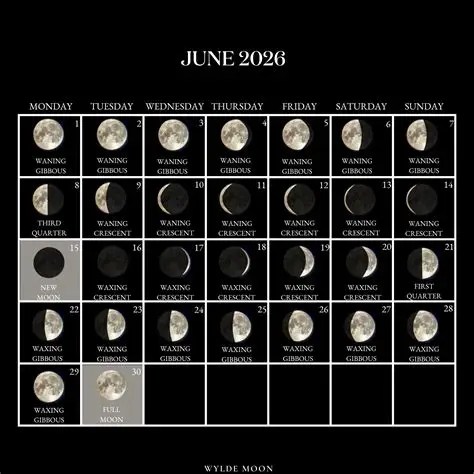
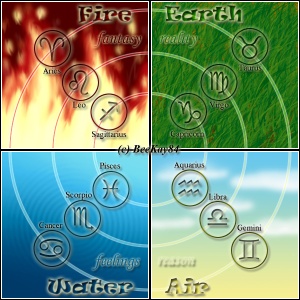
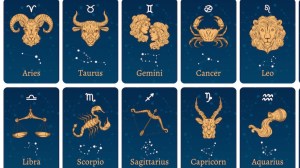
Welcome to WOTC! Happy and Blessed Ostara/Spring Equinox

This is a great day to set goals and long term spells and/or rituals you’d like to come to fruition by Mabon/Autumn Equinox.

You see three different dates this Sabbat can fall on. Why is this? I will delve more into that in other posts today.

Most Native American tribes and nations celebrate for the three dates yearly.

If you want to see information on any tradition of witchcraft, herbs, flowers, a Goddess or a God, or anything pertaining to any tradition of witchcraft, please put it in the comment section or email Lady Carla Beltane at ladybeltane@witchesofthecraft.com. I will try to find some information to post about it.

May your and your family’s lives be filled with love, happiness, laughter, joy, and positive things!

Blessed be

March 20, 2026 Current Southern Hemisphere/Tomorrow’s Northern Hemisphere Moon Phase

You can find more moon phase details on both of the websites used in this post by clicking on each hyperlink.

Source: nineplanets.org

The Moon phase for March 20th, 2026 is a Waxing Crescent phase. This is the phase where the moon started to become visible again after the New Moon.

In this part of the moon cycle, the Moon is moving away from the Sun and is becoming more and more illuminated by sunlight. In this phase, the moon will go from 0.1% to 49.9% illuminated before reaching the First Quarter phase.

In the Waxing Crescent phase the moon rises before noon in the east, transits the meridian before sunset, before setting in the west before midnight.

The Waxing Crescent phase, like all moon phases, will last for just over 7 days. The actual length will vary because of the elliptical shaped orbit of the moon. The moon is close to the Sun in the sky and the right edge will become brighter as it approaches 50% illumination and the First Quarter phase

Fun fact:

Phase Details:

Phase: Waxing Crescent

Moon age: 1.43 days

Moon illumination: 2.5%

Moon tilt: 100.361°

Moon angle: 0.54

Moon distance: 369,264.33 km

Moon sign: Aries

Source: MoonGiant.com

You can use this link to go forward or backward in time for Moon phase information. If you are curious, you can even find out what phase the Moon was in when you or anyone else was born.

Visit the March 2026 Moon Phases Calendar to see all the daily moon phase for this month.

Today’s Waxing Crescent Phase

The Waxing Crescent on March 20 has an illumination of 3%. This is the percentage of the Moon illuminated by the Sun. The illumination is constantly changing and can vary up to 10% a day. On March 20 the Moon is 1.75 days old. This refers to how many days it has been since the last New Moon. It takes 29.53 days for the Moon to orbit the Earth and go through the lunar cycle of all 8 Moon phases.

Phase Details:

Phase: Waxing Crescent
Illumination: 3%
Moon Age: 1.75 days
Moon Angle: 0.54
Moon Distance: 369,986.29 km
Sun Angle: 0.54
Sun Distance: 149,016,286.13 km

March 19, 2026 Daily Horoscope

You can read today’s horoscope by clicking on the hyperlink.

Click here to read your daily and weekly horoscope Source: georgianicols.com

Click here to read your daily and weekly Source: horoscope.com

Click here to read more about anyone’s Birthday or Daily or Monthly Horoscopes Source: thehoroscope.co

Different View Points for New Moon Symbolic Meanings

The new moon symbolizes new beginnings, transformation, and the opportunity for personal growth, inviting individuals to set intentions and release what no longer serves them.

Key Symbolic Meanings

Conclusion

The new moon serves as powerful symbol of potential and renewal, inviting individuals to embrace change, reflect on their inner desires, and set intentions for the future. By harnessing the energy of the new moon, one can align with the natural cycles of life and foster personal growth and transformation.

Some of the Witchcraft/Magickal Correspondence for Thursday

(YOU CAN COPY AND PASTE ANY CORRESPONDENCES POSTED TO A DOCUMENT TO PRINT AND/OR SAVE ON YOUR COMPUTER FOR PERSONAL USE ONLY)

Thursday’s Magickal Correspondences

Wealth
Male Fertility
Ambition
Expansion
Luck
Happiness
Honor
Family
Harvests
Planet: Jupiter
Colors: Dark Blue, Green
Crystals: Turquoise, Amethyst, Lapis

March 19, 2026 Current Southern Hemisphere/Tomorrow’s Northern Hemisphere Moon Phase

You can find more moon phase details on both of the websites used in this post by clicking on each hyperlink.

Source: nineplanets.org

The Moon phase for March 19th, 2026 is the New Moon phase. In this phase, the moon is positioned between the Sun and Earth and is 0% illuminated (i.e the moon is not visible to us in the sky).

Due to the alignment of the Sun, the Moon and Earth, the side of the moon that faces Earth is left in complete darkness. In technical terms this is referred to as a conjunction or Syzygy.

Also, during the New Moon phase, the moon rises and sets at around the same time as the Sun. This brings to the moon too close to the glare of the Sun for us to see the moon with the naked eye.

Fun fact:

Phase Details:

Phase: New Moon

Moon age: 0.39 days

Moon illumination: 0.15%

Moon tilt: 80.386°

Moon angle: 0.53

Moon distance: 372,265.63 km

Moon sign: Aries

Source: MoonGiant.com

You can use this link to go forward or backward in time for Moon phase information. If you are curious, you can even find out what phase the Moon was in when you or anyone else was born.

Visit the March 2026 Moon Phases Calendar to see all the daily moon phase for this month.

Today’s New Moon Phase

The New Moon on March 19 has an illumination of 0%. This is the percentage of the Moon illuminated by the Sun. The illumination is constantly changing and can vary up to 10% a day. On March 19 the Moon is 0.61 days old. This refers to how many days it has been since the last New Moon. It takes 29.53 days for the Moon to orbit the Earth and go through the lunar cycle of all 8 Moon phases.

Phase Details:

Phase: New Moon
Illumination: 0%
Moon Age: 0.61 days
Moon Angle: 0.53
Moon Distance: 374,172.77 km
Sun Angle: 0.54
Sun Distance: 148,972,620.67 km

March 18, 2026 Daily Horoscope

You can read today’s horoscope by clicking on the hyperlink.

Click here to read your daily and weekly horoscope Source: georgianicols.com

Click here to read your daily and weekly Source: horoscope.com

Click here to read more about anyone’s Birthday or Daily or Monthly Horoscopes Source: thehoroscope.co

Who Was St. Patrick?

Who Was St. Patrick?

St. Patrick, the patron saint of Ireland, is one of Christianity’s most widely known figures. But for all of his prevalence in culture, namely the holiday held on the day of his death that bears his name, his life remains somewhat of a mystery. Many of the stories traditionally associated with St. Patrick, including the famous account of his banishing all the snakes from Ireland, are false, the products of hundreds of years of exaggerated storytelling.

St. Patrick: Taken Prisoner By Irish Raiders

It is known that St. Patrick was born in Britain to wealthy parents near the end of the fourth century. He is believed to have died on March 17, around 460 A.D. Although his father was a Christian deacon, it has been suggested that he probably took on the role because of tax incentives and there is no evidence that Patrick came from a particularly religious family. At the age of 16, Patrick was taken prisoner by a group of Irish raiders who were attacking his family’s estate. They transported him to Ireland where he spent six years in captivity. (There is some dispute over where this captivity took place. Although many believe he was taken to live in Mount Slemish in County Antrim, it is more likely that he was held in County Mayo near Killala.) During this time, he worked as a shepherd, outdoors and away from people. Lonely and afraid, he turned to his religion for solace, becoming a devout Christian. (It is also believed that Patrick first began to dream of converting the Irish people to Christianity during his captivity.)

St. Patrick: Guided By Visions

After more than six years as a prisoner, Patrick escaped. According to his writing, a voice—which he believed to be God’s—spoke to him in a dream, telling him it was time to leave Ireland.

To do so, Patrick walked nearly 200 miles from County Mayo, where it is believed he was held, to the Irish coast. After escaping to Britain, Patrick reported that he experienced a second revelation—an angel in a dream tells him to return to Ireland as a missionary. Soon after, Patrick began religious training, a course of study that lasted more than 15 years. After his ordination as a priest, he was sent to Ireland with a dual mission: to minister to Christians already living in Ireland and to begin to convert the Irish. (Interestingly, this mission contradicts the widely held notion that Patrick introduced Christianity to Ireland.)

St. Patrick: Bonfires and Crosses

Familiar with the Irish language and culture, Patrick chose to incorporate traditional ritual into his lessons of Christianity instead of attempting to eradicate native Irish beliefs. For instance, he used bonfires to celebrate Easter since the Irish were used to honoring their gods with fire. He also superimposed a sun, a powerful Irish symbol, onto the Christian cross to create what is now called a Celtic cross, so that veneration of the symbol would seem more natural to the Irish. Although there were a small number of Christians on the island when Patrick arrived, most Irish practiced a nature-based pagan religion. The Irish culture centered around a rich tradition of oral legend and myth. When this is considered, it is no surprise that the story of Patrick’s life became exaggerated over the centuries—spinning exciting tales to remember history has always been a part of the Irish way of life.

Reference

The History Show


History of St. Patrick’s Day

History of St. Patrick’s Day

St. Patrick’s Day is celebrated annually on March 17, the anniversary of his death in the fifth century. The Irish have observed this day as a religious holiday for over 1,000 years. On St. Patrick’s Day, which falls during the Christian season of Lent, Irish families would traditionally attend church in the morning and celebrate in the afternoon. Lenten prohibitions against the consumption of meat were waived and people would dance, drink and feast–on the traditional meal of Irish bacon and cabbage.

ST. PATRICK’s Death AND THE FIRST ST. PATRICK’S DAY PARADE

Saint Patrick, who lived during the fifth century, is the patron saint and national apostle of Ireland. Born in Roman Britain, he was kidnapped and brought to Ireland as a slave at the age of 16. He later escaped, but returned to Ireland and was credited with bringing Christianity to its people. In the centuries following Patrick’s death (believed to have been on March 17, 461), the mythology surrounding his life became ever more ingrained in the Irish culture: Perhaps the most well known legend is that he explained the Holy Trinity (Father, Son and Holy Spirit) using the three leaves of a native Irish clover, the shamrock.

Since around the ninth or 10th century, people in Ireland have been observing the Roman Catholic feast day of St. Patrick on March 17. Interestingly, however, the first parade held to honor St. Patrick’s Day took place not in Ireland but in the United States. On March 17, 1762, Irish soldiers serving in the English military marched through New York City. Along with their music, the parade helped the soldiers reconnect with their Irish roots, as well as with fellow Irishmen serving in the English army.

GROWTH OF ST. PATRICK’S DAY CELEBRATIONS

Over the next 35 years, Irish patriotism among American immigrants flourished, prompting the rise of so-called “Irish Aid” societies like the Friendly Sons of Saint Patrick and the Hibernian Society. Each group would hold annual parades featuring bagpipes (which actually first became popular in the Scottish and British armies) and drums.

In 1848, several New York Irish Aid societies decided to unite their parades to form one official New York City St. Patrick’s Day Parade. Today, that parade is the world ‘s oldest civilian parade and the largest in the United States, with over 150,000 participants. Each year, nearly 3 million people line the 1.5-mile parade route to watch the procession, which takes more than five hours. Boston, Chicago, Philadelphia and Savannah also celebrate the day with parades involving between 10,000 and 20,000 participants each.

THE IRISH IN AMERICA

Up until the mid-19th century, most Irish immigrants in America were members of the Protestant middle class. When the Great Potato Famine hit Ireland in 1845, close to 1 million poor and uneducated Irish Catholics began pouring into America to escape starvation. Despised for their alien religious beliefs and unfamiliar accents by the American Protestant majority, the immigrants had trouble finding even menial jobs. When Irish Americans in the country’s cities took to the streets on St. Patrick’s Day to celebrate their heritage, newspapers portrayed them in cartoons as drunk, violent monkeys.

The American Irish soon began to realize, however, that their large and growing numbers endowed them with a political power that had yet to be exploited. They started to organize, and their voting block, known as the “green machine,” became an important swing vote for political hopefuls. Suddenly, annual St. Patrick’s Day parades became a show of strength for Irish Americans, as well as a must-attend event for a slew of political candidates. In 1948, President Harry S. Truman attended New York City ‘s St. Patrick’s Day parade, a proud moment for the many Irish Americans whose ancestors had to fight stereotypes and racial prejudice to find acceptance in the New World.

THE CHICAGO RIVER Dyed Green ON ST. PATRICK’S DAY

As Irish immigrants spread out over the United States, other cities developed their own traditions. One of these is Chicago’s annual dyeing of the Chicago River green. The practice started in 1962, when city pollution-control workers used dyes to trace illegal sewage discharges and realized that the green dye might provide a unique way to celebrate the holiday. That year, they released 100 pounds of green vegetable dye into the river–enough to keep it green for a week! Today, in order to minimize environmental damage, only 40 pounds of dye are used, and the river turns green for only several hours.

Although Chicago historians claim their city’s idea for a river of green was original, some natives of Savannah, Georgia (whose St. Patrick’s Day parade, the oldest in the nation, dates back to 1813) believe the idea originated in their town. They point out that, in 1961, a hotel restaurant manager named Tom Woolley convinced city officials to dye Savannah’s river green. The experiment didn’t exactly work as planned, and the water only took on a slight greenish hue. Savannah never attempted to dye its river again, but Woolley maintains (though others refute the claim) that he personally suggested the idea to Chicago’s Mayor Richard J. Daley.

ST. PATRICK’S Day Celebrations AROUND THE WORLD

Today, people of all backgrounds celebrate St. Patrick’s Day, especially throughout the United States, Canada and Australia. Although North America is home to the largest productions, St. Patrick’s Day is celebrated in many other locations far from Ireland, including Japan, Singapore and Russia.

In modern-day Ireland, St. Patrick’s Day was traditionally been a religious occasion. In fact, up until the 1970s, Irish laws mandated that pubs be closed on March 17. Beginning in 1995, however, the Irish government began a national campaign to use interest in St. Patrick’s Day to drive tourism and showcase Ireland and Irish culture to the rest of the world. Today, approximately 1 million people annually take part in Ireland ‘s St. Patrick’s Festival in Dublin, a multi-day celebration featuring parades, concerts, outdoor theater productions and fireworks shows.

Reference

The History Show

(One Person’s View Point) St. Patrick’s Day Facts


St. Patrick’s Day Facts

When did the first St. Patrick’s Day parade take place? And just how much corned beef and cabbage is consumed in the U.S. each year? Find out how many Americans trace their lineage to Ireland and more fun facts about St. Patrick’s Day food and traditions.

When is St. Patrick’s Day?

St. Patrick’s Day takes place each year on March 17, the traditional religious feast day of Saint Patrick.

Did You Know?

There are 34.7 million U.S. residents with Irish ancestry. This number is more than seven times the population of Ireland itself.
St. Patrick’s Day Celebration

Corned beef and cabbage is a traditional St. Patrick’s Day dish. In 2009, roughly 26.1 billion pounds of beef and 2.3 billion pounds of cabbage were produced in the United States.

Irish soda bread gets its name and distinctive character from the use of baking soda rather than yeast as a leavening agent.
Lime green chrysanthemums are often requested for St. Patrick’s Day parades and celebrations.

St. Patrick’s Day Parade

The first St. Patrick’s Day parade took place in the United States on March 17, 1762, when Irish soldiers serving in the English military marched through New York City.

More than 100 St. Patrick’s Day parades are held across the United States. New York City and Boston are home to the largest celebrations.
At the annual New York City St. Patrick’s Day parade, participants march up 5th Avenue from 44th Street to 86th Street. Each year, between 150,000 and 250,000 marchers take part in the parade, which does not allow automobiles or floats.

Places to Spend St. Patrick’s Day

There are seven places in the United States named after the shamrock, the floral emblem of Ireland including Mount Gay-Shamrock, WV; Shamrock, TX; Shamrock Lakes, IN; and Shamrock, OK.

Sixteen U.S. places share the name of Ireland’s capital, Dublin. With 44,541 residents, Dublin, CA, is the largest of the nice, followed by Dublin, OH, with 39,310.

Other towns with the luck of the Irish include Emerald Isle, North Carolina and Irishtown, Illinois.

Facts about Irish Americans

There are 34.7 million U.S. residents with Irish ancestry. This number is more than seven times the population of Ireland itself.
Irish is the nation’s second most frequently reported ancestry, ranking behind German.

Across the country, 11 percent of residents lay claim to Irish ancestry. That number more than doubles to 23 percent in the state of Massachusetts.
Irish is the most common ancestry in 54 U.S. counties, of which 44 are in the Northeast. Middlesex County in Massachusetts tops the list with 348,978 Irish Americans, followed by Norfolk County, MA, which has 203,285.

Irish ranks among the top five ancestries in every state except Hawaii and New Mexico. It is the leading ancestry group in Delaware, Massachusetts and New Hampshire.

There are approximately 144,588 current U.S. residents who were born in Ireland.


Reference The History Show

Some of the Witchcraft/Magickal Correspondence for Friday

(YOU CAN COPY AND PASTE ANY CORRESPONDENCES POSTED TO A DOCUMENT TO PRINT AND/OR SAVE ON YOUR COMPUTER FOR PERSONAL USE ONLY)

March 18, 2026 Current Southern Hemisphere/Tomorrow’s Northern Hemisphere Moon Phase

You can find more moon phase details on both of the websites used in this post by clicking on each hyperlink.

Source: nineplanets.org

The Moon phase for March 18th, 2026 is a Waning Crescent phase. This is the phase where the moon is less than 50% illuminated but has not yet reached 0% illumination (which would be a New Moon).

In this part of the moon cycle, it is getting closer and closer to the Sun as viewed from Earth and the night side of the Moon is facing earth with a decreasingly thin crescent being illuminated.

The waning (shrinking) crescement Moon will rise at around midnight, transit the meridian after sunrise, before setting after noon. This phase is best viewed 1-2 hours before sunrise and is a great time to see the features of the Moon’s surface. Along the illuminated crescent you can see the craters and mountains of the moon casting long shadows.

The Waxing Gibbous phase, like all moon phases, will last for just over 7 days. The actual length will vary because of the elliptical shaped orbit of the moon. During this Waxing Gibbous phase the moon will rise in the east in the mid- to late-afternoon and will be high in the eastern sky at sunset.

Assuming it’s a clear night, the Waxing Gibbous moon will then be visible through most of the night before setting just before sunrise.

Fun fact:

Phase Details:

Phase: Waning Crescent

Moon age: 28.79 days

Moon illumination: 0.6%

Moon tilt: -66.539°

Moon angle: 0.53

Moon distance: 376,319.03 km

Moon sign: Pisces

Source: MoonGiant.com

You can use this link to go forward or backward in time for Moon phase information. If you are curious, you can even find out what phase the Moon was in when you or anyone else was born.

Visit the March 2026 Moon Phases Calendar to see all the daily moon phase for this month.

Today’s Moon Phase

The on March 18 has an illumination of 0%. This is the percentage of the Moon illuminated by the Sun. The illumination is constantly changing and can vary up to 10% a day. On March 18 the Moon is 29.11 days old. This refers to how many days it has been since the last New Moon. It takes 29.53 days for the Moon to orbit the Earth and go through the lunar cycle of all 8 Moon phases.

Phase Details:

Illumination: 0%
Moon Age: 29.11 days
Moon Angle: 0.53
Moon Distance: 378,552.66 km
Sun Angle: 0.54
Sun Distance: 148,932,615.84 km

March 17, 2026 Daily Horoscope

You can read today’s horoscope by clicking on the hyperlink.

Click here to read your daily and weekly horoscope Source: georgianicols.com

Click here to read your daily and weekly Source: horoscope.com

Click here to read more about anyone’s Birthday or Daily or Monthly Horoscopes Source: thehoroscope.co

March 17, 2026 Current Southern Hemisphere/Tomorrow’s Northern Hemisphere Moon Phase

You can find more moon phase details on both of the websites used in this post by clicking on each hyperlink.

Source: nineplanets.org

The Moon phase for March 17th, 2026 is a Waning Crescent phase. This is the phase where the moon is less than 50% illuminated but has not yet reached 0% illumination (which would be a New Moon).

In this part of the moon cycle, it is getting closer and closer to the Sun as viewed from Earth and the night side of the Moon is facing earth with a decreasingly thin crescent being illuminated.

The waning (shrinking) crescement Moon will rise at around midnight, transit the meridian after sunrise, before setting after noon. This phase is best viewed 1-2 hours before sunrise and is a great time to see the features of the Moon’s surface. Along the illuminated crescent you can see the craters and mountains of the moon casting long shadows.

The Waxing Gibbous phase, like all moon phases, will last for just over 7 days. The actual length will vary because of the elliptical shaped orbit of the moon. During this Waxing Gibbous phase the moon will rise in the east in the mid- to late-afternoon and will be high in the eastern sky at sunset.

Assuming it’s a clear night, the Waxing Gibbous moon will then be visible through most of the night before setting just before sunrise.

Fun fact:

Phase Details:

Phase: Waning Crescent

Moon age: 27.76 days

Moon illumination: 3.64%

Moon tilt: -72.471°

Moon angle: 0.52

Moon distance: 381,141.11 km

Moon sign: Pisces

Source: MoonGiant.com

You can use this link to go forward or backward in time for Moon phase information. If you are curious, you can even find out what phase the Moon was in when you or anyone else was born.

Visit the March 2026 Moon Phases Calendar to see all the daily moon phase for this month.

Today’s Waning Crescent Phase

The Waning Crescent on March 17 has an illumination of 2%. This is the percentage of the Moon illuminated by the Sun. The illumination is constantly changing and can vary up to 10% a day. On March 17 the Moon is 28.07 days old. This refers to how many days it has been since the last New Moon. It takes 29.53 days for the Moon to orbit the Earth and go through the lunar cycle of all 8 Moon phases.

Phase Details:

Phase: Waning Crescent
Illumination: 2%
Moon Age: 28.07 days
Moon Angle: 0.52
Moon Distance: 383,400.96 km
Sun Angle: 0.54
Sun Distance: 148,891,055.12 km

March 16, 2026 Current Northern Hemisphere Moon Phase

You can find more moon phase details on both of the websites used in this post by clicking on each hyperlink.

Source: nineplanets.org

The Moon phase for today is a Waning Crescent phase. This is the phase where the moon is less than 50% illuminated but has not yet reached 0% illumination (which would be a New Moon).

In this part of the moon cycle, it is getting closer and closer to the Sun as viewed from Earth and the night side of the Moon is facing earth with a decreasingly thin crescent being illuminated.

The waning (shrinking) crescement Moon will rise at around midnight, transit the meridian after sunrise, before setting after noon. This phase is best viewed 1-2 hours before sunrise and is a great time to see the features of the Moon’s surface. Along the illuminated crescent you can see the craters and mountains of the moon casting long shadows.

The Waxing Gibbous phase, like all moon phases, will last for just over 7 days. The actual length will vary because of the elliptical shaped orbit of the moon. During this Waxing Gibbous phase the moon will rise in the east in the mid- to late-afternoon and will be high in the eastern sky at sunset.

Assuming it’s a clear night, the Waxing Gibbous moon will then be visible through most of the night before setting just before sunrise.

Fun fact:

Phase Details:

Phase: Waning Crescent

Moon age: 26.73 days

Moon illumination: 8.92%

Moon tilt: -72.75°

Moon angle: 0.52

Moon distance: 386,353.87 km

Moon sign: Aquarius

Source: MoonGiant.com

You can use this link to go forward or backward in time for Moon phase information. If you are curious, you can even find out what phase the Moon was in when you or anyone else was born.

Visit the March 2026 Moon Phases Calendar to see all the daily moon phase for this month.

Today’s Waning Crescent Phase

The Waning Crescent on March 16 has an illumination of 7%. This is the percentage of the Moon illuminated by the Sun. The illumination is constantly changing and can vary up to 10% a day. On March 16 the Moon is 27.09 days old. This refers to how many days it has been since the last New Moon. It takes 29.53 days for the Moon to orbit the Earth and go through the lunar cycle of all 8 Moon phases.

Phase Details:

Phase: Waning Crescent
Illumination: 7%
Moon Age: 27.09 days
Moon Angle: 0.51
Moon Distance: 388,061.95 km
Sun Angle: 0.54
Sun Distance: 148,851,413.43 km

March 16, 2026 Daily Horoscope

You can read today’s horoscope by clicking on the hyperlink.

Click here to read your daily and weekly horoscope Source: georgianicols.com

Click here to read your daily and weekly Source: horoscope.com

Click here to read more about anyone’s Birthday or Daily or Monthly Horoscopes Source: thehoroscope.co

Weekly Horoscopes Sunday, March 15 to Saturday, March 21, 2026

Click on the hyperlinks below to read your horoscope for the coming week.

Click here to read your daily and weekly horoscope Source: georgianicols.com

Click here to read your weekly horoscope Source: horoscope.com

(One Person’s View point) Friday the 13th Origins, History, Folk Lore

Long considered a harbinger of bad luck, Friday the 13th has inspired a late 19th-century secret society, an early 20th-century novel, a horror film franchise and not one but two unwieldy terms—paraskavedekatriaphobia and friggatriskaidekaphobia—that describe fear of this supposedly unlucky day.

The Fear of 13

Just like walking under a ladder, crossing paths with a black cat or breaking a mirror, many people hold fast to the belief that Friday the 13th brings bad luck. Though it’s uncertain exactly when this particular tradition began, negative superstitions have swirled around the number 13 for centuries.

CONTENTS

  1. The Fear of 13
  2. Why is Friday the 13th Unlucky?
  3. The Thirteen Club
  4. Friday the 13th in Pop Culture
  5. What Bad Things Happened on Friday 13th?
  6. Sources

Click on the hyperlinks for more Information Source:History.com

Spell for Friday the 13th Chant

March 14, 2026 Current Southern Hemisphere/Tomorrow’s Northern Hemisphere Moon Phase

You can find more moon phase details on both of the websites used in this post by clicking on each hyperlink.

Source: nineplanets.org

The Moon phase for March 14th, 2026 is a Waning Crescent phase. This is the phase where the moon is less than 50% illuminated but has not yet reached 0% illumination (which would be a New Moon).

In this part of the moon cycle, it is getting closer and closer to the Sun as viewed from Earth and the night side of the Moon is facing earth with a decreasingly thin crescent being illuminated.

The waning (shrinking) crescement Moon will rise at around midnight, transit the meridian after sunrise, before setting after noon. This phase is best viewed 1-2 hours before sunrise and is a great time to see the features of the Moon’s surface. Along the illuminated crescent you can see the craters and mountains of the moon casting long shadows.

The Waxing Gibbous phase, like all moon phases, will last for just over 7 days. The actual length will vary because of the elliptical shaped orbit of the moon. During this Waxing Gibbous phase the moon will rise in the east in the mid- to late-afternoon and will be high in the eastern sky at sunset.

Assuming it’s a clear night, the Waxing Gibbous moon will then be visible through most of the night before setting just before sunrise.

Fun fact:

Phase Details:

Phase: Waning Crescent

Moon age: 24.66 days

Moon illumination: 24.4%

Moon tilt: -67.532°

Moon angle: 0.5

Moon distance: 396,233.92 km

Moon sign: Capricorn

Source: MoonGiant.com

You can use this link to go forward or backward in time for Moon phase information. If you are curious, you can even find out what phase the Moon was in when you or anyone else was born.

Visit the March 2026 Moon Phases Calendar to see all the daily moon phase for this month.

Today’s Waning Crescent Phase

The Waning Crescent on March 14 has an illumination of 21%. This is the percentage of the Moon illuminated by the Sun. The illumination is constantly changing and can vary up to 10% a day. On March 14 the Moon is 25.11 days old. This refers to how many days it has been since the last New Moon. It takes 29.53 days for the Moon to orbit the Earth and go through the lunar cycle of all 8 Moon phases.

Phase Details:

Phase: Waning Crescent
Illumination: 21%
Moon Age: 25.11 days
Moon Angle: 0.50
Moon Distance: 396,993.44 km
Sun Angle: 0.54
Sun Distance: 148,767,622.11 km