Ancient sanctuary used by Roman soldiers nearly 2,000 years ago found in the Netherlands

One of the most extensive ancient Roman temple complexes in northern Europe, which includes sacrificial altars used by soldiers on a far frontier of the Roman Empire, has been unearthed in the Netherlands.

The first century A.D. site — known as a temple sanctuary — was located near the fork of the Rhine and Waal rivers and a short walk from Roman forts along the Lower German Limes, which was then the northernmost border of the empire. It now lies near the Dutch city of Zevenaar in the eastern Gelderland region, near the border with Germany.

The sanctuary consisted of at least three large temples and many smaller altars dedicated to particular Roman gods and goddesses, and would mainly have been used for sacred vows by Roman soldiers stationed at the nearby forts, project leader Eric Norde, an archaeologist at the Dutch archaeology agency RAAP, told Live Science.

Hundreds of artifacts have been found at the site, including coins and jewelry; while the tips of spears and lances, and the remains of armor and horse harnesses, emphasize its military nature, he said.

The discoveries give a glimpse of the lives of soldiers stationed on the frontiers of the empire, far from the Roman heartlands.

“It’s the best-preserved Roman sanctuary in the Netherlands, and perhaps in a much larger area,” Norde said. “It’s quite extraordinary.”

The central government of the Netherlands and the provincial Gelderland government have contracted RAAP to excavate the site, which was first unearthed during commercial clay extraction works in 2021, according to a statement by the Dutch cultural ministry (opens in new tab). The clay extraction has been stopped for the excavations but is continuing nearby, and so the archaeological site is closed to the public for now.

Votive altars …

Click here to read the rest of this article

Mysterious ‘Lord of the Universe’ Deity from Ancient Palmyra Finally Identified

The identity of an unknown god described in inscriptions from the ancient city of Palmyra, located in modern-day Syria, has long baffled scientists. But now, a researcher declares that she has cracked the case.

Palmyra existed for millennia and the city flourished around 2,000 years ago as a center of trade that connected the Roman Empire with trade routes in Asia, such as the Silk Road.

The anonymous deity is mentioned in numerous Aramaic inscriptions at Palmyra and is referred to as “he whose name is blessed forever,” “lord of the universe” and…

Click here to read the rest of this article

2,550 Submerged Wooden Objects Recovered From The Templo Mayor Of Tenochtitlan

Archaeologists have recovered as many as 2,550 wooden objects from the Templo Mayor in the Aztec city of Tenochtitlan in Mexico City. The rescued objects have survived more than 500 years submerged in water, some completely flooded.

As explained on AncientPages.com earlierthe “most important sacred temple complex of the Aztecs – the Main Temple (in Spanish: Templo Mayor) was built in the center of the Aztec capital Tenochtitlán.

According to Aztec chronicles, the first temple (later followed by its twin temple) was built after 1325 and enlarged several times over the course of the 14th and 15th centuries.

The twin temples were dedicated to the god of rain and fertility, Tlaloc (“the one who makes sprout“), and Huitzilopochtli, god of war and sun.

Aztec chronicles confirm that both gods were frequently appeased with human sacrifices and other public rituals that took place in the temple.”

Scientists report the extraordinary offerings found at the foot of the Great Temple of old Tenochtitlan include darts, dart throwers, pectorals, earrings, masks, ornaments, earmuffs, sceptres, jars, headdresses, a representation of a flower and another of bone, all found in the ritual deposits made by the priests to consecrate a building or make a request to the Aztec gods.

A high and constant level of humidity, little oxygen, and …

Click here to read the rest of this article by Conny Waters on AncientPages.com


Planetary location of the Moon and Their Association With Spellwork


Moon in Aries: Spells involving authority, willpower and rebirth.

Moon in Taurus: Spells involving love, real estate, and money.

Moon in Gemini: Spells involving communication, public relations and travel.

Moon in Cancer: Spells involving domestic life and honoring lunar deities.

Moon in Leo: Spells involving power over others, courage, child birth.

Moon in Virgo: Spells involving employment matters, health and intellectual matters.

Moon in Libra: Spells involving court cases, partnerships and artistic matters.

Moon in Scorpio: Spells involving secrets, power and psychic growth.

Moon in Sagittarius: Spells involving publications, sports and the truth.

Moon in Capricorn: Spells involving career, political matters and ambition.

Moon in Aquarius: Spells involving science, freedom, personal expression, problem solving and friendship.

Moon in Pisces: Spells involving music, telepathy and clairvoyance.

Celebrating Litha: Traditions, Herbs, Symbols & More

Pagans who base their practices around western European pre-Christian traditions commonly observe a set of holidays. These are often grouped together as the Wheel of the Year, which is a way of visualizing the progression of seasons and sacred days as a cycle.

Litha is a solar festival that takes place on the longest day of the year — Midsummer.

About Litha

Litha is a name given to the summer solstice. In the northern hemisphere, this takes place around June 21st.

Because of the Earth’s axial tilt, this actually corresponds with the winter solstice in the southern hemisphere, so Pagans in the south typically celebrate Litha around December 21st. This is considered to be the time when the sun and solar deities are at the height of their power.

Origins & History

It’s hard to say when summer solstice celebrations really began. As long as humans have relied on plants and grazing animals for food, they’ve tracked the seasons.

The word “solstice” comes from Latin, and roughly translates to “sun stands still.” The solstice, then, is the point when the sun seems to stand still in the sky. In other words, it’s when the daylight hours are at their longest.

Nobody’s really certain where the name “Litha” comes from, either. One source cites a document called The Reckoning of Time (De temporum ratione) written by Saint Bede in 725 CE.

In it, he recorded a lot of Anglo-Saxon Pagan concepts, and the names of the months were among them. This time of year was allegedly named “Līða,” which translated to “gentle” or “easy to navigate.”

It was so named because this time of year marked the best weather for sailing, since the breezes were steady and not too powerful. June was Ǣrra-Līða, or “the first Litha,” while July was “the second Litha.”

Another source, Greer’s New Encyclopedia of the Occult, cites J.R.R. Tolkien’s Lord of the Rings trilogy as the actual origin. In it, the Hobbits’ called midsummer Lithe.

It’s possible that we may never find the true name of this holiday. Many of the cultures that inform modern-day European-based Paganism had strong oral traditions, and placed less emphasis on writing. As a result, the only written records left behind stem largely from invaders and other outside observers.

Traditions

Traditionally, Litha was a time to light bonfires, celebrate marriages, feast, sing, and dance. It’s a time when the weather is at its warmest, and all of the crops are at their most fruitful. This is a celebration of plenty, partnership, and community.

In Wicca, it’s customary to use this time to work solar magic, magic for men’s issues, and rituals for community stability, success, environmental healing, and strengthening relationships.

In ancient Rome, people celebrated Vestalia around midsummer. This was to honor Vesta, a virgin goddess of the hearth, home, and family. Under normal circumstances, only her devotees, the Vestal virgins, were allowed into the sacred inner areas of her temples.

During Vestalia, the inner sanctums of her temples would be opened for all women to come make offerings and request her aid and protection.

Folklore

In some forms of Wicca and …

Click here to read the rest of this article

Pagan and Magickal Terms and Definitions

Today’s Word is

Burning Times

From moonlitpriestess.com

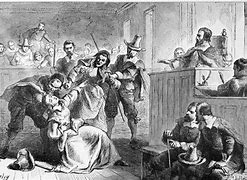
Alternate term used for the inquisitions specifically dealing with rooting out witchcraft that occurred in several cultures spanning many generations; a period of turmoil in which there was Catholic and Protestant conflict. Millions were accused of and an estimated 30,000-300,000 were executed for being witches. Those executed were hung (most common), stoned, drowned, or burned. Few of the victims worshiped Pagan deities; many considered themselves to be good Christians – though some did practice old folk traditions that are common in modern Witchcraft as the term is used today. This period was riddled with prejudice, discrimination, sexism, ignorance, and mass hysteria; it was an attack primarily against women and non-Catholics, not the equivalent of modern Witches.

From Spells8.com

A name given to the days of the Reformation, Inquisition, etc., when Witches were tried and executed by inquisitors, sometimes burned at the stake.

One Way to Make Your Own Besom Using Branches and Sticks

I suggest gathering these under a full or waxing Moon phase as they will hold more helpful energy. Your Besom can also be used to sweep out the negativity in your sacred place and/or wherever you are going to cast a circle. Remember to ask the tree you get your branch and sticks from even if they are laying on the ground no longer attached to the tree. It is always better to take what you need from a tree or shrub off of the ground beneath it rather than cutting pieces off the tree or shrub. Get a branch about 3 to 4 inches little taller then you are. Gather good size bunch of unstift smaller branches, I have found getting the sticks from under a shrub or pine tree make the best sweeping part of the Besom, if possible the size difference in them should be no more the approximately 2 inches in size. After gathering the branch and sticks remember to thank the tree for the parts it has given you and to leave an offering such as some water out of a container you have drank from. You need a ball of natural thin twine or some type of undryed vine. Tie the twine or vine to the branch making sure it is tight and will not slip off (you may want to by an angular cut about 4 to 5 inch up from the bottom of the branch to slip this twine or vine when securing it. (The size you have at the bottom of your Besom made from the twigs is up to you. Usually doing 2 to 4 layers of sticks make a good size Besom. Lay your first stick against the branch pull the twine or vine around the stick as tightly as you can, continue doing this until you have made you first layer of sticks pull the twine or vine in the opposite direction the you have been placing the in a tightly as possible and tie it off but do not cut the twine or vine. For the next layer you will follow the same instruction except lay the sticks in the opposite direction from the first layer. The third layer will go in the same direction as the first layer and the fourth layer goes in the same direction as the second layer. To help ensure you sticks stay secure to the branch at the end of each layer of sticks pour white glue over the sticks and twine or vine and make sure it gets down to the branch. If you want you can even put glue on the branch as you lay each first layer stick. Let each layer of sticks dry for approximately 24 hours before adding the next layer. When you have done the last layer and have used glue to help hold it together let the entire Besom dry a minimum of 72 hours before using it.

Witch hunt

From witchipedia.com

A witch hunt is a scapegoating exercise involving a systematic search for individuals that represent an unpopular, unaccepted or inconvenient social or philosophical position for the purpose of persecuting them. Witch hunts are often carried out by people in power as a means to cement their power by weeding out threats or perceived disloyalty. A defining characteristic of a witch hunt is the use of propaganda to demonize the targeted population. Another is the tendency to declare guilt and rush to judgment with scanty or fabricated evidence, as the punishment takes priority over justice. I.e. Finding someone to punish is more important than finding the guilty party. The crime for which the punishment is deemed necessary may be exaggerated or fabricated and often takes place in secret, thus excusing the lack of evidence. Those lacking power and closer to the targeted population may participate in the witch hunt in the hope of achieving the goodwill of the powerful or simply as a means of self-preservation.

The term witch hunt is now a metaphorical term that derives from the literal witch hunts of the 1400-1700s in Europe and Colonial America; an era known as the burning times among modern Witches. During this period, several incidences occurred involving arrests and executions of sometimes quite large numbers of people for the charge of witchcraft on scant evidence. Most people jailed and executed during this period were certainly not witches and it is difficult to say if any actually were. Court records reveal “spectral” evidence and confessions under torture, leaving most convictions in question. But witches were a popular scapegoat when things went wrong, a belief encouraged by some religious organizations of the time in order to create a perceived enemy of God and the Church to blame “evil” doings on, thus cementing the power of the church and local clergy and anyone who decided to wear the mantle of religion in order to wield power.

Any misfortune could be blamed on a witch and then it was just a matter of deciding who got to be the witch. Some peasants might point out a “witch” in order to turn attention away from their own families in an act of self-preservation, but doing so might also be to their benefit, giving them some power and influence with local magistrates and sometimes even winning them some or all of the “witch’s” property. Thus, anyone who was inconvenient; perhaps not fully self-sufficient, or perhaps someone privy to a dark secret, or perhaps someone who liked to gossip or who was not as friendly or respectful as one would like, or whose dog kept getting into your chickens or who had a nicer bit of land than you presented a convenient target for their neighbors to report to the witch hunter. False accusations were rarely prosecuted.

While literal witch hunts do still take place today, they are generally limited to Africa and the Middle East. This is probably because most people in the West don’t believe in Witchcraft anymore and simply chuckle patronizingly at people who claim to be Witches. Metaphorical witch hunts, however, remain common in the West.

The term witch hunt entered the vernacular in the metaphorical sense in reference to McCarthy’s feverish search for Communist sympathizers and traitors in the US in the 1940s and 50s and Stalin’s feverish search for disloyalty in 1930s and 1940s in Russia.

A Thought for Today

Until we meet again dear sisters, brothers, and honored guests may your life be filled with all things positive!

7500 years old ancient goddess relic discovered in Israel

Cover picture for the article

During an excavation in Eilat, Israel, archaeologists found an extremely ancient idol. It is believed to represent an important Semitic goddess.

In Eilat, situated in the south of Israel, archaeologists have discovered an idol dating back several thousand years. Carved from a tree trunk, this artefact is believed to be an object designed in honour of Asherah, the goddess who was the wife of the creator god Yahweh, as reported by Arkeonews.

Asherah, a symbol of fertility

According to Geo, before turning to monotheism, the Hebrew people were polytheistic, meaning that they worshipped a multitude of gods. In ancient times, they idolised Asherah, a goddess who is said to have been the mother of 70 other divine entities. She was given various names and functions. Asherah is also known as Ashratum or Baalat and is sometimes associated with the supreme god El or Baal. Her name is also mentioned in the Bible. A symbol of fertility, it is represented as a female figure, a tree or a pole. In Eilat, archaeologists have (re)discovered a 30 cm relic carved from a trunk.

An ancient archaeological site

The Red Sea is definitely rich in artefacts. Just after the Blemmyes Tomb found in Egypt, this relic is another great archaeological find. The site where the relic was found has been excavated by scientists since 1978. According to Arkeonewsit contained 11 simple tombs and 20 burial mounds. The site adds that:

The presence of the juniper trunk clearly shows that the site was reserved for the worship of goddesses, and it is probably the oldest Asherah idol found in the region (it has been carbon-dated to 4540 BC).

This article is translated from Gentside FR.

Let’s Have Som e Fun – 10 Winter Crafts for Wiccans

With the cold weather bringing everyone indoors, and the upcoming Yule holiday, making crafts and gifts indoors is a cozy, soul-nourishing activity.

Here’s some ideas for creating with the heart and spirit in mind.

For fall project ideas, check out this article, 11 Fall Projects for the Crafty Witch.

For spring project ideas, take a look at 10 Spring Projects for Wiccans.

1.  Quilting.  We hear an awful lot about “focus” in the context of spell work.  Sewing makes for a powerful way to draw your intentions into sharp concentration.  Try hand sewing a quilted sachet using a steady chant with every stitch to bring the mind into a lovely, trance like state of calm.

2.  Candle making.  Nothing warms the heart and soul like burning fresh, homemade candles.  Pick a purpose.  Then toss in herbs, anchor the wick with a special gemstone, rub it with oil and/or carve whatever you want into them.

3.  Create an incense blend.  Every witch should learn the art of blending herbs into pleasing, aromatic scents.  Winter makes the perfect season for experimenting with dried herbs (preferably from your own fall garden harvest!).  Test your blend by tossing a handful into your burning fireplace to warm and bless the home.

4.  Make your own rune set.  With the natural light in retreat and the long nighttime hours, divination makes for a lovely indoor evening activity.  Make your own rune set—-and be creative!  Carve the runes into polymer clay, wood or paint small stones.  Makes a charming gift for a like-minded friend.

5.  Crock pot something.  A crock pot makes a perfect cauldron in the winter months.  Stew something kitchen-witch style or …

Click here to read the rest of this article

Greek Temples of Sicily

There are at least a thousand reasons to visit Sicily, the great island – indeed the largest in the Mediterranean – that forms the triangular football to the boot that is the Italian peninsula. They are all very good reasons, including amazing landscapes, a uniquely complex and delicious cuisine, a history that is diverse and multifaceted beyond belief, excellent wines, a vast array of archaeological sites, an even vaster one of historical towns and villages. But one key reason to visit the island is missing from the list above: Greek temples!

Greek temples are one of the earliest well-defined expressions of what we now recognise as the Western tradition in architecture, and one of the most influential ones by a vast margin to this day. They go back to the 8th or 7th centuries BCE, and, as the name entails, they are indeed a key achievement of the Archaic Greeks. They originated in what is the south of modern Greece, namely the Peloponnese and Central Greece, where Greek temple architecture appears to have its main roots, probably derived from local wooden predecessors.

The Greek mainland’s architectural style is the Doric one, considered to be the most austere and ‘male’ in character. The eastern Aegean and Asia Minor were famous for their own development, the more elegant and ‘female’ Ionic style, conceived about a century after the Doric one. Its most prominent examples at SamosEphesus, and Didyma (much better preserved than the other two) are also marked by their …


Click here to read the rest of this article

Some of the Witchcraft/Magickal Correspondence Digest for Friday


From GypsyWolf.weebly.com

Friday is the sixth day of the week, but used to be the seventh, the Sabbath of the Jewish lunar calendar.   The name, Friday,  is derived from the Nordic goddess, Frigg, Frigga, Freyja, Freya, or Frija (Germanic), considered to be the mother of all.  She is the Goddess of love and war, fertility and death.   She is the leader of the Valkyries and the Disir (Divine Grandmothers), and creator of Seidr magic.  Her symbols are the cat and the Brisingamen, which is the magic necklace of the rainbow bridge.  Freya’s Roman and Greek counterparts are Venus and Aphrodite, goddesses of love and beauty.
Latin: Dies Veneris, dedicated to Venus, the Roman Goddess of love
French: vendredi
Italian: venerdi
Spanish: viernes
Old High German: frigedag
German: Freitag
Dutch: vrijdag
Rules: Love, fidelity, reconciliation, interchanges, beauty, youth, joy, happiness, pleasure, luck, friendship, compassion, music, the arts.
Colors: Light Blue, Green, Pink, Copper Hues
Planet: Venus
Metal: Copper
Stones: Azurite, Calcite (blue, green & pink), Cat’s Eye, Chrysocolla, Chrysoprase, Coral, Emerald, Jade, Jasper (green), Kunzite, Lapis Lazuli, Malachite, Olivine, Peridot, Sodalite, Tourmaline (blue, green, pink & watermelon), Turquoise Malachite
Herbs: Apple Blossom, Cardamom, Crocus, Daisy, Geranium (rose), Heather, Hyacinth, Iris, Licorice, Lilac, Magnolia, Myrtle, Orchid, Orris, Plumeria, Rose, Spearmint, Stephanosis, Sweet Pea, Tansy, Thyme, Tonka, Tuberose, Vanilla, Violet, Willow, Ylang Ylang
Zodiac: Libra & Taurus

How to Incorporate Wicca into Everyday Life

A Daily Wiccan routine doesn’t have to be much different from that of anyone else. Magic is simply working with the energies for channeling an intention, and the fact is that we can all practice Magic, and in fact we do it without realizing it. For example, while health experts agree that we shouldn’t take a shower every day¹ , many of us still do it as a ritual act of self-love. By setting a few minutes to consciously take care of our body, we let the water wash away any physical or emotional damage from the day, re-energizing our heart and soul 🛀

If you have ever been surprised by your own thoughts and realizations under a warm shower, then you have already experimented a ritual of Magic. Incorporating Magic into our daily lives feels just the same: A cleansing exercise for the spirit.

Daily Wiccan Practices

You probably already have some daily rituals or personal superstitions, so try combining these ideas with your usual routine in different ways until you find your preferred way to be a Wiccan:

  • When you wake up, greet the day by …

CLick here ans scroll down to read the rest of this article from Spells8.com

Witchcraft/Magickal Correspondence Digest for Monday

From Ancient Pathway

Monday
Magickal Intentions:
Psychic Sensitivity, Women’s Mysteries, Tides, Waters, Emotional Issues, Agriculture, Animals, Female Fertility, Messages, Theft, Reconcilliations, Voyages, Dreams and Merchandise
Incense:
African Violet
Honeysuckle
Myrtle
Willow
Wormwood
Planet:
Moon
Sign:
Cancer
Angel:
Gabriel
Colors:
Silver
White
Gray
Herbs/Plants:
Night Flowers
Willow Root
Orris Root
Birch
Motherwort
Vervain
White Rose
White Iris
Stones:
Carnelian
Moonstone
Aquamarine
Pearl
Quartz Crystal
Flourite
Geodes

Some Witchcraft/Magickal Correspondence Digest for Saturday

From Learning Religions

Named for the god Saturn—is a good time to wrap things up.

Colors: black and dark purple,

Metal: lead

This day is connected to: goddess Hecate.

Gemstones: Apache tear, obsidian, and hematite

Plants: such as thyme, mullein, and the cypress tree.

Magical workings: focus on agriculture and creativity, fortune and hope, protection and banishment of negativity. Put up a barrier to keep the unwelcome out, eliminate the things that make you miserable, and wash your hands of anything other than your hopes, dreams, and goals.

A to Z – A Wiccan Glossary (Flashback from Lady Abyss)

A to Z – A Wiccan Glossary

AKASHA: the spiritual ether (or Aether); the omnipresent fifth occult element which embraces the other four-earth, air, fire, and water; and from which they stem. This is the realm of “pattern” or causality, from which the realm the normally thought of “five senses manifests. Some define it is the “other” of the “two worlds” that the witch or magician walks between.


ARADIA: Daughter of the Goddess Diana, and a name for the Goddess used by Italian Witches or Strega, commonly used in many Wiccan traditions today.

ASPECTING: Any advanced magickal activity in which a practitioner manifests a particular aspect of the Goddess or God, in thought, feelings, behavior, appearance, etc.; Often as a direct result of a “Drawing Down”. Often a minor variation of this phenomena occurs with the selection of a “Magical Name”, of Craft Name.

ASPECTS: Forms, facets, or personas of Deity: for example, Brighid, Iseult,Eos, and Kore are all aspects of the Maiden, and the Maiden is an aspect of the Goddess


ATHAME: black handled, double edged dagger. Principally used to cast and dissolve the circle, for which purposes it is interchangeable with the magic sword. A tool of the “Element” of Fire in the Georgian Tradition and some others.


BELTANE: May Eve festival. One of the Ancient Celtic “Fire Festivals.” on this night, the cattle were driven between two bonfires to protect them from disease. Couples wishing for fertility would ” jump the fires” on Beltane night. Also the traditional Sabbath where the rule of the “Wheel of the Year” is returned to the Goddess. This Festival also marks the transition point of the threefold Goddess energies from those of Maiden to Mother.


BOOK OF SHADOWS: Traditionally hand copied book of rituals, recipes, training techniques, guidelines, and other materials deemed important to a Witch or a coven. Each tradition has it’s own standard version of the Book and each Witch’s book will be different as he or she adds to it with time from many different sources. Only another Witch can see your book of shadows. Also, traditionally, it may never leave your hands or possession until death, when it should be destroyed, or (in some traditions) returned to the coven to be disposed of.


BURNING TIMES: a term used by some Witches for the period of persecution in the Middle Ages and later. It is in fact a misnomer in some places, as Witches were only burned in Scotland, and on the continent of Europe. In England and the U.S., they were hanged.


CANDLEMAS: Festival held on Feb. 1. One of the 4 Celtic “Fire Festivals. Commemorates the changing of the Goddess from the Crone to the Maiden. Celebrates the first signs of Spring. Also called “Imbolc” (the old Celtic name). This is the seasonal change where the first signs of spring and the return of the sun are noted, i.e. the first sprouting of leaves, the sprouting of the Crocus flowers etc. In other words, it is the festival commemorating the successful passing of winter and the beginning of the agricultural year.This Festival also marks the transition point of the threefold Goddess energies from those of Crone to Maiden.


CARDINAL POINTS: North, South, East, and West, marked in the Georgian Tradition by candles of green, red, yellow, and blue, respectively. The Circle is drawn to connect these four points.

CHALICE: one of the tools of the Witch. Placed on the altar to represent the element of Water.


CHARGE OF THE GODDESS: The Traditional words of the Goddess to her followers, or “hidden children”. Normally declaimed by the HPS at every coven Circle.


CIRCLE: the area in which the magickal worship and spells takes place. Can also be used to designate a particular group of Witches or Pagans such as “Silver Acorn Circle”.


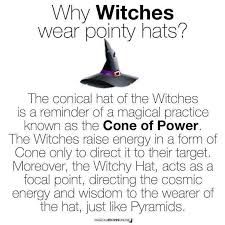
CONE OF POWER: power raised in the circle by the Witches assembled, and sent out into the world to work magick, is usually visualized as being retained and built in the form of a “cone” prior to release.


COVEN: an organized group of Witches, led by a High priestess and/or a High Priest who meet regularly for worship and fellowship. The traditional membership is 13, but in fact most covens number considerably less. 3 is the minimum in the Georgian Tradition. In Middle English, “Covin” a group of confederates; In Old French “Covine” a band or group with a single purpose; Latin “Com”-together, “Venire”-to come or move.


COVENSTEAD: regular meeting place for a coven. Usually the home of the High Priestess or High Priest.


COWAN: a non-Witch. Formerly used in a very derogatory manner. Still used in Masonic Ritual to indicate the non initiate and/or pretender to “real craft”. Not often used today among most Witches.


COYOTE ENERGY: trickster energies. Named for the American Indian Trickster, Coyote, who tricks man into learning what he needs to learn. Applies to one who constantly jokes and clowns. Also applies to the concept of “Holy Fool” in many traditions.


CROSS QUARTER DAYS: The modern name for the Celtic Fire Festivals of Samhain, Imbolc, Beltane, and Lammas.

———————————————————————————————————————————————————–


Abracadabra- A word from the Jewish mystical tradition of Qabala. Its root is the name of the Gnostic deity Abraxas, meaning “hurt me not”. It is said to possess magickal powers, especially of protection from illness.


Adept- An individual who through serious study and accomplishments is highly prficient in a praticluar magickal way.


Aeromancy- Divination by the stars.


Aisling– Ireland: Dream or Vision. In the many Irish tales having this title, the person who dreams sees a speir-bhean or vision-woman from the Otherworlds, pronounced “ash-leen”.


Aka- The cord between the astral body and the physical body, most likely this concept is derived from the biblical reference to a “silver cord” connected the body and the soul

Akashic Records- Edward Cayce’s concept which states that somewhere there is a universal hall of data about past lives, magic, healing, and spirituality. It does not exist on the physical plane but rather on a more psychic level. Some believe it can be accessed on the astral plane, others feel it can only be accessed through a visualization journey in the mind.


Alba– The Isle of Skye; Scotland


Alchemist- One who practices alchemy.

Alchemy- A form of high magick which stems from the middle ages noted by the attempts of alchemists to make lead turn into gold.


Alexandrian Tradition– A form of Garderian Wiccan practice developed by Alex and Maxine Sanders in Britain in the 1960s.


Alignment- Synchronization of mental and spiritual vibrations with a god, goddess, or astronomical body. Often the complete balance and centering of the chakras is called an alignment.


Altar- A small working area and shrine many pagans maintain, where they perform most of their ritual and spell work.

Amulet- An object charged with personal energies through ritual or meditation often used to ward off a certain force or person.

Aradia-
The Italian goddess Diana’s daughter, said to be the origin of all witches. The book “Aradia, Gospel of the Witches” was written by Leland about Aradia and the practice of witchcraft

Arcana
– The two halves of the tarot deck.The major arcana consists of 22 cards showing dominant occurrences in our lives.The minor arcana consists of 56 suit cards (commonly called the lesser arcana) that assists the major arcana cards,or shows smaller influences in our lives.

Archetype- Symbolic imagery seen in visions, dreams, meditation, and mind quests. Used to interpret the meaning of the vision thereby betting understanding and communicating with the subconscious.

Arthurian Tradition- A Welsh tradition of paganism based on the lore of King Arthur (the “Once and Future King”), Merlin the Magician, and Guinevere.

Asatru- Modern worship of the old Norse gods.

Aspecting- An advanced magical practice which is seen most commonly in a coven as opposed to solitary. The practitioner attempts to manifest an aspect of the Goddess or the God. This is seen in the pagan ritual of Drawing Down the Moon as well as in other pagan religions such as Vodou, where the priest often allows the deity to speak through his or her body.

Asperger- A bundle of fresh herbs either carrying dew or dowsed with spring water, used to sprinkle the water during ritual purification.

Astral– Another dimension of reality.


Astral Plane- A plane parallel to the physical world, traveled through by the astral body during projection.

Astral Projection/Travel
– The proccess of separating your astral body from your physical body to accomplish travel in the astral. 

Astrology- The practice of revealing the future by interpreting the arrangement of stars and planets in relation to astrological theory and the zodiac.


Athame– A Wiccan ritual knife. Generally double edged with a black handle, but not always. This knife is seldom used for physical cutting, if at all, and need not be sharp. It is *never* used to draw blood and Wicca do not draw blood or use blood in ritual. Its primary use is as an energy directing device, much like the wand, though with different common uses. compare: Boline, Wand

Attune- To bring different psyches into harmony.


Augury- Divination based on “signs” or omens.
Aura- An energy field which surrounds living beings. An aura is most often visible only to those born with the skill to see it, or those who developed this ability. A visible aura contains various colors and tells about the spiritual and emotional persona of the plant, human, or creature surrounded by it. However, an aura can also be felt, heard, or sensed through other means.

DEOSIL: clockwise, or sunwise. Traditional direction for working “building” magick.

DRAWING DOWN THE MOON: Ritual invocation of the spirit of the Goddess into the body of the High Priestess by the High Priest.

DIVINATION: magical method of exploration or inquiry into a situation via such methods as Tarot cards, runestones, I-Ching, etc.

ELEMENTS: Earth, air, fire, and water, plus spirit, which includes them all. These are regarded as realms or categories of nature (both material and non-material) and are not to be confused with the physicists table of elements, which the modern witch, of course, accepts.

ESBAT: weekly or biweekly meeting of a coven. Traditionally held either on the full moon or the new moon.

FAMILIARS: Either a Witch’s pet animal which has been trained to be a magickal helper, or an artificially created “elemental” which performs the same functions as the animal friend.

FIVEFOLD KISS, FIVEFOLD SALUTE: The Witches’ ritual salute, with kisses; (1) on each foot, (2) on each knee, (3) above the pubic hair, (4) on each breast, and (5) on the lips-really 8 kisses in all. It is only used within the Circle, but the words that go with it are the origin of “Blessed Be.”

GARDNERIANS: Tradition of Witchcraft descended from the teachings of Gerald Gardner

GNOMES: an “entity” or “elemental” that dwells in the plane of Earth or is associated with the EARTH Element.

GREAT RITE: The rite which is the main feature of the third degree initiation, and which is also laid down for certain festivals. It is sexual in nature, but may be `actual’ (and private to the couples concerned) or symbolic, as the participants wish.

HALLOWS: name used by some traditions for Samhain, or Halloween

HANDFASTING: Wiccan equivalent of a wedding. It can be made legal if the Priestess and/or Priest are registered as clergy with the local authorities, or it may only be considered binding within the coven.

HIGH PRIEST/ESS: Technically speaking, a Witch who has received the 3rd. degree initiation. More usually, the male and female leaders of a coven.
IMBOLC: Celtic name for Candlemas.
INVOCATION: The ritual “calling-in” of an entity (or energies) higher than human, either for communication with the caller through a medium or by visible manifestation or else to enter into a human body as in the Drawing Down the Moon. In some traditions, a Prayer

LAMMAS: August 1st. Witch Festival. The Old Celtic name for this festival is Lughnassadh. It is the Festival of the First Fruits, and is the first of the 3 harvests. This festival also marks the change of the Threefold Goddess energies from that of Mother to Crone.

PENTACLE: a disc shaped talisman; in particular, the metal disc which represents the earth element among the witch’s working tools.

PENTAGRAM: The five-pointed star. With a single point uppermost, it represents the human being. Inverted, with two points uppermost, it can have Satanist associations; but not necessarily. Some traditions of Wicca use the inverted pentagram to signify an initiate of the second degree.

QUARTERS: The North, East, South, and West parts of a magickal circle or other ritual area. (See also “Watchtowers”)

REDE: rule or law

SABBAT: one of the Eight festivals or high holy days of Wicca.

SALAMANDER: an entity that dwells in the realm of Fire.

SAMHAIN: The festival of remembrance for the dead, held on the eve of Nov. 1st. It is the last of the three harvests. This festival also marks the transition of rulership of the “Wheel of the Year from that of the Goddess to that of the God.

SCRYING: divination, usually using such methods as crystal gazing, or divination via incense smoke, or water as opposed to tarot or other manipulative means.

SPELL: a prayer, or verbal direction of magickal energies toward the accomplishment of some goal.
SUMMONER: The male officer of the coven who corresponds to the Maiden. He is the assistant High Priest

SYLPH: an “entity” or “elemental” that dwells in the plane of Air or is associated with the AIR Element.

TRADITIONS: any of the various “sects” of Wicca such as Gardnerian, Alexandrian, Georgian, Seax, etc.

UNDINE: an “entity” or “elemental” that dwells in the plane of Water or is associated with the WATER Element.


WAND: A rod or staff that is prepared so that it may be used for magickal or psychic purposes, usually to project some form of power

WARLOCK: a term coined in the Burning Times . It was used to denote a traitor to the Craft, or one who had betrayed the followers of the Old Religion. It’s origin is Scottish. Because of the negative connotations, it is not used by most Wiccans today.

WATCH TOWERS: Originally from the Enochian branch of Ceremonial Magick, now incorporated into many “Traditions” of Wicca, these are the four elemental “directions” or “quarters” (corresponding to the appropriate points on the compass) called to protect the Circle during its establishment. Each of them have a correspondence between the compass point, an element, and (varying amongst different traditions) color associated with them.

WICCA: the name most modern day Witches use for the Craft. It comes from the Anglo-Saxon word Wicce, meaning to bend or to shape. This is the root word from which we get wicker.

WIDDERSHINS: counter clock wise. Used for “tearing down” OR BANISHING magick.

WHITE HANDLED KNIFE: the working knife of a Witch. It is used to carve candles, and for fashioning the other tools. Traditionally, it can only be used in a circle.

Deosil and Withershins

When casting, dancing or chanting in a circle for ritual purposes. Wiccans refer to the direction described as either “deosil” or “Withershins.”  When “deosil” (comes from the Irish Gaelic meaning, “turn to the right) is specified, this means clockwise, the direction in which the Sun apparently moves in the Northern Hemisphere, and in which circles are usually cast for positive magick. “Withershins” (or widdershins”) whose roots are embedded in the German words wider (“against”) and Sinn (‘sense’), means counterclockwise, and this is the banishing direction used for negative magick.

Sunny Days

Maximize the power of a spell cast during Leo’s reign by practicing it on a Sunday, the weekday whose dedication to the Lion’s planetary ruler remains enshrined in many modern European languages, including English.

Some Witchcraft/Magickal Correspondence Digest for Saturday

Planet: Saturn
Element: Earth
Colors: Black, Purple
Keywords: Banishing, Protection, Control, Order, Boundaries, Self Discipline, Cleansing

Saturn brings a powerful, somewhat intimidating power to Saturdays. This is another great day for banishing and protection magic, as well as for setting strong boundaries. The energy of Saturn is very orderly and is great when structure is needed.

Hopefully this gave you an idea of how you can time spells with the days of the week to give them a boost! As always, do what works for you rand what you’re drawn to. If you feel like you need to do a love spell on a Wednesday instead of a Friday, do it! Find what you best connect with and always follow your gut.

From APaganMess.com

Projects to Celebrate Samhain, the Witches’ New Year

As Samhain approaches, you can decorate your home with a number of easy craft projects. Start celebrating a bit early with these fun and simple ideas that honor the final harvest, and the cycle of life and death

01
of 10

Pagan Treat Bags for Samhain

Do you have Pagan kids coming over for a Samhain event? You can have a kid-friendly celebration by putting together a goodie bag that’s representative of your Pagan spirituality. The key here is to do some creative, outside the box thinking. Sure, there are a ton of Halloween decorations in the store at this time of year, but not all of those are really connected with Pagan religious belief systems. They’re really more about the secular celebration of Halloween, which is fine, unless you’re looking for kid-friendly stuff that honors Pagan spirituality.

Here are a few things to try:

  • Decorate the bags themselves with symbols that are meaningful to you – depending on the pantheon your group honors, you might include designs that are associated with Greek, Roman, Celtic, or Norse mythology.
  • Small herbal sachets: sew herbs into a fabric pouch. Use lavender to help with dreams, or other appropriate plants.
  • Crystals and gemstones: As long as the kids attending your event are beyond the put-everything-in-your-mouth stage, you could include rose quartz for love, hematite for protection, and more.
  • A Portable Altar Kit: Depending on how old the kids are, think about making an altar box that fits in a backpack or pocket. This might not be useful or safe for really young children, but older tweens and teens could use it responsibly.
  • Divination tools: make a simple pendulum with a stone wrapped in wire and attached to the end of a chain. Add a simple divination set by painting symbols on stones or wooden discs.
  • Wands: Make a simple wand with a stick and a crystal wrapped in wire.
  • Deity symbols: Does your tradition honor a particular god or goddess? Consider adding representative symbols – owls for Athenacats for Bastet, or an antler for Cernunnos. Try printing out a wallet-size image of the deity on heavy cardstock, add a prayer to your god/dess on the reverse side, and laminate it.

Finally, remember, Samhain is the same day as Halloween, so never underestimate the power of a few strategically placed pieces of delicious candy!

Click here for more craft ideas for Samhain from learnreligions.com