A Thought for Today


Predicting by using tealeaves was in the 19th century in Europe quite popular, but nowadays it is hardly practiced. Not, because the techniques were that extremely difficult, but much more because almost everyone uses teabags in stead of just unpacked tealeaves. That causes, that no leaves are left in the cup after drinking.
So if you feel invited to this prediction method, the first thing to do is drinking tea at that ‘old-fashioned’ way. You need for each cup one teaspoon with tea and one extra for the teapot. You’ll notice it tastes nice, but if you plan to use it too for prediction, I suggest the use of white cups, because it gives a better background for the dark leaves. Each person in your ‘tea session’ who wants to hear something about their personal future, should leave a little liquid behind in their cup. This is stirred to let the leaves floating in stead lying quiet on the bottom of the cup. Immediately after that is done, the liquid part is carefully poured out. By doing this, the tealeaves stick behind on the inside and the bottom of the cup.
Than comes the moment for you to fix a strong and deep concentration on those tealeaves. Close your eyes halfway and give your powers of imagination ‘free way’. Try to discover in these tealeaves a known picture, i.e. a book, an axe, trees, a hat, etc…etc… The following step is the interpretation of that discovered picture. You can use for that the next explanations:
Anchor:
A journey, at the end of that trip happiness.
Arrow:
Luck in love affair(s).
Axe:
(A pickax or a saw is also possible)
Be warned to deal carefully with your money and your emotions.
Balloon:
(Also a non-army airplane):
An unexpected promotion, going for the better or inheritance.
Bird:
See: flag.
Book:
Ask advice before going further going on in things your are (or are going to be) involved.
Bottle:
Your social activities will increase.
Bow:
There will come a meeting or a date that is important for your further life.
Butterfly:
Your partner/spouse/life mate takes your affair not as serious as is essential/ necessary in your view.
Chain:
In a certain activities in your professions you should give more and better efforts.
Clock or watch:
An important meeting will happen.
Crown:
Promotion.
Cross:
Big tough luck. If you can see a second picture in the leaves, than that can give more details on the area that is involved.
Dice:
Avoid risks.
Doorbell:
You may expect good news.
Envelope:
Good news is coming.
Fish:
You will get unbelievable news from far away.
Flag:
Your level of prosperity will increase.
Foot:
Expected good news will not come.
Gate or door:
An unexpected change in your personal circumstances.
Hammer:
You should make more efforts to give your best.
Harp or harpsichord:
Prosperity and luck will become yours.
Hat:
You have to go through some touch luck.
Heart:
You will get emotional excitement.
Key:
You will get a better understanding about certain things that are unclear to you now.
Knife:
You’ll get a quarrel or even a row.
Ladder (Household):
Improvement.
Moon (Waxing):
A little profit will become yours.
Ring:
A lot of non-material luck/happiness.
Rocks:
In short time you will get some problems. (Not very big).
Roof:
At home with you something will change.
Scales:
You should improve your dealing with weighting advantages and disadvantages. Things have more than one side.
Ship:
A journey will bring luck and happiness.
Street:
(Two tealeaves straight between each other):
Business in which you are involved will go well.
(Two tealeaves not straight between each other):
Business in which you are involved will not turn out well.
Trees:
Everything will bloom.
Such a picture that is close to the edge of the teacup points to a time period from three till six weeks on the things that are predicted. If the picture is on the bottom it means a time period of at least two years before that prediction will happen. In the middle of the inside means about a year.
By training and experience you will become able to interpret more pictures as are described here.
Don’t forget: as with every prediction method, it will only work as it’s fully implemented in yourself. The fewest doubt will make that your efforts to predict will fail. (The ‘client’ need not believe that).

Those ambitious, successful spells and charms will be heightened by working on the day of the week that has the planetary influence of the sun. So light those sunny candles, wear some luminous colors, and break out the gold jewelry! Bake up some cinnamon rolls or low-fat cinnamon muffins for an enchanting family breakfast. Take an orange with you to eat at lunch today. Try using a little magickal aromatherapy and burn some cinnamon-scented incense to encourage success and wealth today. Make the talisman to keep your solar magick with you. Sprinkle some dried marigold petals around your house-or across the threshold-to pull triumph and protection toward you and your family.
Get outside and tip up your face to the sun. Take a walk outside, and soak up some sunshine! Acknowledge the power of Sunna or Helios as they blaze across the sky and bring courage and motivation into your life. Sit outside at sunrise on a Sunday morning and bask in its warm, rosy-golden glow Acknowledge Brigid as the inner, creative spark of imagination and inspiration. She can help these gifts burn brightly within your own soul. Use your imagination and create your own brand of witchery and magick. Here comes the sun, and it’s your turn to shine!
—–Book of Witchery: Spells, Charms & Correspondences for Every Day of the Week
Ellen Dugan


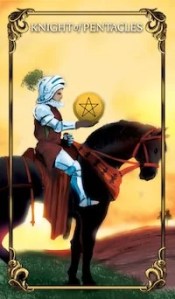
This suit, most often called “Wands” and sometimes called “Rods” or “Staves,” represents initiative, ambition, drive and desire. This is the suit of enterprise and risk-taking.
An Ace of this suit in this position symbolizes a pivotal act, or fateful step, that will set loose a chain of events leading toward your desired goal. It refers to a birth or new beginning, the inauguration of an endeavor, and the building of the necessary commitment to see a project or plan through. It personifies an aroused Will that is totally focused, aiming at the bulls-eye.
Tarot.com is Part of the Daily Insight Group © 2018


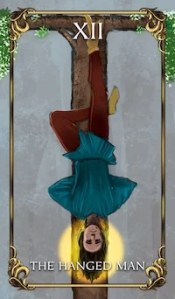
The Hanged Man asks, “What do you see from a new perspective?” If you look, you catch sight of the truer nature of a union. You feel yourself relax. You live in the future now, and not in the past. You learn not to get excited over every little upturn and downturn. This is the message of the card today: focus your eyes on the moment and nothing slips beyond the radar of awareness.


You can take the Magician card quite literally today as it’s telling you that your love life needs a bit of sexual magic. The Magician card encourages you to use the intuitive power you have that allows you to approach potentially (or explicitly) passionate situations with erotic determination. Who do you want under your spell this time, and what sensual tricks do you have up your sleeve to seduce him or her? This card is an indication that it would be a shame to let your passionate talents go to waste.

11.7.18
This is a day to dream big and seize the moment. Love is headed your way if you move in with a plan for seduction. Are you ready to leap?
Tarot.com is Part of the Daily Insight Group © 2018


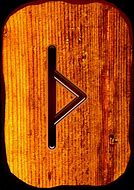
“Iss-ah” – Literally: “Ice” – Esoteric: Stasis, Stillness
Rune of concentration of things in a static or frozen state. Rune of stillness and the Ego-Self.
Psi: mental faculties, focus, ego, self-image/self-identity
Energy: stillness, contraction, stasis
Mundane: cold, self-preservation, harsh reality
Divinations: Concentrated self, ego-consciousness, self-control, unity of being; or egomania, dullness, blindness, dissipation, immobility, self-centeredness, lack of change, psychopathy.
Governs:
Development of concentration, will and focus
Halting of unwanted dynamic forces as an act of self-defense (ard against demonic influences)
Basic ego integration within a balanced multiversal system
Power of control and constraint over other wights (entities), emotional outbursts
Focus of the will into single-minded action

Tarot Influence
The Sun Reversed
The outcome of future plans is nebulous. Trouble with relationships and work is very possible.
Astrological Influence
Aquarius Reversed
This card signifies the closing of both heart and mind, which leads to stagnation.
Element Influence
Water Reversed
Water reversed denotes secrets to which you are not privy. Approach all ventures with caution.


![]()
Anubis is the Greek name of a god associated with mummification and the afterlife in ancient Egyptian religion, usually depicted as a canine or a man with a canine head. Archeologists have identified Anubis’s sacred animal as an Egyptian canid, the African golden wolf.
Like many ancient Egyptian deities, Anubis assumed different roles in various contexts. Depicted as a protector of graves as early as the First Dynasty (c. 3100 – c. 2890 BC), Anubis was also an embalmer. By the Middle Kingdom (c. 2055 – 1650 BC) he was replaced by Osiris in his role as lord of the underworld. One of his prominent roles was as a god who ushered souls into the afterlife. He attended the weighing scale during the “Weighing of the Heart,” in which it was determined whether a soul would be allowed to enter the realm of the dead. Despite being one of the most ancient and “one of the most frequently depicted and mentioned gods” in the Egyptian pantheon, Anubis played almost no role in Egyptian myths.
Anubis was depicted in black, a color that symbolized both rebirth and the discoloration of the corpse after embalming. Anubis is associated with Wepwawet (also called Upuaut), another Egyptian god portrayed with a dog’s head or in canine form, but with grey or white fur. Historians assume that the two figures were eventually combined. Anubis’ female counterpart is Anput. His daughter is the serpent goddess Kebechet.
“Anubis” is a Greek rendering of this god’s Egyptian name. In the Old Kingdom (c. 2686 BC – c. 2181 BC), the standard way of writing his name in hieroglyphs was composed of the sound signs jnpw followed by a jackal over a ḥtp sign:
|
|
A new form with the “jackal” on a tall stand appeared in the late Old Kingdom and became common thereafter:
|
|
Anubis’ name jnpw was possibly pronounced [a.ˈna.pʰa], based on Coptic Anoup and the Akkadian transcription 𒀀𒈾𒉺<a-na-pa> in the name <ri-a-na-pa> “Reanapa” that appears in Amarna letter EA 315. However, this transcription may also be interpreted as rˁ-nfr, a name similar to that of Prince Ranefer of the Fourth Dynasty.
In Egypt’s Early Dynastic period (c. 3100 – c. 2686 BC), Anubis was portrayed in full animal form, with a “jackal” head and body. A “jackal” god, probably Anubis, is depicted in stone inscriptions from the reigns of Hor-Aha, Djer, and other pharaohs of the First Dynasty. Since Predynastic Egypt, when the dead were buried in shallow graves, “jackals” had been strongly associated with cemeteries because they were scavengers which uncovered human bodies and ate their flesh. In the spirit of “fighting like with like,” a “jackal” was chosen to protect the dead, because “a common problem (and cause of concern) must have been the digging up of bodies, shortly after burial, by jackals and other wild dogs which lived on the margins of the cultivation.”
The oldest known textual mention of Anubis is in the Pyramid Texts of the Old Kingdom (c. 2686 – c. 2181 BC), where he is associated with the burial of the pharaoh.
In the Old Kingdom, Anubis was the most important god of the dead. He was replaced in that role by Osiris during the Middle Kingdom(2000–1700 BC). In the Roman era, which started in 30 BC, tomb paintings depict him holding the hand of deceased persons to guide them to Osiris.
The parentage of Anubis varied between myths, times and sources. In early mythology, he was portrayed as a son of Ra. In the Coffin Texts, which were written in the First Intermediate Period (c. 2181–2055 BC), Anubis is the son of either the cow goddess Hesat or the cat-headed Bastet. Another tradition depicted him as the son of Ra and Nephthys. The Greek Plutarch (c. 40–120 AD) stated that Anubis was the illegitimate son of Nephthys and Osiris, but that he was adopted by Osiris’s wife Isis:
For when Isis found out that Osiris loved her sister and had relations with her in mistaking her sister for herself, and when she saw a proof of it in the form of a garland of clover that he had left to Nephthys – she was looking for a baby, because Nephthys abandoned it at once after it had been born for fear of Seth; and when Isis found the baby helped by the dogs which with great difficulties lead her there, she raised him and he became her guard and ally by the name of Anubis.
George Hart sees this story as an “attempt to incorporate the independent deity Anubis into the Osirian pantheon.” An Egyptian papyrus from the Roman period (30–380 AD) simply called Anubis the “son of Isis.”
In the Ptolemaic period (350–30 BC), when Egypt became a Hellenistic kingdom ruled by Greek pharaohs, Anubis was merged with the Greek god Hermes, becoming Hermanubis. The two gods were considered similar because they both guided souls to the afterlife. The center of this cult was in uten-ha/Sa-ka/ Cynopolis, a place whose Greek name means “city of dogs.” In Book XI of The Golden Ass by Apuleius, there is evidence that the worship of this god was continued in Rome through at least the 2nd century. Indeed, Hermanubis also appears in the alchemical and hermetical literature of the Middle Ages and the Renaissance.
Although the Greeks and Romans typically scorned Egypt’s animal-headed gods as bizarre and primitive (Anubis was mockingly called “Barker” by the Greeks), Anubis was sometimes associated with Sirius in the heavens and Cerberus and Hades in the underworld. In his dialogues, Plato often has Socrates utter oaths “by the dog” (kai me ton kuna), “by the dog of Egypt”, and “by the dog, the god of the Egyptians”, both for emphasis and to appeal to Anubis as an arbiter of truth in the underworld.
In contrast to real wolves, Anubis was a protector of graves and cemeteries. Several epithets attached to his name in Egyptian texts and inscriptions referred to that role. Khenty-imentiu, which means “foremost of the westerners” and later became the name of a different wolf god, alluded to his protecting function because the dead were usually buried on the west bank of the Nile. He took other names in connection with his funerary role, such as tpy-ḏw.f “He who is upon his mountain” (i.e. keeping guard over tombs from above) and nb-t3-ḏsr “Lord of the sacred land”, which designates him as a god of the desert necropolis.
The Jumilhac papyrus recounts another tale where Anubis protected the body of Osiris from Set. Set attempted to attack the body of Osiris by transforming himself into a leopard. Anubis stopped and subdued Set, however, and he branded Set’s skin with a hot iron rod. Anubis then flayed Set and wore his skin as a warning against evil-doers who would desecrate the tombs of the dead. Priests who attended to the dead wore leopard skin in order to commemorate Anubis’ victory over Set. The legend of Anubis branding the hide of Set in leopard form was used to explain how the leopard got its spots.
Most ancient tombs had prayers to Anubis carved on them.
As jmy-wt “He who is in the place of embalming”, Anubis was associated with mummification. He was also called ḫnty zḥ-nṯr “He who presides over the god’s booth”, in which “booth” could refer either to the place where embalming was carried out or the pharaoh’s burial chamber.
In the Osiris myth, Anubis helped Isis to embalm Osiris. Indeed, when the Osiris myth emerged, it was said that after Osiris had been killed by Set, Osiris’s organs were given to Anubis as a gift. With this connection, Anubis became the patron god of embalmers; during the rites of mummification, illustrations from the Book of the Dead often show a wolf-mask-wearing priest supporting the upright mummy.
By the late pharaonic era (664–332 BC), Anubis was often depicted as guiding individuals across the threshold from the world of the living to the afterlife. Though a similar role was sometimes performed by the cow-headed Hathor, Anubis was more commonly chosen to fulfill that function. Greek writers from the Roman period of Egyptian history designated that role as that of “psychopomp”, a Greek term meaning “guide of souls” that they used to refer to their own god Hermes, who also played that role in Greek religion. Funerary art from that period represents Anubis guiding either men or women dressed in Greek clothes into the presence of Osiris, who by then had long replaced Anubis as ruler of the underworld.
One of the roles of Anubis was as the “Guardian of the Scales.” The critical scene depicting the weighing of the heart, in the Book of the Dead, shows Anubis performing a measurement that determined whether the person was worthy of entering the realm of the dead (the underworld, known as Duat). By weighing the heart of a deceased person against Ma’at (or “truth”), who was often represented as an ostrich feather, Anubis dictated the fate of souls. Souls heavier than a feather would be devoured by Ammit, and souls lighter than a feather would ascend to a heavenly existence.
Source
These are the Astronomy Picture of the Day for the proceeding week starting on the past Monday through this Sunday. Just click on the hyperlink next to the date for the pictures you want to see.
2023 April 09: The Egg Nebula in Polarized Light
2023 April 08: M100: A Grand Design Spiral Galaxy
2023 April 07: Rigel Wide
2023 April 06: Terran 1 Burns Methalox
2023 April 05: Rubin’s Galaxy
2023 April 04: Olympus Mons: Largest Volcano in the Solar System
2023 April 03: The Galactic Center Radio Arc

Archangel Gabriel is a powerful and loving messenger of Divine love, wisdom, and guidance. Gabriel is the Archangel of communication, new beginnings, and strength.
When you connect with Gabriel, they can assist you in learning to tune into and receive direct messages of Divine love for yourself, and in the opening to allow Divine strength, wisdom and blessings to flow throughout your life.
Archangel Gabriel is one of the most well known and popular archangels today, largely due to being mentioned in the Bible in both the New and Old Testament. The most common Bible story featuring Gabriel is the Christmas story!
Gabriel is the angel who guides the three wise men to the birth location of Christ, and is also the angel who appears to Mary telling her that she will give birth to a Son. For this reason, Gabriel is sometimes known or referred to as “the Christmas Angel”, but although the history of Gabriel dates all the way back to Biblical times… It does not mean they are any less active, or able to support and guide us today!
One of the common methods used to gain insight into the unique energy of the different Archangels is to look at the meaning of their name. In Hebrew, the name Gabriel means, “God is my strength”, “The Strong One” or “Hero of God” and this alludes to the incredible strength and power Gabriel embodies and her work in helping humanity to come into our own Divine strength and embodied power.
Yes, I referred to Gabriel as her. There is some controversy as to whether Gabriel is male or female, and this is for good reason! Gender definitely exists, but operates differently in the higher dimensions. Gender is more a quality of energy than defining sex as it does in the physical. Really, when it comes to Archangels they can choose to appear with masculine or feminine energy, or neither, rather showing up as pure light and energy.
Archangel Gabriel does notably have a feminine essence of energy, as she is connected to the forces of the Moon and to the Birth forces.
Whether you experience Gabriel’s presence as being male or female, know that gender is used by the archangels to convey energy. This is why Archangel Michael who is the angel of protection usually appears to be more masculine, and Archangel Gabriel the angel of communication feminine.
Archangel Gabriels divinely feminine presence is very connected to the cycles of the moon, the flow of communication, and the flowing element of water. Gabriel works around the clock (really, outside of time and space) to guide assist and support you in connecting with your inner Truth, and embodying the highest level of Divine awareness and Love available to you in your life.
Gabriel is also intricately connected to the dream world. In the Bible, it was in a dream where Archangel Gabriel told Joseph about the coming birth of Jesus.
Today, Gabriel loves to send those who are open to them messages of love and guidance during dream time. When you’re asleep, you are more receptive to higher guidance of Spirit. If you don’t already, start paying attention to your dreams. If you struggle recalling your dreams, keep a journal closeby and write your dreams down first thing when you wake in the morning.
There is incredible insight and learning that stems from deciphering your dreams and paying attention to them and what they mean for your life. Just by committing to write your dreams down, and then beginning to try to remember each morning you will start to remember more!
Then, take note and become aware of when a dream is outside the norm of what your dreams are typically like. When an angel contacts you in a dream, there will be the energetic signature of golden light and incredibly loving energy that lingers afterwards.
Have you asked Gabriel for guidance or assistance? When you ask Archangel Gabriel for support, healing, inspiration, and guidance, they will respond!
The guidance of Gabriel may not appear in the way you expect, and it may not be in the form of receiving a clear verbal message (especially at first as you need to open your subtle psychic senses for this) …
But know that when you ask for help and guidance, Gabriel will answer… But it’s then up to you to stay present, centered and open to allow the subtle guidance, creative inspiration, and wisdom of Gabriel to appear.
As you practice present moment awareness, staying centered and grounded in the moment and continually returning your awareness to observation, gratitude and love…
In addition to being in a receptive state to access direct inspiration and angel messages, you will also be in the right state of mind to notice the signs of Archangel Gabriels presence that do appear!
There are many things that can signify Gabriels presence, but based on my experience, here are the Top 3 most common signs of Archangel Gabriel:
One of the biggest signs Archangel Gabriel is with you is that you begin to sense or notice one of their signature traits, which is that they appear with a beautiful white and golden, coppery angelic light.
You may see this brilliant light with your inner sight by simply drawing your attention inwards.
For example, when you are in a quiet meditative state and ask Gabriel to come forward, something magical happens. You may receive a general sense of their heartfelt warmth and presence or you might actually experience Gabriel stepping forward with or as a glowing coppery light.
The other way this sign could unfold is through seeing coppery white orbs in your peripheral vision. When this happens, don’t be surprised if when you try to focus on the light it goes away! Allowing yourself to find a place of relaxed is required for your experience of Gabriel to deepen.
The key word here is allowing. Allow and sense into Archangel Gabriel’s white, golden coppery energy which open up communication with the angelic realm.
The second sign of Archangel Gabriel’s presence is that you start to feel the warmth and love that is their energetic signature.
From my experience, Gabriel’s energy is like a warm dip in the ocean, purifying and cleansing for the soul. Their energy is like waking up to the sunrise overlooking a clear Mountain lake. Like nature, Gabriel’s energy is a beautiful reflection of the highest Divine Light. It is gentle, warm, and absolutely blissful to bask in.
When you sense this warm beautiful energy, you are likely sensing Gabriel! And then when you allow yourself to bask in Gabriel’s divine light, you balance your energy, and further open to receiving angelic communication.
The next time you meditate, try inviting Gabriel in, and then when you simply relax and allow, you may notice the blissful energies of warmth and clarity that are a sign of Archangel Gabriel’s presence.
The third sign you may experience when Gabriel is with you, is that you begin seeing angelic symbolism around you more often.
Perhaps this comes in the form of seeing a painting of an angel somewhere you’ve often been and yet never noticed that painting before. Alternately you may see a statue of an angel somewhere, or hear angels being sung about in a song. You might see more pictures of angels on your Facebook or Pinterest feed, you might notice an angel hanging above a Nativity scene (in July!) or you might drive by a restaurant named something like “Angel Cafe” or “Gabriel’s Bakery”.
These cute and seemingly coincidental sightings of angelic imagery and symbolism have angelic energy all over them! Seeing angels in artwork, media, or signs like this often increase in frequency when Archangel Gabriel is around and working with you. If this is happening for you it’s not only a clear sign of Gabriel’s presence, but a sign that they’re working to get messages through to you! Be sure you take some time to clear your mind and open your heart to receive more of Gabriel’s Divine messages of healing frequency and love.
There is really so much that Gabriel can assist with. When called upon, Gabriel will help you to tap into your inner strength and power and to bring you inspiring messages to assist you in your life, and in finding your highest calling.
If your spiritual vision has been blocked, or you feel disconnected from Divine Guidance, Gabriel can help you to open to and restore this Divine flow so you can clearly receive Divine inspiration and clearly see Divine love.
Just know that some action on your part will likely be required. Gabriel will show you what you need to do to reopen to the flow of Divine
Love, Abundance, or even healing, but it’s then up to you to not only listen and trust… But to then act!
While Archangel Raphael is the most well known Archangel of Healing, each of the Archangels carry a healing frequency that can further support and guide you on your healing journey.
The way Gabriel typically supports the healing process is to inspire you with clear knowing as to the steps you can take to improve your situation. Gabriel is the Divine Messenger Archangel, and so their healing energy often involves connecting you with the messages of Healing Love.
Perhaps you simply need to be reminded that you are so loved and supported, or that you are enough! Gabriels messages of love can help remind you of your innate worth and sometimes this is “just what the doctor ordered” in terms of shifting your mental and emotional energy to bring yourself into alignment with healing light.
Additionally, physical healing crisis are often caused by energetic and emotional blockages. In many cases, allowing yourself to creatively express your energy, reignites the Divine energy flow of life force through your being.
So if you’ve been asking for healing energy, and you’re getting the guidance to get back out your paints, or work on writing a book, don’t doubt that this flow of creativity is a part of your healing journey and path.
If you are in healing crisis know that healing energy is available to you from the angelic realms, but more often than not rather than direct intervention or miraculous healing, the angels will inspire you to take action steps yourself to heal your body, and realign with wellness and the most vibrant possibilities for your life.


Easter is a Christian holiday that celebrates the belief in the resurrection of Jesus Christ. In the New Testament of the Bible, the event is said to have occurred three days after Jesus was crucified by the Romans and died in roughly A.D. 30. The holiday concludes the “Passion of Christ,” a series of events and holidays that begins with Lent—a 40-day period of fasting, prayer and sacrifice—and ends with Holy Week, which includes Holy Thursday (the celebration of Jesus’ Last Supper with his 12 Apostles, also known as “Maundy Thursday”), Good Friday (on which Jesus’ crucifixion is observed) and Easter Sunday. Although a holiday of high religious significance in the Christian faith, many traditions associated with Easter date back to pre-Christian, pagan times.
Easter 2023 occurs on Sunday, April 9. However, Easter falls on a different date each year.
Easter Sunday and related celebrations, such as Ash Wednesday and Palm Sunday, are considered “moveable feasts,” although, in western Christianity, which follows the Gregorian calendar, Easter always falls on a Sunday between March 22 and April 25. Easter typically falls on the first Sunday after the first full moon occurring on or after the spring equinox.
In Eastern Orthodox Christianity, which adheres to the Julian calendar, Orthodox Easter falls on a Sunday between April 4 and May 8 each year.
In some denominations of Protestant Christianity, Easter Sunday marks the beginning of Eastertide, or the Easter Season. Eastertide ends on the 50th day after Easter, which is known as Pentecost Sunday.
In Eastern Orthodox branches of Christianity, Easter Sunday serves as the start of the season of Pascha (Greek for “passover”), which ends 40 days later with the holiday known as the Feast of the Ascension.
St. Bede the Venerable, the 6th-century author of Historia ecclesiastica gentis Anglorum (“Ecclesiastical History of the English People”), maintains that the English word “Easter” comes from Eostre, or Eostrae, the Anglo-Saxon goddess of spring and fertility. Other historians maintain the “Easter” derives from in albis, a Latin phrase that’s plural for alba, or “dawn,” that became eostarum in Old High German, a precursor to the English language of today.
Despite its significance as a Christian holy day, many of the traditions and symbols that play a key role in Easter observances actually have roots in pagan celebrations—particularly the pagan goddess Eostre—and in the Jewish holiday of Passover.
The resurrection of Jesus, as described in the New Testament of the Bible, is essentially the foundation upon which the Christian religions are built. Hence, Easter is a very significant date on the Christian calendar.
According to the New Testament, Jesus was arrested by the Roman authorities, essentially because he claimed to be the “Son of God,” although historians question this motive, with some saying that the Romans may have viewed him as a threat to the empire.
He was sentenced to death by Pontius Pilate, the Roman prefect in the province of Judea from A.D. 26 to 36 Jesus’ death by crucifixion, marked by the Christian holiday Good Friday (the Friday before Easter), and subsequent resurrection three days later is said, by the authors of the gospels, to prove that he was the living son of God.
In varying ways, all four of the gospels in the New Testament (Matthew, Mark, Luke, and John) state that those who believe in Jesus’ death and resurrection are given “the gift of eternal life,” meaning that those of faith will be welcomed into the “Kingdom of Heaven” upon their earthly death.
Notably, Easter is also associated with the Jewish holiday of Passover, as well as the exodus of the Jews from Egypt, as described in the Old Testament. These links are clearly seen in the Last Supper, which occurred the night before Jesus’ arrest and the sufferings Jesus endured following his arrest.
The Last Supper was essentially a Passover feast. However, the New Testament describes it as being given new significance by Jesus: He identified the matzah (or bread) he shared with his 12 apostles as his “body” and the cup of wine they drank as his “blood.”
These rituals would come to symbolize the sacrifice he was about to make in death, and became the basis for the Christian ritual of Holy Communion, which remains a fundamental part of Christian religious services.
As Jesus’ arrest and execution were said to have occurred during the Jewish observance of Passover, the Easter holiday is often close to the former celebration on the Judeo-Christian calendar.
In western Christianity, including Roman Catholicism and Protestant denominations, the period prior to Easter holds special significance.
This period of fasting and penitence is called Lent. It begins on Ash Wednesday and lasts for 40 days (not including Sundays).
The Sunday immediately prior to Easter is called Palm Sunday, and it commemorates Jesus’ arrival in Jerusalem, when followers laid palm leaves across the road to greet him.
Many churches begin the Easter observance in the late hours of the day before (Holy Saturday) in a religious service called the Easter Vigil.
In Eastern Orthodox Christianity, Easter rituals start with the Great Lent, which begins on Clean Monday (40 days prior to Easter, not including Sundays). The last week of Great Lent is referred to as Palm Week, and it ends with Lazarus Saturday, the day before Palm Sunday.
Palm Sunday marks the beginning of Holy Week, which ends on Easter.
Irrespective of denomination, there are many Easter-time traditions with roots that can be traced to non-Christian and even pagan or non-religious celebrations. Many non-Christians choose to observe these traditions while essentially ignoring the religious aspects of the celebration.
Examples of non-religious Easter traditions include Easter eggs, and related games such as egg rolling and egg decorating.
It’s believed that eggs represented fertility and birth in certain pagan traditions that pre-date Christianity. Egg decorating may have become part of the Easter celebration in a nod to the religious significance of Easter, i.e., Jesus’ resurrection or re-birth.
Many people—mostly children—also participate in Easter egg “hunts,” in which decorated eggs are hidden. Perhaps the most famous Easter tradition for children is the annual White House Easter Egg Roll, when children roll Easter eggs down Capitol Hill.
In some households, a character known as the Easter Bunny delivers candy and chocolate eggs to children on Easter Sunday morning. These candies often arrive in an Easter basket.
The exact origins of the Easter Bunny tradition are unknown, although some historians believe it arrived in America with German immigrants in the 1700s. Rabbits are, in many cultures, known as enthusiastic procreators, so the arrival of baby bunnies in springtime meadows became associated with birth and renewal.
Notably, several Protestant Christian denominations, including Lutherans and Quakers, have opted to formally abandon many Easter traditions, deeming them too pagan. However, many religious observers of Easter also include them in their celebrations.
Easter foods are steeped in symbolism. An Easter dinner of lamb also has historical roots, since a lamb was often used as a sacrificial animal in Jewish traditions, and lamb is frequently served during Passover. The phrase “lamb of God” is sometimes used to refer to Jesus and the sacrificial nature of his death.
Today, Easter is a commercial event as well as a religious holiday, marked by high sales for greeting cards, candies (such as Peeps, chocolate eggs and chocolate Easter bunnies) and other gifts.
McDougall, H. (2010). “The pagan roots of Easter.” The Guardian.
Sifferlin, A. (2015). “What’s the origin of the Easter bunny?” Time.com.
Barooah, J. (2012). “Easter eggs: History, Origin, Symbolism and tradition.” Huffington Post.
Chapman, E. and Schreiber, S. (2018). “The history behind your favorite Easter traditions.” Goodhousekeeping.com.
Easter is a festival and holiday celebrated by millions of people around the world who honor the resurrection of Jesus from the dead, described in the New Testament as having occurred three days after his crucifixion at Calvary. It is also the day that children excitedly wait for the Easter bunny to arrive and deliver their treats of chocolate eggs.
The date upon which Easter is held varies from year to year, and corresponds with the first Sunday following the full moon after the March equinox. It occurs on different dates around the world since western churches use the Gregorian calendar , while eastern churches use the Julian calendar.
While Easter, as we know it today, was never a pagan festival, its roots and many of its traditions have associations with ancient pagan customs and beliefs.
According to the New Unger’s Bible Dictionary: “The word Easter is of Saxon origin, Eastra, the goddess of spring, in whose honour sacrifices were offered about Passover time each year. By the eighth century Anglo–Saxons had adopted the name to designate the celebration of Christ’s resurrection.” However, even among those who maintain that Easter has pagan roots, there is some disagreement over which pagan tradition the festival emerged from. Here we will explore some of those perspectives.
One theory that has been put forward is that the Easter story of crucifixion and resurrection is symbolic of rebirth and renewal and retells the cycle of the seasons, the death and return of the sun.
According to some scholars, such as Dr. Tony Nugent, teacher of Theology and Religious Studies at Seattle University, and Presbyterian minister, the Easter story comes from the Sumerian legend of Damuzi ( Tammuz) and his wife Inanna ( Ishtar), an epic myth called “The Descent of Inanna” found inscribed on cuneiform clay tablets dating back to 2100 BC. When Tammuz dies, Ishtar is grief–stricken and follows him to the underworld. In the underworld, she enters through seven gates, and her worldly attire is removed. “Naked and bowed low” she is judged, killed, and then hung on display. In her absence, the earth loses its fertility, crops cease to grow and animals stop reproducing. Unless something is done, all life on earth will end.
After Inanna has been missing for three days her assistant goes to other gods for help. Finally one of them Enki, creates two creatures who carry the plant of life and water of life down to the Underworld, sprinkling them on Inanna and Damuzi, resurrecting them, and giving them the power to return to the earth as the light of the sun for six months. After the six months are up, Tammuz returns to the underworld of the dead, remaining there for another six months, and Ishtar pursues him, prompting the water god to rescue them both. Thus were the cycles of winter death and spring life.
Dr. Nugent is quick to point out that drawing parallels between the story of Jesus and the epic of Inanna “doesn’t necessarily mean that there wasn’t a real person, Jesus, who was crucified, but rather that, if there was, the story about it is structured and embellished in accordance with a pattern that was very ancient and widespread.”
The Sumerian goddess Inanna is known outside of Mesopotamia by her Babylonian name, “Ishtar”. In ancient Canaan Ishtar is known as Astarte, and her counterparts in the Greek and Roman pantheons are known as Aphrodite and Venus. In the 4th Century, when Christians identified the exact site in Jerusalem where the empty tomb of Jesus had been located, they selected the spot where a temple of Aphrodite (Astarte/Ishtar/Inanna) stood. The temple was torn down and so the Church of the Holy Sepulchre was built, the holiest church in the Christian world.
Dr. Nugent points out that the story of Inanna and Damuzi is just one of a number of accounts of dying and rising gods that represent the cycle of the seasons and the stars. For example, the resurrection of Egyptian Horus; the story of Mithras, who was worshipped at Springtime; and the tale of Dionysus, resurrected by his grandmother. Among these stories are prevailing themes of fertility, conception, renewal, descent into darkness, and the triumph of light over darkness or good over evil.
A related perspective is that, rather than being a representation of the story of Ishtar, Easter was originally a celebration of Eostre, goddess of Spring, otherwise known as Ostara, Austra, and Eastre. One of the most revered aspects of Ostara for both ancient and modern observers is a spirit of renewal.
Celebrated at Spring Equinox on March 21, Ostara marks the day when light is equal to darkness, and will continue to grow. As the bringer of light after a long dark winter, the goddess was often depicted with the hare, an animal that represents the arrival of spring as well as the fertility of the season.
According to Jacob Grimm’s Deutsche Mythologie , the idea of resurrection was ingrained within the celebration of Ostara: “Ostara, Eástre seems therefore to have been the divinity of the radiant dawn, of upspringing light, a spectacle that brings joy and blessing, whose meaning could be easily adapted by the resurrection-day of the christian’s God.”
Most analyses of the origin of the word ‘Easter’ agree that it was named after Eostre, an ancient word meaning ‘spring’, though many European languages use one form or another of the Latin name for Easter, Pascha, which is derived from the Hebrew Pesach, meaning Passover.
Easter is associated with the Jewish festival of Passover through its symbolism and meaning, as well as its position in the calendar. Some early Christians chose to celebrate the resurrection of Jesus on the same date as Passover, which reflects Easter having entered Christianity during its earliest Jewish period. Evidence of a more developed Christian festival of Easter emerged around the mid-second century.
In 325 AD, Emperor Constantine convened a meeting of Christian leaders to resolve important disputes at the Council of Nicaea. Since the church believed that the resurrection took place on a Sunday, the Council determined that Easter should always fall on the first Sunday after the first full moon following the vernal equinox. Easter has since remained without a fixed date but proximate to the full moon, which coincided with the start of Passover.
While there are distinct differences between the celebrations of Pesach and Easter, both festivals celebrate rebirth – in Christianity through the resurrection of Jesus, and in Jewish traditions through the liberation of the Israelites from slavery.
The most widely-practiced customs on Easter Sunday relate to the symbol of the rabbit (‘Easter bunny’) and the egg. As outlined previously, a hare was a symbol associated with Eostre, representing the beginning of Springtime. Likewise, the egg has come to represent Spring, fertility, and renewal. In Germanic mythology, it is said that Ostara healed a wounded bird she found in the woods by changing it into a hare. Still partially a bird, the hare showed its gratitude to the goddess by laying eggs as gifts.
The Encyclopedia Britannica clearly explains the pagan traditions associated with the egg: “The egg as a symbol of fertility and of renewed life goes back to the ancient Egyptians and Persians, who had also the custom of colouring and eating eggs during their spring festival.” In ancient Egypt, an egg symbolised the sun, while for the Babylonians, the egg represents the hatching of the Venus Ishtar, who fell from heaven to the Euphrates.
So where did the tradition of an egg-toting Easter Bunny come from? The first reference can be found in a German text dating to 1572 AD: “Do not worry if the Easter Bunny escapes you; should we miss his eggs, we will cook the nest,” the text reads. But it wasn’t until the tradition made its way to the United States via the arrival of German immigrants, that the custom took on its current form. By the end of the 19th century, shops were selling rabbit-shaped candies, which later became the chocolate bunnies we have today, and children were being told the story of a rabbit that delivers baskets of eggs, chocolate and other candy on Easter morning.
In many Christian traditions, the custom of giving eggs at Easter celebrates new life. Christians remember that Jesus, after dying on the cross, rose from the dead, showing that life could win over death. For Christians, the egg is a symbol of the tomb in which the body of Jesus was placed, while cracking the egg represents Jesus’ resurrection. In the Orthodox tradition, eggs are painted red to symbolize the blood Jesus shed on the cross .
Regardless of the very ancient origins of the symbol of the egg, most people agree that nothing symbolizes renewal more perfectly than the egg – round, endless, and full of the promise of life.
While many of the pagan customs associated with the celebration of Spring were at one stage practised alongside Christian Easter traditions, they eventually came to be absorbed within Christianity, as symbols of the resurrection of Jesus. The First Council of Nicaea (325 AD) established the date of Easter as the first Sunday after the full moon (the Paschal Full Moon) following the March equinox .
Whether it is observed as a religious holiday commemorating the resurrection of Jesus Christ, or a time for families in the northern hemisphere to enjoy the coming of Spring and celebrate with egg decorating and Easter bunnies, the celebration of Easter still retains the same spirit of rebirth and renewal, as it has for thousands of years.


If you need to calculate the planetary positions for a specific use and time, click on this link
To figure out GMT (Greenwich Mean Time) to your local time use this link
This local time is in Los Angeles, California, USA
April 07, 2023
10:00 pm GMT 3:00 PM PDT
Zodiac: Tropical (Standard Western)
True Lunar Node:04 Taurus 00
Mean Lunar Node:05 Taurus 04 Rx
Lilith (Black Moon):10 Leo 01
Chiron:15 Aries 59
Ceres:26 Virgo 38 Rx
Pallas:20 Cancer 40
Juno:15 Taurus 43
Vesta:26 Aries 28
Eris:24 Aries 30

This local time is in Chicago, Illinois, USA
April 07, 2023
08:00 pm GMT 3:00 PM CDT
Zodiac: Tropical (Standard Western)
True Lunar Node:04 Taurus 00
Mean Lunar Node:05 Taurus 05 Rx
Lilith (Black Moon):10 Leo 00
Chiron:15 Aries 59
Ceres:26 Virgo 39 Rx
Pallas:20 Cancer 39
Juno:15 Taurus 40
Vesta:26 Aries 25
Eris:24 Aries 30

This local time is in Frankfurt, Germany, Europe
7 April 2023
03:00 pm GMT 4:00 PM CEST
Zodiac: Tropical (Standard Western)
True Lunar Node:04 Taurus 00
Mean Lunar Node:05 Taurus 05 Rx
Lilith (Black Moon):09 Leo 59
Chiron:15 Aries 58
Ceres:26 Virgo 41 Rx
Pallas:20 Cancer 34
Juno:15 Taurus 32
Vesta:26 Aries 20
Eris:24 Aries 30

There are no restrictions to shopping or important decisions today. The Moon is in Scorpio.
A better day! You have lots of energy for home improvements and hustling with family activities. You might also spend money on beautiful things for yourself and loved ones. Nevertheless, you’ll give serious, practical thought to shared property and finances.
This is a high energy day for you! You’re full of bright ideas! Very likely, you will take the helm and tell others what to do, even though you are also playing things a bit low profile. People will help you because you’re charming and sympathetic. Listen to the advice from someone older.
A secret love affair is percolating for many of you. (You do love an adoring peanut gallery.) Behind-the-scenes research might trigger financial spending and potential earnings. Meanwhile, you have a lot of energy to work today, which is why you’ll get practical results. (Someone older might help.)
You are pumped for action today! For starters, people admire you. This could be one reason that younger people will listen to your orders and directions. Of course, with Mars in your sign, you have lots of energy to put behind your words. You might teach young minds today.
Travel plans are exciting. This is also a strong day to impress the boss or parent or someone in a position of authority because you will speak with confidence and knowledge. (You’ve done your homework.) Meanwhile, you will benefit through your willingness to help with duties at home.
This is an interesting day because you might discuss travel plans. In fact, many of you will travel for pleasure. Although you are focused on shared property and finances, discussions with someone older could prove fruitful for you. Listen to advice if it is offered.
You’re pumped for action, and ambitious to make things happen. Discussions about shared property, banking and inheritances will be clear minded and direct. Cards on the table. (That’s because you’ve thought this out ahead of time.) You will use your money and resources in practical ways today.
Today you are willing to pull more than your fair share because you see it needs to be done. (People will appreciate this.) Meanwhile, partners and close friends are warm, friendly and grateful. Someone younger might have something exciting to share with you.
Today is the kind of day where you will work hard and party hard! The work will flow easily because you will be clear minded and focused. Plus, you’re willing to roll up your sleeves and dig in. Fortunately, others are helpful. (Major bonus.) You might help someone older behind the scenes.
Home and family are your focus because you have traditional values when it comes to family. Discussions with young people will be lively and energetic. Romance is supportive. Nevertheless, you are also willing to do whatever is necessary to make things flow easily.
This is a fast-paced time for you. Relations with family members will be positive and friendly today. This is an excellent day to tweak your digs and entertain. (You want to make things look more attractive.) Someone will admire you because they see you are willing to do what is necessary to get things done.
You’re particularly charming today, which is why everyone wants to talk to you. Nevertheless, you’re willing to work hard and do what needs to be done. Enjoy relations with young people. Romance will also flourish. It’s a good day! Enjoy!
Actor Ismael Enrique Cruz Cordova (1987) shares your birthday today. You are vibrant, positive and bold and will fight for your beliefs. You are sometimes rebellious. This year is the last year of a nine-year cycle, which means it’s time to let go of anyone or anything that is holding you back. Focus on being compassionate and loving.


If you need to calculate the planetary positions for a specific use and time, click on this link
To figure out GMT (Greenwich Mean Time) to your local time use this link
This local time is in Los Angeles, California, USA
April 06, 2023
10:01 pm GMT 3:01 PM PDT
Zodiac: Tropical (Standard Western)
True Lunar Node:04 Taurus 00 Rx
Mean Lunar Node:05 Taurus 07 Rx
Lilith (Black Moon):09 Leo 54
Chiron:15 Aries 55
Ceres:26 Virgo 49 Rx
Pallas:20 Cancer 20
Juno:15 Taurus 07
Vesta:26 Aries 00
Eris:24 Aries 29
This local time is in Chicago, Illinois, USA
April 06, 2023
08:00 pm GMT 3:00 PM CDT
Zodiac: Tropical (Standard Western)
True Lunar Node:04 Taurus 00 Rx
Mean Lunar Node:05 Taurus 08 Rx
Lilith (Black Moon):09 Leo 53
Chiron:15 Aries 55
Ceres:26 Virgo 50 Rx
Pallas:20 Cancer 18
Juno:15 Taurus 05
Vesta:25 Aries 58
Eris:24 Aries 29
This local time is in Frankfurt, Germany, Europe
6 April 2023
06:00 pm GMT 7:00 PM CEST
Zodiac: Tropical (Standard Western)
True Lunar Node:04 Taurus 00 Rx
Mean Lunar Node:05 Taurus 08 Rx
Lilith (Black Moon):09 Leo 53
Chiron:15 Aries 55
Ceres:26 Virgo 51 Rx
Pallas:20 Cancer 16
Juno:15 Taurus 02
Vesta:25 Aries 56
Eris:24 Aries 29
You must be logged in to post a comment.