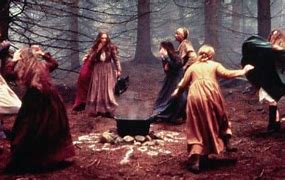
From mycrystalaura.com.au
Crystals:

Jade

Lapis Lazuli
Rose Quartz

Coral

Emerald

1570 Pius V excommunicates Queen Elizabeth I of England for heresy and persecution of English Catholics during her reign. Also absolves her subjects from allegiance to the crown.
1862 First Legal Tender Act 1862 is passed by the US Congress, authorizing the United States note (greenback) into circulation, the first fiat paper money that was legal tender in America

1910 Dalai Lama flees Tibet for British India to escape Chinese troops

Fortuna (equivalent to the Greek goddess Tyche) was the goddess of fortune and personification of luck in Roman religion. She might bring good luck or bad: she could be represented as veiled and blind, as in modern depictions of Justice, and came to represent life’s capriciousness. She was also a goddess of fate: as Atrox Fortuna, she claimed the young lives of the princeps Augustus’ grandsons Gaius and Lucius, prospective heirs to the Empire.
Her father was said to be Jupiter and like him, she could also be bountiful (Copia). As Annonaria she protected grain supplies. June 11 was sacred to her: on June 24 she was given cult at the festival of Fors Fortuna.
1525 Battle of Pavia: Holy Roman Emperor Charles V‘s troops beat the French. French King Francois I captured, 15,000 killed or wounded
1582 Pope Gregory XIII announces New Style (Gregorian) calendar
1739 Battle of Karnal: Army of Iranian ruler Nadir Shah defeats the forces of the Mughal emperor of India, Muhammad Shah
1821 Agustín de Iturbide and Vicente Guerrero agree to the Plan of Iguala, stating that Mexico will become a constitutional monarchy, Roman Catholicism the official religion and that Peninsulares and Creoles will enjoy equal political and social rights
1868 US House of Representatives vote 126 to 47 to impeach President Andrew Johnson
1946 General Juan Perón first elected President of Argentina
2008 Fidel Castro retires as the President of Cuba due to ill health after nearly fifty years
2022 Russian leader Vladimir Putin announces the start of a “special military operation” in Ukraine to “demilitarize” the country moments before Russia launches a full-scale pre-dawn invasion by land, air and sea, with bombings in several cities amid international condemnation [1] [2]
![]()
1152 English cleric and writer Geoffrey of Monmouth consecrated as Bishop of St Asaph at Lambeth
1208 St Francis of Assisi, 26, received his vocation in Portiuncula Italy
1296 Pope Boniface VIII decree Clericis Iaicos
1387 King Charles III of Naples and Hungary is assassinated at Buda
1389 Battle at Falköping: Danes defeat King Albert of Sweden
1496 England’s Henry VII ends commercial dispute with Flanders
1510 Pope Julius II excommunicates the republic of Venice
1525 Battle of Pavia: Holy Roman Emperor Charles V‘s troops beat the French. French King Francois I captured, 15,000 killed or wounded
![]()
1955 12th Golden Globes: “On The Waterfront”, Marlon Brando, & Judy Garland win
1969 “The Prime of Miss Jean Brodie” film based on novel by Muriel Spark directed by Ronald Neame, starring Maggie Smith (Academy Award Best Actress) premieres in London
1969 26th Golden Globes: “The Lion in Winter”, Peter O’Toole, & Joanne Woodward win
1970 KVDO TV channel 3 in Salem, OR (IND) begins broadcasting
1980 Revival of Brian Clark’s stage drama “Whose Life is it Anyway?” starring Mary Tyler Moore and James Naughton, and directed by Michael Lindsay-Hogg, opens at the Royale Theatre, NYC; runs for 96 performances
1987 American radio and television personality Larry King suffers a heart attack
1989 Stalker Margaret Ray found in David Letterman‘s home, claims to be his wife
1999 41st Grammy Awards: “My Heart Will Go On (Love Theme From Titanic)” and Lauryn Hill win
![]()
1607 Claudio Monteverdi’s opera “L’Orfeo” premieres in Mantua, oldest opera still regularly performed
1711 George Frideric Handel‘s opera “Rinaldo” premieres at Haymarket theatre in London
1939 Roy Harris‘ 3rd Symphony premieres in Boston
1951 “Bless You All” closes at Mark Hellinger Theater NYC after 84 performances
1955 Cole Porter‘s final Broadway musical “Silk Stockings”, loosely based on the Melchior Lengyel’s “Ninotchka”, opens at the Imperial Theatre, NYC; runs for 478 performances
1956 Walter Piston‘s 5th Symphony, commissioned by the Juilliard School of Music for their 50th anniversary, premiere performance by the Juilliard Orchestra, conducted by Jean Morel
1962 “New Faces of ’62” closes at Alvin Theater NYC after 28 performances
1962 “Sail Away” closes at Broadhurst Theater NYC after 167 performances
![]()
1917 Red Sox sell Smokey Joe Wood, his arm dead at 26, to Cleveland for $15,000
1932 Malcolm Campbell sets world land speed record speed of 253.96 mph driving his famous Blue Bird car at Daytona Beach, Florida
1952 Canada wins 6th Olympic ice hockey title courtesy of a final round 3-3 tie with the US at the Oslo Winter Games; Canadian center Billy Gibson top scores with 19 points
1952 Norway goes 1-2 in the men’s ski jumping event at the Oslo Winter Olympics with Arnfinn Bergmann winning gold ahead of teammate Torbjørn Falkanger
1960 Austria goes 1-2 in the men’s slalom at the Squaw Valley Winter Olympics; Ernst Hintersteer wins gold ahead of teammate Hias Leitner
1963 5th Daytona 500: Tiny Lund driving for Wood Bros Racing, wins on 4 pit stops as first 10 laps run under caution flag because of rain
1968 Gary Unger begins NHL consecutive game record of 914 games
1974 Dutch speed skater Atje Keulen-Deelstra becomes Women’s Allround World Champion at Heerenveen, Netherlands, her third consecutive title and fourth in 5 years

In Egyptian mythology, Bast (also spelled Ubasti, Baset, and later Bastet) is an ancient solar and war goddess, worshipped at least since the Second Dynasty. In the late dynasties, the priests of Amun began to call her Bastet, a repetitive and diminutive form after her role in the pantheon became diminished as Sekhmet, a similar lioness war deity, became more dominant in the unified culture of Lower and Upper Egypt. In the Middle Kingdom, the cat appeared as Bastet’s sacred animal and after the New Kingdom she was depicted with a woman with a cat’s head carrying a sacred rattle and a box or basket.
Bast or Bastet was the cat goddess and local deity of the town of Bubastis or Per-Bast in Egyptian, where her cult was centered. Bubastis was named after her. Originally she was viewed as the protector goddess of Lower Egypt, and consequently depicted as a fierce lioness. Indeed, her name means (female) devourer. As protector, she was seen as defender of the pharaoh, and consequently of the later chief male deity, Ra, who was a solar deity also, gaining her the titles Lady of Flame and Eye of Ra.
The goddess Bast was sometimes depicted holding a ceremonial sistrum in one hand and an aegis in the other – the aegis usually resembling a collar or gorget embellished with a lioness head.
Bast was a goddess of the sun throughout most of Ancient Egyptian history, but later when she was changed into a cat goddess rather than a lion, she was changed to a goddess of the moon by Greeks occupying Ancient Egypt toward the end of its civilization. In Greek mythology, Bast is also known as Aelurus.
History and Connection to Other HodsDue to the threat to the food supply that could be caused by simple vermin such as mice and rats, and their ability to fight and kill snakes, especially cobras, cats in Egypt were revered highly, sometimes being given golden jewellery to wear and were allowed to eat from the same plates as their owners. Consequently, later as the main cat (rather than lioness) deity, Bastet was strongly revered as the patron of cats, and thus it was in the temple at Per-Bast that cats were buried and mummified.
When the owner died they would put the owner next to the mummified cat. More than 300,000 mummified cats were discovered when Bast’s temple at Per-Bast was excavated. Herodotus writes that when a cat in the family dies, Egyptians shaved their eyebrows and took the body to Bubastis to be embalmed.
As a cat or lioness war goddess, and protector of the lands, when, during the New Kingdom, the fierce lion god Maahes of Nubia became part of Egyptian mythology, she was identified, in the Lower Kingdom, as his mother. This paralleled the identification of the fierce lioness war goddess Sekhmet, as his mother in the Upper Kingdom.
As divine mother, and more especially as protector, for Lower Egypt, she became strongly associated with Wadjet, the patron goddess of Lower Egypt, eventually becoming Wadjet-Bast, paralleling the similar pair of patron (Nekhbet) and lioness protector (Sekhmet) for Upper Egypt. Bastet was the daughter of Amun Ra.
Later PerceptionLater scribes sometimes renamed her Bastet, a variation on Bast consisting of an additional feminine suffix to the one already present, thought to have been added to emphasize pronunciation; but perhaps it is a diminutive name applied as she receded in the ascendancy of Sekhmet in the Egyptian pantheon. Since Bastet literally meant, (female) of the ointment jar, Bast gradually became regarded as the goddess of perfumes, earning the title perfumed protector. In connection with this, when Anubis became the god of embalming, Bast, as goddess of ointment, came to be regarded as his wife. The association of Bastet as mother of Anubis, was broken years later when Anubis became Nephthys’ son.
Egypt’s loss in the wars between Upper and Lower Egypt led to a decrease in her ferocity. Thus, by the Middle Kingdom she came to be regarded as a domestic cat rather than a lioness. Occasionally, however, she was depicted holding a lioness mask, hinting at potential ferocity. Because domestic cats tend to be tender and protective of their offspring, Bast was also regarded as a good mother, and she was sometimes depicted with numerous kittens. Consequently, a woman who wanted children sometimes wore an amulet showing the goddess with kittens, the number of which indicated her own desired number of children.
Eventually, her position as patron and protector of Lower Egypt led to her being identified with the more substantial goddess Mut, whose cult had risen to power with that of Amun, and eventually being syncretized with her as Mut-Wadjet-Bast. Shortly after, Mut also absorbed the identities of the Sekhmet-Nekhbet pairing as well.
This merging of identities of similar goddesses has led to considerable confusion, leading to some attributing to Bastet the title Mistress of the Sistrum (more properly belonging to Hathor, who had become thought of as an aspect of the later emerging Isis, as had Mut), and the Greek idea of her as a lunar goddess (more properly an attribute of Mut) rather than the solar deity she was. Indeed, much of this confusion occurred with subsequent generations; the identities slowly merged among the Greeks during their occupation of Egypt, who sometimes named her Ailuros (Greek for cat), thinking of Bastet as a version of Artemis, their own moon goddess.Thus, to fit their own cosmology, to the Greeks Bastet is thought of as the sister of Horus, whom they identified as Apollo (Artemis’ brother), and consequently, the daughter of the later emerging deities, Isis and Ra.
The worship of the Goddess Bast continues today through Khemetic reconstructionalist religions, there are several ‘Bast Cults’ some of which may be found online and as such, technically, predates most Religions. In current day it is very common for Bast to be seen as a fertility goddess or even a goddess of lesbianism, despite the fact that research on her actual functions within the Egyptian pantheon is so very easy.

A pentagram (or pentacle) is a circled five-pointed star that most people associate with witchcraft or satanism. Far from being an evil symbol the pentagram represents protection, the self, or the spirit. The five points of the pentagram represent five basic elements: earth, air, fire, water and spirit.
Represents: the elements.
Used in rituals for: protection.
1455 Johannes Gutenberg prints his first Bible (estimated date)
1540 Francisco Vázquez de Coronado‘s expedition sets off from Mexico in search of the 7 cities of Cibola
1836 Alamo besieged for 13 days until March 6 by Mexican army under General Santa Anna; entire garrison eventually killed
1904 United States acquires control of the Panama Canal Zone for $10 million
1945 US Marines raise American flag on top of Mt. Suribachi, Iwo Jima. Pulitzer Prize winning photo of which by Joe Rosenthall later became iconic, inspiring the Marine Corps War Memorial sculpture
1954 1st mass inoculation against Polio with the Jonas Salk vaccine takes place at Arsenal Elementary School in Pittsburgh, Pennsylvania
1998 Osama bin Laden publishes a fatwa declaring jihad against all Jews and Crusaders

1455 Johannes Gutenberg prints his first Bible (estimated date)
1540 Francisco Vázquez de Coronado‘s expedition sets off from Mexico in search of the 7 cities of Cibola
1574 France begins 5th “holy war” against Huguenots
1660 Charles XI becomes king of Sweden
1668 Fire in the Hofburg in Vienna, Emperor Leopold I rescued
1672 Joan Blaeus publishers destroyed by fire in Amsterdam
1689 Dutch prince William III proclaimed King of England
1778 Baron von Steuben joins Continental Army at Valley Forge

1939 11th Academy Awards: “You Can’t Take It With You”, Spencer Tracy & Bette Davis wins
1939 Lou Thesz beats Everett Marshall in St Louis, to win the National Wrestling Association World Heavyweight C’ship for a 2nd time
1940 Walt Disney’s animated movie “Pinocchio” released
1950 7th Golden Globes: “All the King’s Men”, Broderick Crawford, and Olivia de Havilland win
1956 13th Golden Globes: “East of Eden”, Ernest Borgnine, & Anna Magnani win
1959 KVIE TV channel 6 in Sacramento-Stockton, CA (PBS) begins broadcasting
1964 The Beatles’ 3rd appearance on “The Ed Sullivan Show”, featuring 3 performances taped on February 9, prior to their debut
1969 Groundbreaking TV documentary series “Civilisation” presented by art historian Kenneth Clark premieres on BBC2 in the UK

1792 Joseph Haydn’s 94th Symphony in G premieres
1957 “Mr Wonderful” closes at Broadway Theater NYC after 383 performances
1963 Luciano Pavarotti makes his debut at the Vienna State Opera in “La traviata”
1971 George Harrison is fined & his driving license is suspended for 1 year
1978 20th Grammy Awards: “Hotel California”; Fleetwood Mac; Debbie Boone win
1979 “Sarava” opens at Mark Hellinger Theater NYC for 140 performances
1979 George Harrison releases “George Harrison” album, featuring the single “Blow Away”
1981 People magazine features drug ordeal of Mackenzie & Papa John Phillips

1874 Major Walter Clopton Winfield patents a game called “sphairistike” (lawn tennis)
1895 Jaap Eden skates world record 10km (17:56)
1906 Tommy Burns beats Marvin Hart in 20 for heavyweight boxing title
1934 Casey Stengel becomes manager of Brooklyn Dodgers
1938 Joe Louis retains his world heavyweight boxing title by knocking out Nathan Mann in round 3 at Madison Square Garden, New York; second defence by Louis
1939 Lou Thesz beats Everett Marshall in St Louis, to win the National Wrestling Association World Heavyweight C’ship for a 2nd time
1952 Following his Nordic combined gold medal in St. Moritz (1948), Heikki Hasu takes his 2nd Olympic gold as part of Finland’s 4 x 10k cross country relay team at the Olso Winter Games
1952 Lydia Wideman of Finland becomes first female Olympic cross-country skiing champion; wins inaugural 10k event in Olso; Finnish medal sweep with minors to Mirja Hietamies and Siiri Rantanen
A
Tall and straight as the ash tree grows
all the things that Athena knows
Smooth and sharp as an athame blade
All the color of an autumn glade
B
Fires at Beltane jumping high
Watch the bees buzzing by
A silver bell ringing bright
A besom sweep makes it right
C
Stir a cauldron round and round
Cast a circle on the ground
Catch a crystal in your hand
Light a candle if you can
D
A raven dips and dives in the dark
Demeter makes things grow in the park
Dragon dozing in his lair
Dance with delight, do as you dare
Little Pagan Acorns
E
In the early east, an eagle flies
In an elder elm, her one egg lies
Energy comes from elements four
Embrace them all, open each door
F
Flight and a feather, often together
Fish and fin, go for a swim
Light a fire, flames grow higher
Find a fox, on nature walks![]()
G
The God and Goddess are all around
From sky above to grass on the ground
Grab a goblet, give a toast
Visit a grave to honor the ghost![]()
H
Horus hears as a hawk flies high
Hemlock hills are rolling by
Share some happiness with a hug
Sit on Hestia’s warm hearth rug
Little Pagan Acorns![]()
I
Isis whispers in the night
Is there incense left to light?
Sprites and imps will skip around
Inner spirit can be found![]()
J
Catch a firefly in a jelly jar
Jump for joy when you see that star
Enjoy a summer day in June
Join your hands under the moon![]()
K
I like when Magick is in the air
When kids get kisses in their hair
Cats and kittens, on your knee
Together like a lock and key![]()
L
Love at Litha lets flowers bloom
A little laughter lifts a room
Loki plays a silly joke
Light a lamp and blow the smoke
Little Pagan Acorns![]()
M
The Morrigan smiles under May’s moon
Tomorrow sometimes comes too soon
Maiden, mother and then the crone
Making mischief all alone![]()
N
Pine needles in the wood
Nearby nests sit snug and good
Notice knots, they hold in power
Midnight nears, that’s the hour![]()
O
Osiris has two but Odin only one
Color eggs at Ostara, that’s always fun
Only in the Otherworld do goblins stroll
Don’t get confused, a goblin’s not a troll![]()
P
Poseidon likes to play in the deep
A pile of puppies makes a cute heap
The pentacle protects sacred space
Pansies and petunias have a pretty face
Little Pagan Acorns![]()
Q
Porcupine has quills, arrows in a quiver
Quite cold in winter, quick to shiver
Call the quarters, salute the Queen
Ask the question that is never seen![]()
R
Relax when you are reading runes
A raven calls out raucous tunes
Write a ritual for Friday morn
That red rose may have a thorn![]()
S
Basking in the solstice sun
Warming like a sticky bun
Smudging sage smells so sweet
Slithering snakes have no feet![]()
T
Teas and tinctures, talismans galore
Thoth likes books more than Thor
Water trickles down the stream
Try some Tarot. What does it mean?
Little Pagan Acorns![]()
U
Ugly umbrellas raised up high
Thunder rumbles in the sky
Venus on a unicorn
Out of bubbles, she was born![]()
V
Nike votes for victory
Volcanoes and Pele over the sea
Valkyries to Valhalla fly
Vanilla for love, give it a try![]()
W
Make a wish on a western wind
With a wand, wild women grinned
Witches, Wiccans, warlocks too
In the winter, owls ask who![]()
X
A pixie relaxes in the wood
Jinxes and hexes are never good
With equinox, the days are split
With waxing moon, the sky is lit
Little Pagan Acorns![]()
Y
Both holly and yew are right for Yule
You’ll find nymphs by yonder pool
Yarrow and tansy in a vase
Sitting on some yellow lace![]()
Z
Zeus in a fez, do what he says
Zebras in zoos, time for a snooze
Wander the maze, the ancient ways
Need for some zen? Just say when
303 1st official Roman edict for persecution of Christians issued by Emperor Diocletian at Nicomedia, ordering all churches to be closed and scriptures burnt
1632 Galileo‘s “Dialogue Concerning the Two Chief World Systems” is published
1774 British House of Lords rules authors do not have perpetual copyright
1797 The Last Invasion of Britain, launched by the French during the Revolutionary Wars, begins near Fishguard, Wales
1825 Russia & Britain establish Alaska-Canada boundary
1967 25,000 US and South Vietnamese troops launch Operation Junction City against the Viet Cong. Largest US airborne assault since WWII.

303 1st official Roman edict for persecution of Christians issued by Emperor Diocletian at Nicomedia, ordering all churches to be closed and scriptures burnt
896 Pope Formosus crowned Arnulf King of Carinthia and Holy Roman Emperor
1071 Battle of Cassel; Robert I the Frisian defeats Arnulf III/I
1281 Simon de Brion elected Pope Martinus IV
1288 Girolamo Masci elected Pope Nicolas IV
1300 Pope Boniface VIII issues papal bull (decree) instating a Jubilee Year, granting forgiveness of sins and debts for those who fulfill various conditions
1349 Jews are expelled from Zurich, Switzerland
1415 English King Henry V lays the foundation stone for Syon Abbey for nuns of the Bridgettine Order. Became one of the wealthiest abbeys in England.

1858 Dion Boucicault‘s play “Jessie Brown” premieres in NYC
1934 “It Happened One Night” directed by Frank Capra and starring Clark Gable and Claudette Colbert opens at NY’s Radio City Music Hall (Academy Awards Best Picture, Director, Actor, Actress and Screenplay 1935)
1935 “The Little Colonel” premieres starring Shirley Temple, Lionel Barrymore and Bill Robinson, featuring famous stair dance with Hollywood’s first interracial dance couple
1936 Sonja Henie of Norway follows up her Winter Olympics victory with an incredible 10th consecutive women’s World Championship figure skating gold medal in Paris, France
1951 4th British Film and Television Awards (BAFTAs): “All About Eve” Best Film
1958 15th Golden Globes: “The Bridge on the River Kwai“, Alec Guinness, & Joanne Woodward win

1878 Peter Tchaikovsky‘s 4th Symphony in F premieres at a Russian Musical Society concert in Moscow [February 10 O.S.]
1941 Paul Creston’s 1st Symphony premieres
1941 Roy Harris‘ “Ballad of a Railroad Man” premieres
1943 Plane crash in the Tagus River, Lisbon, Portugal kills 23 with 15 survivors including singer Jane Froman
1950 Brockway & Weinstock publish “Men of Music” (rev ed)
1958 “Portotino” closes at Adelphi Theater NYC after 3 performances
1963 Beatles begin their own music publishing company (Northern Songs)
1964 Beatles arrive back in England after their 1st US visit

1860 Organized baseball played in San Francisco for 1st time between the Eagles and the Red Rovers
1888 “Father of American Golf” John Reid first demonstrates golf on a Yonkers cow pasture to friends
1892 Manitoba Rugby Football Union forms
1893 1st Iron Bowl: Auburn beats Alabama 32-22 in Birmingham
1927 ARC soccer team forms in Alphen on the Rhine
1933 Malcolm Campbell sets world land speed record speed of 272.46 mph driving his famous Blue Bird car at Daytona Beach, Florida
1936 Sonja Henie of Norway follows up her Winter Olympics victory with an incredible 10th consecutive women’s World Championship figure skating gold medal in Paris, France
1952 German husband and wife team Ria and Paul Falk win the mixed pairs gold medal at the Oslo Winter Olympics; defeat American siblings, Karol and Peter Kennedy
When it comes to fairies, one of the most profound figures is the Fairy Queen. Numerous stories and myths have featured powerful queens ruling over their fairy courts from ancient times through the modern day.
Today we will explore the roles these mystical figures have played throughout history, myth, and fiction, and discuss what it takes to grow your own personal practice with the queens of the Otherworld.
Let’s start at the beginning: who is the fairy queen? And over whom exactly does she reign? The answer may not be so simple! The history of fairies and their mythology is as varied and magickal as the fairy queens themselves.
The fairy folk have been embedded in folklore and literature alike for many years. They come in all shapes, sizes, and forms, from the little pixies that inhabit gardens to the mischievous brownies that are said to lurk in households. Some believe they live among us, just out of sight of humanity, while others hold that they’re much more powerful than we can imagine.
In Scottish folklore, it is known that the land is inhabited by Click here to read the rest of this article…
(Keep in mind this is one person’s viewpoint.)
The are four groups of nature spirits that are collectively referred to as the Elementals. They are, in no specific order, the Sylphs, the Undines, the Gnomes, and the Salamanders. Each of these groups corresponds with one of the four elements; air, fire, earth, and water. They live among us, yet remain mostly unseen except by children (their young minds have not been corrupted yet) and skilled practitioners who have been trained to see them.
We can trace the roots of the naming to the Swiss physician, alchemist, theologian, and philosopher Paracelsus (ca. 1493–1541). Paracelsus was an enigma during his life as he found common ground in the physical sciences, magic, theology, and humanity. Rather than ignore one discipline for the sake of another, he viewed them all to be necessary and dependent on one another. He was thought to be a prophet of sorts and a diviner, but that’s another story altogether.
There are many articles about elementals and each one seems to add a degree of spin. Some are obviously intended to drive social and environmental justice messages. Others are more focused on the ‘personality’ of each type. At first I wanted to make this an all encompassing article about every detail I could find, but I didn’t. I don’t want anyone’s opinion being my opinion.
Use this brief introduction to the Elementals as a starting point in your research.
More than 300 years ago, twenty people were put to death for the “crime” of witchcraft during the Salem Witch Trials. The most horrific part? The Salem Witch Trials happened under the auspices of “the law.”
To understand and commemorate this dark period in our country’s legal history, we’re looking back at the court proceedings and laws during the Salem Witch Trials and their impact on the American legal system.
From Hocus Pocus to The Chilling Adventures of Sabrina, it’s clear that people love witches. In fact, witches are the most popular adult Halloween costume year after year. But those frivolous and fanciful witches we know today—cackling in black garb and pointy hats with broomstick in hand—have evolved a great deal over the past several centuries.
More than 300 years ago, it was a felony to practice witchcraft in the American colonies, defined by English law as acting with magical powers bestowed by the Devil. But it wasn’t until legal failings, mass paranoia, and Puritan religious and societal rules converged against a backdrop of economic and political uncertainty that the most horrifying witch-hunt against innocent people occurred in Colonial Massachusetts.
During the Salem Witch Trials of 1692, more than 200 people were accused of practicing witchcraft. Twenty of those people were executed, most by hanging. One man was pressed to death under heavy stones, the only such state-sanctioned execution of its kind. Dozens suffered under inhumane conditions as they waited in jail for months without trials; many of the imprisoned were also tortured, and at least one died in jail before the hysteria abated in 1693.
So much of the tragedy of the Salem Witch Trials comes down to the failure of the court and the laws during that time: Laws that made such things as visions, dreams, and even the testimony of spirits permissible evidence. And a court that accepted accusations so flimsy they would seem laughable today if they weren’t so horrifyingly unjust…
The Salem Witch Trials occurred just as Europe’s “witchcraft craze’’ from the 14th to 17th centuries was winding down, where an estimated tens of thousands of European witches, mostly women, were executed.
The chilling mayhem unfolded during the winter of 1692 in Salem Village, now the town of Danvers, Massachusetts, when three girls allegedly having strange visions and fits were “diagnosed” with bewitchment by a doctor.
“Many modern theories suggest the girls were suffering from epilepsy, boredom, child abuse, mental illness, or even a disease brought on by eating rye infected with fungus,” according to The History of Massachusetts blog. Sheer vindictiveness is now considered a plausible explanation as well.
The girls blamed their odd behavior on three women considered social outcasts, including Tituba, a slave, whose confession may have been coerced. Soon a wave of witchcraft allegations throughout the year swept up more than 200 accused witches, including at least one child.
Local magistrates questioned the accused and determined whether any charges were to be brought against them. As paranoia spread, residents of Salem soon found themselves facing accusations from friends, neighbors, and families.
“Bearing false witness and committing perjury were considered felonies in Salem; under normal conditions, those convicted of such charges were prosecuted in public forums. During the witch trials, however, individuals convicted of perjury could save themselves from public humiliation by accusing their neighbors,” according to the First Amendment Encyclopedia.
The Puritans believed physical realities had spiritual causes. For example, if the crops failed, the Devil may have played a role. With this worldview, it was not a stretch for them to accept ‘spectral evidence’ of spirits and visions—which was the primary evidence used as proof of guilt during the Salem Witch Trials.
Evidence points to several factors that may have contributed to the mass hysteria: “An influx of refugees from King William’s War with French colonists, a recent smallpox epidemic, the threat of attack from Native Americans, a growing rivalry with the neighboring seaport of Salem Town, and the simmering tensions between leading families in the community created the perfect storm of suspicion and resentment.” Many historians believe the “witches” were also victims of scapegoating, personal vendettas, and social mores against outspoken, strong women.
Of course, underpinning it all was the Puritans’ deeply held and extraordinarily influential religious beliefs—which were also central to their legal system.
The so-called Witchcraft Act of 1604 served as the primary English law for witchcraft, deeming it a felony. A witch convicted of a minor offense could be imprisoned for a year; a witch found guilty twice was sentenced to death.
In 1641, the General Court, the legislative body of the colony of the Massachusetts Bay, wrote the Body of Liberties, the first legal code established in New England. This collection of civil and criminal laws and rights included witchcraft among its capital offenses. Citing Biblical sources for its authority, it stated: “If any man or woman be a witch that is, hath, or consulteth with a familiar spirit, they shall be put to death. Exod, 22. 188; Deut. 13.6, 10; Deut. 17. 2, 6.”
In practice, few witches were executed in Colonial America prior to the Salem Witch Trials. In the English tradition, clear and convincing proof of a crime was needed for a conviction. Confessions, especially with other evidence and testimony of at least two trustworthy people, constituted the best proof.
Though the Salem Witch Trials predated the U.S. Constitution and its Bill of Rights protections by almost a century, legal scholars say the accused witches were largely “deprived of the rights to which they should have been entitled under English common law.”
During the epidemic of witchcraft accusations in Salem, the legal process changed. The trials followed the temporary suspension of the Colony Charter due to political and religious tension between the colony and England. A new governor and a new charter from England arrived in 1692, but the General Court did not have enough time to create any laws.
On May 27, 1692, Governor William Phips ordered the establishment of a Special Court known as the Court of Oyer and Terminer (which translate to “to hear” and “to determine,” respectively) to decide the cases. Without specific colony laws, the judges accepted “spectral evidence,” which included testimony about dreams and visions.
The Puritans believed that physical realities had spiritual causes. For example, if the crop failed, the Devil may have played a role—and Satan could not take the form of an unwilling person. So if anyone claimed to have seen a ghost or spirit in the form of the accused, that person must be a witch. With this worldview, it was not a stretch for Puritans to believe in spectral evidence, which was the primary evidence used as proof of guilt.
In October, Increase Mather, then president of Harvard, denounced the use of spectral evidence: “It were better that ten suspected witches should escape than one innocent person be condemned,” he said. Not long after, Governor Phips dissolved the Court of Oyer and Terminer.
In January 1693, the newly created Superior Court of Judicature began hearing the remaining witch trials. The judges could not accept spectral evidence and most of the remaining trials ended in acquittal. Phips pardoned the rest.
In 1957, Massachusetts formally apologized for the events of 1692: “The General Court of Massachusetts declares its belief that such proceedings, even if lawful under the Province Charter and the law of Massachusetts as it then was, were and are shocking, and the result of a wave of popular hysterical fear of the Devil in the community…” The Massachusetts state legislature was still exonerating accused witches as recently as the early 2000s.
Today, the Salem Witch Trials continue to capture popular imagination. Less than 20 miles from Boston, Salem has turned its dark history into a thriving tourism industry, with witchcraft-themed shops, eateries, tours, and several museums.
The town commemorates the tragedy of that era with the Salem Witch Trial Memorial and has preserved many buildings and other historic sites associated with the trials, so future generations—and jurists—can learn how mass hysteria can lead to mass injustice.

The Greek Goddess of Fate is a daughter of Nyx, Goddess of the Night. In Her singular form, the Goddess of Fate is called Moira; and in Her triple form She becomes three sisters known as the Moirae. The Moirae are: Klotho the Spinner, who spins the thread of a person’s life; Lachesis the Measurer, who decides how much time is to be allowed each person, and Atropos the Cutter, who cuts the thread when you are supposed to die. The name ‘Moira’ actually means ‘part‘ and in fact, the triple form of the Fates mimics the triple moon phases and the three phases of life – maiden, mother and crone. Moira is known to the Romans as Fortuna, to the Scandinavians as Norns, to the Anglo-Saxons as Wyrd, and to the Celts as Morrigan. During the middle ages, the Fates became known as the Parcae.
As the spinner of Fate, Moira spins out the days of our lives as yarn and weaves it into a tapestry. The length of the yarn – hence your life span – is decided solely by the Goddess of Fate. All the Gods are subject to the whims of the Fates as are mortal man. Because of this, even though the other Gods are almighty, and supposedly immortal, even Hera has reason to fear Moira. Moira’s function is to see that the natural order of things is respected and She possesses the gift of prophecy – Her priests and priestesses are always oracles or soothsayers (seers of the future). Moira is often accompanied by the Keres (Dogs of Hades), who are three beings with sharp teeth and who are robed in red. In ancient times, the Fates were honored by sacrifices of honey and flowers.
Moira is associated with December’s full moon – which is often called the Cold Moon or the Wolf Moon. The colors of Moira are red, black and white.

This is a symbol of the three stages of womanhood: maiden, mother and crone. The ancient Greek goddess Hecate was a goddess of crossroads (such as the crossroads between each phase of life for a woman). The wheel symbolizes these phases with a labyrinth and represents the power and knowledge in moving through life.
Represents: women, transformation.
Used in rituals for: invoking change and transformation.
1173 Pope Alexander III canonizes Thomas Becket, Archbishop of Canterbury
1613 Michael Romanov, son of Patriarch of Moscow, elected first Russian Tsar of the house of Romanov
1804 1st locomotive, Richard Trevithick’s, runs for the 1st time, along the tramway of the Penydarren Ironworks in Merthyr Tydfil, Wales
1916 World War I: Battle of Verdun begins with a German offensive, leads to an estimated 1 million casualties and becomes the longest battle of the entire war (9 months)
1922 Britain declares Egypt a sovereign state
1972 Richard Nixon becomes the first US President to visit China, normalizing relations between the countries in a meeting with Chinese leader Mao Zedong in Beijing

362 Athanasius returns to Alexandria
1173 Pope Alexander III canonizes Thomas Becket, Archbishop of Canterbury
1245 Thomas, the first known Bishop of Finland, is granted resignation after having confessed to torture and forgery
1431 Joan of Arc‘s first day of interrogation during her trial for heresy
1440 The Prussian Confederation is formed
1564 Philip II routes Cardinal Granvelle to Franche-Comte
1574 Spanish garrison of Middelburg, Netherlands, surrenders
1583 Groningen, Netherlands, begins using Gregorian calendar

1944 “War As It Happens” news show premieres on NBC TV (NYC only)
1947 Whipper Billy Watson beats Bill Longson, to become wrestling champ
1949 US TV soap opera “A Woman to Remember” is 1st broadcast on DuMont Television Network
1950 WOI TV channel 5 in Ames-Des Moines, IA (ABC/PBS) begins broadcasting
1952 9th Golden Globes: “A Place in the Sun”, Fredric March, & Jane Wyman win
1981 Charles Rocket clearly says “f*ck” on “Saturday Night Live”
1982 Musical review of Fats Waller songs “Ain’t Misbehavin'” starring Nell Carter and Irene Cara, closes at Longacre Theater, NYC, after 1604 performances, winning 3 Tony and 4 Drama Desk Awards
1990 “The Batman Theme” by Danny Elfman wins Grammy Award for Best Instrumental Composition at 32nd Annual Grammy Awards

1911 Gustav Mahler conducts his last concerto, Berceuse élégiaque, in New York City
1923 Andre Charlot’s musical “Rats” premieres in London
1927 Franz Lehár’s opera “Der Zarewitsch” premieres
1958 “Portotino” opens at Adelphi Theater, NYC; runs for 3 performances
1964 UK flies 24,000 rolls of Beatles wallpaper to US
1976 Cliff Jones’ theatrical rock opera “Rockabye Hamlet”,starring Beverly D’Angelo closes at Minskoff Theater, NYC, after 7 performances
1982 “Little Me” closes at Eugene O’Neill Theater NYC after 36 performances
1990 32nd Grammy Awards: “Wind Beneath My Wings”; “Nick of Time” win

1931 Chicago White Sox & NY Giants play 1st exhibition night game
1948 NASCAR is incorporated
1951 South Carolina House of Representatives urges “Shoeless Joe” Jackson be reinstated by Major League Baseball
1953 Longest collegiate basketball game (6 OTs) Niagara beats Siena 88-81
1957 Dodgers (Fort Worth) & Cubs (LA) “trade” minor league franchises
1960 Biathlon debuts at the Squaw Valley Winter Olympics; Klas Lestander from Sweden becomes the first Olympic champion ahead of Finland’s Antti Tyrväinen and Soviet Aleksandr Privalov
1968 Baseball announces a minimum annual salary of $10,000
1969 Ted Williams signs 5-year contract to manage Washington Senators

Goddess of The Day: MINERVA
Terminalia (Rome)
Themes: Earth; Home 0
Symbols: Owl; Geranium
About Minerva: This Etruscan/Italic Goddess blended the odd attributes of being a patroness of household tasks, including arts and crafts, and also being the patroness of protection and of war. Today she joins in pre-spring festivities by helping people prepare their lands for sowing and embracing the figurative lands of our hearts, homes, and spirits with her positive energy.
To Do Today: In ancient times, this was a day to bless one’s lands and borders. Gifts of corn, honey, and wine were given to the earth and its spirits to keep the property safe and fertile throughout the year. In modern times, this equates to a Minerva-centered house blessing.
Begin by putting on some spiritually uplifting music. Burn geranium-scented incense if possible; otherwise, any pantry spice will do. Take this into every room of your home, always moving clockwise to promote positive growing energy. As you get to each room, repeat this incantation:
Minerva, protect this sacred space and all who live within. By your power and my will, the magic now begins!
Wear a geranium today to commemorate Minerva and welcome her energy into your life.
)0(
By Patricia Telesco and GrannyMoon’s Morning Feast Archives

The sun wheel is another form of a sun cross as it is also a circle bisected by four lines. It can be used as a calendar with each section of the circle representing the time between an equinox or solstice and also represents the balance of the four seasons. This symbol is sometimes called the eight-spoked wheel.
Represents: sun, four seasons, fire, masculine energy, south.
Used in rituals for: celebrating seasons, invoking the sun.
1792 US postal service created, postage 6-12 cents depending on distance
1872 New York’s Metropolitan Museum of Art opens
1938 UK Foreign Secretary Anthony Eden resigns stating Prime Minister Neville Chamberlain has appeased Nazi Germany
1944 Battle of Eniwetok: US forces take Enewetak Atoll at the cost of 37 Americans killed or missing and 94 wounded, Japanese losses were 800 dead and 23 prisoners
1947 Earl Mountbatten of Burma appointed as last viceroy of India to oversee the move to independence
1962 John Glenn becomes the 1st American to orbit the Earth, aboard Friendship 7

1280 Japanese Imperial Court orders all temples and shrines to pray for victory in the impending second Mongol invasion
1472 Orkney and Shetland are left by Norway to Scotland, due to a dowry payment
1525 Swiss & German mercenaries desert Francois I’s army
1547 King Edward VI of England crowned following the death of his father Henry VIII
1613 Gerard Reynst appointed Governor-General of Dutch East Indies
1619 Trial against Johan van Oldenbarnevelt begins in The Hague for alleged crimes against the federal government
1653 Defeat of Dutch fleet under Adm Van Tromp by Admiral Blake off Portsmouth
1673 1st recorded wine auction held in London

1944 Batman & Robin comic strip premieres in newspapers
1952 “African Queen” film directed by John Huston, starring Humphrey Bogart and Katharine Hepburn is released in the US
1956 WOSU TV channel 34 in Columbus, OH (PBS) begins broadcasting
1958 Adaptation of Fyodor Dostoevsky’s “The Brothers Karamazov”, starring Yul Brynner and featuring William Shatner‘s film debut, premieres at Radio City Music Hall, NYC
1971 National Emergency Center erroneously orders US radio & TV stations to go off the air. Mistake wasn’t resolved for 30 minutes
1978 4th People’s Choice Awards: John Wayne and Barbra Streisand (Motion Picture), and James Garner and Mary Tyler Moore (TV) win
1978 Bob Backland beats “Superstar” Billy Graham in NYC, to become WWF wrestling champion

1724 George Frideric Handel‘s opera “Giulio Cesare in Egitto” premieres at the King’s Theatre in Haymarket, London
1816 Gioachino Rossini‘s comic opera “Barber of Seville” premieres at the Teatro Argentina in Rome, Italy
1917 Jerome Kern, Guy Bolton & P.G. Wodehouse’s musical “Oh, Boy!” opens at the Princess Theatre, NYC; runs for 463 performances
1934 Virgil Thomson and Gertrude Stein’s opera “Four Saints in Three Acts” opens on Broadway at the 44th Street Theatre, NYC
1940 Larry Clinton & his Orchestra record “Limehouse Blues”
1959 Jimi Hendrix (16), rock and roll guitarist, plays his first gig in the Temple De Hirsch synagogue basement, Seattle; fired from the band after the 1st set due to “wild” playing
1965 Beatles record “That Means A Lot”; unhappy with the results, it was given to P.J. Proby to record, the Beatles version was unreleased until 1996 on Anthology 2
1977 Revival of Alan Jay Lerner and Frederick Loewe’s musical “My Fair Lady” closes at the Lunt-Fontanne Theatre, NYC, after 377 performances

1912 Argentina beats the MCC in their inaugural 1st-class cricket fixture at the Buenos Aires Cricket Club; lose the second and third games of the series
1919 Foundation NHL club Toronto Arenas are permitted to cease operations due to financial difficulties; later become Toronto St. Patricks and then Maple Leafs
1923 Future Baseball Hall of Fame pitcher Christy Mathewson becomes President and owner of Boston Braves; buys the team for $300,000 with NY attorney Judge Emil Fuchs and Bostonian James McDonough
1926 Montreal and Ottawa battle out just the second 0-0 tie in NHL history; dominant goalies are Clint Benedict (Maroons) and Alex Connell (Senators)
1929 Boston Red Sox announce they will play Sunday MLB games at Braves Field; Fenway Park located too close to a church
1952 American alpine skier Andrea Mead-Lawrence is only multi-gold medallist at the Oslo Winter Olympics when she wins the slalom, after taking out the inaugural giant slalom
1952 Britain’s Jeannette Altwegg wins the Olympic women’s figure skating gold medal at the Olso Winter Games ahead of American Tenley Albright, who goes on to win in Cortina d’Ampezzo (1956)
1952 Emmett Ashford is certified to be first black umpire in organised baseball; has to wait until 1966 for MLB debut
(Side Note from Lady Beltane – I want to grow up to be like this astounding woman)

Boudica, Battle of Watling Street by Roman Lappat · Putty&Paint
Boudica (/ˈbuːdɨkə/; alternative spelling: Boudicca, also known as Boadicea /boʊdɨˈsiːə/ and in Welsh as Buddug [ˈbɨ̞ðɨ̞ɡ]) (d. AD 60 or 61) was a queen of the British Iceni tribe who led an uprising against the occupying forces of the Roman Empire.
Boudica’s husband Prasutagus ruled as a nominally independent ally of Rome and left his kingdom jointly to his daughters and the Roman emperor in his will. However, when he died, his will was ignored and the kingdom was annexed. Boudica was flogged, her daughters raped, and Roman financiers called in their loans.
In AD 60 or 61, when the Roman governor Gaius Suetonius Paulinus was campaigning on the island of Anglesey off the northwest coast of Wales, Boudica led the Iceni, the Trinovantes and others in revolt. They destroyed Camulodunum (modern Colchester), earlier the capital of the Trinovantes but at that time a colonia, a settlement for discharged Roman soldiers, and site of a temple to the former Emperor Claudius. Upon hearing of the revolt, Suetonius hurried to Londinium (modern London), the twenty-year-old commercial settlement that was the rebels’ next target.
The Romans, having concluded that they did not have the numbers to defend the settlement, evacuated and abandoned Londinium. Boudica led 100,000 Iceni, Trinovantes and others to fight Legio IX Hispana and burned and destroyed Londinium, and Verulamium (modern-day St Albans). An estimated 70,000–80,000 Romans and British were killed in the three cities by those led by Boudica. Suetonius, meanwhile, regrouped his forces in the West Midlands, and despite being heavily outnumbered, defeated the Britons in the Battle of Watling Street.
The crisis caused the Emperor Nero to consider withdrawing all Roman forces from Britain, but Suetonius’s eventual victory over Boudica confirmed Roman control of the province. Boudica then either killed herself so she would not be captured, or fell ill and died. The extant sources, Tacitus and Cassius Dio, differ.
Interest in these events revived in the English Renaissance and led to Boudica’s fame in the Victorian era. Boudica has remained an important cultural symbol in the United Kingdom. However, the absence of native British literature during the early part of the first millennium means that knowledge of Boudica’s rebellion comes solely from the writings of the Romans
Boudica has been known by several versions of her name. Raphael Holinshed calls her Voadicia, while Edmund Spenser calls her Bunduca, a version of the name that was used in the popular Jacobean play Bonduca, in 1612. William Cowper’s poem, Boadicea, an ode (1782) popularised an alternate version of the name. From the 19th century and much of the late 20th century, Boadicea was the most common version of the name, which is probably derived from a mistranscription when a manuscript of Tacitus was copied in the Middle Ages.
Her name was clearly spelled Boudicca in the best manuscripts of Tacitus, but also Βουδουικα, Βουνδουικα, and Βοδουικα in the (later and probably secondary) epitome of Cassius Dio. The name is attested in inscriptions as “Boudica” in Lusitania, Boudiga in Bordeaux, and Bodicca in Algeria.
Kenneth Jackson concludes, based on later development of Welsh and Irish, that the name derives from the Proto-Celtic feminine adjective *boudīka, “victorious”, that in turn is derived from the Celtic word *bouda, “victory” (cf. Irish bua (Classical Irish buadh), Buaidheach, Welsh buddugoliaeth), and that the correct spelling of the name in the British language is Boudica, pronounced [bɒʊˈdiːkaː].
The closest English equivalent to the vowel in the first syllable is the ow in “bow-and-arrow”. The modern English pronunciation is /ˈbuːdɪkə/, and it has been suggested that the most comparable English name, in meaning only, would be “Victoria”.
Location of Iceni territory within England, Wales and Mann; modern county borders for England and pre-1996 borders for Wales are shown for context.
Tacitus and Dio agree that Boudica was of royal descent. Dio describes her as “possessed of greater intelligence than often belongs to women.” He also describes her as tall, with tawny hair hanging down to below her waist, a harsh voice and a piercing glare. He notes that she habitually wore a large golden necklace (perhaps a torc), a colourful tunic, and a thick cloak fastened by a brooch.
Her husband Prasutagus was the king of the Iceni, the people who inhabited roughly what is now Norfolk. They initially were not part of the territory under direct Roman control, having voluntarily allied themselves to Rome following Claudius’ conquest of AD 43. They were proud of their independence, and had revolted in AD 47 when the then-governor Publius Ostorius Scapula threatened to disarm them. Prasutagus had lived a long life of conspicuous wealth and, hoping to preserve his line, made the Roman emperor co-heir to his kingdom, along with his wife and two daughters.
It was normal Roman practice to allow allied kingdoms their independence only for the lifetime of their client king, who would then agree to leave his kingdom to Rome in his will. For example, the provinces of Bithynia and Galatia were incorporated into the Empire in just this way. Roman law also allowed inheritance only through the male line, so when Prasutagus died, his attempts to preserve his line were ignored and his kingdom was annexed as if it had been conquered. His lands and property were confiscated and nobles treated like slaves. According to Tacitus, Boudica was flogged and her daughters were raped. Cassius Dio says that Roman financiers, including Seneca the Younger, chose this time to call in their loans. Tacitus does not mention this, but does single out the Roman procurator Catus Decianus for criticism for his “avarice”. Prasutagus, it seems, had lived well on borrowed Roman money, and on his death his subjects had become liable for the debt.
In AD 60 or 61, while the current governor, Gaius Suetonius Paulinus, was leading a campaign against the island of Mona (modern Anglesey) in the north of Wales, which was a refuge for British rebels and a stronghold of the druids, the Iceni conspired with their neighbours the Trinovantes, amongst others, to revolt. Boudica was chosen as their leader. According to Tacitus, they drew inspiration from the example of Arminius, the prince of the Cherusci who had driven the Romans out of Germany in AD 9, and their own ancestors who had driven Julius Caesar from Britain. Dio says that at the outset Boudica employed a form of divination, releasing a hare from the folds of her dress and interpreting the direction in which it ran, and invoked Andraste, a British goddess of victory.
The rebels’ first target was Camulodunum (Colchester), the former Trinovantian capital and, at that time, a Roman colonia. The Roman veterans who had been settled there mistreated the locals and a temple to the former emperor Claudius had been erected there at local expense, making the city a focus for resentment. The Roman inhabitants sought reinforcements from the procurator, Catus Decianus, but he sent only two hundred auxiliary troops. Boudica’s army fell on the poorly defended city and destroyed it, besieging the last defenders in the temple for two days before it fell. Archaeologists have shown that the city was methodically demolished. The future governor Quintus Petillius Cerialis, then commanding the Legio IX Hispana, attempted to relieve the city, but suffered an overwhelming defeat. His infantry was wiped out—only the commander and some of his cavalry escaped. The location of this famous destruction of the Legio IX is now claimed by some to be the village of Great Wratting, in Suffolk, which lies in the Stour Valley on the Icknield Way West of Colchester, and by a village in Essex. After this defeat, Catus Decianus fled to Gaul.
When news of the rebellion reached him, Suetonius hurried along Watling Street through hostile territory to Londinium. Londinium was a relatively new settlement, founded after the conquest of AD 43, but it had grown to be a thriving commercial centre with a population of travellers, traders, and, probably, Roman officials. Suetonius considered giving battle there, but considering his lack of numbers and chastened by Petillius’s defeat, decided to sacrifice the city to save the province.
…Alarmed by this disaster and by the fury of the province which he had goaded into war by his rapacity, the procurator Catus crossed over into Gaul. Suetonius, however, with wonderful resolution, marched amidst a hostile population to Londinium, which, though undistinguished by the name of a colony, was much frequented by a number of merchants and trading vessels. Uncertain whether he should choose it as a seat of war, as he looked round on his scanty force of soldiers, and remembered with what a serious warning the rashness of Petilius had been punished, he resolved to save the province at the cost of a single town. Nor did the tears and weeping of the people, as they implored his aid, deter him from giving the signal of departure and receiving into his army all who would go with him. Those who were chained to the spot by the weakness of their sex, or the infirmity of age, or the attractions of the place, were cut off by the enemy. – Tacitus
Londinium was abandoned to the rebels who burnt it down, slaughtering anyone who had not evacuated with Suetonius. Archaeology shows a thick red layer of burnt debris covering coins and pottery dating before AD 60 within the bounds of Roman Londinium., whilst Roman-era skulls found in the Walbrook in 2013 were potentially linked to victims of the rebels. Verulamium (St Albans) was next to be destroyed.
In the three settlements destroyed, between seventy and eighty thousand people are said to have been killed. Tacitus says that the Britons had no interest in taking or selling prisoners, only in slaughter by gibbet, fire, or cross. Dio’s account gives more detail; that the noblest women were impaled on spikes and had their breasts cut off and sewn to their mouths, “to the accompaniment of sacrifices, banquets, and wanton behaviour” in sacred places, particularly the groves of Andraste.
While Boudica’s army continued their assault in Verulamium (St. Albans), Suetonius regrouped his forces. According to Tacitus, he amassed a force including his own Legio XIV Gemina, some vexillationes (detachments) of the XX Valeria Victrix, and any available auxiliaries. The prefect of Legio II Augusta, Poenius Postumus, stationed near Exeter, ignored the call, and a fourth legion, IX Hispana, had been routed trying to relieve Camulodunum, but nonetheless the governor was able to call on almost ten thousand men.
Suetonius took a stand at an unidentified location, probably in the West Midlands somewhere along the Roman road now known as Watling Street, in a defile with a wood behind him — but his men were heavily outnumbered. Dio says that, even if they were lined up one deep, they would not have extended the length of Boudica’s line. By now the rebel forces were said to have numbered 230,000, however, this number should be treated with scepticism — Dio’s account is known only from a late epitome, and ancient sources commonly exaggerate enemy numbers.
Boudica exhorted her troops from her chariot, her daughters beside her. Tacitus gives her a short speech in which she presents herself not as an aristocrat avenging her lost wealth, but as an ordinary person, avenging her lost freedom, her battered body, and the abused chastity of her daughters. She said their cause was just, and the deities were on their side; the one legion that had dared to face them had been destroyed. She, a woman, was resolved to win or die; if the men wanted to live in slavery, that was their choice.
However, the lack of manoeuvrability of the British forces, combined with lack of open-field tactics to command these numbers, put them at a disadvantage to the Romans, who were skilled at open combat due to their superior equipment and discipline. Also, the narrowness of the field meant that Boudica could put forth only as many troops as the Romans could at a given time.
First, the Romans stood their ground and used volleys of pila (heavy javelins) to kill thousands of Britons who were rushing toward the Roman lines. The Roman soldiers, who had now used up their pila, were then able to engage Boudica’s second wave in the open. As the Romans advanced in a wedge formation, the Britons attempted to flee, but were impeded by the presence of their own families, whom they had stationed in a ring of wagons at the edge of the battlefield, and were slaughtered. This is not the first instance of this tactic—the women of the Cimbri, in the Battle of Vercellae against Gaius Marius, were stationed in a line of wagons and acted as a last line of defence Ariovistus of the Suebi is reported to have done the same thing in his battle against Julius Caesar. Tacitus reports that “according to one report almost eighty thousand Britons fell” compared with only four hundred Romans.
According to Tacitus in his Annals, Boudica poisoned herself, though in the Agricola which was written almost twenty years prior he mentions nothing of suicide and attributes the end of the revolt to socordia (“indolence”); Dio says she fell sick and died and then was given a lavish burial; though this may be a convenient way to remove her from the story. Considering Dio must have read Tacitus, it is worth noting he mentions nothing about suicide (which was also how Postumus and Nero ended their lives).
Postumus, on hearing of the Roman victory, fell on his sword. Catus Decianus, who had fled to Gaul, was replaced by Gaius Julius Alpinus Classicianus. Suetonius conducted punitive operations, but criticism by Classicianus led to an investigation headed by Nero’s freedman Polyclitus. Fearing Suetonius’ actions would provoke further rebellion, Nero replaced the governor with the more conciliatory Publius Petronius Turpilianus. The historian Gaius Suetonius Tranquillus tells us the crisis had almost persuaded Nero to abandon Britain.
The location of Boudica’s defeat is unknown. Most historians[citation needed] favour a site in the West Midlands, somewhere along the Roman road now known as Watling Street. Kevin K. Carroll suggests a site close to High Cross in Leicestershire, on the junction of Watling Street and the Fosse Way, which would have allowed the Legio II Augusta, based at Exeter, to rendezvous with the rest of Suetonius’s forces, had they not failed to do so. Manduessedum (Mancetter), near the modern town of Atherstone in Warwickshire, has also been suggested, as has “The Rampart” near Messing in Essex, according to legend. More recently, a discovery of Roman artefacts in Kings Norton close to Metchley Camp has suggested another possibility, and a thorough examination of a stretch of Watling Street between St. Albans, Boudica’s last known location, and the Fosse Way junction has suggested the Cuttle Mill area of Paulerspury in Northamptonshire, which has topography very closely matching that described by Tacitus of the scene of the battle.
In 2009 it was suggested that the Iceni were returning to East Anglia along the Icknield Way when they encountered the Roman army in the vicinity of Arbury Bank, Hertfordshire. In March 2010, evidence was published suggesting the site may be located at Church Stowe, Northamptonshire.
Tacitus, the most important Roman historian of this period, took a particular interest in Britain as his father-in-law Gnaeus Julius Agricola served there three times (and was the subject of his first book). Agricola was a military tribune under Suetonius Paulinus, which almost certainly gave Tacitus an eyewitness source for Boudica’s revolt. Cassius Dio’s account is only known from an epitome, and his sources are uncertain. He is generally agreed to have based his account on that of Tacitus, but he simplifies the sequence of events and adds details, such as the calling in of loans, that Tacitus does not mention.
Gildas, in his 6th century De Excidio et Conquestu Britanniae, may have been alluding to Boudica when he wrote “A treacherous lioness butchered the governors who had been left to give fuller voice and strength to the endeavours of Roman rule”.
By the Middle Ages Boudica was forgotten. She makes no appearance in Bede’s work, the Historia Brittonum, the Mabinogion or Geoffrey of Monmouth’s History of the Kings of Britain. But the rediscovery of the works of Tacitus during the Renaissance allowed Polydore Vergil to reintroduce her into British history as “Voadicea” in 1534. Raphael Holinshed also included her story in his Chronicles (1577), based on Tacitus and Dio, and inspired Shakespeare’s younger contemporaries Francis Beaumont and John Fletcher to write a play, Bonduca, in 1610. William Cowper wrote a popular poem, “Boadicea, an ode”, in 1782.
It was in the Victorian era that Boudica’s fame took on legendary proportions as Queen Victoria came to be seen as Boudica’s “namesake”, their names being identical in meaning. Victoria’s Poet Laureate, Alfred, Lord Tennyson, wrote a poem, “Boadicea”, and several ships were named after her.
A statue of Boudica with her daughters in her war chariot (a historically furnished with scythes after the Persian fashion) was executed by Thomas Thornycroft over the 1850s and 1860s with the encouragement of Prince Albert, who lent his horses for the model.Thornycroft exhibited the head separately in 1864. It was cast in bronze in 1902, 17 years after Thornycroft’s death, by his son Sir John, who presented it to the London County Council. They erected it on a plinth on the Victoria Embankment next to Westminster Bridge and the Houses of Parliament, inscribed with the following lines from Cowper’s poem:
Regions Caesar never knew
Thy posterity shall sway.
Ironically, the great anti-imperialist rebel was now identified with the head of the British Empire, and her statue stood guard over the city she razed to the ground.
The area of King’s Cross, London was previously a village known as Battle Bridge which was an ancient crossing of the River Fleet. The original name of the bridge was Broad Ford Bridge.
The name “Battle Bridge” led to a tradition that this was the site of a major battle between the Romans and the Iceni tribe led by Boudica. The tradition is not supported by any historical evidence and is rejected by modern historians. However, Lewis Spence’s 1937 book Boadicea – warrior queen of the Britons went so far as to include a map showing the positions of the opposing armies. There is a belief that she was buried between platforms 9 and 10 in King’s Cross station in London, England. There is no evidence for this and it is probably a post-World War II invention.
Source:
Wikipedia
You must be logged in to post a comment.