Blessed be

Blessed be

There are no restrictions to shopping or important decisions today. The Moon is in Cancer.
Something unexpected but probably pleasant might impact your home scene today. A classic possibility would be that suddenly, you are entertaining a group of people. Or perhaps someone unusual comes to your home? Or something unexpected impacts your family or where you live? Interesting day!
This is a lovely day. In particular, it’s an excellent day to work in conjunction with others. Because new ideas and unusual events might impact your day, you have news to tell. Whatever it is, you feel optimistic and hopeful.
This is a good day for financial decisions and money matters. You might get an unexpected raise or a gift or a boon of some kind. Nevertheless, because things are unpredictable today — guard what you own and protect your money. (It’s a bit of a crapshoot.)
Expect the unexpected today because today is full of surprises. You might be caught off guard by a group or a friend. You might even be caught off guard by good news for a promotion or something that puts your name up in lights. Today is full of lots of positive possibilities!
Very likely, something pleasant and unexpected will please you today. It might be a complement, especially from a boss or someone in position of authority. It might even be a raise? (Fingers crossed.) Because you look good to others now, something unexpected will lift your spirits. Perhaps travel opportunities?
A sudden opportunity to travel today might drop in your lap. Or perhaps, travel plans will be interrupted or changed? Surprises related to publishing, legal or medical matters are also likely. Check your school schedule because it might suddenly change. Make sure everyone is on the same page.
Gifts, goodies and financial windfalls might come your way today. Meanwhile, unexpected changes to inheritances, wills, insurance matters or something related to shared property are also likely. Keep your eyes open. People know your situation today.
Expect a surprise from someone close to you today. Or perhaps, you might meet someone unusual? Either way, your dealings with members of the general public, as well as partners and close friends, will be unpredictable today. You might encounter other cultures or travel opportunities.
You might hear good news about your job or your health today. It might even pertain to a pet. Possibly, it relates to a coworker? You will have no trouble standing up for yourself and defending your best interests today. Enjoy social outings, sports and playful times with kids.
This is an excellent day to work with others, especially to get things done on the home front, particularly repairs. Family discussions will go well. A surprise related to your kids or a romantic interest might please you. Cooperate with others today because it will only benefit you.
This is a busy time but a wonderful time for you in terms of schmoozing with others and meeting people. Something unusual is taking place where you live. A surprise party? An unexpected gathering? You will be assertive at work or in anything to do with your job or your health. This also applies to dealing with issues about pet. (“Wanna treat?”)
Your financial scene is looking better. Today something pleasant but unexpected will impact your routine. It might be a flirtation. It might relate to your kids. You might meet someone new who is unusual. Whatever the case, it’s an upbeat, exciting day!
Actor Brendan Gleeson (1955) shares your birthday today. You are gentle, cooperative and polite. You are careful, cautious and observant about everything around you. This is the perfect year for you to socialize and enjoy life. Let your guard down and loosen up a bit! Have fun but don’t lose sight of your goals. Enjoy yourself!
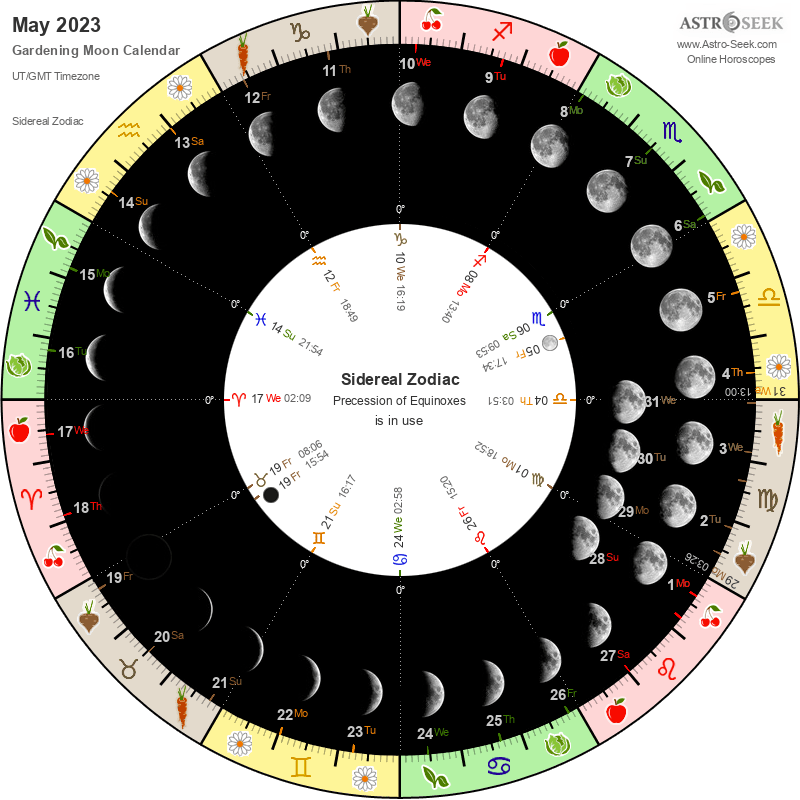
You can use this link to go forward or backward in time for Moon phase information. If you are curious, you can even find out what phase the Moon was in when you or anyone else was born.
The Moon’s current phase for today and tonight is a First Quarter phase. This phase occurs roughly 7 days after the New Moon when the moon is one quarter of the way through its orbit around the earth. Exactly half the moon will be illuminated and half dark. On the day of the First Quarter phase the moon is high overhead at sunset and is visible until mid-night when it sets in the west. The First Quarter phase is a one-day event and in the following days enters a Waxing Gibbous phase becoming more illuminated each day until the Full Moon.
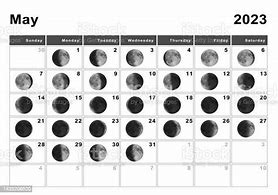
Visit the March 2023 Moon Phases Calendar to see all the daily moon phase for this month.
The First Quarter on March 29 has an illumination of 54%. This is the percentage of the Moon illuminated by the Sun. The illumination is constantly changing and can vary up to 10% a day. On March 29 the Moon is 7.73 days old. This refers to how many days it has been since the last New Moon. It takes 29.53 days for the Moon to orbit the Earth and go through the lunar cycle of all 8 Moon phases.
There are 8 lunar phases the Moon goes through in its 29.53 days lunar cycle. The 4 major Moon phases are Full Moon, New Moon, First Quarter and Last Quarter. Between these major phases, there are 4 minor ones: the Waxing Crescent, Waxing Gibbous, Waning Gibbous and Waning Crescent. For more info on the Moon Cycle and on each phase check out Wikipedia Lunar Phase page.
Check the weather before a night of Moon gazing at weather.com
For a list of all the current meteor showers visit American Meteor Society
If you need to calculate the planetary positions for a specific use and time, click on this link
To figure out GMT (Greenwich Mean Time) to your local time use this link
This local time is in Los Angeles, California, USA
March 29, 2023
10:00 pm GMT 3:00 PM PDT
Zodiac: Tropical (Standard Western)
True Lunar Node:04 Taurus 21 Rx
Mean Lunar Node:05 Taurus 33 Rx
Lilith (Black Moon):09 Leo 00
Chiron:15 Aries 27
Ceres:28 Virgo 28 Rx
Pallas:17 Cancer 44

Juno:10 Taurus 28
Vesta:22 Aries 22
Eris:24 Aries 24
This local time is in Chicago, Illinois, USA
March 29, 2023
08:00 pm GMT 3:00 PM CDT
Zodiac: Tropical (Standard Western)
True Lunar Node:04 Taurus 21 Rx
Mean Lunar Node:05 Taurus 33 Rx
Lilith (Black Moon):09 Leo 00
Chiron:15 Aries 27
Ceres:28 Virgo 29 Rx
Pallas:17 Cancer 43

Juno:10 Taurus 25
Vesta:22 Aries 20
Eris:24 Aries 24
This local time is in Frankfurt, Germany, Europe
29 March 2023
03:00 pm GMT 4:00 PM CEST
Zodiac: Tropical (Standard Western)
True Lunar Node:04 Taurus 21 Rx
Mean Lunar Node:05 Taurus 34 Rx
Lilith (Black Moon):08 Leo 58
Chiron:15 Aries 26
Ceres:28 Virgo 32 Rx
Pallas:17 Cancer 39

Juno:10 Taurus 18
Vesta:22 Aries 14
Eris:24 Aries 24


| Wednesday | ||
| Magickal Intentions: Communication, Divination, Writing, Knowledge, Business Transactions, Debt, Fear,Loss, Travel, Money Matters |
Incense: Jasmine Lavender Sweet Pea |
|
| Planet: Mercury Chiron |
Sign: Virgo |
Angel: |
| Colors: Orange Light Blue Grey Yellow Violet |
Herbs/Plants: Fern Lavender Hazel Cherry Perriwinkle |
Stones: Aventurine Bloodstone Hematitie Moss Agate Sodalite |
This day of the week gets its name from Woden’s Day, an Old English name. It is a direct translation of the Latin term mercurri dies, “day of Mercury.” When they translated the day, they changed to god Mercury to a local god, Woden, so people would understand. This is a great day to work on communications, thought, wisdom, self-expression, and the arts. Also a good day for divination.
Color: Purple, orange
Planet: Mercury
Deities: Odin, Woden, Hermes, Mercury, Athena, Lugh
Crystals: Adventuine, agate
Herbs: Aspen, lilies, lavender, fern
Associations: Business, communication, debt, the arts, transportation, fortune, chance, creativity
If you need to calculate the planetary positions for a specific use and time, click on this link
To figure out GMT (Greenwich Mean Time) to your local time use this link
This local time is in Sao Paulo, Brazil, South America
29 March 2023
06:00 pm GMT 3:00 PM BRT
Zodiac: Tropical (Standard Western)
True Lunar Node:04 Taurus 21 Rx
Mean Lunar Node:05 Taurus 33 Rx
Lilith (Black Moon):08 Leo 59
Chiron:15 Aries 27
Ceres:28 Virgo 31 Rx
Pallas:17 Cancer 41

Juno:10 Taurus 22
Vesta:22 Aries 18
Eris:24 Aries 24
This local time is in Cape Town, South Africa
29 March 2023
03:00 pm GMT 5:00 PM SAST
Zodiac: Tropical (Standard Western)
True Lunar Node:04 Taurus 21 Rx
Mean Lunar Node:05 Taurus 34 Rx
Lilith (Black Moon):08 Leo 58
Chiron:15 Aries 26
Ceres:28 Virgo 32 Rx
Pallas:17 Cancer 39

Juno:10 Taurus 18
Vesta:22 Aries 14
Eris:24 Aries 24
This local time is in Melbourne, Victoria, Australia
29 March 2023
04:00 am GMT 3:00 PM AEDT
Zodiac: Tropical (Standard Western)
True Lunar Node:04 Taurus 21 Rx
Mean Lunar Node:05 Taurus 35 Rx
Lilith (Black Moon):08 Leo 55
Chiron:15 Aries 25
Ceres:28 Virgo 38 Rx
Pallas:17 Cancer 31
Juno:10 Taurus 02
Vesta:22 Aries 02
Eris:24 Aries 23


After 6:30 AM EDT today (3:30 AM PDT) there are no restrictions to shopping or important decisions. The Moon is in Cancer.
This is a day for important family discussions. It’s also a great day to make domestic improvements and discuss long-range plans that affect family members, the home and possibly real estate. Listen to the advice of someone older because their experience might be an important help right now.
You have wonderful chances to learn and study today. Likewise, you can teach others or share your ideas because you will be persuasive and convincing. This is because your mind is open and clear. You can also use this talent to discuss future plans and ask others about their future goals. They’ll be glad you inquired.
Today your ability to negotiate financial matters is excellent. In particular, bosses and people in authority (including parents) will be impressed with what you have to say. Why not get others on board with your ideas because this will give you strength in numbers.
The Moon is in your sign today lined up with fiery Mars, which might create strong feelings and outbursts of energy (even anger). Therefore, tread carefully. Nevertheless, you can also deal successfully with foreign interests, teachers, plus those in the legal or medical profession. Stay focused on your objective.
You’re keen about travel plans. Likewise, you’re just as enthusiastic about publishing ideas or something related to higher education, medicine and the law. Meanwhile, something going on behind the scenes might affect shared property, inheritances or insurance matters. Fortunately, everything looks solid.
You will work well with others today, especially in a competitive way. Someone older, perhaps a teacher or an advisor, might have good instructions or information for you. This is also an excellent day to negotiate financial issues about shared property, wills and such. You will be favoured.
People in authority are impressed with your determination today. In one way, you are charming and sociable, especially dealing with the public; however, in another way, you mean business. This is why you will ask for what you want in clear terms. Factoid.
You have the energy to study and learn new things today. You might also explore or learn more about the medical or legal profession. This is a good day to negotiate publishing rights or anything to do with higher education. Work-related travel is also likely for many of you.
You’re prepared to fight for your own best interests today, which you will be able to do so with skill and success because you’ve done your homework. An older family member might endorse your ideas. Meanwhile, relations with kids and romantic interests are fun-loving and playful!
Be patient with partners and close friends today. Family discussions will go well because people are hopeful and optimistic about what can be achieved. Therefore, give someone close to you a lot of room to give their input as well. Great day for romance, especially love at first sight.
In your job today, you’ll be focused and determined. Others might use this same one-pointed perseverance to deal with health issues or a pet. Whatever you do might involve a money-saving approach to something. Stock the fridge because there’s a strong chance you will suddenly entertain today.
This is a good day to teach children or young minds new information or ways to encourage self-discipline in sports, the performing arts or any educational discipline. Meanwhile, your moneymaking ideas are definitely worth your attention!
Actress Dianne Wiest (1948) shares your birthday today. Your work is important to you; as is the affection of others. You are a caring person, who is personally independent. This is a slower paced year that will allow you to rejuvenate yourself. Focus on your needs and what brings you happiness, especially in relationships.

You can use this link to go forward or backward in time for Moon phase information. If you are curious, you can even find out what phase the Moon was in when you or anyone else was born.
The Moon’s current phase for today and tonight is a Waxing Crescent Phase. Best seen in the west after the sun dips below the horizon at sunset. This is the first Phase after the New Moon and is a great time to see the features of the moon’s surface. The moon is close to the sun in the sky and mostly dark except for the right edge of the moon which becomes brighter as the days get closer to the next phase which is a First Quarter with a 50% illumination.
Visit the March 2023 Moon Phases Calendar to see all the daily moon phase for this month.
The Waxing Crescent on March 28 has an illumination of 44%. This is the percentage of the Moon illuminated by the Sun. The illumination is constantly changing and can vary up to 10% a day. On March 28 the Moon is 6.83 days old. This refers to how many days it has been since the last New Moon. It takes 29.53 days for the Moon to orbit the Earth and go through the lunar cycle of all 8 Moon phases.
There are 8 lunar phases the Moon goes through in its 29.53 days lunar cycle. The 4 major Moon phases are Full Moon, New Moon, First Quarter and Last Quarter. Between these major phases, there are 4 minor ones: the Waxing Crescent, Waxing Gibbous, Waning Gibbous and Waning Crescent. For more info on the Moon Cycle and on each phase check out Wikipedia Lunar Phase page.
Check the weather before a night of Moon gazing at weather.com
For a list of all the current meteor showers visit American Meteor Society
364 Roman Emperor Valentinian I appoints his brother Flavius Valens co-emperor
1854 Great Britain and France declare war on Russia, expanding the Crimean War
1939 Spanish Civil War ends, Madrid falls to the Nationalists headed by Francisco Franco
1946 Cold War: The United States State Department releases the Acheson-Lilienthal Report, outlining a plan for the international control of nuclear power.

37 Roman Emperor Gaius Julius Caesar Augustus Germanicus, better known as Caligula (which means “little soldier’s boots”), accepts the titles of the Principate, entitled to him by the Senate
193 Roman Emperor Pertinax is assassinated by Praetorian Guards, who then sell the throne in an auction to Didius Julianus.
364 Roman Emperor Valentinian I appoints his brother Flavius Valens co-emperor
519 Pope Hormisdas reunites the Eastern and Western church, ending the Acacian schism in a ceremony in the cathedral of Constantinople
1535 Bloemkamp Abbey (Oldeklooster) attacked & destroyed in Friesland
1556 Origin of Fasli Era (India)
1556 Philip II of Spain is formally crowned King of Spain
1566 Foundation stone laid for the new city of La Valletta in Malta by Knights Hospitaller Grand Master Jean de Valette

1935 Influential Nazi Propaganda film “Triumph of the Will” released showing Nuremberg rallies, commissioned by Adolf Hitler and directed by Leni Riefenstahl
1948 2nd Tony Awards: “Mister Roberts” (Play); Henry Fonda (Actor) and Joshua Logan (Director) win
1953 KCAU TV channel 9 in Sioux City, IA (ABC) begins broadcasting
1954 WKAQ TV channel 2 in San Juan, PR (TM) begins broadcasting
1969 Greek poet and Nobel Prize laureate Giorgos Seferis makes a famous statement on the BBC World Service opposing the junta in Greece
1971 Last original edition of “The Ed Sullivan Show” broadcasts on CBS-TV
1977 49th Academy Awards: “Rocky”, Peter Finch & Faye Dunaway win
1979 Frank Lazarus & Dick Vosburgh’s stage musical comedy “A Day in Hollywood/A Night in Ukraine” premieres at the Mayfair Theatre, London, England

1859 1st performance of Johannes Brahms‘ 1st Serenade for orchestra
1896 Umberto Giordano’s opera “Andrea Chenier” premieres at La Scala, Milan with Giuseppe Borgatti singing the title role
1930 1st performance of Walter Piston‘s Suite for orchestra (Boston)
1953 “New Faces (of 1952)” closes at Royale Theater NYC after 365 performances
1953 7th Tony Awards: “The Crucible” (Outstanding Play) & “Wonderful Town” (Outstanding Musical) win
1954 8th Tony Awards: “Teahouse of the August Moon” (Best Play) & “Kismet” (Best Musical) win
1964 Madame Tussauds Wax Museum in London unveils figures of The Beatles; they later appear on the Sgt. Pepper album cover
1967 “Sherry!” opens at Alvin Theater NYC for 65 performances

1879 41st Grand National: Garry Moore aboard 5/1 chance The Liberator wins by 2 lengths from Jackal
1884 46th Grand National: Ted Wilson aboard 10/1 shot Voluptuary wins by 4 lengths from Frigate
1890 52nd Grand National: Arthur Nightingall wins aboard 4/1 favourite Ilex
1891 1st world weightlifting championship won by Edward Lawrence in London, England
1919 78th Grand National: Ernie Piggott wins aboard Poethlyn; shortest price winner in history at 11-4
1922 Stanley Cup Final, Mutual Street Arena, Toronto, ON: Toronto St Patricks (NHL) beat Vancouver Millionaires (PCHA), 5-1 for a 3-2 series win
1924 83rd Grand National: Bob Trudgill wins aboard 25/1 shot Master Robert; last GN from a general riding start, now-familiar ‘tape’ introduced the following year.
1933 1st SEC Men’s Basketball Tournament: Kentucky beats Mississippi State, 46-27


In Aztec mythology, Xiuhtecuhtli [ʃiʍˈtekʷt͡ɬi] (“Turquoise Lord” or “Lord of Fire”),[3] was the god of fire, day and heat.[4] In historical sources he is called by many names, which reflect his varied aspects and dwellings in the three parts of the cosmos.[5] He was the lord of volcanoes,[6] the personification of life after death, warmth in cold (fire), light in darkness and food during famine. He was also named Cuezaltzin [kʷeˈsaɬt͡sin] (“flame”) and Ixcozauhqui [iʃkoˈsaʍki],[7] and is sometimes considered to be the same as Huehueteotl (“Old God”),[8] although Xiuhtecuhtli is usually shown as a young deity.[9] His wife was Chalchiuhtlicue. Xiuhtecuhtli is sometimes considered to be a manifestation of Ometecuhtli, the Lord of Duality, and according to the Florentine Codex Xiuhtecuhtli was considered to be the father of the Gods,[10] who dwelled in the turquoise enclosure in the center of earth.[11] Xiuhtecuhtli-Huehueteotl was one of the oldest and most revered of the indigenous pantheon.[12] The cult of the God of Fire, of the Year, and of Turquoise perhaps began as far back as the middle Preclassic period.[13] Turquoise was the symbolic equivalent of fire for Aztec priests.[14] A small fire was permanently kept alive at the sacred center of every Aztec home in honor of Xiuhtecuhtli.[14]
The Nahuatl word xihuitl means “year” as well as “turquoise” and “fire”,[11] and Xiuhtecuhtli was also the god of the year and of time.[15][16] The Lord of the Year concept came from the Aztec belief that Xiuhtecuhtli was the North Star.[17] In the 260-day ritual calendar, the deity was the patron of the day Atl (“Water”) and with the trecena 1 Coatl (“1 Snake”).[15] Xiuhtecuhtli was also one of the nine Lords of the Night and ruled the first hour of the night, named Cipactli (“Alligator”).[18] Scholars have long emphasized that this fire deity also has aquatic qualities.[13] Xiuhtecuhtli dwelt inside an enclosure of turquoise stones, fortifying himself with turquoise bird water.[19] He is the god of fire in relation to the cardinal directions, just as the brazier for lighting fire is the center of the house or temple.[20] Xiuhtecuhtli was the patron god of the Aztec emperors, who were regarded as his living embodiment at their enthronement.[21] The deity was also one of the patron gods of the pochteca merchant class.[22]
Stone sculptures of Xiuhtecuhtli were ritually buried as offerings, and various statuettes have been recovered during excavations at the Great Temple of Tenochtitlan with which he was closely associated.[23] Statuettes of the deity from the temple depict a seated male with his arms crossed.[24] A sacred fire was always kept burning in the temples of Xiuhtecuhtli.[25] In gratitude for the gift of fire, the first mouthful of food from each meal was flung into the hearth.[21]
Xiuhtecuhtli is depicted in the Codex Borgia.[26]
Xiuhtecuhtli’s face is painted with black and red pigment.[16] Xiuhtecuhtli was usually depicted adorned with turquoise mosaic, wearing the turquoise xiuhuitzolli crown of rulership on his head and a turquoise butterfly pectoral on his chest,[27] and he often wears a descending turquoise xiuhtototl bird (Cotinga amabilis) on his forehead and the Xiuhcoatl fire serpent on his back.[28] He owns fire serpent earplugs.[12] On his head he has a paper crown painted with different colors and motifs. On top of the crown there are sprays of green feathers, like flames from a fire.[12] He has feather tufts to each side, like pendants, toward his ears. On his back he has plumage resembling a dragon’s head, made of yellow feathers with marine conch shells.[12] He has copper bells tied to the insteps of his feet. In his left hand he holds a shield with five greenstones, called chalchihuites, placed in the form of a cross on a thin gold plate that covered almost all the shield.[12] In his right hand he has a kind of scepter that was a round gold plate with a hole in the middle, and topped by two globes, one larger than the other, the smaller one had a point.[12] Xiuhtecuhtli is closely associated with youthful warriors and with rulership, and was considered a solar god.[29] His principal symbols are the tecpatl (flint) and the mamalhuatzin, the two sticks that were rubbed together to light ceremonial fires.[30] A staff with a deer’s head was also an attribute of Xiuhtecuhtli, although not exclusively so as it could also be associated with Xochiquetzal and other deities.[31]
Many of the attributes of Xiuhtecuhtli are found associated with Early Postclassic Toltec warriors but clear representations of the god are not common until the Late Postclassic.[28] The nahual, or spirit form, of Xiuhtecuhtli is Xiuhcoatl, the Fire Serpent.[32]
Xiuhtecuhtli was embodied in the teotecuilli, the sacrificial brazier into which sacrificial victims were cast during the New Fire ceremony.[32] This took place at the end of each cycle of the Aztec calendar round (every 52 years),[33] when the gods were thought to be able to end their covenant with humanity. Feasts were held in honor of Xiuhtecuhtli to keep his favors, and human sacrifices were burned after removing their heart.
The annual festival of Xiuhtecuhtli was celebrated in Izcalli, the 18th veintena of the year.[34] The Nahuatl word izcalli means “stone house” and refers to the building where maize used to be dried and roasted between mid-January and mid-February. The whole month was therefore devoted to fire.[14] The Izcalli rituals grew in importance every four years.[35] A framework image of the deity was constructed from wood and was richly finished with clothing, feathers and an elaborate mask.[34] Quails were sacrificed to the idol and their blood spilt before it and copal was burnt in his honour.[36] On the day of the festival, the priests of Xiuhtecuhtli spent the day dancing and singing before their god.[37] People caught animals, including mammals, birds, snakes, lizards and fish, for ten days before the festival in order to throw them into the hearth on the night of the festival.[38] On the tenth day of Izcalli, during a festival called huauhquiltamalcualiztli (“eating of the amaranth leaf tamales”), the New Fire was lighted, signifying the change of the annual cycle and the rebirth of the fire deity.[39] During the night the image of the god was lit with using the mamalhuatzin.[40] Food was consumed ritually, including shrimp tamales, after first offering it to the god.[38]
Every four years a more solemn version of the festival was held at the temple of Xiuhtecuhtli in Tenochtitlan, attended by the emperor and his nobles.[42] Slaves and captives were dressed as the deity and sacrificed in his honour.[43] Godparents were assigned to children on this day and the children had their ears ritually pierced. After this, the children, their parents and godparents all shared a meal together.[42]
Xiuhtecuhtli was celebrated often but especially at the end of every 52-year period. This was the time the 365-day solar and the 260-day sacred calendars ended on the same day and the Aztec celebrated the Binding of the Years with the New Fire Ceremony.[17] In order to perform the ritual, priests marched in solemn procession up the Hill of the Star on a peninsula near Culhuacán to wait for the star Yohualtecuhtli (either Aldebaran in the Taurus constellation or the Pleiades as a whole) to get past its zenith. Having ascertained this, they would tear out the heart of a sacrificial victim and kindle a flame in a small wooden hearth they placed inside the hole left in his chest. Priests used a drill method to generate this sacred flame. It was then carried on pine sticks to light the fires anew in every hearth, including the sacred braziers of perpetual fire, that numbered over 600 in the capital alone.[44]

It was not unusual to see that in some religions, there were deities linked to both domestic and military matters. The Aztec goddess Chantico was an example of this link, just like the Roman goddess Vesta was in the Roman religion.
The meaning of Chantico Aztec goddess: Origin of the Name
History of Chantico goddess and Most Important Myths Related to Her
Powers of the Aztec goddess Chantico
In Aztec religion, Chantico was a domestic deity. She was mainly associated with the fires burning in the house hearth but was considered to be the protectress of the house and of the possessions inside it in general.
Because of a process of extension of her prerogatives, the Aztecs came to think of her as the protectress of their empire as a whole: it has been reported by the Spanish that Moctezuma, one of the last Aztec emperors, had an idol of the Aztec goddess Chantico with a removable leg, that he would have used as a tool to curse the land, obstructing the advance of Hernan Cortes.
For this reason, probably, Chantico had a tight link to the army and to military life in general, which was made evident in her iconography.
Her representations, in fact, usually displayed a crown made of spikes of a poisonous cactus, which was seen as a sign of aggressivity and peril, and at the top of her head was often present an ornament of feathers, which were a typical symbol of warriors.
In addition, among her accessories could be found the so-called alt-tlachinolli, or water-fire, a necklace which also was linked to warfare. Other elements which help to identify her in codexes and images are the obsidian sandals at her feet, the so-called itzcactli, and a golden pendant at her neck, which probably was a representation of the sun.
Being the goddess who presided to the domestic fire, Chantico was connected to this element, too, and was therefore linked to the other fire deities of the Aztec pantheon.
In particular, she was often associated with the god Xolotl: their connection was represented by the fact that they both were often depicted wearing the yacaxtuitl, a blue nose ornament.
Her cult was particularly strong among stonecutters. Likely for this reason, she was particularly worshipped in the town of Xochimilco, where stonecutting was widely practiced.
It seems that the name “Chantico” might have signified “she who lives in the house”, surely alluding to her role as a domestic goddess.
Anyway, she was also referred to with other names. One of these was Quaxolotl, which would have meant “split in the upper part”, and would have therefore been a reference to Chantico’s link to the god of duality and twins, Xolotl.
Among stonecutters, she would have been also called Papaloxaual or Tlappapalo, meaning respectively “butterfly painting” and “the one of the red butterfly”. Anyway, there seem to be no other pieces of information clarifying this association of her with butterflies.
According to some scholars, the cult of the Aztec goddess Chantico would have originated there where she was most worshipped, in the town of Xochimilco.
Therefore, it would have spread to all the Aztec Empire, included of course the capital, Tenochtitlan, where Chantico goddess would have been venerated in the most important religious building, the Templo Mayor.
Chantico goddess of fire was the main character of an interesting myth describing food taboos among the Aztecs. Let’s see this story in greater detail.
According to this story, the Aztec goddess of fire Chantico liked paprika very much. Some suggest that the reason behind this fact could be found in Chantico’s association with fire: paprika, in fact, remembers fire both in color and taste.
Anyway, in Aztec religion, food was a prerogative of the god Tonacatecuhtli, who used to occasionally declare fasts, i.e. days during which some particular foods were banned.
One day, a fast of this sort, forbidding anyone to eat paprika, was pronounced by Tonacatecuhtli; nonetheless, the Aztec goddess Chantico could not resist pouring this beloved spice on her meal, which consisted of roasted fish.
Angered, Tonacatecuhtli changed Chantico into a dog, as a form of punishment. According to some, this might be the reason why dogs love to rest by the hearth.
In her role of protectress of possessions, of the house, and, more generally, of the Aztec homeland, the Aztec goddess Chantico was thought to be able to deny access to strangers and enemies.
Besides the ones already mentioned, one of Chantico’s symbols was an eagle foot covered with the skin of a jaguar, located on a dish of blood.
Like many others of her attributes, this peculiar image, also, might have represented her link with war, since the dish of blood was a symbol of warrior sacrifice.
Chantico’s figure is linked to one of the most impressive and important archeological remains found in the lands once occupied by the Aztecs: the so-called Coyolxauhqui-Chantico monument.
As its name suggests, this object has been linked by scholars to two Aztec goddesses: one is the goddess of the moon, Coyolxauhqui, while the other is the domestic goddess Chantico.
It represents a giant head and has been discovered in the Templo Mayor, the most important and famous building that could be found in the ancient city of Tenochtitlan, the capital of the Aztec Empire. This head was called this way by Hermann Mayer, an important Mesoamerican scholar.
In fact, he argued, elements related to both deities could be found in it. The form and the subject of the statue, a giant head, surely reminded of Coyolxauhqui, and in particular of her role in the myth describing the birth of Huitzilopochtli: according to this story, in fact, Coyolxauhqui and her brothers would have tried to kill their mother while she was pregnant with Huitzilopochtli, but he would have come out of his mother’s womb and defeated them, beheading Coyolxauhqui.
At the same time, as noted by Eduard Seler, the character to whom the head belongs, represented in other objects, presents elements that can be easily associated with Chantico. In particular, it wears the itzcactli, the obsidian sandals, and a golden pendant which are often displayed in Chantico’s portraits. These facts have led some scholars to think that the two deities might be connected. Anyway, none of the surviving sources in their possession is able to confirm or clarify this point.

Gabriel is like the complex feeling of delivering bad news. It’s affecting you as much as you are affecting the people around you. There is a weight in there. It’s a dark weight, but it’s valuable. There’s a message that needs to be said, and you need to be the one to say it.
This Golden Herald embodies those transmissions which are most important. Words, sounds and pictures that carry huge impact. Sometimes the results are glorious and sometimes they are terrible. Either way, there is no way to hold them back. When the herald lifts its lantern, everyone will see it. There’s no escaping it.
A dragon is a reptilian legendary creature that appears in the folklore of many cultures worldwide. Beliefs about dragons vary considerably through regions, but dragons in western cultures since the High Middle Ages have often been depicted as winged, horned, and capable of breathing fire. Dragons in eastern cultures are usually depicted as wingless, four-legged, serpentine creatures with above-average intelligence. Commonalities between dragons’ traits are often a hybridization of feline, reptilian, and avian features. Scholars believe vast extinct or migrating crocodiles bear the closest resemblance, especially when encountered in forested or swampy areas, and are most likely the template of modern Oriental dragon imagery.[1][2]
The word dragon entered the English language in the early 13th century from Old French dragon, which, in turn, comes from the Latin: draconem (nominative draco) meaning “huge serpent, dragon”, from Ancient Greek δράκων, drákōn (genitive δράκοντος, drákontos) “serpent”.[4][5] The Greek and Latin term referred to any great serpent, not necessarily mythological.[6] The Greek word δράκων is most likely derived from the Greek verb δέρκομαι (dérkomai) meaning “I see”, the aorist form of which is ἔδρακον (édrakon).[5] This is thought to have referred to something with a “deadly glance,”[7] or unusually bright[8] or “sharp”[9][10] eyes, or because a snake’s eyes appear to be always open; each eye actually sees through a big transparent scale in its eyelids, which are permanently shut. The Greek word probably derives from an Indo-European base *derḱ- meaning “to see”; the Sanskrit root दृश् (dr̥ś-) also means “to see”.[11]
Draconic creatures appear in virtually all cultures around the globe[12] and the earliest attested reports of draconic creatures resemble giant snakes. Draconic creatures are first described in the mythologies of the ancient Near East and appear in ancient Mesopotamian art and literature. Stories about storm-gods slaying giant serpents occur throughout nearly all Near Eastern and Indo-European mythologies. Famous prototypical draconic creatures include the mušḫuššu of ancient Mesopotamia; Apep in Egyptian mythology; Vṛtra in the Rigveda; the Leviathan in the Hebrew Bible; Grand’Goule in the Poitou region in France; Python, Ladon, Wyvern, and Kulshedra in Albanian Mythology and the Lernaean Hydra in Greek mythology; Jörmungandr, Níðhöggr, and Fafnir in Norse mythology; and the dragon from Beowulf.
Nonetheless, scholars dispute where the idea of a dragon originates from[13] and a wide variety of hypotheses have been proposed.[13]
In his book An Instinct for Dragons (2000), David E. Jones (anthropologist) suggests a hypothesis that humans, like monkeys, have inherited instinctive reactions to snakes, large cats, and birds of prey.[14] He cites a study which found that approximately 39 people in a hundred are afraid of snakes[15] and notes that fear of snakes is especially prominent in children, even in areas where snakes are rare.[15] The earliest attested dragons all resemble snakes or have snakelike attributes.[16] Jones therefore concludes that dragons appear in nearly all cultures because humans have an innate fear of snakes and other animals that were major predators of humans’ primate ancestors.[17] Dragons are usually said to reside in “dank caves, deep pools, wild mountain reaches, sea bottoms, haunted forests”, all places which would have been fraught with danger for early human ancestors.[18]
In her book The First Fossil Hunters: Dinosaurs, Mammoths, and Myth in Greek and Roman Times (2000), Adrienne Mayor argues that some stories of dragons may have been inspired by ancient discoveries of fossils belonging to dinosaurs and other prehistoric animals.[19] She argues that the dragon lore of northern India may have been inspired by “observations of oversized, extraordinary bones in the fossilbeds of the Siwalik Hills below the Himalayas“[20] and that ancient Greek artistic depictions of the Monster of Troy may have been influenced by fossils of Samotherium, an extinct species of giraffe whose fossils are common in the Mediterranean region.[20] In China, a region where fossils of large prehistoric animals are common, these remains are frequently identified as “dragon bones”[21] and are commonly used in traditional Chinese medicine.[21] Mayor, however, is careful to point out that not all stories of dragons and giants are inspired by fossils[21] and notes that Scandinavia has many stories of dragons and sea monsters, but has long “been considered barren of large fossils.”[21] In one of her later books, she states that, “Many dragon images around the world were based on folk knowledge or exaggerations of living reptiles, such as Komodo dragons, Gila monsters, iguanas, alligators, or, in California, alligator lizards, though this still fails to account for the Scandinavian legends, as no such animals (historical or otherwise) have ever been found in this region.”[22]
Robert Blust in The Origin Of Dragons (2000) argues that, like many other creations of traditional cultures, dragons are largely explicable as products of a Click here to learn more about a Dragon from en.wikipedia.org

With more than 40 kinds of snapdragon plants all over the world, the snapdragon is a gorgeous flower that not only has a beautiful appearance and a fun-to-say name, but also a lot of hidden meaning.
Named many centuries ago, this flower is often used as a gift between friends and loved ones. Before you choose this flower in your next bouquet, consider its deep meaning and symbolism. Its flower symbol will help you give a gift that is not only lovely to look at, but meaningful, too.
The common English name “snapdragon” is taken directly from the appearance of the flower. This gorgeous flower looks just like a dragon’s head when it is squeezed.
Although people don’t find amusement out of this kind of silly hobby nowadays, back when the flower was first named, the snapdragon was a source of great hilarity!
The scientific name for snapdragon is Antirrhinums. There are more than 40 species of snapdragons in this genus. The name is derived from the Greek word “antirrhinum,” which means “nose-like.”
Interestingly, the Greeks had two names for the plant – the other one was ”kynokephelon,” which means “dog-headed.”
Snapdragons have multiple meanings. They can represent strength, as they’re able to grow in rocky, typically uninhabitable areas, but they can also symbolize themes like deviousness and grace.
Snapdragons are sometimes used as a charm against falsehood. They can also represent the idea of grace under pressure or in the internal strength that is necessary to overcome challenging situations.
Purple snapdragons are usually associated with spirituality. This is a sharp contrast when you compare purple snapdragons to other types of purple flowers – usually, purple flowers are seen as a symbol of royalty.
Red snapdragons are usually used to symbolize love, passion, and positive energy.
White snapdragons are usually used to symbolize purity, innocence, and grace, as is common with white flowers of other species, too.
Yellow snapdragons symbolize happiness, positivity, and good luck.
There has been symbolism surrounding the snapdragon since ancient times – even before the Roman Empire. These flowers were used as a charm to protect against falsehood.
In Victorian times, people used to send messages to each other using flowers. Snapdragons were used to symbolize truth-telling.
Originally grown in southern Spain, America, and North Africa, the Romans spread snapdragon throughout much of Europe.
They can vary greatly in size and are some of the most common ornamental plants. According to European folklore, stepping on a snapdragon has the power to break black magic spells, too.
When you choose to get a snapdragon tattoo, you are making the decision to add a ton of symbolism to the artwork on your body.
This tattoo can have several meanings. First, a snapdragon can symbolize grace. However, it can also symbolize strength or even deviousness, since it has the ability to grow in rocky areas.
Thinking about giving someone a snapdragon? There are plenty of occasions in which it is appropriate to do so.
You could give a snapdragon as a gift to someone who has overcome a challenge in life – or perhaps to someone who needs to get through a bout of bad luck. It would be a great option on both occasions!
You must be logged in to post a comment.