Good Morning WOTC! Wishing You and Yours A Very Blessed and Joyous Day! c. 2017


The Cauldron Chant

We form the Circle,
The Circle most round.
We form the Chalice,
The Chalice now found.

We call the Goddess,
to meet the great need.
We call the God,
To plant His fertile seed.

We call the quarters,
which we call four.
We summon the powers,
that contain the force.

We stir the Cauldron,
from which we were born.
We call the Gods,
from whom we were torn.

We say the words,
which lead us round.
We pass the kiss,
with our lovers found.

We face our dreams,
in nights psychic flight.
We face our hopes,
in bright moon of the night.

We face our fears,
on the Dark Lords Horn.
We face our failure,
in the Mothers new planted corn.

We live our lives,
druming and dancing on the meadow.
We confront our Death,
in the dancing moon light shadow.

Our paths run quickly,
on fleet foot and wing.
Our Circle is joyous,
with our Queens and our Kings.

Let our little Circle be happy,
with Bell, Bowl or Bow.
And form now this Circle,
with gracious Love, Joy and Hope.


—Ammond ShadowCraft, Author

Originally published on Pagan Library


A Pagan Saturday c. 2016

gothic fantasy

A Pagan Saturday

Saturday is the day of the week between Friday and Sunday. It is the either the sixth or seventh day of the week as discussed below. Jews and many Christians believe that God established the 7-day weekly cycle at Creation as related in the Book of Genesis chapters 1 and 2.

Origins of the name
It was named no later than the second century for the planet (Saturn), which controlled the first hour of that day according to Vettius Valens. The planet was named for the Roman god of agriculture Saturn. It has been called dies Saturni (“Saturn’s Day”), through which from it entered into Old English as Sæternesdæg and gradually evolved into the word “Saturday”.

Saturday is the only day of the week in which the English name comes from Roman mythology. The English names of all of the other days of the week come from Germanic mythology. In India, Saturday is Shanivar, based on Shani, the Vedic God manifested in the planet Saturn. In the Thai solar calendar of Thailand, the day is named from the Pali word for Saturn, and the color associated with Saturday is purple. The Celtic languages also name this day for Saturn: Irish an Satharn or dia Sathuirn, Scottish Gaelic Disathairne, Welsh dydd Sadwrn, Breton disadorn.

In Jewish tradition Saturday is the Shabbat. Christianity adopted this tradition in terms of the Sabbath. Thus, in many languages the Saturday is named after the Sabbath. Eastern Orthodox churches distinguish between the Sabbath (Saturday) and the Lord’s Day (Sunday). Roman Catholics put so little emphasis on that distinction that many among them follow – at least in colloquial language – the Protestant practice of calling Sunday the sabbath (see Sabbath in Christianity). Quakers traditionally refer to Saturday as “Seventh Day” eschewing the “pagan” origin of the name. In Islamic countries, Fridays are holidays, however they are considered as the sixth day of the week.

In the Eastern Orthodox Church Saturdays are days on which the Theotokos (Mother of God) and All Saints are commemorated, The day is also a general day of prayer for the dead, because it was on a Saturday that Jesus lay dead in the tomb. The Octoechos contains hyms on these themes, arranged in an eight-week cycle, that are chanted on Saturdays throughout the year. At the end of services on Saturday, the dismissal begins with the words: “May Christ our True God, through the intercessions of his most-pure Mother, of the holy, glorious and right victorious Martyrs, of our reverend and God-bearing Fathers…”. For the Orthodox, Saturday is never a strict fast day. When a Saturday falls during one of the fasting seasons (Great Lent, Nativity Fast, Apostles’ Fast, Dormition Fast) the fasting rules are always lessened to an extent. The Great Feast of the Exaltation of the Cross and the Beheading of St. John the Baptist are normally observed as strict fast days, but if they fall on a Saturday or Sunday, the fast is lessened.

In Scandinavian countries, Saturday is called Lördag or Löverdag etc., the name being derived from the old word laugr (hence Icelandic name Laugardagur), meaning bath, thus Lördag equates to bath-day. This is due to the Viking usage of bathing on Saturdays.

Today, Saturday is officially called Samstag in all German-speaking countries, however, there are two names for this day in modern Standard German. Samstag is always used in Austria, Liechtenstein, the German speaking part of Switzerland and generally used in southern and western Germany. It derives from Old High German sambaztac, which itself derives from Greek Σάββατο, and this Greek word derives from Hebrew שבת (Shabbat). However, the current German word for sabbath is Sabbat. The second name for Saturday in German is Sonnabend, which derives from Old High German sunnunaband, and is closely related to the Old English word sunnanæfen. It means literally “Sun eve”, i.e. “The day before Sunday”. Sonnabend is generally used in northern and eastern Germany, and was also the official name for Saturday in East Germany. In the Westphalian dialects of Low Saxon, in East Frisian Low Saxon and in the Saterland Frisian language, Saturday is called Satertag, also akin to Dutch Zaterdag, which has the same linguistic roots as the English word Saturday.

Similarly, the Romance languages follow the Greek usage, so that their word for “Saturday” is also a variation on “Sabbath”: the Italian is sabato, the French is samedi, the Spanish and Portuguese is sábado and the Romanian is sâmbătă.

The modern Maori name for it, Rahoroi, means “washing-day”. For other languages, see Days of the week Planetary table.

Position in the week
The three Abrahamic religions, via their original languages, regard Saturday as the seventh day of the week (Judaism via Hebrew, Christianity via Ecclesiastical Latin, and Islam via Arabic) by naming Monday, Tuesday, Wednesday, and Thursday as the second through fifth days of the week. This is concordant with the European Pagan tradition, which named the days of the week after the seven Classical planets (in order Sun, Moon, Mars, Mercury, Jupiter, Venus, Saturn), naming the first day of the week for the Sun, perceived as most important, and moving to those perceived as lesser.

The Slavic languages of Eastern Europe regard Saturday as the sixth day of the week by naming Tuesday, Thursday, and Friday as the second, fourth, and fifth days of the week, although their name for Wednesday, middle, would imply that Saturday is the seventh day of the week.

Beginning in the twentieth century, many Europeans have considered Saturday the sixth (penultimate) day of the week, and Sunday the last[citation needed]. This current European labour-oriented convention has been formalized by ISO 8601 which is used by businesses such as airlines in drawing up timetables, etc

Source

The Pagan Calendar


A Laugh for Today

I am sorry if some of the posts seem like I did them quickly. I have been working since around 4:00 AM CST to make today’s posts went up on time or very close to it.

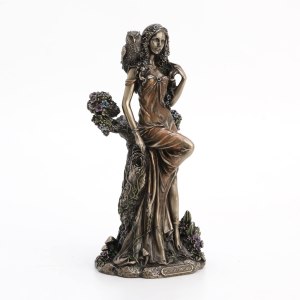
Goddess of the Day – Blodeuwedd

Blodeuwedd


Blodeuwedd was created out of flowers by Gwydion to wed Llew Llaw Gyffes. She betrayed Llew, either because she had no soul, being non-human, or because she resented being his chattel, or because the triplet of one woman and two men must play itself out in Welsh myth, and Llew Llaw Gyffes must die. At any rate, she fell in love with Goronwy and, wishing to be rid of Llew, she tricked out of him the clearly supernatural and ritual manner in which only he could be killed: neither by day nor night, indoors nor out of doors, riding nor walking, clothed nor naked, nor by any weapon lawfully made. She asked him to explain this, and he did: he could be killed only if it were twilight, wrapped in a fish net, with one foot on a cauldron and the other on a goat, and if the weapon had been forged during sacred hours when such work was forbidden. Blodeuwedd convinced him to demonstrate how impossible such a position was to achieve by chance, and when he was in it, het lover Goronwy leapt out and struck. Llew was transformed into an eagle and eventually restored to human form, after which he killed Goronwy. Blodeuwedd was transformed into an owl, to haunt the night in loneliness and sorrow, shunned by all other birds.

Flower Meaning, Symbolize, and Spiritual Meaning

From uniguide.com

Orange flower symbolism and meanings include healing and well-being, energy, vitality, enthusiasm, balance, fun, pleasure, and more. In this post, we’ll explore the symbolism and meaning of orange flowers as well as occasions in which to give them.

Types of Flowers that Are Orange

Before we go into more detail on the symbolic meaning of orange flowers, I thought you’d be interested in seeing a list of some of the kinds of flowers that come in orange or mainly orange hues. There is a wide variety. Here are some:

Bird of Paradise

Calendula

Carnation

Chrysanthemum

Clematis

Cosmos

Daffodil

Dahlia

Geranium

Marigold

Nasturtium

Orange lily and tiger lily

Orange rose

Orchid

Peony

Poppy

Tulip

Zinnia

What do orange flowers symbolize?

Blending the deep passion and energy of red with the sunny warmth of yellow, the color orange can represent many things. So, orange flowers present a range of opportunities in which to give them as gifts or reasons to plant them in your garden.

A vibrant color, orange can evoke strong responses in many people. Yet, while red flowers are synonymous with romantic love, orange flower meanings can be more nuanced. For example, here is a list of qualities that orange flowers represent:

Health and healing

Vitality and well-being

Balance

Warmth

Enthusiasm

Energy

Passion

Joy and happiness

Fun

Pleasure

Creativity

Flamboyance

Eccentricity

(Just a note: Different types of orange flowers have their own set of meanings. For more details on some of them, just click on the flower names with links in the section above.) {Each flower, if possible, will be getting their own post after I go through the color}

Healing and Well-being

Generally, when people aren’t feeling well, they can tolerate orange foods, like tangerines and peaches, more easily than other foods. So, with bright color, orange flowers exude positive energy for feeling good.

So, orange flowers make great gifts for loved ones who are dealing with a health challenge or who are trying to get into better shape.

In fact, the color orange is associated with the second chakra, or energy center, in the body, which is called the sacral chakra, or Svadhisthana in Sanskrit.

The sacral chakra governs emotional and sexual energy as well as overall mental, physical, and spiritual well-being. In essence, when the sacral chakra is balanced, we feel like we’re flourishing.

So, giving orange flowers or having them in your environment, as well as using the essential oils from orange flowers, is conducive to opening and balancing your sacral chakra and boosting vitality.

Fire and Enthusiasm

Orange flower symbolism also includes fire and enthusiasm. So, orange flowers are the perfect gift or addition to the home when you want to liven things up and even spark your creativity.

Any zany loved ones in your life?

In addition, the color orange is a little zany. So, for a romantic partner, friend, or other loved one who is more off-beat, orange flowers can be the perfect gift. Needless to say, they can also help to liven up what might otherwise be a boring garden.

In conclusion, orange flowers can generate strong feelings in many people. So, if you have loved ones who appreciate the color orange’s special qualities, or you are one of those people, you have a variety of flower options to choose from when it comes to surrounding yourself with vibrant beauty.

A Thought for Today

For me this thought goes with my daily mantra or affirmation,

“Positive Thoughts bring about Positive Actions which make me feel better!”

A Laugh for Today

Why M&M’s Are Wiccan

  • MM = Merry Meet
  • Round shape for wheel of the year, cycle of seasons
  • Skins are different colors, but the inside is the same chocolate, because we are all related
  • Associations with the colors:
    • Red = South
    • Green = West
    • Dark Brown = North
    • Yellow = East
    • Orange = For the Solar God
    • Light Brown = For the Earth Mother
  • Rotate the M & M:
    • M = 13th letter of alphabet, and there are often 13 members in a coven
    • 3 = Triple Goddess, three phases of moon
    • W = Witchcraft, Wiccan
    • E = Enlightenment

Some of the Witchcraft/Magickal Correspondence for Friday

From amagickalpath.co.uk

FRIDAY

Planet – Venus

Spells/Magic – love, friendship, socialising, affection, harmony, relationships, reconciliation, beauty, romance.

Magical aspects: love, friendship, reconciliation, beauty

Oils – African Violet, Cherry, Lilac, Rose ,Opium Poppy, Patchouly,

Plants and Trees – adler tree,daisy,apple tree,aster,birch tree,blackberry,catnip,cherry tree,crocus,elderberry,feverfew,foxglove,geranium,goldenrod,hollyhock,lady`s mantel,lilac,mugwort,plumtree,rose,spiderwort,strawberry,tansy,thyme,vanilla,violet, yarrow, pansy.

Stones – Emerald, jade, malachite, rose quartz, torquoise

Colours – green, pink, white, rose, coral.

Metal – Coper

Energy Type – Female

Dieties – Friday takes its name from Frigga, the Goddess of Love and Transformation. She rules the spiritual aspects of people as they manifest on the physical. because of this, Friday is sometimes thought of as unpredictable.

Friday is the best time to deal with such matters as: Romantic Love, Friendship, Beauty, Soul-mates, Artistic Ability, Affection, Partners, Alliances, Grace, Luxury, Social Activity, Marriage, Decorating, Cosmetics, Gifts, Income, Gardening, Architects, Artists, Beauticians, Chiropractors, Dancers, Designers, Engineers, Entertainers, Fashion, Music, Painting, Poetry, Courtship, Dating, Household Improvements, Planning Parties, Shopping, Herbal Magick, Luck, Fertility, Physical Healing, Balance, Prosperity, Courage, Change, Material Things, Peace, Harmony, Relationships and Success.

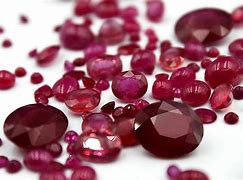
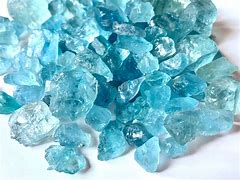
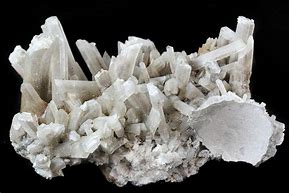
Crystal, Gems, and Stones Meanings and Magickal Usage that Correspondence with Thursday

Click on each hyperlink to learn more about the crystal from mycrystalaura.com.au

Crystals:

,

Amethyst

Lepidolite

Sugilite,

Sapphire

Emerald

Cats Eye.

A Thought for Today – Printable

Fairy Cakes with Cream Icing

Actual fairy cakes are about the size of raspberries [All L. B. side notes appear in [ ]. My granddaughter and I collected larger sized acorn tops (these are used a dishes by Fae Folk) and then bake about 8 fairy size cakes in those. Baking time varies so check them after about 5-7 minutes to see if they are done]. Since it is hard to find baking pans that small, you can bake them in a muffin tin.

INGREDIENTS

500 mL flour 2 cups

10mL Baking Powder 2 teaspoons

5mL Salt 1 teaspoon

175 mL [stick] Butter 3/4 cup

375mL White Sugar 1 1/2 cups

3 Eggs 3

5mL Vanilla 1 teaspoon

325 ml Milk 1/13 cup [L.B. Side Note: I found Whole Milk works the best but 2% or Skim will work also]

  1. Grease the muffin tin with a bit of butter [. B. Side Note: You can use muffin liners also]
  2. Sift together the flour, baking powder, and salt.
  3. Cream together the butter and sugar, then add the effs and vanilla. Beat until light and fluffy.
  4. Add a few spoonfuls of dry ingredients then some milk to the cream mixture. Keep alternating ingredients until well mixed.
  5. Fill the muffin cups [and acorn tops if using them] three-quarters full. Bake at 180 degrees C (350 degrees F) for 20-25 minutes. [May take longer depending on your oven]
  6. Let cool before frosting with your favorite icing. [For me it was a light cream cheese frosting made with almond extract instead of vallia]

Copyright 1999 Penelope Larkspur The Secret Life of Fairies

A Laugh for Today

Some of the Witchcraft/Magickal Correspondence for Friday

FRIDAY CORRESPONDENCES

Venus/Water/East/West/South/Dawn/Female/Libra/Taurus


Magickal Intentions: Love, Romance, Marriage, Sexual Matters, Physical Beauty, Friendship and Partnerships, Strangers, Heart

Color: aqua, blue, light blue, brown, green, pale green, magenta, peach, pink, rose, white, all pastels

Number: 5, 6

Metal: copper

Charm: green or white garments, scepter

Stone: alexandrite, amethyst, coral, diamond, emerald, jade, jet, black moonstone, peridot, smoky quartz, tiger’s-eye, pink tourmaline

Animal: camel, dove, elephant, goat, horse, pigeon, sparrow

Plant: apple, birch, cherry, clematis, clove, coriander, heather, hemlock, hibiscus, ivy, lotus, moss, myrtle, oats, pepperwort, peppermint, pinecone, quince, raspberry, rose, pink rose, red rose, rose hips, saffron, sage, savin, stephanotis, strawberry, thyme, vanilla, verbena, violet, water lily, yarrow, and all flowers

Incense: ambergris, camphor, mace, musk, myrrh, rose, saffron, sage, sandalwood, sweetgrass, vanilla, violet, all floral scents

Goddess: Aphrodite, Asherah, Baalith, Brigid, Erzulie, Freya (Passionate Queen), Frigg, Gefion, Harbor (Beautiful One), Hestia, Inanna, Ishtar (Lady of Passion and Desire), Lakshmi, Lilith, Mokosh, Nehalennia, Nerthus, Ostara, Pombagira, Sarasvati, Shakti, Shekinah, Sirtur, Al Uzza, Venus (Queen of Pleasure), Vesta

God: Allah, Bacchus, Bes, Cupid, the Dagda, Dionysus, El, Eros (God of Love), Freyr, Frit Ailek, Shukra

Evocation: Agrat Bat Mahalat, Anael, Hagiel, Mokosba, Rasbid, Sachiel, Uriel, Velas

Courtesy of Moonlight Musings


A Thought for Today – Printable

Today’s thought is dedicated to a special reader, Alan, who is going through a bit of a rough time. I ask our WoTC family to send him comfort and positive thoughts.

A Laugh for Today

Coping strategies for anxiety include many things, but one thing that’s sure to help is indulging in some humor—which we just happen to have for you!

From Reader’s Digest

Anxiety cartoons we can all relate to

Dealing with anxiety in your everyday life is a rollercoaster of emotions, but something that can help people get through it is knowing that others feel the same way. These anxiety cartoons will make you feel like you’re not alone and will also get you laughing. If you want even more laughs, check out these medical cartoonsanimal cartoons, and some of the funniest memes.

You constantly feel like you’re being judged even by inanimate objects.

Visual exercise it can be difficult.

Charging stress you can’t escape the stress that’s staring at you with its beady black eyes.

Some of the Witchcraft/Magickal Correspondence for Thursday

From gypsywolf.weebly.com

Thursday is the fifth day of the week.   In the Norse languages this day is called Torsdag, honoring Thor, the god of strength, fertility, thunder, the protector and defender in war, and son of Odin.  Thor is the counterpart of Zeus (Greek), and Jupiter or Jove (Roman).  Thor, the most beloved of the great gods of northern mythology, is the only god who cannot cross from earth to heaven across the rainbow bridge, for he is so heavy and powerful that the gods fear it will break under his weight.  It was said that whenever his hammer Mjollnir, was thrown, it would produce a thunderbolt and when struck against stone, it would create lightning.

Thursday

Latin: Dies Jovis (“Jove’s Day”), after Jove or Jupiter, the almighty Roman God.
French: jeudi
Italian: giovedi
Spanish: el jueves
German: Donnerstag
Dutch: donderdag

Rules: Expansion, wealth, prosperity, political power, legal matters, spirituality, meditation.
Colors: Purple, Deep Blue
Planet: Jupiter
Metal: Tin, associated with the thunderbolt of Jupiter (Zeus in Greek myth)
Stones: Amethyst, Lepidolite, Sugilite
Herbs: Anise, Cinquefoil, Clove, Honeysuckle, Hyssop, Maple, Nutmeg, Oakmoss, Sage, Sarsaparilla, Sassafras, Star Anise
Zodiac: Sagittarius

From plentifulearth.com

Thursday Magickal Correspondences

Planet: Jupiter

Element: Earth

Gender: Masculine

Deities: Juno, Jupiter, Thor, Zeus

Colors: Blue, Green, Purple, Rich Royal Colors

Crystals: Aventurine, Amethyst, Brown Jasper, Green Lodestone, Green Tourmaline, Lapis Lazuli, Malachite, Peridot, Tin, Turquoise

Herbs & Plants: Anise, Borage, Cinquefoil, Clove, Dandelion, Dill, Fig, Honeysuckle, Hyssop, Maple, Meadowsweet, Mint, Nutmeg, Oak, Patchouli, Sage, Star Anise

Incenses: Cinnamon, Clove, Jupiter Oil, Musk, Nutmeg, Oakmoss, Patchouli, Sage

Energies & Associations: Abundance, Career, Employment, Energetic Increase, Expansion, Generosity, Growth, Happiness, Healing, Harvesting, Honest Leadership, Honor, Leadership, Legal Matters, Loyalty, Luck, Male Fertility, Material Opportunities, Money, Optimism, Power, Prosperity, Protection, Riches, Wealth

Goddess of the Day – Bast


Bast

In Egyptian mythology, Bast (also spelled Ubasti, Baset, and later Bastet) is an ancient solar and war goddess, worshipped at least since the Second Dynasty. In the late dynasties, the priests of Amun began to call her Bastet, a repetitive and diminutive form after her role in the pantheon became diminished as Sekhmet, a similar lioness war deity, became more dominant in the unified culture of Lower and Upper Egypt. In the Middle Kingdom, the cat appeared as Bastet’s sacred animal and after the New Kingdom she was depicted with a woman with a cat’s head carrying a sacred rattle and a box or basket.

Bast or Bastet was the cat goddess and local deity of the town of Bubastis or Per-Bast in Egyptian, where her cult was centered. Bubastis was named after her. Originally she was viewed as the protector goddess of Lower Egypt, and consequently depicted as a fierce lioness. Indeed, her name means (female) devourer. As protector, she was seen as defender of the pharaoh, and consequently of the later chief male deity, Ra, who was a solar deity also, gaining her the titles Lady of Flame and Eye of Ra.

The goddess Bast was sometimes depicted holding a ceremonial sistrum in one hand and an aegis in the other – the aegis usually resembling a collar or gorget embellished with a lioness head.

Bast was a goddess of the sun throughout most of Ancient Egyptian history, but later when she was changed into a cat goddess rather than a lion, she was changed to a goddess of the moon by Greeks occupying Ancient Egypt toward the end of its civilization. In Greek mythology, Bast is also known as Aelurus.

History and Connection to Other HodsDue to the threat to the food supply that could be caused by simple vermin such as mice and rats, and their ability to fight and kill snakes, especially cobras, cats in Egypt were revered highly, sometimes being given golden jewellery to wear and were allowed to eat from the same plates as their owners. Consequently, later as the main cat (rather than lioness) deity, Bastet was strongly revered as the patron of cats, and thus it was in the temple at Per-Bast that cats were buried and mummified.

When the owner died they would put the owner next to the mummified cat. More than 300,000 mummified cats were discovered when Bast’s temple at Per-Bast was excavated. Herodotus writes that when a cat in the family dies, Egyptians shaved their eyebrows and took the body to Bubastis to be embalmed.

As a cat or lioness war goddess, and protector of the lands, when, during the New Kingdom, the fierce lion god Maahes of Nubia became part of Egyptian mythology, she was identified, in the Lower Kingdom, as his mother. This paralleled the identification of the fierce lioness war goddess Sekhmet, as his mother in the Upper Kingdom.

As divine mother, and more especially as protector, for Lower Egypt, she became strongly associated with Wadjet, the patron goddess of Lower Egypt, eventually becoming Wadjet-Bast, paralleling the similar pair of patron (Nekhbet) and lioness protector (Sekhmet) for Upper Egypt. Bastet was the daughter of Amun Ra.

Later PerceptionLater scribes sometimes renamed her Bastet, a variation on Bast consisting of an additional feminine suffix to the one already present, thought to have been added to emphasize pronunciation; but perhaps it is a diminutive name applied as she receded in the ascendancy of Sekhmet in the Egyptian pantheon. Since Bastet literally meant, (female) of the ointment jar, Bast gradually became regarded as the goddess of perfumes, earning the title perfumed protector. In connection with this, when Anubis became the god of embalming, Bast, as goddess of ointment, came to be regarded as his wife. The association of Bastet as mother of Anubis, was broken years later when Anubis became Nephthys’ son.

Egypt’s loss in the wars between Upper and Lower Egypt led to a decrease in her ferocity. Thus, by the Middle Kingdom she came to be regarded as a domestic cat rather than a lioness. Occasionally, however, she was depicted holding a lioness mask, hinting at potential ferocity. Because domestic cats tend to be tender and protective of their offspring, Bast was also regarded as a good mother, and she was sometimes depicted with numerous kittens. Consequently, a woman who wanted children sometimes wore an amulet showing the goddess with kittens, the number of which indicated her own desired number of children.

Eventually, her position as patron and protector of Lower Egypt led to her being identified with the more substantial goddess Mut, whose cult had risen to power with that of Amun, and eventually being syncretized with her as Mut-Wadjet-Bast. Shortly after, Mut also absorbed the identities of the Sekhmet-Nekhbet pairing as well.

This merging of identities of similar goddesses has led to considerable confusion, leading to some attributing to Bastet the title Mistress of the Sistrum (more properly belonging to Hathor, who had become thought of as an aspect of the later emerging Isis, as had Mut), and the Greek idea of her as a lunar goddess (more properly an attribute of Mut) rather than the solar deity she was. Indeed, much of this confusion occurred with subsequent generations; the identities slowly merged among the Greeks during their occupation of Egypt, who sometimes named her Ailuros (Greek for cat), thinking of Bastet as a version of Artemis, their own moon goddess.Thus, to fit their own cosmology, to the Greeks Bastet is thought of as the sister of Horus, whom they identified as Apollo (Artemis’ brother), and consequently, the daughter of the later emerging deities, Isis and Ra.

The worship of the Goddess Bast continues today through Khemetic reconstructionalist religions, there are several ‘Bast Cults’ some of which may be found online and as such, technically, predates most Religions. In current day it is very common for Bast to be seen as a fertility goddess or even a goddess of lesbianism, despite the fact that research on her actual functions within the Egyptian pantheon is so very easy.

From Crystalinks.com

Witchcraft Symbols, Terms and Definitions

From thoughtcatalog.com

Pentagram

A pentagram (or pentacle) is a circled five-pointed star that most people associate with witchcraft or satanism. Far from being an evil symbol the pentagram represents protection, the self, or the spirit. The five points of the pentagram represent five basic elements: earth, air, fire, water and spirit.

Represents: the elements.

Used in rituals for: protection.