
Category: Daily Posts
Magick Symbols – ELEMENTS c. 2018
ELEMENTS
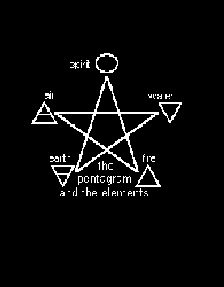
The four basic elements to many pagans are earth, water, air (wind or spirit) and fire. Many consider the first two passive and feminine—and the last two active and masculine. In Wiccan or Native American rituals, the “quartered circle” (similar to the Medicine Wheel) represents a “sacred space” or the sacred earth. The four lines may represent the spirits of the four primary directions or the spirits of the earth, water, wind and fire.
THESE CURATED CRYSTALS WILL HELP YOU BLOOM ALONG WITH THE SEASON c. 2019
THESE CURATED CRYSTALS WILL HELP YOU BLOOM ALONG WITH THE SEASON
Our monthly Crystalscopes pair each zodiac sign with a crystal whose energies can support us through the coming month’s transits. We choose crystals that are accessible and widely available; you may see the same stone pop up from month to month as a medicine for a different sign—consider it an invitation to use your toolkit!
Also consider low-impact methods like using gem essences and elixirs, buying used crystals, or starting a crystal share with friends. Real magic can only be accomplished by acknowledging our impact on the world around us.
Read these for your sun, moon, and rising signs to learn what you should wear, carry, or place on an altar to help boost your specific astrology for the month. These also work as remediations for specific houses in your natal chart. This month’s crystals are specially selected to maximize Venus’ transit of Pisces and the double Libra full moons we get this year.
APRIL 2019 CRYSTALSCOPES
ARIES
SMOKY QUARTZ
Happy birthday, April Aries! This month is action-packed for Aries, with the sun, Mercury, and Venus all spending time in the sign of the ram—along with Chiron, whose presence we’re still just getting used to. Unfortunately, Aries may feel a little thin-skinned this month, with sensitivities exceptionally high, especially around the full moon. Smoky quartz is a traditional gemstone ally to aid in conditional invisibility, or in sneaking in under the radar, where desired. It is a great month for Aries to adjust energetic boundaries, and smoky quartz makes a great assistant in doing so. Wear a smoky quartz ring or a necklace to help suss out the right social situations and have a fantastic solar return.
TAURUS
ROSE QUARTZ
Happy birthday to first decan Tauruses! The sun and Uranus will be conjunct in Taurus on April 23, and this is an ideal month to let the bulls of the zodiac roam free. An underappreciated aspect of Taurus’ famous stubbornness is a wholehearted commitment to personal freedom that can sometimes be quite iconoclastic and unconventional. Uranus in Taurus will certainly amplify this quality, and here in its first degrees and its conjunction with the sun, it opens up all kinds of giddy opportunities for more complete and holistic self-love. Try a birthday bath with a rose quartz companion and an affirmation on your mirror designed to help you embrace radical new concepts of beauty.
GEMINI
BLUE LACE AGATE
Mars lights up your corner of the sky this month. Ambition, sex appeal, and vitality can all soar—Gemini is practically hot to the touch this month! While a welcome boost, this energy can also feel like a little much, especially with so much mutable energy abounding in the cosmic sphere. Soothing, beautiful lace agate, especially worn at the throat, aids the twins in keeping things proportional, so you can avoid having your mouth write checks your body can’t cash.
CANCER
GARNET
Between the sun squaring your sign and Saturn and Pluto opposing it, Cancer may be feeling a bit, well…crabby. April is rife with potential annoyances, hindrances, and challenges, but they are not without merit. Long-term investment, loyalty, and commitment are needed to clarify plans and desires—luckily Cancer excels at showing up. Garnet was carried into battle by ancient warriors to remind them what they fought for; carried in your pocket or worn as a talisman, it can remind you too!
LEO
BLACK ONYX
Trines with the sun, Mercury, Venus, and Jupiter are undeniably exhilarating. April offers Leo prosperous opportunities and a chance to shine. With many different options to choose from, it will be necessary to practice your best diplomacy skills and perhaps even evade a bit of jealous critique. Black Onyx was a go-to for ancient Greek philosophers who wished to keep their interpersonal debates in the forum and prevent drama from spilling into everyday life. Particularly if you’re engaged in casual dating or a competitive professional sphere, Leo may want to call in some backup with regal, potent black onyx.
VIRGO
AMETHYST
Virgo is probably feeling a little fried at this point. Ever the workaholic, Virgo may have gone a little hard in March and are now finding themselves in need of respite. Abundant mutable energy continues to swirl around us, and the seemingly never-ending Piscesinfluence drags particularly hard on Virgo. It has been a necessary and transformative gauntlet, but as the Pisces party draws to a close and Mercury and Venus transit to new signs mid-month, Virgo needs to power through and rebalance. An ancient remedy for drunkenness (literally: it was dropped in wine glasses at the end of parties in hopes of mitigating intoxication), amethyst helps Virgos use spiritual reflection to stay in equilibrium. Wear earrings or a barrette to maximize this childhood favorite’s effects on your poor, addled mind.
LIBRA
CAT’S EYE
With this second powerhouse full moon, Libra is gifted an opportunity to envision and manifest whatever you most desire. There is no limit to what Libra can envision and dream up this month; opposing Aries energies and squares from the nodes and Saturn and Pluto do create tension, but hopefully, this energy can be harnessed and used to boost Libra’s ability to go big. Indecisiveness is often a factor for the scale-bearers, but gorgeous and enchanting cat’s eye chrysoberyl is traditionally used to cut to the heart of anything that is convoluted or unclear. Libra can particularly benefit from clear vision because this month’s full moon work is almost guaranteed to come to fruition, so we want our requests to ring clear as a bell.
SCORPIO
LAPIS LAZULI
This month will likely be filled with some profound intrigues for Scorpio. Mercury, Venus, and Neptune all spend some time in Pisces, and alongside the north node in Cancer, create some powerful depth magic for the fixed water sign. It is more possible than ever for Scorpio to truly dive deep into emotional processing, intimate communication, and the claiming of power. Lapis lazuli was the stone of the priest class in ancient Egypt, ensuring right use of authority and integrity in leadership. Scorpio’s potency is off the charts this month and lapis lazuli is an uncompromising co-ruler.
SAGITTARIUS
IOLITE
Riding the waves of mutability this month, Sagittarius is invited to shoot for the stars—but for real this time. Less talk, more walk. A certain amount of tender realism and staunch determination will stabilize the centaur’s most extravagant daydreams in April. Very big things are possible for Sagittarius this month but must arrive in combination with deep faith and profound honesty with the self—dispelling illusion is a must. Enter iolite. This beautiful purple-gray stone of spiritual awareness and truthful awakening is an ideal companion for Sagittarius this month, cementing even very extravagant plans to ensure future success. Try incorporating iolite into a daily prayer practice and watch your wildest dreams come true.
CAPRICORN
GOLDEN CALCITE
Capricorn is undergoing such a powerful renovation over the next few years, what with Saturn ensconced at home and Pluto decamped in the sign of the enigmatic sea-goat. April provides a gorgeous opportunity for Capricorn to boost self-regard, especially where it comes to the axis of deserving/undeserving. Stimulating the solar plexus is ideal here, as well as encouraging the notoriously serious sea-goat to lighten up a bit. Golden calcite is pure laughter—recommended use is resting the stone on your solar plexus while meditating on the theme that you deserve abundance and goodness. If you live in a state where it is legal, and you partake, then by all means enhance the giggles with a little herbal support.
AQUARIUS
BLOODSTONE
Aquarius has undergone a major healing journey over the last eighteen months, and the road ahead is finally opening. Significant change is afoot, but there may be a few final spasms of discomfort to overcome, especially with tense squares from the sun and Uranus late in the month. Bloodstone has long been associated with overcoming suffering, transcending pain, and learning from our particular tragedies. Wearing or carrying bloodstone this month will help the water-bearers achieve their apex identity: that of one who has triumphed over adversity, one who has survived against all odds.
PISCES
SAPPHIRE
Usually, sapphire is associated with Pisces’ sister sign of Virgo, but this time we’re calling it in here. Mercury’s unusually long stay in your sign this year, combined with Venus’ scintillating exalted visit and Neptune’s long and lush home game, greatly amps up the potential for increased self-knowledge. Sapphires come in every color of the rainbow, and the diversity available in this stone should serve as inspiration for Pisces dreamers the world over. Wearing a sapphire provides a boost to self-confidence that can allow you to showcase your very specific self and amplify your 12th house gifts of magic, mystery, and playful mayhem.
Published On Astrology.com
Change of Plans on New Moon and S.H. Mabon/Fall Equinox Posts
My 14 year old Min Pin, Cleopatra, whose is also one of my magickal companions is pretty sick. I cannot concentrate on posts right now as I feel the need to cuddle with her and do some hands-on healing. I will get back to these posts as soon as I can if not today than early tomorrow morning. Sorry for the postponement but family comes first and she is one of our 4 canine fur kids.
Witchcraft Symbols, Terms and Definitions – Rabbit

Rabbits
What Do Rabbits Symbolize? Rabbit Symbolism Meaning from rabbitcaretips.com
Rabbits are one of the most popular pets. However, rabbits have been a part of lives, cultures, and religious practices for much longer than they have been considered pets. Historically speaking, rabbits hold a great deal of symbolic meaning. This can guide dreams, art, and even traditional dress.
Rabbits almost always symbolize prosperity, abundance, good luck, and fertility. Unlike many other animals, which have different meanings in different cultures, rabbit symbolism is consistent. In most European cultures, rabbits are springtime animals, symbolic of fruitfulness and renewal. The connection between rabbits and spring is also found in Japanese culture. In the U.S., rabbits are symbolic of cleverness, devotion to self-improvement, and good luck.
There are some cultures that see rabbits differently, however. While rabbits are the luckiest of the Zodiac animals in China, they are primarily seen as trickster animals by Native American cultures. Furthermore, while many Central American peoples see rabbits as symbols of fertility, Aztec mythology associates rabbits with drunkenness and promiscuity.
Contents
Crystal, Gems, and Stones Meanings and Magickal Usage – Rose Quartz c. 2011

Rose Quartz
This crystal, one of the most valued quartz varieties, is renowned for its delicate pink tone. The impurities of titanium or manganese that give it this hue also prevent the growth of large individual crystals, which means it is usually found in massive form. Most rose quartz these days comes from Brazil but there also sources in India, Madagascar and the USA. In healing work, the stone encourages the heart to open, bringing more trust and love into our lives.
Identification and care
- Large, single rose quartz points have been shaped from larger rough pieces.
- Unpolished rose quartz has sharp edges.
- “Lavender” quartz is rose quartz with a ting of violet.
- Most pieces of rose quartz are translucent with many fractures; gemstones are flawless and transparent
- Star rose quartz containing rutile crystals has asterisms (star effects), which can be seen when light reflects off the polished surface.
Magick
- Fosters an appreciation of beauty
- Inspires feeling of love and friendship
Healing Functions
- Rapidly releases emotional stress – the effect is so intense that it can be uncomfortable (to avoid this, balance with grounding stones)
- Uncovers the underlying causes of other problems, such as a negative self-image
Practical Ideas
- To release emotional stress, place tiger’s eye at the sacral chakra grounding stones by the feet and rose quartz at the heart, surrounded by four clear quartz (points out).
- For self-worth and nurturing, place 12 rose quartz evenly around the body. The effect of the experience is amplified if you lie on a pink or magenta cloth.
10 Types and The Meaning of White Lilies
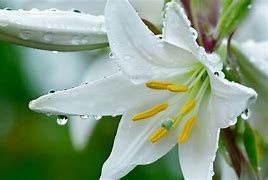
White Lily
From floweradvisor.com
Lily is one of the liked flowers in the world. Starting from the shape of the petals to the color variants, they have their beauty. Most lilies grow in white, yellow, pink, red, and orange colors. Each color has a different meaning and meaning. But lilies are known as a symbol of purity and beauty, include white lilies
The meaning of White Lily
Lily has many colors. One of them is white. It is interesting to know about white lilies. This white flower has the meaning of commitment, faith, and rebirth. Like other lilies, white lilies also bloom in the mid-spring to dry season.
White lily is the right flower choice if you want to show sympathy. It is good to give it in a mourning atmosphere such as a funeral. But as a symbol of commitment, a white lily can be used as a wedding bouquet and part of the decoration.
Lastly, a white lily is also a beautiful gift for newborns because it symbolizes rebirth.
Types of White Lilies
White lilies are not a type of lilies themselves. Several types of lilies are white. What are the types of white lilies?
-
White Stargazer Lilies
One kind of lily is known as the ‘Snow Princess’, is a flower that is still rarely found. This flower represents sympathy. The petals are large and have an intoxicating aroma, becoming a flower that adds beauty in summer.
-
Easter
As programmed, the Easter lily will only bloom at the same time every year. If cared right way, they will multiply every year. One of the things about Easter Lily is when it blooms, you can save the blubs and plant them again.
-
Madonna
The part of the oldest types of lily flowers. It has a shape like a trumpet with pure white color. Become a symbol of purity of soul and chastity. Madonna also known as Peace lily blooms all year round to reveal its beautiful glossy green leaves.
-
Casa Blanca
It looks graceful and elegant with red stamens looks beautiful and admired. Casa Blanca representing life and joy. The flower is often a birthday gift and wedding decoration.
-
Shirui
Shirui is unique. It is hard to find it because located in the Ukhrul area, India. The color mixed with pink looks beautiful and sweet. It is shaped like a bell and has a height of up to one foot. Shirui blooms from April to June every year.
-
Royal
It has many names ranging from Regal’s Lily, Christmas’ Lily, and King’s Lily. Originally from West China, it grows on rocky slopes and riverbanks.
-
Calla
Often used in Easter celebrations because it is a symbol of resurrection and rebirth. But it also represents the meaning of innocent. The flowers are large, about 10 inches. They bloom in late spring to mid-summer.
-
Formosa
It is known as Taiwanese lily. Formosa has large, fragrant flowers. Blooms from summer to fall. This plant can grow 4-7 feet in height. Wine’s purple color beautifies the edges of the petals.
-
White water
The petals are fragrant and soft. It looks elegant in white. Known as an ornamental plant and often appears in garden water. Ancient cultures often associated the white water lily with the spiritual world and gods. Now the white water lily is used as an invasive plant. Water lily has the meaning of peace and pleasure.
-
Golden-Rayed
It is known as the gold lily. Golden-Rayed symbolizes purity of heart and surrenders to the grace of God. It is the tallest lily plant of all. The flowers are large and have a spicy-sweet aroma.
How to plant and take care of white lilies …
Some of the Witchcraft/Magickal Correspondence for Ostara – Printable
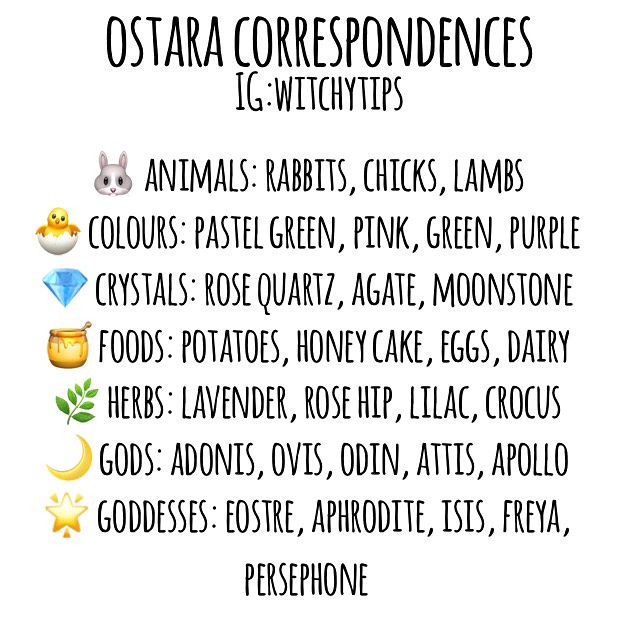
Ostara – Let there be Light
From sagegoddess.com
Ostara & The Spring Equinox
Spring draws near, and with the vernal equinox comes Ostara, the goddess and patron deity of spring. She comes with her totem spirit, Rabbit, to bring renewal to the land. Our time for rest and retreat is reaching an end, as we now prepare to give life to the ideas we’ve been cultivating inside all winter. We also recognize and give thanks for the solitude, self-reflection, and wisdom the dark time of dreaming brought us.
The vernal equinox marks the time of year when the Sun crosses the equator, making the length of day equal to the length of night. This day is one of only two magical times of the year where night and day are precisely balanced – the Wheel of the Year is symbolically sliced in half. It’s time to burn what no longer serves you and activate your spirit, so you may blossom with the spring and emerge as your most enlightened self.
History of Ostara & Spring Traditions
The native pre-Christian Germanic tribes of northern Europe worshipped a goddess of spring called Ostara. The Saxon tribes of old Britain called her Eostre, and she is known for giving her name to the Christian Easter. Her feast day was held on the full moon following the vernal equinox, much like the modern Easter. Ostara is the goddess of the dawn and awakening earth. She embodies growing light and fertility.
Eggs are sacred to Ostara, symbolizing the renewed cycle of life and staple source of food. Chickens kept in natural light quit laying in winter, resuming in the spring with peak months March and April. In Western tradition, we’re all familiar with “Easter eggs,” which date back to ancient times, as a symbol of fertility and rebirth. In Persia, eggs have been painted and colored for over fifteen-hundred years as part of the spring celebration of Nowruz, the Persian and Iranian New Year.
All around the world, ancient and indigenous cultures hold rituals, feasts, and celebrations at the vernal equinox. Ancient Roman followers of the goddess Cybele believed she had a consort who died and was resurrected on this day. The ancient Mayans honored many sacred days associated with celestial events, especially the equinoxes. As the Sun sets on the day of the equinox, the western face of the Mayan pyramid El Castillo is fully bathed in sunlight. This pyramid was intentionally designed to work with the lengthening shadows, giving the appearance of a diamondback snake descending down the wall.
Intentions of Light
Our roots to the Earth and our connection to her seasons go deep. Our ancient ancestors knew this and honored the cycles of nature. When you celebrate the equinoxes, you timelessly connect with our ancestors who have participated in ritual and ceremony on this occasion for millennia. This year, in the Northern Hemisphere, we’ll celebrate Ostara on March 19. Use this day to cleanse, heal, balance your spirit, and regenerate your vital energy. This is the time to activate spring’s energy of light, hope, fertility, growth, and new beginnings with the return of the Sun.
Light a candle to symbolize the return of the light, and set your intentions for new beginnings and renewed passion. This is another chance to re-emerge with new vision, new commitment, and newfound wings. Create an Ostara altar – read my blog on this topic for more info. Charge your gems under the Sun, in the light of the equinox, to infuse them with the fiery spark of life and rebirth. Ask them to generously hold the power of the Sun’s radiance, making it readily available to you as the Wheel of the Year continues to turn. This ritual is especially powerful at noon when the Sun is at its highest point in the sky, and at the first moment of spring (when the Sun moves into the sign of Aries), which varies by geographic location. This year, in Los Angeles, the exact time is 8:49 pm PT on Thursday, March 19.
At this potent point of transition into the days of light, take a moment to pause during the brief balance between light and dark; day and night. May it reconnect you with your own harmony and wholeness, in perfect proportion.
Ostara Blessing
Speak, Ostara, of hope and growth – your gifts to us.
Teach me the ways of light
and reveal the path of illumination
as I prepare to transcend.
Shedding my cold winter skin,
I activate my sanctity,
burning away what no longer serves me.
I emerge from my hibernation,
awaken my dormant energy,
and blossom with the spring.
Amen, A’ho, So it is.
~*~ ~*~ ~*~ ~*~ ~*~ ~*~ ~*~ ~*~ ~*~ ~*~ ~*~ ~*~ ~*~ ~*~ ~*~ ~*~ ~*~ ~*~ ~*~ ~*~ ~*~ ~*~ ~*~ ~*~ ~*~
Do you want to work directly with me and learn more about astrology, metaphysics, spiritual leadership, and personal growth; plus enjoy free personalized readings from me every week? Join my Sage Goddess Soul Shift program to find your authentic voice, understand your soul’s purpose, reclaim your sovereignty, and expand your consciousness.
Do you love harnessing the energy of the Moon in all her phases? Join my Full Moon Ritualists community on Facebook where we share educational tidbits on working with moon energy, learn about astrology, and engage in lively, wild conversations with other like-minded people.
Are you curious about the medicine of gemstones and crystals? Join my Gem Haven community on Facebook where we share tips and tools on harnessing the magic of gemstones and crystals, educate you on the properties of the most popular stones available on the planet today, and engage in lively, wild conversations with other like-minded people.
Are you a perfume lover like I am? Do you know the healing magic of the oils that are used to make all of our perfumes? Join my Perfumery community on Facebook where you can learn about the properties of certain essences, how to work with certain blends to manifest your intentions, and engage in lively, wild conversations with like-minded people.
March 20 Daily Divination Journal – Ostara
Tarot Card
From Tarotx.com – Gilded Tarot Deck

Six of Cups
Menu of Contents
I. Meaning of the Six of Cups Gilded Tarot
II. Message of the Six of Cups Gilded Tarot
III. Interpretation of the Six of Cups Gilded Tarot in a spread

Rune
From TheRuneSite.com – Medieval Runes

Sól
Sound: “ss” as in “kiss”
Stands for: Disk of the sun
Magick/Healing use: Brings the healing power and warmth of the sun.
Witch’s Rune
From GroveandGrotto.com

The Leaf
Ostara
Growth, abundance, promise of harvest, good fortune. A strong “maybe”.
Ogham
From LearnReligions.com – Celtic Ogham

Fearn or Fern
F is for Fearn or Fern, which is associated with the Alder tree. The Alder is representative of the evolving spirit. Connected with the month of March and the spring equinox, Alder is the symbol of Bran in Celtic mythology. In The Mabinogion, Bran laid himself across a river as a bridge so that others might cross–likewise, the Alder bridges that magical space between earth and the heavens. It is also associated with oracular powers–Bran’s head was an oracle in legend.
Alders are often found in swampy, boggy areas, and conveniently, their wood doesn’t rot when it gets wet. In fact, if left to soak in water, it becomes hardened. This came in handy when early Britons were building strongholds in bogs. The city of Venice, Italy, was originally built upon piles of Alder wood. Once it’s dry, though, Alder tends to be less than durable.
Fearn Correspondences
Mundane Aspects: Keep in mind that you are an individual… but so is everyone else. When you look at someone, see the unusual which makes them themselves–and allow them to see that uniqueness in you. Be a mediator, a bridge, between people who may be having a disagreement.
Magical Aspects: Follow your instinct. Others will turn to you for advice and counsel during spiritual disagreements, and it’s your job to be the mediator and voice of reason.
I Ching
Click here for more detailed information about Hexagram 18 from iching.online
(Question – What do my southern hemisphere readers need to know for Mabon?)

Hexagram Eightteen/18
Ku / Repairing the Damage
Winds sweep through the Mountain valley:
The Superior Person sweeps away corruption and stagnation by stirring up the people and strengthening their spirit.
Supreme success.
Before crossing to the far shore, consider the move for three days.
After crossing, devote three days of hard labor to damage control.
SITUATION ANALYSIS:
You are blessed with an opportunity to resuscitate that which others have abandoned as beyond repair.
This ruin wasn’t caused by evil intention, but by indifference to decay.
Just by addressing yourself to the problem, you exhibit a new awareness, a fresh perspective.
This is a time of recovery, renewal, regeneration.
Numerology
Click here to read more about the numerology meaning of the number 18 from numerology.com

Eight
Every number in Numerology has a different meaning. The real substance is in the single digits; each of these numeric symbols casts a unique energy that impacts us on both external and internal levels — and even how it relates to our compatibility with other people! By understanding the different meanings of these numbers in Numerology, we can better realize the messages the numbers are sending when they appear in our lives. If there is an abundance of the number 8 in your life, the meaning of these messages center around hard work, success, and karmic balance.
What is the definition of 8 in Numerology?
Of all the numbers in Numerology, the number 8 is the achiever and measures life by the goals it reaches. It has good business sense, a powerful presence, and a strong drive for success. The 8 is also a symbol of balance — you can see it in its symmetrical shape. For every blessing it receives, it puts one back out to the universe. When things are balanced, they feel stable, controlled, and supported, which is the most productive environment for the 8 to work in.
In Chinese culture, the number 8 is considered the luckiest number of all, and …
Angel Number
Click for more information about Angel Number 321 from informationseries.com

Three Hundred Twenty One
Basic knowledge of angel number 321
An angel number has a meaning as a block of numbers and a meaning separated. Also, when it comes to a three-digit number like angel number 321, the meaning of the middle number is the strongest. First, let’s learn basic knowledge.
321 can be decomposed most strongly in the middle number
In the case of angel number 321, it means “321”, “3”, “2” and “1”. The 321 means that believing in God gives you the support of the Ascended Master. It has multiple meanings.
3-digit numbers are considered to have the strongest meaning in the middle
It is said that the energy of an angel number increases as the number of digits increases. Also, in the case of numbers like three digits, the middle number has strong energy. In the case of angel number 321, the energy of the number 2 is strong.
Meaning of angel number 321
Angel number 321 has multiple meanings, but the overall meaning is supported by the ascended master. It also means trusting God and turning fear into confidence and security. Let’s take a closer look.
Ascended Master Dedicated Help
Ascended Masters are saints who have accomplished feats in the human world, such as Jesus Christ and Buddha. The Ascended Master has been a lofty person even after the Ascension. By believing in the Ascended Master, you will receive a positive message…
Animal Spirit Guide or Helper
Click here for more information about the spiritual meaning for the RAccom from UniGuide.com

Raccoon
Raccoon meanings and symbolism include disguise, trickery, adaptability, dexterity, resourcefulness, and training. In this post, you’ll learn about raccoon symbols and meaning and the raccoon spirit animal. Plus, you’ll learn about the raccoon in cultural mythology and more.
Table of Contents
What does a raccoon symbolize?
Detailed Racoon Symbols and Meanings
Raccoon Mythology and Folklore
Native American Raccoon Meanings
Abenaki Tribe: Azeban the Trickster
Biblical Meaning of the Raccoon
Japanese “Raccoon”: The Tanuki
Organizations that Protect Raccoons
A Thought for Today

Ostara and Mabon Posts


My mind is mush after working since 8 AM CDT with a gathering of my students today thrown in. So, to get good information about the two Sabbats to you I will be posting early tomorrow morning for both. I apologize to those in the Northern Hemisphere for not getting a lot of things posted today.
You can use the “Search” box on the left – hand side of the homepage today using the keywords Ostara or Mabon to read past posts on these to wonderful Sabbats.
Ostara starts in the Northern Hemisphere on March 20, 2023 at 4:24 PM CDT
Mabon starts in the Southern Hemisphere on March 21, 2023 at 8:24 AM AEDT
Goddess Of The Day: SEPHIRA

Sephira
Hanukkah (Jewish)
Themes: Miracles; Victory, Success; Overcoming
Symbol: Light
About Sephira: This ancient Cabalistic goddess embodies divine light – the active, energetic power that flows
through the Universe in all directions. Thus, it is no coincidence that the ten spheres on the Tree of Life are
called Sephirah, for this goddess guides our way and path with her radiance.
To Do Today: This festival commemorates the rebellion of the Jews against the Syrians, in which a miracle took
place. A small bottle of oil stayed lit for eight days, keeping the temple consecrated until more oil could be brought.
Since Sephira is the light of miracles, today’s a good time to focus on seemingly impossible goals or situations that
you may have set aside or left behind in discouragement. Revisit those dreams; reconsider the logistics of those
circumstances. If there is a better way to approach things, Sephira will illuminate that path or options for you in
your meditations. Make sure to turn on light sources today, and open curtains to let natural light into your home.
Symbolically, this welcomes Sephira’s active power into your spiritual life and quest. Also consider following with
Jewish tradition and giving coins to friends or family. These tokens draw financial security. Or, eat potato pancakes
for providence.
By Patricia Telesco
A Thought for Today

Before We Get Into The Spells, We Are Going To Talk About Getting Rid of the Magickal Leftover from our Workings c. 2018
The First Way to Rid Your Home of Magickal Residue
Reaving
There are lots of unwanted and random energies and entities floating around one’s environment. The following techniques which we are getting ready to discuss are required understandings for any Witch. You will need to keep you own environment clear of these unwanted wraiths, and you may also, over time, be called on by others to clear these things from their houses or their lives.
Nothing ever goes away, you must understand. Things that are made of matter are not made only of matter, and can just as easily be energetic. Matter does not imply intelligence, soul does (and that’s a rather ineffable concept). So why is it considered that intelligence inhabits only things of a material nature ( like biological species)?
Entities can be either material or non-material. They can be left over from extreme emotional discharges. They can be other and therefore, not of a recognizable origin.
Reaving – Clearing a Place
To psychically clear unwanted entities is also called Reaving. Banishing often accompanies Reaving, but Reaving can also be performed to tranquilize a house or an environment that has been cluttered by a previous occupants.
You will require a container of consecrated water, your athame, incense, and censer, a candle for each room, and a vacuum cleaner. It’s often preferable to work with another person, but not strictly necessary. You are better to get rid of any occupants of the property. You are to work privately whenever possible. The energies of Cowans can be unpredictable.
Every psychic knows that accumulated psychic grunge is heavier than air and will fall to the floor (and sometimes stick to windows). So the first thing that you should do is vacuum the floors with intent. A vacuum cleaner is one’s contemporary besom (broom stick), and much quicker than the manual tool; There’s no point having the house occupants do it, it just never feels as clean. Then you should set up a candle in each room, light it, and close off whatever doors there are. Then get the charcoal burning, and then take a shower with intent of purificaton.
Each room, from one end of the house to the other, is to be lightly encircled with your dagger ( these encirclements are meant to be embracing rather than encapsulating), encircled with the smoke of the incense, and encircled with the consecrated water. With each action you perform, you will raise aloft each implement to the four directions, calling on their powers of protection and harmony. As you exit each room, you will extinguish the candle with your fingers ( don’t blow it out, pinch it or snuff it out with a candle snuffer), and leave the door open.
When you are done, you are to pack up all your things and leave without entering into conversation with anyone.
Part 2 – Banishng (Getting Rid Of A Thing)
A Little Humor for Your Day: Modern Witchery c. 2019

Another Take On Sunday’s Magickal Correspondences c. 2016
Another Take On Sunday’s Magickal Correspondences
In many traditions of Paganism, days of the week are very important aspects of effective spellcasting. For example, spells to do with abundance or prosperity could be done on Thursday, because it is associated with riches and desire. When casting a spell concerning business or communication, one might prefer to work on a Wednesday due to its associations.
While not all traditions follow this rule, when you’re doing any sort of magical working, always be sure to document the day of the week you’re performing the spell.
Sunday Magical Correspondences
Sunday is associated with the colors yellow and gold, which shouldn’t be surprising – it’s the day of the sun, right? Because of this planetary association, this is a day that’s also connected to solar deities like Helios and Ra. Interestingly, in some Celtic traditions, Brighid’s day is Sunday as well.
When it comes to crystal use, Sunday is related to quartz crystals and diamonds, as well as the yellowish hues of carnelian and amber. For herbs and plants in magical workings, use marigolds, sunflowers or cinnamon.
What kind of magic is best performed on Sunday? Well, it’s a day that generally has a number of associations – agriculture, beauty, hope, victory, self-expression and creativity are all connected to this particular day. Plant or harvest something new (not just material crops, but metaphysical ones as well), create something from nothing, and prepare to win at everything.
Author
Patti Wigington, Paganism/Wicca Expert
Article published on & owned by About.com
March 13th to March 19 Astronomy Picture of the Day
These are the Astronomy Picture of the Day for the proceeding week starting on the past Monday through this Sunday. Just click on the hyperlink next to the date for the pictures you want to see.
2023 March 19: Equinox at the Pyramid of the Feathered Serpent
2023 March 18: Wolf Rayet 124
2023 March 17: The Medusa Nebula
2023 March 16: Millions of Stars in Omega Centauri
2023 March 15: Jupiter and Venus Converge over Germany
2023 March 14: W5: The Soul Nebula
2023 March 13: Rainbow Tree
Good Morning, my sweets! May The Goddess Bless You and Yours On This Beautiful Sunday Morning! c. 2018
THE AUTARCHIC CREED
We of the Old Religion have our own particular compact with our deities that charges simply, “An it harm none, do as ye will.” And our gods do not despise us for being human but delight in our celebrations of life and love. We are ageless souls, only for a while within bodies – merely visitors upon this plane. We are brothers to the gods and only temporarily cousins to the ape, and our lives belong to us, not to this world nor to its earthly governors. We are not doomed to shame and decay; not lost; not indentured to perish with earthly manifestations; not disposed to eternal misery for any past or present lapses of courage or wisdom. We are as children in the school of life who must learn our lessons, on life at a time, before we graduate. Our lives span the march of time, striving upward, subordinate only to our individual probity and growth.
But in this mortal life, greedy, trivial hierophants and mundane rulers have perpetrated a fraud upon humanity. They have purloined for profit and temporal power, our legitimate heritage, and that of all society, and have substituted for it shame, despair, and fear, inventing evil deities to terrify and to constrain mankind from the exercise of his own native conscience.
Still we take our uncertain portion time and again, joining with the species on this plane, only to meet with earthly disunity and distress; only to be told by bogus, uncelestial shepherds that we are deficient and fundamentally iniquitous; constantly rebuked that our natural birthright is insubstantial or even sinful, and that we must cleave to the pious injunctions of reigning mortals, no matter how oppressive, or suffer beyond measurable time, yearning for some mythical golden glory just out of reach, but somehow never quite worthy of it.
That is the apocryphal hell and the fabled satan; they are of mortal creation; they are now, not in some remote bye-and-bye; and those who choose to believe in them perpetuate them in this earth. But nevertheless, by sublime design, despite narrowness, folly or fear, we all, each and every one, possess this wondrous legacy: that each of us sustains a singular covenant with the cosmic, in that the soul is and ever was, one with the universe, conducting itself in concordance with the absolute. And whatever paths it may walk, or whichever faith it may follow, on sojourn at a time, each shall as a consequence of that oneness, and attuning with its destiny, eventually return on its own to its source to again be part of that totality, atoned, aware and unshackled.
“JUSTIFICUS”
THE WITCHES’ REDE OF CHIVALRY c. 2018
THE WITCHES’ REDE OF CHIVALRY
Insofar as The Craft Of The Wise is the most ancient and most honourable creed of humankind, it behoves all who would be witches to act in ways that give respect to the Old Gods and Goddesses, to their brothers and sisters of The Craft, and to themselves
Chivalry is a high code of honour, which is of most ancient Pagan origin and must be lived by all who follow the Old Ways.
Know well that thoughts and intent put forth will wax strong on many planes of existence and return, bringing into creation that which has been sent forth. For this reason the adept must exercise discipline over his or her thoughts. Remember, ” as you sow, so shall you harvest”
It is only by preparing our minds to be as Gods that we may one day unite with the Godhead.
“This above all … to thine own self be true…”
A witch’s word must have the validity of a signed and witnessed document. It is only by developing such mental discipline that great power may be controlled and directed
It is well to refrain from speaking ill of others for not all truths of the matter may be known
Pass not unverified words about another. For the most part hearsay is a thing of falsehoods
Be honest with others. Have them know that honesty is likewise expected of them
The fury of the moment plays havoc with the truth. Strive always to keep your head
Harm not another. Think always of the consequences of your actions
Dignity, a gracious manner, and a good humour are much to be admired
As a witch you wield much power. Therefore exercise much discretion in its use
Courage and honour endure forever.
Offer friendship only to those worthy of it. To associate with younger souls will only pull you down
Those who follow the mysteries must be above reproach in the eyes of the world
Keep pride in thyself. Seek perfection in body and in mind


You must be logged in to post a comment.