
Gods – Gwydion (Welsh – Celtic)

Gwydion (Celtic Welsh)

Gwydion fab Dôn is a magician, hero and trickster of Welsh mythology, appearing most prominently in the Fourth Branch of the Mabinogi, which focuses largely on his relationship with his young nephew, Lleu Llaw Gyffes. He also appears prominently in the Welsh Triads, the Book of Taliesin and the Stanzas of the Graves.

The name Gwydion (which should more properly be spelled Gwyddien in Modern Welsh, as can be adduced from its Old Welsh form Guidgen; cognate with Old Irish Fidgen) may be interpreted as “Born of Trees”.[1]

War with the South
Gilfaethwy, nephew to the Venedotian king, Math fab Mathonwy, falls in love with his uncle’s virgin foot-holder, Goewin. His brother Gwydion conspires to start a war between the north and the south, so as give the brothers the opportunity to rape Goewin while Math is distracted. To this end, Gwydion employs his magic powers to steal a number of otherworldy pigs from the Demetian king, Pryderi, who retaliates by marching on Gwynedd. Meanwhile, Gwydion and Gilfaethwy attack and rape Goewin.

Pryderi and his men march north and fight a battle between Maenor Bennardd and Maenor Coed Alun, but are forced to retreat. He is pursued to Nant Call, where more of his men are slaughtered, and then to Dol Benmaen, where he suaffers a third defeat. To avoid further bloodshed, it is agreed that the outcome of the battle should be decided by single combat between Gwydion and Pryderi. The two contenders meet at a place called Y Velen Rhyd in Ardudwy, and “because of strength and valour and magic and enchantment”, Gwydion triumphs and Pryderi is killed. The men of Dyfed retreat back to their own land, lamenting over the death of their lord.

Birth of Lleu
When Math hears of the assault on Goewin, he turns his nephews into a series of mated pairs of animals: Gwydion becomes a stag for a year, then a sow and finally a wolf. Gilfaethwy becomes a hind deer, a boar and a she-wolf. Each year they produce an offspring which is sent to Math: Hyddwn, Hychddwn and Bleiddwn. After three years, Math releases his nephews from their punishment and begins the search for a new foot-holder. Gwydion suggests his sister Arianrhod, who is magically tested for virginity by Math. During the test, she gives birth to a “sturdy boy with thick yellow hair” whom Math names Dylan and who takes on the nature of the seas until his death at his uncle Gofannon’s hands.

Ashamed, Arianrhod runs to the door, but on her way out something small drops from her, which Gwydion wraps up and places in a chest at the foot of his bed. Some time later, he hears screams from within the chest, and opens it to discover a baby boy. Some scholars have suggested that in an earlier form of the Fourth Branch, Gwydion was the father of Arianrhod’s sons.[2]

The tynghedau of Arianrhod
Some years later, Gwydion accompanies the boy to Caer Arianrhod, and presents him to his mother. The furious Arianrhod, shamed by this reminder of her loss of virginity, places a tynged on the boy: that only she could give him a name. Gwydion however tricks his sister by disguising himself and the boy as cobblers and luring Arianrhod into going to them in person in order to have some shoes made for her. The boy throws a stone and strikes a wren “between the tendon and the bone of its leg”, causing Arianrhod to make the remark “it is with a skillful hand that the fair-haired one has hit it “. At that Gwydion reveals himself, saying Lleu Llaw Gyffes; “the fair-haired one with the skillful hand,” is his name now”. Furious at this trickery, Arianrhod places another tynged on Lleu: he shall receive arms from no one but Arianrhod herself. Gwydion tricks his sister once again, and she unwittingly arms Lleu herself, leading to her placing a third tynged on him: that he shall never have a human wife.

So as to counteract Arianrhod’s curse, Math and Gwydion:
“ [take] the flowers of the oak, and the flowers of the broom, and the flowers of the meadowsweet, and from those they conjured up the fairest and most beautiful maiden anyone had ever seen. And they baptized her in the way that they did at that time, and named her Blodeuwedd. ”
Lleu’s death and resurrection
Blodeuwedd has an affair with Gronw Pebr, the lord of Penllyn, and the two conspire to murder Lleu. Blodeuwedd tricks Lleu into revealing how he may be killed, since he can not be killed during the day or night, nor indoors or outdoors, neither riding nor walking, not clothed and not naked, nor by any weapon lawfully made. He reveals to her that he can only be killed at dusk, wrapped in a net with one foot on a cauldron and one on a goat and with a spear forged for a year during the hours when everyone is at mass. With this information she arranges his death.

Struck by the spear thrown by Gronw’s hand, Lleu transforms into an eagle and flies away. Gwydion tracks him down and finds him perched high on an oak tree. Through the singing of an englyn (known as englyn Gwydion) he lures him down from the oak tree and switches him back to his human form. Gwydion and Math nurse Lleu back to health before reclaiming his lands from Gronw and Blodeuwedd. In the face-off between Lleu and Gronw, Gronw asks if he may place a large stone between himself and Lleu’s spear. Lleu allows him to do so, then throws his spear which pierces both the stone and Gronw, killing him. Gwydion corners Blodeuwedd and turns her into an owl, the creature hated by all other birds. The tale ends with Lleu ascending to the throne of Gwynedd.

The Battle of the Trees
A large tradition seems to have once surrounded the Battle of the Trees, a mythological conflict fought between the sons of Dôn and the forces of Annwn, the Welsh Otherworld. Amaethon, Gwydion’s brother, steals a white roebuck and a whelp from Arawn, king of the otherworld, leading to a great battle.

Gwydion fights alongside his brother and, assisted by Lleu, enchants the “elementary trees and sedges” to rise up as warriors against Arawn’s forces. The alder leads the attack, while the aspen falls in battle, and heaven and earth tremble before the oak, a “valiant door keeper against the enemy”. The bluebells combine and cause a “consternation” but the hero is the holly, tinted with green.

A warrior fighting alongside Arawn cannot be vanquished unless his enemies can guess his name. Gwydion guesses the warrior’s name, identifying him from the sprigs of alder on his shield, and sings two englyns:

“Sure-hoofed is my steed impelled by the spur;
The high sprigs of alder are on thy shield;
Bran art thou called, of the glittering branches.”

Sure-hoofed is my steed in the day of battle:
The high sprigs of alder are on thy hand:
Bran by the branch thou bearest
Has Amathaon the good prevailed.”

Other traditions
Caer Gwydion, the castle of Gwydion, was the traditional Welsh name for the Milky Way.

In the 10th century, Old Welsh “Harleian” genealogies (Harleian MS 3859), mention is made of Lou Hen (“Lou the old”) map Guidgen, who most scholars identify with Lleu and Gwydion (who is implied to be Lleu’s father in the Mabinogi of Math, though this relationship isn’t explicitly stated). In the genealogy they are made direct descendants Caratauc son of Cinbelin son of Teuhant (recte Tehuant), who are to be identified with the historical Catuuellaunian leaders Caratacus, Cunobelinus and Tasciovanus.

A number of references to Gwydion can be found in early Welsh poetry. The poem Prif Gyuarch Taliessin asks “Lleu and Gwydion / Will they perform magics?”, while in the same corpus, the poem Kadeir Cerridwen relates many familiar traditions concerning Gwydion, including his creating of a woman out of flowers and his bringing of the pigs from the south. This poem also refers to a lost tradition concerning a battle between Gwydion and an unknown enemy at the Nant Ffrangon. Another Taliesin poem, Echrys Ynys refers to Gwynedd as the “Land of Gwydion” while in the Ystoria Taliesin, the legendary bard claims to have been present at Gwydion’s birth “before the court of Don”.

The Welsh Triads name Gwydion as one of the “Three Golden Shoemakers of the Island of Britain” alongside Manawydan fab Llyr and Caswallawn fab Beli, and records that Math taught him one of the “Three Great Enchantments”. The Stanzas of the Graves record that he was buried at Dinas Dinlle, the city of Lleu.

A reference to Gwydion is also made in the Dialogue of Taliesin and Ugnach, a dialogue-poem found in the Black Book of Carmarthen. Within the narrative, the character of Taliesin states:

“When I return from Caer Seon
From contending with Jews
I will come to the city of Lleu and Gwydion.”

From: Wiki

The warrior god. Gwydyon was the god of magic, poetry and music.

Gwydyon was the son of Don and Beli. Gwydyon was the son of Amathon, Aranrhod, Gilvaethwy, Govannon, and Nudd. Gwydyon adopted the children of his sister Aranrhod: Dylan and Lleu.

Gwydyon served as the chief adviser of his uncle Math, king of Gwynedd, in northern Wales. He killed Pryderi in single combat over some pigs.

Gwydyon helped Lleu overcome the curses or taboos set by Lleu’s mother (Aranrhod), and rescued his nephew when he was transformed into an eagle.

From: Gwydyon

Gwydion, one of the nephews of Math ap Mathonwy, and brother of Arianrhod. He contrived Gilfaethwy’s rape of the maiden Goewin, Math’s foot holder. He did this by starting a war with Pryderi of Dyfed, stealing his pigs, and thus taking Math away on campaign. But he and Gilfaethwy doubled back and Gwydion forced the other women to leave Goewin with Gilfaethwy, who raped her. When she confessed this to Math, he levied as punishment on his nephews that they spent three years as animals, Gwydion as a stag, a wild sow, and a wolf, breeding each year with his brother Gilfaethwy who was hind, boar, and she-wolf. They produced three offspring, whom Math made human and raised at his court. Afterward, they were restored to the court. Gwydion raised Arianrhod’s virgin-born son Llew Llaw Gyffes, winning for him his name and arms by tricking his mother, and created a woman out of flowers to marry him. After that woman, Blodeuwedd, betrayed Llew to his death, Gwydion restored him to life and turned her into an owl.

From: here

Gwydion fab Dôn is a Cymric (Welsh) god known from the Mabinogi of Math mab Mathonwy and the Welsh Triads. He ranks amongst the foremost and most important of the Cymric gods. He is the arch mage, god of magic and wisdom.

(…)

Gwydion is the elder members of the Plant Dô and also the senior member of the primary triad of deities, Gwydion, Gofannon (great smith) and Amaethon (great husbander) that mark their mother Dôn as a ‘Great Mother’ archetype.

Gwydion is primarily known from the fourth branch of the Mabinogi, the tale of Math mab Mathonwy. Gwydion starts out as the foil of this tale, before emerging as its hero. He starts a war with Pryderi of Dyfed and steals the swine of Annwfn by exchanging them for gifts of steeds and greyhounds he has engendered from mushrooms. All of which is done so that his uncle Math mab Mathonwy goes to war, allowing Gwydion to aid his brother Gilfaethwy.html in raping Math’s foot-holder, Goewin. During the ensuing war Gwydion kills Pryderi and secures the magical swine of Annwfn for Math. As punishment for the rape of Goewin (whom Math marries) Gwydion and Gilfaethwy.html are turned successively into male and female deer, swine and wolves to spend a year in each form and to bear sons one upon the other. This punishment concluded and the rift between Gwydion and Math is healed.

(…)

Gwydion is the archetypal great mage; able to create animals from mushrooms, leather and boats from seaweed, a woman from flowers and able to create the illusion of an invading fleet almost at will. He is great in knowledge (which is also the literal meaning of his name). Indeed, Gwydion could be considered as the deified personification of a druid. Indeed, the Cymric form of druid, Derwydd contains the same same component Gwydd (meaning knowledge) that is also found in Gwydion’s name.

For the full article: Celtnet

Also see:
Mary Jones Celtic Encyclopedia entry

Hello WoTC Family and Friends and Good Whatever Time You Read This

Back after my day off and all set to get posting again.

We have had cool temperatures yesterday and this morning which I took advantage of to work in our yard. To my surprise, with a huge thank you to my right-hand witch Graphia for inspiring me to find out about plants and trees growing in our yard, I found out I have some interesting herbs and other things growing. I had cut or mowed over most things that just looked like weeds or over growth of obnoxious trees/plants last year. This year I took the time when weeding everywhere to take a picture of things that I might want to leave growing. I used my cell/mobile phone to take pictures of leaves and the whole whatever I wants to look up than used the share and search for Google to find out if they are keepers or just regular weeds.

I did unfortunately find two Pokeberry plants growing. Google came back with they are highly poisonous and should not be touched without gloves as touching the plant in anyway can lead to the, I guess, juice from the plant entering into a person’s blood stream causing all kind of nasty things to happen. So, these plants will be destroyed tomorrow morning when I finish weeding by the back fence. I would hate for any of the wildlife or our fur kids rubbing up against it and have a bad or even mild adverse effect. Before I start on today’s regular posts for tomorrow I am doing one on this dangerous weed/plant with pictures of it.

I wish you all a good morning/afternoon/evening to have some time to relax and enjoy the out of doors.

May 16, 2023 Northern Hemisphere’s Planetary Positions

If you need to calculate the planetary positions for a specific use and time, click on this link

Currentplanetarypositions.com

To figure out GMT (Greenwich Mean Time) to your local time use this link  

For Your Local Time and Date 

Northwestern Hemisphere

This local time is in Los Angeles, California, USA

May 16, 2023
11:00 pm GMT 4:00 PM PDT
Zodiac: Tropical (Standard Western)

Sun:25 Taurus 49
Moon:22 Aries 24
Mercury:05 Taurus 59
Venus:10 Cancer 08
Mars:27 Cancer 54
Jupiter:00 Taurus 03
Saturn:06 Pisces 24
Uranus:19 Taurus 21
Neptune:27 Pisces 09
Pluto:00 Aquarius 19 Rx

True Lunar Node:04 Taurus 00
Mean Lunar Node:03 Taurus 00 Rx

Lilith (Black Moon):14 Leo 23

Chiron:18 Aries 09
Ceres:24 Virgo 10
Pallas:05 Leo 54
Juno:08 Gemini 42
Vesta:14 Taurus 03

Eris:24 Aries 55

Fire:5
Earth:8
Air:2
Water:4
Cardinal:5
Fixed:10
Mutable:4

Northern Hemisphere

This local time is in Chicago, Illinois, USA

May 16, 2023
09:00 pm GMT 4:00 PM CDT
Zodiac: Tropical (Standard Western)

Sun:25 Taurus 44
Moon:21 Aries 16
Mercury:05 Taurus 58
Venus:10 Cancer 02
Mars:27 Cancer 51
Jupiter:00 Taurus 02
Saturn:06 Pisces 23
Uranus:19 Taurus 21
Neptune:27 Pisces 09
Pluto:00 Aquarius 19 Rx

True Lunar Node:04 Taurus 00
Mean Lunar Node:03 Taurus 01 Rx

Lilith (Black Moon):14 Leo 23

Chiron:18 Aries 08
Ceres:24 Virgo 09
Pallas:05 Leo 52
Juno:08 Gemini 39
Vesta:14 Taurus 01

Eris:24 Aries 55

Fire:5
Earth:8
Air:2
Water:4
Cardinal:5
Fixed:10
Mutable:4

Northeastern Hemisphere

This local time is in Frankfurt, Germany, Europe

16 May 2023
02:00 pm GMT 4:00 PM CEST
Zodiac: Tropical (Standard Western)

Sun:25 Taurus 27
Moon:17 Aries 17
Mercury:05 Taurus 56
Venus:09 Cancer 44
Mars:27 Cancer 41
Jupiter:29 Aries 58
Saturn:06 Pisces 22
Uranus:19 Taurus 20
Neptune:27 Pisces 09
Pluto:00 Aquarius 19 Rx

True Lunar Node:03 Taurus 59
Mean Lunar Node:03 Taurus 01 Rx

Lilith (Black Moon):14 Leo 21

Chiron:18 Aries 08
Ceres:24 Virgo 08
Pallas:05 Leo 45
Juno:08 Gemini 29
Vesta:13 Taurus 53

Eris:24 Aries 54

Fire:6
Earth:7
Air:2
Water:4
Cardinal:6
Fixed:9
Mutable:4

Some of the Witchcraft/Magickal Correspondence for the Days of the Week by Trees and Deities

Use for wand selection, divination tools (runes/ogham), days to work specific magick with wood chips, wood bits to place in spell pouches along with herbs, etc.

Monday

Elder/Willow                     Hecate/Crone Goddesses

Tuesday  

Holly/Elm/Cedar             Hunter Gods/Elves

Wednesday

Hazel/Rowan                    Goddess & God

Thursday

Oak/Pine                            The God

Friday 

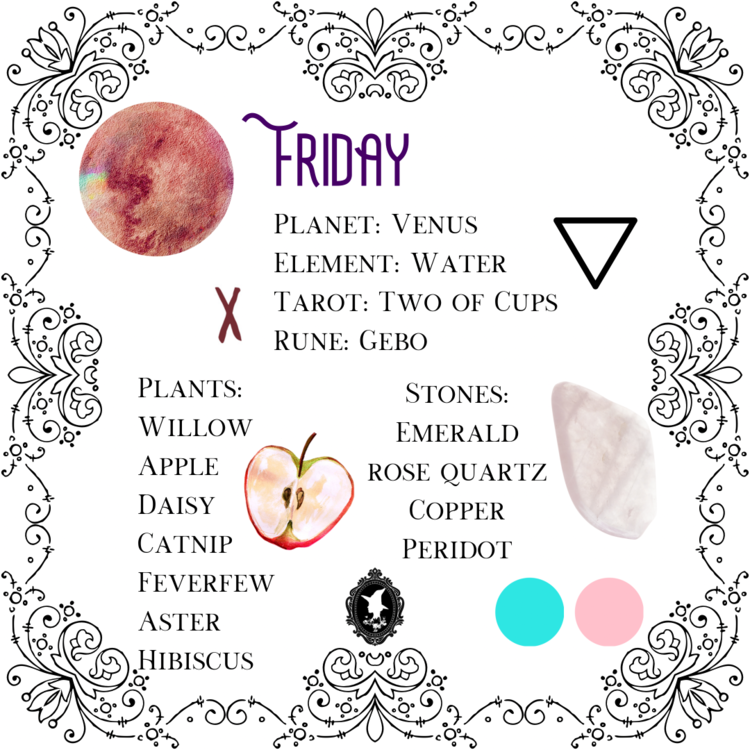
Birch/Apple/Myrtle          The Goddess

Saturday

Alder/Hawthorn                Fairies/Witches

Sunday 

Ash/Birch/Laurel             Elves/The Goddess

This is Late for Some, Right on Time for others, and Maybe Early for still Others

From WOTC to Mom’s everywhere

HAPPY MOTHER’S DAY!

It does not matter if your children have 2 or 4 legs, feathers, scales, leaves or whatever your living thing is you take care of and love as if you gave birth to it to those you love your are their mom not just an adopted or foster mother or grandmother or caretaker or aunt or cousin or whatever label you put upon yourself.

May you day be filled with love, joy, happiness and making great memories.

May the mom’s who have crossed into the Summerlands never be forgotten for the life they gave us whether they raised us or not.

May 8th through May 14th Astronomy Picture of the Day

These are the Astronomy Picture of the Day for the proceeding week starting on the past Monday through this Sunday. Just click on the hyperlink next to the date for the pictures you want to see.

2023 May 14: To Fly Free in Space
2023 May 13: Apollo 17: The Crescent Earth
2023 May 12: Halley Dust, Mars Dust, and Milky Way
2023 May 11: Fomalhaut’s Dusty Debris Disk
2023 May 10: Milky Way over Egyptian Desert
2023 May 09: Shadows of Earth
2023 May 08: The Spanish Dancer Spiral Galaxy

Write Your Own Spells: Healing Ribbons c. 2018

Good Day WOTC Family and Friends/A Thought for Today

Have a wonderful Saturday!

Some of the Witchcraft/Magickal Correspondence for Protection

Protection

  • Zodiac sign/s – Cancer, Taurus
  • Switchword – Guard
  • Colors – Black, blue, brown, gold, green, purple, red, silver, violet, white, yellow
  • Numbers – 3, 4, 5, 8, 9
  • Tarot cards – Emperor, Four of Pentacles, Nine of Pentacles
  • Herbs & flowers – Agrimony, amaranth, anemone, angelica, basil, blackberry/bramble, broom, carnation, chrysanthemum, clover, comfrey, daisy, dandelion, dill, fennel, fern, feverfew, foxglove, geranium (red), gorse, heather, honeysuckle, ivy, jasmine, lavender, lilac, lily, lily of the valley, marjoram, monkshood, pennyroyal, peony, periwinkle, primrose, raspberry, rue, snapdragon, solomon’s seal, spearmint, sweet woodruff, thistle, thyme, valerian, vervain, violet, yarrow
  • Spices/magical ingredients – Asafoetida, bittersweet, black cohosh, bloodroot, burdock, cinnamon, clove, coriander, cumin, ginseng, mandrake, mustard, orris root, pepper, sandalwood, wormwood
  • Angel – Michael
  • Minerals/Metals – Agate (banded, black, red), amber, amethyst, angelite, apache tears, aquamarine, aventurine, beryl, calcite (orange), carnelian, cat’s eye, chrysoprase, citrine, diamond, emerald, garnet, hematite, Herkimer diamond, jade, jasper (red), jet, kunzite, lepidolite, lodestone, malachite, obsidian (snowflake), onyx, peridot, petrified wood, pyrite, quartz (clear, yellow), rose quartz, ruby, sard, sardonyx, serpentine, spinel, staurolite, sunstone, tanzanite, tiger’s eye, topaz, tourmaline (black), turquoise, zircon, antimony, brass, copper, gold, iron, lead, silver, steel
  • Magical beings – Dragons, dryads, lares, mermaids, penates
  • Deities – Aine, Ariadne, Athena, Bast, Brigantia, Brigid, Cailleach Bheur, Cybele, Devi, Diana, Flora, Frigg, Hathor, Hera, Ishtar, Isis, Juno, Justitia, Kali, Kuan Yin, Kupala, Minerva, the Morrigan, Nut, Sarasvati, Sekhmet, Seshat, Venus, Agni, Angus, Anubis, Ares, the Dagda, Faunus, Freyr, Ganesh, Horus, Khnum, Loki, Lugh, Manannan, Mars, Neptune, Njord, Thor, Vishnu
  • Creatures – Badger, boar, caribou, dingo, dog, elephant, groundhog, hippopotamus, horse, jackal, lion, monkey, porcupine, tiger, toad, wolf, wolverine, condor, crow, duck, owl, peacock, quail, raven, swallow, woodpecker.

Witchcraft Symbols, Terms and Definitions – Sun Symbolism Through History

Sun Symbolism Through History – Meaning of the Sun Across Cultures

Our world depends as much on the sun as it does on the water and oxygen that are found within its atmosphere. Throughout history, you will find powerful sun symbolism attesting to this importance. Almost every ancient and modern culture has a common thread regarding sun symbolism: energy, positivity, clarity, power, and many other positive symbols.

As a natural force, there’s hardly anything we can do to control the sun. We are completely at its mercy, and in some cases, it can be a cruel master. Yet, even in cases where the sun seems intent on destroying, like in the deserts, you will find that there’s still life and purpose in what seems like suffering.

One thing is certain: we cannot live without the sun. In fact, without it, our world wouldn’t be what we know it to be today.


Good Day WOTC Family/A Thought for Today

“Laugh and the Whole World Laughs With You,” Now Cackling…

Some of the Witchcraft/Magickal Correspondence for Thursday

Thursday

from thewhitegoddess.co.uk

Day: Thursday
Planet: Jupiter
Colours: Purple, Deep Blue
Crystals: Amethyst, Lepidolite, Sugilite, Tin
Aroma: Melissa, Clove, Oakmoss, Jupiter Oil, Cinnamon, Musk, Nutmeg, and Sage
Herb: Cinquefoil

Ruled by the planet Jupiter and dedicated to Thor, god of thunder and agricultural work. His parallels in various European Traditions include Zeus, Taranis, Perun, and Perkunas. Magical aspects: controlled optimism, energetic growth, physical well-being, material success, expansion, money/wealth, prosperity, leadership, and generosity.

Thursday is the day of Jupiter, the largest of the planets and said to be the most powerful. Spellcasters would be wise to use this day for attempting wealth, success and prosperity spells. Thursday is also associated (in Norse mythology) to Thor – Thor’s day – and some even say that Jupiter and Thor are one in the same. Both are strong and powerful, yet wise and just.

Try a small prayer to Jupiter before commencing any ritual on Thursday as a sign of respect.

This is the proper day of the week to perform spells and rituals involving luck, happiness, health, legal matters, male fertility, treasure, wealth, honour, riches, clothing, money, desires, business, group pursuits, joy, laughter, and expansion.

This is the proper day of the week to perform spells and rituals involving communication, divination, writing, knowledge, business transactions, teaching, reason, skill, self-improvement, debt, fear, loss, intellectual pursuits, and flexibility.

Good Day WOTC Family/A Thought for Today

With the survey questions please remember you do not have to use or follow just one pantheon. I for example follow many Celtic and Native American some Egyptian and Wicca along with bits and pieces of other traditions in my personal practice. My patron god and goddesses are from Egypt, Ra, Roman, Luna, and modern Mother Earth/Gaia. So, if you want to vote for more than one pantheon please do. Many witches/pagans today are eclectic using what fits for them from whatever traditions they find something that touches their spirit and/or heart instead of just following one type of tradition. The main things is to follow what works for you! After I am done posting an overview of the different pantheon I will be combining the Gods and Goddesses post into one post instead of separate posts when possible.

A Little Humor for Your Day

What is hump day like for the working parents?
      Wednesday that never leaves them alone with never-ending work.

Why did the employee get a camel in the office building?
     Because the boss said, ‘Bring in the hump day’.

What did the student say when they had too much homework on Wednesday?
     This is the Monday-est Wednesday ever!

Why are Sundays stronger than Wednesdays?
     Because Wednesday is a week day.

Why did the woman cry on a Wednesday evening?
     Because she thought it was whine Wednesday.

What do camels sing on karaoke night?
     My hump, my hump, my hump (ha), my lovely lady lumps

Why did the man call it a weekend on a Wednesday?
     Because he said, “After two days it will be Friday, which makes tomorrow a pre-Friday, hence, it is a weekend on Wednesday”.

Why don’t they have Drivers Ed on Wednesday in the Middle East?
     It wears out the camel.

A Thought for Today

I saw this in a group I am in on Facebook today. My first thought was, “This is an excellent question.” Than, “We are again being sterotyped.” May it should not have ruffled my feathers but it did. Up until about 14 years ago i still went primitive tent camping and never once did I cook in a cauldron. Close as I cam to it was a 3-legged cast iron Dutch oven.

I would love to hear what your thought or reaction is to this cartoon.


Witchcraft Acts

In England, Scotland, Wales, and Ireland, and the British colonies, there has historically been a succession of Witchcraft Acts governing witchcraft and providing penalties for its practice, or—in later years—rather for pretending to practise it.

Witchcraft Act 1541

Religious tensions in England during the 16th and 17th centuries resulted in the introduction of serious penalties for witchcraft. Henry VIII’s Act of 1541[1] (33 Hen. 8. c. 8) was the first to define witchcraft as a felony, a crime punishable by death and the forfeiture of goods and chattels.[2] It was forbidden to:

… use devise practise or exercise, or cause to be devysed practised or exercised, any Invovacons or cojuracons of Sprites witchecraftes enchauntementes or sorceries to thentent to fynde money or treasure or to waste consume or destroy any persone in his bodie membres, or to pvoke [provoke] any persone to unlawfull love, or for any other unlawfull intente or purpose … or for dispite of Cryste, or for lucre of money, dygge up or pull downe any Crosse or Crosses or by such Invovacons or cojuracons of Sprites witchecraftes enchauntementes or sorceries or any of them take upon them to tell or declare where goodes stollen or lost shall become …[3]

The Act also removed the benefit of clergy, a legal device that exempted the accused from the jurisdiction of the King’s courts, from those convicted of witchcraft.[3] This statute was repealed by Henry’s son, Edward VI, in 1547.[4]

Witchcraft Act 1562

An 1562[1] Act Against Conjurations, Enchantments and Witchcrafts (5 Eliz. 1. c. 16) was passed early in the reign of Elizabeth I. It was in some respects more merciful towards those found guilty of witchcraft than its predecessor, demanding the death penalty only where harm had been caused; lesser offences were punishable by a term of imprisonment. The Act provided that anyone who should “use, practise, or exercise any Witchcraft, Enchantment, Charm, or Sorcery, whereby any person shall happen to be killed or destroyed”, was guilty of a felony without benefit of clergy, and was to be put to death.[5]

Indictments for homicide caused by witchcraft begin to appear in the historical record in the period following the passage of the 1563 Act. Out of the 1,158 homicide victims identified in the surviving records, 228 or 20.6% were suspected of being killed by witchcraft. By comparison, poison was suspected in only 31 of the cases. Out of the 157 people accused of killing with witchcraft, roughly half were acquitted. Only nine of the accused were men.[6]

Scottish Witchcraft Act 1563

Under the Scottish Witchcraft Act 1563 both the practice of witchcraft and consulting with witches were capital offences.[7] This Act stayed on Scottish statute books until repealed as a result of a House of Lords amendment to the bill for the post-union Witchcraft Act 1735.[8][9]


Irish Witchcraft Act 1586

The Irish act (28 Eliz. 1. c. 2, An Act against Witchcraft and Sorcerie) was largely identical to the English act of 1562. The penalty for causing death by witchcraft was as a felony without benefit of clergy (that is, capital punishment), which was also the penalty for a second offence of causing injury or material loss by witchcraft; for a first such offence, the penalty was one year’s imprisonment including six hours in the pillory once per quarter. This was also the penalty for a first offence of using witchcraft to “discover hidden treasure, … or stolen goods, or to provoke unlawful love”; for a second such offence, it was life imprisonment.[10]

The last prosecution under the 1586 act was the 1711 Islandmagee witch trial.[11] Nobody is known for certain to have been executed under the act. Of those accused of causing death by witchcraft, William Sellor was convicted at the Islandmagee trial, but there is no surviving record of his sentence;[11] Florence Newton died during her 1661 trial;[12] Marion Fisher’s 1655 conviction was overturned by Sir James Barry; and the strangling of a suspected witch in Antrim in 1698 was a lynching.[11]

The 1586 act was repealed in 1821.[13]

Witchcraft Act 1604

In 1603,[1] the year James I‘s accession to the English throne, the Elizabethan Act was broadened by Edward Coke and others to bring the penalty of death without benefit of clergy to any one who invoked evil spirits or communed with familiar spirits. The Act’s full title was An Act against Conjuration, Witchcraft and dealing with evil and wicked spirits, (1 Ja. I c. 12).[14] It was this statute that was enforced by Matthew Hopkins, the self-styled Witch-Finder General.

The Acts of Elizabeth and James changed the law of witchcraft by making it a felony, thus removing the accused from the jurisdiction of the ecclesiastical courts to the courts of common law. This provided, at least, that the accused persons theoretically enjoyed the benefits of ordinary criminal procedure. Burning at the stake was eliminated except in cases of witchcraft that were also petty treason; most convicted were hanged instead. Any witch who had committed a minor witchcraft offence (punishable by one year in prison) and was accused and found guilty a second time was sentenced to death.[citation needed]

Colonial use

The Witchcraft Act 1604 was employed in the British American colonies, e.g., in the trial of Margaret Mattson, a woman accused of witchcraft in the Province of Pennsylvania. (She was acquitted by William Penn after trial in Philadelphia in 1683.)

Scottish Witchcraft Act 1649

Through the 1640s the General Assembly of the Church of Scotland and the Commission of the Kirk lobbied for the enforcement and extension of the Witchcraft Act 1563, which had been the basis of previous witch trials. The Covenanter regime passed a series of acts to enforce godliness in 1649, which made capital offences of blasphemy, the worship of false gods and for beaters and cursers of their parents. They also passed a new witchcraft act that ratified the existing act of 1563 and extended it to deal with consulters of “Devils and familiar spirits”, who would now be punished with death.[15]

Witchcraft Act 1735

The Witchcraft Act of 1735 (9 Geo. 2 c. 5) marked a complete reversal in attitudes. Penalties for the practice of witchcraft as traditionally constituted, which by that time was considered by many influential figures to be an impossible crime, were replaced by penalties for the pretence of witchcraft. A person who claimed to have the power to call up spirits, or foretell the future, or cast spells, or discover the whereabouts of stolen goods, was to be punished as a vagrant and a con artist, subject to fines and imprisonment. The Act applied to the whole of Great Britain, repealing both the 1563 Scottish Act and the 1604 English Act.[7]

The Witchcraft Act of 1735 remained in force in Britain well into the 20th century, until its eventual repeal with the enactment of the Fraudulent Mediums Act of 1951.

The Fraudulent Mediums Act 1951 was repealed on 26 May 2008[17] by new Consumer Protection Regulations following an EU directive targeting unfair sales and marketing practices.[18]

Other related acts

The Witchcraft Suppression Act, 1957 of South Africa, which is still in force,[19] was based on the Witchcraft Act 1735.[20]

An Act, Against Conjuration, Witchcraft, and Dealing with Evil and Wicked Spirits, passed by the Massachusetts Bay Colony General Court, October 1692.[21][22]

From Wikipedia, the free encyclopedia

What Do Angel Numbers Mean

Angel Numbers are a way for your Angels to communicate with you. They are a means to send specific coded messages to you by your Angels in the form of number sequences. Numbers are a universal language, therefore; the Angels try to communicate with you using them letting us know of their presence.  

Table of Contents

What are Angel Numbers?

Angel numbers are a series of repeating numbers that you come across in your everyday life. This is not a coincidence that you keep seeing a specific set of numbers again and again. In fact, the Angels are trying to communicate with you.

A Thought for Today

Good whatever time it is when you read this. It is sunny and hot here but by following the Old Gods and Goddesses I still see a beautiful day ahead of me.

Blessed be dear WOTC Family. My wish for you and yours is to have an awesome day.

A Very Short Survey – We REALLY Want to Know Your Preferences

Your preferences do count!

 1 D0, you prefer detailed information or just highlights for the different divination topics we post?

A – Detailed

B – Highlights

Do you have a certain pantheon you would like to read more about?

A – Celtic

B – Greek

C – Roman

D – Egyptian

E – Other – please put a specific pantheon or two with this letter.

3 Any other suggestions for posts you would like to see.

This is your website more than ours so, please let us know by putting the question number and letter for your answers in the comments section or by emailing your likes or dislikes to ladybeltane@witchesofthecraft.com. Thank you so much, from Lady Carla Beltane and all the WOTC Staff for taking time out of your busy day to answer these 3 questions!