
Category: Samhain
Let’s Have Some Fun – Samhain
Samhain (Sow-en) – The Celtic roots of Halloween
As millions of children and adults participate in the fun of Halloween on the night of October 31st, few will be aware of its ancient Celtic roots in the Samhain (Samain) festival. In Celtic Ireland about 2,000 years ago, Samhain was the division of the year between the lighter half (summer) and the darker half (winter). At Samhain the division between this world and the otherworld was at its thinnest, allowing spirits to pass through.
The family’s ancestors were honoured and invited home whilst harmful spirits were warded off. People wore costumes and masks to disguise themselves as harmful spirits and thus avoid harm. Bonfires and food played a large part in the festivities. The bones of slaughtered livestock were cast into a communal fire, household fires were extinguished and started again from the bonfire. Food was prepared for the living and the dead, food for the ancestors who were in no position it eat it, was ritually shared with the less well off.
Christianity incorporated the honouring of the dead into the Christian calendar with All Saints (All Hallows) on November 1st, followed by All Souls on November 2nd. The wearing of costumes and masks to ward off harmful spirits survived as Halloween customs. The Irish emigrated to America in great numbers during the 19th century especially around the time of famine in Ireland during the 1840’s. The Irish carried their Halloween traditions to America, where today it is one of the major holidays of the year. Through time other traditions have blended into Halloween, for example the American harvest time tradition of carving pumpkins.
Two hills in the Boyne Valley were associated with Samhain in Celtic Ireland, Tlachtga and Tara. Tlachtga was the location of the Great Fire Festival which begun on the eve of Samhain (Halloween). Tara was also associated with Samhain, however it was secondary to Tlachtga in this respect.
The entrance passage to the Mound of the Hostages on the Hill of Tara is aligned with the rising sun around Samhain. The Mound of the Hostages is…
(One Person’s Point of View c 2013) You Call It Hallowe’en… We Call It Samhain

You Call It Hallowe’en… We Call It Samhain by Peg Aloi

October 31st, commonly called Hallowe’en, is associated with many customs, some of them mysterious, some light-hearted, some of them downright odd. Why do we bob for apples, carve pumpkins into jack-o-lanterns, and tell ghost stories on this night? Why do children go door-to-door asking for candy, dressed in fantastical costumes? How is Hallowe’en connected to All Soul’s Day, celebrated by some Christian denominations on November 1st? And what is the significance of this holiday for modern-day Witches?
A Brief History of Hallowe’en
Hallowe’en has its origins in the British Isles. While the modern tradition of trick or treat developed in the U. S., it too is based on folk customs brought to this country with Irish immigrants after 1840. Since ancient times in Ireland, Scotland, and England, October 31st has been celebrated as a feast for the dead, and also the day that marks the new year. Mexico observes a Day of the Dead on this day, as do other world cultures. In Scotland, the Gaelic word “Samhain” (pronounced “SAW-win” or “SAW-vane”) means literally “summer’s end.”
Other names for this holiday include: All Hallows Eve (“hallow” means “sanctify”); Hallowtide; Hallowmass; Hallows; The Day of the Dead; All Soul’s Night; All Saints’ Day (both on November 1st).
For early Europeans, this time of the year marked the beginning of the cold, lean months to come; the flocks were brought in from the fields to live in sheds until spring. Some animals were slaughtered, and the meat preserved to provide food for winter. The last gathering of crops was known as “Harvest Home, ” celebrated with fairs and festivals.
In addition to its agriculture significance, the ancient Celts also saw Samhain as a very spiritual time. Because October 31 lies exactly between the Autumnal Equinox and the Winter Solstice, it is theorized that ancient peoples, with their reliance on astrology, thought it was a very potent time for magic and communion with spirits. The “veil between the worlds” of the living and the dead was said to be at its thinnest on this day; so the dead were invited to return to feast with their loved ones; welcomed in from the cold, much as the animals were brought inside. Ancient customs range from placing food out for dead ancestors, to performing rituals for communicating with those who had passed over.
Communion with the dead was thought to be the work of witches and sorcerers, although the common folk thought nothing of it. Because the rise of the Church led to growing suspicion of the pagan ways of country dwellers, Samhain also became associated with witches, black cats (“familiars” or animal friends), bats (night creatures), ghosts and other “spooky” things…the stereotype of the old hag riding the broomstick is simply a caricature; fairy tales have exploited this image for centuries.
Divination of the future was also commonly practiced at this magically-potent time; since it was also the Celtic New Year, people focused on their desires for the coming year. Certain traditions, such as bobbing for apples, roasting nuts in the fire, and baking cakes which contained tokens of luck, are actually ancient methods of telling fortunes.
So What About Those Jack-O-Lanterns?
Other old traditions have survived to this day; lanterns carved out of pumpkins and turnips were used to provide light on a night when huge bonfires were lit, and all households let their fires go out so they could be rekindled from this new fire; this was believed to be good luck for all households. The name “Jack-O-Lantern” means “Jack of the Lantern, ” and comes from an old Irish tale. Jack was a man who could enter neither heaven nor hell and was condemned to wander through the night with only a candle in a turnip for light. Or so goes the legend…
But such folk names were commonly given to nature spirits, like the “Jack in the Green, ” or to plants believed to possess magical properties, like “John O’ Dreams, ” or “Jack in the Pulpit.” Irish fairy lore is full of such references. Since candles placed in hollowed-out pumpkins or turnips (commonly grown for food and abundant at this time of year) would produce flickering flames, especially on cold nights in October, this phenomenon may have led to the association of spirits with the lanterns; and this in turn may have led to the tradition of carving scary faces on them. It is an old legend that candle flames which flicker on Samhain night are being touched by the spirits of dead ancestors, or “ghosts.”
Okay, What about the Candy?
“Trick or treat” as it is practiced in the U. S. is a complex custom believed to derive from several Samhain traditions, as well as being unique to this country. Since Irish immigrants were predominantly Catholic, they were more likely to observe All Soul’s Day. But Ireland’s folk traditions die hard, and the old ways of Samhain were remembered. The old tradition of going door to door asking for donations of money or food for the New Year’s feast, was carried over to the U. S. from the British Isles. Hogmanay was celebrated January 1st in rural Scotland, and there are records of a “trick or treat” type of custom; curses would be invoked on those who did not give generously; while those who did give from their hearts were blessed and praised. Hence, the notion of “trick or treat” was born (although this greeting was not commonly used until the 1930’s in the U. S.). The wearing of costumes is an ancient practice; villagers would dress as ghosts, to escort the spirits of the dead to the outskirts of the town, at the end of the night’s celebration.
By the 1920’s, “trick or treat” became a way of letting off steam for those urban poor living in crowded conditions. Innocent acts of vandalism (soaping windows, etc.) gave way to violent, cruel acts. Organizations like the Boy Scouts tried to organize ways for this holiday to become safe and fun; they started the practice of encouraging “good” children to visit shops and homes asking for treats, so as to prevent criminal acts. These “beggar’s nights” became very popular and have evolved to what we know as Hallowe’en today.
What Do Modern Witches Do at Hallowe’en?
It is an important holiday for us. Witches are diverse, and practice a variety of traditions. Many of us use this time to practice forms of divination (such as tarot or runes). Many Witches also perform rituals to honor the dead; and may invite their deceased loved ones to visit for a time, if they choose. This is not a “seance” in the usual sense of the word; Witches extend an invitation, rather than summoning the dead, and we believe the world of the dead is very close to this one. So on Samhain, and again on Beltane (May 1st), when the veil between the worlds is thin, we attempt to travel between those worlds. This is done through meditation, visualization, and astral projection. Because Witches acknowledge human existence as part of a cycle of life, death and rebirth, Samhain is a time to reflect on our mortality, and to confront our fears of dying.
Some Witches look on Samhain as a time to prepare for the long, dark months of winter, a time of introspection and drawing inward. They may bid goodbye to the summer with one last celebratory rite. They may have harvest feasts, with vegetables and fruits they have grown, or home-brewed cider or mead. They may give thanks for what they have, projecting for abundance through the winter. Still others may celebrate with costume parties, enjoying treats and good times with friends. There are as many ways of observing Samhain as there are Witches in the world!
Spell for Samhain – A Samhain Chant c. 2018
(YOU CAN COPY AND PASTE ANY SPELLS POSTED TO A DOCUMENT TO PRINT AND/OR SAVE ON YOUR COMPUTER FOR PERSONAL USE ONLY)

Flashback 2004 Samhain
Expect the unexpected if you celebrate Samhain – the Celtic New Year – on All Hallows Eve: the planets bring a lot of energetic talk and chaos, and the resultant noise will add exuberance to the ritual. Look for psychic dreams on astrological Samhain, November 6; your intuition will be in top form if you do readings at ritual. The power is the strongest it has been in several years.
This is the sabbat for wearing your witchy black. Clean the house, including the hearth, from top to bottom; the garden also needs to be prepared for the winter by this date. Lay new fires. Fest with your family and set places for your ancestors. Cleanse divination tools (cards, crystals, runes) and rededicate them to the Goddess. For the last harvest festival, put apples, nuts, acorns, and squashes on the altar, and add pictures of the family members you are missing.
Using fresh harvested hazel nuts, make a wreath with nine nuts (three times three) to protect your house from fire and lightening. Offer thanks to the river gods or the gods of the sea, and remember to honor the goddess Hecate.
Source: K. D. Spitzer in Llewellyn’s Witches’ Datebook 2004 Page 63
Blessed and Happy Samhain to Our Northern Hemisphere Family
To Our Brothers and sisters in the Northern Hemisphere
Practical Samhain Rituals and Traditions
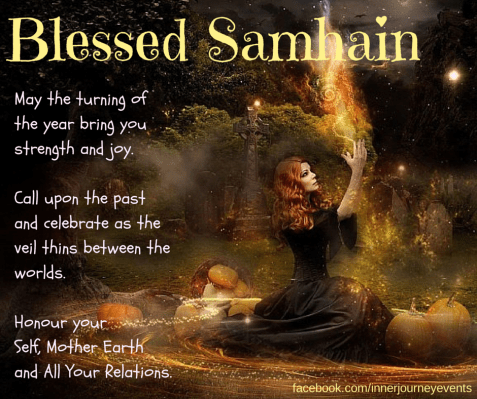
This time of the year is definitely the most magical and witchy of all other seasons. Below you can find information on Samhain Rituals, Traditions, and History. Are you going to try any of them?
Contents
Source: WitchJournal.com
Samhain
Samhain Sources: bbc.co.uk
Samhain (pronounced ‘sow’inn’) is a very important date in the Pagan calendar for it marks the Feast of the Dead. Many Pagans also celebrate it as the old Celtic New Year (although some mark this at Imbolc). It is also celebrated by non-Pagans who call this festival Halloween.
Samhain has been celebrated in Britain for centuries and has its origin in Pagan Celtic traditions. It was the time of year when the veils between this world and the Otherworld were believed to be at their thinnest: when the spirits of the dead could most readily mingle with the living once again. Later, when the festival was adopted by Christians, they celebrated it as All Hallows’ Eve, followed by All Saints Day, though it still retained elements of remembering and honouring the dead.
To most modern Pagans, while death is still the central theme of the festival this does not mean it is a morbid event. For Pagans, death is not a thing to be feared. Old age is valued for its wisdom and dying is accepted as a part of life as necessary and welcome as birth. While Pagans, like people of other faiths, always honour and show respect for their dead, this is particularly marked at Samhain. Loved ones who have recently died are remembered and their spirits often invited to join the living in the celebratory feast. It is also a time at which those born during the past year are formally welcomed into the community. As well as feasting, Pagans often celebrate Samahin with traditional games such as apple-dooking.
Death also symbolises endings and Samhain is therefore not only a time for reflecting on mortality, but also on the passing of relationships, jobs and other significant changes in life. A time for taking stock of the past and coming to terms with it, in order to move on and look forward to the future.
Ancient Celtic celebrations
Not only did the Celts believe the boundary between the worlds of the living and the dead dissolved on this night, they thought that the presence of the spirits helped their priests to make predictions about the future.
To celebrate Samhain the Druids built huge sacred bonfires. People brought harvest food and sacrificed animals to share a communal dinner in celebration of the festival.
During the celebration the Celts wore costumes – usually animal heads and skins. They would also try and tell each other’s fortunes.
After the festival they re-lit the fires in their homes from the sacred bonfire to help protect them, as well as keep them warm during the winter months.
For Your Viewing Pleasure – Samhain: The Great Fire of Peace (Scottish Folklore)
Ar do shláinte (Irish Gaelic for to your health). May this year be a great one for you and yours dear WOTC family and friends!
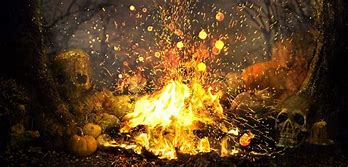
Samhain: The Great Fire of Peace (Scottish Folklore)
To Our Southern Hemisphere WOTC Family and Friends – Blessed Samhain A Thought for Today
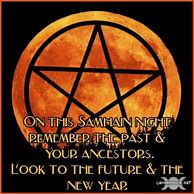
As our ancestors and others who have crossed the veil may visit us this Samhain to help us welcome the beginning of the Wheel of the Year as it begins anew may you and yours have all you need this year to meet your needs, more positive energy come to you and positive events outweigh the negative ones!
Special Edition of Witchcraft/Magickal Correspondences, Rituals and Other Things for Samhain
Symbolism: death and regeneration, transformation, end of old projects, new beginnings, return, change, rest, success, plenty, knowledge
Symbols: skulls, bats, cats, leaves, nuts, seeds, barren trees and branches, pumpkins, cauldron, pentacle, crystal ball, besom or broom, witch’s hat, moon, crows/ravens, ghosts, goblins, banshees, candy/caramel apples, chocolate, Jack-o-Lanterns, costumes, Trick-or-Treats, Death, acorns, bones, gourds, scarecrowsColors: black, orange, red, silver, gold, brown, purple, yellow
Food and Drink: apples, cider, pork, hazelnuts, pomegranates, pumpkins, potatoes, squash, cranberries, turnips, beets, mugwort tea, ale, mulled wine, pies/cakes for the dead
Herbs: apple leaf, almonds, bay leaf, nettle, hemlock, cloves, cinnamon, mandrake root, marigold, mums, mugwort, pine, rosemary, sage, wormwood, tarragon, rue, garlic, ginger, hazelnut, allspice
Deities: Hekate, The Crone, Cerridwen, Bast, Persephone, Horned Hunter, Cernunnos, Osiris, Hades, Anubis, Loki, Arawn, Dis, and any other death/underworld god or goddess
Crystals and Gemstones: black obsidian, jasper, onyx, bloodstone, smoky quartz, carnelian,
Animals: cats, especially black cats, bats, spiders, rats, wolves, snakes, ravens and crows, owls, stags, jackals, scorpions
Magic: This is the time to honor the dead. Set up an altar, serve them cakes, and let them know they are not forgotten. If you wish to communicate with deceased friends and family, this is the best time of year. The veil thins the night of Samhain, making communication easy. Do NOT, however, entice spirits, disrespect them, or perform any other magic that is anything less than respectful. I repeat, don’t do it. Samhain is also a great time to practice divination in the form of runes, scrying, tarot, tea readings, etc. Reflect over the previous year and perform blessing spells to ring in the new year. Astral projection, lucid dreaming, and hedge riding are also much easier to perform on this night but remember to be safe. Banishing magic, especially those for bad habits, are especially strong on this night.
Please note this is not a complete list but a brief overview of symbols, colors, herbs, deities, and the like. If I have missed something that you feel should make the list, please feel free to contact me via the comments or through email.
Click her for more ideas from Zenned Out for Samhain Rituals and Correspondences
The ancient Celtic celebration of Samhain (pronounced sow-in), celebrated on October 31st and November 1st, marks the end of our seasonal cycle on the Wheel of the Year. This is why it’s often referred to as the witch’s New Year. Seasonally speaking, Samhain is the third and final harvest of the season or the last rally to store and prepare for the coming Winter season.
This sacred celebration reaches much farther than harvests and is also a time when the veil between the physical and spirit world is at its thinnest. The Celtic people believed that spirits walked among them during this time, so Samhain is accepted as an ideal time to communicate and connect with the spirit realm. Here’s a fun drawing I created with ritual suggestions for Samhain. Keep scrolling to learn more about each one.
From PaganPages.org Samhain Correspondences By Jennifer Wright
Free Pagan Magazine
Other Names:
celtic ~ Summer’s End, pronounced “sow” (rhymes with now) “en” (Ireland), sow-een (Wales) – “mh” in the middle is a “w” sound – Greater Sabbat(High Holiday) – Fire Festival Oct 31-Nov 1(North Hemisphere) – Apr 30-May 1 – The Great Sabbat, Samhiunn, Samana, Samhuin, Sam-fuin, Samonios, Halloween, Hallomas, All Hallows Eve, All Saints/All Souls Day(Catholic), Day of the Dead (Mexican), Witches New Year, Trinoux Samonia, Celtic/ Druid New Year, Shadowfest (Strega), Martinmas or Old Hallowmas (Scotttish/Celtic) Lá Samhna (Modern Irish), Festival of the Dead, Feile Moingfinne (Snow Goddess), Hallowtide (Scottish Gaelis Dictionary), Feast of All Souls, Nos Galen-gae-of Night of the Winter Calends (Welsh), La Houney or Hollantide Day, Sauin or Souney ( Manx), oidhche na h-aimiléise-the night of mischief or confusion(Ireland), Oidhche Shamna (Scotland)
Rituals:
End of summer, honoring of the dead,scrying, divination, last harvest, meat harvest
Incense:
Copal, sandalwood, mastic resin, benzoin, sweetgrass, wormwood, mugwort, sage, myrrh or patchouli
Tools:
Besom, cauldron, tarot, obsidian ball, pendulum, runes, oghams, Ouija boards, black cauldron or bowl filled with black ink or water, or magick mirror
Stones/Gems:
Black obsidian, jasper, carnelian, onyx, smoky quartz, jet, bloodstone
Colors:
Black, orange, red
Symbols & Decorations:
Apples, autumn flowers, acorns, bat, black cat, bones, corn stalks, colored leaves, crows, death/dying, divination and the tools associated with it, ghosts, gourds, Indian corn, jack-o-lantern, nuts , oak leaves, pomegranates, pumpkins, scarecrows, scythes, waning moon
Foods:
Apples, apple dishes, cider, meat (traditionally this is the meat harvest) especially pork, mulled cider with spices, nuts-representing resurrection and rebirth, nuts, pomegranates, potatoes, pumpkins, pumpkin bread, pumpkin pie, roasted pumpkin seeds, roasted pumpkin seeds, squash.
Goddesses:
The Crone, Hecate(Greek), Cerridwen(Welsh-Scottish), Arianrhod(Welsh), Caillech (Irish-Scottish), Baba Yaga (Russian), Al-Ilat(persian), Bast (Egyptian), Persephone (Greek), Hel(Norse), Kali(Hindu), all Death & Otherworld Goddesses
Gods:
Horned Hunter(European), Cernnunos(Greco-Celtic), Osiris(Egyptian), Hades (Greek), Gwynn ap Nudd (British), Anubis(Egyptian), Coyote Brother (Native American), Loki (Norse), Dis (Roman), Arawn (Welsh), acrificial/Dying/Aging
Gods, Death and Otherworld Gods
Herbs and Flowers:
Almond, apple leaf , autumn joy sedum, bay leaf, calendula, Cinnamon, Cloves cosmos, garlic, ginger , hazelnut, hemlock cones, mandrake root, marigold, mums, mugwort (to aid in divination), mullein seeds, nettle, passionflower, pine needles, pumpkin seeds, rosemary (for remembrance of our ancestors), rue, sage, sunflower petals and seeds, tarragon, wild ginseng, wormwood
Animals:
Stag, cat, bat, owl, jackal, elephant, ram, scorpion, heron, crow, robin
Mythical Beings:
Pooka, goblin,medusa, beansidhe, harpies
Essence:
Magick, plenty; knowledge, the night, death & rebirth, success, protection; rest, new beginning; ancestors; lifting of the veil, mundane laws in abeyance, return, change
Dynamics/Meaning:
Death & transformation, Wiccan new year,wisdom of the Crone, end of summer, honoring, thinning of the veil between worlds, death of the year, time outside of time, night of the Wild Hunt, begin new projects, end old projects
Work:
Sex magick, release of bad habits, banishing, fairy magick, divination of any kind, candle magick, astral projection, past life work, dark moon mysteries, mirror spells (reflection), casting protection , inner work, propitiation, clearing obstacles, uncrossing, inspiration, workings of transition or culmination, manifesting transformation,creative visualization, contacting those who have departed this plane
Purpose:
Honoring the dead, especially departed ancestors, knowing we will not be forgotten; clear knowledge of our path; guidance, protection, celebrating reincarnation
Rituals/Magicks:
Foreseeing future, honoring/consulting ancestors, releasing the old, power, understanding death and rebirth, entering the underworld, divination, dance of the dead, fire calling, past life recall
Customs:
Ancestor altar, costumes, divination, carving jack-o-lanterns, spirit plate, the Feast of the Dead, feasting, paying debts, fairs, drying winter herbs, masks, bonfires, apple games, tricks, washing clothes
Element:
Water
Gender:
Male
Threshold:
Midnight
From Plentiful Earth – How to pronounce Samhain
Popularized by Wicca, Samhain is a celebration that occurs around the same time as Halloween, All Hallow’s Eve, and Day of the Dead — on or around October 31. This wonderful day is often celebrated as a time to commune with our ancestors and the passing spirits, as the veil between the worlds has become its thinnest. The festival of Samhain is easily most Witches’ favorite Sabbat of the year, a fact we can all agree on. However, it’s easy to strike up a war of the Witches when it comes to saying the word out loud!
We know first hand, as American Witches in the United States, how embarrassing it can be to read the ancient Gaelic word as “Sam-hayne” on paper when we’re learning and then try to say it in front of seasoned coven-mates! We’re here to save you some red cheeks and give you the confidence to talk about your favorite holiday out loud! The good news? There are 3 ways to pronounce this ancient Celtic, each from a different region of its birthplace!
3 Correct Samhain Pronunciations
How to pronounce Samhain – Video
How to pronounce Samhain in Irish Gaelic
- Sow-in
How to pronounce Samhain in Welsh
- Sow-een
How to pronounce Samhain in Scottish Gaelic
- Sav-en
Now, pick your favorite way and say it with pride, Witch!
Remember what is not harvested by Samhain needs to be left in the fields, tress, bushes, ectara for the wild animals to forge over the cold months.
Wish you all a safe, blessed, and happy Samhain.
Connect To Your Ancestors on Samhain Night c. 2018

Some Samhain Tarot Questions – Printable
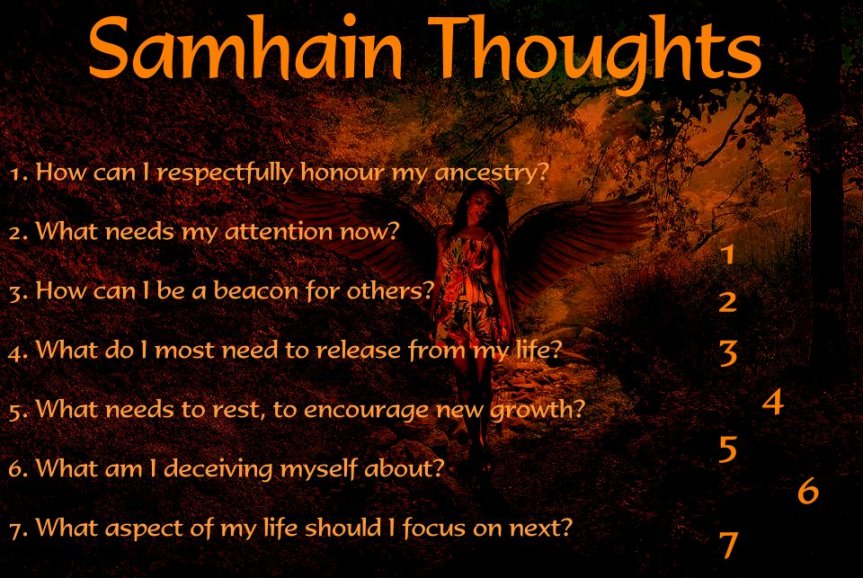
Sanhian
Samhain is the harvest of the soul. In some traditions it is when the souls of those who died since the last Samhain move on, leaving our plane behind. In other traditions this is the time when the dearly departed return to pass on messages to us. Whatever the path, this is the time to honor the dead. Renew your home protection spells and start closing up in preparation for winter. Any garden or outdoor tools or furniture that are no longer needed should be cleaned up and put away with thanks for their service. Prep your garden and yard for winter, even if your garden, even if your garden is only a couple of planters of herbs. Pull out your heavier bedding and give it an airing out. Using needle and thread, add a few stiches of blue thread to a corner or inside seam to protect your sleep during the long, dark nights. Divination plays a role in Samhain. Ask your oracles what you need to lay to rest or end for the year.
By Rachel Henderson Llewellyn’s Witches’ Datebook 2023 page 139
The Veil Is Thinning! Samhain Is Almost Upon Us! May The Goddess Bless You & Your During This Magickal Time of the Year!
( A flashback from Lady Abyss)

“Hail Freyja, Golden One!
Holder of the glorious Brisingamen, that brings fertility and abundance.
As we love and honor you, may we find love and power within us.
Join us and accept our thanks.
Hail Freyja!
Hail Freyr, Harvest God!
Keeper of the rain and the sunshine!
As we love and honor you, may we find creativity and inspiration within us.
Join us and accept our thanks.
Hail Freyr!
Hail Sif, Great Lady!
We come to this place grateful for your gifts.
Golden-haired goddess of the ripening grain, as we love and honor you,
may we find beauty and grace within us.
Join us and accept our thanks.
Hail Sif!
Hail Thor, son of the Earth Mother!
Strong and noble keeper of Thunder, Red-Bearded Guardian of us all, guide us through the seasons and the cycles of life.
We thank you for the fertility of our lands and for the abundance we have received this year.
As we love and honor you, let us find strength and wisdom with us.
Join us and accept out thanks.
Hail Thor!”
– Kristen Madden, Autumn Celebration Ritual
Samhain Correspondences – Printable
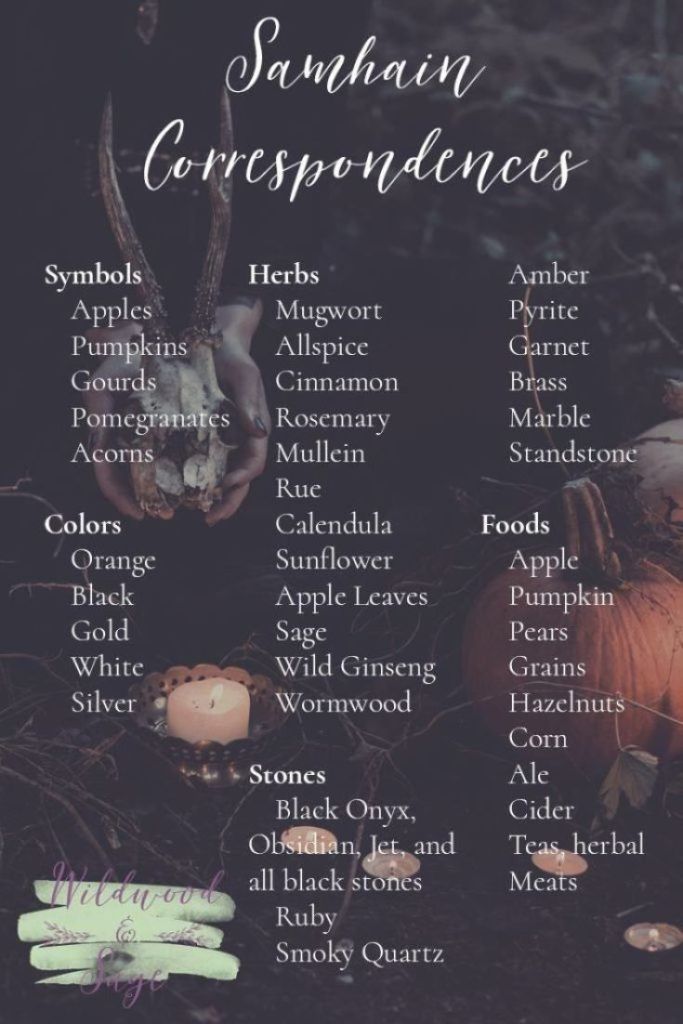
To Our Dear Sisters, Brothers, and Honored Guests in the Northern Hemisphere
For Your Listening PLeasure – Samhain
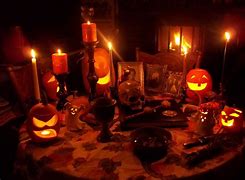
Projects to Celebrate Samhain, the Witches’ New Year
As Samhain approaches, you can decorate your home with a number of easy craft projects. Start celebrating a bit early with these fun and simple ideas that honor the final harvest, and the cycle of life and death
01
of 10
Pagan Treat Bags for Samhain
Do you have Pagan kids coming over for a Samhain event? You can have a kid-friendly celebration by putting together a goodie bag that’s representative of your Pagan spirituality. The key here is to do some creative, outside the box thinking. Sure, there are a ton of Halloween decorations in the store at this time of year, but not all of those are really connected with Pagan religious belief systems. They’re really more about the secular celebration of Halloween, which is fine, unless you’re looking for kid-friendly stuff that honors Pagan spirituality.
Here are a few things to try:
- Decorate the bags themselves with symbols that are meaningful to you – depending on the pantheon your group honors, you might include designs that are associated with Greek, Roman, Celtic, or Norse mythology.
- Small herbal sachets: sew herbs into a fabric pouch. Use lavender to help with dreams, or other appropriate plants.
- Crystals and gemstones: As long as the kids attending your event are beyond the put-everything-in-your-mouth stage, you could include rose quartz for love, hematite for protection, and more.
- A Portable Altar Kit: Depending on how old the kids are, think about making an altar box that fits in a backpack or pocket. This might not be useful or safe for really young children, but older tweens and teens could use it responsibly.
- Divination tools: make a simple pendulum with a stone wrapped in wire and attached to the end of a chain. Add a simple divination set by painting symbols on stones or wooden discs.
- Wands: Make a simple wand with a stick and a crystal wrapped in wire.
- Deity symbols: Does your tradition honor a particular god or goddess? Consider adding representative symbols – owls for Athena, cats for Bastet, or an antler for Cernunnos. Try printing out a wallet-size image of the deity on heavy cardstock, add a prayer to your god/dess on the reverse side, and laminate it.
Finally, remember, Samhain is the same day as Halloween, so never underestimate the power of a few strategically placed pieces of delicious candy!
 Witches Of The Craft®
You must be logged in to post a comment.