(YOU CAN COPY AND PASTE ANY SPELLS POSTED TO A DOCUMENT TO PRINT AND/OR SAVE ON YOUR COMPUTER)

(YOU CAN COPY AND PASTE ANY SPELLS POSTED TO A DOCUMENT TO PRINT AND/OR SAVE ON YOUR COMPUTER)

(YOU CAN COPY AND PASTE ANY COROSPONDENCES POSTED TO A DOCUMENT TO PRINT AND/OR SAVE ON YOUR COMPUTER)
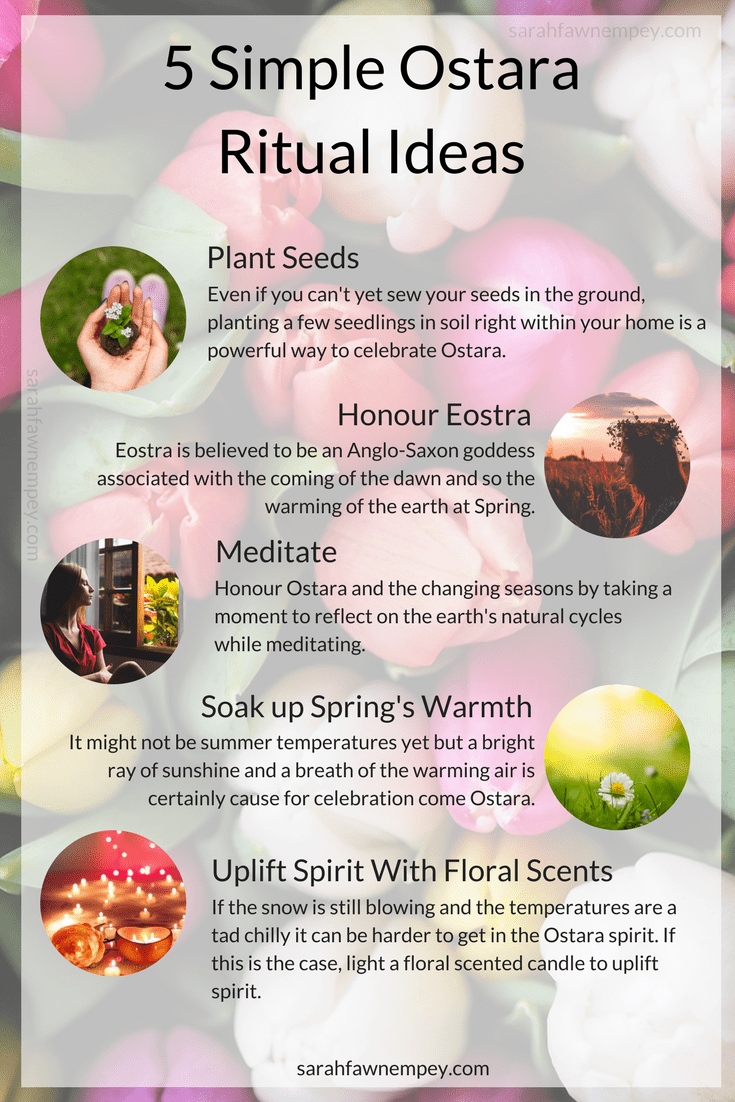
Symbols used to represent Ostara include the egg-for fertility and reproduction, and the hare-for rebirth and resurrection, the New Moon, butterflies and cocoons. Symbolically, many Pagans choose to represent Ostara by the planting of seeds, potted plants, ringing bells, lighting new fires at sunrise, either in the fireplace, in the cauldron, or light a balefire outdoors. I always give myself a gift of a newly potted plant or take a seed and plant it within my cast Circle. Ritually, a fire may be lit in the cauldron during (not before) the rite itself. You may want to decorate your altar with a colorful bouquet of Spring wildflowers. Other traditional activities include working on magickal gardens and practicing all forms of herbal work—magickal, artistic, medicinal, culinary, and cosmetic. author unknown
Ostara Deities: Eostre, the adolescent Spring Maiden, the adolescent Spring Lord, All Youthful and Virile Gods and Goddesses, Sun Gods, Mother Goddesses, Love Goddesses, Moon Gods and Goddesses, and all Fertility Deities including :Persephone, Blodeuwedd, Eostre, Aphrodite, Athena, Gaia, Cybele, Hera, Isis, Ishtar, Minerva, Venus, Robin of the Woods, the Green Man, Cernunnos, Lord of the Greenwood, The Dagda, Attis, The Great Horned God, Mithras, Odin, Thoth, Osiris, and Pan.
Symbolism of Ostara: Renewed promise of life, The Union of the Goddess and the God, Fertility, and dispensing of the old and making way for the new.Resurrection of life , The Season of Rebirth
Symbols of Ostara: Eggs, bunnies, new moon, butterflies, cocoons, dragons, flowers,trees.
Colors: lemon yellow, pale green and pale pink. Other appropriate colors include green, all pastels, Robin’s egg blue, violet, and white.
Ostara Foods: eggs, egg salad, hard-boiled eggs, honey cakes, first fruits of the season, fish, cakes, biscuits, cheeses, honey and ham. You may also include foods made of seeds, such as sunflower, pumpkin and sesame seeds, as well as pine nuts. Sprouts are equally appropriate, as are leafy, green vegetables.
Plants and Herbs: acorn, broom, celandine, cinquefoil, crocuses, daffodil, dandelion, dogwood, elder, ginger, Gorse, honeysuckle (woodbine), iris, jasmine, jonquils, irish moss, lavender, lemon balm, lilac, Lily, lily of the valley, lovage, marjoram, meadowsweet, narcissus, oak, oakmoss, olive, orris root, peony, rose, rose hips, sage, snowdrops, strawberry, tansy, tarragon, thyme, trefoil (purple clover), tulip, vervain, violet, willow, woodruff and all spring flowers.
Incense: jasmine, frankincense, myrrh, dragon’s blood, cinnamon, nutmeg, aloes wood, benzoin, musk, African violet, sage, strawberry, lotus, violet flowers, orange peel, or rose petals.
Gemstone: agate, amazonite, amethyst, aquamarine, bloodstone, clear quartz crystal, garnet, lapis lazuli, moonstone, red jasper and rose quartz.
Spellwork for Ostara: Spellwork for improving communication and group interaction are recommended, as well as fertility, balance and abundance
Animals and Mythical Beasts: rabbits,snakes,unicorns, merpeople, and pegasus
Candle Colors: Yellow and Green.
Tree: The Alder, a tree sacred to the God Bran, who is said to protect the British Isles. Trees are very
important to Witches, and indeed important to us all. They are the lungs of the Earth, purifying the very air we breathe as they shade us and protect us.
Straight from


The practice of expressing gratitude for the harvest season and preparing for the onset of winter is a widespread and ancient tradition observed by cultures across the globe.
Festivals are held to celebrate the abundance of crops, offer thanks to Mother Earth, and bid farewell to Summer. Historically, mythologies worldwide have honored and revered various deities associated with the harvest and the Autumn Equinox. Although not a comprehensive account, this article briefly acknowledges some of the most prominent harvest and equinox deities from various cultures, listed alphabetically.
Autumnus, the fall season’s deity, embodies nature’s overflowing abundance during harvest. In addition, Autumnus is gender fluid, appearing in both male and female forms, which speaks to the inclusive and diverse nature of this season’s divine patron.
Amidst the fall equinox celebrations, the Irish deity Banbha reigns supreme. As an Earth Mother, she presides over the culmination of the bountiful harvest. Banbha, much like the revered Greek goddess Gaia, is the protector and nurturer of all living beings and the land that sustains them.
Ceres, the goddess of the harvest, was revered for her abundant generosity and for imparting essential knowledge to humanity.
In Greek mythology, she was known as Demeter. She was hailed as the deity who taught people the art of cultivating, preserving, and preparing grains and maize. Her divine powers were closely linked to the land’s fertility, and she was regarded as one of the most prominent guardians of the harvest.
Ceres’ influence and guidance ensured the earth’s bounty was always plentiful. Her legacy lives on as a symbol of abundance and fertility.
Çhicomecoatl, the goddess of fire and fertility, embodies vitality, community, and plenty. She is revered in Mexico, particularly during the harvest season, as the guardian of corn and all fertile things. Her emblems are hot spices, maize, and fire, representing her power and providence over the land.
With her bountiful presence, the Corn Mother embodies the qualities of abundance, vitality, and strength. Her powers of fertility and harvest are celebrated as she blesses the land with the promise of plentiful crops.
In addition to her agricultural emblems of corn and corn sheaves, she also holds the healing attributes of the earth, nurturing all who seek her aid.
At the center of one of the most famous myths about the seasons and the Harvest lies Demeter, the goddess of grain and fertility and mother of Persephone.
When Hades, the god of the Underworld, abducted Persephone, Demeter’s anguish for her daughter resulted in a severe drought that threatened all life on Earth. With the crops perishing and humankind facing doom, Demeter embarked on a quest to rescue her daughter.
However, despite eventually reuniting with Persephone, now the goddess of the Underworld, fate demanded a sacrifice. Having consumed six pomegranate seeds, Persephone was bound to spend six months of the year in the Underworld, which begins with the Autumn Equinox when Persephone descends again into the depths.

Easter gets its name from the goddess Ostara, also known as Eastre. Ostara is a fertility goddess. Her annual arrival in spring is heralded by the flowering of trees and plants and the arrival of babies, both animal and human.

Ostara, the vernal equinox, is celebration of rebirth and renewal. It’s the promise of eternal life. The green world holds the promise of rebirth. The grass greens sand a veil of green mists the trees. Daffodil foliage pierces the soil, greeting the spring Sun. In the early evening the small Hylas or “peppers” can be heard singing the spring song from the swamp margins. It’s a song as ancient as time itself. It’s the voice of renewal and enduring life.
To observe Ostara’s promise of life’s eternal cycle, you’ll need two hard-boiled eggs. Place them on your altar. Hold one egg. Think of how it holds the promise of new life. Peel the egg and discard the shell. Slowly, with purpose, eat the egg. The white represents the future. The yolk represents the life-giving Sun. Last, decorate the second egg with life affirming design of your choice. Flowers, a cross, and a pentacle are a few ideas. Keep the egg for a while, then discard it.
Let Ostara’s promise of new life spark your energy and creativity.
By James Kambos in Llewellyn’s Witches’ Datebook 2024 Page 57
The sabbat of Mabon observes the autumn equinox. It’s a time of Thanksgiving for the bounty of the earth and a time to observe nature’s decline into the dark season.
Mabon means “Great Son.” As the legend goes, Mabon the son of the Goddess, was abducted as a child and taken to the land of Avalon. He was freed and returned as a young man. The legend is used to explain nature’s decline in autumn and its return at Ostara. Even though we are entering the dark season, we are surrounded by bounty. Country markets overflow with pumpkins, apples, and autumn flowers.
To celebrate this time of bounty, decorate your altar with seasonal decor–pumpkins, mums, and leaves are ideas. Then in your Book of Shadows write down the bounty you are grateful for–family, home, career, etc. Leave your book open for a few days. Then review your list. Send loving thoughts to the people and things on your list. Put your book away.
The chill comes and the fingers of the dark earlier across the land, but we are surrounded by the bounty of Mabon.
By James Kambos in Llewellyn’s Witches’ Datebook 2024 Page 119
Our Christian friends are often quite surprised at how enthusiastically we
Pagans celebrate the ‘Christmas’ season. Even though we prefer to use the word
‘Yule’, and our celebrations may peak a few days BEFORE the 25th, we nonetheless follow many of the traditional customs of the season: decorated trees, carolling, presents, Yule logs, and mistletoe. We might even go so far as
putting up a ‘Nativity set’, though for us the three central characters are
likely to be interpreted as Mother Nature, Father Time, and the Baby Sun-God.
None of this will come as a surprise to anyone who knows the true history of the
holiday, of course.
In fact, if truth be known, the holiday of Christmas has always been more
Pagan than Christian, with it’s associations of Nordic divination, Celtic
fertility rites, and Roman Mithraism. That is why both Martin Luther and John
Calvin abhorred it, why the Puritans refused to acknowledge it, much less
celebrate it (to them, no day of the year could be more holy than the Sabbath),
and why it was even made ILLEGAL in Boston! The holiday was already too closely associated with the birth of older Pagan gods and heroes. And many of them (like Oedipus, Theseus, Hercules, Perseus, Jason, Dionysus, Apollo, Mithra, Horus and even Arthur) possessed a narrative of birth, death, and resurrection that was uncomfortably close to that of Jesus. And to make matters worse, many of them pre-dated the Christian Savior.
Ultimately, of course, the holiday is rooted deeply in the cycle of the
year. It is the Winter Solstice that is being celebrated, seed-time of the
year, the longest night and shortest day. It is the birthday of the new Sun
King, the Son of God — by whatever name you choose to call him. On this
darkest of nights, the Goddess becomes the Great Mother and once again gives
birth. And it makes perfect poetic sense that on the longest night of the
winter, ‘the dark night of our souls’, there springs the new spark of hope, the
Sacred Fire, the Light of the World, the Coel Coeth.
That is why Pagans have as much right to claim this holiday as Christians.
Perhaps even more so, as the Christians were rather late in laying claim to it,
and tried more than once to reject it. There had been a tradition in the West
that Mary bore the child Jesus on the twenty-fifth day, but no one could seem to
decide on the month. Finally, in 320 C.E., the Catholic Fathers in Rome decided
to make it December, in an effort to co-opt the Mithraic celebration of the
Romans and the Yule celebrations of the Celts and Saxons.
There was never much pretense that the date they finally chose was
historically accurate. Shepherds just don’t ‘tend their flocks by night’ in the
high pastures in the dead of winter! But if one wishes to use the New Testament
as historical evidence, this reference may point to sometime in the spring as
the time of Jesus’s birth. This is because the lambing season occurs in the
spring and that is the only time when shepherds are likely to ‘watch their
flocks by night’ – to make sure the lambing goes well. Knowing this, the
Eastern half of the Church continued to reject December 25, preferring a
‘movable date’ fixed by their astrologers according to the moon.
Thus, despite its shaky start (for over three centuries, no one knew when
Jesus was supposed to have been born!), December 25 finally began to catch on.
By 529, it was a civic holiday, and all work or public business (except that of
cooks, bakers, or any that contributed to the delight of the holiday) was
prohibited by the Emperor Justinian. In 563, the Council of Braga forbade
fasting on Christmas Day, and four years later the Council of Tours proclaimed
the twelve days from December 25 to Epiphany as a sacred, festive season. This
last point is perhaps the hardest to impress upon the modern reader, who is
lucky to get a single day off work. Christmas, in the Middle Ages, was not a
SINGLE day, but rather a period of TWELVE days, from December 25 to January 6. The Twelve Days of Christmas, in fact. It is certainly lamentable that the modern world has abandoned this approach, along with the popular Twelfth Night celebrations.
Of course, the Christian version of the holiday spread to many countries no
faster than Christianity itself, which means that ‘Christmas’ wasn’t celebrated
in Ireland until the late fifth century; in England, Switzerland, and Austria
until the seventh; in Germany until the eighth; and in the Slavic lands until
the ninth and tenth. Not that these countries lacked their own mid-winter
celebrations of Yuletide. Long before the world had heard of Jesus, Pagans had
been observing the season by bringing in the Yule log, wishing on it, and
lighting it from the remains of last year’s log. Riddles were posed and
answered, magic and rituals were practiced, wild boars were sacrificed and
consumed along with large quantities of liquor, corn dollies were carried from
house to house while carolling, fertility rites were practiced (girls standing
under a sprig of mistletoe were subject to a bit more than a kiss), and
divinations were cast for the coming Spring. Many of these Pagan customs, in an
appropriately watered-down form, have entered the mainstream of Christian
celebration, though most celebrants do not realize (or do not mention it, if
they do) their origins.
For modern Witches, Yule (from the Anglo-Saxon ‘Yula’, meaning ‘wheel’ of
the year) is usually celebrated on the actual Winter Solstice, which may vary by
a few days, though it usually occurs on or around December 21st. It is a Lesser
Sabbat or Lower Holiday in the modern Pagan calendar, one of the four quarter-
days of the year, but a very important one. This year (1988) it occurs on
December 21st at 9:28 am CST. Pagan customs are still enthusiastically
followed. Once, the Yule log had been the center of the celebration. It was
lighted on the eve of the solstice (it should light on the first try) and must
be kept burning for twelve hours, for good luck. It should be made of ash.
Later, the Yule log was replaced by the Yule tree but, instead of burning it,
burning candles were placed on it. In Christianity, Protestants might claim
that Martin Luther invented the custom, and Catholics might grant St. Boniface
the honor, but the custom can demonstrably be traced back through the Roman
Saturnalia all the way to ancient Egypt. Needless to say, such a tree should be
cut down rather than purchased, and should be disposed of by burning, the proper way to dispatch any sacred object.
Along with the evergreen, the holly and the ivy and the mistletoe were
important plants of the season, all symbolizing fertility and everlasting life.
Mistletoe was especially venerated by the Celtic Druids, who cut it with a
golden sickle on the sixth night of the moon, and believed it to be an
aphrodisiac. (Magically – not medicinally! It’s highly toxic!) But aphrodisiacs must have been the smallest part of the Yuletide menu in ancient times, as contemporary reports indicate that the tables fairly creaked under the strain of every type of good food. And drink! The most popular of which was the ‘wassail cup’ deriving its name from the Anglo-Saxon term ‘waes hael’ (be whole or hale).
Medieval Christmas folklore seems endless: that animals will all kneel down
as the Holy Night arrives, that bees hum the ‘100th psalm’ on Christmas Eve,
that a windy Christmas will bring good luck, that a person born on Christmas Day can see the Little People, that a cricket on the hearth brings good luck, that
if one opens all the doors of the house at midnight all the evil spirits will depart, that you will have one lucky month for each Christmas pudding you sample, that the tree must be taken down by Twelfth Night or bad luck is sure to follow, that ‘if Christmas on a Sunday be, a windy winter we shall see’, that ‘hours of sun on Christmas Day, so many frosts in the month of May’, that one
can use the Twelve Days of Christmas to predict the weather for each of the
twelve months of the coming year, and so on.
Remembering that most Christmas customs are ultimately based upon older
Pagan customs, it only remains for modern Pagans to reclaim their lost traditions. In doing so, we can share many common customs with our Christian
friends, albeit with a slightly different interpretation. And thus we all share
in the beauty of this most magical of seasons, when the Mother Goddess once
again gives birth to the baby Sun-God and sets the wheel in motion again. To
conclude with a long-overdue paraphrase, ‘Goddess bless us, every one!’

The Solstice, taken from the Latin for “the Sun stands still,” is considered to be the true New Year-astronomically as well as spiritually. At this time, we see the simultaneous death and rebirth of the Sun-God, represented in the shortest day and longest night of the year. From this time forward, the sun grows in strength and power as the hours of daylight increase.
Midwinter, or Winter Solstice, marked the end of the first half of the Celtic year. As was Samhain, which has the Roman festival of Pomona and the Christian All Souls grafted on to it, the Celtic Winter Solstice was subsequently confused with the Roman Saturnalia, and later the Christian Christmas. Mythologically, logically, most of the Midwinter celebrations focused on the symbology of a new or younger God, overthrowing the older or father God, which would then bring forth a new and more potent life to the people and the land.
Although the Solstice takes place on December 21, Midwinter winter (renamed Yule by the Anglo Saxons) covers several weeks on either side of the Solstice. In medieval times, Yule began around St. Nicholas’s Day and ran until Candlemas. Eventually, Yule was redefined to mean either the Nativity (December 25) or the 12 days of celebration beginning on this date. The word Christmas then replaced Yule in most English-speaking speaking countries. However, the Danish preserved Yule as a way of maintaining their old style of festivities that incorporated rated several weeks of celebration.
In Wicca, and modern Paganism, the Winter Solstice is the time of new beginnings, a time to reflect on the past and project for the future. Magickally, the Winter Solstice affords us a perfect time to formulate a plan of action, a goal we can work towards during the coming year.


I. Keywords and corresponding associations to the Wheel of The Year Witches Tarot
II. Meaning of the Wheel of The Year Witches Tarot


I. Keywords and corresponding associations to Death Witches Tarot
II. Meaning of Death Witches Tarot
II. Message of Death Witches Tarot
III. Death Witches in a Tarot spread


I. Keywords and corresponding associations to the Shadow Side Witches Tarot
II. Meaning of the Shadow Side Witches Tarot


Phoenix Native American Symbolism
Phoenix Christianity Symbolism
Phoenix’ Mythology and Folklore


The Viking rune for new beginnings is Inguz, which signifies rebirth and renewal, offering hope and guidance. It symbolizes potential, fertility, and the beginning of an entirely new cycle. This rune’s traditional interpretation is a reminder to take advantage of opportunities to make positive changes in life—to cast off old ways of thinking and behaving that are no longer productive or beneficial.
Inguz is also associated with making sound decisions based on intuition rather than logic alone. It encourages one to see the future more clearly instead of dwelling on the past. The message this rune brings is that while there may be setbacks or disappointments along the way, ultimately, it will lead to growth and abundance if we can focus our energy on making good choices consistently.


The Black Rune – Keywords: Difficulty, pain.
Meanings: This is a rune of difficultyand negative influences will rule your life for a time, but as all difficulties are a learning experience it will lead to improved personal perspective and progress on your life’s path. Always consult the surrounding runes with this stone. If it lies with a positive stone it indicates that the pain of this experience will lead to a beneficial change in circumstances.
Endings and departures. Scarcity, pain and loss. A definite “no.”


Intention, beginnings, births, pioneer spirit
Birch (Betula spp.)
Letter: B
Well dignified: An intention with good potential. Bravery. Breaking free. Ending bad habits. Getting unstuck. The start of something good. A new way of thinking. An invention or fresh approach. The ability of getting outside yourself and fossilized modes of thinking. Breaking out of the box. Being the change instead of just talking about it.
Humans learn through mimesis, so it is only because of the brave souls willing to put their necks out for change that anything improves in the world. Beith indicates the willingness to follow through with an intention so you can change yourself and your world for the better. At first, it’s possible nobody will follow you, but Beith says you have the courage to get it done.
Every day is a new opportunity to become a better person than you were yesterday, no matter how tiny the improvement. What can you do, even if it is a tiny action or possibly inaction depending on the circumstance, to be kinder, braver, humbler, more honest with yourself, more generous, and more grateful than you were yesterday, last week, last year, or last decade?
Beith ill-dignified excess: Too many ideas
Confused and contrary intentions. The need to limit ideas or prevent a bad idea from coming to fruition. Being on the bleeding edge, not understanding consequences when you hurl yourself at a thing. An idea that is destined for failure, like going on a diet or attempting to get rich quick. Bitterness when you have a great idea that everybody rejects because you are the first person to do it; being too far ahead of your time. Possibly having a misguided, too vague, or even toxic intention that you’ve refused to examine the cold light of morning. Too many good ideas — a great problem to have, but you don’t have infinite time to pursue them all. Throw some in the fire.


Name: Chun.
Keyphrase: Problems At The Beginning.
Formed By The Trigrams: Water over Thunder.
General: The first step towards true learning is acknowledging your inexperience.
Love: Provided you learn from the problem you have encountered you will get past the current stumbling block.
Business: Assess your business honestly and see how you could do better business.
Personal: If you have hit a setback then make adjustments to your lifestyle and the setback will only be temporary.
Overview: Chun is a reminder that although problems may be encountered they are often only brief – just like a thunderstorm. And like the land that benefits from the extra rain you too can benefit provided you learn from what has happened. Once any obstacle has been surmounted then your project will have the chance to thrive. But you need to be wary of reckless action. Recognize misleading and corrupt influences and forge alliances with those that are trustworthy. You are most at risk if you let your ignorance blind you to how much you have to learn.


See “The Master number 33.” Capable of reaching a high level of consciousness and wisdom, its ultimate potential is in teaching teachers. It comforts others, represents self-sacrifice, and is an idealist. When not living up to its potential, it’s co-dependent, tends to bend the truth, and is arrogant.


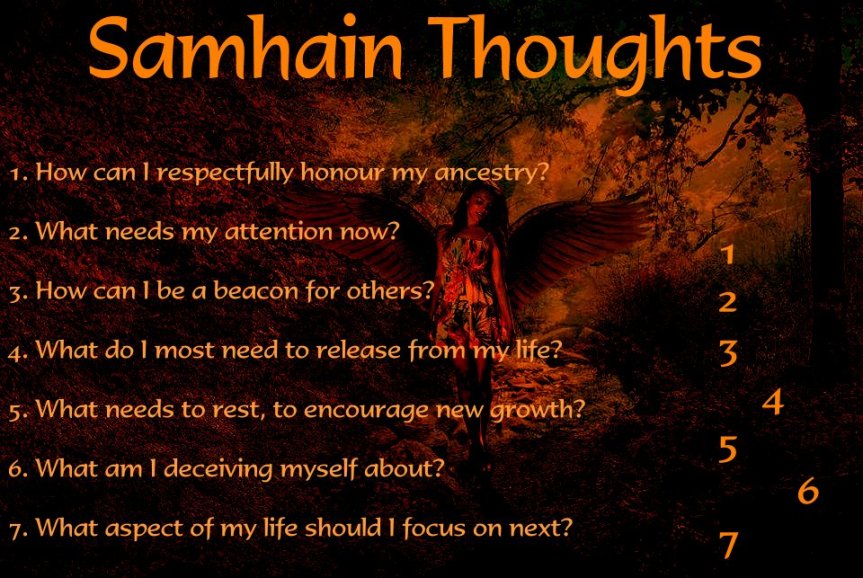
The Witches Correspondence for Samhain
Date: October 31st
Colours: Black, orange
Stones: Bloodstone, jet, obsidian, ruby, beryl, carnelian
Herbs: Bay leaf, mugwort, nutmeg, sage, wormwood
Foods: Apples, nuts, beef, turnips, pears, pomegranates, pumpkin, corn
Drinks: Mead, mulled wine, apple juice, absinthe
Flowers/Decorations: Chrysanthemum, hazel, thistle, pumpkin, autumn leaves
Type Of Magick/Activity: Banishing, breaking bad habits, divination, drying herbs, past life recall(see meditation page), clearing out everything you don’t want in the new year (habits and personal items).
Some Appropriate Goddesses: All crone and underworld Goddesses, Cerridwen (Welsh), Freya (Norse), Hecate (Greek), Morrigan (Celtic), Persephone (Greek), Rhiannon (Welsh)
Some Appropriate Gods: All old and underworld Gods, Cernunnos (Celtic), Anubis (Egyptian), Hades (Greek), Odin (Norse), Osiris (Egyptian)

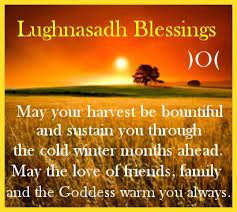
Lamas is also called Lughnasadh; it is a celebration of plenty and optimism, and of nature’s infinite bounty. It is the time of the first harvests, and it marks midsummer’s joyous and fanciful energy. This spirit is celebrated, too, in Shakespeare’s A Mid-Summer’s Night Dream. To tap into this energy, gather a small bundle of long grass or reeds to braid, and light a white candle.
Braid the grass as you speak this verse:
Fairies prancing in the meadow,
Spirits in the corn;
Green Man is flourishing everywhere
On this Midsummer morn.
Grains begin to ripen,
All things bear fruit.
Summer glistens with
possibility,
Blossoms take root.
Fairies whisper secrets,
Powerful blessings to see.
Cycles move and all around,
they share their gifts with me.
Air to fire,
Fire to water,
Water to earth,
Earth to air.
Elements feed spirit,
And the circle glows.
At Lammas, day and night,
We witness Nature’s awesome might.
Growing full
And blessing all,
‘Tis Earth’s celebration Before the chill of fall.
Now braiding this grass,
I mark this day
Protect my hearth,
With the abundance of grain.
The blessings of the Goddess come again;
Place the braid above my door.
Hunger be banished now and then.
Blessings be drawn to this place,
Summer’s energy fill this space.
Air, fire, water, earth unite,
And bless us all this day.
By: Abby Willowroot


Samhain is the harvest of the soul. In some traditions it is when the souls of those who died since the last Samhain move on, leaving our plane behind. In other traditions this is the time when the dearly departed return to pass on messages to us. Whatever the path, this is the time to honor the dead. Renew your home protection spells and start closing up in preparation for winter. Any garden or outdoor tools or furniture that are no longer needed should be cleaned up and put away with thanks for their service. Prep your garden and yard for winter, even if your garden, even if your garden is only a couple of planters of herbs. Pull out your heavier bedding and give it an airing out. Using needle and thread, add a few stiches of blue thread to a corner or inside seam to protect your sleep during the long, dark nights. Divination plays a role in Samhain. Ask your oracles what you need to lay to rest or end for the year.
By Rachel Henderson Llewellyn’s Witches’ Datebook 2023 page 139
You must be logged in to post a comment.