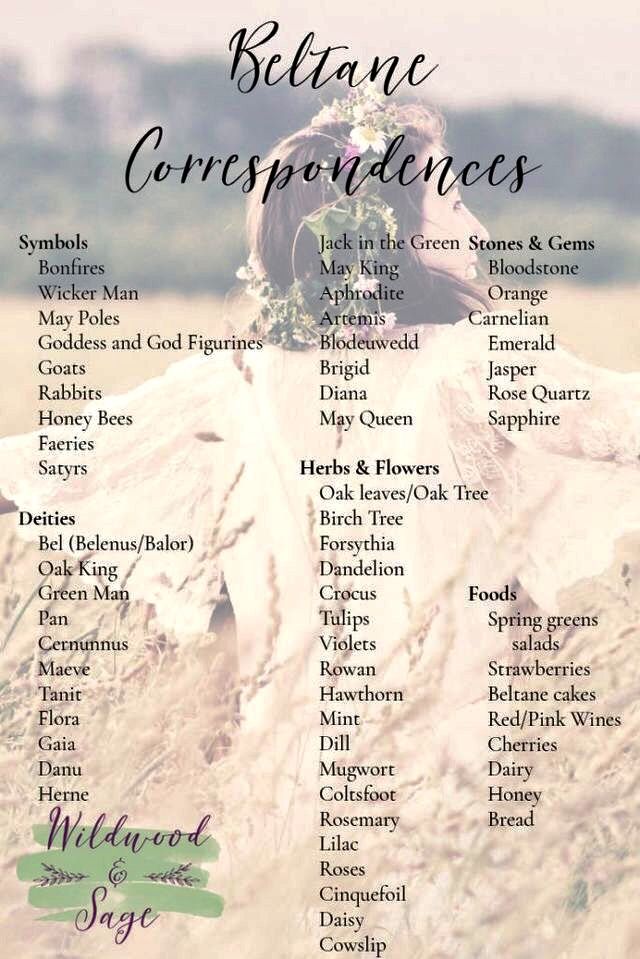
Beltane Activities and Correspondences c. 2016

Beltane Activities and Correspondences

Guest Author – Leslie Ravenwing

Herbs – hawthorn, honeysuckle, St John’s wort, wood ruff, all flowers.

Colors- Green, Yellow, Pink, Blue

Foods – Strawberries, Cherries, Fruits, Salads, Wine

Goddesses – Aphrodite, Asherah, Belili, Brigid, Danu, Freya, Flora, Gwenhwyvar, Hina, Ishtar, Maia, Mary, Oiwyn, Oshun, Ostara, Sappha, Tonantzin, Vesta

Gods – Beltene, Cernunnous, Cupid/Eros, Manawyddan and Pan

Activities and Rituals

Fertilize, nurture and boost existing goals, games, activities of pleasure, leaping bonfires, making garlands, May Pole dance, planting seeds, walking one’s property, feasting
Stones/Gems – Emerald, malachite, amber, orange carnelian, sapphire, rose quartz
Other Names – Cetsamhain (opposite Samhain),May Day, Fairy Day,Sacred Thorn Day, Rood Day, Roodmas (the Christian term for Rood Day, Old Beltane, Beltaine, Beltain, Baltane, Walpurgis Night, Floriala (Roman feast of flowers from April 29 to May 1), Walpurgisnacht (Germanic-feast of St. Walpurga), Thrimilce (Anglo-saxon), Bloumaand (Old Dutch)

-Make paper baskets (use yarn as a handle) and place real or silk flowers in each basket. Hang them on door knobs of neighbors and family members but don’t let them know you did it!

-If you have children, make necklaces out of diasies and place them around their necks for the day to bring protection to them.

-Begin planting for the season.

-Create a MayPole and dance around it with your family or friends.

-Make a dish of fruits, berries, nuts and leave in the wood for the animals and fae folk to enjoy

– This is a night for bonfires, torch-lit processions and the high revelry of witches, preferably in high places. It is prime time for the Great Rite, a night (like Samhain) when the Goddess descends into women. Cailleach Beara (Cally Berry, Brighid’s crone aspect) turns to stone this night and does not to return until Samhain. Beltane Eve also marks the setting of the Pleiades

Let’s Have Some Fun – Samhain

Samhain (Sow-en) – The Celtic roots of Halloween

As millions of children and adults participate in the fun of Halloween on the night of October 31st, few will be aware of its ancient Celtic roots in the Samhain (Samain) festival. In Celtic Ireland about 2,000 years ago, Samhain was the division of the year between the lighter half (summer) and the darker half (winter). At Samhain the division between this world and the otherworld was at its thinnest, allowing spirits to pass through.

The family’s ancestors were honoured and invited home whilst harmful spirits were warded off. People wore costumes and masks to disguise themselves as harmful spirits and thus avoid harm. Bonfires and food played a large part in the festivities. The bones of slaughtered livestock were cast into a communal fire, household fires were extinguished and started again from the bonfire. Food was prepared for the living and the dead, food for the ancestors who were in no position it eat it, was ritually shared with the less well off.

Christianity incorporated the honouring of the dead into the Christian calendar with All Saints (All Hallows) on November 1st, followed by All Souls on November 2nd. The wearing of costumes and masks to ward off harmful spirits survived as Halloween customs. The Irish emigrated to America in great numbers during the 19th century especially around the time of famine in Ireland during the 1840’s. The Irish carried their Halloween traditions to America, where today it is one of the major holidays of the year. Through time other traditions have blended into Halloween, for example the American harvest time tradition of carving pumpkins.

Two hills in the Boyne Valley were associated with Samhain in Celtic Ireland, Tlachtga and Tara. Tlachtga was the location of the Great Fire Festival which begun on the eve of Samhain (Halloween). Tara was also associated with Samhain, however it was secondary to Tlachtga in this respect.

The entrance passage to the Mound of the Hostages on the Hill of Tara is aligned with the rising sun around Samhain. The Mound of the Hostages is…

Click here to read the rest of this article about Samhain

(One Person’s Point of View c 2013) You Call It Hallowe’en… We Call It Samhain

You Call It Hallowe’en… We Call It Samhain    by Peg Aloi


October 31st, commonly called Hallowe’en, is associated with many customs, some of them mysterious, some light-hearted, some of them downright odd. Why do we bob for apples, carve pumpkins into jack-o-lanterns, and tell ghost stories on this night? Why do children go door-to-door asking for candy, dressed in fantastical costumes? How is Hallowe’en connected to All Soul’s Day, celebrated by some Christian denominations on November 1st? And what is the significance of this holiday for modern-day Witches?

A Brief History of Hallowe’en

Hallowe’en has its origins in the British Isles. While the modern tradition of trick or treat developed in the U. S., it too is based on folk customs brought to this country with Irish immigrants after 1840. Since ancient times in Ireland, Scotland, and England, October 31st has been celebrated as a feast for the dead, and also the day that marks the new year. Mexico observes a Day of the Dead on this day, as do other world cultures. In Scotland, the Gaelic word “Samhain” (pronounced “SAW-win” or “SAW-vane”) means literally “summer’s end.”

Other names for this holiday include: All Hallows Eve (“hallow” means “sanctify”); Hallowtide; Hallowmass; Hallows; The Day of the Dead; All Soul’s Night; All Saints’ Day (both on November 1st).

For early Europeans, this time of the year marked the beginning of the cold, lean months to come; the flocks were brought in from the fields to live in sheds until spring. Some animals were slaughtered, and the meat preserved to provide food for winter. The last gathering of crops was known as “Harvest Home, ” celebrated with fairs and festivals.

In addition to its agriculture significance, the ancient Celts also saw Samhain as a very spiritual time. Because October 31 lies exactly between the Autumnal Equinox and the Winter Solstice, it is theorized that ancient peoples, with their reliance on astrology, thought it was a very potent time for magic and communion with spirits. The “veil between the worlds” of the living and the dead was said to be at its thinnest on this day; so the dead were invited to return to feast with their loved ones; welcomed in from the cold, much as the animals were brought inside. Ancient customs range from placing food out for dead ancestors, to performing rituals for communicating with those who had passed over.

Communion with the dead was thought to be the work of witches and sorcerers, although the common folk thought nothing of it. Because the rise of the Church led to growing suspicion of the pagan ways of country dwellers, Samhain also became associated with witches, black cats (“familiars” or animal friends), bats (night creatures), ghosts and other “spooky” things…the stereotype of the old hag riding the broomstick is simply a caricature; fairy tales have exploited this image for centuries.

Divination of the future was also commonly practiced at this magically-potent time; since it was also the Celtic New Year, people focused on their desires for the coming year. Certain traditions, such as bobbing for apples, roasting nuts in the fire, and baking cakes which contained tokens of luck, are actually ancient methods of telling fortunes.

So What About Those Jack-O-Lanterns?

Other old traditions have survived to this day; lanterns carved out of pumpkins and turnips were used to provide light on a night when huge bonfires were lit, and all households let their fires go out so they could be rekindled from this new fire; this was believed to be good luck for all households. The name “Jack-O-Lantern” means “Jack of the Lantern, ” and comes from an old Irish tale. Jack was a man who could enter neither heaven nor hell and was condemned to wander through the night with only a candle in a turnip for light. Or so goes the legend…

But such folk names were commonly given to nature spirits, like the “Jack in the Green, ” or to plants believed to possess magical properties, like “John O’ Dreams, ” or “Jack in the Pulpit.” Irish fairy lore is full of such references. Since candles placed in hollowed-out pumpkins or turnips (commonly grown for food and abundant at this time of year) would produce flickering flames, especially on cold nights in October, this phenomenon may have led to the association of spirits with the lanterns; and this in turn may have led to the tradition of carving scary faces on them. It is an old legend that candle flames which flicker on Samhain night are being touched by the spirits of dead ancestors, or “ghosts.”

Okay, What about the Candy?

“Trick or treat” as it is practiced in the U. S. is a complex custom believed to derive from several Samhain traditions, as well as being unique to this country. Since Irish immigrants were predominantly Catholic, they were more likely to observe All Soul’s Day. But Ireland’s folk traditions die hard, and the old ways of Samhain were remembered. The old tradition of going door to door asking for donations of money or food for the New Year’s feast, was carried over to the U. S. from the British Isles. Hogmanay was celebrated January 1st in rural Scotland, and there are records of a “trick or treat” type of custom; curses would be invoked on those who did not give generously; while those who did give from their hearts were blessed and praised. Hence, the notion of “trick or treat” was born (although this greeting was not commonly used until the 1930’s in the U. S.). The wearing of costumes is an ancient practice; villagers would dress as ghosts, to escort the spirits of the dead to the outskirts of the town, at the end of the night’s celebration.

By the 1920’s, “trick or treat” became a way of letting off steam for those urban poor living in crowded conditions. Innocent acts of vandalism (soaping windows, etc.) gave way to violent, cruel acts. Organizations like the Boy Scouts tried to organize ways for this holiday to become safe and fun; they started the practice of encouraging “good” children to visit shops and homes asking for treats, so as to prevent criminal acts. These “beggar’s nights” became very popular and have evolved to what we know as Hallowe’en today.

What Do Modern Witches Do at Hallowe’en?

It is an important holiday for us. Witches are diverse, and practice a variety of traditions. Many of us use this time to practice forms of divination (such as tarot or runes). Many Witches also perform rituals to honor the dead; and may invite their deceased loved ones to visit for a time, if they choose. This is not a “seance” in the usual sense of the word; Witches extend an invitation, rather than summoning the dead, and we believe the world of the dead is very close to this one. So on Samhain, and again on Beltane (May 1st), when the veil between the worlds is thin, we attempt to travel between those worlds. This is done through meditation, visualization, and astral projection. Because Witches acknowledge human existence as part of a cycle of life, death and rebirth, Samhain is a time to reflect on our mortality, and to confront our fears of dying.

Some Witches look on Samhain as a time to prepare for the long, dark months of winter, a time of introspection and drawing inward. They may bid goodbye to the summer with one last celebratory rite. They may have harvest feasts, with vegetables and fruits they have grown, or home-brewed cider or mead. They may give thanks for what they have, projecting for abundance through the winter. Still others may celebrate with costume parties, enjoying treats and good times with friends. There are as many ways of observing Samhain as there are Witches in the world!

(One Person’s Viewpoint c 2015) Celebrating May Day – Beltane History

Celebrating May Day – Beltane History


The Fires of Tara:

Beltane kicks off the merry month of May, and has a long history. This fire festival is celebrated on May 1 with bonfires, Maypoles, dancing, and lots of good old fashioned sexual energy. The Celts honored the fertility of the gods with gifts and offerings, sometimes including animal or human sacrifice. Cattle were driven through the smoke of the balefires, and blessed with health and fertility for the coming year.

In Ireland, the fires of Tara were the first ones lit every year at Beltane, and all other fires were lit with a flame from Tara.

Roman Influences:

The Romans, always known for celebrating holidays in a big way, spent the first day of May paying tribute to their Lares, the gods of their household. They also celebrated the Floralia, or festival of flowers, which consisted of three days of unbridled sexual activity. Participants wore flowers in their hair (much like May Day celebrants later on), and there were plays, songs, and dances. At the end of the festivities, animals were set loose inside the Circus Maximus, and beans were scattered around to ensure fertility. The fire festival of Bona Dea was also celebrated on May 2nd.

A Pagan Martyr:

May 6 is the day of Eyvind Kelda, or Eyvind Kelve, in Norse celebrations. Eyvind Kelda was a Norwegian martyr who was tortured and drowned on the orders of King Olaf Tryggvason for refusing to give up his Pagan beliefs. A week later, Norwegians celebrate the Festival of the Midnight Sun, which pays tribute to the Norse sun goddess.

This festival marks the beginning of ten straight weeks without darkness.

The Greeks and Plynteria:

Also in May, the Greeks celebrated the Plynteria in honor of Athena, the goddess of wisdom and battle, and the patroness of the city of Athens (which was named after her). The Plynteria includes the ritual cleansing of Athena’s statue, along with feasting and prayers in the Parthenon. On the 24th, homage is paid to the Greek moon-goddess Artemis (goddess of the hunt and of wild animals). Artemis is a lunar goddess, equivalent to the Roman moon-goddess Diana – she is also identified with Luna, and Hecate.

The Green Man Emerges:

A number of pre-Christian figures are associated with the month of May, and subsequently Beltane. The entity known as the Green Man, strongly related to Cernunnos, is often found in the legends and lore of the British Isles, and is a masculine face covered in leaves and shrubbery. In some parts of England, a Green Man is carried through town in a wicker cage as the townsfolk welcome the beginning of summer. Impressions of the Green Man’s face can be found in the ornamentation of many of Europe’s older cathedrals, despite edicts from local bishops forbidding stonemasons from including such pagan imagery.

Jack-in-the-Green:

A related character is Jack-in-the-Green, a spirit of the greenwood. References to Jack appear in British literature back as far as the late sixteenth century. Sir James Frazer associates the figure with mummers and the celebration of the life force of trees. Jack-in-the-Green was seen even in the Victorian era, when he was associated with soot-faced chimney sweeps. At this time, Jack was framed in a structure of wicker and covered with leaves, and surrounded by Morris dancers. Some scholars suggest that Jack may have been a ancestor to the legend of Robin Hood.

Ancient Symbols, Modern Rites:

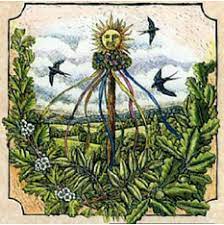
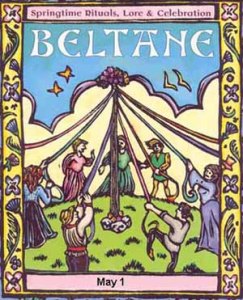
Today’s Pagans celebrate Beltane much like their ancestors did. A Beltane ritual usually involves lots of fertility symbols, including the obviously-phallic Maypole dance. The Maypole is a tall pole decorated with flowers and hanging ribbons, which are woven into intricate pattern by a group of dancers. Weaving in and out, the ribbons are eventually knotted together by the time the dancers reach the end.

In some Wiccan traditions, Beltane is a day in which the May Queen and the Queen of Winter battle one another for supremacy. In this rite, borrowed from practices on the Isle of Man, each queen has a band of supporters. On the morning of May 1, the two companies battle it out, ultimately trying to win victory for their queen. If the May Queen is captured by her enemies, she must be ransomed before her followers can get her back.

There are some who believe Beltane is a time for the faeries — the appearance of flowers around this time of year heralds the beginning of summer and shows us that the fae are hard at work. In early folklore, to enter the realm of faeries is a dangerous step — and yet the more helpful deeds of the fae should always be acknowledged and appreciated. If you believe in faeries, Beltane is a good time to leave out food and other treats for them in your garden or yard.

For many contemporary Pagans, Beltane is a time for planting and sowing of seeds — again, the fertility theme appears. The buds and flowers of early May bring to mind the endless cycle of birth, growth, death and rebirth that we see in the earth. Certain trees are associated with May Day, such as the Ash, Oak and Hawthorn. In Norse legend, the god Odin hung from an Ash tree for nine days, and it later became known as the World Tree, Yggdrasil.

If you’ve been wanting to bring abundance and fertility of any sort into your life — whether you’re looking to conceive a child, enjoy fruitfulness in your career or creative endeavors, or just see your garden bloom — Beltane is the perfect time for magical workings related to any type of prosperity.


Source: Article found on & owned by About.com  Author:

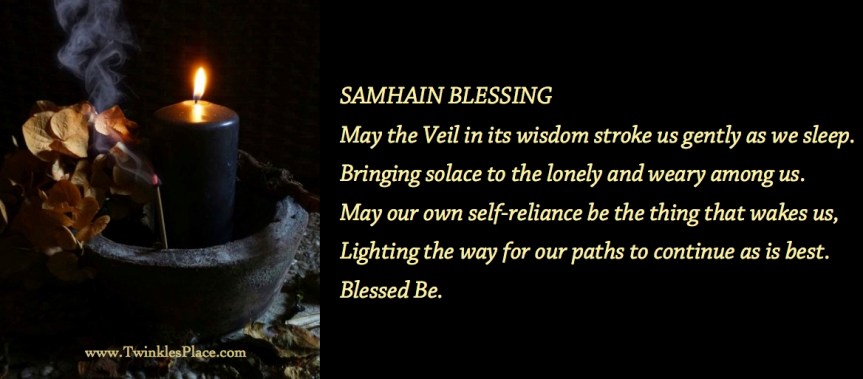
Spell for Samhain – A Samhain Chant c. 2018

(YOU CAN COPY AND PASTE ANY SPELLS POSTED TO A DOCUMENT TO PRINT AND/OR SAVE ON YOUR COMPUTER FOR PERSONAL USE ONLY)

Beltane Correspondences

Samhain Correspondences

(YOU CAN COPY AND PASTE ANY COROSPONDENCES POSTED TO A DOCUMENT TO PRINT AND/OR SAVE ON YOUR COMPUTER)

Spell For Beltane – Beltane Ritual-Solitary c.2015

(YOU CAN COPY AND PASTE ANY SPELLS POSTED TO A DOCUMENT TO PRINT AND/OR SAVE ON YOUR COMPUTER FOR PERSONAL USE ONLY)

A simple, fun and colorful ritual to enjoy

For this ritual one should dress brightly and strikingly, wearing flowers and greenery according to taste. A low altar should be built partially or entirely of stones at the middle of the ritual area.

What you will need:

Two candles should be placed on the altar, and the altar itself arranged as usual. (if the ritual is performed outdoors, the candles may be replaced be torches. These may be stuck in the ground on either side of the altar.)

Four candles or torches are placed before the altar to be lit later. A vertical pole about 3 feet in height is usualy erected on the far side of the altar: it should be decked with fruits, flowers, and bright ribbons. A half full cup of wine should be placed before the image of the Goddess.

Before dressing for the ceremony, take a ritual cleansing bath. When ready to go on with the rite, meditate for a while before going into the ritual area, thinking strongly on the old pagan ways and trying to imagine the rituals wich took place on this night in ages passed.

– Go alone to the ritual place. Kneeling before the altar, light the candles or torches on the altar, and the incense. Set alight the four candles before the altar and place them 3 or 5 feet from the altar at the North, then going deosil, saying:

“Here at this spot Do I create a place Sacred to the Gods of old. For a while, here and now Shall the ancient ways Live again”

– Take the wand and hold it out and salute toward the East, saying:

“Oh winds of the East Blow sweet and pure For the Lady reigns again!”

– Hold the wand out and salute toward the South, saying:

“Oh warmth of the South Bring forth life from the earth For the Lady reigns again!”

– Hold the wand out and salute toward the West, saying:

“Oh waters of the West Glisten clear and fresh For the Lady reigns again!”

– Hold the wand out and salute toward the North, saying:

“Oh lands of the North Grow rich and bounteous For the Lady reigns again!”

– Replace the wand and, holding the arms out over the altar, saying:

“Gracious and lovely Lady of the moon, Of joy and love, Protecteress of forests and wild things, This place is consecrated to Thee.”

-Take up the wine cup, holding it out at arm’s lenght, and pour out a few drops, saying:

” To the Great Ones of old And to the joyous times to come!”

-Drink some of the wine (or if you cannot drink alcohol, use an appropriate substitute).

– After a brief pause, rap three times on the altar with the wand saying:

“As woods and meadows flower forth I celebrate the ancient rite As the Ancients did before me. I cast the words into the mists Of time and space and otherwhere: Where one stays now, in years to come, May scores of others revel there. So may it be!”

– Rap once upon the altar. (More incense should be added now. Ad-lib additions are appropriate at this time…meditations, poetry …and the like.) (If a source of proper music is available, a solitary Dance of the Winds may be improvised.)

– Draw the Fertility talisman on the parchment, suffumigate it thrice, then, recite the supplication written on the back, …bow humbly and say:

“Friends of the nether worlds Now, come and assist us in our humble workings. Follow us to another sacred place of ours, And join your forces with ours, On this Fertilization Day.”

– Bury the talisman into the ground under an oak tree (if available), saying an ad-lib statement on the meaning of the talisman and its correspondances.Go back to the circle.

– When all is done, close by rapping four time with the wand, saying:

“Friends of the nether worlds Who have been about me for a while You may, with thanks, Return from whence you came.”

– Hold out arms and say:

“Blessed Lady of joy and laughter I thank Thee for Thy presence. May some of your love and power Remain with me. Blessed Be!”

– Put out the lights about the altar. As the two on the altar itself are darkened, say:

“This rite is ended…”

Note: Alter this ritual as needed to fit your circumstance. Note that many Beltane celebrations extend roughly one week past the May 1’st date, so any time in early May is appropriate to celebrate, in case you miss celebrating it on the May 1’st date.

Samhain Spell – Protection Candle Spell

(YOU CAN COPY AND PASTE ANY SPELLS POSTED TO A DOCUMENT TO PRINT AND/OR SAVE ON YOUR COMPUTER FOR PERSONAL USE ONLY)

Encircle a red candle with any protection herb and light the wick. Sit and gaze at the fiery power of the light that shall protect you from harm. When you are ready, you may say this, or another verse:

For protection, I now pray,
Let all evil turn away.
Protect me night,
Protect me day,
And keep misfortune well at bay.

Flashback 2004 Samhain

Expect the unexpected if you celebrate Samhain – the Celtic New Year – on All Hallows Eve: the planets bring a lot of energetic talk and chaos, and the resultant noise will add exuberance to the ritual. Look for psychic dreams on astrological Samhain, November 6; your intuition will be in top form if you do readings at ritual. The power is the strongest it has been in several years.

This is the sabbat for wearing your witchy black. Clean the house, including the hearth, from top to bottom; the garden also needs to be prepared for the winter by this date. Lay new fires. Fest with your family and set places for your ancestors. Cleanse divination tools (cards, crystals, runes) and rededicate them to the Goddess. For the last harvest festival, put apples, nuts, acorns, and squashes on the altar, and add pictures of the family members you are missing.

Using fresh harvested hazel nuts, make a wreath with nine nuts (three times three) to protect your house from fire and lightening. Offer thanks to the river gods or the gods of the sea, and remember to honor the goddess Hecate.

Source: K. D. Spitzer in Llewellyn’s Witches’ Datebook 2004 Page 63

Flashback 2004 Beltane

Beltane is he holiday that draws all witches outside to celebrate the returning power of the Sun and the fertility of the land.

Wear red robes for ritual and dress your altar with reds for passion. If you have identified a nearby rowan tree, you can make a wreath for your hair using rowan twigs. Decorate your house with freshly cut greens, herbs, and flowers. Arrange for music or drumming to lighten your steps of the dancers of the maypole or spiral dance. Lose yourself in the dance.

Fire is the honored element at this ritual, so have circle members jump a cauldron for purification and protection. Watr is another honored element: be certain to visit your local sacred spring or riverbank. Sprinkle perfume into the water for the undines. Again, leave a drop or two of milk and other food offerings for the nature spirits.

Wake before dawn on this day and watch the Sun rise over a river or beach. Gather a pitcherful where the Sun has gilded the water. When you return home, walk the bounds of your land, sprinkling water in your garden beds to ensure plenty of rainfall during the growing season.

By K. D. Spitzer in Llewellyn’s Witches’ Datebook 2004 Page 63

Mabon (Autumn Equinox) Folklore and Traditions

 Source: learnreligions.com

Interested in learning about some of the traditions behind the celebrations of the autumn equinox? Find out why Mabon is important, learn about the legend of Persephone and Demeter, the symbolism of stags, acorns and oaks, and explore the magic of apples and more!

What are the origins of the word “Mabon”?. Image by Andrew McConnell/Robert Harding World Imager/Getty Images

Wondering where the word “Mabon” came from? Was it a Celtic god? A Welsh hero? Is it found in ancient writings? Let’s look at some of the history behind the word.

Cet your family outdoors to celebrate Mabon!. Image by Patrick Wittman/Cultura/Getty Images

Mabon falls around September 21 in the northern hemisphere, and around March 21 below the equator. This is the autumn equinox, it’s a time to celebrate the season of the second harvest. It’s a time of balance, of equal hours of light and dark, and a reminder that the cold weather isn’t far away at all. If you’ve got kids at home, try celebrating Mabon with some of these family-friendly and kid-appropriate ideas.

Autumn Equinox Around the World

Mabon is the time of the second harvest, and of thanksgiving. Image by Johner Images/Getty Images

At Mabon, the time of the autumn equinox, there are equal hours of light and dark. It is a time of balance, and while summer is ending, the winter is approaching. This is a season in which farmers are harvesting their fall crops, gardens are beginning to die, and the earth gets a bit cooler each day. Let’s look at some of the ways that this second harvest holiday has been honored around the world for centuries. Read more about the Autumn Equinox Around the World.

Gods of the Vine

Grapes are everywhere in the fall, so it’s no surprise that the Mabon season is a popular time to celebrate wine-making, and deities connected to the growth of the vine. Whether you see him as Bacchus, Dionysus, the Green Man, or some other vegetative god, the god of the vine is a key archetype in harvest celebrations. Learn more about the Gods of the Vine.

Pagans and Renaissance Festivals

RenFaire isn’t specifically Pagan, but you’ll see a lot of us there. Image by Dave Fimbres Photography/Moment Open/Getty Images

Renaissance Faires and Festivals aren’t specifically Pagan, but there are a few reasons why you’ll see a lot of us there. Let’s look at how this counterculture institution of the sixties and seventies turned into a place where you can almost always find other Pagans.

The Celebration of Michaelmas

Michaelmas fell near the end of the harvest season, and was a time for settling accounts and balances. Image by Oliver Morin/AFP Creative/Getty Images

In the British Isles, Michaelmas is celebrated on September 29. As the Feast of St. Michael within the Catholic church, this date is often associated with the harvest because of its proximity to the autumn equinox. Although it’s not a Pagan holiday in the true sense, Michaelmas celebrations often included older aspects of Pagan harvest customs, such as the weaving of corn dolls from the last sheaves of grain. Read more about the Michaelmas Celebration.

Nutting Day

Hazelnuts are typically ripe around September 14, known as Nutting Day in the British Isles. Image by Alberto Guglielmi/Photodisc/Getty Images

Around the middle of September, the nut season starts. Hazelnuts ripen in the hedges, and they have long been connected to folklore and legends. Hazel is associated to the Celtic tree month of Coll, from August 5 to September 1, and the very word Coll means “the life force inside you.” Hazelnuts are connected to wisdom and protection, and are often found near sacred wells and magical springs.

The oak tree has long been venerated by people of many cultures as a symbol of strength and power. Image by Images Etc Ltd/Moment Mobile/Getty Images

The acorn is a symbol of strength and power. In the fall, these tiny yet hardy little nuggets drop from the oak trees to land on the ground. Because the acorn only appears on a fully mature oak, it is often considered a symbol of the patience needed to attain goals over long periods of time. It represents perseverance and hard work. In many cultures the oak is sacred. Read more about Acorn & Oak Folklore.

Pomona, the Apple Goddess

Pomona is the goddess of apple orchards, and is celebrated around Lammas. Image by Stuart McCall/Photographer’s Choice/Getty Images

Pomona was a Roman goddess who was the keeper of orchards and fruit trees. Unlike many other agricultural deities, Pomona is not associated with the harvest itself, but with the flourishing of fruit trees. She is usually portrayed bearing a cornucopia or a tray of blossoming fruit. Learn more about Pomona, the Goddess of Apples.

The scarecrow guards the fields and crops from hungry predators. Image by Dimitri Otis/Digital Vision/Getty Images

Although they haven’t always looked the way they do now, scarecrows have been around a long time and have been used in a number of different cultures. From the farms of ancient Greece to the rice fields of Japan, scarecrows are often used for a variety of purposes. Learn more about Scarecrow Magic & Legends.

Can You Balance an Egg on the Equinox?

EggBalance_1500.jpg
Can you balance an egg on its end during the equinox?. Image by Imaginar/Image Bank/Getty Images

There’s a very popular story that circulates on the Internet twice every year at the spring and fall equinoxes, and it’s about eggs. According to legend, if you try to stand an egg on its end on the vernal or autumnal equinox, you’ll be successful, because of the polarity and balance of the earth. Let’s explore the legend of Egg Balancing on the Equinox.

Source:

Wigington, Patti. “Mabon (Autumn Equinox) Folklore and Traditions.” Learn Religions, Sep. 5, 2021, learnreligions.com/mabon-folklore-traditions-4590167.

The Spiritual Meaning of Mabon

Let’s Have Some Fun – Printable Mabon Coloring Pages

Some of the Witchcraft/Magickal Correspondence and Actives for Mabon c. 2018

(YOU CAN COPY AND PASTE ANY CORRESPONDENCE POSTED TO A DOCUMENT TO PRINT AND/OR SAVE ON YOUR COMPUTER FOR PERSONAL USE ONLY)

Mabon Activities and Correspondences

Symbolism of Mabon: The completion of the Harvest begun. Day and night are equal and the God prepares to leave His physical body and begin the great adventure into the unseen.

Symbols of Mabon: all harvest symbols, corn, autumn flowers, red poppies,nuts, grains, leaves, acorns, pine and cypress cones, oak sprigs, wreaths, vine, grapes, cornucopia, horns of plenty, burial cairns, apples, marigolds, harvested crops. wine, gourds

Colors : Orange, Dark Red, Yellow, Indigo, Maroon and Brown.

Goddesses: Modron(Welsh), Bona Dea, Harvest Deities, Persephone, Demeter/Ceres, Morgan(Welsh- Cornish), Snake Woman(Aboriginal), Epona (Celtic-Gaulish), Pamona(Roman), the Muses(Greek).

Gods: Mabon, Modron(Welsh), Sky Father, John Barleycorn , the Wicker-Man, the Corn Man, Thoth(Egyptian), Hermes, Hotei(Japanese), Thor, Dionysus(Roman), Bacchus(Greek) and all wine Deities.

Tarot Cards: Judgment and The World

Altar Decorations: acorns, pinecones, autumn leaves, pomegranate, statue of the Triple Goddess in her Mother phase.

Mabon Herbs: Rue, yarrow, rosemary, marigold, sage, walnut leaves and husks, mistletoe, saffron, chamomile, almond leaves, passionflower, frankincense, rose hips, bittersweet, sunflower, wheat, oak leaves, dried apple or apple seeds.

Foods of Mabon: cornbread, wheat products, bread, grains, berries, nuts, grapes, acorns, seeds, dried fruits, corn, beans, squash, roots (ie onions, carrots, potatoes, etc), hops, apples, pomegranates, carrots, onions, potatoes, roast goose or mutton, wine, ale and ciders, breads, apples, pomegranates

Animals: dogs, wolves, stag, blackbird, owl, eagle, birds of prey, salmon & goat, Gnomes, Sphinx, Minotaur, Cyclops, Andamans and Gulons.

Element: water.

Incense : pine, sweetgrass, apple blossom, benzoin, myrrh, frankincense, jasmine, sage wood aloes, black pepper, patchouly, cinnamon, clove, oak moss

Mabon Stones : During Mabon, stones ruled by the Sun will help bring the Sun’s energy to you.clear quartz, amber, peridot, diamond, gold, citrine, yellow topaz, cat’s-eye, adventurine.

Customs: offerings to land, preparing for cold weather by bringing in harvest, cutting willow wands( Druidic), leaving apples upon burial cairns & graves as a token of honor, walks in forests, gather seed pods & dried plants, fermenting grapes to make wine,picking ripe produce, stalk bundling

Spellworkings of Mabon: Protection, prosperity, security, and self- confidence. Also those of harmony and balance. Taboos:It was considered unlucky to cut down the very last of the Harvest, and so was also left to stand in the field by some traditions.

Activities of Mabon: Select the best of each vegetable, herb, fruit, nut, and other food you have harvested or purchased and give it back to Mother Earth with prayers of thanksgiving. Hang dried ears of corn around your home in appreciation of the harvest season. Do meditations and chanting as you store away food for the Winter. Do a thanksgiving circle, offering thanks as you face each direction – – for home, finances, and physical health (North); for gifts of knowledge (East); for accomplishments in career and hobbies (South); for relationships (West); and for spiritual insights and messages (Center). Decorate the table with colorful autumn leaves in a basket. Display the fruits of the harvest – corn, gourds, nuts, grapes, apples – preferably in a cornucopia. Or decorate with wildflowers, acorns, nuts, berries, cocoons, anything that represents the harvest to you. Like its sister equinox, halfway across the Wheel of the Year, the Autumn Equinox is a good occasion for a ritual feast. Plan a meal that uses seasonal and symbolic fruits and vegetables. You can serve bread, squash, corn, apples, cider and wine. Make some homemade wine or cordial gather and dry herbs, plants, seeds and seed pods. Make grapevine wreaths using dried bitter-sweet herb for protection. Use ribbons of gold and yellow to bring in the energy of the Sun, and decorate with sprigs of dried yarrow or cinnamon sticks. Make a protection charm of hazelnuts (filberts) strung on red thread. Make a witch’s broom. Tie dried corn husks or herbs (broom, cedar, fennel, lavender, peppermint, rosemary) around a strong, relatively straight branch of your choice. Make magic Apple Dolls Gifts of the Harvest can be used to make tools and emblems that will remind us of their bounty all year round. Look for colored leaves. Collect fallen leaves and make a centerpiece or bouquet for your home. Save the leaves to burn in your Yule fire. Vist an apple orchard and, if possible, pick your own apples. Hang apples on a tree near your home. Watch the birds and other small animals who will enjoy your gift. This is also the time for replacing your old broom with a new one. As the broom corn is ripe now, besom making is traditional and magickal this time of year. Begin the festival with a vineyard or orchard harvest. You might check the farm lands in your area to see if there’s an orchard or pumpkin patch that allows customers to harvest produce for themselves. Traditionally Sabbat festivals begin at sun set on the eve of the Holiday. You can use the daytime hours of this holiday eve to prepare baskets for harvesting the next day. Baking a pumpkin pie (from scratch if possible) is a wonderful way to bring in the fragrance of the holiday season

Happy and Blessed Mabon/Autumn Equinox

If you want to see information on any tradition of witchcraft, herbs, flowers, a Goddess or a God, or anything pertaining to any tradition of witchcraft, please put it in the comment section or email Lady Carla Beltane at ladybeltane@witchesofthecraft.com. I will try to find some information to post about it.

May your and your family’s lives be filled with love, happiness, laughter, joy, and positive things!

Blessed be

Summer Solstice vs. Winter Solstice

Summer Solstice vs. Winter Solstice

What’s the Difference?

Summer Solstice and Winter Solstice are two significant astronomical events that mark the extremes of the Earth’s axial tilt. Summer Solstice occurs around June 21st in the Northern Hemisphere and December 21st in the Southern Hemisphere, while Winter Solstice takes place around December 21st in the Northern Hemisphere and June 21st in the Southern Hemisphere. During Summer Solstice, the hemisphere tilted towards the Sun experiences the longest day of the year, with the Sun reaching its highest point in the sky. In contrast, Winter Solstice brings the shortest day of the year, with the Sun at its lowest point in the sky. These solstices have cultural and historical importance, often celebrated with various rituals and festivals around the world.

Comparison

Attribute Summer Solstice Winter Solstice
Date June 20-22 December 20-23
Duration of Daylight Longest day of the year Shortest day of the year
Duration of Darkness Shortest night of the year Longest night of the year
Position of Sun Highest in the sky Lowest in the sky
Season Summer Winter
Hemisphere Northern Hemisphere Southern Hemisphere
Celebrations Midsummer, bonfires Winter festivals, Christmas

Further Detail

Introduction

The solstices are significant astronomical events that mark the changing of seasons. The Summer Solstice and Winter Solstice are two of the most well-known solstices, occurring in opposite hemispheres of the Earth. While the Summer Solstice represents the longest day of the year in the Northern Hemisphere, the Winter Solstice marks the shortest day of the year. In this article, we will explore the attributes of both solstices, highlighting their unique characteristics and the impact they have on various aspects of life.

Summer Solstice

The Summer Solstice, also known as Midsummer, is a time when the Northern Hemisphere experiences the longest day and shortest night of the year. It usually falls on June 20th or 21st. This astronomical event occurs when the tilt of the Earth’s axis is most inclined towards the sun, resulting in the sun reaching its highest point in the sky.

One of the most notable attributes of the Summer Solstice is the extended daylight hours. The sun rises early and sets late, providing ample time for outdoor activities and enjoyment of the warm weather. This extended daylight has a significant impact on agriculture, as it allows for increased photosynthesis and growth of crops. Farmers take advantage of this period to maximize their harvests and ensure bountiful yields.

Furthermore, the Summer Solstice holds cultural and spiritual significance in many societies. It is celebrated in various ways around the world, often with festivals, bonfires, and rituals. For example, the ancient monument of Stonehenge in England attracts thousands of visitors who gather to witness the sunrise on this special day. The solstice is seen as a time of renewal, abundance, and connection with nature.

Additionally, the Summer Solstice has a profound impact on wildlife. Many animals, such as birds, migrate during this time, taking advantage of the extended daylight to find food and build nests. It is also a crucial period for plant pollination, as the longer days provide more opportunities for insects and birds to carry out this essential process.

In terms of climate, the Summer Solstice brings warmer temperatures and the onset of summer. It is a time when people flock to beaches, lakes, and other outdoor destinations to enjoy the sun and engage in recreational activities. The longer days and increased sunlight also have positive effects on human health, as exposure to sunlight stimulates the production of vitamin D, which is essential for bone health and overall well-being.

Winter Solstice

The Winter Solstice, also known as Midwinter, is the counterpart to the Summer Solstice. It occurs around December 21st in the Northern Hemisphere when the Earth’s axis is tilted furthest away from the sun. As a result, the Winter Solstice represents the shortest day and longest night of the year.

One of the most prominent attributes of the Winter Solstice is the limited daylight hours. The sun rises late and sets early, leading to longer periods of darkness. This reduced sunlight has implications for various aspects of life, including agriculture, human activities, and wildlife behavior.

In terms of agriculture, the Winter Solstice marks a period of dormancy for many crops. The limited sunlight and colder temperatures slow down plant growth, and farmers often use this time to prepare for the upcoming spring season. It is a time for planning, maintenance, and reflection on the previous year’s harvest.

From a cultural perspective, the Winter Solstice holds significant meaning in many societies. It is often associated with celebrations and festivals that embrace the return of light and the promise of longer days. For example, the ancient Roman festival of Saturnalia and the modern-day celebration of Christmas both coincide with the Winter Solstice. These festivities bring people together, fostering a sense of warmth, joy, and hope during the darkest time of the year.

Furthermore, the Winter Solstice affects wildlife behavior in various ways. Many animals adapt to the limited daylight by hibernating or migrating to warmer regions. The scarcity of food during this time also influences the feeding patterns of certain species. Additionally, the Winter Solstice provides unique opportunities for observing nocturnal animals and appreciating the beauty of the night sky.

In terms of climate, the Winter Solstice brings colder temperatures and the official start of winter. It is a time when people bundle up in warm clothing, gather around fireplaces, and engage in indoor activities. The limited daylight can have an impact on mental health, as some individuals may experience seasonal affective disorder (SAD) due to reduced exposure to sunlight. However, the Winter Solstice also offers a chance for introspection, rest, and rejuvenation.

Conclusion

The Summer Solstice and Winter Solstice are two significant astronomical events that mark the changing of seasons in the Northern Hemisphere. While the Summer Solstice represents the longest day and brings extended daylight, warmth, and abundance, the Winter Solstice marks the shortest day and brings limited daylight, colder temperatures, and a time for reflection. Both solstices hold cultural, agricultural, and ecological importance, shaping various aspects of life on Earth. Whether it’s celebrating the sun’s zenith during the Summer Solstice or embracing the return of light during the Winter Solstice, these celestial events remind us of the cyclical nature of our planet and the interconnectedness of all living beings.

Some of the Witchcraft/Magickal Correspondence for Yule – 103 Yule Correspondences For An Amazing Winter Solstice Ritual

(YOU CAN COPY AND PASTE ANY COROSPONDENCES POSTED TO A DOCUMENT TO PRINT AND/OR SAVE ON YOUR COMPUTER)

103 Yule Correspondences For An Amazing Winter Solstice Ritual

Yule, or the Winter Solstice, is one of our favorite Pagan holidays! The vitality of red, the abundance of green, and the protection and guidance of white make up the most memorable vibes and colors of this winter celebration!

As the longest night and shortest day of the year, this wintertime sabbat is also known as the Winter Solstice to many, while some people call it Pagan Christmas. Regardless of what you call it, this beautiful second stop on the new Wheel of the Year represents the rebirth of the Sun!

The History of Yule & The Winter Solstice

Yule, also known as the Winter Solstice, is a time for celebrating the renewal and rebirth of life. It is a season that emphasizes the importance of family, with traditions such as feasting and gift-exchanging playing a central role. Gifts symbolize generosity and connection among family and friends, reflecting the spirit of giving during this joyous time. Yule is a period for strengthening bonds with loved ones, honoring family and friends, and reflecting on themes of generosity and unity.  Click the hyperlinks above to read the rest of this article

Happy and Blessed Imbolc to You and Your Family