Scientists warn entire branches of the ‘Tree of Life’ are going extinct

Humans are driving the loss of entire branches of the “Tree of Life,” according to a new study published on Monday which warns of the threat of a sixth mass extinction.

“The extinction crisis is as bad as the climate change crisis. It is not recognized,” said Gerardo Ceballos, professor at the National Autonomous University of Mexico, and co-author of the study published in Proceedings of the National Academy of Sciences (PNAS).

“What is at stake is the future of mankind,” he told AFP.

The study is unique because instead of merely examining the loss of a species, it examines the extinction of entire genera.

In the classification of living beings, the genus lies between the rank of species and that of family. For example, dogs are a species belonging to the genus canis — itself in the canid family.

“It is a really significant contribution, I think the first time anyone has attempted to assess modern extinction rates at a level above the species,” Robert Cowie, a biologist at the University of Hawaii who was not involved in the study, told AFP.

“As such it really demonstrates the loss of entire branches of the Tree of Life,” a representation of living things first developed by Charles Darwin.

The study shows that “we aren’t just trimming terminal twigs, but rather are taking a chainsaw to get rid of big branches,” agreed Anthony Barnosky, professor emeritus at the University of California, Berkeley.

– 73 extinct genera –

The researchers relied largely on species listed as extinct by the International Union for Conservation of Nature (IUCN). They focused on vertebrate species (excluding fish), for which more data are available.

Of some 5,400 genera (comprising 34,600 species), they concluded that 73 had become extinct in the last 500 years — most of them in the last two centuries.

The researchers then compared this with the extinction rate estimated from the fossil record over the very long term.

“Based on the extinction rate in the previous million years we would have expected to lose two genera. But we lost 73,” explained Ceballos.

That should have taken 18,000 years, not 500, the study estimated — though such estimates remain uncertain, as not all species are known and the fossil record remains incomplete.

The cause? Human activities, such as the destruction of habitats for crops or infrastructure, as well as overfishing, hunting and so on.

The loss of one genus can have consequences for an entire ecosystem, argued Ceballos.

“If you take one brick, the wall won’t collapse, he said. “You take many more, eventually the wall will collapse.

“Our worry is that … we’re losing things so fast, that for us it signals the collapse of civilization.”

– ‘Still time’ to act –

All experts agree that the current rate of extinction is alarming — but whether this represents the start of a sixth mass extinction (the last being the asteroid that wiped out the dinosaurs 66 million years ago) remains a matter of debate.

Scientists broadly define a mass extinction as the loss of 75 percent of species over a short period of time. Using that “arbitrary” definition, Cowie said, a sixth mass extinction has not yet occurred.

But if we assume that “species will continue to go extinct at the current rate (or faster), then it will happen,” he warned. “We can surely say that this is the beginning of a potential sixth mass extinction.”

Ceballos warned that the window of opportunity for humans to act is “rapidly closing.”

The priority is to halt the destruction of natural habitats, and to restore those that have been lost, he said.

“But there is still time to save many genera,” he said. “There are 5,400 genera, we can save many of them if we act now.”

Source: newsbreak.com

Illinois’ Wasps Are Everywhere-Here’s Why You Shouldn’t Kill Them

(SIDE NOTE: This is for anywhere on Mother Earth/Gaia where Wasps can be found.)

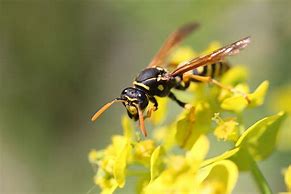
I have very little trouble admitting that I’ve killed more than a few wasps in my time. I’ve always had a live and let live relationship with bees, but wasps have always been on my kill-on-sight list.

I even went so far as to order the most souped-up electric bug-zapping racket I could find on Amazon. This thing is a one touch-one corpse gadget, and it has left a pile of wasp bodies in its wake, let me tell you. I also added the salt shooting “Bug-A-Salt” gun to my backyard arsenal. Think of it as a shotgun that fires table salt that obliterates insect pests.

It Turns Out That Wasps Do A Lot Of Good. Really.

So what good are these things that offer up painful stings, build nests under our eaves and decks, and seemingly do little else besides buzz around you and your family while you’re trying to enjoy a night on the patio?

A piece up at ThoughtCo.com says that wasps of all sorts offer some great ecological benefits like “pollination, predation, and parasitism.” I know what the first two are, but the last one sounds like a word that describes many politicians.

Wasps are apparently interested in more things than just stinging us:

“For instance, paper wasps carry caterpillars and leaf beetle larvae back to their nests to feed their growing young. Hornets provision their nests with all manner of live insects to sate the appetites of their developing larvae. It takes a lot of bugs to feed a hungry brood, and it’s through these needs that both hornets and paper wasps provide vital pest control services.”

So, wasps handle some of the much-needed pollination jobs, and they kill and eat all sorts of pests like caterpillars, spiders, and aphids. However, they are temperamental and territorial, and will happily sting you.

I’m not going to apologize for the ones I’ve “removed from the game,” but maybe I might not be so quick to grab my zapping racket and Bug-A-Salt gun in the future.

Source: myq1075.com

‘Extremely rare’ Roman temple discovered on supermarket building site

Source: cnn.com

Sarsina is a sleepy, rural town of barely 3,000 residents straddling the pristine Apennine mountains in Italy’s Emilia Romagna region, surrounded by stunning views and grazing sheep.

While it has a glorious past, as a strategic defensive outpost for the Roman Empire and the birthplace of the famed playwright Plautus, today there’s not much to do beyond hiking and birdwatching.

And though both locals and holidaymakers would agree that a rustic, slow-paced lifestyle is part of Sarsina’s charm, its residents were nonetheless excitedly awaiting the construction of a development including a new supermarket, fitness center and playground. But it was not meant to be — at least, not as originally planned.

That’s because workers at the site on the outskirts of town in December 2022 unearthed the ruins of an ancient Roman temple — or ‘capitolium’ — dating back to the first century BC.

In early July, a first look at the underground treasure came to light: a single imposing structure of horizontal sandstone blocks and marble slabs, 577 square meters wide, which researchers have identified as the podium above which the columns and walls of an ancient temple were built.

And what has come out of the ground so far could be just the tip of the iceberg.

“We have unearthed three separate rooms, likely dedicated to the triad of gods Jupiter, Juno and Minerva,” lead archaeologist at the excavation site Romina Pirraglia told CNN. “The excavations are still underway… and we have already identified an older, deeper layer of ruins dating back to the 4th century BC, when the Umbrian people (an ancient Italic tribe who predated the Romans) lived in the area. The entire temple could be even larger than what we now see.”

According to Pirraglia, the discovery of a capitolium — the main temple in an important Roman city, and a hub for trade as well as religious and social interactions — further confirms the strategic role Sarsina played during the Roman Empire. The town was built in a key mountainous area close to the Tuscan border and overlooking the Savio river, an important waterway connecting central and northern Roman cities.

The discovery of the temple has pushed local authorities to revise their building plans. Federica Gonzato, superintendent of archaeology, fine arts and landscape for the provinces of Ravenna, Rimini and Forlì-Cesena, which includes Sarsina, is adamant in wanting to preserve the ruins and further research its great past.

“We will not tear it down to make room for modern structures, this must be very clear. Previous urban plans will be changed, we will find new construction sites for recreation and sports,” Gonzato said. “The temple is an incredible finding that sheds light on how ancient Roman towns rose and fell across time.”

What makes the discovery exceptional is the temple’s unique state of preservation. “The marvelous quality of the stones have been spared from sacks, enemy invasions and plunders across millennia thanks to the remote location of Sarsina, a quiet spot distant from larger cities,” Gonzato added. “Temples such as this one (were) regularly plundered, exploited as quarries with stones and marble slabs taken away to be re-used to build new homes. But Sarsina’s capitolium podium structure is practically untouched, with its entrance staircase well-preserved, and this is extremely rare.”

Gonzato believes the discovery will further research on demography and urban transformations in ancient times. And there’s more to the site than just the temple’s podium. Pirraglia said there are signs that the building was reused in medieval times. An ancient water drainage system was found alongside medieval tombs and hearths indicating that locals likely inhabited it, or used the site for other social purposes.

“This is the beauty of Italy: wherever you dig, some hidden treasure comes out of the ground. Wonders never cease to amaze us,” said Gonzato.

Long-Lost Ancient Temple of Apollo Uncovered

A long-lost ancient temple of Apollo has been excavated after archaeologists from the Universities of Frankfurt and Kiel in Germany successfully located its whereabouts in Frangissa, near Pera Orinis in Cyprus.

The temple had been known about since 1885 but had been considered lost, a press release from the deputy culture ministry reported.

“The current research project aims to explore these complex structures, which often evolved over several centuries, and gain important insights into the functioning of ancient sanctuaries,” the press release said.

Current estimates place the temple as dating back to the Hellenistic period—a period of Ancient Greece that started in 323 B.C. and ended in 32 B.C.

“After its construction, the district underwent successive remodeling and expansion. In a later phase, transverse walls were added, altering the interior of the courtyard. Additionally, parallel flat stone bases were erected alongside the outer walls, likely serving as supports for columns and carrying the roof of a hall that surrounded all sides,” the statement from the ministry said.

In Ancient Greece, temples provided a place for worship and ritual practices, as well as providing a place for social, political, and economic functions.

In Greek mythology, Apollo was the god of sun and light and was worshiped at temples and during festivals.

“Through the exemplary investigation of the sanctuary of Frangissa, the current research project aims to explore these complex structures, which often evolved over several centuries, and gain important insights into the functioning of ancient sanctuaries,” the statement said.

Of particular interest was the discovery of fragments of terracotta—a type of ancient pot constructed from brownish-red earthenware.

These fragments belonged to a huge male terracotta figure, the press release said.

“The robe of the figure was intricately decorated with incised ornaments. Similar fragments were previously found in 1885 and taken to the Cyprus Museum,” it said. “The newly found fragments perfectly match these ancient fragments, confirming the identification of the sanctuary with the site excavated in 1885, which was previously based on various circumstantial evidence.”

Archaeologists also found a head of an archaic warrior statuette.

Excavations began in 2021, when the remains of ancient masonry were discovered. The work continued in 2022, until the temple was finally uncovered this year,

Excavations will continue in the area, to allow archaeologists to discover more about the site and the role it played in Ancient Greece.

Source: newsweek.com

Nine woods in the Cauldron Go – Celtic Traditions

These trees were and are considered sacred by the Druids and those following a Celtic tradition. Used in the bonfires for Bealtaine and Samhain. Unfortunately where I live in the USA I have not been able to collect wood from all these scared trees as of yet, I am always on the look out for them.

Nine woods in the Cauldron go, burn them fast and burn them slow.

Birch in the fire goes to represent what the Lady knows.

Oak in the forest towers with might, in the fire it brings the God’s insight.  

 Rowan is a tree of power causing life and magick to flower.

Willows at the waterside stand ready to help us to the Summerland.

Hawthorn is burned to purify and to draw faerie to your eye.

Hazel the tree of wisdom and learning adds its strength to the bright fire burning.

White are the flowers of Apple tree that brings us fruits of fertility.

Grapes grow upon the vine giving us both joy and wine.

Fir does mark the evergreen to represent immortality seen.

Sacred Symbols and the Witch Next Door c. 2016

(Yes, I am cheating with some posts but feel they deserve to be brought to the present)

Sacred Symbols and The Witch Next Door

Author Unknow

It’s Tuesday at five o’clock. I punch out, lock up my desk, and leave the dreaded office for the evening. As I walk out of the side door, I imagine that I’m going through one of those automatic car washes, and the brushes and water are removing the day’s stresses and negativity from me (I’m a title clerk at a car dealership, and as you can imagine, dealing with the DMV every day tends to build up negativity). By the time I get to my car, I’m feeling good, stress free and ready for the evening. I look up and see another Carolina thunderstorm rolling in. It’s going to be a 30-minute drive in the rain, and that makes me smile.

By the time I meander my way out of the parking lot, the rains have started. I roll down my window and stick my hand out. As I drive down the street, going with the flow at 45 mph, I feel the bite on my palms and wrists. Like thousands of needles, the drops seem to pierce my skin, infusing me with the energy of Water and Wind. My entire left side is soaked, and I don’t seem to mind. The family in the mini-van next to me stares slack-jawed, thinking me to be insane. I feel sorry for them. If they only knew how good this feels, how cleansing it is, their heads would hang out of the windows of the van like Labradors. I turn into the parking lot of the grocery store to pick up something for cakes and ale tonight. The rain is coming down in sheets. Thunder cracks and rumbles, making the ground shake. Lightning strikes are everywhere. A handful of people run to their cars, holding a few grocery bags and covering their large heads with thin arms to shield themselves. I have the sudden urge to strip naked, arms out in childlike joy, and dance in deformed circles throughout the parking lot until I’m dizzy and fall into a puddle, laughing. The only thing stopping me is the patrol car parked nearby, with the cop inside catching up on his paperwork. I stroll leisurely into the store and pass a small group of old southern women staring at me as they huddle just behind the automatic doors waiting for the storm to subside. One of them tells me that I’ll get sick from that, and that I should have at least tried to hurry into the store where it’s dry. I look at her and say, “Water is a sacred symbol. I am Cleansed and Purified by the Mother.”

When I’ve finished my transaction and head out of the store, the rain has slowed to barely more than a drizzle. As I turn out of the parking lot, it has stopped all together. Again, I’ve rolled down my window and stuck my arm out; now it’s just the Air that I feel on my skin. I inhale the crisp smells only detected after a storm. My lungs expand, and I feel the butterflies in my stomach. That smell always seems to rejuvenate me. I pull into my driveway, turn off the car and go inside. I put the cakes and ale in the refrigerator, then head straight for the back door. On my deck, I sit and enjoy the rolling hills and farmland behind my house. The smell of the after rain still clings to the Air. I breathe deeply and close my eyes. I feel at one with the Air, with the sky. A light breeze kisses my face. As the breeze kicks up, it wraps around me, a swirling blanket of the Gods. I am given the gift of the East, Air as its symbol, and I take that with me back into the house.

The rest of the coven arrives. I change into my robes and we go into the altar room to set up. I lead them through the chants and the worship, we dine on the cakes and ale, and we meditate briefly before opening circle. After ritual, we sit and catch up on what’s going on in each other’s lives. We laugh, we talk, and we laugh some more. By 9:30 they show themselves out, and I return to the altar room. I light all of the candles once again and stare into the flame of one of my altar candles. I feel my spirit disconnect from my physical body. I enter a trance, and am lost in the awesome power of the Fire. My mind becomes one with the dancing flame and images flood my head. Insights are gained, wisdoms etched into my psyche to forever become a part of me. My education continues, with the Lord and Lady my teachers. The Fire is a symbol of my knowledge. My passion swells as I strive to learn everything…to know…to be. I become aware that I’ve hit the climax of my trance and feel the cycling down, the beginning of the end of the controlled burn. The images slow, and I am once again aware that it is a candle at which I stare. I thank the Gods for bestowing the gnosis upon me, and carefully extinguish the flame.

I am unaware of the time, and do not care to know. I need to ground myself, but rather than do it inside, I instead choose to take our offerings from ritual and bury it outside in the Earth. In the backyard, I find a small, rich patch of soil. Most of the yard is clay, except for here. I dig deeper than needed. Halfway down I toss aside my trowel, electing instead to feel the Earth in my bare hands. As I dig I allow the energies raised within me to pour down into the Earth. The smell of the grass and weeds and dirt permeate me. I feel calm and relaxed, bathed in the glow of the full moon. Carefully I scrape the offering off of the dish. I close my eyes and feel good, knowing that however small it is, this gift of thanks to the Gods will decompose, and what grows in this spot will receive some extra nutrition. All returns to the Earth in good time. I repack the hole I’ve dug and remain on my knees for a few more minutes. The Earth, our symbol of life, our living organism.

These are the most sacred of symbols, the Elements. Water, Air, Fire and Earth all connect us to the Spirit. I stand up slowly, beginning to feel the effects of exhaustion. I turn my head to the right and see a neighbor peeking out the blinds at me. I think to myself that I’m doing nothing strange here, yet tomorrow morning I’ll be the block’s topic of conversation. A Mona Lisa smile crosses my lips as I wave to her and she quickly moves away from the window. I go back into the house, knowing that I’m just the everyday Witch next door.

A Little Something for Children – Blessed Be A-Z

Blessed Be A-Z
A
Tall and straight as the ash tree grows
all the things that Athena knows
Smooth and sharp as an athame blade
All the color of an autumn glade
B
Fires at Beltane jumping high
Watch the bees buzzing by
A silver bell ringing bright
A besom sweep makes it right
C
Stir a cauldron round and round
Cast a circle on the ground
Catch a crystal in your hand
Light a candle if you can
D
A raven dips and dives in the dark
Demeter makes things grow in the park
Dragon dozing in his lair
Dance with delight, do as you dare
Little Pagan Acorns
E
In the early east, an eagle flies
In an elder elm, her one egg lies
Energy comes from elements four
Embrace them all, open each door
F
Flight and a feather, often together
Fish and fin, go for a swim
Light a fire, flames grow higher
Find a fox, on nature walks
G
The God and Goddess are all around
From sky above to grass on the ground
Grab a goblet, give a toast
Visit a grave to honor the ghost
H
Horus hears as a hawk flies high
Hemlock hills are rolling by
Share some happiness with a hug
Sit on Hestia’s warm hearth rug
Little Pagan Acorns
I
Isis whispers in the night
Is there incense left to light?
Sprites and imps will skip around
Inner spirit can be found
J
Catch a firefly in a jelly jar
Jump for joy when you see that star
Enjoy a summer day in June
Join your hands under the moon
K
I like when Magick is in the air
When kids get kisses in their hair
Cats and kittens, on your knee
Together like a lock and key
L
Love at Litha lets flowers bloom
A little laughter lifts a room
Loki plays a silly joke
Light a lamp and blow the smoke
Little Pagan Acorns
M
The Morrigan smiles under May’s moon
Tomorrow sometimes comes too soon
Maiden, mother and then the crone
Making mischief all alone
N
Pine needles in the wood
Nearby nests sit snug and good
Notice knots, they hold in power
Midnight nears, that’s the hour
O
Osiris has two but Odin only one
Color eggs at Ostara, that’s always fun
Only in the Otherworld do goblins stroll
Don’t get confused, a goblin’s not a troll
P
Poseidon likes to play in the deep
A pile of puppies makes a cute heap
The pentacle protects sacred space
Pansies and petunias have a pretty face
Little Pagan Acorns
Q
Porcupine has quills, arrows in a quiver
Quite cold in winter, quick to shiver
Call the quarters, salute the Queen
Ask the question that is never seen
R
Relax when you are reading runes
A raven calls out raucous tunes
Write a ritual for Friday morn
That red rose may have a thorn
S
Basking in the solstice sun
Warming like a sticky bun
Smudging sage smells so sweet
Slithering snakes have no feet
T
Teas and tinctures, talismans galore
Thoth likes books more than Thor
Water trickles down the stream
Try some Tarot. What does it mean?
Little Pagan Acorns
U
Ugly umbrellas raised up high
Thunder rumbles in the sky
Venus on a unicorn
Out of bubbles, she was born
V
Nike votes for victory
Volcanoes and Pele over the sea
Valkyries to Valhalla fly
Vanilla for love, give it a try
W
Make a wish on a western wind
With a wand, wild women grinned
Witches, Wiccans, warlocks too
In the winter, owls ask who
X
A pixie relaxes in the wood
Jinxes and hexes are never good
With equinox, the days are split
With waxing moon, the sky is lit
Little Pagan Acorns
Y
Both holly and yew are right for Yule
You’ll find nymphs by yonder pool
Yarrow and tansy in a vase
Sitting on some yellow lace
Z
Zeus in a fez, do what he says
Zebras in zoos, time for a snooze
Wander the maze, the ancient ways
Need for some zen? Just say when

An Exciting New Children’s Book

A novice in WOTC’s School of Witchcraft is a brand-new published author of a children’s book with some pagan type things worked in.

About the Author

Crissy has had a passion for writing since she was very young. She has always been very interested in writing poetry. She would carry paper with her wherever she went because she never knew when inspiration might strike. She has a degree in Psychology from the University of Illinois at Chicago. She is also a Certified Hypnotherapist, Photographer, and Inspirational Blog Writer. She is a mother of 6 and felt that there was a strong need for more books that promoted positive affirmations for children. Crissy pours her heart into all of the books that she writes. Her children are her drive and motivation for the stories that she creates.

alwaysandforevercrissy.com

Use the link below to go to amazon.com to read a sample of the book.

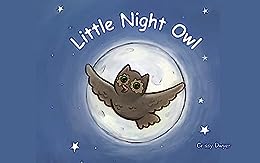
Little Night Owl

Little Night Owl Children’s book is perfect for young explorers looking for a fun and exciting adventure! Join our little night owls as they embark on their journey and learn about the wonderful world of nature and the creatures that inhabit it. Along the way, the little night owl will come across an opossum, raccoon, and skunk- each with its unique style of life. The story emphasizes the beauty of friendship and how animals can form meaningful connections, encouraging curiosity and exploration. With its theme of wonder and fascination, this children’s book allows readers to experience a truly magical journey that dives into nature’s secrets while promoting understanding and growth through love. This book is sure to captivate your child’s imagination while introducing them to the wonders of nature in a fun and captivating way!


Question (via Quora): Why Is Lead (Pb) Ammunition Still Being Manufactured And Used?

It’s Cheap And Easy, But Is It Worth The Cost?

By Rebecca Williams

Reposted by Graphia

https://thechemistryspace.quora.com/https-www-quora-com-Why-is-lead-ammunition-still-being-manufactured-and-used-answer-Rebecca-Williams-1128?ch=18&oid=122594252&share=0fbc4b16&srid=hXLmhI&target_type=post

Once in a Blue Moon – The Origins and Meaning Behind the Phrase c. 2015

Once in a Blue Moon

The Origins and Meaning Behind the Phrase

You’ve probably heard the phrase “once in a blue Moon”, usually referring to a rare event. But where does the phrase come from? And does the Moon ever actually appear blue?
The Meaning of “Blue Moon”

Dating back to the 1800’s the term “blue moon” was used by the Farmer’s Almanac to denote the appearance of a third full Moon in a season where four full Moon’s will occur. Since there are normally 12 full Moon’s a year (one per month), this works out to three per quarter (three month period).

However, occasionally a quarter will see four full Moon’s.

The naming arises because each Moon in a given season has its own name. This tradition of naming full Moons has existed for hundreds of years across many cultures. The names generally accepted today are those coming from the Farmer’s Almanac.

For instance, during the second quarter of the year, the Moons are named Pink (April), Flower (May) and Strawberry (June). However, should another full Moon appear during this quarter it would be called, by default, a Blue Moon. Since the third of the four full Moon’s in a quarter is called the Blue Moon, the order of Moon’s in the second quarter of the year would be Pink, Flower, Blue and Strawberry.

Since Blue Moons only occur about once every three years, it became becomes a convenient measure of a long period of time, therefore giving rise to the cliche “once in a blue moon”.
A Misunderstanding Leads To A New Definition

While the above is the generally accepted meaning for Blue Moon, a misunderstanding lead to a new definition being adopted that today is the more often quoted.

In an article, “Once in a Blue Moon”, that appeared in the March 1946 edition of Sky and Telescope Magazine the author, James Hugh Pruett incorrectly stated that the Blue Moon was the name given to the second full Moon that appeared in any given month.

He had drawn this conclusion by looking at the 1937 Farmer’s Almanac. His analysis of the data therein lead him to draw the conclusion that, “seven times in 19 years there were — and still are — 13 full moons in a year. This gives 11 months with one full moon each and one with two. This second in a month, so I interpret it, was called Blue Moon.”

While the definition put forth by Pruett could coincidently be correct, it is not strictly true. For instance if we examine the example from earlier, it is possible that May could have two full Moons. Therefore the second full Moon in May would be called the Blue Moon (since it is always the third full Moon in the quarter). So, Pruett’s definition would be consistent with the traditional description. But, if two full Moons fall in June, the first full Moon would be the Blue Moon, rendering the two definitions inconsistent.

So, even though Pruett’s definition isn’t strictly correct, it became the adopted definition most widely used. In fact, it is so widespread that it is not uncommon for books to use Pruett’s definition over the correct one.

While actual Blue Moons only occur about once every three years, occurrences of two full Moons on a month are much more frequent. The years 2009 and 2010 saw multiple examples of this phenomenon, while 2011 will go without a single such event.
Does the Moon Ever Actually Appear Blue?

While the term Blue Moon is linked to full Moon events, it actually has nothing to do with the Moon’s color. However, under certain circumstances, the Moon can actually appear blue, even during non-full Moon nights.

The conditions under which a full Moon will occur have to do with moisture, gas and particulates in the atmosphere. When atmospheric conditions favor, for whatever reason, the existence of particles larger than 0.7 microns red light is easily scattered, while blue wavelenghts pass undisturbed. The result is that the Moon appears bluer (or some shade of grayish blue) than normal.

These conditions almost always limited to events such as volcanic eruptions or other large fires that fill the sky with smoke and dust particles. As winds carry these particles up into the atmosphere, certain regions of the world will experience these “blue” Moons.

Historical instances of visibly blue Moons include the eruption of Mt. St. Helens in 1980, and Mount Pinatubo in 1991.

Source: About.com

10 Famous Witches in History

Throughout history, the idea of witchcraft has stirred cultures from all over the world. Many people have been accused of witchcraft, Voodoo, and other magickal practices. Some of these historical witches were severely punished for their perceived powers, and others were well-respected and appreciated for their service. It’s no secret that being accused of witchcraft in the past may have cost you your life. Today, witchcraft is more widely accepted and practiced by people from all walks of life. In honor of this magickal freedom that we have today, here are some of the most important figures in the history of witchcraft.

1. Marie Laveau

Marie Laveau, the Voodoo Queen, is one of the most well-known and celebrated figures in witchcraft history. Born into a poor family in 1801 in New Orleans, Louisiana, Marie had to work hard from an early age to support her family. Despite her difficult circumstances, Marie was determined to make something of herself. She gained a reputation as a powerful medium and healer throughout her lifetime. Marie’s ability to connect with the spirits of the dead helped her build an enormous following among the city’s impoverished residents. In 1849, Marie opened her own Voodoo temple, the first in the United States, and quickly became one of New Orleans’ most powerful women. Throughout her life, Marie became known for her generosity and her passion for helping others.

2. John Walsh

John Walsh, a man who lived in Netherberry in what is now Dorset, England, was accused of witchcraft and arrested in 1566. He was brought for questioning and claimed to be in contact with fairies who would tell him when someone was bewitched. He also claimed to have a familiar that appeared to him as either a cat, a dog, or a man with cloven feet. John Walsh claimed to only use his powers for good saying, saying that anyone who chooses to do bad with their powers can never heal again. [1] It is unclear what happened to John Walsh, but it is possible that he was acquitted and let go.

3. Mother Shipton

Mother Shipton, born as Ursula Southeil, was a prophetess who lived in North Yorkshire, England. She is best known for her prophecies about the end of the world which she claimed to have received from God. Her prophecies were often used by religious leaders to motivate people during times of crisis or to provide guidance in the event of disaster. In her later-life, she retreated to the woods after the death of her husband. For the remainder of her years she was claimed to be a powerful witch. People traveled long journeys to receive her magick. Mother Shipton remains an enigmatic figure in history and her story continues to be studied by scholars today.

4. Morgan Le Fay

Morgan Le Fay is one of the most popular and well-known characters in Arthurian legend. She is also one of the most mysterious. Morgan was born to King Arthur’s sister, Morgause, and her husband, King Lot. Morgan had a twin brother, Mordred, who was conceived out of wedlock. Morgause took her away from Camelot to serve as her adviser and counselor when she was just a baby. Over time, Morgan became known as the Lady of the Lake (after being banished there by her uncle, King Uther Pendragon). Morgan is said to be able to transform into a fish or a dragonfly. She also has a magickal sword called Excalibur that can only be wielded by someone with a pure heart.

5. Laurie Cabot, the Official Witch of Salem

Laurie Cabot is the official Witch of Salem, Massachusetts. Cabot has been practicing witchcraft for over 30 years and has dedicated her life to educating others about this ancient art. She offers public tours of the Witch House where she lives and conducts her rituals and private consultations. Laurie Cabot is a leading authority on witches and witchcraft in The United States and around the world. Her work has been featured on television shows such as Oprah and The Travel Channel. She is also an author of many books on witchcraft.

6. Abigail Hobbs

The Salem Witch Trials were a series of trials that occurred in the town of Salem, Massachusetts. In the early 17th century, there was a series of trials that came to be known as the Salem Witch Trials. These trials took place between 1692 and 1693 and involved accusations against more than 200 people, none of whom were actual witches. At the heart of these trials was Abigail Hobbs, a young woman who was accused of witchcraft and sentenced to death. The story of Abigail Hobbs is one that is full of mystery and intrigue, and it has fascinated historians for centuries.

7. Gerald Gardner

Often credited with being the Father of modern witchcraft, Gerald Gardner created what is now known as Wicca. Gardner was born in England but spent much of his life abroad studying the cultures of others as he was an amateur anthropologist. It is reported that he was initiated into The New Forest Coven, though his claims have been scrutinized by historians for quite some time. He published a book titled High Magic’s Aid in 1949 before the witchcraft laws were repealed. This book is a magickal text disguised as a work of fiction. He later published Witchcraft Today after the witchcraft laws were repealed. Gardner passed into the Summerland in 1964 after suffering a heart attack.

8. Agnes Waterhouse

Agnes Waterhouse is a famous figure in English witchcraft history. She was accused of witchcraft and put on trial for several crimes, including the death of her husband. During her trial, she confessed to being a witch and having a familiar, a cat, named Satan (also spelled Sathan), that originally belonged to another accused witch by the name of Elizabeth Francis. The cat was given to Agnes by Elizabeth in exchange for a cake, and Elizabeth reportedly taught Agnes the art of witchcraft as she was instructed. Agnes Waterhouse was hanged in 1566 after being found guilty of her crimes, becoming the first woman in England to be executed for witchcraft.

9. Aradia

Aradia, also known as The Witch of the Woods, is one of the most well-known figures in European witchcraft. Her story, although heavily disputed, has been documented and retold for centuries, and she remains a popular figure in modern witch folklore. Aradia was born to a peasant family near Pistoia, Italy. When she was just 12 years old, she claimed to have had a vision in which she was visited by an angel who instructed her on how to use her powers for good. Over the next several years, Aradia continued to receive similar messages from her guardian angel. She was guided by Diana, who legend believed to be her mother or a witch herself. Aradia began preaching their gospel of witchcraft to other common-people in the area so they could free themselves from the Catholic Church.

10. Giles Corey

Another accused witch from The Salem Witch Trials, Giles Corey was born in England in 1611. By the time of his trial, Giles Corey was already 80 years old. His wife, Martha, was arrested for witchcraft first and, for unknown reasons, Giles decided to testify against her. He later tried to recant his testimony which only furthered suspicion against him. The accusations against Giles Corey were brought about by Abigail Hobbs during her own confession as well as Exekiell Chevers and John Putnam, Jr. on behalf of many others. Giles Corey was executed in 1692, though he was not hanged. Giles Corey was stoned to death for refusing to go to trial. He is famous for his last words as stones were added to the plank on top of him — “more weight“.

Were they all witches?

Some of these people were victims of their time and may not have held any power or practiced witchcraft. Others may have been some of the most powerful witches to date. The idea of the witch has existed since ancient times, has been acknowledged in all religions, and is characterized in books and entertainment. Luckily, today we’re able to embrace our magickal ways of living and live our witchy truth. To all the witches that were executed, isolated from their communities, and thought to be an embodiment of evil, may your souls fly to the highest realms, and your magick live on forever.

SOURCE: spells8.com

Spell For Thursday – Chants and Invocations to Hecate


(YOU CAN COPY AND PASTE ANY COROSPONDENCES AND SPELLS POSTED TO A DOCUMENT TO PRINT AND/OR SAVE ON YOUR COMPUTER)

Chant for Swift Justice

The chant below brings swift justice to those who treat you unfairly. Take caution in using it, though, especially if you have also behaved inappropriately. Hecate’s justice knows no bounds. She sees to it that all involved get precisely what they deserve.

“Hecate, Dark One, hear my plea,
Bring justice now, I ask of Thee!
Right the wrongs that have been done,
Avenge me now, oh Mighty One.
Turn misfortune back to those
Who cause my problems and my woes.
And heap upon them karmic debt
Lest they all too soon forget
Their wrongful actions, words, and deeds
Don’t let them get away scot-free.
Bring them forth from where they hide,
Bring swift justice ~ wield your knife.
Hasten, Dark One; hear my plea ~
Do what it is I ask of Thee.”


Excerpt from
Everyday Magic: Spells & Rituals for Modern Living
 by Dorothy Morrison

Chant to Cast off Troubles

Hecate, Goddess of darkest night,
Send my troubles all to flight,
Burn them in thy sacred fires,
And replace them with my heart’s desire!

Words of Power

May the circle never be broken,
May the earth always be whole,
May the rattle ever be shaken,
May Hecate live in my soul.

Raising Energy

Hecate’s power,
Dark Moon Hour,
Fire to Banish and
Magick to flow.

Chant to Bless the Altar

Come Goddesses of fire and water,
Goddesses of earth and air.
Give your blessings to this altar,
Give a listen to our prayers.

Attraction Chant

Goddess, let all good blessings come to thee,
Love and money fair to see.
Let all happiness and love,
Be heaped upon thee from above.
Bring in, bring in, as the Moon doth swell,
Whatever Thou neediest to keep thee well.

Wisdom Chant

Hecate, Crone Goddess, Keep me whole,
Let thy wisdom fill my soul.


Earth’s Spin Has Shifted—And Humans Are To Blame

Humans have pumped so much groundwater out of the Earth that we have shifted the Earth’s rotational pole, according to a study.

In a paper published in the journal Geophysical Research Letters, researchers found that the rotational pole around which our planet spins has drifted around 31 inches east between 1993 and 2010 due to groundwater depletion and resulting sea level rise.

The position of the Earth’s rotational pole relative to the crust can be affected by how the mass of water is distributed across the planet.

“Earth’s rotational pole actually changes a lot,” Ki-Weon Seo, a geophysicist at Seoul National University who led the study, said in a statement. “Our study shows that among climate-related causes, the redistribution of groundwater actually has the largest impact on the drift of the rotational pole.”

The model only matched the drift in the pole observed between 1993 and 2010 if scientists took into account 2,150 gigatons of groundwater redistribution. Without accounting for the groundwater that humans had pumped from below the Earth’s surface, the model was off by 31 inches or 1.7 inches of drift per year.

“I’m very glad to find the unexplained cause of the rotation pole drift,” Seo said. “On the other hand, as a resident of Earth and a father, I’m concerned and surprised to see that pumping groundwater is another source of sea-level rise.”

The 2,150 gigaton figure—equivalent to 0.23 inches of global sea level rise—comes from previous estimates by scientists regarding groundwater pumping within the 17-year period from 1993 to 2010. But direct observational evidence supporting this estimate has been lacking.

The modeling in the latest study—taking into account the redistribution of water from underground sources into the oceans—has provided independent confirmation of this estimate.

“This is a nice contribution and an important documentation for sure,” Surendra Adhikari, a research scientist at the California Institute of Technology’s Jet Propulsion Laboratory who was not involved in the study but took part in the research published in 2016, said in a statement. “They’ve quantified the role of groundwater pumping on polar motion, and it’s pretty significant.”

Groundwater depletion involves pumping out water from sources such as underground aquifers faster than the liquid can be replenished. This groundwater is used for agricultural purposes as well as being supplied to urban areas.

Once this groundwater has been extracted, it can find its way into the ocean through run-off or via the process of evaporation and precipitation.

Source: Newsweek.com

Witchcraft Within Covens c.2015

Witchcraft Within Covens

A coven is a group of members of a unit of witchcraft and, in fact, can number anything from two to 13, or even more. The number 13 is traditionally designated by the 13 moon cycles that make up one year, and 13 is the number of the Goddess (hence it became unlucky under Christian influence).

Gardenerian covens generally number 13. Some covens are affiliated formally or informally to specific traditions, but they increasingly unite for organisational as well as legal and political strength, particularly in Australia and parts of the USA. On-line covens are also springing up and they are an excellent way for solitary practitioners to gain support and information. Reliable, bona fide covens will offer the same safeguards as any ordinary coven, but of course the normal restraints you should show on contacting any Internet site will apply.

The beginning of the path to learning about Wicca within a formal coven is usually marked by a dedication. Initiation, after a year and a day, or a similar recognised magical period, will confer formal entry. Further different levels of knowledge and responsibility may also be involved, for example elevation to a second or third degree, so that eventually initiates can begin their own covens if they wish.


A Practical Guide to Witchcraft and Magic Spells
By Cassandra Eason

Lammas Bounty Spell

Lammas/Lugnasadh Comments

Lammas Bounty Spell

Lamas is also called Lughnasadh; it is a celebration of plenty and optimism, and of nature’s infinite bounty. It is the time of the first harvests, and it marks midsummer’s joyous and fanciful energy. This spirit is celebrated, too, in Shakespeare’s A Mid-Summer’s Night Dream. To tap into this energy, gather a small bundle of long grass or reeds to braid, and light a white candle.

Braid the grass as you speak this verse:
Fairies prancing in the meadow,
Spirits in the corn;
Green Man is flourishing everywhere
On this Midsummer morn.
Grains begin to ripen,
All things bear fruit.
Summer glistens with
possibility,
Blossoms take root.
Fairies whisper secrets,
Powerful blessings to see.
Cycles move and all around,
they share their gifts with me.
Air to fire,
Fire to water,
Water to earth,
Earth to air.
Elements feed spirit,
And the circle glows.
At Lammas, day and night,
We witness Nature’s awesome might.
Growing full
And blessing all,
‘Tis Earth’s celebration Before the chill of fall.
Now braiding this grass,
I mark this day
Protect my hearth,
With the abundance of grain.
The blessings of the Goddess come again;
Place the braid above my door.
Hunger be banished now and then.
Blessings be drawn to this place,
Summer’s energy fill this space.
Air, fire, water, earth unite,
And bless us all this day.

By: Abby Willowroot


2 Supermoons in August

The cosmos is offering up a double feature in August: a pair of supermoons culminating in a rare blue moon.

Catch the first show Tuesday evening as the full moon rises in the southeast, appearing slightly brighter and bigger than normal. That’s because it will be closer than usual, just 222,159 miles (357,530 kilometers) away, thus the supermoon label.

The moon will be even closer the night of Aug. 30 — a scant 222,043 miles (357,344 kilometers) distant. Because it’s the second full moon in the same month, it will be what’s called a blue moon.

“Warm summer nights are the ideal time to watch the full moon rise in the eastern sky within minutes of sunset. And it happens twice in August,” said retired NASA astrophysicist Fred Espenak, dubbed Mr. Eclipse for his eclipse-chasing expertise.

The last time two full supermoons graced the sky in the same month was in 2018. It won’t happen again until 2037, according to Italian astronomer Gianluca Masi, founder of the Virtual Telescope Project.

Masi will provide a live webcast of Tuesday evening’s supermoon, as it rises over the Coliseum in Rome.

From abc13.com

Traditional Witchcraft c. 2014

Traditional Witchcraft


Witchcraft is often referred to as “The Old Religion” and “Craft of the Wise.” Witchcraft has been present since the beginning of humanity in many forms. It was never a defined, organized religion, particularly not a universal one, but it was everywhere, as it is now. Those who practice Witchcraft are called Witches, no matter what their sex. A very common misconception is that a warlock is a male Witch. This could not be further from the truth. Warlock means “Oath breaker” and can be applied to either sex. Basically it is someone who betrays the trust of a coven. Witches are not evil-doers, rather, they are the most moral, most aware and sensitive people you will ever come across. They realize that every action has a reaction in every reality. Witches abide by a code of “Harm none, do as thou will.” This rule can be interpreted in many ways, but in short, it means do as you wish, and be sure not intentionally harm any innocent.

Witches tend to be pantheists, that is they recognize the divine in all things. Most Witches in some fashion worship the Goddess and her consort, the Horned God. The Horned God is a deity of fertility and festivity, often represented by a man with deer antlers or a satyr-like being, as artefacts of Pan and Cernunnos depict. One can easily see now where the Christian concept of the devil originated. It is always wise to remember that the gods of the old religions become the devils of the new in many western cultures. So never have Witches worshipped “the devil” as Christianity portrays. We actually find the idea of personifying evil rather stupid, for if you give something a name, you give it power. Witches, likewise, don’t believe in Hell. We cannot believe in an “all-loving” god that would send its own children to damnation, simply because they did not worship him in a certain form. Instead, Witches believe in a transient-like afterlife, sometimes called the Summer-lands, as well as reincarnation. Most Witches practice magick or spell-craft, following along the lines of “harm none.” Magick cannot be defined as “black” or “white,” because of the complexity of the results. For more about magick, go to Magick, Symbols and Spell-craft.

                                       What is the Modern Tradition of Witchcraft?


Usually people’s first reaction to ModTrad is “Isn’t that an oxymoron?.. How can something be modern and traditional?” Well, the key to it is that we examine the traditions and folklore of the past, and decipher a way to interpret them in a contemporary format that relates better to humanity’s needs today. Modtrad incorporates a system of careful research, reflection and ingenuity. Although most of us fantasize about living out in the middle of nowhere, being self-sufficient, close to the earth, the reality is that most of us lead urban-based lives. When one examines the eight sabats on the wheel of year, one discovers that they are planting/harvest/farming based. How does this relate to us now, living in the concrete jungle, lacking fields and livestock? How do we keep the meaning and intention in something that seems outdated? How does this reflect through all the aspects of the Craft, such as spell craft and our view of the Goddess? This is the challenge of Modern Traditional Witchcraft.

The Essence of Witchcraft…… c. 2014

“…….is transformation. The  idea is to take the “you” currently present and accounted for and change your essence into something better, greater, stronger, and incredibly dynamics. Being a Witch means to want to work every day to be a better person. When you change yourself then the world around you cannot help but change. There’s no getting around it. All this changing can be a lot of hard work–and there are certain aspects of the path that require time, effort, and energy. Although many of the things you truly water can be achieved in a short time with the techniques presented in this blog, there are other issued in your life that will require patience, effort, and practice to reach you ultimate goals. That’ s okay. If you didn’t have to work at somethings then the study wouldn’t seem worthwhile. To be a Witch, you must be brave enough to face everything inside of you and have the courage to change the things you do not like. Being a Witch has nothing to do with spell,=s, rituals and unusual clothing —they are the fun stuff. To be a Witch is to desire personal transformation.”

The Essence Of Witchcraft Is Therapy

The younger generation, that generation unfairly labelled Generation X, has an alarmingly dark cast looming over them. They are the first generation who are not expected to fare better than their parents. They are the depressed generation, with an alarmingly large percentage of these children on Prozac or other anti-depression drug, they have been warped by television, violence, illegal drugs and absentee parents. It is no wonder then, that many of these young people have turned to the Pagan religions for solace, turning Witchcraft and other Pagan religions into very quickly growing paths.

It is no puzzle why young people find the pagan religions attractive, they offer a degree of freedom and individualityuncommon to most other mainstream religions, they offer the practitioner strength and power. Because these religions integrate the magickal arts into their core theology, people who need a sense of empowerment are drawn to these religions. In Witchcraft especially, the practitioner is taught that they hold all the power, that will is all one needs to shape their fate and that we all have the ability to determine our futures. But Witchcraft also teaches that along with the power of independence comes responsibility, when we are forced to take responsibility for our actions, we become much more aware of them and this realisation is in itself a kind of therapy.

While many Craft leaders would be hesitant to accept the fact that Witchcraft is therapy, the truth is that any practice which advocates self exploration, self empowerment and self expression is therapeutic. The entire purpose of spirituality in its pure and unadulterated form is to provide a link between the individual and the Divine. Once this link is established and a firm relationship develops, the seeker becomes cleansed. A renewed understanding of self and a new-found self respect is instilled, thus the end result is the same result striven for in any kind of therapy. The re-connecting of the mind and body to the Earth and Goddess is the ultimate form of self affirmation therapy.

Unfortunately, however, the therapeutic aspects of Witchcraft are often masked not only by Hollywood facades which present Witchcraft as a fairytale practice, but also by many books that speak almost exclusively about magick and its application. While it is true that Witchcraft wouldn’t be Witchcraft without magick, it is also true that magick simply will not work without a deep understanding of self and a deep relationship with Earth, Universe and Goddess. Books that give guidelines for rituals and spells do nothing to add dimension to Witchcraft as a bona fide religion, though it appeals greatly to the younger generation. Yet watered-down Witchcraft can never feed the soul and when the young practitioner discovers that their magick does not work (because the books they read have neglected to inform them that they must transform themselves before they can work magick) they turn away from Witchcraft and never come to gain the very thing that they came in search of.

Because witches are very wary of those who proselytise, they are wary to do so themselves. Witches are willing to teach those who are sincere in their desire to learn and who are mature enough to discipline themselves in the manner required of true scholarship. The trouble however, is that most teenagers and young adults who encounter Witchcraft are not lucky enough to have a physical teacher. They read books, magazines and consult the Internet for their teachings. Yet precious little of these media offer valuable and accessible theological and/or philosophical information to the student. Most often, students are taught the Wheel of the Year and the Wiccan Rede without ever being taught why these things are sacred, how they are integrated into our daily lives and how the student is to interpret these guidelines for themselves. In fact, because many publications focus heavily on the eclectic side of Witchcraft, they often offer the student these empty words…Do whatever feels right to you. In some instances, such advice is favourable, but many times, the student has no idea what they should feel, let alone if that feeling is right.

Though teenagers and young adults come to Witchcraft for many reasons including a desire for control, love or for some rebellion against controlling parents, the reason these people stay with Witchcraft is because they feel a sense of coming home.While love and money spells may lure them in, those who are not willing to change for their religion will not stay. Witchcraft is first and foremost, a religion that advocates metamorphosis and self transformation and these things do not come from the wave of a magick wand. These things only come with perseverance, determination and discipline. Many books mention this fact, but most do not stress it enough. It is almost as though they are afraid of scaring away the reader. But why mask what our religion is? Why try to market it is as something that it is not? If we know that Witchcraft is a therapeutic religion that can reconnect the individual with Earth, why do we try to bury this beauty underneath magick spells and rituals? Why are we afraid to tell the student, If you want it bad enough, you can have it, but not without getting your hands dirty? In an age where we are losing a generation to drugs, violence and sexually transmitted disease, why do we deny them the exhilarating liberation that Witchcraft-as-therapy has to offer?

Perhaps writers are afraid that their work won’t be published unless they offer mass public appeal and the public wants magick. Maybe they are afraid that publishing a belief system is so close to proselytisation that they are afraid to cross that line. Yet if Witchcraft is to remain a bona fide religion, it must enculturate the younger generation and it must offer them something useful in return. Witchcraft is a truly beautiful religion, once one gets to the very meat of it and it is a religion truly fit for combating the decay of our young people. Unlike many mainstream religions, witches do not believe that they must rely on an outside source for fulfilment and happiness. Witches believe that the witch saves them self and in an era where self denigration and self hate is on the rise, it would be wise for the teachers of the Craft to make this information readily available to the student. The most valuable thing I ever learned from Witchcraft is that by the simple fact that I am, everything I do, say, feel and think is not only valid, but sacred as well. When we learn to accept ourselves as sacred, we come to understand that others are sacred and mutual respect is established and unity grows.

While it is never too late to teach these principles to anyone, it is much easier to integrate them into the teachings of the beginner, because they are so willing to learn. Instead of filling our bookstores with how-to books that may sell well but offer very little, we must teach and publish that which the younger generation needs to hear, which is that only through self discovery and understanding can we ever be truly successful, be it in work, love or magick.

Source: is no longer a working website

Empathy’s Mystical Occult Site

The Etiquette of Witchcraft c. 2014

The Etiquette of Witchcraft

This article by M. Macha NightMare appeared in the Summer 1996 issue of the
Reclaiming Newsletter.

The Etiquette of Witchcraft, Reclaiming Style

The greater community of Witchcraft- throughout the U.S. and abroad- has a few rules of etiquette of which to be cognizant.  I am well aware that ours is not a religion of “rules” (especially in the ecstasy-based Reclaiming Tradition), but in order for us to be free of inhibitions, to feel we are in “safe space,” to get the most out of what we are doing and to protect those whose identity as Witches were it revealed, would compromise them in their mundane lives, it is imperative that everyone know and agree to abide by the following general
policies:

1.  First and foremost, a magickal circle is not for observers; it is participatory and experiential.  A circle is a religious rite and all participants should conduct themselves in a manner respectful to the Goddess. If one is not prepared to focus and contribute his/her attention and efforts to
the ceremony, one does not belong in the circle.  If one does not wish to participate, s/he should excuse her/himself before the pre-rite meditation and grounding begins.

2.  The taking of photographs is inappropriate and impermissible.  As noted in item 1 above, the ritual, and memories of it, are to be carried in one’s heart; they are not a proper subject for objective observation and documentation.  The exception to this is when all participants have been asked before the ritual has begun, and all agree; or when the ritual is “staged” specifically for the taking of photographs, filming or videotaping. Photographing rituals requires special tact and sensitivity.

3.  Craft groups and circles are not inviolably solemn, but they are serious in central purpose.  Inappropriate talking, joking, laughing, etc. are not only rude and disrespectful of the Goddess, the Mighty Ones, the priest/esses of the ritual  and other celebrants, but also they interfere with concentration and continuity of the ceremony.  She commands us to have mirth and reverence; humor and laughter are gifts of the Goddess.  Our attitude, conduct and energy should reflect both the joyousness and the solemnity of this our celebratory religion. There will be a period within the ritual for the sharing of food, drink and good wishes, and time for conversation and merrymaking.

4.  Since traditional lore teaches that consecrated object easily absorbs energy (becomes “charged”), tools, such as wand, chalice, athame, jewelry, drum and other ritual regalia, should not be touched by someone other than the owner without the owner’s express permission.

5.  Once the circle is cast, all celebrants should consider themselves in it for the duration.  It is preferable for one to take care of personal needs before the ritual is begun, but if one finds it necessary to use the toilet, feels faint or whatever, one can either ask for assistance or “cut a door” in the circle and leave, carefully closing and sealing it afterwards.  The circle is intended to contain the energy and focus, and when it is casually entered and exited, that energy can become dissipated or lost and focus shattered.

6.  Anyone who is drunk, stoned or otherwise inebriated does not belong in circle.  In addition, the use of drugs or alcohol (this includes the smoking of cigarettes) in circle is unacceptable behavior; it can show disrespect and it puts the user(s) on another wavelength than the nonuser(s).  The exception to this is when the use of chemicals is sacramental and understood and accepted by everyone in the circle.

7.  People who invite others to rituals are responsible for preparing the guest(s) as to what is expected of them, how to behave, etc.  Guests cannot be expected to know what’s going on all on their own, especially if it’s their first Craft ritual, but much can be done by the person who invites them to make them feel more comfortable and included by giving them some information ahead
of time about how things work and how people are expected to behave.

8.  What occurs in circle is sacred and not to be talked about with those who were not part of the circle.  This mainly applies to small, private rituals, and we in Reclaiming are more casual about rehashing big public ones, but if one is invited to a ritual presented by another Craft tradition, this rule is inviolate.

The above guidelines are freely adapted from archival material graciously provided by Valerie Voigt. Many thanks for reading and observing these few, simple, common-sense, but essential, guidelines.

What is Chaos Magick?

What is Chaos Magick? by Willow

You may have heard of chaos magick and assumed that it means to cause chaos with magick. You may also assume that this type of magick is dark and violent and not for you, so before you continue reading, I ask you to open your mind.

Open your mind to remove the idea of tradition and the way you’ve learned to do magick. Open your mind to a new experience.

Chaos magick is not about causing turmoil or “chaos” using magick.

This practice isn’t about anything dark, it’s about creating a new reality or re-ordering your existing reality to make changes and create the life you want.

While it doesn’t follow a traditional formula for crafting, the word chaos most likely evolved from the shift from orderly rites and rituals to something outside of that refined practice. It may even seem to be unruly and disorderly if you are used to a certain way of doing things, but it works.

Science has validated the frequency and energy of the universe, and this form of magick was born out of theory that we can create our own reality because we control our experiences. We also can create our experiences and present ourselves in a new reality, making the changes necessary to experience the life that we want. Nothing is out of our control.

As above, so below

Down here, we effect the astral plane and are part of the cosmic matter of the universe. We are all from the same energy that surrounds the universe.

As above, So below, As Within, So Without

As above – as in the universe relates to your own mind.
As below – so on earth, relates to the world you live in.
As within – how we think within ourselves
As without – how what we think is directly reflected in the world we live in

As we live our lives, what we think we make our reality. If we are negative, we will create negative energy and stay on a lower frequency. If we are positive, we create positive energy and rise to a higher frequency – and going further with the belief that like attracts like, we are the creators of our own reality.

Basically, what is inside of us is also outside of us.

The concept was first laid out in the Emerald Tablet of Hermes Trismegistus: “That which is Below corresponds to that which is Above, and that which is Above, corresponds to that which is Below, to accomplish the miracles of the One Thing.” – source: Wiktionary

The law of correspondence means our outer world is the reflection of our inner world. So how do we change it?

Chaos magick puts the focus on the simplistic way of changing our own reality through results and our experiences by focusing on our belief that it works, and so it does.

The basis of chaos magic is simple

Your emotions drive your magick. If you are a member of my Lunar Alchemy Facebook group, you’ll hear me say over and over:

It’s about holding that FEELING. It’s about changing your habits, beliefs and the way you present yourself to the world on a higher frequency.

What you experience effects your reality and feeling like you’ve already succeeded with your magick is what makes chaos magick work.

There aren’t any tools required. You don’t need an altar, candles or even a wand to perform chaos magick, however as we know that our ritual tools help us to focus and concentrate our energy, use whatever works for you – there are no rules. Having an open mind means opening up so that you make room for new energy and clear the path.

Chaos magic is about using whatever ideas, tools or practices make it work for you, even if they contradict what you have previously used in your craft.

Your belief is where the power exists

The power of belief is where your magic resides. When we try to impose our will upon the universe, we try to tell it what it will do and hope that we get results. How frustrating! Will it work? Did I perform the ritual correctly? When we BELIEVE our magick works, it changes the game.

Our magick is personal, and the power is inside of us all. Our tools and words help us to focus but other than that, there is no power except for what we believe in. We embrace it as FACT that it works and that is has already worked.

The 6 Principles of Chaos Magick

To practice chaos magick, there are 6 key principles we must embrace.

click here to read the rest of this article