Various Traditions of Witchcraft – Gardnerian Wicca/Witchcraft c. 2018

Gardnerian Wicca/Witchcraft

Who Was Gerald Gardner?

Gerald Brousseau Gardner (1884–1964) was born in Lancashire, England. As a teen, he moved to Ceylon, and shortly prior to World War I, relocated to Malaya, where he worked as a civil servant. During his travels, he formed an interest in native cultures, and became a bit of an amateur folklorist. In particular, he was interested in indigenous magic and ritual practices.

After several decades abroad, Gardner returned to England in the 1930s, and settled near the New Forest.

It was here that he discovered European occultism and beliefs, and – according to his biography, claimed that he was initiated into the New Forest coven. Gardner believed that the witchcraft being practiced by this group was a holdover from an early, pre-Christian witch cult, much like the ones described in the writings of Margaret Murray.

Gardner took many of the practices and beliefs of the New Forest coven, combined them with ceremonial magic, kabbalah, and the writings of Aleister Crowley, as well as other sources. Together, this package of beliefs and practices became the Gardnerian tradition of Wicca. Gardner initiated a number of high priestesses into his coven, who in turn initiated new members of their own. In this manner, Wicca spread throughout the UK.

In 1964, on his way back from a trip to Lebanon, Gardner suffered a fatal heart attack at breakfast on the ship on which he traveled.

At the next port of call, in Tunisia, his body was removed from the ship and buried. Legend has it that only the ship’s captain was in attendance. In 2007, he was re-interred in a different cemetery, where a plaque on his headstone reads, “Father of Modern Wicca. Beloved of the Great Goddess.”
Origins of the Gardnerian Path

Gerald Gardner launched Wicca shortly after the end of World War II, and went public with his coven following the repeal of England’s Witchcraft Laws in the early 1950s.

There is a good deal of debate within the Wiccan community about whether the Gardnerian path is the only “true” Wiccan tradition, but the point remains that it was certainly the first. Gardnerian covens require initiation, and work on a degree system. Much of their information is initiatory and oathbound, which means it can never be shared with those outside the coven.

The Book of Shadows

The Gardnerian Book of Shadows was created by Gerald Gardner with some assistance and editing from Doreen Valiente, and drew heavily on works by Charles Leland, Aleister Crowley, and SJ MacGregor Mathers. Within a Gardnerian group, each member copies the coven BOS and then adds to it with their own information. Gardnerians self-identify by way of their lineage, which is always traced back to Gardner himself and those he initiated.
Gardner’s Ardanes

In the 1950s, when Gardner was writing what eventually become the Gardnerian Book of Shadows, one of the items he included was a list of guidelines called the Ardanes. The word “ardane” is a variant on “ordain”, or law. Gardner claimed that the Ardanes were ancient knowledge that had been passed down to him by way of the New Forest coven of witches. However, it’s entirely possible that Gardner wrote them himself; there was some disagreement in scholarly circles about the language contained within the Ardanes, in that some of the phrasing was archaic while some was more contemporary.

This led a number of people – including Gardner’s High Priestess, Doreen Valiente – to question the authenticity of the Ardanes. Valiente had suggested a set of rules for the coven, which included restrictions on public interviews and speaking with the press. Gardner introduced these Ardanes – or Old Laws – to his coven, in response to the complaints by Valiente.

One of the largest problems with the Ardanes is that there is no concrete evidence of their existence prior to Gardner’s revealing them in 1957. Valiente, and several other coven members, questioned whether or not he had written them himself – after all, much of what is included in the Ardanes appears in Gardner’s book, Witchcraft Today, as well as some of his other writings. Shelley Rabinovitch, author of The Encyclopedia of Modern Witchcraft and Neo-Paganism, says, “After a coven meeting in late 1953, [Valiente] asked him about the Book of Shadows and some of its text.

He had told the coven that the material was ancient text passed down to him, but Doreen had identified passages that were blatantly copied from the ritual magic of Aleister Crowley.”

One of Valiente’s strongest arguments against the Ardanes – in addition to the fairly sexist language and misogyny – was that these writings never appeared in any previous coven documents. In other words, they appeared when Gardner needed them most, and not before.

Cassie Beyer of Wicca: For the Rest of Us says, “The problem is that no one’s sure if the New Forest Coven even existed or, if it did, how old or organized it was. Even Gardner confessed what they taught was fragmentary… It should also be noted that while the Old Laws speaks only of the punishment of burning for witches, England mostly hanged their witches. Scotland, however, did burn them.”

The dispute over the origins of the Ardanes eventually led Valiente and several other members of the group to part ways with Gardner. The Ardanes remain a part of the standard Gardnerian Book of Shadows. However, they are not followed by every Wiccan group, and are rarely used by non-Wiccan Pagan traditions.

There are 161 Ardanes in Gardner’s original work, and that’s a LOT of rules to be followed. Some of the Ardanes read as fragmentary sentences, or as continuations of the line before it. Many of them do not apply in today’s society. For instance, #35 reads, “And if any break these laws, even under torture, the curse of the goddess shall be upon them, so they may never be reborn on earth and may remain where they belong, in the hell of the Christians.” Many Pagans today would argue that it makes no sense at all to use the threat of the Christian hell as punishment for violating a mandate.

However, there are also a number of guidelines that can be helpful and practical advice, such as the suggestion to keep a book of herbal remedies, a recommendation that if there is a dispute within the group it should be fairly evaluated by the High Priestess, and a guideline on keeping one’s Book of Shadows in safe possession at all times.

You can read a complete text of the Ardanes here: Sacred Texts – the Gardnerian Book of Shadows
Gardnerian Wicca in the Public Eye

Gardner was an educated folklorist and occultist, and claimed to have been initiated himself into a coven of New Forest witches by a woman named Dorothy Clutterbuck. When England repealed the last of its witchcraft laws in 1951, Gardner went public with his coven, much to the consternation of many other witches in England. His active courting of publicity led to a rift between him and Valiente, who had been one of his High Priestesses. Gardner formed a series of covens throughout England prior to his death in 1964.

One of Gardner’s best known works, and the one that truly brought modern witchcraft into the public eye was his work Witchcraft Today, originally published in 1954, which has been reprinted several times.

Gardner’s Work Comes to America

In 1963, Gardner initiated Raymond Buckland, who then flew back to his home in the United States and formed the first Gardnerian coven in America. Gardnerian Wiccans in America trace their lineage to Gardner through Buckland.

Because Gardnerian Wicca is a mystery tradition, its members do not generally advertise or actively recruit new members.

In addition, public information about their specific practices and rituals is very difficult to find.

__________________________________

Gardnerian Wicca/Witchcraft

Gardnerian Wicca, or Gardnerian witchcraft, is a tradition in the neopagan religion of Wicca, whose members can trace initiatory descent from Gerald Gardner. The tradition is itself named after Gardner (1884–1964), a British civil servant and amateur scholar of magic. The term “Gardnerian” was probably coined by the founder of Cochranian Witchcraft, Robert Cochrane in the 1950s or 60s, who himself left that tradition to found his own.

Gardner claimed to have learned the beliefs and practises that would later become known as Gardnerian Wicca from the New Forest coven, who allegedly initiated him into their ranks in 1939. For this reason, Gardnerian Wicca is usually considered to be the earliest created tradition of Wicca, from which most subsequent Wiccan traditions are derived.

From the supposed New Forest coven, Gardner formed his own Bricket Wood coven, and in turn initiated many Witches, including a series of High Priestesses, founding further covens and continuing the initiation of more Wiccans into the tradition. In the UK, Europe and most Commonwealth countries someone self-defined as Wiccan is usually understood to be claiming initiatory descent from Gardner, either through Gardnerian Wicca, or through a derived branch such as Alexandrian Wicca or Algard Wicca. Elsewhere, these original lineaged traditions are termed “British Traditional Wicca”

Beliefs and practices
Covens and initiatory lines

Gardnerian Wiccans organise into covens, that traditionally, though not always, are limited to thirteen members. Covens are led by a High Priestess and the High Priest of her choice, and celebrate both a Goddess and a God.

Gardnerian Wicca and other forms of British Traditional Wicca operate as an initiatory mystery cult; membership is gained only through initiation by a Wiccan High Priestess or High Priest. Any valid line of initiatory descent can be traced all the way back to Gerald Gardner, and through him back to the New Forest coven.

Rituals and coven practices are kept secret from non-initiates, and many Wiccans maintain secrecy regarding their membership in the Religion. Whether any individual Wiccan chooses secrecy or openness often depends on their location, career, and life circumstances. In all cases, Gardnerian Wicca absolutely forbids any member to share the name, personal information, fact of membership, and so on without advanced individual consent of that member for that specific instance of sharing. (In this regard, secrecy is specifically for reasons of safety, in parallel to the LGBT custom of being “in the closet”, the heinousness of the act of “outing” anyone, and the dire possibilities of the consequences to an individual who is “outed”. Wiccans often refer to being in or out of the “broom closet”, to make the exactness of the parallel clear.)

Theology
In Gardnerian Wicca, the two principal deities are the Horned God and the Mother Goddess. Gardnerians use specific names for the God and the Goddess in their rituals. Doreen Valiente, a Gardnerian High Priestess, revealed that there were more than one. She said that Gardner referred to the Goddess as Airdia or Areda, which she believed was derived from Aradia, the deity that Charles Leland claimed was worshipped by Italian witches. She said that the God was called Cernunnos, or Kernunno, which in Celtic meant “The Horned One”. Another name by which Gardnerians called the God was Janicot (pronounced Jan-e-ko), which she believed was Basque in origin.

The Gardnerian tradition teaches a core ethical guideline, often referred to as “The Rede” or “The Wiccan Rede”. In the archaic language often retained in some Gardnerian lore, the Rede states, “An it harm none, do as thou wilt.”

Witches … are inclined to the morality of the legendary Good King Pausol, “Do what you like so long as you harm no one”. But they believe a certain law to be important, “You must not use magic for anything which will cause harm to anyone, and if, to prevent a greater wrong being done, you must discommode someone, you must do it only in a way which will abate the harm.”

Two features stand out about the Rede. The first is that the word rede means “advice” or “counsel”. The Rede is not a commandment but a recommendation, a guideline. The second is that the advice to harm none stands at equal weight with the advice to do as one wills. Thus Gardnerian Wiccan teachings stand firm against coercion and for informed consent; forbid proselytization while requiring anyone seeking to become an initiate of Gardnerian Wicca to ask for teaching, studies, initiation. To expound a little further, the qualifying phrase “an (if) it harm none” includes not only other, but self. Hence, weighing the possible outcomes of an action is a part of the thought given before taking an action; the metaphor of tossing a pebble into a pond and observing the ripples that spread in every direction is sometimes used. The declarative statement “do as thou wilt” expresses a clear statement of what is, philosophically, known as “free will.”

A second ethical guideline is often called the Law of Return, sometimes the Rule of Three, which mirrors the physics concept described in Sir Isaac Newton’s Third Law of Motion: “When one body exerts a force on a second body, the second body simultaneously exerts a force equal in magnitude and opposite in direction on the first body.”This basic law of physics is more usually today stated thus: “For every action, there is an equal and opposite reaction.” Like the Rede, this guideline teaches Gardnerians that whatever energy or intention one puts out into the world, whether magical or not, some response of equal effect will return. This teaching underlies the importance of doing no harm—for that would give impetus to a negative reaction centered on oneself or one’s group (such as a coven).

In Gardnerian Wicca, these tradition-specific teachings demand thought before action, especially magical action (spell work). An individual or a coven uses these guidelines to consider beforehand what the possible ramifications may be of any working. Given these two ethical core principles, Gardnerian Wicca hold themselves to a high ethical standard. For example, Gardnerian High Priestess Eleanor Bone was not only a respected elder in the tradition, but also a matron of a nursing home. Moreover, the Bricket Wood coven today is well known for its many members from academic or intellectual backgrounds, who contribute to the preservation of Wiccan knowledge. Gerald Gardner himself actively disseminated educational resources on folklore and the occult to the general public through his Museum of Witchcraft on the Isle of Man. Therefore, Gardnerian Wicca can be said to differ from some modern non-coven Craft practices that often concentrate on the solitary practitioner’s spiritual development.

The religion tends to be non-dogmatic, allowing each initiate to find for him/herself what the ritual experience means by using the basic language of the shared ritual tradition, to be discovered through the Mysteries. The tradition is often characterised as an orthopraxy (correct practice) rather than an orthodoxy (correct thinking), with adherents placing greater emphasis on a shared body of practices as opposed to faith

History
Gardner and the New Forest coven
On retirement from the British Colonial Service, Gardner moved to London but then before World War II moved to Highcliffe, east of Bournemouth and near the New Forest on the south coast of England. After attending a performance staged by the Rosicrucian Order Crotona Fellowship, he reports meeting a group of people who had preserved their historic occult practices. They recognised him as being “one of them” and convinced him to be initiated. It was only halfway through the initiation, he says, that it dawned on him what kind of group it was, and that witchcraft was still being practiced in England.

The group into which Gardner was initiated, known as the New Forest coven, was small and utterly secret as the Witchcraft Act of 1735 made it illegal—a crime—to claim to predict the future, conjure spirits, or cast spells; it likewise made an accusation of witchcraft a criminal offense. Gardner’s enthusiasm over the discovery that witchcraft survived in England led him to wish to document it, but both the witchcraft laws and the coven’s secrecy forbade that, despite his excitement. After World War II, Gardner’s High Priestess and coven leader relented sufficiently to allow a fictional treatment that did not expose them to prosecution, “High Magic’s Aid”.

Anyhow, I soon found myself in the circle and took the usual oaths of secrecy which bound me not to reveal any secrets of the cult. But, as it is a dying cult, I thought it was a pity that all the knowledge should be lost, so in the end I was permitted to write, as fiction, something of what a witch believes in the novel High Magic’s Aid.

After the witchcraft laws were repealed in 1951, and replaced by the Fraudulent Mediums Act, Gerald Gardner went public, publishing his first non-fiction book about Witchcraft, “Witchcraft Today”, in 1954. Gardner continued, as the text often iterates, to respect his oaths and the wishes of his High Priestess in his writing. Fearing, as Gardner stated in the quote above, that witchcraft was literally dying out, he pursued publicity and welcomed new initiates during that last years of his life. Gardner even courted the attentions of the tabloid press, to the consternation of some more conservative members of the tradition. In Gardner’s own words, “Witchcraft doesn’t pay for broken windows!”

Gardner knew many famous occultists. Ross Nichols was a friend and fellow Druid (until 1964 Chairman of the Ancient Order of Druids, when he left to found his own Druidic Order of Bards, Ovates, and Druids). Nichols edited Gardner’s “Witchcraft Today” and is mentioned extensively in Gardner’s “The Meaning of Witchcraft”. Near the end of Aleister Crowley’s life, Gardner met with him for the first time on May 1, 1947, and visited him twice more before Crowley’s death that autumn; at some point, Crowley gave Gardner an Ordo Templi Orientis (OTO) charter and the 4th OTO degree—the lowest degree authorizing use of the charter.

Doreen Valiente, one of Gardner’s priestesses, identified the woman who initiated Gardner as Dorothy Clutterbuck, referenced in “A Witches’ Bible” by Janet and Stewart Farrar.Valiente’s identification was based on references Gardner made to a woman he called “Old Dorothy” whom Valiente remembered. Biographer Philip Heselton corrects Valiente, clarifying that Clutterbuck (Dorothy St. Quintin-Fordham, née Clutterbuck), a Pagan-minded woman, owned the Mill House, where the New Forest coven performed Gardner’s initiation ritual. Scholar Ronald Hutton argues in his Triumph of the Moon that Gardner’s tradition was largely the inspiration of members of the Rosicrucian Order Crotona Fellowship and especially that of a woman known by the magical name of “Dafo”. Dr. Leo Ruickbie, in his Witchcraft Out of the Shadows, analysed the documented evidence and concluded that Aleister Crowley played a crucial role in inspiring Gardner to establish a new pagan religion. Ruickbie, Hutton, and others further argue that much of what has been published of Gardnerian Wicca, as Gardner’s practice came to be known, was written by Blake, Yeats, Valiente and Crowley and contains borrowings from other identifiable sources.

The witches Gardner was originally introduced to were originally referred to by him as “the Wica” and he would often use the term “Witch Cult” to describe the religion. Other terms used, included “Witchcraft” or “the Old Religion.” Later publications standardised the spelling to “Wicca” and it came to be used as the term for the Craft, rather than its followers. “Gardnerian” was originally a pejorative term used by Gardner’s contemporary Roy Bowers (also known as Robert Cochrane), a British cunning man, who nonetheless was initiated into Gardnerian Wicca a couple of years following Gardner’s death.

Reconstruction of the Wiccan rituals

Gardner stated that the rituals of the existing group were fragmentary at best, and he set about fleshing them out, drawing on his library and knowledge as an occultist and amateur folklorist. Gardner borrowed and wove together appropriate material from other artists and occultists, most notably Charles Godfrey Leland’s Aradia, or the Gospel of the Witches, the Key of Solomon as published by S.L. MacGregor Mathers, Masonic ritual, Crowley, and Rudyard Kipling. Doreen Valiente wrote much of the best-known poetry, including the much-quoted Charge of the Goddess.

Bricket Wood and the North London coven

In 1948-9 Gardner and Dafo were running a coven separate from the original New Forest coven at a naturist club near Bricket Wood to the north of London. By 1952 Dafo’s health had begun to decline, and she was increasingly wary of Gardner’s publicity-seeking. In 1953 Gardner met Doreen Valiente who was to become his High Priestess in succession to Dafo. The question of publicity led to Doreen and others formulating thirteen proposed ‘Rules for the Craft’, which included restrictions on contact with the press. Gardner responded with the sudden production of the Wiccan Laws which led to some of his members, including Valiente, leaving the coven.

Gardner reported that witches were taught that the power of the human body can be released, for use in a coven’s circle, by various means, and released more easily without clothing. A simple method was dancing round the circle singing or chanting; another method was the traditional “binding and scourging.”[26] In addition to raising power, “binding and scourging” can heighten the initiates’ sensitivity and spiritual experience.

Following the time Gardner spent on the Isle of Man, the coven began to experiment with circle dancing as an alternative. It was also about this time that the lesser 4 of the 8 Sabbats were given greater prominence. Brickett Wood coven members liked the Sabbat celebrations so much, they decided that there was no reason to keep them confined to the closest full moon meeting, and made them festivities in their own right. As Gardner had no objection to this change suggested by the Brickett Wood coven, this collective decision resulted in what is now the standard eight festivities in the Wiccan Wheel of the year.

The split with Valiente led to the Bricket Wood coven being led by Jack Bracelin and a new High Priestess, Dayonis. This was the first of a number of disputes between individuals and groups, but the increased publicity only seems to have allowed Gardnerian Wicca to grow much more rapidly. Certain initiates such as Alex Sanders and Raymond Buckland who brought his take on the Gardnerian tradition to the United States in 1964 started off their own major traditions allowing further expansion.

Source:

Patti Wigington, Published on ThoughtCo 
Wikipedia 

Various Paths of Witchcraft: Eclectic Wicca/Witchcraft c. 2018

Eclectic Wicca/Witchcraft

The Merriam Dictionary defines the word ‘eclectic’ as meaning “selecting what appears to be best in various doctrines, methods, or styles .” Eclectic Wiccans (and eclectic Pagans, who are a very similar group) do just that, sometimes on their own and sometimes in informal or formal groups.

Overview of Eclectic Wicca
Eclectic Wicca is an all-purpose term applied to witchcraft traditions, often ​NeoWiccan (meaning modern Wiccan), that doesn’t fit into any specific definitive category.

Many solitary Wiccans follow an eclectic path, but there are also covens that consider themselves eclectic. A coven or individual may use the term ‘eclectic’ for a variety of reasons. For example:

Mixed and matched traditions: A group or solitary may use a blend of beliefs and practices from several different pantheons and traditions.
Modified traditions: A group could be an offshoot of an established tradition of Wicca, such as Gardnerian or Alexandrian, but with modifications to their practice that make them significantly different from that original tradition.
Uniquely individual practices: An individual may be creating his or her own tradition of beliefs and practices, and because this system can’t be defined as something else, it is usually defined as eclectic.
Uninitiated practitioner: A solitary may be practicing what he or she has learned from publicly available sources on Wicca, but not be using oathbound, initiatory material, and so recognizes that his or her practice is eclectic.
Because there is often disagreement about who is Wiccan and who isn’t, there can be confusion regarding existing lineaged Wiccan traditions, and newer eclectic traditions. Some would say that only lineaged covens (based on traditional practices) should be permitted to call themselves Wiccan. By that reasoning, anyone who claims to be eclectic is, by definition, not Wiccan but Neowiccan (‘new’ or nontraditional Wiccan).

Bear in mind that the term Neowiccan simply means someone who practices a newer form of Wicca, and is not meant to be derogatory or insulting.

Church of Universal Eclectic Wicca
One organization that supports practitioners of eclectic Wicca is the Church of Universal Eclectic Wicca. They describe themselves as follows:

Universalism is a religious belief that allows for the existence of truth in a multitude of places. Eclectism is the practice of taking from many places….What we encourage is experimentation and exploration towards those things in your religious life that work and letting go of those things that don’t. UEW defines Wicca as any religion that calls itself Wicca, AND believes in a god/force/power/whatever that is either genderless, both genders or manifests as a male/female polarity that we agree to call “the Lord and Lady.” AND upholds the Five Points of Wiccan Belief.

The Five Points of Wiccan Belief include the Wiccan Rede, the Law of Return, the Ethic of Self-Responsibility, the Ethic of Constant Improvement and the Ethic of Attunement. The Wiccan Rede is written in many ways, but its intent is consistent: “do what you will, so long as it harms none.” The Law of Return states that whatever positive or negative energy a person puts out into the world will be returned to that person three times over.

__________________________


Eclectic Witchcraft

The definition of the eclectic witch is one of the hardest magical traditions to pin down if for no other reason than the fact that the term “eclectic” means different things to different witches. Very simply put an eclectic witch is one who follows more than a single tradition and who utilises different paths, cultures and traditions in the work that she does.

The confusion comes in when discussing to what extent different magical systems can be brought together for positive effect. There is a deal of difference between a witch who is conversant in two or three different traditions and blends the parts of each that call to her into a unified whole which is her own path and a witch who just picks up the odd idea here and there and throws them all haphazardly into the random pot without making any effort to understand the culture and history behind each tradition. Without understanding why a magical practise is relevant to a tradition it is futile to absorb that practise into individual workings and a witch who chooses to do so will not reap much benefit from it. It is important however to understand that some paths are very compatible and an eclectic witch who makes use of ideas from paths from a similar field will likely find it helps her move forward in the development of her own path.

To some extent most modern witches display a certain amount of eclecticism and it could be argued that the witch who does not is missing out as it is hard to imagine any tradition that could not be enriched by the ideas and practises of another. The difficulty with being eclectic comes when non harmonious systems are brought together and the lack of understanding behind the ideas from all of the different systems are not adequately understood. This wouldn’t lead to any danger but it would render the workings of such a witch pretty worthless. One of the most important things to learn about magic is that it works if you understand why you are doing something. Using random ingredients because they have value to a witch on another path but mean nothing to you are unlikely to yield great results. There is also the danger of over-diversifying – a witch who wants to study, learn and work with everything is diluting the essence of every tradition she works with. With no cohesion between the magical paths she chooses to work with her own path will eventually become nothing but a pick and mix of meaningless fragments.

The concept of being eclectic can be extended to fit the idea of a tradition changing over time. Even the most rigid family based traditions adapt and evolve as new family members are born and add their input into the path. There is (at least as far as I am aware) no specific term that fits a witch who adheres to one primary tradition but allows her path to evolve and change. In the absence of such a term we refer to these witches as being eclectic. Strictly speaking they do not fit the term but they do echo the idea that witchcraft cannot stand still and that in order not to stagnate every path needs fresh ideas and input to stay alive.

Eclectic Wicca is a different concept to Eclectic Witchcraft although the principle of choosing different elements from different established strands still rings true. An eclectic Wiccan may practise a blend of Alexandrian and Gardnerian or even a blend between one Wiccan tradition and a different magical path. Where Eclectic Wicca cannot be applied as a term is when the practises of an individual do not confirm to the established structure of the Wiccan religion. You cannot for example make any claim to be Wiccan if you do not believe in deity. Wicca, unlike witchcraft is a defined religious path with specific beliefs at its heart. An individual who does not share the core beliefs cannot claim to be a part of the religion.

Source:

Patti Wigington 
Witch Way Forward

WOTC Extra – A Few Image Spells Just for You c. 2015

To Be Free of Something Negative

Draw an outline of yourself in the soil. Next, over it draw a symbol representing that which you wish to be free of.

Draw this symbol over the image. Gaze at it, see the symbol as part of yourself, as you are now.

Then, with careful strokes, completely erase the symbol with your fingertips. Make sure you don’t damage your original outline, however, if this happens, redraw immediately. Now gaze at the new you, free of the negative aspect and ready to start again with a cleaner slate.

Repeat every day for seven days.

Apple images

Image magic often employs apples. With a sharp knife, carve in the peel of a red apple a picture of your need. Expose the yellowish-white flesh behind the peel with your carving so that the symbol is clearly visible. This may take some practice.

Now, after gazing at the symbol for a few minutes, eat the apple down to the core. Save the seeds and plant them, if you wish. As the symbol has become part of you physically, so too shall what it represents.

This can be used to bring anything to you.

An image love charm

This and similar image spells are most popular today, as they have been for ages.

Carve, sew, or otherwise construct an image of yourself at your finest, physically speaking. Pour into it all your good points, as well as your bad. Embody the image with your spirit, your life-force, your total being. When you look at its face (however crude or unfinished it may seem to be) see your own face.

When finished, put in a safe place. Next, of the same material, fashion an image of your ideal love. This shouldn’t be a specific person, of course, but a composite of everything you are looking for in a man or woman. Though you are only fashioning its outline or rough features, implant in it physical, spiritual, emotional, intellectual, and other qualities; habits and goals in life; any particulars that appeal or are important to you.

When both images are finished, take a pink or red thread or cord and tie them loosely together. Place them in a spot where they will not be disturbed for several weeks, but not in a box or other constricting place. Someone will come to you, and after that, it will be up to the two of you.

Spells of this nature draw many people to you, and one or two of these might become good friends. A more personal relationship might develop out of one of these, which may eventually lead to love.

If it does but the relationship ends, unbind the images, carefully dismantle the one of the perfect love, and begin anew.

The same is true if you find no lover, but for this wait at least three months.

A spell of this type doesn’t force the person you meet to fall in love with you; it simply expands your circle of friends. Any person you meet will be under no magickal pressure or force to love you; that you will have to do on your own.

Source: Earth Power: Techniques of Natural Magic

Scott Cunningham

Let’s Talk Witch – Why Witches and Wiccans Cast Spells? c. 2015


Why Witches and Wiccans Cast Spells?

Spellcasting certainly isn’t the sole reason for practicing Wicca, but it dovetails nicely with your spiritual practice. Wiccans are concerned with improving ourselves and, by extension, improving the world. Crafting and casting spells help in both of these areas. Spells offer a method for actively dealing with situations in life that require an additional boost of energy, and also offer an opportunity to maintain or restore balance. Spells are catalysts for change.

When a Wiccan casts a spell, a deity is very often brought into that method of powering change. This creates an interesting form of spiritual spellcraft that merges the basic spell and an act of prayer. Wiccan spellcraft, like other forms of religious spellcraft, adds a ritual dimension to spells, making it much more than simple witchcraft.

The very processes of crafting and casting spells teach you the basics of energy work—whether you realize it or not. Spells teach you how energy moves, how you can harness and handle it, and how you can direct it to affect various areas of your life. Whereas rituals offer you the opportunity to tap into the energy around you to re-attune yourself on a regular basis, spells offer you the opportunity to touch the web of energy that connects those living and organic things day by day, and to see how touching it in a slightly different place produces a slightly different effect.

Source: Solitary Wicca For Life: Complete Guide to Mastering the Craft on Your Own

Arin Murphy-Hiscock


Full Moon Ritual by Raymond Buckland c.2016

pent

FULL MOON RITUAL

The moon is a powerful tool to use in Witchcraft. Each phase of the moon has its own power, and if we perform spells or rituals to coincide with the phase of the moon, our magick will be stronger.

After erecting circle at esbat but before cookies and wine, kneel with hands held high:

When the moon rides high
as she crosses the sky
and the stars on her gown trail behind
then we wiccan below
are all aglow
just to see her so brightly enshrined.

On the night of the moon
as I sing to the tune
of the Lady who watches above
I raise high my song
as she glides by so strong
and I bask in the light of her light.

Rhythmic chant

Isis, Astarte, Diana, Hecate,
Demeter, Kali, Inanna
(Repeat as often as wanted)

Lovely Lady, you have been known by so many people. Aphrodite, Territory, Diana, Ea, Freyja, Gana Isis and so many more have been your names. It is with these names do I adore and worship you with your Lord by your side, do I give you due honour and invite you to join me on this, your special night.

Sit and meditate

Descend my Lady; descend I pray thee and speak with me, your child.

Meditate; if you do not feel the spirit, do the following:

I am she who watches over thee. Mother of you all. Know that I rejoice that you do not forget me. To pay homage at the full of the moon is meet and right and brings joy unto yourself, even as it does me. Know that, with my good Lord, I weave the skein of life for everyone. I am at the beginning of life and at its end: The Maiden, The Mother, The Crone.

Where ever you may be, if you seek me know that I am always here for I abide deep within you. Look, then, within yourself if you would seek me. I am Life and I am Love. Find me and rejoice, for love is my music and laughter is my song. Be true to me and I will ever be true to you. Love is the law and love is the bond.

So Mote it Be!

From Raymond Buckland’s Complete Book of Witchcraft


House Cleaning According to Your Zodiac Sign c. 2019

House Cleaning According to Your Zodiac Sign

The holidays are over and we’re all looking forward to spring. As the sun spends more time peeking out at us, it’s also peeking into our homes. Lovely. Until you notice the dust and the smears and the dog hair tumble weeds in the corners. Time for a burst of energetic house cleaning. So, are you full of enthusiasm for the job? Do you look upon it as a massive waste of time? Or perhaps you just can’t see the necessity? A big part of how you approach housework is connected to your personality traits, so how do you tackle house cleaning according to your zodiac sign?


Aries March 21 – April 19

If most Aries can’t persuade someone in their family to do the job, they would rather pay a professional than tackle it themselves. No way do they ever want to deal with all those dirty details. However, there are certain Aries among us who will roll up their sleeves and rush around like a tornado Getting Things Done. It’s rare but it happens. They treat the whole thing as though they are embarking on a great adventure. Don’t ever get in their way.

Taurus April 20 – May 20

Taurus approaches the job methodically. They will spend quite a long time planning their cleaning strategy. It could be organized room-by room, or task-by-task. Once they have their plan, they’ll get to it. It’ll take a while but it will get done, and it will be done well. Having said that, Taurus is so keen on maintaining a clean and tidy home, to the rest of us, it already appears clean enough.

Gemini May 21 – June 20

Most Geminis are a curious mix of everything tidy on the surface, but it’s not so good when you delve down a little. Gemini loves to have a clean house, but they think the cleaning fairies will be along any time now. Eventually it will occur to them that they really need to do something it. They’ll grab a can of furniture spray polish and clean everything with it. Well, that’s what my Gemini used to do when ‘cleaning’ his own apartment.

Cancer June 21 – July 22

Clean and tidy Cancer. Your home is your nest. It is always lovely. Warm, welcoming and shiny as a new pin. We need say nothing more. Unless it isn’t. Enlist help if you need to. Make a list. Get your cleaning supplies and allocate a room to each family member. It doesn’t have to be perfect. While you’re at it, you might think about dealing with those bursting closets and all that collected tat you feel unable to throw out or give away.

Leo July 23 – August 22

Leo, your personal presentation is beautiful. It really is. Your sense of couture is second-to-none. But your home is often a tip. You just can’t see it. Try taking some photos and examining them carefully. Is this really where a gorgeous creature like you should hang out? Here’s an idea: arrange a cleaning party. Know that only your most loyal supporters will turn up. Don’t get distracted, there’s work to be done.

Virgo August 23 – September 22

Cleaning is a way of life for you Virgo. There’s nothing we can tell you except to maybe ease up a little. However, you’d be very welcome to come to our homes and give them a good scrub. We love you, but do you know how inadequate we feel when we look at your beautiful home?

Libra September 23 – October 22

Oh Libra, your room is a mess. I bet you heard that all the time while you were growing up. Nothing changes, does it? What you need is for your friend, Virgo, to come in and give you a hand. No, you can’t stand back and watch. You need some kind of prize or bribe to motivate yourself. It’s not going to work, is it? We will leave you to your clutter. Keep the blinds down.

Scorpio October 23 – November 21

Scorpio starts off sloppy but improves with age. However, when you put your mind to it, there’s no-one who can match you in the spring cleaning department. Once you get going (and the best motivation is for you to be incandescent with rage), there’s no stopping you. You’ll pull an all-night-er in order to get the job done.

Sagittarius November 22 – December 21

Look around. It needs doing, doesn’t it? We know you cleaned the whole place only a month ago, but it’s a big mess again. You aren’t quite in Libra’s league, but still… You need music and a good reason to spring clean, so invite your mother-in-law over for the weekend. There you go.

Capricorn December 22 – January 19

You love your place to look beautiful, yet you have lazy streak when it comes to housework. I know you do, because I am a Capricorn also. You hate things being untidy, yet you are the worst culprit. Self-sabotage. It’s time you worked to that detailed schedule, you spent hours putting together. Look at it, stuck on the side of the fridge. Look how you broke everything down into 10 minute tasks. So why aren’t you/I doing them?

Aquarius January 20 – February 18

Once you’ve got your routines in place, you tend to stick with them. You know it so well, you could do your house cleaning blindfold. Household tip: keep those windows clean and sparkling— your mood will improve a hundred-fold.

Pisces February 19 – March 20

What mess? Pisces, you are living in a complete shambles. It’s time to clean. What is cleaning? Start with a good tidy up. So that you can see the floor. Throw out trash (recycle, please). Then do your best to get rid of things you haven’t used or worn in a year. Your local homeless shelter will love you. Now start in the kitchen, Wash dishes, clean all surfaces. Mop the floor. That’ll do for one day.


Source: LunarCafe.com

Common Kitchen Herbs That Heal c. 2012

Disclaimer: No herb should be used for medicinal purpose until you have checked with your health care professional to ask if it is safe for you to use it for any reason. The content provided on this website is for informational purposes only and DOES NOT CONSTITUTE THE PROVIDING OF MEDICAL ADVICE and is not intended to be a substitute for independent professional medical judgment, advice, diagnosis, or treatment. Always seek the advice of your physician or other qualified health providers with any questions or concerns you may have regarding your health. WitchesofTheCraft.com, any staff member of WitchesofTheCraft.com and/or Lady Carla Beltane are not responsible for any type of negative reaction when using this herb for any reason.

What follows is a short list of herbs commonly found in kitchens, or easily found in most supermarkets. This list is alphabetical by herb.
——————————————————————————–

Anise (Pimpinella ansium)
Anise helps expel gas, relieves nausea and stomach pain caused by gas.
To use: crush anise seeds into a powder. Put 1 teaspoon of the powder into 1 cup of warm water. Drink up to three times a day to relieve symptoms. ——————————————————————————–
Basil (Ocimum basilicum)
Basil is another anti-nauseant that also relieves gas, and promotes normal bowel function.
To use: Make a strong tea using 1 teaspoon of the crushed dried herb in a half- cup of water. Drink as needed, not to exceed three cups a day. ——————————————————————————–
Capsicum or Cayenne (Capsicum frutescens)
Cayenne helps stimulate the appetite and acts as a milk stimulant. It may reduce discomfort from the common cold.
To use: make a tea out of the dried herb, 1 teaspoon per cup of hot water. 2 cups per day only.
Note: Cayenne irritates hemorrhoids and should never be used by people with stomach problems. Do not exceed recommended dosage as high doses can cause stomach and kidney problems. ——————————————————————————–
Caraway (Carum carvi)
Caraway works as an expectorant for coughs due to colds. It also improves the appetite and may increase breast milk in nursing mothers.
To use: Chew some seeds three or four times a day. ——————————————————————————–
Dill (Aniethum graveolens)
Dill eases indigestion and upset stomachs.
To use: make a strong tea by steeping 2 teaspoons of dill seeds in 1 cup of hot water for 10 to 15 minutes. Strain and drink one half-cup 2 to 3 times daily. ——————————————————————————–
Fennel (Foeniculum velgare)
Fennel is a digestive aid and is known to relieve cramps. The oil is used to relieve stiff joints.
To use: 15 drops of extract in warm water with honey, one daily, as digestive aid. Rub oil directly on affected area for pain alleviation. ——————————————————————————–
Fenugreek (Trigonella graceum)
Fenugreek relieves sore throats and is useful for treating irritations and other inflammations.
To use: as a gargle for sore throat – mix 1 tablespoon of pulverized seed in 1 cup hot water. Let steep for 10 minutes and strain. Gargle 3 times a day, every 3-4 hours. As a poultice for skin irritations – pulverize enough seed so that when mixed with 8 ounces of water, it forms a thick paste. Apply paste to affected areas once a day. ——————————————————————————–
Garlic (Allium satvum)
Garlic helps fight infections, lowers blood pressure and may be able to destroy some cancer cells.
To use: stir-fry cloves for a few minutes to cut down garlic-breath. Eat 2 or 3 a day for maximum effectiveness. ——————————————————————————–
Ginger (Zingiber officinalis)
Ginger eases cold symptoms, soothes skin inflammations and minor burns, calms upset stomachs, and is a natural remedy for morning sickness.
To use: for burn and inflammations – mash fresh ginger root, soak cotton ball and then rub juice on the affected area. For all else – add ginger extract to hot water, 10 drops per cup. This can be taken up to three times daily. ——————————————————————————–
Parsley (Petroselinium sativum)
Parsley settles stomachs after meals. If also helps clear congestion due to colds and is soothing for asthma.
To use: make a strong tea using 1 teaspoon dried, ground parsley in 1 cup hot water. Let steep 10-15 minutes. Take once a day. ——————————————————————————–
Peppermint (Mentha piperita)
Mint is an anti-spasmodic and is excellent for relieving cramps and stomach pain. It also relieves gas and aids in digestion. It can help reduce the sick feeling associated with migraines.
To use: drink one cup as a tea. Commercial teas are available. (Make sure it is only mint, not mint flavored.) Drink as needed. ——————————————————————————–
Rosemary (Rosmarinus officinalis)
Rosemary is used for most head pains.
To use: as tea, to relieve nervous tension, make a strong tea. Rub rosemary essential oil on the temples to relieve headaches. Mix essential oils or leaves with olive oil to make a dandruff treatment. ——————————————————————————–
Sage (Salvia officinalis)
Sage reduces perspiration and can be used to ease sore gums.
To use: to relieve perspiration, medium tea, one time daily. To ease gums, strong infusion, gargled, 3 times daily. ——————————————————————————–
Thyme (Thymus vulgaris)
Thyme is good for chronic respiratory problems, cold flu and sore throat. It is also an anti-fungal.
To use: make a tea of the dried herb, drink daily. As an anti-fungal, rub extract on affected areas. ——————————————————————————–
Turmeric (Curcuma longa)
Turmeric promotes good liver function and helps prevent gallbladder disease. It also may help prevent over-clotting of blood cells, and may help relieve arthritis symptoms.
To use: take 300mg up to 3 times daily. ——————————————————————————–

Spell For Friday – True Beauty Spell c.2013

(YOU CAN COPY AND PASTE ANY SPELLS POSTED TO A DOCUMENT TO PRINT AND/OR SAVE ON YOUR COMPUTER)

True Beauty Spell

You need:

A dish full of earth (good soil, not dry, dusty dirt) A yellow candle A full-sized mirror Olive, patchouli, jasmine, or cinnamon essential oil A small flower pot A flower or plant seed

Anoint the candle with the essential oil you have chosen. Place it in the center of the dish of earth. Light it and sit down with it between you and a mirror.

Look deeply into the mirror, concentrate on your reflection. Without being vain, consider the things you find most beautiful about yourself — not just physically but mentally. What is your inner beauty, what is your outer beauty? It’s important that you never think of what you feel must be “changed”, be as positive about the beauty that you have already.

Perform this ritual 3 nights in a row.

Once the entire candle has burnt down, remove the wax from the dish. Place the earth from the dish inside a small flower pot and plant a seed inside it.

Water it and care for it so that it grows properly.

Spell for Wednesday – “Naked in Your Sight” c. 2016

Simple Spells: “Naked in Your Sight”

If you want to do some “naked” magick but are too uncomfortable to stand around in your living room in your altogether, try doing this simple spell while in the bath or shower) where, presumably, you’ll be naked anyway):

Close your eyes and visualize your naked body in a waterfall or pond. See the water as the physical manifestation of the energy of the universe, and take in as much of that energy as you can hold. Then say, “As I was born, I am at this hour, fill my body with your power.”

Source

Everyday Witch A to Z
Deborah Blake

The Proper Timing for Magick c. 2017

Author: Taliesin McKnight

Timing is one of the most important things to consider when doing magick. Astrology can be likened to a great cosmic clock. It reflects the cycles and rhythms of nature. The proper alignment of the stars, the sun, the moon, and the planets should all be taken into consideration. Does this sound complex? I assure you it is not as complicated as it may sound. In fact, this may reduced to two things: the days of the week and the cycles of the moon.

The seven planets rule the seven days of the week. The names even derive from the planets in many different languages. In English these come from the names of the Norse planetary deities. Sunday is the day of the Sun; Monday is the day of the moon; Tuesday is the day of Tue (Mars) ; Wednesday is the day of Wodan (Mercury) ; Thursday is the day of Thor (Jupiter) ; Friday is the day of Freya (Venus) ; and Saturday is the day of Saturn. Therefore, for maximum astrological benefit, a love spell should be done on Friday, the day of Venus (planet ruling love) . In the same way, magick involving education may be done on Wednesday, which is ruled by Mercury. The planetary correspondences are as follows:

The Sun rules Sunday and is good for Success, luck, spirituality, knowledge, and healing. The moon rules on Mondays. This is a good time to do spells for intuition, dreams, astral travel, and communication with spirits. Mars rules on Tuesdays. It is a good time for effective magick involving battle, conflicts, protection, strength, overcoming adversity, and binding.

Mercury is the planet presiding over Wednesdays. This is a time for rituals for education, knowledge, divination, communication, and healing. Thursday is the day of Jupiter, and governs success, prosperity, luck, and leadership. Venus dominated on Fridays and can bring love, romance, heal relationships, and grant new friends. Saturday is governed by the baleful influence of Saturn. This planet grants protection, destruction, binding, curses, purification, and overcoming weakness.

In addition to the seven days of the week, the seven planets also rule the hours in the day. There are several different methods to calculating the planetary hours. One of these involves following the hours from sunrise to sunrise; another divides the hours between sunrise and sunset and divides them into 12 sections and the same is done for the period between sunsets. To avoid all the math and difficulty, a very simple and effective system omits this and simply uses the 24 hours from midnight to midnight. This has worked wonderfully for me and I see no reason to list the other methods. If you would like to examine other methods for calculating planetary hours, that information is readily available online or in other books on magick. For simplicity, just know that the planet for the day also rules the hour at 6 am, 1 pm, and 8 pm.

Now, to illustrate this, let us take an example. If you wanted to do a love spell, it would be a good idea to do this on Friday (the day of Venus) at 8 pm (the hour of Venus) . This acts as a magickal doorway in which the proper astrological conditions are right. In this way the magus moves with the cycles and the rhythms of nature. If one were to bind (or restrict) someone from causing harm to others, Saturday at 6 am would be a good time. The days and hours should be at least partially memorized. The easiest way to do this is to simply memorize which planets rule each day and to simply remember that the planet for that day also rules at 6 am, 1 pm, and 8 pm. In this way, it will not be necessary to look this up every time one wishes to do a spell!

The phases of the moon also have an important impact on the effectiveness of magick. The waxing (growing) phase and the full moon are good from creative magick and bringing things into your life; the waning (decreasing) phase and the new moon are used for destructive spells and getting rid of things in your life. This is the most stressed point in ritual timing in the Wiccan tradition.

The concept of moving with the phases of the moon is very ancient and is found in many different cultures. This can be seen as a more important element in timing than anything else. It is much better to go with the phases of the moon on the wrong day than to do it on the right day of the week and the wrong lunar phase. This aspect of magickal timing should not be over-looked. The full and new moons are peaks of the creative and destructive cycles. The mid-way points (the half moons during increase and decrease) are also times of great magickal power.

The last aspect of ritual timing is the moon sign. The moon passes through the 12 signs of the zodiac, remaining in each sign only for a few days. This is not as important a consideration as the other 2 timing concerns. Nonetheless, this can lend power to rituals and spells. When the moon is in an Earth sign (Taurus, Virgo, and Capricorn) are good for financial concerns; when the sign is in an Air sign (Gemini, Libra, and Aquarius) are ideal for education and spells consistent with the characteristics of the element of Air. When the sign is in a Water sign (Cancer, Scorpio, and Pisces) it is a great time for spells that are connected to the Element of water and to emotions, artistry, and relationships; While the moon is in a Fire sign (Aries, Leo, and Sagittarius) it is a good time to do rituals of a fiery nature.

The individual characteristics of the sign (rather than just the element) should also be considered. This is not a very important aspect to magickal timing, so don’t stress too much over it. As I said before, though, utilizing this can only help and never hinder!

There are other lesser aspects to astrological timing. These would include the weather and the current Sun sign. The reason Sun signs are rarely considered is not so much that it is a weak influence, but rather that it is not practical to wait months just to do a spell, when it will probably no longer even be needed or be too late. This could also be a great aid if followed.

Weather is an issue as well. Storms are usually great for magick because it is a time of great elemental power. Furthermore, if one is doing a ritual involving the Sun, this should be done during the day and when it is sunny. One would assume this would go without saying. On the contrary, however, many people fail to recognize this simple concept. After all, it is only common sense. Thus, weather and the Sun sign can lend a lot of extra power to spells, if you would only harness that power with the use of correct ritual timing.

Now that this has all been laid down and explained, let us take another example to make sure these concepts are well understood. Let us say that someone is looking for a new job and decides to do some magick to help the job search. The moon should be waxing (this is for bringing things into your life) and the spell may be done on a Thursday (the day of Jupiter) at 1 pm (the hour of Jupiter) on a cloudy day because Jupiter is a sky god. The moon should also be in the sign of Capricorn. This would be an extremely good time for such a spell. The conditions are perfect.

Does timing have to be followed? Of course not! In the preceding example, the job is probably needed immediately. It would be foolish to wait for the right conditions during such an emergency. Do spells whenever they are needed. However, WHEN IT IS CONVENIENT, the astrological conditions should be considered. If a spell can wait for the perfect conditions, then great. If they spell can wait a few days for the right day ruled by the proper planet, that is good too. But if the spell can’t wait that long, then do it now. The spell can be repeated when the stars, sun, and moon are aligned right if needed. The spell will still work. The point is lending extra power to your spells. That’s it.

Following the cycles and rhythms of nature is also another way of aligning oneself with the universe. In the ancient Mystery Traditions, from which magick derives, Man was seen as a reflection of the cosmos. One is moving in accordance with the universe. We are moving with the tides of nature. Can magick be done against these cycles and still be effective? Sure. But it is like swimming against a current. Why not “ride with the tide”? It may even carry you a ways if you would only let go and let the currents of the Great Mother take you. Thus, in magick we try to follow the ways of Nature. Magick is merely using Her ways.

Remember, that which separates the initiate from the vulgar is simply that the occultist is aware of the laws of the universe and uses them to his or her advantage while others do not use this power that lies in their hands.

Spell For Today – Ways to Honor Mabon c. 2017

(YOU CAN COPY AND PASTE ANY SPELLS POSTED TO A DOCUMENT TO PRINT AND/OR SAVE ON YOUR COMPUTER)

Some of the Witchcraft/Magickal Correspondence and Symbols For Ostara c.2022

(YOU CAN COPY AND PASTE ANY COROSPONDENCES POSTED TO A DOCUMENT TO PRINT AND/OR SAVE ON YOUR COMPUTER) 

Correspondences & Symbols of Ostara

Symbols used to represent Ostara include the egg-for fertility and reproduction, and the hare-for rebirth and resurrection, the New Moon, butterflies and cocoons. Symbolically, many Pagans choose to represent Ostara by the planting of seeds, potted plants, ringing bells, lighting new fires at sunrise, either in the fireplace, in the cauldron, or light a balefire outdoors. I always give myself a gift of a newly potted plant or take a seed and plant it within my cast Circle. Ritually, a fire may be lit in the cauldron during (not before) the rite itself. You may want to decorate your altar with a colorful bouquet of Spring wildflowers. Other traditional activities include working on magickal gardens and practicing all forms of  herbal work—magickal, artistic, medicinal, culinary, and cosmetic. author unknown

Ostara Deities: Eostre, the adolescent Spring Maiden, the adolescent Spring Lord, All Youthful and Virile Gods and Goddesses, Sun Gods, Mother Goddesses, Love Goddesses, Moon Gods and Goddesses, and all Fertility Deities including :Persephone, Blodeuwedd, Eostre, Aphrodite, Athena, Gaia, Cybele, Hera, Isis, Ishtar, Minerva, Venus, Robin of the Woods, the Green Man, Cernunnos, Lord of the Greenwood, The Dagda, Attis, The Great Horned God, Mithras, Odin, Thoth, Osiris, and Pan.

Symbolism of Ostara: Renewed promise of life, The Union of the Goddess and the God, Fertility, and dispensing of the old and making way for the new.Resurrection of life , The Season of Rebirth

Symbols of Ostara: Eggs, bunnies, new moon, butterflies, cocoons, dragons, flowers,trees.

Colors: lemon yellow, pale green and pale pink. Other appropriate colors include green, all pastels, Robin’s egg blue, violet, and white.

Ostara Foods: eggs, egg salad, hard-boiled eggs, honey cakes, first fruits of the season, fish, cakes, biscuits, cheeses, honey and ham. You may also include foods made of seeds, such as sunflower, pumpkin and sesame seeds, as well as pine nuts. Sprouts are equally appropriate, as are leafy, green vegetables.

Plants and Herbs: acorn, broom, celandine, cinquefoil, crocuses, daffodil, dandelion, dogwood, elder, ginger, Gorse, honeysuckle (woodbine), iris, jasmine, jonquils, irish moss, lavender, lemon balm, lilac, Lily, lily of the valley, lovage, marjoram, meadowsweet, narcissus, oak, oakmoss, olive, orris root, peony, rose, rose hips, sage, snowdrops, strawberry, tansy, tarragon, thyme, trefoil (purple clover), tulip, vervain, violet, willow, woodruff and all spring flowers.

Incense: jasmine, frankincense, myrrh, dragon’s blood, cinnamon, nutmeg, aloes wood, benzoin, musk, African violet, sage, strawberry, lotus, violet flowers, orange peel, or rose petals.

Gemstone: agate, amazonite, amethyst, aquamarine, bloodstone, clear quartz crystal, garnet, lapis lazuli, moonstone, red jasper and rose quartz.

Spellwork for Ostara: Spellwork for improving communication and group interaction are recommended, as well as fertility, balance and abundance

Animals and Mythical Beasts: rabbits,snakes,unicorns, merpeople, and pegasus

Candle Colors: Yellow and Green.

Tree: The Alder, a tree sacred to the God Bran, who is said to protect the British Isles. Trees are very
important to Witches, and indeed important to us all. They are the lungs of the Earth, purifying the very air we breathe as they shade us and protect us.

Straight from

Raven and Crone

Midwinter Night’s Eve: Yule c. 2013

Midwinter Night’s Eve: Yule

By Mike Nichols


Our Christian friends are often quite surprised at how enthusiastically we
Pagans celebrate the ‘Christmas’ season.  Even though we prefer to use the word
‘Yule’, and our celebrations may peak a few days BEFORE the 25th, we nonetheless follow many of the traditional customs of the season: decorated trees, carolling, presents, Yule logs, and mistletoe.  We might even go so far as
putting up a ‘Nativity set’, though for us the three central characters are
likely to be interpreted as Mother Nature, Father Time, and the Baby Sun-God.
None of this will come as a surprise to anyone who knows the true history of the
holiday, of course.

In fact, if truth be known, the holiday of Christmas has always been more
Pagan than Christian, with it’s associations of Nordic divination, Celtic
fertility rites, and Roman Mithraism.  That is why both Martin Luther and John
Calvin abhorred it, why the Puritans refused to acknowledge it, much less
celebrate it (to them, no day of the year could be more holy than the Sabbath),
and why it was even made ILLEGAL in Boston!  The holiday was already too closely associated with the birth of older Pagan gods and heroes.  And many of them (like Oedipus, Theseus, Hercules, Perseus, Jason, Dionysus, Apollo, Mithra, Horus and even Arthur) possessed a narrative of birth, death, and resurrection that was uncomfortably close to that of Jesus. And to make matters worse, many of them pre-dated the Christian Savior.

Ultimately, of course, the holiday is rooted deeply in the cycle of the
year.  It is the Winter Solstice that is being celebrated, seed-time of the
year, the longest night and shortest day.  It is the birthday of the new Sun
King, the Son of God — by whatever name you choose to call him.  On this
darkest of nights, the Goddess becomes the Great Mother and once again gives
birth.  And it makes perfect poetic sense that on the longest night of the
winter, ‘the dark night of our souls’, there springs the new spark of hope, the
Sacred Fire, the Light of the World, the Coel Coeth.

That is why Pagans have as much right to claim this holiday as Christians.
Perhaps even more so, as the Christians were rather late in laying claim to it,
and tried more than once to reject it.  There had been a tradition in the West
that Mary bore the child Jesus on the twenty-fifth day, but no one could seem to
decide on the month. Finally, in 320 C.E., the Catholic Fathers in Rome decided
to make it December, in an effort to co-opt the Mithraic celebration of the
Romans and the Yule celebrations of the Celts and Saxons.

There was never much pretense that the date they finally chose was
historically accurate.  Shepherds just don’t ‘tend their flocks by night’ in the
high pastures in the dead of winter!  But if one wishes to use the New Testament
as historical evidence, this reference may point to sometime in the spring as
the time of Jesus’s birth.  This is because the lambing season occurs in the
spring and that is the only time when shepherds are likely to ‘watch their
flocks by night’ – to make sure the lambing goes well.  Knowing this, the
Eastern half of the Church continued to reject December 25, preferring a
‘movable date’ fixed by their astrologers according to the moon.

Thus, despite its shaky start (for over three centuries, no one knew when
Jesus was supposed to have been born!), December 25 finally began to catch on.
By 529, it was a civic holiday, and all work or public business (except that of
cooks, bakers, or any that contributed to the delight of the holiday) was
prohibited by the Emperor Justinian.  In 563, the Council of Braga forbade
fasting on Christmas Day, and four years later the Council of Tours proclaimed
the twelve days from December 25 to Epiphany as a sacred, festive season.  This
last point is perhaps the hardest to impress upon the modern reader, who is
lucky to get a single day off work.  Christmas, in the Middle Ages, was not a
SINGLE day, but rather a period of TWELVE days, from December 25 to January 6.  The Twelve Days of Christmas, in fact.  It is certainly lamentable that the modern world has abandoned this approach, along with the popular Twelfth Night celebrations.

Of course, the Christian version of the holiday spread to many countries no
faster than Christianity itself, which means that ‘Christmas’ wasn’t celebrated
in Ireland until the late fifth century; in England, Switzerland, and Austria
until the seventh; in Germany until the eighth; and in the Slavic lands until
the ninth and tenth. Not that these countries lacked their own mid-winter
celebrations of Yuletide.  Long before the world had heard of Jesus, Pagans had
been observing the season by bringing in the Yule log, wishing on it, and
lighting it from the remains of last year’s log.  Riddles were posed and
answered, magic and rituals were practiced, wild boars were sacrificed and
consumed along with large quantities of liquor, corn dollies were carried from
house to house while carolling, fertility rites were practiced (girls standing
under a sprig of mistletoe were subject to a bit more than a kiss), and
divinations were cast for the coming Spring.  Many of these Pagan customs, in an
appropriately watered-down form, have entered the mainstream of Christian
celebration, though most celebrants do not realize (or do not mention it, if
they do) their origins.

For modern Witches, Yule (from the Anglo-Saxon ‘Yula’, meaning ‘wheel’ of
the year) is usually celebrated on the actual Winter Solstice, which may vary by
a few days, though it usually occurs on or around December 21st.  It is a Lesser
Sabbat or Lower Holiday in the modern Pagan calendar, one of the four quarter-
days of the year, but a very important one.  This year (1988) it occurs on
December 21st at 9:28 am CST.  Pagan customs are still enthusiastically
followed. Once, the Yule log had been the center of the celebration.  It was
lighted on the eve of the solstice (it should light on the first try) and must
be kept burning for twelve hours, for good luck.  It should be made of ash.
Later, the Yule log was replaced by the Yule tree but, instead of burning it,
burning candles were placed on it.  In Christianity, Protestants might claim
that Martin Luther invented the custom, and Catholics might grant St. Boniface
the honor, but the custom can demonstrably be traced back through the Roman
Saturnalia all the way to ancient Egypt.  Needless to say, such a tree should be
cut down rather than purchased, and should be disposed of by burning, the proper way to dispatch any sacred object.

Along with the evergreen, the holly and the ivy and the mistletoe were
important plants of the season, all symbolizing fertility and everlasting life.
Mistletoe was especially venerated by the Celtic Druids, who cut it with a
golden sickle on the sixth night of the moon, and believed it to be an
aphrodisiac.  (Magically – not medicinally!  It’s highly toxic!)  But aphrodisiacs must have been the smallest part of the Yuletide menu in ancient times, as contemporary reports indicate that the tables fairly creaked under the strain of every type of good food.  And drink!  The most popular of which was the ‘wassail cup’ deriving its name from the Anglo-Saxon term ‘waes hael’ (be whole or hale).

Medieval Christmas folklore seems endless: that animals will all kneel down
as the Holy Night arrives, that bees hum the ‘100th psalm’ on Christmas Eve,
that a windy Christmas will bring good luck, that a person born on Christmas Day can see the Little People, that a cricket on the hearth brings good luck, that
if one opens all the doors of the house at midnight all the evil spirits will depart, that you will have one lucky month for each Christmas pudding you sample, that the tree must be taken down by Twelfth Night or bad luck is sure to follow, that ‘if Christmas on a Sunday be, a windy winter we shall see’, that ‘hours of sun on Christmas Day, so many frosts in the month of May’, that one
can use the Twelve Days of Christmas to predict the weather for each of the
twelve months of the coming year, and so on.

Remembering that most Christmas customs are ultimately based upon older
Pagan customs, it only remains for modern Pagans to reclaim their lost traditions.  In doing so, we can share many common customs with our Christian
friends, albeit with a slightly different interpretation.  And thus we all share
in the beauty of this most magical of seasons, when the Mother Goddess once
again gives birth to the baby Sun-God and sets the wheel in motion again.  To
conclude with a long-overdue paraphrase, ‘Goddess bless us, every one!’

Celebrating 365 Days of Legends, Folklore & Spirituality for December 19, 20, 21 – Yule/Winter Solstice


December 19, 20, 21

Yule/Winter Solstice

The Solstice, taken from the Latin for “the Sun stands still,” is considered to be the true New Year-astronomically as well as spiritually. At this time, we see the simultaneous death and rebirth of the Sun-God, represented in the shortest day and longest night of the year. From this time forward, the sun grows in strength and power as the hours of daylight increase.

Midwinter, or Winter Solstice, marked the end of the first half of the Celtic year. As was Samhain, which has the Roman festival of Pomona and the Christian All Souls grafted on to it, the Celtic Winter Solstice was subsequently confused with the Roman Saturnalia, and later the Christian Christmas. Mythologically, logically, most of the Midwinter celebrations focused on the symbology of a new or younger God, overthrowing the older or father God, which would then bring forth a new and more potent life to the people and the land.

Although the Solstice takes place on December 21, Midwinter winter (renamed Yule by the Anglo Saxons) covers several weeks on either side of the Solstice. In medieval times, Yule began around St. Nicholas’s Day and ran until Candlemas. Eventually, Yule was redefined to mean either the Nativity (December 25) or the 12 days of celebration beginning on this date. The word Christmas then replaced Yule in most English-speaking speaking countries. However, the Danish preserved Yule as a way of maintaining their old style of festivities that incorporated rated several weeks of celebration.

In Wicca, and modern Paganism, the Winter Solstice is the time of new beginnings, a time to reflect on the past and project for the future. Magickally, the Winter Solstice affords us a perfect time to formulate a plan of action, a goal we can work towards during the coming year.

TIPS FOR MAGICKAL HEALING SPELLS c. 2014

TIPS FOR MAGICKAL HEALING SPELLS

  • Where illness derives from bewitchment, particularly where a hex was cast using some sort of tool like a wax figure,it may be necessary to find and remove the trick for healing to be accomplished. There are also usually specific magickal antidotes and jinx-reversing spells. {These issues are dealt with amongst hexes and their antidotes).

  • In general, one must cast one’s own spell. How every healing spells are unusual in that it;s very likely that someone else just cast the spell on behalf of the ailing person. The Person who needs or  desires the spell may be in   no condition to perform the spell. Most, although not all, healing spells demand the presence and sometimes the participation of the patient however.

  •  Given the opportunity to choose, many traditions assert that the full moon  is the best time to initiate healing-spells because as the moon diminishes, so should pain and illness.

Connect To Your Ancestors on Samhain Night c. 2018

Samhain Gods – Yama – Hindu

Yama

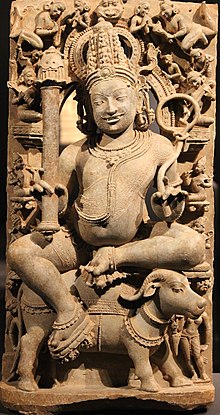
Yama or Yamarāja is a god of death, the south direction, and the underworld, belonging to an early stratum of Rigvedic Hindu deities. In Sanskrit, his name can be interpreted to mean “twin”. In the Zend-Avesta of Zoroastrianism, he is called “Yima”.

According to the Vishnu Purana, Yama is the son of sun-god Surya and Sandhya, the daughter of Vishvakarma. Yama is the brother of Sraddhadeva Manu and of his older sister Yami, which Horace Hayman Wilson indicates to mean the Yamuna. According to the Vedas, Yama is said to have been the first mortal who died. By virtue of precedence, he became the ruler of the departed, and is called “Lord of the Pitrs”.

Mentioned in the Pāli Canon of Theravada Buddhism, Yama subsequently entered Buddhist mythology in East Asia, Southeast Asia and Sri Lanka as a Dharmapala under various transliterations. He is otherwise also called as “Dharmaraja”.

Hinduism

In Hinduism, Yama is the lokapala (“Guardian of the Directions”) of the south and the son of Surya. Three hymns (10, 14, and 35) in the 10th book of the Rig Veda are addressed to him. In Puranas, Yama is described as having four arms, complexion of rain cloud with wrathful expression, surrounded by garland of flames, protruding fangs, dressed in red, yellow or blue garments, holding noose and mace or sword, and riding a water-buffalo. He wields a noose with which he seizes the lives of people who are about to die.

According to Hindu itihasa, Yama is the son of Surya and Saranyu. He is the twin brother of Yami, brother of Shraddhadeva Manu and the step brother of Shani. His wife was Goddess Dhumorna and his son was Katila.

Buddhism

In Buddhism, Yama (Sanskrit: यम) is a dharmapala, a wrathful god or the Enlightened Protector of Buddhism that is considered worldly, said to judge the dead and preside over the Narakas (“Hell” or “Purgatory”) and the cycle of rebirth.

The Buddhist Yama has, however, developed different myths and different functions from the Hindu deity. In Pali Canon Buddhist myths, Yama takes those who have mistreated elders, holy spirits, or their parents when they die. Contrary though, in the Majjhima Nikaya commentary by Buddhagosa, Yama is a vimānapeta – a that has a mixed state.

In other parts of Buddhism, Yama’s main duty is to watch over purgatorial aspects of Hell (the underworld), and has no relation to rebirth. His sole purpose is to maintain the relationships between spirits that pass through the ten courts, similar to Yama’s representation in several Chinese religions.

He has also spread widely and is known in every country where Buddhism is practiced, including China, Korea, Vietnam, Japan, Bhutan, Mongolia, Nepal, Thailand, Sri Lanka, Cambodia, Myanmar, Laos, and United States.

China

In Chinese texts, Yama only holds transitional places in Hell where he oversaw the deceased before he, and the Generals of Five Paths, were assigned a course of rebirth. Yama was later placed as a King in the Fifth Court when texts led to the fruition of the underworld that marked the beginnings of systemizations.

Japan

Yama can be found in one of the oldest Japanese religious works called Nipponkoku Genpō Zenaku Ryōiki, a literary work compiled by the Monk Keikai in 822. Yama was introduced to Japan through Buddhism, where he was featured as a Buddhist divinity. He holds the same position title as other works depict him – a judge who imposes decisions on the dead who have mistreated others.

Naraka (Hindu)

Naraka in Hinduism serves only as a temporary purgatory where the soul is purified of sin by its suffering. In Hindu mythology, Naraka holds many hells, and Yama directs departed souls to the appropriate one. Even elevated Mukti-yogyas and Nitya-samsarins can experience Naraka for expiation of sins.

Although Yama is the lord of Naraka, he may also direct the soul to a Swarga (heaven) or return it to Bhoomi (earth). As good and bad deeds are not considered to cancel each other out, the same soul may spend time in both a hell and a heaven. The seven Swargas are: Bhuvas, Swas (governed by Indra), Tharus, Thaarus, Savithaa, Prapithaa, and Maha (governed by Brahma).

Naraka (Sikhism)

The idea of Naraka in Sikhism is like the idea of Hell. One’s soul, however, is confined to 8.4 million life cycles before taking birth as a human, the point of human life being one where one attains salvation, the salvation being sach khand. The idea of khand comes in multiple levels of such heavens, the highest being merging with God as one. The idea of Hell comes in multiple levels, and hell itself can manifest within human life itself. The Sikh idea of hell is where one is apart from naama and the Guru’s charana (God’s lotus feet (abode)). Without naama one is damned. Naama is believed to be a direct deliverance by God to humanity in the form of Guru Nanak. A Sikh is hence required to take the Amrit (holy nectar/water) from gurubani, panj pyare (khanda da pahul) to come closer to naama. A true Sikh of the Gurus has the Guru himself manifest and takes that person into sach khand.

Naraka (Buddhist)

Naraka is usually translated into English as “hell” or “purgatory”. A Naraka differs from the hells of western religions in two respects. First, beings are not sent to Naraka as the result of a divine judgment and punishment; second, the length of a being’s stay in a Naraka is not eternal, though it is usually very long. Instead, a being is born into a Naraka as a direct result of his or her previous karma(actions of body, speech and mind), and resides there for a finite length of time until his karma has exhausted its cumulate effect.

East Asian mythology

Mandarin Diyu, Japanese Jigoku, Korean Jiok, Vietnamese Địa ngục literally “earth prison”, is the realm of the dead or “hell” in Chinese mythology and Japanese mythology. It is based upon the Buddhist concept of Naraka combined with local afterlife beliefs. Incorporating ideas from Taoism and Buddhism as well as traditional religion in China, Di Yu is a kind of purgatory place which serves not only to punish but also to renew spirits ready for their next incarnation. This is interchangeable with the concept of Naraka.

In Japanese mythology, Enma-O or Enma Dai-O judges souls in Meido, the kingdom of the waiting dead. Those deemed too horrible are sent to Jigoku, a land more comparable to the Christian hell. It is a land of eternal toil and punishment. Those of middle note remain in meido for a period awaiting reincarnation. Others, of high note, become honored ancestors, watching over their descendants.

Related concepts

Yama and Ymir

In a disputable etymology, W. Meid (1992) has linked the names Yama (reconstructed in Proto-Indo-European as *yemos) and the name of the primeval Norse frost giant Ymir, which can be reconstructed in Proto-Germanic as *umijaz or *jumijaz, in the latter case possibly deriving from PIE *ym̥yos, from the root yem “twin”. In his myth, however, Ymir is not a twin, and only shares with Yama the characteristics of being primeval and mortal. However, Ymir is a hermaphrodite and engenders the race of giants.

In Iranian mythology

A parallel character in Iranian mythology and Zoroastrianism is known as Yima Xšaēta, who appears in the Avesta. The pronunciation “Yima” is peculiar to the Avestan dialect; in most Iranian dialects, including Old Persian, the name would have been “Yama”. In the Avesta, the emphasis is on Yima’s character as one of the first mortals and as a great king of men. Over time, *Yamaxšaita was transformed into Jamšēd or Jamshid, celebrated as the greatest of the early shahs of the world. Both Yamas in Zoroastrian and Hindu myth guard hell with the help of two four-eyed dogs.

It has also been suggested by I. M. Steblin-Kamensky that the cult of Yima was adopted by the Finno-Ugrians. According to this theory, in Finnish Yama became the god cult Jumula and Joma in Komi. According to this hypothesis, from this cult, the Hungarians also borrowed the word vara which became vár ‘fortress’ and város ‘town’. (ibid)

In Javanese culture

There is Yamadipati in Javanese culture, especially in wayang. The word adipati means ruler or commander. When Hinduism first came to Java, Yama was still the same as Yama in Hindu myth. Later, as Islam replaced Hinduism as the majority religion of Java, Yama was demystified by Walisanga, who ruled at that time. So, in Javanese, Yama became a new character. He is the son of Sanghyang Ismaya and Dewi Sanggani. In the Wayang legend, Yamadipati married Dewi Mumpuni. Unfortunately, Dewi Mumpuni fell in love with Nagatatmala, son of Hyang Anantaboga, who rules the earth. Dewi Mumpuni eventually left Yamadipati, however.

In Buddhist temples

In the Buddhism of the Far East, Yama is one of the twelve Devas, as guardian deities, who are found in or around Buddhist shrines (Jūni-ten, 十二天). In Japan, he has been called “Enma-Ten”. He joins these other eleven Devas of Buddhism, found in Japan and other parts of southeast Asia: Indra (Taishaku-ten), Agni (Ka-ten), Yama (Emma-ten), Nirrti (Rasetsu-ten), Vayu (Fu-ten), Ishana (Ishana-ten), Kubera (Tamon-ten), Varuna (Sui-ten) Brahma (Bon-ten), Prithvi (Chi-ten), Surya (Nit-ten), Chandra (Gat-ten).

Source

Wikipedia 

c. 2018

A Laugh for Today

Female Comebacks

Man “Haven’t we met before?”
Woman “Yes, I’m the receptionist at the VD Clinic.”

Man “Haven’t I seen you someplace before?”
Woman “Yeah, that’s why I don’t go there anymore.”

Man “Is this seat empty?”
Woman “Yes, and this one will be too if you sit down.”

Man “So, wanna go back to my place ?”
Woman “Well, I don’t know. Will two people fit under a rock?”

Man “Your place or mine?”
Woman “Both. You go to yours and I’ll go to mine.”

Man “I’d like to call you. What’s your number?”
Woman “It’s in the phone book.”

Man “But I don’t know your name.”
Woman “That’s in the phone book too.”

Man “So what do you do for a living?”
Woman “I’m a female impersonator.”

Man “What sign were you born under?”
Woman “No Parking.”

Man “Hey, baby, what’s your sign?”
Woman “Do not Enter”

Man “How do you like your eggs in the morning?”
Woman “Unfertilized”

Man “Hey, come on, we’re both here at this bar for the same reason”
Woman “Yeah! Let’s pick up some chicks!”

Man “I know how to please a woman.”
Woman “Then please leave me alone.”

Man “I want to give myself to you.”
Woman “Sorry, I don’t accept cheap gifts.”

Man “I can tell that you want me.”
Woman “Ohhhh. You’re so right. I want you to leave.”

Man “If I could see you naked, I’d die happy
Woman “Yeah, but if I saw you naked, I’d probably die laughing.”

Man “Hey cutie, how ’bout you and I hitting the hot spots?”
Woman “Sorry, I don’t date outside my species..”

Man “Your body is like a temple.”
Woman “Sorry, there are no services today.”

Man “I’d go through anything for you.”
Woman “Good! Let’s start with your bank account.”

Man “I would go to the end of the world for you.”
Woman “Yes, but would you stay there?”

Source:

JokeWarehouse.com

Hello and Merry Meet, Good Morning/Afternoon/Evening WOTC Family and Friends! A Thought for Today

Sacred Symbols and the Witch Next Door c. 2016

(Yes, I am cheating with some posts but feel they deserve to be brought to the present)

Sacred Symbols and The Witch Next Door

Author Unknow

It’s Tuesday at five o’clock. I punch out, lock up my desk, and leave the dreaded office for the evening. As I walk out of the side door, I imagine that I’m going through one of those automatic car washes, and the brushes and water are removing the day’s stresses and negativity from me (I’m a title clerk at a car dealership, and as you can imagine, dealing with the DMV every day tends to build up negativity). By the time I get to my car, I’m feeling good, stress free and ready for the evening. I look up and see another Carolina thunderstorm rolling in. It’s going to be a 30-minute drive in the rain, and that makes me smile.

By the time I meander my way out of the parking lot, the rains have started. I roll down my window and stick my hand out. As I drive down the street, going with the flow at 45 mph, I feel the bite on my palms and wrists. Like thousands of needles, the drops seem to pierce my skin, infusing me with the energy of Water and Wind. My entire left side is soaked, and I don’t seem to mind. The family in the mini-van next to me stares slack-jawed, thinking me to be insane. I feel sorry for them. If they only knew how good this feels, how cleansing it is, their heads would hang out of the windows of the van like Labradors. I turn into the parking lot of the grocery store to pick up something for cakes and ale tonight. The rain is coming down in sheets. Thunder cracks and rumbles, making the ground shake. Lightning strikes are everywhere. A handful of people run to their cars, holding a few grocery bags and covering their large heads with thin arms to shield themselves. I have the sudden urge to strip naked, arms out in childlike joy, and dance in deformed circles throughout the parking lot until I’m dizzy and fall into a puddle, laughing. The only thing stopping me is the patrol car parked nearby, with the cop inside catching up on his paperwork. I stroll leisurely into the store and pass a small group of old southern women staring at me as they huddle just behind the automatic doors waiting for the storm to subside. One of them tells me that I’ll get sick from that, and that I should have at least tried to hurry into the store where it’s dry. I look at her and say, “Water is a sacred symbol. I am Cleansed and Purified by the Mother.”

When I’ve finished my transaction and head out of the store, the rain has slowed to barely more than a drizzle. As I turn out of the parking lot, it has stopped all together. Again, I’ve rolled down my window and stuck my arm out; now it’s just the Air that I feel on my skin. I inhale the crisp smells only detected after a storm. My lungs expand, and I feel the butterflies in my stomach. That smell always seems to rejuvenate me. I pull into my driveway, turn off the car and go inside. I put the cakes and ale in the refrigerator, then head straight for the back door. On my deck, I sit and enjoy the rolling hills and farmland behind my house. The smell of the after rain still clings to the Air. I breathe deeply and close my eyes. I feel at one with the Air, with the sky. A light breeze kisses my face. As the breeze kicks up, it wraps around me, a swirling blanket of the Gods. I am given the gift of the East, Air as its symbol, and I take that with me back into the house.

The rest of the coven arrives. I change into my robes and we go into the altar room to set up. I lead them through the chants and the worship, we dine on the cakes and ale, and we meditate briefly before opening circle. After ritual, we sit and catch up on what’s going on in each other’s lives. We laugh, we talk, and we laugh some more. By 9:30 they show themselves out, and I return to the altar room. I light all of the candles once again and stare into the flame of one of my altar candles. I feel my spirit disconnect from my physical body. I enter a trance, and am lost in the awesome power of the Fire. My mind becomes one with the dancing flame and images flood my head. Insights are gained, wisdoms etched into my psyche to forever become a part of me. My education continues, with the Lord and Lady my teachers. The Fire is a symbol of my knowledge. My passion swells as I strive to learn everything…to know…to be. I become aware that I’ve hit the climax of my trance and feel the cycling down, the beginning of the end of the controlled burn. The images slow, and I am once again aware that it is a candle at which I stare. I thank the Gods for bestowing the gnosis upon me, and carefully extinguish the flame.

I am unaware of the time, and do not care to know. I need to ground myself, but rather than do it inside, I instead choose to take our offerings from ritual and bury it outside in the Earth. In the backyard, I find a small, rich patch of soil. Most of the yard is clay, except for here. I dig deeper than needed. Halfway down I toss aside my trowel, electing instead to feel the Earth in my bare hands. As I dig I allow the energies raised within me to pour down into the Earth. The smell of the grass and weeds and dirt permeate me. I feel calm and relaxed, bathed in the glow of the full moon. Carefully I scrape the offering off of the dish. I close my eyes and feel good, knowing that however small it is, this gift of thanks to the Gods will decompose, and what grows in this spot will receive some extra nutrition. All returns to the Earth in good time. I repack the hole I’ve dug and remain on my knees for a few more minutes. The Earth, our symbol of life, our living organism.

These are the most sacred of symbols, the Elements. Water, Air, Fire and Earth all connect us to the Spirit. I stand up slowly, beginning to feel the effects of exhaustion. I turn my head to the right and see a neighbor peeking out the blinds at me. I think to myself that I’m doing nothing strange here, yet tomorrow morning I’ll be the block’s topic of conversation. A Mona Lisa smile crosses my lips as I wave to her and she quickly moves away from the window. I go back into the house, knowing that I’m just the everyday Witch next door.