Click on the hyperlinks below to read your horoscope for the coming week.

Click here to read your daily and weekly horoscope Source: georgianicols.com


To start, you will need a small jar with a tight-fitting lid, a green candle, a piece of green paper, and a pen. On the green paper, write down your financial goals, focusing on what you want to attract rather than what you want to eliminate. Please fold the paper and place it in the jar. Then, light the green candle and hold the jar in your hands, visualising money flowing towards you quickly and effortlessly.
Next, fill the jar with any combination of the following ingredients: cinnamon sticks, dried basil, whole cloves, allspice, or any other herb or spice associated with wealth and abundance. Fill the jar to the top, seal it tightly, and place it on your altar or in a prominent spot in your home.
Hold the jar daily and repeat your affirmations and visualisations of abundance. You can also shake the jar to activate the energy and release the fragrance of the herbs and spices. Keep the jar visible in your home, and you’ll notice a shift in your financial energy over time.
Magickal Intentions: Growth, Advancements, Enlightenment, Rational Thought, Exorcism, Healing, Prosperity, Hope, Exorcism, Money
Incense: Lemon, Frankincense
Planet: Sun
Sign: Leo
Angel: Michael
Colors: Gold, Yellow, Orange and White
Herbs/Plants: Marigold, Heliotrope, Sunflower, Buttercup, Cedar, Beech, Oak
Stones: Carnelian, Citrine, Tiger’s Eye, Amber, Clear Quartz and Red Agate
Oil: (Sun) Cedar, Frankincense, Neroli, Rosemary
The first day of the week is ruled by the Sun. It is an excellent time to work efforts involving business partnerships, work promotions, business ventures, and professional success.
Spells where friendships, mental or physical health, or bringing joy back into life are an issue work well on this day, too

The Moon phase for May 3rd, 2026 is a Waning Gibbous phase. This is the first phase after the Full Moon where the illumination of the moon decreases each day until it reaches 50% (the Last Quarter phase).
The waning (shrinking) gibbous Moon will rise after sunset in the east, transit the meridian after midnight, before setting after sunrise in the west.
During this phase, the illumination of the moon will go down from 99.% to 50.1%. Technically, the phase starts as soon as the Full Moon has passed, but it can be difficult to calculate and differentiate the first stage of a Waning Gibbous Moon from a Full Moon when 98-99% of the Moon’s surface is illuminated.
Phase: Waning Gibbous
Moon age: 15.56 days
Moon illumination: 98.87%
Moon tilt: -18.868°
Moon angle: 0.49
Moon distance: 404,125.80 km
Moon sign: Scorpio
The Waning Gibbous on May 3 has an illumination of 96%. This is the percentage of the Moon illuminated by the Sun. The illumination is constantly changing and can vary up to 10% a day. On May 3 the Moon is 16.57 days old. This refers to how many days it has been since the last New Moon. It takes 29.53 days for the Moon to orbit the Earth and go through the lunar cycle of all 8 Moon phases.


The Moon phase for May 2nd, 2026 is a Waning Gibbous phase. This is the first phase after the Full Moon where the illumination of the moon decreases each day until it reaches 50% (the Last Quarter phase).
The waning (shrinking) gibbous Moon will rise after sunset in the east, transit the meridian after midnight, before setting after sunrise in the west.
During this phase, the illumination of the moon will go down from 99.% to 50.1%. Technically, the phase starts as soon as the Full Moon has passed, but it can be difficult to calculate and differentiate the first stage of a Waning Gibbous Moon from a Full Moon when 98-99% of the Moon’s surface is illuminated.
Phase: Waning Gibbous
Moon age: 14.53 days
Moon illumination: 99.99%
Moon tilt: 40.809°
Moon angle: 0.5
Moon distance: 402,221.16 km
Moon sign: Scorpio

The Waning Gibbous on May 2 has an illumination of 99%. This is the percentage of the Moon illuminated by the Sun. The illumination is constantly changing and can vary up to 10% a day. On May 2 the Moon is 15.63 days old. This refers to how many days it has been since the last New Moon. It takes 29.53 days for the Moon to orbit the Earth and go through the lunar cycle of all 8 Moon phases.
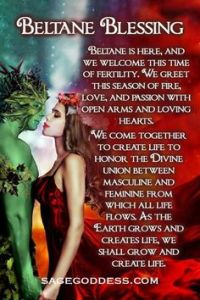

Europeans have been putting on fiery May Day festivals for hundreds, and in some cases, thousands of years.
Whether it’s celebrating Sankt Walpurgisnacht (“Saint Walpurgis Night”) in Germany with bonfires, or celebrating Pálení čarodějnic (“burning of the witches”) in the Czech Republic with the burning of a twenty-five-foot-tall effigy of a witch, or even celebrating Easter in the Netherlands with some Paasvuren (“Easter fires”), these long-standing springtime traditions might all owe their existence to the Celtic cross-quarter day festival of Beltane.
Okay, fine, that’s a bit presumptuous. At the very least, Beltane likely influenced these celebrations, or at the very, very least, Beltane and Walpurgis Night and similar celebrations all share a common prehistoric (i.e., pre-Celtic, pre-Germanic) celebratory ancestor.
According to the World History Encyclopedia, Walpurgis Night, celebrated on the evening of April 30th, is derived from the “merging of the ancient pagan celebration of Beltane with the commemoration of the canonization of the Christian Saint Walpurga (l. c. 710 – c. 777 CE).”
The Encyclopedia goes on to note that the “ancient Celtic Sabbat (religious festival) of Beltane” had “merged with Germanic May Day” and was later Christianized sometime after 870 CE when Walpurga—a British-born Christian missionary and healer known for her ability to combat witchcraft—was canonized in Germany.
Meanwhile, in Ireland, the bishop of Cashel and king of Munster Cormac (d. 908 CE), was writing about Beltane in his eponymous glossary. Cormac claimed the festival of Beltane was named for the “lucky fire” or the “the two fires,” and he described how Irish pagans would drive cattle between two hillside bonfires in order to protect them from disease during their migration to summer pasturelands.
But look at me, getting ahead of myself here, like a bull charging between stacks of yet-to-be-lit firewood on an Irish hillside.
Before we explore all of the rituals associated with the ancient Celtic festival of Beltane, let’s cover the basics, starting with the definition and etymology of Beltane.
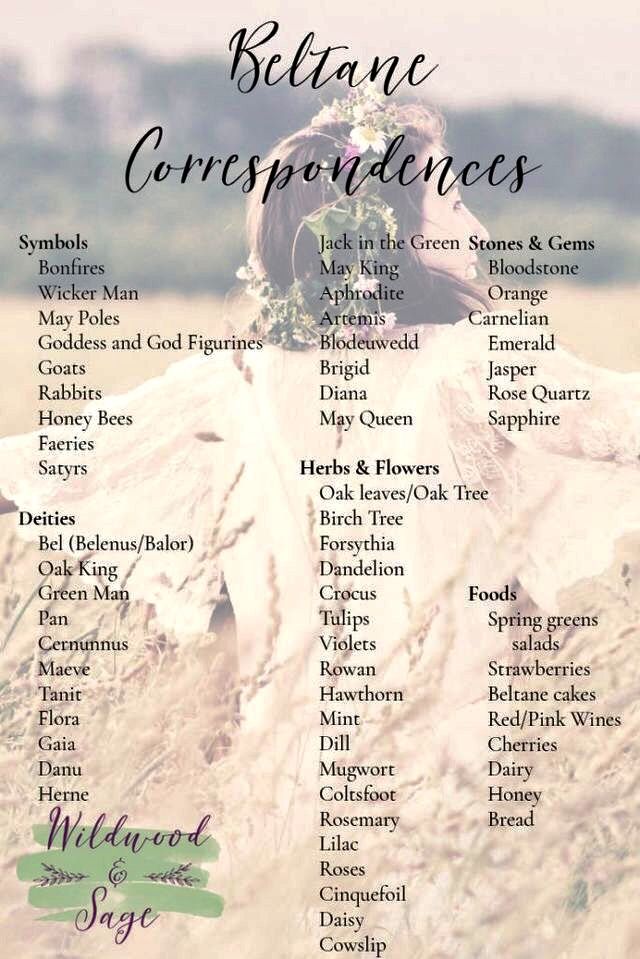
Beltane is a time of great fertility — for the earth itself, for animals, and of course for people as well. This season has been celebrated by cultures going back thousands of years, in a variety of ways, but nearly all shared the fertility aspect. Typically, this is a Sabbat to celebrate gods of the hunt or of the forest, and goddesses of passion and motherhood, as well as agricultural deities. Here are a list of gods and goddesses that can be honored as part of your tradition’s Beltane rituals.
Artemis (Greek): The moon goddess Artemis was associated with the hunt and was seen as a goddess of forests and hillsides. This pastoral connection made her a part of spring celebrations in later periods.
Bes (Egyptian): Worshiped in later dynasties, Bes was a household protection god, and watched over mothers and young children. He and his wife, Beset, were paired up in rituals to cure problems with infertility.
Bacchus (Roman): Considered the equivalent of Greek god Dionysus, Bacchus was the party god — grapes, wine, and general debauchery were his domain. In March each year, Roman women could attend secret ceremonies called the bacchanalia, and he is associated with sexual free-for-alls and fertility.
Cernunnos (Celtic): Cernunnos is a horned god found in Celtic mythology. He is connected with male animals, particularly the stag in rut, and this has led him to be associated with fertility and vegetation. Depictions of Cernunnos are found in many parts of the British Isles and western Europe. He is often portrayed with a beard and wild, shaggy hair — he is, after all, the lord of the forest.
Flora (Roman): This goddess of spring and flowers had her own festival, Floralia, which was celebrated every year between April 28 to May 3. Romans dressed in bright robes and floral wreaths, and attended theater performances and outdoor shows. Offerings of milk and honey were made to the goddess.
Hera (Greek): This goddess of marriage was the equivalent of the Roman Juno, and took it upon herself to bestow good tidings to new brides. A maiden about to marry could make offerings to Hera, in the hopes that she would bless the marriage with fertility. In her earliest forms, she appears to have been a nature goddess, who presides over wildlife and nurses the young animals which she holds in her arms.
Kokopelli (Hopi): This flute-playing, dancing spring god carries unborn children upon his own back, and then passes them out to fertile women. In the Hopi culture, he is part of rites that relate to marriage and childbearing, as well as the reproductive abilities of animals. Often portrayed with rams and stags, symbolic of his fertility, Kokopelli occasionally is seen with his consort, Kokopelmana.
Pan (Greek): This agricultural god watched over shepherds and their flocks. He was a rustic sort of god, spending lots of time roaming the woods and pastures, hunting and playing music on his flute. Pan is typically portrayed as having the hindquarters and horns of a goat, similar to a faun. Because of his connection to fields and the forest, he is often honored as a spring fertility god.
Priapus (Greek): This fairly minor rural god has one giant claim to fame — his permanently erect and enormous phallus. The son of Aphrodite by Dionysus (or possibly Zeus, depending on the source), Priapus was mostly worshiped in homes rather than in an organized cult. Despite his constant lust, most stories portray him as sexually frustrated, or even impotent. However, in agricultural areas he was still regarded as a god of fertility, and at one point he was considered a protective god, who threatened sexual violence against anyone — male or female — who transgressed the boundaries he guarded.
Sheela-na-Gig (Celtic): Although the Sheela-na-Gig is technically the name applied to the carvings of women with exaggerated vulvae that have been found in Ireland and England, there’s a theory that the carvings are representative of a lost pre-Christian goddess. Typically, the Sheela-na-Gig adorns buildings in areas of Ireland that were part of the Anglo-Norman conquests in the 12th century. She is shown as a homely woman with a giant yoni, which is spread wide to accept the seed of the male. Folkloric evidence indicates that the figures are theory that the figures were part of a fertility rite, similar to “birthing stones”, which were used to bring on conception.
Xochiquetzal (Aztec): This fertility goddess was associated with spring, and represented not only flowers but the fruits of life and abundance. She was also the patron goddess of prostitutes and craftsmen.
Source: Patti Wigington Published on ThoughtCo
(YOU CAN COPY AND PASTE ANY SPELLS POSTED TO A DOCUMENT TO PRINT AND/OR SAVE ON YOUR COMPUTER FOR PERSONAL USE ONLY)
Much as the Great God and Great Goddess are said to “tie the knot” of marriage at Beltane, we can create our own knot-based magickal charm to honor this ancient and festive sabbat of which the tied-up Maypole is its emblem! When it comes to Beltane a vast majority of ancient pagans – and certainly any Neopagan worth their salt – understands that gender and orientation are of little consequence. Love is love. Whoever we are and however we are, let’s craft a charm of nine loving knots. Feel free to chant the traditional Wiccan knot spell* if it aids your focus. This can be found online and in a variety of Witchcraft books.
Using a long strip of natural fabric (red or white are ideal), tie nine knots, each of which should contain within a small stone, herb, charm, or written prayer specifically for the energy of love** – cosmic, social, and personal – however your intuition guides. After preforming your magick, hang the charm near the front door or bedroom in order for its blessing to illuminate today and onward.
Source: Llewellyn’s Witches’ Datebook 2022 page 71 by Raven Digitalis
The Moon phase for May 1st, 2026 is the Full Moon phase. In this phase, the moon is 100% illuminated when seen from Earth (hence the name Full Moon).
The Full Moon happens when the moon is on the opposite side of the Earth from the Sun. The sunlight fully illuminated the moon, and this is what we call being “full”. The moon will be visible throughout the night sky as it rises at sunset in the east, transits the meridian at midnight, before setting at sunrise in the west.
The specific point at which the Full Moon occurs can be measured down to a fraction of a second. The time that passes between full moons is called the Synodic month and is 29.530587981 days long.
Phase: Full Moon
Moon age: 13.5 days
Moon illumination: 99.15%
Moon tilt: 128.553°
Moon angle: 0.5
Moon distance: 399,782.38 km
Moon sign: Scorpio

The Full Moon on May 1 has an illumination of 100%. This is the percentage of the Moon illuminated by the Sun. The illumination is constantly changing and can vary up to 10% a day. On May 1 the Moon is 14.76 days old. This refers to how many days it has been since the last New Moon. It takes 29.53 days for the Moon to orbit the Earth and go through the lunar cycle of all 8 Moon phases.
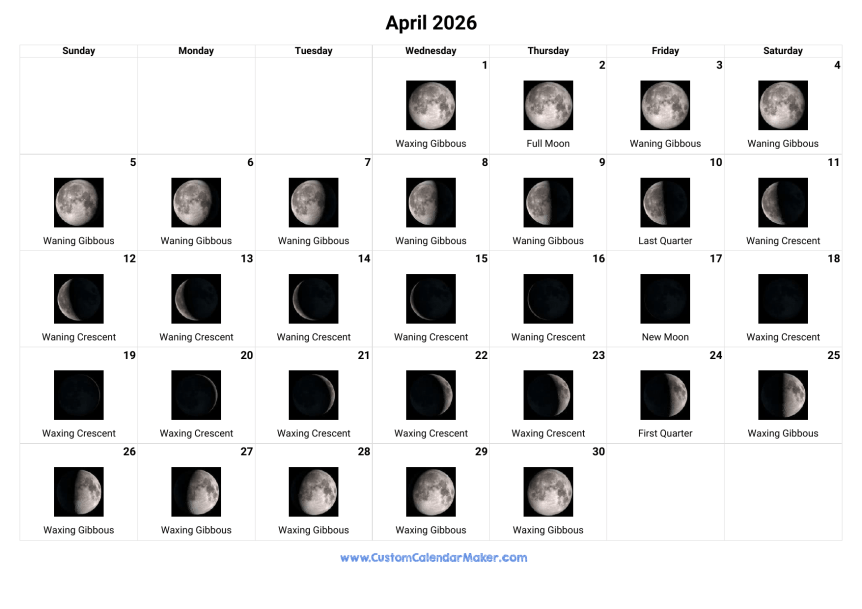
The Moon phase for today is a Waxing Gibbous phase. This is the phase where the moon is more than 50% illuminated but has not yet reached 100% illumination (which would be a Full Moon).
In the Northern Hemisphere, the right side will be illuminated, and in the Southern hemisphere it’ll be the left side that is illuminated.
The Waxing Gibbous phase, like all moon phases, will last for just over 7 days. The actual length will vary because of the elliptical shaped orbit of the moon. During this Waxing Gibbous phase the moon will rise in the east in the mid- to late-afternoon and will be high in the eastern sky at sunset.
Assuming it’s a clear night, the Waxing Gibbous moon will then be visible through most of the night before setting just before sunrise.
Phase: Waxing Gibbous
Moon age: 12.49 days
Moon illumination: 96.38%
Moon tilt: 144.779°
Moon angle: 0.5
Moon distance: 396,960.13 km
Moon sign: Libra
You can use this link to go forward or backward in time for Moon phase information. If you are curious, you can even find out what phase the Moon was in when you or anyone else was born.
The Waxing Gibbous on April 30 has an illumination of 99%. This is the percentage of the Moon illuminated by the Sun. The illumination is constantly changing and can vary up to 10% a day. On April 30 the Moon is 13.84 days old. This refers to how many days it has been since the last New Moon. It takes 29.53 days for the Moon to orbit the Earth and go through the lunar cycle of all 8 Moon phases.
MAY 1: BELTANE SABBAT: Festival of Spring and Fertility. Sidhe Day. Beltaine – Celtic festival marking the arrival of summer in ancient times.
MAY 4: Celtic/British Festival of Cerridwen and Brigit: Corn Goddesses of Fertility
May 4 – Celtic Festival of Cerridwen and Brigit – Corn Goddesses of fertility, healing, and poets.
– St. Monica’s Day (Irish)
– Veneration of the Thorn (Irish)
– Festival of Sheila Na Gig (Irish)
MAY 6: – Shepherd’s Day – Day to meditate on Deity as Lord of Animals: Dumuzi (Old Sumerian), Osiris (Egyptian), Pan (Old Greek), Shiva Pasupati (Hindu).
– Eyvind Kelve (Norse)
MAY 9: – Greek Feast of Artemis
MAY 9-12: Lemuria – Roman festival when the spirits of the dead are thought to revisit their homes.
MAY 13: – Roman Garland Day, Offering garlands to Neptune.
– Month of Hawthorn, Celtic festival of the tree.
– Our Lady of Fatima Day (Portugal)
MAY 14: – Isis Day in ancient Egypt
MAY 14: -16 Feast of Divine Love and Compassion – Source of healing and beneficence, honoring the Goddess as Isis (Old Egyptian), Oshun (Yoruba/Santeria), Lakshmi (Hindu).
MAY 15: – Festival of Vesta (Roman)
– Maia and Mercury’s Day (Roman)
MAY 18: – Celtic Feast of Greek God Pan – Who represents the masculine in Nature and protects men throughout their lives. Men recognized the transitions in their lives and honored male fertility.
MAY 19: Celtic Feast of Brigid – In which sacred healing wells and springs were adorned with flowers in honor of Goddess Brigid, daughter of Mother Goddess Danu and Father God Dagda.
MAY 21: Dark/Bright Mother Goddess Day—honoring Hecate/Demeter; Uma; Kali/Parvati .
MAY 26: – Festival of Diana begins (ends 31st) (ancient Roman holiday)
MAY 28: FEAST OF BENDIDIA—family feast day honoring of the Goddess of the Moon, Dark Moon, Underworld, Secret Wisdom and Witches.
May 30 – Frigg’s Day, Northern Goddess, spouse of Odin (Teutonic “heathen” European pre-Christian holiday)
– Feast of the Queen of the Underworld Begins (Roman)
– Feast of the Queen of Heaven (European)
Don’t miss a thing this month with this comprehensive rundown of holidays, awareness days and happenings. With 31 days, May is among the longest months of the year. That’s good news considering there’s something to commemorate each and every day, starting with May Day, which lands on May 1.
But that’s just the beginning of the May holidays and observances for 2026. The entire month is full of happenings…
Beltane honours Life. It represents the peak of Spring and the beginning of Summer. Earth energies are at their strongest and most active. All of life is bursting with potent fertility and at this point in the Wheel of the Year, the potential becomes conception. On May Eve the sexuality of life and the earth is at its peak. Abundant fertility, on all levels, is the central theme. The Maiden goddess has reached her fullness. She is the manifestation of growth and renewal, Flora, the Goddess of Spring, the May Queen, the May Bride. The Young Oak King, as Jack-In-The-Green, as the Green Man, falls in love with her and wins her hand. The union is consummated and the May Queen becomes pregnant. Together the May Queen and the May King are symbols of the Sacred Marriage (or Heiros Gamos), the union of Earth and Sky, and this union has merrily been re-enacted by humans throughout the centuries. For this is the night of the Greenwood Marriage. It is about sexuality and sensuality, passion, vitality and joy. And about conception. A brilliant moment in the Wheel of the Year to bring ideas, hopes and dreams into action. And have some fun…..
Traditions of Beltane
Beltane is a Fire Festival. The word ‘Beltane’ originates from the Celtic God ‘Bel’, meaning ‘the bright one’ and the Gaelic word ‘teine’ meaning fire. Together they make ‘Bright Fire’, or ‘Goodly Fire’ and traditionally bonfires were lit to honour the Sun and encourage the support of Bel and the Sun’s light to nurture the emerging future harvest and protect the community. Bel had to be won over through human effort. Traditionally all fires in the community were put out and a special fire was kindled for Beltane. “This was the Tein-eigen, the need fire. People jumped the fire to purify, cleanse and to bring fertility. Couples jumped the fire together to pledge themselves to each other. Cattle and other animals were driven through the smoke as a protection from disease and to bring fertility. At the end of the evening, the villagers would take some of the Teineigen to start their fires anew.” (From Sacred Celebrations by Glennie Kindred) Green Man – Beltane
Click here to read the rest of this article Source: .goddessandgreenman.co.uk
Make this little jar to help defend against anxiety and negative thoughts/feelings. This powerful blend of herbs 🌿 and crystals 💎 creates a calming, peaceful energy which you can keep close whenever needed.
The Herbs and Crystals listed here each have their own magical properties which, combined with your intention, will aid in calming and protecting from negative energies.
White candles are used for healing and protection spells.
Keep this jar close by any time you need a boost of calming energy to soothe anxiety.
Small clean jar
Crystals (and their relevant qualities)
Flame Jasper – Brings Courage to face unpleasant tasks
Blue Turquoise – Self Love, helps restore a Healthy Mental Attitude
Mookaite – Supports in times of Stress, brings Peace and feelings of Wholeness
Yellow Tiger’s Eye – Calming, protects against Stress
Amethyst – Healing, Grounding, calms the Nervous System, aids in Emotional Issues
Rose Quartz – Peace, aids in Emotional Balance, reduces Stress, brings Love
Clear Quartz – Amplifies Healing Energy
Herbs (and their relevant qualities)
Chamomile – Love and Purification
Lavender – Relaxing, Peace, Clarity, Purification and Love
Rosemary – Love and Protection
Bay Leaf – Love, Healing, Strength and Purification
Sage – Wisdom and Protection
Black Salt – Protection
Add each ingredient to your jar, focusing on your intentions.
Light the white candle.
Take 3 deep breaths whilst holding your jar.
Repeat the following 3 times:
“Nervous anxiety you are dead.
May the items in this jar soothe my head.
Bring me your calming peace,
Anxiety thoughts you will now cease.”
Seal your jar with wax from your candle.
Mercury/Neptune/Air/North/West/Southwest/Female/Male/Gemini/Virgo
Magickal Intentions: Communication, Divination, Writing, Knowledge, Business Transactions, Debt, Fear, Loss, Travel, Money Matters
Color: black, light blue, brown, gray, green, magenta, orange, peach, purple, red, silver, turquoise, violet, white, yellow; orange is the primary color
Number: 3, 5
Metal: mercury
Charm: distaff, rod, runes, staff, iridescent garments
Stone: moss agate, amethyst, bloodstone, emerald, hematite, lapis lazuli, lodestone, pearl, ruby, sapphire, sodalite, all blue stones
Animal: bear, dog, fox, magpie, swan, weasel
Plant: almond, bayberry, chamomile, cherry, cinnamon, cinquefoil, clove, coltsfoot, ginger, hazel, hazelnut, jasmine, lavender, millet, oak, peppermint, periwinkle, rosemary, sage, St. John’s wort, sweet pea, tamarind, lemon verbena, violet
Incense: cassia, cedar, cinnamon, clove, frankincense, jasmine, lavender, mastic, mint, rosemary, sage, sandalwood, storax, dried and powdered citrus peel, and all incense made from aromatic bark, wood, and seeds
Goddess: Carmenta, Hecate (Queen of Crossroads), Hel, Ishtar, Ma’at, the Morrigan, Nike
God: Anubis, Bragi, Elath-Iahu. Enki, Garuda, Hermes, Maximon (Black Magician), Mercury, Nebo (Wise God of Wednesday), Odin, Shango, Ullr, Vishnu, Wayland, Woden
Evocation: Agrat Bat Mahalat, Michael, Miel, Raphael, Seraphiel, Tiriel


You must be logged in to post a comment.