April 14 and 15, 2024 Current Moon Phase for the Northern and Southern Hemispheres

You can use this link to go forward or backward in time for Moon phase information. If you are curious, you can even find out what phase the Moon was in when you or anyone else was born.

The 8 Lunar Phases

There are 8 lunar phases the Moon goes through in its 29.53 days lunar cycle. The 4 major Moon phases are Full Moon, New Moon, First Quarter and Last Quarter. Between these major phases, there are 4 minor ones: the Waxing Crescent, Waxing Gibbous, Waning Gibbous and Waning Crescent. For more info on the Moon Cycle and on each phase check out Wikipedia Lunar Phase page.

Useful Moon Resources

Check the weather before a night of Moon gazing at weather.com

For a list of all the current meteor showers visit American Meteor Society

Source: MoonGiant.com
Northern Hemisphere

April 14, 2024

The Moon’s current phase for today and tonight is a Waxing Crescent Phase. Best seen in the west after the sun dips below the horizon at sunset. This is the first Phase after the New Moon and is a great time to see the features of the moon’s surface. The moon is close to the sun in the sky and mostly dark except for the right edge of the moon which becomes brighter as the days get closer to the next phase which is a First Quarter with a 50% illumination.

Visit the April 2024 Moon Phases Calendar to see all the daily moon phase for this month.

Today’s Waxing Crescent Phase

The Waxing Crescent on April 14 has an illumination of 37%. This is the percentage of the Moon illuminated by the Sun. The illumination is constantly changing and can vary up to 10% a day. On April 14 the Moon is 6.14 days old. This refers to how many days it has been since the last New Moon. It takes 29.53 days for the Moon to orbit the Earth and go through the lunar cycle of all 8 Moon phases.

Phase Details

Phase: Waxing Crescent
Illumination: 37%
Moon Age: 6.14 days
Moon Angle: 0.51
Moon Distance: 389,775.60 km
Sun Angle: 0.53
Sun Distance: 150,097,110.19 km

Southern Hemisphere

15 April 2024

The Moon’s current phase for today and tonight is a First Quarter phase. This phase occurs roughly 7 days after the New Moon when the moon is one quarter of the way through its orbit around the earth. Exactly half the moon will be illuminated and half dark. On the day of the First Quarter phase the moon is high overhead at sunset and is visible until mid-night when it sets in the west. The First Quarter phase is a one-day event and in the following days enters a Waxing Gibbous phase becoming more illuminated each day until the Full Moon.

Visit the April 2024 Moon Phases Calendar to see all the daily moon phase for this month.

Today’s First Quarter Phase

The First Quarter on April 15 has an illumination of 47%. This is the percentage of the Moon illuminated by the Sun. The illumination is constantly changing and can vary up to 10% a day. On April 15 the Moon is 7.09 days old. This refers to how many days it has been since the last New Moon. It takes 29.53 days for the Moon to orbit the Earth and go through the lunar cycle of all 8 Moon phases.

Phase Details

Phase: First Quarter
Illumination: 47%
Moon Age: 7.09 days
Moon Angle: 0.51
Moon Distance: 394,254.32 km
Sun Angle: 0.53
Sun Distance: 150,139,049.21 km

April 13 and 14, 2024 Current Moon Phase for the Northern and Southern Hemispheres

You can use this link to go forward or backward in time for Moon phase information. If you are curious, you can even find out what phase the Moon was in when you or anyone else was born.

The 8 Lunar Phases

There are 8 lunar phases the Moon goes through in its 29.53 days lunar cycle. The 4 major Moon phases are Full Moon, New Moon, First Quarter and Last Quarter. Between these major phases, there are 4 minor ones: the Waxing Crescent, Waxing Gibbous, Waning Gibbous and Waning Crescent. For more info on the Moon Cycle and on each phase check out Wikipedia Lunar Phase page.

Useful Moon Resources

Check the weather before a night of Moon gazing at weather.com

For a list of all the current meteor showers visit American Meteor Society

Source: MoonGiant.com

Northern Hemisphere

April 13, 2024

The Moon’s current phase for today and tonight is a Waxing Crescent Phase. Best seen in the west after the sun dips below the horizon at sunset. This is the first Phase after the New Moon and is a great time to see the features of the moon’s surface. The moon is close to the sun in the sky and mostly dark except for the right edge of the moon which becomes brighter as the days get closer to the next phase which is a First Quarter with a 50% illumination.

Visit the April 2024 Moon Phases Calendar to see all the daily moon phase for this month.

Today’s Waxing Crescent Phase

The Waxing Crescent on April 13 has an illumination of 27%. This is the percentage of the Moon illuminated by the Sun. The illumination is constantly changing and can vary up to 10% a day. On April 13 the Moon is 5.16 days old. This refers to how many days it has been since the last New Moon. It takes 29.53 days for the Moon to orbit the Earth and go through the lunar cycle of all 8 Moon phases.

Phase Details

Phase: Waxing Crescent
Illumination: 27%
Moon Age: 5.16 days
Moon Angle: 0.52
Moon Distance: 384,943.04 km
Sun Angle: 0.53
Sun Distance: 150,055,012.83 km

Southern Hemisphere

14 April 2024

The Moon’s current phase for today and tonight is a Waxing Crescent Phase. Best seen in the west after the sun dips below the horizon at sunset. This is the first Phase after the New Moon and is a great time to see the features of the moon’s surface. The moon is close to the sun in the sky and mostly dark except for the right edge of the moon which becomes brighter as the days get closer to the next phase which is a First Quarter with a 50% illumination.

Visit the April 2024 Moon Phases Calendar to see all the daily moon phase for this month.

Today’s Waxing Crescent Phase

The Waxing Crescent on April 14 has an illumination of 37%. This is the percentage of the Moon illuminated by the Sun. The illumination is constantly changing and can vary up to 10% a day. On April 14 the Moon is 6.14 days old. This refers to how many days it has been since the last New Moon. It takes 29.53 days for the Moon to orbit the Earth and go through the lunar cycle of all 8 Moon phases.

Phase Details

Phase: Waxing Crescent
Illumination: 37%
Moon Age: 6.14 days
Moon Angle: 0.51
Moon Distance: 389,775.60 km
Sun Angle: 0.53
Sun Distance: 150,097,110.19 km

April 12 and 13, 2024 Current Moon Phase for the Northern and Southern Hemispheres

You can use this link to go forward or backward in time for Moon phase information. If you are curious, you can even find out what phase the Moon was in when you or anyone else was born.

The 8 Lunar Phases

There are 8 lunar phases the Moon goes through in its 29.53 days lunar cycle. The 4 major Moon phases are Full Moon, New Moon, First Quarter and Last Quarter. Between these major phases, there are 4 minor ones: the Waxing Crescent, Waxing Gibbous, Waning Gibbous and Waning Crescent. For more info on the Moon Cycle and on each phase check out Wikipedia Lunar Phase page.

Useful Moon Resources

Check the weather before a night of Moon gazing at weather.com

For a list of all the current meteor showers visit American Meteor Society

Source: MoonGiant.com

Northern Hemisphere

April 12, 2024

The Moon’s current phase for today and tonight is a Waxing Crescent Phase. Best seen in the west after the sun dips below the horizon at sunset. This is the first Phase after the New Moon and is a great time to see the features of the moon’s surface. The moon is close to the sun in the sky and mostly dark except for the right edge of the moon which becomes brighter as the days get closer to the next phase which is a First Quarter with a 50% illumination.

Visit the April 2024 Moon Phases Calendar to see all the daily moon phase for this month.

Today’s Waxing Crescent Phase

The Waxing Crescent on April 12 has an illumination of 18%. This is the percentage of the Moon illuminated by the Sun. The illumination is constantly changing and can vary up to 10% a day. On April 12 the Moon is 4.14 days old. This refers to how many days it has been since the last New Moon. It takes 29.53 days for the Moon to orbit the Earth and go through the lunar cycle of all 8 Moon phases.

Phase Details

Phase: Waxing Crescent
Illumination: 18%
Moon Age: 4.14 days
Moon Angle: 0.52
Moon Distance: 380,014.10 km
Sun Angle: 0.53
Sun Distance: 150,012,769.35 km

Southern Hemisphere

13 April 2024

The Moon’s current phase for today and tonight is a Waxing Crescent Phase. Best seen in the west after the sun dips below the horizon at sunset. This is the first Phase after the New Moon and is a great time to see the features of the moon’s surface. The moon is close to the sun in the sky and mostly dark except for the right edge of the moon which becomes brighter as the days get closer to the next phase which is a First Quarter with a 50% illumination.

Visit the April 2024 Moon Phases Calendar to see all the daily moon phase for this month.

Today’s Waxing Crescent Phase

The Waxing Crescent on April 13 has an illumination of 27%. This is the percentage of the Moon illuminated by the Sun. The illumination is constantly changing and can vary up to 10% a day. On April 13 the Moon is 5.16 days old. This refers to how many days it has been since the last New Moon. It takes 29.53 days for the Moon to orbit the Earth and go through the lunar cycle of all 8 Moon phases.

Phase Details

Phase: Waxing Crescent
Illumination: 27%
Moon Age: 5.16 days
Moon Angle: 0.52
Moon Distance: 384,943.04 km
Sun Angle: 0.53
Sun Distance: 150,055,012.83 km

April 9, 2024 Current Moon Phase for the Northern Hemisphere

You can use this link to go forward or backward in time for Moon phase information. If you are curious, you can even find out what phase the Moon was in when you or anyone else was born.

The 8 Lunar Phases

There are 8 lunar phases the Moon goes through in its 29.53 days lunar cycle. The 4 major Moon phases are Full Moon, New Moon, First Quarter and Last Quarter. Between these major phases, there are 4 minor ones: the Waxing Crescent, Waxing Gibbous, Waning Gibbous and Waning Crescent. For more info on the Moon Cycle and on each phase check out Wikipedia Lunar Phase page.

Useful Moon Resources

Check the weather before a night of Moon gazing at weather.com

For a list of all the current meteor showers visit American Meteor Society

Source: MoonGiant.com

Northern Hemisphere

The Moon’s current phase for today and tonight is a Waxing Crescent Phase. Best seen in the west after the sun dips below the horizon at sunset. This is the first Phase after the New Moon and is a great time to see the features of the moon’s surface. The moon is close to the sun in the sky and mostly dark except for the right edge of the moon which becomes brighter as the days get closer to the next phase which is a First Quarter with a 50% illumination.

Visit the April 2024 Moon Phases Calendar to see all the daily moon phase for this month.

Today’s Waxing Crescent Phase

The Waxing Crescent on April 9 has an illumination of 1%. This is the percentage of the Moon illuminated by the Sun. The illumination is constantly changing and can vary up to 10% a day. On April 9 the Moon is 0.85 days old. This refers to how many days it has been since the last New Moon. It takes 29.53 days for the Moon to orbit the Earth and go through the lunar cycle of all 8 Moon phases.

Phase Details

Phase: Waxing Crescent
Illumination: 1%
Moon Age: 0.85 days
Moon Angle: 0.54
Moon Distance: 367,496.34 km
Sun Angle: 0.53
Sun Distance: 149,885,285.18 km

The Proper Timing for Magick c. 2017

Author: Taliesin McKnight

Timing is one of the most important things to consider when doing magick. Astrology can be likened to a great cosmic clock. It reflects the cycles and rhythms of nature. The proper alignment of the stars, the sun, the moon, and the planets should all be taken into consideration. Does this sound complex? I assure you it is not as complicated as it may sound. In fact, this may reduced to two things: the days of the week and the cycles of the moon.

The seven planets rule the seven days of the week. The names even derive from the planets in many different languages. In English these come from the names of the Norse planetary deities. Sunday is the day of the Sun; Monday is the day of the moon; Tuesday is the day of Tue (Mars) ; Wednesday is the day of Wodan (Mercury) ; Thursday is the day of Thor (Jupiter) ; Friday is the day of Freya (Venus) ; and Saturday is the day of Saturn. Therefore, for maximum astrological benefit, a love spell should be done on Friday, the day of Venus (planet ruling love) . In the same way, magick involving education may be done on Wednesday, which is ruled by Mercury. The planetary correspondences are as follows:

The Sun rules Sunday and is good for Success, luck, spirituality, knowledge, and healing. The moon rules on Mondays. This is a good time to do spells for intuition, dreams, astral travel, and communication with spirits. Mars rules on Tuesdays. It is a good time for effective magick involving battle, conflicts, protection, strength, overcoming adversity, and binding.

Mercury is the planet presiding over Wednesdays. This is a time for rituals for education, knowledge, divination, communication, and healing. Thursday is the day of Jupiter, and governs success, prosperity, luck, and leadership. Venus dominated on Fridays and can bring love, romance, heal relationships, and grant new friends. Saturday is governed by the baleful influence of Saturn. This planet grants protection, destruction, binding, curses, purification, and overcoming weakness.

In addition to the seven days of the week, the seven planets also rule the hours in the day. There are several different methods to calculating the planetary hours. One of these involves following the hours from sunrise to sunrise; another divides the hours between sunrise and sunset and divides them into 12 sections and the same is done for the period between sunsets. To avoid all the math and difficulty, a very simple and effective system omits this and simply uses the 24 hours from midnight to midnight. This has worked wonderfully for me and I see no reason to list the other methods. If you would like to examine other methods for calculating planetary hours, that information is readily available online or in other books on magick. For simplicity, just know that the planet for the day also rules the hour at 6 am, 1 pm, and 8 pm.

Now, to illustrate this, let us take an example. If you wanted to do a love spell, it would be a good idea to do this on Friday (the day of Venus) at 8 pm (the hour of Venus) . This acts as a magickal doorway in which the proper astrological conditions are right. In this way the magus moves with the cycles and the rhythms of nature. If one were to bind (or restrict) someone from causing harm to others, Saturday at 6 am would be a good time. The days and hours should be at least partially memorized. The easiest way to do this is to simply memorize which planets rule each day and to simply remember that the planet for that day also rules at 6 am, 1 pm, and 8 pm. In this way, it will not be necessary to look this up every time one wishes to do a spell!

The phases of the moon also have an important impact on the effectiveness of magick. The waxing (growing) phase and the full moon are good from creative magick and bringing things into your life; the waning (decreasing) phase and the new moon are used for destructive spells and getting rid of things in your life. This is the most stressed point in ritual timing in the Wiccan tradition.

The concept of moving with the phases of the moon is very ancient and is found in many different cultures. This can be seen as a more important element in timing than anything else. It is much better to go with the phases of the moon on the wrong day than to do it on the right day of the week and the wrong lunar phase. This aspect of magickal timing should not be over-looked. The full and new moons are peaks of the creative and destructive cycles. The mid-way points (the half moons during increase and decrease) are also times of great magickal power.

The last aspect of ritual timing is the moon sign. The moon passes through the 12 signs of the zodiac, remaining in each sign only for a few days. This is not as important a consideration as the other 2 timing concerns. Nonetheless, this can lend power to rituals and spells. When the moon is in an Earth sign (Taurus, Virgo, and Capricorn) are good for financial concerns; when the sign is in an Air sign (Gemini, Libra, and Aquarius) are ideal for education and spells consistent with the characteristics of the element of Air. When the sign is in a Water sign (Cancer, Scorpio, and Pisces) it is a great time for spells that are connected to the Element of water and to emotions, artistry, and relationships; While the moon is in a Fire sign (Aries, Leo, and Sagittarius) it is a good time to do rituals of a fiery nature.

The individual characteristics of the sign (rather than just the element) should also be considered. This is not a very important aspect to magickal timing, so don’t stress too much over it. As I said before, though, utilizing this can only help and never hinder!

There are other lesser aspects to astrological timing. These would include the weather and the current Sun sign. The reason Sun signs are rarely considered is not so much that it is a weak influence, but rather that it is not practical to wait months just to do a spell, when it will probably no longer even be needed or be too late. This could also be a great aid if followed.

Weather is an issue as well. Storms are usually great for magick because it is a time of great elemental power. Furthermore, if one is doing a ritual involving the Sun, this should be done during the day and when it is sunny. One would assume this would go without saying. On the contrary, however, many people fail to recognize this simple concept. After all, it is only common sense. Thus, weather and the Sun sign can lend a lot of extra power to spells, if you would only harness that power with the use of correct ritual timing.

Now that this has all been laid down and explained, let us take another example to make sure these concepts are well understood. Let us say that someone is looking for a new job and decides to do some magick to help the job search. The moon should be waxing (this is for bringing things into your life) and the spell may be done on a Thursday (the day of Jupiter) at 1 pm (the hour of Jupiter) on a cloudy day because Jupiter is a sky god. The moon should also be in the sign of Capricorn. This would be an extremely good time for such a spell. The conditions are perfect.

Does timing have to be followed? Of course not! In the preceding example, the job is probably needed immediately. It would be foolish to wait for the right conditions during such an emergency. Do spells whenever they are needed. However, WHEN IT IS CONVENIENT, the astrological conditions should be considered. If a spell can wait for the perfect conditions, then great. If they spell can wait a few days for the right day ruled by the proper planet, that is good too. But if the spell can’t wait that long, then do it now. The spell can be repeated when the stars, sun, and moon are aligned right if needed. The spell will still work. The point is lending extra power to your spells. That’s it.

Following the cycles and rhythms of nature is also another way of aligning oneself with the universe. In the ancient Mystery Traditions, from which magick derives, Man was seen as a reflection of the cosmos. One is moving in accordance with the universe. We are moving with the tides of nature. Can magick be done against these cycles and still be effective? Sure. But it is like swimming against a current. Why not “ride with the tide”? It may even carry you a ways if you would only let go and let the currents of the Great Mother take you. Thus, in magick we try to follow the ways of Nature. Magick is merely using Her ways.

Remember, that which separates the initiate from the vulgar is simply that the occultist is aware of the laws of the universe and uses them to his or her advantage while others do not use this power that lies in their hands.

March 23 and 24, 2024 Current Moon Phase for the Northern and Southern Hemispheres

You can use this link to go forward or backward in time for Moon phase information. If you are curious, you can even find out what phase the Moon was in when you or anyone else was born.

The 8 Lunar Phases

There are 8 lunar phases the Moon goes through in its 29.53 days lunar cycle. The 4 major Moon phases are Full Moon, New Moon, First Quarter and Last Quarter. Between these major phases, there are 4 minor ones: the Waxing Crescent, Waxing Gibbous, Waning Gibbous and Waning Crescent. For more info on the Moon Cycle and on each phase check out Wikipedia Lunar Phase page.

Useful Moon Resources

Check the weather before a night of Moon gazing at weather.com

For a list of all the current meteor showers visit American Meteor Society

Source: MoonGiant.com

Northern Hemisphere

March 23, 2024

The Moon’s current phase for today and tonight is a Waxing Gibbous phase. Visible through most of the night sky setting a few hours before sunrise. This phase is when the moon is more than 50% illuminated but not yet a Full Moon. The phase lasts about 7 days with the moon becoming more illuminated each day until the Full MoonThis September Full Moon will be the forth and final supermoon of 2023.

During a Waxing Gibbous the moon rises in the east in mid-afternoon and is high in the eastern sky at sunset. The word Gibbous first appeared in the 14th century and has its roots in the Latin word “gibbosus” meaning humpbacked.

Visit the March 2024 Moon Phases Calendar to see all the daily moon phase for this month.

Today’s Waxing Gibbous Phase

The Waxing Gibbous on March 23 has an illumination of 97%. This is the percentage of the Moon illuminated by the Sun. The illumination is constantly changing and can vary up to 10% a day. On March 23 the Moon is 13.16 days old. This refers to how many days it has been since the last New Moon. It takes 29.53 days for the Moon to orbit the Earth and go through the lunar cycle of all 8 Moon phases.

Phase Details

Phase: Waxing Gibbous
Illumination: 97%
Moon Age: 13.16 days
Moon Angle: 0.49
Moon Distance: 405,408.73 km
Sun Angle: 0.53
Sun Distance: 149,156,461.91 km

Southern Hemisphere

24 March 2024

The Moon’s current phase for today and tonight is a Waxing Gibbous phase. Visible through most of the night sky setting a few hours before sunrise. This phase is when the moon is more than 50% illuminated but not yet a Full Moon. The phase lasts about 7 days with the moon becoming more illuminated each day until the Full MoonThis September Full Moon will be the forth and final supermoon of 2023.

During a Waxing Gibbous the moon rises in the east in mid-afternoon and is high in the eastern sky at sunset. The word Gibbous first appeared in the 14th century and has its roots in the Latin word “gibbosus” meaning humpbacked.

Visit the March 2024 Moon Phases Calendar to see all the daily moon phase for this month.

Today’s Waxing Gibbous Phase

The Waxing Gibbous on March 24 has an illumination of 99%. This is the percentage of the Moon illuminated by the Sun. The illumination is constantly changing and can vary up to 10% a day. On March 24 the Moon is 14.05 days old. This refers to how many days it has been since the last New Moon. It takes 29.53 days for the Moon to orbit the Earth and go through the lunar cycle of all 8 Moon phases.

Phase Details

Phase: Waxing Gibbous
Illumination: 99%
Moon Age: 14.05 days
Moon Angle: 0.49
Moon Distance: 405,363.99 km
Sun Angle: 0.53
Sun Distance: 149,198,991.65 km

Spell For Friday –

(YOU CAN COPY AND PASTE ANY SPELLS POSTED TO A DOCUMENT TO PRINT AND/OR SAVE ON YOUR COMPUTER)

Charm Bag for Love

LOVE SPELL WARNING: Love spells such as this one take the person who you want to love you free will/spirit away. What happens with a spell like this is the person will become obsessed with you to the point of possibly losing their job, which in turn can make them lose their home, automobile, friends, their family, etc. I have heard of people under love spells dying from not eating or drinking when they are not in the presence of the spellcaster 24/7/365. So, unless you want some who only loves you because of a spell you put on them then go for it. But if you want someone to love you because they feel that emotion towards you then please do not do this spell. The same warning goes for animals, birds, reptiles, or anything else that has a heart and can create a bond with someone.

Ingredients:

  • Love charm
  • Red Pouch
  • Cinnamon stick
  • Paper
  • Pen

Make the love charm in my article on Fire Magic.

Draw the following love rune on the piece of paper:

The paper can be small. It will need to fit into the pouch.

Now visualize what love means to you. It can be romantic or sisterly. The type of energy you focus now will affect what will return to you.

Be very clear and certain with the intention. Wrap the love charm in the paper and set it in the pouch.

Say the words:

Charm bag for love:
I place this gem.
Goddess energy above
Grant your power to them.

Continue to place each ingredient into the bag and feel the energy flow out of you and into the charm bag. Take as much time as you need.

It is now complete.

March 22 and 23, 2024 Current Moon Phase for the Northern and Southern Hemispheres

You can use this link to go forward or backward in time for Moon phase information. If you are curious, you can even find out what phase the Moon was in when you or anyone else was born.

The 8 Lunar Phases

There are 8 lunar phases the Moon goes through in its 29.53 days lunar cycle. The 4 major Moon phases are Full Moon, New Moon, First Quarter and Last Quarter. Between these major phases, there are 4 minor ones: the Waxing Crescent, Waxing Gibbous, Waning Gibbous and Waning Crescent. For more info on the Moon Cycle and on each phase check out Wikipedia Lunar Phase page.

Useful Moon Resources

Check the weather before a night of Moon gazing at weather.com

For a list of all the current meteor showers visit American Meteor Society

Source: MoonGiant.com

Northern Hemisphere

March 22, 2024

The Moon’s current phase for today and tonight is a Waxing Gibbous phase. Visible through most of the night sky setting a few hours before sunrise. This phase is when the moon is more than 50% illuminated but not yet a Full Moon. The phase lasts about 7 days with the moon becoming more illuminated each day until the Full MoonThis September Full Moon will be the forth and final supermoon of 2023.

During a Waxing Gibbous the moon rises in the east in mid-afternoon and is high in the eastern sky at sunset. The word Gibbous first appeared in the 14th century and has its roots in the Latin word “gibbosus” meaning humpbacked.

Visit the March 2024 Moon Phases Calendar to see all the daily moon phase for this month.

Today’s Waxing Gibbous Phase

The Waxing Gibbous on March 22 has an illumination of 93%. This is the percentage of the Moon illuminated by the Sun. The illumination is constantly changing and can vary up to 10% a day. On March 22 the Moon is 12.27 days old. This refers to how many days it has been since the last New Moon. It takes 29.53 days for the Moon to orbit the Earth and go through the lunar cycle of all 8 Moon phases.

Phase Details

Phase: Waxing Gibbous
Illumination: 93%
Moon Age: 12.27 days
Moon Angle: 0.49
Moon Distance: 404,517.54 km
Sun Angle: 0.53
Sun Distance: 149,114,051.67 km

Southern Hemisphere

23 March 2024

The Moon’s current phase for today and tonight is a Waxing Gibbous phase. Visible through most of the night sky setting a few hours before sunrise. This phase is when the moon is more than 50% illuminated but not yet a Full Moon. The phase lasts about 7 days with the moon becoming more illuminated each day until the Full MoonThis September Full Moon will be the forth and final supermoon of 2023.

During a Waxing Gibbous the moon rises in the east in mid-afternoon and is high in the eastern sky at sunset. The word Gibbous first appeared in the 14th century and has its roots in the Latin word “gibbosus” meaning humpbacked.

Visit the March 2024 Moon Phases Calendar to see all the daily moon phase for this month.

Today’s Waxing Gibbous Phase

The Waxing Gibbous on March 23 has an illumination of 97%. This is the percentage of the Moon illuminated by the Sun. The illumination is constantly changing and can vary up to 10% a day. On March 23 the Moon is 13.16 days old. This refers to how many days it has been since the last New Moon. It takes 29.53 days for the Moon to orbit the Earth and go through the lunar cycle of all 8 Moon phases.

Phase Details

Phase: Waxing Gibbous
Illumination: 97%
Moon Age: 13.16 days
Moon Angle: 0.49
Moon Distance: 405,408.73 km
Sun Angle: 0.53
Sun Distance: 149,156,461.91 km

Let’s Have Some Fun – Printable Ostara Coloring Pages

THE WICCAN CALENDAR: OSTARA (SPRING EQUINOX)

When is Ostara: March 19-23
Ostara pronunciation: OH-star-ah
Themes: balance, renewal, action, beginnings, hope, new possibilities
Also known as: Alban Eiler, Rites of Spring, Eostra’s Day, Vernal Equinox, March Equinox, Spring Equinox, Lady Day, Bacchanalia

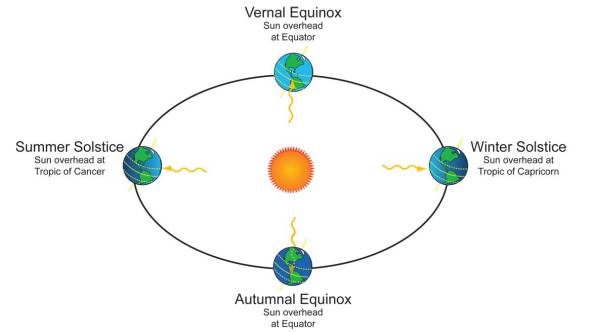
Ostara is the second of three spring festivals on the Wheel of the Year. Coming in between Imbolc and Beltane, this is a time for celebrating the balance between extremes that is found amid the seasons. Although it may still be chilly in many regions, this is the official beginning of Spring in the Northern Hemisphere—it is the Vernal (Spring) Equinox, the moment of exact balance between the light and the dark.

Though it’s typically celebrated on March 20, the exact moment of the Equinox varies from year to year. This is due to a slight misalignment between the Gregorian calendar and the actual rate of the Earth’s rotation around the Sun. The Equinox also occurs at differing local times, so depending on where you live, it may fall the day before or the day after the date listed on any given calendar. For this reason, a date range of March 19-21 is often cited in sources on the Wheel of the Year.

In the Wiccan mythology, the growing daylight is evidence of the God moving from infancy toward maturity. Likewise, the Earth becomes warmer and more fertile as the Goddess is coming into the full power of her Maiden aspect. The promise of greener, warmer, more bountiful times is becoming apparent as buds and blossoms emerge from the trees and shrubs, bees return to begin the pollination cycle, and fields of grass wake up from their winter slumber. This is a time of innocence and child-like wonder as the end of Winter finally becomes a reality and being outdoors is pleasant again. We have not yet arrived at the passion and heat of Summer, but are instead enjoying the more balanced energies of this Equinox.

To honor the energies of this time of year, you can decorate your altar Click here to read the rest of this article about Ostara/Spring Equinox

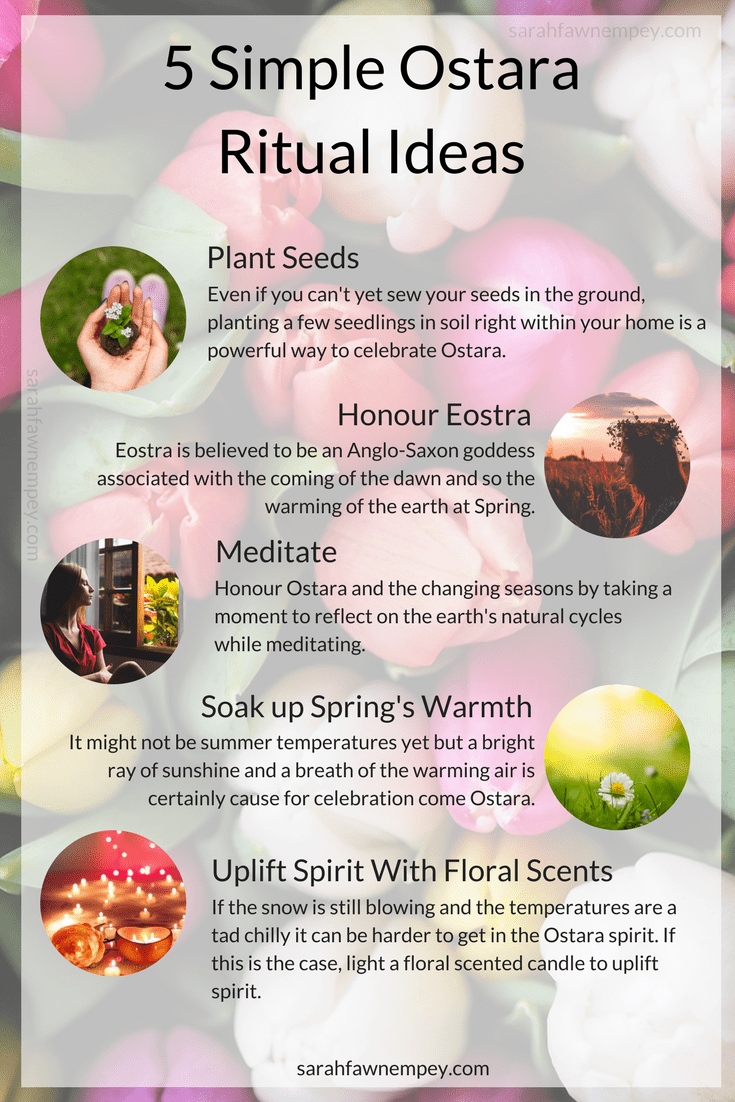
Spell for Today – 5 Simple Ostara Rituals

(YOU CAN COPY AND PASTE ANY SPELLS POSTED TO A DOCUMENT TO PRINT AND/OR SAVE ON YOUR COMPUTER)

Spell For Today – Ways to Honor Mabon c. 2017

(YOU CAN COPY AND PASTE ANY SPELLS POSTED TO A DOCUMENT TO PRINT AND/OR SAVE ON YOUR COMPUTER)

Some of the Witchcraft/Magickal Correspondence and Symbols For Ostara c.2022

(YOU CAN COPY AND PASTE ANY COROSPONDENCES POSTED TO A DOCUMENT TO PRINT AND/OR SAVE ON YOUR COMPUTER) 

Correspondences & Symbols of Ostara

Symbols used to represent Ostara include the egg-for fertility and reproduction, and the hare-for rebirth and resurrection, the New Moon, butterflies and cocoons. Symbolically, many Pagans choose to represent Ostara by the planting of seeds, potted plants, ringing bells, lighting new fires at sunrise, either in the fireplace, in the cauldron, or light a balefire outdoors. I always give myself a gift of a newly potted plant or take a seed and plant it within my cast Circle. Ritually, a fire may be lit in the cauldron during (not before) the rite itself. You may want to decorate your altar with a colorful bouquet of Spring wildflowers. Other traditional activities include working on magickal gardens and practicing all forms of  herbal work—magickal, artistic, medicinal, culinary, and cosmetic. author unknown

Ostara Deities: Eostre, the adolescent Spring Maiden, the adolescent Spring Lord, All Youthful and Virile Gods and Goddesses, Sun Gods, Mother Goddesses, Love Goddesses, Moon Gods and Goddesses, and all Fertility Deities including :Persephone, Blodeuwedd, Eostre, Aphrodite, Athena, Gaia, Cybele, Hera, Isis, Ishtar, Minerva, Venus, Robin of the Woods, the Green Man, Cernunnos, Lord of the Greenwood, The Dagda, Attis, The Great Horned God, Mithras, Odin, Thoth, Osiris, and Pan.

Symbolism of Ostara: Renewed promise of life, The Union of the Goddess and the God, Fertility, and dispensing of the old and making way for the new.Resurrection of life , The Season of Rebirth

Symbols of Ostara: Eggs, bunnies, new moon, butterflies, cocoons, dragons, flowers,trees.

Colors: lemon yellow, pale green and pale pink. Other appropriate colors include green, all pastels, Robin’s egg blue, violet, and white.

Ostara Foods: eggs, egg salad, hard-boiled eggs, honey cakes, first fruits of the season, fish, cakes, biscuits, cheeses, honey and ham. You may also include foods made of seeds, such as sunflower, pumpkin and sesame seeds, as well as pine nuts. Sprouts are equally appropriate, as are leafy, green vegetables.

Plants and Herbs: acorn, broom, celandine, cinquefoil, crocuses, daffodil, dandelion, dogwood, elder, ginger, Gorse, honeysuckle (woodbine), iris, jasmine, jonquils, irish moss, lavender, lemon balm, lilac, Lily, lily of the valley, lovage, marjoram, meadowsweet, narcissus, oak, oakmoss, olive, orris root, peony, rose, rose hips, sage, snowdrops, strawberry, tansy, tarragon, thyme, trefoil (purple clover), tulip, vervain, violet, willow, woodruff and all spring flowers.

Incense: jasmine, frankincense, myrrh, dragon’s blood, cinnamon, nutmeg, aloes wood, benzoin, musk, African violet, sage, strawberry, lotus, violet flowers, orange peel, or rose petals.

Gemstone: agate, amazonite, amethyst, aquamarine, bloodstone, clear quartz crystal, garnet, lapis lazuli, moonstone, red jasper and rose quartz.

Spellwork for Ostara: Spellwork for improving communication and group interaction are recommended, as well as fertility, balance and abundance

Animals and Mythical Beasts: rabbits,snakes,unicorns, merpeople, and pegasus

Candle Colors: Yellow and Green.

Tree: The Alder, a tree sacred to the God Bran, who is said to protect the British Isles. Trees are very
important to Witches, and indeed important to us all. They are the lungs of the Earth, purifying the very air we breathe as they shade us and protect us.

Straight from

Raven and Crone

March 20 and 21, 2024 Current Moon Phase for the Northern and Southern Hemispheres

You can use this link to go forward or backward in time for Moon phase information. If you are curious, you can even find out what phase the Moon was in when you or anyone else was born.

Source: MoonGiant.com

The 8 Lunar Phases

There are 8 lunar phases the Moon goes through in its 29.53 days lunar cycle. The 4 major Moon phases are Full Moon, New Moon, First Quarter and Last Quarter. Between these major phases, there are 4 minor ones: the Waxing Crescent, Waxing Gibbous, Waning Gibbous and Waning Crescent. For more info on the Moon Cycle and on each phase check out Wikipedia Lunar Phase page.

Useful Moon Resources

Check the weather before a night of Moon gazing at weather.com

For a list of all the current meteor showers visit American Meteor Society

Northern Hemisphere

March 20, 2024

Today the Moon will be in a Waxing Gibbous phase. Visible through most of the night sky setting a few hours before sunrise. This phase is when the moon is more than 50% illuminated but not yet a Full Moon. The phase lasts about 7 days with the moon becoming more illuminated each day until the Full MoonThis September Full Moon will be the forth and final supermoon of 2023.

During a Waxing Gibbous the moon rises in the east in mid-afternoon and is high in the eastern sky at sunset. The word Gibbous first appeared in the 14th century and has its roots in the Latin word “gibbosus” meaning humpbacked.

Visit the March 2024 Moon Phases Calendar to see all the daily moon phase for this month.

Today’s Waxing Gibbous Phase

The Waxing Gibbous on March 20 has an illumination of 81%. This is the percentage of the Moon illuminated by the Sun. The illumination is constantly changing and can vary up to 10% a day. On March 20 the Moon is 10.48 days old. This refers to how many days it has been since the last New Moon. It takes 29.53 days for the Moon to orbit the Earth and go through the lunar cycle of all 8 Moon phases.

Phase Details

Phase: Waxing Gibbous
Illumination: 81%
Moon Age: 10.48 days
Moon Angle: 0.50
Moon Distance: 400,035.49 km
Sun Angle: 0.54
Sun Distance: 149,029,640.75 km

Southern Hemisphere

21 March 2024

Today the Moon will be in a Waxing Gibbous phase. Visible through most of the night sky setting a few hours before sunrise. This phase is when the moon is more than 50% illuminated but not yet a Full Moon. The phase lasts about 7 days with the moon becoming more illuminated each day until the Full MoonThis September Full Moon will be the forth and final supermoon of 2023.

During a Waxing Gibbous the moon rises in the east in mid-afternoon and is high in the eastern sky at sunset. The word Gibbous first appeared in the 14th century and has its roots in the Latin word “gibbosus” meaning humpbacked.

Visit the March 2024 Moon Phases Calendar to see all the daily moon phase for this month.

Today’s Waxing Gibbous Phase

The Waxing Gibbous on March 21 has an illumination of 88%. This is the percentage of the Moon illuminated by the Sun. The illumination is constantly changing and can vary up to 10% a day. On March 21 the Moon is 11.38 days old. This refers to how many days it has been since the last New Moon. It takes 29.53 days for the Moon to orbit the Earth and go through the lunar cycle of all 8 Moon phases.

Phase Details

Phase: Waxing Gibbous
Illumination: 88%
Moon Age: 11.38 days
Moon Angle: 0.49
Moon Distance: 402,709.98 km
Sun Angle: 0.54
Sun Distance: 149,071,773.69 km

Happy and Blessed Ostara/ Spring Equinox

Who are the Harvest Gods and Goddesses? Archetypal meanings of Harvest deities.

Source: .triplemoonpsychotherapy.com

The practice of expressing gratitude for the harvest season and preparing for the onset of winter is a widespread and ancient tradition observed by cultures across the globe.

Festivals are held to celebrate the abundance of crops, offer thanks to Mother Earth, and bid farewell to Summer. Historically, mythologies worldwide have honored and revered various deities associated with the harvest and the Autumn Equinox. Although not a comprehensive account, this article briefly acknowledges some of the most prominent harvest and equinox deities from various cultures, listed alphabetically.

Autumnus, the Roman goddess of the Harvest

Autumnus, the fall season’s deity, embodies nature’s overflowing abundance during harvest. In addition, Autumnus is gender fluid, appearing in both male and female forms, which speaks to the inclusive and diverse nature of this season’s divine patron.

Banbha, the Celtic goddess and Earth Mother

Amidst the fall equinox celebrations, the Irish deity Banbha reigns supreme. As an Earth Mother, she presides over the culmination of the bountiful harvest. Banbha, much like the revered Greek goddess Gaia, is the protector and nurturer of all living beings and the land that sustains them.

Ceres, the Roman goddess of the Harvest, grain, and fertility

Ceres, the goddess of the harvest, was revered for her abundant generosity and for imparting essential knowledge to humanity.

In Greek mythology, she was known as Demeter. She was hailed as the deity who taught people the art of cultivating, preserving, and preparing grains and maize. Her divine powers were closely linked to the land’s fertility, and she was regarded as one of the most prominent guardians of the harvest.

Ceres’ influence and guidance ensured the earth’s bounty was always plentiful. Her legacy lives on as a symbol of abundance and fertility.

Çhicomecoatl, the Aztec goddess of abundance and corn

Çhicomecoatl, the goddess of fire and fertility, embodies vitalitycommunity, and plenty. She is revered in Mexico, particularly during the harvest season, as the guardian of corn and all fertile things. Her emblems are hot spices, maize, and fire, representing her power and providence over the land.

Corn Mother, the goddess of the Harvest of the Indigenous Peoples of North America

With her bountiful presence, the Corn Mother embodies the qualities of abundancevitality, and strength. Her powers of fertility and harvest are celebrated as she blesses the land with the promise of plentiful crops.

In addition to her agricultural emblems of corn and corn sheaves, she also holds the healing attributes of the earth, nurturing all who seek her aid.

Demeter, the Greek goddess of the Harvest and Agriculture

At the center of one of the most famous myths about the seasons and the Harvest lies Demeter, the goddess of grain and fertility and mother of Persephone.

When Hades, the god of the Underworld, abducted Persephone, Demeter’s anguish for her daughter resulted in a severe drought that threatened all life on Earth. With the crops perishing and humankind facing doom, Demeter embarked on a quest to rescue her daughter.

However, despite eventually reuniting with Persephone, now the goddess of the Underworld, fate demanded a sacrifice. Having consumed six pomegranate seeds, Persephone was bound to spend six months of the year in the Underworld, which begins with the Autumn Equinox when Persephone descends again into the depths.

Huichi, the Japanese goddess of the Harvest Click here to read the rest of this article

Ostara – Saxon Goddess Of Spring And Easter

Ostara

From goddessgift.com

Easter gets its name from the goddess Ostara, also known as Eastre. ​Ostara is a fertility goddess. Her annual arrival in spring is heralded by the flowering of trees and plants and the arrival of babies, both animal and human.

March 19 and 20, 2024 Current Moon Phase for the Northern and Southern Hemispheres

You can use this link to go forward or backward in time for Moon phase information. If you are curious, you can even find out what phase the Moon was in when you or anyone else was born.

Source: MoonGiant.com

The 8 Lunar Phases

There are 8 lunar phases the Moon goes through in its 29.53 days lunar cycle. The 4 major Moon phases are Full Moon, New Moon, First Quarter and Last Quarter. Between these major phases, there are 4 minor ones: the Waxing Crescent, Waxing Gibbous, Waning Gibbous and Waning Crescent. For more info on the Moon Cycle and on each phase check out Wikipedia Lunar Phase page.

Useful Moon Resources

Check the weather before a night of Moon gazing at weather.com

For a list of all the current meteor showers visit American Meteor Society

Northern Hemisphere

March 19, 2024

The Moon’s current phase for today and tonight is a Waxing Gibbous phase. Visible through most of the night sky setting a few hours before sunrise. This phase is when the moon is more than 50% illuminated but not yet a Full Moon. The phase lasts about 7 days with the moon becoming more illuminated each day until the Full MoonThis September Full Moon will be the forth and final supermoon of 2023.

During a Waxing Gibbous the moon rises in the east in mid-afternoon and is high in the eastern sky at sunset. The word Gibbous first appeared in the 14th century and has its roots in the Latin word “gibbosus” meaning humpbacked.

Visit the March 2024 Moon Phases Calendar to see all the daily moon phase for this month.

Today’s Waxing Gibbous Phase

The Waxing Gibbous on March 19 has an illumination of 72%. This is the percentage of the Moon illuminated by the Sun. The illumination is constantly changing and can vary up to 10% a day. On March 19 the Moon is 9.57 days old. This refers to how many days it has been since the last New Moon. It takes 29.53 days for the Moon to orbit the Earth and go through the lunar cycle of all 8 Moon phases.

Phase Details

Phase: Waxing Gibbous
Illumination: 72%
Moon Age: 9.57 days
Moon Angle: 0.50
Moon Distance: 396,579.64 km
Sun Angle: 0.54
Sun Distance: 148,987,665.57 km

Southern Hemisphere

20 March 2024

Tomorrow the Moon will be in a Waxing Gibbous phase. Visible through most of the night sky setting a few hours before sunrise. This phase is when the moon is more than 50% illuminated but not yet a Full Moon. The phase lasts about 7 days with the moon becoming more illuminated each day until the Full MoonThis September Full Moon will be the forth and final supermoon of 2023.

During a Waxing Gibbous the moon rises in the east in mid-afternoon and is high in the eastern sky at sunset. The word Gibbous first appeared in the 14th century and has its roots in the Latin word “gibbosus” meaning humpbacked.

Visit the March 2024 Moon Phases Calendar to see all the daily moon phase for this month.

Today’s Waxing Gibbous Phase

The Waxing Gibbous on March 20 has an illumination of 81%. This is the percentage of the Moon illuminated by the Sun. The illumination is constantly changing and can vary up to 10% a day. On March 20 the Moon is 10.48 days old. This refers to how many days it has been since the last New Moon. It takes 29.53 days for the Moon to orbit the Earth and go through the lunar cycle of all 8 Moon phases.

Phase Details

Phase: Waxing Gibbous
Illumination: 81%
Moon Age: 10.48 days
Moon Angle: 0.50
Moon Distance: 400,035.49 km
Sun Angle: 0.54
Sun Distance: 149,029,640.75 km

Ash Tree: February 18th – March 17th

Ash Tree: February 18th – March 17th

Ash Tree Buds

Source: tree2mydoor.com

  • Ogham Letter: Nion (N)
  • Symbolic Meaning: Master-ship, Growth, Power
  • Ruling Planet: The Sun & Neptune
  • Ruling Elements: Water & Fire
  • Season: Spring & Autumn
  • Corresponding Star Sign: Pisces / Aries

The third Lunar month is ruled by the Ash Tree. A large, relentless species that roots penetrate deep into the Earth. It’s strongly associated with the vertical link between otherworldly realms such as the underworld, middle earth, and the spiritual world. This gives it the status of the ‘World Tree’.

This tree that is linked to otherworldly realms is also medicinal, especially when it comes to treating childhood ailments. In Celtic Lore the tree is given the name of “Cradle of Life” and from it, remedies could be created that would cure children of their illnesses.

Part of the ash is used in protective rituals due to the energies believed to be held within the tree. Its leaves are thought to bring love and affluence.

Ash Tree Zodiac

Ash signs are empathetic, compassionate and very creative. They are in tune with nature and others around them and often look upon the world with an artistic perspective. They do well in careers of creativity. They constantly strive for self-growth and renewal they think freely without much care for what others may think of them. They are viewed as introverts but are often just immersed in their own world and people are intrigued with their enchanting personality.

Ash signs pair well with Willow and Reed signs.

Ash Tree Seeds

Source: learnreligions.com

In the Norse eddas, Yggdrasil, the world tree, was an Ash. The spear of Odin was made from the branch of this tree, which is also known by the Celtic name Nion, pronounced knee-un. This is one of three trees sacred to the Druids (Ash, Oak and Thorn), and this is a good month to do magic that focuses on the inner self. Associated with ocean rituals, magical potency, prophetic dreams and spiritual journeys, the Ash can be used for making magical (and mundane) tools — these are said to be more productive than tools made from other wood. If you place Ash berries in a cradle, it protects the child from being taken away as a changeling by mischievous Fae.

Ash Tree

Spell For Monday – Happiness Bottle Spell

(YOU CAN COPY AND PASTE ANY SPELLS POSTED TO A DOCUMENT TO PRINT AND/OR SAVE ON YOUR COMPUTER)

Happiness Bottle Spell

Ingredients:

Glass Vial or Jar (Buy Me!)

Pink Himalayan Sea Salt

Amethyst Chips

Pink Rose Petals (Buy Me!)

1 Olive Leaf

1 Small Peridot

Rose Oil

Gold Essence (optional)

Instructions:

  1. Tightly pack your glass vial or jar with the ingredients in any order that appeals to you, being sure to charge each ingredient for happiness as you add it to the bottle! How do you charge an item? Simply hold the item in your hands and visualize yourself at your absolute happiest, tell the item that you are charging it for happiness, and imagine it surrounded by pink light!
  2. After you’ve added all of the dry ingredients to the bottle, add a few drops of charged rose oil and a drop of the gold essence, which is an optional energy super charger.
  3. Close your bottle and charge the bottle for happiness! You can set parameters on the bottle by visualizing and saying those parameters aloud. We charged ours for happiness within 7 feet of the bottle, because I keep mine in my purse around my desk at work!
  4. Keep your bottle on you or in the space that could use a little happiness!
  5. Be happy!