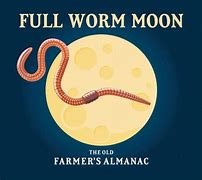
The March full Moon has one of the most unexpected names—the “Worm Moon.” Full Moon names often showcase seasonal highlights, such as May’s “Flower Moon” or September’s “Harvest Moon” or even animals common to each season, such as July’s “Buck Moon” or August’s “Sturgeon Moon.” But worms? Why do these invertebrates matter so much in March?
March 2025 Full Moon: Friday, March 14
Peak Illumination: 2:55 A.M. EDT
Why Is The March Full Moon The “Worm” Moon?
The “Worm Moon” got its name because in March the soil begins to warm and the very first signs of life begin to return as earthworms, beetle larvae, and grubs emerge from their winter dormancy. These invertebrates are some of the very earliest spring food sources for birds and animals, including bears, skunks, and other animals emerging from hibernation. The castings (vermicasts, waste from earthworms) left behind enrich the soil and make it possible to begin planting and gardening after winter’s end.
More March Moon Names
March has a wide variety of names for the full Moon because there are many different things happening as winter ends and spring begins. Names vary depending on their origins from ancient cultures or Native American tribes, regional climates, geography, and even individual dialects.
Many northern cultures have end-of-winter names for the March full Moon, such as the “Snow Crust Moon” or “Hard Crust on the Snow Moon” from the Ojibwe and Chippewa tribes near the Great Lakes. During March, deep snow thaws during warm days but refreezes during cold nights, creating a brittle crust on top of the snow.
Another late-winter name for the March full Moon is the “Sore Eye Moon.” This is common among several Native American peoples, including the Sioux, Lakota, and Assiniboine of the Great Plains, northern plains, and Dakotas. In these areas, bright sunlight of the late winter and early spring reflects off remaining snow, creating snow blindness or eye soreness.
As the weather shifts into early spring, strong winds are common as air temperatures rise. The Choctaw and Cherokee of the southeastern US, as well as the Catawba of South Carolina, call the March full Moon… Click here to read the rest of this article Source:.farmersalmanac.com



 Witches Of The Craft®
You must be logged in to post a comment.