From thoughtcatalog.com

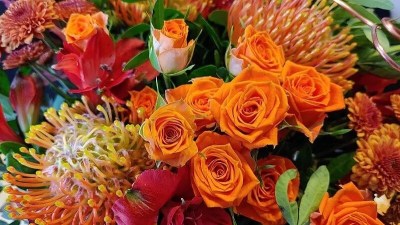
Orange flower symbolism and meanings include healing and well-being, energy, vitality, enthusiasm, balance, fun, pleasure, and more. In this post, we’ll explore the symbolism and meaning of orange flowers as well as occasions in which to give them.
Before we go into more detail on the symbolic meaning of orange flowers, I thought you’d be interested in seeing a list of some of the kinds of flowers that come in orange or mainly orange hues. There is a wide variety. Here are some:
Calendula
Carnation
Chrysanthemum
Dahlia
Geranium
Marigold
Nasturtium
Tulip
Blending the deep passion and energy of red with the sunny warmth of yellow, the color orange can represent many things. So, orange flowers present a range of opportunities in which to give them as gifts or reasons to plant them in your garden.
For me this thought goes with my daily mantra or affirmation,
I have been trying to do some deep cleaning our home and lost track of time today besides pitting myself in a lot of pain from over doing it. This is why no posts went up this afternoon. All the posts will be up tomorrow.
Planet – Venus
Spells/Magic – love, friendship, socialising, affection, harmony, relationships, reconciliation, beauty, romance.
Magical aspects: love, friendship, reconciliation, beauty
Oils – African Violet, Cherry, Lilac, Rose ,Opium Poppy, Patchouly,
Plants and Trees – adler tree,daisy,apple tree,aster,birch tree,blackberry,catnip,cherry tree,crocus,elderberry,feverfew,foxglove,geranium,goldenrod,hollyhock,lady`s mantel,lilac,mugwort,plumtree,rose,spiderwort,strawberry,tansy,thyme,vanilla,violet, yarrow, pansy.
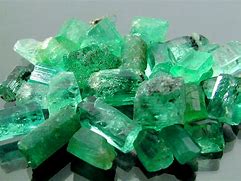
Stones – Emerald, jade, malachite, rose quartz, torquoise
Colours – green, pink, white, rose, coral.
Metal – Coper
Energy Type – Female
Dieties – Friday takes its name from Frigga, the Goddess of Love and Transformation. She rules the spiritual aspects of people as they manifest on the physical. because of this, Friday is sometimes thought of as unpredictable.
Friday is the best time to deal with such matters as: Romantic Love, Friendship, Beauty, Soul-mates, Artistic Ability, Affection, Partners, Alliances, Grace, Luxury, Social Activity, Marriage, Decorating, Cosmetics, Gifts, Income, Gardening, Architects, Artists, Beauticians, Chiropractors, Dancers, Designers, Engineers, Entertainers, Fashion, Music, Painting, Poetry, Courtship, Dating, Household Improvements, Planning Parties, Shopping, Herbal Magick, Luck, Fertility, Physical Healing, Balance, Prosperity, Courage, Change, Material Things, Peace, Harmony, Relationships and Success.
Actual fairy cakes are about the size of raspberries [All L. B. side notes appear in [ ]. My granddaughter and I collected larger sized acorn tops (these are used a dishes by Fae Folk) and then bake about 8 fairy size cakes in those. Baking time varies so check them after about 5-7 minutes to see if they are done]. Since it is hard to find baking pans that small, you can bake them in a muffin tin.
INGREDIENTS
500 mL flour 2 cups
10mL Baking Powder 2 teaspoons
5mL Salt 1 teaspoon
175 mL [stick] Butter 3/4 cup
375mL White Sugar 1 1/2 cups
3 Eggs 3
5mL Vanilla 1 teaspoon
325 ml Milk 1/13 cup [L.B. Side Note: I found Whole Milk works the best but 2% or Skim will work also]
Copyright 1999 Penelope Larkspur The Secret Life of Fairies
Venus/Water/East/West/South/Dawn/Female/Libra/Taurus
Magickal Intentions: Love, Romance, Marriage, Sexual Matters, Physical Beauty, Friendship and Partnerships, Strangers, Heart
Color: aqua, blue, light blue, brown, green, pale green, magenta, peach, pink, rose, white, all pastels
Number: 5, 6
Metal: copper
Charm: green or white garments, scepter
Stone: alexandrite, amethyst, coral, diamond, emerald, jade, jet, black moonstone, peridot, smoky quartz, tiger’s-eye, pink tourmaline
Animal: camel, dove, elephant, goat, horse, pigeon, sparrow
Plant: apple, birch, cherry, clematis, clove, coriander, heather, hemlock, hibiscus, ivy, lotus, moss, myrtle, oats, pepperwort, peppermint, pinecone, quince, raspberry, rose, pink rose, red rose, rose hips, saffron, sage, savin, stephanotis, strawberry, thyme, vanilla, verbena, violet, water lily, yarrow, and all flowers
Incense: ambergris, camphor, mace, musk, myrrh, rose, saffron, sage, sandalwood, sweetgrass, vanilla, violet, all floral scents
Goddess: Aphrodite, Asherah, Baalith, Brigid, Erzulie, Freya (Passionate Queen), Frigg, Gefion, Harbor (Beautiful One), Hestia, Inanna, Ishtar (Lady of Passion and Desire), Lakshmi, Lilith, Mokosh, Nehalennia, Nerthus, Ostara, Pombagira, Sarasvati, Shakti, Shekinah, Sirtur, Al Uzza, Venus (Queen of Pleasure), Vesta
God: Allah, Bacchus, Bes, Cupid, the Dagda, Dionysus, El, Eros (God of Love), Freyr, Frit Ailek, Shukra
Evocation: Agrat Bat Mahalat, Anael, Hagiel, Mokosba, Rasbid, Sachiel, Uriel, Velas
Courtesy of Moonlight Musings
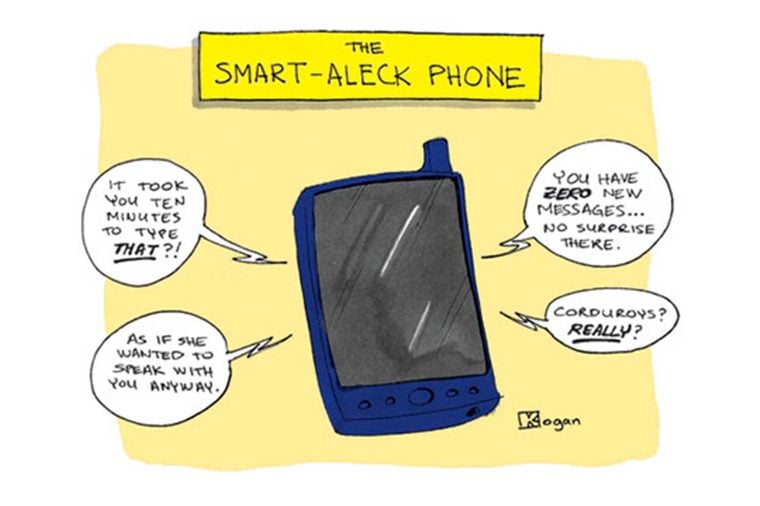
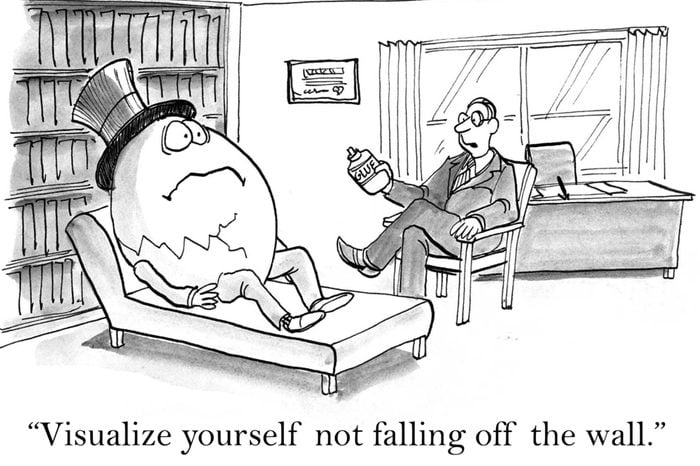
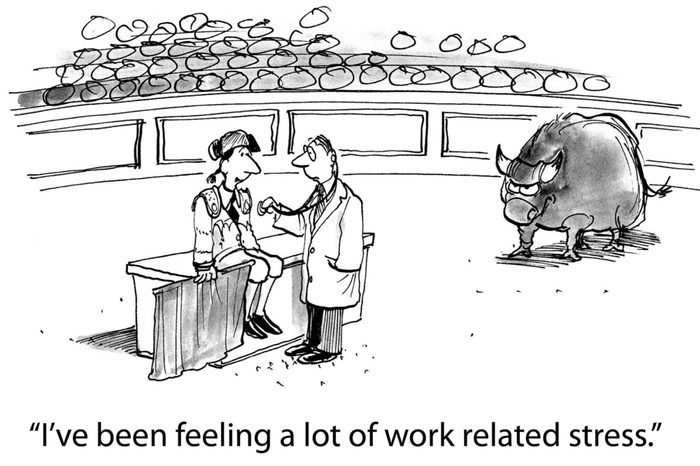
Dealing with anxiety in your everyday life is a rollercoaster of emotions, but something that can help people get through it is knowing that others feel the same way. These anxiety cartoons will make you feel like you’re not alone and will also get you laughing. If you want even more laughs, check out these medical cartoons, animal cartoons, and some of the funniest memes.


Rules: Expansion, wealth, prosperity, political power, legal matters, spirituality, meditation.
Colors: Purple, Deep Blue
Planet: Jupiter
Metal: Tin, associated with the thunderbolt of Jupiter (Zeus in Greek myth)
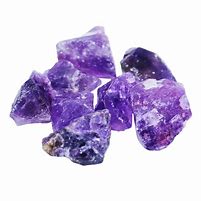
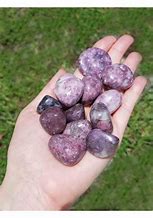
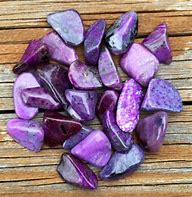
Stones: Amethyst, Lepidolite, Sugilite
Herbs: Anise, Cinquefoil, Clove, Honeysuckle, Hyssop, Maple, Nutmeg, Oakmoss, Sage, Sarsaparilla, Sassafras, Star Anise
Zodiac: Sagittarius
Planet: Jupiter
Element: Earth
Gender: Masculine
Deities: Juno, Jupiter, Thor, Zeus
Colors: Blue, Green, Purple, Rich Royal Colors
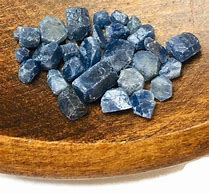
Crystals: Aventurine, Amethyst, Brown Jasper, Green Lodestone, Green Tourmaline, Lapis Lazuli, Malachite, Peridot, Tin, Turquoise
Herbs & Plants: Anise, Borage, Cinquefoil, Clove, Dandelion, Dill, Fig, Honeysuckle, Hyssop, Maple, Meadowsweet, Mint, Nutmeg, Oak, Patchouli, Sage, Star Anise
Incenses: Cinnamon, Clove, Jupiter Oil, Musk, Nutmeg, Oakmoss, Patchouli, Sage
Energies & Associations: Abundance, Career, Employment, Energetic Increase, Expansion, Generosity, Growth, Happiness, Healing, Harvesting, Honest Leadership, Honor, Leadership, Legal Matters, Loyalty, Luck, Male Fertility, Material Opportunities, Money, Optimism, Power, Prosperity, Protection, Riches, Wealth
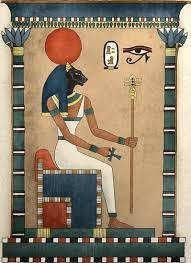
In Egyptian mythology, Bast (also spelled Ubasti, Baset, and later Bastet) is an ancient solar and war goddess, worshipped at least since the Second Dynasty. In the late dynasties, the priests of Amun began to call her Bastet, a repetitive and diminutive form after her role in the pantheon became diminished as Sekhmet, a similar lioness war deity, became more dominant in the unified culture of Lower and Upper Egypt. In the Middle Kingdom, the cat appeared as Bastet’s sacred animal and after the New Kingdom she was depicted with a woman with a cat’s head carrying a sacred rattle and a box or basket.
Bast or Bastet was the cat goddess and local deity of the town of Bubastis or Per-Bast in Egyptian, where her cult was centered. Bubastis was named after her. Originally she was viewed as the protector goddess of Lower Egypt, and consequently depicted as a fierce lioness. Indeed, her name means (female) devourer. As protector, she was seen as defender of the pharaoh, and consequently of the later chief male deity, Ra, who was a solar deity also, gaining her the titles Lady of Flame and Eye of Ra.
The goddess Bast was sometimes depicted holding a ceremonial sistrum in one hand and an aegis in the other – the aegis usually resembling a collar or gorget embellished with a lioness head.
Bast was a goddess of the sun throughout most of Ancient Egyptian history, but later when she was changed into a cat goddess rather than a lion, she was changed to a goddess of the moon by Greeks occupying Ancient Egypt toward the end of its civilization. In Greek mythology, Bast is also known as Aelurus.
History and Connection to Other HodsDue to the threat to the food supply that could be caused by simple vermin such as mice and rats, and their ability to fight and kill snakes, especially cobras, cats in Egypt were revered highly, sometimes being given golden jewellery to wear and were allowed to eat from the same plates as their owners. Consequently, later as the main cat (rather than lioness) deity, Bastet was strongly revered as the patron of cats, and thus it was in the temple at Per-Bast that cats were buried and mummified.
When the owner died they would put the owner next to the mummified cat. More than 300,000 mummified cats were discovered when Bast’s temple at Per-Bast was excavated. Herodotus writes that when a cat in the family dies, Egyptians shaved their eyebrows and took the body to Bubastis to be embalmed.
As a cat or lioness war goddess, and protector of the lands, when, during the New Kingdom, the fierce lion god Maahes of Nubia became part of Egyptian mythology, she was identified, in the Lower Kingdom, as his mother. This paralleled the identification of the fierce lioness war goddess Sekhmet, as his mother in the Upper Kingdom.
As divine mother, and more especially as protector, for Lower Egypt, she became strongly associated with Wadjet, the patron goddess of Lower Egypt, eventually becoming Wadjet-Bast, paralleling the similar pair of patron (Nekhbet) and lioness protector (Sekhmet) for Upper Egypt. Bastet was the daughter of Amun Ra.
Later PerceptionLater scribes sometimes renamed her Bastet, a variation on Bast consisting of an additional feminine suffix to the one already present, thought to have been added to emphasize pronunciation; but perhaps it is a diminutive name applied as she receded in the ascendancy of Sekhmet in the Egyptian pantheon. Since Bastet literally meant, (female) of the ointment jar, Bast gradually became regarded as the goddess of perfumes, earning the title perfumed protector. In connection with this, when Anubis became the god of embalming, Bast, as goddess of ointment, came to be regarded as his wife. The association of Bastet as mother of Anubis, was broken years later when Anubis became Nephthys’ son.
Egypt’s loss in the wars between Upper and Lower Egypt led to a decrease in her ferocity. Thus, by the Middle Kingdom she came to be regarded as a domestic cat rather than a lioness. Occasionally, however, she was depicted holding a lioness mask, hinting at potential ferocity. Because domestic cats tend to be tender and protective of their offspring, Bast was also regarded as a good mother, and she was sometimes depicted with numerous kittens. Consequently, a woman who wanted children sometimes wore an amulet showing the goddess with kittens, the number of which indicated her own desired number of children.
Eventually, her position as patron and protector of Lower Egypt led to her being identified with the more substantial goddess Mut, whose cult had risen to power with that of Amun, and eventually being syncretized with her as Mut-Wadjet-Bast. Shortly after, Mut also absorbed the identities of the Sekhmet-Nekhbet pairing as well.
This merging of identities of similar goddesses has led to considerable confusion, leading to some attributing to Bastet the title Mistress of the Sistrum (more properly belonging to Hathor, who had become thought of as an aspect of the later emerging Isis, as had Mut), and the Greek idea of her as a lunar goddess (more properly an attribute of Mut) rather than the solar deity she was. Indeed, much of this confusion occurred with subsequent generations; the identities slowly merged among the Greeks during their occupation of Egypt, who sometimes named her Ailuros (Greek for cat), thinking of Bastet as a version of Artemis, their own moon goddess.Thus, to fit their own cosmology, to the Greeks Bastet is thought of as the sister of Horus, whom they identified as Apollo (Artemis’ brother), and consequently, the daughter of the later emerging deities, Isis and Ra.
The worship of the Goddess Bast continues today through Khemetic reconstructionalist religions, there are several ‘Bast Cults’ some of which may be found online and as such, technically, predates most Religions. In current day it is very common for Bast to be seen as a fertility goddess or even a goddess of lesbianism, despite the fact that research on her actual functions within the Egyptian pantheon is so very easy.
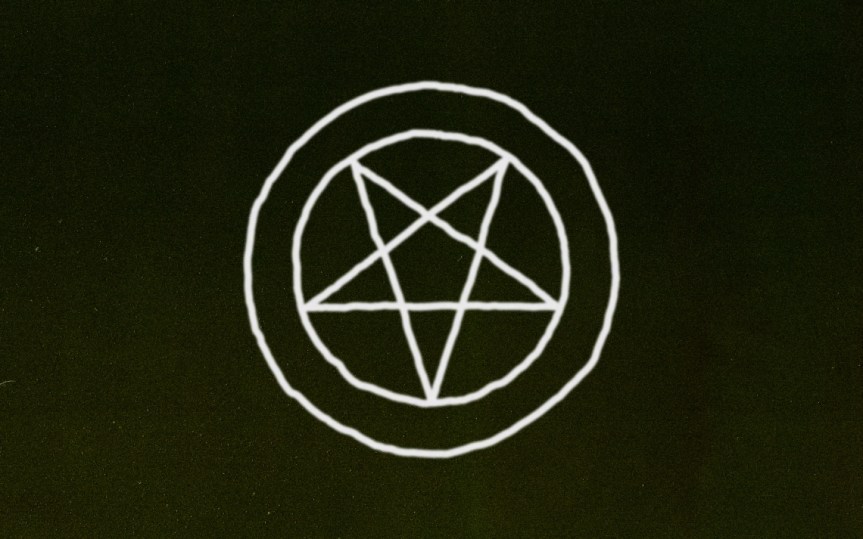
A pentagram (or pentacle) is a circled five-pointed star that most people associate with witchcraft or satanism. Far from being an evil symbol the pentagram represents protection, the self, or the spirit. The five points of the pentagram represent five basic elements: earth, air, fire, water and spirit.
Represents: the elements.
Used in rituals for: protection.



When there’s a nip in the air, the days start getting shorter and snow begins to fall, you know that winter is here. And whether you like it or not, it’s here to stay for a while. But even though the brisk weather means spending more time inside, there are also some perks: having snowball fights, building snowmen and snuggling up with loved ones in front of the fire. Even better? Those chilly moments can also serve as the inspiration for some hilarious winter jokes!
These seasonal jokes are great to include in cards along with a winter quote, to send via text or to entertain a crowd IRL. Whether you’re looking for short jokes, bad jokes or short jokes for kids, this list of sidesplitting winter jokes is perfect for the whole family and will keep you as warm as a nice cup of hot chocolate.
1. How do snowmen read their texts?
With an icy stare.
2. What kind of ball doesn’t bounce?
A snowball.
3. What bites but doesn’t have teeth?
Frost.
4. What do you get when you mix a snowman with a vampire?
Frostbite.
5. What do you call a penguin in the Sahara Desert?
Lost.
6. What do you call a snowman in August?
A puddle.
7. Where do snowmen love to dance?
At a snowball.
8. What do you call a slow skier?
A slope-poke!
9. What do snowmen eat for lunch?
Iceburgers.
10. What do snowmen win at the Olympics?
Cold medals!
11. Which one is faster: hot or cold?
Hot. You can catch a cold.
12. Where do snowmen put their money?
In snow banks.
13. How do snowmen buy birthday presents?
With cold, hard cash.
14. What did the tree say after a long winter?
What a re-leaf!
15. What does Frosty’s mom put on her face at night?
Cold cream.
16. What do you sing at a snowman’s birthday party?
“Freeze a Jolly Good Fellow!”
17. Why did the girl keep her trumpet out in the snow?
She liked playing cool jazz.
18. What do you call a snowman’s temper tantrum?
A meltdown.
19. How do snowmen get information?
They search on the winter-net.
20. How do polar bears make their beds?
With sheets of ice and blankets of snow.
21. Why did the two snowmen divorce?
One thought the other was a flake.
22. What do snow parents call their kids?
Chill-dren.
23. What do you call it when a snowman ignores you?
The cold shoulder.
24. Why don’t you see penguins in Britain?
They’re afraid of Wales.
25. Which side of a polar bear has the most fur?
The outside.
26. How does a penguin build a house?
Igloos it together.
27. What do you call a snowman on rollerblades?
A snowmobile.
28. As I grow, I come closer to the ground. What am I?
An icicle.
29. If a winter fox lost his tail, where would you go to buy him a new one?
A retail store.
30. Why did the bear keep getting fired?
He always disappeared in the winter.
 ,
,
 Witches Of The Craft®
You must be logged in to post a comment.