Witchcraft Symbols, Terms and Definitions – Deosil

Today’s Word is 

Deosil 

Pagan & Magickal Terms and Definitions

From moonlitpriestess.com

Some terms listed on this page may seem like common-sense words; however, they’re defined here as most often used in Wicca, Witchcraft, and general Paganism. Some terms have a different meaning in general society, other religions, and other sub-cultures.

Please keep this in mind when learning the terms as they’re listed here.

Did you come across a term on this site or another Wiccan/Pagan source that you’re unfamiliar with or uncertain of and can’t find it on this page? Please send us a message so we can add it to this page for you!

If you already know what term you’re looking for, you can use Ctrl-F (Windows) or Cmd-F (Mac) to search. Likewise, if you’re using a tablet or smartphone, you may use your browser’s “Find” setting to search this page.

Deosil 

(jezz-il): sun-wise movement (clockwise in the Northern Hemisphere); movement associated with positive (in terms of building, increasing, etc.) magick in Wiccan traditions. [Note: A misspelling of the word “deasil”.]

Witch Vocabulary: A List of 60+ Pagan Words and Terms

From Spells8.com

Deosil

The clockwise motion of directing energy during a spell or ritual. This can be done with your hand, a wand, a knife, etc.

Magick Symbols – ELEMENTS c. 2018

ELEMENTS

The four basic elements to many pagans are earth, water, air (wind or spirit) and fire. Many consider the first two passive and feminine—and the last two active and masculine. In Wiccan or Native American rituals, the “quartered circle” (similar to the Medicine Wheel) represents a “sacred space” or the sacred earth. The four lines may represent the spirits of the four primary directions or the spirits of the earth, water, wind and fire.

Witchcraft Symbols, Terms and Definitions – Rabbit

Rabbits

What Do Rabbits Symbolize? Rabbit Symbolism Meaning from rabbitcaretips.com

Rabbits are one of the most popular pets. However, rabbits have been a part of lives, cultures, and religious practices for much longer than they have been considered pets. Historically speaking, rabbits hold a great deal of symbolic meaning. This can guide dreams, art, and even traditional dress.

Rabbits almost always symbolize prosperity, abundance, good luck, and fertility. Unlike many other animals, which have different meanings in different cultures, rabbit symbolism is consistent. In most European cultures, rabbits are springtime animals, symbolic of fruitfulness and renewal. The connection between rabbits and spring is also found in Japanese culture. In the U.S., rabbits are symbolic of cleverness, devotion to self-improvement, and good luck.

There are some cultures that see rabbits differently, however. While rabbits are the luckiest of the Zodiac animals in China, they are primarily seen as trickster animals by Native American cultures. Furthermore, while many Central American peoples see rabbits as symbols of fertility, Aztec mythology associates rabbits with drunkenness and promiscuity.

Contents

Witchcraft Symbols, Terms and Definitions

Some terms listed on this page may seem like common-sense words; however, they’re defined here as most often used in Wicca, Witchcraft, and general Paganism. Some terms have a different meaning in general society, other religions, and other sub-cultures.

Please keep this in mind when learning the terms as they’re listed here.

Did you come across a term on this site or another Wiccan/Pagan source that you’re unfamiliar with or uncertain of and can’t find it on this page? Please send us a message so we can add it to this page for you!

If you already know what term you’re looking for, you can use Ctrl-F (Windows) or Cmd-F (Mac) to search. Likewise, if you’re using a tablet or smartphone, you may use your browser’s “Find” setting to search this page.

Today’s Word is

Absolute:

concentrated, highly aromatic mixture similar to essential oils.

Witchcraft Symbols, Terms and Definitions – Ouroboros

From symbolsandmeanings.net

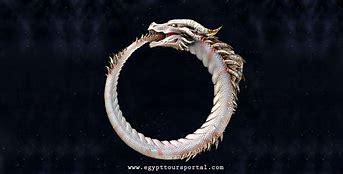
Rich with cultural significance and religious meaning, the ouroboros symbol embodies rebirth, eternity, self-reliance, immortality, and nature’s cyclic character. Commonly known as “the snake eating itself”, the ouroboros is among the most prominent ancient symbols found in the history of different cultures, religions and civilizations.

One surely does wonder how a single symbol managed to endure the test of time and make its mark on so many civilizations and cultural beliefs.

Let us get right into it and have a closer look at its meaning, symbolism, origin and uses throughout history.

Ancient Egyptian Tombs: The First Appearance of The Ouroboros Symbol

The ouroboros first appeared on a golden shrine in King Tut’s (Tutankhamen) tomb in Egypt in the 13th century BC. The tombs featured two ouroboroi engraved on the gilded shrine along with some strange text. These ouroboroi appeared as serpents wrapped around the head and feet of a mummified figure, which is believed to have been King Tut himself, or the sun god Ra, or perhaps an amalgamation of both.

According to expert Egyptologists, the symbol was to “refer to the mystery of cyclical time, which flows back to itself”. Since the ancient Egyptians saw time as repetitive, constantly evolving cycles instead of a linear path, the ouroboros represented the immortality of human beings and its interconnection to nature’s cycles.

Ouroboros Meaning and Symbolism

The ouroboros symbol has appeared on temples, ancient artifacts, tombs, and artwork throughout history. Pronounced as ‘oo.ruh.bo.ruhs’, this symbol represents how everything in this universe is interconnected, going back to nature and becoming one with it once again after death. The unbroken circle of the snake eating itself represents universal unity, rebirth, and renewal through death.

The term ouroboros is derived from two ancient Greek words – ‘oura’ and ‘boros’. ‘Oura’ refers to tail while ‘boros’ means eating. When we combine the two words, it results in the meaning ‘he that eats his own tail’ or even just simply ‘tail eater’.

Believed to be based on serpents shedding their skin to make place for a new one, the ouroboros is an ancient symbol of eternal life and infinite growth. Although historians are unsure of the exact origins of the ouroboros symbol, it is believed to be inspired by snakes, serpents, and lizards that curl up to protect themselves.

With numerous different interpretations, some claim it represents the cycle of life and death, with the universe remaining central to it all. Others believe it represents the recreation of life through death or even the rebirth of the dead to reach an immortal state.

Snake Eating Itself: Association with Ancient Mythology and Civilizations

Being one of the most popular ancient symbols, the ouroboros has appeared throughout history in different ancient civilizations and cultures. Like the ever-rising sun, this symbol is believed to have gone through its own journey from Egypt to the ancient Greek alchemists and eventually making its way to the modern era.

After being featured predominantly in Egyptian civilization, the ouroboros slithered out to ancient Greek mythology through the Phoenician culture, where it received a new representation.

Greek Philosophy

For Plato, the ouroboros represented self-reliance and showed a perfect being that needed nothing but itself. He further believed the symbol showed a dark side with self-destruction and the tendency to devour itself.

Historians also draw a parallel between the ouroboros and the Greek myth about Sisyphus. According to the myth, Zeus punishes Sisyphus by making him roll a boulder up a hill. As soon as he gets to the top, the boulder inevitably falls back down, and he has to roll it up once again.

Ancient Romans

The ouroboros symbolized infinity for the Romans. They also associated the symbol with the god Saturn who controlled the cycles of each year. Roman philosophy states that Saturn connected each year to the next, forming an endless loop that is depicted by the snake eating its own tail.

Norse Mythology: Manuscripts and Jörmungandr

Vikings told stories of a giant serpent called Jörmungandr, who guarded Midgard (their name for Earth). Jörmungandr was one of Loki’s three children and was thrown into the great ocean by Odin.

There, he grew into a size so big that he could eventually encircle the whole world to reach and devour his own tail. It was said that if the World Serpent, or Jörmungandr, released his tail, Ragnarok would begin. The World Serpent was closely associated with the ouroboros symbol.

Ouroboros Symbol in the Modern World: Becoming The Infinity Symbol

In recent times, the ouroboros has undergone significant reinterpretation to become the infinity symbol. This concept was initiated in the 20th century with Mobius strips, the Droste Effect, and numerous paintings depicting the symbol reproducing itself. It is commonly worn as bracelets, rings, and even tattooed on the body to serve as a constant reminder of life’s cyclic journey.

An early 20th-century psychotherapist, Carl Jung, saw the ouroboros as a symbol of the human psyche. Jung had studied the symbol in alchemy and claimed that it represented the human ability to regenerate through self-reflection, just as a serpent sheds off old skin to become anew.

He justified it through a perspective that believed humans can only become whole after integrating our conscious selves with our shadow selves.

Moreover, the ouroboros often appears in the field of cybernetics, the study of feedback loops and circular causality. Cybernetics is based on the theory that inputs create certain outputs, which are then used as inputs for further outcomes – completing the circle.

Mathematicians and philosophers both appreciate the symbol similarly, applying the cybernetics theory to justify concepts in psychology, biology, computer science, and even engineering.

Outside of the research and STEM fields, people use the ouroboros symbol to represent the constant flow of creation, symbol of destruction, and recreation that makes our world come to a full circle. It instills the belief that every part of life is connected, with joy following sorrow and failure, eventually leading to success.

We may be worlds apart from the early Egyptian civilizations and the alchemists that ran experiments in their shabby workshops, but the ouroboros continues to light our paths with wisdom.

The Snake Eating Itself, Ouroboros Tattoo Meaning

Ouroboros tattoo meaning may differ according to the shape and form of the symbol drawn. It is a rebirth symbol, that is why a person who has overcome difficulties and troubles recently might want to have an ouroboros tattoo.

On the other end, it is also the symbol of infinity, so the person carrying an ouroboros tattoo might have had it to represent something that is ‘eternal’ for them.

In that sense, when seen next to a date, an ouroboros tattoo represents the idea that something that happened on that date is eternal, e.g. getting married or meeting someone special.

And if you believe in reincarnation, an ouroboros ink is obviously just the perfect choice for you.

Did you know that this ancient symbol heavily inspired similar artwork that appeared in the immensely popular Fullmetal Alchemist Brotherhood series with many symbols created by brilliant Japanese artist Hiromu Arakawa?

This wraps up our piece on the ouroboros symbol,  the snake eating itself, its origins, symbolism and meanings.

Happy Witchy Wednesday WOTC Family and Friends – Charge of the Goddess – Part 2

(I am trying something new today to see if you like it or not. Instead of a short thing for “A Thought for Today” I decided to bring you something with a little more background on a piece of poetry and how it came about. Let me know in the comments if you like to see more of this type of post please. Thank you for your help!)

The Sources of the Charge of the Goddess

(Warning this a very informative but long article. You will find a link at the bottom of this post to read the entire thing if you wish to)

The Charge of the Goddess is the closest thing to scripture that Wicca possesses. Like scripture, it is used in rituals and to support beliefs. And like scripture, its origins are obscure.

The Charge itself claims to be the words of the Goddess, beginning “Listen to the words of the Great Mother.” When Gerald Gardner first published an excerpt from it in Witchcraft Today (1954, p. 42), he claimed it came from the Roman era . He also speculated that “a similar charge was a feature of the ancient mysteries.”

Fairly early, however, the age and origin of the Charge was questioned. Stewart Farrar, in 1971 (p. 34), pointed out that a large part of it was quoted from Charles Godfrey Leland’s Aradia. Since then more work has been done in ferreting out the Charge’s sources, especially in Farrar and Farrar (1981, p. 42) and Kelly (1991, pp. 52 – 4, 114 – 5). The purpose of this essay will be to gather this work together, add more sources to it, and then analyze the relative contributions of the authors of the Charge.

The earliest form of the Charge (given by Kelly, 1991, p. 53), was a prose version put together by Gerald Gardner, called “Leviter Veslis” (“The Lifting of the Veil”). It consists mainly of the Leland material with large quotations from Aleister Crowley added, along with very small amount of original material. Kelly dates this version to before 1948. According to Doreen Valiente’s own account (1989, 60 – 62), some time after her initiation in 1953 she wrote first a rhyming version, and then the prose version used by most Wiccans. The first prose and the rhyming versions may be found in Kelly (p. 53) and Valiente (pp. 61-2), respectively. The first prose version reads:

Listen to the words of the Great mother, who of old was also called among men Artemis, Astarte, Dione, Melusine, Aphrodite, and by many other names.

“At mine Altars the youth of Lacedaemon in Sparta made due sacrifice.

[Whenever ye have need of anything, once in the month, and better it be when the moon is full, then ye shall assemble in some secret place and adore the spirit of Me who am Queen of all Witcheries.]

[“There ye shall assemble, ye who are fain to learn all sorcery, yet have not won its deepest secrets. To these will I teach things that are yet unknown.]

[“And ye shall be free from slavery, and as a sign that ye be really free, ye shall be naked in your rites, both men and women, and ye shall dance, sing, feast, make music, and love, all in my praise.]

For ecstasy is mine, and joy on earth. For ‘love is my law.’ Keep pure your highest ideal: strive ever toward it. Let naught stop you or turn you aside.

{There is a Secret Door that I have made to establish the way} to taste even on earth the elixir of immortality.}

Say {‘let ecstasy be mine, and joy on earth even to me, To Me} For I am a gracious Goddess. {I give unimaginable joys on earth, certainty, not faith, while in life! And upon death, peace unutterable, rest, and ecstacy, nor do I demand aught in sacrifice.”}

Hear ye the words of the {Star Goddesss}.

{“I love you: I yearn for you: pale or purple, veiled or voluptuous.}

{“I who am all pleasure, and purple and drunkenness of the innermost senses, desire you, put on the wings, arouse the coiled splendor within you, ‘Come unto me.’}

{“For I am the flame that burns in the heart of every man, and the core of every Star.}

“Let it be your inmost divine self who art lost in the constant rapture of infinite joy.

{“Let the rituals be rightly performed with joy and beauty.} Remember that all acts of love and pleasure are my rituals. So let there be {beauty and strength, leaping laughter, force and fire} within you.

(“And if thou sayest, I have journeyed unto thee, and it availed me not, Rather shalt thou say, ‘I called upon thee, and I waited patiently, and Lo, Thou wast with me from the beginning,’

For they that ever desired me, shall ever attain me, even to the end of desire.)

(The text is as published in Kelly, with corrections from Kelly, unpublished manuscript.)

The words within square brackets ([ ]) are from Leland, those within brackets ({ }) are from Aleister Crowley’s Book of the Law, and those within parentheses (( )) are from Crowley’s Liber LXV,. The passages in italics are found in Crowley’s essay “The Law of Liberty.”

The line “Hear ye the words of the Star Goddess” is not exactly the same as the line from The Law of Liberty, which reads “We have heard the voice of the Star Goddess.” However, the line in The Law of Liberty is followed by the same material as is found here, so we can be confident that that is its source. The first thing that should be noticed is how little of this version cannot be traced to published sources. Except for the introduction, this version is essentially quotations linked with a small number of connecting phrases.

The large number of quotations from “The Law of Liberty” illustrates Gardner’s method of composition especially well. He must have had that essay in front of him as he wrote, since his quotations from it are in the same order as they appear in the essay. This is especially striking in the case of the sections of the Charge wherein quotations from the essay are followed by excerpts from The Book of the Law. In all cases, these quotations are also found together in the essay.

Further, all but one of the quotations from The Book of the Law are also found in “The Law of Liberty.” In fact, except for that one phrase, all of this prose version of the Charge (except for the introduction and the short connectors) can be traced to three sources: Leland, “The Law of Liberty,” and Liber LXV. The significance of these Crowley sources will be discussed later.

In my earlier version of this article (Serith, 1996), I suggested that the only line from The Book of the Law which is found in the Charge but is not in “The Law of Liberty” (“There is a Secret Door that I have made to establish the way) would be found quoted in another of Crowley’s works. I have indeed found that work, Khabs Am Pekht. At the time that Gardner was composing the first prose version, it was to be found in The Equinox Vol. III:1, commonly called The Blue Equinox because of the color of its binding. Also published in The Blue Equinox were “The Law of Liberty” and Liber LXV.

There has been a fair amount of speculation on the connection between Crowley and Gardner. Some have gone so far as to suggest that Crowley wrote the Gardnerian rituals (Adler, 1979, 1986, p. 64, gives some examples).

Those wishing to see a strong Crowley influence have often pointed to the Charge. As I have shown, there is at this early point a fair amount of Crowley in it. Words from Crowley’s works are also found in the Great Rite and the Drawing Down the Moon rituals, as published by Stewart Farrar (1971, pp. 93-94 and 68 respectively). These are taken from the Gnostic Mass. It should come as no suprise at this point that the Gnostic Mass was published by Crowley in The Blue Equinox.

All of this material comes from the first, the earliest, layer of the Book of Shadows (Kelly’s 1949 version, and Farrar and Farrar’s (1984) Text A). There is one other identifiable quotation from Crowley in this layer, taken from “Two Fragments of Ritual” (Equinox I:10, Kelly, p. 56). The next layer (Kelly’s 1953 and Farrar and Farrar Text B) is that used by Gardner at the time of Valiente’s initiation. It contains one more piece by Crowley, the Amalthean Horn prayer (given in Kelly, p. 81, and Farrar and Farrar, 1981, p. 41), which is a slightly altered version of the poem “La Fortune,” from his Collected Works, Vol. III (p. 120). More Crowley was to enter later, under the editing of Valiente, as will be seen later. To be blunt: with one exception, all of the material taken from Crowley that has been attributed in print to the Book of Shadows in the phase during which Gardnerian Wicca was first taking shape (the 1949/Text A version) comes from one book – The Blue Equinox. Rather than there having been a strong connection between the Gardner and Crowley, then, their contact is likely to have been extremely limited.

The first entry into print of the Charge was an excerpt published In Witchcraft Today (p. 42), which reads:

Listen to the words of the Great Mother, who of old was also called among men Artemis, Astarte, Dione, Melusine, Aphrodite and many other names. At mine altars the youth Lacedaemon made due sacrifice. Once in the month, and better it be when the moon is full, meet in some secret place and adore me, who am queen of all the magics….For I am a gracious goddess, I give joy on earth, certainty, not faith, while in life; and upon death, peace unutterable, rest and the ecstasy of the goddess. Nor do I demand aught in sacrifice…. (The ellipses are in the original.)

This is the version that Gardner says he thinks “came from the time when Romans or sirangers came in.” It should be noted that since it was published in 1954 it dates from after Valiente’s inititiation in 1953. In light of that it seems a bit odd that, as seen below in the textual comparison, it deviates quite significantly from the first prose version, and that the second prose version follows the first prose rather than the published excerpt. It is likely from this that Gardner did not consider this published version authoritative, and may have been working from memory, resulting in the differences.

Most interesting is the phase with which Gardner introduces this fragment: “Before an initiation a charge is read beginning:”That he mentions this document specifically in the context of an initiation ritual is clear evidence that the idea of a “charge” and, of course, the term itself, originated in Gardner’s Masonic roots, where such charges are part of inititiation rituals.

The sources of the final version of the Charge, as edited by Valiente, are more complex. In the following analysis, I give the exact quotations from her sources, along with the Charge itself, so that Valiente’s editing may be seen more clearly. I have included as well those sections of Gardner’s Charge (both the first prose and the Witchcraft Today versions) which survived into the final form.

I have used these abbreviations for the sources:

AL: The Book of the Law (Liber AL vel Legis).
AP: Alipilli
AR: Aradia: Gospel of the Witches.
GD: The Golden Dawn (ed. Israel Regardie, III, p. 245). (The second half of this passage, “From me … return,” is also found in Milton’s “Paradise Lost,” Book V, but since the first part is not, it is unlikely that Valiente took it from Milton.)
KJV: King James Version of the Bible KP: “Khabs Am Pekht.”
LL: “The Law of Liberty” (including quotations ultimately from The Book of the Law.)
P1: Gardner’s prose version.
P2: Valiente’s prose version
65: Liber LXV II: 59-60 (Crowley).
V: This is material that could have been drawn from any number of sources. VV: The Vision and the Voice, chapters 19 and 5 (Crowley).
WT: The Witchcraft Today version.

Full bibliographical information will be found at the end of this article.

For the text itself I have relied on Kelly,1991, pp. 114-5 (correcting what appears to be an error by changing “ideals” to “ideal”). The few differences between this and other published versions do not affect my results in any substantial manner. (Other versions may be found in Farrar, 1971, pp. 197-198; Lady Sheba, 1971, pp. 65-67; and Leek, 1971, pp. 189-191. Excerpts from it are found in Holzer, 1971, pp. 16-17; Huson, 1970, p. 221; and Johns, 1969, p. 143. Starhawk, 1979, pp. 76-77, gives an awkardly edited version in which she has removed every phrase that has the word “man” in it.) I have used the abbreviation “P2” for this version.

P2: Listen to the words of the Great mother,
P1: Listen to the words of the Great mother,
WT: Listen to the words of the Great Mother,

P2: who was of old also called among men,
P1: who … of old was also called among men
WT: who … of old was also called among men

P2: Artemis, Astarte, Dione, Melusine,
P1: Artemis, Astarte, Dione, Melusine,
LL: Melusine
WT: Artemis, Astarte, Dione, Melusine,

P2: Aphrodite, Cerridwen, Diana, Arianrhod, Bride,
P1: Aphrodite,
WT: Aphrodite

P2: and by many other names. “At mine Altars the youth
P1: and by many other names. “At mine Altars the youth
WT: and many other names. At mine altars the youth

P2: of Lacedaemon in Sparta made due sacrifice.
P1: of Lacedaemon in Sparta made due sacrifice.
WT: of Lacedaemon made due sacrifice.

P2: “Whenever ye have need of anything, once in the month, and
P1: Whenever ye have need of anything, once in the month, and
WT: Once in the month, and
AR: Whenever ye have need of anything, Once in the month, and

P2: better it be when the moon is full. Then ye shall assemble
P1: better it be when the moon is full, ye shall assemble
WT: better it be when the moon is full, meet
AR: when the moon is full, Ye shall assemble

P2: in some secret place
P1: in some secret place
WT: in some secret place
AR: in some desert place, Or in a forest all together join,

P2: and adore the spirit of Me
P1: and adore the spirit of Me
WT: and adore me,
AR: To adore the potent spirit of your

P2: who am Queen of all Witcheries.
P1: who am Queen of all Witcheries.
WT: who am queen of all the magics
AR: queen, My mother, great Diana.

P2: “There ye shall assemble, ye who are fain to learn all
P1: There ye shall assemble, ye who are fain to learn all
AR: ye shall assemble She who fain would learn all

P2: sorcery, yet who have not won its deepest secrets. To
P1: sorcery, yet have not won its deepest secrets. To
AR: sorcery yet has not won Its deepest secrets,

P2: these will I teach things
P1: these will I teach things
AR: them my mother will teach all things

P2: that are yet unknown.
P1: that are yet unknown.
AR: as yet unknown.

P2: “And ye shall be free from slavery,
P1: “And ye shall be free from slavery,
AR: And ye shall all be freed from slavery, And so ye

P2: and as a sign that ye
P1: and as a sign that ye
AR: be free in everything; And as a sign that ye

P2: be really free, ye shall be naked in your rites,
P1: be really free, ye shall be naked in your rites, both
AR: are truly free, Ye shall be naked in your rites, both

P2: and ye shall dance, sing, feast,
P1: men and women, and ye shall dance, sing, feast,
AR: men And women also they shall dance, sing

P2: make music, and love, all in my praise.
P1: make music, and love, all in my praise.
AR: make music and then love in her praise

P2: “For mine is the ecstasy of the Spirit, and mine is also joy
P1: Let ecstasy be mine, and joy
LL: But ecstasy be thine and joy
AL: ecstasy be thine and joy

P2: on earth. For my Law is Love unto all beings.
P1: on earth. For “love is my law.”
LL: of earth Love is the Law
AL: of earth Love is the Law

P2: “Keep pure your highest ideal. Strive ever towards it.
LL: Keep pure your highest ideal; strive ever toward it

P2: Let naught stop you or turn you aside.
LL: without allowing aught to stop you or turn you aside,

P2: “For mine is the secret which opens upon the door of
P1: There is a Secret Door which I have made…
KP: There is a Secret door that I shall make
AL: There is a Secret door that I shall make

P2: youth and mine is the cup of the Wine of Life:

P2: and the Cauldron of Cerridwen,

P2: which is the Holy Grail of Immortality.

P1: to establish the way to taste even on earth the elixir of immortality.

P1: Say, “Let ecstacy be mine, and joy on earth even to me, To Me.

P2: “I am the Gracious Goddess who gives the gift of Joy
P1: For I am a gracious Goddess. I give unimaginable joys,
WT: For I am a gracious Goddess, I give joy
LL: Gracious Goddess I give unimaginable joys
AL: I give unimaginable joys

P2: unto the heart of Man.

P2: “Upon Earth I give the knowledge of the Spirit Eternal,
P1: on earth, certainty
WT: on earth
LL: on earth:
AL: on earth:

P2: and beyond death I give peace and freedom, and reunion
P1: And upon death, peace unutterable, rest and ecstacy,
WT: and upon death, peace
LL: upon death; peace
AL: upon death; peace

P2: with those who have gone before.

P2: Nor do I demand aught in sacrifice, for behold, I am the Mother of
P1: nor do I demand aught in sacrifice.”
WT: nor do I demand aught in sacrifice
LL: Nor do I demand aught in sacrifice.
AL: nor do I demand aught in sacrifice.

P2: all things, and my love is poured out upon earth.”

P2: Hear ye the words of the Star Goddess,
P1: Hear ye the words of the Star Goddess.
LL: We have heard the voice of the Star Goddess

P2: She in the dust of whose feet are

KJV:           dust of      feet

P2: the hosts of Heaven, whose body encircleth the universe.

KJV: host of heaven

P2: “I who am

P2: the beauty of the green earth; and the White Moon

V: the beauty of the green earth P2: amongst the Stars; and the mystery of the Waters;

P2: and the desire of the heart of man. I call unto thy soul:
VV: the blind ache within the heart of man
LL: the heart of every man
AL: the heart of every man

P2: arise and come unto me.
P1: arouse … “come unto me.”
LL: arouse … come unto me!
AL: arouse … come unto me!

P2: “For I am the Soul of nature who giveth life to the
P1: ‘For I am the
GD: O Soul of Nature giving life and energy to the

P2: Universe; 詮rom me all things proceed; and unto me, all
GD: Universe. From thee all things do proceed. Unto Thee all

P2: things must return.’
GD: must return.

P2: Beloved of the Gods and men
P2: thine inmost divine self shall
P1: Let it be your inmost divine self…
LL: He is then your inmost divine self…

P2: be enfolded in the raptures of the infinite
P1: in the constant rapture of the infinite
LL: in the constant rapture of the embraces of Infinite Beauty

P2: “Let my worship be within the heart that rejoiceth, for
VV: the heart that rejoiceth,

P2: behold: all acts of love and pleasure are my rituals;
P1: Remember that all acts of love and pleasure are my rituals.
LL: Remember that all acts of love and pleasure are rituals,

P2: and therefore let there be Beauty and Strength, Power
P1: So let there be beauty and strength,…
AL: beauty and strength

P2: and Compassion, Honour and Humility, Mirth and reverence within you.

P2: “And thou who thinkest to seek me, know that thy seeking and yearning
P1: “And if thou sayest, I have journeyed unto thee,
65: I have journeyed unto Thee,

P2: shall avail thee not
P1: and it availed me not…
65: and it availed me not.

P2:unless thou know the mystery,

P2: ‘That if that which thou seekest
AP: If that which thous seekest

P2: thou findest not within thee, thou wilt never find it without thee,
AP: thou findest not within thee, thou wilt never find it without thee,

P2: for behold; I have been with thee from the beginning,
P1: Thou wast with me from the beginning,’…
65: and Thou wast with me from the beginning.

P2: and I am that which is attained at the end of desire.”
P1: shall ever attain me the end of desire.”

The line attributed here to Alipilli, “That if that which thou seekest thou findest not within thee thou wilt never find it without thee” most likely was taken from L. A. Cahagnet’s Magnetic Magic, where it appears on the title page. It is found in other sources, such as Madame Blavatsky’s , vol. II, p. 617, where she credits it to “Abipili.” (It is more correctly Ali Puli.) However, it is Cahagnet which is found in Gardner’s library, and is therefore almost certainly Gardner’s source.

The material attributed to “Various sources” is that which is found in a number of works with which Gardner and/or Valiente could have been familiar with, and could therefore be thought of as “being in the air.” “The beauty of the green earth” is itself found in various sources. d’Este and Rankine (2008, 155) give two late 19th century examples. It is interesting that in both of their examples the phrase is used to complement “starry heavens,” and here it complements “White Moon amongst the Stars.” The opposition of earth and heaven is an obvious one, but the fact that in both cases the opposition mentions the stars makes me wonder.

“Dust of whose feet” is probably based on the King James Version of the Bible, where variations on it are found certainly four times: “dust of thy feet” (Isaiah 49:23), “dust of his feet” (Nahum 1:3), “dust of your feet” (Matthew 10:14) and “dust of their feet” (Acts 13:51). “Hosts of heaven” is easily formed from “host of heaven,” which is found 19 times in the KJV (Deut 4:19, 17:3; 1 Kings 22:19; 2 Kings 17:16, 21:3, 21:5, 23:4, 23:5; 2 Chron 18:18, 33:3, 3:5; Nehemiah 9:6; Isaiah 34:4; Jeremiah 8:2, 19:13, 33:22; Daniel 8:10; Zephaniah 1:5; Acts 7:42). “Whose body encircleth the universe” is a description of the Egyptian star/night sky goddess Nut, who, as Nuit, formed an important part of Crowley’s system, whose nature is described and name used in “The Law of Liberty.” She is depicted in the “Stele of Revealing,” upon which Crowley based his “Book of the Law.” A depiction of the stele may be found here. There are a total of 498 words in the version given by Kelly. The following table shows how many came from each source:

Valiente: 168 – (33.7%)
Leland: 93 – (18.7%)
Crowley: 83 – (16.7%)
Gardner: 66 – (13.3%)
Crowley
(edited by either Gardner or Valiente): 40 – (8.0%)
Alipilli: 18 – (3.6%)
Gardner (edited by Valiente): 12 – (2.4%)
Golden Dawn: 12 – (2.4%)
King James Version: 6 – (1.2%)

Before going on to discuss the sources further, there is a non-source that I need to address, Apuleius’s The Golden Ass. In this Roman novel the main character is turned into an ass as a punishment for spying on Click here to read the rest of this article from ceisiwrserith.com

Happy Witchy Wednesday WOTC Family and Friends – Charge of the Goddess – Part 1

(I am trying something new today to see if you like it or not. Instead of a short thing for “A Thought for Today” I decided to bring you something with a little more background on a piece of poetry and how it came about. Let me know in the comments if you like to see more of this type of post please. Thank you for your help!)

Charge of the Goddess History and Variations

From learnreligions.com

Charge of the Goddess is perhaps one of the best-known pieces of ritual poetry in today’s magical community, and is often credited to author and priestess Doreen Valiente. The charge itself is a promise, made by the Goddess to her followers, that she will guide them, teach them, and lead them when they need her the most.

However, before Valiente, there were earlier variants, dating back at least as far as Charles Leland’s Aradia: Gospel of the Witches. Because, like so many other writings in today’s Pagan world, Charge of the Goddess has evolved over time, it’s almost impossible to attribute it to one single author. Instead, what we have is a constantly changing and fluid piece of ritual poetry, that each contributor has changed, modified, and rearranged to suit their own tradition.

Did You Know?

The Charge of the Goddess first appeared in an early form during the late nineteenth century.

Doreen Valiente’s version, released in the late 1950s, is the most commonly referenced variation today.

Today, several traditions use unique versions that pay tribute to their own deities of a number of different pantheons.

Leland’s Aradia

Charles Godfrey Leland was a folklorist who roamed about the Italian countryside collecting legends during the final decade of the nineteenth century. According to Leland, he met a young Italian woman called Maddalena, who provided him with a manuscript about ancient Italian witchcraft and then promptly vanished, never to be heard from again. This, obviously, led some scholars to question the existence of Maddalena, but regardless, Leland took the information he claimed to have obtained from her and published it as Aradia: Gospel of the Witches in 1899.

Leland’s text, which reads as follows, is a speech that Aradia, daughter of Diana, delivers to her pupils:

When I shall have departed from this world,
Whenever ye have need of anything,
Once in the month, and when the moon is full,
Ye shall assemble in some desert place,
Or in a forest all together join
To adore the potent spirit of your queen,
My mother, great Diana.She who fain
Would learn all sorcery yet has not won
Its deepest secrets, them my mother will
Teach her, in truth all things as yet unknown.
And ye shall all be freed from slavery,
And so ye shall be free in everything;
And as the sign that ye are truly free,
Ye shall be naked in your rites, both men
And women also: this shall last until
The last of your oppressors shall be dead;
And ye shall make the game of Benevento,
Extinguishing the lights, and after that
Shall hold your supper thus…

Gardner’s Book of Shadows and the Valiente Version

Doreen Valiente played an instrumental part in twentieth-century Pagan practice, and her deeply evocative version of Charge of the Goddess may be the best known. In 1953, Valiente was initiated into Gerald Gardner’s New Forest coven of witches. Over the next several years, they worked together in expanding and developing Gardner’s Book of Shadows, which he claimed was based on ancient documents passed down through the ages.

Unfortunately, much of what Gardner had at the time was fragmented and disorganized. Valiente took on the task of re-organizing Gardner’s work, and more importantly, putting into a practical and usable form. In addition to finishing things up, she added her poetic gifts to the process, and the end result was a collection of rituals and ceremonies that are both beautiful and workable – and the foundation for much of modern Wicca, some sixty years later.

Although Valiente’s version, released in the late 1950s, is the most commonly referenced version today, there was an incarnation that appeared a decade or so earlier in Gardner’s original Book of Shadows. This variant, from around 1949, is a blend of Leland’s earlier work and a portion of Aleister Crowley’s Gnostic Mass. Jason Mankey at Patheos says,

“This version of the Charge was originally known as Lift Up the Veil, though I’ve heard it referred to as “Gardner’s Charge” on a number of occasions… Doreen Valiente’s version of The Charge of the Goddess dates back to sometime around 1957 and was inspired by Valiente’s desire for a less Crowley influenced charge.”

Some time after writing the Charge poem that has become well known to today’s Pagans, Valiente also crafted a prose variant, at the request of some members of her coven. This prose version has also become immensely popular, and you can read it over at the official Doreen Valiente website.

Newer Adaptations

As the Pagan community grows and evolves, so do the various forms of ritual texts. A number of contemporary authors have created their own versions of the Charge that reflect their own magical beliefs and traditions.

Starhawk included her own form of the work in The Spiral Dance, first published in 1979, which reads in part:

Listen to the words of the Great Mother,
Who of old was called Artemis, Astarte, Dione, Melusine, Aphrodite, Cerridwen, Diana, Arionrhod, Brigid, and by many other names:
Whenever you have need of anything, once a month, and better it be when the moon is full,
you shall assemble in some secret place and adore the spirit of Me Who is Queen of all the Wise.
You shall be free from slavery,
and as a sign that you be free you shall be naked in your rites.
Sing, feast, dance, make music and love, all in My Presence,
for Mine is the ecstasy of the spirit and Mine also is joy on earth.

The Starhawk version, which forms one of the cornerstones of her Reclaiming tradition, may be the one that newer Pagans are the most familiar with, but – as with any other piece of poetry or ritual – it is one that many have continuously adapted to suit their own needs. Today, several traditions use unique versions that pay tribute to their own deities of a number of different pantheons.

For a complete and in-depth breakdown of the various influences upon the different versions of the Charge, author Ceisiwr Serith has a great piece on his website*, comparing Aradia, Valiente’s work, and the Crowleyan variants.

(*Appears in a post for northern hemisphere’s Wednesday morning.)

Witchcraft Symbols, Terms and Definitions – HEXAGRAM or SIX-POINTED STAR

HEXAGRAM or SIX-POINTED STAR

When surrounded by a circle, it represents the “divine mind” to many occult groups throughout the centuries. Many still use it in occult rituals. But to Jewish people, it is their Star of David.

Let’s Talk Witch – Sigils and Symbols Used In Magick c. 2014

Let’s Talk Witch – Sigils and Symbols Used In Magick

Sigils, symbols and names are often carved into candles to add to the intent, power and purpose of the spell.

To draw something to you carve your symbol or sigil into the candle by starting from the bottom and make your sigil ‘grow’ moving it upwards. To banish something start your carving from the top of the candle moving downwards.

If you are drawing letters you can stack them, by drawing each letter one over the top of another. Again if you are drawing something to you start to carve at the bottom of the candle and if you are banishing something start at the top.

The spiral method means you start your carving at the bottom of the candle and move to the right, spiralling the letters of your carving upwards to bring something towards you, or start at the top and spiral downwards to banish something.

For a straightforward carving just draw your design in the middle of the candle, it could be a heart for a love spell or a pound/ dollar sign to draw money.

To reverse a spell or when banishing negativity, you could try writing a word backwards on the candle.

If you don’t want anyone to see what you have carved into the candle use a needle as this makes a very fine line and even you probably won’t be able to make out the end result, but the important thing is that spirit will.

Another way of hiding what you are doing is by carving your intent on the base of the candle so that no one can see it.

Source:

Pagan Portals – Hoodoo: Folk Magic
Patterson, Rachel

Magick Symbols – SUN GOD FACE c. 2018

SUN GOD FACE

The sun face is a symbol that has been central to most major spiritual systems throughout history. Since the sun god usually reigned over a pantheon of lesser gods. His symbol played a vital part in pagan worship (and in the rituals of occult secret societies) around the world. In Inca myths, the sun was worshipped as the divine ancestor of the nation. The sun was worshipped as a personified, life-giving deity in Babylonian, Egyptian, Greek, Roman, and other major civilizations of history. The more common symbol is the familiar face in the center of the sun’s rays. A dot or point in the center of a circle symbolizes the blending of male and female forces. Hindus call the midpoint in a circle the bindu – the spark of masculine life within the cosmic womb.

Witchcraft Symbols, Terms and Definitions

Widdershins

From moonlitpriestess.com

Some terms listed on this page may seem like common-sense words; however, they’re defined here as most often used in Wicca, Witchcraft, and general Paganism. Some terms have a different meaning in general society, other religions, and other sub-cultures.

Please keep this in mind when learning the terms as they’re listed here.

Did you come across a term on this site or another Wiccan/Pagan source that you’re unfamiliar with or uncertain of and can’t find it on this page? Please send us a message so we can add it to this page for you!

If you already know what term you’re looking for, you can use Ctrl-F (Windows) or Cmd-F (Mac) to search. Likewise, if you’re using a tablet or smartphone, you may use your browser’s “Find” setting to search this page.

Widdershins:

counter-sunwise movement (counter-clockwise in the Northern Hemisphere); generally associated with negative (as in aggressive, banishing, binding, cleansing, etc.) magick.

From Spells8.com

Widdershins

Motion of energy directed in a counter-clockwise movement. This can be used to undo or reverse a spell.

What is a Soul Contract? The Complete Guide to Soul Contracts

How do soul contract affect you? How does it affect you as a person?

Soul contracts are based on the notion that before incarnating into a new body, our souls correspond other’s souls. During these prenatal meetings, human souls negotiate agreements to collaborate and develop further on Earth.

Positive and unpleasant experiences build our souls’, to borrow a phrase from Aldous Huxley. However, in order to participate in them, we require the help of other folks – and other souls.

These soul contracts assist us in achieving our life’s purpose. In a nutshell, these individuals aid us in learning all we need to know about humans. These ties are often claimed to have a spiritual bond.

During our time on Earth, we feel the greatest when we’re around individuals with whom we have shared soul agreements. There are, however, some connections that cause us unendurable agony in order to assist us progress in life. Both love and distress exist in these connections.

According to the theory of a soul contract, before we incarnate in this lifetime, we correspond with a specific soul. The two souls then meet and negotiate an agreement to collaborate and grow together on Earth. In order to do that, we require the help from other people – and other souls.

These contracts aren’t written in stone. They’re created to stimulate our spiritual growth, just like any other decision we make in life. However, when two souls are meant for each other, their connection will bring them the greatest happiness.

Click on the hyperlinks to read the rest of this article about soul contracts on diversity.social

Soul Contracts | 19 Facts You Should Know In (2023)

Click on the hyperlinks to read more about Bijan thoughts on soul contracts

You’re about to learn what a soul contract is, how it affects you and how you can maximise the impact of soul contracts in this life.

In my role as a life coach, I like to learn about these spiritual ideas, so I am able to work with a broader range of clients.

Now, I’m excited to share these ideas with you.

Let’s dive right into it.

Contents

Witchcraft Symbols, Terms and Definitions

From thoughtcatalog.com

Celtic Shield Knot

A Celtic knot (also called Icovellavna) is an endless knot design that turns in on itself that originated with the Celtic people. When created in the shape of a shield, it is used as a symbol for protection used to ward off negative energy. These are often used as tattoos or jewelry designs that can be worn for protection.

Represents: the four elements.

Used in rituals for: protection.

When Is It Witchcraft? (Please keep in mind that this is the author’s perspective and not necessarily that of WOTC)

Thanks to a meme with a tree, people talking about whether or not things are “witchcraft” vs “pagan.” It’s obvious that there are a lot of people who are confused as to the differences, and I feel that I have some sense of understanding of how this happened. It’s a complicated and lengthy topic with lots of history, background, subtopics, and more than a little bit of ranting about why so many terms became confused with each other, but I’ll do my best to explain it as succinctly as I can.

Let’s start by getting into the definitions and descriptions of these terms.

Witchcraft is types of magic practiced by witches. There are many, many different traditions and practices of witchcraft out there both in the modern day and historically. Pagan is both an adjective and a noun that very broadly describes (often too broadly imho) various spiritual practices which are either are, and/or inspired by, pre-Christian practices. You don’t have to be pagan in order to be a witch–or to practice magic in general. In fact, a lot of witches are either not pagan at all or don’t use the label for themselves. I’m personally one. I will default to it if I have to in order to be understood in certain circles, but it’s not a label I feel accurately describes me. I prefer to describe myself as either a polytheist or a polytheistic witch instead.

Now, about that label of “witchcraft”. Witches aren’t restricted from certain religions or beliefs, or a lack thereof. Witches can be Christian, Jewish, Muslim, and/or atheist. To be a witch, you practice witchcraft. It’s a label best described as DOING vs belief… click here to read the rest of this article

A Pagan Saturday c. 2016

gothic fantasy

A Pagan Saturday

Saturday is the day of the week between Friday and Sunday. It is the either the sixth or seventh day of the week as discussed below. Jews and many Christians believe that God established the 7-day weekly cycle at Creation as related in the Book of Genesis chapters 1 and 2.

Origins of the name
It was named no later than the second century for the planet (Saturn), which controlled the first hour of that day according to Vettius Valens. The planet was named for the Roman god of agriculture Saturn. It has been called dies Saturni (“Saturn’s Day”), through which from it entered into Old English as Sæternesdæg and gradually evolved into the word “Saturday”.

Saturday is the only day of the week in which the English name comes from Roman mythology. The English names of all of the other days of the week come from Germanic mythology. In India, Saturday is Shanivar, based on Shani, the Vedic God manifested in the planet Saturn. In the Thai solar calendar of Thailand, the day is named from the Pali word for Saturn, and the color associated with Saturday is purple. The Celtic languages also name this day for Saturn: Irish an Satharn or dia Sathuirn, Scottish Gaelic Disathairne, Welsh dydd Sadwrn, Breton disadorn.

In Jewish tradition Saturday is the Shabbat. Christianity adopted this tradition in terms of the Sabbath. Thus, in many languages the Saturday is named after the Sabbath. Eastern Orthodox churches distinguish between the Sabbath (Saturday) and the Lord’s Day (Sunday). Roman Catholics put so little emphasis on that distinction that many among them follow – at least in colloquial language – the Protestant practice of calling Sunday the sabbath (see Sabbath in Christianity). Quakers traditionally refer to Saturday as “Seventh Day” eschewing the “pagan” origin of the name. In Islamic countries, Fridays are holidays, however they are considered as the sixth day of the week.

In the Eastern Orthodox Church Saturdays are days on which the Theotokos (Mother of God) and All Saints are commemorated, The day is also a general day of prayer for the dead, because it was on a Saturday that Jesus lay dead in the tomb. The Octoechos contains hyms on these themes, arranged in an eight-week cycle, that are chanted on Saturdays throughout the year. At the end of services on Saturday, the dismissal begins with the words: “May Christ our True God, through the intercessions of his most-pure Mother, of the holy, glorious and right victorious Martyrs, of our reverend and God-bearing Fathers…”. For the Orthodox, Saturday is never a strict fast day. When a Saturday falls during one of the fasting seasons (Great Lent, Nativity Fast, Apostles’ Fast, Dormition Fast) the fasting rules are always lessened to an extent. The Great Feast of the Exaltation of the Cross and the Beheading of St. John the Baptist are normally observed as strict fast days, but if they fall on a Saturday or Sunday, the fast is lessened.

In Scandinavian countries, Saturday is called Lördag or Löverdag etc., the name being derived from the old word laugr (hence Icelandic name Laugardagur), meaning bath, thus Lördag equates to bath-day. This is due to the Viking usage of bathing on Saturdays.

Today, Saturday is officially called Samstag in all German-speaking countries, however, there are two names for this day in modern Standard German. Samstag is always used in Austria, Liechtenstein, the German speaking part of Switzerland and generally used in southern and western Germany. It derives from Old High German sambaztac, which itself derives from Greek Σάββατο, and this Greek word derives from Hebrew שבת (Shabbat). However, the current German word for sabbath is Sabbat. The second name for Saturday in German is Sonnabend, which derives from Old High German sunnunaband, and is closely related to the Old English word sunnanæfen. It means literally “Sun eve”, i.e. “The day before Sunday”. Sonnabend is generally used in northern and eastern Germany, and was also the official name for Saturday in East Germany. In the Westphalian dialects of Low Saxon, in East Frisian Low Saxon and in the Saterland Frisian language, Saturday is called Satertag, also akin to Dutch Zaterdag, which has the same linguistic roots as the English word Saturday.

Similarly, the Romance languages follow the Greek usage, so that their word for “Saturday” is also a variation on “Sabbath”: the Italian is sabato, the French is samedi, the Spanish and Portuguese is sábado and the Romanian is sâmbătă.

The modern Maori name for it, Rahoroi, means “washing-day”. For other languages, see Days of the week Planetary table.

Position in the week
The three Abrahamic religions, via their original languages, regard Saturday as the seventh day of the week (Judaism via Hebrew, Christianity via Ecclesiastical Latin, and Islam via Arabic) by naming Monday, Tuesday, Wednesday, and Thursday as the second through fifth days of the week. This is concordant with the European Pagan tradition, which named the days of the week after the seven Classical planets (in order Sun, Moon, Mars, Mercury, Jupiter, Venus, Saturn), naming the first day of the week for the Sun, perceived as most important, and moving to those perceived as lesser.

The Slavic languages of Eastern Europe regard Saturday as the sixth day of the week by naming Tuesday, Thursday, and Friday as the second, fourth, and fifth days of the week, although their name for Wednesday, middle, would imply that Saturday is the seventh day of the week.

Beginning in the twentieth century, many Europeans have considered Saturday the sixth (penultimate) day of the week, and Sunday the last[citation needed]. This current European labour-oriented convention has been formalized by ISO 8601 which is used by businesses such as airlines in drawing up timetables, etc

Source

The Pagan Calendar


Crystal, Gems, and Stones Meanings and Magickal Usage for Saturday

From mycrystalaura.com.au

Crystals:

Jade

Lapis Lazuli 

Rose Quartz

Coral

Emerald 

Malachite

Witchcraft Symbols, Terms and Definitions

Wicca

noun

Wic·​ca ˈwi-kə 
a religion influenced by pre-Christian beliefs and practices of western Europe that affirms the existence of supernatural power (such as magic) and of both male and female deities who inhere in nature and that emphasizes ritual observance of seasonal and life cycles
Wiccan

adjective or noun

Word History

Etymology

probably from Old English wicca wizard — more at WITCH

First Known Use

1959, in the meaning defined above

Time Traveler

The first known use of Wicca was in 1959

Witchcraft Symbols, Terms and Definitions

From thoughtcatalog.com

Pentagram

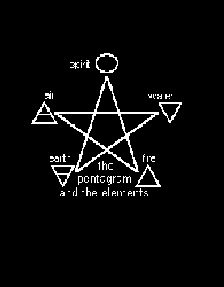
A pentagram (or pentacle) is a circled five-pointed star that most people associate with witchcraft or satanism. Far from being an evil symbol the pentagram represents protection, the self, or the spirit. The five points of the pentagram represent five basic elements: earth, air, fire, water and spirit.

Represents: the elements.

Used in rituals for: protection.