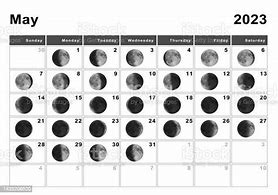
You can use this link to go forward or backward in time for Moon phase information. If you are curious, you can even find out what phase the Moon was in when you or anyone else was born.
The Moon’s current phase for today and tonight is a Waxing Gibbous phase. Visible through most of the night sky setting a few hours before sunrise. This phase is when the moon is more than 50% illuminated but not yet a Full Moon. The phase lasts about 7 days with the moon becoming more illuminated each day until the Full Moon. During a Waxing Gibbous the moon rises in the east in mid-afternoon and is high in the eastern sky at sunset. The word Gibbous first appeared in the 14th century and has its roots in the Latin word “gibbosus” meaning humpbacked.
The Waxing Gibbous on April 5 has an illumination of 99%. This is the percentage of the Moon illuminated by the Sun. The illumination is constantly changing and can vary up to 10% a day. On April 5 the Moon is 14.09 days old. This refers to how many days it has been since the last New Moon. It takes 29.53 days for the Moon to orbit the Earth and go through the lunar cycle of all 8 Moon phases.
Phase Details
Phase: Waxing Gibbous
Illumination: 99%
Moon Age: 14.09 days
Moon Angle: 0.50
Moon Distance: 395,015.76 km
Sun Angle: 0.53
Sun Distance: 149,681,455.55 km
The 8 Lunar Phases
There are 8 lunar phases the Moon goes through in its 29.53 days lunar cycle. The 4 major Moon phases are Full Moon, New Moon, First Quarter and Last Quarter. Between these major phases, there are 4 minor ones: the Waxing Crescent, Waxing Gibbous, Waning Gibbous and Waning Crescent. For more info on the Moon Cycle and on each phase check out Wikipedia Lunar Phase page.
Useful Moon Resources
Check the weather before a night of Moon gazing at weather.com
To make a very powerful Moon Water, start the first night of the lunar phase you chose (for example, the first night of the Full Moon), and charge the water outside for 3 consecutive nights. This can be done not just during the Full Moon phase, but during any lunar phase. Each has its own Magical properties as we will see below.
How to Use Moon Water in your Rituals
1. Enhance your Meditations
The first step towards strengthening your intuition is to recognize its existence. Being aware of your powers is key in realizing full potential while meditating.
Light a blue or purple candle on your altar.
Apply a drop of Moon Water to your Third Eye chakra (between the eyebrows) to open yourself to divine wisdom and revelation.
Follow a guided meditation to awaken your inner knowledge and listen to your intuition.
Find a place of peace within you, allowing the visions to come to you with ease. Don’t be disappointed if you don’t have any visions at first, practice makes perfect.
Keep a bottle or jar of Moon Water near your altar to keep working on your abilities.
2. Add Moon Water to your Baths
Fill your bathtub as you normally do, and pour some Moon water that you’ve previously prepared. Get in the tub and pour the rest of the water on yourself.
Follow a Spiritual Bath Recipe for more ideas. If you need to cleanse any specific part of your body, focus on that area. Visualize everything that no longer serves you being released from your body and aura.
If you’ve charged your Moon Water with a specific intention, focus on absorbing the light of that intent, while promoting intense peace and relaxation. Wash your hair with Moon water to encourage growth with a divine glow.
3. Bless your finances with Moon Water
To make your money flow easily, Water is the perfect Element. Have confidence that nothing can stop the flow of money in your life.
Bless your money by sprinkling just a few drops of Moon Water on your purse or wallet.
Visualize the possibilities and the outcome you expect.
On the Full Moon, you can cast this Silver Moon Spell for Money manifestations.
4. Purify and cleanse your home with Moon Water
Cleansing your sacred space is very important. No spiritual work can be done in an environment full of stagnant energy.
Make sure to clean your house physically with a mop/sponge as you normally would and add some Moon Water to your bucket.
You can also just sprinkle the water with your fingers or a spray bottle wherever you want to clean and bless the space.
Optionally, combine this water with herbs or essential oils to spread more positive energies.
Full Moon Water
The energy of the full moon can help you reinforce any kind of Witchcraft spells:
Divinations and any ritual practice in which you need to strengthen your spiritual powers will see benefits. Just place a cup of Moon Water on your altar as you cast it.
This is a beautiful, harmonious, and healing full moon as we head into spring in the northern hemisphere. Ruled by Venus, the goddess of love, relationships, beauty and abundance, there is a focus for the middle two weeks of April on beautifying and harmonizing our lives. Venus is positioned at 24 degrees of Taurus, the other of the two signs that she presides over. Venus’ rulership of air sign Libra is focused on the inter-personal aspect of abundance and harmony whereas Venus’ rulership of earth sign Taurus is focused on these qualities in the natural world, the organic beauty and interdependence of all things. During this full moon we rather have the best of both worlds.
It is especially significant to have an air sign full moon now, just after Pluto has moved into fellow-air sign Aquarius after a 15 year residency in earthy Capricorn. There is a “lightening up” of certain layers of density and a fresh buzz in the air. All of this will be highlighted and strengthened by the Libra full moon. And it is the ONLY air sign full moon we have this year with Pluto in Aquarius, since Pluto retrogrades back into Capricorn in June before the next air sign full moon which is on August 1st. So we are being tasked with harnessing the breezes of inspiration, insight and fresh connections that are coming our way. Perhaps so we can move them forward in a more assertive or concrete way during the upcoming eclipse season.
April’s Full Moon is called the Pink Moon. In North America, this is when the herb moss pink, or wild ground phlox blooms in widespread joyfulness. This is also the month when many fish swim upstream to spawn. It is a time of playfulness and youth for Nature, and it can be for you also!
What to do on the Pink Moon? Cast a Full Moon spell. The best time for a Pink Moon ritual is a Friday night, but you may do it on any of the three nights when the Moon is Full in April.
How does this Spell work?
The color pink resonates with compassion, nurturing and love, It is kind and comforting, bursting with pure romance. A pink candle will help nurture and warm you as you work your magic.
A symbol of fertility and abundance, The Moon has been worshiped by different cultures since ancient times. And this one especially, since it is usually the first Full Moon of spring in the Northern Hemisphere, the season of love and unions.
Before you begin, make sure you have set an intention for this ritual. This is a great opportunity to cast a love spell, even if it’s just to attract friendly, familial or self-love energies.
Full Pink Moon: Spell & Ritual (April)
Recipe by Francisco Huanaco
Here’s a Pink Moon ritual for manifestations of any kind. Love spells and positive intentions are encouraged in this season. What to do on the Pink Moon? Cast a Full Moon spell!
INGREDIENTS
1 pink candle (or more if you have them)
Candle holder or dish
Rose quartz or Moonstone
Pink flowers
Pen and paper
HOW TO CAST THE PINK MOON SPELL
Optionally, you can dress in pink (or wear a pink garment) to help open your most receptive side and channel the energy of the Pink Moon.
Decorate your room or your altar with pink flowers to set a positive and sensitive mindset for a successful ritual as you focus on your intention.
If you can see the Full Moon from where you are, look at it. Otherwise visualize it with the eye of your mind and allow a feeling of hope to fill your spirit. Take a piece of paper and write your intention on it. This is the goal that your Magic will bring and manifest throughout the coming months. Feel the blooming of your dreams starting to happen.
Place the paper under the candle holder or dish, and set the pink candle on top. Light the candle. 🕯️
Hold your quartz or moonstone in your hands, and as you see the moon in the sky or in your mind, chant the spell:
Charge your gemstone with lunar energy by placing it outside or on a window sill. As the candle burns, follow a guided meditation for love, or simply empty your mind as you watch the candle burn. You can use this time to say a love spell chant or a prayer to invite love into your life, or do a devotional to the deity of your choosing.
NOTES
Practice candle safety. Never leave candles burning unattended.
What to do with the leftovers of the spell?
Keep the stone and carry it with you to attract more love in your daily activities. Finish burning the candle for the duration of this lunar month (until the next Full Moon).
You can paste the piece of paper on your book of shadows or Book of Mirrors to remind you of when you cast this Pink Moon spell or burn it tonight with the pink candle flame. Dispose of the pink flowers as you see fit.
Moon Water is a very versatile Magical ingredient and one of the easiest to prepare. You will find that many recipes of Wiccan spells use it.
Learn how to make and use Moon Water in any lunar phase. Adding it to your pagan altar at home will help you harness the power of Element Water and the Moon in your ritual practice.
What is Moon Water?
Moon water is simply water that has been exposed to the moonlight andcharged with a Magical intention. The water will now embody the properties and energy of that moon phase so we can use it whenever we need it in our craft.
How to Prepare Moon Water
We frequently use this water when for any reason we can’t work during the best Moon phase for a spell. Instead, by charging regular drinking water with the energy of the moon, we preserve that energy until a later time.
A Moon Water Recipe for Every Phase: Boost Your Magic Powers
Recipe by Francisco Huanaco Difficulty: Easy
Moon water is simply regular water that has been blessed under the Moon. You can make it on any lunar phase (not just the Full Moon!) chanting this easy Wiccan spell.
INGREDIENTS
Drinking water (it can be tap/rain water if it’s safe to drink)
1bowlor a glass container of any size
HOW TO PREPARE MOON WATER
Pour water in the bowl. If it’s your first time, use 3 cups of water. Otherwise, feel free to experiment with the amounts.
Put the bowl in a place where it will be lit by the moonlight, preferably outside, but it could be near a window inside your home. It’s a good idea to use a glass bowl or a transparent bottle to allow the light to reach the water without obstructions. It doesn’t matter if it’s cloudy outside, since moonlight, just like sunlight, can pierce through the clouds easily.
As you place the water in the moonlight, consecrate it by saying out loud:
Your intention/petition could be attracting more money to your life, healing a part of your body, fixing a relationship, or anything else where you want to focus this sacred energy.
You don’t need to leave the water outside all night. A few hours is enough, but make sure to collect it before dawn, before the sunlight touches it.
Filter out any insects that might have landed on the water and pour it in a bottle or jar. Store it in a dark place such as a kitchen cabinet or refrigerator until you use it.
You can use rain water too. If you’re planning to drink it afterwards, just make sure it’s safe to drink!
Print it: Magic Water Recipe
This PDF version comes with a transparent background so you can print it on printer-friendly parchment paper add it to your own Book of Shadows.
Symbols are the language of dreams. A symbol can invoke a feeling or an idea and often has a much more profound and deeper meaning than any one word can convey. At the same time, these symbols can leave you confused and wondering what that dream was all about.
Acquiring the ability to interpret your dreams is a powerful tool. In analyzing your dreams, you can learn about your deep secrets and hidden feelings. Remember that no one is a better expert at interpreting your dreams than yourself.
To guide you with your dreams interpretations, we have interpreted over 5900 keywords and symbols and over 20,000 different meanings in our ever expanding dream dictionary. These meanings are in no way, the final say in what YOUR dream means, but hopefully it will inspire you to explore and offer a suggestive starting point for understanding your own dreams. There is no “one dream interpretation fits all.”
Every detail, even the most minute element in your dream is important and must be considered when analyzing your dreams. Each symbol represents a feeling, a mood, a memory or something from your unconscious. Look closely at the characters, animals, objects, places, emotions, and even color and numbers that are depicted in your dreams. Even the most trivial symbol can be significant. This dictionary, along with your own personal experiences, memories and circumstances, will serve to guide you through a meaningful and personalized interpretation. With practice, you can gain an understanding of the cryptic messages your dreams are trying to tell you.
Ix Chel is the Mayan goddess of the Moon, fertility, weaving and waters. At times, she is also described as a war goddess.
Ix Chel Facts
Name(s):
Ix Chel
Rules over:
The Moon, Fertility, Waters
Gender:
Female
Symbols:
Moon, Upside-Down Jug
Sacred animals:
Jaguar
Parents:
Siblings:
Greek Similar:
Selene
Roman Similar:
Luna
The Mayan pantheon consisted of many different gods with very specific roles. Some of these gods, however, had incredibly wide portfolios. One of these was the goddess Ix Chel, who played a number of important parts and roles in the Mayan world. She had a significant role in childbirth, was the equivalent of a midwife or even a physician goddess, and also had an importance in “weaving” the universe.
Description
Along with having various roles, Ix Chel had multiple descriptions, or profiles.
Ix Chel was capable of taking several forms, or aspects. It is quite possible that some of these aspects of Ix Chel are actually depictions of other, forgotten goddesses. With that said, there are two major aspects of Ix Chel that are relatively agreed upon.
Ix Chel was primarily depicted as an older woman who wore a serpent crown and who dressed in traditional Mayan garb. In this iteration, Ix Chel may have, at times, worn a skirt that had crossed bones on her dress. She also may have, at various times, had claws on her hands and her feet. She was commonly shown with either a large earthen vessel or with a gaping, frightening mouth.
Sometimes, Ix Chel was depicted as a young woman. In this version, she was generally attractive, and sometimes had a beak on her upper lip. She also tended to wear some sort of headdress. This younger iteration of Ix Chel was usually presented in a much friendlier manner than her elder counterpart.
Symbols
The most common symbol associated with Ix Chel is the Moon. There is a great deal of debate over which phase of the moon she should be associated with. Some scholars argue that all phases of the moon fell under her domain, while others believe only the waning moon did.
Ix Chel was also associated with an upside-down jar, which might have represented flooding or possibly abundance. She was also frequently associated with weaving tools in her role as a major figure in Mayan cosmology.
Lastly, she had a tendency to be affiliated with rainbows, which were a negative omen in the Mayan world.
There are several other symbols that were associated with Ix Chel, but there is debate as to which symbols actually belonged to this goddess and which symbols might have belonged to other related goddesses. Some of thes other minor associations included crossed bones, headdresses, and sometimes even spiders. The latter symbols are less certain than the former.
Powers & Abilities
In her role as a fertility goddess, she had power over rain and waters. She was generally considered to have the ability to cause great floods. Whether this meant she had responsibility for catastrophes or for the changing of the seasons is also a matter of debate. Regardless of the exact role of her waters, she seemed to control them through the upside-down jar that she carried.
In Ix Chel’s role as a weaver, she used a special spindle that also served as the center of the universe. Her responsibility for this spindle gave her a great deal of power, though her exact role in ensuring that the universe continued to function is unclear.
Family
As there were a host of different potential myths that may or may not have involved Ix Chel, her family could range fairly widely.
The biggest place in which her family diverged was in the matter of her husband. In some Mayan tales she’s married to Voltan/Votan, and in others she is married to Itzamna.
In the myths in which she’s married to Itzamna, she has thirteen sons. Four of these sons, the Bacabs, are the deities that hold up the sky in Mayan mythology. To make things even more complicated, it should be noted that the four Bacabs may have also been only a single son of Ix Chel and Itzamna known as Bacab.
Ix Chel also had some kind of connection with Hun Hunahpu, the Maize god. Though it’s not known if Hun Hunahpu was one of her thirteen sons, she did aid him in being reborn and also assisted with the birth of his sons.
Worship
A great deal of the worship of Ix Chel happened at Cozumel. Mayan women who wanted to ensure that their upcoming marriages would be successful would make a pilgrimage to Cozumel and speak to an oracle who was hidden in a statue there. There seems to have been a related island called Isla Mujeres where women would bring, leave, or make idols of Ix Chel.
At Tixchel, there were tales of women being sacrificed to a goddess who was most likely Ix Chel. The best evidence of this practice was the fact that the village itself was named for the goddess and that she seems to have been a primary goddess that was worshiped in the region.
There was also a Feast of Ix Chel, in which both shamans and physicians would bring out bundles of medical supplies and divination supplies. Ix Chel was frequently invoked during and after childbirth, specifically in her role as a midwife.
Facts about Ix Chel
Ix Chel was a goddess with many domains, including childbirth, midwifery, weaving, destruction, birth, and medicine.
Ix Chel had at least two different incarnations that correspond to the waxing and waning moon.
Ix Chel was considered not to be not just a goddess of birth, but also a goddess of warfare and perhaps even apocalyptic destruction.
Unlike many other Mayan gods, Ix Chel’s classical glyph is still unknown.
Ix Chel had several corresponding deities in the Aztec culture.
On of the major places she was worshiped was at the now popular tourist destination of Cozumel, Mexico.
She was affiliates with the Moon, waters, spindle, jaguar and spiders.
Chac is the Mayan god of Rain. He is very similar to the Aztec god Tlaloc.
Chac Facts
Name(s):
Chac
Rules over:
Rain, Lightning
Gender:
Male
Symbols:
Sacred animals:
Snake
Greek Similar:
Zeus
Roman Similar:
Jupiter
At times, Chac could manifest into four different gods, or parts. Each god had a cardinal direction and color, as well as a unique name. These manifestations are as follows:
Sac Xib Chac, North, White
Chac Xib Chac, East, Red
Kan Xib Chac, South, Yellow
Ek Xib Chac, West, Black
These four gods, or parts, are sometimes referred to as The Chacs. These four could also be seen as assistants to the god Chac.
Appearance
Chac had a very unique and distinct appearance in Mayan mythology. The deity was known for his long, hooked nose, fangs and long tongue. His nose was turned up, much like an elephant’s nose.
He was also portrayed with animal attributes as well. He could be depicted as having scales, like those of a fish or reptile. This was likely due to his affiliation with rain.
Powers & Abilities
Rain gods had a couple of different ways of making it rain. They would use jade or stone axes to hit rain-carrying snakes, or throw the axes or snakes at the clouds, causing rain, lightning and thunder.
Worship
There are several known rituals associated with Chac. One of these is known as Burner periods and rituals. A Burner period lasted 65 days, or a quarter of the 260 day religious Mayan calendar.
Note – The Mayans had two calendars. One was similar to ours, and had 360 days. The other was a religious calendar, and had 260 days.
Each of the four Chac gods was associated with one of the four Burner periods. Not a lot is known about Burner rituals and periods, but they are mentioned in several Mayan texts. It is possible that a sacred fire was constantly lit and tended to by a priest for the duration of a 65 day Burner period. After a given Burner period ended, a new priest would tend to the fire.
Sadly, in later Mayan times, another ritual involving child sacrifice became associated with worship of Chac. These sacrifices became more numerous in periods of long droughts.
Facts about Chac
He is sometimes referred to as god B. This is due to Paul Schellhas’ classification of the Mayan gods around the turn of the 20th century as he examined the four Mayan codices.
His name can also be spelled Chaac, Chaak or Chaack.
Depictions of this deity can be found at Mayan sites including Chichen Itza, Copan and Peten.
According to Mayan mythology, he created lightning, rain and thunder by throwing his stone or jade ax at the clouds.
He is one of the major gods of Mayan mythology, and is depicted more than any other Mayan god.
Chac is also the name for the Mayan color red.
References
Mercatante, Anthony S., and Down, James R. The Facts on File Encyclopedia of World Mythology and Legend. Second Edition, 2004. Pages 227 and 228.
Jones, David M. Mythology of the Aztecs and Mayam, 2007. Anness Publishing Limited. Page 23.
Luxton, Richard N. The Book of Chumayel: The Counsel Book of the Yucatec Maya 1539 – 1638. Aegean Park Press, 1995. Page 279.
Wikipedia contributors. “Chaac.” Wikipedia, The Free Encyclopedia. Wikipedia, The Free Encyclopedia, 5 Feb. 2020. Web. 19 Feb. 2020.
Caution! Avoid shopping or major decisions from 9:30 AM to 6 PM EDT today (8:30 AM to 3 PM PDT). After that, the Moon moves from Virgo into Libra.
Aries (March 21-April 19)
This is another day with confusion and possible deception, especially related to your work, your health or a pet. This means you might be kidding yourself about a health issue. Think about that. Meanwhile, if you think a coworker is not on the level with you, look into it.
Taurus (April 20-May 20)
Some kind of confusion and misunderstanding related to your kids or a romantic partner or a social situation continues to blur things for you. This might also have something to do with sports. The main thing is to know that there is possible confusion. Don’t take things for granted.
Gemini (May 21-June 20)
Like yesterday, relations with parents, bosses, teachers and the police are fuzzy or unclear about something. They might not know what you want; or perhaps, you don’t know what they want. Don’t hide anything for fear of embarrassment. Come clean now.
Cancer (June 21-July 22)
Don’t fall for propaganda related to politics, religion and racial issues today, which will be very easy to do. Don’t let other people do your thinking for you. Listen to ideas that others have but make your own mind up. Test them in your own mind. Don’t be a sheep, be an eagle.
Leo (July 23-Aug. 22)
This is another day where there is confusion about money, earnings or something to do with your possessions. Don’t turn a blind eye to these issues. Make a personal resolve to face them and figure out what’s going on. In a case like this, procrastination could cost you money.
Virgo (Aug. 23-Sept. 22)
Expect confusion talking to close friends, partners and spouses today. Possibly, you’re disappointed because you did not express your expectations to someone? Others can’t read your mind. You have to be clear and ask for what you want. If you are disappointed – say so.
Libra (Sept. 23-Oct. 22)
Something going on behind the scenes might introduce confusion to your job or something to do with a pet. It might relate to your health. You are ambitious now because you want to achieve a lot. This also means you need your body as a resource. Take care of it.
Scorpio (Oct. 23-Nov. 21)
Be observant with your kids today because they might need your help and not even know it. Possibly, they are in trouble or hiding something from you. Likewise, romantic relationships might be fuzzy and unclear (more than usual). Pay attention.
Sagittarius (Nov. 22-Dec. 21)
Do your best to avoid misunderstandings when dealing with parents or bosses and VIPs today. Anyone in a position of authority might make the wrong assumptions about you; and vice versa, you might make wrong assumptions about them. (Never underestimate the power of courtesy.)
Capricorn (Dec. 22-Jan. 19)
If you are making travel plans, double check all details because today is rife with confusion and errors. Do not assume that everything is flowing the way you hoped. Go back and double check details. Be extra clear with people from other cultures or different countries.
Aquarius (Jan. 20-Feb. 18)
This is the second day in a row where there is confusion about money, banking, earnings or your possessions. Whatever it is it can affect your wealth. Make sure you know what’s going on. And if you are suspicious about a certain area – investigate it.
Pisces (Feb. 19-March 20)
Be extra clear talking to others today. Make no assumptions. Be ready to accommodate and go more than halfway when dealing with others so that you can keep the peace and keep everyone happy. Just do it.
If Your Birthday Is Today
Actor Robert Downey Jr. (1965) shares your birthday today. You are daring and charismatic. When inspired, you generate amazing energy for organization, activity and inducing others to leap on your bandwagon. This year service to others is a theme, which is why you need to take care of yourself. Perhaps a makeover? Others will turn to you for guidance.
You can use this link to go forward or backward in time for Moon phase information. If you are curious, you can even find out what phase the Moon was in when you or anyone else was born.
The Moon’s current phase for today and tonight is a Waxing Gibbous phase. Visible through most of the night sky setting a few hours before sunrise. This phase is when the moon is more than 50% illuminated but not yet a Full Moon. The phase lasts about 7 days with the moon becoming more illuminated each day until the Full Moon. During a Waxing Gibbous the moon rises in the east in mid-afternoon and is high in the eastern sky at sunset. The word Gibbous first appeared in the 14th century and has its roots in the Latin word “gibbosus” meaning humpbacked.
The Waxing Gibbous on April 4 has an illumination of 97%. This is the percentage of the Moon illuminated by the Sun. The illumination is constantly changing and can vary up to 10% a day. On April 4 the Moon is 13.14 days old. This refers to how many days it has been since the last New Moon. It takes 29.53 days for the Moon to orbit the Earth and go through the lunar cycle of all 8 Moon phases.
Phase Details
Phase: Waxing Gibbous
Illumination: 97%
Moon Age: 13.14 days
Moon Angle: 0.50
Moon Distance: 398,745.80 km
Sun Angle: 0.53
Sun Distance: 149,638,462.77 km
The 8 Lunar Phases
There are 8 lunar phases the Moon goes through in its 29.53 days lunar cycle. The 4 major Moon phases are Full Moon, New Moon, First Quarter and Last Quarter. Between these major phases, there are 4 minor ones: the Waxing Crescent, Waxing Gibbous, Waning Gibbous and Waning Crescent. For more info on the Moon Cycle and on each phase check out Wikipedia Lunar Phase page.
Useful Moon Resources
Check the weather before a night of Moon gazing at weather.com
1914 Film serial “Perils of Pauline” shown for the first time in Los Angeles
1932George Bernard Shaw‘s comedy play “Too True To Be Good” premieres in NYC; runs for 59 performances
1949 WKRC TV channel 12 in Cincinnati, OH (ABC) begins broadcasting
1953 KFDA TV channel 10 in Amarillo, TX (CBS) begins broadcasting
1958 Cheryl Crane (14), daughter of actress Lana Turner, stabs to death organized crime figure Johnny Stompanato, her mother’s boyfriend, in self-defense; crime later ruled a “justifiable homicide”
1911 Hugh Chalmers, automaker, suggests idea of baseball MVP
1913 75th Grand National: Percy Woodland wins aboard 100/9 chance Covertcoat; owner Sir Charles Assheton-Smith’s 2nd straight GN victory and 3rd overall
1921 Stanley Cup Final, Denman Arena, Vancouver, BC: Ottawa Senators (NHL) beat Vancouver Millionaires (PCHA), 2-1 for a 3-2 series victory
1930 England cricket batsman Andy Sandham ends Day 2 of 4th Test against West Indies in Kingston, Jamaica unbeaten on 309; 1st triple century in Test history; out for 325
1930 Les Ames makes the 1st Test Cricket century by a wicketkeeper (149)
1937 4th Augusta National Invitation Tournament (Masters) Golf: Byron Nelson wins first of his 5 major titles by 2 strokes ahead of Ralph Guldahl
1938 5th US Masters Tournament, Augusta National GC: Henry Picard wins his only Masters, 2 strokes ahead of runners-up Harry Cooper and Ralph Guldahl
1948 84-year-old Connie Mack challenges 78-year-old Clark Griffith to a race from home to 1st base; it ends in a tie
Ancient Egyptian star signs were found under a thick layer of soot and dust in the Temple of Esna.
The colors in the full set of Egyptian zodiac symbols are vivid after being protected by the grime.
They also found depictions of beasts, including a snake with a ram’s head and a bird with a crocodile’s head.
A rare full set of ancient Egyptian astrological symbols has been uncovered under 2,000 years’ worth of grime in Luxor’s Temple of Esna, in southern Egypt.
The set is just one of three full sets of ancient Egyptian zodiac signs uncovered in Egyptian temples, said Dr. Daniel von Recklinghausen, a Tübingen Egyptologist who worked on the project.
“Representations of the zodiac are very rare in Egyptian temples,” Professor Christian Leitz, an Egyptologist of the University of Tübingen who worked on the project, said in a press release.
The temple was already famous for its astronomical ceiling, but some of the star signs had not been detected in previous archaeological missions, Mostafa Waziri, secretary-general of Egypt’s Supreme Council of Antiquities, said in a briefing per Arab News.
With these last signs uncovered, the archaeologists were able to confirm the temple contains a full set of the 12 Egyptian star signs, from Aries to Pisces, Hisham El-Leithy, head of the Egyptian expert team, per Arab News.
The symbols were hidden under a thick layer of muck
The zodiac sign Sagittarius Ahmed Emam, Ministry of Tourism and Antiquities
The discovery was made by a joint team of experts from the Egyptian Center of Documentation of Antiquities and the University of Tübingen, Germany, who are renovating and documenting the temple’s original colors.
“The zodiac was used to decorate private tombs and sarcophagi and was of great importance in astrological texts, such as horoscopes found inscribed on pottery sherds,” said Recklinghausen, adding: “However, it is rare in temple decoration.”
Several of the signs are recognizable to us. These include the Sagittarius, which is represented by a horse with the torso of a human archer — though in ancient Egyptian times, he also had a spiked tail and wings.
The scorpio is also easily recognizable, represented by a scorpion surrounded by stars.
An ancient Egyptian representation of the zodiac sign Scorpio. Ahmed Emam, Ministry of Tourism and Antiquities
These symbols were hidden under nearly 2,000 years of dust and dirt which has kept them in an incredible state of preservation.
This is what the Sagittarius looked like before restoration. Ahmed Emam, Ministry of Tourism and Antiquities
The Temple of Esna took 400 years to complete
The symbols were found in the Temple of Esna, an ancient Egyptian temple that dates back to the Greco-Roman times and was completed in A.D. 250 , per Egypt Independent.
Only the Hypostyle Hall remains of the temple.
This vestibule, a 121-foot-long, 65-foot-wide, and 50-foot-high sandstone structure held up by 24 columns, took 400 years to complete, per a press release.
Restoration process in the Temple of Esna. Ahmed Amin
Every inch of the temple, which also contains 18 decorative free-standing columns, is covered in intricate designs.
A column in the Temple of Esna being restored. Ahmed Amin
The team has been renovating the temple for the past five years. These zodiac symbols were uncovered in the latest series of renovations, which revealed the designs in brilliant colors.
Ancient Egyptians adopted astrology late in their reign
These symbols show the decans, which are zodiac symbols representing the 12 hours of the night. Ahmed Emam, Ministry of Tourism and Antiquities
Egyptians were introduced to astrology quite late in their rule, during Greco-Roman times.
“The zodiac itself is part of Babylonian astronomy and does not appear in Egypt until Ptolemaic times ,” said Leitz.
Some of the symbols of their zodiac system have been lost in time. Pictured above, for instance, are the Decans, used to measure the twelve hours of the night.
Zodiac symbols were not the only discovery in this latest round of renovations. The archaeologists also uncovered representations of the planets Jupiter, Saturn and Mars.
They also found various fabulous beasts, including a snake with a ram’s head and a bird with a crocodile’s head, the tail of a snake, and four wings, per the press release.
Depiction of winged snakes and an animal with bird, crocodile and snake features. Ahmed Emam, Ministry of Tourism and Antiquities
The temple of Esna is teaching us a lot of information about how ancient Egyptians read the stars.
One inscription, uncovered in a previous round of renovation, showed how Egyptians compared the Big Dipper to a bull’s leg tied to a stake by a goddess in hippo form, per a press release.
According to an accompanying press release, the Big Dipper was considered to be the manifestation of the evil god Seth who murdered his brother Osiris.
The depiction shows the hippo goddess holding Seth back to prevent him from reaching Osiris in the underworld.
A painting in the Temple of Esna shows the Big Dipper, in the shape of a bull’s leg, being held back by a goddess. Ahmed Amin
Hel is the Norse goddess of the dead. She ruled over the underworld, Niflheim, where she received the dead. Her name means “one that hides.”
In general, Hel is only mentioned in passing in Old Norse literature. It means her character is ill-defined and her personality little-developed. Some historians even suggest that she is a figment of the imagination of the Norse poets.
Facts About Hel
Name(s):
Hel
Rules over:
The Underworld
Gender:
Female
Symbols:
Hagalaz Rune
Linked Animals:
Hellhound (named Garmr), Crows
Parents:
Loki and Angrboda
Siblings:
Fenrir and Jörmungandr
Greek Similar:
Hades
Roman Similar:
Pluto
Family
In Norse mythology, Hel’s father was the trickster god Loki and her mother the giantess Angrboda. Loki and Angrboda had three children: the wolf Fenrir; the serpent Jörmungandr; and Hel, their only daughter.
Hel was born with the bones on one half of her body fully exposed and, thus, is often depicted as a half-black and half-white monster. She grew up with Fenrir and Jörmungandr in Jotunheim, land of the giants, until Odin, ruler of the Aesir, decided they should live in Asgard where their father came from.
Symbols
Hel is associated with a hellhound named Garmr as well as crows. She is also sometimes affiliated with the Hagalaz Rune stone.
Powers & Duties
In Asgard, the other Norse gods were uncomfortable with Hel’s appearance. For this reason, Odin agreed to send her away, and gave her the World of Niflheim – one of the Nine Realms. There she became queen of the dead.
The Norse believed that most people went to Niflheim when they died. Only warriors who were killed on the battlefield did not go to Niflheim. Instead, half of the warriors who died on the battlefield went to live with Odin in his palatial home Valhalla and the other half with Freya in her afterlife realm Folkvang.
Niflheim was divided into sections, including one called the shore of corpses. Here, a castle filled with venomous serpents stood facing north. It was full of murderers, perjurers, and adulterers who suffered while their blood was sucked by a dragon named Nidhogg.
When Odin’s son Baldur died because of a trick by Loki, his soul was also received in Niflheim. Hermod, another son of Odin’s, agreed to go to Hel to convince her to send Baldur home. But Loki played another trick to make it impossible for Baldur to return to the real world. The eventual exposure of his trickery led to the end of the world, a battle between good and evil known as Ragnarok.
In Niflheim, Hel was waited upon by two servants called Ganglati and Ganglot. It is said they moved so slowly that they appeared to be standing still. They served her meals in a dish named “hunger” and with a knife named “famine.”
Facts About Hel
Holland, Helvetia, Helsinki, and Holstein are well-known places that were probably named after Hel;
Hel’s appearance could be the inspiration of the masked harlequin who appeared in Commedia dell’ Arte;
No-one could hide anything from Hel. She had an eye of fire, which could only see the truth;
The Vikings feared Hel’s appearance, and they were wary of Niflheim;
Niflheim was an icy cold place rather than a place of fire and brimstone most associated with the modern idea of hell;
In the Prose Edda written by Snorri Sturluson in the 13 th century, Niflheim is described as a place where a constant wail can be heard from the residents. It is damp with sleet and the walls are built with worms and the bones of humans;
In the Gylfaginning, the first part of the Prose Edda, Hel is described as “rather downcast and fierce-looking”;
Hel was feared by the Vikings, but the Gauls, Dutch, and Germanic peoples were more sympathetic towards her. They did not see Niflheim as a place of punishment and had a kinder approach to death;
The expression “go to hell” originated with Hel and Niflheim;
Niflheim existed beneath the roots of the world tree Yggdrasil;
Jacob Grimm, a scholar of Norse mythology, had a theory that Hel was only a “half-goddess.” He argued that because Loki made the giantess Angrboda pregnant, there was no proof that Hel was of full divine blood;
Some scholars have suggested that several of the imitation medallions and bracteates which remain from the Migration Period depicts Hel;
Hela, the fictional villainess in Marvel Comics’ American comic books, is based on Hel. She is also featured in the webcomic The Order of the Stick, in which she is an antagonist who wants to destroy the world.
Loki is known as the trickster god and deity of mayhem and mischief in Norse mythology. He is one of the most well-known gods of Norse mythology. He is at least half-giant; however, some think he is full-giant but sneaked his way to becoming a god.
Loki Facts
Name(s):
Loki
Rules over:
Chaos, Mischief
Gender:
Male
Symbols:
Mistletoe, Horned Helmet (modern depictions)
Linked Animals:
Two Intertwined Snakes
Parents:
Fárbauti and Laufey
Siblings:
Helblindi and Býleistr
Greek Similar:
Atë
Roman Similar:
Laverna
Family
Loki’s father was Fárbauti and his mother was Laufey. It is unknown whether his mother was a lesser known goddess or a giant, and his father definitely was a giant.
This duplicity may have attributed to Loki’s split feelings about the gods of Asgard. Sometimes he is helpful to them, but other times he insults them, causes trouble, and during Ragnarok leads the giants into battle against Asgard.
Symbols
Loki has been associated with mistletoe, two intertwined snakes, and also a helmet with two horns.
Powers & Duties
Loki had the power to shape-shift in Norse legends. In various stories, he turned into a salmon, mare, seal, fly, and elderly woman. He also used a combination of masterful trickery and cunning to achieve his objectives.
Stories
The first time Loki helped the gods was when they were building Asgard. The gods had run out of funds and all they had built was a wall. Loki came up with the idea that a giant should finish the job for them. The gods agreed, as did the giant. But, the giant asked for the Sun, the Moon, and the goddess Freya as payment if he completed the job on time. The gods weren’t sure, but Loki assured them that the giant would never finish on time. The giant had a huge stallion called Svadilfari to help him, and the gods got nervous. Loki changed shape into a mare and seduced the giant’s horse. As a result of Loki’s trickery, the giant wasn’t able to finish on schedule and tried to kidnap Freya. Before the giant could, Thor cracked his skull with a hammer. However, Loki, as the female horse, got pregnant and gave birth to an eight-legged stallion named Sleipnir, which he gave to Odin.
Another time he helps the gods of Asgard is when Thor lost his hammer, Mjolnir. Thor asks Loki for help and they work together to find where the hammer is located. Thrymr, the giant, had stolen the weapon and taken it to the home of the giants. He would only return it if Freya would agree to marry him. Loki came up with a plan that included his and Thor’s cross-dressing to get the hammer back. It succeeded, and Thrymr was punished.
During a great feast in Asgard, Loki wasn’t invited and was upset. He asked the guard what the gods were talking about, and the guard told him they were talking about war, weapons, and saying negative things about Loki. Loki burst in, and the gods became silent. Loki then asks for a seat, and Odin finally agrees to let him sit. Loki gives a toast to all the gods except for Bragi, whom he insults instead. They start arguing and other gods and goddesses get involved.
Loki begins to insult them all, including Odin, and when Frigg, Odin’s wife, tries to stop Loki, he ends up insulting her as well. She tells Loki that if her son Baldur were still alive, Loki wouldn’t be able to escape the wrath of the gods. Loki then reminds her that he is responsible for Baldur’s death. The insults continue when Freya calls Loki mad – he retorts that she is a whore. Heimdall tells Loki he’s drunk and to stop, but Loki insults Heimdall. Skadi tells Loki to watch it or he’ll be bound up, and Loki insults her. Sif, the wife of Thor, gives him mead in a golden goblet saying she is blameless and he can’t insult her. Loki claims she is his lover. Thor finally arrives, threatens Loki to silence with Mjolmir, and Loki finally leaves after insulting Thor. He disguises himself as a salmon, but the gods find him and finally bind him until Ragnarok.
Facts About Loki
In Old Norse, Loki means “close”;
Loki typically cheated dwarves at any opportunity given to him. They finally were able to stitch his mouth shut to keep him quiet from insults;
Loki is the father of Hel, the goddess of the land of the dead. He is also father of Fenrir, the wolf demon that bites off Tyr’s hand and will eat Odin during Ragnarok. He is also the father of Jormungandr, the world serpent;
Loki steals Freya’s amber necklace, in which Heimdall fights him and retrieves it;
Loki tricked blind Hod to kill Baldur with mistletoe;
When bound until Ragnarok, Skadi places a venomous snake above him, which causes him terrible pain with the poison.
(SIDE NOTE: We can read many different theories for what dreams may mean. So, take away from each post on dreams interpretation and symbols what is relevant to you.)
Dreams can be mysterious, exhilarating, or even terrifying, but understanding the meaning of our dreams can be downright baffling. While many theories exist to explain why we dream, no one yet fully understands their purpose, let alone how to interpret the meaning of dreams. However, psychologists have developed theories that might explain what dreams mean.
Here are four theories that can help you figure out what your dreams mean:
Dreams as the Road to the Unconscious Mind: Developed by Sigmund Freud, this theory stated that dreams signified what people desire.
Archetypes and the Collective Unconscious: Carl Jung also believed that dreams represented repressed wishes but also noted that dreams explored the underdeveloped parts of the mind.
Dreams as a Cognitive Process: Calvin S. Hall theorized that what people do and think in their waking lives are what they see in their dreams.
Dreams as a Reflection of Waking Life: G. William Domhoff, who worked with Hall, theorized a similar explanation for dreams.
Read ahead to learn more about each theory and how you can use them to interpret your dreams.
Freud: Dreams as the Road to the Unconscious Mind
In his book “The Interpretation of Dreams,” Sigmund Freud suggested that the content of dreams is related to wish fulfillment.
Dream Are Our Wishes
Freud believed that the manifest content of a dream or the actual imagery and events served to disguise the latent content or the unconscious wishes of the dreamer. In other words, Freud believed that the content of your dreams shows what you desire in life.
Dream Work
Freud also described four elements of this process that he referred to as “dream work:”1
Condensation: Many different ideas and concepts are represented within a single dream. Information is condensed into a single thought or image.
Displacement: This element of dream work disguises the latent content’s emotional meaning by confusing the dream’s important and insignificant parts.
Symbolization: This operation also censors the repressed ideas in the dream by including objects meant to symbolize the latent content of the dream.
Secondary revision: During this final stage of the dreaming process, Freud suggested that the bizarre elements of the dream are reorganized to make the dream comprehensible, thus generating the dream’s manifest content.
While Carl Jung shared some commonalities with Freud, he felt that dreams were more than an expression of repressed wishes.
Dreams Explore the Underdeveloped Mind
Jung suggested that dreams revealed both the personal and collective unconscious and believed that dreams compensate for parts of the psyche that are underdeveloped in waking life.
Jung’s Four Archetypes
Jung also suggested that archetypes such as the anima, the shadow, the animus, and the persona are often represented as symbolic objects or figures in dreams.2
These symbols, he believed, represented attitudes that are repressed by the conscious mind.
Unlike Freud, who often suggested that specific symbols represent specific unconscious thoughts, Jung believed that dreams can be highly personal and that interpreting these dreams involved knowing a great deal about the individual dreamer.
Calvin S. Hall looked for themes and patterns by analyzing thousands of dream diaries from participants, eventually creating a quantitative coding system that divided what’s in our dreams into several categories.
Dreams Contain Patterns Related to Waking Life
Hall proposed that dreams are part of a cognitive process in which dreams serve as “conceptions” of elements of our personal lives.3
According to Hall’s theory, interpreting dreams requires knowing the following:
The actions of the dreamer within the dream
The objects and figures in the dream
The interactions between the dreamer and the characters in the dream
The dream’s setting, transitions, and outcome
The ultimate goal of this dream interpretation is not to understand the dream, however, but to understand the dreamer. Research by Hall revealed that the traits people exhibit while awake are the same as those expressed in dreams.
Domhoff: Dreams as a Reflection of Waking Life
G. William Domhoff is a prominent dream researcher who studied with Calvin Hall at the University of Miami.
Dreams Represent Daily Life
In large-scale studies on the content of dreams, Domhoff has found that dreams reflect the thoughts and concerns of a dreamer’s waking life.
Domhoff suggests a neurocognitive model of dreams in which the process of dreaming results from neurological processes and a system of schemas.4 Dream content, he suggests, results from these cognitive processes.
Popularizing Dream Interpretation
Since the 1970s, dream interpretation has grown increasingly popular. Ann Faraday’s 1974 book “The Dream Game” outlined techniques and ideas anyone can use to interpret their dreams.
Today, consumers can purchase various books that offer dream dictionaries, symbol guides, and tips for interpreting and understanding dreams.
How Biases Affect Dream Interpretation
Researchers Carey Morewedge and Michael Norton have studied the dreams of over 1,000 individuals from the United States, India, and South Korea.5
They discovered that few college students who participated in the research believed that their dreams were simply the brain’s response to random stimulation. Instead, most endorsed Freud’s notion that dreams reveal unconscious wishes and urges.
What they also discovered, however, is that the weight and importance people attach to their dreams depends largely on their biases. People are more likely to remember negative dreams if they involve people they dislike. They are also more likely to take positive dreams seriously if they involve friends or loved ones.
In other words, people are motivated to interpret their dreams in ways that support their already existing beliefs about themselves, the world, and the people around them.
The researchers found that such things as the confirmation bias and the self-serving bias can impact how people respond to their dreams.
Because people tend to take their dreams seriously, the researchers suggest, they can also become a self-fulfilling prophecy. If you dream that you will fail an exam, you might be less motivated to study or even become so stressed out that you perform poorly.
Dreams may or may not have meaning, but the fact remains that interpreting dreams has become a popular pastime.
You must be logged in to post a comment.