Goddesses – Freya

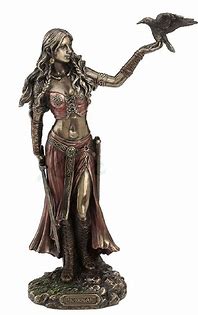
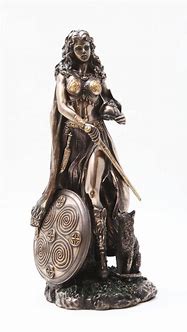
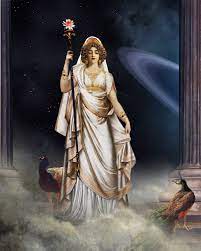
Norse Goddess Feyra from wytchymystique.com

Her Story:

Freya is the Norse goddess of love and war, “Queen of the Valkyries” and “Mistress of Cats”, a divine escort for the souls of the dead and especially for fallen warriors, taking them through to the afterlife.

This goddess is considered a poet’s muse and inspiration.  She’s invoked for issues involving relationships, particularly in matters of love and family.  Freya is also a potent goddess in matters of sensuality and sexuality, igniting passion.  She is considered the most beautiful of the goddesses and totally irresistable to mortal males.

In honor of Freya, Mistress of the Cats, here’s a wee bit of herbal cat magick.  Use the correspondences for this goddess, as well as the correspondences for this herb, to cast some wild wicked cat magick.

Catnip is commonly used in sleeping potions. The easiest and most pleasant way I can think of to use catnip for this purpose is to make a delicious pot of tea. Catnip is one of the herbs that I grow in my own garden, so all I have to do when I want to brew a pot of catnip tea is to step outside and snatch a handful of the fresh herb. I usually use both the flowers and the leaves. How much you use is going to depend upon how strong you like your tea and the size of your pot. You can sweeten it with honey or sugar. Since catnip is a member of the mint family, I’m guessing that if you like mint in your tea, you’ll like catnip, though to me it is more pungent.

Catnip has an absolutely intoxicating effect on cats, and it was actually hard getting the catnip started in my garden because my cats wouldn’t leave it alone. I’d plant a nice lush bunch of catnip, and the next morning I’d go out to find nothing but bare stems.  I can’t tell you how many times we’ve looked out the kitchen windows to watch one of our cats, or a stray cat, rolling around our garden in drunken bliss.

Catnip is sacred to all pagan gods/goddesses who manifest as a cat or feline creature, including: Sekhmet, Bast, Mau, Tefnut, Mafdet, and Freya.

Correspondences for Catnip:

Energy: Feminine (Receptive)
Planet:  Venus
Element: Water
Magick:  cat magick, love, beauty, well-being

It’s believed that a gift of catnip from you to your cat will create a magickal and psychic bond between the two of you. Since I’ve experienced this myself, I have to say that it truly works in beautiful ways. If you make a catnip talisman for your kitty, keep this in mind. Remember that concentrating on your intentions when crafting magickal items imbues that object with the magick. Catnip is also used in love spells, often as an ingredient in mojo bags or candle magick. Just as the cat finds this herb intoxicating and irresistable, so will the one you target in love magick, using catnip to draw them to you. Hang a bunch of dried catnip over the threshold of your home to draw good spirits and good luck, as well as to draw the blessings of cat goddesses. Catnip is also used in beauty spells, either as a tincture you can use to bathe your face, or with candle magic. It’s believed that this herb will mesmerize those targeted in such spells to see you as youthful and beautiful. This type of enchantment is considered a glamoury.

Embracing the Goddess:

Freya is the goddess for all of us “Crazy Cat Ladies”, and I’m proud to count myself in this company.  Call upon this goddess when working cat magic, to call upon the cat as a totem animal, or just to honor this magical creature.

Freya’s Correspondences:

Herbs: catnip, geranium, willow, goldenrod, magnolia
Animal: cat
Color: green, pink
Planet: Venus
Day: Friday
Element: Water
Feminine Face: Maiden
Symbol: cats, the number 13

Goddesses – Flora

Roman Goddess Flora from wytchymystique.com

Her Story:

Flora, the Roman goddess of spring, rules flowers, foliage, and springtime.  Her festivals are celebrated in April and early May.  Flora’s energies and influences include the protection of vegetation from disease, flowering plants and fruits, as well as menstruation– the flowering of young girls into budding womanhood.
____________________
The Blood of the Moon (menstrual blood) is one of the most powerful magickal potions known.   Menstrual blood is used in a variety of spells for love, as well as hexing, and has been used traditionally as such since ancient times.  It is strongly connected to Flora through her very essence as a goddess of maturation, flowering, coming of age, the ascension to womanhood.

In biblical times, menstruating women were considered unclean and banished to The Red Tent.  Here they sat out there isolation from the rest of the community until their periods stopped and they had completed a rigorous “cleansing” ritual.  Only after that were they allowed to resume normal life among the general population.

Unclean?  Really?  I don’t think so.

I have a different theory for their reasons behind isolating menstruating women:  They were afraid of them.

In those very ancient times, still immersed closely with pagan roots and practices, the power of menstrual blood and a menstruating woman would have been very clear in their minds, very close to their hearts.  The people of this time were caught in a struggle, a struggle between the old ways, the old religion– goddess worship, natural earth based spirituality– and the new religions of Judaism and Christianity.  The true power of women would have still been common knowledge.

Embrace this aspect of your womanhood.  Understand the inspiration behind menstruation of creation, and magick, strength, mystery, and miracles.  Align your energies with the Blood of the Moon.  Celebrate the miracle you are.

Embracing the Goddess:

Flora’s most amazing magic, aside from a landscape full of beautiful blossoms, is the budding of young girls into maturity, the coming of age that brings with it the menstrual cycle, emphasizing the feminine connection to the moon and its power, fertility, and passage into womanhood.

Western civilization seems to keep the blossoming of female puberty shrouded in out-dated shame and secrecy.  When a girl gets her first period, it’s generally not something that is mentioned, much less celebrated, particularly in mixed company.  By contrast, in the Apache Native American tradition, the onset of menstruation is a time of open celebration for the entire community.  There are days of rigorous rituals involving a tribal celebration of young girls who are coming of age.  They celebrate the fertility insinuated by the beginning of menstruation.  They celebrate pride in feminine puberty and growth.  They celebrate the wonder of nature and the miracle that it truly is.

Call upon Flora to celebrate the coming of age for yourself, your daughter, your granddaughter, your nieces, or other young women in your life.  Emphasize how special this time is, how beautiful, and how fulfilling it will be.

Flora’s Correspondences:

Herbs: mugwort, oleander, tulip, barley, primrose
Animal: dove
Color: green, brown
Planet: Gaia (earth)
Day: all seven
Element: Earth
Feminine Face: Maiden
Symbol: spring flowers

Goddesses – Bastet

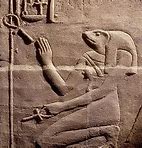
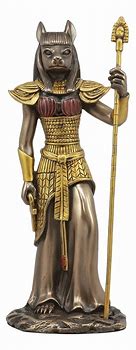
Egyptian Goddess of home Bastet from gods-and-goddesses.com

Bastet is the Egyptian goddess of the home. She is also the goddess of felines and a protector goddess. At times, Bastet may be called or referred to as “Bast”. She is often closely associated with the goddess Sekhmet, a lion goddess.

As Egyptian mythology evolved, Bastet became known more as a docile household feline goddess and Sekhmet became known as a fierce lioness and warrior goddess.

Bastet Facts

Name(s): Bastet, Bast
Rules over: Home, Domestic
Gender: Female
Symbols: Cats, Sun, Moon
Sacred animals: Cats
Parents: Ra (Father)
Siblings: Hathor (Sister)
Greek Similar: Hestia
Roman Similar: Vesta

Origins

Bastet’s origins are uncertain, but it is believed by historians that she was already a popular goddess by the third millennium B.C.E. Some of the earliest physical evidence points to veneration of the deity close to the year 2800 B.C.E., in the form of stone vessels that were found near a temple in Saqqara.1 Saqqara is an ancient Egyptian city located about 20 miles south of Cairo, not far from Memphis.

This goddess had several names prior to being called Bastet, including Baast, B’sst and Ubaste. The American Research Center in Egypt notes that one of the stone vessels in Saqarra has the inscription b#s.t, and likely refers to the goddess.1 Over time, she became widely known as Bast. Some scholars believe that, eventually, it was changed to Bastet in order for the last “t” in “Bast” to be pronounced. Others state the additional t was to make Bastet sound more feminine.

Over the next several hundred years (circa 2600 – 2200 B.C.E.), a main cult center and city dedicated to Bastet called Bubastis began to form. This center was located approximately 50 miles (80 kilometers) north / northeast of Cairo. In addition to being centered around Bastet, it was also devoted to sacred cats. During the height of worship to Bastet, hundreds of thousands of Egyptians would make pilgrimages each year to Bubastis to honor and pay respects to the goddess.

Today, Bubastis is referred to as Tell Basta in Arabic or Per-Bast in Egyptian. Tell Basta is a substantial archaeological site with the remains of many monuments, temples and statues. The ancient city’s dedication to the goddess can easily be seen in the different buildings located at the site. First and foremost, is the Temple of Bastet, one of the largest buildings in Bubastis. A sanctuary dedicated to her son, Maahes, was close by. Excavations are ongoing at Tell Basta with researchers periodically announcing new finds to this day.

Appearance

Although Bastet initially began as a goddess of the sun based on her father’s powers, her appearance was predominantly feline. Her appearance changed over time from a wild lioness to a domesticated cat. She is often portrayed as a female cat in a seated position.

Family

Bastet was the offspring of Ra, the Egyptian god of the sun. Ra was her only parent.

Ra was believed to be the original creator deity in much of Egyptian mythology. He created a number of other deities by himself, and not in conjunction with a goddess. He was said to have created Shu and Tefnut. He also had three daughters that constituted the eye of Ra. These three daughters were Hathor, Sekhmet and Bastet. As such, Bastet has a number of siblings including Shu, Tefnut, Hathor and Sekhmet, but not in the sense of them all being from two parents.

There is some discrepancy over who Bastet was married to and who she gave birth to, due to Bastet and Sekhmet being very similar in Egyptian mythology. It is possible that in different belief systems, Bastet and / or Sekhmet were married to Ptah, the Egyptian god of architecture and craftsmanship. Ptah and Bastet gave birth to a son, Maahes. Maahes is an Egyptian war god with the head of a lion – a strong connection to Bastet.

It is also possible that Ptah and Bastet or Sekhmet had a second son named Nefertum. Nefertum was was born from a lotus flower and was associated with sweet and pleasant smelling things, including perfume.

Symbols

The primary symbol associated with Bastet is the cat. She is also associated with the sun and the moon. Her affiliations with the Sun and Moon typically occur in earlier Egyptian mythology.

Powers & Duties

Initially, Bastet protected her father from harm. In this role, she primarily protected him from harm threatened by Apep, the snake-god and his arch nemesis. As was common among female gods in later texts, she gained more power and assumed more responsibilities over time.

Coinciding with the domestication of the cat, Bastet’s image changed to become less intimidating, even as her powers increased. For example, Bastet gained the power of presiding over childbirth and expectant mothers sometime after the domestication of the house cat. This role symbolized both her growing power and influence and high fertility levels associated with the domestic cat.

Later, the goddess acquired a third major duty of protecting people against evil spirits and contagious diseases. Although it was not a main responsibility, she had unique powers to charm snakes and combat the effects of poisonous venom, which was a trait attributed to cats among ancient Egyptians. She is seen battling snakes in some mythological scenes, including engaging in combat with Apep.

Worship

In her honor, entire cemeteries of mummified house cats (often buried near their owners) appeared in Bubastis and Memphis during the Ptolemaic periods. Worshipers donated offerings of small bronze statues of the goddess. She was also honored through jewelry, especially amulets, made of gold molded into the shape of cats.

Other Symbols and Affiliations

Bastet has connections with the sun and solar system in some stories, too, due to the controlling influence of her father. These depictions are more common in earlier stories and regional mythology. Based on this association, she is sometimes also called the “Eye of the Moon.”

In addition to gender roles, her image is also influenced by politics. As the Greek empire grew in power, and eventually conquered surrounding lands, Egyptian mythology changed to reflect the influence of the Greeks. Therefore, during stories from the Ptolemaic Dynasty, Bastet is often linked to Greek goddesses and even shares overlapping powers.

Facts About Bastet

  • Women wanting children would show Bastet amulets with their desired number of offspring. She granted their wishes
  • As a feline, she was sometimes depicted with ear and nose piercings. One example is the Gayer-Anderson cat statue, named after the individuals that donated it.
  • Her name changed during the New Kingdom to add an extra “t,” which is more feminine.
  • She was honored by worshipers with golden jewelry, as cats were associated with riches and royalty.
  • Bastet was considered a good mother and had children of her own.
  • She was one of the most honored deities in ancient Egypt.
  • She had a yearly festival in her honor that attracted over 700,000 people from across Egypt.
  • Festival activities included drinking copious amounts of wine, which is a divine drink associated with the goddess
  • Bastet was sometimes portrayed wearing a necklace with a Wedjat eye, which symbolized wholeness and provided protection.
  • At times she is also portrayed holding a sistrum in her right hand, which is a percussion instrument popular in ancient Egypt.
  • Similarly, she is often seen holding an aegis with a lion’s head in her left hand, which is a protective shield made of armor.
  • Bastet was sometimes known as the goddess of dancing and singing.
  • During the annual festival dedicated to Bastet, a single torch began the celebration, followed by a torch-lighting ceremony throughout her hometown.
  • She was associated with a number of other Egyptian and Greek deities.
  • Bastet’s family included a sister named Hathor, a son named Maahes and possibly a second son named Nefertum.
  • She was the wife of Ptah, a god of creation, rebirth, and craftsmen.
  • Bastet was once worshiped for her role as a fierce protector in Lower Egypt.
  • Worshiped as a feline mother-like figure in Upper Egypt.
  • Worshiped mostly as a sun deity in Lower Egypt in association with her father.

References

Goddess – Ix Chel

Ix Chel Mayan goddess of the Moon, fertility, weaving. waters. from gods-and-goddesses.com

Ix Chel is the Mayan goddess of the Moon, fertility, weaving and waters. At times, she is also described as a war goddess.

Ix Chel Facts

Name(s): Ix Chel
Rules over: The Moon, Fertility, Waters
Gender: Female
Symbols: Moon, Upside-Down Jug
Sacred animals: Jaguar
Parents:
Siblings:
Greek Similar: Selene
Roman Similar: Luna

The Mayan pantheon consisted of many different gods with very specific roles. Some of these gods, however, had incredibly wide portfolios. One of these was the goddess Ix Chel, who played a number of important parts and roles in the Mayan world. She had a significant role in childbirth, was the equivalent of a midwife or even a physician goddess, and also had an importance in “weaving” the universe.

Description

Along with having various roles, Ix Chel had multiple descriptions, or profiles.

Ix Chel was capable of taking several forms, or aspects. It is quite possible that some of these aspects of Ix Chel are actually depictions of other, forgotten goddesses. With that said, there are two major aspects of Ix Chel that are relatively agreed upon.

Ix Chel was primarily depicted as an older woman who wore a serpent crown and who dressed in traditional Mayan garb. In this iteration, Ix Chel may have, at times, worn a skirt that had crossed bones on her dress. She also may have, at various times, had claws on her hands and her feet. She was commonly shown with either a large earthen vessel or with a gaping, frightening mouth.

Sometimes, Ix Chel was depicted as a young woman. In this version, she was generally attractive, and sometimes had a beak on her upper lip. She also tended to wear some sort of headdress. This younger iteration of Ix Chel was usually presented in a much friendlier manner than her elder counterpart.

Symbols

The most common symbol associated with Ix Chel is the Moon. There is a great deal of debate over which phase of the moon she should be associated with. Some scholars argue that all phases of the moon fell under her domain, while others believe only the waning moon did.

Ix Chel was also associated with an upside-down jar, which might have represented flooding or possibly abundance. She was also frequently associated with weaving tools in her role as a major figure in Mayan cosmology.

Lastly, she had a tendency to be affiliated with rainbows, which were a negative omen in the Mayan world.

There are several other symbols that were associated with Ix Chel, but there is debate as to which symbols actually belonged to this goddess and which symbols might have belonged to other related goddesses. Some of thes other minor associations included crossed bones, headdresses, and sometimes even spiders. The latter symbols are less certain than the former.

Powers & Abilities

In her role as a fertility goddess, she had power over rain and waters. She was generally considered to have the ability to cause great floods. Whether this meant she had responsibility for catastrophes or for the changing of the seasons is also a matter of debate. Regardless of the exact role of her waters, she seemed to control them through the upside-down jar that she carried.

In Ix Chel’s role as a weaver, she used a special spindle that also served as the center of the universe. Her responsibility for this spindle gave her a great deal of power, though her exact role in ensuring that the universe continued to function is unclear.

Family

As there were a host of different potential myths that may or may not have involved Ix Chel, her family could range fairly widely.

The biggest place in which her family diverged was in the matter of her husband. In some Mayan tales she’s married to Voltan/Votan, and in others she is married to Itzamna.

In the myths in which she’s married to Itzamna, she has thirteen sons. Four of these sons, the Bacabs, are the deities that hold up the sky in Mayan mythology. To make things even more complicated, it should be noted that the four Bacabs may have also been only a single son of Ix Chel and Itzamna known as Bacab.

Ix Chel also had some kind of connection with Hun Hunahpu, the Maize god. Though it’s not known if Hun Hunahpu was one of her thirteen sons, she did aid him in being reborn and also assisted with the birth of his sons.

Worship

A great deal of the worship of Ix Chel happened at Cozumel. Mayan women who wanted to ensure that their upcoming marriages would be successful would make a pilgrimage to Cozumel and speak to an oracle who was hidden in a statue there. There seems to have been a related island called Isla Mujeres where women would bring, leave, or make idols of Ix Chel.

At Tixchel, there were tales of women being sacrificed to a goddess who was most likely Ix Chel. The best evidence of this practice was the fact that the village itself was named for the goddess and that she seems to have been a primary goddess that was worshiped in the region.

There was also a Feast of Ix Chel, in which both shamans and physicians would bring out bundles of medical supplies and divination supplies. Ix Chel was frequently invoked during and after childbirth, specifically in her role as a midwife.

Facts about Ix Chel

  • Ix Chel was a goddess with many domains, including childbirth, midwifery, weaving, destruction, birth, and medicine.
  • Ix Chel had at least two different incarnations that correspond to the waxing and waning moon.
  • Ix Chel was considered not to be not just a goddess of birth, but also a goddess of warfare and perhaps even apocalyptic destruction.
  • Unlike many other Mayan gods, Ix Chel’s classical glyph is still unknown.
  • Ix Chel had several corresponding deities in the Aztec culture.
  • On of the major places she was worshiped was at the now popular tourist destination of Cozumel, Mexico.
  • She was affiliates with the Moon, waters, spindle, jaguar and spiders.

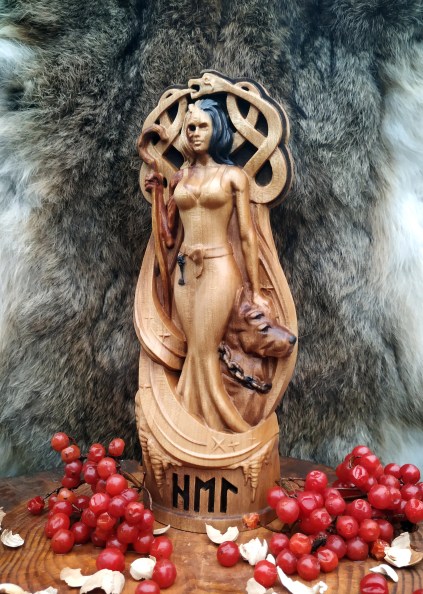
Goddess – Hel

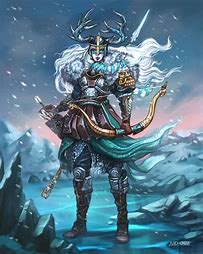
Norse Goddess of Death from gods-and-goddesses.com

Hel is the Norse goddess of the dead. She ruled over the underworld, Niflheim, where she received the dead. Her name means “one that hides.”

In general, Hel is only mentioned in passing in Old Norse literature. It means her character is ill-defined and her personality little-developed. Some historians even suggest that she is a figment of the imagination of the Norse poets.

Facts About Hel

Name(s): Hel
Rules over: The Underworld
Gender: Female
Symbols: Hagalaz Rune
Linked Animals: Hellhound (named Garmr), Crows
Parents: Loki and Angrboda
Siblings: Fenrir and Jörmungandr
Greek Similar: Hades
Roman Similar: Pluto

Family

In Norse mythology, Hel’s father was the trickster god Loki and her mother the giantess Angrboda. Loki and Angrboda had three children: the wolf Fenrir; the serpent Jörmungandr; and Hel, their only daughter.

Hel was born with the bones on one half of her body fully exposed and, thus, is often depicted as a half-black and half-white monster. She grew up with Fenrir and Jörmungandr in Jotunheim, land of the giants, until Odin, ruler of the Aesir, decided they should live in Asgard where their father came from.

Symbols

Hel is associated with a hellhound named Garmr as well as crows. She is also sometimes affiliated with the Hagalaz Rune stone.

Powers & Duties

In Asgard, the other Norse gods were uncomfortable with Hel’s appearance. For this reason, Odin agreed to send her away, and gave her the World of Niflheim – one of the Nine Realms. There she became queen of the dead.

The Norse believed that most people went to Niflheim when they died. Only warriors who were killed on the battlefield did not go to Niflheim. Instead, half of the warriors who died on the battlefield went to live with Odin in his palatial home Valhalla and the other half with Freya in her afterlife realm Folkvang.

Niflheim was divided into sections, including one called the shore of corpses. Here, a castle filled with venomous serpents stood facing north. It was full of murderers, perjurers, and adulterers who suffered while their blood was sucked by a dragon named Nidhogg.

When Odin’s son Baldur died because of a trick by Loki, his soul was also received in Niflheim. Hermod, another son of Odin’s, agreed to go to Hel to convince her to send Baldur home. But Loki played another trick to make it impossible for Baldur to return to the real world. The eventual exposure of his trickery led to the end of the world, a battle between good and evil known as Ragnarok.

In Niflheim, Hel was waited upon by two servants called Ganglati and Ganglot. It is said they moved so slowly that they appeared to be standing still. They served her meals in a dish named “hunger” and with a knife named “famine.”

Facts About Hel

  • Holland, Helvetia, Helsinki, and Holstein are well-known places that were probably named after Hel;
  • Hel’s appearance could be the inspiration of the masked harlequin who appeared in Commedia dell’ Arte;
  • No-one could hide anything from Hel. She had an eye of fire, which could only see the truth;
  • The Vikings feared Hel’s appearance, and they were wary of Niflheim;
  • Niflheim was an icy cold place rather than a place of fire and brimstone most associated with the modern idea of hell;
  • In the Prose Edda written by Snorri Sturluson in the 13 th century, Niflheim is described as a place where a constant wail can be heard from the residents. It is damp with sleet and the walls are built with worms and the bones of humans;
  • In the Gylfaginning, the first part of the Prose Edda, Hel is described as “rather downcast and fierce-looking”;
  • Hel was feared by the Vikings, but the Gauls, Dutch, and Germanic peoples were more sympathetic towards her. They did not see Niflheim as a place of punishment and had a kinder approach to death;
  • The expression “go to hell” originated with Hel and Niflheim;
  • Niflheim existed beneath the roots of the world tree Yggdrasil;
  • Jacob Grimm, a scholar of Norse mythology, had a theory that Hel was only a “half-goddess.” He argued that because Loki made the giantess Angrboda pregnant, there was no proof that Hel was of full divine blood;
  • Some scholars have suggested that several of the imitation medallions and bracteates which remain from the Migration Period depicts Hel;
  • Hela, the fictional villainess in Marvel Comics’ American comic books, is based on Hel. She is also featured in the webcomic The Order of the Stick, in which she is an antagonist who wants to destroy the world.

Goddess – Nut

Egyptian Goddess Nut from gods-and-goddesses.com

Nut is the Egyptian goddess of the sky. She is a member of the Ennead, the nine original Egyptian gods and goddesses of Heliopolis, which was a city near Cairo and the birthplace of the gods.

Nut Facts

Name(s): Nut
Rules over: Sky
Gender: Female
Symbols: Water Pot, Ladder called maqet
Sacred animals: Cow
Parents: Shu (Father) and Tefnut (Mother)
Siblings: Geb

Family

She is the daughter of Shu and Tefnut, and both sister and wife to Geb, the earth god.

Egyptian mythology said that Nut and Geb were inseparable, which left no room for creation by Atum Ra, the creator god. Atum Ra and Shu, who were jealous of the closeness between Nut and Geb, did not want them to have children. Shu separated them by lifting Nut up. She continued to form the sky, while Geb remained beneath her to form the earth.

In another myth featuring Ra, Nut is referred to as his mother. The Pyramid Texts reveal that her body becomes a pathway for the sun. Ra passes over it during the day before Nut swallows him at night. Then, a new day starts when she gives birth to him again in the morning.

Ra issued a decree that Nut “shall not give birth on any day of the year.” She conspired with Thoth, the god of wisdom, who won five extra days from the moon for her to bear five children. She gave birth to Osiris, ruler of the gods; Horus the Elder, god of war; Set, god of evil; Isis, goddess of magic; and Nephthys, goddess of water. This is the story of how a year came to have 365 days.

Symbols

Nut is most commonly depicted as a naked woman with a water pot on her head; the pot is also the hieroglyph for her name. Sometimes she is pictured in an arch, with her hands and feet on the ground, touching it on the earth’s four cardinal points and serving as the pillars of the sky. Often, Shu is seen holding her as Geb rests propped up by his elbow on the earth.

Nut is often portrayed holding the key of life, called the ankh. She may also be seen holding the was scepter in depictions of her. This scepter is a long staff with an animal head on top and is a symbol of authority and divine power.

Nut is sometimes depicted as a cow with eyes representing the sun and the moon, or a giant suckling sow whose piglets were the stars. The sycamore tree, representing protection and eternity, is another symbol associated with Nut.

Powers & Duties

Nut’s primary duty is being the Egyptian sky goddess. However, because she was said to give birth to many of the major Egyptian gods, she was also referred to as “She who Bore the Gods”. There are inscriptions of Nut at Dendera, the birthplace of Isis, emphasizing her importance as “She who Bore the Gods”.

Nut was also a protector goddess, namely a protector of the dead. The Pyramid Texts contain many prayers to Nut to ask for protection for those who have died.

A picture of Nut was often painted on the inside of a coffin (sarcophagus) to protect the dead. Sometimes she is pictured with protective wings, and other times the symbol of the ladder was used to depict her. Many examples of these can be seen at the Cairo Museum.

Worship

The chief cult center for Nut was at Heliopolis, but she was also worshiped as a healing goddess in Memphis at a shrine called the House of Nut. No known temples were built exclusively for her.

Facts About Nut:

  • Alternative names for Nut are Nueth, Newet, or Nuit;
  • Pictures and depictions of Nut are present in many forms of ancient Egyptian art. They have been found in tombs, temples, and manuscripts. For example, she is represented on the vaults of tombs which are painted in dark blue and with many stars;
  • When Set killed Osiris and Isis put him back together after gathering all the body pieces, Osiris climbs a ladder (called a maqet), a sacred symbol of Nut, to enter her heavenly skies for protection. Set later became god of the underworld while she was regarded as protector of the dead.
  • An ancient Egyptian astronomical text, The Fundamentals of the Course of the Stars, was later renamed to the Book of Nut. It dates back to before 2,000 BC;
  • The passionate relationship between Nut and Geb offers an alternative myth about how night and day came to be. It is said that they separated during the day, but that she would reach down to the earth in the evening to meet him. Darkness set in when she was away from the sky.

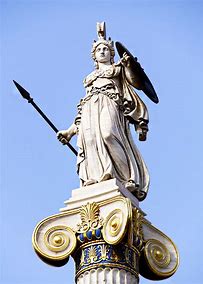
Goddess – Minerva

Minerva – Facts and mythology from gods-and-goddesses.com

In Roman mythology, Minerva was a goddess jack-of-all-trades. She oversaw many realms that involved art and deep thought. She was regarded as the goddess of “all activities involving mental skill,” such as science, medicine, wisdom, handmade items, skilled professions, and trade. Later, she was seen as a goddess of war.

She was believed to have invented Roman numerals, or numbers, as well as a variety of musical instruments. Many researchers believe that the worship of Minerva in Rome was an extension of the cult of Athena, the Greek goddess with whom Minerva is equated. She may have been introduced to Italy by the Etruscans, who called her Menerva or Menvra. She was said to have had golden hair.

Myths & Stories

Minerva plays a role in many of Rome’s myths. For instance, in the Roman poet Ovid’s Metamorphoses, Minerva is jealous of the lowly human Arachne’s ability to craft objects of wool, as Arachne’s skill rivals her own. Nymphs, humans, and others would travel great distances to view Arachne’s creations and to watch her work.

Minerva had taught Arachne this skill, but she was jealous of her teacher in turn and would give Minerva no credit. Instead, she invited Minerva to compete with her in weaving. Therefore, Minerva disguises herself as an old woman and advises Arachne to entreat Minerva’s forgiveness. When Arachne refuses, Minerva reveals herself and the contest begins. Both woman and goddess weave beautiful tapestries on their looms.

Minerva once again tries to teach Arachne a lesson by weaving into her tapestry scenes of humans losing to gods in various contests, and even her own failure against the god Neptune. Obstinate Arachne replies with weavings of the gods’ less than honorable activities, such as seducing both mortals and immortals. When finished, Minerva could find no flaw in Arachne’s tapestry, yet she “tore up the embroidered tapestry with its stories of the gods’ shameful deeds.”

Then, she beats Arachne’s face with a wooden weaving tool. Arachne tries to strange herself with a noose, but Minerva does not let her perish. Instead, she turned her into a spider through the use of a magic herb, saying she and her descendants would always hang and always weave. Today, spiders are known as “arachnids” due to this myth.

Worship

Along with Jupiter and Juno, Minerva was worshiped as part of the Capitoline Triad, or trinity. They shared a temple on the Capitoline Hill in Rome. A temple devoted exclusively to Minerva was located on the Aventine Hill. This shrine served as a meeting place for the guilds of craftsmen, actors, and poets. Physicians worshiped this goddess as the patroness Minerva Medica.

Minerva was worshiped as a goddess of war alongside the god Mars. After a number of conquests on the Roman Empire’s eastern border, a temple to Minerva was built in Pompey – no doubt funded by the spoils of war. Her worship in Rome reached a peak in the first century A.D. when she was claimed as a special, personal protector by Emperor Domitian.

Festivals

Two events dedicated to Minerva were marked on the Roman Calendar. The first was known as the Quinquatria, celebrated by students and artisans on March 19-23, just after the Ides of March, made famous by the assassination of Julius Caesar and subsequent play by William Shakespeare. On June 13, a shorter observance called the minor Quinquatrus was celebrated. The Quintratrus was also the time of school holidays and when fees for schooling became due. Thus, Minerva was seen as a patron of schoolchildren as well as the skilled workers they would someday become. Minerva shared her festivals with the war god Mars. She was often identified with Nerio, the Sabine goddess who became the consort of Mars.

Today

Today, a church called Santa Maria sopra Minerva is located in a former temple to Minerva. Minerva’s interest in the sciences and pursuit of wisdom still lives in the moniker of the Japanese MINERVA space exploration robot. MINERVA, in this case, is an acronym for MIcro/Nano Experimental Robot Vehicle for Asteroid.

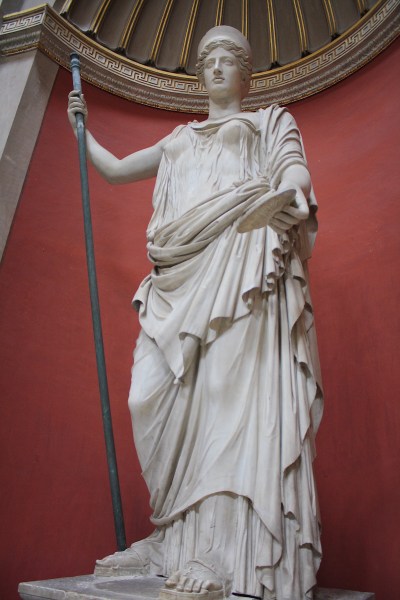
Goddess – Hera

Hera – Greek Goddess of Marriage and Queen of Olympus from greekgodsandgoddesses.net

Hera is the Queen of the GODS and is the wife and sister of ZEUS in the Olympian pantheon. She is known for being the Goddess of Marriage & Birth. Despite being the Goddess of Marriage, she was known to be jealous and vengeful towards the many lovers and offspring of her husband Zeus.

She was also known to turn her anger towards mortals who crossed her as well – for example, Paris, who chose APHRODITE over Hera as the most beautiful goddess at the marriage of the sea-nymph Thetis to a mortal called PELEUS.

In images and STATUES, Hera is portrayed as being majestic and solemn, crowned with the polos – a high cylindrical crown worn by many of the Great Goddesses.

Even before her marriage with Zeus, she ruled over the heavens and the Earth. This is one reason why she is referred to as ‘The Queen of Heaven’ – ruling over Mount Olympus where all the gods and GODDESSES live.

Even the great Zeus feared his wife Hera. Her never-ending hatred of Heracles, the illegitimate son of Zeus and the mortal Alcmene stemmed from his continuous adultery and, amongst other things, Hera raised a storm at sea in order to drive Heracles out of his course to kill him.

Zeus became so angry that he hung her in the clouds by a golden chain, and attached heavy anvils to her feet. Her son HEPHAESTUS tried to release his mother from her humiliating position, for which Zeus threw him out of heaven, and his leg was broken by the fall.

Facts about Hera

Hera was Queen of the OLYMPIAN GODS.

She was the wife and SISTER OF ZEUS.

Hera was a jealous wife, and she fought with Zeus frequently over his extramarital affairs and illegitimate children. For this reason, Hera was known for punishing offending husbands.

She was the protector of women, presiding over marriages and births.

She had three CHILDREN WITH ZEUS – HEBEARES, and Hephaestus.

While Hera was worshipped in all parts of Greece, temples were erected in her honor at Argos and Salmos.

The peacock was sacred to her.

Hera had few, if any, redeeming qualities. She never forgot an injury.

The Titans Ocean and TETHYS brought her up.

Hera is often described as “cow-faced,” although she was also called the chief among the immortals in beauty.

Though she may have been physically attractive, her vindictive personality makes her less so.

The TROJAN WAR would have ended in peace, but Hera had a vested interest in its outcome and influenced Zeus to either switch sides or remain neutral.

Hera had no concept of justice when angry or jealous; she could not forgive the women with whom Zeus had sexual relations—even if they were innocent of wrongdoing.

Ilithyia, a daughter of Hera’s, assisted women in childbirth.

In the story of the Quest of THE GOLDEN FLEECE, Hera was a gracious protector of the heroes.

Paris awarded Aphrodite the Golden Apple over ATHENA and Hera.

Hera punished one of Zeus’s love interests, Io, by putting her in the charge of Argus. Argus had a hundred eyes and kept vigilant watch over her so that Zeus could not come to her aid.

Hera turned Callisto into a bear because Zeus fell in love with her.

Hera arranged the death of SEMELE, another of Zeus’s mortal conquests, although she did not directly cause it.

Hera never forgave HERCULES for being ZEUS’S SON, but when Hercules died and was taken to heaven, he and Hera reconciled. While in heaven, Hercules married Hera’s daughter Hebe.

In some stories, it was at Hera’s orders that DIONYSUS was torn to pieces. He was brought back to life, and it is this resurrection that was celebrated in theatres.

Source: <a href=”https://greekgodsandgoddesses.net/goddesses/hera/”>Hera – Greek Goddess of Marriage and Queen of Olympus: https://greekgodsandgoddesses.net</a&gt; – Greek Gods & Goddesses, September 19, 2014

Goddess – Circa (Greek)

Circa (Greek) c. 2011 Lady Abyss

“She-Falcon”.  Dark Moon Goddess; Fate-Spinner.  As the circle, or cirque, she was the fate-spinner, weaver of destinies.  Ancient Greek writers spoke of her as Circe of the Braided Tresses because she could manipulate the forces of creation and destruction by knots and braids in her hair.  Goddess of physical love, sorcery, enchantments, precognitive dreams, evil spells, vengeance, dark magic, witchcraft and cauldrons.

Circe

From greekgodsandgoddesses.net

In GREEK MYTHOLOGY, Circe was a goddess of magic, though she was sometimes depicted as a nymph (minor nature god), a witch or an enchantress.

In any case, she was associated with magic. She knew a lot about potions and herbs, and sometimes used this knowledge against her enemies and people who offended her, turning them into wild animals. She also had a wand or staff called the rhabdos which she also used to channel her magic. In fact, this was the earliest mention of a “magical wand or staff” in Western writings; it was referred to in Homer’s epic poem, the Odyssey, when Circe used it to turn Odysseus’s men into beasts.

Circe was the daughter of HELIOS, a TITAN who represented the Sun, and Perse, an ocean nymph. She was one of three thousand of her kind, daughters of TITANS OCEANUS and TETHYS. In another version, Circe was the daughter of HECATE, a goddess of sorcery.

She had two brothers. One was named Aeetes, and he looked after the GOLDEN FLEECE, a fleece that was the property of royalty. It was made from the wool of a golden ram with wings. Her second brother was PERSES.

PASIPHAE was her only sister, and she was the queen of the Greek island, CRETE, and also the wife of King Minos. It was also said that she gave birth to the MINOTAUR, a creature that was half man, half bull, with the head and horns of a cattle and the body of a man.

In some stories, Circe was exiled by her father Helios to live alone on AEAEA, a fictional island, as punishment for killing the prince of COLCHIS, who was her husband at the time.

She later had children with ODYSSEUS, the king of ITHACA from Homer’s writings. Her three sons were Ardeas, Latinus and Telegonus.

Source: <a href=”https://greekgodsandgoddesses.net/goddesses/circe/”>Circe: https://greekgodsandgoddesses.net</a&gt; – Greek Gods & Goddesses, June 10, 2018

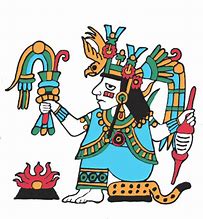
Goddess – Chantico, or Xantico

Chantico, The Aztec Goddess of Fire and the Household from oldworldgods.com

It was not unusual to see that in some religions, there were deities linked to both domestic and military matters. The Aztec goddess Chantico was an example of this link, just like the Roman goddess Vesta was in the Roman religion.

What was Chantico the goddess of?

In Aztec religion, Chantico was a domestic deity. She was mainly associated with the fires burning in the house hearth but was considered to be the protectress of the house and of the possessions inside it in general.

Because of a process of extension of her prerogatives, the Aztecs came to think of her as the protectress of their empire as a whole: it has been reported by the Spanish that Moctezuma, one of the last Aztec emperors, had an idol of the Aztec goddess Chantico with a removable leg, that he would have used as a tool to curse the land, obstructing the advance of Hernan Cortes.

For this reason, probably, Chantico had a tight link to the army and to military life in general, which was made evident in her iconography.

The appearance of Chantico goddess of fire

Her representations, in fact, usually displayed a crown made of spikes of a poisonous cactus, which was seen as a sign of aggressivity and peril, and at the top of her head was often present an ornament of feathers, which were a typical symbol of warriors.

In addition, among her accessories could be found the so-called alt-tlachinolli, or water-fire, a necklace which also was linked to warfare. Other elements which help to identify her in codexes and images are the obsidian sandals at her feet, the so-called itzcactli, and a golden pendant at her neck, which probably was a representation of the sun.

Connections and relationships with other Aztec deities

Being the goddess who presided to the domestic fire, Chantico was connected to this element, too, and was therefore linked to the other fire deities of the Aztec pantheon.

In particular, she was often associated with the god Xolotl: their connection was represented by the fact that they both were often depicted wearing the yacaxtuitl, a blue nose ornament.

Her cult was particularly strong among stonecutters. Likely for this reason, she was particularly worshipped in the town of Xochimilco, where stonecutting was widely practiced.

The meaning of Chantico Aztec goddess: Origin of the Name

It seems that the name “Chantico” might have signified “she who lives in the house”, surely alluding to her role as a domestic goddess.

Anyway, she was also referred to with other names. One of these was Quaxolotl, which would have meant “split in the upper part”, and would have therefore been a reference to Chantico’s link to the god of duality and twins, Xolotl.

Among stonecutters, she would have been also called Papaloxaual or Tlappapalo, meaning respectively “butterfly painting” and “the one of the red butterfly”. Anyway, there seem to be no other pieces of information clarifying this association of her with butterflies.

History of Chantico goddess and Most Important Myths Related to Her

According to some scholars, the cult of the Aztec goddess Chantico would have originated there where she was most worshipped, in the town of Xochimilco.

Therefore, it would have spread to all the Aztec Empire, included of course the capital, Tenochtitlan, where Chantico goddess would have been venerated in the most important religious building, the Templo Mayor.

Chantico goddess of fire was the main character of an interesting myth describing food taboos among the Aztecs. Let’s see this story in greater detail.

The Aztec goddess Chantico and the Paprika

According to this story, the Aztec goddess of fire Chantico liked paprika very much. Some suggest that the reason behind this fact could be found in Chantico’s association with fire: paprika, in fact, remembers fire both in color and taste.

Anyway, in Aztec religion, food was a prerogative of the god Tonacatecuhtli, who used to occasionally declare fasts, i.e. days during which some particular foods were banned.

One day, a fast of this sort, forbidding anyone to eat paprika, was pronounced by Tonacatecuhtli; nonetheless, the Aztec goddess Chantico could not resist pouring this beloved spice on her meal, which consisted of roasted fish.

Angered, Tonacatecuhtli changed Chantico into a dog, as a form of punishment. According to some, this might be the reason why dogs love to rest by the hearth.

Powers of the Aztec goddess Chantico

In her role of protectress of possessions, of the house, and, more generally, of the Aztec homeland, the Aztec goddess Chantico was thought to be able to deny access to strangers and enemies.

Symbols of Chantico and Their Meanings

Besides the ones already mentioned, one of Chantico’s symbols was an eagle foot covered with the skin of a jaguar, located on a dish of blood.

Like many others of her attributes, this peculiar image, also, might have represented her link with war, since the dish of blood was a symbol of warrior sacrifice.

Additional Aztec goddess Chantico Facts

Chantico’s figure is linked to one of the most impressive and important archeological remains found in the lands once occupied by the Aztecs: the so-called Coyolxauhqui-Chantico monument.

As its name suggests, this object has been linked by scholars to two Aztec goddesses: one is the goddess of the moon, Coyolxauhqui, while the other is the domestic goddess Chantico.

It represents a giant head and has been discovered in the Templo Mayor, the most important and famous building that could be found in the ancient city of Tenochtitlan, the capital of the Aztec Empire. This head was called this way by Hermann Mayer, an important Mesoamerican scholar.

In fact, he argued, elements related to both deities could be found in it. The form and the subject of the statue, a giant head, surely reminded of Coyolxauhqui, and in particular of her role in the myth describing the birth of Huitzilopochtli: according to this story, in fact, Coyolxauhqui and her brothers would have tried to kill their mother while she was pregnant with Huitzilopochtli, but he would have come out of his mother’s womb and defeated them, beheading Coyolxauhqui.

At the same time, as noted by Eduard Seler, the character to whom the head belongs, represented in other objects, presents elements that can be easily associated with Chantico. In particular, it wears the itzcactli, the obsidian sandals, and a golden pendant which are often displayed in Chantico’s portraits. These facts have led some scholars to think that the two deities might be connected. Anyway, none of the surviving sources in their possession is able to confirm or clarify this point.

Goddess – Epona

The motif of the “Lady of the Animals” lives on this religious depiction. Flanked by two horses, Epona is shown sitting on a throne holding a fruit basket on her lap. The Celtic goddess was revered as the patroness for wagoners. She was also popular among the military. The images was mainly occurred in the provinces of Gaul and Germania. Image credit: Rosemania – Flickr  

Epona – One Of The Oldest And Widely Known Celtic Deities from ancientpages.com

Epona is the Gaulish goddess of horses, donkeys, and mules. She was one of the oldest and most notable Celtic deities and was worshiped in ancient Rome.

Her name, ‘Epona,’ means ‘mare,’ and she was believed to be the protector of horses, donkeys, mules, and ponies.

As involved in ancient beliefs of many cultures, some scholars do not exclude that this goddess was often associated with death, similar to other mother goddesses. In that case, her symbol was a crow, a raven, or a dog symbolizing the afterlife.

As the guide (or companion) of souls, leading the deceased to the land of the dead, Epona had a mysterious key to opening the underworld (otherworld).

No doubt, Epona was a very popular deity in the Roman Empire, but as we said, she was not of Roman origin, for there were no such equestrian goddesses in the pantheon of these people. The Roman army adopted her worship and spread her cult throughout the empire. She was the only Celtic goddess granted a feast day (December 18).

The greatest concentration of inscriptions to Epona, along with altars and depictions of her, have been found in Roman Gaul, especially in Burgundy, and in the Metz-Trier and Meuse valley regions of Germany, Britain, Bulgaria, and North Africa as well.

In Celtic Gaul, Epona was initially associated with the beliefs of the tribe of Aedui, who inhabited the regions between Liger (Loire, the longest river in France) and Arar (the modern Saone river of eastern France).

In historical records, these people were remembered as allies of Rome, who in time supported Vercingetorix, a brave warrior who gathered an army of Gallic people against the Roman Empire and in 52 BC was defeated by Julius Caesar. At the same time, the Aeduians were incorporated into Roman Gaul.

Despite Epona’s wide popularity in ancient times, very little is known about her.  Many believe this goddess had many local incarnations and appeared under other names.

However, there is one interesting mythological story about when our planet Earth was almost empty. There were no gods or humans, only the sea and the land. When the sea met the ground, a white mare, Eiocha, made of sea foam, was born.

In the vicinity of this critical event, a strong oak tree grew, giving support to “a plant with white berries of “foam tears” from the sea. The white mare, Eiocha, ate the berries and grew heavy with the child. She gave birth to the first god, Cernunnos. The birth was painful, and in her struggle, Eiocha ripped pieces of bark from the oak tree and threw them into the sea, thus creating the Giants of the Deep. Cernunnos was lonely and coupled with Eiocha to produce other gods: Maponus, Tauranus, Teutates, and the goddess Epona.” 1

Horses for the Celts were vital because they were used for transport. In war and agriculture, it is only natural that the cult of the goddess – patroness of horses- constituted an essential part of their religious views. She was usually depicted on a horse, feeding a horse from her hand, leading two horses, or standing with horses around her.

Other attributes were a horn of plenty and a loaf of bread, which means she was also worshiped as a fertility goddess.

Goddess Of The Day: VENUS c. 2011

Venus


Lupercalia (Rome)
Themes: Love; Passion; Romance; Sexuality
Symbols: Doves; Flowers; Berries; Trees; Pine Cones
About Venus: Venus was originally an Italic goddess of blossoms; hearts and flowers have slowly become attributed to her loving, passionate energies. In fact, her name became the root for the word to venerate – to lift up, worship, or esteem. So it is that Venus greets prespring efforts for uplifting our hearts with positive relationships.
To Do Today: During Lupercalia, an ancient predecessor of Valentine’s Day, single girls put their names in a box, and unmarried men drew lots to see with whom they would be paired off for the coming year. To be more modern-minded, try pinning five bay leaves to your pillow instead to dream of future loves. If you’re married or otherwise involved, steep the bay leaves in water and drink the resulting tea to strengthen the love in your relationship.
To encourage balance in a relationship, bind together Venus’s symbols, a pine cone and a flower, and put them somewhere in your home. Or, to spice up a passionate moment, feed fresh berries to each others and drink a berry beverage from one cup (symbolizing united goals and destinies).
In Roman tradition, anywhere there’s a large stone adjacent to a tall tree, Venus is also there. Should you know of such a place, go there today and commune with her warm, lusty energy.


)0( 

By Patricia Telesco

Goddess Of The Day: Chihnu

Chihnu

Phra Buddha Bat Fair (Thailand)

  Themes: Arts; Creativity; Tradition; Excellence

Symbols: Woven Items; Thread or Yarn; Home Crafts; Lyres

About Chihnu: In China and surrounding regions, Chihnu’s name means “weaving woman.” According to myths, Chihnu’s talents in this art are so great that she can weave seamless garments for the gods. From her heavenly domain in the constellation Lyre, she acts like a refreshing spring wind to inspire excellence in our inherited arts and crafts.

 To Do Today: This annual Thai festival features folk dancing and traditional handicrafts in honor of Buddha’s footprint, which is enshrined nearby. Generally, it is a time to rejoice in Thai tradition, so if you have a Thai restaurant in the neighborhood, by all means indulge yourself, saying a brief prayer of thanks to the provider of your feast-Chihnu.

 To make a Chihnu-inspired creativity charm, take three strands of yellow thread or yarn (yellow is the color of inventiveness). Braid these together so that the strands cross four rimes, saying,

 One, Chihnu’s power absorbs;

two, inside the magic’s stored;

three, the magic’s alive in me;

four, bear Chihnu’s creativity!

 Carry this when you need more ingenious energy, or leave it near your artistic endeavors so they can absorb Chihnu’s compelling excellence.

 Finally, wear woven or handmade items to honor Chihnu’s talents today.

 .By Patricia Telesco ~ From “365 Goddess”  (FMP) and GrannyMoon’s Morning Feast

c. 2011

Goddess Of The Day: HERA

Hera

Daedala (Greece)
 
Themes: Love; Romance; Forgiveness; Humor
Symbols: Oak; Myrrh; Poppy
 
About Hera: Hera rules the earth, its people, and the hearts of those people. Using passion and creativity, Hera nudges star-crossed lovers together, chaperones trysts, and helps struggling marriages with a case of spring twitterpation!
 
Legend tells us that Hera refused to return to Zeus’s bed because of a quarrel. Zeus, however, had a plan. He humorously dressed up a wooden figure to look like a bride and declared he was going to marry. When Hera tore off the dummy’s clothes and discovered the ruse, she was so amused and impressed by Zeus’s ingenuity that she forgave him.
 
To Do Today: Ancient Greeks honored Hera and Zeus’s reconciliation today, often in the company of old oak trees. Small pieces of fallen wood are collected to symbolize the divinities, then burned on the ritual fire to keep love warm. To mirror this custom, find a fallen branch and burn a small part of it as an offering to Hera. Keep the rest to use as a goddess image year-round, burning a few slivers whenever love needs encouragement.
 
Present someone you love or admire with a poppy today to symbolically bestow Hera’s blessings on your relationship. If you have a loved one away from home, burn some myrrh incense in front of their picture so Hera can watch over them and keep that connection strong.
.
By Patricia Telesco ~ From “365 Goddess”  (FMP) and GrannyMoon’s Morning Feast
c. 2011

Goddess Of The Day – Hexe

Hexe

Saint Hildegard Dies


Themes: Health, Banishing:Magic

Symbols: Healing Herbs and Charms


About Hexe: This ancient Germanic witch’s goddess rules over health, banishing curses and teaching

people the effective use of spells, charms and other mystical procedure for improving well being, Thus

we come by the old phrase “hex doctor”.


To Do Today: Living in the 1100’s St Hildegard was a renowned Benedictine nun living in Bingen and

ministering to people with herbal preparations received in visions. Many of these had magical overtone,

perhaps guided by Hexe’s influence. In any case, today’s theme is learning the art of weaving, “Hexes”

for physical, mental and spiritual health.


On the physical level take a natural object like a cut potato and rub it against an inflicted area. Bury the

potato to “bury” the malady and decompose it. Or carry a jet stone to absorb the problem, then cleanse

the rock in saltwater to wash the bas energy away. For mental well being, enjoy a soothing cup of mint

tea stirred countercockwise so tensions and negativity will wane. Or, carry a flourite stone with you

throughout the day to strengthen your mental powers. For spiritual health, sprinkle nutmeg-laden water

clockwise throughout your aura to empower your physic self. Or, carry a lapis or amethyst stone to draw

goddess centered thinking and action into your day.


By Patricia Telesco

Goddess of the Day – Aphrodite

Aphrodite

Greek goddess of love and beauty

By deTraci Regula, About.com Guide

Aphrodite

From ‘The Dictionary of Classical Antiquities’

Aphrodite’s Appearance:Aphrodite is a gorgeous, perfect, eternally young woman with a beautiful body.Aphrodite’s Symbol or Attribute:Her Girdle, which has magical powers to compel love.

Strengths:Potent sexual attractiveness, dazzling beauty.

Weaknesses:A bit stuck on herself, but with a perfect face and body, who can blame her?

Aphrodite’s Parents: One genealogy gives her parents as Zeus, King of the Gods, and Dione, an early earth/mother goddess. More commonly, she was believed to be born of the foam in the sea which bubbled around the severed member of Ouranos when Kronos slew him.

Aphrodite’s Birthplace: Rising from the foam off of the islands of Cyprus or Kythira. Milos, where the famed Venus de Milo was found, is also associated with her in modern times.

Aprhodite’s Husband:Hephaestus, the lame smith-god. Also associated with Ares, god of War.

Children: Eros, a Cupid-like figure.

Some Major Temple Sites of Aphrodite: Kythira, an island she visited; Cyprus.

Basic Story: Aphrodite rises from the foam of the waves of the sea, enchanting anyone who sees her and inciting feelings of love and lust wherever she goes. She is a contender in the story of the Golden Apples, when Paris chooses her as the fairest of the three goddesses (the others were Hera and Athena) and Aphrodite decides to “reward” him for giving her the Golden Apple (the prototype of most modern awards) by giving him the love of Helen of Troy, something of a mixed blessing that led to the Trojan War.

Interesting Fact: The island of Cyprus has many places believed to have been enjoyed by Aphrodite when she was on earth. Recently, the Cypriots have revived a tourist-friendly version of some of Aphrodite’s festivals at the town of Paphos.

Goddess of the Day – Morrigan c. 2012


The Morrigan

Goddess Of Battle, Strife, and Fertility

The Morrígan (“phantom queen”) or Mórrígan (“great queen”), also written as Morrígu or in the plural as Morrígna, and spelt Morríghan or Mór-Ríoghain in Modern Irish, is a figure from Irish mythology who appears to have once been a goddess, although she is not explicitly referred to as such in the texts.

The Morrigan is a goddess of battle, strife, and fertility. She sometimes appears in the form of a crow, flying above the warriors, and in the Ulster cycle she also takes the form of an eel, a wolf and a cow. She is generally considered a war deity comparable with the Germanic Valkyries, although her association with cattle also suggests a role connected with fertility, wealth, and the land.

She is often depicted as a triple goddess, although membership of the triad varies; the most common combination is the Badb, Macha and Nemain, but other accounts name Fea, Anann, and others.

Etymology

There is some disagreement over the meaning of the Morrígan’s name. Mor may derive from an Indo-European root connoting terror or monstrousness, cognate with the Old English maere (which survives in the modern English word “nightmare”) and the Scandinavian mara; while rígan translates as ‘queen’. This can be reconstructed in Proto-Celtic as *Moro-rīganī-s. Accordingly, Morrígan is often translated as “Phantom Queen”. This is the derivation generally favoured in current scholarship.

In the Middle Irish period the name is often spelt Mórrígan with a lengthening diacritic over the ‘o’, seemingly intended to mean “Great Queen” (Old Irish mór, ‘great’; this would derive from a hypothetical Proto-Celtic *Māra Rīganī-s.). Whitley Stokes believed this latter spelling was a due to a false etymology popular at the time. There have also been attempts to link the Morrígan with the fairy Morgan from Arthurian romance, in whose name ‘mor’ may derive from ‘sea’ or ‘water’.

The name is also sometimes spelt Morrígu and given in plural as Morrígna in Old Irish.

Glosses and glossaries

The earliest sources for the Morrígan are glosses in Latin manuscripts, and glossaries (collections of glosses). In a 9th century manuscript containing the Latin Vulgate translation of the Book of Isaiah, the word Lamia is used to translate the Hebrew Lilith. A gloss explains this as “a monster in female form, that is, a morrígan“. Cormac’s Glossary (also 9th century), and a gloss in the later manuscript H.3.18, both explain the plural word gudemain (“spectres”) with the plural form morrígna. The 8th century O’Mulconry’s Glossary says that Macha is one of the three morrígna. It therefore appears that at this time the name Morrígan was seen as referring to a class of beings rather than an individual.

Ulster Cycle

The Morrígan’s earliest narrative appearances, in which she is depicted as an individual, are in stories of the Ulster Cycle, where she has an ambiguous relationship with the hero Cú Chulainn. In Táin Bó Regamna (The Cattle Raid of Regamain), Cúchulainn encounters the Morrígan, but does not recognize her, as she drives a heifer from his territory. In response to his challenge, she insults him, but before he can attack she becomes a black bird on a nearby branch. Cúchulainn now knows who she, and tells her that had he known before, they would not have parted in enmity. She notes that whatever he had done would have brought him ill luck. To his response that she cannot harm him, she makes a series of threats, foretelling a coming battle in which he will be killed. She tells him, enigmatically, “I guard your death”.

In the Táin Bó Cuailnge queen Medb of Connacht launches an invasion of Ulster to steal the bull Donn Cuailnge; the Morrígan, like Alecto of the Greek Furies, appears to the bull in the form of a crow and warns him to flee. Cúchulainn defends Ulster by fighting a series of single combats at fords against Medb’s champions. In between combats the Morrígan appears to him as a young woman and offers him her love, and her aid in the battle, but he spurns her. In response she intervenes in his next combat, first in the form of an eel who trips him, then as a wolf who stampedes cattle across the ford, and finally as a red heifer leading the stampede, just as she had threatened in their previous encounter. However Cúchulainn wounds her in each form and defeats his opponent despite her interference. Later she appears to him as an old woman bearing the same three wounds that her animal forms sustained, milking a cow. She gives Cúchulainn three drinks of milk. He blesses her with each drink, and her wounds are healed. As the armies gather for the final battle, she prophesies the bloodshed to come.

In one version of Cúchulainn’s death-tale, as the hero rides to meet his enemies, he encounters the Morrígan as a hag washing his bloody armour in a ford, an omen of his death. Later in the story, mortally wounded, Cúchulainn ties himself to a standing stone with his own entrails so he can die upright, and it is only when a crow lands on his shoulder that his enemies believe he is dead.

Mythological Cycle

The Morrígan also appears in texts of the Mythological Cycle. In the 12th century pseudohistorical compilation Lebor Gabála Érenn she is listed among the Tuatha Dé Danann as one of the daughters of Ernmas, granddaughter of Nuada.

The first three daughters of Ernmas are given as Ériu, Banba, and Fódla. Their names are synonyms for Ireland, and they were married to Mac Cuill, Mac Cécht, and Mac Gréine, the last three Tuatha Dé Danann kings of Ireland. Associated with the land and kingship, they probably represent a triple goddess of sovereignty. Next come Ernmas’s other three daughters: the Badb, Macha, and the Morrígan. A quatrain describes the three as wealthy, “springs of craftiness” and “sources of bitter fighting”. The Morrígan’s name is said to be Anann, and she had three sons, Glon, Gaim, and Coscar. According to Geoffrey Keating’s 17th century History of Ireland, Ériu, Banba, and Fódla worshipped the Badb, Macha, and the Morrígan respectively, suggesting that the two triads of goddesses may be seen as equivalent.

The Morrígan also appears in Cath Maige Tuireadh (The Battle of Mag Tuired). On Samhain she keeps a tryst with the Dagda before the battle against the Fomorians. When he meets her she is washing herself, standing with one foot on either side of the river Unius. In some sources she is believed to have created the river. After they have sex, the Morrígan promises to summon the magicians of Ireland to cast spells on behalf of the Tuatha Dé, and to destroy Indech, the Fomorian king, taking from him “the blood of his heart and the kidneys of his valour”. Later, we are told, she would bring two handfuls of his blood and deposit them in the same river (however, we are also told later in the text that Indech was killed by Ogma).

As battle is about to be joined, the Tuatha Dé leader, Lug, asks each what power they bring to the battle. The Morrígan’s reply is difficult to interpret, but involves pursuing, destroying and subduing. When she comes to the battlefield she chants a poem, and immediately the battle breaks and the Fomorians are driven into the sea. After the battle she chants another poem celebrating the victory and prophesying the end of the world.

In another story she lures away the bull of a woman called Odras, who follows her to the otherworld via the cave of Cruachan. When she falls asleep, the Morrígan turns her into a pool of water.

Nature and functions

The Morrígan is often considered a triple goddess, but her supposed triple nature is ambiguous and inconsistent. Sometimes she appears as one of three sisters, the daughters of Ernmas: the Morrígan, the Badb and Macha. Sometimes the trinity consists of the Badb, Macha and Nemain, collectively known as the Morrígan, or in the plural as the Morrígna. Occasionally Fea or Anu also appear in various combinations. However the Morrígan also frequently appears alone, and her name is sometimes used interchangeably with the Badb, with no third “aspect” mentioned.

The Morrígan is usually interpreted as a “war goddess”: W. M. Hennessey’s “The Ancient Irish Goddess of War,” written in 1870, was influential in establishing this interpretation. Her role often involves premonitions of a particular warrior’s violent death, suggesting a link with the Banshee of later folklore. This connection is further noted by Patricia Lysaght: “In certain areas of Ireland this supernatural being is, in addition to the name banshee, also called the badhb“.

It has also been suggested that she was closely tied to Irish männerbund groups (described as “bands of youthful warrior-hunters, living on the borders of civilized society and indulging in lawless activities for a time before inheriting property and taking their places as members of settled, landed communities”) and that these groups may have been in some way dedicated to her. If true, her worship may have resembled that of Perchta groups in Germanic areas.

However, Máire Herbert has argued that “war per se is not a primary aspect of the role of the goddess”, and that her association with cattle suggests her role was connected to the earth, fertility and sovereignty; she suggests that her association with war is a result of a confusion between her and the Badb, who she argues was originally a separate figure. She can be interpreted as providing political or military aid, or protection to the king — acting as a goddess of sovereignty, not necessarily a war goddess.

There is a burnt mound site in County Tipperary known as Fulacht na Mór Ríoghna (“cooking pit of the Mórrígan”). The fulachta sites are found in wild areas, and usually associated with outsiders such as the Fianna and the above-mentioned männerbund groups, as well as with the hunting of deer. The cooking connection also suggests to some a connection with the three mythical hags who cook the meal of dogflesh that brings the hero Cúchulainn to his doom. The Dá Chich na Morrigna (“two breasts of the Mórrígan”), a pair of hills in County Meath, suggest to some a role as a tutelary goddess, comparable to Danu or Anu, who has her own hills in County Kerry. Other goddesses known to have similar hills are Áine and Grian of County Limerick who, in addition to a tutelary function, also have solar attributes.

Arthurian legend

There have been attempts by some modern authors of fiction to link the Arthurian character Morgan le Fay with the Morrígan. Morgan first appears in Geoffrey of Monmouth’s Vita Merlini (The Life of Merlin) in the 12th century. However, while the creators of the literary character of Morgan may have been somewhat inspired by the much older tales of the goddess, the relationship ends there. Scholars such as Rosalind Clark hold that the names are unrelated, the Welsh “Morgan” (Wales being the source of Arthurian legend being derived from root words associated with the sea, while the Irish “Morrígan” has its roots either in a word for “terror” or a word for “greatness”.


Origins of The Morrigan

The origins of the Morrigan seem to reach directly back to the megalithic cult of the Mothers. The Mothers (Matrones, Idises, Disir, etc.) usually appeared as triple goddesses and their cult was expressed through both battle ecstasy and regenerative ecstasy. It’s also interesting to note that later Celtic goddesses of sovereignty, such as the trio of Eriu, Banba, and Fotla, also appear as a trio of female deities who use magic in warfare. “Influence in the sphere of warfare, but by means of magic and incantation rather than through physical strength, is common to these beings.” (Ross 205)

Eriu, a goddess connected to the land in a fashion reminiscent of the Mothers, could appear as a beautiful woman or as a crow, as could the Morrigan. The Disir appeared in similar guises. In addition to being battle goddesses, they are significantly associated with fate as well as birth in many cases, along with appearing before a death or to escort the deceased.

There is certainly evidence that the concept of a raven goddess of battle was not limited to the Irish Celts. An inscription found in France which reads Cathubodva, ‘Battle Raven’, shows that a similar concept was at work among the Gaulish Celts.

Valkyries in Norse cosmology. Both use magic to cast fetters on warriors and choose who will die.

During the Second Battle, the Morrigan “said she would go and destroy Indech son of De Domnann and ‘deprive him of the blood of his heart and the kidneys of his valor’, and she gave two handfuls of that blood to the hosts. When Indech later appeared in the battle, he was already doomed.” (Rees 36)

Compare this to the Washer at the Ford, another guise of the Morrigan. The Washer is usually to be found washing the clothes of men about to die in battle. In effect, she is choosing who will die.

An early German spell found in Merseburg mentions the Indisi, who decided the fortunes of war and the fates of warriors. The Scandinavian “Song of the Spear”, quoted in “Njals Saga”, gives a detailed description of Valkyries as women weaving on a grisly loom, with severed heads for weights, arrows for shuttles, and entrails for the warp. As they worked, they exulted at the loss of life that would take place. “All is sinister now to see, a cloud of blood moves over the sky, the air is red with the blood of men, and the battle women chant their song.” (Davidson 94)

An Old English poem, “Exodus”, refers to ravens as choosers of the slain. In all these sources, ravens, choosing of the slain, casting fetters, and female beings are linked.

“As the Norse and English sources show them to us, the walkurjas are figures of awe an even terror, who delight in the deaths of men. As battlefield scavengers, they are very close to the ravens, who are described as waelceasega, “picking over the dead”…” (Our Troth)

“The function of the goddess [the Morrigan] here, it may be noted, is not to attack the hero [Cu Chulainn] with weapons but to render him helpless at a crucial point in the battle, like the valkyries who cast ‘fetters’ upon warriors … thus both in Irish and Scandinavian literature we have a conception of female beings associated with battle, both fierce and erotic.” (Davidson 97, 100)

The Morrigan and Cu Chulainn

She appeared to the hero Cu Chulainn(son of the god Lugh) and offered her love to him. When he failed to recognize her and rejected her, she told him that she would hinder him when he was in battle. When Cu Chulainn was eventually killed, she settled on his shoulder in the form of a crow. Cu’s misfortune was that he never recognized the feminine power of sovereignty that she offered to him.

She appeared to him on at least four occasions and each time he failed to recognize her.

  1. When she appeared to him and declared her love for him.
  2. After he had wounded her, she appeared to him as an old hag and he offered his blessings to her, which caused her to be healed.
  3. On his way to his final battle, he saw the Washer at the Ford, who declared that she was washing the clothes and arms of Cu Chulainn, who would soon be dead.
  4. When he was forced by three hags (the Morrigan in her triple aspect) to break a taboo of eating dogflesh.


THE GREAT GODDESS MORRIGAN

Created By Calesta

The information on Morrigan is vast, and at times contradictory. It would take many, many webpages to tell all of her stories and it was very difficult to narrow this down! From maiden to mother to crone, from the destruction of war and death, to the beauty of the river of rebirth, Morrigan shows us the full circle of life. As with many Divine Feminine images, time can distort, and different cultures take on different attributes. What I have found that is close to the truth in my experience with her follows.

Morrigan is an Irish and Celtic Goddess. She can shapeshift into a crow or raven. It is said that she would take this form and fly over battlefields “calling upon the spirits of slain warriors.” (p. 252, McCoy) She is a triple goddess, with the aspects of the “virgin Ana, flowering fertility- goddess; the mother Babd, “Boiling” the cauldron perpetually producing life; and the crone Macha, “great Queen of the Phantoms” or Mother Death.” (p. 675, Walker). I believe she was also originally connected to the Great Irish Mother Goddess, Anu (later called Danu). In her aspect of Macha she was so powerful her name was the ancient capital of Ireland (p. 186, Kimball).

In the tales of the first people of Ireland, the Tuatha De Danann (literally the people of the Goddess Danu, pg. 189 Kimball), Morrigan was said to have blown a protective fog over all of the land, so that they would not be invaded. This shows the strength of Morrigan, and the protection the people received from her. Morrigan is also connected with death and destruction and battles. One story tells that Macha was forced to race while pregnant with twins, and when she (easily) won she gave birth to the twins. She was so angry at her tormentors for giving birth in public that way, she cursed them with the pain of childbirth before enemies were closing in. For nine generations when Ulster came under attack the men would experience the pains of childbirth (p. 192 Kimball).

Morrigan is a “Goddess of rivers, lakes and freshwaters”, and she was seen by Cu Chulain before his death, washing the clothes and arms. It is said that if one sees Morrigan by the river washing their clothes or body, is is a prediction of death before going into battle. Looking at this story, one can see the river or water as a place of rebirth, that Morrigan as the Goddess washing, anointing the body before being reborn.

Calling upon the strength of a woman that can fight off armies, and wash the dead is very powerful. Darkness, death, is a natural part of life, and brewing in the cauldron of rebirth is new life. But what I have found is to recognize that over time most Goddesses have been demonized… made to be solely focused on sex or death. Taking out pieces of the cycle, and turning them into something evil. Just as the wise crone was turned to hag.


Hymn to the Morrigan by Isaac Bonewits


O Morrigan, we call your name Across the dusty years.
You speak to us, of blood and lust. You show us all our fears.
You are a goddess, old and wise. Of holy power you have no dearth.
Beneath your wings : Black, Red and White, We learn of death and birth.


You walk about, this ancient land, Your hungers raw and clear.
You make the crops, grow rich and strong, As well your geese and deer.
A flirting maid, a lusty hag, A mother of great girth :
Without the touch of your black wings, We cannot heal the earth.


You float upon, a blood red wave, Of swords and spears and knives.
Your voice inspires, fear and dread, That you’ll cut short our lives.
You try the warriors’, courage sore, Our inner souls unearth.
Without the touch of your red wings, We cannot know our worth.


You fly above the silver clouds, To Manannan’s shining Gate.
You lead the dead along that path, To meet our final fate.
The joke’s on us, we find within, A land of laughter and of mirth.
Without the touch of your white wings, We cannot have rebirth.


Goddess Of The Day: SEPHIRA

Sephira

Hanukkah (Jewish)


Themes: Miracles; Victory, Success; Overcoming

Symbol: Light


About Sephira: This ancient Cabalistic goddess embodies divine light – the active, energetic power that flows

through the Universe in all directions. Thus, it is no coincidence that the ten spheres on the Tree of Life are

called Sephirah, for this goddess guides our way and path with her radiance.


To Do Today: This festival commemorates the rebellion of the Jews against the Syrians, in which a miracle took

place. A small bottle of oil stayed lit for eight days, keeping the temple consecrated until more oil could be brought.

Since Sephira is the light of miracles, today’s a good time to focus on seemingly impossible goals or situations that

you may have set aside or left behind in discouragement. Revisit those dreams; reconsider the logistics of those

circumstances. If there is a better way to approach things, Sephira will illuminate that path or options for you in

your meditations. Make sure to turn on light sources today, and open curtains to let natural light into your home.

Symbolically, this welcomes Sephira’s active power into your spiritual life and quest. Also consider following with

Jewish tradition and giving coins to friends or family. These tokens draw financial security. Or, eat potato pancakes

for providence.


By Patricia Telesco

The Witches Survival Guide To Sundays c. 2018


The Witches Digest

The Charge of the Goddess


Whenever ye have need of any thing, once in the month,
and better it be when the moon is full, then shall ye
assemble in some secret place and adore the spirit of
She, who is Queen of all witches. There shall ye assemble,
ye who are fain to learn all sorcery, yet have not won its
deepest secrets; to these will She teach things that are
yet unknown. And ye shall be free from slavery; and as a
sign that ye be really free, ye shall be naked in your
rites; and ye shall dance, sing, feast, make music and love,
all in Her praise. For Hers is the ecstasy of the spirit,
and Hers also is joy on earth; for Her law is love unto all
beings. Keep pure your highest ideal; strive ever towards
it; let naught stop you or turn you aside. For Hers is the
secret door which opens upon the land of youth and Hers
is the cup of wine of life, and the cauldron of Cerridwen,
which is the Holy Grail of immortality. She is the
gracious goddess, who gives the gift of joy unto the heart
of man. Upon earth, She gave the knowledge of the spirit
eternal; and beyond death, She gives peace and freedom,
and reunion with those who have gone before. Nor does
She demand sacrifice, for behold, She is the mother of
all living, and Her love is poured out upon the earth.

She who is the beauty of the green earth, and the white
moon among the stars, and the mystery of the waters, and
the desire of the heart of man, calls unto thy soul. Arise,
and come unto Her. For She is the soul of nature, who
gives life to the universe. from Her all things proceed,
and unto Her all things must return; and before Her face,
beloved of gods and men, let thine innermost divine self
be enfolded in the rapture of the infinite. Let Her
worship be within the heart that rejoiceth; for behold, all
acts of love and pleasure are Her rituals. And therefore
let there be beauty and strength, power and compassion,
honor and humility, mirth and reverence within you. And
thou who thinkest to seek Her, know thy seeking and
yearning shall avail thee not unless thou knowest the
mystery; that if that which thou seekest thou findest not
within thee, then thou wilt never find it without thee. For
behold, She has been with thee from the beginning; and
She is that which is attained at the end of desire.

The Charge of the God


Listen to the words of the Great Father, who of old was called Osiris,
Adonis, Zeus, Thor, Pan, Cernunnos, Herne, Lugh and by many other names.

My law is harmony with all things.

Mine is the secret that opens the gates of life and mine is the dish of salt of
the earth that is the body of Cernunnos that is the eternal circle of rebirth.

I give the knowledge of life everlasting, and beyond death
I give the promise of regeneration and renewal.

I am the sacrifice, the father of all things,
and my protection blankets the earth.

Hear the words of the dancing God, the music of whose laughter
stirs the winds, whose voice calls the seasons.

I who am the Lord of the Hunt and the Power of the Light,
sun among the clouds and the secret of the flame.

I call upon your bodies to arise and come unto me.

For I am the flesh of the earth and all its beings.

Thru me all things must die and with me are reborn.

Let my worship be in the body that sings,
for behold all acts of willing sacrifice are my rituals.

Let there be desire and fear, anger and weakness,
joy and peace, awe and longing within you.

For these too are part of the mysteries found within yourself,
within me, all beginnings have endings, and all endings have beginnings.


Today is Sunday


Traditionally, Sunday is the first day of the week. It is also known as the Lord’s Day from it original association with the Lord, that is, the Sun God, personified as Helios, Apollo, Ogmios, Mithras, and St. Elia. But in the Northern Tradition, the sun is seen as feminine, personified as the goddess known as Phoebe in East Anglia and Saule in eastern Europe. The sun rules the conscious element of the human being, the ego, the real self, and Sunday is the day on which this conscious power is at its most effective.

Deity: Sol

Zodiac Sign: Leo

Planet: Sun

Tree: Birch

Herb: Snakeroot

Stone: Ruby

Animal: Lion

Element: Fire

Color: Gold

Rune: Sigel


The Celtic Tree Month of Luis(Rowan) January 21 – February 17)

Runic Half Month of Peorth (womb, dice cup) ( January 13 – January 27)

Goddess of the Month of Hestia (December 26th – January 22nd)


Source

The Pagan Book of Days
Nigel Pennick


On Sunday, We Honor the Goddess Hera

Hera

Greek Goddess of Marriage and Queen of Olympus

Hera is the Queen of the GODS and is the wife and sister of ZEUS in the Olympian pantheon. She is known for being the Goddess of Marriage & Birth. Despite being the Goddess of Marriage, she was known to be jealous and vengeful towards the many lovers and offspring of her husband Zeus.


She was also known to turn her anger towards mortals who crossed her as well – for example, Paris, who chose APHRODITE over Hera as the most beautiful goddess at the marriage of the sea-nymph Thetis to a mortal called Peleus.


In images and statues, Hera is portrayed as being majestic and solemn, crowned with the polos – a high cylindrical crown worn by many of the Great Goddesses.


Even before her marriage with Zeus, she ruled over the heavens and the Earth. This is one reason why she is referred to as ‘The Queen of Heaven’ – ruling over Mount Olympus where all the gods and goddesses live.


Even the great Zeus feared his wife Hera. Her never-ending hatred of Heracles, the illegitimate son of Zeus and the mortal Alcmene stemmed from his continuous adultery and, amongst other things, Hera raised a storm at sea in order to drive Heracles out of his course to kill him.


Zeus became so angry that he hung her in the clouds by a golden chain, and attached heavy anvils to her feet. Her son Hephaestus tried to release his mother from her humiliating position, for which Zeus threw him out of heaven, and his leg was broken by the fall.


Facts about Hera

Hera was Queen of the OLYMPIAN GODS.
She was the wife and sister of Zeus.
Hera was a jealous wife, and she fought with Zeus frequently over his extramarital affairs and illegitimate children. For this reason, Hera was known for punishing offending husbands.
She was the protector of women, presiding over marriages and births.
While Hera was worshipped in all parts of Greece, temples were erected in her honor at Argos and Salmos.
The peacock was sacred to her.
Hera had few, if any, redeeming qualities. She never forgot an injury.
The Titans Ocean and Tethys brought her up.
Hera is often described as “cow-faced,” although she was also called the chief among the immortals in beauty.
Though she may have been physically attractive, her vindictive personality makes her less so.
The Trojan War would have ended in peace, but Hera had a vested interest in its outcome and influenced Zeus to either switch sides or remain neutral.
Hera had no concept of justice when angry or jealous; she could not forgive the women with whom Zeus had sexual relations—even if they were innocent of wrongdoing.
Ilithyia, a daughter of Hera’s, assisted women in childbirth.
In the story of the Quest of the Golden Fleece, Hera was a gracious protector of the heroes.
Paris awarded Aphrodite the Golden Apple over Athena and Hera.
Hera punished one of Zeus’s love interests, Io, by putting her in the charge of Argus. Argus had a hundred eyes and kept vigilant watch over her so that Zeus could not come to her aid.
Hera turned Callisto into a bear because Zeus fell in love with her.
Hera arranged the death of Semele, another of Zeus’s mortal conquests, although she did not directly cause it.
Hera never forgave HERCULES for being Zeus’s son, but when Hercules died and was taken to heaven, he and Hera reconciled. While in heaven, Hercules married Hera’s daughter Hebe.
In some stories, it was at Hera’s orders that DIONYSUS was torn to pieces. He was brought back to life, and it is this resurrection that was celebrated in theatres.

Source

Greek Gods and Goddesses

Magickal Work for Sunday

 Health
 Abundance
 Leadership
 Strength
 Ambition
 Individuality
 Authority
 Hope
 Joy
 Happiness
 Creativity

Source

A Spell Crafter’s Compendium
Terri Paajanen


Sunday’s Associations

Taking its name from our closet star, the Sun, Sunday is the best day of the week to work magical involving fathers and other authority figures such as your boss. It is also a good day to work on questions regarding leadership, money, prosperity, and power.

Color: Yellow, gold

Planet: Sun

Deities: Brighid, Helios, Ra, Apollo

Crystals: Quartz, diamond, amber, carnelian

Herbs: Marigold, sunflower, cinnamon

Associations: Success, promotion, fame, wealth, prosperity


Source

Flying the Hedge

The Witches Magickal Sunday

Ruler: Sun

Colors: Gold or yellow

Power Hours: Sunrise and sunset.

Key Words: Love, happiness, health, wealth

It is easy to spot the ruler of this day by its name. Sunday is the day of the sun. Community work, volunteer services, exercise, outdoor sports, buying, selling, speculating, meeting people, anything involving groups, running fairs and raffles, growing crops and taking care of all health matters fall under the influence of the Sun. With all this activity and the brightness of the sun, it’s easy to see why the child that is born on the Sabbath day is bonny and blithe, and good and gay.

Michael is the primary angel of Sunday but each hour of this day also has it’s secondary angel. These angels are Michael (first hour), Anael (second hour), Raphael (third hour), Gabril (fourth hour), Cassiel (fifth hour), Sachiel (sixth hour), Samael (seventh hour), Michael (eighth hour), Anael (ninth hour), Raphael (tenth hour), Gabriel (eleventh hour), and Cassiel twelfth hour). Notice some of the angels do double duty this day.

On Sundays, (unless you are invoking a specific angelic energy) the hour of sunrise will be the most powerful time to work, especially if you want to infuse energy into your work. Sunset is the second best time and is favored when you need to calm down a situation. Check the local newspaper, astrological calendar, or almanac to determine your local sunrise.

Source

Gypsy Magic

Sunday’s Witchery

Those ambitious, successful spells and charms will be heightened by working on the day of the week that has the planetary influence of the sun. So light those sunny candles, wear some luminous colors, and break out the gold jewelry! Bake up some cinnamon rolls or low-fat cinnamon muffins for an enchanting family breakfast. Take an orange with you to eat at lunch today. Try using a little magickal aromatherapy and burn some cinnamon-scented incense to encourage success and wealth today. Make the talisman to keep your solar magick with you. Sprinkle some dried marigold petals around your house-or across the threshold-to pull triumph and protection toward you and your family.


Get outside and tip up your face to the sun. Take a walk outside, and soak up some sunshine! Acknowledge the power of Sunna or Helios as they blaze across the sky and bring courage and motivation into your life. Sit outside at sunrise on a Sunday morning and bask in its warm, rosy-golden glow Acknowledge Brigid as the inner, creative spark of imagination and inspiration. She can help these gifts burn brightly within your own soul. Use your imagination and create your own brand of witchery and magick. Here comes the sun, and it’s your turn to shine!

Source

—–Book of Witchery: Spells, Charms & Correspondences for Every Day of the Week
Ellen Dugan


The Witches Correspondences for Sunday

Magickal Intentions: Growth, Advancements, Enlightenment, Rational Thought, Exorcism, Healing, Prosperity, Hope, Exorcism, Money

Incense: Lemon, Frankincense

Planet: Sun

Sign: Leo

Angel: Michael

Colors: Gold, Yellow, Orange and White

Herbs/Plants: Marigold, Heliotrope, Sunflower, Buttercup, Cedar, Beech, Oak

Stones: Carnelian, Citrine, Tiger’s Eye, Amber, Clear Quartz and Red Agate

Oil: (Sun) Cedar, Frankincense, Neroli, Rosemary

The first day of the week is ruled by the Sun. It is an excellent time to work efforts involving business partnerships, work promotions, business ventures, and professional success.

Spells where friendships, mental or physical health, or bringing joy back into life are an issue work well on this day, too.


Sunday is Ruled by the Sun


Sunday corresponds to the sun, our closest star. This day is full of wonder and all sorts of magical potential for success, wealth, and fame. Sundays are for personal achievements of any kind such as working towards a promotion at your job, seeking fame and wealth, or being acknowledged for a job well done. All of these goals fall under the golden influence of the sun. Some suggestions for Sunday enchantments would include:

Sitting outside at sunrise and calling on the goddess Brigid for illumination and inspiration

Wearing gold jewelry or clothing that is gold or sunshine yellow to pull some color magic into your life

Arranging a few sunflowers in a vase and empowering these “flowers of the sun” for fame and ambition

Gathering up the common marigold flower and scattering it’s petals about to encourage prosperity

Baking up a batch of cinnamon rolls for the family and enchanting them for health and success

Snacking on a solar fruit, the orange, and enjoying the magical boost it brings to your life

The Energy of the Sun

The planetary energy of the Sun is stimulating and warm. It encourages growth and expansion as well as general good feelings all around. It may be used for magick related to the growth of anything; career, family, public influence, wealth, the garden, friendships, love, general abundance, employment opportunities, business. Because the Sun shines down on the whole world, and thus sees everything that happens, the Sun’s planetary energy is occasionally used to find objects as well as protecting us from deception or being “kept in the dark”. Looking at the Sun’s universality in a different way, this energy can be used to find a common thread (we’re all warmed by the same Sun) to encourage new friendships and partnerships and reconciliation where existing ones are threatened.

Many things that correspond to the planetary energy of the Sun also correspond to the elemental energy of Fire.
Healing

The sun is associated with the heart, circulatory system, the spinal cord and the thymus gland.

Solar Minerals

Metal Gold

Crystals/Stones

Yellow, red and particularly bright, shiny crystals and stones tend to correspond to the energy of the Sun. diamond, ruby, chrysolite, yellow topaz, citrine, red garnet, chrysoprase and amber- fossilized tree sap said to contain the energy of the Sun as metabolized by the tree. Corundum and yellow Tiger’s Eye show sparkling designs that remind one of the sun and of course, there is sunstone.

Crystals and metals that correspond to the planetary energy of the Sun can be worn, carried or placed on the body to encourage healing or to draw planetary energies ruled by the sun, such as abundance to the individual. They may also be used to create a gem elixir and ingested, assuming they do not contain toxic materials. Crystals can be placed in a location to draw the desired energies to your home, place of business or vehicle as desired, placed on the altar, held, or gazed upon to enhance energies being raised during spellwork or other focusing and manifesting exercises.

Solar Plants and herbs

Plants that resemble the sun in shape or color, that open during the day and close at night, that follow the sun’s movements during the day, and those plants that are traditionally associated with the winter solstice as well as those that provide winter nourishment when fresh plants are unavailable, such as grains and nuts. Physically, edible Sun plants tend to encourage a feeling of warm satisfaction and medicinal plants affect the heart. sunflower, calendula, marigold, daylily, orange, citron, saffron, pine, mistletoe, rosemary, buttercup, heliotrope, bay laurel, daisy, walnut, acorn, maize, wheat, hops, cloves, cinnamon

Herbs can be incorporated into magick by placing them on the altar in the form of fresh flowers or dried potpourri or incorporated into incense to enhance energies raised during spellwork and ritual of a solar nature. They can also be carried or worn in a pouch or placed in an area to attract these energies. An herbal floor wash will infuse an area with the desired energies, or this may be accomplished via fumigation. Edible plants can be consumed as part of a meal or as part of an elixir or other herbal preparation. Those herbs that are skin-safe can be added to massage oils or fragrance sprays and ritual baths. Whole herbs or essential oils may be used.

*Incense* cinnamon, clove, pine, citrus, Benzoin, Pine, Frankincense, Labdanum, Olibanum

Sun fragrances are generous and, to me, home sweet home types of smells, with the exception of a few, which have “special occasion” feels to me. The sorts of smells that fill a temple, or the house on a day when lots of company is coming. Over at http://www.alchemy-works.com/planets_sun.html this family of scents is described as “glorious” and it suits.

Days and Holidays

The Winter Solstice is the day most strongly associated with Solar Energy, though it peaks at the Summer Solstice, it declines thereafter.

Sunday is the Sun’s day.

Zodiac Leo is ruled by the sun.

Other Solar Correspondences

Animals Lion, Sparrowhawk, Griffin, hawk

While animal parts are used for magick in many traditions, they can be difficult or impossible to obtain and some animals are endangered, though you may find using feathers and fur of local animals to be feasible, using important bits of animals that aren’t already raised and slaughtered for food isn’t within the reach or moral compass of most modern witches. Using live animals subjects animals to discomfort and fear and is also not recommended. However, images of animals have a long history of use in magic and images of animals are quite easy to obtain as 2D pictures and 3D sculptures. If you are artistic, the very act of creating these images can help you more closely attune to their energy.

Colors

Orange, amber, gold, yellow, red

Many magic-users bring color into their working through their choice of colored candles, altar cloth and other items placed on the altar. If you wish to bring solar energy into your daily life, you may choose corresponding colors for your clothing or even chose paint, curtains and carpet colors to draw solar energy into your space.

Magick Prosperity, wealth, wealth, growth, confidence, clarity, commonality, abundance, truth, harmony, partnerships.

Source

Witchipedia

Sunday & The Perfect Corresponding Spell


Finally, it’s Sunday, the official day of rest. Not only do Christians acknowledge this day, but I’m sure many Pagans appreciate this day, as well. Everyone needs rest and lot of people need a good day to worship their creator (whomever or whatever that may be), however they deem fit to do so. With the Sun being the central theme of many ancient rituals, Sunday just seems to fit, in name and theory. Not only is it a good day to worship, it seems good to do more relaxed spells, such as, sleep, dream and rebirth.


Sleep Spell – Nap Lavender Spell

Items you will need for this spell: 1 small sachet or bag 1 pinch of lavender 1 handful of roses 1 pinch of allspice 1 pinch of nutmeg 1 white candle 1 lighter or match

Fill a small sachet or bag with the above ingredients. After the bag is filled, tie off the end and shake all the ingredients around. Then, lay the bag on a table next to the white candle. Light the candle and think about having a nice, peaceful rest. Think about how long you want to sleep and how wonderful it feels just to be able to sleep. Take about five, deep breaths and relax. Pick up the candle and pour some wax over the end of the sachet or bag. After that, blow out the candle and put the sachet or bag under your pillow. At night, before you go to bed, get the sachet or bag from under your pillow and smell it. Breathe in the scents and allow your body to relax. Hold it in your hands for as long as you need to. Before you know it, you will be falling asleep.

A Witch’s Week of Spells and Activities
Helga C. Loueen


Visions of Love Spell

Items needed: One dram of pure rose oil; one bowl of water; one pink birthday candle.

Place the bowl of water on the night stand next to your bed. Sprinkle seven drops of rose oil into the bowl. Turn all the lights off in the room. LIght the pink candle. Hold the candle over the bowl so the wax will fall onto the water, and chant the following seven times:

Rose and water,
Flame ad fire,
Reveal this night,
The one I desire.

As soon as the candle has burned out, close your eyes and go to sleep. When you awake in the morning, the name of the one you will marry will be spelled out in the wax dripping left in the bowl.


Some of the Witchcraft/Magickal Correspondence for Hekate or Hecate

From wytchymystique.com

Her Story: 

Hecate is one of the triple goddesses, often depicted in art as a single body with three heads.  She is the goddess of witchcraft; the moon; the spirit realm; nature and night visions; considered protectress of the Witches.  She also protects women in childbirth, is the guardian of the spirit world, and “Queen of the Crossroads”– a place of dark magic, spiritual wisdom, and terrible power.
____________________
The moon’s shadow fell as a pattern on the dirt road beneath the trees.  The young woman’s cloak hid her face as she leaned on her knees to dig a small hole, depositing a knotted scarf holding herbs and stones, a tiny carved image, and her menstrual blood.  Her lips moved silently as she invoked the presence of Hecate.

As the young woman covered her sacred bundle with earth and rose from her knees, the sound of a hound baying at the moon echoed in the distance.  The breeze picked up, moving the tree limbs above, shifting the shadows on the road into eerie patterns.  A chill ran up the woman’s spine, and she gathered her cloak more tightly about her shoulders, shivering with the knowledge that the great goddess Hecate was moving through the crossroads.

Embracing the Goddess:

Don’t be afraid to stand up for yourself.  So often women are under the impression that someone else is responsible for their protection, but this isn’t true.  We’re responsible for protecting ourselves, and sometimes this can mean making difficult decisions.

Hecate’s correspondences:

Herbs: garlic, lavender, honey
Animal: dog
Color: purple
Planet: Jupiter
Day: Thursday
Element: Earth
Feminine Face: Crone
Symbols: a torch; a dagger; the crossroads;
the moon; the serpent; fire