June 27 and 28, 2024 Current Moon Phase for the Northern and Southern Hemispheres

Source: nineplanets.org

Northern Hemisphere

June 27, 2024

The current moon phase for today is the Waning Gibbous phase.

On this day, the moon is 20.61 days old and 71.02% illuminated with a tilt of -71.073°. The approximate distance from Earth to the moon is 369,362.14 km and the moon sign is Pisces.

The Moon phase for today is a Waning Gibbous phase. This is the first phase after the Full Moon where the illumination of the moon decreases each day until it reaches 50% (the Last Quarter phase).

The waning (shrinking) gibbous Moon will rise after sunset in the east, transit the meridian after midnight, before setting after sunrise in the west.

During this phase, the illumination of the moon will go down from 99.% to 50.1%. Technically, the phase starts as soon as the Full Moon has passed, but it can be difficult to calculate and differentiate the first stage of a Waning Gibbous Moon from a Full Moon when 98-99% of the Moon’s surface is illuminated.

Fun fact: the word Gibbous was first used in the 14th century and comes from the latin word gibbosus which means humpbacked.

Phase Details

Phase: Waning Gibbous

Moon age: 20.61 days

Moon illumination: 71.02%

Moon tilt: -71.073°

Moon angle: 0.54

Moon distance: 369,362.14 km

Moon sign: Pisces

Southern Hemisphere

28 June 2024

The current moon phase for June 28th, 2024 is the Last Quarter phase.

On this day, the moon is 21.64 days old and 59.76% illuminated with a tilt of -71.356°. The approximate distance from Earth to the moon is 369,402.12 km and the moon sign is Pisces.

The Moon phase for June 28th, 2024 is the Last Quarter phase, which is also sometimes known as the Third Quarter. In this phase, the moon has completed three quarters of it’s orbit around the earth and exactly half of the moon is illuminated and half is in darkness.

The Last Quarter phase comes roughly 3 weeks after the New Moon and this is when the moon has completed three quarters of its orbit around the Earth (hence the name, Last Quarter). The moon will rise around midnight on the eastern horizon, transits the meridian at sunrise, before setting at noon in the west.

The Last Quarter of the moon phase cycle happens on one day. It’s followed by the intermediate phase, Waning Crescent, and will become less illuminated every day until it reaches the New Moon phase.

Fun fact: if you live in the Northern Hemisphere, the left side of the moon will be illuminated during the Last Quarter. If you live in the Southern Hemisphere, the right side is illuminated.

Phase Details

Phase: Last Quarter

Moon age: 21.64 days

Moon illumination: 59.76%

Moon tilt: -71.356°

Moon angle: 0.54

Moon distance: 369,402.12 km

Moon sign: Pisces

June 24th, 2024 Current Moon Phase for Northern Hemisphere

Source: nineplanets.org

The current moon phase for today is the Waning Gibbous phase.

On this day, the moon is 17.5 days old and 95.53% illuminated with a tilt of -56.423°. The approximate distance from Earth to the moon is 373,791.74 km and the moon sign is Capricorn.

The Moon phase for today is a Waning Gibbous phase. This is the first phase after the Full Moon where the illumination of the moon decreases each day until it reaches 50% (the Last Quarter phase).

The waning (shrinking) gibbous Moon will rise after sunset in the east, transit the meridian after midnight, before setting after sunrise in the west.

During this phase, the illumination of the moon will go down from 99.% to 50.1%. Technically, the phase starts as soon as the Full Moon has passed, but it can be difficult to calculate and differentiate the first stage of a Waning Gibbous Moon from a Full Moon when 98-99% of the Moon’s surface is illuminated.

Fun fact: the word Gibbous was first used in the 14th century and comes from the latin word gibbosus which means humpbacked.

Phase Details

Phase: Waning Gibbous

Moon age: 17.5 days

Moon illumination: 95.53%

Moon tilt: -56.423°

Moon angle: 0.53

Moon distance: 373,791.74 km

Moon sign: Capricorn

June 21 and 22, 2024 Current Moon Phase for the Northern and Southern Hemispheres

Source: nineplanets.org

Northern Hemisphere

June 21, 2024

The current moon phase for June 21st, 2024 is the Waxing Gibbous phase.

On this day, the moon is 14.37 days old and 98.3% illuminated with a tilt of 115.368°. The approximate distance from Earth to the moon is 385,297.81 km and the moon sign is Sagittarius.

The Moon phase for June 21st, 2024 is a Waxing Gibbous phase. This is the phase where the moon is more than 50% illuminated but has not yet reached 100% illumination (which would be a Full Moon).

In the Northern Hemisphere, the right side will be illuminated, and in the Southern hemisphere it’ll be the left side that is illuminated.

The Waxing Gibbous phase, like all moon phases, will last for just over 7 days. The actual length will vary because of the elliptical shaped orbit of the moon. During this Waxing Gibbous phase the moon will rise in the east in the mid- to late-afternoon and will be high in the eastern sky at sunset.

Assuming it’s a clear night, the Waxing Gibbous moon will then be visible through most of the night before setting just before sunrise.

Fun fact: the word Gibbous was first used in the 14th century and comes from the latin word gibbosus which means humpbacked.

Phase Details

Phase: Waxing Gibbous

Moon age: 14.37 days

Moon illumination: 98.3%

Moon tilt: 115.368°

Moon angle: 0.52

Moon distance: 385,297.81 km

Moon sign: Sagittarius

Southern Hemisphere

22 June 2024

The current moon phase for today is the Waxing Gibbous phase.

On this day, the moon is 14.37 days old and 98.3% illuminated with a tilt of 115.368°. The approximate distance from Earth to the moon is 385,297.81 km and the moon sign is Sagittarius.

The Moon phase for today is a Waxing Gibbous phase. This is the phase where the moon is more than 50% illuminated but has not yet reached 100% illumination (which would be a Full Moon).

In the Northern Hemisphere, the right side will be illuminated, and in the Southern hemisphere it’ll be the left side that is illuminated.

The Waxing Gibbous phase, like all moon phases, will last for just over 7 days. The actual length will vary because of the elliptical shaped orbit of the moon. During this Waxing Gibbous phase the moon will rise in the east in the mid- to late-afternoon and will be high in the eastern sky at sunset.

Assuming it’s a clear night, the Waxing Gibbous moon will then be visible through most of the night before setting just before sunrise.

Fun fact: the word Gibbous was first used in the 14th century and comes from the latin word gibbosus which means humpbacked.

Phase Details

Phase: Waxing Gibbous

Moon age: 14.37 days

Moon illumination: 98.3%

Moon tilt: 115.368°

Moon angle: 0.52

Moon distance: 385,297.81 km

Moon sign: Sagittarius

The Holly King and The Oak King

The legend of the Holly King and the Oak King is oft referred to as we approach Yule and start decking the halls with boughs of holly, but what is it all about and where does the story come from?

There are two main versions of the story, each with slightly different characters. In one, the Oak King is a figure similar to the Green Man; a summer God of warm smiles and broad green leaves, while the Holly King is a similarly benign and jolly chap dressed in red and with holly tangled in his long white beard (sound familiar?), associated with winter. He even rides a sleigh pulled by deer. This version has its roots in Wiccan belief, and tells of two battling kings; the Holly King reigns the waning year and is defeated at the Winter Solstice by the Oak King, who then reigns the waxing year in turn until he is defeated at the Summer Solstice by the Holly King, and so on ad infinitum.

The second version of the story has older roots in European witchcraft traditions, and as with so much goes back …

Click here to read the rest of this article

13 Fascinating Winter Solstice Traditions Around the World

Just when you think December has enough to celebrate between ChristmasHanukkahKwanzaa, and the impending New Year, there’s yet another reason to gather with your loved ones and celebrate: the winter solstice. You might be more familiar with the winter solstice as the day with the shortest amount of sunlight. But around the world, many cultures still celebrate the longest night of the year with unique winter solstice traditions. Read on to find out what they are. Then learn when the winter solstice is this year and what the 2021 winter solstice means for your zodiac.

Winter solstice traditions: Saint Lucia Day, Scandinavia

As with many modern celebrations, ancient festivals observing the winter solstice merged with newer traditions to create the holiday season as we know it today. In Scandinavia…

Click here to read the rest of this article

Difference Between the Winter and Summer Solstices?

To understand the difference between summer and winter solstices, we need to have a clear understanding of the word solstice. We know that earth revolves around sun in an elliptical orbit, but it also spins around its own axis. This is an imaginary line going right across the planet from North Pole to South Pole. Fortunately for our planet, this axis is not perpendicular but tilted about 23.5 degrees and it is this tilt that gives us seasons on earth. This tilt makes one half of earth receive more direct rays from sun than the other half which remains away from earth.

The axis, when it tilts towards the sun, it makes northern hemisphere receive more direct rays from the sun than southern hemisphere. This phenomenon occurs between June and September and thus this is the period when it is summer season in the northern hemisphere. Again, this axis tilts away from the sun between December and March which is why we have winter season in the northern hemisphere during this period. While it is summers in northern hemisphere as it receives more direct rays from the sun, it is winter in the southern hemisphere, and vice versa in winters.

To read the rest of this article from differencebetween.com

Summer Solstice: The Meaning and History Behind the First Day of Summer

The summer solstice sets off the official start of summer as the Northern Hemisphere angles itself at the point in its orbit closest to the sun, causing the longest day and shortest night of the calendar year.

Many cultures, both ancient and modern, celebrate the sunlight with rituals and holidays.

What is the summer solstice?

The term solstice comes from the Latin words “sol” (sun) and “stitium” (still or stopped). It is used to describe the exact moment when the poles are tilted at their maximum toward or away from the sun.

The summer solstice occurs when the sun is directly above the Tropic of Cancer, which is the circle marking the latitude 23.5 degrees north, and which runs through …

Click here to read the rest of this article

5,400-year-old Tomb Discovered in Spain Perfectly Captures the Summer Solstice

Archaeologists have discovered a 5,400-year-old stone tomb beside a prominent lone mountain in southern Spain, indicating it was a local focus for the prehistoric people of the region.

The area, in the countryside near the city of Antequera, is renowned for its megaliths — prehistoric monuments made from large stones — and the newly found tomb seems to solve one of the mysteries of their alignment.

The tomb was designed to funnel light from the rising midsummer sun into a chamber deep within — much like the contemporary megalithic tomb built more than 1,000 miles (1,600 kilometers) away at Newgrange in Ireland, suggesting both places shared similar beliefs about the afterlife more than 5,000 years ago.

“Newgrange is much bigger and more complex than the tomb we have discovered [in Spain], but they have something in common — the interest of the builders to use sunlight at a specific time of the year, to produce a symbolic — possibly magic — effect,” Leonardo García Sanjuán, an archaeologist at the University of Seville, told Live Science. 

Click here to read the rest of this article

Some of the Witchcraft/Magickal Correspondence and More for the Summer Solstice/Litha

Summer Solstice/Litha from thepeculiarbrunette.com

Each season and celebration has its vibe and energy, and Litha and the Summer Solstice are no different! It’s got a punch of power and symbolism, and all we need to do is slow down and observe what Nature is showing us.

Please note that I make every effort to ensure this information is correct and accurate through my own experiences and referencing sources throughout AND at the bottom of this article.

Posts on this site may contain affiliate links that allow me to earn a small commission from your purchases (at no extra cost to you!)

Many Pagans, Witches, and those interested in Nature Spirituality celebrate the seasonal cycles. Sometimes referred to as the Wheel of the Year, and consisting of eight celebrations. Four of these festivals (ImbolcBeltaneLughnasadh, and Samhain) are rooted in Celtic history and origins.

The other four (Spring Equinox, Summer Solstice, Autumn Equinox, and Winter Solstice) represent the sun’s location. I created a complete guide to each season, including history, traditions, symbols, correspondences, ritual ideas, and how you can celebrate.

Some of the Celebrations for Litha: Rituals, Traditions, and Ideas For The Summer Solstice

Litha, also known as Midsummer, is a widely-observed pagan celebration that many historians believe has been practiced for thousands of years. One of four Celtic fire festivals, Midsummer or the summer solstice is a sabbat all about celebrating the sun. In the northern hemisphere, this sabbat is observed on either June 21st or 22nd, and on December 21st or 22nd for the Southern hemisphere. (Side Note: either Solstice can also be on the 20th of either June or December)

I feel that pagan holidays should be celebrated in ways that are fun and accessible to practitioners of all walks of life, while still honoring the beautiful traditions from which these celebrations sprang. 

With that in mind, let’s talk about how to celebrate the Summer Solstice and help you find the perfect rituals to craft your own Litha holiday traditions!

What Is Litha? Click here to read the rest of this article

Current Moon Phase for Wednesday, June 19 and Thursday, June 20, 2024

Source: nineplanets.org

Northern Hemisphere

June 19, 2024

The current moon phase for June 19th, 2024 is the Waxing Gibbous phase.

On this day, the moon is 13.33 days old and 94.35% illuminated with a tilt of 130.633°. The approximate distance from Earth to the moon is 389,913.44 km and the moon sign is Sagittarius.

The Moon phase for June 19th, 2024 is a Waxing Gibbous phase. This is the phase where the moon is more than 50% illuminated but has not yet reached 100% illumination (which would be a Full Moon).

In the Northern Hemisphere, the right side will be illuminated, and in the Southern hemisphere it’ll be the left side that is illuminated.

The Waxing Gibbous phase, like all moon phases, will last for just over 7 days. The actual length will vary because of the elliptical shaped orbit of the moon. During this Waxing Gibbous phase the moon will rise in the east in the mid- to late-afternoon and will be high in the eastern sky at sunset.

Assuming it’s a clear night, the Waxing Gibbous moon will then be visible through most of the night before setting just before sunrise.

Fun fact: the word Gibbous was first used in the 14th century and comes from the latin word gibbosus which means humpbacked.

Phase Details

Phase: Waxing Gibbous

Moon age: 13.33 days

Moon illumination: 94.35%

Moon tilt: 130.633°

Moon angle: 0.51

Moon distance: 389,913.44 km

Moon sign: Sagittarius

Southern Hemisphere

20 June 2024

The current moon phase for today is the Waxing Gibbous phase.

On this day, the moon is 13.33 days old and 94.35% illuminated with a tilt of 130.633°. The approximate distance from Earth to the moon is 389,913.44 km and the moon sign is Sagittarius.

The Moon phase for today is a Waxing Gibbous phase. This is the phase where the moon is more than 50% illuminated but has not yet reached 100% illumination (which would be a Full Moon).

In the Northern Hemisphere, the right side will be illuminated, and in the Southern hemisphere it’ll be the left side that is illuminated.

The Waxing Gibbous phase, like all moon phases, will last for just over 7 days. The actual length will vary because of the elliptical shaped orbit of the moon. During this Waxing Gibbous phase the moon will rise in the east in the mid- to late-afternoon and will be high in the eastern sky at sunset.

Assuming it’s a clear night, the Waxing Gibbous moon will then be visible through most of the night before setting just before sunrise.

Fun fact: the word Gibbous was first used in the 14th century and comes from the latin word gibbosus which means humpbacked.

Phase Details

Phase: Waxing Gibbous

Moon age: 13.33 days

Moon illumination: 94.35%

Moon tilt: 130.633°

Moon angle: 0.51

Moon distance: 389,913.44 km

Moon sign: Sagittarius

The Full Moon of June: A Special Solstice Strawberry Moon!

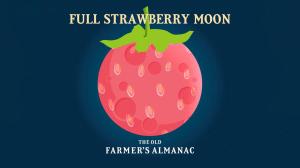
The Full Strawberry Moon on June 21 is the lowest full Moon in many years. What does this mean? Expect a beautiful full Moon that looks extra-large and is reddish-orange colored. Learn more about this special solstice Moon from Bob Berman.

When to See the Full Moon in June 2024

This year, the Full Moon coincides with the summer solstice! On the evening of June 21 —just after sunset—look towards the southeast to watch the full Moon rise gently above the horizon. June’s full Moon will reach peak illumination at 9:08 P.M. Eastern Time. See the Full Moon Calculator for your local time.

Why the Solstice Moon is Special

This is an unusual full Moon, which I highlighted in my 2024 astronomical highlights.

The June Moon begins its Moon Phase cycle as the “New Moon” on June 6. Then, night after night, the hair-thin crescent will grow fatter until it waxes all the way to its first-quarter phase on the 14th.  That’s when it will hover due south on the meridian at sunset and offer binocular and telescope owners perfectly shadowed lunar terrain.

After that, meaning these next couple of weeks, the Moon enters its waxing gibbous phase, the odd football shape that still boasts ideal highlighting of lunar features since sunlight continues to strike the Moon’s surface at a sharp, shadow- Click here to read the rest of this article

Some of the Witchcraft/Magickal Correspondence for Litha/Summer Solstice

(YOU CAN COPY AND PASTE ANY COROSPONDENCES POSTED TO A DOCUMENT TO PRINT AND/OR SAVE ON YOUR COMPUTER)

Spell For Tuesday- Devil’s Pod Hex and Curse Breaker

(YOU CAN COPY AND PASTE ANY SPELLS POSTED TO A DOCUMENT TO PRINT AND/OR SAVE ON YOUR COMPUTER)

Devil’s Pod Hex and Curse Breaker

Ever feel like you were hexed or cursed? Clear the negativity with this hex breaker that uses Devil’s Pods and dried herbs. When you are finished, place the pod facing away from you to ward off and keep nasty vibes at bay.

ITEMS NEEDED

One Devil’s Pod

Dried Basil

Dried Bay Leaf

Mustard Seed

Black or White Candle

Ritual Oil or Essential Oil

Tweezers and Funnel (optional)

INSTRUCTIONS

1. Open the hole the in the top of the pod. Tweezers work well, but you can use a chopstick or skewer as well.

Looking for Devil’s Pods? You can find them here.

2. Crush the bay leaf and add the bay leaf, mustard seed, and basil into the pod.

*Tip: If you have a straw or small funnel it is helpful.

3. Dress the candle with ritual oil or an essential oil that is good for banishing such as frankincense or peppermint. For this spell, I used our custom and potent Fire Witch Oil.

4. Light the candle and hold it over the hole of the pod. Let the wax drip down until the hole of the pod is sealed and then extinguish the candle.

5. Recite the incantation and focus on breaking and blocking any hexes and bad energy that have been sent your way. Set the pod facing away from you to ward off bad vibes, hexes, and negativity.

“No more shall this evil last,

Any hex I break that has been cast.”

Moon Phase for Tuesday June 18th and Wednesday, June 19, 2024

Source: nineplanets.org

Northern Hemisphere

June 18, 2024

The current moon phase for today is the Waxing Gibbous phase.

On this day, the moon is 12.29 days old and 88.48% illuminated with a tilt of 140.147°. The approximate distance from Earth to the moon is 394,361.15 km and the moon sign is Scorpio.

The Moon phase for today is a Waxing Gibbous phase. This is the phase where the moon is more than 50% illuminated but has not yet reached 100% illumination (which would be a Full Moon).

In the Northern Hemisphere, the right side will be illuminated, and in the Southern hemisphere it’ll be the left side that is illuminated.

The Waxing Gibbous phase, like all moon phases, will last for just over 7 days. The actual length will vary because of the elliptical shaped orbit of the moon. During this Waxing Gibbous phase the moon will rise in the east in the mid- to late-afternoon and will be high in the eastern sky at sunset.

Assuming it’s a clear night, the Waxing Gibbous moon will then be visible through most of the night before setting just before sunrise.

Fun fact: the word Gibbous was first used in the 14th century and comes from the latin word gibbosus which means humpbacked.

Phase Details

Phase: Waxing Gibbous

Moon age: 12.29 days

Moon illumination: 88.48%

Moon tilt: 140.147°

Moon angle: 0.51

Moon distance: 394,361.15 km

Moon sign: Scorpio

Southern Hemisphere

19 June 2024

The current moon phase for June 19th, 2024 is the Waxing Gibbous phase.

On this day, the moon is 13.33 days old and 94.35% illuminated with a tilt of 130.633°. The approximate distance from Earth to the moon is 389,913.44 km and the moon sign is Sagittarius.

The Moon phase for June 19th, 2024 is a Waxing Gibbous phase. This is the phase where the moon is more than 50% illuminated but has not yet reached 100% illumination (which would be a Full Moon).

In the Northern Hemisphere, the right side will be illuminated, and in the Southern hemisphere it’ll be the left side that is illuminated.

The Waxing Gibbous phase, like all moon phases, will last for just over 7 days. The actual length will vary because of the elliptical shaped orbit of the moon. During this Waxing Gibbous phase the moon will rise in the east in the mid- to late-afternoon and will be high in the eastern sky at sunset.

Assuming it’s a clear night, the Waxing Gibbous moon will then be visible through most of the night before setting just before sunrise.

Fun fact: the word Gibbous was first used in the 14th century and comes from the latin word gibbosus which means humpbacked.

Phase Details

Phase: Waxing Gibbous

Moon age: 13.33 days

Moon illumination: 94.35%

Moon tilt: 130.633°

Moon angle: 0.51

Moon distance: 389,913.44 km

Moon sign: Sagittarius

8 Protection Rules Every Witch Should Know

Click here for more information on 8 Protection Rules Every Witch Should Know

Some of the Witchcraft/Magickal Correspondence for Friday

(YOU CAN COPY AND PASTE ANY COROSPONDENCES POSTED TO A DOCUMENT TO PRINT AND/OR SAVE ON YOUR COMPUTER)

Friday Source: plentifulearth.com

Planet: Venus

Element: Water

Gender: Female

Deities: Aphrodite, Eros, Freya, Venus

Colors: Aqua, Copper Colors, Green, Light Blue, Pink

Crystals: Aventurine, Blue Lace Agate, Copper, Coral, Emerald, Jade, Lapis Lazuli, Malachite, Moonstone, Quartz, Rose Quartz, Selenite

Herbs & Plants: African Violet, Apples, Apple blossoms, Apricot, Barley, Birch, Cardamon, Carnations, Catnip, Columbine, Feverfew, Foxglove, Germanium, Goldenrod, Heather, Hibiscus, Iris, Lilac, Magnolia, Roses, Strawberries, Sweetpea, Thyme

Incenses: Cardamon, Rose, Saffron, Sandalwood, Strawberry, Vanilla, Venus Oil, Yarrow

Energies & Associations: Arts, Beauty, Birth, Fertility, Friendship, Growth, Harmony, Love, Marriage, Music, Nature, Partnerships, Peace, Perfumes, Platonic Love, Lust, Passion, Pleasure, Reconciliation, Relationships, Resolving Relationship Issues, Romance, Sexuality, Social Activities, Transformation

Friday Source: smudgemetaphysical.com

Planet: Venus

Colour: pink and aqua

Plants: Rose

Stone: rose quartz, Jade, Lapis Lazuli, Coral, Emerald, Malachite, Copper

Herbs: Rose, Yarrow, Cardamon, Strawberry, Sandalwood, Saffron, and Vanilla, Thyme

Oils:love & attraction oil

Gods/Goddess: Eros, Venus, Aphrodite, Freya

Foods: strawberries

Fridays are ruled by the feel good planet Venus. This day is usually associated with reward and relaxation due to the end of the work week, but the influence is also due to the celestial body that governs it. 

Fridays are for indulging. It’s date night. It’s a luxurious bath with a glass of wine. It’s celebrating your free time. 

Spells and rituals: love, romance, marriage, sexual matters, physical beauty, partnerships, friendships, social activities, strangers, pleasure, music, incense, perfumes, nature, and arts and crafts.

Fun Friday spells:

When you get ready in the morning, whether you’re brushing your hair, washing your face or applying makeup, make it a ritual in self-love. Feel yourself being self-pampered.

Share a pitcher of sparkling water with cut up strawberries and lemon for a refreshing drink that celebrates you and your loved ones. 

Add rose petals and a drop of vanilla oil in both your shoes and walk through your day knowing each step will bring you closer to opportunities that bring you pleasure. 

Draw a luxurious bath to Attract Love and Intimacy

June 14 and 15, 2024 Current Moon Phase for the Northern and Southern Hemispheres

You can use this link to go forward or backward in time for Moon phase information. If you are curious, you can even find out what phase the Moon was in when you or anyone else was born.

The 8 Lunar Phases

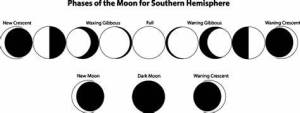
There are 8 lunar phases the Moon goes through in its 29.53 days lunar cycle. The 4 major Moon phases are Full Moon, New Moon, First Quarter and Last Quarter. Between these major phases, there are 4 minor ones: the Waxing Crescent, Waxing Gibbous, Waning Gibbous and Waning Crescent. For more info on the Moon Cycle and on each phase check out Wikipedia Lunar Phase page.

Useful Moon Resources

Check the weather before a night of Moon gazing at weather.com

For a list of all the current meteor showers visit American Meteor Society

Source: MoonGiant.com

Northern Hemisphere

June 14, 2024

The Moon’s current phase for today and tonight is a First Quarter phase. This phase occurs roughly 7 days after the New Moon when the moon is one quarter of the way through its orbit around the earth. Exactly half the moon will be illuminated and half dark. On the day of the First Quarter phase the moon is high overhead at sunset and is visible until mid-night when it sets in the west. The First Quarter phase is a one-day event and in the following days enters a Waxing Gibbous phase becoming more illuminated each day until the Full Moon.

Visit the June 2024 Moon Phases Calendar to see all the daily moon phase for this month.

Today’s First Quarter Phase

The First Quarter on June 14 has an illumination of 53%. This is the percentage of the Moon illuminated by the Sun. The illumination is constantly changing and can vary up to 10% a day. On June 14 the Moon is 7.63 days old. This refers to how many days it has been since the last New Moon. It takes 29.53 days for the Moon to orbit the Earth and go through the lunar cycle of all 8 Moon phases.

Phase Details

Phase: First Quarter
Illumination: 53%
Moon Age: 7.63 days
Moon Angle: 0.49
Moon Distance: 405,497.19 km
Sun Angle: 0.52
Sun Distance: 151,963,195.99 km

Southern Hemisphere

15 June 2023

The Moon’s current phase for today and tonight is a First Quarter phase. This phase occurs roughly 7 days after the New Moon when the moon is one quarter of the way through its orbit around the earth. Exactly half the moon will be illuminated and half dark. On the day of the First Quarter phase the moon is high overhead at sunset and is visible until mid-night when it sets in the west. The First Quarter phase is a one-day event and in the following days enters a Waxing Gibbous phase becoming more illuminated each day until the Full Moon.

Visit the June 2024 Moon Phases Calendar to see all the daily moon phase for this month.

Today’s First Quarter Phase

The Waxing Gibbous on June 15 has an illumination of 62%. This is the percentage of the Moon illuminated by the Sun. The illumination is constantly changing and can vary up to 10% a day. On June 15 the Moon is 8.52 days old. This refers to how many days it has been since the last New Moon. It takes 29.53 days for the Moon to orbit the Earth and go through the lunar cycle of all 8 Moon phases.

Phase Details

Phase: Waxing Gibbous
Illumination: 62%
Moon Age: 8.52 days
Moon Angle: 0.49
Moon Distance: 405,115.87 km
Sun Angle: 0.52
Sun Distance: 151,976,646.62 km

A Laugh for Today

For anyone who might not know who this pink animal is. He’s known as the Pink Panther and was very popular in the 1970’s and 80’s.

I hope the rest of your day and evening is relaxing, filled with fun and love.

Merry part until we merry meet again!

Spell For Thursday – Silver Spell for Money

(YOU CAN COPY AND PASTE ANY SPELLS POSTED TO A DOCUMENT TO PRINT AND/OR SAVE ON YOUR COMPUTER)

 Silver Spell for Money

(This ritual takes a week to perform)

Situate a small bowl of any material in a place of prominence in your home, somewhere you pass by every day. Each day for seven days put one dime in the bowl. Next, obtain a green candle, any shape or kind.

Before you begin, fix in your mind the idea that you are a prosperous person. See money as being no problem. Imagine money coming to you, as you need it. Place the bowl of dimes or pennies, the candle and a candle holder on a flat surface. Hold the candles in your hands and feel the power of money.

Feel the avenues that open to you when you have it. Sense the energy within money which we as human beings have given to it. Place the candle in the holder. Pour the seven dimes into your left hand. You will create a circle surrounding the candles with the dimes. Place the first dime directly before the candle. As you place it say there or similar words:

“Money flow, money shine
Money grow, Money’s mine.”


Repeat this 6 more times until you’ve created a circle around the candle with seven gleaming pennies (or dimes.) As you say the words and place the dimes, know that you’re not just reciting and fooling around with pieces of metal. You’re working with power – that which we’ve given money as well as that which is within yourself.

Words too have energy, as does the breathe on which they ride.

When you’ve completed this, light the candle. Strike a match and touch its tip to the wick. As it puts up the fire, sputters, to a shining flames, see money burning these. See the power of money flowing out from the seven dimes up to the candle’s flames and then out to the atmosphere. Blow out the match and settle down before the glowing candle and money.


Sense the feeling of money in your life. Visualize a life with money to spare – a life in which bills are quickly paid and money will never again be a problem. See yourself wisely spending money, investing it for your future needs. See money as an unavoidable and beautiful aspect of your life. Kill off any thoughts of debt, of taxes, of doubt that you can achieve this change.


Simply see what will be. After ten minutes or so, leave the area. Let the candle burn itself out in the holder. Afterward, collect the dimes, place them back in the bowl, & “feed” it a few coins every day from then on. Add words to ask that the money comes with harm to none…. and money will come to you.