

Category: Our History
The History Of Witches: How Christianity And Misogyny Turned Revered Healers Into Wicked Pariahs
From powerful priestesses to demonic masters of the occult, the history of witches is a story of the dangers of being a woman in a male dominated world.
A fearsome being of fairytale and myth, the witch has carved out a home in nearly every culture across the world and time. Indeed, the witch represents the dark side of the female presence: she has power that cannot be controlled.
While the witch often conjures depictions of aging, ugly, hook-nosed women hunched over their cauldrons and inflicting toil and trouble on the masses, history tells us that the witch’s origins are far less sinister. In fact, those whom we consider to be witches were once healers and hallowed members of their communities.
The History Of Witches Dates Back To Biblical Times
Christianity Transforms The Witch Into A Figure Of Evil
Witch Hunts Become An Instrument Of Misogyny
Witch Hunts Sweep America
Witchery Is Revived By Wicca
The Rise and Persecution of Witchcraft Through History
Since the dawn of civilization, humanity has mostly believed in a polytheistic belief systems, worshipping a variety of gods and spirits. Christianity, however, sought to dismantle these long-standing traditions by promoting a monotheistic framework, a shift that clashed with the deeply ingrained cultural and spiritual practices of the time. As the Church worked to solidify its authority, the persistence of these ancient beliefs led to a feeling of threat within Christian ranks. This friction between old traditions and the rise of Christianity birthed a long history of witch persecutions.
The Evolution of Witchcraft and Its Persecution
Witchcraft persecution evolved alongside the expansion of Christianity. Although conversion spread across Europe, many individuals, particularly in rural areas, continued to honor the old ways. Beliefs in the Mother Goddess, who gave birth to a Divine Child that later became her husband and the master of harvests, remained strong. This seasonal cycle of death and rebirth persisted in folk traditions, with peasants and nobles alike venerating ancient deities. Witchcraft practices were often seen as a means of improving life’s hardships, leading to continued secret rituals.
As Christianity’s influence grew, the Church viewed these ancient customs as a direct challenge to its authority, labeling them the “Devil’s cult.” This led to a brutal campaign against those suspected of witchcraft, resulting in the deaths of over 200,000 people. Over time, the number of executions soared, with an estimated eight million people losing their lives as a result of witchcraft accusations during the peak of the Church’s fanaticism, particularly between the 12th and 18th centuries.
The Phases of Witch Persecution…
The Influence of the Malleus Maleficarum…
Witchcraft Across Continents…
The Salem Witch Trials…
The Famed Salem Witch Trials…
Witchcraft in the Modern Era…
Conclusion
Witchcraft, in its many forms, has been both a source of fear and fascination throughout history. From the brutal witch hunts of Europe to the enduring practices of modern-day witches, the persecution of those deemed to hold magical power reflects society’s ongoing struggle with the unknown. Today, witchcraft has diversified and evolved, but its historical legacy serves as a reminder of the dangers of intolerance and the enduring allure of ancient spiritual traditions.
Click here to read this rest of this article Source: ancient-origins.net
Most Common Witchcraft Traditions c. 2016

Water Witches c. 2018
Water Witches
Most people are familiar with sea witches and sea witchcraft. It seems as if, like the village witch, the sea witch has been recognized as a solitary powerful path by the general community. Of course sea witchcraft is not limited to solitary practitioners, as I know of a few sea witch covens around the globe, but often times sea witches are inclined to carve their own path, similar to the way a river might carve it’s own path through stones. Water witches, like the Sea Witch, are drawn to the water. Water witches are drawn not only to the ocean, but they feel and must answer the call of river water, lake water, canals and even the rain. Like the sea, these bodies of water are seductresses. They pull at our heart strings and torture our spirit; pining and raging like an ocean in a storm. I have heard whispers of those that say they have Mermaid or Selkie blood and also of those that have had past lives as such creatures; perhaps they are true and perhaps it is just the seduction of the mysterious waters. What is known, is that the water calls to us, it pulls us in and we feel empty and lost with out it.
A water witch is simply one that works witchcraft with water. Over the years I have found some that are skeptical, and others that deeply understand my words. It is very interesting that Sea Witches seem to be accepted by the pagan world, but Water Witches are not. However, with the recent publishing of Whist Waters by Gemma Gary, it seems as if the Witchcraft community is finally interested in accepting Water Witchcraft as well. It makes sense; water is everywhere. It is not just the ocean or large lakes, it is the rain, the swamps, large rivers and seasonal streams etc. Water is essential to our life; we cannot go without water for longer than a few days without death. Our bodies are made up of a considerable portion of water. We know from Dr Masaru Emoto’s work with water (which I will discuss below) that even the slightest word can create a change in water, and how that word is spoken influences the outcome of that change. When we put these thoughts about water and change together with the definition of magic…
Magic is…
“the science and art of causing Change to occur in conformity with will”
~Aleister Crowley~
“the art of changing consciousness in accordance with will”
~Doreen Valiente~
We end up with a very clear picture of how powerful water magic can be. In short, since we know that words and intent influence the structure of a water molecule and that magic is change according to will and will and intent are almost synonymous then we have a basic formula for Water magic. Intent + water = a visual change. In a way, we can even see the magic take place!
When we look at Water Magic as a practice, utilizing it in either small (rain, wells, etc) or large quantities (lakes, ocean etc), it is very clear that chanting, spells, incantations, sigils, and many more magical practices can be incorporated and the result is incredibly powerful. For hundreds of years Holy Wells have been revered for their powers of both cursing and healing. Such bodies of water include the famous hot springs at Bath. The hot baths, shrines and a temple dedicated to Sulis, the Goddess that presides over the hot springs, are known to heal, but are also known for its curse tablets, where over 300 were found. Many bodies of water like the Glastonbury red and white wells contain their own properties which are enhanced by the calcium and iron deposits. For hundreds of years Clootie have been hung over sacred wells in the UK. This was practiced widely from Wales to Scottland and still is today. The famous Mother Shipton, witch and oracle, lived by a sacred spring and can still be visited today. Not suprisingly her name is Ursula Southeil (interesting connection to Disney’s little mermaid!) As you can see both Folklore and Science support the idea of water magic.
Water Witchcraft, as I stated before, is very similar to Sea Magic and Sea Witchcraft. Sea Witches usually stick to the sea shore, however water witches will be found just about everywhere. Near lakes, rivers, holy wells etc. Tools are usually gathered from the shoreline and oftentimes shells, driftwood, and plants are their tools of choice. Water Witches will most often blend Sea magic with their craft. Focusing on tides, moon cycles, and so much more. Since there is no specific Water Tradition (with one exception) you will find that most sea/water witches practice very differently. Some incorporate water and sea spirits, fae or deity into their practice, while others believe that there is no religion associated with their practice at all. These topics are very popular in the pagan community and chat boards, and though they do influence water/sea magic, they are not a topic I am going to discuss here and for one very simple reason; No one will ever agree! Water witches will also find that they differ in their beliefs, the one thing that binds us together is Water in her many forms. For me, a Water witch’s practice can be defined by Magic that is focused around water, water creatures living and dead, spirits that are associated with water, and if one wishes Goddess and Gods associated with Water.
** The one exception in tradition I mention above is The Water Witches in the UK. There is very limited information on them however. They are part of a group of people that were very much like gypsies, but their homes were floating barges. There is no particular tradition and with limited information it is hard to say how they practiced. However what we do know is they were wandering people of the industrial revolution that lived on the water canals in the UK. Many people still live this way today, but I am not sure if they exist in the same manner. I call this a tradition because it was a group of people that practiced for years in a similar way, and many were family. You can read about my own adventures on these mysterious canals here.
There are many different types of water; fresh water lakes and the ocean are not the only types and many hold as much power and mystery such as the muddy waters of the Uk Canals, sacred wells, and swamps. Many sea witches work with brackish water and so do water witches. There is so much magic in the brackish waters of the Calvert cliffs. Large Megolodon teeth can be found on the shores, and stingrays swim circles in the early morning on the calm glassy surface of the pale blue and gold water with the sun rising in the east. The shores are full of healing and death, with yarrow growing among the poison hemlock on the banks of the shore speaking of balance and bane. Large predators once roamed the waters and the stings of the jellyfish are fierce. Oh how glorious to watch the storm come across the waters…
Swamp water is also full of mystery and poison. Toads, snakes and spiders lurk with in the grooves of a hollowed cypress tree, tall nubs of the cypress trees roots peek above the surface of the waters. Swamp waters can be found all over the world. Most commonly known would be the Florida Everglades and the Bayou of Louisiana. Any type of magic you can imagine can be practiced in this type of water, from natural magic to voodoo. However I will say, I do not think that ceremonial magic would be suited for this type of environment
Lakes and Fountains hold so much mystery and mythology. The Lady of the lake has to be the most famous account of water magic taking place in a lake. There are several tales of Ladies of the Fountain and Lake Ladies and their magical gardens, healing powers, and bargains.
Rain, Snow, Hail and storm energy in general is very interesting to work with as well. I personally collect water everywhere I go. Often times I label and date it with what type of storm it was. As you can imagine, a summer sun shower would be beautiful warm energy, and hail and a lightning storm pack a VERY powerful punch and can be incorporated into magical workings that need the extra push or used to curse. There is nothing like sitting on the banks of a large body of water, watching a terrible storm roll in. Many water witches enjoy this type of weather, and pull energy from the storm as well as send spells out and let the roaring winds and waters weave the magic.
Types of water you can work with include, sea, brackish, lakes, rivers, distilled, hydrosol, swamps, snow, hail, rain, ponds, canals, seasonal creeks, sacred wells and other bodies of water. Really there is no limit to how you can use water magic! I find that Water Witches are attracted to bottles, bowls, and other vessels. They are often found beach combing or searching the banks of rivers and lakes. Many I have spoken with are drawn to some sort of mythological water spirit or creature such as Mermaids, Selkie, and Lake Ladies. Many love to swim, boat, and are often found in the bath. Interestingly, astrological charts seem to indicate a strong lean towards water, often times having a Water rising sign as well as a Watery moon. However this is not a hard fast rule and it does vary. Often times, Water witches are very good at water scrying, divination with shells or bones found along the shoreline. Almost every Sea/Water witch I have met is a bit of a magpie and will collect shells, wood, glass etc from the water and create shrines or water based altars. Many work with tea, sacred baths, healing waters, holy wells, hydrosols, and water based sprays. I will blog more about how to work with different bodies of water and how to work with them in the future.
Source: Annwyn Avalon, Author Published on The Water Witch
Let’s Talk Witch – Making Wicca/Witchcraft a Part of Your Life c.2015
Making Wicca/Witchcraft a Part of Your Life
Keep in mind that you spent a year and a day studying and preparing to get to the point of becoming a Wiccan. Do not let that effort go to waste by not incorporating Wicca into your daily life. In Wicca, complicated Wiccan rituals are usually required only during Sabbats. In everyday life, being a Wiccan requires little but consistent effort. A good Wiccan tries to find a magical application to every routine thing they do. Wicca is a path of simultaneous empowerment and humility.
You are empowered as a Wiccan because you believe that many things in your life are under your control. You have the power to change them if you like. You can use your magic, spells and rituals to bring happiness into your life. You can also regularly perform protection spells to keep yourself from harm or healing spells on sick days.
However, remember that though you may have a lot of textbook and working Wiccan knowledge, you do not know everything. Do not stop learning about Wicca and growing spiritually. Keep an open mind to receive as much knowledge from the universe as you can. Wiccans can become set in their own comfort zone if they do not learn to accept new knowledge.
In your ordinary routine, stay mindful of the Rede and the threefold law. Remember, everything you do or say should have no intent of causing yourself or another being harm. Moreover, all your actions have consequences and as a Wiccan, you are fully responsible for them. Each act, good or bad, will find its way back to you three times over.
If you are planning to get married after you become a Wiccan, why not plan your wedding ceremony accordingly as a Wiccan rite of passage? Perform a Wiccan wedding or ‘handfasting’ with your coven family. Also, if you have a baby, have a wiccaning ceremony to put him under the protection of the God and Goddess. Observing rites of passage allows you to feel like part of a community greater than yourself.
As a Wiccan, respecting Nature becomes a part of your own innate nature. Recycling and low energy consumption, if they are not already, should become part of your routine as a Wiccan. Hobbies such as gardening and bird watching also are a good way of learning about the Natural world and connecting with it. Going on hiking trips or spending some time outdoors will help you immerse yourself in Nature. Remember, everything in the universe is a manifestation of the Divine.
The cyclical lunar patterns hold great significance in Wicca. Try to determine what effect lunar phases have on your life and work accordingly. Moreover, remember that each day and night is a gift from the God and Goddess. Try to consciously thank them and the elements every day.
The more you try to incorporate Wicca into your life, the more it will help you accomplish your goals. However, the catch is that you cannot be selfish. Remember, Wicca and Witchcraft are religions geared towards positivity in all respects. It may seem overwhelming at first, but the more regularly you practice it, the simpler it will get.
Source: Wicca Made Easy: Simple Spells for Love, Money, Luck, Success, Weight Loss & More!
Sarah M. Lancaster
American Witchcraft Laws c.2015
American Witchcraft Laws
A reader writes in, “I notice that there are a lot of references made to the English Witchcraft Laws, but what about law in America? Didn’t the Salem witches in Massachusetts get burned at the stake because of laws against witchcraft?”
The Salem witch trials were indeed held in Massachusetts. However, in 1692, when these trials took place, Massachusetts was not “American” at all. It was a British colony, and therefore fell under British rule and law.
In other words, the Salem Colony was not American in 1692, because “America” didn’t exist. In fact, it didn’t exist until about eighty years later. Also, no one has ever been burned at the stake for witchcraft in America. In Salem, a number of people were hanged, and one was pressed to death. It is unlikely that any of those people were actually practicing any sort of witchcraft (except possibly Tituba), and more likely that they were all just unfortunate victims of mass hysteria.
Now, that having been said, in some states, there are laws against fortunetelling, Tarot card reading, and other divinatory practices. These are not outlawed because of an injunction against witchcraft, but because of municipal leaders trying to protect gullible residents from being swindled by con artists. These ordinances are passed on local levels and are typically part of zoning regulations, but they’re not anti-witchcraft laws – they’re anti-fraud laws.
In addition, there have been cases in the United States where specific religious practices have been challenged in court.
In 2009, Jose Merced sued the city of Euless, Texas, when they told him he could no longer perform animal sacrifices as part of his religious practice. The city told him that “animal sacrifices jeopardize public health and violate its slaughterhouse and animal cruelty ordinances.” The 5th U.S. Circuit Court of Appeals in New Orleans said the Euless ordinance “placed a substantial burden on Merced’s free exercise of religion without advancing a compelling governmental interest.”
Again, this was not a specific injunction against witchcraft or religion. Because it was a specific religious practice, and the city couldn’t provide enough evidence to support their claim of it being a health issue, the court ruled in favor of Merced and his right to practice animal sacrifice.
In the 1980s, the District Court of Virginia court recognized witchcraft as a valid and legitimate religion, in the case of Dettmer v Landon, and this was upheld later on by a Federal court, determining that people who practice witchcraft as a religion are entitled to the same Constitutional protections as those who follow other belief systems.
Believe it or not, Pagans – and other practitioners of earth-based faiths – have the same rights as everyone else in this country. Learn about your rights as a parent, as an employee, and even as a member of the United States military:
- Protect Your Legal Rights: Learn what you can do to reduce the chance that you’ll be a victim of religious discrimination.
- Your Rights as a Pagan Parent: In the United States, we have the same rights as parents of any other religion. Learn how you can avoid discrimination in schools, simply by opening up the lines of communication.
- Rights of Pagans in the Workplace: What rights do Pagans and Wiccans have in the workplace? Can your employer treat you differently just because you’re not part of a mainstream religious group?
- Rights of Pagans in the Military: If you or someone you love is an active duty member of the military, you need to be aware of your rights as a Pagan or Wiccan soldier.
Source:
Author:Patti Wigington
Website: Found on & owned by About.com
English Witchcraft Laws c.2015
English Witchcraft Laws
Definition:
Until 1951, England had laws strictly prohibiting the practice of witchcraft. When the last act was repealed, Gerald Gardner began to publish his work, and brought witchcraft back into the public eye without threat of prosecution. Put into effect on June 1, 1653, the Witchcraft Laws mandated the outlawing of any kind of witchcraft-related activities. The 1951 repeal made it easier for modern Wiccans — Gardner was able to go public just a few years later, when he published Witchcraft Today in 1954.
It’s important to note that the 1653 Witchcraft Laws were not the first to appear in the English judicial system. In 1541, King Henry VIII passed a piece of legislation that made witchcraft a felony, punishable by death. In 1562, Henry’s daughter, Queen Elizabeth I, passed a new law that said witchcraft would only be punished with death if harm had been caused – if no physical harm was done to the alleged victim, then the accused only faced imprisonment.
Examples: Prior to the repeal of the English Witchcraft Laws, British pagans had to practice in secret to avoid prosecution.
Source:
Author:Patti Wigington
Website: Article found on & owned by About.com
The Trials Of The Pendle Witches (Witchcraft Documentary) | Timeline Video
While the witch trials in Salem, Massachusetts, are well known to us in the USA we need to remember the started long before that all across Europe. This is just one example of what was happening in the 17th century before the witch trials here in the USA.

The Trials Of The Pendle Witches (Witchcraft Documentary) | Timeline Video

Here is a general search to read more about the Pendle witch trials in England in 1612
A Look At The Various Path of the Craft – Faery Witchcraft c. 2018
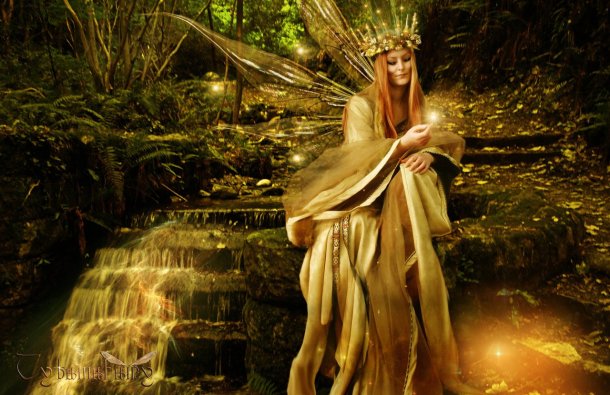
What is a Faery Witch?
Galadriel in Lord of the Rings is a typical Faery Witch. The swan is a common totem for us as well. Here Galadriel is like the Lady of the Lake in the Arthurian Mythos.
Characteristics of the Fledgling Faery Witch
*A Faery witch is one who has a special affinity to the Faeries, especially those who are the spectres of the ancestors and the Old Gods.
*Unlike Witches initiated into Wiccan traditions such as the Gardnerian and Alexandrian paths, the Faery Witch is one whose talent comes from deep communion with nature alone. There is no necessity to connect to a line of initiates to become a channel for power. The connection is through the Fay who work through the land and the imagination.
*I believe the Faery Witch is one who has traveled between the Faery and Mortal realms for many lifetimes. Therefore, she or he has a natural ability to ‘see’ spirits in the wilds, is drawn trees, rocks, hills, the turning of the seasons, the moon, and the waters. One such as this will have an innate desire to return ‘home’ in dreams and waking reveries, and maybe even to try to bridge the worlds so that the Faeries can access the Mortal Plane.
Do you want to train your Second Sight?
*Wiccans use many branches of Magic to forge their consciousness and work their enchantments. They often begin with woodland pantheons and expand into other occult traditions and ceremonial magic . As I am not initiated into the Wiccan traditions, I cannot say more. The Faery Witch more often defaults back into communing with the Fay.
*The Faery Witch may be content to walk across the land with intent and heightened consciousness to feel the workings of magic. The relationship between the Witch and the Fay is the magic.
* Animals trust Faery Witches and will communicate with us telepathically.
*Faery Witches are usually drawn to the Arthurian and Holy Grail Mythos. This is because one of main branches of Faery, the Tuathaa de Danaan are Grail Keepers. Many of the stories and myths that came to comprise Arthurian Romance were drawn from the visions of Faery Seers, or Bardic Poets.
*Faery Witches often have poetic talents. Visionary language comes naturally to them.
* Faery Witches do not like iron! Therefore swords are not part of our Magical Regalia.
* Young Faery Witches love Faeries. They also understand what Faeries are at deeper levels than those who may like Faeries but are not Faery Witches.
*Faery Witches are not afraid of disturbing psychic images and undercurrents. We are drawn to the mystery.
Faery Glamour
I like to think that Faery Witches have a special glamor of beauty and youth, a quality of stillness and mystery.
*This comes from reading Grimm’s Fairy tales about beautiful Enchantresses and Princesses, the ethereal Faery Queens of Arthurian Romance, legends and folk lore. We must never let ourselves go, or the glamor will be lost. Once the glamor is lost, our power can go with it. For what is glamor but the creation and maintenance of our Magical Self?
* Even as she ages, the Faery Witch exudes the quality of beauty, sexuality, and charm.
* Sometimes alliance with the Faery can take over one’s life. This may cause isolation and loneliness as most others are put off for some reason.It is difficult to inhabit many worlds at the same time.
*We must always guard against psychic attack, for we seem fragile even when we are very strong. This quality disrupts the assumptions of those who would overpower us, inciting their drive to engage in battle.
*The ability of the Faery Witch to see and communicate with the Unseen endows him or her with the ability to heal others. Alliances with the Fay increase the effectiveness of Faery Healing.
Can Faery Witchcraft be Learned?
Joanne Sanow
Can studying Faery Witchcraft cause any harm?
*No. The mind will absorb the lessons in its own measure. Even if one does not develope psychic powers, exposure to the Faery Realm inspires the heart and is a well of creativity that anyone can drawn upon. You can be as you were meant to be and still wear the Glamor of a Faery Witch.
*Psychic Protection is part of the training. Harmless Psychic Self Defense is valuable to everyone.
How old do you have to be to become a Faery Witch?
Old enough to read and carry out exercises. Young people are much closer to Faery than jaded, stressed out adults. Early tuition in Faery Magic can help one cope with life as one ages with a constant sense of curiosity and wonder. There are endless subjects to explore. For this reason, the Faeryland is called the Summer Land, or Land of Eternal Youth.
Source:

Faery Wicca
Faery Wicca is also known as Fairy Wicca and it is basically a broad term that consists of all the Wiccan traditions that stresses importance on the Fey (such as sprites, faeries, elves, gnomes, etc), the relation of the Fey with the natural world and also their teachings. Originally written about by the author, Kisma Stepanich. Believers of this tradition are of the opinion that this type of Wicca has originated from the Tuatha De Danaan traditions. </ahref=”view_category.asp?cat=30″>
The Tuatha De Danaan is considered to be the mythological predecessor of the Celts to many although, there are some who are not of the same opinion.
Faery Wicca is a belief that has taken some elements from the Irish mythology, from different non-Celtic sources and also from the interpretation of the history of the Celts by Kisma Stepanich. This belief has also been influenced by the author’s imagination of the Celts as well as the Celtic legend and pseudo history. There are some people who often confuse this with Feri Wicca, a tradition started by Victor Anderson.
Faery Wicca has been inspired by the customs and practices of the modern Celts as well as the ancient Celts. This tradition has more similarities with other modern Wiccan traditions and non-Wiccan traditions. It does not share that many similarities with ‘Fairy Faith’ that it is commonly referred to as in the conventional Gaelic cultures. The followers of the Faery Wicca worship a number of deities and the chief Goddess is none other than the androgynous Star Goddess. The other deities that are worshiped are the various aspects of the primary Goddess and these deities are:
- The Crone.
- The Winter King.
- The Blue God.
- The Great Mother.
- The Harvest Lord.
- The Corn Maiden.
This belief is said to have seven guardians and they are generally called upon at the time of casting the circle. The guardians of the North and West are believed to be female where as the guardians of the South and East are believed to be male. Nobody knows their real names but each of them have a public name which are as follows:
- Guardian of the Gates.
- Star Finder.
- Fire in the Earth.
- Shining Flame.
- Heaven Shiner.
- Black Mother.
- Water Maker.
There is no doubt that there are few similarities between the Faery Wicca and other Wiccan traditions like appreciation of creativeness, love for beauty and respect for nature. While it maintains some similarities, there a number of customs that differ from the traditional Wiccan Spellcastings.
One of the many differences between this tradition and others is that with Faery Wicca it encourages risking to a greater extent as compared to the other Wiccan customs. It is often said that they follow a different set of rules, then other followers of traditional Wicca. The practitioners of this form of Wicca view themselves as Fey and this means that they are neither black nor white.
You may not know this but possession is practiced in this form of Wicca. The followers believe that Gods are real and the morality system that the Gods have are quite dissimilar from the one that human beings have. Faery tradition can be considered as the mystery tradition that has direct contact with the heavenly and it is also a tradition of ecstasy, power and danger.
Last but not the least, I would like to say that while this tradition is exciting and beautiful, not everyone can be what it takes to be a practitioner of this Wicca and it most certainly is not for the faint-hearted.
Reference
Tatianna Pereslavl-Svyatoslavich
Collaborator, 7Witches Coven
Faery Wicca
Faery Wicca, or Fairy Wicca, is any tradition of modern Wicca that places an emphasis on the Fey (goblins, elves, faeries, sprites, etc.), their lore, and their relation to the natural world.
“Faery Wicca” may also refer to a specific tradition of Wicca, recently founded by author Kisma Stepanich. Adherents of Stepanich’s Faery Wicca claim that it recovers the traditions of the Tuatha De Danaan, the mythological precursors to the Celtic people; however, this is disputed by those familiar with ancient Celtic polytheism and mythology. Stepanich’s Faery Wicca draws liberally on some degree of Irish mythology, from the author’s interpretation of Celtic history, legend, pseudohistory, imagination, and a variety of non-Celtic sources.
Faery Wicca is not related to the late Victor Anderson’s Feri Tradition of witchcraft, which is sometimes also spelled Faery or Fairy, nor is it directly related to the gay men’s group, the Radical Faeries. Though Faery Wicca may draw inspiration from some of the customs practiced among the ancient and modern Celts, it shares more with other modern Wiccan traditions than with the “Fairy Faith” as it is known in traditional Gaelic culture
Kitchen Witchcraft c. 2016

Eclectic/Faery Witchcraft c. 2016

The Nature of White Witchcraft c.2016

Friday The 13th: Origins and Witchcraft Associations
For spooky people everywhere, Friday the 13th has taken on the life of a holiday. Parties, tattoo specials, horror movies, and mostly around the belief that Friday is either lucky or unlucky. There’s no 13th floor in buildings, 13th aisle on airplanes. It’s Taylor Swift’s famously lucky number, yet there’s still a phobia, triskaidekaphobia, named for people who are afraid of the number 13. So which is it? And why is it associated with witches??
Friday the 13th’s exact unlucky origins are unclear.
In modern times, Friday the 13th is often associated with the movie, Friday the 13th. And honestly, it has nothing to do with the number, the day or witches and more so to do with frisky teens who aren’t attending to their summer camp jobs.
Modern witchcraft has really reclaimed the number 13 from its unlucky origins and associations with witches. In the 50s and 60s with the rise of Wicca and paganism up to now, many believe that 13 was the ideal number of coven members, likely because of the sort of 13 (its like 12 and some fractions or something) lunar phases in a year.
The association with witchcraft and Friday the 13th is also sort of unclear. Some believe it has to do with the witch trials when some were forced to “confess” that they met with their covens on Good Friday as like an insult to the puritans or … Click here to read the rest of this article – Source: xristiwitch.com
Wicca and Neo-Paganism
Neopaganism covers a wide range of belief systems which have emerged in the past 50 years, primarily in the UK, Europe, and the United States. This includes the better known Wicca, which is a synthesis of traditions from the British Isles, as well as many less visible groups which draw inspiration from other parts of the world. Based on folk-lore, traditional spiritual practices, anthropology, and a synthesis of esoteric systems, Neopaganism does not have any sacred texts of the same vintage as other religions, although unverifiable claims have been made in a couple of cases (e.g. Aradia, and The Gardnerian Book of Shadows).
Rather, the books presented here are source texts of Neopaganism, and other books which deal with related topics. Many of these books contain outdated or speculative material, and some of the texts here are the product of the Renaissance witch hunters. As a whole, the books here are of historical importance rather than a roadmap to modern pagan practice, and shouldn’t be construed as such. As always, we encourage readers to think critically.
Descriptions of contemporary Neopagan practice and beliefs can be found in the Internet Book of Shadows section of this site.
Twentieth Century
The Gardnerian Book of Shadows
The Book of Shadows is a Wiccan text which is maintained by the initiated in manuscript form. A Book of Shadows contains description of rituals, spells, and other knowledge. This tradition was carried on by Gerald Gardner, who (depending on the account) either synthesized Wicca, or took it public, during the 1950s.
The White Goddess
Robert Graves’ primary contribution to modern Neopaganism.
The works of Margaret Murray
An essay by J.B. Hare.
The Witch-Cult in Western Europe
by Margaret Murray [1921]
Were there ever REAL witches? If not, what were all the witch trials about? And how about those fairies? Murray tries to answer these and other questions objectively with plenty of documentary evidence. She is often cited as a primary source for Gerald Gardners’ ideology.
The Golden Bough
by Sir James Frazer [1922]
A massive study of the mythological cycle of the Godesses’ lover, the solar God who dies and is reborn. The Golden Bough had a huge influence on Margaret Murray, Robert Graves and Gardner.
Victorian
Aradia, Gospel of the Witches
by Charles G. Leland [1899]
Evidence of a surviving underground Italian pagan religion?
Etruscan Roman Remains in Popular Tradition
by Charles G. Leland [1893]
Stregheria is Italian traditional witchcraft. These are considered historical source documents of the Wicca movement. Some contemporary scholars have questioned the authenticity of Lelands’ scholarship. Recent publications by Raven Grimassi have also added a great deal of depth to the subject of Italian witchcraft. See www.stregheria.com [external site] for more information.
Gypsy Sorcery and Fortune Telling
by Charles G. Leland [1891]
Leland investigates another traditional system of magic, that of the Rom, or Gypsies.
Letters on Demonology and Witchcraft
by Sir Walter Scott [1885].
Scott covers much of the same evidence for the Witch cult as Murry (albeit in a more popular style). Scott draws few conclusions other than that our ancestors were extremely superstitous.
The Sorceress
by Jules Michelet, tr. by Alfred Richard Allinson [1939]
The story of witchcraft from the medieval to the 17th century, as a covert women’s rebellion which led to modern science and medicine.
The Burning Times
From the 14th to the 17th Century a hysteria spread across Europe which involved torturing and executing people based on accusations that they were witches. Whether any actual practicioners of a pre-Christian pagan tradition were persecuted as the result of a witch trial is up for debate. These books and texts are period documents which illustrate the methods, rationale (such as it was) and history of this persecution. They shouldn’t be taken as illustrative of Neopaganism, but as a warning about religious tolerance and the fragile nature of justice.
The Malleus Maleficarum
[1486], translated by Montague Summers [1928]
The best known witch-hunt manual, a primary source of information on this chilling subject.
Dæmonology
by King James the First. [1597] With Newes from Scotland [1591]
Two texts, one an essay on demons and other denizens of the night, the second a broadside with an account of a famous witch trial from the same period.
The Witch-Persecutions
Edited by George L. Burr [1896].
A short collection of translations of historical documents of the witch craze.
Druids
Although little is actually known about the Druids, that didn’t stop 18th and 19th century intellectuals from building a romantic mythology around them. This was closely associated with the rebirth of Celtic nationalism, as well as the Romantic and Gothic movements. This body of fact and speculation later became a central source of modern Wicca and Neo-Pagan belief and practice.
Irish Druids and Old Irish Religions
by James Bonwick [1894].
A scholarly perspective on the Druids in Ireland, weaving together strands of mythology and anthropology to build a picture of ancient Irish paganism.
The Veil of Isis or Mysteries of the Druids
By W. Winwood Reade [1861]. 277,613 bytes
A typical example of the romantic and misconcieved mid-19th Century literature about Druidry. We now know that the construction of Stonehenge preceded the historical Celts by many centuries.
The Religion of the Ancient Celts
by J. A. MacCulloch [1911]
An authoritative and factual study of ancient Celtic religion, including extensive material on what is actually known about the Druids.
The Barddas of Iolo Morganwg, Vol. I [1862]
The Barddas of Iolo Morganwg, Vol. II [1874]
Iolo Morganwg was one of the first to revive Druidry in the 18th century; however, it is questionable whether these texts are as old as they claim to be. These are nevertheless considered primary source material for the modern Druid revivial.
Antiquity
The Syrian Goddess
translated by Herbert A. Strong [1913]
Lucian of Samosata’s late classical account of Goddess worship, referenced by Robert Graves and other writers as a primary source of information on worship of the Ancient Near Eastern Goddess.
Miscellaneous
The Book of Hallowe’en
by Ruth Edna Kelley [1919]
Learn about Halloween and its pagan roots.
Irish Witchcraft and Demonology
by St. John D. Seymour [1913].
This is a fascinating study of the witch-persecutions in Ireland, along with accounts of paranormal activity.
Pagan Prayers
by Marah Ellis Ryan [1913]
Traditional spirituality from around the world.
Click on hyperlinks for more detailed information
Printable Witchcraft Book for Charms, Spells and Herbs
Charms, Spells, and Herbs PDF from witchcraftsecretmanual.com
I found a few interesting things I want to try in this Witchcraft book that is free to save and/or print. I think it will be a nice addition to my Grimoire.
Most Common Witchcraft Traditions c.2016
Green Witchcraft c.2018

Hereditary/Solitary Witchcraft c. 2016

The Origins and Practice of Witchcraft c.2018
The Origins and Practice of Witchcraft
A History Of Witchcraft
Witchcraft probably originated about 25,000 years ago in the Palaeolithic era. At that time, humankind and nature were seen as inextricably linked. People acknowledged every rock, tree and stream as deities in the life force, and the Earth as mother, offering both womb and tomb.
Prehistoric Witchcraft
Early man used sympathetic, or attracting, magick – in the form of dances, chants and cave paintings of animals – to attract the herds of animals that provided for the needs of the group, and to bring fertility to humans and animals alike. Hunters would re-enact the successful outcome of a hunt and would carry these energies into the everyday world. Offerings were made to the Mistress of the Herds and later to the Horned God, who was depicted wearing horns or antlers to display his sovereignty over the herds. Animal bones would be buried so that they, like humankind, would enjoy rebirth from the Earth Mother’s womb.
Where hunter-gatherers today continue the unbroken tradition that stretches back thousands of years – for example, among the Lapps in the far North of Scandinavia and the Inuits – these rites continue, led by a shaman, or magick man, who negotiates with the Mistress of the Herds or Fish in a trance for the release of the animals.
One of the earliest recorded examples of shamanism is the Dancing Sorcerer. Painted in black on the cave walls of Les Trois Freres in the French Pyrenees, this shamanic figure, which portrays a man in animal skins, dates from about 14000 BC and stands high above the animals that are depicted on the lower walls. Only his feet are human and he possesses the large, round eyes of an owl, the antlers and ears of a stag, the front paws of a lion or bear, the genitals of a wild cat and the tail of a horse or wolf.
By the Neolithic period, which began around 7500 BC and lasted until about 5500 BC, the hunter-gatherer culture had given way to the development of agriculture, and the god evolved into the son-consort of the Earth Mother. He was the god of vegetation, corn, winter and death, who offered himself as a sacrifice each year with the cutting down of the corn, and was reborn at the mid-winter solstice, as the Sun God.
The Neolithic period also saw the development of shrines to the Triple Goddess who became associated with the three phases of the Moon: waxing, full and waning. The Moon provided one of the earliest ways by which people calculated time. Since its cycles coincided with the female menstrual cycle, which ceased for nine moons if a women was pregnant, the Moon became linked with the mysteries first of birth, then of death as it waned, and finally with new life on the crescent. Because the Moon was reborn each month or, as it was thought, gave birth to her daughter each month, it was assumed that human existence followed the same pattern and that the full moon mirrored the mother with her womb full with child.
The full moon was also associated in later ages with romance and passion, originally because this coincided with peak female fertility. Moon magick for the increase of love and fertility is still practised under the auspices of the waxing moon. It was not until about 3,000 years ago that the male role in conception was fully understood in the West, and only then were the Sky Father deities able to usurp the mysteries of the Divine Mother.
A trinity of huge, carved stone goddesses, representing the three main cycles of the Moon, and dating from between 13000 and 11000 BC, was found in France in a cave at the Abri du Roc aux Sorciers at Angles-sur-l’Anglin. This motif continued right through to the Triple Goddess of the Celts, reflecting the lunar cycles as maiden, mother and crone, an image that also appeared throughout the classical world.
Source: PRACTICAL GUIDE TO WITCHCRAFT AND MAGICK SPELLS
Cassandra Eason
 Witches Of The Craft®
You must be logged in to post a comment.