(YOU CAN COPY AND PASTE ANY SPELLS POSTED TO A DOCUMENT TO PRINT AND/OR SAVE ON YOUR COMPUTER FOR PERSONAL USE ONLY)


(YOU CAN COPY AND PASTE ANY SPELLS POSTED TO A DOCUMENT TO PRINT AND/OR SAVE ON YOUR COMPUTER FOR PERSONAL USE ONLY)
Much as the Great God and Great Goddess are said to “tie the knot” of marriage at Beltane, we can create our own knot-based magickal charm to honor this ancient and festive sabbat of which the tied-up Maypole is its emblem! When it comes to Beltane a vast majority of ancient pagans – and certainly any Neopagan worth their salt – understands that gender and orientation are of little consequence. Love is love. Whoever we are and however we are, let’s craft a charm of nine loving knots. Feel free to chant the traditional Wiccan knot spell* if it aids your focus. This can be found online and in a variety of Witchcraft books.
Using a long strip of natural fabric (red or white are ideal), tie nine knots, each of which should contain within a small stone, herb, charm, or written prayer specifically for the energy of love** – cosmic, social, and personal – however your intuition guides. After preforming your magick, hang the charm near the front door or bedroom in order for its blessing to illuminate today and onward.
Source: Raven Digitalis in Llewellyn’s Witches’ Datebook 2022 page 71
As the wheel of the year once again turns toward the chill of winter, I find myself eagerly anticipating the quiet hush that descends with the snow. The Winter Solstice, a time of equal night and day, beckons us into a world of stillness, a pause in the breath of the earth before the slow exhale into longer days.
This celestial event marks a pivotal point in our journey around the sun, a moment of balance before the scales tip towards the growing light. It’s a perfect moment to pause and think about what this change brings to our lives. Remember, everything in life is cyclical – there’s always something ending and something else beginning. Today, we’ve got a list of some of our favorite Winter Solstice Rituals to help you celebrate the end of long dark days.
Celebrate the first day of summer on December 21st with these rituals for summer solstice. May they bring you joy, love, and light in your life.
In nature-based faiths, the summer solstice is known as Litha and is considered one of the most sacred sabbats of the year. It marks the start of the summer months and the longest day of the year before the nights start to grow longer again.
People gather at Stonehenge for day and night long celebrations watching the sun align and shine through a certain point in the structure. In its most basic essence, this day is a celebration of the sun and that it is still shining on us. It will go out one day—but we should revel in our good fortune that we were born at this point in Earth’s evolution. The solstice also holds deeper nature metaphors for life, fertility, and the cycle of time and seasons. No matter what your view of spirituality or nature, it’s always worth celebrating when there’s sunshine involved!
Imbolc is an important day of purification and initiation; on the Sun’s day, February 2, the energies are very airy. This Sabbat is a good day for coven work, with an emotionally detached masculine Moon and Sun on the Sun’s day.
Dress yourself and your altar in white, while serving white beverages or any dairy food to honor the calving season. Spread the top of a one-pound round Camembert or Bire cheese with raspberry preserves. Cut a circle of puff pastry large enough to cover the cheese, wrap it, tucking the ends of the pastry under. Use scraps to decorate the top with goddess symbols. Brush with beaten egg yolk. Bake at 425 degrees until golden, and serve hot and melting on crackers. During this ritual, bless and dedicate all candles you will need for other ritual work throughout the year. A good way to start the ceremony is to light candles in the darkened room with chanting to encourage the lengthening days.
©️ By K. D. Spitzer Llewellyn’s Witches’ Datebook 2002 Page 41
Lammas, or Lughnassadh, occurs in late July and early August. It is marks the middle of Summer and the beginning of the harvest. It is the first of three harvest festivals and is usually associated with ripening grain. It heralds the coming of Autumn. The Goddess manifests as Demeter, Ceres, Corn Mother, and other agricultural Goddesses. The God manifests as Lugh, John Barleycorn, and vegetation Gods. Colors are Golden Yellow, Orange, Green, and Light Brown. It is a festival of plenty and prosperity.
Have a magical picnic and break bread with friends. Do a meditation in which you visualize yourself completing a project you have already begun. Make a corn dolly charm out of the first grain you harvest or acquire. Bake a sacred loaf bread and give a portion of it to Mother Earth with a prayer of appreciation. Make prayers for a good harvest season. Do prosperity magic. Harvest herbs in a sacred way for use in charms and rituals. Kindle a Lammas fire with sacred wood and dried herbs. If you live in or near a farming region, attend a public harvest festival, such as a corn or apple festival.
Now is the time when the Harvest starts again,
So Sing & Dance until Night ends,
Praising the Powers on Whom we Depend.
Ritual Chant from 1970s by Selena Fox & Jim Alan
Lughnasadh is a Gaelic festival that occurs on August 1st each year, marking the dawn of the harvest season. This holiday marks the midpoint between the Summer Solstice and the Autumn Equinox. Lughnasadh traditions celebrate the first cutting of grain, the bountiful harvests of corn, and the Irish craftsman and warrior god, Lugh.
Traditionally, Lughnasadh is celebrated in Ireland, Scotland, and the Isle of Man. Historically, the occasion was marked with a festive competition testing skills of craft and athleticism in honor of Lugh and his foster mother Tailtiu. Offerings made to Lugh would include a sacred bull and a cutting of the first harvest of corn.
This holiday is considered a cross-quarter day on the neo-pagan Wheel of the Year. In some Wiccan traditions, this is the time of year in which the Horned God’s power begins to wane, and the Goddess prepares for his passing at the coming Samhain.
On the same day, some Christians celebrate the holiday of Lammas in an incredibly similar tradition. With the first harvest of grain a loaf of bread is baked and brought to the church to be blessed. Once its blessing is received, the baker takes the bread back home, breaks it into four pieces, and places them at the four corners of their barn or property to protect the grain in the coming months.
Though the two are often conflated in Neo-Pagan groups, Lughnasadh and Lammas are two separate celebrations. Lughnasadh is a holiday that is still celebrated by pagans and non-pagans alike in Ireland, Scotland, and The Isle of Man. Though it doesn’t look like what we think the ancient practices may have been, we do know that the traditions surrounding Lughnasadh have been syncretized and are still alive today.
Lammas is the name typically chosen for the Wiccan Wheel of the Year. It is celebrated as the first harvest festival of the year. As stated above, this is the time of year within Wiccan traditions when the Horned God prepares for his passing during Samhain. This holiday is celebrated with bread baking, frivolity, and feasting.
There are many ways that you can celebrate Lughnasadh or Lammas. Here are a few ideas to help you build your own traditions!
Check out some of these spells and rituals to get some inspiration for Lughnasadh! Click on hyperlink above and scrool down for these spells.
Imbolc, also called Imbolg or St. Brigid’s Day, is a traditional Gaelic holiday that is celebrated by pagans worldwide, including Wiccans as one of the eight Sabbats.
Imbolc marks the midpoint between the winter solstice (Yule) and the spring equinox (Ostara). As such, it is considered a cross-quarter day on the pagan wheel of the year, and it is often celebrated around February 1st – 2nd, or August 1st – 2nd if you’re in the Southern hemisphere.
What’s the meaning of Imbolc? Each winter, we shut ourselves up in our homes for warmth, much like the animals and insects that enter hibernation through the colder months. The home has collected dust and stagnant energy as we have shifted our focus to survival mode.
Imbolc is a word that comes from the Old Irish i mbolc (Modern Irish: i mbolg), meaning ‘in the belly’, and refers to the pregnancy of ewes at this time of year. Spiritually, Imbolc is a time of banishing the winter season so that we can sow a bountiful harvest in the springtime. During this time, we celebrate the first signs of the approaching spring: blades of grass and dandelions steadily emerge from the cold ground, the singing of birds returns to soften the cold chill of the air, and many of those hibernating creatures are beginning to awaken.
Imbolc is traditionally the great festival and honoring of Goddess Brigid, known as St. Brigid by Catholics.
The days are becoming longer again, and we can finally open up our homes to clear out the winter blues that have been lingering within. This time of new beginnings presents a wonderful opportunity to cleanse and purify ourselves and our homes of that stagnant energy we’ve been building up in hibernation.
Let’s take a look at some Imbolc rituals and other ways that pagans around the world practice Imbolc, including the members of our group: The Infinite Roots Coven
Lughnasadh falls opposite of Imbolc on the Wheel of the Year. While Imbolc is widely considered a sabbat of the divine feminine, many consider Lughnasadh a celebration of the divine masculine. Being the first of three harvest festivals, we can mark the occasion with plentiful gratitude for not only the flora and fauna that feeds us physically on a daily basis, but also gratitude for the fact that the harvest allows us to survive and thrive, thereby increasing our positive spiritual influence in the world.
Simply acquire any bones to which your intuition leads. Yes, humanely and sustainably sourced chicken or cow bones are okay! Ensure that the bones are dry, and use a permanent marker to draw symbols and words related to the harvest, satisfaction, and sustenance onto them. Consider tying stalks of wheat or any grain to the bones once you are finished decorating. Hang these in your home (especially inside or outside the front door) to encourage a plentiful life and to honor the earth now and forever.
Raven Digitals Llewellyn’s Witches’ Datebook 2022 Page 107

Would you like to help your friends and loved ones by increasing their good luck throughout the coming year? This Yuletide custom lets you make a unique magickal gift for everyone on your list.
INGREDIENTS/ TOOLS:
A Yule log
Matches or a lighter
A cloth drawstring pouch for each person on your gift list
Dried pink rose petals (for love)
Dried lavender buds (for peace of mind)
Dried basil (for protection)
Dried mint leaves (for prosperity)
Dried echinacea (for health)
A sheet of paper
Scissors
A pen
BEST TIME TO PERFORM THE SPELL:
Yule (usually December 21)
On the night of the winter solstice, build a Yule fire in a safe place and burn an oak log in it. The next morning when the ashes have cooled, scoop some into each pouch. Add the dried botanicals. Cut the sheet of paper into slips, one for each person on your list. Write a personalized wish on each slip of paper. Fold the papers three times and add them to the pouches. Tie the pouches closed and give them to your loved ones.
Source: Skye Alexander, The Modern Guide to Witchcraft: Your Complete Guide to Witches, Covens, and Spells
Beltane’s energy is about sexuality, beauty, and manifestation. Make aphrodisiacs, love charms, and potions during this sabbat. Charm your beauty products and makeup and adding botanicals that can boost their magickal properties. Make charms manifesting your goals. Leave them in your wallet, your car, or even every room in your house. Soak orange peels in white vinegar for two weeks, strain, and add the same amount of Moon-blessed water as the vinegar to a bottle. Use it as a mirror cleanser so that whenever you look at your reflection, you see your inner and outer beauty reflected back on you. Make rosewater to add to your laundry wash to imbue your clothes with passionate energies. Put away your winter blankets and clothes. Tuck sachets of cloves, rosemary, and thyme in with them to keep them safe and to ward off moths until you need them again. Place carnelian in any space where you want more passionate energy to reside.
Source: Rachel Henderson Llewellyn’s Witches’ Datebook 2023 page 71
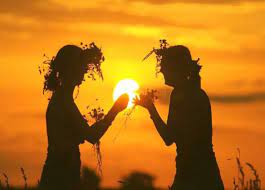
Each season and celebration has its vibe and energy, and Litha and the Summer Solstice are no different! It’s got a punch of power and symbolism, and all we need to do is slow down and observe what Nature is showing us.
Please note that I make every effort to ensure this information is correct and accurate through my own experiences and referencing sources throughout AND at the bottom of this article.
Posts on this site may contain affiliate links that allow me to earn a small commission from your purchases (at no extra cost to you!)
Many Pagans, Witches, and those interested in Nature Spirituality celebrate the seasonal cycles. Sometimes referred to as the Wheel of the Year, and consisting of eight celebrations. Four of these festivals (Imbolc, Beltane, Lughnasadh, and Samhain) are rooted in Celtic history and origins.
The other four (Spring Equinox, Summer Solstice, Autumn Equinox, and Winter Solstice) represent the sun’s location. I created a complete guide to each season, including history, traditions, symbols, correspondences, ritual ideas, and how you can celebrate.
When is the Summer Solstice in 2022?
What is Summer Solstice’s Spiritual Meaning?
Summer Solstice Traditions and Celebrations
Summer Solstice Correspondences
Summer Solstice Rituals For Pagan Celebrations

Litha, also known as Midsummer, is a widely-observed pagan celebration that many historians believe has been practiced for thousands of years. One of four Celtic fire festivals, Midsummer or the summer solstice is a sabbat all about celebrating the sun. In the northern hemisphere, this sabbat is observed on either June 21st or 22nd, and on December 21st or 22nd for the Southern hemisphere. (Side Note: either Solstice can also be on the 20th of either June or December)
I feel that pagan holidays should be celebrated in ways that are fun and accessible to practitioners of all walks of life, while still honoring the beautiful traditions from which these celebrations sprang.
With that in mind, let’s talk about how to celebrate the Summer Solstice and help you find the perfect rituals to craft your own Litha holiday traditions!
Beltane is a cross-quarter holiday on the Wheel of the Year that honors the return of summer, the return of the fertility of the Earth, and the element of fire. It’s a nature-based holiday that many of our ancestors celebrated for a long time, and now we get to carry that tradition forward.
Like Samhain, Beltane is a time when the veil is thin. This holiday is a particularly beautiful time to connect with nature spirits, as well as any other beings you’re wanting to create a connection with.
At Beltane, we honor the goddess as part of us. We honor the body, pleasure, sensuality, and sexuality. We bask in the fiery energy of the sun and the fertile energy that’s present.
In this blog, I’m sharing three rituals and suggested tools for Beltane that you can work with to honor this sacred holiday. Keep scrolling to watch a video and read more!
Feel free to add any of the symbols and tools outlined below to your Beltane rituals or altar. They each correspond with the energy of Beltane. They are not necessary and should be viewed as optional layered energy in your rituals.
Crystals: Rose quartz, garnet, pink tourmaline, rhodochrosite, emerald, malachite, and moonstone
Scents and plants: Sandalwood, ylang-ylang, lilac, angelica, jasmine, and rose
Candle colors: Pink, orange, and red
Element: Fire
Tarot: Empress
Rune: Berakno
Goddess: Venus/Freya
Tools and Symbols: Cowry shell, flowers, and anything that represents pleasure and creativity to you

Also known as: Bealtaine, Beltane, Bhealtainn, Bealtinne, Festival of Tana (Strega), Giamonios, Rudemass, and Walburga (Teutonic), Cetsamhain (opposite Samhain),Fairy Day,Sacred Thorn Day, Rood Day, Roodmas (the Christian term for Rood Day, Old Beltane, Beltain, Baltane, Walpurgis Night, Floriala (Roman feast of flowers from April 29 to May 1), Walpurgisnacht (Germanic-feast of St. Walpurga), Thrimilce (Anglo-saxon), Bloumaand (Old Dutch)
Date: May 1
Animals: Swallow, dove, swan, Cats, lynx, leopard
Deities: Flower Goddesses, Divine Couples, Deities of the Hunt, Aphrodite, artemis, Bast, Diana, Faunus, Flora, Maia, Pan, the Horned God, Venus, and all Gods and Goddesses who preside over fertility.
Tools: broom, May Pole, cauldron
Stones/Gems: emerald, malachite, amber, orange carnelian, sapphire, rose quartz
Colors: green, soft pink, blue, yellow, red, brown
Flowers & herbs: almond tree/shrub, ash, broom, cinquefoil, clover, Dittany of Crete, elder, foxglove, frankincense, honeysuckle, rowan, sorrel, hawthorn, ivy, lily of the valley, marigold, meadowsweet, mint, mugwort, thyme, woodruff may be burned; angelica, bluebells, daisy, hawthorn, ivy, lilac, primrose, and rose may be decorations, st. john’s wort, yarrow, basically all flowers.
Incense: frankincense, lilac, rose
Symbols & decorations: maypole, strings of beads or flowers, ribbons, spring flowers, fires, fertility, growing things, ploughs, cauldrons of flowers, butterchurn, baskets, eggs
Food: dairy, bread, cereals, oatmeal cakes, cherries, strawberries, wine, green salads
Activities & rituals: fertilize, nurture and boost existing goals, games, activities of pleasure, leaping bonfires, making garlands, May Pole dance, planting seeds, walking one’s property, feasting
Wiccan mythology: sexual union and/or marriage of the Goddess and God
It’s association with fire also makes Beltaine a holiday of purification.
Wiccan weddings are frequently held on or around Beltaine.
A beautiful, spring sun shines overhead on a beautiful Beltane morning, bringing blessings of warmth, love, and passion to every Witch present at the festival of Beltane. A bright fire burns in the distance, marking the celebration between Ostara and the Summer Solstice. The Green Man and Mother Earth each bless handfastings while dozens of Witches happily maypole dance to celebrate the fertility of this beautiful Sabbat.
45 minutes into the Beltane celebration, you think to yourself, “Is it time for the cakes and ale? I’m so ready for the feast! Oh! Hail and welcome!” We’ve literally all been there. Good news; food is a huge part of Wiccan and Pagan celebrations!
In this article, we’ll share the fruits, vegetables, meats, and foods that are best for a Beltane fire festival.
(YOU CAN COPY AND PASTE ANY SPELLS POSTED TO A DOCUMENT TO PRINT AND/OR SAVE ON YOUR COMPUTER)


(YOU CAN COPY AND PASTE ANY SPELLS POSTED TO A DOCUMENT TO PRINT AND/OR SAVE ON YOUR COMPUTER)


 Witches Of The Craft®
You must be logged in to post a comment.