Wednesday’s Perfect Spell – Athena’s Spell-Writing Charm

Dragon Comments & Graphics=Wednesday’s Perfect Spell – Athena’s Spell-Writing Charm


Light a purple candle for Athena and a white candle for peace. Now sit before the candles and concentrate on what variety of spell you’d like to write. Close your eyes for a few moments to center yourself. Now repeat the following spell three times:

Computer and printer, ink pens and paper
Send me inspiration sooner than later
Athena blesses me under a Wednesday-night sky
I can create my own spells, now let my magick fly
Using a bit of Wednesday’s witchery
As I do will it, so mote it be!

Close this up by writing your own spell or charm. If you’d like to add a little herbal magick to this spell, add some lavender for transformation. It will help to transform your ideas into reality. Check your spice rack, and make use of some dill for good luck. Most of al. Don’t be afraid to try writing your own spells.

Source:
Book of Witchery: Spells, Charms & Correspondences for Every Day of the Week
Ellen Dugan

Wednesday Is Ruled By Mercury

Dragon Comments & Graphics=Wednesday Is Ruled By Mercury

Wednesdays are wild and wacky days. They are for communication, change, cunning, and the arts. This is a Mercury day, and just its patron god this day is full of contradictions, change, and excitement. Some suggestions for Wednesday enchantments would include:
Pulling a little Wednesday color magic into your life by wearing purples or orange

Carrying a multipurpose agate with you and tapping into its various charms

Working with magical plants such as the fern for protection. This plant will also boost the power of any other magical plants with which it is arranged.

Incorporating lavender into charms and spells for transformation

Using the charming scent of lily of the valley to improve your memory, or working with the aspen tree for communication

Calling on Athena, patron of arts and crafts, for inspiration for a new project

Fanning out a Tarot spell to increase you creativity

Calling on Hermes on a Wednesday night to bring movement and good luck into your life

The Witches Correspondences for Wednesday, May 13th

Dragon Comments & Graphics

WEDNESDAY CORRESPONDENCES

Mercury/Neptune/Air/North/West/Southwest/Female/Male/Gemini/Virgo

Magickal Intentions: Communication, Divination, Writing, Knowledge, Business Transactions, Debt, Fear, Loss, Travel, Money Matters

Color: black, light blue, brown, gray, green, magenta, orange, peach, purple, red, silver, turquoise, violet, white, yellow; orange is the primary color

Number: 3, 5

Metal: mercury

Charm: distaff, rod, runes, staff, iridescent garments

Stone: moss agate, amethyst, bloodstone, emerald, hematite, lapis lazuli, lodestone, pearl, ruby, sapphire, sodalite, all blue stones

Animal: bear, dog, fox, magpie, swan, weasel

Plant: almond, bayberry, chamomile, cherry, cinnamon, cinquefoil, clove, coltsfoot, ginger, hazel, hazelnut, jasmine, lavender, millet, oak, peppermint, periwinkle, rosemary, sage, St. John’s wort, sweet pea, tamarind, lemon verbena, violet

Incense: cassia, cedar, cinnamon, clove, frankincense, jasmine, lavender, mastic, mint, rosemary, sage, sandalwood, storax, dried and powdered citrus peel, and all incense made from aromatic bark, wood, and seeds

Goddess: Carmenta, Hecate (Queen of Crossroads), Hel, Ishtar, Ma’at, the Morrigan, Nike

God: Anubis, Bragi, Elath-Iahu. Enki, Garuda, Hermes, Maximon (Black Magician), Mercury, Nebo (Wise God of Wednesday), Odin, Shango, Ullr, Vishnu, Wayland, Woden

Evocation: Agrat Bat Mahalat, Michael, Miel, Raphael, Seraphiel, Tiriel

Courtesy of Moonlight Musings

The Witches Almanac for Wednesday, May 13th

Dragon Comments & GraphicsThe Witches Almanac for Wednesday, May 13th

Wednesday (Mercury): The conscious mind, study, travel, divination, and wisdom.

Pilgrimage to Fatima (Portuguese)

Waning Moon
The Waning Moon (from the Full Moon to the New) is a time for study, meditation, and little magical work (except magic designed to banish harmful energies).

Moon phase: Fourth Quarter

Moon Sign: Pisces
Pisces: The focus is on dreaming, nostalgia, intuition, and psychic impressions. A good time for spiritual or philanthropic activities.

Incense: Lavender

Color: Topaz

DAILY MAGICKAL APPLICATIONS FOR WEDNESDAY


Dragon Comments & Graphics=
DAILY MAGICKAL APPLICATIONS FOR WEDNESDAY

To the Romans, this day was called Dies Mercurii, or “Mercury’s day” Mercury was a popular character in the Roman pantheon. A messenger of the gods, he presided over commerce, trade, and anything that required skill or dexterity. The Celts also worshiped Mercury and eventually equated him with the Norse god Odin (some spelling variations on this name include Wotan, Wodin, and Wodan). In Norse mythologies, Odin, like Mercury, is associated with poetry and music. Interestingly enough, both Odin and Mercury were regarded as psychopomps, or the leaders of souls, in their individual mythologies.

Odin, one of the main gods in Norse mythology, was constantly seeking wisdom. He traveled the world in disguise as a one-eyed man with a long gray beard, wearing an old, beat-up hat and carrying a staff or a spear (which brings to my mind images of Gandalf from The Lord of the Rings). In the Old English language, this day of Mercury evolved into Wodnes daeg, “Woden’s day,” or Wednesday.

Wednesday carries all of the planetary and magickal energies and associations of the witty and nimble god Mercury himself. Some of these mercurial traits included good communication skills, cleverness, intelligence, creativity, business sense, writing, artistic talent, trickiness, and thievery. And don’t forget all of those wise and enigmatic qualities associated with the Norse god Odin/Wodin, not to mention the goddess Athena’s contributions of music, the arts, handmade crafts, and writing. Wednesdays afford excellent opportunities for seeking wisdom, changing your circumstances, and improving your skills, be they in trade and commerce, music and art, or in communication and writing.

Source:
Book of Witchery: Spells, Charms & Correspondences for Every Day of the Week
Ellen Dugan

Must Dos for Wednesdays

Dragon Comments & Graphics

Must Dos for Wednesdays

Be bold and daring today! Expand your knowledge of the Craft by working with the planetary energies of Mercury on this multifaceted day of the week. Consider the Greco-Roman gods Mercury and Hermes and all of the many lessons they have for you. Embrace change and movement, and work on your communication techniques. Conjure up a little good luck for yourself with that Mercury dime spell. Call on Athena to inspire you to try magickal arts and crafts and to be more creative in your own spellwork and witchery.

Meditate on Odin and see what you can discover about him. I wonder what sort of fabulous and fascinating magickal wisdom you will uncover? Odin is a shaman, after all; he may appear in many guises and faces. I guarantee that he will make you laugh at yourself before he is through with you, but you will learn. It’s up to you what you do with that knowledge. Will you let it shapeshift into wisdom?

Wednesday is the wild and wily day of the week, so try to go with the flow; don’t fight the quirky energies of the day. Most importantly, follow your heart, and always keep a good sense of humor, because of Wednesdays you will really need it.
Book of Witchery: Spells, Charms & Correspondences for Every Day of the Week
Ellen Dugan

Wednesday

Dragon Comments & GraphicsWednesday

Wednesday: Is associated with Mercury and the colors of Purple, Magenta and Silver

Wednesday is the best time to deal with such matters as: Accounting, Advertising, Astrology, Clerks, Communication, Computers, Correspondence, Critics, Editing, Editors, Education, Healing, Hiring Employees, Intelligence, Journalists, Kin, Learning Languages, Legal Appointments, Memory, Merchants, Messages, Music, Neighbors, Phone Calls, Placing Ads, Siblings, Signing Contracts, Students, Visiting Friends, Visual Arts, Wisdom, and Writing

Practical Magick for the Penny Pinching Witch
Carol Moyer

May The Goddess Bless You & Yours On This Wednesday Morn’!


Sympathy Comments
Good morning, my dear, sweet family! I hope everyone is safe and sound. It has been one of those mornings with the News out of Philadelphia today. I know we have family in that area. Not to mention the numerous people from our own family here that is located up there. I only hope and pray that everyone that we know and you know are safe and sound this morning.

Since our world is once again filled with tragedy, let us take a moment to remember those who have lost loved ones, been injured or hurt in some other way by all the latest events, with a prayer.

Great Goddess, mother of us all
Watch over all the people in our world
Those who are suffering in Philadelphia,
Those in Nepal and others that we may not know about
Aid this in this time of crisis
Support them, comfort them and help
them to stay strong.

Great Goddess, wise and compassionate
Guide them in this time of crisis
Show them the best path to take
And help them listen to their inner wisdom
Aid them, comfort them and heal them,
Divine Mother.

Great Goddess, Lady of the Moon
Shine your light upon them in their time of crisis
That it may calm and soothe them
And remind them that you are always with them.

So Mote It Bebook95

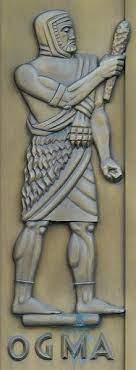
Gods – OgmaCeltic God c.2015


Ogma

Celtic God


In Irish-Celtic myth, Ogma is the god of eloquence and learning. He is the son of the goddess Danu and the god Dagda, and one of the foremost members of the Tuatha Dé Danann. He is the reputed inventor of the ancient Ogham alphabet which is used in the earliest Irish writings.

In the final battle at Mag Tuireadh he managed to take away the sword of the king of the Fomorians, but had to pay with his life for this feat. His Celtic equivalent is Ogmios.

Ogma or Oghma is a character from Irish mythology. A member of the Tuatha Dé Danann, he is often considered a deity and may be related to the Gaulish god Ogmios.

He fights in the first battle of Mag Tuired, when the Tuatha Dé take Ireland from the Fir Bolg. Under the reign of Bres, when the Tuatha Dé are reduced to servitude, Ogma is forced to carry firewood, but nonetheless is the only one of the Tuatha Dé who proves his athletic and martial prowess in contests before the king. When Bres is overthrown and Nuadu restored, Ogma is his champion. His position is threatened by the arrival of Lugh at the court, so Ogma challenges him by lifting and hurling a great flagstone, which normally required eighty oxen to move it, out of Tara, but Lugh answers the challenge by hurling it back. When Nuadu hands command of the Battle of Mag Tuired to Lugh, Ogma becomes Lugh’s champion, and promises to repel the Fomorian king, Indech, and his bodyguard, and to defeat a third of the enemy. During the battle he finds Orna, the sword of the Fomorian king Tethra, which recounts the deeds done with it when unsheathed. During the battle Ogma and Indech fall in single combat, although there is some confusion in the texts as in Cath Maige Tuired Ogma, Lugh and the Dagda pursue the Fomorians after the battle to recover the harp of Uaitne, the Dagda’s harper.

He often appears as a triad with Lugh and the Dagda, who are sometimes collectively known as the trí dée dána or three gods of skill, although that designation is elsewhere applied to other groups of characters. His father is Elatha and his mother is usually given as Ethliu, sometimes as Étaín. His sons include Delbaeth and Tuireann. He is said to have invented the Ogham alphabet, which is named after him.

Scholars of Celtic mythology have proposed that Ogma represents the vestiges of an ancient Celtic god. By virtue of his battle prowess and invention of Ogham, he is compared with Ogmios, a Gaulish deity associated with eloquence and equated with Herakles. J. A. MacCulloch compares Ogma’s epithet grianainech (sun-face) with Lucian’s description of the “smiling face” of Ogmios, and suggests Ogma’s position as champion of the Tuatha Dé Danann may derive “from the primitive custom of rousing the warriors’ emotions by eloquent speeches before a battle”, although this is hardly supported by the texts. Scholars such Rudolf Thurneysen and Anton van Hamel dispute any link between Ogma and Ogmios.

*
A Proto-Indo-European root *og-mo– ‘furrow, track, incised line’ may be the origin of the stem of the name. In addition, Proto-Celtic had a causative verbal suffix *-ej– ~ *-īj-. A hypothetical Proto-Celtic *Ogm-īj-o-sogm-. This agent noun would therefore mean ‘furrow-maker, incisor’ and may have had a metaphorical sense of ‘impresser.’ therefore looks very much like an agent noun derived from a verb formed by the addition of this causative suffix to the stem *

The Irish god of writing, eloquence and poetry. Ogma was credited of being inventor of the Celtic writing systems that the Druids used for their magic. These scripts were known as Ogham.

Ogma was the son of Dagda and the goddess Danu. Some other writers say that Ogma and Dagda were brothers; in this version they were the sons of Eithne. Ogma had also being called the son of Elatha, the king of the Fomorians.

Ogma was one the seven champions in the First Battle of Moytura (Mag Tuired), but when Bres became the king of Tuatha dé Danann, Ogma was degraded into working on humiliating manual job of gathering firewood.
When Lugh went to Nuada, asking for a place to serve the king, Ogma seemed to be Nuada’s foremost fighter. During the second battle of Moytura, Ogma had killed one of the Fomorian leaders, named Indech, the son of Domnu.

Ogma had married Etain, the daughter of Dian Cécht. Ogma had a son named Caipre. Some say that he was the father of MacCuill, MacCecht and MacGrené (MacGrene), the three Danann kings who ruled Ireland, during the Milesian invasion, though other say that Neit was their father.
To the Celtic Gauls he was called Ogmios. According to both Gallic and Irish myths Ogma was a warrior god, depicted as a wrinkled old man, wearing lion’s skin cloak, carrying a bow and club. The Romans considered Ogmios as the Celtic equivalent of Hercules (Greek Heracles). They also depicting Ogimos as holding people chained to his tongue by their ears, to indicate he was the god of eloquence and poetry.

Author: Agaliha

Stop Bad Luck Charm Bag

You will need the following items for this spell:

  • Small Draw-String Bad (About 1-2 inches deep)
  • Angelica root
  • African Ginger
  • Fennel seed
  • Holy thistle
  • Clove
  • Basil
Make or buy a small draw-string bag about 1-2 inches deep. Put in a pinch or two of each of the following:

Angelica root
African Ginger
Fennel seed
Holy thistle
Clove
Basil

Add a small citrine to the pouch and you have a powerful sachet. During the full moon, put the bag together, then consecrate and charge it. Make certain it is tied tightly. Keep it close to your heart.

FROM: http://www.spellsofmagic.com/

The Importance of Your Given Name

It is important not to let other’s that could wish or do you harm to know your whole given name. If the person practices the dark or gray or light side of The Craft the name you were given at birth can be
used against you when a Witch/Pagan performs a spell, hex, curse or anything else that might possibly harm you. The flip of the coin a White Witch can use it for good when performing a spell or
charming an item for a specific reason without your knowledge. For these reasons it is best to only let a Witch/Pagan only know your first name if any of your given name at all unless you know and
trust them fully.

Any Witch/Pagan that truly walks in the light and most that walk in the gray will not perform any type of a spell, healing, incantation, etc. for you without your permission. This is just good manners and common curtsey.

When enchanting/charming an object for yourself you should use your whole name in the spell being used. This will ensure it is for you. Example a black stone to gather negative energy and/or an
entity before it reaches you either by attaching itself to your physical body or your aura or your mind or your spirit or just hover close by and causing mischief in your life. Many of us have negative
things hovering around us for one reason or another…Why give them easy access to you?

This is why many Witches/Pagans chose a name to use when in a coven and/or gathering with other Witches.

Copyright 2011 Lady Beltane

Being An Upside Down Witch – for those Living in the Southern Hemisphere

Goddess Pages
British spiritual magazine

Living in Australia – or anywhere in the southern hemisphere for that matter – can be a little confusing for a witch. All the books about magic print elemental correspondences that are back to front (the fire of the sun is certainly not in the south down here!), and list dates for the sabbats that bear no relation to the actual cycle of our seasons. I’ve met a surprising number of people from the US and UK who didn’t realise that our seasons are six months behind (or ahead, depending on how you look at it) the northern ones. Our Midsummer falls around December 20-23, when the north is blanketed in snow, while our winter solstice falls around June 20-23, the height of summer up there.
Perhaps long ago we may have followed the oft-printed dates and celebrated these rituals along with our northern friends, linking up psychically in December to celebrate Yule and welcome the birth of the sun god, even as here he was about to start fading as summer reached its peak, or doing autumn rituals of harvest and release while our land was quickening with the new growth of spring.
But I don’t know of a single southern witch who follows the northern model. At coven rituals, open celebrations and alone at home, groups and solitary practitioners follow our own seasonal cycle, because paganism and goddess worship are intimately attuned to the heartbeat of the planet and the seasons, and these festivals are prescribed by the movement of the earth in relation to the sun, not a fixed date on a modern calendar. The land, as the embodiment of the goddess, speaks to all of us, and the goddess path is about learning to hear this language of nature, to sense the movement and emotional shifts as the earth moves through its cycles, and feel the rhythm of its turning. And so a spring fertility festival will be marked in spring, when the planet is alive with new life and energy, regardless of what is happening on that day in the other hemisphere.
There has been mention in these pages that it is wrong to import “northern” festivals to the southern lands. But celebrating the beauty and bounty of nature and the dance of the seasons is not anyone’s exclusive right. Maybe people in the Celtic lands can feel historically possessive of the names themselves (Lughnasadh, Beltane), but they have no ownership of the winter solstice or the first day of spring, and this is what these festivals are.
The Wheel of the Year reflects the constant universal cycle of life, death and rebirth. Mythologically it is tied to the story of the god and goddess as she shifts from young lover to mother to crone, and he is born, grows in power, sacrifices himself then is reborn, but literally it refers to the changing seasons – the fertility and vibrant life force of summer, the balance and harvest of autumn, the introspection and endings (death) of winter, and the rebirth of spring. Being in the southern hemisphere doesn’t necessarily change this seasonal pattern, it merely shifts the dates. There are parts of Australia such as the Red Centre – and parts of the northern hemisphere too – where the seasons don’t play out in a standard, balanced rhythm through summer, autumn, winter and spring. Some places experience just two main seasons, wet and dry, yet even there the people living in harmony with the land are able to feel the earth as it surges with new life, grows, becomes ready for harvest then withdraws its energy within the earth again, and celebrate their own personal Wheel that reflects their reality.
But in much of the coastal region of the country, where around eighty per cent of the population is based, the seasons do follow a regular pattern, and many witches celebrate the traditional Wheel of the Year, moved forward six months to reflect their personal experience. Of course it can seem a little strange and out of whack sometimes, because the Christians hijacked so many of the magical sabbats and they have become such a part of western life. So how and when do we celebrate the turning points of the witches’ year Down Under, and how do we deal with the inconsistencies of modern festivities?

The Summer Solstice
As the western world gears up for Christmas and northern witches mark Yule, in the southern hemisphere we are celebrating the summer solstice. In 2008 this fell on December 21, and in 2009 it will fall on December 22. This is Midsummer Day, when the sun reaches its southernmost latitude before it turns and heads back towards the north. In some ways it would be easier to celebrate Yule during this festive season, as our northern hemisphere counterparts do, when everyone is feasting, exchanging gifts and acknowledging the birth of the son of God – or the sun god. But Down Under this is the longest, not shortest, day of the year. The sun is strong (some would say merciless), and the energy is fast and active. It’s a time of abundance, achievement and culmination. Despite the snow-covered decorations, men sweating in Santa suits and hot roast dinners – a legacy of our ancestors – on this day we absorb the solar energy, feast on luscious summer fruits, give thanks for the goals we’ve reached and revel in the strength and heat of the long day of sunshine and the power of the sun god.
Sometimes I go to the beach at dawn and watch the sun rise over the ocean, or climb the hill in the park near my house at sunset, farewelling it as it begins its journey back to northern parts, and its energy starts to wane from this day forward as it begins its descent into the dark half of the year. Sometimes I do a formal ritual with a group, or have a feast of celebration with my magical friends, wrapping pots of sunshiney flowers and summer herbs in gold and red velvet as gifts, and breathe in the scent of orange blossoms, lavender and rosemary. I celebrate Christmas with my family too, but I see no conflict here, as the modern version has little to do with the real Yule in intent or meaning, and I’m quite happy to honour the power of the summer solstice and then a few days later enjoy the spirit of giving of the festive season.

Lughnasadh
In the first week of February we celebrate Lughnasadh, the cross-quarter day that marks the end of summer and the first day of autumn, although where I live it will still be hot and fiery for some time to come. In the north it’s Imbolc, linked to fertility, love and Valentine’s Day, but down here it’s the opposite. The earth is still throbbing with life and energy, but it’s mature, fully ripened and almost over-abundant. This is the first harvest festival, and fruit picking becomes a popular form of employment for many travellers, with farms all over the country taking on seasonal workers. The grape harvest begins, to make the wine that is now internationally renowned, and an abundance of other delicious fruits and vegetables, as well as golden wheat and other cereal crops, are also picked at this time.
As well as a time of feasting and of thanksgiving for the life-giving properties of our crops, and recognition of the cycle of sowing and reaping, Lughnasadh is also about the symbolic things we grow and create in our life. It’s a day of harvesting the fruits of our labours and acknowledging our successes and what we’ve achieved in the past year. A month after New Year’s resolutions are made, it seems a good time to take stock. On this day I perform a ritual to celebrate and acknowledge the goals I’ve reached, making a list of all the things I’ve gained – the gifts I’ve been given, the new talents I’ve developed, the friends I’ve made, the experiences I’ve had, the healings I’ve received, the opportunities I’ve pursued – and giving thanks for it all. We may no longer be so connected to the creation and production of our food, as in days gone by, or believe that our prayers or sacrifices influence the success of the crops, but being grateful for what we have and giving thanks is still a beautiful way to live. I also try to pass on some of my good fortune so the energy of abundance continues and is strengthened, by giving time or money to a charity of some kind.

Autumn Equinox
Late March is another strange time for Down Under witches, because the stores are filled with chocolate bunnies and eggs in preparation for Easter, the Christian holiday based on the spring festival of Ostara, which northern hemisphere witches are marking now. While most of the world – both pagan and non-magical – celebrates rebirth, resurrection and new life with the fertility goddess Ostara’s symbols of eggs and hares, in Australia it’s the middle of autumn, a time of crisp, chilly mornings, pale blue skies and a world aflame with colour as the trees turn a hundred shades of red-orange-yellow-brown. Daylight savings ends, and from the autumn equinox onwards, which this year falls on March 20, the days start getting shorter and the weather cooler, but this day of equal light and dark is the moment of balance in nature and within – a time of harmony, joy and gentle calm. While I certainly eat my share of chocolate eggs at this time, acknowledging on some level the energy of Ostara, I also prepare a harvest feast of richly coloured fruits and root vegetables, golden grains and heavy warm breads, and start drying my herbs. I feel immense joy as I skip through the crackling autumn leaves and chart the turning of the seasons by the patterns of leaves on the trees. I give thanks for my metaphorical harvest, honouring my achievements, experiences and wisdom in a way that feels right to me, be it with a big celebration or a personal ritual of gratitude. It’s a time of balance – my world is poised between summer and winter, and day and night are in harmony, which is reflected in the earth’s energy and within me.

Samhain
In the first week of May we celebrate the cross-quarter day that marks the end of autumn and the beginning of the coldness and dark of winter. In the north it’s all hot, fertile love energy, with abundant blossoms, the hatching of birds, bees pollinating flowers and lovers leaping the Beltane fires. But in the southern hemisphere at this time it’s the opposite. It’s the start of winter, a season of introspection and darkness both metaphorically and literally. Traditionally this was the time to store food for the cold barren months ahead; symbolically it’s about rest and renewal, of preparing for what’s ahead and withdrawing a little to conserve your energy. While the grass becomes green and lush at this time with the onset of rain, many of the trees are stripped bare, and bitterly cold winds add to the starkness of the season. This is the time we start readying ourselves for the rebirth we’ll experience at Yule, a time of inner reflection and contemplation, of studying the Mysteries (of our tradition or our life), and scrying for answers and illumination. It’s also the night when the veil between the worlds is at its thinnest, and we honour our ancestors and commune with the dead. Of course southern witches do find it hard to explain to people that we are celebrating “Halloween” at this time, but if you pay attention to the earth, to nature, to the seasons, it’s very clear that this is our Samhain.

The Winter Solstice
In late June we celebrate the winter solstice; this year it will fall on the 21st. This is our midwinter – the longest night and shortest day of the year, when the sun is as far north as it will get, making it midsummer in the northern hemisphere. Snow falls in some parts of Australia, and in others it’s cold and rainy. Even in the Red Centre, where winter is their dry season, nature is introspective at this time – the seeds are all closed up, waiting for the heat and rainfall of summer to explode into life. Winter, and this midpoint in particular, is a time to rest and reflect, to acknowledge sadness and loss – of dreams, of friendships, of parts of your self – and conserve your energy and life force.
Yet it’s a day of hope too, for the solstice is the turning point in this time of darkness, introspection and dreaming. Considered the dark night of the soul that gives birth to the creative spark, it marks the period when the dark half of the year relinquishes its hold to the light half. From this day forward the days slowly start to lengthen, the sun becomes stronger and the energy within and without increases and builds. On Midwinter’s Night Eve I light a candle to symbolise the sun and its activating energy, and list my dreams for the coming year. Sometimes I stay up all night to await the return of the light, other years I get up for the sunrise and toast the dawn and give thanks for this energetic reawakening. As the sun is reborn I open myself up to the promise of new growth and achievement, the energy of renewal and the rebirth of my own self and creativity.
I’m more inclined to refer to this festival as Winter Solstice rather than Yule, because the latter has connotations of Christmas, which is still six months away for us, yet many southern witches retain the traditional name, particularly in colder areas where open fires and Yule logs are more typical. Interestingly, there is now increasing recognition in Australia that Christmas is based on a winter tradition that involves magic, and many mainstream events are planned to coincide with our winter solstice. The Pagan Awareness Network holds Hollyfrost, an annual Midwinter retreat and ritual, and in the Blue Mountains the Winter Magic Festival is held on the day of the solstice and is open to everyone, regardless of beliefs. And the more touristy than magical Yulefest and Christmas in July are also celebrated around this time, in recognition that here Yule should not take place in December, in the heat of the Australian summer, but in the cool of winter.

Imbolc
In the first week of August, we in the southern hemisphere honour the cross-quarter day that marks the end of winter and the first day of spring. The earth starts to shake off the severity of the cold period and emerge back into the light. Some of our stunning wildflowers, like the delicate golden wattle, explode into glorious bloom, and it’s a time of hope, renewal and fresh starts after winter’s sluggishness. The sun starts to strengthen and the days grow longer, symbolising the return and renewal of the life force of the land and its people. Energetically it’s a time of awakening and new energy, and is the day we sow the seeds of what we want to achieve in the coming year. It’s also a time of purification and cleansing after the long dark of winter, when I feel motivated to physically clean my house and energetically clear my space, sweeping out old energy and thoughts so the new can thrive. Imbolc represents new beginnings, initiations and inspiration, and the budding plants, swooping baby birds and buzzing bees always fill me with vitality, passion and the impetus to start (or rededicate myself to) new projects.

The Spring Equinox
In the southern hemisphere, the spring or vernal equinox falls in late September – this year it’s on the 23rd. It’s a beautiful time of year, with bright blue skies and pale sunshine without the merciless heat of summer… perfect temperate weather. It’s one of only two times of the year when the length of day and night is equal, and on a personal level it’s a time of balance and harmony too, of union between the physical and spiritual as the balance of universal energies is reflected within. It’s also a time of growth and fertility, when crops are sown, the buds on the trees open, birds build nests and lay eggs and new life is celebrated. Energetically it’s also a very fertile time, as the seeds we sowed of our goals begin to sprout and gain momentum. Traditionally the spring equinox is tied up with rabbits, eggs and fertility goddesses, so it does feel a bit strange to be celebrating “Easter” at this time, but the beautifully blossoming and budding earth and the wild energy and vitality make it obvious that it’s the time for it. It’s a celebration of new life, hope, passion, growth and energy, the time of year that I meditate on my metaphorical fertility and my ability to manifest dreams into reality. In many ancient cultures, including the Romans whose calendar ours is based on, the spring equinox was the first day of the year, and the sense of new hope and optimism inherent in this day remains. It hasn’t always fallen around March/September 21 – our dating is a modern invention – and there are still countries where this is the first day of the year. The Ancient Roman year began on the spring equinox, the day they called Martius 1, which is March 21 in Gregorian terms. In the modern Iranian calendar, used in Iran and Afghanistan, each new year begins on the spring equinox as precisely determined by astronomical observations from Tehran and Kabul (making it the perfect solar calendar, because each calendar year corresponds exactly to the solar year, with no leap days necessary). The Baha’i calendar also begins on the spring equinox.
I got married on September 22 – our spring equinox – a few years ago, so we celebrate our anniversary on Ostara each year. Yet we ran away and wed in the northern hemisphere, which means where we were that day was actually the autumn equinox. Thus each year as we celebrate our anniversary at home, in the springtime, we also acknowledge the energy of autumn. I add a few autumn colours to my spring bouquet, and consider not only what seeds we want to plant for the next year of our relationship, but what we have harvested over the previous one. As Mabon and Ostara are the two days of the year when all is balanced, within and without, they are both good days to renew commitments or pledge a new one, be it a vow of love, magic, career or anything else. I feel like I incorporated the best of both worlds by making my wedding day span both festivals.

Beltane
In the southern hemisphere, the first week of November brings the cross-quarter day that marks the end of spring and the start of the heat and energy of summer, and the festival of love. It’s a time of lovers and spells to attract love, and celebrating the fertility of life, not just physically, but also of our dreams and ambitions. Symbolically this day marks the igniting of the fires of creativity and passion, of the fertility of our desires being made manifest, as the universe bursts with a raw energy and power that we can tap in to simply by breathing it in.
In the northern hemisphere Beltane falls around May Day, and while it has no relevance to us in terms of timing, I have been part of a coven ritual that involved a maypole dance, to represent the union of god and goddess at this point in the Wheel of the Seasonal Year. I’ve also leapt over the Beltane fires, although that was before I met my husband, when I jumped over it with friends as part of a personal ritual of purification and preparation, leaping out of my past, burning away the relationship issues that had kept my heart closed, and towards a future where love was possible (I met my partner two months later).
While I’ve been known to dress up as a vampire or a fairy and go to a Halloween party on October 31, privately or with coven members or witchie friends I’m celebrating the new blossoms and the vitality and fertility of Beltane at this time.

So, while it’s perhaps a little easier for northern hemisphere goddess worshippers to celebrate the cycle of the seasons, given that so many of them are actually woven into “normal” life, when you tune in to the earth and the rhythms of nature it is easy to know when it’s the right time to celebrate any of the old festivals. Because whether you live in the north, where they began, or the south, adding your own personal meaning to the traditional forms of celebration, the sabbats are still relevant to our lives. Even today, when we no longer live in harmony with the earth’s rhythms or agricultural cycles, modern pagans celebrate the Wheel of the Year as an honouring of nature and an acknowledgement of the continuing cycle of life, death and rebirth, both literally and symbolically. Becoming aware of the seasonal shifts and the patterns of nature wherever you live, and celebrating these ancient but still relevant festivals, is a simple way to tap in to the magic of the universe and harness it for your own growth. We may no longer grow our own grain or purify the fields with fire, but these celebrations still have power, particularly in the symbolic form – planting the seeds of our dreams in the metaphorical spring, watching them grow and manifest in the world before we give thanks for our literal harvest, then allowing the things that no longer serve us to die off or be released in our own personal winter, then starting all over again with new dreams as we celebrate our own rebirth.
I’ve spent a few sabbats in the northern hemisphere, leaping the Beltane fires in Glastonbury’s Chalice Well Gardens, sitting inside the Great Pyramid on the morning of the summer solstice, watching the sun set over the Hill of Tara at Lughnasadh, and the energy of each season is intense, real and tangible no matter which hemisphere I am in. Whenever I celebrate these magical turning points of our planet I feel so strongly a part of the earth, at one with nature and the universe. And so, regardless of which half of the world I’m in, I always acknowledge the opposite festival as well, in some small way. Perhaps this isn’t as important for those in the north, but for me it seems right to acknowledge the turning seasons all over the world, the beautiful, gracefully balanced dance of light and dark, heat and cold, day and night, that makes up this world that we are all a part of.
We are all connected to the earth, no matter where we live, and we need to learn how to (and accept that we can) follow the seasons of nature in our own unique way, based on the rising and setting of the sun in our own home town, the cycles of the moon as it crosses our part of the sky, and the very personal language of nature that is so different – and yet so similar –according to our own unique landscape.


Serene Conneeley is a healer, writer and witch who lives in Sydney, Australia. She is a reconnective healing practitioner and has studied magical and medicinal herbalism, reiki and many other healing modalities, as well as politics and journalism. Her first book, Seven Sacred Sites: Magical Journeys That Will Change Your Life, has just been published. Visit Goddess Pages magazine here.

‘THINK on THESE THINGS’ for May 12th

‘THINK on THESE THINGS’
By Joyce Sequichie Hifler

If everyone were alike, what a dull world this would be. It is the individuality of each person that makes the world so interesting.

The tremendous differences in people give a wide range of personalities, beliefs, and appearances to every group, no matter how small.

If all the flowers in the world were of one color, would we think them so beautiful? It is the variety and wide range of rainbow colors that keeps us fascinated.

Cowper wrote, “Variety is the very spice of life, that gives it all its flavor.” So many have no thought if life except what they will eat, what they will wear, and how they can entertain themselves. And then we come on someone who has the ability to see loveliness in the sunlight and charm in quiet rain. They can say things to encourage, or to make calm and peaceful.

We meet many different kinds of people. Some we love and some we like and love, which is a terrific difference. It is to find a wholeness or a part of our lost self in someone else. It isn’t that they are so much like us or that we believe the way they do, but that they communicate, and it is this rare communication that respects the differences between peoples.

__________________________________

Available online! ‘Cherokee Feast of Days’
By Joyce Sequichie Hifler.

Visit her web site to purchase the wonderful books by Joyce as gifts for yourself or for loved ones……and also for those who don’t have access to the Internet: http://www.hifler.com
Click Here to Buy her books at Amazon.com

Elder’s Meditation of the Day
By White Bison, Inc., an American Indian-owned nonprofit organization. Order their many products from their web site: http://www.whitebison.org

Elder’s Meditation of the Day – May 12

Elder’s Meditation of the Day – May 12

“All the stones that are around here, each one has a language of its own. Even the earth has a song.”

—- Wallace Black Elk, LAKOTA

To believe that every tree, plant and insect can talk takes an open mind. Go by yourself into nature and sit quietly. Then pick up a rock and listen to your thoughts. After a while, put that rock down and pick up another rock. Your thoughts will change. These are the voices and wisdom of the Stone People. Each one has different wisdom and they are willing to share their wisdom with you. Many of the Stone People are very old and very wise.

Great Spirit, let every rock and leaf be my teacher.

May 12 – Daily Feast

May 12 – Daily Feast

Calling someone a coward can be risky business. A coward isn’t always a sneaky person it may be someone who sees the end result of being foolish. Circumstances today demand we be cowards to some degree. Why would we stick our heads in a noose when we know the outcome? Taking a chance may be a big things to a fool – but why would anyone in their right mind insist on being a fool? Fools drink and drive, abuse children, and destroy lives and property because they can. It is better to be called a coward than to be called dead wrong – or dead.

~ If their minds are clean, and if they are obedient and promise to obey….they shall be welcome….. ~

THE LAW OF GREAT PEACE – IROQUOIS, Circa 1570

“A Cherokee Feast of Days, Volume II” by Joyce Sequichie Hifler

The Daily Motivator for May 12th – The world you see

The world you see

The world you see is mightily affected by the person you are. The quickest and most effective way to live in a better world is to be a better you.

Your opinion of life exerts a strong influence on your experience of life. Change your opinion of life, and you immediately see a corresponding change in the way life unfolds.

Just because you think something is true doesn’t make it true. Yet from your own point of view, it might as well.

Your decisions and preferences depend heavily on your perspective. And those decisions and preferences play a major role in the way your life progresses.

What you think about life determines the way you live it. And you get to decide what you think.

See a world filled with goodness, with positive possibilities, with joy, love and fulfillment. See that world, and live to make it so.

— Ralph Marston

Source:
The Daily Motivator

Daily OM for May 12th – Cutting Cords

Cutting Cords
A Sense of Closure

by Madisyn Taylor

Sometimes the emotions we are feeling belong to the person we are in a connection with and an energetic cord must be severed.

In every relationship, people are constantly exchanging energy that can become a chord connecting two people. This energetic cord forms just below the breastbone and can remain long after a relationship has ended. This unbroken cord may leave an open channel between you and another person, through which emotions and energy can continue to flow. If you are unaware that the chord exists, it is easy to feel the other person’s emotions and mistakenly think that they are yours. Besides the fact that this can limit the amount of closure you can experience in a relationship, letting this cord remain intact can leave you with a continued sense of sadness while creating feelings of lethargy as your own energy is sapped from you. Cutting the cord can help you separate yourself from old baggage, unnecessary attachments, and release you from connections that are no longer serving you.

Finding and cutting unwanted cords is a simple, gentle process that is best done alone and when you are relaxed. It is important that you are strong in your intention to release the chord between you and someone else. To begin, breathe deeply and perform a simple centering meditation. When you are ready, visualize or sense the chords that are connecting you to other people. Run your fingers through the cords to separate them until you find the cord you wish to sever. There is no need to worry, because the chord you need to sever will feel just right. When you have found it, determine where the cut should be made and then visualize the cord being cleanly cut. If you need assistance, Archangel Michael can be called upon to help you with his sword. Afterwards, if you feel that cutting the chord has left spaces in your energy field, then visualize those spaces being filled with healing sunlight.

There may be times where cutting a cord can help free a relative or loved one to reach new stages of growth. You’re not severing a relationship, but you are severing the chords that are no longer serving you both. At other times, a cord may simply refuse to be cut because it is still serving a higher purpose. It is also important to remember that cutting a cord with someone is not a replacement for doing your emotional work with people. It can, however, be an enactment of that work upon its completion. In any case, cutting a relationship cord should always be viewed as a positive and nurturing act. By cutting the cords that no longer need to be there, you are setting yourself and others free from the ties that bind.


Source:
The Daily OM

The Laws According To The Alexandrian Book of Shadows(Use of the Art, Resignations, Training, Punishment & Footnotes )

The Laws According To The Alexandrian Book of Shadows

(Use of the Art, Resignations, Training, Punishment & Footnotes )

USE OF THE ART

138. Remember the art is the secret of the gods and may only be used in earnest and never for show or vainglory.

139. Magicians and Christians may taunt us saying, “You have no power, show us your power. Do magic before our eyes, then only will we believe,” seeking to cause us to betray the art before them.

140. Heed them not, for the art is holy and may only be used in need, and the curse of the gods be on any who break this Law.

RESIGNATIONS

141. It ever be the way with women and with men also, that they ever seek new love.

142. Nor should we reprove them for this.

143. But it may be found a disadvantage to the craft.

144. And so many a time it has happened that a High Priest or a High Priestess, impelled by love, hath departed with their love. That is, they left the Coven.

145. Now if the High Priestess wishes to resign, she may do so in full Coven.

146. And this resignation is valid.

147. But if they should run off without resigning, who may know if they may not return in a few months?

148. So the Law is, if a High Priestess leaves her Coven, she be taken back and all be as before.Meanwhile, if she has a deputy, that deputy shall act as High Priestess for as long as the High Priestess is away.

149. If she returns not at the end of a year and a day, then shall the Coven elect a new High Priestess,

150. Unless there is a good reason to the contrary.

151. The person who has done the work should reap the benefit of the reward. If somebody else is elected, the deputy is made maiden and deputy of the High Priestess.

TRAINING

152. It has been found that practicing the art doth cause a fondness between aspirant and tutor, and it is the cause of better results if this be so.

153. And if for any reason this be undesireable, it can easily be avoided by both persons from the outset firmly resolving in their minds to be as brother and sister or parent and child.

154. And it is for this reason that a man may be taught only by a woman and a woman by a man, and women and women should not attempt these practices together. So be it ordained.

PUNISHMENT

155. Order and discipline must be kept.

156. A High Priestess or a High Priest may, and should, punish all faults.

157. To this end all the craft must receive correction willingly.

158. All properly prepared, the culprit kneeling should be told his fault and his sentence pronounced.

159. Punishment should be followed by something amusing.

160. The culprit must acknowledge the justice of the punishment by kissing the hand on receiving sentence and again thanking for punishment received. So be it ordained.

NOTES

These Laws appear to have become part of the GBG BOS shortly after Doreen Valiente left his Coven (in 1957); they existed at the time that she left. (They were an innovation at that time, and were one of the things that the people who hived at that time refused to accept, though not themselves a reason for hiving.) See Doreen Valiente’s “The Rebirth of Witchcraft”.

Some of this material was already in the GBG BOS at the time. See the Farrars’ “The Witches’ Way”.

They also seem to be present throughout the Alexandrain stream. (See the Farrars’ “The

Witches Way”, and June Johns’ “King of the Witches”.)

The list I give here is drawn from several published sources:

June Johns,”King of the Witches”

Lady Sheba,”The Grimoire of Lady Sheba”

Janet and Stewart Farrar,”The Witches’ Way”

Sheba *may* be a more accurate source than Johns for the GBG version. (Some of what I took to be typos may well have been GBG-ism’s.) Johns is probably a better source for Alex Sanders’ own version. Covens in either lineage have probably cross referenced and ‘corrected’ what they took to be errors.

The Laws According To The Alexandrian Book of Shadows (Curses, Payment, Law of the Land, Discussion of the Craft, Wortcunning)

The Laws According To The Alexandrian Book of Shadows

(Curses, Payment, Law of the Land, Wortcunning)

CURSES

100. In the olden days when we had power, we could use the art against any who ill-treated the Brotherhood. But in these evil days we must not do so. For our enemies have devised a burning pit of everlasting fire into which they say their god casteth all the people who worship him, except it be the very few who are released by their priest’s spells and masses. And this be chiefly by giving monies and rich gifts to receive his favour for their great god is ever in need of money.

101. But as our gods need our aid to make fertility for man and crops, so is the god of the Christians ever in need of man’s help to search out and destroy us. Their priests ever tell them that any who get our help are damned to this hell forever, so men be mad with the terror of it.

102. But they make men believe that they may escape this hell if they give victims to the tormentors. So for this reason all be forever spying, thinking, “An I can catch but one of these Wicca, I will escape from this fiery pit.”

103. So for this reason we have our hidels, and men searching long and not finding, say, “There be none, or if there be, they be in a far country.”

104. But when one of our oppressors die, or even be sick, ever is the cry, “This be witches’ malice”, and the hunt is up again. And though they slay ten of their own to one of ours, still they care not. They have countless thousands.

105. While we are few indeed. So be it ordained.

106. That none shall use the art in any way to do ill to any.

107. However much they may injure us, harm none. And nowtimes many believe we exist not.

108. That this Law shall ever continue to help us in our plight, no one, however great an injury or injustice they receive, may use the art in any way to do ill, or harm any. But they may, after great consultations with all, use the art to restrain Christians from harming us Brothers, but only to constrain them and never to punish.

109. To this end men will say, “Such a one is a mighty searcher out, and a persecutor of old women whom they deemeth to be witches, and none hath done him harm, so it be proof that they cannot or more truly there be none.”

110. For all know full well that so many folk have died because someone had a grudge against them, or were persecuted because they had money or goods to sieze, or because they had none to bribe the searchers. And many have died because they were scolding old women. So much that men now say that only old women are witches.

111. And this be to our advantage and turns suspicion away from us.

112. In England and Scotland ’tis now many a year since a witch hath died the death. But any misuse of the power might raise the persecution again.

113. So never break this Law, however much you are tempted, and never consent to its being broken in the least.

114. If you know it is being broken, you must work strongly against it

115. And any High Priestess or High Priest who consents to its breach must immediately be deposed for ’tis the blood of the Brethren they endanger.

116. Do good, an it be safe, and only if it be safe

117. And keep strictly to the Old Law.

PAYMENT

118. Never accept money for the use of the art, for money ever smeareth the taker. ‘Tis sorcerors and conjurers and the priests of the Christians who ever accept money for the use of their arts. And they sell pardons to let men ascape from their sins.

119. Be not as these. If you accept no money, you will be free from temptation to use the art for evil causes.

120. All may use the art for their own advantage or for the advantage of the craft only if you are sure you harm none.

121. But ever let the Coven debate this at length. Only if all are satisfied that none may be harmed, may the art be used.

122. If it is not possible to achieve your ends one way, perchance the aim may be achieved by acting in a different way so as to harm none. MAY THE CURSE OF THE GODDESS BE ON ANY WHO BREAKETH THIS LAW. So be it ordained.

123. ‘Tis judged lawful if ever any of the craft need a house or land and none will sell, to incline the owner’s mind so as to be willing to sell, provided it harmeth him not in any way and the full price is paid without haggling.

124. Never bargain or cheapen anything whilst you buy by the art. So be it ordained.


LAW OF THE LAND

125. “Tis the Old Law and the most important of all laws, that no one may do anything which will endanger any of the craft, or bring them into contact with the law of the land or any persecutors.

126. In any dispute between Brethren, no one may invoke any laws but those of the craft.

127. Or any tribunal but that of the Priestess, Priest and Elders.

DISCUSSION OF WITCHCRAFT

128. It is not forbidden to say as Christians do, “There be witchcraft in the land,” because our oppressors of old make it a heresy not to believe in witchcraft and so a crime to deny it which thereby puts you under suspicion.

129. But ever say, “I know not of it here, perchance there may be but afar off, I know not where.”

130. But ever speak of them as old crones, consorting with the devil and riding through the air.

131. And ever say, “But how may many ride the air if they be not as light as thistledown.”

132. But the curse of the Goddess be on any who cast suspicion on any of the Brotherhood.

133. Or who speak of any real meeting-place or where they bide.

WORTCUNNING

134. The craft keep books with the names of all herbs which are good, and all cures so all may learn.

135. But keep another book with all the Bales and Apies and let only the Elders and other trustworthy people have this knowledge. So be it ordained.

136. And may the blessings of the gods be on all who keep these Laws, and the curses of both the God and the Goddess be on all who break them.

The Laws According To The Alexandrian Book of Shadows (Conduct, Valuables, Quarrels)

The Laws According To The Alexandrian Book of Shadows

(Conduct, Valuables, Quarrels)

CONDUCT

  1. Ever remember ye are the hidden children of the Goddess so never do anything to disgrace them or Her.
  2. Never boast, never threaten, never say you would wish ill of anyone.
  3. If any person not in the Circle, speak of the craft, say, “Speak not to me of such, it frightens me, ’tis evil luck to speak of it.”
  4. For this reason, the Christians have their spies everywhere. These speak as if they were well affected to us, as if they would come to our meetings, saying, “My mother used to worship the Old Ones. I would I could go myself.”
  5. To such as these, ever deny all knowledge.
  6. But to others, ever say, “‘Tis foolish men talk of witches flying through the air. To do so they must be as light as thistledown. And men say that witches all be blear-eyed old crones, so what pleasure can there be at a witch meeting such as folks talk on ?”
  7. And say, “Many wise men now say there be no such creatures.”
  8. Ever make it jest) and in some future time perhaps, the persecution may die and we may worship our gods in safety again.
  9. Let us all pray for that happy day.
  10. May the blessings of the Goddess and God be on all who keep these Laws which are ordained.

VALUABLES

  1. If the craft hath any appanage, let all guard it and help to keep it clear and good for the craft.
  2. And let all justly guard all monies of the craft.
  3. And if any Brother truly wrought it, ’tis right they have their pay, an it be just. An this be not taking money for the art, but for good and honest work.
  4. And even the Christians say, “The labourer is worthy of his hire,” but if any Brother work willingly for the good of the craft without pay, ’tis but to their greater honour. So be it ordained.

QUARRELS

  1. If there be any dispute or quarrel among the Brethren, the High Priestess shall straightly convene the Elders and inquire into the matter, and they shall hear both sides, first alone and then together.
  2. And they shall decide justly, not favouring one side or the other.
  3. Ever recognising there be people who can never agree to work under others.
  4. But at the same time, there be some people who cannot rule justly.
  5. To those who must ever be chief, there is one answer.
  6. ‘Void the Coven or seek another one, or make a Coven of your own, taking with you those who will go.”
  7. To those who cannot rule justly, the answer be, “Those who cannot bear your rule will leave you.”
  8. For none may come to meetings with those with whom they are at variance.
  9. So, an either cannot agree, get hence, for the craft must ever survive. So be it ordained.