
Category: The Sabbats
From Your Listening Pleasurer – Yule

Time to Celebrate with Your Inner Child and the Children in Your Life Litha and Yule Coloring Pages – Printable


Celebrating Litha, the Summer Solstice The Midsummer Sabbat: Celebrate the Power of the Sun!
Depending on your individual spiritual path, there are many different ways you can celebrate Litha, but the focus is nearly always on celebrating the power of the sun. It’s the time of year when the crops are growing heartily and the earth has warmed up. We can spend long sunny afternoons enjoying the outdoors, and getting back to nature under the long daylight hours.
Are you headed to the beach this summer? Take advantage of all of the magic it has to offer, with Seven Ways to Use Beach Magic. If you have little Pagans in your family, you can get them involved in the festivities too, with these 5 Fun Ways to Celebrate Litha with Kids. Finally, if you’re not sure how to get started celebrating Litha, try these Ten Great Ways to Celebrate Litha.
Traditions, Folklore and Customs
Interested in learning about some of the history behind Litha? Here’s some background on Midsummer celebrations—learn who the gods and goddesses of summer are, how they’ve been honored throughout the centuries, and about the magic of stone circles! Let’s start with a quick look at the history behind the celebrations of the summer solstice, as well as some of the customs and traditions of Litha.
There’s a ton of solar magic and myths and legends out there, and many cultures have worshiped the sun as part of religious practice throughout time. In Native American spirituality, the Sun Dance is an important part of ritual.
The summer solstice is also associated with festivals such as the Vestalia, in ancient Rome, and with ancient structures like the stone circles found all over the world.
Handfasting Season is Here
June is a traditional time for weddings, but if you’re Pagan or Wiccan, a Handfasting ceremony may be more appropriate. Find out the origins of this custom, how you can have a fantastic ceremony, selecting a cake, and some great ideas on gifts for your guests!
In a historical context, handfasting is an old tradition that has seen a resurgence in popularity lately. There are plenty of ways to have a magical ceremony that celebrates your spirituality as part of your special day. You may even want to invite some of the deities of love and marriage to be part of your ceremony!
If you’re not sure about how to have a handfasting, make sure you’ve got someone who is legally able to perform it, especially if you’re looking for a state-licensed marriage. You can use a basic handfasting ceremony template as a structure for your ceremony, and you might want to consider a Pagan-friendly custom like broom-jumping as part of your celebration.
Don’t forget, you’ll need a cake! Keep a few simple tips in mind when you’re selecting your handfasting cake.
Crafts and Creations
As Litha approaches, you can decorate your home (and keep your kids entertained) with a number of easy craft projects. Celebrate the sun’s energy with an elemental garden, a fiery incense blend, and a magic staff to use in ritual! You can make magical items as well, like a set of Ogham staves for some summer divination. Want to keep your home decor simple? Whip up a Litha blessing besom to hang on your door as a welcome to your summer guests.
Feasting and Food
No Pagan celebration is complete without a meal to go along with it. For Litha, celebrate with foods that honor the fire and energy of the sun, and a tasty batch of Midsummer mead.
Winter Solstice Rituals for Witches: Honor the Darkness and Embrace the Light – Article by Guest Author – Patti Negri, the “Good Witch”
As the frost settles and the days grow shorter, the veil between worlds starts to thin, inviting witches to honor the celestial dance of the Winter Solstice. This sacred juncture marks the longest night, inviting us to embrace the darkness and await the return of the sun’s warmth.
In witchcraft, the Winter Solstice holds profound significance. It’s a time of reflection, transformation and potent magic. During this period, rituals and traditions intertwine with the rhythms of nature, guiding practitioners to create sacred spaces adorned with symbols that resonate with the season’s energy.
Witches may also use candle magic to illuminate the shadows, offering a beacon of hope in the night. Additionally, they may use herbal enchantments to weave their potent spells with seasonal botanicals.
In this article, we’ll explore the depths of Winter Solstice practices. From crafting altars imbued with ancient symbolism to embracing the transition from darkness to light through intention-setting rituals, we’ll delve into the timeless traditions that honor the solstice, bridging the realms of the mystical and the mundane.
The Significance of the Winter Solstice in Witchcraft
The Winter Solstice holds pivotal significance in witchcraft, marking the year’s longest night and the rebirth of the sun. It symbolizes the eternal dance between light and darkness, mirroring life’s cyclical nature.
If you’re a practicing crystal witch, this celestial event is a time of introspection, honoring the unseen and embracing the shadows within. It’s a moment to honor your ancestors, reflect on the past year’s lessons, and set intentions for the coming cycle.
By aligning with nature’s rhythms, you can harness this potent energy, weaving spells that invite transformation and renewal. The solstice embodies the essence of transition, and it can guide you toward cosmic alignment and personal growth.
Creating a Sacred Space
Crafting a sacred space for the Winter Solstice means arranging altars adorned with potent symbols resonant with the season’s essence. You can use elements like evergreens to signify resilience, and crystals like quartz and obsidian to channel transformative energies.
Candles can help evoke warmth amid darkness, representing the returning sun’s light. Seasonal items like pinecones, mistletoe or holly can also infuse rituals with nature’s vitality. This is where placement and arrangement are important; you have to align the elements with cardinal directions or personal intention.
These altars will become portals where you commune with cosmic energies, facilitating connection and manifestation. Each symbol chosen has a deeper meaning, creating a sanctuary where your intentions will converge with elemental forces during this sacred celestial juncture.
Candle Magic for Illumination
Candle magic during the Winter Solstice serves as a beacon, illuminating the darkness of the longest night. Lit candles symbolize hope, inviting the returning sun’s warmth and guiding lost spirits towards renewal.
Moreover, colors like gold and silver embody the sun’s vitality, while blues and purples evoke tranquility and introspection. As flames flicker, you can infuse your intentions into the wax, manifesting your desires and dispelling negativity.
This ritual involves consecration, visualization and focused intent, harnessing the elemental power of fire. Through this ancient practice, you’ll embrace the transformative potential within the solstice’s shadows, kindling your inner light.
Herbal Enchantments
As a witch, the Winter Solstice is the ideal time to harness the enchanting power of seasonal botanicals in spellwork and rituals. For instance, sacred herbs like cinnamon, juniper and mistletoe infuse ceremonies with their potent energies, invoking protection, renewal and abundance.
By crafting herbal sachets, teas or incense blends, you can honor nature’s dormant yet vibrant essence, inviting its transformative forces. Each botanical holds unique properties—pine for purification, chamomile for inner peace—aligning intentions with nature’s wisdom.
Through these herbal enchantments, you can embrace the solstice’s essence. This will help you commune with the earth’s dormant energies to facilitate personal and cosmic metamorphosis.
Reflection and Intention
During the Winter Solstice, reflection and intention is a sacred ritual that facilitates the transition from darkness to light. As a practitioner, you can engage in introspective ceremonies, honoring lessons learned amid the year’s shadows.
Through meditation and journaling, you can reflect on personal growth and release that which no longer serves you. You can meticulously craft intentions, infusing them with newfound wisdom and aspirations for the returning light.
These rituals may involve symbolic actions like burning written reflections or lighting candles to signify newfound clarity. This marks a pivotal moment, guiding you from the depths of introspection into the dawning promise of renewal and illumination as the sun’s rebirth draws near.
To Wrap Up
By engaging in these profound rituals during the mystical Winter Solstice, you can honor the dance between darkness and light. This is the time to weave spells, kindle inner flames, and commune with nature’s wisdom.
The solstice reminds us of life’s cyclical nature—of endings that birth beginnings. As you step forward, carrying the solstice’s transformative energy within, may your intentions continue to blossom.
May you navigate the year ahead with the resilience of evergreens, the clarity of candlelight, and the wisdom gleaned from this sacred journey from darkness to light. May you continue to be connected to the celestial rhythms of our world.
15 Herbs Of Yule And The Holiday Season
Disclaimer: No herb should be used for medicinal purpose until you have checked with your health care professional to ask if it is safe for you to use it for any reason. The content provided on this website is for informational purposes only and DOES NOT CONSTITUTE THE PROVIDING OF MEDICAL ADVICE and is not intended to be a substitute for independent professional medical judgment, advice, diagnosis, or treatment. Always seek the advice of your physician or other qualified health providers with any questions or concerns you may have regarding your health. WitchesofTheCraft.com, any staff member of WitchesofTheCraft.com and/or Lady Carla Beltane are not responsible for any type of negative reaction when using this herb for any reason.
Herbs Of Yule:
It’s almost Christmas and we’re already thinking about gifts, parties, and holiday cheer. But before you go shopping for presents, why not make sure you’ve got everything magical and witchy covered with these 15 herbs of yule?
It’s not too early to start planning for the holidays. In fact, you should already be thinking about how to make your holiday season extra special.
Herbs can be used in cooking (kitchen witchcraft), incense and spells (green witchcraft) and in your decor for general manifestation purposes. They are also great for cleansing and purification rituals.
Here are some of my favorite herbs that I use during the holiday season.
Bayberry
Blessed Thistle
Evergreen
Cinnamon
Holly
Laurel
Mistletoe
Oak
Pine
Yellow Cedar
Rosemary
Nutmeg
Ginger
Spruce
Frankincense
Click here to read the rest of this article Source: eclecticwitchcraft.com
A History of Litha and Midsummer
Litha, also known as Midsummer or the Summer Solstice, is an ancient festival celebrated by various cultures around the world. Litha has its roots in ancient agricultural societies that heavily relied on the sun for their livelihoods. The festival marks the peak of the sun’s power and the longest day of the year. Celtic mythology associates Litha with the Oak King, representing the waxing power of the sun. Bonfires were lit during Litha to honor the sun’s strength and ensure abundant harvests. In Norse traditions, the solstice was celebrated with bonfires, feasts, and ceremonies dedicated to Freyr, the fertility god.
Where does the name Litha Come from?
The name “Litha” is derived from Old English and has its origins in the Anglo-Saxon calendar. The term “Litha” is believed to be related to the word “liþa,” which translates to “gentle” or “calm” in Old English. It refers to the period of the summer solstice when the sun reaches its highest point in the sky and the day is at its longest. The term gained popularity among modern pagan and Wiccan communities as they sought to reclaim and revive ancient traditions and festivals. Today, Litha is widely recognized and celebrated as the name for the festival that marks the summer solstice.
Litha and the Wheel of the Year
Litha is part of the Wheel of the Year, a cycle of seasonal celebrations observed by modern pagan and Wiccan communities. It represents the changing seasons and the eternal cycle of life, death, and rebirth. Litha stands opposite to Yule, the winter solstice, symbolizing the balance between light and darkness. It is a time to celebrate the fullness of life and embrace the energy of the sun.
Throughout history, Litha has been accompanied by various customs and rituals. Gathering medicinal herbs and plants believed to be more potent during this time is a common practice. These herbs are used in rituals and potions for health and protection. Another tradition is the construction of sunwheels, which are wheels adorned with flowers and set on fire. Rolling the wheel down a hill signifies the descent of the sun and the turning of the wheel of life.
Litha and Midsummer
Additionally, Litha is often associated with Midsummer, a celebration that extends beyond the pagan and Wiccan traditions. Midsummer festivities are observed in many cultures around the world, including Scandinavian countries where it holds a prominent place in their cultural heritage. Midsummer dances, bonfires, and feasts are integral parts of these celebrations, often accompanied by folklore and traditional rituals that honor the sun’s energy and the abundance of nature during this time.
In modern times, Litha is celebrated by pagans, Wiccans, and nature-based spiritual communities. Many gather at ancient sacred sites, such as Stonehenge, to witness the sunrise and … Click here to read the rest of this article Source: mabonhouse.co
Ancient Celebrations for Today LITHA
A lesser known Wheel of the Year celebration, Litha occurs during the Summer Solstice between June 19 -22. More commonly referred to as Midsummer’s Night, Litha is believed to be a time when faerie folk pass into the human world at Twilight and offer blessings. Litha is a time to celebrate the abundance and beauty of Mother Earth. Flowers are in bloom and gardens are producing fresh vegetables and fruits. Gather family and friends to celebrate the longest day of the year and coming harvest season.
History of Litha
Midsummer Night is the longest day of the year and has been celebrated in some fashion since ancient times. In Pagan tradition, Litha marked the end of the Oak King’s reign and the rise of the Holly King, who oversees the world as the days gradually get shorter as the world descends into the cold dark of winter.
Like Beltane, fire is an element of Litha. Bonfires were lit to assist the sun as it journeyed across the sky, changing course and shortening the days. It was believed that the faerie realm was the most accessible during Midsummer Night.
Litha was also a celebration of the Celctic goddess Danu (Anu) who represents earth and fruitfulness. According to Irish mythology Danu was the Universal Mother of Tuatha De Danaan – a tribe of ancient people in Ireland believed to have invaded Ireland and ruled until being defeated in war on midsummer’s day, after which they retreated to the hills and eventually became the Faerie folk.
As Christianity swept across Europe in the early middle ages, Litha / Midsummer Night was adopted by the Catholic church as St. John’s Day, celebrating John the Baptist.
Setting Intentions at Litha
Symbols of Litha
Ways to Celebrate Litha
Click here to read the rest of this article Source: mabonhouse.co
What Is Yule? What Is a Yule Log?

The Story Behind Yule and the Yuletide Season
Are you familiar with the tradition of the Yule log? Or perhaps you like to “troll the ancient yuletide carols”? Yule is one of the oldest winter celebrations in the world—celebrated on the solstice. Learn more about this centuries-old festival and its traditions (including the Yule log cake!).
What Is Yule?
Today, “Yule” and “Yuletide” are largely synonymous with “Christmas” and “Christmastide,” but the meaning behind them is quite different from that of the Christian holiday.
“Yule” comes from Old English geol, which shares a history with the equivalent word from Old Norse jól. Both these words referred to a midwinter festival centered around the winter solstice, which traditionally marked the halfway point of the winter season. After the solstice—the shortest day of the year—the days again begin to grow longer, so it’s thought that Yule was a celebration of the reappearance of the Sun and the fertile land’s rebirth.
The celebration of Yule is one of the oldest winter celebrations in the world. Ancient people were hunters and spent most of their time outdoors. The seasons and weather played a significant part in their lives. The customs and traditions associated with it vary widely. Most commonly, the celebration consisted of a hearty feast and general revelry, which included wassailing (caroling), drinking, and dancing.
Later, when Christianity came to the British Isles, Christians adopted aspects of the pagan festival into a celebration of the birth of Christ. As Christianity began to spread in the 4th century, the Christmas feast day was set on December 25 by Pope Julius I to align with the Roman pagan holiday Dies natalis solis invicti, “the birthday of … Click here to read the rest of this article Source: almanac.com
Esbats and Sabbats – The Holy Days of Witchcraft c.2013
Esbats and Sabbats – The Holy Days of Witchcraft
Every religion has its own days of power, reverence and celebration. Wicca is no different in this regard. The holidays that Wiccans celebrate are referred to as Sabbats, or the Eight High Holy days. They occur approximately every six weeks, and denote the changing of the seasons. The sun, as a representation of the God, is revered during a sabbat, and the ceremony for a particular holiday is often performed at high noon. The other type of holy day that is more familiar to most people is the Esbat. The Esbat is a monthly occurrence that generally coincides with the moon being full. It is the night when witches gather to perform ritual and magickal workings for the coming month.
This article will detail all of these holy days and hopefully shed a little light on what witches do throughout the year to honor their Deities.
The Esbat
As stated above, the Esbat is a ceremony that coincides with the cycles of the moon. Generally, the day that it is done occurs when the moon is full, though this is not necessary. The full moon is significant because witches firmly believe that the power of magickal workings wax and wane with the phases of the moon. When the moon is waxing, or becoming fuller, it is good to perform rites that are drawing things to you or increasing positive influences in general. When the moon is waning, or diminishing, it is good for banishing influences that are no longer wanted, or getting rid of negativity. Yet when the moon is full, the magickal workings are at their peak, and it is good for nearly any rite that a witch may wish to perform. The new moon, or dark moon, occurs when the moon is not visible at all. During this time, the rites that are performed are either for extreme protection rites or negative magicks.
On whatever day the esbat is performed, it is done in the evening or at night. The reason behind this is that these rites are meant to be working with the Goddess, who represented by the moon.
The actual process of performing the esbat can be summed up very concisely. The witch or coven will gather at a designated ritual space. There, they will cast a circle, and perform rites that will raise their magickal and psychic power, and then direct that power at their desired goal. Since there are so many variables as to what a witch or group of witches may wish to direct their energy, it is difficult to offer up an example of what these rites may entail.
However, one of the things that is a common theme among esbats is that it is a time for connecting and communing with Deity. This is often done by the reciting of The Wiccan Rede and The Charge of the Goddess while in circle. Afterwards, time may be spent in either meditation or performing acts of divination with tarot cards, runes or other means. This is followed by a communion of cakes and wine, where the gathered witches will celebrate their coming together and catch up on the previous month and make plans for the coming one. Then the ritual circle is opened, the leftover cakes and wine are offered up to Nature, and the witches will go their separate ways.
The Eight High Holy Days
There are eight major holidays that Wiccans celebrate:
– Samhain (pronounce saw-vin or sow-en) – Yule – Candlemas – Ostara – Beltane – Midsummer – Lammas – and Mabon
Each of the Holy Days represents a different turning of the seasons, and a different phase of life. The common representation of these phases is the God, though many practitioners incorporate an aspect of the Goddess in some fashion as well. They are primarily Sun festivals, and, unlike esbats, the rituals are often performed when the sun is at its highest in the sky.
Sabbats are usually large gatherings where entire families will come together and celebrate with food and drink in addition to the religious rites.
Samhain
Samhain is probably the most recognizable of all of the Wiccan Sabbats. It falls on October 31st and signifies the ending of one cycle of the year. While many view it as the beginning of the next yearly cycle, that does not actually occur until Yule in December.
The main symbolism behind this holiday is death and honoring loved ones that have passed on. It is commonly thought that on this night, the veil between the worlds is at its thinnest, and witches take advantage of this opportunity to communicate with their family and friends who have passed on.
Samhain is also the last harvest festival of the year, and the last opportunity for the coven and their families to come together to share their resources before digging in for the winter. The period of time between Samhain and Yule is spent contemplating plans for the coming year and remembering the year that has passed.
Yule
Yule is generally thought to coincide with the Christian holiday of Christmas. This is not precisely so. Yule actually falls on the day of the winter solstice, which generally falls on or around December 21st.
The significance of this holiday is that of rebirth. This is the day where the days begin to grow longer, and the sun is making a comeback. The general representation of this is of Holly King, a Dark God, passing and being replaced by the Oak King, or Sun God. Though the sabbat that signifies the beginning of the year may vary from tradition to tradition, this is the one that is most popular in signifying the beginning of the year.
All of the sabbats represent a phase of life, and Yule falls into the fertility category. This is a time of conception, where the beginnings of life begin to stir. When covens and families come together on this holiday, plans begin to be made for the coming year, as well as preparations for the coming spring.
Candlemas
Candlemas is also known by the name of Imbolc. It is well and truly the first fertility festival of springtime. The specific date that this day falls on varies from tradition to tradition, but it can be anywhere from January 31st to February 2nd. At this time, we are beginning to see the very first signs of spring, and the renewal of life.
The festivities for Candlemas all center on clearing out the old and making way for the new. The Maiden aspect of the Goddess is honored at this time, as are any Gods and Goddesses that relate to love and fertility. This holiday is considered an especially auspicious time for a new marriage or relationship.
One of the traditional symbols of Candlemas is the plough. They are often decorated and incorporated into the festivities. Another tradition for the holiday is to create a besom, a simple broom constructed of twigs or straw, and use it to ritually cleanse the home. It is then placed near the front, symbolizing sweeping out the old and welcoming the new.
Ostara
Also called Eostar, this High Holy Day falls on the spring equinox, on or near March 21st. This is the second of the three fertility festivals. Springtime is coming on full force at this time, and planting for the year’s crops is well underway. New spring growth can be seen everywhere, and the Gods are petitioned for luck with the crops and the home.
Two of the traditional symbols for this holiday are the egg and the rabbit. The egg is an emblem of new life and new growth, and it is incorporated into many ritual workings and festivities at this time. The rabbit, known for its prolific mating habits, is also a symbol of growth and abundance. Both also symbolize change. The Christian faith has fully adopted both of these symbols into their celebrations that occur at near the same time.
Beltane
Also know as May Day, this Holy Day falls on May first. It is the last of the fertility festivals for the year, and with it comes unabashed sexuality for many traditions. The May Pole is one symbol of this holiday that is found throughout many traditions. It is a tall pole set in the ground, symbolizing the Sun God uniting with Earth. It is decorated with long ribbons and fresh flowers, and, of course, maidens traditionally dance around the pole.
One of the traditional May Day activities for this holiday is to secretly leave baskets of flowers and goodies at the doors of your neighbors.
Generally, this is a holiday that celebrates and revels in the return of the sun.
Midsummer
This Holy Day celebrates the God, represented by the sun in all of his glory. It is celebrated on the summer solstice, when the longest day of the year takes place. Midsummer is neither a fertility festival nor a harvest festival. In this way, it is similar to Yule. On this day, rites often center on protection for the home and family for the coming year, rites of divination, and celebrating the abundance of The Oak King in his prime of life.
For those who work with faerie energy in their rites, Midsummer is an ideal time to commune with them. It is a common tradition for witches to go out in the twilight and look for faerie folk in stands of oak, ash and thorn trees.
Lammas
Another name for this holiday is Lughnassadh. It occurs on August 1st, and it is the first of the three harvest sabbats celebrated by witches. Attention turns now to harvest the crops and gardens, and preparations begin for the coming winter. The days are beginning to grow shorter, and the Sun God begins to lose his strength as the days grow shorter.
As this is the time of year when we first begin to reap the bounties of harvest, it is often a holiday accompanied with feasting and celebration. Decorations and dollies are often made from dried ears of corn, and used in rites and to decorate the home.
Mabon
Mabon is the primary harvest festival, counterpoint to Ostara, and it occurs on the Autumnal Equinox. On this day, witches pay homage to retreating daylight, and prepare for the coming winter. This holiday symbolizes the God in old age and readying for his impending death and rebirth.
Though this holiday is a little more somber than the rest of them, it is also one where Wiccans are sure to give thanks for what they have received throughout the past year. It is a popular time of year for witches and pagans to give back to their communities, and generally share their bountiful harvests.
With so many holidays to celebrate, Wiccans always have something to look forward to in their faith. As the seasons come and go, witches around the world celebrate the wheel of the year. Though traditions and names may be a little different from place to place, they are all basically the same at heart. Thanks for reading, and, as always: Blessed Be!!
Blessed and Happy Samhain to Our Northern Hemisphere Family
To Our Brothers and sisters in the Northern Hemisphere
Blessed and Happy Beltane to Our Southern Hemisphere Family
From us in the Northern Hemisphere to our Brothers and Sisters in the Southern Hemisphere
Practical Samhain Rituals and Traditions
This time of the year is definitely the most magical and witchy of all other seasons. Below you can find information on Samhain Rituals, Traditions, and History. Are you going to try any of them?
Contents
Source: WitchJournal.com
All About Beltane c.2015
April’s showers have given way to rich and fertile earth, and as the land greens, there are few celebrations as representative of fertility as Beltane. Observed on May 1st (or October 31 – November 1 for our Southern Hemisphere readers), festivities typically begin the evening before, on the last night of April. It’s a time to welcome the abundance of the fertile earth, and a day that has a long (and sometimes scandalous) history. Depending on your tradition, there are a number of ways you can celebrate this Sabbat. First, you might want to read up on:
Rituals and Ceremonies
Depending on your particular tradition, there are many different ways you can celebrate Beltane, but the focus is nearly always on fertility. It’s the time when the earth mother opens up to the fertility god, and their union brings about healthy livestock, strong crops, and new life all around.
Here are a few rituals you may want to think about trying — and remember, any of them can be adapted for either a solitary practitioner or a small group, with just a little planning ahead.
- Setting Up Your Beltane Altar
- Beltane Altar Photo Gallery
- Celebrate Beltane with a Maypole Dance
- Beltane Bonfire Ritual – a group ceremony
- Hold a Family Abundance Rite for Beltane
- Honor the Sacred Feminine with a Goddess Ritual
- Beltane Planting Ritual for Solitaries
- Handfastings and Weddings
- Beltane Prayers
Interested in learning about some of the traditions behind the celebrations of May Day? Learn why the Romans had a big party, and who the popular fertility gods are.
- Deities of Beltane
- Maypole History
- Who Were the Mother Goddesses?
- Who Is the Green Man?
- Cernunnos, the Wild God of the Forests
- The Greek God, Pan
- Morris Dances and Mummer’s Plays
- Legends and Lore of Beltane
- Legends of the Bees
- Welcome the Birds at Beltane
- May 6: Honoring Eyvind Kelda
- Floralia: The Roman May Day Celebration
- The Plynteria Festival
- Walpurgisnacht
- The May Queen vs. the Queen of Winter
- Faerie Lore
- Welcome Faeries to Your Garden
- The Secret Language of Flowers
- What is the Bale Fire?
- The Beltane Hobby Horse
- What is a Sheela na Gig?
Beltane Magic
Beltane is a season of fertility and fire, and we often find this reflected in the magic of the season. Let’s look at some of that spring magic, from ritual sex to fertility magic, along with the magic found in gardens and nature.
- Ritual Sex and the Great Rite
- Fertility Magic and Customs
- Chocolate and Sex
- Make Magic in Your Garden
- Plant a Magical Moon Garden
- Plant a Goddess Garden
- Magical Spring Flowers
- Spring Garden Folklore
- Forsythia Magic and Legends
- The Magic of Dandelions
- Magical Herbal Correspondences
- Magical Prosperity Soap
- Horse Magic, Folkore and Legends
- Butterfly Myth and Magic
- Graveyard Dirt
Crafts and Creations
As Beltane approaches, you can decorate your home (and keep your kids entertained) with a number of easy craft projects. Start celebrating a bit early with fun floral crowns and a Maypole altar centerpiece.
- Floral Crown
- Maypole Altar Centerpiece
- Faerie Chair
- Make a Magical Herb Wreath
- Make a May Day Cone Basket
- Magical Weaving & Braiding
- Beltane Fire Incense
- 5 Quick and Easy Decorating Ideas for Beltane
Feasting and Food
No Pagan celebration is really complete without a meal to go along with it. For Beltane, celebrate with foods that honor fertility of the earth. Enjoy light spring soups, Scottish bannocks, fertility bread loaves, and more.
- Scottish Bannocks – the Beltane oatcake
- Early Summer Salad
- Southern Style Peppery Green Beans
- Candied Flower Petals
- Fertility Bread
- Green Man cake
- Asparagus and Goat Cheese Quiche
Related Articles
- Rituals & Celebrations for the Beltane Sabbat
- 7 Easy Recipes for Your Beltane Celebration
- Setting Up Your Beltane Altar
- Beltane History
- Beltane Legends and Folklore
- Craft Projects to Celebrate Beltane
- 5 Quick and Easy Beltane Decorations
- Celebrate a Year of Pagan Sabbat Rituals
- Deities of Beltane
Source: paganwiccan.about.com
Beltaine Correspondences c.2014
Beltaine Correspondences
Also known as: May Day, Bealtaine, Beltane, Bhealtainn, Bealtinne, Festival of Tana (Strega), Giamonios, Rudemass, and Walburga (Teutonic), Cetsamhain (opposite Samhain),Fairy Day ,Sacred Thorn Day, Rood Day, Roodmas (the Christian term for Rood Day, Old Beltane, Beltain, Baltane, Walpurgis Night, Floriala (Roman feast of flowers from April 29 to May 1), Walpurgisnacht (Germanic-feast of St. Walpurga), Thrimilce (Anglo-saxon), Bloumaand (Old Dutch)
Date: May 1
Animals: Swallow, dove, swan, Cats, lynx, leopard
Deities: Flower Goddesses, Divine Couples, Deities of the Hunt, Aphrodite,
artemis, Bast, Diana, Faunus, Flora, Maia, Pan, the Horned God, Venus, and all Gods and Goddesses who preside over fertility.Tools: broom, May Pole, cauldronStones/Gems: emerald, malachite, amber, orange carnelian, sapphire, rose quartzColors: green, soft pink, blue, yellow, red, brown
Herbs and Flowers: almond tree/shrub, ash, broom, cinquefoil, clover, Dittany of Crete, elder, foxglove, frankincense, honeysuckle, rowan, sorrel, hawthorn, ivy, lily of the valley, marigold, meadowsweet, mint, mugwort, thyme, woodruff may be burned; angelica, bluebells, daisy, hawthorn, ivy, lilac, primrose, and rose may be decorations, st. john’s wort, yarrow, basically all flowers.
Incense: frankincense, lilac, rose.
Symbols and Decorations: maypole, strings of beads or flowers, ribbons, spring flowers, fires, fertility, growing things, ploughs, cauldrons of flowers, butterchurn, baskets, eggs
Food: dairy, bread, cereals, oatmeal cakes, cherries, strawberries, wine, green salads.
Activities and Rituals: fertilize, nurture and boost existing goals, games, activities of pleasure, leaping bonfires, making garlands, May Pole dance, planting seeds, walking one’s property, feasting
Wiccan mythology: sexual union and/or marriage of the Goddess and God
It’s association with fire also makes Beltaine a holiday of purification.
Wiccan weddings are frequently held on or around Beltaine
Source: PaganPages.org
Beltane Explained: How to Celebrate Beltane Like an Ancient Celt
Europeans have been putting on fiery May Day festivals for hundreds, and in some cases, thousands of years.
Whether it’s celebrating Sankt Walpurgisnacht (“Saint Walpurgis Night”) in Germany with bonfires, or celebrating Pálení čarodějnic (“burning of the witches”) in the Czech Republic with the burning of a twenty-five-foot-tall effigy of a witch, or even celebrating Easter in the Netherlands with some Paasvuren (“Easter fires”), these long-standing springtime traditions might all owe their existence to the Celtic cross-quarter day festival of Beltane.
Okay, fine, that’s a bit presumptuous. At the very least, Beltane likely influenced these celebrations, or at the very, very least, Beltane and Walpurgis Night and similar celebrations all share a common prehistoric (i.e., pre-Celtic, pre-Germanic) celebratory ancestor.
According to the World History Encyclopedia, Walpurgis Night, celebrated on the evening of April 30th, is derived from the “merging of the ancient pagan celebration of Beltane with the commemoration of the canonization of the Christian Saint Walpurga (l. c. 710 – c. 777 CE).”
The Encyclopedia goes on to note that the “ancient Celtic Sabbat (religious festival) of Beltane” had “merged with Germanic May Day” and was later Christianized sometime after 870 CE when Walpurga—a British-born Christian missionary and healer known for her ability to combat witchcraft—was canonized in Germany.
Meanwhile, in Ireland, the bishop of Cashel and king of Munster Cormac (d. 908 CE), was writing about Beltane in his eponymous glossary. Cormac claimed the festival of Beltane was named for the “lucky fire” or the “the two fires,” and he described how Irish pagans would drive cattle between two hillside bonfires in order to protect them from disease during their migration to summer pasturelands.
But look at me, getting ahead of myself here, like a bull charging between stacks of yet-to-be-lit firewood on an Irish hillside.
Before we explore all of the rituals associated with the ancient Celtic festival of Beltane, let’s cover the basics, starting with the definition and etymology of Beltane.
What is Beltane? (Definition and Etymology)…
Samhain
Samhain Sources: bbc.co.uk
Samhain (pronounced ‘sow’inn’) is a very important date in the Pagan calendar for it marks the Feast of the Dead. Many Pagans also celebrate it as the old Celtic New Year (although some mark this at Imbolc). It is also celebrated by non-Pagans who call this festival Halloween.
Samhain has been celebrated in Britain for centuries and has its origin in Pagan Celtic traditions. It was the time of year when the veils between this world and the Otherworld were believed to be at their thinnest: when the spirits of the dead could most readily mingle with the living once again. Later, when the festival was adopted by Christians, they celebrated it as All Hallows’ Eve, followed by All Saints Day, though it still retained elements of remembering and honouring the dead.
To most modern Pagans, while death is still the central theme of the festival this does not mean it is a morbid event. For Pagans, death is not a thing to be feared. Old age is valued for its wisdom and dying is accepted as a part of life as necessary and welcome as birth. While Pagans, like people of other faiths, always honour and show respect for their dead, this is particularly marked at Samhain. Loved ones who have recently died are remembered and their spirits often invited to join the living in the celebratory feast. It is also a time at which those born during the past year are formally welcomed into the community. As well as feasting, Pagans often celebrate Samahin with traditional games such as apple-dooking.
Death also symbolises endings and Samhain is therefore not only a time for reflecting on mortality, but also on the passing of relationships, jobs and other significant changes in life. A time for taking stock of the past and coming to terms with it, in order to move on and look forward to the future.
Ancient Celtic celebrations
Not only did the Celts believe the boundary between the worlds of the living and the dead dissolved on this night, they thought that the presence of the spirits helped their priests to make predictions about the future.
To celebrate Samhain the Druids built huge sacred bonfires. People brought harvest food and sacrificed animals to share a communal dinner in celebration of the festival.
During the celebration the Celts wore costumes – usually animal heads and skins. They would also try and tell each other’s fortunes.
After the festival they re-lit the fires in their homes from the sacred bonfire to help protect them, as well as keep them warm during the winter months.
Fertility Deities of Beltane c. 2017
Fertility Deities of Beltane
Beltane is a time of great fertility — for the earth itself, for animals, and of course for people as well. This season has been celebrated by cultures going back thousands of years, in a variety of ways, but nearly all shared the fertility aspect. Typically, this is a Sabbat to celebrate gods of the hunt or of the forest, and goddesses of passion and motherhood, as well as agricultural deities. Here are a list of gods and goddesses that can be honored as part of your tradition’s Beltane rituals.
Artemis (Greek): The moon goddess Artemis was associated with the hunt and was seen as a goddess of forests and hillsides. This pastoral connection made her a part of spring celebrations in later periods.
Bes (Egyptian): Worshiped in later dynasties, Bes was a household protection god, and watched over mothers and young children. He and his wife, Beset, were paired up in rituals to cure problems with infertility.
Bacchus (Roman): Considered the equivalent of Greek god Dionysus, Bacchus was the party god — grapes, wine, and general debauchery were his domain. In March each year, Roman women could attend secret ceremonies called the bacchanalia, and he is associated with sexual free-for-alls and fertility.
Cernunnos (Celtic): Cernunnos is a horned god found in Celtic mythology. He is connected with male animals, particularly the stag in rut, and this has led him to be associated with fertility and vegetation. Depictions of Cernunnos are found in many parts of the British Isles and western Europe. He is often portrayed with a beard and wild, shaggy hair — he is, after all, the lord of the forest.
Flora (Roman): This goddess of spring and flowers had her own festival, Floralia, which was celebrated every year between April 28 to May 3. Romans dressed in bright robes and floral wreaths, and attended theater performances and outdoor shows. Offerings of milk and honey were made to the goddess.
Hera (Greek): This goddess of marriage was the equivalent of the Roman Juno, and took it upon herself to bestow good tidings to new brides. A maiden about to marry could make offerings to Hera, in the hopes that she would bless the marriage with fertility. In her earliest forms, she appears to have been a nature goddess, who presides over wildlife and nurses the young animals which she holds in her arms.
Kokopelli (Hopi): This flute-playing, dancing spring god carries unborn children upon his own back, and then passes them out to fertile women. In the Hopi culture, he is part of rites that relate to marriage and childbearing, as well as the reproductive abilities of animals. Often portrayed with rams and stags, symbolic of his fertility, Kokopelli occasionally is seen with his consort, Kokopelmana.
Pan (Greek): This agricultural god watched over shepherds and their flocks. He was a rustic sort of god, spending lots of time roaming the woods and pastures, hunting and playing music on his flute. Pan is typically portrayed as having the hindquarters and horns of a goat, similar to a faun. Because of his connection to fields and the forest, he is often honored as a spring fertility god.
Priapus (Greek): This fairly minor rural god has one giant claim to fame — his permanently erect and enormous phallus. The son of Aphrodite by Dionysus (or possibly Zeus, depending on the source), Priapus was mostly worshiped in homes rather than in an organized cult. Despite his constant lust, most stories portray him as sexually frustrated, or even impotent. However, in agricultural areas he was still regarded as a god of fertility, and at one point he was considered a protective god, who threatened sexual violence against anyone — male or female — who transgressed the boundaries he guarded.
Sheela-na-Gig (Celtic): Although the Sheela-na-Gig is technically the name applied to the carvings of women with exaggerated vulvae that have been found in Ireland and England, there’s a theory that the carvings are representative of a lost pre-Christian goddess. Typically, the Sheela-na-Gig adorns buildings in areas of Ireland that were part of the Anglo-Norman conquests in the 12th century. She is shown as a homely woman with a giant yoni, which is spread wide to accept the seed of the male. Folkloric evidence indicates that the figures are theory that the figures were part of a fertility rite, similar to “birthing stones”, which were used to bring on conception.
Xochiquetzal (Aztec): This fertility goddess was associated with spring, and represented not only flowers but the fruits of life and abundance. She was also the patron goddess of prostitutes and craftsmen.
Source: Patti Wigington Published on ThoughtCo
For Your Viewing Pleasure – Samhain: The Great Fire of Peace (Scottish Folklore)
Ar do shláinte (Irish Gaelic for to your health). May this year be a great one for you and yours dear WOTC family and friends!
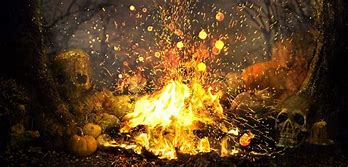
Samhain: The Great Fire of Peace (Scottish Folklore)
Ostara’s Meaning, Traditions and A Simple Ostara Ritual
From otherworldlyoracle.com
The Spring Equinox is knocking on our dew-stained windows, beckoning us to remember its beauty and release. Many Wiccans, witches and Pagans celebrate the Spring Equinox, also known as Ostara, which falls around March 21st on the calendar each year. Learn all about Ostara’s meaning, how to celebrate Ostara with old and modern traditions, and adapt our simple Ostara ritual as your own.
Ostara and Easter’s Similar Origins
The word Ostara originates from a Spring Goddess’s name—Eostre. The symbols of Ostara are uncannily similar to the traditions of the Christian holiday Easter. Why is this? To find Jesus’ Resurrection Day on the calendar – look at the first full moon following the Spring Equinox, and Easter will be on the first Sunday following the full moon. If it happens the first full moon of Spring falls on a Sunday, then Easter will be on the following Sunday.
Easter & Fertility
The word Easter looks a lot like the Spring Goddess’s name Eostre, doesn’t it? There’s no coincidence there! Ostara (the Spring Equinox) was celebrated by Germanic people and by the Anglo-Saxons. Fertility and rebirth of the earth were the two main reasons for Ostara festivities. The earth is returning to its abundant greenness and the sun is returning to the high skies. Flowers are budding, lambs are bleating in the fields, and the whole of nature is singing.
Ostara Symbols and Traditions
The Easter Bunny is an image on a pedestal with the likes of Santa Claus and The Tooth Fairy. But where does the Easter Bunny come from? Just like so many other historical Holiday icons and traditions, the Easter Bunny was born from Pagan customs. Bunnies are cute, fluffy, and hippety-hoppety. But they’re also known for mating. LOTS of it. It should come as no surprise the Rabbit is one of Ostara’s original symbols of fertility. In addition, there’s speculation the goddess Eostre once had a consort who was part-rabbit.
Easter Eggs
Easter Eggs are another symbol of fertility and rebirth. Christians claim Easter eggs represent Christ’s Resurrection – an egg inevitably means new life or birth into a new life. The “dying of eggs” tradition may have its roots in the ancient Zoroastrians’ painting egg ritual on the Spring Equinox. Painting eggs is a common activity at various times of the year for many countries, including Ukraine, the U.S., Austria, Germany, Poland, Russia, and Bulgaria.
Flowers
Another image that is widely associated with Ostara and Easter…the flower. The symbol of the flower is new life. Flowers have an uplifting effect on us. Their bright colors prove even though there is a time for death, there will always be a time for rebirth. This Ostara, pick some wildflowers and place them in a vase on your table or altar. Or decorate your table with Spring greenery. It will remind you of the beauty of Spring and of the true meaning of Ostara (and Easter, for that matter) which is new life.
13 SIMPLE Ways to Celebrate Ostara …
A Simple Ostara Ritual
If you’re looking for simple Ostara rituals, here’s one of ours to adapt to fit your needs.
On Ostara, stand outside somewhere private. Breathe in the air and remind yourself why Spring is special and magical. Let old memories of the Springtime and Ostara arise in your mind. Holding the joyful memories of spring in your mind:
Turn and face the direction of the sun. Thank the sun for its grand return to the sky and ask for its blessings upon the land.
Thank Mother Nature for her nourishment and love.
If you have shoes on, remove them and allow the earth’s energy to rise into your feet and gradually up your legs and then through the rest of your body.
Choose the nearest tree and walk over to it, still feeling the earth’s energy undulating in waves throughout your body. Hold your hand out to the tree, fingers up and place your palm against the tree, as if saying hello.
Let the tree’s energy flow into your fingers and palm and then into your arm, slowly meeting and mixing with the energy still rising from your feet. Place your other palm against the tree to greet the tree’s spirit.
Let the tree’s energy fill the top portion of your body, including your mind and heart. At this point, you will feel the earth and tree’s energy meeting and combining. If you cannot feel it physically, feel it with your mind and spirit.
Visualize the energies mixing and filling your body fluidly. This is the spirit of Spring and the soul of nature.
Wrapping Up the Ritual…
To end your Ostara ritual, be sure that both of your feet are flat upon the ground and both palms are flat against the same tree. Imagine some of your energy and spirit flowing out from your heart chakra and into the tree.
Think of your solar plexus as sending waves of your energy down through your legs, through your feet and into the earth. This is to give some of yourself to the earth, as you have taken some of its energy in this rite.
Once more, face the sun (don’t stare directly at it), and thank the sun for its warmth and thank the earth for its upcoming gifts to us this Spring.
After you have performed this simple Ostara ritual, remember the exchange of energies for the rest of the day. Remember why we love Spring and be grateful for all of the fruitfulness of the earth. If we take, we must give something in return.
 Witches Of The Craft®
You must be logged in to post a comment.