
Category: The Sabbats
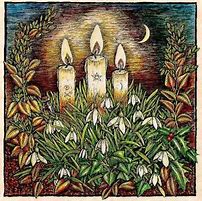
Imbolc Lore and Rituals
Celebrating the Seasons by Selena Fox
Imbolc, also known as Candlemas and Groundhog’s Day, occurs at the beginning of February. It marks the middle of Winter and holds the promise of Spring. The Goddess manifests as the Maiden and Brigid. The Groundhog is a manifestation of the God. Colors are White, and sometimes Red. It is a festival of spiritual purification and dedication.
Thoroughly clean your altar and/or temple room. Do a self purification rite with Elemental tools — cleanse your body with salt (Earth), your thoughts with incense (Air), your will with a candle flame (Fire), your emotions with water (Water), and your spiritual body with a healing crystal (Spirit). Bless candles that you will be using for rituals throughout the year. Invoke Brigid for creative inspiration. Take a Nature walk and look for the first signs of Spring. Reflect upon/reaffirm spiritual vows and commitments you have made.
Resources
- Nineteen Ways to Celebrate Imbolc by Selena Fox
- Imbolc Customs and Lore by Selena Fox
- Litany of the Five Elements by Selena Fox
- Brigid Chants by Selena Fox
- Brigid Healing Ritual by Selena Fox
Click here to read the rest of this article about Imbolc from www.circlesanctuary.org
Pagan Holidays Lughnasadh Lammas | Everything You Need To Know
The Lughnasadh and Lammas Pagan holidays celebrates the Wheel of the Year and the arrival of the late summer season!
The days are sticky hot and you spend your time finding ways to cool down. Gardens and farmlands are ripe with veggies in shades of dark green and yellow. This is the beginning of the first harvest and primarily involves grain and corn. Although the sun is strong and hot, you’ll notice the days are beginning to shorten.
This season is lush and abundant, but Nature is already beginning to sense the coming of colder Winter days. So begins the days of preparation: gathering seeds to plant next Spring, harvesting herbs, canning jams and jellies, and baking bread to store for those cold days ahead.
It’s important to also understand that there is so much more to Lughnasadh and not just the literal interpretation of harvesting because you may not be farming your own fields.
This is a time for gratitude, personal growth, and renewal. The energy and intentions of Lughnasadh are still prevalent in the day to day lives of those who live a nature spirituality based life.
Many Pagans, Witches, and those interested in Nature Spirituality celebrate the seasonal cycles. Sometimes referred to as the Wheel of the Year, and consisting of eight celebrations. Four of these festivals (Imbolc, Beltane, Lughnasadh, and Samhain) are rooted in Celtic history and origins. The other four (Spring Equinox, Summer Solstice, Autumn Equinox, and Winter Solstice) represent the sun’s location. I created a complete guide to each season, including history, traditions, symbols, correspondences, ritual ideas, and how you can celebrate.
Table of Contents:
What is the Difference Between Pagan Holidays Lammas and Lughnasadh?
Lammas Meaning, Traditions, and Why We Celebrate Pagan Holidays
How To Celebrate Lammas and Lughnasadh
PRESERVE FOODS AND MAKE JAMS/JELLIES
DONATE TO YOUR LOCAL FOOD BANK
Simple Ritual Ideas For Lughnasadh and Lammas Pagan Holidays
MEDITATE WITH CANDLES AND CRYSTALS
Lughnasadh and Lammas Correspondences
Lughnasadh and Lammas Pagan Holidays Journal Prompt Ideas
Click here to read the rest of the article Source: thepeculiarbrunette.com
Imbolc – History, Traditions, Correspondences, and Simple Ritual Ideas
(YOU CAN COPY AND PASTE ANY SPELLS POSTED TO A DOCUMENT TO PRINT AND/OR SAVE ON YOUR COMPUTER FOR PERSONAL USE ONLY)
Many Pagans, Witches, and those interested in Nature Spirituality celebrate the seasonal cycles. Sometimes referred to as the Wheel of the Year, and consisting of eight celebrations. Four of these festivals (Imbolc, Beltane, Lughnasadh, and Samhain) are rooted in Celtic history and origins. The other four (Spring Equinox, Summer Solstice, Autumn Equinox, and Winter Solstice) represent the sun’s location. I created a complete guide to each season, including history, traditions, symbols, correspondences, ritual ideas, and how you can celebrate.
Imbolc is a fire festival that celebrates the home and the halfway point between Winter Solstice and the Spring Equinox. It is quite literally Midwinter and while the days continue to grow lighter it is still dark and cold outside. Cabin fever has set in and we are all yearning to unburden ourselves from the long dark days. This can be an especially difficult time for those who suffer from seasonal affective disorder (SAD) and is a BIG reason why a celebration is so lovely right now!
After months of self-reflection, planning, and goal setting, aspiration and ambition are beginning to stir. The tiniest bits of enthusiasm is starting to awaken beneath the surface. Goals and dreams that you’ve created over the long cold nights are now being lit from the flames of Midwinter. Let your creativity and imagination help manifest these dreams!
Table of Contents
Spiritual / Magickal Intentions
Botanicals, Herbs, and Greenery
Take a walk outside to connect with the sun
How to Celebrate Imbolc and Activities
Light candles or make your own
Bake some cinnamon treats (cinnamon rolls, bread, pies, cakes, cookies, etc)
Start a new craft project or hobby
Spend time with loved ones or host a potluck
Click here to read more of this article Source: thepeculiarbrunette.com
History of Christmas
Christmas is celebrated on December 25 and is both a sacred religious holiday and a worldwide cultural and commercial phenomenon. For two millennia, people around the world have been observing it with traditions and practices that are both religious and secular in nature. Christians celebrate Christmas Day as the anniversary of the birth of Jesus of Nazareth, a spiritual leader whose teachings form the basis of their religion. Popular customs include exchanging gifts, decorating Christmas trees, attending church, sharing meals with family and friends and, of course, waiting for Santa Claus to arrive. December 25—Christmas Day—has been a federal holiday in the United States since 1870.
The middle of winter has long been a time of celebration around the world. Centuries before the arrival of the man called Jesus, early Europeans celebrated light and birth in the darkest days of winter. Many peoples rejoiced during the winter solstice, when the worst of the winter was behind them and they could look forward to longer days and extended hours of sunlight.
How Did Christmas Start?
In Scandinavia, the Norse celebrated Yule from December 21, the winter solstice, through January. In recognition of the return of the sun, fathers and sons would bring home large logs, which they would set on fire. The people would feast until the log burned out, which could take as many as 12 days. The Norse believed that each spark from the fire represented a new pig or calf that would be born during the coming year.
The end of December was a perfect time for celebration in most areas of Europe. At that time of year, most cattle were slaughtered so they would not have to be fed during the winter. For many, it was the only time of year when they had a supply of fresh meat. In addition, most wine and beer made during the year was finally fermented and ready for drinking.
In Germany, people honored the pagan god Oden during the mid-winter holiday. Germans were terrified of Oden, as they believed he made nocturnal flights through the sky to observe his people, and then decide who would prosper or perish. Because of his presence, many people chose to stay inside.
Table of Contents
Is Christmas Really the Day Jesus Was Born?
Washington Irving Reinvents Christmas in America
Click here to read the rest of this article Source: history.com
The Coming of Litha
The Coming of Litha
Litha is the Wiccan Sabbat that marks the Summer Solstice and usually occurs around December 21 in the Southern Hemisphere. It marks the first day of summer on traditional calendars, but it is actually the Midsummer mark for Pagans.
Litha marks the longest day of the year, the day when the sun reaches its apex and is aspected to zero degrees Cancer. This is a day that celebrates the God in all his glory. It is also the time of year when the Goddess is glowing with motherhood in her pregnancy.
In Wiccan lore, once again the Holly King and the Oak King battle. This time, it is the Holly King who is victorious, and from this point on, the days grow shorter.
For those of you familiar with Shakespeare, you might remember the play centered around the Solistice: “A Midsummer’s Night’s Dream”. It is believed that Midsummer Night’s Eve is a special time for those who believe in the Faerie traditions. Like Samhain, this is a day where the veils are thin between the realms of the Sidhe (the Faerie realm) and the world of mortals. It is a time for merriment and the making of wishes.
Litha marks the first of three harvest celebrations. This is the time to gather the herbs from your garden. Tradition suggests using your boline or a scythe to cut the plant by the moonlight. Some suggest chanting the use of the planet while doing so.
As we’ve seen happen in the past, Christianity has tried to hone in on our holiday. They have declared it John the Baptist’s birthday. I’ve read that other Saints in the Church are remembered on the day they’ve died. But not so with John the Baptist. He is the only Saint recognized on his birthday. They celebrate the Solstice with the Jack-in-the-Green to the Feast of St. John the Baptist, often portraying him in rustic attire, sometimes with horns and cloven feet (like Pan).
Published on Witchery
Sun Ritual for Midsummer
(YOU CAN COPY AND PASTE ANY SPELLS POSTED TO A DOCUMENT TO PRINT AND/OR SAVE ON YOUR COMPUTER FOR PERSONAL USE ONLY)
Sun Ritual for Midsummer
Midsummer is the time of the summer solstice, the Litha sabbat, and it’s the longest day of the year. Falling around June 21 in the northern hemisphere, and around December 21 below the equator, this is a time to celebrate the warmth and power of the sun. It’s a great time of year to get outside, enjoy the extra hours of daylight, and celebrate the season with family and friends. You can do this ritual as a group or adapt it to perform as a solitary practitioner.
You’ll need the following items:
- A larger candle to represent the sun
- An individual candle for each participant to hold
Also, be sure to decorate your altar with symbols of the season – solar symbols, fresh flowers, in-season summer produce and crops that you’ve harvested. You should do this ritual outside if at all possible, so you can take advantage of the sun’s light and energy.
If your tradition requires you to cast a circle, go ahead and do that first.
Take a moment to ground and center, and get yourself focused. Bask in the rays of the sun, feeling its warmth on your face, and welcoming its power into you.
The person who is leading the ritual – for ease of purpose, we’ll call that person the HPs – should stand at the altar.
HPs: We are here today to celebrate the power and energy of the sun. The sun is the source of warmth and light around the world. Today, at Litha, the summer solstice, we mark the longest day of the year. From Yule until this day, the sun has been moving ever closer to the earth. Flowers are blooming, crops are growing, and life has returned once more. Today we honor the gods and goddesses of the sun.
The HPs lights the sun candle on the altar.
HPs: The sun is the ultimate source of fire and light. Like all sources of light, the sun shines brightly and spreads around the world. Even as it gives its light and power to each of us, it is never diminished by the sharing of that energy. The sun passes over us each day, in the never-ending circle of light. Today, we share that light with each other, passing it around the circle, forming a ring of light.
Using the sun candle, the HPs lights her own candle, and turns to the next person in the circle. As she lights the next person’s candle, she says: May you be warmed and rejuvenated by the light of the sun.
The second person turns to the third, lighting their candle, and passing along the blessing. Continue until the last candle in the circle has been lit, returning back to the HPs.
Remember, this is a joyous celebration – feel free to include dancing, clapping, music or even a drum circle as you enjoy the power of the sun!
As each person in the group holds their lit candle, the HPs calls upon the gods and goddesses of the sun. Feel free to add or substitute different solar deities as your tradition or needs require.
HPs: Gods who bring us light, we honor you!
Hail, Ra, whose mighty chariot brings us light each morning!
Hail, Ra!
Hail, Apollo, who brings us the healing energies of the sun!
Hail, Apollo!
Hail, Saule, whose fertility blooms as the sun gains in strength!
Hail, Saule!
Hail, Helios, whose great steeds race the flames across the sky!
Hail, Helios!
Hail, Hestia, whose sacred flame lights our way in the darkness!
Hail, Hestia!
Hail, Sunna, who is sister of the moon, and bringer of light!
Hail, Sunna!
We call upon you today, thanking you for your blessings, accepting your gifts. We draw upon your strength, your energy, your healing light, and your life giving power!
Hail to you, mighty gods and goddesses of the sun!
Each member of the group should now place their candles on the altar, surrounding the sun candle.
HPS: The sun radiates out, never dying, never fading. The light and warmth of today will stay with us, even as the days begin to grow shorter, and the nights grow cold once more. Hail, gods of the sun!
Invite everyone to take in the warmth of the sun once more, and when you are done, end the ritual as you normally would.
Source: Patti Wigington,Paganism/Wicca Expert Article originally published on & owned by About.com
Litha Correspondences c.2018
(YOU CAN COPY AND PASTE ANY COROSPONDENCES POSTED TO A DOCUMENT TO PRINT AND/OR SAVE ON YOUR COMPUTER)

The Best Yule EVER!!

It a miserable or beautiful night, depending on your point of view, before Yule as the snow fell heavy and a howling wind could be heard, as it had been going on since noon. The animals were all sleeping in front of the empty fireplace which was waiting for the Yule log that might not be possible this year. The cat had even quit chasing the mouse.
Mom was in the kitchen putting her final loving touch on all that she had made for our Winter Solstice feast next day. Keeping an eye on the children through the archway.
Dad was in his recliner telling a tale or two about elves, unicorns, fairies and dragons. The kids listened closely as they all sip their tea and each had just one of their favorite cookie trying to stay awake on couches and pillows. The tea and dad’s stories were working their magick along with mom’s softly humming a magickal lullaby. They were finally falling asleep wherever they were in the family room.
When out on the lawn they heard a happy, loud sing in amongst the other many other familiar noises. They all jumped up and ran to the windows to see who was there. Even the twins Elliot and Asher who were almost 1 getting to celebrating their very first Yule. When what to their wandering, sleepy eyes should appear through the storm but their wildlife friends the bears and deers, wood nymphs, and gnomes trudging through the blizzard with their Yule log! The children rejoiced to see their friends and the all-important Yule log that helps to welcome the Oak King and bids the Holly King a good rest. Dad had said just that afternoon, “The storm is too ferocious to bring in the Yule log from the forest this year.
Triple Goddess and her Consorts had heard the children’s chant, ” Triple Goddess please bring us a Yule log to light the way for your son and consort the mighty Oak King as he is born and to bid the tired Holly King a good rest. It helps us bring the Sun back to shine more on Mother Earth.” This wasn’t really a chant or sung on key or even close to being a tune. But the Goddess and her Consorts had heard it being sung from their hearts with their parent’s inner children joining in. It was in answer to that chant that they had found a way to get it to them.
As all the friends came into the family room, yes even the deers and bears that had carried the Yule log from the forest to their door were welcomed inside for a drink and cookie. After the guests had been thanked for their help and everyone was done with their Yule snack all their friends slowly left to go to their homes or dens or wherever they lived the children could be heard shouting, “This is going to be the best Yule ever!!!”
Mom and dad tucked them in bed reminding them to thank the Triple Goddess, Oak and Holly King for answering their chant to get them their Yule log. As the children fell asleep their mom and dad decorated the big family room/kitchen with Pine, Holly, and Mistletoe than they laid Yule log just so in the fireplace to be lit when the awoke the children at midnight. They would be leaving their offerings of sweet wine, bread, pastries, and sweets to the retiring Holly King, the newborn Oak King, and the Triple Goddess on the front porch before they partook in the light feast that would sustain them until noon the next day when they would again put offerings from their meal out for the Goddess and newborn Oak King. Singing, dancing, a few games and presents would be exchanged than the best part of all dad telling them the story of the rebirth of the Oak King, the Holly King crossing the veil to be reborn at the Summer Solstice and how the Triple Goddess bids them farewell and welcomes them again as their time comes with the turn of the wheel of the year.
Mom and Dad put out an invitation to all their friends to return for the lighting of the Yule log they had brought that stormy winter night. As they went to their bed for a few hours’ sleep they could be heard echoing their children from a couple of hours ago, “Our thanks to the Triple Goddess and her Consorts the Oak and Holly King. Thanks to all our woodland friends especially the deer and bears who carried our Yule log to us, gnomes, and wood nymphs that helped to make THIS IS THE BEST YULE EVER!!!”
Thank you for your caring support through the good and bad times in my life this year as there were quite a few ups and downs. The best thing was Big Dwag and I getting married on June 21st. If you would like to attend our handfasting on June 22, 2024, via Skype please email me so you will include in the guest list. The worst thing was for her own comfort putting Dreamer into her eternal rest.
May you and yours have one of your best Yule’s ever this year. I wish you light and love as the wheel opf the year has turned full circle again!!
I hope you enjoyed reading this story.
Copyright by Lady Carla Beltane 2023 All rights reserved. This post cannot be reblogged or copy and pasted or in any other way be reproduced for commercial purpose without express written permission from Lady Carla Beltane. It may be printed out for personal use only.
Solitary Yule Ritual c.2015
(YOU CAN COPY AND PASTE ANY SPELLS POSTED TO A DOCUMENT TO PRINT AND/OR SAVE ON YOUR COMPUTER FOR PERSONAL USE ONLY)
Solitary Yule Ritual
The altar is adorned with evergreens such as pine, rosemary, bay, juniper, and cedar, and the same can be laid to mark the Circle of Stones. Dried leaves can also be placed on the altar.
The Cauldron, resting on the altar on a heatproof surface (or placed before it its too large), should be filled with ignitable alcohol, or a red candle can be placed within it. At outdoor rites, lay a fire within the cauldron to be lit during ritual.
Arrange the altar, light the candles and incense, and cast the Circle of Stones.
Recite the Blessing Chant
Invoke the Goddess and God
Stand before the cauldron and gaze within it.
Say these or similar words:
I sorrow not, though the world is wrapped in sleep.
I sorrow not, though the icy winds blast.
I sorrow not, though the snow falls hard and deep.
I sorrow not; this too shall soon be past.
Ignite the Cauldron (or candle), using long matches or a taper. As the flames leap up say:
I light this fire in Your honor, Mother Goddess.
You have created life from death; warmth from cold;
The Sun lives once again; the time of light is waxing.
Welcome, ever-returning god of the Sun!
Hail, Mother of All!
Circle the altar and cauldron slowly, clockwise, watching the flames. Say the following chant for some time:
The wheel turns; the power burns.
Meditate upon the Sun, on the hidden energies lying dormant in winter, not only in the Earth but within ourselves. Think of birth not as the start of life but as its continuance. Welcome the return of the God.
After a time cease and stand once again before the altar and flaming cauldron. Say:
Great God of the Sun,
I welcome Your return.
May You shine brightly upon the Goddess;
May You shine brightly upon the Earth,
Scattering seeds and fertilizing the land.
All blessings upon You.
Reborn One of the Sun!
Works of magic if necessary, may follow
Celebrate the Simple Feast
The Circle is released
Source: Scott Cunningham
The Witches Correspondences for Yule c. 2015
(YOU CAN COPY AND PASTE ANY COROSPONDENCES POSTED TO A DOCUMENT TO PRINT AND/OR SAVE ON YOUR COMPUTER)
YULE CORRESPONDENCES
Other Names: Jul (“wheel”, Old Norse), Saturnalia(Rome ~December 17 & 18), Yuletide(Teutonic), Midwinter, Fionn’s Day, Alban Arthuan, Christmas (Christian~December 25), Xmas, Festival of Sol, Solar/Secular/Pagan New Year
Animals/Mythical beings: yule goat (nordic), reindeer stag, squirrels, yule cat, Sacred White Buffalo, Kallikantzaroi-ugly chaos monsters(greek), trolls, phoenix, yule elf, jule gnome, squirrels, wren/robin
Gemstones: cat’s eye, ruby, diamond, garnet, bloodstone
Incense/Oils: bayberry, cedar, ginger, cinnamon, pine, rosemary, frankincense, myrrh, nutmeg, wintergreen, saffron
Colors: gold, silver, red, green, white
Tools,Symbols, & Decorations: bayberry candles, evergreens, holly, mistletoe, poinsettia,mistletoe, lights, gifts, Yule log, Yule tree. spinning wheels, wreaths, bells, mother & child images
Goddesses: Great Mother, Befana (strega), Holda (teutonic), Isis(egyptian), Triple Goddess, Mary(christian), Tonazin(mexican), Lucina(roman), St. Lucy (swedish),Bona Dea (roman), Mother Earth, Eve(Hebrew), Ops(roman Holy Mother), the Snow Queen, Hertha (German), Frey (Norse)
Gods: Sun Child, Saturn(rome), Cronos (Greek), Horus/Ra(egyptian), Jesus(christian-gnostic), Mithras(persian), Balder(Norse), Santa Claus/Odin(teutonic), Holly King, Sol Invicta, Janus(God of Beginnings), Marduk (Babylonian)Old Man Winter
Essence: honor, rebirth, transformation, light out of darkness, creative inspiration, the mysteries, new life, regeneration, inner renewal, reflection/introspection
Dynamics/Meaning: death of the Holly (winter) King; reign of the Oak (summer) King), begin the ordeal of the Green Man, death & rebirth of the Sun God; night of greatest lunar imbalance; sun s rebirth; shortest day of year
Purpose: honor the Triple Goddess, welcome the Sun Child
Rituals/Magicks: personal renewal, world peace, honoring family & friends, Festival of light, meditation
Customs: lights, gift-exchanging, singing, feasting, resolutions, new fires kindled, strengthening family & friend bonds, generosity, yule log, hanging mistletoe, apple wassailing, burning candles, Yule tree decorating; kissing under mistletoe; needfire at dawn vigil; bell ringing/sleigh-bells; father yule
Foods: nuts, apple, pear, caraway cakes soaked with cider, pork, orange, hibiscus or ginger tea, roasted turkey, nuts, fruitcake, dried fruit, cookies, eggnog, mulled wine
Herbs: blessed thistle, evergreen, moss, oak, sage, bay, bayberry, cedar, pine, frankincense, ginger, holly, ivy, juniper, mistletoe, myrrh, pinecones, rosemary, chamomile, cinnamon, valerian, yarrow
Element: earth
Threshold: dawn
Wassail – A Yummy Winter Drink
Wassail – It smells heavenly simmering on the stove.
Yields: 4 quarts.
Prep Time: 15 minutes
Total Time: 1 hour 45 minutes
There’s just nothing better than the scent apple cider, fresh oranges, and cinnamon sticks simmering on the stove. Part of England’s Christmas tradition for centuries, wassail is a scrumptious spiced cider practically begging to be sipped fireside. Early versions of this Christmas punch included warmed wine, mead, or ale combined with roasted apples, sugar, and spice. This recipe holds fast to tradition with whole bobbing apples and a multitude of warming spices, plus a festive twist using apple cider and cranberry juice in place of the alcohol. Of course, for the grown-up version, a splash of bourbon or brandy adds a kick!
What is wassail?
This non-alcoholic Christmas drink is essentially apple cider infused with fresh orange, lemon, roasted apples, and lots of spice. Think: cozy cinnamon, ginger, nutmeg, allspice, and star anise. It’s important here to use both ground and whole spices, so don’t skip either. The ground spices flavor the roasted apples through their core and have a stronger aroma than the whole spices while the whole cinnamon sticks and star anise pods couldn’t be prettier floating in this drink! The final step before serving is adding in those sweet, tender roasted apples and cranberry juice cocktail. Not only does the cranberry juice add a bright, tart note, it gives the drink a gorgeous rosy hue in your punch bowl.
What is the tradition of wassailing?
The term “wassail” has multiple meanings. First appearing in the English poem Beowulf in the 8th century, the word has been used as a salutation or toast to good health. In England, it also describes a 12th night of Christmas gathering in fruit orchards where dancing, drinking, and singing encourage spirits to provide a good harvest in the coming year. Wassailing can also simply mean Christmas caroling door to door. But today, wassail refers to the cozy, hot holiday beverage that you’ll find here, too. It’s the most delicious way to warm up after a cold night of caroling!
What’s the difference between apple cider and apple juice?
Apple cider is the raw, unfiltered, unpasteurized juice from apples. Apple juice is the juice from apples that has been filtered, pasteurized, and oftentimes sweetened. The difference between apple cider and apple juice may seem subtle, but which one you pick does make a difference! Use apple cider for this recipe. If you can’t find it, apple juice can be used but you’ll be left with a sweeter drink.
Can you make wassail in a slow cooker?
Yes! You’ll want to bake the apples separately, but you can add all of the other ingredients to a slow cooker and heat on high for two hours or low for four hours. Add the baked apples and cranberry juice before serving.
Ingredients
6 small honeycrisp apples
6 Tbsp. dark brown sugar, plus more to taste
1 tsp. ground cinnamon
1/2 tsp. ground ginger
1/4 tsp. ground nutmeg
1/4 tsp. ground allspice
1 gal. apple cider, divided
1 navel orange
10 whole cloves
2 lemons
2 cinnamon sticks, plus more for serving
3 star anise pods
1 c. cranberry juice cocktail
Bourbon or brandy, for serving (optional)
Fresh or frozen cranberries, thawed, for serving (optional)
See Nutritional Information
Directions
-
- Preheat the oven to 350°F.
- Using a paring knife, cut out the core and stem of each apple, leaving about the bottom 1/2 inch of each apple intact. Using a small spoon or grapefruit spoon, scoop out any remaining core and seeds to form a cavity in each apple. In a small bowl, stir together the brown sugar, cinnamon, ginger, nutmeg, and allspice. Divide the brown sugar mixture among each apple cavity, firmly packing it as necessary.
- In the bottom of a pie plate or baking pan, pour 1 cup of the apple cider. Place the prepared apples in the pan. Bake until the apples are very tender and collapsing, 1 hour to 1 hour and 10 minutes.
- Meanwhile, cut the orange in half crosswise and stick the whole cloves in the peel. Cut one lemon in half and thinly slice the second lemon.
- In a large pot, add the prepared orange, cinnamon sticks, star anise pods, and the remaining apple cider. Squeeze the halved lemon into the pot and add the sliced lemon. Over medium-high heat, bring the mixture to a boil and reduce heat to medium-low and simmer until aromatic, 1 hour.
- Add the cranberry juice and the cooked apples with any of their juices to the pot and stir to combine. Taste for sweetness and add more brown sugar, if you like. Serve hot or warm, with alcohol of choice, cranberries, and a cinnamon stick, if you like.
Yule Log – It’s a Cake That Doubles as a Stunning Centerpiece
Chocolate Yule Log Recipe
Yields: 12 serving(s)
Prep Time: 50 minutes
Total Time: 4 hours
The yule log is a classic Christmas dessert that not only looks pretty, it’s darn delicious, too. I remember seeing this traditional treat in the pages of cooking magazine for years, but it took years for me to try it myself. It turns out, it’s really not hard to make. If you doubt your ability to make one, just give it a shot. I promise you can do it. Just bake a cake, fill it with a sweet filling, roll it up, frost it, and ta da! It looks like a gorgeous woodland log straight out of a fairy tale.
What’s the tradition behind a yule log cake?
Over the history of Christmas, yule logs date back to the 1600s when families would burn the real log on Christmas Eve to symbolize the coming of the new year and good luck. Then, they were popularized in French bakeries during the 19th century where they get their other common name, Bûche de Noël. Many of these lovely cakes are garnished with elaborate meringue mushrooms or other edible woodland creatures, but you’ll love the simplicity of this one.
What’s the difference between a Swiss roll and a yule log?
While both desserts feature a thin layer of cake and fluffy filling rolled into a log, the difference between a yule log and a Swiss roll is how the two are decorated. Swiss rolls are typically kept plain while yule logs are cut, frosted, and adorned to look like, well, logs! Some versions are artfully topped with meringue mushrooms and other intricate things, but simple garnishes like pomegranate seeds and fresh rosemary work perfectly.
How do you roll a yule log without it breaking?
The key is to roll the cake, unfilled, fresh out of the oven. Cake is much more pliable when it’s hot, which means you can easily roll it up and shape it into a log without fear of it cracking and breaking. Once the cake has completely cooled, you’ll carefully unroll it, fill it, and roll it up again! If you do end up with any cracks, don’t worry—the frosting will cover them!
How do you decorate a yule log?
This is the fun part: Once you get the log in place, slather the whole thing in the chocolate frosting. Then run the tines of a fork over the frosting to create a bark-like appearance. Stick a few sprigs of rosemary around the log and top with pomegranate seeds. If you don’t want to use pomegranates, sugared cranberries look pretty! A sprinkle of powdered sugar is great, too.
How do you store a yule log?
Wrap it tightly in plastic and store in the refrigerator for up to three days. Wait to add the pomegranate seeds and rosemary until just before serving.
Ingredients
Cake
4 Tbsp. salted butter, melted, plus more for the pan
6 large eggs, separated
1/4 tsp. cream of tartar
1/4 tsp. kosher salt
3/4 c. granulated sugar
3/4 c. all-purpose flour
1/4 c. unsweetened cocoa powder
1/2 tsp. baking powder
1 tsp. pure vanilla extract
1/4 c. strong brewed coffee, at room temperature
1/4 c. powdered sugar
Filling
4 oz. cream cheese, at room temperature
1/2 c. powdered sugar, sifted
1 c. heavy cream
1 tsp. vanilla extract
Frosting
12 oz. semisweet chocolate, chopped
3/4 c. heavy cream
1 Tbsp. light corn syrup
Rosemary sprigs and pomegranate seeds, for garnish
See Nutritional Information
Directions
-
- To make the cake: Preheat the oven to 350°F. Butter a 12-by-17-inch rimmed baking sheet. Line with parchment paper, leaving an overhang on all sides. Butter the parchment.
- In a large bowl, beat the egg whites, cream of tartar, and salt with an electric mixer on medium-high speed until frothy. Add 1/4 cup of the granulated sugar and beat on high speed until stiff, glossy peaks form, about 2 minutes.
- In a medium bowl, sift together the flour, cocoa powder, and baking powder. In a separate large bowl, combine the egg yolks, the remaining 1/2 cup sugar, and the vanilla. Beat on high speed until thick and creamy, 3 to 4 minutes. Beat in the melted butter and coffee until combined.
- Add the flour mixture to the yolk mixture and beat on low speed until well combined. Fold a spoonful of the beaten egg whites into the batter until no streaks remain. Gently fold in the remaining egg whites until combined.
- Transfer the batter to the prepared pan, gently nudging the batter so it fills the corners. Give the pan a little shimmy to even it out. Bake until the top just starts to spring back when gently pressed, 10 to 12 minutes (the top might still feel a little tacky). Do not over-bake or the cake will crack.
- Place a clean dish towel on a large wire rack. Dust the cake with 2 tablespoons of the powdered sugar. While the cake is still hot, loosen the edges from the pan, then turn out the cake onto the towel; carefully remove the parchment. Dust the top with the remaining 2 tablespoons powdered sugar.
- Starting at one of the long sides, use the towel to tightly roll up the cake with the towel inside. Position the cake seam-side down and let cool about 1 hour.
- To make the filling: In a large bowl, beat the cream cheese with an electric mixer on low speed until just smooth. Add the powdered sugar and beat until smooth, about 1 minute. Gradually beat in the heavy cream 1/4 cup at a time, making sure the mixture is smooth before adding more cream. Increase the speed to medium high and beat until stiff peaks form, 2 to 4 minutes. Add the vanilla and beat for a few more seconds, just to combine.
- Carefully unroll the cooled cake and spread evenly with the filling, leaving a 1/4- to 1/2-inch border on all sides. Re-roll the cake, using the towel to help you. Cover the cake roll with parchment paper and then tightly wrap in plastic wrap. Chill for at least 2 hours.
- Meanwhile, for the frosting: To a medium bowl, add the chocolate. In a saucepan, bring the heavy cream and corn syrup to a simmer, then pour over the chocolate. Let sit for 5 minutes, then whisk until smooth. Let thicken at room temperature until spreadable, about 2 hours.
- Unwrap the cake on a cutting board. Cut off one-fourth of the cake on a sharp diagonal for the branch. Position the branch against the remaining cake roll on a platter. Cover the cake with the frosting using an offset spatula, then drag a fork through the frosting to create a bark-like texture. Garnish with rosemary sprigs and pomegranate seeds.
Let’s Have Some Fun – 9 Summer Solstice Crafts & Recipes for a Magical Litha
Source: moodymoons.com
Foraged Fairy Ladder/Trellis
It’s the season of fairies, and nothing delights the inner child more than playing with the woodland spirits.
This one is so easy, it’s almost self-explanatory.
Literally: Glue some sticks together. Yup. That’s it. I used hot glue for the one above.
If you want to get fancy, add little bits of (affiliate link —–>) sheet moss to get that aged-in-the-garden feel.
You can even train roses or herbs to grow on it.
Contents
Litha – Midsummer Holiday
Midsummer, a holiday celebrating the traditional midpoint of the harvest season and the summer solstice (June 20 or 21), the longest day of the year in the Northern Hemisphere.
Midsummer is celebrated in many countries but is synonymous with Scandinavia, where it is observed as a national holiday in Sweden and Finland. In Sweden it is celebrated on a Friday between June 19th and 25th, while in Finland it is always observed on a Saturday between June 20th and 26th. In Scandinavia and elsewhere, many Midsummer celebrations are held over several days and often occur in tandem with St. John’s Eve festivities, which usher in the feast day of St. John the Baptist (June 24).
The holiday originated as a pagan celebration to welcome the summer season and ensure a successful harvest. It may have been associated with local gods, such as Ukko, the Finnish god of thunder who controlled the rain and thus the fertility of the land. Festivities included dancing, singing, drinking, cleaning house, lighting bonfires, and collecting flowers.
Many of these rituals arose from the belief that Midsummer was a magical time of good fortune and healing. Bonfires were lit and loud behavior was encouraged to drive away evil spirits. Perhaps due to the time of year’s connection with fertility, love spells were often cast at Midsummer, such as placing seven flowers beneath one’s pillow on Midsummer’s Eve to conjure dreams of one’s future partner. One could also see the face of one’s future bride or groom by looking into a well at midnight. Bathing in natural springs and decorating houses with flowers and plants brought good health, as water and greenery were believed … Click here to read the rest of this article Source: britannica.com
Yule Festival
Yule, festival observed historically by Germanic peoples and in modern times primarily by Neo-Pagans, coinciding with the winter solstice (December 21–22 in the Northern Hemisphere; June 20–21 in the Southern Hemisphere). The pre-Christian festival originated in Scandinavia and was later subsumed, along with other pagan celebrations, into the Christian holiday of Christmas. Some modern celebrations of Yule attempt to re-create ancient traditions, while others have been adapted or reimagined to suit contemporary personal and religious practices.
Yule is one of the oldest winter solstice festivals, with origins among the ancient Norse thousands of years ago. Its roots are complicated and difficult to trace, although there are several theories about how and why the festival was celebrated. It is generally agreed that Yule celebrations began as a Norse festival called jol, although assessments of the purpose and traditions vary. Like most winter solstice festivals, themes of light, fire, and feasting are common threads. Some historians think that sacrifices were an important part of the observance, either to the gods and other supernatural beings (such as elves) or to the dead or both. In the harsh climate of northern Europe, most cattle were slaughtered because they could not be fed during the winter. Meat, therefore, was plentiful for a midwinter feast or to leave out as an offering. Some contend that the original festival was a sort of Norse Day of the Dead, with the god Odin as a major player; among Odin’s many names was Jolnir, and among his many duties was acting as a god of the dead. However, this has been disputed in recent years, at least one historian positing that jol was a new year festival intended to set the tone for the months ahead.
One of the earliest known references to Yule is from English monk and historian Bede, who wrote in the early 8th century about “giuli,” a period in the old pagan calendar used by Germanic groups such as the Norse and … Click here to read the rest of this article Source: britannica.com
The Magical History Of Yule, The Pagan Winter Solstice Celebration
On December 21 (or 22nd some years) we encounter the longest night of the year and the shortest day of the year. After that, the days grow longer until the Summer solstice. In various spiritual and pagan traditions, this seasonal cross-quarter is also known as Yule and is celebrated as a holiday.
In modern times, we typically celebrate Christmas, but long, long ago, Yule was celebrated by the Ancient Celts and various other Pagan religions. Perhaps one of the oldest winter celebrations in the entire world, ancient hunters and gatherers would mark their years based on the different seasons. And each seasonal cross-quarter, including the equinoxes and solstices, was thought to have spiritual significance.
According to Almanac.com, Yule comes from the old English word ‘Geol’ which is the equivalent of the old Norse word, jol. Both of which referred to the winter festivals that took place in celebration of the halfway point of winter.
Long before Christianity, the Ancient Celts and ancient British pagans would celebrate Yule, but when Christianity and…
Click here to read the rest of this article
Magickal Goody of the Day – Make A Stone Sun Dial for Litha
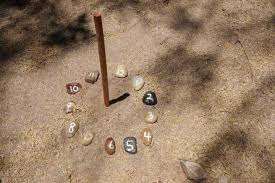
Make a Stone Circle Sundial
Placing the Stones
Stonehenge is one of the world’s best known stone circles, and many researchers have noted that the structure functions as a giant astronomical calendar and sundial. Most people can’t build a Stonehenge replica in their back yard, but what you can do is create a sundial of your own using stones you’ve found. If you have children, this is a great science project to do, but even if you don’t have kids, it’s fascinating to create your own sundial.
If you can do this around Litha, at Midsummer, you’ll have the perfect opportunity to recognize the powerful energy of the sun!
You’ll need the following items:
- A pole or straight stick
- Several large stones
- A clock or watch to calibrate your sundial
Making Your Sundial

Find a place in your yard that gets sun for most of the day. Although it’s ideal to do this in the grass of even a patch of dirt, if all you have is a sidewalk or driveway, then that’s fine too. Mount the pole by sticking it into the dirt. If you’re making your sundial on a hard surface like concrete, then use a block of clay or a bucket of soil to secure the pole.
Keep an eye on your clock. At each hour, take note of where the pole’s shadow falls, and mark the spot with a stone.
If you start this project in the morning, you’ll be able to mark most of the daytime spots – if you start later in the day, you may have to come back the next morning to figure out where your morning hours are.
To tell the time with your sundial, look for the pole’s shadow. Where it falls between the stones will give you the time.
Source: Article found on & owned by About.comBy Patti Wigington
Litha’s Herbs c.2015
Disclaimer: No herb should be used for medicinal purpose until you have checked with your health care professional to ask if it is safe for you to use it for any reason. The content provided on this website is for informational purposes only and DOES NOT CONSTITUTE THE PROVIDING OF MEDICAL ADVICE and is not intended to be a substitute for independent professional medical judgment, advice, diagnosis, or treatment. Always seek the advice of your physician or other qualified health providers with any questions or concerns you may have regarding your health. WitchesofTheCraft.com, any staff member of WitchesofTheCraft.com and/or Lady Carla Beltane are not responsible for any type of negative reaction when using this herb for any reason.

Yuletide Herb – Mistletoe c.2012
Disclaimer: No herb should be used for medicinal purpose until you have checked with your health care professional to ask if it is safe for you to use it for any reason. The content provided on this website is for informational purposes only and DOES NOT CONSTITUTE THE PROVIDING OF MEDICAL ADVICE and is not intended to be a substitute for independent professional medical judgment, advice, diagnosis, or treatment. Always seek the advice of your physician or other qualified health providers with any questions or concerns you may have regarding your health. WitchesofTheCraft.com, any staff member of WitchesofTheCraft.com and/or Lady Carla Beltane are not responsible for any type of negative reaction when using this herb for any reason.

Mistletoe
Botanical: Viscum album (LINN.)
Family: N.O. Loranthaceae
—Synonyms—Birdlime Mistletoe. Herbe de la Croix. Mystyldene. Lignum Crucis.
—Parts Used—Leaves and young twigs, berries.
The well-known Mistletoe is an evergreen parasitic plant, growing on the branches of trees, where it forms pendent bushes, 2 to 5 feet in diameter. It will grow and has been found on almost any deciduous tree, preferring those with soft bark, and being, perhaps, commonest on old Apple trees, though it is frequently found on the Ash, Hawthorn, Lime and other trees. On the Oak, it grows very seldom. It has been found on the Cedar of Lebanon and on the Larch, but very rarely on the Pear tree.
When one of the familiar sticky berries of the Mistletoe comes into contact with the bark of a tree – generally through the agency of birds – after a few days it sends forth a thread-like root, flattened at the extremity like the proboscis of a fly. This finally pierces the bark and roots itself firmly in the growing wood, from which it has the power of selecting and appropriating to its own use, such juices as are fitted for its sustenance: the wood of Mistletoe has been found to contain twice as much potash, and five times as much phosphoric acid as the wood of the foster tree. Mistletoe is a true parasite, for at no period does it derive nourishment from the soil, or from decayed bark, like some of the fungi do – all its nourishment is obtained from its host. The root becomes woody and thick.
—Description—The stem is yellowish and smooth, freely forked, separating when dead into bone-like joints. The leaves are tongue-shaped, broader towards the end, 1 to 3 inches long, very thick and leathery, of a dull yellow-green colour, arranged in pairs, with very short footstalks. The flowers, small and inconspicuous, are arranged in threes, in close short spikes or clusters in the forks of the branches, and are of two varieties, the male and female occurring on different plants. Neither male nor female flowers have a corolla, the parts of the fructification springing from the yellowish calyx. They open in May. The fruit is a globular, smooth, white berry, ripening in December.
Mistletoe is found throughout Europe, and in this country is particularly common in Herefordshire and Worcestershire. In Scotland it is almost unknown.
The genus Viscum has thirty or more species. In South Africa there are several, one with very minute leaves, a feature common to many herbs growing in that excessively dry climate; one in Australia is densely woolly, from a similar cause. Several members of the family are not parasitic at all,being shrubs and trees, showing that the parasitic habit is an acquired one, and now, of course, hereditary.
Mistletoe is always produced by seed and cannot be cultivated in the earth like other plants, hence the ancients considered it to be an excrescence of the tree. By rubbing the berries on the smooth bark of the underside of the branches of trees till they adhere, or inserting them in clefts made for the purpose, it is possible to grow Mistletoe quite successfully, if desired.
The thrush is the great disseminator of the Mistletoe, devouring the berries eagerly, from which the Missel Thrush is said by some to derive its name. The stems and foliage have been given to sheep in winter, when fodder was scarce, and they are said to eat it with relish.
In Brittany, where the Mistletoe grows so abundantly, the plant is called Herbe de la Croix, because, according to an old legend, the Cross was made from its wood, on account of which it was degraded to be a parasite.
The English name is said to be derived from the Anglo-Saxon Misteltan, tan signifying twig, and mistel from mist, which in old Dutch meant birdlime; thus, according to Professor Skeat, Mistletoe means ‘birdlime twig,’ a reference to the fact that the berries have been used for making birdlime. Dr. Prior, however derives the word from tan, a twig, and mistl, meaning different, from its being unlike the tree it grows on. In the fourteenth century it was termed ‘Mystyldene‘ and also Lignum crucis, an allusion to the legend just mentioned. The Latin name of the genus, Viscum, signifying sticky, was assigned to it from the glutinous juice of its berries.
—History—Mistletoe was held in great reverence by the Druids. They went forth clad in white robes to search for the sacred plant, and when it was discovered, one of the Druids ascended the tree and gathered it with great ceremony, separating it from the Oak with a golden knife. The Mistletoe was always cut at a particular age of the moon, at the beginning of the year, and it was only sought for when the Druids declared they had visions directing them to seek it. When a great length of time elapsed without this happening, or if the Mistletoe chanced to fall to the ground, it was considered as an omen that some misfortune would befall the nation. The Druids held that the Mistletoe protected its possessor from all evil, and that the oaks on which it was seen growing were to be respected because of the wonderful cures which the priests were able to effect with it. They sent round their attendant youth with branches of the Mistletoe to announce the entrance of the new year. It is probable that the custom of including it in the decoration of our homes at Christmas, giving it a special place of honour, is a survival of this old custom.
- The curious basket of garland with which ‘Jack-in-the-Green’ is even now occasionally invested on May-day is said to be a relic of a similar garb assumed by the Druids for the ceremony of the Mistletoe. When they had found it they danced round the oak to the tune of ‘Hey derry down, down, down derry!’ which literally signified, ‘In a circle move we round the oak. ‘ Some oakwoods in Herefordshire are still called ‘the derry‘; and the following line from Ovid refers to the Druids’ songs beneath the oak:
- ‘—Ad viscum Druidce cantare solebant—.’
- Shakespeare calls it ‘the baleful Mistletoe,’ an allusion to the Scandinavian legend that Balder, the god of Peace, was slain with an arrow made of Mistletoe. He was restored to life at the request of the other gods and goddesses, and Mistletoe was afterwards given into the keeping of the goddess of Love, and it was ordained that everyone who passed under it should receive a kiss, to show that the branch had become an emblem of love, and not of hate.
—Parts Used Medicinally—The leaves and young twigs, collected just before the berries form, and dried in the same manner as described for Holly.
—Constituents—Mistletoe contains mucilage, sugar, a fixed oil, resin, an odorous principle, some tannin and various salts. The active part of the plant is the resin, Viscin, which by fermentation becomes a yellowish, sticky, resinous mass, which can be used with success as a birdlime.
The preparations ordinarily used are a fluid extract and the powdered leaves. A homoeopathic tincture is prepared with spirit from equal quantities of the leaves and ripe berries, but is difficult of manufacture, owing to the viscidity of the sap.
—Medicinal Action and Uses—Nervine, antispasmodic, tonic and narcotic. Has a greatreputation for curing the ‘falling sickness’ epilepsy – and other convulsive nervous disorders. It has also been employed in checking internal haemorrhage.
The physiological effect of the plant is to lessen and temporarily benumb such nervous action as is reflected to distant organs of the body from some central organ which is the actual seat of trouble. In this way the spasms of epilepsy and of other convulsive distempers are allayed. Large doses of the plant, or of its berries, would, on the contrary, aggravate these convulsive disorders. Young children have been attacked with convulsions after eating freely of the berries.
In a French work on domestic remedies, 1682, Mistletoe (gui de chêne) was considered of great curative power in epilepsy. Sir John Colbatch published in 1720 a pamphlet on The Treatment of Epilepsy by Mistletoe, regarding it as a specific for this disease. He procured the parasite from the Lime trees at Hampton Court, and recommended the powdered leaves, as much as would lie on a sixpence, to be given in Black Cherry water every morning. He was followed in this treatment by others who have testified to its efficacy as a tonic in nervous disorders, considering it the specific herb for St. Vitus’s Dance. It has been employed in convulsions delirium, hysteria, neuralgia, nervous debility, urinary disorders, heart disease, and many other complaints arising from a weakened and disordered state of the nervous system.
Ray also greatly extolled Mistletoe as a specific in epilepsy, and useful in apoplexy and giddiness. The older writers recommended it for sterility.
The tincture has been recommended as a heart tonic in typhoid fever in place of Foxglove. It lessens reflex irritability and strengthens the heart’s beat, whilst raising the frequency of a slow pulse.
Besides the dried leaves being given powdered, or as an infusion, or made into a tincture with spirits of wine, a decoction may be made by boiling 2 OZ. of the bruised green plant with 1/2 pint of water, giving 1 tablespoonful for a dose several times a day. Ten to 60 grains of the powder may be taken as a dose, and homoeopathists give 5 to 10 drops of the tincture, with 1 or 2 tablespoonsful of cold water. Mistletoe is also given, combined with Valerian Root and Vervain, for all kinds of nervous complaints, cayenne pods being added in cases of debility of the digestive organs.
Fluid extract: dose, 1/4 to 1 drachm.
Country people use the berries to cure severe stitches in the side. The birdlime of the berries is also employed by them as an application to ulcers and sores.
It is stated that in Sweden, persons afflicted with epilepsy carry about with them a knife having a handle of Oak Mistletoe to ward off attacks.
 Witches Of The Craft®
You must be logged in to post a comment.