
Category: The Goddesses
(One Person’s View Point) 23 Moon Goddesses and Gods
The moon has long been a source of mystery, magic, and divine energy. Considering the celestial orb impacts the tides, the agriculture, and perhaps, us, it’s not surprising that it’s captivated us for so long. And, because of this, for thousands of years, many cultures have worshiped Moon gods and goddesses around the world.
Today, we think mostly of the connection between the moon and women, and female lunar deities such as Artemis and Hecate, but many of the earliest known lunar gods were male, including those from Mesopotamia, from where we have the first historical record of magic.
Whether you’re looking to deepen your lunar rituals, work with a specific moon deity, or simply learn more about the divine forces linked to the night sky, this guide will introduce you to some of the most powerful moon gods and goddesses throughout history.
Greek and Roman Moon Gods and Goddesses…
Egyptian Lunar Deities…
Mesopotamian & Near Eastern Lunar Deities…
Etruscan Moon Gods and Goddesses…
Norse and Celtic Lunar Deities…
African Moon Goddess…
Mesoamerican Lunar Deities…
South and East Asian Moon Gods and Goddesses…
Sources and Additional Reading…
Click here to read the rest of this article Source: .pagangrimoire.com
Woman Finds 3,000-Year-Old Egyptian Goddess Figurine During Beach Walk
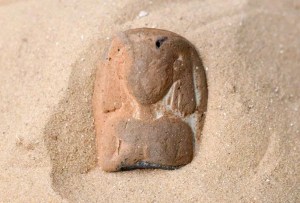
Afigurine from the age of pharaohs and pyramids has been found on a beach in Israel by a surprised beachgoer.
Lydia Marner, 74, found the ancient Egyptian figurine on Palmachim Beach in southern Israel, about 17 miles south of Tel Aviv, spotting it in the waves.
The figurine was revealed by the Israel Antiquities Authority to be more than 3,000 years old, a model of the Egyptian goddess Hathor.
“It was a very stormy day, the waves were high, the weather was wintery,” Marner told the Times of Israel. “We were walking along the sea when I suddenly noticed a stone coming to me.”
Hathor was an ancient Egyptian sun goddess, considered to be one of the most powerful.
“Hathor was often depicted as a cow goddess, or as a woman with cow horns and a sun disk on her head, representing fertility and abundance,” Liam Davis, an art historian for Art File Magazine, told the History Channel. “She was associated with love, beauty, music, dance, joy, motherhood, and feminine power. She was believed to protect women during childbirth, and to help the deceased in the afterlife, acting as a guide.”
Amir Golani, senior research archaeologist for the Israel Antiquities Authority (IAA), told the Jewish News Syndicate that the figurine was clearly Hathor, despite its age and wear, because of the characteristic ox horn-shaped hairstyle.
Figurines like these were often placed around the house by the Egyptian people to bring good luck and fortune.
“The Canaanites used to adopt ritual and religious customs of the Egyptians, who ruled our region at the time,” Golani said. “Just like homes today, where you install a mezuzah or hang a picture of a saint on the wall, then, they used to place ritual figurines in a central place in the house, for good luck and protection from bad things.”
“These figurines, which were used for worship…are indicative of the Canaanite culture in the Land of Israel, especially during the late Bronze Age,” Golani told the Times of Israel.
Marner was not allowed to keep her incredible find, as Israeli law states that all ancient treasures are under the jurisdiction of the IAA… Click here to read the rest of this article on newsweek.com
(One Person’s View) Working With the Gods and Goddesses c.2014
Working With the Gods and Goddesses
There are literally thousands of different deities out there in the Universe, and which ones you choose to honor will often depend significantly upon what pantheon your spiritual path follows. However, many modern Pagans and Wiccans describe themselves as eclectic, which means they may honor a god of one tradition beside a goddess of another. In some cases, we may choose to ask a deity for assistance in a magical working or in problem solving. Regardless, at some point, you’re going to have to sit and sort them all out. If you don’t have a specific, written tradition, then how do you know which gods to call upon?
A good way to look at it is to figure out which deity of your pantheon would be interested in your purpose. In other words, what gods might take the time to look into your situation? This is where the concept of appropriate worship comes in handy — if you can’t take the time to get to know the deities of your path, then you probably shouldn’t be asking them for favors. So first, figure out your goal. Are you doing a working regarding home and domesticity? Then don’t call upon some masculine power deity. What if you’re celebrating the end of the harvest season, and the dying of the earth? Then you shouldn’t be offering milk and flowers to a spring goddess.
Consider your purpose carefully, before you make offerings or prayers to a particular god or goddess.
Although this is certainly not a comprehensive list of all the gods and their domains, it may help you a bit to get an idea of who is out there, and what sorts of things they may be able to help you with:
Artisanship
For assistance relating to skills, crafts, or handiwork, call upon the Celtic smith god, Lugh. Many other pantheons have forge and craftsmanship gods as well.
Chaos
When it comes to matters of discord and upsetting the balance of things, some people choose to to check in with Loki the Norse prankster god. However, it’s generally recommended that you don’t do this unless you’re a devotee of Loki in the first place – you may end up getting more than you bargained for.
Destruction
If you’re doing a working related to destruction, the Celtic war goddess the Morrighan may assist you, but don’t trifle with her lightly. A safer bet might be working with Demeter, the Dark Mother of the harvest season.
Fall Harvest
When you celebrate the fall harvest, you may want to take time to honor Herne, the god of the wild hunt, or Osiris, who is often connected with grain and the harvest. Demeter and her daughter, Persephone, are typically connected with the waning part of the year. Pomona is associated with fruit orchards and the bounty of trees in fall. There are also a number of other harvest gods and gods of the vine who may be interested in what you’re doing.
Feminine Energy
For workings related to the moon, lunar energy, or the sacred feminine, consider invoking Artemis or Venus.
Fertility
When it comes to fertility, there are plenty of deities out there to ask for assistance. Consider Cernunnos, the wild stag of the forest, or Freya, a goddess of sexual power and energy. If you follow a Roman-based path, try honoring Bona Dea. There are a number of other fertility gods out there as well, each with their own specific domain.
Home and Marriage
Brighid is a protector of hearth and home, and Juno and Vesta are both patronesses of marriage.
Love and Lust
Aphrodite has long been associated with love and beauty, and so has her counterpart, Venus. Likewise, Eros and Cupid are considered representative of masculine lust. Priapus is a god of raw sexuality, including sexual violence.
Magic
Isis, the mother goddess of Egypt, is often called upon for magical workings, as is Hecate, a goddess of sorcery.
Masculine Energy
Cernunnos is a strong symbol of masculine energy and power, as is Herne, the god of the hunt. Odin and Thor, both Norse gods, are known as powerful, masculine gods.
Motherhood
Isis is a mother goddess on a grand scale, and Juno watches over women in labor.
Prophecy and Divination
Brighid is known as a goddess of prophecy, and so is Cerridwen, with her cauldron of knowledge. Janus, the two-faced god, sees both the past and future.
Underworld
Because of his harvest associations, Osiris is often connected with the underworld. There are a number of other deities of death and dying.
War and Conflict
The Morrighan is not only a goddess of war, but also of sovereignty and loyalty. Athena protects warriors and imparts them with wisdom. Freya and Thor guide fighters in battle.
Wisdom
Thoth was the Egyptian god of wisdom, and Athena and Odin may also be called upon, depending on your purpose.
Seasonal
There are a number of deities associated with the various times of the Wheel of the Year, including the Winter Solstice, Late winter, the Spring Equinox, and the Summer solstice.
Source: About.com
(One Person’s View Point) THE GOD AND GODDESS OF WITCHCRAFT
THE GOD AND GODDESS OF WITCHCRAFT
A general complaint about Christianity by Witches is that there is the worship of the male deity to the exclusion of the female. In fact this is one of the main reasons for people (women especially) leaving Christianity and returning to the Old Religion. And yet it’s a strange paradox that many—if not the majority—of Witchcraft traditions are guilty of this same crime of
Christianity, if in reverse … they laud the Goddess to the near, or even total, exclusion of the God!
Witchcraft is a religion of nature, as any Witch will tell you. Everywhere in nature there is male and female, and both are necessary (I have yet to meet anyone who does not have both a mother and a father). It follows, then, that both the God and the Goddess are important and
should be equally revered. There should be balance. But balance is as woefully missing in most traditions of the Craft as it is in Christianity.
We are all—every single one of us—made up of both masculine and feminine attributes. The toughest, most macho man has feminine aspects just as the most traditionally-feminine woman has male aspects. So it is with the deities. The God has feminine aspects as well as masculine, and the Goddess has masculine as well as feminine.
What names you use for your deities is a matter of personal preference. In Saxon Witchcraft the name Woden is given to the God; in Gardnerian the Latin term Cernunnos is used; in Scottish, Devla. Each tradition has its own name. But names are only labels; they are only a
means of identifying. You should identify, then, using a name with which you can feel completely comfortable. For, after all, religion is a most personal thing, at the core, and—to be of real purpose—should therefore be related to on the most personal level possible. Even if you join an established tradition this is still valid—find a tradition that seems right for you (as I spoke about in Lesson One) but… don’t be afraid to modify where necessary to make it totally right for you. If the name used to identify the God, in the tradition you have chosen, happens to be Cernunnos (for example) and you have difficulty relating to that name, then choose another for your own use. In other words, respect the name Cernunnos in group worship and all matters pertaining to the coven but, in your own mind—and in personal rites—don’t hesitate to substitute Pan or Mananna or Lief or whatever. A name, as I have said, is a label. The God himself knows you are “talking” to him; he’s not going to be confused! (This all
applies equally to the Goddess of course).
It may well be for the above reason that the name Cernunnos is found in so many branches of the Craft. As I’ve mentioned, it is simply the Latin word for “the Homed One”. To add your own personal identification, then, in no way conflicts.
Traditionally the “dark half” of the year is associated with the God. But this does not (or should not) mean that he is “dead”, or incommunicado, in the “light half” of the year (and vice versa with the Goddess). During the light half he is fully active in his feminine aspect; just as the
Goddess is active in the dark half in her masculine aspect. So, both deities are active throughout the year, even though deference may be given to one over the other at certain times.
There is a common theme of death and resurrection found in myths throughout the world. The symbolism is frequently furthered in a descent to the underworld with a later return. We find it with Ishtar’s descent and search for Tannaz; with Sif’s loss of her golden tresses; with Idunn’s loss of her golden apples; with Jesus’ death and resurrection; with Siva’s death and resurrection, and many more. Basically all represent the coming of fall and winter followed by the return of spring and summer; the lead figure represnting the spirit of vegetation. From Witchcraft here are “The Myth Of the Goddess” as found in (a) Gardnerian Wicca and (b)
Saxon Wicca.
“Now G* had never loved, but she would solve all the Mysteries, even the Mystery of Death; and so she journeyed to the Nether Lands. The Guardians of the Portals challenged her, ‘Strip off thy garments, lay aside thy jewels; for naught may ye bring with ye into this our land.’
So she laid down her garments and her jewels and was bound, as are all who enter the Realms of Death the Mighty One. Such was her beauty that Death himself knelt and kissed her feet,
saying, “Blessed be thy feet that have brought thee in these ways. Abide with me, let me place my cold hand on thy heart.’ She replied, ‘I love thee not. Why dost thou cause all things that I love and take delight in to fade and die?’
‘Lady/ replied Death, ‘it is Age and Fate, against which I am helpless. Age causes all things to wither; but when men die at the end of time I give them rest and peace, and strength so that
they may return. But thou, thou art lovely. Return not; abide with me.’
But she answered, 1 love thee not’.
Then said Death, ‘An’ thou receive not my hand on thy heart, thou must receive Death’s scourge’.
It is Fate; better so’, she said and she knelt; and Death scourged her and she cried, ‘I feel the pangs of love’.
And Death said, ‘Blessed be’ and gave her the Fivefold Kiss, saying, ‘Thus only may ye attain to joy and knowledge’.
And he taught her all the mysteries. And they loved and were one, and he taught her all the Magicks.
For there are three great events in the life of Man: Love, Death and Resurrection in a new body; and Magick controls them all.
For to fulfill love you must return again at the same time and place as the loved one, and you must remember and love them again. But to be reborn you must die, and be ready for a new
body; and to die you must be born; and without love you may not be born. And these be all the Magicks.”
–The Meaning of Witchcraft
Gerald B. Gardner, Aquarian Press, London 1959
“All day had Freya, most lovely of the goddesses, played and romped in the fields. Then did she lay down to rest. And while she slept deft Loki, the Prankster, the Mischief-Maker of the
Gods, did espy the glimmering oiBrosingamene, formed of Galdra, her constant companion. Silent as night did Loki move to the Goddess’ side and, with fingers formed over the ages in
lightness, did remove the silver circlet from about her snow-white neck.
Straightway did Freya arouse, on sensing its loss. Though he moved with the speed of the winds yet Loki she glimpsed as he passed swiftly from sight into the Barrow that leads to
Dreun.
Then was Freya in despair. Darkness descended all about her to hide her tears. Great was her anguish. All light, all life, all creatures joined in her doom. To all corners were sent the
Searchers, in quest of Loki; yet knew they, they would find him not. For who is there may descend into Dreun and return again from thence? Excepting the Gods themselves and, alack, mischievous Loki.
So it was that, still weak from grief, Freya herself elected to descend in search otBrosinga-mene. At the portals of the Barrow was she challenged yet recognized and passed. The
multitude of souls within cried joyfully to see her yet could she not tarry as she sought her stolen light. The infamous Loki left no trail to follow, yet was he everywhere past seen. Those to whom she spake held to Freya (that) Loki carried no jewel as he went by. Where, then, was it hid? In despair she searched an age. Hearhden, the mighty smith of the Gods, did arise from his rest to sense the bewailment of the souls to Freya’s sorrow. Striding from his smithy, to find the cause of the sorrow, did he espy the Silver Circlet where Loki Mischief-Maker had laid it:
upon the rock before his door.
Then was all clear. As Hearhden took hold of Brosingamene, (then did) Loki appear before him, his face wild with rage. Yet would Loki not attack Hearhden, this Mighty Smith whose strength was known even beyond Dreun.
By wiles and tricks did he strive to get his hands upon the silver circlet. He shape-shifted; he darted here and there; he was visible then invisible. Yet could he not sway the smith.
Tiring of the fight, Hearhden raised his mighty club. Then sped Loki away. Great was the joy of Freya when Hearhden placed Brosingamene once more about her snow-white neck.
Great were the cries of joy from Dreun and above.
Great were the thanks that Freya, and all Men, gave to the Gods for the return of Brosingamene.”
–The Tree: The Complete Book of
Saxon Witchcraft
Raymond Buckland, Samuel Weiser, NY 1974
Source: Buckland’s Complete Book of Witchcraft
(One Person’s View) The Goddess And The Horned God In Wicca c.2014
The Goddess And The Horned God In Wicca
Neither evocation nor invocation is part of modern witchcraft, however, and white witches do not recognize any demonic figures in their religion. When we refer to the Goddess and her son-consort, the Horned God of Wicca, we are referring to the archetype or source energies of the feminine and masculine aspects of ultimate power. They are the creative female and male principles, acting not in opposition to each other but as complementary and necessary parts of a whole. All the named goddesses and gods in witchcraft represent the different qualities of these supreme forms, for example the goddesses of the hunt, or specific forms in different cultures.
There are, of course, variations within Wicca; some traditions emphasise the importance of the Goddess, while others regard the Horned God as her equal, with each assuming different aspects according to the season and ritual. For example, the Goddess may appear as the Earth or Moon deity, and her male counterpart as the Corn God or the Sun.
Source: Cassandra Eason
Brigid, Celtic Goddess of Imbolc c. 2016

Brigid, Celtic Goddess of Imbolc
Brigit is the central Irish Goddess. She is known as Brigantia in England and Bride in Scotland. She rules metal work and smithy, fire, poetry, midwifery and martial arts–but is primarily known as a major Mother Goddess. Brigit is a face of the Triple Goddess, and able to see all–often represented by an ever watchful eye. The three heart-shaped leaves of the shamrock recall the magical Celtic number of three, as well as the number of Brigit’s faces. From nine to Nineteen priestesses once tended an undying fire in her name at Kildare. Brigid is so central to Ireland that the newly converted people would not give her up, so her name metamorphosed into St. Bridgid, who in Irish Christian myth acts as tender and supportive friend of Mary and as the midwife at Christ’s birth. Barbara G. Walker writes that to the Irish people, however, she continued to be a Queen of Heaven and the mother of all the deities of the new religion. As the Saint, she also matched wits with St. Patrick, who is as mythical as she. At times they seem to be consorts, at others, adversaries. It cannot have helped their relationship that Patrick is known for ridding Ireland of snakes, and since Bridgid the saint descended from a pagan goddess and priestess persona, whose sacred healing totem is the snake. So when St. Patrick says he is ridding the isle of snakes, what he means is he is ridding it of pagans. Nevertheless, Patricius and Bridgid were often considered the primal Mother and Father, and were supposedly buried together at Derry Down.
The Fear of Lilith
The Fear of Lilith
Examining the Lilith Myth and the Male Fear of Dominant Women
By Charles Alexander Moffat
Men’s fear of women has caused them to portray women in two specific archetypes and continued to compare women in such a fashion because the majority of their writing was written by men for other men. Thus was born an unspoken tradition amongst men to portray women as weak submissives and/or seductive, evil succubi/monsters such as Lilith, and is the result of men’s fear of being controlled.
Psychologically, a man may be willing to have sex, but if the woman is not, the denial of sex perpetuates a breach in the male ego. The male response to this rejection is fear and anger, and in order to find a solution to the problem, the male reacts by finding excuses for his superiority. Believing that if he is superior and that the woman is weaker and inferior, then whether or not the woman is willing will now be unimportant and inconsequential, as far as the man is concerned.
Women do not have this sexual rejection problem however, for at any time they are willing, men can be made willing through the use of female charms or even simple aggression. Only male impotence can prevent this, which is no fault of the female. Men subconsciously understand this and also understand that they are vulnerable against females in this way, and are afraid of being seduced and manipulated.
Putting these two in perspective, men have defined two types of women: The submissive woman who falls prey to a man’s every whim, and the aggressive, manipulative woman who can seduce a man into performing her every whim.
When communicating these ideas to other men, the emphasis of a woman’s description is placed upon her beauty, her weaknesses and her lack rationality. These are ideas that men subconsciously/consciously seek to promote about women as a result of their own insecurities.
Aristotle was obsessed with his penis, that much is evident from a psychologically perspective. According to Aristotle, the penis and its semen is the source of all souls and spirit, and that women, being “mutilated” and without a penis is soulless. He goes into more detail, believing that women are unable to create souls because they themselves are “impure” and “incapable of concocting the nutriment in its last stage into semen. If she does have a soul, it is an “impure” one, and thus needs a man’s “purity” in the form of semen. In short, Aristotle likely believed that the world revolved around his penis.
Going further on Aristotle’s beliefs, if women are soulless, then their feelings don’t matter, and thus men must be the masters over women because women are cold, heartless and lack authority. He admits that women have intelligence/faculty, “but it is without authority” and thus men must be the masters. The end result is that Aristotle likely believes that the perfect woman is a “mutilated” quiet, cold, and submissive creature, something similar to Helen of Troy or Andromeda.
As the exact opposite, the worst woman by his definition would likely coincide with many of the mythological creatures of his time. The medusa, sirens, gorgons and harpies portray intelligent women as cunning, powerful, independent, and yet deformed monsters. They would still be “mutilated” by Aristotle’s definition, and would suffer the consequences for their independence, for they were all defeated by men. In essence these myths could be considered allegory warning women not to become independent and proud of their intelligence.
Respected for his beliefs by his male colleagues (and they were all male and thus with male egos and “in love with their penises” and no doubt loving the idea that the world revolves around their penis), Aristotle’s beliefs were written down for men and mass produced for men. These beliefs are then passed down upon children, who then take these beliefs to be the absolute truth, and never questioning it. “Men commonly think according to their inclinations, speak according to their learning and imbibed opinions, but generally act according to custom,” said Francis Bacon, speaking of this usually “unspoken tradition” that is passed down through the generations.
In the Biblical Genesis (the King James/Yahwist version), Eve is portrayed as being lesser than Adam by the simple fact that she is made by only part of him, and is not made wholly of the earth like Adam was. This shortcoming is then shown when she is tricked so easily by the serpent into eating the fruit from the Tree of Knowledge of Good and Evil, and she in turn manipulates and tricks Adam into also eating of the tree. Furthermore, when caught and questioned, Eve quickly blames the snake for her shortcomings. Thus Eve presents parts of both archetypes, the submissive woman who is easily tricked by the snake, but after eating the fruit, she becomes the cunning and manipulative woman who seduces/tricks Adam.
In a different version of Genesis, the ben-Sira version~, the person known as Lilith (Adam’s first wife, before Eve) is introduced:
“When the Almighty created the first, solitary man, He said: It is not good for man to be alone. And He fashioned for man a woman from the earth, like him (Adam), and called her Lilith. Soon, they began to quarrel with each other. She said to him: I will not lie underneath, and he said: I will not lie underneath but above, for you are meant to lie underneath and I to lie above. She said to him: We are both equal, because we are both created from the earth. But they didn’t listen to each other. When Lilith saw this, she pronounced God’s avowed name and flew into the air. Adam stood in prayer before his Creator and said: Lord of the World! The woman you have given me has gone away from me. Immediately, the Almighty sent three angels after her, to bring her back. The Almighty said to Adam: If she decides to return, it is good, but if not, then she must take it upon herself to ensure that a hundred of her children die each day. They went to her and found her in the middle of the Red Sea. And they told her the word of God. But she refused to return. They said to her: We must drown you in the sea. She said: Leave me! I was created for no other purpose than to harm children, eight days for boys and twenty for girls. When they heard what she said, they pressed her even more. She said: I swear by the name of the living God that I, when I see you or your image on an amulet, will have no power over that particular child. And she took it upon herself to ensure that, every day, a hundred of her children died. That is why we say that, every day, a hundred of her demons die. That is why we write the names Senoi, Sansenoi and Semangloph on an amulet for small children. And when Lilith sees it, she remembers her promise and the child is saved.”
According to accompanying legends, Lilith was cursed and turned into a succubus. God created Eve as an afterthought out of Adam’s rib, in order to make her more submissive. Lilith’s descendants and Eve’s descendants mingled together and bred, and God decreed that Lilith is kill all of her descendants, except for those protected by an amulet. This belief that Lilith will come to slay young children is still held in awe today in many cultures. As the mother of all other succubi, Lilith’s daughters (succubi, or simply “Liliths (according to some tales) are also held to this and cannot harm any child protected by the amulet. This is Lilith’s curse for being too dominating according to many tales, although it is also questioned as to whether the real reason is because she spoke God’s avowed name.
Other Biblical and non-Biblical legends* portray Lilith as being a “terrible mother-goddess”. Her clergy is described as being “temple prostitutes” according to some historians. This belief changed over time, with Lilith (or succubi in general) becoming the “divine whore” according to men, described as being a tall beautiful, obsidian-skinned, bat-winged female with long red (some legends say black) hair and sharp blue eyes. This creature then seduces men and kills them. This is a perfect example of men describing the physical characteristics of women, and also their obvious fear of being powerless against a woman and controlled by them.
There are many other legends (mostly Sumerian, Babylonian and Assyrian) calling Lilith (or creatures like her) by other names such as Shedu, Lamashtu, Marilith, Succubus, Ahhazu, Alu, Gallu, Lamia, Ishtar. The legend of Lilith is so widespread that it reaches even Malayasia where she is called Langsuir (or Langsuyar) and feared as a demon seductress of the night. This enforces the idea that man’s fear of seductive/dominating women is universal amongst all men.
During the Spanish Inquisition (and various other witch hunts), witches were associated with the demon Lilith, and anyone having red hair like Lilith were more likely to be hung or burnt at the stake. This perhaps is the reason why red hair is so rare and also why the current stereotypes that all red-haired people are regarded as aggressive, hot tempered, troublesome, and otherworldly. These witchhunts were led by men, usually clergy, who were obviously afraid of being bewitched, seduced and controlled.
The power struggle between Adam and Lilith is a reflection of the power struggle between the sexes, a man’s patriarchal attitude versus a woman’s demands for independence and equality. Psychologically, this is the result of Adam’s fear of Lilith being in control, Lilith’s equal fear of Adam being in control, and both rejecting the others demands for dominance. Adam and Lilith obviously could not meet with a marital therapist however, but since the two are viewed as being mythical characters, then they reflect universal characteristics and behaviour such as all people’s (not just men’s) fear of being controlled.
A number of modern psychologists/analysts have studied the ben-Sira version and have come up with their conclusions about Lilith, Adam and Eve, and their archetypes:
Vogelsang asserts that Adam bears the guilt for the disagreement. “From the beginning [he] was trying to assert his superiority and to dominate her, a power play on the part of the masculine.” He also says “it should be emphasized that she was not trying to subjugate him. She was trying to maintain her rights.” Essentially this means that Adam represents the average aggressive male, whereas Lilith should actually be considered a model female who stands up for her rights. Perhaps women should be feared, for it is the fear between both sexes that makes them equal.
Lenherr-Baumgartner claims that Adam’s demand for the upper position was the result of “is evolutionary understandable as a certain male fear of an equal female. In addition she considers the separation of the two metaphorical in the sense that male and female shall be forever separated by their fears of each other.
In modern times it would be very easy to compare Adam, Eve and Lilith to a patriarchal husband, a weak, submissive wife, and a vindictive, dominating ex-wife. A slightly different example would be patriarchal President Bill Clinton (perhaps as the result of his obsession with his penis), submissive stand-by-your-husband Hillary Clinton, and the aggressive “succubi” (no pun intended) Monica Lewinsky. The First Lady has deliberately played the submissive/supportive wife because she understands that she will be considered more socially acceptable because of it, whereas Lewinsky has found popularity amongst some feminists who support her for her aggressiveness. Bill Clinton himself however faces a special problem with his ego, having the American-Made title of the “Most Powerful Man In The World” and likely believing that the world really does revolve around his penis, and his true fears are more complex because of the high price some believe that he should have paid for his adultery.
In conclusion, the dominance of men has been implemented by unspoken tradition amongst men through the generations of men writing for other men, such as Aristotle and the many variations of Genesis. This has caused men to create two specific archetypes of a submissive weak woman and an aggressive “Lilith” both of which are the result of men’s fears of a dominant/equal female.
(One Person’s View) The Deep Meaning of the Triple Goddess Symbol

The hyperlink is for a good video about the Triple Goddess. I hope you find it enjoyable and informative.
The Deep Meaning of the Triple Goddess Symbol | SymbolSage
Etain Irish Goddess of Light

Etain Irish Goddess of Light Source: witchymagicks.com
Etain, the resplendent gem of Irish mythology, has captured the hearts and imaginations of people for generations. Her tale speaks of an eternal cycle of love, metamorphosis, and renewal. Immortalized in the time-honored text “The Wooing Of Etain,” her story has endured the relentless march of time, forever etched in the annals of history.
More than a mere goddess, Etain embodies the very essence of the sun, radiating life and vitality wherever her presence graces. As the ages passed, her legend grew, and she came to be revered as a moon goddess as well, adding an ethereal dimension to her already captivating persona. To embark upon a journey into Etain’s realm is to be enthralled by a narrative that transcends the boundaries of time, where her unwavering spirit shines bright against the capricious tides of destiny.
Goddess – Rhiannon, Horse Goddess of Wales

Rhiannon – Horse Goddess of Wales
In Welsh mythology, Rhiannon is a horse goddess depicted in the Mabinogion. She is similar in many aspects to the Gaulish Epona, and later evolved into a goddess of sovereignty who protected the king from treachery.
Rhiannon was married to Pwyll, the Lord of Dyfed. When Pwyll first saw her, she appeared as a golden goddess upon a magnificent white horse. Rhiannon managed to outrun Pwyll for three days, and then allowed him to catch up, at which point she told him she’d be happy to marry him, because it would keep her from marrying Gwawl, who had tricked her into an engagement. Rhiannon and Pwyll conspired together to fool Gwawl in return, and thus Pwyll won her as his bride. Most of the conspiring was likely Rhiannon’s, as Pwyll didn’t appear to be the cleverest of men. In the Mabinogion, Rhiannon says of her husband, “Never was there a man who made feebler use of his wits.” After Pwyll’s death, Rhiannon married Manawyden.
The goddess’ name, Rhiannon, derives from a Proto-Celtic root which means “great queen,” and by taking a man as her spouse, she grants him sovereignty as king of the land.
In addition, Rhiannon possesses a set of magical birds, who can soothe the living into a deep slumber, or wake the dead from their eternal sleep.
Her story features prominently in the Fleetwood Mac hit Rhiannon, although songwriter Stevie Nicks says she didn’t know it at the time. Later, Nicks said she “was struck by the story’s emotional resonance with that of her song: the goddess, or possibly witch, given her ability with spells, was impossible to catch by horse and was also closely identified with birds — especially significant since the song claims she “takes to the sky like a bird in flight,” “rules her life like a fine skylark,” and is ultimately “taken by the wind.”
Primarily, though, Rhiannon is associated with the horse, which appears prominently in much of Welsh and Irish mythology. Many parts of the Celtic world — Gaul in particular — used horses in warfare, and so it is no surprise that these animals turn up in the myths and legends or Ireland and Wales. Scholars have learned that horse racing was a popular sport, especially at fairs and gatherings, and for centuries Ireland has been known as the center of horse breeding and training.
Judith Shaw, at Feminism and Religion, says, “Rhiannon, reminding us of our own divinity, helps us to identify with our sovereign wholeness. She enables us to cast out the role of victim from our lives forever. Her presence calls us to practice patience and forgiveness. She lights our way to the ability to transcend injustice and maintain compassion for our accusers.”
Symbols and items that are sacred to Rhiannon in modern Pagan practice include horses and horseshoes, the moon, birds, and the wind itself.
An Iowa Pagan named Callista says, “I raise horses, and have worked with them since I was a child. I first encountered Rhiannon when I was a teenager, and I keep an altar to her near my stables. It’s got horsey things on it, like a horseshoe, a horse figurine, and even braids from the manes of horses I’ve lost over the years. I make an offering to her before horse shows, and I invoke her when one of my mares is about to give birth. She seems to like offerings of sweetgrass and hay, milk, and even music – I sometimes sit by my altar and play my guitar, just singing a prayer to her, and the results are always good. I know she’s watching over me and my horses.”
Source: Paganism/Wicca Expert Article originally published on & owned by About.com By Patti Wigington
(One Person’s View) Who Is Bastet? Complete Guide to the Egyptian Cat Goddess

Bastet/Bast
Lion and cat and woman, goddess of war and fertility—the Egyptian goddess Bast (also known as Bastet) contains multitudes. While she’s not the only cat goddess from ancient history, Bastet is probably the most famous cat goddess today. She has a strong presence in pop culture and a select few even still worship her!
In this complete guide to Bastet, we’ll go over exactly what makes this Egyptian cat goddess so compelling. We’ll describe her attributes, how she was depicted in ancient Egypt, her major relationships, how she was worshipped, her major myths, and the history of her worship. We’ll close out with where you might encounter Bast, goddess of cats, today.
Who Is Bastet? What Are Her Attributes?
The goddess we most frequently call “Bastet” today was known as both “Bast” and “Bastet” in ancient Egypt.
“Bast” was her earlier name. It possibly meant either “Soul of Auset” (Auset being an alternative name for “Isis,” who is sometimes considered her mother), or “devouring lady.”
Later, priests called her “Bastet” to indicate that the “t” in her name should be pronounced. “Bastet” shares one of the same hieroglyphs for the bas jar, which held perfumes and ointments. So “Bastet” also meant “she of the ointment jar.”
Bast was originally a lioness goddess, but as time went on, she was more closely associated with the housecat. The cat was her totem animal.
As one of the main goddesses of the Egyptian pantheon, Bastet had a huge number of attributes and aspects:
- She was a goddess of cats, the sun, of the East, of fire, of love, intoxication, music and dancing, joy, celebration, fertility, secrets, magic, and sex.
- However, she was also a goddess of war known for her wrathful vengeance.
- She protected households and individuals from disease and evil spirits, guarded pregnant women, and protected cats.
- She served as the divine nurse and mother of the Pharaoh.
- Due to Bastet meaning “she of the ointment jar” she also became known also as a goddess of perfume, and was called the “perfumed protector.”
- Bast/Bastet was the protector and guardian of Lower Egypt.
- She was the patron goddess of fire fighters, because the Egyptians believed that a cat running through a building on fire would draw the flames out.
- She was also one of the goddesses who was known as the “eye of Ra” or the “eye of Atum,” the sun. In this aspect she symbolized Ra’s feminine counterpart and was sent out to take vengeance on his enemies. The “eye of Ra” was both a part of Ra and a separate being from him, and was considered his mother, sister, wife, and daughter simultaneously. She had life-giving, protective and also destructive capacities.
Depictions of Bastet: Her Symbols and Totems
Bast was first depicted primarily as a lioness, then later as a cat or cat-headed woman. In her aspect as a cat-headed woman she frequently holds a sistrum decorated with cats and Click here to read the rest of this article
Athena Greek Goddess: Origins, Symbols, and Mythology
Athena Greek Goddess: Origins, Symbols, and Mythology

Athena is among the most well-known Greek goddesses, revered for her wisdom, courage, and strength. She is often depicted as a fierce warrior, with a spear and shield in hand and a helmet on her head. Athena was also the goddess of crafts, weaving, and strategy and was often associated with the owl, considered a symbol of wisdom.
Athena played a significant role in Greek mythology, and her legend has been passed down through generations. According to legend, Athena was born fully grown and armored from the head of Zeus after he swallowed her mother, Metis. She was the favorite daughter of Zeus, and her intelligence and wisdom made her one of the most respected and revered goddesses in Greek mythology.
Today, Athena is still celebrated and admired for her many attributes, and her legacy lives on in the modern world. From literature to art, her influence can be seen in many different forms, and her story inspires people worldwide.
Athena, a Greek Goddess Birth Story
According to Greek mythology, Athena was born from the head of her father, Zeus. The story goes that Zeus had swallowed his wife, Metis, who was pregnant with Athena, fearing the child would be more powerful than him. However, Metis had already given birth to Athena inside Zeus’s stomach. When the time came, Zeus began to feel a tremendous headache, and Hephaestus, the god of fire and metalworking, split open Zeus’s head with an axe. Athena emerged fully grown, dressed in armor and holding a spear. This unique birth made Athena the only virgin goddess in Greek mythology.
As the goddess of wisdom, Athena was a patron of Athens and was known as the city’s protector. She was also associated with various other entities, such as warfare, handicrafts, and strategic warfare. Her birth story is one of the most iconic stories in Greek mythology, and it symbolizes the importance of wisdom and strategy over brute force.
Athena’s birth story is also significant because it highlights the role of women in Greek mythology. Even though Athena was born from Zeus’s head, she was still regarded as one of the Greek pantheon’s most potent and respected gods. This is a testament to the importance of women in ancient Greek society, and it shows that women could hold positions of power and influence, even in a male-dominated society.
In conclusion, Athena’s birth story is a compelling and iconic tale in Greek mythology. It highlights the importance of wisdom and strategy over brute force and symbolizes women’s role in ancient Greek society. Athena remains one of the most revered and respected goddesses in Greek mythology, and her legacy continues to inspire people today.
Powers and Symbols
Athena is one of the most important goddesses in Greek mythology. She is the goddess of wisdom, courage, inspiration, civilization, law and justice, strategic warfare, mathematics, strength, strategy, arts, crafts, and skill. Her powers and symbols are an integral part of her mythology, and they help to define her character and her place in the pantheon of Greek gods and goddesses.
Powers
Athena’s powers are vast and varied. She is known for her intelligence, wisdom, and strategic thinking, making her a formidable battle opponent. She is also known for her strength and courage, which make her a fierce protector of her people. Athena’s powers are often associated with her role as a goddess of war, but they also extend to the arts, crafts, and skill. She is often depicted as a patron of weavers, potters, and other craftsmen.
Symbols
Athena’s symbols are a reflection of her powers and her character. The most famous of these symbols is her shield, representing her role as a protector of her people. The shield is often adorned with the head of the Gorgon, a creature from Greek mythology that turned people to stone. This symbol is known as the Gorgoneion, which was believed to have the power to ward off evil.
Another important symbol of Athena is the olive tree. According to legend, Athena created the olive tree as a gift to the people of Athens, and it has since become a symbol of peace, prosperity, and wisdom. Athena is also associated with the owl, known for its wisdom and intelligence. The snake or serpent is another important symbol of Athena, representing her connection to the earth and the natural world.
Athena is also often depicted wearing a helmet, representing her warrior role. The helmet is often adorned with the image of a serpent or spider, both symbols of wisdom and intelligence. Finally, Athena is often depicted holding a trident, representing her power over the sea.
In conclusion, Athena’s powers and symbols are essential to her mythology and help define her character and place in Greek mythology. Her intelligence, wisdom, and strategic thinking make her a formidable opponent in battle, while her role as a patron of the arts, crafts, and skill makes her a beloved goddess of the people. Her symbols, including the shield, the olive tree, the owl, the snake, the helmet, and the trident, are all critical reflections of her powers and character.
Family
Goddess of the Day – Hecate or Hekate

Hecate or Hekate
Then the earth began to bellow
And howling dogs in glimmering light advance
Ere Hekate came
-Aeneid, Book VL
Greek Queen of the Night, Goddess of Witchcraft and the Underworld. Hecate can change shapes or ages at will and has the power to rejuvenate or kill.
The daughter of Perses and Asteria, she represents the oldest Greek form of the Triple Goddess. Her powers extend over heaven and the underworld, the earth and the sea. She is sometimes represented with three heads – one of a horse, one of a dog and one of a bear, or one of a dog, snake and lion.
As Hecate of the Three Ways, her images stood at three-way crossroads where offerings of dogs, honey and black ewes were left on Full Moon Nights. In the realm of nature she is honored as Selene, the moon, in Heaven. She is honored as Artemis, the huntress, on Earth and as Hecate, the destroyer, in the Underworld. She is also the Goddess of prophecy, charms, vengeance, wisdom, choices and regeneration and is often accompanied by a pack of black, baying hounds or the three-headed dog, Cerberus.
Goddesses- Egyptian Maat Goddess of Truth, Justice and Morality

Maat The Ancient Egyptian Goddess of Truth, Justice and Morality
Maat, also known as Ma’at or Mayet, was a female goddess in the ancient Egyptian religion who represented truth, justice, balance and morality. The daughter of the Egyptian sun deity Ra and wife of the moon god Thoth, she served a kind of spirit of justice to the Egyptians. She decided whether a person would successfully reach the afterlife, by weighing their soul against her feather of truth, and was the personification of the cosmic order and a representation of the stability of the universe. The earliest writings where she is mentioned date back to the Old Kingdom of Egypt more than 2,300 years ago.
The Egyptian culture was centered on order, everything had its due place in the world. This included religion, society and seasonal changes. The goddesses Ma’at came to represent the concept of balance and order because many Egyptians needed to explain the world around them. She was the one that kept the stars in motion, the seasons changing and the maintaining of the order of Heaven and Earth. The opposing force of this was known in ancient terms as “isfet” or chaos. Ancient Egyptians considered the desert beyond the Nile River to be chaotic; whereas, the area close to the Nile was considered orderly. Together, these two forces brought balance to the world in which they lived and was an important part of everyday Egyptian life
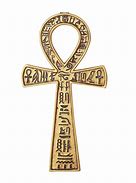
Ma’at is usually depicted in the form of a woman seated or standing with outstretched wings attached to both her arms. In other instances she is seen holding a scepter in one hand and an ankh (the symbol of life) in the other. Her statue was a stone platform depicting a stable foundation on which order was built. A common symbol associated with her is an ostrich feather, which she is almost always shown as wearing in her hair. Often, the Feather of Ma’at was a distinctive feature of her headdress. Less frequently images of the goddess showed her without a head, instead replaced by the feather. In other images the feather alone conveyed her presence. This feather has come to symbolize her being, as well as the representation of balance and order, it became a hieroglyph for “truth.”
Ma’at was associated with the law in ancient Egypt. From the 5th dynasty (c. 2510-2370 BC) onwards, the Vizier responsible for justice was called the Priest of Maat and in later periods judges wore images of her. The ‘Spirit of Maat’ was embodied by the chief judge in charge of the Egyptian law courts. He had a dual role, serving as both a priest and working directly in the law courts and justice system. The “Priest of Ma’at” began court hearings whilst wearing the feather of Ma’at and all other court officials wore small golden images of the goddess as a sign of their judicial authority, also as a symbol that their judgement would be balanced and fair. Priests drew the Feather of Ma’at on their tongues with green dye, so that the words they spoke were truth. The priest would rule on the earthly punishment according to the nature of the law that had been broken. Punishments included imposing fines, corporal punishment and in extreme cases capital punishment. It was considered a crime against Ma’at if a person engaged in jealousy, dishonesty, gluttony, laziness, injustice, and ungratefulness. The guilty Egyptian was deemed to have violated the Spirit of Ma’at and would face a further judgment in the Underworld during the ceremony of justification in the Hall of the Two Truths. The ‘Spirit of Ma’at’ detailed in the wisdom literature contained practical guidance with examples and some rules applied in previous law cases. These kinds of instructional texts have been described as “Ma’at Literature”.
The Book of the Dead is a collection of funerary texts and spells from ancient Egypt designed to assist a person’s journey through the underworld, into the afterlife. Without these spells, it was believed a person could not proceed. In the book is a spell called the “Forty-Two Declarations of Purity” or the “Negative Confessions”. This spell is comprised of confessions the tomb owner believed he committed throughout his life. It was believed that any crimes committed against Ma’at should be written down as they could easily be forgiven. In the Hall of Ma’at is where the judgement of the dead was performed in which Ma’at played an important role. The ceremony, called the “Judgment of Osiris,” was named after Osiris, the god of the dead. When the dead were judged, it was the feather of Ma’at that their hearts were weighed against. If a balanced scale was struck, the deceased was deemed worthy to meet Osiris in Paradise. The weightlessness of their hearts indicated that their souls were not burdened with sin and evil. If the heart of the deceased was found to be heavier than the feather of Ma’at, it would be devoured by Ammit, the soul-eating monster depicted with the head of a crocodile, the forequarters of a lion and the hindquarters of a hippopotamus. Other gods in the judgement hall who were part of the tribunal overseeing the weighing of the heart were also pictured holding a feather but the scales always represented Ma ́at.
Ancient Egyptians worshipped many gods, one was certainly Ma’at, although Egyptian archaeologists now believe she was perhaps more of a concept or an ideal. It’s reasonable to assume her principles aided the people of Egypt in being better individuals and that she could be compared to the conscience of a person. There was a small temple dedicated to Ma’at by Hatshepsut, the fifth pharaoh of the Eighteenth dynasty of Egypt, Egypt’s first female pharaoh, at the Karnak temple complex in Luxor Egypt. Largely in ruins, it still preserves inscriptions of some of the viziers of Ramesses III and XI. A previous Ma’at temple existed in this area, indicated by reliefs and stelae belonging to the reign of Amenhotep III. The temple is inside the Precinct of Montu, the smallest of three enclosures at Ipet-Isut.
Ma’at
Ma’at (pronounced may-et) is the ancient Egyptian goddess of truth, justice, harmony, and balance (a concept known as ma’at in Egyptian) who first appears during the period known as the Old Kingdom (c. 2613 – 2181 BCE) but no doubt existed in some form earlier. She is depicted in anthropomorphic form as a winged woman, often in profile with an ostrich feather on her head, or simply as a white ostrich feather. The feather of Ma’at was an integral part of the Weighing of the Heart of the Soul ceremony in the afterlife where the heart of the soul of the dead person was weighed in the scales of justice against the feather. Historian Margaret Bunson writes:
She maintained a vital role in the mortuary rituals of Egypt where she weighed the hearts of the deceased. This mortuary role evolved over the decades into the principle of ma’at, the desired right attitude, which remained the ethical and moral foundation of the Egyptian people. (152)
NAME & SIGNIFICANCE
Ma’at is said to have been born of the sun god Ra (Atum) at the beginning of creation through the power of Heka, who was magic personified. Her name means “that which is straight” implying order, justice, and harmony. She is thought to have been present from the beginning of time when, from the primordial waters of Nun, the ben-ben (first mound of dry land) rose with Atum (or Ra, the sun god) standing upon it in the presence of the invisible Heka. In the moment that Ra spoke the world into creation, Ma’at was born. Her spirit of harmony and balance infused the creation and caused the world to operate rationally according to purpose. The principle of ma’at was the operational function of life and that of heka (magic) the power source which allowed for it. It is for this reason that she is considered more of a concept than a goddess with a specific personality and story like Isis or Hathor. Ma’at’s spirit is the spirit of all creation, and if one is in tune with that spirit, one will live well and have good reason to hope for eternal peace in the afterlife; if one refused to live in accordance with the principles of Ma’at, then one suffered the consequences which one would have brought upon one’s self. Margaret Bunson comments on this, writing:
Ma’at was the model for human behavior, in conformity with the will of the gods, the universal order evident in the heavens, cosmic balance upon the earth, the mirror of celestial beauty. Awareness of the cosmic order was evident early in Egypt; priest-astronomers charted the heavens and noted that the earth responded to the orbits of the stars and planets. The priests taught that mankind was commanded to reflect divine harmony by assuming a spirit of quietude, reasonable behavior, cooperation, and a recognition of the eternal qualities of existence, as demonstrated by the earth and the sky. All Egyptians anticipated becoming part of the cosmos when they died, thus the responsibility for acting in accordance with its laws was reasonable. Strict adherence to ma’at allowed the Egyptians to feel secure with the world and with the divine plan for all creation. (152)
Her importance is signified by one of the means by which the Egyptians wrote her name. Although she was often identified by the feather symbol, she was also designated by a plinth. The plinth was commonly seen below the thrones of deities but not used to relay their personal names. The fact that Ma’at was signified by a plinth suggests, according to Egyptologist Geraldine Pinch, that Ma’at was considered the foundation upon which Egyptian society was built (160). Her significance is also demonstrated in iconography showing her constantly at the side of Ra in his heavenly barge sailing with him across the sky during the day and helping him defend the boat against the serpent Apophis by night.
The ancient Egyptians also invoked her name in stories of a long-lost past on earth when all things were beautiful and there was no injustice. Such stories usually have to do with the time of Osiris and Isis and their just and benevolent rule of the earth before Osiris was murdered by Set. In some cases, though, it is Ma’at who rules the earth alone as Pinch notes:
Egyptian myths of a golden age included a period when Ma’at was ruler of earth. She was sometimes said to have withdrawn to the heavens because she was grieved by the wicked behavior of humanity. Ma’at could still be thought of as living with an individual like his or her good angel and accompanying that person into the afterlife. Eventually “joining Ma’at” became a euphemism for dying. (160)
It is in her mortuary role that Ma’at is best known to most people in the modern day. One of the most iconic images of ancient Egypt is the ceremony known as The Weighing of the Heart of the Soul in which Ma’at and her white feather of truth were most important.
MA’AT’S WHITE FEATHER OF TRUTH
The Egyptians believed strongly that every individual was responsible for his or her own life and that life should be lived with other people and the earth in mind. In the same way that the gods cared for humanity, so should humans care for each other and the earth which they had been provided with. This philosophy is evident in every aspect of Egyptian culture from the way they constructed their cities to the balance and symmetry of their temples and monuments. If one lived harmoniously in the will of the gods, then one was living in harmony with the concept of ma’at and the goddess who embodied that concept. One was free to live however one wanted, of course, and completely ignore the principle of ma’at, but eventually one would face the trial which awaited everyone: judgment in the Hall of Truth (also known as The Hall of Two Truths) in the afterlife. Wilkinson comments on this:
Her role was multifaceted but embraced two major aspects. On the one hand, Ma’at represesnted the universal order or balance – including concepts such as truth and right – which was established at the time of creation. This aspect is the basis of her relationship with Ra – for she is the order imposed upon the cosmos created by the solar demiurge and as such is the guiding principle who accompanied the sun god at all times…As a natural corollary of her identity with right balance and harmony Ma’at also actively represented the concept of judgement. In the Pyramid Texts the goddess appears in this role in dual form as ‘the two Ma’ats’ judging the deceased king’s right to the thrones of Geb [the rule of the earth] and in the later funerary literature it is in the Hall of the Two Truths (the dual form of Ma’at) that the judgment of the deceased occurs. The gods themselves, acting as the judges of the divine tribunal, are called ‘the council of Ma’at.’ (150)
To the Egyptians, the soul consisted of nine separate parts: the Khat was the physical body; the Ka one’s double-form; the Ba a human-headed bird aspect which could speed between earth and the heavens; Shuyet was the shadow self; Akh the immortal, transformed self; Sahu and Sechem aspects of the Akh; Ab was the heart, the source of good and evil; Ren was one’s secret name. All nine of these aspects were part of one’s earthly existence. When one died, the Akh (with the Sahu and Sechem) appeared before the god Osiris in the Hall of Truth and in the presence of the Forty-Two Judges to have one’s heart (Ab) weighed in the balance on a golden scale against Ma’at’s white feather of truth.
One would need to recite the Negative Confession (those actions one could honestly claim one had never committed in life) and then one’s heart was placed on the scale. If one’s heart was lighter than Ma’at’s feather, one waited while Osiris conferred with the Forty-Two Judges and the god of wisdom, Thoth, and, if considered worthy, was allowed to pass on through the hall and continue one’s existence in paradise; if one’s heart was heavier than the feather, it was thrown to the floor where it was devoured by the monster Ammut (the gobbler), and one then ceased to exist. No one could escape judgment, and the king of the land would have to stand before the scales of Ma’at and Osiris just as the lowest slave of field hand would also.
If one passed through judgment and avoided any of the pitfalls and traps set by demons and the forces of chaos, one arrived at The Field of Reeds, a paradise where one was greeted by those loved ones who had gone before and which was a mirror image of one’s life on earth. Margaret Bunson describes this afterlife:
Eternity itself was not some vague concept. The Egyptians, pragmatic and determined to have all things explained in concrete terms, believed that they would dwell in paradise, in areas graced by lakes and gardens. There they would eat the “cakes of Osiris” and float on the Lake of Flowers. The eternal kingdoms varied according to era and cultic belief but all were located beside flowing water and blessed with breezes, an attribute deemed necessary for comfort. The Garden of A’Aru was one such oasis of eternal bliss. Another was Ma’ati, an eternal land where the deceased buried a flame of fire and a scepter of crystal – rituals whose meanings are lost. The goddess Ma’at, the personification of cosmic order, justice, goodness, and faith, was the protector of the deceased in this enchanted realm, called Hehtt in some eras. Only the pure of heart, the uabt, could see Ma’at. (86-87)
In some images, the goddess is seen atop the scales at the moment of judgment and, in others, she is present near Osiris but she is always there even if only in the form of her feather placed on the scales. In the afterlife, she was thought to help those who had stood for her principles and lived their lives accordingly.
WORSHIP OF THE GODDESS
Although she was considered a very important deity, Ma’at had no temples and no official clergy (as was the case with Heka). She was honored by a small shrine set up in the temples of other gods. Even the one temple known to be erected in her honor by Queen Hatshepsut (1479-1458 BCE) was built within the temple precinct of the god Montu. The people venerated the goddess by living according to her principles and bringing whatever gifts they wanted to offer to her shrines in the temples of the other gods. Wilkinson writes,
Even the title ‘priest of Ma’at’ is often regarded as an honourific which may have been given to those who served as magistrates or who dispensed judicial decisions on her behalf and who apparently wore small golden images of the goddess as a sign of their judicial authority. (152)
The only “official” worship of Ma’at was when the king of Egypt made sacrifice to her upon ascending to the throne and “presented Ma’at” to the gods by offering a small image of her. In doing so, the king was asking for her help in maintaining divine balance in his rule. If the king could not achieve balance and promote harmony, then it was a clear sign that he was not fit to rule. Ma’at – and the vital concept she embodied – was crucial to the king’s success.
She was an important and all-pervasive figure in the Egyptian pantheon, even though very few stories are told of her and she had no temple or cultic following. The gods were said to live off Ma’at and, as the scholar Richard H. Wilkinson notes, most of the images of the king presenting Ma’at to the other gods at his coronation “are essentially identical to those in which the king presents food, wine, or other forms of sacrifice to the gods” (152). The gods would have, in fact, lived off Ma’at in that they were all bound by their own laws to observe harmony and balance and encourage those values in the human beings they cared for.
Temples to Ma’at were the temples of all the other gods because Ma’at was the underlying cosmic principle which made the lives of humans and gods possible. One worshiped the goddess Ma’at by living a life in accordance with the highest principles of justice, order, and harmony keeping in mind one’s neighbors and the earth one had been given to tend. Although goddesses like Hathor and Isis were more popular, and even eventually took on many of Ma’at’s attributes, she remained an important deity throughout Egypt’s history and defined the cultural values of the country for centuries.
__________________________________________
*First article*
By Bryan Hilliard
Published on Ancient Origins
References
“Ancient Egyptian Gods | Ma’at.” Ancient Egyptian Gods | Ma’at. http://www.kingtutone.com/gods/maat/
“Ma’at, Goddess of Egypt.” Egyptian Goddess Maat ***. http://www.landofpyramids.org/maat.htm
Seawright, Caroline. “Ma’at, Goddess of Truth, Balance, Order.” Ma’at, Ancient Egyptian Goddess of Truth and Order.
“Ancient Egypt: The Mythology – Feather.” Ancient Egypt: The Mythology – Feather. http://www.egyptianmyths.net/feather.htm
“Ancient Egypt: The Mythology – Ma’at.” Ancient Egypt: The Mythology – Ma’at. http://www.egyptianmyths.net/maat.htm
*Second article*
APA Style
Mark, J. J. (2016, September 15). Ma’at. Ancient History Encyclopedia. Retrieved from https://www.ancient.eu/Ma’at/
Chicago Style
Mark, Joshua J. “Ma’at.” Ancient History Encyclopedia. Last modified September 15, 2016. https://www.ancient.eu/Ma’at/.
MLA Style
Mark, Joshua J. “Ma’at.” Ancient History Encyclopedia. Ancient History Encyclopedia, 15 Sep 2016. Web. 13 Aug 2018.
License
Written by Joshua J. Mark, published on 15 September 2016 under the following license: Creative Commons: Attribution-NonCommercial-ShareAlike. This license lets others remix, tweak, and build upon this content non-commercially, as long as they credit the author and license their new creations under the identical terms.
3,000-year-old Goddess Figurine Found in an Italian Lake Still Bears the Handprints of Its Maker
A 3,000-year-old clay figurine thought to portray an ancient goddess has been discovered in a volcanic lake in central Italy.
Archaeologists think the object was a votive figurine that was probably crafted so prayers could be directed to it. Its features are only crudely finished, but the figurine still bears the handprints of whoever made it, as well as the impression of a fabric pattern that suggests it was originally clothed in some sort of garment.
Government archaeologists for the Etruria region and police divers made the discovery last month at Lake Bolsena, about 50 miles (80 kilometers) northwest of Rome.
The east side of the lake is the location of the submerged Gran Carro archaeological site, which is thought to be the remains of an Iron Age village built in the 10th or ninth century B.C. and which later sank underwater.
Related: Ancient sanctuary used by Roman soldiers nearly 2,000 years ago found in the Netherlands
The clay figurine, which measures about 6 inches (15 centimeters) long, was found in the ruins of a residence at the sunken site, and archaeologists think it was related to a domestic ritual. Similar rituals have been documented in the region in later periods, suggesting such practices are very ancient, and similar figurines have been found in Iron Age graves, according to a translated Facebook post .
“This is an exceptional discovery, one of a kind,” the archaeologists said in the post. “It shows aspects of daily life in the early Iron Age, of which little is known in southern Etruria.”
Submerged village
Geologists have established that Lake Bolsena formed between 600,000 and 200,000 years ago during eruptions of the underlying Vulsini volcano. Roman records indicate the volcano was active as recently as 104 B.C., and scientists now think the ancient village was submerged when the eastern shore sank amid seismic activity.
According to archaeologists, the sunken village containing the newfound figurine was probably built by people from the Villanovan culture, an early stage of the Etruscan civilization that preceded the founding of Rome. The thousands of artifacts found there since the 1960s include pieces of wood, household objects, jewelry and pieces of pottery, and studies of the village’s layout suggest how the Iron Age society there was organized.
The Gran Carro site is now being developed under the National Recovery and Resilience Plan, which includes the creation of an underwater path for visitors, according to the Facebook post.
One of the site’s most mysterious features is the Aiola, a large pile of submerged stones that archaeologists now think was a structure built beside a geothermal spring. Recent discoveries in the San Casciano dei Bagni region, a few miles to the north, indicate such hot springs were sacred to the later Etruscans and Romans.
Explorations in 1991 showed the Aiola structure still contained fragments of wooden poles and pottery from the Iron Age, and research in 2020 showed that the stones covered an earthen mound. Coins minted during the rule of the Roman emperor Constantine the Great (who lived circa 272 to 337) have also been found at the site, indicating it was used even in late Roman times.
Goddess Knowledge – Gaia

The Goddess Gaia is also known by another name, Mother Earth.
Gaia existed before everything; she existed before time. Gaia, the eternal, prehistoric earth mother goddess,, is fertility incarnate, moist, mysterious, strong. She is life energy itself; everything that lives, breathing or not, overflows with her life. She is the earth and all powers of the earth. Gaia is not always a consoling goddess: standing for life and generation without thought of consequence, she has energy and a power that must be approached carefully. All bodies eventually return to her, into the black, fertile earth, to be devoured and to receive her life to live again. As goddess of the soul, Gaia reminds us that the soul develops in dark places and that ultimately soul must be rooted in the body, in earth. She is a reminder that we must ground ourselves into the reality of nature and incorporate all sides of ourselves, be the pleasant or unpleasant, light or dark.
For more information about Gaia click on this general search link: Information about Gaia
Gaia is also known as Mother Earth here is a link for more information on this name for the same Goddess: Information about Mother Earth
Link for a general search for images of Gaia:Images of Gaia
The general search for images of Mother Earth is basically the same as for Gaia.
Bast/Baset Egyptian Goddess Information

Who are the Harvest Gods and Goddesses? Archetypal meanings of Harvest deities.

Source: .triplemoonpsychotherapy.com
The practice of expressing gratitude for the harvest season and preparing for the onset of winter is a widespread and ancient tradition observed by cultures across the globe.
Festivals are held to celebrate the abundance of crops, offer thanks to Mother Earth, and bid farewell to Summer. Historically, mythologies worldwide have honored and revered various deities associated with the harvest and the Autumn Equinox. Although not a comprehensive account, this article briefly acknowledges some of the most prominent harvest and equinox deities from various cultures, listed alphabetically.
Autumnus, the Roman goddess of the Harvest
Autumnus, the fall season’s deity, embodies nature’s overflowing abundance during harvest. In addition, Autumnus is gender fluid, appearing in both male and female forms, which speaks to the inclusive and diverse nature of this season’s divine patron.
Banbha, the Celtic goddess and Earth Mother
Amidst the fall equinox celebrations, the Irish deity Banbha reigns supreme. As an Earth Mother, she presides over the culmination of the bountiful harvest. Banbha, much like the revered Greek goddess Gaia, is the protector and nurturer of all living beings and the land that sustains them.
Ceres, the Roman goddess of the Harvest, grain, and fertility
Ceres, the goddess of the harvest, was revered for her abundant generosity and for imparting essential knowledge to humanity.
In Greek mythology, she was known as Demeter. She was hailed as the deity who taught people the art of cultivating, preserving, and preparing grains and maize. Her divine powers were closely linked to the land’s fertility, and she was regarded as one of the most prominent guardians of the harvest.
Ceres’ influence and guidance ensured the earth’s bounty was always plentiful. Her legacy lives on as a symbol of abundance and fertility.
Çhicomecoatl, the Aztec goddess of abundance and corn
Çhicomecoatl, the goddess of fire and fertility, embodies vitality, community, and plenty. She is revered in Mexico, particularly during the harvest season, as the guardian of corn and all fertile things. Her emblems are hot spices, maize, and fire, representing her power and providence over the land.
Corn Mother, the goddess of the Harvest of the Indigenous Peoples of North America
With her bountiful presence, the Corn Mother embodies the qualities of abundance, vitality, and strength. Her powers of fertility and harvest are celebrated as she blesses the land with the promise of plentiful crops.
In addition to her agricultural emblems of corn and corn sheaves, she also holds the healing attributes of the earth, nurturing all who seek her aid.
Demeter, the Greek goddess of the Harvest and Agriculture
At the center of one of the most famous myths about the seasons and the Harvest lies Demeter, the goddess of grain and fertility and mother of Persephone.
When Hades, the god of the Underworld, abducted Persephone, Demeter’s anguish for her daughter resulted in a severe drought that threatened all life on Earth. With the crops perishing and humankind facing doom, Demeter embarked on a quest to rescue her daughter.
However, despite eventually reuniting with Persephone, now the goddess of the Underworld, fate demanded a sacrifice. Having consumed six pomegranate seeds, Persephone was bound to spend six months of the year in the Underworld, which begins with the Autumn Equinox when Persephone descends again into the depths.
Huichi, the Japanese goddess of the Harvest Click here to read the rest of this article
Ostara – Saxon Goddess Of Spring And Easter

Ostara
From goddessgift.com
Easter gets its name from the goddess Ostara, also known as Eastre. Ostara is a fertility goddess. Her annual arrival in spring is heralded by the flowering of trees and plants and the arrival of babies, both animal and human.
 Witches Of The Craft®
You must be logged in to post a comment.