
Waiting to the last minute to do your taxes? Well I have some goodies that you might need before the night is over.
Good luck and don’t make any mistakes. You don’t want to get audited, lol!
Hope you enjoy the goodies!
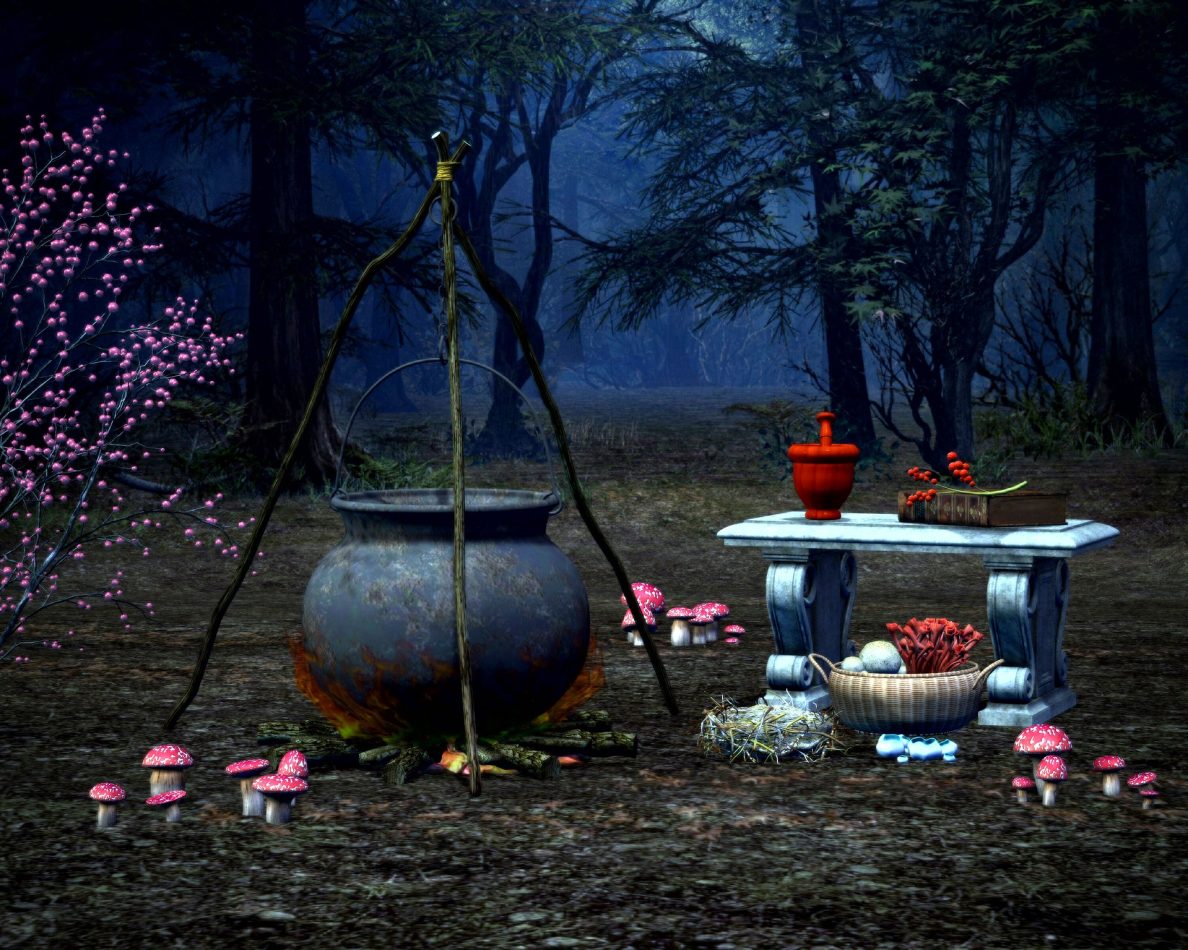
Waiting to the last minute to do your taxes? Well I have some goodies that you might need before the night is over.
Good luck and don’t make any mistakes. You don’t want to get audited, lol!
Hope you enjoy the goodies!
Discover the cosmos!Each day a different image or photograph of our fascinating universe is featured, along with a brief explanation written by a professional astronomer.
2012 April 15

Fata Morgana: A Possibly Titanic Mirage
Image Credit & Copyright: Mila Zinkova
Explanation: Did this mirage help sink the Titanic? The optical phenomenon called Fata Morgana can make strange shapes or a false wall of water appear above a watery horizon. When conditions are right, light reflecting off of cold water will be bent by an unusual layer of warm air above to arrive at the observer from several different angles. A conceptually comparable mirage can make a setting Sun appear strangely distorted or a distant pavement appear wet. One hundred years ago today, such a Fata Morgana mirage might have obscured real icebergs from the clear view of crew onboard the Titanic. Additional evidence for this distortion hypothesis arises from the nearby vessel SS Californian which reported sightings consistent with Fata Morgana mirages. The above Fata Morgana mirage was taken off the US Pacific coast in 2008.
 |
|||
| Name: | Frodo |
Age: | Nine months old |
| Gender: | Male |
Kind: | Cat |
| Home: | Cochrane, Alberta, Canada |
||
|
This is an adventure, not unlike Lord of the Rings … because this Frodo passed through death as well, only to live, and so the adventure began.
My husband and I decided we were ready to find a new cat, as we lost our beautiful orange boy Puffin in the fall. We traveled to an acreage where we knew there was a litter of kittens with an orange one. We arrived to find the kittens panicked and scared because the previous night their momma and a sibling had met their demise by wild animals. Those remaining kittens had survived by climbing to the highest part of the outdoor cat house they lived in, all the while hearing the terrifying sound of decimation below. Frodo was the only orange kitten in a litter with two black siblings. We were told that because of his bright color he would be easy pickings for the predators that roamed the acreage. So I eagerly wrapped him in my coat and drove home with our little bundle, knowing he was not only a survivor but an adventurer, so he was aptly named Frodo. Frodo quickly adjusted to life indoors, although he loves to sit in the window watching the world go by; he loves to climb to the top of our screen door and chases anything that moves, including his big sister Iggy, much to her chagrin. He is a delight every day, making our home lively with the sound of his thundering paws. But at night, when all is quiet, he loves to crawl right under our covers and sleep the night away, knowing he is safe and sound and loved.  See more images of Frodo! |
|||
 |
|||
| Name: | Finney |
Age: | Ten years old |
| Gender: | Male | Breed: | Shih Tzu |
| Home: | Ste Anne, Ontario, Canada | ||
|
Hi there! My name is Finney and I am a Shih Tzu. That means Lion Dog and let me tell you I am as brave any lion but far more important as my ancestors came from the Emperor’s Palace in China!
The first eight years of my life were very sad as I lived in a horrible place called a puppy mill where I was used to breed and never treated well or kindly and had no family to adore me … but then I was rescued and eventually adopted by my foster family who fell in love with me and couldn’t bear to part with me. I am now so happy and love living here with all the other dogs in the house – there is a Bichon called Ben who is my permanent best doggie friend and always at least four other foster fluffs to play with me when I feel like romping. Of course I am the Doggie King of the Castle but I am very kind and protective of them all (even the cat!). Every night before I go to sleep on my own soft blanket on the big bed, I get to have a really good time and a play with my two teddies and a belly rub from Dad whom I love more than anyone in the world. I am so happy to be here for the rest of my life! Yes, Finney is a real Dad’s boy and follows my husband everywhere. Finn is a real character and not a day goes by without him doing something to make us both laugh and love him even more. He is loving, sweet and kind to all the dogs he meets and we are very lucky to have him as our furkid! Rescue dogs (and cats) are the best!  See more images of Finney! |
|||
To protect yourself against the destructive forces of another person’s anger, sprinkle powdered passion-flower across your threshold.
To see the beauty in change and to be more accepting of progress, wear or carry a unakite.

Gracious Creator/rix, Who lives within Me,
Help me to understand Your ways.
Guide my feet as they trod Your Path
And keep me safely out of harm’s way.
Teach me to trust myself, my inner child,
and my instincts.
For I am a product of Your Creative Force;
Andy by my very existence
Form an important part of Your Universal Plan.
Make my life not a test,
But instead–a joy
And Speak to me through my intuitive nature
So that I cease to see my whims and fancies
As mere frivolity.
Let me view them, instead,
As what they are—
An important part of who I am
In Your World.
So Mote It Be.

Petroselinum, the specific name of the Parsley, from which our English name is derived, is of classic origin, and is said to have been assigned to it by Dioscorides. The Ancients distinguished between two plants Selinon, one being the Celery (Apium graveolens) and called heleioselinon – i.e. ‘Marsh selinon,’ and the other – our parsley – Oreoselinon, ‘Mountain selinon’; or petroselinum, signifying ‘Rock selinon.’ This last name in the Middle Ages became corrupted into Petrocilium– this was anglicized into Petersylinge, Persele, Persely and finally Parsley.
There is an old superstition against transplanting parsley plants. The herb is said to have been dedicated to Persephone and to funeral rites by the Greeks. It was afterwards consecrated to St. Peter in his character of successor to Charon.
In the sixteenth century, Parsley was known as A. hortense, but herbalists retained the official name petroselinum. Linnaeus in 1764 named it A. petroselinum, but it is now assigned to the genus Carum.
The Greeks held Parsley in high esteem, crowning the victors with chaplets of Parsley at the Isthmian games, and making with it wreaths for adorning the tombs of their dead. The herb was never brought to table of old, being held sacred to oblivion and to the dead. It was reputed to have sprung from the blood of a Greek hero, Archemorus, the forerunner of death, and Homer relates that chariot horses were fed by warriors with the leaves. Greek gardens were often bordered with Parsley and Rue.
Several cultivated varieties exist, the principal being the common plain-leaved, the curled-leaved, the Hamburg or broadleaved and the celery-leaved. Of the variety crispum, or curled-leaved, there are no less than thirty-seven variations; the most valuable are those of a compact habit with close, perfectly curled leaves. The common sort bears close leaves, but is of a somewhat hardier nature than those of which the leaves are curled; the latter are, however, superior in every way. The variety crispumwas grown in very early days, being even mentioned by Pliny.
Turner says, ‘if parsley is thrown into fishponds it will heal the sick fishes therein.’
At the present day, the ‘long white’ and the ’round sugar’ forms are sold by seedgrowers and are in esteem for flavouring soups, stews, etc., the long variety being also cooked and eaten like parsnips.
Neapolitan, or celery-leaved, parsley is grown for the use of its leafstalks, which are blanched and eaten like those of celery.
The plain-leaved parsley was the first known in this country, but it is not now much cultivated, the leaves being less attractive than those of the curled, of a less brilliant green, and coarser in flavour. It also has too close a resemblance to Fool’s Parsley (Anthriscus cynapium), a noxious weed of a poisonous nature infesting gardens and fields. The leaves of the latter, though similar, are, however, of a rather darker green and when bruised, emit an unpleasant odour, very different to that of Parsley. They are, also, more finely divided. When the two plants are in flower, they are easily distinguished, Anthriscus having three tiny, narrow, sharp-pointed leaflets hanging down under each little umbellule of the white umbel of flowers, whereas in the Garden Parsley there is usually only one leaflet under the main umbel, the leaflets or bracts at the base of the small umbellules only being short and as fine as hairs. Anthriscus leaves, also, are glossy beneath. Gerard called Anthriscus‘Dog’s Parsley,’ and says ‘the whole plant is of a naughty smell.’ It contains a peculiar alkaloid called Cynapium.
Stone Parsley (Sison), or Breakstone, is an allied plant, growing in chalky districts.
S. Amomum is a species well known in some parts of Britain, with cream-coloured flowers and aromatic seeds. The name is said to be derived from the Celtic sium(running stream), some of the species formerly included growing in moist localities.
Of our Garden Parsley (which he calls Parsele) Gerard says, ‘It is delightful to the taste and agreeable to the stomache,’ also ‘the roots or seeds boiled in ale and drank, cast foorth strong venome or poyson; but the seed is the strongest part of the herbe.’
Though the medicinal virtues of Parsley are still fully recognized, in former times it was considered a remedy for more disorders than it is now used for. Its imagined quality of destroying poison, to which Gerard refers, was probably attributed to the plant from its remarkable power of overcoming strong scents, even the odour of garlic being rendered almost imperceptible when mingled with that of Parsley.
The plant is said to be fatal to small birds and a deadly poison to parrots, also very injurious to fowls, but hares and rabbits will come from a great distance to seek for it, so that it is scarcely possible to preserve it in gardens to which they have access. Sheep are also fond of it, and it is said to be a sovereign remedy to preserve them from footrot, provided it be given them in sufficient quantities.
—Cultivation—Parsley requires an ordinary, good well-worked soil, but a moist one and a partially-shaded position is best. A little soot may be added to the soil.
The seed may be sown in drills, or broadcast, or, if only to be used for culinary purposes, as edging, or between dwarf or shortlived crops.
For a continuous supply, three sowings should be made: as early in February as the weather permits, in April or early in May, and in July and early August – the last being for the winter supply, in a sheltered position, with a southern exposure. Sow in February for the summer crop and for drying purposes. Seed sown then, however, takes several weeks to germinate, often as much as a full month. The principal sowing is generally done in April; it then germinates more quickly and provides useful material for cutting throughout the summer. A mid-August sowing will furnish good plants for placing in the cold frames for winter use.
An even broadcast sowing is preferable, if the ground is in the condition to be trodden which appears to fix the seed in its place, and after raking leaves a firm even surface.
The seed should be but slightly covered, not more than 1/2 inch deep and thinly distributed; if in drills, these should be 1 foot apart.
It is not necessary, however (though usual), to sow the seed where the plants are to be grown, as when large enough, the seedlings can be pricked out into rows.
When the seedlings are well out of the ground – about an inch high – adequate thinning is imperative, as the plants dislike being cramped, and about 8 inches from plant to plant must be allowed: a well-grown plant will cover nearly a square foot of ground.
The rows should be liberally watered in dry weather; a sheltered position is preferred, as the plants are liable to become burnt up in very hot and dry summers. The rows should be kept clean of weeds, and frequent dressings may be applied with advantage.
If the growth becomes coarse in the summer, cut off all the leaves and water well. This will induce a new growth of fine leaves, and may always be done when the plants have grown to a good size, as it encourages a stocky growth.
Soon after the old or last year’s plants begin to grow again in the spring, they run to flower, but if the flower stems are promptly removed, and the plants top dressed and watered, they will remain productive for some time longer. Renew the beds every two years, as the plant dies down at the end of the second season.
When sowing Parsley to stand the winter, a plain-leaved variety will often be found superior to the curled or mossy sorts, which are, perhaps, handsomer, but the leaves retain both snow and rain, and when frost follows, the plants soon succumb. A plainleaved Parsley is far hardier, and will survive even a severe winter and is equally good for cooking, though not so attractive for garnishing. Double the trouble is experienced in obtaining a supply of Parsley during the winter, when only the curled-leaved varieties are given.
Where curled Parsley is desired and is difficult to obtain, because there is no sufliciently sheltered spot in the garden for it, it may often be saved by placing a frame-light over the bed during severe weather to protect the plants, or they may be placed altogether in cold frames. Care must be taken with all Parsley plants grown thus in frames, to pick off all decaying leaves directly noticed, and the soil should be stirred occasionally with a pointed stick between the plants, to prevent its becoming sour. Abundance of air should be given on all favourable occasions, removing the light altogether on fine days.
—Medicinal Action and Uses—The uses of Parsley are many and are by no means restricted to the culinary sphere. The most familiar employment of the leaves in their fresh state is, of course, finely-chopped, as a flavouring to sauces, soups, stuffings, rissoles, minces, etc., and also sprinkled over vegetables or salads. The leaves are extensively cultivated, not only for sending to market fresh, but also for the purpose of being dried and powdered as a culinary flavouring in winter, when only a limited supply of fresh Parsley is obtainable.
In addition to the leaves, the stemsare also dried and powdered, both as a culinary colouring and for dyeLg purposes. There is a market for the seeds to supply nurserymen, etc., and the roots of the turnip-rooted variety are used as a vegetable and flavouring.
Medicinally, the two-year-old roots are employed, also the leaves, dried, for making Parsley Tea, and the seeds, for the extraction of an oil called Apiol, which is of considerable curative value. The best kind of seed for medicinal purposes is that obtained from the Triple Moss curled variety. The wholesale drug trade generally obtains its seeds from farmers on the East coast, each sample being tested separately before purchases are made. It has been the practice to buy secondyear seeds which are practically useless for growing purposes: it would probably hardly pay farmers to grow for Apiol producing purposes only, as the demand is not sufficiently great.
—Constituents—Parsley Root is faintly aromatic and has a sweetish taste. It contains starch, mucilage, sugar, volatile oil and Apiin. The latter is white, inodorous, tasteless and soluble in boiling water.
Parsley fruit or ‘seeds’ contain the volatile oil in larger proportion than the root (2.6 per cent); it consists of terpenes and Apiol, to which the activity of the fruit is due. There are also present fixed oil, resin, Apiin, mucilage and ash. Apiol is an oily, nonnitrogenous allyl compound, insoluble in water, soluble in alcohol and crystallizable when pure into white needles. The British Pharmacopceia directs that Apiol be prepared by extracting the bruised fresh fruits with ether and distilling the solvent. The residue is the commercial liquid Apiol. It exercises all the virtues of the entire plant. Crystallized Apiol, or Parsley Camphor, is obtained by distilling the volatile oil to a low temperature. The value of the volatile oil depends on the amount of Apiol it contains. Oil obtained from German fruit contains this body in considerable quantity and becomes semi-solid at ordinary temperature, that from French fruit is much poorer in Apiol. In France, only the crystalline Apiol is official, but three different varieties, distinguished as green, yellow and white, are in use.
Apiol was first obtained in 1849 by Drs. Joret and Homolle, of Brittany, and proved an excellent remedy there for a prevailing ague. It is greatly used now in malarial disorders. The name Apiol has also been applied to an oleoresin prepared from the plant, which contains three closely-allied principles: apiol, apiolin and myristicin, the latter identical with the active principle of oil of Nutmeg. The term ‘liquid Apiol’ is frequently applied to the complete oleoresin. This occurs as a yellowish liquid with a characteristic odour and an acrid pungent taste. The physiological action of the oleoresin of Parsley has not been sufficiently investigated, it exercises a singular influence on the great nerve centres of the head and spine, and in large doses produces giddiness and deafness, fall of blood-pressure and some slowing of the pulse and paralysis. It is stated that the paralysis is followed by fatty degeneration of the liver and kidney, similar to that caused by myristicin.
Parsley has carminative, tonic and aperient action, but is chiefly used for its diuretic properties, a strong decoction of the root being of great service in gravel, stone, congestion of the kidneys, dropsy and jaundice. The dried leaves are also used for the same purpose. Parsley Tea proved useful in the trenches, where our men often got kidney complications, when suffering from dysentery.
A fluid extract is prepared from both root and seeds. The extract made from the root acts more readily on the kidneys than that from other parts of the herb. The oil extracted from the seeds, the Apiol, is considered a safe and efficient emmenagogue, the dose being 5 to 15 drops in capsules. A decoction of bruised Parsley seeds was at one time employed against plague and intermittent fever.
In France, a popular remedy for scrofulous swellings is green Parsley and snails, pounded in a mortar to an ointment, spread on linen and applied daily. The bruised leaves, applied externally, have been used in the same manner as Violet leaves (also Celandine, Clover and Comfrey), to dispel tumours suspected to be of a cancerous nature. A poultice of the leaves is said to be an efficacious remedy for the bites and stings of poisonous insects.
Formerly the distilled water of Parsley was often given to children troubled with wind, as Dill water still is.
—Preparations and Dosages—Fluid extract root, 1/2 to 1 drachm. Fluid extract seeds, 1/2 to 1 drachm. Apiol (oil), 5 to 15 drops in capsule.
—Preparation for Market—The roots are collected for medicinal purposes in the secondyear, in autumn or late summer, when the plant has flowered.
To dry Parsley towards the close of the summer for culinary use, it may be put into the oven on muslin trays, when cooking is finished, this being repeated several times till thoroughly dry and crisp, when the leaves should be rubbed in the hands or through a coarse wire sieve and the powder then stored in tins, so that neither air nor light can reach it, or the good colour will not be preserved. In the trade, there is a special method of drying which preserves the colour.
The oil is extracted from the ‘seeds’ or rather fruits, when fresh, in which condition they are supplied to manufacturing druggists.
You are rich beyond all measure. Yet the only wealth you experience is the wealth you accept and acknowledge and make purposeful use of.
If you feel you are impoverished it is not because you are impoverished. It is because you refuse to see and to participate in your great fortune.
The way the world defines wealth is trivial and inconsequential compared to the immense richness of your life. Wake up to this priceless moment and to the true and boundless value in which you are immersed.
There is no limit to the number of possibilities. There is no end to the beauty.
As big as the biggest problems may seem, they are nothing when compared to the positive possibilities. Those possibilities connect you to every good thing you could ever imagine.
Focus your awareness on what is good, on what is right, and on the great fortune that is your existence. Live the real richness that is now.
— Ralph Marston
Ready for Change
Declaring Our Intentions
If you are feeling stuck in your life and are ready for change, take time to declare to the Universe that you are ready.
There comes a point in most of our lives when we feel ready to experience a change we’ve had trouble carrying out. Maybe we’ve been stuck in a home, a relationship, job, or a town that hasn’t felt right for a long time, but we’ve been unable to shift our circumstances in the direction we want to go. At times like this, it can help to declare to the universe that we are ready for a change. Think of it as informing a helpful friend that you need her assistance to move to the next level in your life. If the time is right, the universe will respond with opportunities and offers designed to help you create the change you wish to see.
You can begin the process of making your declaration by getting clear within yourself about what exactly you want to change. Whenever we ask anyone for help, they can assist us that much better if we are specific. The universe also appreciates our clarity and has an easier time answering a direct communication than a vague yearning. When you are clear on what you want, write your declaration on a piece of paper and place it on your altar, if you have one. If you don’t, you can also place it under your pillow or in a box on your nightstand. Set aside a period of time every day to be silent with your wishes for change, repeating your declaration like a mantra. This lets the universe know that you are ready to change and will be receptive to its efforts.
Feel free to continue to refine and redefine your declaration, and remember to be open to the many different ways in which the change you seek might come to be. Remember also to be active in your own efforts, taking opportunities that come your way, watching for signs, and always taking responsibility for your intentions. If things don’t happen quickly, try not to be discouraged; it might take time to free up energy that has been blocked and possibly serving a purpose beyond what we can understand. If you continue your conversation with the universe, declaring yourself clearly and openly, you cannot help but experience the magic of changing and being changed.
Discover the cosmos!Each day a different image or photograph of our fascinating universe is featured, along with a brief explanation written by a professional astronomer.

Barred Spiral Galaxy NGC 1300
Image Credit: Hubble Heritage Team, ESA, NASA
Explanation: Big, beautiful, barred spiral galaxy NGC 1300 lies some 70 million light-years away on the banks of the constellation Eridanus. This Hubble Space Telescope composite view of the gorgeous island universe is one of the largest Hubble images ever made of a complete galaxy. NGC 1300 spans over 100,000 light-years and the Hubble image reveals striking details of the galaxy’s dominant central bar and majestic spiral arms. In fact, on close inspection the nucleus of this classic barred spiral itself shows a remarkable region of spiral structure about 3,000 light-years across. Unlike other spiral galaxies, including our own Milky Way, NGC 1300 is not presently known to have a massive central black hole.
 |
|||
| Name: | Blue |
Age: | Seven years old |
| Gender: | Male | Breed: | German Shepherd, Husky Golden Retriever |
| Home: | Ontario, Canada | ||
|
I had always wanted a dog. I had a couple when I was really little but I hardly remember them. One day my parents said that a friend of the family’s dog had a litter of puppies. So we went to check them out. There sure were a lot of puppies and we played with them all and finally the soon-to-be-Blue was chosen! We had to wait a couple of weeks for them to be ready to leave their mother but the day finally came when we could pick up our pup. He is a German Shepherd, Husky, Golden Retriever mix. At first we were going to name him Buddy but it seemed too common. So we named him after his icy-blue eyes. Since then it has been seven years. I remember some good memories like how Blue used to hate going for walks as a puppy until he met another dog who loved going for walks. Now if you say ‘walk’ Blue runs for his leash. I also remember not being able to sleep one night so I had started down the stairs to sit with my parents for a bit. I overheard them talking about getting rid of Blue, I was so upset that I ran back to my bedroom. The next day my Mom told how someone almost broke into our house the night before after they went to bed. Blue barked and growled until my Dad had come down to see what was wrong. When they look in the back yard there was a guy dressed in dark clothing trying to get back over the fence. Who knows if they guy was dangerous or not, either way Blue saved us and he was allowed to stay.
Blue is a big dog, he doesn’t meet many dogs his size and when he does he does he acts all surprised. Sometimes he is afraid of little dogs and will hide behind me but he eventually comes out to say ‘hi’. He thinks he is a lap dog and loves to sleep on my lap. It started when he was a puppy and he just never outgrew it the habit, although he outgrew my lap a long time ago. He is friendly, calm & loyal as well as my best friend. Blue has always been there for me when I was angry or upset and never once has he judged me. He is getting older now and our walks are getting shorter but I am cherishing every moment that I have with him |
|||

I have tried to post this three times. I am about ready to pull my hair out, lol! Please, I’m begging ya’……
Got a surprise in your email yet, here’s your chance. Find your favorite articles and “like, like, like,” ’em!
This is a key time in this calendar to remind you that solar and planetary alignments from yesterday or even a few days ago are not entirely gone. The universe doesn’t wave a magic wand to make Friday’s contentious forces disappear. Instead, they are pushed below the surface, so to speak, but they may still have enormous power to throw you off-course. For example, yesterday’s halt by the red planet is still rippling through the ethers and that is why you should carefully review Friday’s message. In addition, realize that Mars won’t go into another retrograde cycle until March 1, 2014. In the meantime, antique hunters may rejoice a little since the Moon in Aquarius and Venus in Gemini form a flowing trine in air signs (8:11AM PDT) while Venus also makes an off-kilter, 150-degree link to Pluto (9:53AM PDT). If you are into research and in-depth studies – in the arts, crafts and realm of valuable items of historic value – then you may be able to tweak this Venus-Pluto connection to your advantage. On the other hand, Venus and Pluto in a 150-degree relationship could be detrimental for love birds and courageous souls trying to demonstrate their affections to a dear one. The Moon contra-parallel to Mars (12:30PM PDT) reinforces the notion that romance may be rather tricky to enhance today. And while one or two alignments tomorrow might encourage heart-felt expression, Sunday also brings with it the annual Sun-Saturn opposition – a polarity that is usually more frustrating than exhilarating. Nevertheless, with the Moon still transiting eccentric Aquarius, learning more about the Ageless Wisdom teachings, UFOs, ETs, astrology, numerology, ley lines and planetary vortexes may be one way to stay high as a kite.
Calendar of the Moon
14 Fearn/Elaphebolion
Day of the Elm Tree
Color: Dull green
Element: Earth
Altar: Upon a dull green cloth set a vase of elm twigs collected earlier and forced to bud, a single dull green candle, a pot of soil, seeds, a bowl of water, and a bell.
Offerings: Plant seeds. Use your physical strength to do a task.
Daily Meal: Vegan
Invocation to the Green Man of the Elm Tree
Hail, Green Man of the Spring!
Elm tree of the spreading limbs,
Great in strength and stature,
Tree planted amid the grapevines
To be a living trellis
To support the uncounted
Legions of the Vine-God.
Backbone of Dionysus,
Patient and enduring,
Tree who takes its burdens quietly,
With trunk so great
The hardly can we reach around it.
Grandmother and protector
Of the new year’s wine,
In whose branches robins call.
We hail you, sacred elm tree,
Green Man of the Spring,
On this the day of your strengthening.
Chant:
In strength I rise
In strength I reach
In strength I touch the sky
(Each comes forward and plants a seed in the pot of soil, saying, “Hail Green Man of the Earth!” Water is poured onto the pot, and then the rest is poured out as a libation. Ring bell and dismiss.)
Calendar of the Sun
14 Eostremonath
Mariamne’s Day
Color: Blue-green of the ocean
Element: Water
Altar: Upon a cloth of blue, green, and aqua place a large glass bowl filled with salt water, sand, and shells from the ocean, many small cakes or breads, and a pitcher of milk.
Offerings: Seashells. Make food. Give generously to another.
Daily Meal: Fish. Bread. Dairy products.
Invocation to Mariamne
Lady of the Land and Sea,
We call you to watch over us!
Lady of the Ocean,
Cascading waves that stroke the shore
Again and again, in a never-ending
Mating dance of land and sea;
Lady of whales and dolphins,
Lady of fishes that swim in
Silvery schools like clouds of mist,
Lady who fills our nets and boats,
Lady who keeps us safe at sea,
Lady who brought our ancestors
Safely across their watery travels,
Bless us with your protection
As we navigate the shoals of our lives.
Lady of the Shore,
Mistress of Land and Sea,
Ruler of the tides
And giver of nourishment,
You who make the milk flow
And the mother’s breast give forth,
You who water the fields
And spark the seed,
Bless us with your abundance
As we move with your tidal flow.
Chant: Mariamne Mariamne
Mistress of Earth and Sea
(The breads are passed around, and the one who passes them says, “Taste the bounty of the body.” Then the milk is passed, and the one who passes it says, “Taste the bounty of the heart.”
The Moon’s Phase
 |
The Moon for Apr 14, 2012 (At Midnight, US Central time, as viewed from the Northern Hemisphere) Illuminated Fraction: 0.307 |
The runic half-month of Mannaz (or Man) begins today, and its last day will fall on April 28. As its name indicates, this rune means “man,” and it may be interpreted on the one hand as signifying a male person, and, on the other, as referring to mankind, or humankind. Different interpreters put a different gloss on the meaning of this rune, which some saying that it points to the self, and others, that it highlights how the individual relates to the wider human community. And yet another view is that Mannaz denotes defense, especially of the human race collectively.

I take into my heart the gentle rhythms of nature performing its perennial dance of time.
“Healthy feet can hear the very heart of the Holy Earth.”
Chief Sitting Bull (1831 – 90)
Time spent in nature is healing. It grounds us in our bodies and reaffirms our felt connection with the world around us. Spend time in green spaces as often as you can, whether in garden, parks or open countryside. Engage each of your senses in the experience of being at one with nature. Notice the shapes and hues of the flowers, hear the singing of the birds, smell the earthy scents of the ground and the fragrance of flowers.
We can also reconnect to nature using the imagination. Close your eyes and visualize a meadow on a sunny afternoon. Notice different species of plants, birds, animals and insects. Watch the interactions between these species, and then focus on individual organisms, sensing the pace and rhythm of their lives. Finish by watching the grass grow, allowing your consciousness to resonate at the same pace.

I don’t know what possessed me this morning, lol! I guess I am in a good mood and wanted to get a giggle out of ya’. I am just going to have to stop showing these sexy ladies in the morning, lmao!
I hope you have a great Saturday. Don’t work to hard today. Remember the weekend is for relaxation and those weeds will be there tomorrow.
Love & Hugs,
Lady A


You must be logged in to post a comment.