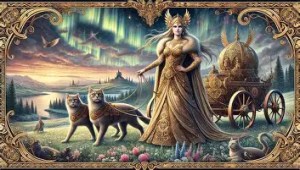
Pagan Studies of the Gods and Goddesses: Freya, Norse Goddess of love, beauty, magic (seidhr), fertility, war and death.


Freya

Norse Goddess of love, beauty, magic (seidhr), fertility, war and death.

Freya (Old Norse Freyja, “Lady”) is one of the preeminent goddesses in Norse mythology. She’s a member of the Vanir tribe of deities, but became an honorary member of the Aesir gods after the Aesir-Vanir War. Her father is Njord. Her mother is unknown, but could be Nerthus. Freyr is her brother. Her husband, named Odr in late Old Norse literature, is certainly none other than Odin, and, accordingly, Freya is ultimately identical with Odin’s wife Frigg (see below for a discussion of this).


Freya is famous for her fondness of love, fertility, beauty, and fine material possessions – and, because of these predilections, she’s considered to be something of the “party girl” of the Aesir. In one of the Eddic poems, for example, Loki accuses Freya (probably accurately) of having slept with all of the gods and elves, including her brother.[1] She’s certainly a passionate seeker after pleasures and thrills, but she’s a lot more than only that. Freya is the archetype of the völva, a professional or semiprofessional practitioner of seidr, the most organized form of Norse magic. It was she who first brought this art to the gods,[2] and, by extension, to humans as well. Given her expertise in controlling and manipulating the desires, health, and prosperity of others, she’s a being whose knowledge and power are almost without equal.

Freya presides over the afterlife realm Folkvang. According to one Old Norse poem, she chooses half of the warriors slain in battle to dwell there. (See Death and the Afterlife.)

Freya the Völva

Seidr is a form of pre-Christian Norse magic and shamanism that involved discerning the course of fate and working within its structure to bring about change, often by symbolically weaving new events into being.[3] This power could potentially be put to any use imaginable, and examples that cover virtually the entire range of the human condition can be found in Old Norse literature.

In the Viking Age, the völva was an itinerant seeress and sorceress who traveled from town to town performing commissioned acts of seidr in exchange for lodging, food, and often other forms of compensation as well. Like other northern Eurasian shamans, her social status was highly ambiguous – she was by turns exalted, feared, longed for, propitiated, celebrated, and scorned.[4]

Freya’s occupying this role amongst the gods is stated directly in the Ynglinga Saga, and indirect hints are dropped elsewhere in the Eddas and sagas. For example, in one tale, we’re informed that Freya possesses falcon plumes that allow their bearer to shift his or her shape into that of a falcon.[6]

During the so-called Völkerwanderung or “Migration Period” – roughly 400-800 CE, and thus the period that immediately preceded the Viking Age – the figure who would later become the völva held a much more institutionally necessary and universally acclaimed role among the Germanic tribes. One of the core societal institutions of the period was the warband, a tightly organized military society presided over by a chieftain and his wife. The wife of the warband’s leader, according to the Roman historian Tacitus, held the title of veleda, and her role in the warband was to foretell the outcome of a suggested plan of action by means of divination and to influence that outcome by means of more active magic, as well as to serve a special cup of liquor that was a powerful symbol of both temporal and spiritual power in the warband’s periodic ritual feasts.[7][8]

One literary portrait of such a woman comes to us from the medieval Old English epic poem Beowulf, which recounts the deeds of King Hroðgar and his warband in the land that we today know as Denmark. The name of Hroðgar’s queen, Wealhþeow, is almost certainly the Old English equivalent of the Proto-Germanic title that Tacitus latinised as “veleda.”[9] Wealhþeow’s “domestic” actions in the poem – which are, properly understood, enactments of the liquor ritual described above – are indispensable for the upkeep of the unity of the warband and its power structures. The poem, despite its Christian veneer, “hint[s] at the queen’s oracular powers… The Hrothgar/Wealhtheow association as presented in the poem is an echo of an earlier more robust and vigorous politico-theological conception.”[10]

This “politico-theological conception” was based on the mythological model provided by the divine pair Frija and Woðanaz, deities who later evolved into, respectively, Freya/Frigg and Odin. Woðanaz is the warband’s chieftain, and Frija is its veleda. In addition to the structural congruencies outlined above, Wealhþeow and Freya even own a piece of jewelry with the same name: Old English Brosinga mene and Old Norse Brísingamen (both meaning something like “fiery/glowing necklace”). That both figures refer to the same ancient archetype, whether on the human or the divine plane, is certain.

Freya and Frigg

While the late Old Norse literary sources that form the basis of our current knowledge of pre-Christian Germanic religion present Freya and Frigg as being at least nominally distinct goddesses, the similarities between them run deep. Their differences, however, are superficial and can be satisfactorily explained by consulting the history and evolution of the common Germanic goddess whom the Norse were in the process of splitting into Freya and Frigg sometime shortly before the conversion of Scandinavia and Iceland to Christianity (around the year 1000 CE).

As we’ve noted above, the Migration Period goddess who later became Freya was the wife of the god who later became Odin. While somewhat veiled, this is ultimately still the case in Old Norse literature. Freya’s husband is named Óðr, a name which is virtually identical to that of Óðinn (the Old Norse form of “Odin”). Óðr means “ecstasy, inspiration, furor.” Óðinn is simply the word óðr with the masculine definite article (-inn) added onto the end. The two names come from the same word and have the same meaning. Óðr is an obscure and seldom-mentioned character in Old Norse literature. The one passage that tells us anything about his personality or deeds – anything beyond merely listing his name in connection with Freya – comes from the Prose Edda, which states that Óðr is often away on long journeys, and that Freya can often be found weeping tears of red gold over his absence.[11] Many of the surviving tales involving Odin have him traveling far and wide throughout the Nine Worlds, to the point that he’s probably more often away from Asgard than within it. Many of Odin’s numerous bynames allude to his wanderings or are names he assumed to disguise his identity while abroad. Thus, it’s hard to see Freya’s husband as anything but an only nominally distinct extension of Odin.

Freyja and Frigg are similarly accused of infidelity to their (apparently common) husband. Alongside the several mentions of Freya’s loose sexual practices can be placed the words of the medieval Danish historian Saxo Grammaticus, who relates that Frigg slept with a slave on at least one occasion.[12] In Lokasenna and the Ynglinga Saga, Odin was once exiled from Asgard, leaving his brothers Vili and Ve in command. In addition to presiding over the realm, they also regularly slept with Frigg until Odin’s return.[13][14] Many scholars have tried to differentiate between Freya and Frigg by asserting that the former is more promiscuous and less steadfast than the latter,[15] but these tales suggest otherwise.

Frigg is depicted as a völva herself. Once again in Lokasenna, after Loki slanders Frigg for her infidelity, Freya warns him that Frigg knows the fate of all beings, an intimation of her ability to perform seidr.[16] Frigg’s weaving activities are likely an allusion to this role as well. And, as it turns out, Freya is not the only goddess to own a set of bird-of-prey feathers for shapeshifting – Frigg is also in possession of one.[17]

The word for “Friday” in Germanic languages (including English) is named after Frija,[18] the Proto-Germanic goddess who is the foremother of Freya and Frigg. None of the other Germanic peoples seem to have spoken of Frija as if she were two goddesses; this approach is unique to the Norse sources. It should come as no surprise, therefore, that in the Norse sources we find a confusion as to which goddess this day should have as its namesake. Both Freyjudagr (from Freyja) and Frjádagr (from Frigg) are used.

The names of the two goddesses are also particularly interesting in this regard. Freyja, “Lady,” is a title rather than a true name. It’s a cognate of the modern German word Frau, which is used in much the same way as the English title “Mrs.” In the Viking Age, Scandinavian and Icelandic aristocratic women were sometimes called freyjur, the plural of freyja.[19] “Frigg,” meanwhile, comes from an ancient root that means “beloved.”[20] Frigg’s name therefore links her to love and desire, precisely the areas of life over which Freya presides. Here again we can discern the ultimate reducibility of both goddesses to one another: one’s name is identical to the other’s attributes, and the other name is a generic title rather than a unique name.

Clearly, then, the two are ultimately the same goddess. Why, then, are they presented as nominally distinct in the late Old Norse sources? Unfortunately, no one really knows.

Looking for more great information on Norse mythology and religion? While this site provides the ultimate online introduction to the topic, my book The Viking Spirit provides the ultimate introduction to Norse mythology and religion period. I’ve also written a popular list of The 10 Best Norse Mythology Books, which you’ll probably find helpful in your pursuit.

Originally Published on Norse Mythology for Smart People

References:

[1] The Poetic Edda. Lokasenna, stanzas 30, 32.

[2] Snorri Sturluson. Ynglinga Saga 4. In Heimskringla: eða Sögur Noregs Konunga.

[3] Heide, Eldar. 2006. Spinning Seiðr. In Old Norse Religion in Long-Term Perspectives: Origins, Changes and Interactions. Edited by Anders Andrén, Kristina Jennbert, and Catharina Raudvere. p. 166.

[4] Price, Neil S. 2002. The Viking Way: Religion and War in Late Iron Age Scandinavia. p. 279-328.

[5] Snorri Sturluson. Ynglinga Saga 4. In Heimskringla: eða Sögur Noregs Konunga.

[6] Ellis-Davidson, Hilda Roderick. 1964. Gods and Myths of Northern Europe. p. 117.

[7] Tacitus, Cornelius. Germania 8.

[8] Enright, Michael J. 1996. Lady with a Mead Cup: Ritual, Prophecy and Lordship in the European Warband from La Tène to the Viking Age.

[9] Ibid. p. 192.

[10] Ibid. p. 66.

[11] Snorri Sturluson. The Prose Edda. Gylfaginning 35.

[12] Saxo Grammaticus. The History of the Danes.

[13] The Poetic Edda. Lokasenna, verse 26.

[14] Snorri Sturluson. Ynglinga Saga 3. In Heimskringla: eða Sögur Noregs Konunga.

[15] See, for example: Grimm, Jacob. 1882. Teutonic Mythology, Volume 1. Translated by James Steven Stallybrass. p. 302.

[16] The Poetic Edda. Lokasenna, verse 29.

[17] Snorri Sturluson. The Prose Edda. Skáldskaparmál 18-19.

[18] Ellis-Davidson, Hilda Roderick. 1964. Gods and Myths of Northern Europe. p. 111.

[19] Grimm, Jacob. 1882. Teutonic Mythology, Volume 1. Translated by James Steven Stallybrass. p. 300.

[20] Orel, Vladimir. 2003. A Handbook of Germanic Etymology. p. 114.

Freyja

Definition
by Emma Groeneveld

Freyja (Old Norse for ‘Lady’, ‘Woman’, or ‘Mistress’) is the best-known and most important goddess in Norse mythology. Beautiful and many-functioned, she features heavily as a fertility goddess stemming from her place in the Vanir family of the gods (the other and main one is the Æsir family) along with her twin brother Freyr and father Njord, and stars in many myths recorded in Old Norse literature as lover or object of lust. She lives in Fólkvangr (‘Field of the People’), rides a carriage drawn by cats, and is connected not just with love and lust but also with wealth, magic, as well as hand-picking half of all fallen warriors on battlefields to go into Odin’s hall of Valhalla – the other half being selected by Odin himself. She likely played an important role in old Scandinavian religion.

FAMILY
Freyja is part of the Vanir family of the gods who handle all things fertility-related, including harvests (her brother Freyr); wind, sea, and wealth (her father Njord); and her own expertise regarding love, lust, and wealth, too. Her mother appears to have been giant-daughter and wife of Njord, Skadi, and while originally Freyja may have been paired in a brother-sister married couple with Freyr, Icelandic mythographer Snorri Sturluson (1179-1241 CE) – our most comprehensive source when it comes to Norse mythology – has her down as wife of Ódr, who she has two daughters with; Hnoss and Gersimi (Gylfaginning, 35). These names both mean something along the lines of ‘preciousness’ or ‘treasure’ and were possibly used in later poetry as manifestations of Freyja herself.

Ódr is said to have gone traipsing around on long journeys, inexplicably leaving Freyja behind, who would then search for him while weeping golden tears; this tale dates back to at least as early as the 10th century CE. He and Odin are commonly thought to have originally been one and the same person, with Ódr functioning as a shortened form of Odin.

ATTRIBUTES
One of Freyja’s attributes has already been mentioned: her cat-drawn carriage with which she zooms around the Norse mythological cosmos. Another is a garment – a coat, cloak or dress-like thing – made out of falcon feathers. Possibly, the boar Hildisvíni should also be counted among Freyja’s attributes; the Hyndluljóð poem has her riding said boar, and a boar connection, in general, is made more plausible by the fact that her brother Freyr is also associated with a boar, in his case named Gullinborsti. Sýr, another name of Freyja’s, is sometimes translated as ‘sow’, too, but it also might mean ‘to protect’, ‘to shield,’ in which case it would negate this third boar link. Germanic mythological powerhouse H. R. Ellis Davidson adds another animal: “Horses were certainly associated with the fertility pair Freyr and Freyja, and said to be kept in their holy places” (104). Her last – but not least – attribute is the necklace Brísingamen.

FREYJA’S MANY ROLES
The baseline of Freyja’s various functions comes from her role as fertility goddess as per her Vanir descent. Specifically, her other name Horn (Hǫrn, or Härn) probably comes from Old Norse horr, which means flax or linen. This was an important product which began being cultivated early on in Scandinavia and was thought to ward off evil and give fertility to humankind. Flax manufacture was a female affair, and as bridal dresses were made of linen, Freyja became a sort of defender of love and weddings, too. Another one of her names, Gefn, is Old Norse for ‘giver’, bringing to mind a role as a goddess of plenty.

The handed-down mythology emphasises Freyja’s role in all things related to sexuality (apart from childbirth, with which she seems unconcerned). For one, she often features as an irresistible object of lust, mainly in the eyes of the giants. The giant Thrym, for example, is only cool with returning the hammer he has stolen from Thor if he gets Freyja for his own. Besides her being the ‘price’ of many things – which the other gods try to avoid paying, as such – other myths reinforce Freyja’s supposed free and considerable sexuality. Although Loki in the Lokasenna poem badmouths everyone around him and accuses all the goddesses of various sexual acts, Freyja is reprimanded by Loki as follows:


Be silent, Freyja! | for fully I know thee,

Sinless thou art not thyself;

Of the gods and elves | who are gathered here,

Each one as thy lover has lain. (30)


She also consents to sleep with four dwarves in turn in order for them to hand over the Brísingamen to her and is accused in the Hyndluljóð poem of being the hero Óttar’s lover. Presumably, then, early Scandinavians looked to Freyja in matters of love and lust.

To make things even better, Freyja is also a goddess of wealth, as attested to by the many poetic references that link her to treasure. Her tears are said to be made of gold, even being synonymous with the material:


Gold is called Freyja’s Tears (…). So sang Skúli Thorsteinsson:

Many a fearless swordsman

Received the Tears of Freyja.

(Skáldskaparmál, 37)


The fact that Freyja’s daughters’ names Hnoss and Gersimi mean ‘preciousness’ or ‘treasure’ could arguably be seen as the “product of poetic convention in which Freyja was recognized as the source of treasure: perhaps as the weeper of golden tears, perhaps as a goddess ruling over wealth” (Billington & Green, 61).

Her connection with magic is also well-known, and Snorri Sturluson relays how it was Freyja who first taught the shamanistic magic called seiðr to the Æsir. Finally, the way Freyja chooses slain warriors to be on her as opposed to Odin’s team carries her into more ferocious spheres, functioning as a goddess of death and perhaps even battle itself. Which god selects you seems to boil down to social or personal status, or perhaps comes from the fact that both the Vanir and the Æsir needed someone to fulfil this role on the battlefield. This link between Freyja and Odin, as well as Odin’s own strong proficiency with magic, helps illustrate how Odin and Ódr, Freyja’s husband, could plausibly have originally been the same person.

MYTHS INVOLVING FREYJA
As evidenced above, there are plenty of myths recorded in the Old Norse sources that are keen to dive into the subject of Freyja. The Hyndluljóð poem emphasises she was more than just a pretty face; in it, Freyja visits wise-woman Hyndla asking her to unravel the hero Óttar’s ancestry, soaking up this knowledge. However, in the Þrymskviða (the ‘Lay of Thrym’, a poem possibly composed in the 12th or 13th century CE and found in the Poetic Edda), her desirability is once again a core theme. The story tells of Thor’s hammer being stolen by the giant Thrym, who will not return the hammer unless he gets his hands on Freyja. Freyja refuses to tag along, however, giving up the Brísingamen to help Thor disguise himself as her. After almost giving things away because Thor gorged himself to such an extent at the wedding banquet so as to raise suspicion – his burning eyes not helping either – Loki luckily smooth-talks his way out of it and ensures they get the hammer back. For good measure, Thor kills Thrym and a bunch of other giants on his way out.

As for other giant-related myths, the giant Hrungnir boasts he would bodily move Valhalla into Jotunheimen (the realm of the giants), sink Asgard (the realm of the gods), and kill all the gods except for Freyja and Sif, who he will take home with him (Skáldskaparmál, 17). In the tale of the Giant Master Builder, a giant offers to build walls around Asgard as long as he gets Freyja, the sun and the moon. Regarding her necklace Brísingamen, which is assigned to Freyja by Late Old Norse sources (13th and 14th centuries CE), the most famous myth concerns its theft (most commonly by Loki) but is preserved in such a fragmentary and tricky way that it is now rather hard to come up with one comprehensive story. The most detailed version is also the youngest and thus not the pinnacle of reliability: the Sǫrla Þáttr, which survives in the 14th century CE Flateyjarbók, describes how Freyja sleeps with four dwarves to get the Brísingamen, and how Odin then forces Loki to steal the necklace from her. Loki enters her bedroom as a fly, stings her so she moves her hand off of the necklace, and grabs it. By contrast, Snorri Sturluson has Loki and Heimdall fighting each other over the necklace (Skáldskaparmál, 8).

CULT OF FREYJA
As a fertility goddess, Freyja would have taken up a central role in old Scandinavian religion, playing a part in the circle of life. J. P. Schjødt explains her special position:

Freyja is one of the few individual goddesses who has had a major role in the more official religious cult (whereas many female deities seen as collectives played a part in both myth and ritual). She incorporates many traits that can be found in fertility goddesses all over the world, among whom is a clear connection also to death. (Brink & Price, 221)

The Old Norse sources do not specifically detail the existence of a cult of Freyja per se, but the large number of place-names in Sweden and Norway related to her name, such as Frøihov (from Freyjuhof, ‘Freyja’s temple’) and Frǫvi (from Freyjuvé, ‘Freyja’s shrine’), show clear worship, perhaps even pointing to a public cult as opposed to the domestic cult one would expect of a goddess of love. It is clear that the people of Iceland on the cusp of conversion to Christianity around the year 1000 CE still had Freyja clearly on their mind. The Íslendingabók states that Hjalti Skeggjason, a supporter of Christianity, was outlawed for blasphemy after calling Freyja a bitch (in this case a female dog, but taken to mean he wanted to call her a whore) at the Althing parliament. She was obviously still important enough for people to not successfully get away with these sorts of things.

ABOUT THE AUTHOR
Emma Groeneveld
Emma has studied History & Ancient History. During her Master’s she focused on Herodotus as well as the juicy politics of ancient courts, but more recently she has been immersing herself in everything prehistoric. She both writes and edits for AHE.


Originally published on Ancient History Encyclopedia
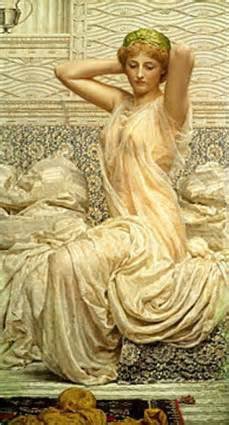
(One Person’s View Person) Venus, The Goddess of Fridays and Love

Venus


Venus is the Roman goddess of love, beauty, prosperity, fertility, and victory. She was so important to Romans that they claimed her as their ancestress. According to mythology, her son Aeneas fled from Troy to Italy. He became the ancestor of Remus and Romulus, who founded Rome.

So, in a way, it’s accurate to say that Venus was the mother of Rome. However, Venus had strong ties to GREEK MYTHOLOGY, too. The Romans thought she was the same goddess as APHRODITE, the GREEK GODDESS of love. They adopted many of Aphrodite’s symbols, such as roses and myrtle, to represent Venus. Myrtle was so important to this goddess that, during her festival, worshipers and even statues of her wore myrtle wreaths.

Venus’s festival took place on April 1. It was called the Veneralia. Aside from draping Venus in flowers, followers also carefully washed her statue, and promised to fulfill the moral obligations of good Roman wives and husbands. Many men and women also asked her advice on matters of the heart.

Other symbols of Venus included the scallop shell, doves, dolphins, pomegranates, pearls, mirrors, and girdles. Many of these were also adopted from Aphrodite. So was her origin story; she was said to be born of seafoam.

One of the most famous works of Western art depicts this event: Botticelli’s The Birth of Venus. It portrays her as standing on a large shell, her hair covering her, surrounded by other mythical figures. This artwork from hundreds of years after the Romans worshiped Venus shows how important her mythology continued to be even after the fall of Rome.

Plenty of other artworks also depict Venus, her birth, and her other myths. In fact, painting Venus was so popular that, after the classical era, any unclothed female figure came to be called a ‘Venus’.

Venus had many titles, representing her importance. These included:

  • Venus Cloacina – the Purifier
  • Venus Felix – the Lucky, suggesting she could be prayed to for good luck
  • Venus Genetrix – Mother, representing her role as mother of rome
  • Venus Murcia – Myrtle, representing the importance of this plant to her
  • Venus Verticordia – the Changer of Hearts, representing her role in love
  • Venus Victrix – Victorious, showing that she was a godess of victory

Later on in the Roman empire, Venus became even more important to Rome. She got new festivals on August 12 and October 9, and a shrine on a famous hill in Rome. Why? Well, Julius Caesar claimed her as his ancestor. Many other famous Roman politicians began to vie for her favor, and eventually, as Caeser became the head of a dynasty, she became associated with his legacy.

Venus was married to Vulcan, the god of fire and the forge. Vulcan was notoriously ugly – one of the ugliest of the gods. But he loved her so much that he created a golden carriage to pull her around. The carriage was drawn by doves to match Venus’s own beauty.

Venus was also the mother of CUPID, the god of love. Next time you see a picture of Cupid – maybe on Valentine’s day – you can think of his mother, Venus.

Despite her identification with Aphrodite, Venus was a native Roman goddess who was not adopted from anywhere. Her name is exactly the same as a Roman word for a particular kind of love. That name can be traced all the way back to the language before Latin, to a word meaning “to desire or love”. It’s clear that Venus was with the Romans for a long time.

Because she was the goddess of love, Venus was very important to new brides. They made offerings to her before they got married. Some people also say that they gave their childhood toys to her when they left home to get married.

Venus had many temples in Rome, since she was so important. The earliest known one was founded in 295 BC. Later, in 217 BC, Rome decided to give Venus a newer and even better temple after they lost an important battle. They thought that Venus was on the side of their enemies, and wanted to sway her. From this story, it’s easy to see how important Venus was to victory for the Romans.

You might be wondering why we have a planet named Venus. The planet is, indeed, name after the goddess. It was visible in the ancient night sky at certain times of the year, and looked like a very bright star. Because it was so bright and beautiful, it was named Venus. Ironically, the planet Venus is covered with acid clouds, so the name is not very suitable for a goddess of love and fertility. Nevertheless, the name shows us how much of an impact the Romans had on science.

Although Venus is no longer worshiped by large numbers of people, we still remember her in art and science thanks to her widespread influence.


Source: Venus: https://greekgodsandgoddesses.net – Greek Gods & Goddesses, February 22, 2017

2 Spells For Tomorrow – Finding Lost Things

(YOU CAN COPY AND PASTE ANY SPELLS POSTED TO A DOCUMENT TO PRINT AND/OR SAVE ON YOUR COMPUTER FOR PERSONAL USE ONLY. You can find the origin of the spell by clicking on the hyperlink.)

CHARM TO FIND LOST ITEMS

Bound and Binding
Binding Bound
See the Sight
Hear the Sound
What was lost now is found
Bound and Binding
Binding Bound

A FINDING SPELL

Light a green candle for luck and prosperity.
Charge a small green stone with your desire to find your “property” that eludes you.
Chant the following 3 times:
I Pray to the Moon when she is round
Luck to me shall then abound
What I seek for shall then be found
In sea or sky or solid ground
Remember, like energies attract, think of positive times spent with this lost treasure
and mentally/emotionally call the lost one home.

Some of the Witchcraft/Magickal Correspondences for Saturday

(YOU CAN COPY AND PASTE ANY CORRESPONDENCES POSTED TO A DOCUMENT TO PRINT AND/OR SAVE ON YOUR COMPUTER FOR PERSONAL USE ONLY)

Saturday Source: flyingthehedge.com

Deriving its name from the god Saturn, this is a great day to use divination and psychic abilities. Furthermore, its energies will aid in magic concerning the elderly, end-of-life issues, death, and binding spells.
Color: Black, dark purple
Planet: Saturn
Deities: Hecate, Saturn,
Crystals: Apache tear, obsidian, hematite
Herbs: Thyme, mullein, cypress
Associations: banishing, protection, wisdom, cleansing, spirituality

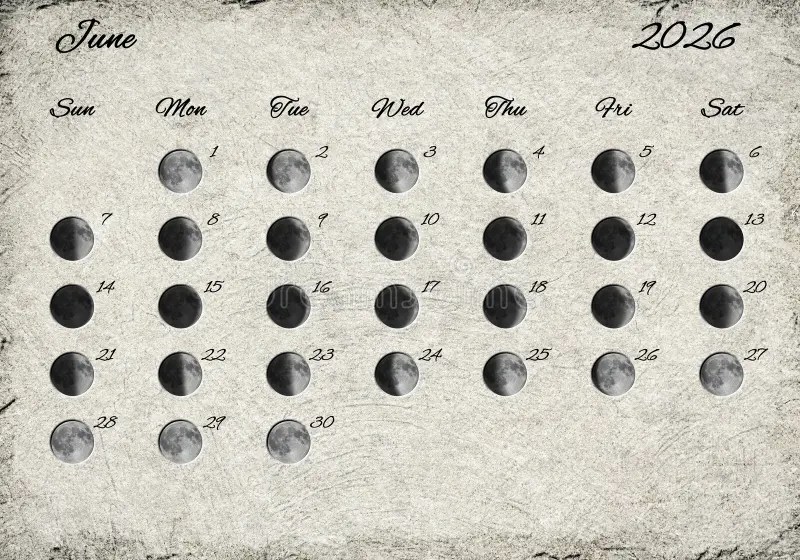
June 27, 2026 Current Southern Hemisphere/Tomorrow’s Northern Hemisphere Moon Phase

You can find more moon phase details on both of the websites used in this post by clicking on each hyperlink.

Source: nineplanets.org

The Moon phase for June 27th, 2026 is a Waxing Gibbous phase. This is the phase where the moon is more than 50% illuminated but has not yet reached 100% illumination (which would be a Full Moon).

In the Northern Hemisphere, the right side will be illuminated, and in the Southern hemisphere it’ll be the left side that is illuminated.

The Waxing Gibbous phase, like all moon phases, will last for just over 7 days. The actual length will vary because of the elliptical shaped orbit of the moon. During this Waxing Gibbous phase the moon will rise in the east in the mid- to late-afternoon and will be high in the eastern sky at sunset.

Assuming it’s a clear night, the Waxing Gibbous moon will then be visible through most of the night before setting just before sunrise.

Fun fact:

Phase Details:

Phase: Waxing Gibbous

Moon age: 12.89 days

Moon illumination: 95.63%

Moon tilt: 121.537°

Moon angle: 0.49

Moon distance: 406,140.53 km

Moon sign: Sagittarius

Source: MoonGiant.com

You can use this link to go forward or backward in time for Moon phase information. If you are curious, you can even find out what phase the Moon was in when you or anyone else was born.

Visit the June 2026 Moon Phases Calendar to see all the daily moon phase for this month.

Today’s Waxing Gibbous Phase

The Waxing Gibbous on June 27 has an illumination of 95%. This is the percentage of the Moon illuminated by the Sun. The illumination is constantly changing and can vary up to 10% a day. On June 27 the Moon is 12.67 days old. This refers to how many days it has been since the last New Moon. It takes 29.53 days for the Moon to orbit the Earth and go through the lunar cycle of all 8 Moon phases.

Phase Details:

Phase: Waxing Gibbous
Illumination: 95%
Moon Age: 12.67 days
Moon Angle: 0.49
Moon Distance: 405,139.69 km
Sun Angle: 0.52
Sun Distance: 152,082,396.03 km

Divination Journal

Lady Carla Beltane picks out the symbol, rune, tarot card, etc., but the information is from the website in the hyperlink or from a book. The description of these is one person’s view on them.

Tarot Card

Source: Tarotx.net

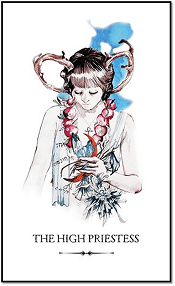
The High Priestess – Major Arcana

Menu of Contents

I. Keyword by The High Priestess Linestrider

II. Meaning of The High Priestess Linestrider

III. The High Priestess in a Tarot spread

IV. Message of The High Priestess Linestrider

V. Corresponding Associations of The High Priestess Linestrider

More The High Priestess Cards from Famous Tarot Decks

1. The Seer Wildwood Tarot

2. The High Priestess Rider Waite Tarot

3. The High Priestess Shadowscapes

Animal Spirit Guide or Helper

Source: UniGuide.com

Male and Female Peacock

Peacock symbolism and meanings include beauty, masculine power, sisterhood, protection, vision, renewal, good luck, and other special qualities. Peacocks are native to India, Asia, and Central Africa. However, people all over the world have been dazzled by peacocks for centuries. Thus, peacocks appear in the mythology and folklore of many diverse cultures. In addition, the peacock spirit animal is an important figure for those who feel a special kinship with these magnificent birds. In this post, you’ll learn about peacock symbols and meanings, the peacock spirit animal, peacock mythology and folklore, and more.

Table of Contents

What does a peacock symbolize?

Detailed Peacock Meanings and Symbols

The Peacock in Mythology and Folklore

Peacock in India and Hinduism

Peacock Symbolism in China

Peacock in Buddhism

African Peacock Folklore

Peacock in Ancient Egypt

Greek Mythology

Peacock Meaning in Christianity and the Bible

Peacocks in the Yazidi Faith: Melek Taus

Peacock Symbolism in Islam

The Peacock in Alchemy and Carl Jung

Peacock Spirit Animal

Peacock Power Animal

Peacock Totem

Peacock Dream Meaning

Peacock Tattoo

Organizations that Protect Peacocks

Rune

Source: TheRuneSite.com

Gar

Sound: “g” as in “gap”
Stands for: Spear (specifically Gungnir – Odin’s Spear)
Casting meaning: The Gar rune is a special one. Unlike the previous 32 runes in the Northumbrian set, Gar does not belong to an ætt. However, this rune is said to be the center point of all the other runes in this set. It is also said to contain all the other runes in itself, making it a powerful and useful rune.

Witch’s Rune

Source: otherworldlyoracle.com

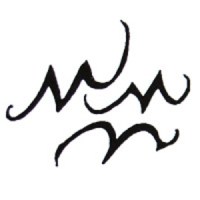
 Flight

Travel, birds, communication, messages from the other side, soaring at great heights, fast moving, news

The Flight Rune brings otherworldly news or reminds us of some form of communication, be it spoken or written. Birds are sacred animals and messengers to the heavens and to the gods.

Ogham

Source: DruidOgham.wordpress.com

Ngetal

Healing, cleaning, cleansing, catharsis, paring down

Tree: Broom (Cytisus spp.)

Letter: Ng

Like when a fever breaks, broom signifies the end of a struggle and the subsequent ability to clear out the junk to make way for a newer, more positive approach. Walking a way from a bad habit or situation can be painful, but not necessarily so. It may also be gradual. Overall, Ngetal is the importance of getting rid of old junk and baggage (this could be actual clutter or psychological baggage, which of course are intimately linked) or it could mean the resolution of action against someone who has wronged you, whether it is forgiveness or cutting and clearing them out of your life. If it is forgiveness, Ngetal suggests it is coming from a genuine place of inner peace. Apologizing does not necessarily make you an apologist.

There is a process of analysis and reflection that eventually distances anger and enables you to feel it without being puppeted by it. Letting go of attachments that aren’t healthy, for instance, an obsession with being liked for the way you look, will help you develop in ways that fulfill your purpose in this life. Ngetal could signify you are beginning to release anxieties about what you have no control over, which will go a long way in healing your spirit.

I Ching

Source: ichingonline.net

Hexagram Sixty – Two/62

Hsiao Kuo / Lying Low

Thunder high on the Mountain, active passivity:
The Superior Person is unsurpassed in his ability to remain small.
In a time for humility, he is supremely modest.
In a time of mourning, he uplifts with somber reverence.
In a time of want, he is resourcefully frugal.

When a bird flies too high, its song is lost.
Rather than push upward now, it is best to remain below.
This will bring surprising good fortune, if you keep to your course.

SITUATION ANALYSIS:

There is no profit to striving here.
To be content with oneself is the greatest success imaginable.
The enlightened person has nothing to prove to himself or others, and thus may always operate from a position of sincerity, with no pretense or posturing.
His humility is guileless simplicity.
His mourning is selfless compassion.
His frugality is an unshakeable faith that he is but a conduit, letting what is needed flow through him to others, with no loss to himself.

Numerology

Source: worldnumerology.com

Sixty – Two

This number is less sensitive. It is an excellent caretaker. A good number for people with careers in the medical field.

See also 26…

Angel Number

Source: informationseries.com

Sixty – Two

In numerology, the “angel number” is a “memorable number / doublet number”, and it is said that the doublet number contains a message from the angel. ..

When you happen to see the same number many times and the number is very impressive, it becomes an “angel number”.

What is the meaning and message of the angel number “62”?

Basic Meaning The basic meaning of angel number “62” is “trust the world” and “believe that small life problems work like miracles”.

Angel number “62” conveys the message that even if life does not go well or is hurt by relationships, it should not be a resentment or disbelief in “the world / human beings (people)”.

Believe that the essence of people is “good” and treat them kindly, even if not all human beings seem right.

Doing so may increase your fortune and miraculously clear up minor life problems.

June 26th Birthday Cancer Horoscope Traits

You can find more birthday trait information from the websites by clicking on each hyperlink. Each is that person’s view point.

Happy, joy filled, and blessed birthday wishes from Lady Carla Beltane with the WOTC Family and Friends!!

May the next year of your life bring you more love, laughter, joy, happiness, enough income to cover what you have to have along with a little leftover for fun! May it bring you everything you want if it is supposed to be and everything you need. May sorrow be unknown, and any negativity be minimal. May the wind always be at your back.

Click here to read more about anyone’s Birthday or Daily or Monthly Horoscopes Source: thehoroscope.co

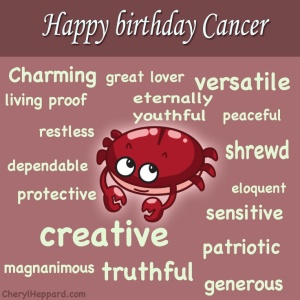
Being a Cancer born on June 26th…

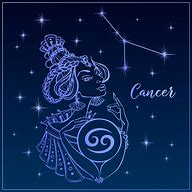
 Astrological symbol: Crab. This symbolizes love for stability, sensibility, moodiness and meticulousness. It influences people born between June 21 and July 22 when the Sun is in Cancer, the fourth zodiac sign.

 The Cancer Constellation is one of the twelve constellations of the zodiac and lies between Gemini to the West and Leo to the East. The brightest star is called beta Cancri. This constellation is quite small spread on an area of only 506 square degrees and covering visible latitudes between +90° and -60°.

 The Crab is named from the Latin Cancer, the zodiac sign for June 26. In Italy it is named Cancro while the Spanish call it Cancer.

 Opposite sign: Capricorn. This means that this sign and Cancer sun sign are in a complementary relation, suggesting caution and flexibility and what one has the other lacks and the other way around.

 Modality: Cardinal. This presents how much loyalty and romance exists in the lives of those born on June 26 and how passionate they are in general.

 Ruling house: The fourth house. This house represents the space of domestic security, familiar environments and ancestry. Cancerians are known to put much emphasis on cherished belongings, having a stable to a home and safety.

 Ruling body: Moon. This planetary ruler symbolizes meditation and nostalgia and also reflects on moodiness. New Moons reflect beginnings while full Moons are the culminations.

 Element: Water. This is the element of the emotional individuals born under the June 26 zodiac sign who reveal a meditative nature but quite endearing to those around. Water mixed with earth models things in different shapes.

 Lucky day: Monday. This novelty day for those born under Cancer is ruled by the Moon thus symbolizes the shadowy side of life and understanding.

 Lucky numbers: 4, 5, 12, 19, 23.

 Motto: “I feel!”

 People born on June 26 have a born sense of cohesion and this is what they crave most around them. They are very conscious and artistic and so they need to be surrounded by people who can protect them and offer the right setting for them to grow. You can most often find them in the convenience of their own homes, where they seem to be spending most time but they also love seeing how others live and learning their stories. However, they dislike confrontation very much and can’t really accept judgment. They feel most satisfied in familiar settings.

 Positive Traits: These natives are dependable and kind and they are usually like sponges, they attract good vibes and people who are similar to them. They are protective being, especially with those less fortunate then themselves. They are meticulous and so detail oriented that they sometimes have trouble retrieving the bigger picture, but they do find it in the end because they are also very resourceful.

 Negative Traits: One of the things Cancer needs to learn is to stop sidestepping obstacles and start dealing with them the mature and brave way. Those born on this day are manipulative, moody and untidy. They forgive hard but are in no way malicious to those that have done wrong to them as they believe that bad things come back at you. They sometimes dwell on imaginary insults and comply to this state of insecurity and low self-esteem.

Love and Compatibility: Lovers born on June 26 are considered to be the most sympathetic and protective of all lovers. Cancer puts the greatest value in life on home stability and family wellbeing as one of the most important pursuits in the life of a Cancer is finding their soul mate and forming a family of their own. You can conquer the heart of Cancer if you are an enthusiastic and loyal lover whom can offer them unconditional support and stability.

 Intuitive and charming it is very difficult for someone to win their heart if they don’t show the slightest interest. They don’t settle for less than what they consider it’s best for them. Otherwise they are aware of their attractiveness and this leads them to a tumultuous love life, falling in and out of love. They are friendly but reserved and their attitude won’t bring many people close to them. They are persistent and courageous in a practical way so they will be a great part of their family team once they decide to settle for someone. They are most compatible with those born on 1st, 4th, 8th, 10th, 13th, 17th, 19th, 22th, 26th, 28th and 31st.

 June 26 Zodiac people are most attached to the other two water signs: Scorpio and Pisces as they tend to share the same vision of life. In love, Cancer is in a constant search for someone capable of unconditional love and understanding and the best to offer them this is the native in Virgo. The least compatible with people born on June 26 are those born under Aquarius. As for the rest of compatibilities between the other star signs and Cancer, you know what they say, stars predispose but people dispose.

Lucky Color: The lucky color for those born under the June 26 is represented by silver.

Silver suggests mystery but also light, depending whether it is closer to black or white. This zodiac color should be used for objects that are sitting in places where these natives spend most of their time.

People having silver as sign color have creative and hard working spirits that usually get them the spiritual and fulfilling life they aim for. They know how to act and what to say at any time and in any situation but they tend to remain reserved and focused on their own lives.

Other colors indicated for Cancer are violet, blue and pastels.

Representative Birthstone: The birthstone for Cancer natives born with the June 26 is the elegant Pearl.

Pearl is a precious material that denotes purity and sensitivity. This zodiac birthstone could be used in accessories and bracelets.

This gemstone is said to bring clarity of mind and confidence to the wearer. The Pearl it is also called “the tear drop of the Moon”. Pearls have been used as an adornment for centuries. This gemstone comes in white, grey to black shades.

Another gemstone considered influential for Cancer natives is Moonstone. It suggests cleanness and sensibility.

Characteristic Flower: The flower used in astrology for those with June 26 is Acanthus.

Acanthus is a known symbol of preciousness and nourishment. This zodiac flower is advised to be used for gifts and decorations.

This is a precious flower, with purple and white petals oriented towards the sky.

Other plants indicated for Cancer are Water Lilies.

Symbolic Metal: The lucky metal for those born under the June 26 is Silver.

Silver is a metal that suggests sparkles and mystery. This zodiac metal should be used in bracelets and other accessories.

This precious metal is said to sooth and orients the wearer towards introspection and self development. Silver is also malleable and precious and can only bring good spirit to anyone wearing it.

Another metal considered beneficial for Cancer natives is Platinum.

Characteristics: June 26 Zodiac belongs to the first decan of CANCER (June 21-July 2). This decan is influenced by the Moon. Those born under this influence combine the strong affectivity and loyalty of Cancer with the emotional and nurturing spirit of the Moon. This decan is known to magnify all the positive and negative characteristics of the Cancer zodiac sign.

 Being born on the 26th day of the month shows efficiency, dependability, perseverance and adaptability. The numerology for June 26 is 8. This number reveals ambition and great power but also an embrace of the spiritual side, later in life. Those Cancer associated with number eight pragmatic and analytical doers in all life matters. June is the sixth month of the year, bringing joviality and wholehearted action. Those born in June are talkative and courageous. June 26 Zodiac people are creative and determined. June has as representative symbols the Rose and Oak as plants, Alexandrite and Moonstone as gemstones and the goddess of family.

Statistics Say: June 26 is the 177th day of the year, or the 178th day in leap years, in the Gregorian Calendar and there are 188 days left until the end of the year. The twenty sixth day of summer, this is also the United Nations International Day in Support of Victims of Torture and the International Day against Drug Abuse and Illicit Trafficking as recognized by the United Nations.

 Cancer as occurrence in birth signs is considered to be the sixth most popular. An even number sign, this exudes feminine symbolism and is considered to be of negative polarity and moody energy. This characterizes introvert natives who are discreet and uncompromising. An archetype used to describe this sign is the Psychologist. It seems there are many science people and executives born under Cancer. Famous people born on June 26 under the Cancer zodiac sign: Eleanor Parker, Sean Hayes, Ariana Grande and Derek Jeter.

Click here to read more about traits for anyone’s birthday horoscope Source: tarot.com

If you were born on June 26

June 26 Cancer at Their Best: Loving, strong, popular

June 26 Cancer at Their Worst: Reserved, gullible, cautious

What to Wear: Khaki shorts, patio dresses and flip-flops. This constantly comfy creature may even show up in a favorite beach cover-up or Hawaiian shirt.

What to Eat: Totally simple, homemade fair — anything from macaroni and cheese to hamburgers and hot dogs, accompanied by Mom’s secret cole slaw and potato salad as sides.

Who to Invite: If you don’t think a normal adult would want to extend invites to an eclectic group of slightly weird family members, Cancer might surprise you.

Where to Go: Home. Your house, or better yet — theirs. A party where all the guests yell “Surprise!“ would produce tears of total joy, even if it wasn’t unexpected.

JUNE 26 Birthday Horoscope reports that you can be tenacious, shrewd and intuitive. You are likely to have a good memory and enjoy talking to people. You come across as a smart person.

Generally, you are compassionate and sensitive to the needs of others often and put someone else’s needs before your own. The helpful and domesticated nature of a Cancer individual is a natural quality for the nurturer.

The negative qualities endured by the Cancerian, according to the June 26th birthday personality traits and characteristics is that you can be that you are selfish, possessive and manipulative. At the same time, your feelings are easily hurt.

Let it go… it was just karma, okay. Without certain needs, you are likely to be grumpy or moody. Those born on this day try hard to cover weaknesses and letdown.

According to the June 26 horoscope, you usually are not the one to break the ice when it comes to romancing. The fear of being rejected is just too much. This behavior finds you isolated and feeling blue.

When you do make a love connection, you occasionally lose yourself in the other person, therefore; you may become attached to someone in an unhealthy way. Still, in the bedroom, you are the experienced driver. You believe in giving pleasure before receiving it. Your gratification is subject to an intimate and secure union.

The June 26 birthday astrology analysis predicts that you may confuse emotional longing and love. This conflict can harm the relationship because you will eventually feel that your lover is not giving you enough attention.

Placing demands on your partner will surely not make a great impression. When you feel that you are losing control, you dig deeper, and you end up drawing out the break up, as you do not deal with rejection well at all.

There is no doubt that Cancer birthday personalities born on June 26, make responsible bankers. You must be organized and disciplined to handle money effectively, and you own those qualities. Personally, you have the smarts to avoid spending frivolously and feel that you must save to meet the unexpected head-on.

If today June 26 is your birthday, you tend to want compensation based on your ability as opposed to your physical attributes. As a professional, your strong points are that you have a cool attitude, you enjoy a challenge and people can trust you.

Financial security is high on your list of priorities according to the June 26 zodiac meanings. You typically want the best. In a working environment, you want to have quality furnishings with touches of your family and home life.

Other professions that may tickle your fancy could be in the food industry or domestic jobs. According to the June 26 Saturn rules this day analysis, you love the water, and you would consider having an office overlooking a boat pier as an additional benefit. You would do well to counsel maybe as a social worker or psychotherapist.

Cancer people born on June 26 can be egotistical, domineering and controlling. However, you become a timid individual in the face of rejection. You could place certain expectations on your loved ones that are just too high.

The Cancer horoscope analysis for June 26 birthday suggests that maybe you are confused about what love is. Those born on this day are crabs that want the very best out of life and all the extras that come with living the life of a successful banker or therapist.

Famous Celebrities Born On July 26

This Day That Year – June 26 In History

1498 – Designed a tool for cleaning your teeth and gums
1894 – Karl Benz owns the rights to a gas-operated vehicle
1900 – Research was done by Dr. Walter Reed to cure Yellow Fever
1952 – In South Africa, Nelson Mandela and 51 other people break curfew

June 26 Karka Rashi (Vedic Moon Sign)

June 26 Chinese Zodiac GOAT

Birthday Planet

Your ruling planet is Moon.

Moon stands for our immediate reactions, habits, feelings and nurturing.

Birthday Symbols

The Crab Is The Symbol For The Cancer Zodiac Sign

Birthday Tarot Card

Your Birthday Tarot Card is Strength. This card shows your inner courage, control, motivation, and confidence. The Minor Arcana cards are Two of Cups and Queen of Cups.

Birthday Zodiac Compatibility

You are most compatible with people born under Zodiac Sign Pisces: This relationship between the two water signs is excellent and has excellent compatibility.
You are not compatible with people born under Zodiac Sign Libra: A relationship between the Crab and the Balance zodiac signs is complicated.

See Also:

Lucky Numbers

Number 5 – This number stands for choices, freedom, experience, learning, and companionship.
Number 8 – This number symbolizes Karma, success, ambition, material freedom, judgment, and perfection.

Read about: Birthday Numerology

Lucky Colors

White: This is a peaceful color that symbolizes simplicity, faith, purity and new beginnings.
Burgundy: This color stands for seriousness, elegance, power, wealth and motivation.

Lucky Days

Monday – Planet Moon rules this weekday. It symbolizes a day of remembering your roots and understanding your moods.
Saturday – Saturn rules this day. It stands for a day of introspection of your achievements, future goals, failures and important decisions.

Birthstone Pearl

Pearl is an astral gemstone that symbolizes innocence, purity, fidelity, and loyalty.

Ideal Zodiac Birthday Gifts

Homemade picnic lunch for the Cancer man and a lacy white nightgown for the woman. The June 26 birthday horoscope predicts that you love gifts that are made by hand.