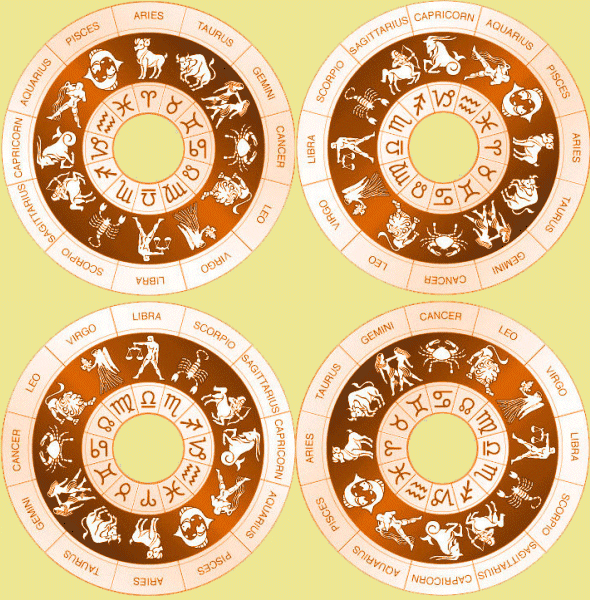
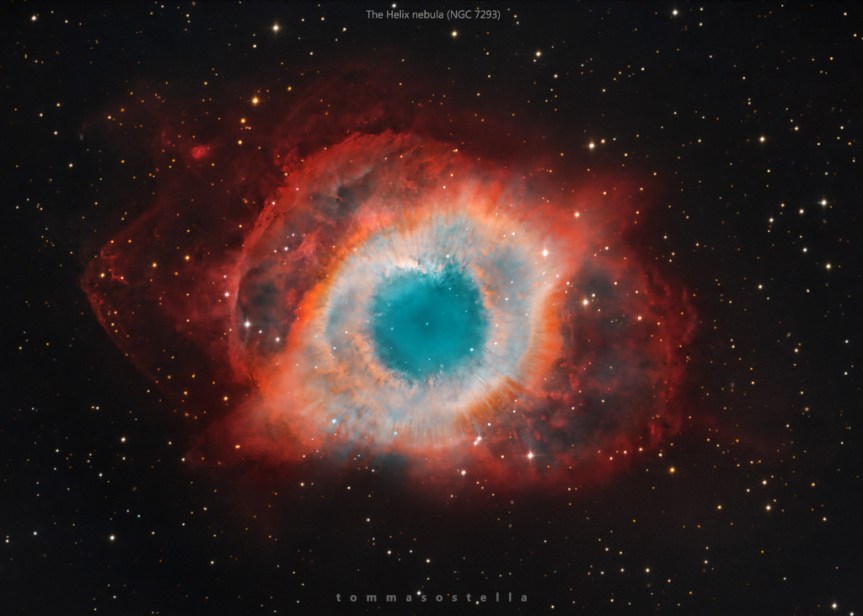
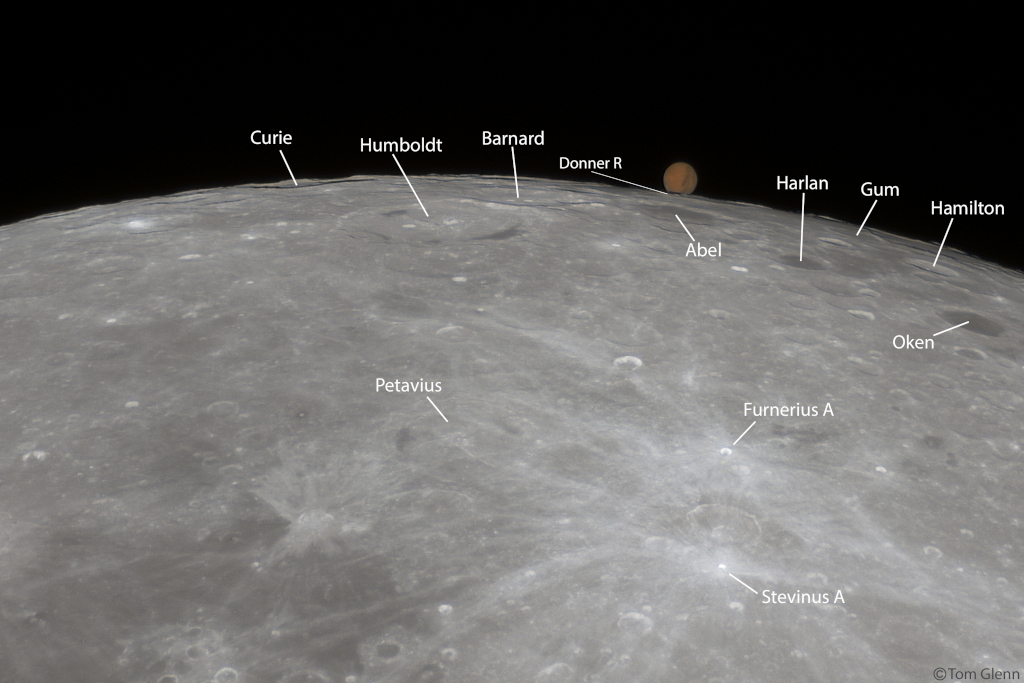
It figures that ‘National Daylight Appreciation Day’ would fall on the same day as the Summer Solstice, the one day of the year when the sun is at its zenith. This is also considered a magical night when maintaining your own blaze can bring plenty of blessings to your household. Many years ago, huge communal solstice fires were lit to celebrate the lingering light of the day. On this night you can light up your own life by literally burning the midnight oil or an orange or yellow candle. Burn until the clock strikes twelve in order to get the most of the magic. This is also considered a fine night for mining mystical messages in your dreams. One way to do that is to pick nine flowers and place them under your pillow. Ancient lore also says that you can sleep with mistletoe under your head if you want your sweet dreams come true. You will still be able to receive important messages on this night even without flowers or herbs, so keep a pad and pen handy and then sleep perchance to dream on this midsummer night!
New Moon Report for June 20 – Sun in Cancer

Wednesday, June 20, 4:09 pm PDT, 7:09 pm EDT
The Sun sidles into sensitive Cancer where it spurs a strong desire for security. This solar event is the Summer Solstice (Winter Solstice below the equator), marking a change of seasons as well as signs. There is a sentimental side to Cancer with a hunger for safety and an inclination to seek familiar people, places and experiences. This deep yearning to reconnect with roots is meant to provide emotional fuel to nourish us now and supply sustenance for the future. However, stressful solar aspects to disruptive Pluto and Uranus on June 29 require us to tear down old structures. Eliminating unsupportive habits is required before we can think about settling into a comfort zone.
The WOTC’s Spell of the Day for June 19: Flame Talisman Spell
Flame Talisman Spell
(To draw energy and strength from the sun)
Purpose: To gain energy that you can carry right through to the winter solstice.
Background: Litha, or the summer solstice, celebrates the sun at the height of its powers. On the longest day, we honor the strength of the sun just before the days begin to shorten again. It is generally well known that the sun has some positive physiological effects on humans: at this time of year we are generally more outgoing, happier, and healthier. This spell enables you to capture some of that sun power to carry with you…
You Will Need:
One red candle, 6-8 inches long
One white candle 6-8 inches long
Matches or a lighter
One sharp iron nail
One plain copper disk with a hole through it
One 24 inch length of fine cord
One tea-light candle in a jar
Timing:
Cast this spell at Litha—the Summer Solstice
Casting the Spell:
As part of your Litha celebrations, work the first part of this spell indoors in a properly cast circle prior to going out overnight to await the Litha sunrise.
1. Light both candles.
2. Using the nail, inscribe on the disk a circle divided by eight lines, meeting in the center and overlapping at the edge.
3. Hold the disk in your left hand, the cover it with your right and close your eyes. Focus on the after image of the candle flames behind your eyelids. Visualize it moving through your body to your solar plexus and through hour hands into the disk.
4. Thread the pendant, and take it with you to greet the sunrise.
5. Place it on a rock next to the tea-light candle which should be lit as dawn breaks. As sunlight strikes the pendant, raise your arms and say: “Ignite the sacred Fire within”.
6. Wear it until the winter solstice.
Reference:
2012: End of the world … or a cosmic call to action?
The Astrology of 2012
Rick Levine on the topics of astrology, 2012
The end of the world is near! That’s the word on the street, anyway, and the media frenzy has officially begun, projecting fear that the end of the Mayan calendar on December 21, 2012 really is the end of days.
The good news is that the world will not really end in 2012, although you don’t need to be an astrologer to see how quickly things are changing. Civilization as we know it seems to be in a precarious situation, with growing political unrest and financial stresses warning us that we are repeating epic mistakes from our own cultural history. For example, we have just witnessed the sharpest economic downturn since the Great Depression. Differences in political ideologies and spiritual beliefs continue to fuel increasingly destructive wars. Environmental threats make our water and food supplies more and more scarce; meanwhile, we are powering our world with a diminishing reserve of oil and others resources. So it’s no surprise that so many people — experts and laymen alike — are predicting that the fabric of our entire society is dangerously at risk.
But if you look to the skies, you’ll see there’s nothing to fear on that notorious day in 2012.
Astrologers watch the cycles of the Sun, Moon and planets to understand the changing nature of time and to put these shifts into historical perspective. For example, we had a dose of culture-wide panic at the threshold of this century. The start of the year 2000 — or “Y2K” — was as an apocalyptic date; some predicted that it would be the beginning of the “end times.” But astrologers could see then that there were no planetary alignments significant enough to warrant this kind of fear.
2012 is different — there are significant astrological factors that indicate these are truly significant times. But let’s clear one thing up right away: there won’t be a cataclysmic event on December 21, 2012. It’s been claimed that on this first day of winter, the Sun will line up perfectly with the center of the Milky Way Galaxy and that this will confirm the ancient Mayan prophecies. In other words, many claim that the Sun’s change of position will mark the end of time. But there is a scientific problem with this reasoning: the Sun’s alignment to the galactic center on Winter Solstice moves at the rate of one degree every 72 years! Therefore, this cosmic event is so slow-moving that it lasts more than a decade.
As astrologers track the cycles of planets, they pay special attention to the lunation cycle, which is the monthly flow of New Moons and Full Moons. This is how they are able predict the impact these movements will have on the personal and emotional cycles of our daily lives. Meanwhile, astrologers also track the activities of the slower-moving outer planets (the ones with the longest orbits), which create their own rhythms and are more closely related to large historical cycles.
For example, Uranus symbolizes sudden changes that release explosive energy, which is why astrologers refer to it as “The Great Awakener.” Pluto symbolizes total metamorphosis. The deep transformation that’s associated with mysterious Pluto is dramatic and complete, like a caterpillar evolving into a butterfly, which is why the profound cultural shifts of the 1960s corresponded with a conjunction between surprising Uranus and passionate Pluto in 1965-1966.
In the summer of 2012, these two planetary harbingers of change will come into a hard 90-degree alignment — their first since the mid-1960s. This dynamic angle between lightning-like Uranus and intense Pluto recurs seven times from June 24, 2012 through March 16, 2015. This is the period of upheaval we should be looking at, rather than focusing on a single day in 2012.
But there is another player that is involved in this cycle: Karmic Saturn, known in Astrology as “the Tester,” entered the picture in the late summer of 2008 and was exactly opposite Uranus on Election Day when Barack Obama was elected President. Saturn symbolizes the status quo. Saturn is traditional, conservative and fear-based, and it punishes those who do not follow the rules. On the other hand, Uranus symbolizes the new. Uranus is progressive and radical, and it anticipates the future with excitement. The Saturn-Uranus opposition is a struggle between the old and the new, and this phase of political confrontation will continue until Saturn and Uranus’ final contact next summer.
From an astrological perspective, this means we don’t have to wait until 2012 for the action to begin, because we are already in a time of profound change, not unlike the 1960s. Now, however, we communicate in ways that are far more revolutionary, due to our constant interconnection via cell phone, email, Facebook, MySpace, Twitter and numerous other social networks. There are new political opportunities for disenfranchised people all over the world to connect with one another, which may explain Barack Obama’s meteoric rise to the Whitehouse over the fearful cries of the old-school American political machine. It is this factor — our ability to communicate more quickly and openly — that will prevent the end of the world.
Astrology is not about predicting fated events; it’s about being aware of cosmic movements so we can get our timing right to make positive changes. The Astrology of 2012 is not about announcing the end of the world. Rather, it’s a call to action. Each and every one of us has a job to do, because as the great psychologist Carl Jung said, “The salvation of the world depends upon the salvation of the individuals living in it.”
Some of us may play larger roles in the current changes by getting involved in community, national or global politics. But each of us adds to the total picture when we live our individual lives responsibly. Astrology reminds us that there is no time to waste — we are each an agent of change and each of us can impact the big picture by replacing doubt with courage, and by conquering fear with love.
In other words, this is truly the time to “think globally and act locally.”
A Midsummer’s Celebration
by Mike Nichols
The young maid stole through the cottage door, And blushed as she sought the Plant of pow’r; — “Thou silver glow-worm, O lend me thy light, I must gather the mystic St. John’s wort tonight, The wonderful herb, whose leaf will decide If the coming year shall make me a bride.”
In addition to the four great festivals of the Pagan Celtic year, there are four lesser holidays as well: the two solstices, and the two equinoxes. In folklore, these are referred to as the four “quarter days” of the year, and modern Witches call them the four “Lesser Sabbats”, or the four “Low Holidays”. The summer solstice is one of them.
Technically, a solstice is an astronomical point and, due to the calendar creep of the leap-year cycle, the date may vary by a few days depending on the year. The summer solstice occurs when the sun reaches the Tropic of Cancer, and we experience the longest day and the shortest night of the year. Astrologers know this as the date on which the sun enters the sign of Cancer.
However, since most European peasants were not accomplished at reading an ephemeris or did not live close enough to Salisbury Plain to trot over to Stonehenge and sight down its main avenue, they celebrated the event on a fixed calendar date, June 24. The slight forward displacement of the traditional date is the result of multitudinous calendrical changes down through the ages. It is analogous to the winter solstice celebration, which is astronomically on or about December 21, but is celebrated on the traditional date of December 25, Yule, later adopted by the Christians.
Again, it must be remembered that the Celts reckoned their days from sundown to sundown, so the June 24 festivities actually begin on the previous sundown (our June 23). This was the date of Shakespeare’s A Midsummer Night’s Dream. Which brings up another point: our modern calendars are quite misguided in suggesting that ‘summer begins’ on the solstice. According to the old folk calendar, summer begins on May Day and ends on Lammas (August 1), with the summer solstice, midway between the two, marking midsummer. This makes more logical sense than suggesting that summer begins on the day when the sun’s power begins to wane and the days grow shorter.
Although our Pagan ancestors probably preferred June 24 (and indeed most European folk festivals today use this date), the sensibility of modern Witches seems to prefer the actual solstice point, beginning the celebration on its eve, or the sunset immediately preceding the solstice point. Again, it gives modern Pagans a range of dates to choose from with, hopefully, a weekend embedded in it.
Just as the Pagan Midwinter celebration of Yule was adopted by Christians as “Christmas” (December 25), so too the Pagan Midsummer celebration was adopted by them as the Feast of John the Baptist (June 24). Occurring 180 degrees apart on the wheel of the year, the Midwinter celebration commemorates the birth of Jesus, while the Midsummer celebration commemorates the birth of John, the prophet who was born six months before Jesus in order to announce his arrival.
Although modern Witches often refer to the holiday by the rather generic name of “Midsummer’s Eve”, it is more probable that our Pagan ancestors of a few hundred years ago actually used the Christian name for the holiday, “St. John’s Eve”. This is evident from the wealth of folklore that surrounds the summer solstice (i.e., that it is a night especially sacred to the faerie folk), but which is inevitably ascribed to “St. John’s Eve”, with no mention of the sun’s position. It could also be argued that a coven’s claim to antiquity might be judged by what name it gives the holidays. (Incidentally, the name ‘Litha’ for the holiday is a modern usage, possibly based on a Saxon word that means the opposite of Yule. Still, there is little historical justification for its use in this context.) But weren’t our Pagan ancestors offended by the use of the name of a Christian saint for a pre-Christian holiday?
Well, to begin with, their theological sensibilities may not have been as finely honed as our own. But secondly and more mportantly, St. John himself was often seen as a rather Pagan figure. He was, after all, called “the Oak King”. His connection to the wilderness (from whence “the voice cried out”) was often emphasized by the rustic nature of his shrines. Many statues show him as a horned figure (as is also the case with Moses). Christian iconographers mumble embarrassed explanations about “horns of light”, while modern Pagans giggle and happily refer to such statues as “Pan the Baptist”. And to clench matters, many depictions of John actually show him with the lower torso of a satyr, cloven hooves and all! Obviously, this kind of John the Baptist is more properly a Jack in the Green! Also obvious is that behind the medieval conception of St. John lies a distant, shadowy Pagan Deity, perhaps the archetypal Wild Man of the wood, whose face stares down at us through the foliate masks that adorn so much church architecture. Thus, medieval Pagans may have had fewer problems adapting than we might suppose.
In England, it was the ancient custom on St. John’s Eve to light large bonfires after sundown, which served the double purpose of providing light to the revelers and warding off evil spirits. This was known as “setting the watch”. People often jumped through the fires for good luck. In addition to these fires, the streets were lined with lanterns, and people carried cressets (pivoted lanterns atop poles) as they wandered from one bonfire to another. These wandering, garland-bedecked bands were called a “marching watch”. Often they were attended by morris dancers, and traditional players dressed as a unicorn, a dragon, and six hobbyhorse riders. Just as May Day was a time to renew the boundary of one’s own property, so Midsummer’s Eve was a time to ward the boundary of the city.
Customs surrounding St. John’s Eve are many and varied. At the very least, most young folk plan to stay up throughout the whole of this shortest night. Certain courageous souls might spend the night keeping watch in the center of a circle of standing stones. To do so would certainly result in either death, madness, or (hopefully) the power of inspiration to become a great poet or bard. (This is, by the way, identical to certain incidents in the first branch of The Mabinogion.) This was also the night when the serpents of the island would roll themselves into a hissing, writhing ball in order to engender the “glain”, also called the “serpent’s egg”, “snake stone”, or “Druid’s egg”. Anyone in possession of this hard glass bubble would wield incredible magical powers. Even Merlyn himself (accompanied by his black dog) went in search of it, according to one ancient Welsh story.
Snakes were not the only creatures active on Midsummer’s Eve. According to British faery lore, this night was second only to Halloween for its importance to the Wee Folk, who especially enjoyed a ridling on such a fine summer’s night. In order to see them, you had only to gather fern seed at the stroke of midnight and rub it onto your eyelids. But be sure to carry a little bit of rue in your pocket, or you might well be “pixie-led”. Or, failing the rue, you might simply turn your jacket inside out, which should keep you from harm’s way. But if even this fails, you must seek out one of the “ley lines”, the old straight tracks, and stay upon it to your destination. This will keep you safe from any malevolent power, as will crossing a stream of “living” (running) water.
Other customs included decking the house (especially over the front door) with birch, fennel, St. John’s wort, orpin, and white lilies. Five plants were thought to have special magical properties on this night: rue, roses, St. John’s wort, vervain, and trefoil. Indeed, Midsummer’s Eve in Spain is called the “Night of the Verbena (Vervain)”. St. John’s wort was especially honored by young maidens who picked it in the hopes of divining a future lover.
And the glow-worm came With its silvery flame, And sparkled and shone Through the night of St. John, And soon has the young maid her love-knot tied.
There are also many mythical associations with the summer solstice, not the least of which concerns the seasonal life of the God of the sun. Inasmuch as I believe that I have recently discovered certain associations and correspondences not hitherto realized, I have elected to treat this subject in some depth in my ‘Death of Llew’ essay. Suffice it to say here, that I disagree with the generally accepted idea that the Sun God meets his death at the summer solstice. I believe there is good reason to see the Sun God at his zenith—his peak of power—on this day, and that his death at the hands of his rival would not occur for another quarter of a year. Material drawn from the Welsh mythos seems to support this thesis. In Irish mythology, midsummer is the occasion of the first battle between the Fir Bolgs and the Tuatha De Danaan.
Altogether, Midsummer is a favorite holiday for many Witches in that it is so hospitable to outdoor celebrations. The warm summer night seems to invite it. And if the celebrants are not, in fact, skyclad, then you may be fairly certain that the long ritual robes of winter have yielded place to short, tunic-style apparel. As with the longer gowns, tradition dictates that one should wear nothing underneath—the next best thing to skyclad, to be sure. (Incidentally, now you know the real answer to the old Scottish joke, “What is worn beneath the kilt?”)
The two chief icons of the holiday are the spear (symbol of the Sun God in his glory) and the summer cauldron (symbol of the Goddess in her bounty). The precise meaning of these two symbols, which I believe I have recently discovered, will be explored in the essay on the death of Llew. But it is interesting to note here that modern Witches often use these same symbols in their Midsummer rituals. And one occasionally hears the alternative consecration formula, “As the spear is to the male, so the cauldron is to the female.” With these mythic associations, it is no wonder that Midsummer is such a joyous and magical occasion!
Document Copyright © 1983 – 2009 by Mike Nichols. Text editing courtesy of Acorn Guild Press. Website redesign by Bengalhome Internet Services, © 2009
The Wicca Book of Days for Feb. 12 – Sunny Sowelu
The Wicca Book of Days for February 12th
Sunny Sowelu
Today marks the start of the runic half-month of Sowelu (which may also be spelled Sowilo or Sowulo, and is sometimes called Sigil), whose last day will fall on February 26. This rune represents the sun, which has been growing ever brighter since December’s winter solstice, and has been shining a little longer each day, too. Scholars of the runes generally link Sowelu with Baldur, the “Shining One,” or the “good God” of Norse myth, who was murdered through the trickery of Loki, Odin’s foster brother . Symbolically, Sowelu can be interpreted as denoting such positive, dynamic concepts as enlightenment, strength of will, soar energy and victory.
“Here Comes The Sun!”
If you have been feeling a little down turn to clary sage to lift your spirits. Either take it in the form of an herbal supplement or tea, or heat 5 to 10 drops of the aromatherapy oil in a vaporizer.
Spellcasting In Natural Magick
Happy & Blessed Imbolc, dear friends!
Imbolc (also Imbolg), or St Brigid’s Day (Scots Gaelic Là Fhèill Brìghde, Irish Lá Fhéile Bríde, the feast day of St. Brigid), is an Irish festival marking the beginning of spring. Most commonly it is celebrated on 1 or 2 February (or 12 February, according to the Old Calendar) in the northern hemisphere and 1 August in the southern hemisphere. These dates fall approximately halfway between the Winter Solstice and the Spring Equinox.
The festival was observed in Gaelic Ireland during the Middle Ages. Reference to Imbolc is made in Irish mythology, in the Tochmarc Emire of the Ulster Cycle. Imbolc was one of the four cross-quarter days referred to in Irish mythology, the others being Beltane, Lughnasadh and Samhain. It has been suggested that it was originally a pagan festival associated with the goddess Brigid, who should not be confused with St Brigit of Kildare.
In the modern Irish Calendar, Imbolc is variously known as the Feast of Saint Brigid (Secondary Patron of Ireland), Lá Fhéile Bríde, and Lá Feabhra — the first day of Spring. Christians may call the day “Candlemas”. Long celebrated as “the feast of the Purification of the Virgin”.
One folk tradition that continues in both Christian and Pagan homes on St. Brigid’s Day (or Imbolc) is that of the Brigid’s Bed. The girls and young, unmarried, women of the household or village create a corn dolly to represent Brigid, called the Brideog (“little Brigid” or “young Brigid”), adorning it with ribbons and baubles like shells or stones. They make a bed for the Brideog to lie in. On St. Brigid’s Eve (January 31), the girls and young women gather together in one house to stay up all night with the Brideog, and are later visited by all the young men of the community who must ask permission to enter the home, and then treat them and the corn dolly with respect.
Brigid is said to walk the earth on Imbolc eve. Before going to bed, each member of the household may leave a piece of clothing or strip of cloth outside for Brigid to bless. The head of the household will smother (or “smoor”) the fire and rake the ashes smooth. In the morning, they look for some kind of mark on the ashes, a sign that Brigid has passed that way in the night or morning. The clothes or strips of cloth are brought inside, and believed to now have powers of healing and protection.
On the following day, the girls carry the Brideog through the village or neighborhood, from house to house, where this representation of the Saint/Goddess is welcomed with great honor. Adult women — those who are married or who run a household — stay home to welcome the Brigid procession, perhaps with an offering of coins or a snack. Since Brigid represents the light half of the year, and the power that will bring people from the dark season of winter into spring, her presence is very important at this time of year.
Neopagans of diverse traditions observe this holiday in a variety of ways. As forms of Neopaganism can be quite different and have very different origins, these representations can vary considerably despite the shared name. Some celebrate in a manner as close as possible to how the Ancient Celts are believed to have observed the festival, as well as how these customs have been maintained in the living Celtic cultures. Other types of Neopagans observe the holiday with rituals taken from numerous other unrelated sources, Celtic cultures being only one of the sources used.
Imbolc is usually celebrated by modern Pagans on February 1 or 2nd in the northern hemisphere, and August 1 or 2nd in the southern hemisphere. Some Neopagans time this celebration to the solar midpoint between the winter solstice and spring equinox, which now falls later in the first week or two of February. Since the Celtic year was based on both lunar and solar cycles, it is most likely that the holiday would be celebrated on the full moon nearest the midpoint between the winter solstice and vernal equinox, or when the primroses, dandelions, or other spring flowers rise up through the snow, or when the sun aligned with the passage tombs among the pre-Celtic megaliths.
Eyes of the Wolf Spell (Wolf Moon)
Eyes of the Wolf Spell
Howling Wolf Tree Dream Meditation (Wolf Moon)
Howling Wolf Tree Dream Meditation
Sense yourself becoming a large tree that has grown for many years. Every part of you emanates with energy as you reach toward the light with every part of your being. You are a connecting point between this world and all worlds. As Lucan said in AD 60 when addressing the Druids: “To you alone it is given to know the truth about the Gods and Deities of the sky. The innermost groves of far-off forests are your abode.”
Imbolc Meditation
Submitted By: Cogar niMhorrighan
Here is an original meditation for the Imbolc festival (can be used at
any time):
It is a lovely spring day. The air is fresh with the fragrance of green
plants preparing to bloom. The sun’s radiance bathes you in comfort,
perhaps the first warmth you have felt in many months. You sense that
you are in Ireland, because it is green and everything feels clean and
alive. The landscape is timeless and magical. In the distance, you
hear birds singing as they welcome the unexpected warmth of the day.
Inside you, happiness begins to bubble and dance, very quietly at first.
It feels almost like anticipation, but it puts a smile on your lips as
well.
You are walking up a slight hill, not steep enough to tire you but just
enough to sense that something wonderful can be seen from the top. As
you walk, the grass is already tall enough to brush against your lower
legs. You know you are in a wild place where Nature flourishes.
Towards the top of the hill, you see a dolmen – two standing stones and
a large stone across the tops of them, like an arch. You wonder why you
didn’t see this dolmen sooner. It is as if it appeared when you were
just twenty feet from it. Does it mean something? Is it real? You do
not pause to wonder, but keep walking towards it.
As you walk between the stones, you notice carvings and symbols on the
sides of the dolmen. Some of them are lines and hash-marks, which you
suspect are an Ogham message. Others are just symbols, which you will
return to look at, another day.
As you pass through the dolmen, you feel an invisible curtain brush over
you gently. In the space of a blink, it is a clear, crisp night. The
stars are above you, brilliant and twinkling. You know the moon is
behind you, but you do not notice its light because there is a sparkling
fire just ahead. There is no breeze, but the evening is chilly as you
would expect when Winter is still in the air.
You pull your clothing more closely around you, as you continue up the
hill. You are eager to reach the warmth of the fire, which is bigger
than you thought at first. In fact, it is a bonfire and you realize you
have arrived at Imbolc.
You run the last few steps to stand next to the fire pushing your hands
towards it, to capture the heat from a safe distance. Tall yellow and
white flames seem to warm you inside and out. You pause to look at the
sky again, and savor the moment.
Looking across the flames, you suddenly realize that you are not alone.
You can see the top of someone’s head, and you aren’t certain if you
have intruded on a private ceremony. Slowly, you walk around the fire,
and your companion stands up from the rock she was sitting upon. She is
a tall, strong woman, with long hair so light you cannot tell if it is
blonde or white. She looks like the Queen of Pentacles in a way, with
an ageless sense of knowing and accomplishment. She wears a long gown
and an embroidered cape, yet you can see her bare feet peeking out from
under her skirt. You know she is someone noble yet without artifice.
Without a word, she stretches out her hands to take yours in welcome.
You know, as if you’ve known her all your life, that this is Brighid.
This is a special and sacred moment.
She welcomes you to her fire, which will burn tonight and every night,
for Imbolc is her festival and her fire is never extinguished.
You sit down next to her, on large flat rocks that are warm from the
fire, and very comfortable. She begins to explain to you the meaning of
Imbolc, and its promise of a fresh beginning–not just to the plants and
animals, but also to everyone on Earth who chooses to permit Imbolc into
their lives.
She helps you to remember your past dreams, especially the ones from
your childhood which began, “When I grow up…” And as you recall these
fantasies and goals, you realize how many of them were left behind with
your childhood, yet how many are still alive in what you do each day,
today. This is not a sad realization as much as it is a recognition
that you can start afresh now. Every one of those dreams is still with
you.
Brighid reaches to her side and picks up a fallen twig from a nearby yew
tree. It looks like any other twig, in the firelight. However, when
Brighid places it into the fire, the bark on it sparks and flames like a
sparkler, giving enough heat energy to set the twig burning brightly.
Without saying anything, Brighid is showing you how even a small spark
will set alight your oldest and most neglected dreams.
The lesson was simple, but vital. Now it is time to return to your own
world. As you stand, Brighid offers you a cup of clear water, which you
sip. The sensation in your mouth is unique. There is a kind of
life-giving energy, that is Spring itself. You take a large swallow of
the water, and feel your entire body respond to that water with a
vitality that–like your forgotten dreams–you had almost forgotten from
childhood.
After returning the cup to Brighid, and then a quick embrace, you stride
purposefully around the fire and back to the dolmen. Passing under it,
you emerge back into the daylight and the warm air and clear sunshine of
an early spring day. You know you have not merely learned the meaning
of Imbolc, but actually experienced it in your soul. From now on, every
time you sip fresh water, or see twigs and branches burning in a
bonfire, you will feel Brighid’s presence, and be reminded of the
fire–and dreams–that burn within you, too, and will never be
extinguished.
Waiting for Spring: How One Pagan Greets the Earth at Imbolc
by Catherine Harper
Spring comes to Puget Sound early and slowly. First, there is the false spring in January, the few warm bright days that arrive along with the seed catalogs so soon after the Winter Solstice and tempt the gardener outside. I always seem to plant a few seeds for New Year’s, no matter how well I know that winter is not over, a few broccoli and hardy lettuces, or a row of radishes. By the middle of the month, the ground has frozen again. Yet the first stirrings of a lasting spring aren’t far behind.
As the days lengthen, even if the skies are leaden, the air full of rain and the thermometer nailed at 40, plants again begin to grow. It’s an odd time of year for eating. What’s in season is what has lasted from the year before — root vegetables, squash and suchlike — and what can be kept in the garden, such as cabbages and leeks that hold well there even if they don’t grow. And then there are the first shoots of new growth. The corn salad that went to seed in my garden last summer and sprouted in the fall has resumed its growth, giving me half a bed of 4-inch leaves for salads. In my herb garden, the salad burnet is producing new green leaves like serrated coins, tasting of cucumber. And throughout the yard are the tender young rosettes of wild sorrel, dandelion and pepper grass.
It isn’t much of a season for foraging; your time and effort will grant you only damp knees, cold fingers and a scant handful of leaves. But I find these few young shoots and last year’s gleanings irresistible, the first new tastes in the kitchen since the end of last year’s harvest. My salads are tiny handfuls, sometimes, masses of little leaves more strongly flavored than lettuce. I dress them simply with a sprinkling of oil and a few drops of good wine vinegar from our vinegar barrel — unlike the tough imported commercial greens of this season, their taste is worth savoring. Dandelion, picked young, is tender and only pleasantly bitter, rather like the taste of a cultivated chicory. Sorrel is a sharp green lemon, pepper grass a spicy cress, corn salad mild and crisp. And soon, within weeks, perhaps even only days, the first sprouts of chives will appear above the surface, marking another start of the year.
When writing for a pagan audience, it’s sometimes tempting for me to discuss these forays in terms of ritual practice: a recognition and greeting of earliest spring, or an opening to a discussion of holidays and symbolic significance. There’s something a little naked about saying “I went out today and saw a beautiful tree, and it made me tremble at my very roots,” and sometime I find it comforting to hide behind history, behind symbolic reference, behind, essentially, my own intellectual understanding of magic.
Yet in some ways, whatever lofty words I use will be but an abstraction of the simple physical reality. Outside, right now, there are green shoots. The waxing of the year might not be very far along, but it has started, because these shoots are growing more quickly now after almost stopping altogether only a few weeks ago. If you check on them regularly, you can see this. And if you go out into your yard, or someone else’s yard, a park or an overgrown lot, you can find them growing among the grass, plantain and pineapple weed. If you are hungry, you can pick them and eat them. There is still in me a great love of ritual, and yet at times all the ritual seems to pale before taste of these greens on my tongue.
In the kitchen, it’s a vexing, restless season, the time I am most tempted by imported peppers and avocados. With so little new choose from, it’s hard not to reach for some faint echo of summer. But it’s a time for patience, too, a time to acknowledge the cold and dark that is so much larger than our little pools of light, instead of trying to ignore them. At this time of year, I fire my brick oven frequently and bake bread, and then while the oven is hot I make dinners in clay pots — mousaka or lasagna, roast game hens, braised leeks. Late in the evening, using the recipe of a Finnish friend I put a pot of oats in the warm oven (a brick oven, once fired, holds heat for at least 20 hours) with water, cream and perhaps a little cinnamon, honey or molasses. In the morning I open the heavy iron door and pull out hot porridge, slow-cooked over the night.
It’s a good time of year to see what can be made with what you already have. Risotto with chanterelles saved from last autumn, or stored butternut squash and prosciutto. Dried black-eyed peas cooked with ham hock, dried tomatoes and peppers. Muffins with a handful of last year’s frozen blueberries. Potatoes sliced and baked with leeks and a little cheese.
And, of course, it’s the season of soup. I love soup. Noodle soups built on the last of the frozen broth from the Thanksgiving turkey carcass. Eight-fungus hot and sour soup. Red lentil tomato soup (which has the virtue of neither looking nor tasting like mud, a challenge that faces all lentil soups). Thin soups with ginger and pepper to drink when you have a cold. Thick soups for dinner with crusty bread. Winter minestrone to simmer on the back of the stove and feed whatever hordes might descend on your kitchen. Borscht to teach you a proper respect for those stout winter vegetables. On that note…
Winter Minestrone
This almost falls in the category of reaching for summer…. but the tomatoes are canned, oregano is growing in my garden, and even in the darkest months I can usually come up with a handful or two of greens fit for the pot. Broccoli greens are a favorite for this, though kale, chard, cabbage or even spinach will work just as well.
- Dried beans
- 1-2 onions, chopped
- 4-6 cloves garlic
- Canned tomatoes (at least two 14-ounce cans, but amounts are approximate)
- 1 chunk parmesan rind
- At least a double handful of noodles (shells are my favorite)
- A couple of handfuls pot greens, coarsely chopped
- 1 glug red wine
- 1-2 tablespoons chopped fresh oregano, or a teaspoon or two dried
Cover the bottom of a soup pot with dried beans, though the layer should be no more than two beans thick, and one is plenty. Soak the beans for at least three hours in warm water; overnight is better. Drain off the water, replace with some inches of fresh water and simmer gently over low heat until the beans begin to be tender. Add onions, garlic, tomatoes and parmesan. Simmer for another half-hour or so. Add noodles. Around the time the noodles just start to get tender, add greens, wine and oregano (you can also add a similar amount of dried basil, or of fresh basil should you be so lucky as to have any). Salt and pepper to taste, and serve when the greens are tender with crusty bread.
Borscht
I cannot claim any lineage of note for this borscht. The base recipe came from a cookbook some years ago, and I have adapted it (some might say taken liberties with it) to suit my tastes. Somehow borscht — even without either bacon or sour cream — manages to be more warming and filling than can be expected from a bowl of vegetables.
- 2-3 pieces farmer’s bacon (optional)
- 1 large leek (or two smaller ones)
- 3-5 medium beets
- 3-4 large carrots
- 1 small or 1/2 large head cabbage
- 2 tablespoons paprika
- 2 glugs wine vinegar
- Salt
- Sour cream
Cut the bacon into small pieces, and fry them in the bottom of a large thick-bottomed pot. Chop up the leek, and fry it in bacon grease (or omit the bacon and use some decent oil). When you can no longer prevent everything from sticking to the bottom of the pot, add a bit of water. Finely dice beets and carrots, add them to the pot and add enough water to cover. Chop cabbage (reasonably fine) and add it to the pot — add water if necessary, but remember that the cabbage will go limp soon and release its fluids. It doesn’t really need to be covered all the way. Cover and simmer until the vegetables are tender. Add paprika, vinegar and salt. Cover and cook a few more minutes, and correct seasonings. Serve big steaming bowls, each with a dollop of sour cream.
13 Ways to Celebrate Imbolc
by Heather Evenstar Osterman
Regardless of what religion we grew up with, most of us have favorite memories of things we did every year for specific holidays. These traditions were what made our celebrations special. So what do you do when the holidays you celebrate now aren’t the same ones you grew up with? How do you share the joys of Imbolc with your family?
Imbolc (or Candlemas/Brigid/whatever you choose to call this celebration) falls on February 2nd and is a time to honor the quickening of the earth and the first manifestations of spring emerging from winter. This Sabbat is sacred to the goddess Brigid in particular, and is a wonderful time to acknowledge your own creativity, expand your knowledge, and practice the healing arts. Here are my suggestions to get you started developing your own family traditions!
- Help your kids go through all their clothes, toys, and books to find the unwanted and outgrown items. Donate everything to a charity that will give the items to children who need them.
- Collect canned goods from family and friends to give to a food bank. Yule isn’t the only time people are in need.
- Go for a walk! Search for signs of spring. Take off your shoes and socks and squish your toes in the mud.
- Open all the doors and windows and turn on every light in the house for a few minutes. Let the kids sweep all the old energies out the doors.
- Lead the family on a parade around the outside of your home, banging on pots and pans or playing musical instruments to awaken the spirits of the land.
- Make corn dollies and a cradle for them to sleep in.
- Create a sun wheel out of stalks of grain and hang it on your front door.
- Meditate as a family. Have everyone explore what it would feel like to be a seed deep in the earth, feeling the first stirrings of life. Lie on the floor and put out tendrils. Stretch and bloom.
- Have your children hold some herb seeds in their hands. Talk to the seeds. Bless them with growth and happiness. Fill them with love. Plant an in-door herb garden.
- Decorate candles with stickers, metallic markers, paint and anything else you can think of! Light your candles and give thanks to Brigid for her inspiration.
- Help your kids make a special feast! Spicy foods and dairy dishes are traditional. Try Mexican or Indian cuisine. Top it off with poppy seed cake. Drink milk or spiced cider.
- Set a fabulous dinner table with your candles, evergreen boughs spring flowers, dragons, sun symbols, or whatever says Imbolc to you. Use the good china.
- Let your children make their beds in a special way to represent Brigid’s bed. Go camp style with sleeping bags or build a makeshift canopy! Have sweet dreams…
Heather Osterman is the Family Services Coordinator for the Aquarian Tabernacle Church.
Brighid Invocation
Brighid Invocation
by Mystic Amazon
There you are, Goddess,
With your streaming flame-red hair!
I hear the hammer of your smithy,
And the eloquent words of your poetry
Satisfy something in my soul.
I hear the chants of women
The priestesses of your sacred flame,
See smoke that carries your prophecies.
Artists, poets and musicians honor you
With the beauty of their work.
Holy Mother Brighid, Bless us!
Honor us with your shining presence,
Wash us in the waters of your healing wells.
Brigantia the warrior, give us courage!
We dance to the movement of your flames.
Beth Clare Johnson
Imbolc and Grain Dollies
Grain Dollies can be made many different ways, and need not take on human shape unless you desire. They are made of wheat or sheaves of other grains such as straw, corn or barley. The sheaves are formed into some semblance of a “dolly” by folding, tucking and tying here and there. They can then be “dressed” in white cotton or satin and lace to represent the bride. You may even choose to create a “bed” (from a basket usually) for your grain dolly, commonly called a “Bride’s Bed”. There are many Pagan books available on how to create Candle Wheels, Grain Dollies, and Sun Wheels. Imbolc is also represented by burrowing animals, and the bride. Some other altar decorations may include a besom (Witch’s broom) to symbolize the sweeping out of the old, a sprig of evergreen, or a small Goddess statue representing Her in the Maiden aspect.
Candlemas = Renewal
Candlemas = Renewal
Each year, we celebrate February 2nd around the world. We call it Brigid,
Candlemas, Imbolc, St. Brigid’s Day, and yes, of course, Groundhog’s Day. Why
do we celebrate on February 2nd? Is it like President’s Day – providing a nice
day for state and federal workers to stay at home? Not really… Brigid has
been celebrated for many thousands of years. It is the day on which we
recognize and honor the awakening of the maiden aspect of the Goddess.
Some of us celebrate the holiday as Brigid, in honor of Brigid who was a Celtic
Goddess of poetry, healing, fire and smithcraft. In years past, the people of
the British Isles would build a nice fire in their hearth, light torches and
candles, and celebrate Brigid. What were they celebrating? The Maiden aspect
of the Goddess awakes or returns from the underworld. At Winter Solstice she
was impregnated with Spring. She sleeps until Brigid and returns, bringing
Spring and renewal for the earth with her. The other names for this holiday
are just different names for the same celebration.
Some may ask what this really has to do with us? We see that some of the
animal kingdom hibernates through the dark time of the year. We tend to follow
the same cycle. During the dark time of the year we retreat within ourselves.
We focus internally. We stay inside our homes in the warmth and think about
what is upcoming for us. We may not even recognize it. We may not even think
about it consciously, but subconsciously we are very much aware of it. We are
very much a part of the spiral of birth, death, and rebirth throughout the
year. We are interconnected with the earth and all that is on it. You have
likely heard the old expression “Spring Fever” many times before. This is
simply our anticipation of Spring’s return, when we can go out and live a full
life upon the earth once more.
Often if we look at our ancestors and the His/Herstory, we can find the answers
to many of our questions. I hope that everyone has a beautiful Brigid and
remember… Spring is just around the corner.
Mayfair Lightwind
THE FEAST OF LIGHT
THE FEAST OF LIGHT
(By: Titania Morgay)
If Candlemas day be fair and bright,
Winter will have another flight.
If Candlemas day clouds and rain,
Winter is gone, and will not come again.
– E. Holden
The time has come to call and welcome the forces of light!
Candlemas or Imbolc is the mid point of the dark half of the year. We
welcome the rebirth and awakening of the Earth, the earliest beginnings of
Spring.
Through Pagan lore, we learn that the Sun God, who is now a young boy, is
beginning to feel his growing powers through the renewing energies of the
Sun, represented in the lengthening in the daylight hours. The Goddess is
awakening from her slumber and rest after giving birth to the
God/Child at Yule. She is represented in the Maiden aspect of the triple
Goddess. The awakening of the Goddess/Earth, causes germination of seeds and
development of buds on the trees, as the powers of the Sun begin to warm and
renew the earth. A celebration of fertility.
Traditionally, Imbolc is a time to prepare for the goals one wishes to
accomplish in the coming months, and to clarify and redefine our personal
projects which were begun at Yule. the fires of Imbolc represent our
personal illumination and inspiration, a celebration of ideas yet to be
born. Imbolc has also become a time for new initiations into covens,
self-dedication, and renewal of our bows. It is also a time for purification
of oneself.
The colors for Imbolc are lavender, white and pink. Herbs include
Heliotrope, Carnation, Poppy, Basil and Violet. Stones used for this
celebration may include Amethyst for peace of mind or jet for
heightened intuition and inner sight.
Offerings of cakes and wine may be presented to the Lord and Lady, to seek
their assistance in helping to ignite your creative fires and energy.
May the fires of Imbolc burn brightly within all of you throughout the
coming year!
Today’s I Ching Hexagram for Jan 5: 24: Returning
24: Returning

General Meaning: There is a turning point that recharges you and eventually brings success. This hexagram is associated with a turning back of long nights towards more light, the winter solstice, the shortest day of the year, the seasonal change when our hours of daily light begin to increase again. This is the beginning of a turnaround; a time of letting go of the old and making way for the new; a time of new beginnings. Ironically, it all starts with rest.
Don’t move too fast. The new momentum is just beginning; the turn-around demands that your energy be recharged by adequate rest, so that your life force will not be spent prematurely. This principle of hibernation, of allowing energy to renew itself and be strengthened by rest applies to many situations — recuperation after an illness, the slow return of trust after period of estrangement, the careful development of new relationships after a splitting apart of old ones.
Feng Shui for the New Year
By
Betsy Stang, practitioner of Healing by Design Feng Shui.
A new year is like a new doorway. A new year offers a new chance to bring who we truly are into manifestation. Each turn of the wheel has its wisdom. What does the wisdom of the New Year hold for you? Your home? Are there obstacles in your way?
In the Northern Hemisphere the New Year follows shortly after winter solstice, the time of year with the longest night, the time of the Great Yin, the Dark Feminine, when the energy of all growing things goes deepest into the ground. We are each given this time to dream of what we might become as the light and growth return.
In the ancient Chinese traditions this is the time of K’un—The Receptive, Earth
The Receptive brings about sublime success,
Furthering through the perseverance of a mare.
If the superior man undertakes something and tries to lead,
He goes astray;
But if he follows, he finds guidance.
It is favorable to find friends in the west and south,
To forego friends in the east and north.
Quiet perseverance brings good fortune.
The elements of spring are sleeping in the dark with the bears and moles and many other animals. In Native American traditions this is a time for dreaming, storytelling, coming together as community and of contacting the spirits of the Earth.
This is not a time to reach outside for answers, but to go deep within.
As we go in, we notice.
Notice your home. What patterns are outmoded? Where are the obstacles to your realization of self? Look at piles of what is not being used. Is there a tool, a skill you have, clothing, computers, cameras that you no longer use? Are they outmoded? Will you use their gifts? If not they need to move along, so give those possessions away. If you are not willing to pass them along, then use them.
Do you have old obligations and debts you have not dealt with? It’s time to clear them too, at least begin to gather the information you will need. It is not possible to truly move into prosperity and abundance, until you are in full integrity with yourself.
All traditions celebrate this time as new birth and the return of sun from its journey to the southern hemisphere. Be gentle with your new beginnings they are infants and need to be nourished until the sap starts to flow in early February.
Make small movements. Allow yourself quiet time. Listen. Clear, clean, restage resting and work places of your life. And bring sustainable light into the time of dark.
In the new year, as you sit cozy in your home, remember there are always those who are cold and hungry or in the dark. Can you pass along something you no longer need to someone who may need it more? Not just people, the animals need your help now too. Can you find a way to share your wisdom and prosperity with those who have no voice? The ancient Chinese masters said: “Feed the Earth, feed the fish and the birds and your world will be abundant.”
May you be a steward of the earth and have a new year full of abundance and joy.
—The Rev. Betsy Stang
The Top 5 Things Your Local Witch Wants You to Know
![]()
Author: Holly Risingstar
I am a fairly ordinary woman. I’m in my early thirties; I have a Master’s Degree in Counseling Services; I work with families in crisis. I’ve got two kids, a husband, and family nearby; I love the arts, shopping, beadwork, travel, and photography. I’m addicted to the Grey’s Anatomy and Heroes. I drive a black Honda that has seen better days. I wish gas prices would go down. I’m in desperate need of a haircut.
Oh, and did I mention, I’m a witch?
No, really.
I was born into a nominally Jewish family and had five years’ worth of Hebrew school growing up, but it never felt right to me. I never felt connected, spiritually, to God. By the time I was hitting my teens, I had started to read more and more about the occult, and finally came across Scott Cunningham’s book Wicca: a Guide for the Solitary Practitioner (considered by many to be the best introductory book on Wicca there is). Finally, I Got It. Something inside me knew this was my path, where I was supposed to be and what I was supposed to be doing. I’ve been Wiccan for 17 years now, and I’ve never looked back.
Wicca is an earth-based, non-Judeo-Christian religion. The modern form was created from various pieces of pagan religion by Gerald Gardner in the 1930s, but from there has exploded into a rainbow of traditions, each with its own particular blend of magic, faith, and morals. Wicca is a legally recognized religion in the U.S and you can even have it imprinted on your dog tags in the Armed Forces. It is often cited as being the fastest-growing religion in the country.
When asked to write this piece on Wicca, I considered carefully what I might want to say. Should I launch into a defense of my beliefs? Normalize Wicca with other religions? Simply compare and contrast? Deliver an anecdotal “Day in the Life of a Witch” kind of thing?
I settled on this:
THE TOP FIVE THINGS YOUR LOCAL WITCH WOULD WANT YOU TO KNOW ABOUT WICCA
1.We are not Satanists.
You heard it here first! Wicca does not subscribe to a Judeo-Christian belief in God; therefore, we don’t believe in a Devil, Hell, or Heaven. Wiccans revere nature and treat the Mother Earth with great respect. Many (though not all) of us believe in some aspect of the Goddess; many also believe in some form of the God, Her consort.
The most common belief system involves the Triple Goddess; a Mother Goddess, symbolized by the moon, who watches over mothers and children, family and all matters pertaining to that phase of a woman’s life; a Maiden Goddess, who reigns over joy, youth, vitality, freedom, and so on; and a Crone Goddess, who holds the secrets of magic and is the Guardian of the Crossroads (in other words, a death-related Goddess. Not one who causes death, mind, but who assists those who are in this stage of existence.)
Often the Goddess has a God consort, symbolized by the Sun, who is her lover and assists her with Creation of all things. Often he is associated with forests, certain animals, and a vast variety of human experiences ranging from sex to war to creativity. One of the great joys of Wicca is the ability to choose which Goddesses and Gods have meaning and connection for you – though they’ve been known to choose the practitioner!
2.We have one law – An It Harm None, So Mote It Be.
Which means don’t harm anyone, including yourself. Sounds fairly simple, right? Not so easy. It’s a tough moral code to live by. We cannot, in good conscience, take revenge, cause harm, or cause another person problems on purpose. No killing, no stealing, respecting other human beings – sound familiar?
3.You probably know one of us.
Wiccans (and pagans of all flavors) are everywhere. We come from all walks of life; nurses, doctors, teachers, lawyers, convenience store clerks, computer programmers, business owners, you name it. We are not necessarily the odd chick down the street with the long hippie skirts and twelve cats. . .ok, well, she might be one of us.
We have our share of hippies, vegans, Goths, and assorted subcultures. But you won’t necessarily know us just looking at us – most people I tell about my religious leanings are surprised. As a co-worker (and devout Christian) recently said to me, “I was so surprised that you are – you know, what you are. I kept saying, “How can Holly be a heathen? She’s so nice!”
4.Yes, we do cast spells.
It’s very similar to praying. Spell casting simply means using rituals to help bring about a desired outcome; no more, no less. A conscientious witch never casts on another human being without that person’s consent and full knowledge, and she won’t do it for money, if she’s the real deal. Witches try never to violate another person’s free will. There are no big flashes like in the movies; I can’t fly, float, or make things disappear (though there’s a shot if I put it on my desk!), and lightning has certainly never flown out of my fingertips.
What I can do is help protect, heal, bring about some occurrences (like employment or good legal results), marry couples and bless children, and things of that nature. I do not hex, curse, or cause harm through magic. It’s not cool with the Goddess.
5.You may have participated in a Wiccan or Pagan tradition.
We have holidays, creation myths, and rituals just like any other religion.
Wiccans generally celebrate eight high holidays: Samhain (pronounced so-when) on October 31st is one of them. That jack o’lantern on your porch? Started out as turnips, decorated to keep away evil spirits. Next comes Yule, the Winter Solstice, on December 21st – and if you have a Christmas tree, know that it started as the use of evergreen to symbolize life and rebirth in Roman and Druidic rituals.
Following are Candlemas on February 2nd, which celebrates the lambing of the ewes and the returning spring; Litha, the spring equinox, on March 21st; Beltane on May 1st, which celebrates life, generativity, and is where the Maypole comes from (you are dancing around a phallus to make the fields fruitful, folks!) Next, the Summer Solstice on June 21st, then Lammas on August 2nd, which celebrates the height of summer.
Lastly we have Mabon, the autumnal equinox, which ends the cycle of growth and prepares us for Samhain and the winter to come. We also celebrate and worship on the night of the full moon; we may also celebrate life events like births, weddings, maturation of our children, and death. In this way we remain close to the cycles of the earth, never forgetting who we are and what is happening in the world around us.
Wicca and Paganism are rapidly becoming mainstreamed. Your local bookstore probably has a decent-sized section on Metaphysical Studies, and you’ll find plenty on the religion there.
We have our own magazines, hundreds of websites, bumper stickers, T-shirts, music, and so on. Being Wiccan or Pagan does not necessarily mean we’re strange; it means that we have a different belief system than the general American public.
If you run across a Wiccan or a Pagan, don’t be afraid to ask us questions. We won’t come to you, but if you ask we’re generally happy to share what we know with others. Most witches are delighted to have a chance to combat the stereotyping and misconceptions the public has of us.
When we part, Wiccans often say, “Blessed Be.” And so I’ll leave you with a Blessed Be – merry met, merry part, and merry meet again.
Footnotes:
Previously published in a Mensa newsletter.


You must be logged in to post a comment.