

Tag: Recipes
Celebrating Litha: Traditions, Herbs, Symbols & More
Pagans who base their practices around western European pre-Christian traditions commonly observe a set of holidays. These are often grouped together as the Wheel of the Year, which is a way of visualizing the progression of seasons and sacred days as a cycle.
Litha is a solar festival that takes place on the longest day of the year — Midsummer.
About Litha
Litha is a name given to the summer solstice. In the northern hemisphere, this takes place around June 21st.
Because of the Earth’s axial tilt, this actually corresponds with the winter solstice in the southern hemisphere, so Pagans in the south typically celebrate Litha around December 21st. This is considered to be the time when the sun and solar deities are at the height of their power.
Origins & History
It’s hard to say when summer solstice celebrations really began. As long as humans have relied on plants and grazing animals for food, they’ve tracked the seasons.
The word “solstice” comes from Latin, and roughly translates to “sun stands still.” The solstice, then, is the point when the sun seems to stand still in the sky. In other words, it’s when the daylight hours are at their longest.
Nobody’s really certain where the name “Litha” comes from, either. One source cites a document called The Reckoning of Time (De temporum ratione) written by Saint Bede in 725 CE.
In it, he recorded a lot of Anglo-Saxon Pagan concepts, and the names of the months were among them. This time of year was allegedly named “Līða,” which translated to “gentle” or “easy to navigate.”
It was so named because this time of year marked the best weather for sailing, since the breezes were steady and not too powerful. June was Ǣrra-Līða, or “the first Litha,” while July was “the second Litha.”
Another source, Greer’s New Encyclopedia of the Occult, cites J.R.R. Tolkien’s Lord of the Rings trilogy as the actual origin. In it, the Hobbits’ called midsummer Lithe.
It’s possible that we may never find the true name of this holiday. Many of the cultures that inform modern-day European-based Paganism had strong oral traditions, and placed less emphasis on writing. As a result, the only written records left behind stem largely from invaders and other outside observers.
Traditions
Traditionally, Litha was a time to light bonfires, celebrate marriages, feast, sing, and dance. It’s a time when the weather is at its warmest, and all of the crops are at their most fruitful. This is a celebration of plenty, partnership, and community.
In Wicca, it’s customary to use this time to work solar magic, magic for men’s issues, and rituals for community stability, success, environmental healing, and strengthening relationships.
In ancient Rome, people celebrated Vestalia around midsummer. This was to honor Vesta, a virgin goddess of the hearth, home, and family. Under normal circumstances, only her devotees, the Vestal virgins, were allowed into the sacred inner areas of her temples.
During Vestalia, the inner sanctums of her temples would be opened for all women to come make offerings and request her aid and protection.
Folklore
In some forms of Wicca and …
Click here to read the rest of this article
Some of the Witchcraft/Magickal Correspondence Digest for Saturday
Magickal Intentions: Spirit Communications, Meditation, Psychic Attack or Defense, Locating Lost Things and Missing Persons, Building, Life, Doctrine, Protection, Knowledge, Authority, Limitations, Boundries, Time and Death
Incense: Black Poppy Seed and Myrrh
Planet: Saturn
Sign: Capricorn and Aquarius
Angel: Cassiel
Colors: Black, Grey and Indigo
Herbs/Plants: Myrrh, Moss, Hemlock, Wolfsbane, Coltsfoot, Nightshade and Fir
Stones: Jet, Smokey Quartz, Amethyst, Black Onyx, Snowflake Obsidian, Lava, Pumice
Oil: (Saturn) Cypress, Mimosa, Myrrh, Patchouly
Saturn lends its energies to the last day of the week. Because Saturn is the planet of karma, this day is an excellent time for spellwork involving reincarnation, karmic lessons, the Mysteries, wisdom, and long-term projects. It is also a good time to being efforts that deal with the elderly, death, or the eradication of pests and disease.
Some of the Witchcraft/Magickal Correspondence for Thursday
From Ancient Pathway
Magickal Intentions:
Luck, Happiness, Health, Legal Matters, Male Fertility, Treasure and Wealth, Honor, Riches, Clothing Desires, Leadership, Public Activity, Power, Success
Incense:
Cinnamon
Musk
Nutmeg
Sage
Planet:
Jupiter
Sign:
Sagittarius
Pisces
Angel:
Sachiel
Colors:
Purple
Royal Blue
Indigo
Herbs/Plants:
Cinnamon
Beech
Buttercup
Coltsfoot
Oak
Stones:
Sugilite
Amethyst
Turquoise
Lapis Lazuli
Sapphire
A Very Happy and Blessed Beltane To All

For Your Viewing Pleasure – Beltane

Edinburgh’s Beltane Fire Festival celebrates the rebirth of summer with fire, dance and drumming c. 2017
Celtic festival of Beltane heats up in Scotland c. 2018
Printable Some Beltane Information

Some Witchcraft/Magickal Correspondence Digest for Wednesday
Mercury/Neptune/Air/North/West/Southwest/Female/Male/Gemini/Virgo
Magickal Intentions: Communication, Divination, Writing, Knowledge, Business Transactions, Debt, Fear, Loss, Travel, Money Matters
Color: black, light blue, brown, gray, green, magenta, orange, peach, purple, red, silver, turquoise, violet, white, yellow; orange is the primary color
Number: 3, 5
Metal: mercury
Charm: distaff, rod, runes, staff, iridescent garments
Stone: moss agate, amethyst, bloodstone, emerald, hematite, lapis lazuli, lodestone, pearl, ruby, sapphire, sodalite, all blue stones
Animal: bear, dog, fox, magpie, swan, weasel
Plant: almond, bayberry, chamomile, cherry, cinnamon, cinquefoil, clove, coltsfoot, ginger, hazel, hazelnut, jasmine, lavender, millet, oak, peppermint, periwinkle, rosemary, sage, St. John’s wort, sweet pea, tamarind, lemon verbena, violet
Incense: cassia, cedar, cinnamon, clove, frankincense, jasmine, lavender, mastic, mint, rosemary, sage, sandalwood, storax, dried and powdered citrus peel, and all incense made from aromatic bark, wood, and seeds
Goddess: Carmenta, Hecate (Queen of Crossroads), Hel, Ishtar, Ma’at, the Morrigan, Nike
God: Anubis, Bragi, Elath-Iahu. Enki, Garuda, Hermes, Maximon (Black Magician), Mercury, Nebo (Wise God of Wednesday), Odin, Shango, Ullr, Vishnu, Wayland, Woden
Evocation: Agrat Bat Mahalat, Michael, Miel, Raphael, Seraphiel, Tiriel
Courtesy of Moonlight Musings
For Your Listening Pleasure – Beltane

For Your Listening PLeasure – Samhain
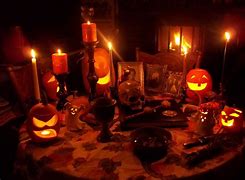
Projects to Celebrate Samhain, the Witches’ New Year
As Samhain approaches, you can decorate your home with a number of easy craft projects. Start celebrating a bit early with these fun and simple ideas that honor the final harvest, and the cycle of life and death
01
of 10
Pagan Treat Bags for Samhain
Do you have Pagan kids coming over for a Samhain event? You can have a kid-friendly celebration by putting together a goodie bag that’s representative of your Pagan spirituality. The key here is to do some creative, outside the box thinking. Sure, there are a ton of Halloween decorations in the store at this time of year, but not all of those are really connected with Pagan religious belief systems. They’re really more about the secular celebration of Halloween, which is fine, unless you’re looking for kid-friendly stuff that honors Pagan spirituality.
Here are a few things to try:
- Decorate the bags themselves with symbols that are meaningful to you – depending on the pantheon your group honors, you might include designs that are associated with Greek, Roman, Celtic, or Norse mythology.
- Small herbal sachets: sew herbs into a fabric pouch. Use lavender to help with dreams, or other appropriate plants.
- Crystals and gemstones: As long as the kids attending your event are beyond the put-everything-in-your-mouth stage, you could include rose quartz for love, hematite for protection, and more.
- A Portable Altar Kit: Depending on how old the kids are, think about making an altar box that fits in a backpack or pocket. This might not be useful or safe for really young children, but older tweens and teens could use it responsibly.
- Divination tools: make a simple pendulum with a stone wrapped in wire and attached to the end of a chain. Add a simple divination set by painting symbols on stones or wooden discs.
- Wands: Make a simple wand with a stick and a crystal wrapped in wire.
- Deity symbols: Does your tradition honor a particular god or goddess? Consider adding representative symbols – owls for Athena, cats for Bastet, or an antler for Cernunnos. Try printing out a wallet-size image of the deity on heavy cardstock, add a prayer to your god/dess on the reverse side, and laminate it.
Finally, remember, Samhain is the same day as Halloween, so never underestimate the power of a few strategically placed pieces of delicious candy!
Click here for more craft ideas for Samhain from learnreligions.com
Wheel of the Year

The Wheel of the Year is a symbol of the eight Sabbats (religious festivals) of Neo-Paganism and the Wicca movement which includes four solar festivals (Winter Solstice, Spring Equinox, Summer Solstice, Fall Equinox) and four seasonal festivals (celebrating or marking a significant seasonal change). Contrary to modern-day Wiccan claims, there is no evidence of an ancient Wheel of the Year in its present form but it is clear that the Celts of thousands of years ago celebrated the festivals the wheel highlights, even if these celebrations were known by another name now long lost.
In the ancient Celtic culture, as in many of the past, time was seen as cyclical. The seasons changed, people died, but nothing was ever finally lost because everything returned again – in one way or another – in a repeating natural cycle. Although time in the modern world is usually regarded as linear, the cyclical nature of life continues to be recognized.
The modern-day Wheel of the Year was first suggested by the scholar and mythologist Jacob Grimm (1785-1863 CE) in his 1835 CE work, Teutonic Mythology, and fixed in its present form in the 1950s and early ’60s CE by the Wicca movement. The wheel includes the following holy days (most dates flexible year-to-year): …
Click here to read the rest of this article about the Wheel of the Year
Happy and Blessed Mabon Dear Sisters and Brothers – Printable

A Magickal Rite for Mabon: Honor the Dark Mother
A Magickal Rite for Mabon
Honor the Dark Mother at Mabon
Demeter and Persephone are strongly connected to the time of the Autumn Equinox. When Hades abducted Persephone, it set in motion a chain of events that eventually led to the earth falling into darkness each winter. This is the time of the Dark Mother, the Crone aspect of the triple goddess. The goddess is bearing this time not a basket of flowers, but a sickle and scythe. She is prepared to reap what has been sown.
The earth dies a little each day, and we must embrace this slow descent into dark before we can truly appreciate the light that will return in a few months.
This ritual welcomes the archetype of the Dark Mother and celebrates that aspect of the Goddess which we may not always find comforting or appealing, but which we must always be willing to acknowledge. Decorate your altar with symbols of Demeter and her daughter — flowers in red and yellow for Demeter, purple or black for Persephone, stalks of wheat, Indian corn, sickles, baskets. Have a candle on hand to represent each of them — harvest colors for Demeter, black for Persephone. You’ll also need a chalice of wine, or grape juice if you prefer, and a pomegranate.
If you normally cast a circle, or call the quarters, do so now. Turn to the altar, and light the Persephone candle. Say:
The land is beginning to die, and the soil grows cold.
The fertile womb of the earth has gone barren.
As Persephone descended into the Underworld,
So the earth continues its descent into night.
As Demeter mourns the loss of her daughter,
So we mourn the days drawing shorter.
The winter will soon be here.
Light the Demeter candle, and say:
In her anger and sorrow, Demeter roamed the earth,
And the crops died, and life withered and the soil went dormant.
In grief, she traveled looking for her lost child,
Leaving darkness behind in her wake.
We feel the mother’s pain, and our hearts break for her,
As she searches for the child she gave birth to.
We welcome the darkness, in her honor.
Break open the pomegranate (it’s a good idea to have a bowl to catch the drippings), and take out six seeds. Place them on the altar. Say:
Six months of light, and six months of dark.
The earth goes to sleep, and later wakes again.
O dark mother, we honor you this night,
And dance in your shadows.
We embrace that which is the darkness,
And celebrate the life of the Crone. Blessings to the dark goddess on this night, and every other.
As the wine is replaced upon the altar, hold your arms out in the Goddess position, and take a moment to reflect on the darker aspects of the human experience. Think of all the goddesses who evoke the night, and call out:
Demeter, Inanna, Kali, Tiamet, Hecate, Nemesis, Morrighan.
Bringers of destruction and darkness,
I embrace you tonight.
Without rage, we cannot feel love,
Without pain, we cannot feel happiness,
Without the night, there is no day,
Without death, there is no life.
Great goddesses of the night, I thank you.
Take a few moments to meditate on the darker aspects of your own soul. Is there a pain you’ve been longing to get rid of? Is there anger and frustration that you’ve been unable to move past? Is there someone who’s hurt you, but you haven’t told them how you feel? Now is the time to take this energy and turn it to your own purposes. Take any pain inside you, and reverse it so that it becomes a positive experience. If you’re not suffering from anything hurtful, count your blessings, and reflect on a time in your life when you weren’t so fortunate.
When you are ready, end the ritual.
By Patti Wigington,Paganism/Wicca Expert
Article found on & owned by ThoughtCo
History of Ostara, The Spring Equinox
History of Ostara, The Spring Equinox
The word Ostara is just one of the names applied to the celebration of the spring equinox on March 21. The Venerable Bede said the origin of the word is actually from Eostre, a Germanic goddess of spring. Of course, it’s also the same time as the Christian Easter celebration, and in the Jewish faith, Passover takes place as well. For early Pagans in the Germanic countries, this was a time to celebrate planting and the new crop season.
Typically, the Celtic peoples did not celebrate Ostara as a holiday, although they were in tune with the changing of the seasons.
According to History.com,
“At the ruins of Chichen Itza, the ancient Maya city in Mexico, crowds now gather on the spring (and fall) equinox to watch as the afternoon sun creates shadows that resemble a snake moving along the stairs of the 79-foot-tall Pyramid of Kukulkan, also called El Castillo. On the spring equinox, the snake descends the pyramid until it merges with a large, serpent head sculpture at the base of the structure. While the Maya were skilled astronomers, it’s unknown whether they specifically designed the pyramid to align with the equinox and create this visual effect.”
A New Day Begins
A dynasty of Persian kings known as the Achaemenians celebrated the spring equinox with the festival of No Ruz, which means “new day.” It is a celebration of hope and renewal still observed today in many Persian countries, and has its roots in Zoroastrianism.
In Iran, a festival called Chahar-Shanbeh Suri takes place right before No Ruz begins, and people purify their homes and leap over fires to welcome the 13-day celebration of No Ruz.
Mad as a March Hare
Spring equinox is a time for fertility and sowing seeds, and so nature’s fertility goes a little crazy.
In medieval societies in Europe, the March hare was viewed as a major fertility symbol. This is a species of rabbit that is nocturnal most of the year, but in March when mating season begins, there are bunnies everywhere all day long. The female of the species is superfecund and can conceive a second litter while still pregnant with a first. As if that wasn’t enough, the males tend to get frustrated when rebuffed by their mates, and bounce around erratically when discouraged.
The Legends of Mithras
The story of the Roman god, Mithras, is similar to the tale of Jesus Christ and his resurrection. Born at the winter solstice and resurrected in the spring, Mithras helped his followers ascend to the realm of light after death. In one legend, Mithras, who was popular amongst members of the Roman military, was ordered by the Sun to sacrifice a white bull. He reluctantly obeyed, but at the moment when his knife entered the creature’s body, a miracle took place. The bull turned into the moon, and Mithras’ cloak became the night sky. Where the bull’s blood fell flowers grew, and stalks of grain sprouted from its tail.
Spring Celebrations Around the World
In ancient Rome, the followers of Cybele believed that their goddess had a consort who was born via a virgin birth.
His name was Attis, and he died and was resurrected each year during the time of the vernal equinox on the Julian Calendar (between March 22 and March 25).
The indigenous Mayan people in Central American have celebrated a spring equinox festival for ten centuries. As the sun sets on the day of the equinox on the great ceremonial pyramid, El Castillo, Mexico, its “western face…is bathed in the late afternoon sunlight. The lengthening shadows appear to run from the top of the pyramid’s northern staircase to the bottom, giving the illusion of a diamond-backed snake in descent.” This has been called “The Return of the Sun Serpent” since ancient times.
According to the Venerable Bede, Eostre was the Saxon version of a Germanic goddess called Ostara. Her feast day was held on the full moon following the vernal equinox–almost the identical calculation as for the Christian Easter in the west.
There is very little documented evidence to prove this, but one popular legend is that Eostre found a bird, wounded, on the ground late in winter. To save its life, she transformed it into a hare. But “the transformation was not a complete one. The bird took the appearance of a hare but retained the ability to lay eggs…the hare would decorate these eggs and leave them as gifts to Eostre.”
Modern Celebrations
This is a good time of year to start your seedlings. If you grow an herb garden, start getting the soil ready for late spring plantings. Celebrate the balance of light and dark as the sun begins to tip the scales, and the return of new growth is near.
Many modern Pagans mark Ostara as a time of renewal and rebirth. Take some time to celebrate the new life that surrounds you in nature–walk in a park, lay in the grass, hike through a forest. As you do so, observe all the new things beginning around you–plants, flowers, insects, birds. Meditate upon the ever-moving Wheel of the Year, and celebrate the change of seasons.
Author
Patti Wigington
Published on ThoughtCo.com
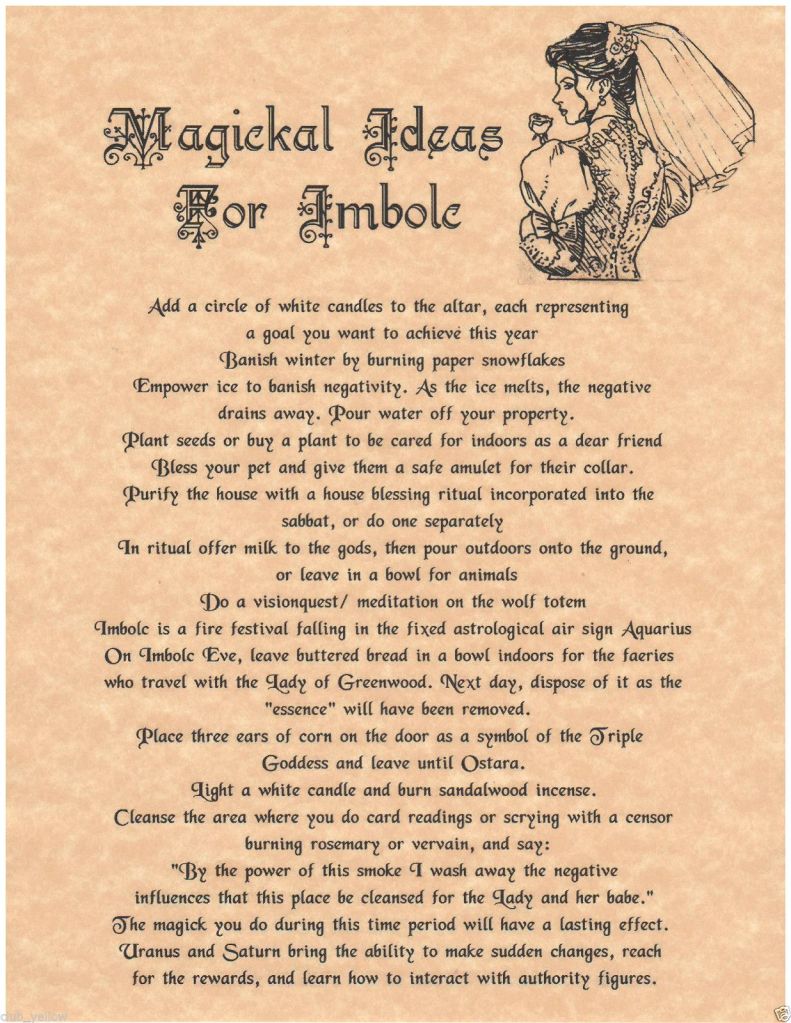
Magickal Ideas for Imbolc
Let’s Have Some Fun – Lammas


Let’s Have Some Fun – Imbolc

For Your Listening Pleasure – Lammas

Flashback 2004 Lammas
(This is written for the Northern Hemisphere in 2004. The date of August 7th is wrong for 2022 the Southern or Northern Hemisphere)
Lammas
Lammas is the first of the harvest festivals, a celebration of ripening grains and grapes. If you celebrate traditionally on the second, the planetary energies offer a for great creative energy, drama, and joy. If you celebrate on the astrologically on August 7 at 15 degrees of Leo, the Moon will aid a ceremony with great magic and mystery.
The Sun is wanning, but still holding sway in the sky. A day of circle dances and foot races will honor the Sun; be certain the music encourages exuberant joy. If you planted wheat in a pot or plot, this is the day to ritually harvest it. Use some to make a Brigid’s cross; save a few stalks to return to the earth as compost next spring and lend continuity from harvest to sowing to harvest.
If corn is your grain of choice, bring ripe ears to the altar and use the husks to make corn dollies for use at Imbolc. Indian corn can be dried, ground, and used in corn bread. Make a fiery incense with dragon’s blood and hot herbs like ginger or galangal. Do a ritual at a sacred spot — a well or tree or sacred hill. Use the colors of green and gold and orange for your altar, and encourage everyone to wear them. The harvest has just begun.
Copyright By K. D. Spitzer in Llewellyn’s Witches’ Datebook 2004 Page 89
 Witches Of The Craft®
You must be logged in to post a comment.