How to Read Tarot
Learning to read and understand tarot cards could be a difficult task for someone, who is just trying to read them with their own efforts. Nevertheless, the topic of how to read tarot cards will be very easy for you, when you follow a number of simple and established methods. Tarot could be an interesting and exciting field of study, as you will be dealing with something that is mysterious and suspense.
To know how to read tarot cards, you will need to buy a good deck of tarot cards, a journal and a pencil. You may also need to purchase a book on tarot cards and their meaning. However, a newbie to the world of tarot often gets confused as to the type of cards to buy. With so many books and journals on tarot, may find it very difficult to choose the one that best fits your needs and requirements.
Here are some tips that you can use, while buying a deck of cards and a good tarot book:
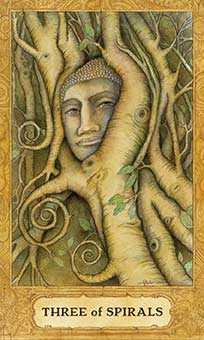
Ideally, make sure that you are buying a deck of tarot cards, whose images and graphics effectively personify your inner belief and knowledge base. Almost all deck of cards available today has different themes and ideas. Ensure that you are buying a deck of cards that you find very easy to understand and believe. Check out the images on the cards and relate them to your mind and soul. If you find that, the images of the cards are strange and unreal, go for other decks.
You may need to buy a book that covers the most basic knowledge and skills. The book should provide meanings of the card in a simple and straightforward manner. Search for a book that suits your taste and mind.
How to read tarot cards is an issue that may take your time and effort; understanding the meaning of cards may take considerable amount of time, because the language used in the cards may seem very strange in the initial stages. Here are some tips on how you can read your tarot card:
1. Take a particular card and check out the images printed on it. Just see the image and note down whatever comes to your mind, when you see the printed image. Make it short and simple, so that it becomes easy for you to understand its meaning at a later stage.
2. Now, go through the book and study what it says about each of the card contained in the deck. Later, compare the meaning provided in the book with what you have noted down just now.
3. Think and ponder over the meaning of all individual cards and make comprehensive notes on all cards. This simple exercise will help you how to read tarot cards and understand the meaning in its entirety.
4. A given card will give you a number of meanings. You will need to find out which one of them is useful to you and which are not. Now, choose three interpretations from the ones that you just noted down and those that are provided in the book. Once you make a list, you may need to compress them into a single word and/or words or even a short phrase.
How to read tarot cards is an important issue that needs a mastery of the subject, while reading through the meaning is possibly the first right step. A deck of tarot cards will have 78 different cards with a variety of images conveying so many meanings and summaries. Is it possible for you to remember all those interpretations?
Here are some suggestions and practical tips that will help you how to read tarot cards:
Visual tips and ideas:
You may wish to use this tip as the first real step in deciphering and understanding the real meaning of all those cards. Just take a deep look at the image printed on the card. What exactly is happening in those pictures? Do you notice any strange feelings running in your mind when you look at the image? What are the first impulses that run through your mind soul? These simple visual cues and ideas will help you in knowing more about your friend or client’s life in different stages of life.
Elemental cues and ideas:
Each one of the card in the deck has a certain element associated with it. Some of the most common elements are:
1. Wands with Fire
2. Cups with Water
3. Swords with Air
Note that each of these elements discusses about a different aspect of life. Fire is hot and passionate, water may relate to emotions and inner feelings and air may mean flowing thoughts and logic. Major Arcana is a system of deck that relates to elements of spirit and energy. By looking at the card from a particular set, you will immediately know and understand what phase of life you are dealing with and how you can visualize their meanings.
How the cards fall:
This is possibly the most critical parameter that affects your tarot card reading. You will need to learn and master to know whether the card is upright or reversed. You can look at many angles and corners on a reversed card. There are a number of ways of looking at your reversed cards like:
· View it as an opposite image of the upright image
· Consider it as a blockage or obstacle signified in the upright or correct meaning.
The basic structure of tarot cards:
In order to know how to read tarot cards, you will need to know and understand the basic structure of tarot cards. In essence, there are 78 cards in a tarot card deck. Out of these 78 cards, there are 40 numbers of minor cards (also known as lesser mysteries cards). The pack also contains 16 court cards and 22 Major Arcana cards that signify “greater mysteries”. Tarot deck also contains four suits with 56 cards out of which you have 10 numbers of numerical cards and four court cards per suit.
These four suits represent four different elements like:
· Water
· Earth
· Air
· Fire
In turn, they also signify four different planes of consciousness like:
· Cups denoting an emotional plane
· Wands denoting a spiritual plane
· Swords denoting metal plane
· Pentacles denoting the physical plane
Furthermore, the subject of how to read tarot cards also involves understanding each card in a suit. In fact, these cards represent a special aspect of your earthly experience.
Here are some meanings of tarot cards:
One- Opening and beginning
Six- Unity and success
Two- Balance and energy
Seven- Quiet and complex
Three- Trinity and irritation
Eight- Growth, mastery, task
Four- Stability and form
Nine- High and complete
Five- Chaos and creativity
Ten- Fulfillment
Meaning of Court cards:
The King
Fire- action, ambition, energy, enthusiasm, interest
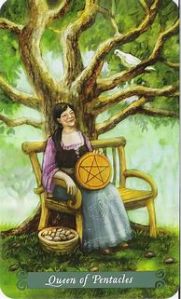
The Queen
Water- emotion, understanding, empathy, togetherness
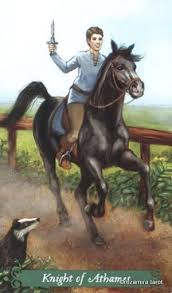
The Knight
Air- discovery, finding, new things, invention, purpose
The Page
Earth- Depth, listening, hearing
Tip: All numerical cards denote the action performed by the individual and it signifies the experience that an individual will have in the future. On the other hand, court cards represent an enduring image of the present.
How to read tarot cards is a science and art of understanding all twenty-two Major Arcana cards. These are the heart and soul of tarot system and they are the potent symbols of collective consciousness that an individual will have in his or her persona.
Here are some of the most important meanings of all these tarot cards. Note that each card has a number of flowers associated with it and they represent different meanings as well.
The Fool
Sudden events in your life, unknown, shock, surprise, irritability
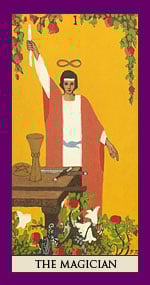
The Magician
Clarity, action, creativity, new things
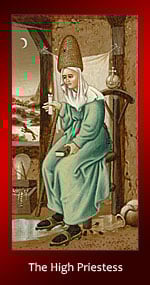
The High Priestess
Inspiration, intuition, receptive, good values, vulnerability
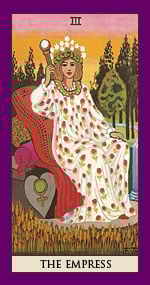
The Empress
Abundance, creativity, body image, love, feelings, expressions
The Emperor
Understanding of power on an individual basis, dogmas, confusion
The Hierophant
Transportation from material to spiritual world, balance, synergy
The Lovers
Unity, wholeness, confluence, love, sexuality, divine affection
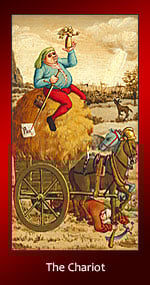
The Chariot
Middle path, understanding the soul, inner research, meditation
The Hermit
Inward compulsions, pull, isolation, mystery, menopause
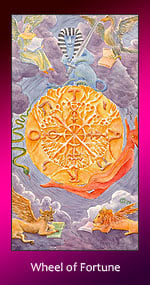
The Wheel of fortune
Number of experiences, expansion, diversification, change, hope, aspirations
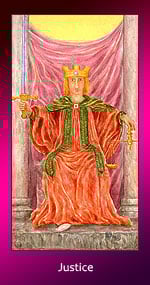
The Justice
Personal truth, equality, fairness
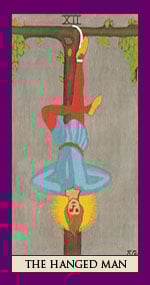
The Hanged Man
Surrender, martyrdom, victimization, revelation
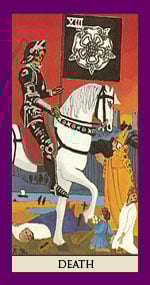
The Death
Journey, transformation, Dying, dying process, change
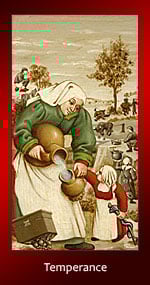
The Temperance
Art of living, moderation, balance, cosmic energy
The Devil
Fear, worries, emotions, sadness
The Tower
Breaking, destruction, shattering, unexpected changes
The Star
Higher level of consciousness, cosmic vision, dreams, wishes, rebirth
The Moon
Deep space, nurture, affection
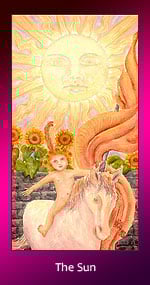
The Sun
Radiance, play, create sustain, shine, glow
The Judgment
Strategy, choices, observation, healing, solution
The World
Power, responsibility, joy, work
How to read tarot cards is an accurate science, because tarot itself is a matter of precision. Thus, you will need to learn, understand and master the art of how to read tarot cards. You will also need to develop and enhance intuition and psychic abilities in order to read tarot cards in a meaningful manner. Anybody can learn and master the art of reading tarot cards – it is so easy and simple! However, you will need to apply your mind and soul while studying the tarot.

 Death
Death
 The Magician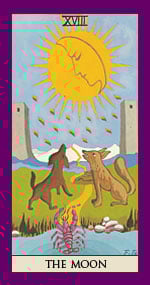





 Earth Reversed
 Pisces Reversed
 Earth Reversed






 The Empress
 Justice
 Temperance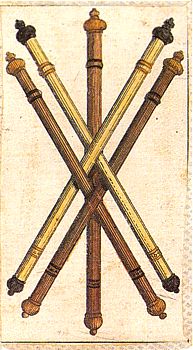
 Cancer
 Air
Air

 Ura-Heather





You must be logged in to post a comment.