(One Person’s View) What is Wicca? A Beginner’s Guide to the Wiccan Religion

What is Wicca? The answer to this question can vary, depending on who you ask, but below you’ll find a general introduction to this fascinating spiritual path.

Wicca is a modern, Earth-centered religion with roots in the ancient practices of our shamanic ancestors. Its practitioners, who call themselves Wiccans, honor the life-giving and life-sustaining powers of Nature through ritual worship and a commitment to living in balance with the Earth. Wicca is technically classified as one of many Pagan religions, though not all Wiccans would identify as Pagans—and plenty who identify as Pagans are not Wiccans.

In truth, Wicca is extremely dynamic and ever-evolving, so it’s difficult to make very many statements about it that every single person identifying as a Wiccan will agree with. However, it’s probably safe to say that when looking at the night sky, or the view from the top of a mountain, or the glassy surface of a lake, most—if not all—Wiccans will feel very much in the presence of the divine. So then, what is Wicca? What does it mean to be a Wiccan? And what are the core religious beliefs?

Click here to read the rest of this article Source: wiccaliving.com

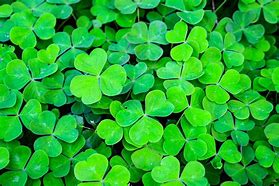
Clover (Shamrock) Magick and Lore (Shamrock)

Disclaimer: No herb should be used for medicinal purpose until you have checked with your health care professional to ask if it is safe for you to use it for any reason. The content provided on this website is for informational purposes only and DOES NOT CONSTITUTE THE PROVIDING OF MEDICAL ADVICE and is not intended to be a substitute for independent professional medical judgment, advice, diagnosis, or treatment. Always seek the advice of your physician or other qualified health providers with any questions or concerns you may have regarding your health. WitchesofTheCraft.com, any staff member of WitchesofTheCraft.com and/or Lady Carla Beltane are not responsible for any type of negative reaction when using this herb for any reason.

Folk Names: Trefoil, Honeystalks, Three-leafed Grass

Ruler: Jupiter, Mercury

Element: Earth, Air, Fire, Water

Types: Red, White

Magickal Forms: Three leaf, four leaf, and five leaf

Basic Powers: Protection, Luck, Fertility, and Abundance

Clover was one of the anti-witch plants which protected human beings and animals from the spells of malevolent witches and the wiles of fairies, and brought good luck to those who kept it in the house, or wore it in their buttonholes or hats. Some varieties of clover have three distinctly heart shaped leaves ~ both elements, the number 3 and the shape, contribute to its benevolent reputation.

The shamrock, the form of clover that is synonymous with all things Irish – was known as the shamrakh in Arabic countries and symbolized the triple aspect of the Goddess. A symbol of luck, leprechauns, and wishes, the shamrock is a powerful talisman to carry.

It could be used in love-divination; and to dream of it was very fortunate for … Click here to read the rest of this article Source: shirleytwofeathers.com

Did St. Patrick Banish the Snakes from Ireland? Myth, Metaphor, and the Truth Beneath the Legend

Ask any Irish child, and they’ll tell you the story with absolute certainty: St. Patrick drove the snakes out of Ireland. It’s a tale etched in the consciousness of a nation—a tale passed down in whispers beside hearths, etched in stained glass, and echoed in classrooms.

But what if the story isn’t about serpents slithering into the sea—but something deeper? Something older? Something that speaks not of reptiles, but of rituals, symbols, and the spiritual revolution of a land once ruled by druids and stones?

This is more than folklore. It’smyth as metaphor, poetry as history, and Ireland as its own parable. That’s not a parable—that’s a fact. Ireland’s cold climate and isolation since the Ice Age has made it biologically inhospitable to snakes. Fossil records confirm it: no native snakes ever slithered through its forests or fields.

So why the story? Because stories often say what facts can’t.

A Metaphor for Paganism?

Most scholars agree: the “snakes” Patrick drove out were not animals—but ancient beliefs.

In pre-Christian Ireland, the serpent was a symbol of spiritual power …  Click here to read the rest of this article Source: secretireland.ie

For more on Ireland’s spiritual tapestry, explore Saint Patrick’s Breastplate – The Warrior’s Prayer That Shielded a NationIreland’s Ancient Holy Wells of Saint Patrick, and timeless figures like Michael CollinsDan BreenThe IRA SquadEamon de Valera, and Irish Immigration.

(one Person’s View Point) The Witch’s Guide to Moon Phases and Their Mystical Energies

The moon, a celestial body that has fascinated humanity for centuries, holds a special place in the heart of witchcraft. Its phases, from the dark new moon to the luminous full moon, have been observed and revered in various traditions and cultures.

In witchcraft, the moon’s phases are not just beautiful celestial events but are deeply symbolic and influential. They are believed to hold power over the ebb and flow of energies, impacting magickal practices, personal growth, and the natural world.

This article dives into the depths of the moon’s phases and their significance in witchcraft, unveiling the mysteries and practices that have captivated practitioners for generations.

Understanding the Moon’s Phases

New Moon: Characteristics and Significance

The New Moon, often invisible in the night sky, marks the beginning of the lunar cycle. This phase symbolizes new beginnings, making it an ideal time for setting intentions and starting new projects. In witchcraft, the New Moon is seen as a time of renewal and rebirth. Practitioners may use this phase to cleanse their spaces, meditate on their goals, and prepare for the growth to come.

Waxing Crescent: Meaning and Witchcraft Relevance

Following the New Moon, the Waxing Crescent phase appears as a slender crescent in the sky. This phase represents manifestation and growth. It’s a time when the intentions set during the New Moon begin to unfold. Witchcraft practices during this phase often focus on attraction spells, growth rituals, and strengthening one’s resolve.

First Quarter: Description and its Impact

The First Quarter phase, with half of the moon illuminated, symbolizes decision-making and action. It’s a time to overcome challenges and make important choices. In witchcraft, this phase is often used for problem-solving spells and rituals that require courage and determination.

Waxing Gibbous: Explanation and Significance

As the moon moves towards fullness in the Waxing Gibbous phase, it’s a time of refinement and adjustment. It’s about fine-tuning the plans and intentions set earlier in the cycle. In witchcraft, this phase is often used for spells that require patience and persistence, as well as those that enhance and build upon existing situations.

Full Moon: Features and its Powerful Role in Witchcraft

The Full Moon, with its complete illumination, is the most potent phase for many witchcraft practitioners. It’s a time of peak energy, heightened intuition, and powerful magickal workings. Full Moon rituals often focus on manifestation, healing, and harnessing the moon’s powerful energy for significant spellwork.

Waning Gibbous: Characteristics and Importance

After the climax of the Full Moon, the Waning Gibbous phase begins. This phase is a time of gratitude and sharing. In witchcraft, it’s a period for giving back, sharing wisdom, and divination practices. It’s also a time to start releasing and letting go of what no longer serves you.

Third Quarter: Description and Meaning

The Third Quarter moon, with another half illumination but waning, represents forgiveness and release. It’s a time to let go of grudges and negative emotions. In witchcraft, this phase is ideal for banishing negative influences, releasing old patterns, and practicing forgiveness rituals.

Waning Crescent: Significance in Winding Down Energies

The Waning Crescent, or the Balsamic Moon, is the final phase before the cycle begins anew. This phase is for rest, reflection, and preparation. In witchcraft, it’s a time for meditation, introspection, and resting before the new cycle begins. It’s a period for tying up loose ends and preparing for the next New Moon.

The Moon and Magick: A Historical Perspective

Click here to read the rest of this article Source: honeymallow.com

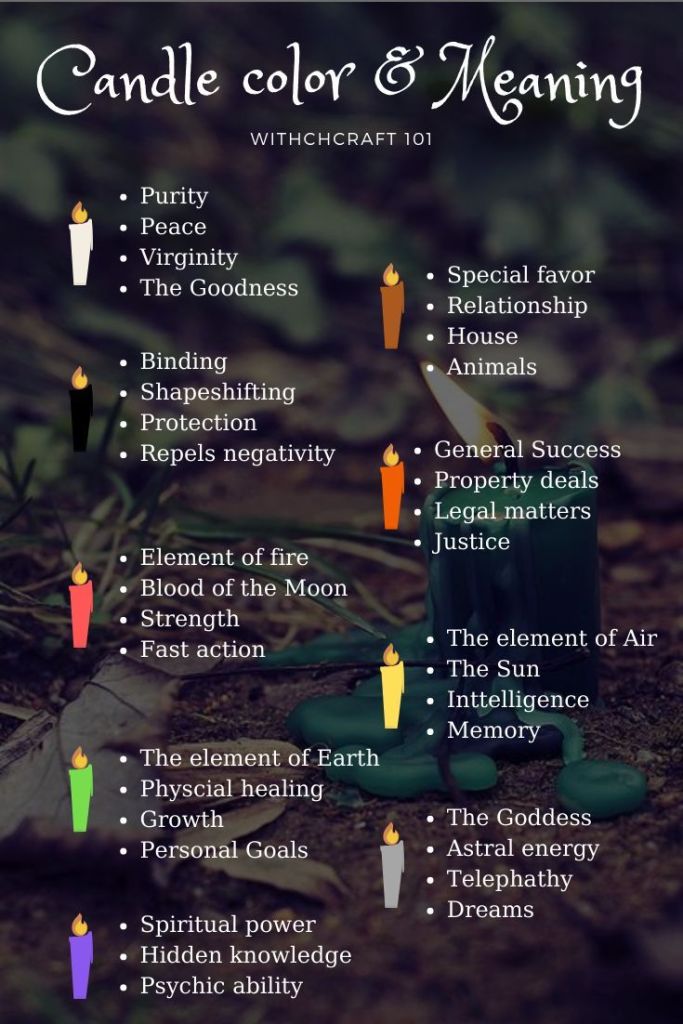
Not a Full List Candle Usage or Meaning

(YOU CAN COPY AND PASTE ANY THIS POST TO A DOCUMENT TO PRINT AND/OR SAVE ON YOUR COMPUTER)

(One Person’s View) Your Guide to Candle Color Meanings and Candle Magick

Every candle color has a different meaning. Discover the right one for your spell.

Candle magic is one of the simplest forms of magick. Candles represent the intense element of Fire and wand energy. In rituals, they are action-oriented and can be used to set something in motion or call in an energy. To help you set and focus on your intention, choosing the right candle color can help as each has a different spiritual meaning.

Below you’ll find everything you need to know about how to perform a basic candle spell and the best candle color depending on the day of the week and your desired result.

What Is Candle Magic?

Candle magic is a type of manifestation ritual that is centered around the use of candles to create a desired outcome in a ritual or spell. Those who follow many different spiritual paths use candle magic, including witches.

We all know the element of Fire has a powerful, transformative effect, which is one reason so… Click here to read the rest of this article Source: pagangrimoire.com

(One Person’s View) Candles in Witchcraft: Everything You Need To Know

A candle is wax or tallow surrounding a central wick that is burned for illumination. Candles have many uses in magical work and there are many options available to the magick user or ritualist.

KEY TAKEAWAYS

Candles are essential tools in witchcraft, symbolizing the element of Fire and serving various magical purposes.

They are used to set intentions, with different colors corresponding to specific goals.

Candles are employed for elemental magic, anointed with oils, and adorned with symbols to enhance their magic.

Candle magic involves using the candle’s flame and attributes to manifest intentions.

Beyond metaphysical uses, candles have practical functions, such as providing light during rituals and ceremonies.

Click on the hyperlinks to read the rest of this article Source: magickalspot.com

(One Person’s View) How to Write a Successful Spell

Ever wondered what makes a spell truly work? Is it the tools, the timing, or maybe just a sprinkle of magic belief? Writing a spell can feel like stepping into a mysterious world filled with possibilities, but it doesn’t have to be complicated. If you’ve got an open heart, a clear mind, and a dash of creativity, you’re already halfway there. Think of it as crafting a recipe for your soul—a little bit of this, a pinch of that, and voilà!

Spells aren’t just about waving a wand or chanting in a forest (though, let’s be honest, that’s pretty cool too). At their core, they’re about connecting with the energies around you and channeling them toward your goals. Whether you’re manifesting good vibes, warding off negativity, or just trying to make your houseplants thrive, every spell starts with intention and a little bit of know-how.

And guess what? You don’t need to be a seasoned witch to write a successful spell. All you need is a desire to create change, some basic understanding of the magical process, and the willingness to give it a go. Ready to start crafting your spell? Let’s break it down step by step! Click here to read the rest of this article Source: witcheslore.com

How to Create Powerful and Personal Magic

1. State Your Intention

2. Time Your Spell with Moon Cycles

3. Work with the Seasons

4. Gather Tools to Strengthen Your Spell

5. Understand and Use Energies

6. Write Down Your Words

7. Consider Karma

8. Work in a Sacred Space

9. Visualize Your Goal

10. Use Symbols and Sigils

11. Stay Grounded and Centered

12. Keep It Personal

13. Show Gratitude

14. Release Your Spell with Confidence

Final Thoughts

Congratulations! You’ve just created a spell that’s uniquely yours. Writing a successful spell isn’t about perfection—it’s about intention, connection, and a little bit of trust in the unknown. Remember, magic is a journey, not a destination. Keep practicing, experimenting, and learning from your experiences.

And who knows? Your next spell might just be the one to bring a little extra sparkle into your life—or someone else’s. ?

(One Person’s View) How to Write Spells and Improve Your Witchcraft

Many experienced witches find themselves constantly running up against the confines of other peoples spells. Perhaps you’re never able to find the spell that’s just right, that feels tailored to your purpose. Or maybe you’ve become very comfortable working with your personal set of tools and ingredients but spells regularly call for things that you don’t have (and don’t care to have!) while underutilizing those items that you’ve so carefully curated for your craft.

For witches in this situation, writing your own spells might be the only plausible solution to reviving the fluidity and enjoyment of your craft.

For some newer witches the process of writing your own spells may seem a bit intimidating. When you haven’t got much experience under your belt sticking with spells written by other people just feels safer. And that’s OK! As with any art, you must first copy other peoples work until you simply cannot stand it anymore to really master the techniques and build a firm foundational knowledge. Only then do you start to compose and explore your own voice in your craft.

Even for those who are new to the craft however, playful experimentation can hold merit. If you feel confident and ready to explore a little more freely please do not hold yourself back regardless of whether you consider yourself a beginner or a more advanced witch.

A few Pros of writing your own spells:

  • You’re never missing materials
  • You can tailor every spell for the spirits and energies you work with
  • Spells can be as involved or simple as you like
  • Experimentation! (I count this as a pro because it’s fun)
  • You get complete creative license with your magic
  • You learn and develop a personal style in your craft

A few Cons:

  • You may not really get a good idea of what works until you’ve been writing for a while
  • Sometimes it’s too time consuming to write your own spell
  • Some people can’t write well (although if you’re not attached to your spells being beautifully worded don’t let this stop you!

Writing Your Spell

Click here to read the rest of this article Source: theoccultwitch.com

(One Person’s View) A Practical Guide to Witchcraft and Magic Spells

A Practical Guide to Witchcraft and Magic Spells PDF

This is a link to a PDF you can download for information.

(One Person’s VIew) Ogham Divination Meanings and their Historical Significance

Discover the fascinating world of Ogham divination and its meanings. This guide will teach you the historical background, symbolism, and significance of Ogham divination, while the video above will teach you how to create your own Ogham divination set (save it for the end!).

Lora O’Brien, founder of the Ogham Academy (and author of this article), has been studying and working with the Ogham for almost 30 years, while devoting the most recent of those years to a Masters in Irish History, and a thesis on the topic of the Ogham and Irish Identity.

What is Ogham Divination?

Ogham divination is a modern way in which Contemporary Pagans, and those generally interested in divination, may predict future happenings, communicate with beings or entities such as Gods or Ancestors, or gain deeper insight and understanding of past, present, and future situations and events.

You will hear elsewhere that ‘it is an ancient Celtic system of fortune-telling and symbols which has been used for thousands of years by Druids and Shamans’… but the reality is, we have no reliable historical evidence on whether the Ogham was used for divination or magical practice.

What we do have are tantalising archaeological hints, and manuscript references which were recorded at a much later date, and in a very different context, to the events, situations, or stories they purport to be telling us about.

There are those of us, even within academic settings, who believe that while we absolutely MUST clearly understand and study the archaeology, linguistics, and historical source material that does remain to us with regard to the Ogham… we can also extrapolate and develop a modern spiritual, magical, and divination practice that is fulfilling and authentic to what we do actually know, while organically growing from and beyond the admitted restrictions of the evidence.

Ogham Divination Meanings

Ogham Divination uses a set of 25 symbols, based on the letters of the ancient Irish Gaelic script. Each symbol represents the letter name, is related to the others within its original Aicme or grouping, and holds a key to many layered deeper meanings which can be used to interpret a person’s life.

Depending on the context, each Ogham letter or Fid can take on a different meaning. While we do provide suggested meanings below, we strongly encourage you to study the original source materials and develop your own ‘kennings’ for each of the Feda (‘letters’) of the Ogham.

Though most Neo Pagan and New Age sources will tell you that Ogham Divination meanings come from some sort of ‘Celtic Tree Oracle’, this is unfortunately, inaccurate.

Though very popular, this nonsense comes from a misunderstanding that the Ogham alphabet is ALL about trees, and each ogham divinatory meaning is related to trees, or worse, a ‘Celtic Tree Calendar’.

Though we can blame Robert Graves for much of this, as he published it in his pseudo academic (but actually fiction and romantic poetry) book, the White Goddess. (More on that by Morgan Daimler Here).

Even leading Ogham scholars such as Damien MacManus have been frustrated by this focus within academia, as he stated in 1988:

Click here to read the rest of this article Source: ogham.academy

(One Person’s View) Book of Shadows c2020

Witchy Tips & More: For Baby Witches & Broom Closet Dwellers - Baby Witches - Wattpad

(One Person’s View) Book of Shadows

Definition

A Book of Shadows is a personal journal or collection of writings used by practitioners of magick and spirituality to document rituals, spells, experiences, and esoteric knowledge. It serves as both a magickal record and a spiritual guide, evolving alongside the practitioner’s journey.

The term Book of Shadows is believed to have been popularized by Gerald Gardner, the founder of modern Wicca, in the mid-20th century. Gardner described it as a tool for Wiccans to preserve rituals, spells, and teachings specific to their tradition. While its origins are relatively modern, the concept of keeping magickal records dates back to ancient times, with examples found in grimoires, alchemical texts, and sacred writings across cultures.

Over time, the Book of Shadows has transcended Wicca and is now embraced by practitioners of various spiritual and magickal paths.

The Book of Shadows is a living document, deeply personal to each practitioner.

Its significance lies in its ability to: … Click here to read the rest of this article Source: acredanarchy.org

(One Person’s View) The Book of Shadows Everything You Need to Know

The Book of Shadows, a powerful tool that will transform your magical practice by providing a sacred space to record, reflect, and refine your craft. This personal grimoire, introduced by Gerald Gardner in the early 20th century, is a guide to rituals, spells, and magical practices rooted in ancient pagan traditions. To get started, decide on a format that resonates with your practice, and set clear intentions to guide your entries. Organize your content by themes, and include personal reflections, magical tools, and symbolic colors. As you fill its pages, your Book of Shadows will become a valuable resource for your magical path, illuminating the path ahead.

Click on the hyperlinks to read the rest of this article Source: spellsbycarmen.com

(One Person’s View) A Guide to Making Own Your Book of Shadows

The Wiccan Book of Shadows is a sacred and personal tool that serves as a guidebook, a repository of knowledge, and a record of spiritual experiences for practitioners of Wicca. Crafting your own Book of Shadows is a magical journey, as it allows you to infuse it with your intentions, beliefs, and unique energy. This enchanting grimoire becomes a reflection of your spiritual path and a source of inspiration throughout your Wiccan practice.

To begin creating your own Book of Shadows, find a journal or a blank book that resonates with you on a spiritual level. The texture and color of the cover, the scent of the pages, and the weight of the book should all evoke a sense of magic and wonder. This journal will become your sacred vessel, holding the knowledge and wisdom that you accumulate on your spiritual quest.

Before you embark on filling the pages of your Book of Shadows, take a moment to set your intentions. Find a peaceful and serene space where you can connect with the divine energies around you. Light a candle, burn some incense, and center your mind and spirit. Envision the purpose of your Book of Shadows as a sacred grimoire, a living artifact that captures the essence of your spiritual journey.

Once you have set your intentions, you may choose to create a title page that represents the essence of your magical practice. This page can include … Click here to read the rest of this article Source: witcheslore.com

Planet Jupiter: Correspondences, Magick & Astrology

Jupiter is the fifth planet from the sun and the largest planet in our solar system.

KEY TAKEAWAYS

Planet Jupiter, often referred to as the “King of the Planets,” is a symbol of expansion and abundance in magick and astrology.

Correspondences for Jupiter include the metal tin, the astrological sign Sagittarius, and the Hebrew letter Kaph, which are all linked to its energies.

Jupiter is associated with deities such as Zeus, Jupiter (Roman), and Marduk, representing leadership, authority, and divine protection.

In astrology, Jupiter is the planet of expansion, luck, and optimism, influencing the areas of life related to higher learning, travel, and abundance.

Planet Jupiter in Magick

Jupiter influence may be brought into any magical workings related to religion or faith, legal matters, politics, influencing those in authority or increasing authority or power, and fatherhood or patriarchal power or authority.

Click on the hyperlink for more information about Planet Jupiter: Correspondences, Magick & Astrology

(One Person’s View) Magical Correspondences: A Witch’s Guide

Magical Correspondences: A Witch’s Guide

Step into the enchanting realm of magical correspondences, where the threads of the mundane and the mystical intertwine to create a symphony of wonder and possibility. In this mystical tapestry, every herb, crystal, color, and celestial entity holds a key to unlocking the hidden realms of energy, intention, and transformation. Welcome to a world where the alignment of elements and the synchronicity of symbols form the language of magic itself.

Within the vast and interconnected web of magical correspondences, practitioners and seekers of arcane knowledge discover a roadmap to harnessing the unseen forces that shape our existence. From the aromatic whispers of herbs to the radiant embrace of crystals, each element holds its unique vibration, purpose, and power. By understanding and harnessing these correspondences, we delve into the ancient wisdom of our ancestors and tap into the boundless potential of the universe.

Prepare to embark on a captivating journey through this comprehensive guide, where you will unearth the secrets of herbs and spices that ignite the flames of intention, discover the hidden energies of crystals that amplify our magical workings, and connect with deities and celestial entities that guide and inspire our path. Whether you are a seasoned practitioner or a curious novice, these magical correspondences will spark your imagination, ignite your intuition, and empower you to manifest your desires with precision and grace. Get ready to explore the intricate dance of elements, colors, symbols, and energies as we navigate the labyrinth of magical correspondences together.

Click on the hyperlinks to read the rest of this article Source: witcheslore.com

Witch-Cult Hypothesis

The witch-cult hypothesis is a discredited theory that the witch trials of the Early Modern period were an attempt to suppress a pagan religion that had survived the Christianization of Europe. According to its proponents, accused witches were actually followers of this alleged religion. They argue that the supposed ‘witch cult‘ revolved around worshiping a Horned God of fertility and the underworld, whose Christian persecutors identified with the Devil, and whose followers held nocturnal rites at the witches’ Sabbath.

The theory was pioneered by two German scholars, Karl Ernst Jarcke and Franz Josef Mone, in the early nineteenth century, and was adopted by French historian Jules Michelet, American feminist Matilda Joslyn Gage, and American folklorist Charles Leland later that century. The hypothesis received its most prominent exposition when it was adopted by a British Egyptologist, Margaret Murray, who presented her version of it in The Witch-Cult in Western Europe (1921), before further expounding it in books such as The God of the Witches (1931) and her contribution to the Encyclopædia Britannica. Although the “Murrayite theory” proved popular among sectors of academia and the general public in the early and mid-twentieth century, it was never accepted by specialists in the witch trials, who publicly disproved it through in-depth research during the 1960s and 1970s.

Contemporary experts in European witchcraft beliefs view the ‘pagan witch cult’ theory as pseudohistorical. There is now an academic consensus that those accused and executed as witches were not followers of any witch religion, pagan or otherwise. Critics highlight several flaws with the theory. It rested on highly selective use of evidence from the trials, thereby heavily misrepresenting the events and the actions of both the accused and their accusers. It also mistakenly assumed that claims made by accused witches were truthful, and not distorted by coercion and torture. Further, despite claims the ‘witch cult’ was a pre-Christian survival, there is no evidence of such a ‘pagan witch cult’ throughout the Middle Ages.

The witch-cult hypothesis has influenced literature, being adapted into fiction in works by John BuchanRobert Graves, and others. It greatly influenced Wicca, a new religious movement of modern Paganism that emerged in mid-twentieth-century Britain and claimed to be a survival of the ‘pagan witch cult’. Since the 1960s, Carlo Ginzburg and other scholars have argued that surviving elements of pre-Christian religion in European folk culture influenced Early Modern stereotypes of witchcraft, but scholars still debate how this may relate, if at all, to the Murrayite witch-cult hypothesis.

Early modern precedents

The witch-hunt of the 16th and 17th centuries was an organized effort by authorities in many countries to destroy a supposed conspiracy of witches thought to pose a deadly threat to Christendom. According to these authorities, witches were numerous, and in conscious alliance with Satan, forming a sort of Satanic counter-religion. Witch-hunts in this sense must be separated from the belief in witches, the evil eye, and other such phenomena, which are common features of folk belief worldwide. The belief that witches are not just individual villains but conspirators organized in a powerful but well-hidden cult is a distinguishing feature of the early modern witch-hunt.

This idea of an organized witch-cult originates in the second half of the 15th century, notoriously expounded in the 1486 Malleus Maleficarum. In the following two centuries, witch trials usually included the charge of membership in a demonic conspiracy, gathering in sabbaths, and similar. It was only with the beginning Age of Enlightenment in the early 18th century, that the idea of an organized witch-cult was abandoned.

Early Modern testimonies of accused witches “confirming” the existence of a witch cult are considered doubtful. Norman Cohn has argued that such testimonies were often given under torture, and that their details were determined mainly by the expectations of the interrogators and by free association on the part of the accused, reflecting only the popular imagination of the times.[1] Carlo Ginzburg and Éva Pócs hold that some of these testimonies can still give insights into the belief systems of the accused. Ginzburg discovered records of a group calling themselves benandanti, the “good walkers” who believed that they combatted witches (streghe) by magical means. The benandanti were persecuted for heresy in the period of 1575 to 1675.[2]

The early theory… Click here to read the rest of this article Source: en.wikipedia.org

What Is Lughnasadh and How To Celebrate It

What Is Lughnasadh & How To Celebrate It

Lughnasadh is a Gaelic festival that occurs on August 1st each year, marking the dawn of the harvest season. This holiday marks the midpoint between the Summer Solstice and the Autumn Equinox. Lughnasadh traditions celebrate the first cutting of grain, the bountiful harvests of corn, and the Irish craftsman and warrior god, Lugh.

Traditionally, Lughnasadh is celebrated in Ireland, Scotland, and the Isle of Man. Historically, the occasion was marked with a festive competition testing skills of craft and athleticism in honor of Lugh and his foster mother Tailtiu. Offerings made to Lugh would include a sacred bull and a cutting of the first harvest of corn.

This holiday is considered a cross-quarter day on the neo-pagan Wheel of the Year. In some Wiccan traditions, this is the time of year in which the Horned God’s power begins to wane, and the Goddess prepares for his passing at the coming Samhain.

On the same day, some Christians celebrate the holiday of Lammas in an incredibly similar tradition. With the first harvest of grain a loaf of bread is baked and brought to the church to be blessed. Once its blessing is received, the baker takes the bread back home, breaks it into four pieces, and places them at the four corners of their barn or property to protect the grain in the coming months.

Lughnasadh or Lammas?

Though the two are often conflated in Neo-Pagan groups, Lughnasadh and Lammas are two separate celebrations. Lughnasadh is a holiday that is still celebrated by pagans and non-pagans alike in Ireland, Scotland, and The Isle of Man. Though it doesn’t look like what we think the ancient practices may have been, we do know that the traditions surrounding Lughnasadh have been syncretized and are still alive today.

Lammas is the name typically chosen for the Wiccan Wheel of the Year. It is celebrated as the first harvest festival of the year. As stated above, this is the time of year within Wiccan traditions when the Horned God prepares for his passing during Samhain. This holiday is celebrated with bread baking, frivolity, and feasting.

How to Celebrate Lughnasadh

There are many ways that you can celebrate Lughnasadh or Lammas. Here are a few ideas to help you build your own traditions!

Create a corn husk doll

Craft a besom or corn broom

Bake bread

Create a Lughnasadh altar

Craft something in Lugh’s honor

Engage in a competition

Pick apples and berries

Visit a local brewery

Hold a Lughnasadh or Lammas harvest ritual

Ready to celebrate?

Check out some of these spells and rituals to get some inspiration for Lughnasadh! Click on hyperlink above and scrool down for these spells.

Embracing the Golden Harvest: Lughnasadh (Lammas) Explained

As the lush greens of summer transition into the golden tones of late July/January and early August/Febuary, the Wheel of the Year brings us to Lughnasadh, which marks the beginning of the trio of harvest festivals in pagan and Wiccan practices, followed by Mabon and Samhain. Known also as Lammas or the Bread Harvest, Lughnasadh is a period to give thanks for the first fruits of the season, a time for community gatherings, and a moment to honor Lugh, the Celtic god of light and craftsmanship. In this article, we explore the depth and beauty of Lughnasadh, offering you various ways to celebrate and appreciate this enriching holiday.

When is Lughnasadh?

Lughnasadh, also known as Lammas, is celebrated annually on August 1st in the Northern Hemisphere. In 2025, Lughnasadh will be observed on Friday, August 1st, 2025.

This Sabbat marks the first harvest, a time to give thanks for the Earth’s abundance and the labor that sustains us. Associated with the Celtic god Lugh, this is a time to celebrate skills, craftsmanship, and the fruits of hard work. Lughnasadh invites reflection on cycles of sowing and reaping, both in the fields and in our lives.

Historical Roots

Derived from the Old Celtic festival in honor of the god Lugh, Lughnasadh traditionally celebrated the beginning of the harvest season. It was a time when communities came together to feast, compete in games, and offer first fruits to the gods for blessings on the rest of the harvest. Today, it remains a time of gathering, often celebrated with communal feasts, bonfires, and rituals that focus on the harvest, community, and gratitude.

Celebrating the Harvest

As the first of the harvest festivals on the Wheel of the Year, Lughnasadh is particularly associated with grains like wheat, barley, and corn. You may engage in bread-baking rituals, create corn dollies, or even host a communal feast featuring freshly baked goods and seasonal fruits. Offering the first grains and fruits to the gods or Earth is also a common practice, symbolizing thanks and a wish for a continued fruitful season.

Rituals and Traditions

Traditional Lughnasadh rituals often revolve around sacrifice and offering. You might create an altar adorned with seasonal vegetation, symbols of the god Lugh, and harvest-related tools like scythes and sickles. Ritualistic games and athletic competitions are also a staple, celebrating the skill and might of Lugh. Today’s modern practices may also include crafting, divination, and rituals that focus on personal growth and prosperity.

Lughnasadh Dates

Usually celebrated around August/Febuary 1st, the exact date can vary among different traditions. Consult local pagan or Wiccan communities or check the astronomical calendar to confirm the specific date for Lughnasadh celebrations in your region.

Pronunciation and Deities

The Contemporary Connection

Featured Ritual: Harvest of Gratitude – Honoring the Season’s Bounty

Lughnasadh Tarot Spread

Click here to read this rest of this article