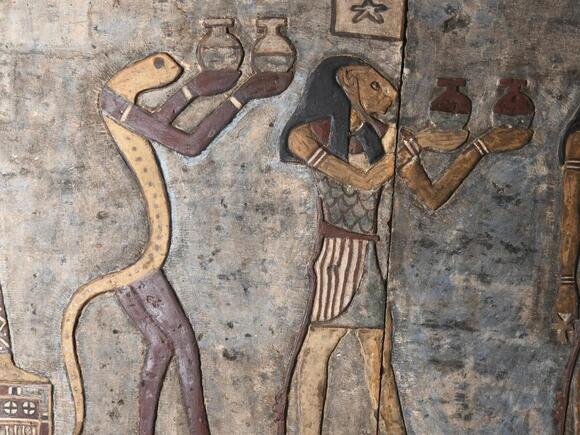
Ancient Egyptian star signs were found under a thick layer of soot and dust in the Temple of Esna.
The colors in the full set of Egyptian zodiac symbols are vivid after being protected by the grime.
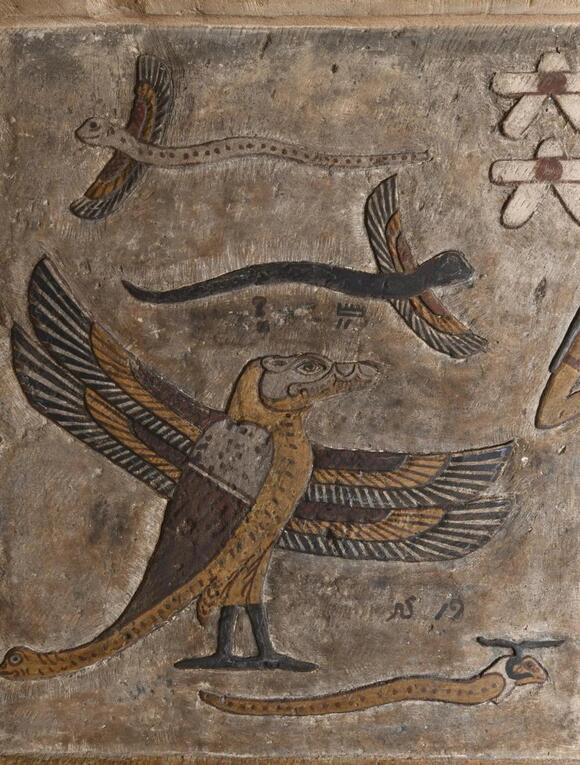
They also found depictions of beasts, including a snake with a ram’s head and a bird with a crocodile’s head.
A rare full set of ancient Egyptian astrological symbols has been uncovered under 2,000 years’ worth of grime in Luxor’s Temple of Esna, in southern Egypt.
The set is just one of three full sets of ancient Egyptian zodiac signs uncovered in Egyptian temples, said Dr. Daniel von Recklinghausen, a Tübingen Egyptologist who worked on the project.
“Representations of the zodiac are very rare in Egyptian temples,” Professor Christian Leitz, an Egyptologist of the University of Tübingen who worked on the project, said in a press release.
The temple was already famous for its astronomical ceiling, but some of the star signs had not been detected in previous archaeological missions, Mostafa Waziri, secretary-general of Egypt’s Supreme Council of Antiquities, said in a briefing per Arab News.
With these last signs uncovered, the archaeologists were able to confirm the temple contains a full set of the 12 Egyptian star signs, from Aries to Pisces, Hisham El-Leithy, head of the Egyptian expert team, per Arab News.
The symbols were hidden under a thick layer of muck
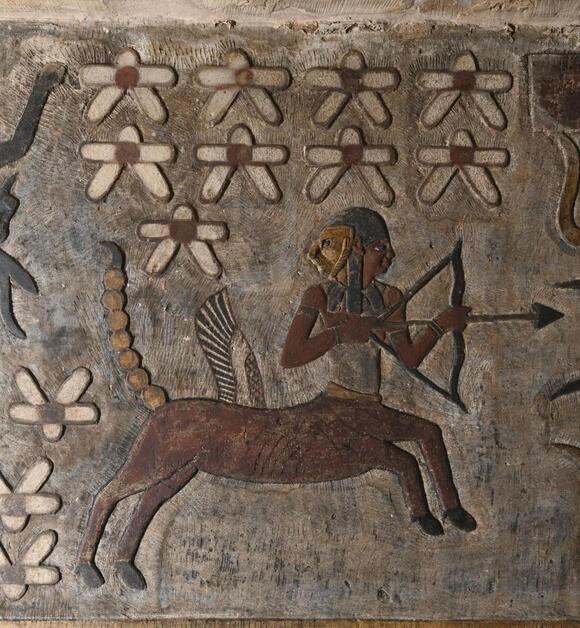
The zodiac sign Sagittarius Ahmed Emam, Ministry of Tourism and Antiquities
The discovery was made by a joint team of experts from the Egyptian Center of Documentation of Antiquities and the University of Tübingen, Germany, who are renovating and documenting the temple’s original colors.
“The zodiac was used to decorate private tombs and sarcophagi and was of great importance in astrological texts, such as horoscopes found inscribed on pottery sherds,” said Recklinghausen, adding: “However, it is rare in temple decoration.”
Several of the signs are recognizable to us. These include the Sagittarius, which is represented by a horse with the torso of a human archer — though in ancient Egyptian times, he also had a spiked tail and wings.
The scorpio is also easily recognizable, represented by a scorpion surrounded by stars.
An ancient Egyptian representation of the zodiac sign Scorpio. Ahmed Emam, Ministry of Tourism and Antiquities
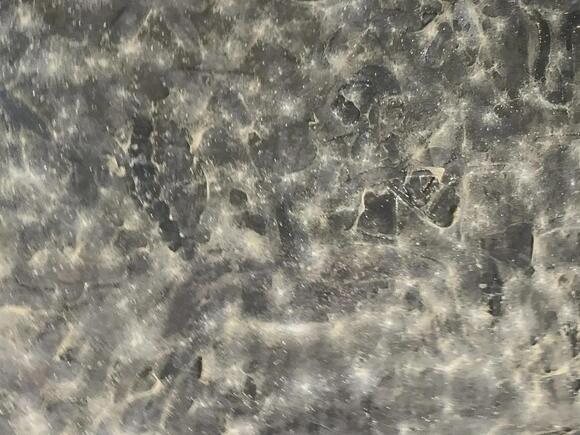
These symbols were hidden under nearly 2,000 years of dust and dirt which has kept them in an incredible state of preservation.
This is what the Sagittarius looked like before restoration. Ahmed Emam, Ministry of Tourism and Antiquities
The Temple of Esna took 400 years to complete
The symbols were found in the Temple of Esna, an ancient Egyptian temple that dates back to the Greco-Roman times and was completed in A.D. 250 , per Egypt Independent.
Only the Hypostyle Hall remains of the temple.
This vestibule, a 121-foot-long, 65-foot-wide, and 50-foot-high sandstone structure held up by 24 columns, took 400 years to complete, per a press release.
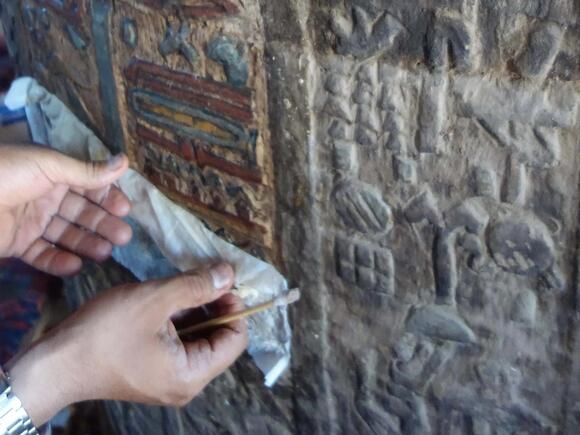
Restoration process in the Temple of Esna. Ahmed Amin
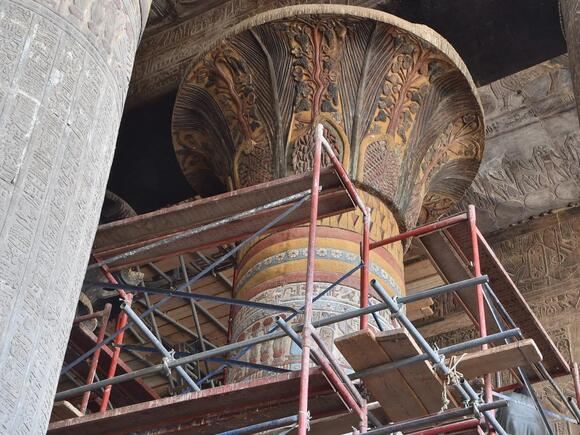
Every inch of the temple, which also contains 18 decorative free-standing columns, is covered in intricate designs.
A column in the Temple of Esna being restored. Ahmed Amin
The team has been renovating the temple for the past five years. These zodiac symbols were uncovered in the latest series of renovations, which revealed the designs in brilliant colors.
Ancient Egyptians adopted astrology late in their reign
These symbols show the decans, which are zodiac symbols representing the 12 hours of the night. Ahmed Emam, Ministry of Tourism and Antiquities
Egyptians were introduced to astrology quite late in their rule, during Greco-Roman times.
“The zodiac itself is part of Babylonian astronomy and does not appear in Egypt until Ptolemaic times ,” said Leitz.
Some of the symbols of their zodiac system have been lost in time. Pictured above, for instance, are the Decans, used to measure the twelve hours of the night.
Zodiac symbols were not the only discovery in this latest round of renovations. The archaeologists also uncovered representations of the planets Jupiter, Saturn and Mars.
They also found various fabulous beasts, including a snake with a ram’s head and a bird with a crocodile’s head, the tail of a snake, and four wings, per the press release.
Depiction of winged snakes and an animal with bird, crocodile and snake features. Ahmed Emam, Ministry of Tourism and Antiquities
The temple of Esna is teaching us a lot of information about how ancient Egyptians read the stars.
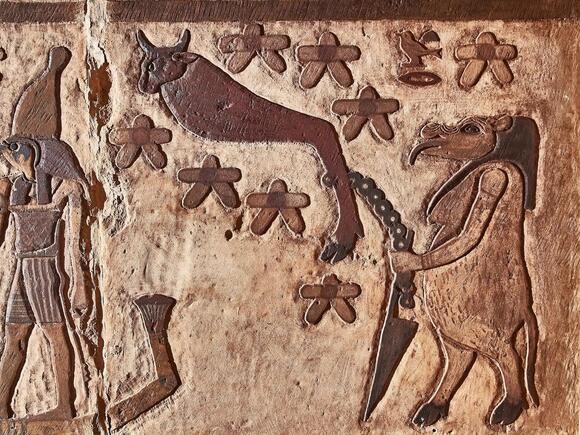
One inscription, uncovered in a previous round of renovation, showed how Egyptians compared the Big Dipper to a bull’s leg tied to a stake by a goddess in hippo form, per a press release.
According to an accompanying press release, the Big Dipper was considered to be the manifestation of the evil god Seth who murdered his brother Osiris.
The depiction shows the hippo goddess holding Seth back to prevent him from reaching Osiris in the underworld.
A painting in the Temple of Esna shows the Big Dipper, in the shape of a bull’s leg, being held back by a goddess. Ahmed Amin
I prefer to use a glass, but you can use a plastic bottle if it’s all you have. Water is the perfect liquid to imprint with your intensions, so this spell is super simple but instantly powerful.
Hold the glass of water between your hands and say whatever you most need. For example:
My migraine is gone and I am full of health.
Close your eyes as you say these words and focus on putting all of your energy into the water. Raise as much energy as you can (I raise energy through my feet from the earth and send it out through my hands) and picture the outcome that you want. Do this for at least 2 minutes.
Once you have enchanted the water, drink it within the hour for optimal results.
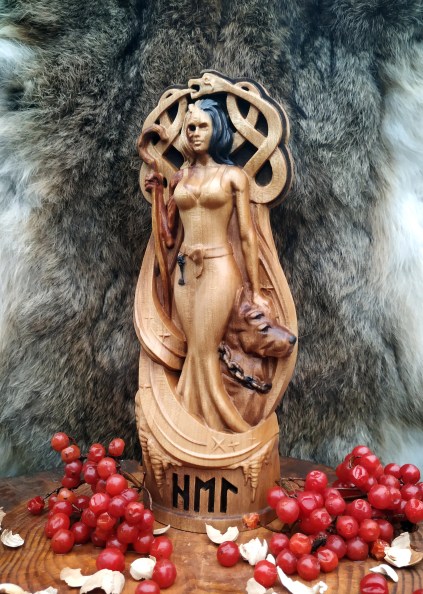
Hel is the Norse goddess of the dead. She ruled over the underworld, Niflheim, where she received the dead. Her name means “one that hides.”
In general, Hel is only mentioned in passing in Old Norse literature. It means her character is ill-defined and her personality little-developed. Some historians even suggest that she is a figment of the imagination of the Norse poets.
Facts About Hel
Name(s):
Hel
Rules over:
The Underworld
Gender:
Female
Symbols:
Hagalaz Rune
Linked Animals:
Hellhound (named Garmr), Crows
Parents:
Loki and Angrboda
Siblings:
Fenrir and Jörmungandr
Greek Similar:
Hades
Roman Similar:
Pluto
Family
In Norse mythology, Hel’s father was the trickster god Loki and her mother the giantess Angrboda. Loki and Angrboda had three children: the wolf Fenrir; the serpent Jörmungandr; and Hel, their only daughter.
Hel was born with the bones on one half of her body fully exposed and, thus, is often depicted as a half-black and half-white monster. She grew up with Fenrir and Jörmungandr in Jotunheim, land of the giants, until Odin, ruler of the Aesir, decided they should live in Asgard where their father came from.
Symbols
Hel is associated with a hellhound named Garmr as well as crows. She is also sometimes affiliated with the Hagalaz Rune stone.
Powers & Duties
In Asgard, the other Norse gods were uncomfortable with Hel’s appearance. For this reason, Odin agreed to send her away, and gave her the World of Niflheim – one of the Nine Realms. There she became queen of the dead.
The Norse believed that most people went to Niflheim when they died. Only warriors who were killed on the battlefield did not go to Niflheim. Instead, half of the warriors who died on the battlefield went to live with Odin in his palatial home Valhalla and the other half with Freya in her afterlife realm Folkvang.
Niflheim was divided into sections, including one called the shore of corpses. Here, a castle filled with venomous serpents stood facing north. It was full of murderers, perjurers, and adulterers who suffered while their blood was sucked by a dragon named Nidhogg.
When Odin’s son Baldur died because of a trick by Loki, his soul was also received in Niflheim. Hermod, another son of Odin’s, agreed to go to Hel to convince her to send Baldur home. But Loki played another trick to make it impossible for Baldur to return to the real world. The eventual exposure of his trickery led to the end of the world, a battle between good and evil known as Ragnarok.
In Niflheim, Hel was waited upon by two servants called Ganglati and Ganglot. It is said they moved so slowly that they appeared to be standing still. They served her meals in a dish named “hunger” and with a knife named “famine.”
Facts About Hel
Holland, Helvetia, Helsinki, and Holstein are well-known places that were probably named after Hel;
Hel’s appearance could be the inspiration of the masked harlequin who appeared in Commedia dell’ Arte;
No-one could hide anything from Hel. She had an eye of fire, which could only see the truth;
The Vikings feared Hel’s appearance, and they were wary of Niflheim;
Niflheim was an icy cold place rather than a place of fire and brimstone most associated with the modern idea of hell;
In the Prose Edda written by Snorri Sturluson in the 13 th century, Niflheim is described as a place where a constant wail can be heard from the residents. It is damp with sleet and the walls are built with worms and the bones of humans;
In the Gylfaginning, the first part of the Prose Edda, Hel is described as “rather downcast and fierce-looking”;
Hel was feared by the Vikings, but the Gauls, Dutch, and Germanic peoples were more sympathetic towards her. They did not see Niflheim as a place of punishment and had a kinder approach to death;
The expression “go to hell” originated with Hel and Niflheim;
Niflheim existed beneath the roots of the world tree Yggdrasil;
Jacob Grimm, a scholar of Norse mythology, had a theory that Hel was only a “half-goddess.” He argued that because Loki made the giantess Angrboda pregnant, there was no proof that Hel was of full divine blood;
Some scholars have suggested that several of the imitation medallions and bracteates which remain from the Migration Period depicts Hel;
Hela, the fictional villainess in Marvel Comics’ American comic books, is based on Hel. She is also featured in the webcomic The Order of the Stick, in which she is an antagonist who wants to destroy the world.
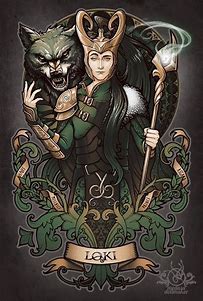
Loki is known as the trickster god and deity of mayhem and mischief in Norse mythology. He is one of the most well-known gods of Norse mythology. He is at least half-giant; however, some think he is full-giant but sneaked his way to becoming a god.
Loki Facts
Name(s):
Loki
Rules over:
Chaos, Mischief
Gender:
Male
Symbols:
Mistletoe, Horned Helmet (modern depictions)
Linked Animals:
Two Intertwined Snakes
Parents:
Fárbauti and Laufey
Siblings:
Helblindi and Býleistr
Greek Similar:
Atë
Roman Similar:
Laverna
Family
Loki’s father was Fárbauti and his mother was Laufey. It is unknown whether his mother was a lesser known goddess or a giant, and his father definitely was a giant.
This duplicity may have attributed to Loki’s split feelings about the gods of Asgard. Sometimes he is helpful to them, but other times he insults them, causes trouble, and during Ragnarok leads the giants into battle against Asgard.
Symbols
Loki has been associated with mistletoe, two intertwined snakes, and also a helmet with two horns.
Powers & Duties
Loki had the power to shape-shift in Norse legends. In various stories, he turned into a salmon, mare, seal, fly, and elderly woman. He also used a combination of masterful trickery and cunning to achieve his objectives.
Stories
The first time Loki helped the gods was when they were building Asgard. The gods had run out of funds and all they had built was a wall. Loki came up with the idea that a giant should finish the job for them. The gods agreed, as did the giant. But, the giant asked for the Sun, the Moon, and the goddess Freya as payment if he completed the job on time. The gods weren’t sure, but Loki assured them that the giant would never finish on time. The giant had a huge stallion called Svadilfari to help him, and the gods got nervous. Loki changed shape into a mare and seduced the giant’s horse. As a result of Loki’s trickery, the giant wasn’t able to finish on schedule and tried to kidnap Freya. Before the giant could, Thor cracked his skull with a hammer. However, Loki, as the female horse, got pregnant and gave birth to an eight-legged stallion named Sleipnir, which he gave to Odin.
Another time he helps the gods of Asgard is when Thor lost his hammer, Mjolnir. Thor asks Loki for help and they work together to find where the hammer is located. Thrymr, the giant, had stolen the weapon and taken it to the home of the giants. He would only return it if Freya would agree to marry him. Loki came up with a plan that included his and Thor’s cross-dressing to get the hammer back. It succeeded, and Thrymr was punished.
During a great feast in Asgard, Loki wasn’t invited and was upset. He asked the guard what the gods were talking about, and the guard told him they were talking about war, weapons, and saying negative things about Loki. Loki burst in, and the gods became silent. Loki then asks for a seat, and Odin finally agrees to let him sit. Loki gives a toast to all the gods except for Bragi, whom he insults instead. They start arguing and other gods and goddesses get involved.
Loki begins to insult them all, including Odin, and when Frigg, Odin’s wife, tries to stop Loki, he ends up insulting her as well. She tells Loki that if her son Baldur were still alive, Loki wouldn’t be able to escape the wrath of the gods. Loki then reminds her that he is responsible for Baldur’s death. The insults continue when Freya calls Loki mad – he retorts that she is a whore. Heimdall tells Loki he’s drunk and to stop, but Loki insults Heimdall. Skadi tells Loki to watch it or he’ll be bound up, and Loki insults her. Sif, the wife of Thor, gives him mead in a golden goblet saying she is blameless and he can’t insult her. Loki claims she is his lover. Thor finally arrives, threatens Loki to silence with Mjolmir, and Loki finally leaves after insulting Thor. He disguises himself as a salmon, but the gods find him and finally bind him until Ragnarok.
Facts About Loki
In Old Norse, Loki means “close”;
Loki typically cheated dwarves at any opportunity given to him. They finally were able to stitch his mouth shut to keep him quiet from insults;
Loki is the father of Hel, the goddess of the land of the dead. He is also father of Fenrir, the wolf demon that bites off Tyr’s hand and will eat Odin during Ragnarok. He is also the father of Jormungandr, the world serpent;
Loki steals Freya’s amber necklace, in which Heimdall fights him and retrieves it;
Loki tricked blind Hod to kill Baldur with mistletoe;
When bound until Ragnarok, Skadi places a venomous snake above him, which causes him terrible pain with the poison.
(SIDE NOTE: We can read many different theories for what dreams may mean. So, take away from each post on dreams interpretation and symbols what is relevant to you.)
Dreams can be mysterious, exhilarating, or even terrifying, but understanding the meaning of our dreams can be downright baffling. While many theories exist to explain why we dream, no one yet fully understands their purpose, let alone how to interpret the meaning of dreams. However, psychologists have developed theories that might explain what dreams mean.
Here are four theories that can help you figure out what your dreams mean:
Dreams as the Road to the Unconscious Mind: Developed by Sigmund Freud, this theory stated that dreams signified what people desire.
Archetypes and the Collective Unconscious: Carl Jung also believed that dreams represented repressed wishes but also noted that dreams explored the underdeveloped parts of the mind.
Dreams as a Cognitive Process: Calvin S. Hall theorized that what people do and think in their waking lives are what they see in their dreams.
Dreams as a Reflection of Waking Life: G. William Domhoff, who worked with Hall, theorized a similar explanation for dreams.
Read ahead to learn more about each theory and how you can use them to interpret your dreams.
Freud: Dreams as the Road to the Unconscious Mind
In his book “The Interpretation of Dreams,” Sigmund Freud suggested that the content of dreams is related to wish fulfillment.
Dream Are Our Wishes
Freud believed that the manifest content of a dream or the actual imagery and events served to disguise the latent content or the unconscious wishes of the dreamer. In other words, Freud believed that the content of your dreams shows what you desire in life.
Dream Work
Freud also described four elements of this process that he referred to as “dream work:”1
Condensation: Many different ideas and concepts are represented within a single dream. Information is condensed into a single thought or image.
Displacement: This element of dream work disguises the latent content’s emotional meaning by confusing the dream’s important and insignificant parts.
Symbolization: This operation also censors the repressed ideas in the dream by including objects meant to symbolize the latent content of the dream.
Secondary revision: During this final stage of the dreaming process, Freud suggested that the bizarre elements of the dream are reorganized to make the dream comprehensible, thus generating the dream’s manifest content.
While Carl Jung shared some commonalities with Freud, he felt that dreams were more than an expression of repressed wishes.
Dreams Explore the Underdeveloped Mind
Jung suggested that dreams revealed both the personal and collective unconscious and believed that dreams compensate for parts of the psyche that are underdeveloped in waking life.
Jung’s Four Archetypes
Jung also suggested that archetypes such as the anima, the shadow, the animus, and the persona are often represented as symbolic objects or figures in dreams.2
These symbols, he believed, represented attitudes that are repressed by the conscious mind.
Unlike Freud, who often suggested that specific symbols represent specific unconscious thoughts, Jung believed that dreams can be highly personal and that interpreting these dreams involved knowing a great deal about the individual dreamer.
Calvin S. Hall looked for themes and patterns by analyzing thousands of dream diaries from participants, eventually creating a quantitative coding system that divided what’s in our dreams into several categories.
Dreams Contain Patterns Related to Waking Life
Hall proposed that dreams are part of a cognitive process in which dreams serve as “conceptions” of elements of our personal lives.3
According to Hall’s theory, interpreting dreams requires knowing the following:
The actions of the dreamer within the dream
The objects and figures in the dream
The interactions between the dreamer and the characters in the dream
The dream’s setting, transitions, and outcome
The ultimate goal of this dream interpretation is not to understand the dream, however, but to understand the dreamer. Research by Hall revealed that the traits people exhibit while awake are the same as those expressed in dreams.
Domhoff: Dreams as a Reflection of Waking Life
G. William Domhoff is a prominent dream researcher who studied with Calvin Hall at the University of Miami.
Dreams Represent Daily Life
In large-scale studies on the content of dreams, Domhoff has found that dreams reflect the thoughts and concerns of a dreamer’s waking life.
Domhoff suggests a neurocognitive model of dreams in which the process of dreaming results from neurological processes and a system of schemas.4 Dream content, he suggests, results from these cognitive processes.
Popularizing Dream Interpretation
Since the 1970s, dream interpretation has grown increasingly popular. Ann Faraday’s 1974 book “The Dream Game” outlined techniques and ideas anyone can use to interpret their dreams.
Today, consumers can purchase various books that offer dream dictionaries, symbol guides, and tips for interpreting and understanding dreams.
How Biases Affect Dream Interpretation
Researchers Carey Morewedge and Michael Norton have studied the dreams of over 1,000 individuals from the United States, India, and South Korea.5
They discovered that few college students who participated in the research believed that their dreams were simply the brain’s response to random stimulation. Instead, most endorsed Freud’s notion that dreams reveal unconscious wishes and urges.
What they also discovered, however, is that the weight and importance people attach to their dreams depends largely on their biases. People are more likely to remember negative dreams if they involve people they dislike. They are also more likely to take positive dreams seriously if they involve friends or loved ones.
In other words, people are motivated to interpret their dreams in ways that support their already existing beliefs about themselves, the world, and the people around them.
The researchers found that such things as the confirmation bias and the self-serving bias can impact how people respond to their dreams.
Because people tend to take their dreams seriously, the researchers suggest, they can also become a self-fulfilling prophecy. If you dream that you will fail an exam, you might be less motivated to study or even become so stressed out that you perform poorly.
Dreams may or may not have meaning, but the fact remains that interpreting dreams has become a popular pastime.
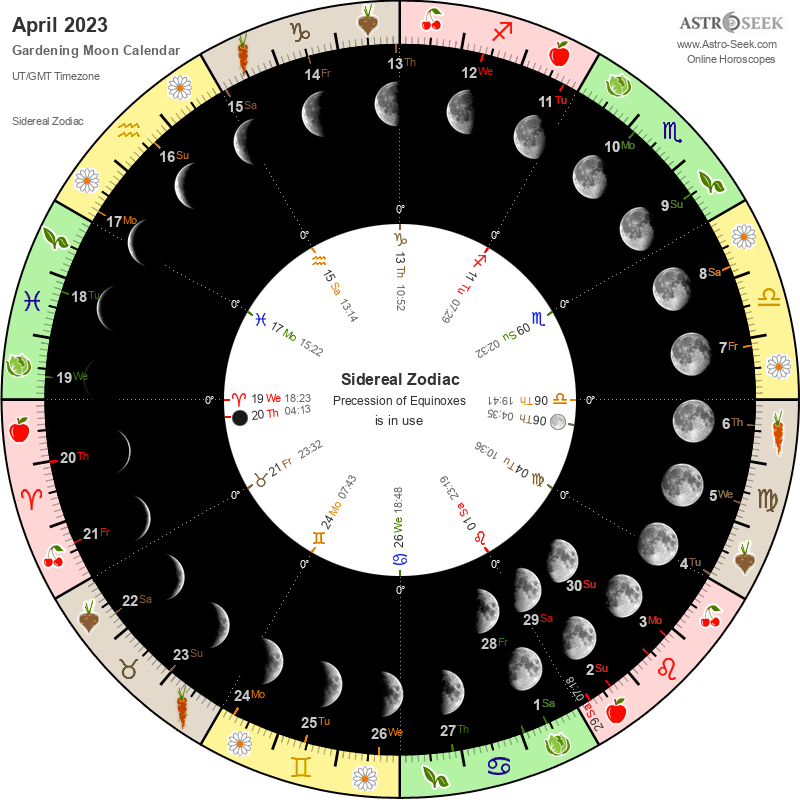
April 2023 – Gardening by the Moon, Biodynamic Planting Guide
Please read this first:
1) Moon Phase x Moon Zodiac Sign:
Please keep in mind, that Gardening by Moon Phase and Gardening by Moon Zodiac Sign are two different/independent biodynamic systems and they might give you different or contradictiory gardening recommendations.
a) Each Moon Phase (except Full Moon and New Moon) lasts about 1 week
b) Each Moon Zodiac Sign lasts about 2.5 days
Try to experiment with these two systems to find which recommendations suits you the most.
2) Tropical (Astrological) x Sidereal (Astronomical) Zodiac:
(1-2 days difference in Leaf, Fruit, Root and Flower days)
There are two different zodiacs for determining the Moon Sign:
a) Tropical zodiac (Astrological) is based on the seasons – Vernal Equinox is fixed as 0° Aries (The 1st Fruit day)
b) Sidereal zodiac (Astronomical) takes into account Precession of Equinoxes and shifts 0° Aries back by cca 1-2 days. Maria Thun who was an authority on biodynamics was using this Sidereal zodiac
Try to experiment also with these two zodiac systems to find which system suits you better. (Side Note one system follows the other)
There are no restrictions to shopping or important decisions today. The Moon is in Virgo.
Aries (March 21-April 19)
Begin this week with care and caution because for starters, you might be at odds with someone in a position of authority – a parent, boss, teacher or member of the police. In addition, surprises at work, related to your earnings or your possessions might catch you off guard. Tread carefully!
Taurus (April 20-May 20)
Today you feel impulsive and impatient. In particular, you might feel this way when dealing with kids or a romantic partner. However, it will also manifest in sports or if you’re involved in the entertainment world. Hidden arguments might take place behind the scenes. Easy does it.
Gemini (May 21-June 20)
Squabbles with friends or members of groups might take place today. This could relate to some impulsive social outings that you’re planning. (“Busted!”) It might even relate to a hidden love affair. If you have transgressed – come clean. Your first loss is your cheapest loss.
Cancer (June 21-July 22)
This is a poor day to confront authority figures so be aware of this right from the get-go. Do not choose today to ask for permission or approval for anything. Postpone this request. Meanwhile, a member of a group or a friend might do or say something that surprises you. Stay tuned.
Leo (July 23-Aug. 22)
Steer clear of controversial subjects like religion, politics and racial issues because they could escalate quickly into something nasty. (You don’t need this.) In fact, discussions about travel, publishing, higher education, medicine and the law might also trigger power struggles. (Yikes!)
Virgo (Aug. 23-Sept. 22)
Today you’re full of electric, restless energy because the Moon is in your sign dancing with unpredictable Uranus. Be careful about overreacting or having a knee-jerk reaction to discussions about shared property or shared responsibilities. You might not agree with someone else’s values. Be cool.
Libra (Sept. 23-Oct. 22)
Quarrels with partners and close friends might arise today. If so, they are basically power struggles. Something unexpected that impacts your property, debt or a loan might trigger a dispute; or it could be about a basic difference in values. (Tough to deal with.)
Scorpio (Oct. 23-Nov. 21)
Be patient with coworkers, customers and clients today because if you are angry, curt or rude, you will likely regret it later. Chalk it up to the job. It goes with the territory. Generally, it’s not wise to burn bridges because you never know what the future holds.
Sagittarius (Nov. 22-Dec. 21)
Parents must be patient with their kids today because this is the classic day for hissy fits and meltdowns. Meanwhile, romantic partners must be patient with each other if they want to stay together. It often boils down to: “You can be right — or you can be in the relationship.”
Capricorn (Dec. 22-Jan. 19)
Family quarrels, especially about repairs or real-estate plans might arise today. Possibly, they relate to something unexpected that affects one of your kids? Whatever the case, maintain your chill. We all have quarrelsome days. Patience is the antidote to anger.
Aquarius (Jan. 20-Feb. 18)
You might come on too strong when dealing with others today. Or possibly, you will attract someone to you who does this. Either way, aggressive communication never accomplishes what you hope it will. In fact, people more likely listen when you whisper. For your own benefit be patient with yourself and others.
Pisces (Feb. 19-March 20)
Arguments about money or possessions might arise today. Meanwhile, do be careful and pay attention to everything you say and do because this is an accident-prone day for you. Keep your eyes open, and definitely, think before you speak or act. That way – no regrets.
If Your Birthday Is Today
Actor Matthew Goode (1978) shares your birthday today. You like to be at the centre of things as someone indispensable to an important cause. You love a challenge; and you thrive dealing with groups. This is a year of change, which means you have to be flexible and courageous. Expect to increase your personal freedom, and travel.
You can use this link to go forward or backward in time for Moon phase information. If you are curious, you can even find out what phase the Moon was in when you or anyone else was born.
The Moon’s current phase for today and tonight is a Waxing Gibbous phase. Visible through most of the night sky setting a few hours before sunrise. This phase is when the moon is more than 50% illuminated but not yet a Full Moon. The phase lasts about 7 days with the moon becoming more illuminated each day until the Full Moon. During a Waxing Gibbous the moon rises in the east in mid-afternoon and is high in the eastern sky at sunset. The word Gibbous first appeared in the 14th century and has its roots in the Latin word “gibbosus” meaning humpbacked.
The Waxing Gibbous on April 3 has an illumination of 93%. This is the percentage of the Moon illuminated by the Sun. The illumination is constantly changing and can vary up to 10% a day. On April 3 the Moon is 12.22 days old. This refers to how many days it has been since the last New Moon. It takes 29.53 days for the Moon to orbit the Earth and go through the lunar cycle of all 8 Moon phases.
Phase Details
Phase: Waxing Gibbous
Illumination: 93%
Moon Age: 12.22 days
Moon Angle: 0.50
Moon Distance: 401,760.74 km
Sun Angle: 0.53
Sun Distance: 149,595,445.80 km
The 8 Lunar Phases
There are 8 lunar phases the Moon goes through in its 29.53 days lunar cycle. The 4 major Moon phases are Full Moon, New Moon, First Quarter and Last Quarter. Between these major phases, there are 4 minor ones: the Waxing Crescent, Waxing Gibbous, Waning Gibbous and Waning Crescent. For more info on the Moon Cycle and on each phase check out Wikipedia Lunar Phase page.
Useful Moon Resources
Check the weather before a night of Moon gazing at weather.com
1948 US President Harry Truman signs Marshall Plan ($5B aid to 16 European countries)
1973 1st mobile phone call is made in downtown Manhattan, NYC by Motorola employee Martin Cooper to the Bell Labs headquarters in New Jersey
2016 Panama Papers published – 11.5 million confidential documents from offshore law firm Mossack Fonseca expose widespread illegal activities including fraud, kleptocracy, tax evasion and the violation of international sanctions by the world’s elite in the world’s largest ever data leak
1930 2nd Academy Awards: “The Broadway Melody”, Warner Baxter & Mary Pickford win. First time Academy Awards are broadcast on the radio.
1949 KQW-AM in San Francisco CA changes call letters to KCBS
1949 WLWS (now WCMH) TV channel 4 in Columbus, OH (NBC) begins broadcasting
1953 American magazine “TV Guide” publishes 1st issue; cover features photo of Lucille Ball‘s new born baby boy, Desiderio Alberto Arnaz IV (later professionally known as Desi Arnaz, Jr.)
1958 Abe Burrows, Richard and Marian Bissell’s comedy “Say, Darling” opens at ANTA Theater, NYC; runs for 332 performances
1961 Jacques Offenbach and Yip Harburg’s musical “The Happiest Girl in the World”, starring Cyril Ritchard and Justine Rule, opens at Martin Beck Theatre, NYC; runs for 97 performances
1967 WNYE TV channel 25 in Brooklyn, NY (PBS) begins broadcasting
1968 “Planet of the Apes”, starring Charlton Heston and Roddy McDowell premiers nationally in the United States







 Cancer

 Leo
Leo


 Virgo
Virgo


 Libra
Libra


 Scorpio
 Sagittarius

 Capricorn

 Aquarius

 Pisces

 Aries
Aries

 Taurus


 Gemini






 Witches Of The Craft®
You must be logged in to post a comment.