Who Is A Real Witch Anyway?

Who Is A Real Witch Anyway?

Author: Amergin Aradia
It seems that the debate about who is and who is not a “real Witch” is coming to a head. Is this sect real as opposed to that sect? Are those in covens real Witches as opposed to solitaries’. And on and on it goes. It’s beginning to sound like the fight between factions of the Christian religion or between organized religions as a whole. That’s probably the way they began too.

This silly useless debate is pulling our community apart as well. The truth is, are any of us real Witches. And how do you define a real Witch? By whose standards and rules?

As an illustration of my point I’ll tell you my story. I have always known that I was a Witch, even before I really knew what that was. When I was very young (grade school) I had certain abilities and interests that other kids didn’t. I practiced raising energy, practiced ESP (as it was called then) , I astral projected, and I cast spells. I was drawn to the night, the moon and stars, and I identified with all things “magical.”

I wasn’t trained by anyone because there was no one to train me. I had to figure it out for myself and that was in the 1950’s so you know there were very few references to rely on even if I knew where to look. As I grew up I did what everyone else did then, got a job and tried to live what was considered a “normal” life, as unsatisfying as that was.

I maintained my interests and practices over the years as best I could, if only peripherally. There may have been one or two occult bookstores in the area but you really had to search them out and I only managed to get to one every so often and then only to browse because I didn’t know what I was looking for. You didn’t just walk up to someone and tell him or her you were a Witch and wanted to join a coven. And people didn’t come out of the woodwork to invite you to join one, even if you knew where to look.

So I dabbled, training myself the best way I could using instinct as my guide. At the time I would have loved to have found someone to train me and I would have loved to have found a coven to join so that I wouldn’t feel so alone. But they didn’t exactly advertise. And there was no Internet in those days to bring us all together.

So unless you were lucky, you were on your own. Like it or not.

Now that we have all these books, magazines, and web sites to fill in the gaps I find that my instincts did very well by me. Everything that I taught myself way back then is now being touted as the way to do it by the “experts.” I have since collected an entire library of books hoping to find information that would help me advance my practice but with the exception of a few interesting bits that I’ve added here and there, I have been disappointed.

I have also attended classes, open groves, and ceremonies, and while the people that I met were very nice it just didn’t feel right for me. I’ve also become very disillusioned with the influx of the newest brick and mortar shops. They seem to have become havens of self-help, yoga, meditation, and coffee and music.

And while I practice yoga and meditation myself I don’t want to go to my local Craft shop to pick up a yoga mat, balance ball, or a book by Dr. Phil. I want to pick up the tools for my ceremonies and spell crafting and, unfortunately, the kind of shop I want seems to be few and far between (except on line.) It feels as though the craft as I remember it is being homogenized and made so “acceptable” in the eyes of the general public that it is becoming useless to serious practitioners. But I digress here.

So to sum up this article, does it mean that I am not a real Witch because I had no one to “lead the way” or no coven to adopt me and teach me “their right way”? Quite frankly I think that makes me an even better real Witch because I had to figure it out for myself. And because of that my understanding and beliefs don’t quite fit into any prescribed dogma. So that is why I stay a solitary practitioner and that is why I have stepped back from the community as a whole.

But then I don’t look at being a Witch as a religion, with all of its implied rules and regulations and dogma. I look at being a Witch in the same way that the old village Witches looked at it. I revere the earth and heavens and do my best to respect and tread lightly on her.

I try to live a spiritual life without bowing to or begging the acceptance of any one archetypal being. I look at the Goddess and Gods as a representation on this plane of the source of all energy and power. I cast spells for my own benefit, and mine alone, as I don’t believe I have the right to manipulate anyone else’s life. And I believe that Karma will out eventually.

I believe that being a Witch is as simple as that. It’s in your heart, it’s in your soul, and it’s who YOU know you really are. Not because someone gives you permission to be one simply because you read and adhere to someone else’s views as written down and published. Or because you attend meetings once a week, or once a month, or even once a quarter.

But because YOU know you are. And whether you are solitary or a member of a group, no matter what that group represents, you are really on your own. You must practice, practice, practice, and hold that knowing in your own heart…alone.

That’s what makes you a “real Witch.”

Today’s Tarot Card for Everyone:

Today’s Tarot Card for Everyone:

The Anchoret

This Tarot Deck: Cagliostro

General Meaning: The challenge of what has traditionally been known as the Hermit card is to be able to recognize a teacher in a humble disguise. This font of mysterious knowledge will not make it easy for the student to acquire his wisdom, as it takes time and long contemplation to fathom what he knows. He often speaks wordlessly, or in ancient and barbaric tongues, communicating with the elements, animals and Nature herself.

While the hourglass was an identifying feature on the earliest Hermit cards, more modern ones have shifted the metaphor, showing more or less light released from his lantern. In either case, the Hermit card reminds us of the value of time away from the hubbub of civic life, to relax the ego in communion with Nature.

Paper

Paper
Paper can be the Spell
Certain scripts are perceived as inherently powerful, for instance, Arabic, Chinese and Hebrew. If there was a pagan Greek belief that the world was created and activated via the sound of the vowels, in traditional Judaic teaching life is activated through the Hebrew letters. Ancient Egyptians utilized different scripts for different purposes, mystical and mundane. Northern European runes and Celtic Ogham script are specifically for magickal and spiritual use. Many contemporary Wiccans and ceremonial magickians use various magickal script.
Paper can create lasting amulets. The most readily accessible example is the Jewish mezuzah, attached to doorposts. The use of mezuzahs has been adopted by some Hoodoo practitioners. Similar written amulets exist in Chinese, Japanese, Ethopian, Muslim and Tibetan traditions.
Paper as we know it was invented in China in 105 ce, and China remains the primary home of paper magick. Paper charms are traditionally written in red cinnabar ink on yellow or red paper with a peach wood pen, in special magickal scripts known as “thunder writing” or “celestial calligraphy.” Charms are used in various ways: Pasted over the door or on the walls, worn in the hair or carried in a medicine bag.

Some paper spells are created in ordered to be destroyed via fire or water. Destroying the paper spell releases its energy into the atmosphere so that the spell can work as intended. Sometimes water and fire are combined: some Chinese charms are burned first, and then the ashes are mixed with tea or water and drunk. Rice paper is particularly effective for this as it dissolves easily in water.
 
*A written spell doesn’t necessarily require paper: an ancient custom was to inscribe a clay bowl or plate with spells and incantation. It is then shattered to release the energy into the atmosphere. (If you make your own pottery, the traditions can be combined; insert tiny pieces of paper directly into the pottery, inscribe further so the magick is contained inside and out, then shatter.)
 
*Not all paper spells require words. Spells can be cast with images. Chromolithographs incorporate the power and blessing of a Spirit. They may also substitute for a statue. If you don’t have no artistic ability, a collage of sacred and power images create an amulet.
 
*A traditional alternative is to write the name of the desired divinity in gold ink on red paper and post it on the wall.
 
Many spells suggest using “magickal inks” formulas. Although this is never required, it can empower a spell.


Pen and ink are only one form of magick writing. There are many traditions of drawing designs on the ground, particularly to invite, invoke and honor spirits. Materials used include flowers, flour, cornmeal and special rangoli powder.
 
*Angelic sigils are written on paper or engraved onto metal. Each angel has a specific sigil that can be used to summon them. The “veve” designs of Haitian Vodou have similar purposes. Each Iwa or spirit has a “veve” that expresses its essence and is thus worthy of meditation, but the “veve” may also be used to summon and honor the spirit. “V’eves” may be drawn on paper but are most frequently drawn on the ground. Candomble and Romany spirits also possess sigils as do others.
 
*Rangoli, the women’s spiritual art of India, utilizes rice flour with brightly colored flowers and spices to create patterns. As Earth’s tiny creatures eat the rice flour, they carry imbedded prayers and petitions to the Earth’s womb.
 
*In Brazil, pemba, a kind of chalk which may contain pulverized herbs, is used to create invocational markings on Earth. Originally an African practice, the finest pemba is still thought to come from Africa and may be imported and purchased at a great cost to a less-than-wealthy practitioner.

I Just Happen To Be Pagan!

I Just Happen To Be Pagan!

Author: Nellie Carlton


“Hello, I am a Witch, ” says the man sporting a pentagram the size of an SUV, wearing all black and just waiting for some one to call him out for being different.

My god! He will kill my cat and steal my babies.

I won’t hire him/ be his friend/have further dealings with him!

Now lets try a different scenario:

John just got a new job and he is getting along great with every one. He shows that he has great work ethic, contributes new and helpful ideas, and he is dependable and trust worthy. After working at his job for a few months, some religious topics come up in the break room and John is asked his opinion.

“Well as a Pagan I believe….”

In which situation does it seem more likely that some one would be open to learning the positive side to a way of life they are not used to? As Pagans we hold the responsibility for others opinions of our entire community. Stereotypes are everywhere. Chose not to contribute to them.

John, the regular guy, just gave a whole group of people a reason to trust the Pagan community more than they might have already because he presented himself as part of the mainstream society as well. The other guy just added to the, “Those freaks all dress the same, and act out. They are up to no good. STAY AWAY.”

I am not saying not to wear you favorite Pagan jewelry, or not to disclose that you follow a different path to your new friend. I am asking you to think about how you are representing the rest of us when you do these things. If you are the only Pagan that some one knows then your personality traits, be they flaws or wonderful merits to your character, become a “stereotype” that they will associate with the next Pagan they meet.

Think of people in a different religion. Pagans so often have angst with Christianity. The main reason is that most Christians they have come into to contact with were not the “norm.” Maybe you met them in the mall and the first words out of their mouth were, “Do you know Jesus Christ as your lord and savior?” followed by hassling to listen to their spiel.

Maybe they came to your doorstep to tell you about their religion. Maybe it was a co-worker or classmate that always talks about uncomfortable topics to see how you would react. Those people’s actions could easily take over your opinion of Christianity if they were the only Christians you ever encountered. Luckily, they probably are not.

You probably have the opportunity to know many great people that just happen to be Christian, not people who are defined by their Christianity. However, Pagans are not as numerous, and you may be the only pagan some one knows for quite a while.

Do you want that person to think that Pagans are religious zealots who define every aspect of their lives by their religion? I would hope you would rather them think that you are an everyday guy who just happens to be Pagan.

So many times I go out into the Pagan community for a meet and greet of other local pagans and I come back with a bad taste in my mouth. I see exactly what I just described above, but it is in our circles. Pagans who enjoy stirring up trouble. They feed off others attention so they act out. People notice. They also notice the pentagram around their neck. Many times the people like this are only “Pagan” for the attention so even if the people noticing them decide to ask about Paganism or Wicca the “attention getter” would not really know what they were explaining.

Sadly, the rest of us are on our best behavior and we do not get noticed. The only recognizing being done is for those who don’t deserve it. A common saying goes, “It takes one ‘aw sh**’, to erase a thousand ‘atta boys.’” People always remember the bad over the good.
It would be so amazing to see a society where a Pagan was the same as any one else and we did not have to worry about these things.

A lot of people get hung up on the fact they should not have to act a certain way or be sensitive to what a Christian might think if they do this or that. I know you should not have to. I know it is wrong to be judged. You are being judged though.

So, now, I ask even more of you. Something that I think many people will not like.

Censor yourself.

When out in public watch what you say about Paganism. You may know what is involved in “casting a spell” or “invoking the goddess” but Jane Doe in the grocery Isle does not. Hearing tidbits of a conversation you are having with your buddy about a ritual you did the other day is probably unsettling for some one who does not know what you are talking about. It can also be the cause of untrue rumors and gossip. By the time Jane Doe is finished telling about her encounter with you the church down the street may be holding a service about how there are local witches summoning demons from hell and poisoning the local duck pond.

Now I challenge you with what might be the hardest thing yet.

If some one confronts you directly about your religion or beliefs looking for an argument, WALK AWAY! Walk away especially if you are in view of other people. You may know you can win. You may even think you can change their mind about Paganism. You will not achieve either however.

They approached you with intent on being right so in their mind they will be no matter what you say. If there are on lookers you will both seem immature for your dispute. It can only lead to negative energy and scuffed up feelings and egos on both sides. Here is the alternative I offer you. Send them a letter outlining what you believe, make it sweet and understanding. Then they cannot provoke you to say something you will regret. Also, you win. You showed maturity in the situation. They may be so impressed that actually listen to what you had to say in your letter.

So you say, “I don’t do any of that stuff. I am good, why did I even read this trash?”

Well then I ask you, “What do you do?”

If we, Pagans, don’t need people out there stirring up negative talk and publicity for us then what do we need? Pagans who stir up positive attention for our side. Pagans raising money for charity, Pagans cleaning up the environment, Pagans volunteering at their local hospital or building homes with habitat for humanity.

We need Pagans taking up leadership roles in our community. We need to be getting noticed for all the right reasons. I don’t care how poor or busy you may think you are you can find time or money to give to a worthy cause. You will not regret it. I have had some of the most rewarding experiences of my life helping others.

I challenge you! Don’t be showy about what you believe; other people do not like that. Remember what you do changes peoples opinions of you and others. Be discrete in what you talk about it public. Don’t try to stir up trouble. Walk away from arguments. Make a positive difference in other peoples lives so they have higher standards for the rest of us.

Be that nice person who just happens to be Pagan.

Tell It Like It Is – And Make It Count

Tell It Like It Is – And Make It Count

Author: Autumn Heartsong

“I’m not a pussy-foot Pagan; I speak my mind I don’t care if everybody gets mad at me.”

“I call it like I see it. If you’ve got a lousy attitude I’m going to tell you about it. That’s what makes me such a terrific high priestess.”

“I hate that we’re not friends anymore. I was just trying to help and she got so angry.”

Know any of these people? Maybe you’ve made one of those statements yourself.

There’s no doubt that honest feedback is helpful. People with the skill and willingness to provide good feedback are valuable in any community. Unfortunately, some people are long on willingness and short on skill. They tell it like they think it is, like they wish it were, like they hope it will be, but without the skill needed to make all that telling count for something. Some succeed handily in expressing their opinions and making people angry, and they excel at turning angry reactions into badges of honor. They may even feel a little smug when they tell everyone exactly what they’re doing wrong and no one does anything about it. There’s a lot of moral superiority in being the one with the answers and even more intellectual smugness when no one else is smart enough to take your good advice. More often, though, people are just sad and disappointed when their attempt to help is, at best, rejected or, at worst, creates angry confrontation and lasting resentment.

Why should we care about the effectiveness of our communications? Because honest, helpful feedback is essential to any community. Whether you’re addressing your circle, your coworkers, your family, or the customer service rep with whom you’re trying to resolve a problem, clear, effective communication gets the best results.

Nowhere is the need for good feedback skills more evident than in our spiritual communities. In a spiritual path that stresses personal accountability, each of us is responsible not just for what we say but how we say it. If we truly have the best interest of another in mind, we have a responsibility to do the best job we can when we offer constructive criticism or positive feedback. And for those who hold positions of leadership, the ability to guide a coven or circle is directly tied to the ability to effectively deal with behaviors that can erode the group’s foundation, as well as to offer praise that is meaningful and encourages continued success. Yet time and again, circles and covens undergo major upheavals over poorly thought-out and badly delivered feedback. Broader communities experience rifts that all but destroy those communities. Online groups explode into flame wars over emails that set out to improve some situation but miss the mark. Best friends have walked away from each other over what was meant to be helpful guidance but was delivered and received as anything but helpful. The phrase heard most often after such events is, “What just happened?”

Fortunately, willingness to engage in feedback is more than half the battle, and anyone with a sincere desire to tell it like it is and make it count can learn how to give feedback that is both honest and helpful. Whether you’re telling someone that their habitual Pagan Standard Time arrival for ritual is impacting the group or complimenting them on the stellar job they did organizing the community clean-up event, you will create more impact with a well crafted and delivered message.

In this article, I’ll discuss the characteristics of effective feedback. I’ll also outline models for giving honest, direct feedback with candor and skill. Finally, I’ll share a model for how we receive feedback to help us understand and plan for reactions in others and ourselves.

For those of you who are thinking, “This isn’t standard Pagan essay material, ” I respectfully disagree. This is EGM – Elbow Grease Magick, physical effort to accompany your energetic contribution in your community. Just as doing a “find a job” spell without sending out a resume or filling out an application isn’t likely to land you employment, opening your mouth to deliver constructive feedback without paying attention to how you do it isn’t likely to net the results you hope for. By combining a willing spirit with proven techniques, we can strengthen our relationships and our communities.

Characteristics of Effective Feedback

Think back to a time when you received truly helpful feedback from someone – maybe a teacher, a boss, a coworker or friend. What made it helpful? If you’re like most people, your recollections will include some or all of the following:

They were specific and used examples.
Vague feedback isn’t very helpful. Telling someone, “You need to do better in circle, ” doesn’t offer any clues as to what “better” means. “Your ritual robe has a wine stain on it from when you dropped the chalice at our last moon. You should make sure your robe is clean before you come to circle, ” is more effective. Likewise, “You’re such a joy to work with, ” doesn’t give the recipient any guidance on how to continue to be a joy. Try, “I enjoy working with you on community projects because you’re energetic, detail oriented, and always willing to pitch in wherever needed.”

They focused on behavior, not a personal attack.
Telling someone, “You’re a slob!” is far less effective than, “You left your feast gear unwashed on the counter and Moondrop had to clean up after you.”

They were sincere, had my best interest at heart.
Sincerity is often a matter of perception. Body language and tone can speak louder than our words. It’s estimated that in face-to-face communications as little as seven percent of a message is perceived from the actual words. (Read Radical Collaboration, by James W. Tamm and Ronald J. Luyet) .

They helped me understand why it was important.
Everyone receiving feedback asks, at some level, “So what?” When we include the why, the what has more impact. “When you’re late for ritual, feast runs late, the children get hungry and cranky, and everyone’s enjoyment of the evening is lessened.” The why can also include the benefits of change or the consequences of continued behavior. “In the future, we’ll have to start without you if you’re late.”

They included suggestions for improvement or alternate behavior.
If a behavior is causing problems, suggest a better behavior. “We need you to be here at least 15 minutes before ritual is scheduled to begin.”

They chose an appropriate time/place.
Common wisdom suggests that we correct privately and praise publicly. While public praise isn’t always necessary, constructive criticism is almost always best done privately. An embarrassed person is not receptive.

They kept their emotions in check.
If you cannot control you own emotions when delivering feedback, the message will be lost. Crying and anger are sometimes understandable reactions to bad behavior, but get them under control before you enter into dialog about the behavior. If you lose your cool, you lose control.

Models for delivering feedback

Two models provide specific steps to help craft and deliver effective feedback.

NORMS is a model for crafting your message and helps ensure that you’re focusing on behavior and that your feedback is specific. This should be your first step every time to make sure your feedback is behavior focused. NORMS is an acronym for five attributes of objective feedback.

N – Not an interpretation. Address the behavior, not how you interpret the behavior. “You’ve been late for the last three circles, ” is behavior. “You don’t have enough respect for me, your coven, or the gods to show up on time, ” is an interpretation.
O – Observable. Address behavior that can be seen, heard, or otherwise observed by more than one person.
R – Reliable. Goes along with observable. Base your feedback on reliable observations, not hearsay or conjecture.
M – Measurable. Address behavior in terms of how many, how long, etc. Avoid absolutes like never and always. Use actual numbers, times, etc., whenever possible.
S – Specific. Address specific behaviors and cite specific examples.

DISC is a model for delivering your message and is an acronym for four steps to ensure that your message conveys both what and why, offers suggested alternative behavior, and identifies benefits/consequences.

D – Describe the behavior. Describe the behavior you identified using the NORMS model. Include measurements and observations when possible.
I – Identify the impact. Why is this behavior a problem? How is it impacting the individual, you, or the group?
S – Specify what you would like to see. Suggest alternate behavior or ways to improve.
C – Clarify the benefits/consequences. What will the individual gain by changing behavior? What are the consequences if she doesn’t change?

Putting it together

Scenario: Oak Moon, a member of your coven, wears a strong patchouli oil fragrance. Three coveners have commented on it and at least one covener, Starlight, is asthmatic and has difficulty breathing when she stands next to Oak Moon in circle.

Using NORMS, you focus only on the behavior – wearing strong fragrance that bothers others in circle. The strong fragrance is easily observable by anyone present and has been reliably observed by other coveners. It is measurable – three coveners have spoken up about it. You’ve made your message specific – the strength of the patchouli oil fragrance and its effect on other coveners is the issue.

Delivering the message using DISC might sound like this:

Describe: “Oak Moon, your patchouli oil is a lovely, strong fragrance – sometimes a bit too strong for the closeness of circle. Three people have come to me because the fragrance bothers them when we’re in circle, including Starlight.”
Identify: “You may not know that Starlight is asthmatic and has trouble breathing around strong fragrances.”
Specify: “Could you skip the patchouli when we’re in circle?”
Clarify: “It will let everyone breathe easier and focus more on what’s happening in the circle.”

The DISC model works well with positive feedback, too. Here’s an example:

Describe: “Oak Moon, you did an exceptional job on the essay you sent to WitchVox last month. The organization was excellent, and your analogies really helped me understand your point of view.”
Identify: “Sharing experience and thoughts with others helps our larger community grow and sets a good example for newer members of the coven.”
Specify: “I hope you’ll write more articles in the future.”
Clarify: “You’ll probably get a lot of comments and make some good contacts from your writing.”

Receiving feedback – the SARAH Model

So far, our examples have all been delivering feedback with no response from the person receiving. Of course, the person receiving will respond, and anticipating and preparing for the reaction is part of the effective feedback process.

SARAH is an acronym for five stages people go through when receiving constructive feedback. In addition to helping us deliver effective feedback, SARAH also helps us when we’re on the receiving end of constructive criticism. Recognizing our reaction can help us move more quickly through the stages and get the most benefit from the feedback.

S – Shock. “What? You’ve got to be kidding? I can’t believe anyone would say that about me!”
A – Anger. “How dare she! Who does she think she is? She’s got no right to talk to me that way. It’s none of her business.”
R – Rejection. “Well, that’s just stupid. She doesn’t know everything and I don’t need her advice.”
A – Acceptance. “Well, she did say it…and maybe there’s some truth in it.”
H – Help. “I can see her point. Maybe I’ll try her suggestions and see what happens.”

Do you recognize your own reactions? Have you experienced those reactions from others? When planning your feedback, take some time to anticipate the reactions and think about how you will respond. How can you keep the conversation on track? By thinking through the possible conversation ahead of time, you can avoid being caught off guard by emotional response from the recipient.

What if they just won’t listen?

It’s important to note that people don’t always get through all five stages. Shock, anger, and rejection may be as far as it goes. What do you do when your best efforts fail to produce results?

Perhaps the best advice is an adaptation of The Fourfold Way by Angeles Arrien:

Show up.
Pay attention.
Speak your truth.
Let go of the outcome.

You’ve shown up when you care enough to give feedback. You’ve paid attention when you learn and practice effective feedback skills. Once you’ve spoken your truth, the rest is up to the recipient. Let go of the outcome and let the recipient process your message and do with it what they will. For every friendship that is lost because someone gets angry over feedback they’ve received, another is lost because the person giving the feedback becomes angry and frustrated when their good counsel isn’t taken. Don’t let that happen to you.

Thanks for reading this far. I hope you’ll consider applying these skills in your interactions. Sharing our love for each other with honest, candid, effective feedback is a great gift. May all your efforts be blessed and rewarded.

Your Daily Influences for 3/29

Your Daily Influences
March 29, 2011 
 

Tarot Influence

Rune Influence


Charm Influence
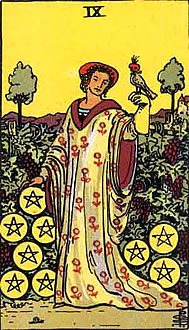
Nine of Pentacles Reversed
A time to proceed with caution. Ventures may falter. Properties and friendships may be at risk.
Elhaz
Watch for hidden traps. Look for holes in your defenses and fill them.
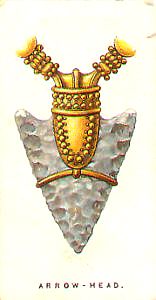
The Arrow Head
The arrowhead pointing down means a storm is brewing within this aspect. Trouble is coming your way from a source very close to you. Be prepared to have an important discussion that could change your life.
Your Daily Influences represent events and challenges the current day will present for you. They may represent opportunities you should be ready to seize. Or they may forewarn you of problems you may be able to avoid or lessen. Generally it is best to use them as tips to help you manage your day and nothing more

The Pagan Man

The Pagan Man

Author: Panisch Lockelear

When you see images of the green man, Hermes, and the horned gods of many pagan religious paths, it is easy to deduce that the male role is important within out pagan society. When I was younger, I went from elder to elder seeking to understand my role as a male in the ways of the various pagan paths. Although my findings were varied, a single idea prevailed. One of a strong man, full of wisdom. A protector of the innocent and a hunter and provider.

This was somewhat different from the images I was exposed to as a younger pagan male. The men that made up most of the pagan community seemed to be a little more and a little less, when measured to this general sense or idea of a pagan man.

On first impressions of the male pagan, I saw a man full of strong drink, drumming from dusk until dawn, a savage sexual appetite, and servant to the woman of their choosing. On the other hand I could also see a man that cared about his own and all children. I found a wealth of teachings about the land we call mother, and the ways and order of the circle of life we all share.

I must say that many ways and experiences from the pagan men who influenced me greatly, were in my mind conflicting. How could a strong man be a hunter, provider and protector of his clan or those who he was sided and also be sub servant, nurturing and bow to what seemed like a lesser position within our religion?

The men, who I learned from, were all of these things and more. Why then would they seem to take a lesser position within our pagan community?

In talking to a man who had the greatest impact on me as a pagan young man, I learned a lot from my mentor and elder Pond hopper I think he had the greatest impact on me, because he seemed to always have time to answer my often strange questions. He took the time to explain this to me and what I noticed was these were teachings he himself actually lived by.

I remember getting into the subject of pagan male role models and I asked him who his were. His answer surprised me. He said ‘ the Grey Squirrel’.

His words hit home for me. ‘You see, the Grey Squirrel helps his mate to make a house in the trees for the family, he helps her in gathering nuts and food for the long winter’. ‘ When a wayward bird comes along to attack him and his young, he becomes a fierce fighter, yet to see the male Grey Squirrel with his young, he is tender and playful.’

I thought on this and quickly replied to Pond hopper asking him, ‘ well what about sharks or fish, who eat their young or leave their young to fend for themselves, never becoming a part of their life?’

I realize his reply to me now was to make me think for myself. He said to me, ‘ Have you ever heard on the television or read in a paper where a man hurt one of his kids or left his family alone?’

Then he asked me…’ Why do you think that is?’

Of course I had no idea at that age as to why. Later on he explained by simply asking, it is funny how we mirror nature and nature seems to mirror us? The fact is we are not being mirrored at all, because we are apart of this circle of life.

We must play our role in this circle. The only difference between the animals and us is the fact that we can choose. We can choose to either be like the Grey Squirrel or like the shark. I pondered this for many years and found a lot of honor in his teachings.

I slowly began to understand that a good pagan man could be fierce and strong when need be. He can be a hunter and he can be a teacher as well.

A mature pagan man also understands that he is apart of a larger circle as well and must learn to adapt, live and work within both the clan family and the natural circles he finds himself in. I learned that there is a natural order and there is a wisdom needed to be able to navigate this order. This is something the pagan male will strive to become comfortable with by making mistakes and testing his bounds.

Falling down, becomes our teacher and the prize is wisdom. I have fallen down a lot in my life and on my pagan path. For that, I thank the gods and pond hopper for the effort and the gift of time they took to raise me to be a pagan man.

I still strive to understand the mother Earth and her circle that I must be a part of. I learned that I would fall down and in doing so I will learn. I know now that the role of the pagan male is something different to all of us depending on the teachers we have had. The way we have gained our wisdom to navigate the circles we are in are important. They are as important and those elders who take the time to teach us.

I am reminded that in my life as a pagan male, I am a role model for those younger men who watch me. They look to me for the knowledge needed to find their place within the circle as hunters, providers, protectors, servants, and men of real wisdom. I know that I owe a debt to the circle of life.

I know now that Pond Hopper was a man that understood the need to lead by example. I also know that while I may fall down, this is not the end of me. To be strong enough to do that means that I am not relegated to a lesser role within the pagan religion. My role is very well defined and the gods and my mentors are my guides.

Daily Zen Meditation for 3/29

Far, far, the mountain path is steep
Thousands of feet up,
The pass is dangerous and narrow
On the stone bridge the moss and lichen green
From time to time, a sliver of cloud flying
Cascades hang like skeins of silk
Image of the moon from the deep pool shining
Once more to the top of Flowering Peak
There waiting, still
The coming of the solitary crane.


– Shih Te (c 730)

Daily OM – A Special Goodnight


A Special Goodnight
Creating a Nightly Ritual


Behind us lies the previous day and all that has come before; ahead of us, dawn heralds all that is yet to be.

At the end of the day, as the sweet, dark stillness of night beckons us to lay down our bones and rest, we find ourselves at a clear transition point: Behind us lies the previous day and all that has come before; ahead of us, dawn heralds the unfolding of all that is yet to be. While many of us have morning rituals that connect us with our center and help us to set intentions, we may want to explore the magic and power of nighttime ritual as well. It holds for us a beautiful chance for self-appreciation and blessing. Before you go to bed each night, you can send gratitude, compassion, and healing to the being you have been up until this moment. And you can send lightness and love into the future for the one you are in the process of becoming.

Though simple, this action honors the journey you have taken thus far, while opening you to the wonderful possibilities still ahead. When you consciously engage with your own evolution this way, you may find that your sleep gets sweeter, filling your night with a deeper sense of trust and relaxation. As you rest, you can surrender to these peaceful hours, knowing that the road behind you has been seen and acknowledged with respect and kindness, while the path ahead now holds your own benevolence and well wishes.

This bedtime ritual empowers you as the only one who can determine the meaning of your own past and the hopefulness of your future. By setting this special time aside each night, you can begin to orient yourself on your path of growing. It allows you to let the past have its place, to trust that the future is taken care of, and to simply rest yourself in the graceful arms of the present moment.

The Dream of Pagan Unity and Why It’s So Hard to Achieve

The Dream of Pagan Unity and Why It’s So Hard to Achieve

Author: Morgan

I’ve been thinking a lot lately about ecumenism among Pagan groups; maybe its the recent flurry of Pagan Pride Day planning, maybe its the common refrain that so many people love to sing about wanting the community to all get along. Either way it’s been on my mind a lot, because it seems like, if everyone who wants unity among the various groups meant what they said, then we would already have it; yet as a community we are divided in many different ways.

Some people are limited by their own views of those outside of their particular group or tradition, some are stuck in old feuds or in personality conflicts, and some are simply stuck in the idea that their way is the only “real” way. So how do we overcome this? It seems easy enough, if we could only get everyone to acknowledge their own hang-ups and issues with unity we could all pull together – but realistically can it be done? Should it be done? Are there compromises that simply should not be made, not even for so often dreamed of a goal as this one?

When I started writing this I began by thinking of my own biggest block, a particular local leader that I have a small laundry list of issues with. And I asked myself, can I let these go? Some of them, I can answer yes for even though it would take effort. I am capable of letting the past go if I really put some energy into it, especially when he never did me, personally, any direct harm. It wouldn’t be easy but it could be done; however if I am honest with myself there are other issues as well that I don’t know if I could move past, ongoing things relating to integrity, truth in teaching – or I should say deception in teaching – and intentional perpetuation of ignorance that touch on areas where I have a much harder time looking the other way. And the bottom line of all this soul searching is that even when I try to put my personal feelings for this person aside, I am still left in a place where I do not want to be associated with him in any way.

How do we build community unity from that? And there is no other way; unity is not the same as tolerance. To be united as a community we must all stand together, and that is more than problematic when – in my own case – I have to always fight the urge to speak out against this person. How do we let go of the desire to let personal conflict and dislike interfere? How do we embrace community members that we simply do not like on a personal level?

How do we define our community? Who is in and who is out? Even within Paganism, in the subgroups of traditions and religions, this is a massive issue. How do we define “us”? We cannot hope to unite as a larger group of Pagans until we figure out who we are as smaller individual groups and that seems an impossible task when every sub-group is fractured by inner disputes. Group self-definition is like the Holy Grail, everyone is searching for it but no one can really find it. Do we include or exclude people convicted of crimes? All crimes, or only some?

Do we push out the snake oil salesman and false prophets that are selling lies while proclaiming it the only “real” Witchcraft/Heathenry/Druidism/etc., or would that very attempt put us on the same level of the more-pagan-than-thou types who cause so much dissention already? We must set boundaries for the safety of the community if nothing else, but how do we decide what those boundaries are and how do we enforce them?

One thing that needs to happen to start is that as a group Pagans need to stop nitpicking each other; if another tradition has a different way of doing things that you disagree with on purely theological or personal grounds let it go. If it’s not your group, why do you really care how they are doing things? If a group is engaging in dangerous, illegal, or manipulative practices that’s a whole different issue, but differences in approach shouldn’t matter. We waste way too much energy fighting over how other people do things, instead of looking for the common ground.

So at the beginning of this I asked if Pagan unity can be achieved, and I think the answer is yes, and no. We can form a stronger, larger community if we find a way to put aside the differences that can be put aside, like letting go of the ideas that any one particular way is “the” way, or “the” tradition. As soon as people start saying that they are the “true” Witches (Heathens/Druids/etc., ) they have set up a rigid dichotomy of us against them, and if you aren’t with them then you aren’t “real” and therefore aren’t legitimate; that attitude has to go right from the start.

I may not agree with someone, I may even hate everything about what he or she does and how he or she does it, but that doesn’t make them less “real”. Of course acknowledging that they are really Pagan, or whatever they are identifying as, does not mean that anything they are saying is true or accurate. (There is also a deeper argument about people claiming to be part of initiatory traditions when they aren’t – that isn’t what I’m talking about here, I simply mean the broad labels that are largely matters of self-identification) .

The flip side of that coin, and this is where the “no” part of the answer comes in, is that some things can never be compromised and we as a community need to stop acting as if anyone calling themselves pagan is automatically a good person. People are people no matter what their faith and some pagans are good people and others are pretty crappy people, just like everyone else. It’s okay for us to say, “no I won’t be associated with that person” if the reason is legitimate and we have really looked at whether we can compromise on this.

That means that true, complete unity will never be possible because there will always be people identifying as Pagans who contribute nothing but dissention to the community. There are online “trolls” and there are real life ones, there mentally unstable people, there are pedophiles and violent people, and there always will be, and these are issues that the community will always have to contend with. Being pagan does not mean that all the bad in the world and in people just disappears, but we can acknowledge this fact and deal with it. So unity is a utopian idea, but building a strong ecumenical community isn’t. That dream could be possible.

Building a larger community depends on putting aside the little things like personality conflicts, pride, and mistrust of other traditions, and embracing the things we have in common. It means working together to build a larger sense of community, not to homogenize all the traditions into one, but to respect the differences and the similarities; it’s our diversity that makes us such an interesting group. Pagan community can be built and made strong, but not without real effort and soul searching from all of us – and that’s why it remains a dream and not a reality.

Today’s Runes for 3/28

Today’s Runes

Jade Runes are most commonly used for questions about love, friendship, and relationships. Ger is one of the runes that touches on the cycles of the year, in this case the fall harvest. These cycles are eternal, which is represented in the rune by the fact that it is unchanged by reversal. Ger can represent pregnancy or other forms of fruitfulness, and is especially indicative of the cycles of providence and karma – that which has been sown is now being reaped. This rune can also represent the cycles of wealth, for crops were frequently a sign of wealth.

Today’s Tarot Card for 3/28

Today’s Tarot Card for Everyone:

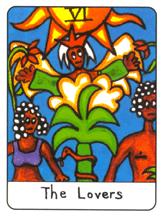
The Lovers

This Tarot Deck: African Tarot

General Meaning: Although it has taken on a strictly romantic revision of meaning in some modern decks, traditionally the Lovers card of Tarot reflected the challenges of choosing a partner. At a crossroads, one cannot take both paths. The images on this card in different decks have varied more than most, because we have had so many ways of looking at sex and relationships across cultures and centuries.

Classically, the energy of this card reminded us of the real challenges posed by romantic relationships, with the protagonist often shown in the act of making an either-or choice. To partake of a higher ideal often requires sacrificing the lesser option. The path of pleasure eventually leads to distraction from spiritual growth. The gratification of the personality eventually gives way to a call from spirit as the soul matures.

Modern decks tend to portray the feeling of romantic love with this card, showing Adam and Eve at the gates of Eden when everything was still perfect. This interpretation portrays humanity before the Fall, and can be thought to imply a different sort of choice — the choice of evolution over perfection, or the choice of personal growth through relationship — instead of a fantasy where everything falls into place perfectly and is taken care of without effort.

Are The ’13 Goals of the Witch’ Being Thrown Out the Window Today?

Are The ’13 Goals of the Witch’ Being Thrown Out the Window Today?

Author: Gullveig

The 13 Goals of the Witch has been attributed to Scott Cunningham and other authors, but is treated by traditionalists and non-traditional Pagans alike to be the cornerstone of what a Witch is. However, many Pagans pay lip service to these rules in public while going against them once they are in their own groups and private lives. Even our group leaders, who are supposed to support and encourage us, fail in passing on these goals and living by example. How can we be great Witches if our leaders are backstabbing and living chaotic lives? Simple. We can’t. So we have to be those leaders.       Each goal is listed with a modern explanation below, most having to do with how I see those goals being violated in our Pagan community and how to stop such behavior.

Know Thyself – This is the most important of the goals. This goal is often taken as if you are a jerk in life and you know it, then you “know yourself”. People do believe this. Know Thyself, however, means to be constantly working on yourself, to know your shortcomings and not give in to them. It means also not to make up excuses for bad behavior. If you do not know yourself or work on yourself to make yourself better and therefore be in a spot to help others become better, you might as well not be a Witch.

Know Your Craft — The Craft is a vague word for getting to know your world; because anything you learn in the world can be applied to Witchcraft. I have known natural Witches in my time that would say they could do magick without reading a single book, but these Witches I found had no sympathy or empathy with the world around them. You need to learn about religions, even Christianity, the good points and the bad, in order to see how paganism fits in the time frame of history and religion. On top of this, you need to practice, meditate and keep notes of your observations. That way you can reflect on them and share them with others.

An open mind is key, but there are a good number of Witches out there that can be as judgmental as those closed-minded. A Witch who isn’t educated in the sense of being a “world student” isn’t a true Witch.

Learn — How many of us learn from our mistakes? How many Witches redo the same hurtful actions to others without thinking, “Maybe I shouldn’t start any ill will in the Pagan community?” The role of learning goes way beyond books and knowing your Craft, but how you apply the knowledge gained. It is to learn how to fix problems, heal hurt and bring people together instead of gossiping, sneering at the nemesis coven down the road or sitting back and doing nothing when you want a problem to be solved. This learning is key to being a moral Witch. We only will repeat ignorant actions if we never learn to stop them.

Have Patience — Patience is essential for the Craft. You have to have the patience of a spider, still in its web in order to deal with others and your life goals. People take advantage of patience, such in covens where one person does all the work and the others come and go when they please, not understanding the violation of trust they are causing. They hurt this person by thinking that the person will always have patience with them. It is up to every single witch to be patient and also not violate the patience of others, even if they have a lot of it. It is the one goal that is used most by others disrespectfully.

“Don’t like the childish way I am acting? Don’t you have patience? A Witch has patience, so you shouldn’t be upset I am here two hours late.” Don’t be one of those people. Don’t turn patience on those in your life.

Apply Knowledge With Wisdom — A Witch can know a lot about the world. But Witches that run off at the mouth about this knowledge can be show offs. A true Witch takes what he or she has learning and tapers it with wisdom, also known as tact. If you are a leader, don’t put down others because they don’t understand what you know.

If you are a student and your coven is being immature, speak out about it; use your knowledge to help to solve the problem. Add action into the mix of knowledge and wisdom, and you can be a Witch who does good for yourself, your group, the Pagan community and for humanity and the world. Use your knowledge for good too, not to put someone else down. Set a good example to others about what a Witch is.

Achieve Balance – Witches try to live lives of balance, not chaos. Yet many Witches try to live lives of drama and anger. Some think being a Witch will add spice or drama to their lives. Some of these Witches do it intentionally; some may have an inner problem they need to work on. They might not mean to cause harm by the chaos in their lives, but give into it.

A Witch’s life should be like the calm sea. Not that storms can’t rage in the sea, but problems are taken care of. Stress is controlled and moderate. A Witch tries to combat anxiety and depression, not let illness take over them. A Witch tackles problems head on and doesn’t let others do it for them. Sometimes in the Pagan community, people try to hurt those who have balance. Maybe it is human nature, but it is a sad display of our Witchcraft community to hurt someone just because your life is chaotic and theirs isn’t.

Keep Your Words In Good Order – This means, no gossip and gossip runs rampant in our community. I’ve known Witches who have gone out of their way to say insulting things to others. If you wonder why the Pagan community isn’t taken seriously, this is why. You can’t be a good Witch if you are smiling and talking to someone at a Pagan event, only to stab him or her in the back once you are done. I’ve had people praise a Pagan ritual only to laugh at it to others once it was done.

If everyone would lock their lips and not try to hurt others with words, more problems would be solved or probably wouldn’t happen in the first place. Your words are your honor and those who use them badly don’t have honor for the Craft. If your words don’t ring true, people can’t take you seriously. They will never know if you mean you will show up for event or can be trusted if your words don’t match your actions. So say what you mean and follow through with your actions. If you say you are going to do something, do it. No excuses.

This goal can be lifted if you are having abuse problems with your coven. By all means if someone is hurting you mentally, psychologically or physically or threatens you in a pagan group or coven, let the Pagan community know. This not only helps you, it also helps those who might end up getting the same teacher or stop them from having a bad experience. Don’t let the seriousness of this goal stop you from using your words to make things right. Sometimes a little speaking of the mind works miracles, even if it is tough love.

Keep Your Thoughts in Good Order – Try to solve problems. Sometimes people don’t care how you feel so you have to take the time to get over that and move on. It is hard not to hold malice if someone hurts you, but holding in means thoughts about a person inside yourself will only hurt you. Try to talk and if that person doesn’t wish to listen, move on. Don’t dwell on bad things in your life. This goal is much like keeping your words in order.

Speak out when a situation is bad; use your thoughts to try to heal it. Think good of people. If you can’t then try not to think about the person or situation at all, if you tried your best to clear it up. But please, use your thoughts and words to try to problem solve instead of doing nothing. Make your thoughts strong and positive. Focus on goals. Live those goals. And be aware getting over problems can take a long time. Give yourself that time.

There are comments in our community that state there will never be any more Scott Cunninghams or Doreen Valientes. But we can be. Why can’t I use that as a goal? Why defeat myself with the thought I can never be grand? These thoughts are what hurt our community. We need thoughts with more ambition. We need to think we can all be leaders and that starts now!

Celebrate Life — Celebrate your own life, the lives of others, the lives of animals and nature. This means not harming nature. This one can be tricky if you own a car. But try to respect nature by being as eco-friendly as you can. Some Pagans I have encountered smoke like chimneys, flicking their butts into the street and littering the road with pieces of paper from their cars. It is like kicking the Goddess in the face. She made you this great world and you litter and make it toxic.

Take care of others, work in the community, donate items to your Pagan community, and ask how you can be of service. It isn’t only about having fun, but when you celebrate life, you should have that too. You are a Pagan, connected to all life. What hurts humanity, should hurt you. You should want to take action, even in small ways, like recycling or spending time helping those less fortunate.

Be happy for what you have. Maybe of us Pagans come from countries where we think luxury items are needed for our survival, but we don’t take time to reflect how lucky we are to live in places where we can get an education and have our wants taken care of. One should pray to the God and Goddess for these gifts.

Observe insects and other animals. Pay attention to the value of life. Take joy in the flight of a month or the jumping of a cricket. Or the smile of a friend.

Attune With The Cycles of the Earth– I am surprised by the number of Witches who don’t celebrate the Sabbats or Esbats. Even if you don’t have a ritual, one can toast Demeter during Lammas, for example or harvest berries during Strawberry Moon. Talk to animals and trees. It may sound overly hippie, but you will find you connect. As I said before, many Pagans I have seen, even leaders, throw trash into the street or don’t keep the Sabbats. How will students learn if their leader doesn’t care if it’s the full moon or not? Again, they won’t.

Not keeping the Sabbats also creates a wishy-washy year for students and missing pages in their Books of Shadows. If a group can’t meet, a ritual should be provided for those to do at home. Solitary rituals should be encouraged. I find writing my own rituals helps me develop as a person, because I put myself and my goals into them. They transform me into a better person.

So attune yourself with Mother Gaia, plant native plants, treat animals with respect, acknowledge and learn the cycles of the moon and names of the seasons. Even their symbols. If you don’t live in a place with four seasons, use the ebbs and tides of your areas or imagine how it must be to live in a place with snow in December.

Being a transplant from the Midwest to Southern California, it is hard to do, but must be done. There are lessons for each season to that reflect into one’s own life. It is hard to be a Witch without knowing the land, the grass, the sun, the moon and the stars.

Keep Yourself Healthy – This means, healthy food, no smoking, no excessive drinking, exercise and no harmful activities affecting the body. Yes, I know pagans who tan in tanners, who smoke, who drink and who have even done drugs. This violates the temple the Goddess has given you.

I am not saying you can’t have a burger if you want it, or a cigar at a party, but constant use of these or addiction to them can hurt your temple and also hurt your mind and your outlook on life. I don’t think one has to be a vegan to be a better witch, but a healthy diet helps. I do eat meat, but sparingly. I would smoke a cigar at a party. Yet I don’t have addictions to these things.

As your body ages, you realize you may want to become healthier and quit even the occasional cigarette or dinner of fast food. That happened to me! I even know people I tried to teach meditation too that coughed when they took long breaths because of smoking. So how can you meditate if you can’t even breathe?

Take care of yourself. Be a healthy weight. Note I didn’t say starve yourself either. A person can be a size 0 and be very unhealthy. Witches look healthy and alive. Even the Goth ones. (I would consider myself Gothy by nature.) Take care of yourself before you have to see the doctor.

Meditate – Meditation is a state of mind. It can be from a book or walking along a shady path in the woods. All Pagans should make time for personal meditation and reflection. They should make time to talk to their deities or to nature. This can be a time to write out one’s problems in a journal or to be creative. To me, this should be at least an hour a day, or more ideally, an hour in the morning and an hour at night.

If you don’t think you have time for meditation, you do. Turn off the TV, get off the computer and find a silent place to be. Let your thoughts go. Sit quietly and hear the world around you. Fall into that noise and be. Get books on meditation if you can’t focus. All Witches should be able to meditate because you need to be able to focus in rituals and to direct magickal energy, for example, in spellwork. It is a very crucial part of our religion, being able to focus our will.

Honor the Goddess and God — I wonder when this one went out of style? I have run into a lot of people who tend to speak very vaguely about Gods. As if I need to hide my Athena worship from someone who is into Freya as not to offend their sensibilities. There are a lot of Gods out there and some pagans who don’t even have Gods, but to me, there is nothing more spiritual than making an altar to a God and praising them. I feel it connects action to ritual. It tells the ritual where to go.

So what if someone does a ritual to Shiva when I only worship Diana? Can’t I get something out of that ritual as well? I also find Pagans calling and dismissing Godforms like they are puppets to do their bidding.

What happened to thanking the Gods? Thanking the Sun and the Moon, being grateful for each day given? Listen to what the Gods say to you. If you have a pantheon, read up on the Gods in it. Sometimes I go to rituals and people, even though they are in a coven with a certain pantheon, the members of that group can’t even recite the names and myths of their Gods. It’s a shame.

Study up on the Gods, read mythology and folklore; learn how stories connect to people in real life. You will learn much. Planting an organic apple in the ground for Venus or pouring spring water in the ground for Elen of the Ways is good practice to showing the Gods you appreciate them.

Looking at these goals, I can see why they have stood the test of time and people use them as public domain, though I know that Scott Cunningham’s Wicca: A Guide for the Solitary Practitioner has these goals phrased like this but I have seen it in many other forms. Using this goal list as a moral framework, a Witch can succeed in magick and working in the community, both the Pagan one and world of humanity and nature.

As Witches, we need to go back to structure in our practice and not freeform, to turn our passivity and bad character traits into ones that benefit life, from without to within. I urge you to print these goals out and follow them. I challenge you. And in meeting the challenge, we can be better Witches and better people.

Today’s Tarot Card for 3/26

Today’s Tarot Card for Everyone:

The Emperor

This Tarot Deck: Tarot of the Witches

General Meaning: In the most practical terms, what has traditionally been called the Emperor card represents the highest leadership, a head of state or the most exemplary and powerful person in the realm. This archetypal ruler is responsible for the positive working out of affairs of a society or community, which are directly proportional to his well being and happiness.

The more enlightenment and cosmic perspective this energy brings, the better life is for all. The Emperor archetype masters the world of matter and physical manifestation. When you apply this card to your situation, acknowledge your potentials for mastery. Reinforce a sense of sovereignty within yourself, despite any self-limiting beliefs, habits or appearances to the contrary.

White Magick, Black Magick

Magick, is, in essence, the use of energy for a variety of purposes. Energy is neutral. What isn’t neutral, however, is the intent of the person casting the spell, and this is where the misunderstanding of calling magick “black” or “white” arises. Generally, if the spellcaster seeks to cause damage or perform a malicious act, then it’s referred to as “black magick.” If the spellcaster seeks to do good work and benefit themselves or others, this is seen as “white magick.” In reality, it’s a lot more complex than this simple dichotomy, good versus bad and the importance of employing an ethical system in conjunction with spellcasting. The point is that magick is neutral. A common illustration is the use of a tool such as a knife. The knife itself is a neutral object. However, it may be used to cut someone’s throat, to cut up vegetables to feed a family, or to slice through the bonds holding someone prisoner. The knife isn’t good or bad: what you choose to do with it determines its value within the content of a situation.

As a rule, the energy you will use in spellcraft is neutral. It is true, however, that if it has at some time been programmed with a strong intent, energy can sometimes retain the echo of that original purpose. People visiting various monuments or historical sites often comment on a certain feeling that seems to be perpetuated or generated by the location itself. Energy in the form of strong emotion has soaked into that area, creating a permanent echo of the of the original event. Take, for example, the islands used as quarantine containment areas off the coast of Australia. As each ship of settlers arrived, a doctor inspected the passsengers, and if anyone was deemed a health threat, then the entire load of passengers was exported to one of these islands. Close quarters ensured that whoever wasn’t sick would become ill through contact with those  who were, resulting in a pervasive feeling of dread and despondency throughout the quarantined community. Visitors to these islands today remark on the feelings of despair, fear, and resignation that the islands possess, even though their original purpose of isolating immigrants has long passed.

These echoes of strong energy can remain for years, and sometimes give rise to the belief that a place or an object is “haunted.” However, the majority of energy that a spellcaster will encounter and work with throughout his or her practice is neutral, and safe to use in spells to improve one’s life.

Today’s Feng Shui Tips For You Is. . . .

Daily Feng Shui gives you a useful feng shui tip for the day. This can help you attain happiness and prosperity in your life. This can be used on a daily basis and helps you keep your home and office clear of all clutter.

Feng Shui (pronounced fung shway) is an ancient Chinese practice of capuring the natural forces to bring about happiness, good luck, prosperity, abundance, and wealth in your life. This is an ancient Chinese art of positioning that ensures peace and happiness.

Feng means Air and Shui means Water. In other words, Qi or energy is carried by the Air and conserved in the Water. Qi or Chi is a kind of spiritual force that comes from nature and is responsible for the well-being and happiness of all individuals. This strong force can be made to have a positive effect on our lives. The aim of Feng Shui is to position the landscaping and buildings so that they facilitate unobstructed flow of Qi.

Feng Shui – the Chinese art of interior decoration examines the how the placement of things and objects affects the energy flow within our house. It also refers to how these objects interact and influence our personal energy flow. Feng shui tips if used the right way can increase the positive energy or chi in your lives thus improving the quality of living.

Today’s Feng Shui Tips For You Is
Believe in the principle of two. For e.g. two flowers, two birds, photos of couples etc.

THE CREATION STORY

THE CREATION STORY

THE CREATION STORY

Long, long ago, the world slept in the arms of the dark void.From this place of nothingness, Spirit drew together and created Our Lady of Infinite Love. 

The Lady danced among the heavens, Her feetbeating out the rythmn of all creation. Sparks of light catapaulted from Her hair, giving birth to the stars and planets. As She twirled, these heavenly bodies began to move with Her in the divine symphony of the universe. When Her dancing quickened She formed the seas and mountains of Earth. She chanted words of love and joy, and as these sounds fell to the Earth, the trees and flowers were born.

From the pure, white light of Her breath came the colors of the universe, turning all things to vibrant beauty. from the bubbling laughter in Her throat sprang the sounds of the pristine running water of the streams, the gentle lapping vibrations of the lake, and the roaring screams of the oceans. Her tears of joy became the rains of our survival.

When Her dancing slowed and She sought a companion to share the wonders of the world, Spirit created The Lord as Her lifemate and companion. Because She so loved the Earth, Spirit made Her companion half spirit, half animal, so that together the Lord and Lady could populate our planet. The Lord’s power moves through her and She showers the Earth and all upon it with Her blessings. Together, the Lord and Lady gave birth to the birds, animals, fishes, and people of our world. To protect and guide the humans, the Lord and Lady created the angels and power spirits. These energies walk with us always, though we may not often see them. Their speech creates a tapestry of positve energy, from which we draw strength.

To each bird the Lady gave a magic song, and to each animal the Lord bestowed the instinct to survive.

The Lord is the master of the animal and plant kingdoms, and therefore wears the antlers of a stag crowning His great head. This aspect of half man, half animal shows His joy in both the human and animal creations of the Spirit.

As the humans began to grow and prosper, the Lord and Lady saw a need for healers among them. And so they drew forth energy from the realm of angels, the realm of the power animals, and the realm of the humans to create the Witches. The Witches brought with them the wisdom of the Lord and Lady, the ability to heal, and the art of magic. The Lady taught the Witches how to cast a magic circle and talk to Spirit, and the Lord taught the Witches how to communicate with the energies of air, fire, earth, and water, and commune with the animal and plant kingdoms.

At first, the humans accepted the Witches and treated them fairly; but because the Witches are different, humans began to fear the Wise Ones of the Lord and Lady, thus the Witches became the Hidden Children, conducting their rites of positive energy in secret lest they risk capture and death at the hands of uneducated humans.

As the world grew darker with ignorance and hate of human creation, The Lady took the body of the Moon to represent the gentle light of her perfect peace, and the Lord took the vibrant rays of the Sun as his symbol of strength in perfect love. And once a month, when the Moon is full, the Witches celebrate and remember the blessings our Mother has bestowed upon us.

We call forth Her energy to help us take care of ourselves, our families, our planet, and our friends. Four times a year the Witches celebrate the festivals of fire and honor the Lord and His love for us – these are called the cross-quarters. At the four quarters of the seasons, the Witches honor the cycle of life and the gifts of the Earth with festivals to both the Lord and Lady – signifying the balance they have brought us – the Equinoxes and the Solstices.

The Lady has many names – Isis, Astarte, Bride, Diana, Aradia, Hecate – and the Lady walks within and beside each woman of every race.

The Lord has many faces, from the strong Cernunnos to the delightful Pan. He guards and guides us and resides in each man of every race.

When thunder roars in the heavens, and lightning cracks from the ground, the Lord and Lady dance the divine myth of creation so that we may remember them and know that we are never alone.

When the Sun rises each morning, we bask in the joy of His love for us, and when the Moon moves through Her phases, we understand the cycle of birth, growth, death, and rebirth.

When it is our time, the Witches enter the Summerland. From the Spirit that moves and flows through the Lord and Lady we continue to learn the mysticism of the Universe so that we may return, life after life, to serve our brothers and sisters.

In each lifetime, Spirit guides us through learning experiences, preparing us along the way for our individual missions. Sometimes we are born among our own kind, and in other instances we must seek out our spiritual family. Many of us do not remeber our chosen path until we reach adulthood, but others know instinctively of their heritage from the time they form their own thoughts.

We are the Witches, the representation of the growth of wisdom on our planet. We are the Hidden Children, back from the dead. We are the people, the power, the change, and we have incarnated in every race and every culture. We are the angels of Earth. 


“The Creation Story” Courtesy of SilverRavenWolf


Speculation That The ‘Windsor Witches’ Raised Energy (Part 1)

Speculation That The ‘Windsor Witches’ Raised Energy (Part 1)

Author: Zan Fraser

Four women of Windsor, England, were arraigned in January 1579, and condemned as “notorious witches.” The judgment (based upon their apparent confessions) was that they had caused the deaths of a number of people through their “Sorceries and Inchauntementes, ” a capital crime in Elizabethan England. The four were killed (probably by hanging) on February 26, 1579: Mother Dutton, Mother Devell, Mother Margaret, and Elizabeth Stile, alias Rockingham.

(Many older women of the period possessed “aliases, ” meaning the names of previous husbands. Stile had been married to a man named Rockingham, who must have died, before she married Mr. Stile. As she is identified as a widow, Mr. Stile must have been deceased as well. It was the Elizabethan custom to call older women “Mother”; this custom seems to have super kicked in when the woman in question was perceived as a witch. English witch-accounts typically are populated with women called “Mother This” and “Mother That.”) In addition to these four, there are some four or so other individuals implicated as Windsor Witches.

A remarkable thing is that the case of the Windsor Witches is recorded in two separate pamphlet-accounts, providing two independent points-of-view with which to consider the matter. Edward White published A Rehearsall both straung and true in March 1579, based upon Elizabeth Stile’s jail statements. Richard Galis (whose father had been a mayor of Windsor and one of the men to whose magical murder the four confessed) published his A brief treatise later that year.

One text is held at the British Library, the other by the Bodleian; both are reprinted by Marion Gibson, in Early Modern Witches: Witchcraft Cases in Contemporary Writing, (New York: Routledge, 2000) . Barbara Rosen also reproduces A Rehearsall both straung and true in her collection of sources Witchcraft (New York: Taplinger Publishing, 1972) .

The striking thing is that the Windsor Witches seem to have formed a genuine magic-working group (what we would call a “coven, ” although that word is not used) . Item 6 of Stile’s statements in Galis’s account (Item 7 in Rehearsall) asserts that “father Rosimond and his daughter, mother Margarete, mother Dutton, and her selfe [Elizabeth Stile] were accustomed to make their meeting on the backside of Maister Dodges, where they used to conferre of such their enterprises as before they had determined of and practized.” The “backside of Master Dodges” would be the back of the man’s property, presumably remote and removed from traffic.

Rehearsall says that they met “in the Pittes there, ” meaning “saw-pits” or large holes dug into the ground into which felled trees would be angled, to be conveniently chopped down to size. “Conferring” and “determining” give the impression of a deliberative group that traded advice and suggestions back and forth. In Item 23 of Rehearsall, Stiles elaborates further that the group “did meete sometymes in maister Dodges Pittes, and sometyme aboute a leven of the Clocke in the night at the Pounde [pond].”

Bits of the group’s history start to emerge. Stile said that it was Mother Dutton and Mother Devell who had “enticed” her into the practice of witchcraft. Mother Dutton was apparently clairvoyant; Item 2 of Rehearsall assures that she “can tell every ones message, assone [as soon] as she seeth them approche nere to the place of her abode.” This of course implies that people frequently sought out Mother Dutton at her residence for her assistance with their problems- the “messages” that they bore.

As with a number of the English cases, there appears to have been a strong sub-current of the wise-folk traditions going on behind the scenes. The pious Address that opens Rehearsall condemns the “malicious and treasonable driftes [ways]” of witches, “of late yeares greately multiplyed” in number by Satan. It goes on to fault persons who call witches “by the honorable name of wise women” and seek them out “for the health of themselves or others.”

Father Rosimond, cited as a cohort by Elizabeth Stile, was such a cunning-man. (The fact that he is “Father” Rosimond is the male corollary to the custom of calling older, witchy women “Mother.” It does not mean that he was a Catholic priest, especially as he has a daughter.)

The Memorandum affixed to the end of Rehearsall discusses how “the Wiseman named Father Rosimonde” advised a Windsor man to break a spell of bewitchment by scratching the forehead (so as to draw the blood) of the vindictive witch (Mother Stile, as it turns out) . Item 1 of Galis’s account states that “one father Rosiman…and his daughter are witches, and that the said Rosiman can alter and chaunge him selfe into any kinde of beast that him listeth [that he desires].”

Elizabeth Stile insists in Rehearsall (Item 24) that she often found Rosimond sitting in a wood not far from his house, “under the bodie of a Tree, sometymes in the shape of an Ape, and otherwhiles like an Horse.” She goes on to reaffirm in Item 25 that “father Rosimond can transforme hym selfe into the likenesse of an Ape, or a Horse, and that he can helpe any manne so bewitched to his health againe, as well as to bewitche.”

Shape-shifting appears to have been a custom with the Windsor group. Item 22 of Galis’s account informs that “their woords of charme weare [were] these, come on let us go about it, and presently they were changed into a new shape.” In addition to other things, Galis reports a supernatural attack from “a huge and mightie black Cat, ” which he took to be a transformed witch.

These are all examples of the medieval mythology that witches transformed into animals, surely inherited from shamanic Celtic/ Teutonic religions. To judge from their testimony, the Windsor Witches are pretty confident that they can handle animal-metamorphosis.

Unlike the four condemned women, Rosimond and his daughter do not appear to have been charged. Either they did not excite the alarm in their neighbors that the women did or they are an example of anti-witch misogyny, whereby authorities and townsfolk regard male and female witches in different lights.

Another detail fascinating from the modern perspective is the back-story of two women who died slightly before the local fear of the Windsor Coven (as we might call them) blew up into accusations of death and harm. Galis’s account makes clear that dread and suspicion of the group had been building well before the events reported in Rehearsall.

At one point, Mother Audrey and Mother Nelson were required to stand under the pulpit during Sunday service, in order to bring them back into the Christian fold and away from the pernicious snares of witchcraft. A short time after, both women died- we are not told how (although Galis assumes that the agony of their reawakened Christian consciousness did them in) . The event of Mother Audrey’s death is referred to several times, deemed significant because she is called “the Mistresse” witch.

It was the Elizabethan habit to esteem some witches as vastly more important and superior to other witches. Reginald Scot (writing in the 1580s) complained that a witch named Mother Bombie was held as a “principal witch, ” “being in divers books set out with authority, registered and chronicled by the name of ‘the great witch of Rochester, ’ and reputed among all men for the chief ringleader of all other witches”; a Dame Witch directs and oversees the witch-workings of Jonson’s play The Masque of Queens. Such customs may be seen as analogous to our own tradition of the High Priestess.

In the section where Galis describes how Mother Dutton “practised with her Associates his overthroowe, ” he cites as the four notable witches, Mother Rockingham (Stile) , Mother Dutton, Mother Devil (possibly his satire on Mother “Devell”) , and “Audrey the Mistresse.”

As he describes the witches being subjected to public exposure under the pulpit during services, Galis marks that a brief while after (undoubtedly due to gnawing conscience) , “Audrey the Mistresse and Mother Nelson dyed [died], after whose death the sisters left behinde…made their assembly in the pits in Maister Dodges backside.” In addition to “sisters, ” Galis refers to the witches as “Confederates” and “Associates.”

It is apparent that Mother Audrey was regarded as the Chief Witch or what we would call the High Priestess of the group. As Elizabeth Stile is recorded as being “of the age of lxv, ” or sixty-five, we might imagine that Mother Audrey was well advanced in seniority as well. One last thing- Rehearsall does not use the name “Audrey” for the Chief witch of the Windsor group. Item 26 of Rehearsall records Elizabeth Stile as calling “mother Seidre…the maistres [mistress] Witche of all the reste, and she is now deade.”

Is it possible that “Mother Seidre” is a ceremonial name or a witch-name assumed by Mother Audrey, perhaps upon her elevation to the High Priestesshood? Its apparent connection to Nordic seider, or the trance-induced revelations of prophetic women called seid-konas, causes one to wonder.

The Windsor Witches do not seem to have been an admirable lot- we would say that they were Un-Ethical in their practice. Their social relationships with the outside community appear antagonistic and their own testimony appears to admit to all sorts of misdeeds, including killing various people by torturing wax images.

They seem not to have comported themselves as would a Blesser or Blessing Witch (as the Age expressed it) ; the Blessing Witch Mother Bombie (contemporary to the Windsor Witches) appears to have been universally beloved and feared by none, whereas the Windsor Witches freak people out that they are killing them and causing harm. (For more on Mother Bombie, please see Chapter I of A Briefe Historie of Wytches/i>.)

It seems pretty much agreed upon within Windsor society that the following people constituted a confederation or an association of witches: Mother Nelson, Mother Dutton, Mother Devell, Mother Margaret, Elizabeth Stile (Mother Rockingham) , the wise-man Father Rosimond, and Rosimond’s daughter. Mother Audrey (presumably also called Mother Seidre) was the Mistress Witch or High Priestess until she died. These people would meet near a pond around eleven o’clock of the night or (apparently more often) they would assemble at the removed portion of Mr. Dodge’s property, where the saw-pits were (presumably therefore a wooded area) . Item 17 of Galis’s account refers to these meeting places when Stile claims that Mother Dutton and Mother Devil (Devell) “allured” her to “doo and exercise ye craft.”

This is the question- what did the Windsor Witch confederation “do and exercise” as “ye craft, ” when they met in the late still of night in the wooded pits of Dodge’s land?

Speculation to follow-

Paganism in America: Misunderstandings, Controversy, and Mainstream Conflicts

Paganism in America: Misunderstandings, Controversy, and Mainstream Conflicts

Author: WindBreath

What is Paganism? There are countless definitions of this, or rather these, minority groups. The part of speech these is used, because Paganism is in its most basic sense an umbrella term used to describe religions such as Wicca, Druidism, Asatrú, and ancient cultural Pagan reconstructionist faiths. One views the diversity among the very definition of the term Paganism by looking up the term from a Pagan source, and then looking up the term from a non – Pagan source. According to Scott Cunningham, who is heralded as one of the foremost important authors in the Pagan path, a Pagan is “from the Latin paganus, country – dweller. Today used as a general term for followers of Wiccan and other magical, shamanistic and polytheistic religions.

Naturally, Christians have their own peculiar definition of this word. It can be interchanged with Neo – Pagan (Cunningham 200) .” However, a non – Pagan, and more specifically, a definition clearly derived from Christianity’s impact on Western Europe and the United States is “a person not subscribing to any major or recognized religion, esp. the dominant religion of a particular society; spec. a heathen, a non – Christian, esp. considered as savage, uncivilized, etc (pagan, n. and adj., Oxford English Dictionary) , ” which can be found in the 2010 edition of the Oxford English Dictionary.

This is indeed peculiar, as Cunningham stated in his definition. The main issue facing this description is that it highlights the implications the non – Pagan source that is the OED has on currently practicing Pagans. That is, what type of impact Pagans face day to day with a leading source of direct, resolute, definitions found in books such as the OED. This definition is the tip of the iceberg in the American Christian and political conservatives’ conflict with Pagans.

A look must first be taken at the first amendment right to practice religions in order to understand the dilemma faced by Pagans. The amendment states “Congress shall make no law respecting an establishment of religion, or prohibiting the free exercise thereof… ” (Fathers) which translates to most Americans that not only can Congress not establish any type of state religion, but that they constitutionally cannot block the free exercise of any one particular religion. However, this is amendment is seemingly not inclusive of all. Pagans face discrimination in the workplace, at their homes, their places of business, against their children, and most of this comes from the deeply embedded Christian principles most citizens believe America was founded on.

This often creates legal problems for Pagans tried in courts with cases directly tied to obvious discrimination against their religion. It must be realized that Paganism is a rapidly growing group of religions in the United States. The brief history of Paganism in the U.S, its tensions with Christianity, and the legality of its many religions in relation to Christianity in America shall be discussed. What Paganism is in relation to mainstream religions is paramount in understanding why there is a growing tension among them and mainstream Christian groups. Ultimately, a goal on how to address and dissolve this conflict will be looked at lastly.

Paganism grew within the United States in the late 1960’s and into the 1970’s, and has been blossoming ever since. This started with the influence of key leaders in the early Earth – Religion movements, such as Gerald Gardner, the founder of Wicca. This was spurred on by writers such as Margot Adler, who’s “Drawing Down the Moon” is still read and looked upon today by Pagans as a guide to the past of American Paganism, and where it may be headed in the future. According to Adler,

“Most neo – Pagans sense and aliveness and presence in nature. They are usually polytheists or animists or pantheists, or two or three of these things at once. They share a goal of living in harmony with nature and they tend to view humanity’s advancement and separation from nature as the primes source of alienation. They see rituals as a tool to end that alienation. Most neo – Pagans look to the old pre – Christian nature religions of Europe, the ecstatic religions, and the mystery traditions as a source of inspiration and nourishment. They gravitate to ancient symbols and ancient myths, to the old polytheistic religions of the Greeks, the Egyptians, the Celts, and the Sumerians (Adler 4) .”

This holds true today, in the year 2010. Although the first copy of Adler’s Drawing Down the Moon was written in the late 1970’s, this revised addition is testament to the evolving growth in numbers of Pagans/Neo – Pagans, but also to the fundamental values Pagans held and still hold to in the modern age.

Although at first glance these practitioners seem to be nothing more than reconstructionists of ancient cultural practices, the fact that many of these people find daily conflict with America’s main religious groups, Christianity, illuminates that there is a tension between the two. The main tensions faced by today’s Pagans with Christians come in the form of what the writer coins to be ‘domestic conflict, ’ or conflict that deals with the day to day life and livelihood of the subject. Also, there are no ‘manageable models, ’ a term coined by Diana Eck, meaning a model on which to base a fair and equal comparison of the two religious groups.

Currently, “the most contentious issues arise from the desires of some practitioners to flaunt their alternative behavior and exhibit their religion as counter cultural on one hand, and those who are more concerned with fostering mainstream acceptance and pursuing legal rights and protections on the other…Pagan[s] struggle to control how others perceive their religion (Davy 183) .”

Clearly, Pagans struggle with the way they are perceived because of the mystery nature of the majority of their religious practices, as well as with individuals within the Pagan movement that wishes to be gaudy and flashy with their religion. These particular individuals, along with those who commit acts of horror such as murder in the name of their particular Pagan religion, are the same individuals making Pagans who are honest, law abiding citizens look like horrible people that should be feared and in some cases, attacked.

While most Pagans and Christians living within the same area normally lead peaceful, non – violent lives, in some cases it has been found that Christians take it upon themselves to demonize and denounce the practices and practitioners of Pagan religions. Many Christian authors have written several books within the last two or three decades which denounce Paganism, and “condemn the rising popularity of modern Paganism as an insidious threat to morality and civilization (Strmiska 8) .”

Here one observes two things: one, that modern Paganism is something that should be condemned, and two, that it is an insidious threat to morality and civilization. There are several cases where this form of thinking through the lens of one’s own faith rather than attempting to understand the other is played out in the form of domestic conflict.

For those who practice a minority religion such as Wicca or Druidism within Paganism, “[they] can be assured of little protection under the Free Exercise Clause, unless the law harming them has clearly and unequivocally targeted their particular religion (Barner – Barry 23) .” For example, in Beaumont, Texas, a reverend of a Unitarian Universalist church and his congregants were explicitly harassed at a meeting they had called within the community. The purpose of this meeting was to answer any questions had by the community about Paganism because of recent allegations of abuse against children during a Pagan festival. This abuse was alleged because a group of children found out that some congregants of the church were indeed Pagan, and the police were soon brought in because the parents of some children stated that their children must have been harmed by the Pagans they spoke with.

During this meeting, the explanations of Paganism were soon silenced by police harassment, and the Pagans who remained after their pastor was removed for refusing to be silent were surrounded by Christians agreeing with their sheriff deputy. Not only was this deputy abusing his power, but he stated that he was “[a] Christian policeman…not going to tolerate Pagan religious practices (Barner – Barry 65) , ” which clearly demonstrates the abuse of the religious majority (and abuse of a position of power, in this case the police) overriding the Constitutional rights to practice religion of the minority.

This example explicitly highlights the abuse of positions of power given by the government, such as that of sheriff deputy in stating that he would indeed illegally enforce his personally formed law that Pagans who practice their religions would not be tolerated.

Examples of these abuses are not limited to adults, and happen in the public school system as well. Since the expulsion of prayers in school, there have been flairs of tension when schoolchildren are caught praying or found to be speaking about their religious beliefs. For the most part, these children are simply reprimanded, or not spoken to at all. However, for Pagans of the elementary, middle, and high school age groups, simply being reprimanded does not happen.

For example, at a middle school in the Midwest, a Pagan student was featured on the school’s wall of fame for having received extraordinarily high grades, as well as for having contributed to the school and her community. However, after the school saw she had drawn herself with a pentagram and a winged pig pulling at it, her portrait was “rejected because it had a religious theme and contained a pentagram (Barner – Barry 190) , ” yet “another picture was placed on the same wall of fame… had a clearly Christian theme (Barner – Barry 190) .” The pig, the student reported to school authorities, represented those who were ignorant of her religious faith and beliefs. Ironically, the school became that pig – not only were they ignorant of her religion, but they also explicitly favored and allowed a Christian display of faith to remain on the wall. After speaking with the child’s parents, her portrait was re hung (Barner – Barry) .

However, this is a success story in terms of religious tolerance, and does not happen often, especially in areas inhabited by conservative Christians. Thus far, conflict with general religious intolerance and school children has been observed. How conflict with Christians affects the lives of day-to-day individuals is of paramount importance, because it demonstrates how otherwise mature and sensible adults treat one another.

Every individual within the United States has the ability to start his or her own businesses. Indeed, America is made up of self – made men, men who worked hard and diligently for their earned titles, positions, and earnings. Opening a business is a difficult endeavor, which includes finding a market to sell to, costs of startup and operations, as well as buying and stocking product that is to be sold, among myriad other things. These things being difficult in their own right, add on top of that for Pagans opening shop in largely Christian areas the threat of vandalism and daily harassment.

For example, a Pagan who wished to open his shop in Austin, Texas, was harassed and ultimately forced to move because of daily taunts that he practiced Satanism. These daily taunts in front of his store caused him to lose business, and thus leave due to pressures of conflict with Christians. Another example of Pagan businesses being attacked is that of a woman in Lancaster, California as recently as 2002. She re named her store, and thus held a new dedication ceremony in the parking lot of the strip mall. Not only did conservative Christian hecklers harass her, but also when the police were called due to the disturbance of the peace, the police unit failed to respond (Barner – Barry) .

These examples given about business owners run counter culture to the idea that each individual has the ability to become a self – made man in the United States. If owning a business comes in direct conflict with the main morals and virtues of the population, then rather than allowing the business to exist as it legally is allowed to, these Christians feel the need to attack and actively take a role in shutting down these stores. Therefore, in reality, every man cannot be self – made if the mold does not fit. Here, one observes the majority coming directly down on the minority based on suppositions of Satanism, evil, and sacrificing of humans/animals. Here, one observes the ignorance and obvious lack of education of the minority religion by the majority.

Furthermore, even though it appears as though attacks are being wrought from every available angle, there is yet another, and most important to every American that is being attacked: the home. Home is supposed to be a place of solace and serenity, a place of relaxation and fun with family. It is supposed to be a place to let go of the cares of the `worldliness of work, school, and other obligations. As an extension, the neighborhood is supposed to be a place of community relaxation and recreation. For many Pagans living openly in majority Christian areas, this is sadly not true. In some extreme cases, Pagans have had to move out of their homes in order to avoid harassment and illegal actions taken against them.

For example, a Pagan couple whose house was almost paid off was found to be practicing Wicca by their neighbors. After discovering the poisoning their dog and the harassing their son on the way to the school bus, the Wiccans went to court against their neighbors only to be told to stop practicing their faith in one week or move out by a judge (Barner – Barry) .

This obvious abuse of power by the judge and illegal act of poisoning another’s animal, along with harassing someone’s child would appear to have been an easy case to decide. However, this was not true. The problem in the sphere of where one lives is that it attacks the right of anyone to live wherever they can afford. It furthers the idea that you can live where you want, so long as you prescribe to the majority lifestyles of those around you. Living in an obvious ‘counter – culture’ way is so threatening to the majority that acts such as poisoning an actual living being are not only not charged as animal abuse, but because no one was charged, it serves as an example that harming someone of a path different than one’s own is fine so long as a perceived threat is thought to be at hand.

All of the above cases have ties to the justice system, which is to Pagans, not just at all. This is seen most clearly in child custody disputes after the breaking up or divorce of parents who are one or both Pagan. Many Pagans face this fear, and “the loss of custody or visitation rights is one of the primary fears of Pagans who are parents of minor children…intact Pagan families may face custody challenges that are initiated by relatives, police, social workers, and adoption agencies. These challenges are usually based on a genuine belief that the children are potentially being harmed by their family’s non-conformist religious practices. (Barner – Barry 116) .”

Clearly, the belief that minor children are going to be harmed because of the minority religious practices directly affects the family. Not only are homes being torn apart, but these children being taken from their homes solely based on religious choice is in direct conflict with the constitutional right to the freedom of religion. It also makes a clear pathway for those who wish to remove minor children from the homes of parents or guardians based solely on their religious choices rather than if there is actual abuse in the home perfectly normal.

These cases of abuses from the majority over the minority are only growing in number as Pagan numbers increases as the years go on. The history of Paganism would appear, to a secular and unbiased individual to be that of a peaceful and Earth – based religious movement that is evolving as technology and people evolve as well. As with other religions that have growing numbers such as Islam and Judaism in the United States, one would first think that Paganism too would, like the aforementioned religions, be accepted as a legitimate religion to co – exist with. However, as the above cases have pointed out, this is not so. Pagans face discrimination in the workplace, at school, at their businesses, and in the courthouse. Stress must be placed on the fact that although these cases are largely isolated incidents, they are growing in number as Pagans grow in number in the United States.

But how are these problems do be dealt with? What is the solution to the many aspects of discrimination against Pagans? Perhaps an unbiased education about Paganism for communities would help foster understanding and help end these conflicts. Education is the key to stopping these attacks on people who have done nothing wrong but practice their religion of choice in a country that is supposed to protect that right. First, people must be taught that Pagans do not want to harm anyone: child, adult, even an animal. To do so goes against most Pagan creeds and vows to not harm any living beings. Second, people must realize that Pagans do not practice Satanism or carry out any Satanic rituals. This is the most important thing – realizing that Pagans are not evil and are not trying to attack the mainstream will be paramount in determining the fate of these minority groups in relation to the majority.

Conclusively, the minority religions of Paganism must be protected equally under the free clause law, and under the legally binding Constitutional amendment that declares that all people have the right to practice their religion of choice. Furthermore, these case studies show the cruel reality faced by Pagans who choose to live openly must face. Their minimal news coverage and lack of media attention show that there is a lot of work to be done in terms of fair coverage of events, but that their stories are covered at all shows that some effort is being made for equal press. Finally, the hope of education for those who do not understand the minority will ultimately lead to true religious freedom for all.


Footnotes:
Bibliography:

Adler, Margot. Drawing Down the Moon: Witches, Druids, Goddess Worshippers and Other Pagans in America. New York: Penguin Books, 2006.
Barner – Barry, Carol. Contemporary Paganism: Minority Religions in a Majoritarian America. New York: Palgrave MacMillan, 2005.
Cunningham, Scott. Wicca: A Guide for the Solitary Practioner. St. Paul: Llewellyn Publications, 2003.
Davy, Barbara Jane. Introduction to Pagan Studies. Lanham: Altamira Press, 2007.
Fathers, Founding. “The United States Constitution.” 25 June 2010. US Constitution. 1 December 2010 .
pagan, n. and adj., : Oxford English Dictionary. November 2010. 1 December 2010 .
Strmiska, Michael F. “Modern Paganism in World Cultures: Comparative Perspectives.” Strmiska, Michael F. Modern Paganism in World Cultures: Comparative Perspectives. Santa Barbara: ABC – CLIO, Inc., 2005. 1-54.

Herb Sachets and Gifts

Herb sachets are used to fragrance the house, as wards of protection and defence and can even be carried on the  person, in addition to herbs, flowers, spices, leaves, and so on, they may also contain stones, charms or crystals, all imbued with Magickal energies. Some people even create totem bags which also contain pictures of their loved ones, a lock of hair or many other things which link them to those they care about. Herb sachets make excellent gifts or ways of working Magick for others. Much of the work of the Witch is for other people. I sincerely the posts in this section will inspire you to do a little “Magick” today!

Sachets can be made from almost any natural fabric; it does not have to be specially bought for the purpose. Whilst silk squares look very attractive, you can recycle old clothes or cloths, or anything else you have to hand.

Make sure the fabric is thoroughly washed and if you have any doubts about is psychic cleanliness then hang it overnight in the light of the Full Moon before use. The easiest shape to use is a circle, but a square also looks quite attractive. Place your ingredients in the centre and tie up all the ends to create a bundle. To tie your sachet you can use thread cord, ribbon or even twine or string.

If giving sachets away, it is a good idea to make them reasonably discreet – not everyone wants their home to look as though a Witch lives there. Alternatively, you can make the highly decorative in their own right perhaps by placing several sachets onto a strip of attractive ribbon which can then be hung on the wall. Remember whilst making up your sachet to keep your Magickal goals clearly in mind and to imbue it with Magickal power.

If you want the sachet to look decorative then you do not have to stick to single colour fabric, but try to choose something where the right colour for your intention is fairly dominant Alternatively, you can cover the sachet twice, once for the Magickal intent and once with an overlay which is in keeping with the decor of the area it is intended for.