Celebrate this festival by draping the altar in white and silver. Kepp the entire altar white — white candlesticks, white incense bowls, etc. Represent the Goddess with a figure of a horned cow. If you wear robes in ritual, honor Brigid in her guise as the goddess of the dairy by wearing white. With Neptune lending the glamour to your robes to the Sun this time, as glitter to your robes with sliver and “diamonds.” Let your imagination run wild.
Save snow from the last storm, or use crushed ice, and put it out in bowls on the altar. Scrub clean an old milke bottle or cream jar and fill it with fresh milk; freshly made mozzarella cheese will round out your cakes and ale. Nestle all bowls in the snow.
The planetary energies are particularly favorable this sabbat for working magic for world peace. Place all the candles you’ll be using this year on the altar and start this ritual in the dark — this is, without lights. Add your magic to the returning Sun. Dedicate and consecrate all your candles during this festival of lights, and consecrate your agricultural tools for use in the coming cycle of growth. This is the festival of new beginnings.
Copyright By K. D. Spitzer in Llewellyn’s Witches’ Datebook 2004 Page 39
Daylight hours are gradually lengthening, and the Earth is beginning to stir. Although she is still in the middle of her winter’s rest, our planet subtly begins to plan. It’s appropriate that this period is represented by Aquarius, an air sign, since all change begins first in the mind. Every new thought or idea is full of raw potential as the Earth is now,nailing for the touch of fire to ignite her new growth period. Uranus is the ruler of Aquarius, and the planet best known for its jurisdiction over the future. This electric energy only looks forward, never back. It is during Imbolc, in fact, as the Sun is passing through Aquarius, that many ideas are born. As we prepare for the upcoming Equinox, then, it’s important to be sure that we’re looking ahead, as Uranus does, with all the electric enthusiasm and genius of Aquarius. Honor the potential of the coming spring by uncovering your gift of prophecy. Whether you use a crystal ball, a dream journal, or another type of predictive tool, prepare for the Equinox in your heart, by understanding how much is possible now.
At Lammas, the Sun is at the very peak of Leo, the sign this planet loves above all others. Our star’s warmth is at its most powerful now in the Northern Hemisphere, as it appears directly overhead. At this time, life too, ia at its peak—as are the crops. The ancients celebrated this festival by giving thanks for their first harvest, most especially the grain harvest, even as they accepted the beginning of the God’s descent into the underworld. The myth of the asteroid-Goddess Ceres (Demeter), giver of the grain, also relates to this season. It was now when she would bid her daughter Farwell, since Persephone was obligated to return to the Underworld to rejoin Hades (Pluto). So bereaved was Ceres to see her daughter leave her, she refused to all the Earth to produce grain until her return. At this time,nothing, modern practitioners should be remind of both astrological principles: the fullness of life the Sun brings, and the necessity for rest, as signified by the coming fall.
Mix the musk and pine oils with the oak moss, and then add the remaining ingredients. Stir the potpourri well and store in a tightly covered ceramic or glass container.
(The above recipe for “Yule Ritual Potpourri” is quoted directly from Gerina Dunwich’s book “The Wicca Spellbook: A Witch’s Collection of Wiccan Spells, Potions and Recipes”, page 162, A Citadel Press Book, Carol Publishing Group, 1994/1995)
Today, in the Pagan calendar, the north celebrate the coming of winter at Samhainn. And all the while the sun is peaking up from behind the lush vernal trees and dancing for us once more in the southern hemisphere, as we welcome Beltane on October 31st. Or as I like to refer to it Beltane of the underworld.
A pagan spiral formation in Faerie Glenn where everything is miniature and enchanted. Copyright Content Catnip 2010
Beltane is the Gaelic seasonal festival historically held to mark the midpoint between the spring equinox & summer solstice (Là Bealltainn in Scottish Gaelic; Lá Bealtaine in Irish). Fire is the traditional means of marking this spring festival of optimism & return.
I was amazed when I read this article about what manufactured food coloring can do to a person. Than I was excited to read how it explains how to make your own out of vegetables and other things.
It’s hard to imagine birthday cakes without colorful writing, vibrant flowers, or other exciting designs. But the colors in our cakes, candies, and other popular foods may not be as innocuous as their pretty exteriors would lead us to believe.
Research suggests that synthetic food coloring may harm human health in a variety of ways. But in spite of the risk factors, these colorants are cropping up in more foods than ever before. Although they provide no nutritional value, they’re added to a wide range of foods to intensify color or give those foods the color people expect to see.1 (For example, boxed cake batters may be dyed yellow in to look like they’re made from real eggs.)
With a little effort, you can avoid synthetic food coloring. Here’s why
Discover the cosmos! Each day a different image or photograph of our fascinating universe is featured, along with a brief explanation written by a professional astronomer.
Join us on Saturday, October 9 to kick off the International Observe the Moon Night week of observing with a Global Moon Party. There will be live streams of the Moon and cultural lunar stories from around the world, NASA scientists, and amazing images, plus much more. 3-6pm PT/6-9pm ET
International Observe the Moon Night is a worldwide public engagement program that has been held annually since 2010. Every autumn, we ask people to observe the Moon in whatever way makes sense to them (via binoculars, telescopes, naked eye, images, artwork, songs, stories, etc.).
Phase: Waxing Crescent
Illumination: 13%
Moon Age: 3.40 days
Moon Angle: 0.55
Moon Distance: 363,679.30 km
Sun Angle: 0.53
Sun Distance: 149,389,987.53 km
View our recorded Event Planning Webinar, and join the virtual Global Moon Party on October 9, for resources and activities that can take your International Observe the Moon Night to the next level.
You can use this link to go forward or backward in time for Moon phase information. If you are curious you can even find out what phase the Moon was in when you or anyone else, you know was on the date the person was born.
Today the Moon will be in a Waxing Crescent Phase. A Waxing Crescent is the first Phase after the New Moon and is a great time to see the features of the moon’s surface. During this phase the Moon can be seen in the wester sky after the sun dips below the horizon at sunset. The moon is close to the sun in the sky and mostly dark except for the right edge of the moon which becomes brighter as the days get closer to the next phase which is a First Quarter with a 50% illumination.
The Waxing Crescent on October 7 has an illumination of 1%. This is the percentage of the Moon illuminated by the Sun. The illumination is constantly changing and can vary up to 10% a day. On October 7 the Moon is 1.15 days old. This refers to how many days it has been since the last New Moon. It takes 29.53 days for the Moon to orbit the Earth and go through the lunar cycle of all 8 Moon phases.
Phase Details
Phase: Waxing Crescent
Illumination: 1%
Moon Age: 1.15 days
Moon Angle: 0.54
Moon Distance: 367,849.63 km
Sun Angle: 0.53
Sun Distance: 149,475,937.59 km
Useful Moon Resources
Check the weather before a night of Moon gazing at weather.com
You can use this link to go forward or backward in time for Moon phase information. If you are curious you can even find out what phase the Moon was in when you or anyone else, you know was on the date the person was born.
The Moon’s current phase for today and tonight is a New Moon phase. During this phase the Moon is too close to the sun in the sky to be visible. The moon rises and sets with the sun and is not present in the night sky. Because of this the night sky is darker and an excellent time to view other celestial objects. Like the Full Moon, a New Moon happens at a very specific time when the sun and moon have the same ecliptic longitude and it can be measured down to the second it occurs.
The New Moon on October 6 has an illumination of 0%. This is the percentage of the Moon illuminated by the Sun. The illumination is constantly changing and can vary up to 10% a day. On October 6 the Moon is 0.03 days old. This refers to how many days it has been since the last New Moon. It takes 29.53 days for the Moon to orbit the Earth and go through the lunar cycle of all 8 Moon phases.
The 8 Lunar Phases
There are 8 lunar phases the Moon goes through in its 29.53 days lunar cycle. The 4 major Moon phases are Full Moon, New Moon, First Quarter and Last Quarter. Between these major phases, there are 4 minor ones: the Waxing Crescent, Waxing Gibbous, Waning Gibbous and Waning Crescent. For more info on the Moon Cycle and on each phase check out Wikipedia Lunar Phase page.
Phase Details
Phase: New Moon
Illumination: 0%
Moon Age: 0.03 days
Moon Angle: 0.54
Moon Distance: 371,419.45 km
Sun Angle: 0.53
Sun Distance: 149,518,954.95 km
Useful Moon Resources
Check the weather before a night of Moon gazing at weather.com
1939 In the first televised college football game, Fordham beats Waynesburg, 34-7 at Randalls Island, NY
1947 In first televised World Series Baseball game, NY Yankees beat Brooklyn Dodgers, 5-3 in Game 1 at Yankee Stadium; also largest WS crowd to date, 73,365
1950 Radio’s “Grand Ole Opry” is broadcast on TV for 1st time
1950 WSM TV channel 4 in Nashville, TN (NBC) begins broadcasting
1953 WICS TV channel 20 in Springfield, IL (NBC) begins broadcasting
1953 WMT (now KGAN) TV channel 2 in Cedar Rapids-Waterloo, IA (CBS) begins
1954 Sandy Wilson’s musical “The Boy Friend”, cast includes Julie Andrews, making her Broadway debut, opens at the Royale Theatre, NYC; runs for 485 performances
1955 American actor and cultural icon James Dean is killed in a car crash aged 24
1791Mozart‘s opera “Magic Flute”, with German libretto by Emanuel Schikaneder, premieres at Schikaneder’s Freihaus-Theater auf der Wieden in Vienna, Austria
1997 “Too Close” single released by Next (Billboard Song of the Year, 1998)
2006 Farm Aid 19 held in Tinley Park, Illinois; performers include Willie Nelson, John Mellencamp, Neil Young, Dave Matthews, Jerry Lee Lewis, Los Lonely Boys, Arlo Guthrie, Gov’t Mule, Steve Earle and Allison Moorer, Steel Pulse, Shelby Lynne, Nitty Gritty Dirt Band, and Jimmy Sturr & his Orchestra
1659 Peter Stuyvesant of New Netherlands forbids tennis playing during religious services (1st mention of tennis in US)
1882 British Open Men’s Golf, St Andrews: Bob Ferguson wins third consecutive Open title; beats fellow Scot Willie Fernie by 3 strokes
1887 8th America’s Cup: New York Yacht Club’s cutter Volunteer beats Scottish challenger Thistle by 11:48.75 seconds on corrected time to win series, 2-0 off Newport, RI
1904 White Sox lefty Doc White, pitches his 5th shutout in 18 days
1927 Yankees slugger Babe Ruth smacks his MLB record 60th home run off Tom Zachary in 8th inning of New York’s 4-2 win over Washington Senators at Yankee Stadium
1659 Peter Stuyvesant of New Netherlands forbids tennis playing during religious services (1st mention of tennis in US)
1882 British Open Men’s Golf, St Andrews: Bob Ferguson wins third consecutive Open title; beats fellow Scot Willie Fernie by 3 strokes
1887 8th America’s Cup: New York Yacht Club’s cutter Volunteer beats Scottish challenger Thistle by 11:48.75 seconds on corrected time to win series, 2-0 off Newport, RI
1904 White Sox lefty Doc White, pitches his 5th shutout in 18 days
1927 Yankees slugger Babe Ruth smacks his MLB record 60th home run off Tom Zachary in 8th inning of New York’s 4-2 win over Washington Senators at Yankee Stadium
1659 Peter Stuyvesant of New Netherlands forbids tennis playing during religious services (1st mention of tennis in US)
1882 British Open Men’s Golf, St Andrews: Bob Ferguson wins third consecutive Open title; beats fellow Scot Willie Fernie by 3 strokes
1887 8th America’s Cup: New York Yacht Club’s cutter Volunteer beats Scottish challenger Thistle by 11:48.75 seconds on corrected time to win series, 2-0 off Newport, RI
1904 White Sox lefty Doc White, pitches his 5th shutout in 18 days
1927 Yankees slugger Babe Ruth smacks his MLB record 60th home run off Tom Zachary in 8th inning of New York’s 4-2 win over Washington Senators at Yankee Stadium
1659 Peter Stuyvesant of New Netherlands forbids tennis playing during religious services (1st mention of tennis in US)
1882 British Open Men’s Golf, St Andrews: Bob Ferguson wins third consecutive Open title; beats fellow Scot Willie Fernie by 3 strokes
1887 8th America’s Cup: New York Yacht Club’s cutter Volunteer beats Scottish challenger Thistle by 11:48.75 seconds on corrected time to win series, 2-0 off Newport, RI
1904 White Sox lefty Doc White, pitches his 5th shutout in 18 days
1927 Yankees slugger Babe Ruth smacks his MLB record 60th home run off Tom Zachary in 8th inning of New York’s 4-2 win over Washington Senators at Yankee Stadium
(function(){/* Copyright The Closure Library Authors. SPDX-License-Identifier: Apache-2.0 */ var k="function"==typeof Object.create?Object.create:function(a){function b(){}b.prototype=a;return new b},l;if("function"==typeof Object.setPrototypeOf)l=Object.setPrototypeOf;else{var m;a:{var n={a:!0},p={};try{p.__proto__=n;m=p.a;break a}catch(a){}m=!1}l=m?function(a,b){a.__proto__=b;if(a.__proto__!==b)throw new TypeError(a+" is not extensible");return a}:null}var q=l; function r(a,b){a.prototype=k(b.prototype);a.prototype.constructor=a;if(q)q(a,b);else for(var c in b)if("prototype"!=c)if(Object.defineProperties){var d=Object.getOwnPropertyDescriptor(b,c);d&&Object.defineProperty(a,c,d)}else a[c]=b[c];a.l=b.prototype}var t=this||self;function u(a){this.key=a}function v(a,b){this.key=a;this.defaultValue=void 0===b?0:b}r(v,u);var x=new v("100004",16E3);var y=Array.prototype.forEach?function(a,b){Array.prototype.forEach.call(a,b,void 0)}:function(a,b){for(var c=a.length,d="string"===typeof a?a.split(""):a,e=0;e<c;e++)e in d&&b.call(void 0,d[e],e,a)},z=Array.prototype.map?function(a,b){return Array.prototype.map.call(a,b,void 0)}:function(a,b){for(var c=a.length,d=Array(c),e="string"===typeof a?a.split(""):a,f=0;f<c;f++)f in e&&(d[f]=b.call(void 0,e[f],f,a));return d},A=Array.prototype.reduce?function(a,b,c){return Array.prototype.reduce.call(a,b, c)}:function(a,b,c){var d=c;y(a,function(e,f){d=b.call(void 0,d,e,f,a)});return d};function B(a){for(var b=[],c=0;c<a;c++)b[c]="";return b};/* Copyright 2021 The Safevalues Authors SPDX-License-Identifier: Apache-2.0 */ function C(a){C[" "](a);return a}C[" "]=function(){};function D(a,b){if(a)for(var c in a)Object.prototype.hasOwnProperty.call(a,c)&&b.call(void 0,a[c],c,a)}var E=/https?:\/\/[^\/]+/;function F(a){return(a=E.exec(a))&&a[0]||""};var G=0;function H(a){var b=document.currentScript;return(b=void 0===b?null:b)&&b.getAttribute("data-jc")===String(a)?b:document.querySelector('[data-jc="'+a+'"]')};function I(){this.g={}}function J(){K||(K=new L);var a=K.g[x.key];if(x instanceof v)return"number"===typeof a?a:x.defaultValue;throw Error();};function L(){this.g={};var a=H(G);a=a&&a.getAttribute("data-jc-flags")||"";try{var b=JSON.parse(a)[0];a="";for(var c=0;c<b.length;c++)a+=String.fromCharCode(b.charCodeAt(c)^"\u0003\u0007\u0003\u0007\b\u0004\u0004\u0006\u0005\u0003".charCodeAt(c%10));this.g=JSON.parse(a)}catch(d){}}var K;r(L,I);var M=RegExp("^https?://(\\w|-)+\\.cdn\\.ampproject\\.(net|org)(\\?|/|$)");function N(a){a=a||O();for(var b=new P(t.location.href,!1),c=null,d=a.length-1,e=d;0<=e;–e){var f=a[e];!c&&M.test(f.url)&&(c=f);if(f.url&&!f.h){b=f;break}}e=null;f=a.length&&a[d].url;0!=b.depth&&f&&(e=a[d]);return new Q(b,e,c)} function O(){var a=t,b=[],c=null;do{var d=a;try{var e;if(e=!!d&&null!=d.location.href)b:{try{C(d.foo);e=!0;break b}catch(h){}e=!1}var f=e}catch(h){f=!1}if(f){var g=d.location.href;c=d.document&&d.document.referrer||null}else g=c,c=null;b.push(new P(g||""));try{a=d.parent}catch(h){a=null}}while(a&&d!=a);d=0;for(a=b.length-1;d<=a;++d)b[d].depth=a-d;d=t;if(d.location&&d.location.ancestorOrigins&&d.location.ancestorOrigins.length==b.length-1)for(a=1;a<b.length;++a)g=b[a],g.url||(g.url=d.location.ancestorOrigins[a- 1]||"",g.h=!0);return b}function Q(a,b,c){this.i=a;this.j=b;this.g=c}function P(a,b){this.url=a;this.h=!!b;this.depth=null};function R(a,b,c,d,e){var f=[];D(a,function(g,h){(g=S(g,b,c,d,e))&&f.push(h+"="+g)});return f.join(b)}function S(a,b,c,d,e){if(null==a)return"";b=b||"&";c=c||",$";"string"==typeof c&&(c=c.split(""));if(a instanceof Array){if(d=d||0,d<c.length){for(var f=[],g=0;ge?encodeURIComponent(R(a,b,c,d,e+1)):"…";return encodeURIComponent(String(a))};function T(a,b){this.g=a;this.depth=b}function U(){function a(h,w){return null==h?w:h}var b=O(),c=Math.max(b.length-1,0),d=N(b);b=d.i;var e=d.j,f=d.g,g=[];f&&g.push(new T([f.url,f.h?2:0],a(f.depth,1)));e&&e!=f&&g.push(new T([e.url,2],0));b.url&&b!=f&&g.push(new T([b.url,0],a(b.depth,c)));d=z(g,function(h,w){return g.slice(0,g.length-w)});!b.url||(f||e)&&b!=f||(e=F(b.url))&&d.push([new T([e,1],a(b.depth,c))]);d.push([]);return z(d,function(h){return V(c,h)})} function V(a,b){var c=A(b,function(e,f){return Math.max(e,f.depth)},-1),d=B(c+2);d[0]=a;y(b,function(e){return d[e.depth+1]=e.g});return d}function W(){var a=U();return z(a,function(b){return S(b)})};G=75; window.rfl=function(a){try{var b=Number(0===(J()||0)?2083:J()),c=W();c.pop();var d=b-a.length-5;for(b=0;b<c.length;b++){var e=encodeURIComponent(c[b]);if(e.lengthf)){var g=H(75);f="https://pagead2.googlesyndication.com/pagead/gen_204?id=jca&jc=75&version="+(g&&g.getAttribute("data-jc-version")||"unknown")+"&sample="+f;g=window;var h;if(h=g.navigator)h=g.navigator.userAgent,h=/Chrome/.test(h)&&!/Edge/.test(h)?!0:!1;h&&g.navigator.sendBeacon? g.navigator.sendBeacon(f):(g.google_image_requests||(g.google_image_requests=[]),h=g.document.createElement("img"),h.src=f,g.google_image_requests.push(h))}},0),a+"&rfl="+e}return a}catch(f){}return a};}).call(this);var url = ‘https://googleads.g.doubleclick.net/dbm/ad?dbm_c=AKAmf-BNb74nKe_3qVO6HGzda5lKbPW95NX30axBKkxWSDRueeQCseNSJYAppcnX49vDt1iMxcxY84ehKE72Q8T-T1RD1JJcBHUOeYjzysIN-nCINTFgVEPC8IYmaSSV1bxIFgM5jZcP53UIX-mGhgSNzRK8UBY22Q&dbm_d=AKAmf-BKulJQrJs8MONyGlOxRjWFPRwmc33ro4E0WW8QoazESaaBJTP3tfxBvnpm3R7dHESPMmNlrQdyRSwwbne0xBGA7nCsyE_HJeHJ5VrhZ9-xZ1XrFg5iq62CgJgdXq7kat6GzCPy_RmnyrO28jghGe3gzGhHRNaDTxVmqDIL5rFJdg8MuvE-9UMfGcpn8i5GHPkh3DMegzV7o6AtXdE50XjIuPQd_V5EhPCLb1RlsyUFJFA-qGtBQCn4Cy5ovscD_Jtv0NcJYM1v3-2voCCDvl89p3gBPvjFfydwPx1miSB6dFmPxHuzqKKRBKWhtQRBNWZKMFxX9Fp5fpSHCsVU0iOuuaBcIb-7ZwySi_1GwU9w97ppYyR1lWQEb6iOAxUxuJiiu8zt9mD4naCYhSxAILRmNHv26AAEGGoDPjkdKwEbSr8y4HqcBzo7eFPNUVxJw4G3swEPEVPbBwnE61cBVUbpUxx4IDGf0RcksYzh00KIxc-NEvHXaa2m7FDaUJK8l5m2tL6fabPrqszvhq_Cm_-yMnb697fNaXqe1f6h4Iv8qXWBsYj5DE8qn7-DC-OkXvznXvGBTlzVLdnfWlW8D8EzORpSypSYUBnPRvz-6phuZDqljMEDzXmlpUKcYXM8lJnotPqKbjSuExYRjL2x_u18kPga_9ySuX2tLUHXXWqwxfUXXg54qezLYRZw7RHJ-mvxmXDZ8PGkXXTE_y6HoL3HBspdXu-KecEm03XXJ4XzMIXdYgBgKI9EnUY0VQn8GqlTFfT5vjrACJHKh1vGeRH8zvIU1q-bE7X4WBJgVsS-eeD1IHdRmOhEf5j2G9y_vik1Ueww3a-QgBjfVmladEfs__adl9DV5Ke2MAz2FLWmazgYf1yjrJfmnL6yLEVrxyQrLMuPckBeJMKRwEMNgs0k-wvmJqrCaWE19UlNzGkZ6Qf4o1H-2koP2-2eBVDJs1gkJXiPF2ckc4mO9WspQCNbWKRrt4-SeNK_uPV4L7geLZz8mlg5YJSr0RnAtkDi18FI5_VbWZSKcWdAnp_WOS8qx0UTMI2WQziFJM3JUWX1w9x11bm8LLSWDOzzlyc3-b6zlepJlUUYnLHNKMEtMg-xhqqBJB7ao8neWS3E5TkDEjelR-ECQw4edULoXcZowdxSSGt2nva2-77fBwf-Qr_7o9hQA7M1Q3DBzU4NAc99CTGUI9XPCodfwxLW9_Np-1jNt0XSmra8CS-LB3b1Pa4kkAu9e9cS76_TgWmhFbzMxsautDFv9nlAU-aBVNE8sMNgVnwxpKD74EgvGU7fv-IW1mQvXsh3Y1hqOdT8AWLe9nVsXZPoJ97y-R_GFb5452tU85jFX-ShqNnPbLn2Rrg_ZCuH5phAaxga0p7xIWSCUK010KWiF_F9NY_2hA_bCXsq68Yqwctv5sGRkyEqjM1ukE1bkanA60L-uFWaCZiS_i614-aZ9Bg5RUqIS-85CqrbAha7_6Tpkmo4HA5LMUWUic0W52Q7Wn0Bsfd5AkNmXkDTJ94Owjy1hf41CtlAk1xf6c8i1vSGyTQfa4D4CH8E-aCXLajfBO_fX430qOPKTZ3Cv9A3p46L9JfsXNyeNLMrsxGp2t3mYyaA5hTqtXaDggG9zHBIY-3oX2S6_nsu_2becE5zD6WiMD3aPRYxBnUKyxLcstYKU9NZe3JtfgCDbUUEZgyIJqWlPJoNgIFuRTqhQfk4hDDTNwEIzixmYDcmeTiF38no5OTx_76_DXzSWHk6YX7uvzoNSgr8QYLi-r_e8LWrIuX_0tIQC1BJWzQNrfAgxGefT2vsjyEdr6YahZ0ucpWy-ovPlhWTSFRBtSOICGklj2cBG9lkqZr7hFMHsTBBoM1jCGP5t3atSmszkeV_Ki_2iu-pnDxd8GMk4hvxCxYrwajneDTUg8SEbnOYIG8_ilqijzFy4RQSBaSJ-tIIQNDo0m-3CezQsNlncZJboqCP8MbwRsNgEF8WuKRWewymNJCCKjp9vE2Bb27qdFDzJABi9CQxDzaVkLCQkdizmq_vbMq3_8tRmQJadAc9Y-zQYn21SrdOfGrA72z96wAWv8dPUnfC3m4JqIRNeYTSSCTtEgCDwMQcKmFVIMcW_Ei6AIB9r2iUH4VV2Ih2QxCMAIjcR1Wi4fZW-Nc-IplLpYoHs9JWMLLoOeP9BpW1D2lmGQ08_2bUoyAG7h6ZxK1yJtkmxGDcTWwrJbiIlRhlMJANqavigEmAanMfTjgSGB12YCl8buhvU3OtHKxlPknEp2VUnS44ezxO2KABTBYlRcHGmUDRZ5IdhGvG9XThnqJ7fdMcYA_CGKKeeG6ror31vKoWS2VPI6n8r1D7ltpgwkKnrSNEC8OQoWRuZ5tE6VJ__fYr-qNvWF0t7HLqCHWVPtY2fjH1oYG5HPWjjeUv59q7lmFjHwg1nCe8TeOIDl54UAuX_Z3_TR7LGCzFduJLdNrCVkkw3jA2EI2TeHBq0AF45B209emwz9c1uVe_2qO3ku0E7ph2VrV3VgBkd1tLYq0vqoRzd_30KN27b_J3YQdSVRW5mXuplAwADclDyFMYO-Rqga5pOXXu-YKPOHhD7Q-ysqKsRHjTeMldwWBJzHRZm5LRVR0mNwMEEHpzOwXSnQ9Vlu_Q_2H5UU_d-WzY1tbstQIpwX3ShXGzJPqGN-TLG6wJFxG8qK-AkTKEoQ1TfWtzwFN-LM_OReO4cc0VvbfhhKmQcGxwF-S_M4GKihy6LGFphOffeLh7fI8PIbM6-EZvMcFSpVB9LmaGz73zQRiDbncYKH2WONsryte9Rg1nMlHCBEO37bOQ-9GWj-65qmgjTqMqYt-xtbT38nXo4GgkqF-T1eWDytXLxU5CC40EQyGf7lXPleFN-CpIdJ9wz6eugO8W403JrmNHs0FASHi6F8Wy-EzodwHuYJVDsb0&cid=CAMSeQClSFh3K4rMap8wUdK3xoGeN3H4WnGaQ2v9BbtveNhBt2HJ42UVULG7Z4k5OVEwRizNTlZ9qMVqlp9mY9-BJaau2k0ff4cTqPu3xAZRClUrJXsW3H4F60h09PIjcl0i6q5RMMPwt_EGrUwagSsv5OuTMX802SifwYg’;document.write(‘‘);
Discover the cosmos! Each day a different image or photograph of our fascinating universe is featured, along with a brief explanation written by a professional astronomer.
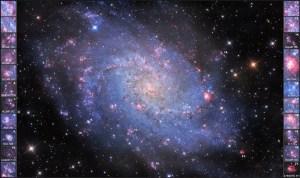
Explanation: Gorgeous spiral galaxy M33 seems to have more than its fair share of glowing hydrogen gas. A prominent member of the local group of galaxies, M33 is also known as the Triangulum Galaxy and lies a mere 3 million light-years away. Sprawling along loose spiral arms that wind toward the core, M33’s giant HII regions are some of the largest known stellar nurseries, sites of the formation of short-lived but very massive stars. Intense ultraviolet radiation from the luminous massive stars ionizes the surrounding hydrogen gas and ultimately produces the characteristic red glow. To highlight the HII regions in this telescopic image, broadband data used to produce a color view of the galaxy were combined with narrowband data recorded through a hydrogen-alpha filter, transmitting the light of the strongest hydrogen emission line. Close-ups of cataloged HII regions appear in the sidebar insets. Use the individual reference number to find their location within the Triangulum Galaxy. For example, giant HII region NGC604 is identified in an inset on the right and appears at position number 15. That’s about 4 o’clock from galaxy center in this portrait of M33.
You can use this link to go forward or backward in time for Moon phase information. If you are curious you can even find out what phase the Moon was in when you or anyone else, you know was on the date the person was born.
Today the Moon will be in a Waning Gibbous Phase. This is the first phase after the Full Moon occurs. It lasts roughly 7 days with the Moon’s illumination growing smaller each day until the Moon becomes a Last Quarter Moon with an illumination of 50%. The average Moon rise for this phase is between 9pm and Midnight depending on the age of the phase. The moon rises later and later each night setting after sunrise in the morning. During this phase the Moon can also be seen in the early morning daylight hours on the western horizon.
The Waning Gibbous on September 28 has an illumination of 55%. This is the percentage of the Moon illuminated by the Sun. The illumination is constantly changing and can vary up to 10% a day. On September 28 the Moon is 21.64 days old. This refers to how many days it has been since the last New Moon. It takes 29.53 days for the Moon to orbit the Earth and go through the lunar cycle of all 8 Moon phases.
Phase Details
Phase: Waning Gibbous
Illumination: 55%
Moon Age: 21.64 days
Moon Angle: 0.49
Moon Distance: 403,885.94 km
Sun Angle: 0.53
Sun Distance: 149,862,428.63 km
Custom Planetary Positions for
Chicago, Illinois/Frankfurt, Germany, Los Angels, California
If you need to calculate the planetary positions for a specific use and time, click on this link
The Moon’s current phase for today and tonight is a Waning Gibbous Phase. This is the first phase after the Full Moon occurs. It lasts roughly 7 days with the Moon’s illumination growing smaller each day until the Moon becomes a Last Quarter Moon with an illumination of 50%. The average Moon rise for this phase is between 9pm and Midnight depending on the age of the phase. The moon rises later and later each night setting after sunrise in the morning. During this phase the Moon can also be seen in the early morning daylight hours on the western horizon.
The Waning Gibbous on September 26 has an illumination of 73%. This is the percentage of the Moon illuminated by the Sun. The illumination is constantly changing and can vary up to 10% a day. On September 26 the Moon is 19.86 days old. This refers to how many days it has been since the last New Moon. It takes 29.53 days for the Moon to orbit the Earth and go through the lunar cycle of all 8 Moon phases.
The 8 Lunar Phases
There are 8 lunar phases the Moon goes through in its 29.53 days lunar cycle. The 4 major Moon phases are Full Moon, New Moon, First Quarter and Last Quarter. Between these major phases, there are 4 minor ones: the Waxing Crescent, Waxing Gibbous, Waning Gibbous and Waning Crescent. For more info on the Moon Cycle and on each phase check out Wikipedia Lunar Phase page.
Phase Details
Phase: Waning Gibbous
Illumination: 73%
Moon Age: 19.86 days
Moon Angle: 0.49
Moon Distance: 405,486.27 km
Sun Angle: 0.53
Sun Distance: 149,947,648.76 km
Useful Moon Resources
Check the weather before a night of Moon gazing at weather.com
is associated with the Sun and zodiac sign of Leo. I add Cancer and Aries to this because they are also associated with the Sun. The elemental correspondence is Fire, (shocking, I know). In my opinion Sunday is the most diverse day in terms of its spell correspondences. Spells for success, money/prosperity, healing, protection, insight, fame/power, attraction and empowerment are just a few of the spells that can be amplified if performed on a Sunday. Gods/Goddesses: Helios, Brigid. Brigid is the Goddess of Fire and the Hearth and is celebrated on Imbolc, which is known as the “Festival of Lights”. By invoking her on Sundays you can tap into her powers of illumination and maternal energy. Angel: Michael. Archangel Michael is the ultimate warrior. He can be petitioned to help aid your cause or to destroy an enemy. If this is an angel you work with often, Sunday would be an auspicious day for honoring him and offering him gifts of thanks.



 International Observe the Moon Night is a worldwide public engagement program that has been held annually since 2010. Every autumn, we ask people to observe the Moon in whatever way makes sense to them (via binoculars, telescopes, naked eye, images, artwork, songs, stories, etc.).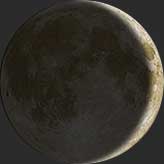




 Witches Of The Craft®


You must be logged in to post a comment.