October 24 – Daily Feast

October 24 – Daily Feast

Though summer still lingers in the last of vegetables in the garden, cooler air pushes down from the North and with it the subtle changes that color sumac and woodbine with brilliant reds. Some song birds stay during the winter, but their songs are different. This is the season of tart red apples and wood smoke twirling through the tops of tall evergreen trees. It seems only yesterday that spring broke through with her wild colors and thunderstorms. And it will seem only another day until this season has passed and the woods will green once more. Use this tranquil time to rest and walk and to enjoy seeing nature in her bare bones.

~ The Indian, essentially an outdoor person, has no use for handkerchiefs; he was practically immune to colds, and like the animal, not addicted to spitting. ~

LUTHER STANDING BEAR – LAKOTA

‘A Cherokee Feast of Days, Volume II’ by Joyce Sequichie Hifler

The Samhain Experience

The Samhain Experience

Author:   Crick   

My family roots begin in Ireland and were later relocated to Tennessee and amongst the Ozark mountains of Missouri. My personal experience with Traditional witchcraft began in 1960. As such I was raised to honor the four main sabbats, though we did observe the solstices and the equinoxes as minor events if you will.

To our family, Samhain (Oiche Shamhna) is the most important Sabbat of the year. Pronounced as “Sow-in by the Irish, as SAV-en by the Scottish and as SOW-een by the Welsh. It is exactly opposite Beltain on the Wheel of the year. It is reckoned when the sun has reached 15 degrees Scorpio. Thus, Samhain lies exactly between the Autumn Equinox and the Winter Solstice. And as such, it is known as a Cross Quarter day.

Samhain is also known as “Samhraidhreadh” which means “summers end”. This indicates that Samhain is the start of the Celtic “New Year”. The Celts were known to have divided the year into two seasons, consisting of summer and winter. The belief is that summer is governed by the Big Sun (the sun) and the winter is governed by what is known as the Little Sun (the moon) .

Samhain is one of the four Fire Festivals and is also known as “Trinoux Samonia.” Originally this Sabbat was celebrated for three days, the day before, the day of and the day after.

In modern times Samhain has become basically a one-day celebration. Neo Pagans tend to lose sight of the historical and spiritual significance of such an important day by combining their Christian beliefs with their newfound pagan beliefs and thus they often intermingle Halloween with Samhain. This corruption is explained away by parroting “it’s for the children”, though this special day is hardly one for children. I do not understand how Neo pagans can claim to understand the significance and energy of such a special time and yet allow their children to make a parody of such a spiritual experience, but then it is what it is.

Traditionally, Samhain is the day when the God symbolically dies and the Goddess is in mourning, though she knows that He will be reborn at Yule.

It is also the Third and Final Harvest, and as such, it is a time for preparing for the coming year. It is also known as the day of the Feast of the Roman Goddess “Pamona”.

Another interesting note is that Samhain is the day that the Tuatha De Danann realized their permanent victory over the Fomorians.

Since this is the time that the veil between Annwn (the Underworld) and our realm of existence, is at its thinnest, it is a time to honor and connect with our ancestors. To some Wiccan beliefs, this means direct descendants who have passed over. To those of us in the Celtic/Faery tradition, this would be the ancestral spirits and deity that resides within the earth.

One way to honor this day is “Fleadh nan Mairbh” (Feast of the Dead) . To do so, set an extra plate or two at the dinner table for visiting spirits. Another way is “Bannock Samhain” which entails setting out cakes and milk outside the door as an offering for passing spirits. This is also the time for the “Dumb Supper”, a meal served in silence in honor of those who have passed to the Summerland’s.

Remember, this is not a time of mourning, but rather of rejoicing and connecting with those that have gone before us. We do not conjure up these visitors in the manner that a medium would do. But rather we invite them to share the day/night with us.

This is also an excellent time for divination. Roasting nuts in the fire and bobbing for apples are a couple of examples of divination from olden times. Another traditional way is to set a shirt on a thorn bush near a stream and see what spirit comes along to fit it on. At which time you would make enquiries. This form of divination is called the shaking bush. As a spirit fills the shirt, it causes the bush to shake.

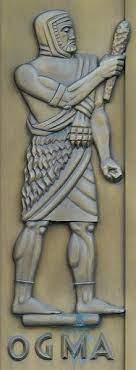
Some of the Celtic Deity that you may appeal to for assistance during divination are; Ogma, Rosmerta, Baile, Beli, Coventina, Badh, and Gwyn Ap Nuad, just to name a few.

The concept of the carved pumpkin came about from the belief that carving a scary face on the pumpkin and using it as a lantern as one walked at night would scare away evil spirits. Originally they were carved out of turnips.

There is an Irish legend about an Irish lad named Jack. He tricked the devil into climbing a tree and then quickly carved a cross into the tree so that the devil could not get down. He then made a deal with the devil so that he would not go to hell upon passing. But when Jack did pass, not only was he barred from hell, but also he was barred from heaven as well because of the doings of his life on earth. Hence he was doomed to walk the earth carrying a lantern to light his way. Thus the Jack-O-Lantern was created.

A custom related to Samhain is to light a hearth fire on this day and to keep it lit until the first day of spring as a way of honoring one’s spiritual ancestors and deity. Originally, all hearth fires were extinguished on this day and then relit from the Druidic fire, which was lit at “Tlachhtga”. This particular fire represented the center of Ireland.

Another custom is to leave a candle in the window as a beacon for spirits to find their way home.

Samhain is a time for reflecting on the year just past and preparing for the coming year. One way to do this is to write the weaknesses and negative actions of the past year down on a piece of parchment. After a period of reflection/meditation, burn the parchment in the cauldron or hearth fire. In this way you are starting out fresh for the upcoming New Year.

– Some of the foods associated with Samhain are pork, corn, apples, pomegranates, pumpkin pie, and cider.
– The colors associated with this day are; red, orange, yellow, brown and black.
– For incense, you can try basil, lilac, clove, yarrow or frankincense.
– Some plants or herbs are apple trees, sage, mugwort (divination) , and gourds.
– Some crystals are onyx, carnelian, and obsidian.

It is my personal hope that Neo pagans will once again enjoy this unique time as it was meant to be celebrated and revered. There is much experience and an ethereal energy connected with Samhain if only one allows him/herself to open up to such a special experience. Halloween (All Saints day) is but a corruption of what used to be. Samhain is a revered occasion and time to connect with those who have gone before us. And with those others who walk a distinctly separate plane from this realm. May you have the inner strength and un-fettered desire to experience this event as it was meant to be…

A Little Humor for Your Day – Trick Or Treat By Your Astrological Sign

Trick Or Treat By Your Astrological Sign

Aries Pushes the others aside to get to the door first.

Taurus Will only eat the finest of Swiss chocolates.

Gemini Goes around the neighborhood once, changes costumes and goes around again.

Cancer Stays at home and gives candy to the other trick-or-treaters.

Leo Plans their costume for months, then won’t go out because someone else had the same idea.

Virgo Wears a neatly-pressed suit and tells everyone they’re a bookkeeper.

Libra Is still standing in front of the closet trying to decide on a costume.

Scorpio Isn’t in it for the candy.

Sagittarius Will manage to wander to the next town.

Capricorn Makes a list of all the houses that give good candy and the optimal route to take.

Aquarius Builds their costume out of spare flashlights and spends all night tinkering when it shorts.

Pisces Skips the whole thing to compose poetry to the Moon.

Turok’s Cabana

Seedy Spellwork

3pumpkins_vineT

Seedy Spellwork

After carving up those pumpkins, don’t just throw the seeds away or eat them all. In each little pumpkin seed lies a large store of natural energy. Save seeds to bring magick to your life year-round. They’re great for increasing strength, promoting prosperity, encouraging health, and enhancing growth and expansion. Grind them to include in incense and magickal powders, carry one in your pock for a good luck talisman, or tie a few inside a small square of fabric to make a charm to promote peace and balance in the home. You can even use pumpkin seeds to create your own set of biodegradable runes—just use a pen and some natural ink to make the glyphs.

—-Melanie Marquis

October 23 – Daily Feast

October 23 – Daily Feast

Opportunities abound to us every day. There is an opportunity to be sick, the opportunity to argue with someone, the opportunity to be discourteous, the opportunity to believe something that is not true. Stop thinking you have no opportunity. You have had every chance to do many things and some of them you have received. You were led astray by thinking you could not help yourself. We can help ourselves. By the words of our mouths, by what we say, how we think, what we believe, we help or break ourselves. Victory comes because we are consistent in saying we are well, we are strong, we are enormously happy.

~ They told us not to drink whiskey, yet they made it themselves and traded it to us for furs and robes. ~

PLENTY COUPS – CROW

‘A Cherokee Feast of Days, Volume II’ by Joyce Sequichie Hifler

For The Beginner – Witchcraft 101 – Lesson 3

Lesson 3

The 8 Sabbats

Samhain/Halloween October 31 or first full Moon in Scorpio. Ancestor night. Feast of the Dead. Halloween. Pronounced “sow-en” or “sow-un”.  This is the last day of the Pagan year. The new year begins November 1. This is the day when the veil between this world and the spirit world is thinnest. Communication with the dead is easiest and spirits are most common.  Also an excellent night for divination. Feasts and parties are held in remembrance of those who have died. This is a time for resolving problems.

Ways of celebrating Samhain can be the traditional giving of candy to trick-or-treaters, divining, or placing out cookies and cakes for the spirits. Leave doors and windows open as it is thought to allow the dead to pass through the house without getting confused and lost inside.

Samhain (pronounced SOW-EN) literally  means “summer’s end.” Today, Samhain falls on October 31st and most know it as  Halloween. Halloween, from “hallowed eve” (meaning “sacred night”) is one of the  most important and sacred holidays of the pagan year. Traditionally, Samhain  begins at sundown on October 31st and runs through a set of 2 days,: Oct 31st  and November 1st. The days between Samhain and Yule are considered the “Time  which is no time.” Depending on your traditions, the new year can begin at  Samhain or at Yule. This time between the worlds has been considered very  magickal and dangerous. it is a time when the veil that separates the world of  the living and the world of the dead is at its thinnest. It is for this reason  that many consider this to be a time that does not exist on our earthly realm.     Samhain is also called the “Feast of the Dead.” During this  time, the dead can return to visit their loved ones and the gates to faery  kingdoms are opened. It is traditional to leave cakes, honey, milk and cider  outside for the fey. If they are not given gifts of food, they will play tricks  on those who are not generous. most pagans set a place at the dinner table for  their dead ancestor.     Samhain is also known as the “Last Harvest.” Originally  celebrated when the Sun reached 15 degrees Scorpio, Samhain was the last day  that crops were harvested. Animals were slaughtered on this day giving the name  of the full moon in October the “blood moon” and much of the harvest and meat  was dried and preserved and stored away for the coming winter months. Samhain is  a time of feasting and of celebrating the harvest and the gifts of the earth.     Samhain is also a time for divination. it is easier to  commune with spirits, both human and non-human and it is a very powerful time  for divination, especially for divining the outcome of the winter months to  come.     The tradition of trick-or-treating originated in and is  unique to the United States. Children dress in costume and go from door to door  asking for treats. This tradition may stem from an ancient tradition of  traveling door-to-door asking donations of food for the Halloween town feast. It  may also come from the tradition of leaving sweets on the porch for the faery  folk to prevent them from doing harm during the year.     Even jack-o-lanterns come from old Irish traditions. The word  jack-o-lantern comes from the old Irish tale “Jack of the Lantern.” As the story  goes, there was an evil old man named Jack who, upon death, was neither allowed  into heaven or hell and was cursed to roam the earth with only a candle in a  turnip to light his way through the night. Irish children carved and carried  lanterns of turnips, a symbol of the harvest, over the moor sides on Samhain  night. Pumpkins were not used until settlers arrived in America and discovered  squashes along with other harvest symbols such as corn and turkey.     Most importantly, Samhain is a time to spend with family,  both living and deceased. It is a time to think about our own mortality. Altars  are set up as shrines to the dead and are decorated with skulls, skeletons and  other symbols of death flanking pictures and belongings of our deceased and  candles. It is also traditional to light a special candle for the new year and  allow it to burn throughout the night.

_______

Yule/Winter Solstice December 21 or Winter Solstice. Alban Arthuan. Festival of lights. The first day of winter and the longest day of the year.  This day is celebrated as the death and birth of the Sun God – the Divine Child. The full moon after Yule is considered the most powerful of the whole year. Yule is the celebration of the death of the Holly king and the rebirth and renewed reign of the Oak king.

We celebrate Yule nearly exactly as you would Christmas. When the  pagans of old were taken over by Christian rule, the Christians found it  impossible to convert the pagans. They eventually allowed the pagan peoples to  keep their holidays as long as they did them in the name of their Lord, Jesus  Christ. This is why Christians celebrate the birth of their lord on this night,  even though (even stated in the bible for those bible thumpers out there) Christ  was born in the spring with the lambs. The Yule log, made of oak, is burned as  sacrifice of the old dead Holly king. This day is a light festival, with as many lights on the tree  and altar as possible to celebrate the coming of the new child. Mistletoe is  hung because in the ancient days couples would play out their trial marriages on  this day. ceremonies were held beneath Oak trees strung with garlands of  mistletoe.

Yule is known to Pagans as the “Time of  Great Darkness.” The nights grow long and the days grow short and the Sun before  Yule seems to wither and die. Yule marks the coldest, darkest and harshest part  of the year. Yule is always celebrated on the Winter Solstice. The Christian  holiday Christmas was adapted from the ancient pagan tradition of celebrating  the coming of the newborn Sun/Son to light the world. In the Pagan traditions he  is born unto the Mother Goddess and in the Christian religions he is born to the  Mother Mary.

“The first written record for this  holiday’s occurrence on December 25th was in 354 AD in Rome when one scholar  wrote: ‘It was customary for Pagans to celebrate the birth of the Sun…when the  doctors of the church perceived that the Christians had a leaning to this  festival, they took counsel and resolved that the true Nativity should be  solemnized on that day.'” (From “You Call it Christmas, We Call it Yule” by Peg  Aloi – Witches’ Voice writer)

Pagans celebrate Yule by blessing their  crop plants and animals. A common Yule practice is Wassailing. Apples from the  fall harvest are made into a cider known as wassail. To ensure the fertility of  their apple trees for the coming years, bits of cider-soaked bread were placed  in the branches of the trees and libations of cider were poured over their  roots. Later in history, guns were fired up through the branches to ward off  evil spirits. In the same way, cider was often poured on livestock to ensure  their fertility and good health for the next year.     Kissing under the mistletoe also stems from ancient Celtic  traditions. The Winter Solstice was a time for marriage ceremonies. There was  feasting and games and couples who wished to marry would come together at this  time. Mistletoe was considered a very sacred plant and was thought to grow  between the worlds symbolically because it grew on trees and not out of the  ground. It was considered especially lucky when mistletoe grew on oaks because  oaks have antibiotic properties which prevent fungi from growing on them.  Mistletoe on oak was a symbol of harmony in unity and became an important symbol  for marriage. Garlands of mistletoe were strung between trees and couples would  dance or pass under the boughs and kiss, thus sealing their marriage for 1 year  and 1 day. After this time if they no longer wished to be married, they could go  their separate ways. This began the modern tradition of kissing under the  mistletoe.     Holly is used in Yule decorations to symbolize the Holly King  who dies at Yule to make way for the Oak King. The Yule log stems from this  tradition. Some say that the log should be oak, some say ash and others say  holly. Burning the Yule log symbolizes the sacrificial death of the Holly King  and the reign of the Oak King over the second half of the year. The Yule log is  decorated with paper decorations and plants such as holly, mistletoe, and  evergreen sprigs. Red ribbons and tinsel are tied to the top of the  log  before it is burned in the fire. The Yule log must be lit on the first try and  must remain burning for 12 hours for good luck. a piece of the log is saved to  use to light the next year’s fire.     There are many ideas on where Christmas trees originally came  from. Some say that the practice originated in ancient Egypt. Others say that it  stems from ancient tree-worshiping practices. Today many Pagans refuse to cut  down trees and use fake trees instead. Those who still cut down trees every year  say that you must cut your own instead of buying one and afterward, the tree  should be burned.     During this night, the longest night of the year, Pagans  light as many candles as can be found both to symbolically wait out the death of  the Lord and to celebrate the coming of new light. At no other time of the year  is light more sacred. Many believe that it is taboo to extinguish any flame or  to travel at Yuletide.     Feasting has always been a Yule tradition. These meals  celebrate the harvest that was gathered in the autumn and to celebrate the  passing of winter. It is the time when the days begin to grow longer as the Lord  grows stronger and climbs further and further up the sky. Tables, altars, and  Yule trees are covered in lights and candles. As many lights as possible lie  strewn about in anticipation of the birth of the new child Sun King from the  womb of the Mother.

_______

Imbolc/Imbolg/Candlemas February 1 or the first full moon in Aquarius. Brigantia, Imbolc, Candlemas.

The time of cleansing and newborn lambs. The name is from “oimelc” or “sheep’s milk”. The word has also been know to mean “in the belly.” Festival of the maiden, in preparation of growth and renewal. Time of spring cleansing.  Festival of the goddess Brigit, whose breath gave life to the dead.

_______

Ostara/Spring Equinox March 21. Ostara, Aeostar, Easter. Spring Equinox. The first day of spring. Time when light and dark are in perfect balance, yet the light is growing stronger. Sowing time in the North. New beginnings.

Ways of celebrating are dying beautiful eggs and leaving them in the forests and the gardens for the spirits and little people. Leave dyed eggs in the fields to promote fertility of crops and abundance. You can also celebrate by allowing the children to find the eggs and then going back and leaving the most beautifully dyed eggs for the nature spirits. This is also another Pagan holiday turned Christian. One must wonder, after all, what dyed eggs and fertility bunnies have to do with Christ’s resurrection. This is also a time for lovers to get together. Celebration often involves lovemaking.

_______

Beltane/Mayday May 1 or first full moon in Taurus. May Day. Lady Day. A fertility festival with nature enchantments. Powers of elves and fairies are growing and will peak at the Summer Solstice. A time of great magic, it is good for divination and for establishing a woodland or guardian shrine.

Ways of celebrating are building shrines to nature spirits. This is the time to honor the house guardians. Leave small gifts of honey cakes, wine and sweets for the little people.

_______

Midsummer/Summer Solstice June 22. Alban Heruin. The first day of Summer. This is a time of dedication to your religion. The sun casts three rays to light the world.

Celebration includes dedication ceremonies, giving of thanks and the lighting of yellow candles.

_______

Lughnassadh/Lammas August 1 or the first Full Moon of Leo. Lunasa. This is the turning point of the year. The waning God and waxing Goddess.

Celebration includes harvest festivals and spell work for good fortune and abundance.

_______

Mabon/Autumnal Equinox September 21, Alban Elved. First day of autumn. The balance of light and dark. Time of long rest after labor and completion of the harvest. A time of thanksgiving.

Celebration includes quiet feasting, and meditation and reincarnation in preparation for Samhain.

The Esbats Esbats are the full and new moons of every month. Certain spell work is done during different phases of the moon.

-Spells for invoking or drawing things toward yourself are done on the Waxing (getting larger) moon. -Spells for banishing or repelling things away from you are done on the Waning (getting smaller) moon. -The full moon is the most powerful moon. Most spells are done during the full moon. Spell work is often for banishing unwanted influences, protection magic, and divination. Planning, releasing and working backwards in time are done on the full moon as well. Spells for renewal and new beginnings are done during the new moon, as well as personal growth, healing, and the blessing of a new project or venture. -A blue moon is a month that contains more than one full moon.

There are thirteen full moons during the month:

January – Wolf Moon February – Storm Moon March – Chaste Moon April – Seed Moon May – Hare Moon June – Dyad (pair) Moon July – Mead Moon August – Wyrt (green plant) Moon September – Barley Moon October – Blood Moon November – Snow Moon December – Oak Moon (variable) – Blue Moon

The Pentacle

The pentacle, or pentagram, is the most revered and most popular sign of the craft. It is similar to the Cross or Crucifix of the Christian religions. This symbol has nothing to do with the devil or with evil.  Devil worshippers use this symbol inverted as a symbol of Satan, but it has  nothing to do with the devil in our religion. Devil worshippers use this symbol  because it was once a popular Christian symbol used to signify the five wounds  of Christ. It was abandoned early in history but can still be found in much of  the art and architecture of old churches and monasteries. This, for its  protection and Christian meaning, was the symbol carried on sir Gawain’s shield.

In witchcraft the pentagram and pentacle represent the five  elements and are symbols not only of the religion, but also as a sigil of protection and unification. The elements are Earth, Air, Fire, Water, and Spirit. This is not to be confused with the Holy Spirit of the Christian religion. The spirit is the energy vibration attributed to each and every thing. People have them as well as animals, stones, trees, planets, moons, stars, even the universe. It is often used for protection and is included on most amulets and talismans. It can be drawn in certain ways to promote specific results in spell work.

The banishing (getting rid of something – i.e.: negativity,  evil, etc.) pentagram is drawn starting at the bottom left-hand point going up to the top, down to the bottom right-hand corner and so on. This pentacle is drawn this way in all rituals involving banishing. It is also drawn over doors and windows to prevent evil from entering a space.

The invoking (bringing something toward you – i.e.: money,  luck, etc.)  pentagram is drawn starting at the top corner, down to the bottom left hand corner, up to the top right hand corner and so on. The invoking pentacle is drawn in this way when you want to draw something toward you or to gain something. This pentacle heightens power and aids in invocative spell work.

The pentacle is also representative of the five points on the human body. The circle is considered feminine and is indicative of the womb and the points represent the male member. Sometimes the inverted pentacle is used to signify the God and the upright pentacle is used to represent the goddess. This method is not often used, however, as it has very evil connotations in other religions. In many other pagan religions, the pentacle was the symbol of the earth or the earth-womb and is often used to signify the earth. It is also used to represent the God and Goddess at each point. The top three points represent the aspects of the goddess: Maiden, Mother and Crone. The bottom two are the aspects of the god: Oak King – light, and the Holly King – dark. It also represents the 5 stages of     life: birth, Maiden, Mother, Crone, death. The Wiccan kiss, or the five-fold kiss is used in ritual and is represented by the pentacle: feet, knees, womb, heart and lips.

The All – Gods and Goddesses Witches do not worship any single God or Goddess. Witches believe in the balance and equality of all things. The All is sometimes referred to as the Wiccan deity. The All is just that. It represents  everything of everything. It is all that is and is not. The All is divided into two “categories” which are masculine and feminine. All gods are of the masculine division and all Goddesses are of the  feminine division. Think of it as the yin and the yang. Dark an light, good an  evil, male and female. Though there are two parts, they are always together,  always the same and yet different, and always co-existing in harmony.

The God and Goddess do not really play a part in my religion as I choose to work with spirits and elements. It is hard and rather unnerving for me to envision gods who look and act like people (which seems also highly unlikely to me). If you choose to incorporate them into your religion then you will wish to know the following:

The God: Lord of the underworld (not hell), the sun, life itself, passion, male aspects. Fire and Air elementals. He is worshipped in rituals for passion, fertility, meditation and all other fire and air rituals.

The Goddess: Mate and Mother of the lord. (yes, it sounds strange, doesn’t it?) She gives birth to the new lord in the winter and when the male aspect grows older in the spring, becomes her lover. She is motherhood, femininity, water, earth, the moon, the night,  love and caring, nurturing, and also a warrioress and fierce protector.

List of Gods and Goddesses -by Silver Ravenwolf

GODDESSES:

Aphrodite: Greek; Goddess of passionate, sexual love. Aphrodite will assist you in pulling loving energy toward yourself.

Aradia: Italian; Queen of the Witches, daughter of Diana. Aradia is an extremely powerful entity and a protectress of Witches in general.

Arianrhod: Welsh; Goddess of the stars and reincarnation. Call on Arianrhod to help with past life memories and difficulties as well as for contacting the Star People.

Artemis: Greek; Goddess of the Moon.

Astarte: Greek; Fertility Goddess. Whether you wish to bear children or have a magnificent garden, Astarte will assist in your desire.

Athena: Greek; Warrior Goddess and Protectress and Goddess of wisdom. Someone giving you a rough time at work? Call on Athena to help you.

Atlas: holds the world up on his shoulders: symbol  of strength

Atropos: Goddess of Death

Bast: Egyptian; Goddess of Protection and Cats. Bast is great for vehicle travel as well as walking down a dark alley. Call on her essence in the form of a giant panther to see you through to your destination.

Brigid: Celtic; Warrior Goddess and Protectress. Brigid is also a Triple Goddess. She is strong and wise. Call on her to help protect your children in a rough situation.

Ceres: Roman; Goddess of the Harvest.

Cerridwen: Welsh; Moon and Harvest Goddess, also associated with the Dark Mother aspect of the Crone.

Demeter: Greek; Earth Mother archetype. Excellent Goddess where birthing or small children are involved. Goddess of the harvest

Diana: Roman; Moon Goddess and Goddess of the Hunt. Diana is many faceted. She is a seductress (as she enchanted her brother Lucifer to beget Aradia in the form of a cat) as well as a mother figure for witches.

Dryads: Greek feminine spirits of the trees.

Flora: Roman; Goddess of Spring and Birth. For beautiful flower, babies and all bounties of Earth Mother.

Fortuna: Roman; Goddess of Fate.

Freya: Scandinavian; Moon Goddess and wife/lover of Odin. Also commander of the Valkyries.

Gaia: mother earth; goddess of the earth

Hades: God of the underworld

Hathor: Egyptian; Protectress of Women in business. A Hathor’s Mirror is very important for the Witch. Hathor was cunning as well as beautiful.

Hecate: Greek; Goddess as in Crone or Dark Mother.

Hera: Greek;  Goddess of marriage and childbirth. If handfasting or some type of commitment is the issue, Hera is the Goddess to seek. Just remember that she has a vindictive side.

Hestia: Greek; Goddess of home and hearth. Building a house, remodeling or apartment hunting. Safety in the home and the family unit.

Inanna: Sumerian; Goddess representation of the Mother.

Isis: Egyptian; represents the Complete Goddess or the Triple Goddess connotation in one being.

Kali: Hindu; Creative/Destructive Goddess. Protectress of abused women. Kali-Ma should be called if a woman is in fear of physical danger. Her power is truly awesome.

Lilith: Hebrew; Adam’s first wife and said to be turned into a demoness; however, if ou have ever read any of Zecharia Sitchin’s work, you may change your mind. In my opinion, Lilith was a Star Woman bred with Adam. This would make her a goddess of Higher Intelligence o a representation of the Star People.

Maat: Egyptian; Goddess of Justice and Divine Order. Maat is the true balance of any situation. She plays no favorites and will dispense justice to all parties involved. Be sure your own slate is clean in the situation before you call her.

Morgan: Celtic; Goddess of Water and magic. Morgan was said to be married to Merlin. It was from him that she learned her magic. She was also doubled with the Lady of the Lake.

Muses: Greek; Goddesses of Inspiration who vary in number depending upon the pantheon used.

Nephtys: Egyptian; Goddess of Surprises, Sisters and Midwives.

Norns: Celtic; the three sisters of the Wyrd. Responsible for weaving fate – past, present and future.

Nuit: Egyptian; Sky Mother. Often seen depicted in a circular fashion cradling the stars.

Persephone: Greek; Goddess of the Underworld as well as Harvest. Daughter of Demeter.

Selene: Greek; Goddess of the Moon and Solutions. Appeal to Selene to bring a logical answer to any problem.

Valkyries: Scandinavian; women warriors who carried the souls of men slain in battle to heaven.

Venus: Roman; Goddess of Love and Romance.

Vesta: Roman; Goddess of Fire.

.

GODS

Achilles: Great warrior

Adonis: Greek; consort of Aphrodite. Also another name for “Lord.” In Phoenician his counterpart is Astarte. A vegetation god. Roman counterpart is Venus.

Anubis: Egyptian; guardian of Isis. Jackal-headed God of Protection, death and the underworld. Call on him to protect both home and person.

Apollo: Greek and Roman; twin brother of Artemis. God of the Sun, Light and the Arts.

Apsu: Babylonian; his mate is Tiamat.

Cernunnos: Celtic; Horned God and consort of the Lady. Also Kernunnos. Lord of the wild, spirit, animals and plants; nature in general.

Cronus: god of time

Erebus: personification of darkness

Eros: Greek; God of Romance and passionate love.

Hephestus: blacksmith of the Greek gods

Horus: Egyptian; Head of a Falcon and body of a man. God of the all-seeing eye and healing.

Hymen: Greek; God of Marriage and Commitment. His counterpart is Dionysus.

Lucifer: Italian; Soulmate and Brother of Diana. Father of Aradia. God of the Sun and Light.

Mithra: Persian; Sun God and bringer of Light. A soldier’s God.

Neptune: Poseidon: god of the sea

Nyx: god of night

Odin: Scandinavian; counterpart of Freya. This is the God who hung on the Tree of Yggdrasil to obtain second sight. His familiars are the Raven and the Wolf. In his youth he is depicted as a terrible God, in his old age as a God of Wisdom and psychic sight.

Osiris: Egyptian; counterpart of Isis. Over-all God form including vegetation and after-life.

Pan: Greek; God of Nature and the woods, laughter and passion. Also music and personal abandon.

Poseidon: Greek; God of the Sea. His familiars are dolphins and horses.

Ptah: Egyptian; Expert craftsman and designer. God of creative enterprise with the hands.

Shiva: Hindu; consort of Kali. God of the universal cycle of birth-death-rebirth. Shiva can be both kind and terrible.

Thor: Scandinavian; God of Sky and Thunder. A kindly God of the common people, including farmers and sailors.

Thoth: Egyptian; God of Reincarnation. Also a Moon God and favorable to science and wisdom.

Uranus: god of the sky

Zeus: supreme ruler and father of the gods

Magical Names There are many kinds of witches and many different beliefs on the Craft name. Some will tell you that you must be given your name by an accomplished witch after a year and a day of study. I believe, as do others, that you only need to choose a name that you like. It should be a name that you feel comfortable with. A Craft name can be changed at any time (because you change as well) and many witches will change their names a number of times before they settle on one for life.  You do not have to choose a craft name, but many witches choose one for their working. It is a symbol of rebirth and using a craft name allows you to step out of your “real” self so that the pressures of daily life can be left behind you when you are performing magic and rituals. There is also a numerological method of determining if your name is right for you. Though I do not use this method, many will swear by it. Begin by adding the digits of your birth date:

May 10, 1980 = 5+1+0+1+9+8+0=24=2+4= 6

in the above case, your astrological number would be 6. Then you would take your name and refer it to a numerological chart as follows:

1          2            3            4            5            6            7        

A         B            C            D            E            F            G

J           K           L           M            N           O            P

S         T            U            V            W           X           Y


8         9

H        I

Q        R

Z

Take your craft name and determine the number of each letter. Then add them together as you did your birth date.

AmberSkyfire = 1+4+2+5+9+1+2+7+6+9+9+5 = 60 = 6+0 = 6

If both of the numbers from your name and your birth date match, then your name is said to be right for you.

Lady Pixie  Moondrip’s Guide to Magickal Names – go ahead, have a laugh

Witchcrafted

A Little Humor for Your Day – Top Reason Trick-or-Treat is Better Than Sex

The Top 10 Reasons Why Trick-or-Treating Is Better Than Sex

10. You are guaranteed to get at least a little something in the sack.

9.  If you get tired, you can wait 10 minutes and go at it again.

8.  The uglier you look, the easier it is to get some.

7.  You don’t have to compliment the person who gives it to you.

6.  It’s OK if the person you’re with fantasizes that you are someone else because, well…, you are.

5.  Forty years from now, you’ll still enjoy candy.

4.  If you don’t like what you get, you can always go next door.

3.  It doesn’t matter if the kids hear ya moaning and groaning.

2.  Less guilt the morning after.

AND THE NUMBER ONE REASON IS….

You can do the whole neighborhood!


Turok’s Cabana

HALLOWS BLESSING

Samhain Comments & Graphics

HALLOWS BLESSING

To those whose feet are stilled
And those who laugh with us no more
To you we say, our love was with you here
And goes with you hence
To that place where you rest and revel.
 
May the dark Lord and sweet Lady
Guide your feet along the rocky paths
To the place where all is fresh and green
And lover, friends and ancestors wait
With open arms to greet you.
Go in peace, and with our blessing
Be rested and return when the Lady deems it fit
With the countless turns of the Great Wheel
We shall miss you
We shall meet you again in the green places of Her domain.

October Lore — Pumpkins

October Lore

Pumpkins

The sights and sounds and smells of October bring about in all of us subtle changes, and as our bodies begin to change metabolism, preparing us for shorter Winter days, our consciousness begins to shift from the more actively mental to the more physically receptive state appropriate to the dark half of the year.  As all of these changes are taking place we are busy preparing for the most magical night of the year, Halloween.

The outward manifestations of these internal changes begin to appear around the house.  On the back porch a pumpkin and gourds are the centrepiece of the picnic table, while the grapevine wreath on the door is adorned with a huge black (and orange) bow…. On the front porch pumpkins and colourful squash nestle against the old red butter churn, and sprays of bittersweet are added to the bunch of Indian corn that hangs by the front door.  Bundles of dried cornstalks flank the front steps, and as the month progresses grinning jack-o’-lanterns stare from the windows.  We carefully cut the eyeholes of each jack-o’-lantern so that they appear to be watching anyone that approaches the front porch. As night falls their flaming grins and fiery eyes stare from every window.

The origin of the jack-o’-lantern is obscure, but no doubt started in the New World.  The name used to apply to a natural phenomenon, a luminous glow in the eastern sky after sunset.  It may be that since the sunset in the west symbolized death, this glow in the east symbolized the spiritual survival of death.

Today in Ireland, candles are lit in cottage windows on Samhain night to welcome the spirits of the deceased.  In faraway Japan, on a night equivalent to Halloween, the spirits of the deceased are welcomed home by glowing paper lanterns hung by garden gates.  How the candle got inside the pumpkin may remain forever a mystery, but there can be little doubt that the jack-o’-lantern originated as a beacon light to welcome the spirits who roam freely among us on this night of Halloween.

I found the following in the World Book Encyclopedia:

… Many superstitions and symbols are connected with Halloween.  The Irish have a tale about the origin of jack-o’-lanterns.  They say that a man named Jack was unable to enter heaven because of his miserliness. he could not enter hell because he had played practical jokes on the devil.  So he had to walk the earth with his lantern until Judgment Day.

The Druids, an order of priests in ancient Gaul and Britain, believed that on Halloween, ghosts, spirits, fairies, witches, and elves came out to harm people.  They thought the cat was sacred and believed that cats had once been human beings but were changed as a punishment for evil deeds.  From these Druidic beliefs comes the present-day use of witches, ghosts, and cats in Halloween festivities.

The Druids had an autumn festival called *Samhain*, or *summer’s end*. It was an occasion for feasting on all kinds of food which had been grown during the summer.  The early peoples of Europe also had a festival similar to the Druid holiday.

In the 700’s, the Roman Catholic Church named November 1 as All Saints’ Day.  The old pagan customs and the Christian feast day were combined into the Halloween festival….


from: World Book Encyclopedia

October Lore — Apples

October Lore

Apples

This is the time of the apple harvest: winesaps, greenings, macintosh, red and yellow delicious, and the antique varieties of sops of wine, sheep nose and smokehouse.  There are apples to fill fruit bowls for immediate eating, apples that keep well for Winter storage, and apples that make the best pie ever.  The back porch smells of hot applesauce laced with cinnamon, which is canned by the case.

Apples have always been magically important.  The Celts “wassailed” their apple trees to insure a bountifull harvest in the coming year. Traditionally wassail was made of hard cider that was heated with spices and had apples floating on top.  These apples, when heated enough, would burst their skins, and the white flesh would form a froth on top of the wassail.  There is much reason to believe that wassailing was performed at Samhain or Halloween as it was at Yule. Samhain is the time of the apple harvest, and there are many traditions in which apples are very important.  Samhain was the New Year of the Celtic calendar, and probably several traditions got shifted to Yuletide when the calendar was changed.  Wassailing the apple trees, no doubt, was one of these.

Candy apples are a traditional trick or treat gift at Halloween. Another tradition is bobbing for apples, or “dooking,” as it is called in Scotland. (Description of how to dook…)  This game may have developed directly from the apples that floated on the wassail of earlier Halloweens.

Another traditional Halloween game is apple on a string. (Description) This game may have evolved from people playing a similar game while the apples still hung on the tree, and this may have been done in imitation of certain animals.  But it is more likely that these games developed in the spirit of fun and play that is the essence of Pagan celebration.

Apples also have a history of being used for healing (“An apple a day keeps the doctor away”), especially for curing warts.  The most typical method is to slice an apple in half and rub both halves over the wart or affliction to be cured. The put the two halves back together and bury them in the Earth while reciting an enchantment to the effect that as the apple wastes away, so will the wart or other affliction.

When an apple is sliced in half horizontally it reveals hidden within its core a five-pointed star.  When an apple is being cut in half for magical purposes it should be cut this way in order to take full advantage of the secret magical sign.  And of course it should be cut with the boline (magically charged white- handled knife).

The apple harvest can be celebrated on the day that it is completed with a meal that features apples, apple fritters, apple pie, or applesauce.  Select one tree to represent all of the apple trees in the orchard, whether it is the oldest, tallest, or most productive.  Draw and consecrate a Circle around the tree and stand within it facing the tree.  holding a cup of spiced cider or apple wine, anoint the tree by drawing a pentacle with a finger dipped in the cup of liquid. Draw the pentacle at eye level on the tree trunk or just below where all the branches begin.  Recite something such as:

Here’s to thee, Apple tree Flowers at Beltane Fruit at Samhain Apple tree, Blessed be!

Then drink a toast to the tree and pour a libation at its roots, and eat the food of the feast within the Circle.

Nightmares of the Zodiac

Nightmares of the Zodiac

What’s your Sun sign’s deepest fear?

Tarotcom Staff Tarotcom Staff on the topics of halloween, astrology

It’s that time of year again, when Americans like to scare themselves with ghosts, goblins and the rest of Halloween’s spooky tomfoolery. You might call it our annual fear fest, but are these truly our worst fears? Of course not. To find qualms that really make our skin crawl, we need to dig a little deeper.

Take a look at these zodiac sign nightmares and see if they don’t send a shiver up your spine.

Aries (March 21 – April 19)

You are at the end of a long line hiking up a tall mountain. The group’s leaders are Virgos, arguing about which way to go, while everyone else plods along at a snail’s pace. You’re going to have to push your way to the head of the line and stage a coup … or tear your hair out. Which will it be?

Taurus (April 20 – May 20)

Wait a minute … whose car is that in your garage? Okay, the one you had was breaking down every other day and you were thinking about replacing it … but it was a comfy jalopy and, besides, you hadn’t finished your research. Now someone has gone and made up your mind for you. That’s not fair!

Gemini (May 21 – June 20)

Can’t someone just change that muzak? If orchestral string covers weren’t bad enough, you work in a room all alone, your iPhone is dead and you can’t even get your browser to load. Communication breakdown … your private version of hell … has finally come true.

Cancer (June 21 – July 22)

As you open your door, your friends shout “surprise!” It’s your birthday and they’ve got an all-you night planned. As you squeeze between co-workers you barely know, they start projecting a PowerPoint featuring your naked baby pictures, every bad hairdo and ugly date you’ve ever had, plus your fat phase.

Leo (July 23 – Aug 22)

Amidst booing and hissing, olives and cocktail umbrellas flying through the air … you’re cowering on a karaoke stage after what you thought was a knockout rendition of Wild Thing. Returning to your table, you find your date has bailed and left a napkin note telling you what a complete loser you are.

Virgo (Aug 23 – Sept 22)

You’re behind a counter, facing a long line of angry customers waiting to tell you in detail about everything that’s wrong with the product you designed. That’s right, the one you slaved over for years and were sure would be a best seller. They don’t want exchanges or refunds … they want your head!

Libra (Sept 23 – Oct 22)

Your partner’s quirks have been gnawing on your last nerve for what seems like eons. You’re about to explode when … sure enough, like clockwork … he/she pulls one more stunt. Arms flailing, screaming at the top of your lungs, you lunge for his/her throat. So much for your famous emotional control, Libra.

Scorpio (Oct 23 – Nov 21)

You trust your new sweetie implicitly, but that doesn’t keep you from indulging in a little snooping while he/she is in the shower. Rummaging through bedside drawers, you discover a set of sexy underwear you’ve never seen before. Two can play at this game, you vow, as you plot your revenge.

Sagittarius (Nov 22 – Dec 21)

The jury has come back with its verdict and you’re guilty. You’ll be spending the next decade of your life in one place. But don’t worry … it’s a minimum-security prison with a lovely view of the freeway. You can still dream about all the places you’ll travel when you get parole.

Capricorn (Dec 22 – Jan 19)

Who’s that waving his finger in your face? Why, it’s that guy you used to supervise before your job was outsourced. Now you’re wearing stonewashed jeans and sitting at a tiny workstation in a row of cubicles that never ends. What happened to your Gucci suits and private corner office?

Aquarius (Jan 20 – Feb 18)

A security guard meets you at the entrance to your new workplace and whisks you away to a room where you undergo a complete makeover. When you’re finally escorted into your new office, you discover everyone looks exactly like you. Next on your newbie schedule … brainwashing!

Pisces (Feb 19 – March 20)

You hear a loud knocking on your door and open it to find three IRS men ready to rip into your tax return. They want you to account for every latte expense you listed and are suspicious of your self-employed income, too. Tearfully, you open the shoebox where you shoved your receipts to face the sorting and organizing you dread.

Calendar of the Sun for October 20th

Calendar of the Sun

20 Winterfyllith

Festival of the Boychild

Colors: Any mix of bright colors
Element: Water
Altar: Lay cloth of bright colors. On this day, let boy children below the age of puberty come into the house and lay upon the altar their most beloved toys, and hang pictures that they have drawn, and set on the altar what food they would offer, of their choice, to be provided by the house.
Offerings: Give gifts to boy children, especially of time and attention and companionship.
Daily Meal: What the boy children choose, so long as it is within the eating rules of the house.

Invocation to the Sacred Boychild

I sing the song of the Boy Child,
Rising with the dawn,
Eyes full of wonder,
Spirit like a kite riding the winds,
Spirit flying among the gulls and swallows,
Golden with the light of all beginnings,
Explorer of the old seen anew,
You breathe possibilities.
By breath and scent, by bud and blossom,
By hands that play and feet that wander,
By eyes that see and touch the sky,
We hail you on this day,
Spirit of the Boychild
Who lives within each of us.
Spark of fire that will one day be a flame,
Rushing, tumbling brook that will one day
Become a river and roar into the ocean,
Leaping sapling who yearns to be a tree,
Climber of trees who will one day be
The climber of mountain peaks,
We hail you on this day,
Spirit of the Boychild
Who lives within each of us.
May you fill us with laughter
And with mischief, and wonder,
And the bright days of springtime
That rise with the dawn in our souls.

(All drum and dance in a circle, including those boy children who wish it.)

[Pagan Book of Hours]

Let’s Talk Witch – The Ritual

Witch-Spell-witches-and-wizards-18449264-394-498

The Ritual

For a Witch, ritual is ultimately about fulfillment-fulfillment of everything it is to be a Witch or Wiccan, or a human, for that matter. During ritual, the eternal and the temporal dance on the same stage. Human spirits can become on with the Divine, their energies merged with each other and the energy of the world. Ritual brings the unseen, timeless realm to your doorstep and allows you to freely explore it. It also provides a construct through which to build more energy than spells provide and direct it outward to a need or goal.

Ritual is both personal and communal. It can evoke deep individual experiences and perceptions, or initiate incredible meaning for a group. In a group setting, someone trained as a priest or priestess may facilitate the ritual, bringing every member of the group into the pattern. In some cases, each member takes a turn or plays a role in the ritual. Solitary practitioners enact rituals alone, following the steps devised by other priests and priestesses before them and/or designing their own procedure.

Not all witches or wiccans work ritual frequently, and many do not follow the exact process. Each ritual, and each group enacting a ritual, is likely to have its own flavor and form, as unique as the people at that gathering. That is how it should be, for among witches human diversity is considered a strength, not a weakness

Well It’s Finally Friday, Can We All Say, “Thank The Goddess!”

Razzy 8 months old

Good Blessed Friday Morning to all my dear family! How are you doing today? Fine, I hope. I would have been here sooner but…..The little fur ball above wanted to play. And as big as she is now, she wants to play, you play, lol! She also hates the computer. Because it takes my attention away from her. She will hop in my lap and get between the computer and me. Then she just loves the heck out of the keyboard (really I think she is trying to eat it). So now when you see a little delay in the postings, you know who is to blame, lol!

Well, my friends, I have bent your ear enough this morn. Time to get to work. I hope everyone has a wonderful day and a very blessed weekend.

Luv & Hugs,

Lady A

Superstitions of the Zodiac

Superstitions of the Zodiac

Learn the worst fears of every zodiac sign

Jeff Jawer   Jeff Jawer on the topics of insight, halloween, astrology

Black cats, ladders, Friday the 13th and Halloween traditionally get a bad rap among the superstitious. And of course, Astrology itself is a superstition to some people, too, isn’t it? What-ever.

Aries (March 21 – April 19)

Ever the pioneer, Aries loves to be first and hates having his or her view blocked by anyone. Sitting behind another person in a theater might be considered bad luck or, perhaps, getting caught on the slow line at the supermarket. When you see someone bolting out of the store rather than wait five minutes for a cashier, it’s probably an Aries.

Taurus (April 20 – May 20)

No one likes life’s sensual delights more than a Taurus. This sign’s dominant superstition involves the need to have ice cream in the freezer at all times. A lack of chocolate might be particularly terrifying, motivating even the most laid-back Bull to get off the couch, rush out of the house and buy some premium creamy dessert to avoid catastrophe.

Gemini (May 21 – June 20)

Many chatty Geminis are convinced that if they don’t use up all their cell phone minutes every month, they will be struck with terribly bad luck. Rollover plans are definitely a no-no as they can encourage a lax attitude when it comes to calling friends, family members and new acquaintances to discuss last night’s episode of Grey’s Anatomy.

Cancer (June 21 – July 22)

Cancers are the great collectors of the zodiac. They keep objects from childhood that most people would have tossed decades earlier. It’s bad luck, a good number of them might presume, to let go of your junior high school sweatshirt even though it’s full of holes and the building was torn down way back in 1975.

Leo (July 23 – Aug. 22)

Leos love to be noticed … and remembered … and revered. It’s not only considered bad form to forget one’s name, even though you met them for two minutes at a convention of 10,000 people, but considered to be very bad luck for the Leo. Most Lions do whatever it takes to burn their name in your brain to avoid this danger.

Virgo (Aug. 23 – Sept. 22)

Virgos are specialists in superstition, although they usually claim that they’re just being practical. An interruption in their carefully calibrated routine can ruin a day. If items aren’t put away in exactly the right place or if their hair or clothes aren’t perfect, this is no mere inconvenience, it can turn the most logical Virgo into an illogical mess.

Libra (Sept. 23 – Oct. 22)

Librans require peace and harmony and will sometimes short-change themselves (especially in relationships) to keep others happy. Many of them are convinced that if they get even the tiniest extra bit of love, attention, money, food or fun than their partner that they are doomed and will be punished severely for three lifetimes.

Scorpio (Oct. 23 – Nov. 21)

Scorpios are the sheriffs of superstition — the marshals of metaphysics — and they know that everything counts and will either work for you or against you. The shadow of a flying bird seen against a house, driving behind a 1983 Buick convertible or even catching the same Will and Grace rerun on two different channels can all be dangerous.

Sagittarius (Nov. 22 – Dec. 21)

Sagittarians love to take risks, but they might be the most superstitious sign of all. They often have a string of them, like no petting of dogs on big days, no wearing green on weekends, or never checking luggage on trips to Hawaii. Of course, stuffing ginormous carry-on bags is considered perfectly normal and good luck, too.

Capricorn (Dec. 22 – Jan. 19)

Capricorns don’t have time for the foolishness of superstitions. In fact, they think it’s bad luck to be with a superstitious person and will do their best to avoid them. Unhappily for them, most of them marry Pisces, who turn their homes into something that looks like a cross between St. Peter’s Cathedral and a Buddhist temple.

Aquarius (Jan. 20 – Feb. 18)

Aquarians think that following rules is bad luck. If they’re in the “10 item or less” line with nine items, they’ll seek out two more things and return with 11 things. It’s clear that filing income taxes, going to the dentist more than once a year or carrying ID when driving is only going to get them into some serious trouble.

Pisces (Feb. 19 – March 20)

Pisces are superstitious about rainy days … and sunny ones, about stepping on cracks in the sidewalk or stepping between them. Consistency is the biggest danger of all, so changing their superstitions according to the phases of the Moon, local barometric pressure or the PH of their bathroom water is common.

The Dumb Supper – A Feast With the Dead

The Dumb Supper – A Feast With the Dead

By

Speaking to the Dead:

Although traditionally a seance1 is a good way to communicate with those who have crossed into the spirit world, it’s also perfectly fine to talk to them at other times. You may find yourself walking into a room and suddenly reminded of someone you’ve lost, or catching a whiff of a familiar scent. For me personally, every February I find myself picking over birthday cards and thinking to myself how funny my grandfather would find this one or that one. I make a point of telling him about them, even though he died in 2002. You don’t need a fancy or formal ritual to speak to the dead. They hear you.

How Do We Know They’re Listening?:

In some spiritual paths, one may be viewed as crazy — or at the very least, a little bit daffy — if they speak to the dead. But think of the people you know who have lost a spouse, particularly one they were married to for a long time. Many of them will tell you they talk to their deceased loved one. We can ask them for assistance, for companionship, or just for them to hear our words. Chances are good that if you ask, your life will change significantly.

What Can We Say to Them?:

Ask anyone who’s lost a loved one, and there’s a good chance they have something they didn’t get to say. Whether it’s “I love you”, “I forgive you,” or just plain old, “I really miss you,” there’s nearly always something we wanted to say but never got around to. When you talk to the dead, share with them the things in your life that are important. Maybe you need to let Grandma know that you’re finally going to have that baby girl she’d been hoping for. Or perhaps you need to tell Cousin Joe you’re sorry you broke his iPod. Whatever it is, if it’s on your mind say it. Only then will you be able to move on.

An Altar to the Ancestors:

In many cultures, ancestor worship is an ancient practice. Although traditionally found more in African and Asian societies, more and more Pagans of European heritage are beginning to embrace this idea. After all, we all want to know where we came from. You can build an altar to honor your ancestors, featuring photos, heirlooms, and even a family tree sheet. Leave it up all year long, or set it out at Samhain. This is a good time to perform a ritual for Honoring the Ancestors.

Why on Samhain?:

Why hold a Dumb Supper on Samhain? Well, it’s traditionally known as the night when the veil between our world and the spirit world is at its most fragile. It’s the night when we know for sure the dead will hear us speak, and maybe even speak back. It’s a time of death and resurrection, of new beginnings and fond farewells.

Menus and Table Settings:

Your menu choices are up to you, but because it’s Samhain, you may wish to make the traditional Soul Cakes, as well as serving dishes with apples, late fall vegetables, and game if available. Set the table with a black cloth, black plates and cutlery, black napkins. Use candles as your only source of light — black if you can get them.

Realistically, not everyone has black dishware sitting around. In many traditions, it’s perfectly acceptable to use a combination of black and white, although black should be the predominant color.

Host/Hostess Duties:

When you’re hosting a Dumb Supper, clearly the point is that no one can speak — and that makes a host’s job very tricky. It means you have the responsibility of anticipating each guest’s needs without them communicating verbally. Depending on the size of your table, you may want to make sure each end has its own salt, pepper, butter, etc. Also, watch your guests to see if anyone needs a drink refill, an extra fork to replace the one they just dropped, or more napkins.

Other Samhain Rituals:

If the idea of a Dumb Supper doesn’t quite appeal to you — or if you know darn well that your family can’t be quiet for that long — you may want to try some of these other Samhain rituals:


The Dumb Supper:

In some Pagan and Wiccan traditions, it has become popular to hold a Dumb Supper in honor of the dead. In this case, the word “dumb” refers to being silent. The origins of this tradition have been fairly well debated — some claim it goes back to ancient cultures, others believe it’s a relatively new idea. Regardless, it’s one that’s observed by many people around the world.

When holding a Dumb Supper, there are a few simple guidelines to follow. First of all, make your dining area sacred, either by casting a circle, smudging, or some other method. Turn off phones and televisions, eliminating outside distractions.

Secondly, remember that this is a solemn and silent occasion, not a carnival. It’s a time of silence, as the name reminds us. You may wish to leave younger children out of this ceremony. Ask each adult guest to bring a note to the dinner. The note’s contents will be kept private, and should contain what they wish to say to their deceased friends or relatives.

Set a place at the table for each guest, and reserve the head of the table for the place of the Spirits. Although it’s nice to have a place setting for each individual you wish to honor, sometimes it’s just not feasible. Instead, use a tealight candle at the Spirit setting to represent each of the deceased. Shroud the Spirit chair in black or white cloth.

No one may speak from the time they enter the dining room. As each guest enters the room, they should take a moment to stop at the Spirit chair and offer a silent prayer to the dead. Once everyone is seated, join hands and take a moment to silently bless the meal. The host or hostess, who should be seated directly across from the Spirit chair, serves the meal to guests in order of age, from the oldest to youngest. No one should eat until all guests — including Spirit — are served.

When everyone has finished eating, each guest should get out the note to the dead that they brought. Go to the head of the table where Spirit sits, and find the candle for your deceased loved one. Focus on the note, and then burn it in the candle’s flame (you may wish to have a plate or small cauldron on hand to catch burning bits of paper) and then return to their seat. When everyone has had their turn, join hands once again and offer a silent prayer to the dead.

Everyone leaves the room in silence. Stop at the Spirit chair on your way out the door, and say goodbye one more time.

How To Honor the Ancestors at Samhain

How To Honor the Ancestors at Samhain

By

Many Wiccans and Pagans choose Samhain as a night to honor their ancestors.

For many modern Pagans and Wiccans, there has been a resurgence of interest in our family histories. We want to know where we came from and whose blood runs through our veins. Although ancestor worship has traditionally been found more in Africa and Asia, many Pagans with European heritage are beginning to feel the call of their ancestry. This rite can be performed either by itself, or on the third night of Samhain, following the End of Harvest celebration and the Honoring of the Animals.

Here’s How:

  1. First, decorate your altar table — you may have already gotten it set up during the End of Harvest rite or for the Ritual for Animals. Decorate your altar with family photos and heirlooms. If you have a family tree chart, place that on there as well. Add postcards, flags, and other symbols of the country your ancestors came from. If you’re lucky enough to live near where your family members are buried, make a grave rubbing and add that as well. In this case, a cluttered altar is perfectly acceptable — after all, each of us is a blend of many different people and cultures.
  2. Have a meal standing by to eat with the ritual. Include lots of dark bread, apples, fall vegetables, and a jug of cider or wine. Set your dinner table, with a place for each family member, and one extra plate for the ancestors. You may want to bake some Soul Cakes.

    If your family has household guardians, include statues or masks of them on your altar. Finally, if a relative has died this year, place a candle for them on the altar. Light candles for other relatives, and as you do so, say the person’s name aloud. It’s a good idea to use tealights for this, particularly if you have a lot of relatives to honor.


  3. Once all the candles have been lit, the entire family should circle the altar. The oldest adult present leads the ritual. Say:

    This is the night when the gateway between our world and the spirit world is thinnest. Tonight is a night to call out those who came before us. Tonight we honor our ancestors. Spirits of our ancestors, we call to you, and we welcome you to join us for this night. We know you watch over us always, protecting us and guiding us, and tonight we thank you. We invite you to join us and share our meal.

  4. The oldest family member then serves everyone else a helping of whatever dishes have been prepared, except for the wine or cider. A serving of each food goes on the ancestors’ plate before the other family members recieve it. During the meal, share stories of ancestors who are no longer among the living — this is the time to remember Grandpa’s war stories he told you as a child, tell about  when Aunt Millie used salt instead of sugar in the cake, or reminisce about summers spent at the family homestead in the mountains.
  5. When everyone has finished eating, clear away all the dishes, except for the ancestors’ plate. Pour the cider or wine in a cup, and pass it around the circle (it should end at the ancestor’s place). As each person recieves the cup, they recite their genealogy, like so:

    I am Susan, daughter of Joyce, the daughter of Malcolm, son of Jonathan…

    and so forth. Feel free to add in place names if you like, but be sure to include at least one generation that is deceased. For younger family members, you may wish to have them only recite back to their grandparents, just because otherwise they can get confused.

  6. Go back as many generations as you can, or (in the case of people who have done a lot of genealogy research) as many as you can remember. You may be able to trace your family back to William the Conqueror, but that doesn’t mean you have it memorized. After each person recites their ancestry, they drink from the cider cup and pass it to the next person.
  7. A quick note here — many people are adopted. If you are one them, you are fortunate enough to be able to choose whether you wish to honor your adoptive family, your biological family, or a combination of the two. If you don’t know the names of your birth parents or their ancestry, there’s nothing wrong with saying, “Daughter of a family unknown.” It’s entirely up to you. The spirits of your ancestors know who you are, even if you don’t know them yet.
  8. After the cup has made its way around the table, place it in front of the ancestors’ plate. This time, a younger person in the family takes over, saying:

    This is the cup of remembrance. We remember all of you. You are dead but never forgotten, and you live on within us. 

    Take some time to meditate on the value of family, how fortunate we are to be able to know the connections of kin and clan, and the value of heritage. If your family has a tradition of music or folktales, share those as a way to wrap up the ritual. Otherwise, allow the candles to burn out on their own. Leave the plate and cup on the altar overnight.

Tips:

  1. If you didn’t do a separate ritual for animals, you can add photos and candles for deceased pets to your family altar.
  2. If you like, you may wish to follow this ritual with a Seance.

What You Need

  • Items to represent your family members
  • A meal to eat
  • A cup of cider or wine to drink
  • Candles

Halloween: The Past in the Present

Halloween: The Past in the Present
by Elspeth Sapphire

The days are shortening and dark comes early.  There is a certain crispness to the air as we stroll the streets.  Before long, the leaves are turning bright colors, only to slowly drift down to cover yards and streets.

Yes, autumn is here.

And with autumn comes a holiday enjoyed by both old and young…Halloween.

What is the appeal of this night?  Why do we find people ranging from infants to grandparents donning costumes and for one night forgetting the mundane?

Halloween, or Samhain to the Pagans, has caught the imagination of people throughout the ages.  From the ancient rituals honoring the dead to our modern custom of trick or treating, this one night is our time to put aside any fear of the dark and embrace any that walk there as welcome. Halloween costumes have become a huge part of the tradition of Halloween now as well to remind people what we used to fear and to have a little fun with it.

The ancients chose this time of year to celebrate the dead. The harvests were done and the fields laid empty.  The days of sun were at a end and the days of dark were beginning.  What better time to celebrate the powers of darkness.

This was not a celebration of fear; not always has darkness equaled fear.  Instead for those who believed in rebirth, it was a time to reach and touch those beliefs.  Just as the fields now laid bare, they would flower again in the spring.  And so it was with us, dying only to be reborn.

So many of our Halloween customs can be traced to the past and the habits of our ancestors.  Each time I look at the jack-o- lanterns shining with devilish grins, I can picture the original lanterns.  Turnips were hollowed out and candles placed inside to protect them from the wind.  These lanterns were placed on window sills to guide the dead back to their kin.

Since the apple harvest was celebrated at this same time, apples often played an important place in the festivals.  When you bob for apples or dangle apples on strings, you are walking in the footsteps of other people and other times.

What would Halloween be without costumes and masks?  Yet, have many of us wondered why we so enjoying the wearing of costumes? Dressing up frees us from the ties of our everyday life.  For a brief moment of time, we become a princess or an Indian or a cartoon character.  This gives us a freedom of action that we normally wouldn’t have.

Masks have also long been associated with death and the gods. Was early man trying to understand death when he put on a mask of a dead one? Perhaps, donning a mask could put us in touch with the gods themselves.

The black cat, familiar to many a storybook witch, was priced because cats could sense the dead.  They could be used as a kind of early warning system.  Why black cats?  What better color for this time when the darkness rules?

Every where I look, I come face to face with the stereotyped image of the witch.  Wicked or not, they all looked alike: greenish skin, a wart, misshapened face, dressed all in black. In these days of striving for the politically correct, many are trying to remove this image from Halloween celebrations.  I guess they don’t see what I do.  I look at the Halloween witches and remember pictures of the dark Goddess, dressed in black and with her high pointed hat.  She would wait at the crossroads to guide the dead to their rest until the time of rebirth.  Evil?  I don’t believe so, anymore than I believe death is evil.  Instead it is one more symbol that has passed down through the years to spice October 31st.

Just look around.  We are surrounded by symbols of the past that we take for granted.  The brooms the witches rode.  The cauldrons that bubbled with potions vile.  Even trick or treating could be traced back to Celts who went house to house collecting treats of apples.

It has been truly said that there is nothing new under the sun. However, this doesn’t have to hinder our enjoyment.  On Halloween night, you can find me walking the night.  Without fear, I will travel, listening to the laughter of the children, as I go back to another time and place.

THE DRUMS OF SAMHAIN

samhain51

THE DRUMS OF SAMHAIN

– by Chanticleer
The drums of Samhain keeping time.
The gates of magic open wide.
A cauldron’s blessings overflow.
The candle flames are dying low.
The witches dance the circle ’round
to chant and bring the power down.
Hecate will hear our call
to turn the summer into fall.
The magic veil is growing thin.
The Netherworld is near our own.
We’ll see the sacred fire fed
while witches commune with the dead.
The winds of Autumn call our names.
The driving rhythm slowly calms.
The glowing embers we will tend

until the drums of Samhain end.

Those Pretty, Sexy Witches

Those Pretty, Sexy Witches

Author: Sia@FullCircle

It is known as The Season of the Witch, a time when hefty bags of candy appear on shelves, skeletons come out of dark closets to dance among us, and that ugly, green-faced hag stalks the store aisles, frightening little children and annoying real Witches no end. For many years now, both in response to that Hag, and for my own amusement, I have collected items that portray her opposite. As a result, I have dozens of pretty, sexy, positive Witch figures, toys, trinkets, and images in my collection. Some of these pieces feature young women and little girls, while others depict sweet-faced older gals. The elders are often shown hugging cats or puppies or they carry books, flowers or tiny bags of chocolate. For those in the know, that pretty much says it all.

Finding Positive Witch Figures

When I began collecting twenty years ago it was easiest to find such images in vintage postcards published before 1925 or in copies of pin-up posters from the 1950’s and 60’s. Modern representations were much harder to find. After years of asking for “pretty witches” in stores, and getting odd looks, and after much searching, I began to find what I was after. (1) This was long before the collectible fantasy sculptures you see now were available, and before those pretty fantasy witch outfits for young girls and women could be found in on-line catalogs and the Halloween stores. These days, you can walk into any collectibles store and find sculptures of charming, pretty, sexy, witchy women. During Halloween you can even find these types of items in drug stores. Many of the sexy ones are a bit outré, that’s true. This has often been the case.

The Witch as Sex Toy

One way to remove power from a female image is to make it too cute, too busty, too Marilyn Monroe-ish, and so turn Her into a sex toy. That has been going on for a very long time. There are many provocative and in some cases, charming witch images in art, photography and advertising. To see some of these check out the Sexy Witch Blog by Red Witch (the link is below) . Please Note: This contains very Adult Content, folks – Do not watch this site at work.

Taming the Sexy Witch

Because the young witch is seen as sexy and alluring she has power over those who desire her. That makes her dangerous. So our culture sought to tame her and keep her power for it’s own use. Examples of this can be seen in the 1958 film “Bell, Book and Candle” and in the television series “Bewitched”. As a girl growing up I could never figure out why someone with Samantha’s life experience, talent, and wit would be happy living a boring, subservient life with a dim witted dullard like Darrin. (Being ten at the time, I did not realize that “Bewitched”, “I Dream of Jeannie” and shows like it were a cultural backlash in response to the early Women’s Movement, portraying women with power as besotted handmaidens to rather nervous males) . At least the television version of Samantha (as played by Elizabeth Montgomery) was powerful, subversive and smart, unlike her later counterpart in the film remake of that name. (A link to an insightful review of the remake is noted below.)

Finding the Center

The pendulum swings and swings again. The characters of Willow (from the TV show Buffy The Vampire Slayer) , Hermione (from the Harry Potter series) , Tiffany (from Terry Pratchett’s Discworld series) along with many of their sister witches in fiction are antidotes to the negative, exploitative or simply silly image of the witch. More positive portraits will come in time.

Crone or Hag?

Whenever we work with the Crone image, we confront our own fears about death, aging and the unknown. As Pagans know, the Crone can be both our ally, and our teacher. But how do we define a Crone? I believe the woman of the Elderflower Festival in California (www.elderflower.org) have done this rather well. They note that the Crone “has often developed a deeper awareness of her own mortality, either through her own brush with death or through facilitating the passage of another. She is shifting from an external focus to a more introspective state. She experiences a sense of urgency to get on with the real business of her life, and she has begun to shed the old in order to pursue what has now emerged as her life purpose.”

This is a figure to be honored, not feared, so it is not surprising that some Pagans find the classic Halloween caricature of the Crone to be deeply offensive. Others shrug it off with a smile. What seems ominous, to me, is the way in which the use of this green-faced creature in modern day culture mirrors the historical periods of Pagan and Witch persecution. During the Middle Ages and the Renaissance, western patriarchal culture, fueled by the fear of women, (especially older, independent women) promoted a monster known as the Witch.

Frequent crop failures, famines, global weather changes (known to us as the Little Ice Age) as well as injustice, poverty, constant warfare, religious scandals, torture, imprisonment without trial, abuse of power, and political unrest haunted those times. The vicious, vengeful, envious Witch figure was used by those in power to blame ‘the other” for their problems. During this period, professional Witch Finders were paid for every witch they found. How’s that for incentive? Any money, property and animals owned by these witches (mostly older, usually widow women) enriched the town and the church after their deaths. This made the Witch business a very profitable one for all concerned.

Bashing Witches is Good Business.

Just as Jerry Falwell tried to blame feminists, gays, lesbians and Pagans for 9/11 in order to raise his TV ratings, so too did Church and State powers once blame women, Jews, and lepers for the Black Plague. As the Germans used the Jews as scapegoats in Hitler’s day, so did Medieval and Renaissance cultures in the West use non-Christians, cats and old women as the focus for the fear and blame felt by those who suffered because of their greed, corruption and incompetence. When we Pagans say “Never again the Burning Times” we mean that we will not allow ignorance or any Powers That Currently Be to scapegoat or harm our people again.

The Origins of the Green-faced Hag

As far as I can tell, the green colored skin dates from the character of The Wicked Witch of the West as portrayed by Margaret Hamilton in the 1939 movie “The Wizard of Oz”. (See link to Wikipedia entry below, which shows her portrayal in the movie compared to the original illustrations for the book) . As the Wikipedia entry notes, “In the classic movie The Wizard of Oz, the Wicked Witch, played by actress Margaret Hamilton, was stooped, green-skinned, and dressed entirely in black. In many people’s minds, this representation of The Wicked Witch has become an archetype for human wickedness.”

Advertisers and toy makers picked up on this version and the classic Hag persona, (which featured wrinkles, a long nose, a wart or two, claw like hands, and a pointy chin) added on the green skin. The green colored skin makes the Halloween Witch seem even less human, and more demonic, than before. It is now a standard feature of this image.

I should note here that there is another, far sadder potential origin of this image. This was pointed out by a writer named Angel in 1999 in the form of a prose poem which has been seen at many a Pagan newsgroup since it first appeared. To read it, visit the Endnotes section of this article, and click on “She Returns: The Halloween Witch”

She Who Changes

Can a pretty Witch figure do anything to change people’s hearts and minds? You never know. But keep an eye out for pretty Witches this season and see how many more of them you see now, than you ever saw before. I would argue that the image is changing, as more and more of us come out of the broom closet in positive ways. We change the image, and the image changes the way people see us, as well. When you think about it, the process is…magical.

Uppity Older Women

Most cultures realize that elders, assuming they have paid attention to life’s many lessons, know a bit more then their younger counterparts. Some cultures fear that knowledge, some honor it and use it. Suzanne Braun Lavine, in an prescient article for Ms. Magazine some years back, (see link below) quoted Gloria Steinem’s famous saying that that older women tend to get more radical, not less, as they age. She also quotes Gerda Lerner’s observation that “Such a critical mass of older women with a tradition of rebellion and independence and a way of making a living has not occurred before in history.”

Yea, verily. That fact is only beginning to be noted and we’re going to hear more about older women changing this culture. This is why the old woman in the conical hat with the black cat in her arms can make me smile. I know her true power. Her headgear has long been associated with medieval noblewomen and mystics and outsiders in general (2) ; groups viewed as threats because of their learning and their frequent refusal to toe the dogmatic party line.

Patriarchal culture made these women into such an out-sized caricature so they could mock them and assure that others who might listen to their wisdom would shun them in fear. But in mocking these old ladies (old ladies back then being anyone over the age of 35) , they have unwittingly brought Her down to us through history. Now we can restore that “old” woman to her rightful place, that of experienced, well traveled, thoughtful Elder.

This is not the wizened, frail Crone of yesteryear. Older women today are independent, sexual beings and they have means. They are also powerful Healers, learned Advocates, courageous Guardians, effective Organizers, and a clear-eyed, questioning Seers. As the saying goes, “Everything She touches, changes.”

There are millions of us now, and we are standing up, changing things, and demanding to be heard. And, by the way, we vote.

Be afraid. Be very afraid.

Sia

Links:

Sexy Witch Blog:

Article by Levine for Ms. Magazine:

Pagan Myths Debunked: Where Do You Think That Pointy Hat Came From, Anyway? by Lillith Veritas:

Review of Bewitched Remake by James Bowman

The Wicked Witch of the West:

Another Theory for the Green-faced Witch
She Returns: The Halloween Witch

Endnotes:

(1) Feminists, Pagans, store owners, and collectors were a bit ahead of a coming trend back in the early 90’s and were, perhaps, a small influence on that trend. This is what Malcolm Glaswall in his book “The Tipping Point” calls The Law of the Few, which contends that before widespread popularity can be attained, a few key types of people must champion an idea, concept, or product before it can reach the tipping point. Glaswell describes these key types as Connectors, Mavens, and Salesmen. If individuals representing all three of these groups endorse and advocate a new idea, it is much more likely that it will tip into exponential success.

(2) Excerpt from Pagan Myths Debunked: Where Do You Think That Pointy Hat Came From Anyway? By Lillity Veritas (a link to the full article is above)

“There is another, commonly held belief that the pointed hat originated with another persecuted group in Europe, the Jews. While Jews did wear pointed headgear, most scholars now believe these hats were not a likely source for the witch’s pointed hat. After all, pointed hats were fairly common throughout the Middle Ages and Renaissance.

This fact leads us to the source I find to be most believable, and most mundane, for the Pointy Hat Look. During the late sixteenth and early seventeenth centuries, commoners in Wales and England often wore pointed hats. As fashions changed, the last to retain the old styles were the rural and peasant folk, who were considered “backward” by higher society and were usually the ones accused of heresy and witchcraft. Much as we today have stereotypes of the sort of student who might commit violence at a high school, so did the medieval people have their ideas of what sort of person might be a witch.

Along these lines, Gary Jensen, a professor of sociology at Vanderbilt University, postulates a connection between the persecution of Quakers in America and the stereotypical appearance of witches in our folklore. Quakers did wear pointed hats, and the negative image of witches wearing conical hats in America became common about the same time anti-Quaker sentiment was at a peak. Quakers were thought by some to consort with demons and practice black magic, things also associated with the early American view of witches. Once again, an easily recognized symbol of an oppressed minority may have become generalized to a group equated with them.

In the final analysis, it’s likely that more than one of these issues came into play to ingrain the pointy hat into the mainstream idea of what a witch looks like. After all, the ideas that stick most firmly in the mind are the ones repeated from different sources, and many things in history can’t be traced to a single root cause or moment.”