The Call Of The Air Dragons

The Call Of The Air Dragons

You can call upon air dragons in the spring or whenever you need positive change or fresh energies in your life. You can also invoke their strength when rain is needed either in a particular area of the country or world or when you need rain in your life after a stagnant, arid period (in terms of relationships, work or creativity). Oriental weather dragons are also potent for any form of healing. Their healing powers were found as small pearls after the rain, and red sage is said to grow where dragons rested on the earth.

They assist any artistic or creative venture and will wash away or stir the winds to carry off anything that is no longer making you happy or has run its course. Call the weather dragons whenever you are feeling stifled, whether by physical overcrowding or possessiveness.

Dragons love strings of bells or the Tibetan pairs of bells (mini cymbals you can clash together to stir the powers). Alternatively, buy a rain stick (long, wooden tubes containing beads or seed with spikes inside to create the rhythm). You can buy these in all sizes in any ethnic craft store or on the Internet, and can also use them for rain magick. Write your own dragon call if mine does not feel right for you.

Find an open space away from trees. The center of a lawn in your garden is fine but you can create your dragon call in different places in order to sense different dragon energies.

In time you can internalize the process and call for space in a crowded train. I sometimes visualize the call ritual if I am overloaded with luggage, as I was overloaded with luggage due to my working trips.

Tie long scarves to your wrists and one round your neck that will swirl as you move. You may even find scarves with a dragon design.

Picture your dragons, swirling blues and yellows, rising and swooping like Chinese kites on the breeze.

To begin, shake your rain stick three times, make three sounds with your Tibetan bells, shake your string of bells three times or clap loudly three times to stir the air.Call out:

Dragon of the skies, rise.

Dragon of the skies, rise.

Dragon of the skies, rise, if so is right to be.

Still holding your instrument or, if you are not using one, clap as you move round the area in spirals. You can modify the movements, scarves, etc., if people are around, but try to find a quiet time and place to get the full effect at least once.

Call as you move and play or clap:

Dragons, rise.

From earth to skies,

Dragon share with me,

your pearls of immortality,

that I may be free,

Dragons of the skies.

Continue moving faster, shaking or clapping and calling louder, until you feel the air dragon strength, vitality and creativity stirring within you.

When you feel filled with confidence and optimism, on the final word “free” give a final single loud shake of your rain stick, bells or a last clap.

SIt down wherever you are and shake your hands with the scarves attached to release any excess dragon power.

Quietly thank the dragons and leave a single small mother of pearl or pearl button or earring as an offering to be found by someone to whom it would give pleasure.

When you get home hand the scarves near an open window to absorb any breeze and wear one whenever you need creativity or space.

Repeat the dragon call whenever stagnation returns.

The Element of Fire: Fafnir (Dragons of Fire and Sunbeams)

The Element of Fire: Fafnir (Dragons of Fire and Sunbeams)

The element of Fire governs the southern quarter of the circle. Its dragon ruler is Fafnir (faf’-near) who oversees the dragons of Fire and the sunbeams. Its color is pure red; it is considered warm and dry. The positive association of Fire are: Noon, summer, the dagger and sword, candles, incense burner, any kind of helpful fire, the Sun, blood, enthusiasm, activity, change, passion, courage, daring, will power, leadership. Negative associations are: hate, jealousy, fear, anger, war, ego, conflicts, lightning, volcanoes, harmful fire of any kind.

Subspecies of the Fire—element dragon family are those of fire and volcanoes. The subspecies of desert and arid–region dragons, and those of chaos and destruction, often work closely with draconic entities of this element.

Dragons of the Elements

Dragons of the Elements


In all forms of magick, the universe and everything in it are said to be made up of four elements: Air, Fire, Water, Earth. The element of Spirit rules the center as a balance. In dragon magick, specific dragons rule these elements and help to create through their powers.


Fire and Air are traditionally positive (male) energies; Water and Earth are traditionally negative (female) energies. Male and female dragons may appear in the elemental direction in the traditional places, or may at times appear female in male direction and vice versa. This leads one to surmise that dragons may be androgynous creatures. These four elements correspond to the four directions, the four quarters of the universe, the four winds, and the four quarters of the magickal circle.


Each element has assigned traditional rules and boundaries to their kingdom. They possess form and force, and can influence our personalities as well as magickal procedures. Each element and it dragons has certain qualities, natures, moods and magickal purpose; each has positive and negative traits. Because the magician calls upon each element and its ruler to protect a certain quarter of the circle, it is very important to understand them, what they are and what they do.

The traditional Pagan colors of the elements are: east, yellow; south, red; west, blue; north, dark green. However, there are other colors given to the elements. To the Celts this list was: east, white; south, red; west, gray; north, black. The Hindus listed east, blue; south, red; west, silver; north, yellow. In China and Japan these colors were: east, blue; south, red; west, white; north, black. To the Zunis of North American, east was white; south, red; west, blue; north, yellow. The following definitions of the elements lists the traditional Pagan colors. If you feel that one of the other color lists better suits you, adopt it.


The name of the dragons of the elements and the spelling and pronunciation of those name came through in trance several years ago. They proved compatible with dragon magick. Knowing dragons, they may or may not be the actual names of the element dragons. They work as a focal point, and that is all that is necessary.


“Dancing With Dragons”

D. J. Conway

Water Witch Lore – Merfolk

Water Witch Lore – Merfolk

Whole books have been written about mermaids and mermen. The mermaids are the female version of this race of water beings. They are said to be exceptionally beautiful and have the upper body of a human woman and the lower body of a large fish. Scottish folklore states that human legs are just beneath the fish scales.

Merfolk are usually spotted by fisherman, most often while the merfolk are sunning themselves on rocks. They are said to have enchanting singing voices and have been credited with leading many sailors to their deaths. They are also said to be portents of particularly violent storms.

As members of the fairy realm, merfolk are thought to be soulless. It is a common belief that they can gain a soul by marrying a human and remaining on dry land. Moreover, it is also commonly accepted that to gain a mermaid wife, a human must steal her comb, cap, or mirror and then hide it. If the mermaid cannot find et, she will remain on land. Eventually, she will be overcome with homesickness and slip quietly back into the water.

Merman, in stark contrast to the beautiful females of the species, are said to be ugly. They have green hair, large mouths, snub noses, and green teeth. They reportedly give off a “wild” vibration. They are said to be adversarial and cause storms or large waves unless offerings are made to them. Frequently, the ship’s captain would tend to this by placing any dead bodies with the offerings and then tossing them overboard.

One well-documented merfolk encounter took place in Denmark, in the year 1723. It seems that a royal commission had become so plagued with merfolk tales that they set out to disprove their existence. Along the way, they themselves encountered a merman. He was said to have risen from the water and stared at them. After a few minutes of this, they were so disturbed that they turned the ship around. Once they did, the merman growled at them and dove back into the water.

There are hundreds of accounts from people claiming to have seen a mermaid. Even Christopher Columbus claimed to have encountered mermaids in his voyage to the West Indies.

Some tales of merfolk-type creatures are quite ancient. The Babylonian God Oannes, who was human from the waist up and a fish from the waist down, was popular around the year 300 BC. Oannes was credited with imparting knowledge and culture to humans. Other deities of the merfolk type were worshipped in India, Greece, and Rome.

In Ancient China, around 3322 BC, the deities of Fuxi and his wife, Nu Gua, were thought of as the founders of Chinese civilization, after the great flood. Half-human, half-fish, they created the system of the I Ching.

Celebrations Around The World, Jan. 31st

Feast of Great Typos
Festival of Brigantia begins
Up Helly AA (Viking Festival)
Festival of Imbolc begins
Nauru Independence Day
Festival of Transmission Errors
Child Labor Day
St. John Bosco’s Day (patron of editors, apprentices)
Phlegm-Green, Moldy-Grey, and Gazzard Day (Goblin)
Valkyries’ Day (Norse)
St. Marcella’s Day
Kitchen God Visits Heaven (China)
National Brandy Alexander Day
St. Tryphena’s Day (patron of nursing mothers)

GrannyMoon’s Morning Feast – Source: The Daily Globe, School Of The Seasons and/or The Daily Bleed

Deity of the Day for Jan. 30 – SHOU-XING

Deity of the Day

SHOU-XING

Also known as SHOU-HSING, SHOU-LAO, NAN-JI-XIAN-WENG
 

God of Longevity and Old Age, and the most venerable member of the SAN-XING happiness squad.


His name means ‘Star Of Long Life’. He is old and bald, and always carries a Golden Peach of Immortality from XI-WANGMU’s Holy Peach Garden. These are found only in Heaven and ripen once every three thousand years.


Ironically he didn’t actually get to eat one. His long life came about by quite different means. Once he was a young and sickly lad named Zhao-Yen, who was destined to die when he reached 19. Told by a fortune-teller to enter a certain field armed with a packed lunch, he found two men playing checkers.

Having been warned to keep his mouth shut, he silently offered them spring rolls and wine, which were gratefully accepted. So gratefully, in fact, that the men, revealing themselves to be the Gods of Birth and Death, offered him longevity.

First they took his allotted lifespan of 19 years and reversed it, giving 91 years. Then they munched another spring roll, had another sip of wine, and decided he deserved immortality. That must have been a very impressive packed lunch.

 
ABOUT SHOU-XING : FACTS AND FIGURES
Location : China
Gender : Male
Category : Deity
Celebration or Feast Day : Unknown at present
Pronunciation : Sshoh Sheeng
Alternative names : SHOU-HSING, SHOU-LAO, NAN-JI-XIAN-WENG

Crone’s Corner – Catnip!

Crone’s Corner – Catnip!

It’s more than just fun for your cat. Researchers in the Department of Entomology at Iowa State University found that chemicals produced naturally in catnip (Nepeta cataria) repel cockroaches. Folklore includes numerous claims that catnip are repellent to insects and spiders. Results show that when given a choice between a surface treated with these plant oils and an untreated surface, cockroaches spent much more time on the untreated surface. One researcher observed that “the roaches will venture onto the treated surface, stop, turn around and walk off onto the untreated surface.” The chemical repellent in catnip is nepetalactone. Not every cat responds to the effects of catnip. If the cat doesn’t have a specific gene, it won’t react. About 80% of cats do have the gene, and enjoy the effects of catnip, which is purr-fectly safe and non-addictive.

Catnip tea was a regular beverage in England before the introduction of tea from China. It is also used today as an herbal remedy for upset stomach, insomnia (it contains a mild muscle relaxant), and cough.

GrannyMoon’s Morning Feast


Earth Science Pic of the Day for December 23

Tibetan Fogbow

December 23, 2011

Tibet Nepal fogbow(603) resize

Photographer: Alan Millar
Summary Author: Alan Millar; Jim Foster

The eye-catching fogbow shown above was observed while trying to get a glimpse of Mt. Everest when I visited the Tibet Plateau in China. Fogbows, also known as cloudbows, are colorless (or nearly so) cousins of rainbows. It’s the small fog droplets rather than falling raindrops that are responsible for the wan color and broader arch of a fogbow compared to the more showy rainbows. Actually, as long as the drop size is greater than about one millimeter in diameter, faint coloration is usually present. In spite of the long shadows noticeable in the picture, the photo was taken just after noon, on October 29, 2011.

Is it possible to see a rainbow or fogbow near noontime in the middle latitudes? Well, evidently the short answer is “yes,” but the answer should be “no.” Because the minimum angle of deviation of light rays in a spherical drop of water is 42 degrees, a rainbow can only be observed when the Sun is higher than 42 degrees above the horizon. This is why these bows are typically appreciated in the late afternoon or early evening. However, this classic fogbow was captured 37 minutes past noon. China stretches from about 135 east longitude into central Asia at a longitude of about 75 east, a distance of nearly 3,000 mi (4,828 km). The U.S. extends about the same distance and carries four time zones. Nonetheless, there’s only one time zone for all of China: when it’s noon in Shanghai, it’s also noon in western Tibet. During fall and winter, while the Sun is relatively high in the sky at noon time in Shanghai, it’s still clutching the horizon in western China. Thus, it’s at least technically possible to see a mid-day bow in the mid-latitudes.

Note how well the red parka stands out in this foggy landscape. Is it any wonder Rudolph leads Santa’s sleigh on those gloomy Christmas Eves.

Daily Feng Shui Tip for December 18th

I guess we can go whole hog on ‘Roast Suckling Pig Day’ as we take a look at how the lowly pig holds a powerful place of high honor in the Feng Shui pantheon. In fact, according to this philosophy, pigs and prosperity are synonymous with one another. If you want to be a glutton for more prosperity then let’s explore the why and how of filling a silk purse by correcting positioning a sow’s ear, and the rest of that little piggy body as well. According to this modality, the pig symbolizes plenty and abundance as in food, material goods, joy, wealth, fertility and success. In ancient China pigs were actually more man’s best friend than Fido, and this symbol says it will increase all business affairs while also bringing a big boost to your bottom line. Place an image of a fat pig in the Wealth area of your main floor if you’re looking to bring more money into the house. Display an image next to your bed if you’re trying to conceive, or put one on your desk to find important support and smooth success for all of your professional endeavors. With all that success and prosperity promised, I guess that’s why that little piggy was always going to market.

By Ellen Whitehurst for Astrology.com

Astronomy Picture of the Day for December 15th

Astronomy Picture of the Day

Discover the cosmos!Each day a different image or photograph of our fascinating universe is featured, along with a brief explanation written by a professional astronomer.

2011 December 15
See Explanation.  Clicking on the picture will download the highest resolution version available.

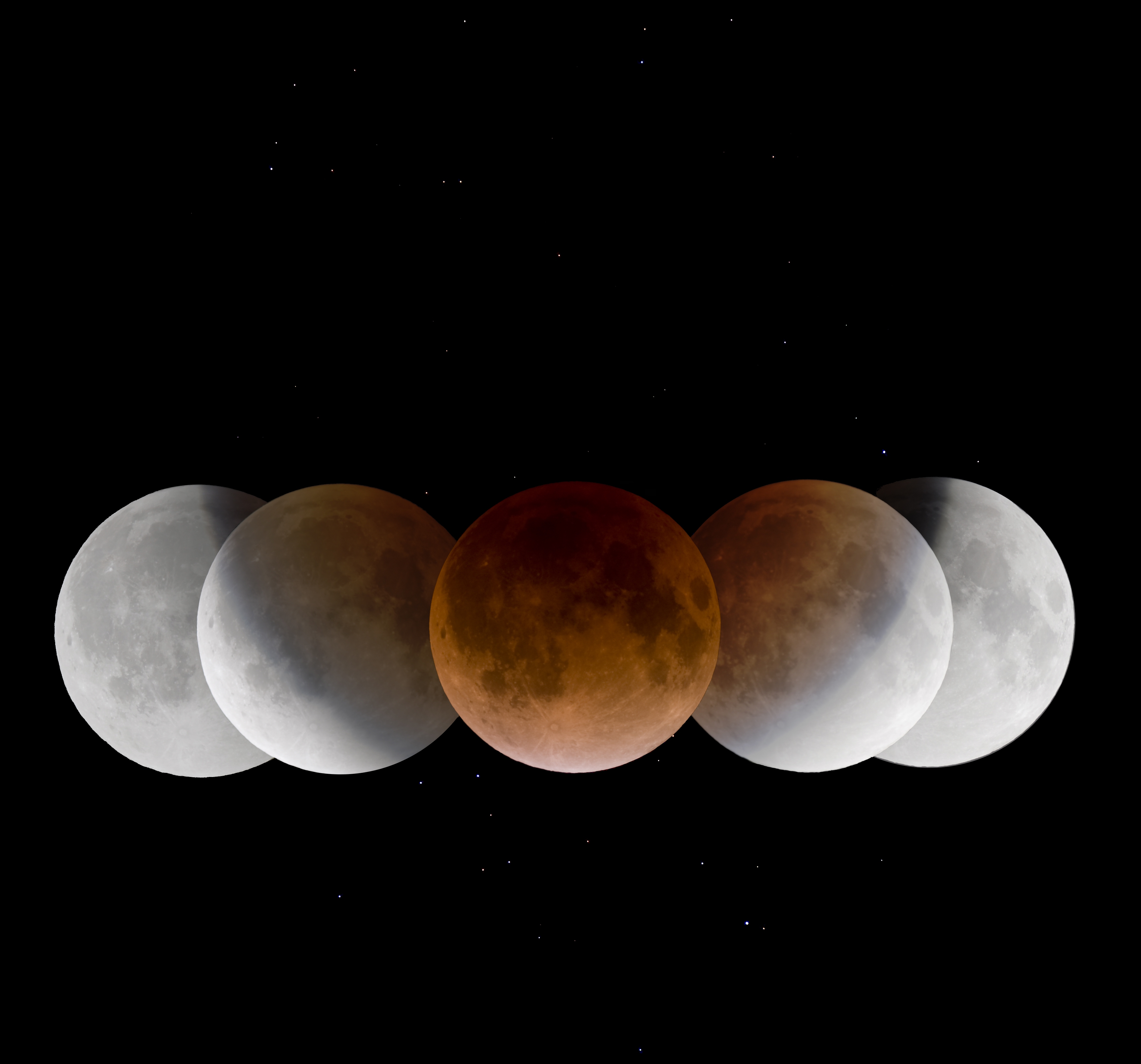
The Umbra of Earth
Image Credit & Copyright: Wang, Letian  

Explanation: The dark, inner shadow of planet Earth is called the umbra. Shaped like a cone extending into space, it has a circular cross section most easily seen during a lunar eclipse. For example, last Saturday the Full Moon slid across the southern half of Earth’s umbral shadow, entertaining moonwatchers around much of the planet. In the total phase of the eclipse, the Moon was completely within the umbra for 51 minutes. Recorded from Beijing, China, this composite eclipse image uses successive pictures from totality (center) and partial phases to trace out a large part of the umbra’s curved edge. Background stars are visible in the darker eclipse phases. The result shows the relative size of the shadow’s cross section at the distance of the Moon, as well as the Moon’s path through Earth’s umbra.

Feng Shui Tip of the Day for Deceber 14th

I swear that I won’t monkey around with sharing some empowering advice during today’s ‘Monkey Day’ energies. Even though the monkey is one of the twelve animals represented in the Chinese zodiac, it is the combination of the monkey and the elephant that can help you to accomplish the highest ranking that anyone in your profession can aspire to. Placing an image or a statue of a monkey sitting on an elephant’s back on or around your desk represents your ability to find stability and the security of an important position in your company, and this symbol says that you will stay there, too! The monkey signifies the duke or the highest ranked among the five ranking lords in ancient China, while the elephant brings the blessings of strength, sagacity and prudence. The combination of these two potent friends also promises unbreakable power and authority. In this case I guess it really does make sense that monkey see and then monkey do — for you!

By Ellen Whitehurst for Astrology.com

Five Feng Shui Tips for Abundance

Five Feng Shui Tips for Abundance

  • Annie B. Bond

The ancient Chinese system of Feng Shui uses the power of focused intention, as well as the mindful placement of objects, to improve our lives. If you would like more abundance for yourself and your family, try these five simple Feng Shui tips.

The Wealth/Abundance area is located in the far left corner of your house from the front door.

1. Place or keep any of the following in the Wealth area of your home: banknotes, piggy bank, checkbooks, purse. This deceptively simple act will help you to become more mindful of your money and how you manage it.

2. Use the following colors to enhance the Wealth area: gold, red, purple. These colors have deep and ancient associations with prosperity.

3. For the ancient Chinese, fish were considered a symbol of wealth. If you can’t place an aquarium in your Abundance area, you could use a photo or painting of fish to invite more prosperous energies into your life.

4. Images of generosity will inspire your own sense of abundance. You could use a bowl in your Wealth area to collect coins for a charity, or include a statue that symbolizes giving for you. When we give in an open-hearted way, we get the energy-flow of abundance moving in our lives.

5. Lush green plants do well in the Wealth area, reminding us that nature gives great pleasure and peace. Bamboo is traditional, but any healthy plant will do.

Lunar Eclipse

Lunar Eclipse

In the Earth’s Shadow

By Molly Hall

The Full Moon is always the alignment of the Sun and Moon in opposite Zodiac signs. The lunar eclipse happens when the Earth is smack dab in the middle, altering how the Moon reflects the solar light. Eclipses come in pairs, and usually come every six months, as that’s when the Moon’s orbit hits the ecliptic.

There’s a mysterious, underworld quality to the lunar eclipse. The Moon turns orangey or blood red, because of the shorter wavelengths being filtered through the Earth’s atmosphere. This frightened people in earlier times, as the cool lunar surface turned a malevolent red. Some cultures believed the Moon was swallowed by a three-legged toad (China) or a jaguar (Maya), and was a herald of demonic or destructive energies afoot. They shouted, clanged pots and pans, and banged drums to dispel the dark spirits lurking around.

What does it bring?

 Since full Moon’s are a time of illumination, the lunar eclipse momentarily throws up shadows of darkness. And often it’s the shadows of the “unlived life,” buried potential, being brought to the surface. It’s a bit like the rich void of the New Moon, where you’re in touch with a well of psychic material. It can be disorienting, as your feet are often leaving the ground of the known!

If you’ve been living in a fantasy world, you’re knocked back to earth. It can be destabilizing and rock the foundations. You are forced to be fully present to some event. You may get shattering news. It takes awhile to fully understand what’s happening, and to find your footing again. Sometimes the events of the eclipse are worked out over a long period, say six months.

Full Moons are times of super high energy, and surging emotion across the spectrum. The eclipse intensifies the sense of being overwhelmed, and events are experienced in vivid color. You’ll get this hit in the house in which the eclipse is taking place. It also loosens the moorings of any planet it touches. You’re in the rapid transformation chute, and clues to how it’ll manifest come from the Zodiac sign of the Sun and Moon at the time. Eclipses liberate us from the status quo, and get things moving. It’s a time to trust, though the outcome may be uncertain, that all things work toward progress in the end.

Earth Science Pic for Monday, November 14th

Rainbow and Eiffel Tower

November 14, 2011

French-rainbow

Photographer: Bertrand Kulik
Summary Author: Bertrand Kulik; Jim Foster
This eye-catching rainbow arching over the Eiffel Tower was snapped from my home in Paris, France on the afternoon of October 25, 2011. The width of a rainbow is approximately two degrees; for comparison, the Sun’s diameter is about 0.5 degrees across. Note that each of the primary bow’s color bands is about 0.5 degrees in width. Rainbow colors seem impure (colors overlap) because while rays of sunlight entering a prism emerge parallel to each other, the way they entered, rays emerging from a raindrop diverge.

Chinese Dragons

Chinese Dragons

In China, for instance, dragons are portrayed with four legs, a long sinuous serpentine body and a snake-like tail; they ranged in size from a few feet long up to the Great Chien-Tang who was over a thousand feet in length. They could speak, were able to alter their forms and sizes and had a varying number of claws.

Chinese emperors adopted the five-clawed dragon as a sacred ancestor, symbol of their power. Only Imperial dragons were said to have the special five claws on each foot. All other Oriental dragons had only three or four claws. It became a law that only the Emperor could have a five-clawed dragon embroidered on his robes or painted on anything.

According to tradition, China’s history dates back to 3000 b.c.e., although modern historians only goes back to 1600 b.c.e. A clay vessel from about 2000 b.c.e., is decorated with a dragon picture. The dragon symbol and figured still exist in modern-day Chinese art and celebrations.

The Chinese divided their dragons into groups or classes, each with different characteristics. There were four major Lung Wang dragons, or Dragon-Kings. The names of these brothers were Ao Kuang, Ao Jun, Ao Shun, and Ao Ch’in. They also had specific duties: the t’ien lung supported the mansion of the gods; the shen lung brought rain; the ti lung controlled the rivers; and the fu-ts’an lung guarded hidden treasures and deposits of precious metals. The Lung Wang or Dragon Kings, resembled the Indian Nagas, or sacred serpents. They were the patron deities of rivers, lakes, seas and rain. They had valuable pearls in their throats and lived in magnificent underwater palaces.

Further divisions produced the kiao-lung, or scaled dragon; ying-lung with wings; k’ui-lung with horns; chi’i-lung which was hornless; the p’an-lung which was earth-bound. The ch’i-lung dragon was red, white and green, the k’iu-lung blue. Chinese dragons were also entirely black, white, red or yellow with yellow considered superior.

When it came to using dragons for decoration, there were nine distinct categories; the p’u lao was carved on gongs; the ch’iu nui and pi hsi on fiddles and literature tablets; the pa hsia at the base of stone monuments, the chao feng on the eaves of temples; the ch’in on beams of bridges; the suan ni only on the throne of the Buddha; the yai tzu on the hilts of swords; and the pi han on prison gates.

Chinese experts were said to be able to tell the age of Oriental dragons and their origins by their colors. Yellow dragons were believed to be born from yellow gold a thousand years old; blue dragons from blue gold eight hundred years olds; red, white and black from gold of the same color a thousand years olds.

To the Chinese, dragons could be either male or female. They laid eggs, some of which did not hatch for a thousand years. When a hatching did occur, it was known because of great meteor showers, violent thunderstorms, and great showers of hail.

The number of scales on a dragon was also of importance. Some Ancient dragon experts in China maintained that a true dragon has exactly 81 scales, while others stated that the number was 117. They were never said to be covered with anything except scales. This is characteristic of dragons worldwide.

Chinese dragons were said to have the head of a camel, horns of a stag, eyes of a demon, neck of a snake, scales of a carp, claws of an eagle, feet of a tiger, and ears of a cow. Although, as one can see from ancient pictures, all Oriental dragons did not fit conveniently into this description, they all were said to have a lump on the top of the head. This lump enabled them to fly without wings. Although this flying-lump was considered an essential part of Oriental dragons, it is rare to see it portrayed in pictures.

Oriental dragons could change their forms by intense concentration or when extremely angry. All dragons are said to have the ability to take on human form. One can see reasons behind a draconic being passing as a human; dragons are intensely curious about all things and may wish to directly experience human life from time to time. It is a possibility that, while in such a form, a dragon could contact a human and establish a line of communication that could be continued after the dragon resumed its own form.

The Chinese even had methods of protecting themselves from annoying dragons. It was said that they could be frightened away or controlled by the leaves of the wang plant(or Pride of India), five-colored silk thread, wax, iron, or centipedes. It is difficult to imagine a dragon being deterred by wax or centipedes. Perhaps this idea grew from a single dragon who reacted in fear to these objects, just as some humans fear crawling things, heights, or mice. After all, dragons have very distinct and individual personalities just as we do.

In Chinese medicine, the skin, bones, teeth, and saliva were considered very valuable. Powdered dragon bone was a magickal cure-all. Old medical textbooks are quick to point out that dragons periodically shed their skin and bones, like snakes do. Since the skins glowed in the dark, presumably they were easy to locate. Some of the bones were listed as slightly poisonous and could only be prepared in non-iron utensils. How “bones” could be shed is a mystery unless it is not really bone, but something that looks like it. The shedding and regrowth of teeth is known to occur among certain animals, reptiles, and amphibians.

Dragon saliva was said to be found as a frothy foam on the ground or floating on the water. It was usually deposited during mating or fighting. One Chinese story tells of a great battle just off the coast near a fishing village. The people watched the great dragons rolling in the black clouds and leaping waves for a day and a night. Their echoing roars were clearly heard by all the villagers. The next morning these people set out in all their fishing boats to the place of the battle. They scooped up whole boatloads of dragon saliva that they found floating in huge piles on the ocean.

The blood of Oriental dragons was sometimes red, other times black. Dragon experts said it changed into amber when it soaked into the ground. Wherever dragon blood fell, the ground became incapable of supporting any vegetation. Although the blood was considered dangerous, sometimes deadly, in Oriental myths. European heroes bathed in it to create invulnerability or drank it to become wise. This transformation of the blood into amber could well be alchemical expression of the manifestation of magickal power and elemental energies into a desired physicial result.

Oriental dragons did not figure in Chinese creation myths. Only rarely, and then only by accident, did they come in conflict with the gods or heroes. They tended to mind their own business and keep a benefical attitude toward humans. Oriental dragons had specific duties such as controlling the weather and keeping the land and animal fertile, as well as assignments to help humans learn certain civilized arts. Although dragon parts were widely esteemed in Oriental medicine, these magickal creatures were not hunted down as were Western dragons.


“Dancing with Dragons”

D. J. Conway

Dragons In Heraldry

Dragons In Heraldry

Even through times of persecution, the dragon did not fade from sight. In European countries, and China in particular, the draconic image remained alive in stories. European families, especially used the dragon in coats of arms. The European art of heraldry and coats of arms still employs the depiction of dragons in its art. The Prince of Wales has a red and gold dragon in his coat of arms and on his flag. The families of de Drago, von Drachenfels, de Draek, de Dragon de Ramillies, and Dragomanni, among others, all have a dragon on their coats of arms, as did the family of Sir Francis Drake.


In heraldry, a dragon with two legs is called a wyvern; a dragon without wings is a worm; a serpentine dragon with wings but no legs is an amphiptere; a dragon with wings and legs is termed a guivre. Further meaning of these draconic images was determined by how the dragon was posed: rampant (forelegs raised), a passant (one foreleg raised), statant (all four feet on the ground), wings endorsed (upright over the back), displayed or depressed tail nowed (knotted). Even further definition was determined by color: or (gold), gules (red), sable (black), or vert (green).

Dragons In Heraldry

Dragons In Heraldry


Even through times of persecution, the dragon did not fade from sight. In European countries, and China in particular, the draconic image remained alive in stories. European families, especially used the dragon in coats of arms. The European art of heraldry and coats of arms still employs the depiction of dragons in its art. The Prince of Wales has a red and gold dragon in his coat of arms and on his flag. The families of de Drago, von Drachenfels, de Draek, de Dragon de Ramillies, and Dragomanni, among others, all have a dragon on their coats of arms, as did the family of Sir Francis Drake.


In heraldry, a dragon with two legs is called a wyvern; a dragon without wings is a worm; a serpentine dragon with wings but no legs is an amphiptere; a dragon with wings and legs is termed a guivre. Further meaning of these draconic images was determined by how the dragon was posed: rampant (forelegs raised), a passant (one foreleg raised), statant (all four feet on the ground), wings endorsed (upright over the back), displayed or depressed tail nowed (knotted). Even further definition was determined by color: or (gold), gules (red), sable (black), or vert (green).

In The News……

In the news

Christine Lagarde

  • Astronomers announce the discovery of ULAS J1120+0641, the most distant quasar yet found.
  • The Jiaozhou Bay Bridge, the world’s longest cross-sea bridge, opens in Shandong, People’s Republic of China.
  • The 1,318-km (819-mi) Beijing–Shanghai High-Speed Railway opens after 39 months of construction.
  • Amid heavy protests, the Greek parliament passes austerity measures to obtain the latest tranche of a €110 billion EFSF loan.
  • Christine Lagarde (pictured) is appointed Managing Director of the International Monetary Fund, beginning 5 July.
  • At least nineteen people, including eight attackers, are killed in a Taliban assault on the Hotel InterContinental in Kabul, Afghanistan.
  • The International Criminal Court issues an arrest warrant for Muammar Gaddafi, accusing him of crimes against humanity during the ongoing civil war in Libya.

Deity of the Day for June 10th is XI-HE

Deity of the Day

XI-HE

Also known as HSI-HE, HSI-HO
 

Goddess of Light and Mother of the Ten Suns.

During the old Chinese ten-day week, one Sun would appear each day, until at the end of the week they all gathered together at the Valley of Light in the east.

Being a doting mother, XI-HE would wash them, brush their teeth with Sunny Smiles Toothpaste and put them to bed in the branches of a giant Mulberry Tree.

After a while the Ten Suns became bored with this routine and ran off together, causing a terrible heatwave. Her husband DI-JUN was ordered by the Emperor to keep the naughty Suns under control, with disastrous consequences for them, but not for us.

Your Charm for April 18th

Your Charm for Today


Capricornus the Goat
 
Today’s Meaning:
This aspect of your life will be strongly influenced by a person who is practical, prudent, ambitious, disciplined, patient, careful, humorous and reserved. They could be someone you know in the medical field–a nurse or doctor perhaps.General Description:
Tenth sign of the Zodiac, Dec 22nd to Jan 19th. Ruling planet, Saturn; correct metal, lead. Those born under Capricornus influence were believed to be prudent, deep thinkers, prosperous in financial affairs, generous, with strong and foreible tempers. The capricorn stone is the Ruby. The Ruby was a favourite talisman in the Orient. In India it was worn to guard against attacks of enemies, foretell danger, supposed to change colour in presence of poison, and attract friends and good fortune; China and Japan health, Happiness and long life. The Romans believed that the Ruby preserved health and strength, averted danger, plauge and fevers.