Deity of the Day for June 30 is Helios

Deity of the Day

Helios


Helios (/ˈhiːli.ɒs/; Ancient Greek: Ἥλιος Hēlios; Latinized as Helius; Ἠέλιος in Homeric Greek) was the personification of the Sun in Greek mythology. He is the son of the Titan Hyperion and the Titaness Theia (Hesiod) (also known as Euryphaessa (Homeric Hymn 31)) and brother of the goddesses Selene, the moon, and Eos, the dawn.

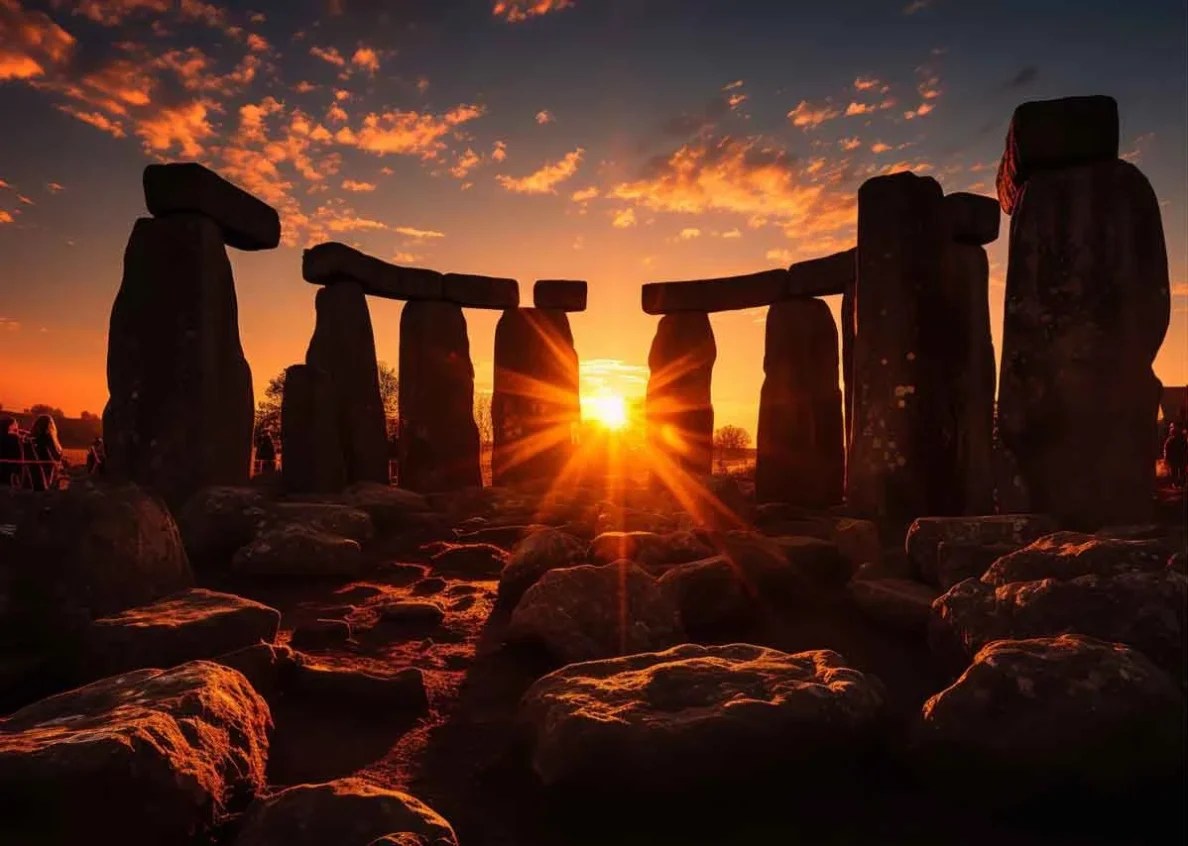
Helios was described as a handsome titan crowned with the shining aureole of the Sun, who drove the chariot of the sun across the sky each day to earth-circling Oceanus and through the world-ocean returned to the East at night. In the Homeric hymn to Helios, Helios is said to drive a golden chariot drawn by steeds (HH 31.14–15); and Pindar speaks of Helios’s “fire-darting steeds” (Olympian Ode 7.71). Still later, the horses were given fiery names: Pyrois, Aeos, Aethon, and Phlegon.

As time passed, Helios was increasingly identified with the god of light, Apollo. However, in spite of their syncretism, they were also often viewed as two distinct gods/titan (Helios was a Titan, whereas Apollo was an Olympian). The equivalent of Helios in Roman mythology was Sol, specifically Sol Invictus.

The best known story involving Helios is that of his son Phaëton, who attempted to drive his father’s chariot but lost control and set the earth on fire.

Helios was sometimes characterized with the epithet Panoptes (“the all-seeing”). In the story told in the hall of Alcinous in the Odyssey (viii.300ff.), Aphrodite, the consort of Hephaestus, secretly beds Ares, but all-seeing Helios spies on them and tells Hephaestus, who ensnares the two lovers in nets invisibly fine, to punish them.

In the Odyssey, Odysseus and his surviving crew land on Thrinacia, an island sacred to the sun god, whom Circe names Hyperion rather than Helios. There, the sacred red[citation needed] cattle of the Sun were kept:

You will now come to the Thrinacian island, and here you will see many herds of cattle and flocks of sheep belonging to the sun-god. There will be seven herds of cattle and seven flocks of sheep, with fifty heads in each flock. They do not breed, nor do they become fewer in number, and they are tended by the goddesses Phaethusa and Lampetia, who are children of the sun-god Hyperion by Neaera. Their mother when she had borne them and had done suckling them sent them to the Thrinacian island, which was a long way off, to live there and look after their father’s flocks and herds.

Though Odysseus warns his men, when supplies run short they impiously kill and eat some of the cattle of the Sun. The guardians of the island, Helios’ daughters, tell their father about this. Helios appeals to Zeus telling them to dispose of Odysseus’ men or he will take the Sun and shine it in the Underworld. Zeus destroys the ship with his lightning bolt, killing all the men except for Odysseus.
Solar Apollo with the radiant halo of Helios in a Roman floor mosaic, El Djem, Tunisia, late 2nd century

In one Greek vase painting, Helios appears riding across the sea in the cup of the Delphic tripod which appears to be a solar reference. Athenaeus in Deipnosophistae relates that, at the hour of sunset, Helios climbed into a great golden cup in which he passes from the Hesperides in the farthest west to the land of the Ethiops, with whom he passes the dark hours. While Heracles traveled to Erytheia to retrieve the cattle of Geryon, he crossed the Libyan desert and was so frustrated at the heat that he shot an arrow at Helios, the Sun. Almost immediately, Heracles realized his mistake and apologized profusely, in turn and equally courteous, Helios granted Heracles the golden cup which he used to sail across the sea every night, from the west to the east because he found Heracles’ actions immensely bold. Heracles used this golden cup to reach Erytheia.

By the Oceanid Perse, Helios became the father of Aeëtes, Circe and Pasiphaë. His other children are Phaethusa (“radiant”) and Lampetia (“shining”).

Helios is sometimes identified with Apollo: “Different names may refer to the same being,” Walter Burkert observes, “or else they may be consciously equated, as in the case of Apollo and Helios.”

In Homeric literature, Apollo is clearly identified as a different god, a plague-dealer with a silver (not golden) bow and no solar features.

The earliest certain reference to Apollo identified with Helios appears in the surviving fragments of Euripides’ play Phaethon in a speech near the end (fr 781 N²), Clymene, Phaethon’s mother, laments that Helios has destroyed her child, that Helios whom men rightly call Apollo (the name Apollo is here understood to mean Apollon “Destroyer”).

By Hellenistic times Apollo had become closely connected with the Sun in cult. His epithet Phoebus, Phoibos “shining”, drawn from Helios, was later also applied by Latin poets to the sun-god Sol.
Coin of Roman Emperor Constantine I depicting Sol Invictus/Apollo with the legend SOLI INVICTO COMITI, c. 315 AD.

The identification became a commonplace in philosophic texts and appears in the writing of Parmenides, Empedocles, Plutarch and Crates of Thebes among others, as well as appearing in some Orphic texts. Pseudo-Eratosthenes writes about Orpheus in Catasterismi, section 24:

“But having gone down into Hades because of his wife and seeing what sort of things were there, he did not continue to worship Dionysus, because of whom he was famous, but he thought Helios to be the greatest of the gods, Helios whom he also addressed as Apollo. Rousing himself each night toward dawn and climbing the mountain called Pangaion, he would await the sun’s rising, so that he might see it first. Therefore Dionysus, being angry with him, sent the Bassarides, as Aeschylus the tragedian says; they tore him apart and scattered the limbs.”

Dionysus and Asclepius are sometimes also identified with this Apollo Helios.

Classical Latin poets also used Phoebus as a byname for the sun-god, whence come common references in later European poetry to Phoebus and his car (“chariot”) as a metaphor for the sun. But in particular instances in myth, Apollo and Helios are distinct. The sun-god, the son of Hyperion, with his sun chariot, though often called Phoebus (“shining”) is not called Apollo except in purposeful non-traditional identifications.

Despite these identifications, Apollo was never actually described by the Greek poets driving the chariot of the sun, although it was common practice among Latin poets. Therefore, Helios is still known as the ‘sun god’ – the one who drives the sun chariot across the sky each day.


Source:
Wikipedia

Deity of the Day for June 14th – Lugh (Celtic God)

Deity of the Day

Lugh

Master of Skills


Patron of the Arts:

Similar to the Roman god Mercury, Lugh was known as a god of both skill and the distribution of talent. There are countless inscriptions and statues dedicated to Lugh, and Julius Caesar himself commented on this god’s importance to the Celtic people. Although he was not a war god in the same sense as the Roman Mars, Lugh was considered a warrior because to the Celts, skill on the battlefield was a highly valued ability.

In Ireland, which was never invaded by Roman troops, Lugh is called sam ildanach, meaning he was skilled in many arts simultaneously.

Lugh Enters the Hall of Tara:

In one famous legend, Lugh arrives at Tara, the hall of the high kings of Ireland. The guard at the door tells him that only one person will be admitted with a particular skill — one blacksmith, one wheelwright, one bard, etc. Lugh enumerates all the great things he can do, and each time the guard says, “Sorry, we’ve already got someone here who can do that.” Finally Lugh asks, “Ah, but do you have anyone here who can do them ALL?” At last, Lugh was allowed entrance to Tara.

The Book of Invasions:

Much of the early history of Ireland is recorded in the Book of Invasions, which recounts the many times Ireland was conquered by foreign enemies. According to this chronicle, Lugh was the grandson of one of the Fomorians, a monstrous race that were the enemy of the Tuatha De Danann. Lugh’s grandfather, Balor of the Evil Eye, had been told he would be murdered by a grandson, so he imprisoned his only daughter in a cave.

One of the Tuatha seduced her, and she gave birth to triplets. Balor drowned two of them, but Lugh survived and was raised by a smith. He later led the Tuatha in battle, and indeed killed Balor.

Roman Influence:

Julius Caesar believed that most cultures worshipped the same gods and simply called them by different names. In his Gallic War essays, he enumerates the popular deities of the Gauls and refers to them by what he saw as a corresponding Roman name. Thus, references made to Mercury actually are attributed to a god Caesar also calls Lugus — Lugh. This god’s cult was centered in Lugundum, which later became Lyon, France. His festival on August 1 was selected as the day of the Feast of Augustus, by Caesar’s successor, Octavian Augustus Caesar, and it was the most important holiday in all of Gaul.

Weapons and War:

Although not specifically a war god, Lugh was known as a skilled warrior. His weapons included a mighty magic spear, which was so bloodthirsty that it often tried to fight without its owner. According to Irish myth, in battle, the spear flashed fire and tore through the enemy ranks unchecked. In parts of Ireland, when a thunderstorm rolls in, the locals say that Lugh and Balor are sparring – thus giving Lugh one more role, as a god of storms.

The Many Aspects of Lugh:

According to Peter Beresford Ellis, the Celts held smithcraft in high regard. War was a way of life, and smiths were considered to have magical gifts — after all, they were able to master the element of Fire, and mold the metals of the earth using their strength and skill. Yet in Caesar’s writings, there are no references to a Celtic equivalent of Vulcan, the Roman smith god.

In early Irish mythology, the smith is called Goibhniu, and is accompanied by two brothers to create a triple god-form. The three craftsmen make weaponry and carry out repairs on Lugh’s behalf as the entire host of the Tuatha De Danann prepares for war. In a later Irish tradition, the smith god is seen as a master mason or a great builder. In some legends, Goibhniu is Lugh’s uncle who saves him from Balor and the monstrous Formorians.

One God, Many Names

The Celts had many gods and goddesses, due in part to the fact that each tribe had its own patron deities, and within a region there might be gods associated with particular locations or landmarks. For example, a god who watched over a particular river or mountain might only be recognized by the tribes who lived in that area. Lugh was fairly versatile, and was honored nearly universally by the Celts. The Gaulish Lugos is connected to the Irish Lugh, who in turn is connected to the Welsh Llew Llaw Gyffes.

Celebrating the Harvest of Grain

The Book of Invasions tells us that Lugh came to be associated with grain in Celtic mythology after he held an harvest fair in honor of his foster mother, Tailtiu. This day became August 1, and that date ties in with the first grain harvest in agricultural societies in the Northern Hemisphere. In fact, in Irish Gaelic, the word for August is lunasa. Lugh is honored with corn, grains, bread, and other symbols of the harvest. This holiday was called Lughnasadh (pronounced Loo-NA-sah). Later, in Christian England the date was called Lammas, after the Saxon phrase hlaf maesse, or “loaf mass.”

An Ancient God for Modern Times

For many Pagans and Wiccans, Lugh is honored as the champion of artistry and skills. Many artisans, musicians, bards, and crafters invoke Lugh when they need assistance with creativity. Today Lugh is still honored at the time of harvest, not only as a god of grain but also as a god of late summer storms.

Even today, in Ireland many people celebrate Lughnasadh with dancing, song, and bonfires. The Catholic church also has set this date aside for a ritual blessing of farmers’ fields.


Source:

Gods – OgmaCeltic God c.2015


Ogma

Celtic God


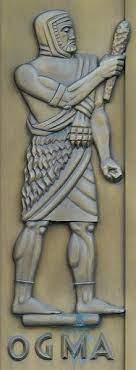
In Irish-Celtic myth, Ogma is the god of eloquence and learning. He is the son of the goddess Danu and the god Dagda, and one of the foremost members of the Tuatha Dé Danann. He is the reputed inventor of the ancient Ogham alphabet which is used in the earliest Irish writings.

In the final battle at Mag Tuireadh he managed to take away the sword of the king of the Fomorians, but had to pay with his life for this feat. His Celtic equivalent is Ogmios.

Ogma or Oghma is a character from Irish mythology. A member of the Tuatha Dé Danann, he is often considered a deity and may be related to the Gaulish god Ogmios.

He fights in the first battle of Mag Tuired, when the Tuatha Dé take Ireland from the Fir Bolg. Under the reign of Bres, when the Tuatha Dé are reduced to servitude, Ogma is forced to carry firewood, but nonetheless is the only one of the Tuatha Dé who proves his athletic and martial prowess in contests before the king. When Bres is overthrown and Nuadu restored, Ogma is his champion. His position is threatened by the arrival of Lugh at the court, so Ogma challenges him by lifting and hurling a great flagstone, which normally required eighty oxen to move it, out of Tara, but Lugh answers the challenge by hurling it back. When Nuadu hands command of the Battle of Mag Tuired to Lugh, Ogma becomes Lugh’s champion, and promises to repel the Fomorian king, Indech, and his bodyguard, and to defeat a third of the enemy. During the battle he finds Orna, the sword of the Fomorian king Tethra, which recounts the deeds done with it when unsheathed. During the battle Ogma and Indech fall in single combat, although there is some confusion in the texts as in Cath Maige Tuired Ogma, Lugh and the Dagda pursue the Fomorians after the battle to recover the harp of Uaitne, the Dagda’s harper.

He often appears as a triad with Lugh and the Dagda, who are sometimes collectively known as the trí dée dána or three gods of skill, although that designation is elsewhere applied to other groups of characters. His father is Elatha and his mother is usually given as Ethliu, sometimes as Étaín. His sons include Delbaeth and Tuireann. He is said to have invented the Ogham alphabet, which is named after him.

Scholars of Celtic mythology have proposed that Ogma represents the vestiges of an ancient Celtic god. By virtue of his battle prowess and invention of Ogham, he is compared with Ogmios, a Gaulish deity associated with eloquence and equated with Herakles. J. A. MacCulloch compares Ogma’s epithet grianainech (sun-face) with Lucian’s description of the “smiling face” of Ogmios, and suggests Ogma’s position as champion of the Tuatha Dé Danann may derive “from the primitive custom of rousing the warriors’ emotions by eloquent speeches before a battle”, although this is hardly supported by the texts. Scholars such Rudolf Thurneysen and Anton van Hamel dispute any link between Ogma and Ogmios.

*
A Proto-Indo-European root *og-mo– ‘furrow, track, incised line’ may be the origin of the stem of the name. In addition, Proto-Celtic had a causative verbal suffix *-ej– ~ *-īj-. A hypothetical Proto-Celtic *Ogm-īj-o-sogm-. This agent noun would therefore mean ‘furrow-maker, incisor’ and may have had a metaphorical sense of ‘impresser.’ therefore looks very much like an agent noun derived from a verb formed by the addition of this causative suffix to the stem *

The Irish god of writing, eloquence and poetry. Ogma was credited of being inventor of the Celtic writing systems that the Druids used for their magic. These scripts were known as Ogham.

Ogma was the son of Dagda and the goddess Danu. Some other writers say that Ogma and Dagda were brothers; in this version they were the sons of Eithne. Ogma had also being called the son of Elatha, the king of the Fomorians.

Ogma was one the seven champions in the First Battle of Moytura (Mag Tuired), but when Bres became the king of Tuatha dé Danann, Ogma was degraded into working on humiliating manual job of gathering firewood.
When Lugh went to Nuada, asking for a place to serve the king, Ogma seemed to be Nuada’s foremost fighter. During the second battle of Moytura, Ogma had killed one of the Fomorian leaders, named Indech, the son of Domnu.

Ogma had married Etain, the daughter of Dian Cécht. Ogma had a son named Caipre. Some say that he was the father of MacCuill, MacCecht and MacGrené (MacGrene), the three Danann kings who ruled Ireland, during the Milesian invasion, though other say that Neit was their father.
To the Celtic Gauls he was called Ogmios. According to both Gallic and Irish myths Ogma was a warrior god, depicted as a wrinkled old man, wearing lion’s skin cloak, carrying a bow and club. The Romans considered Ogmios as the Celtic equivalent of Hercules (Greek Heracles). They also depicting Ogimos as holding people chained to his tongue by their ears, to indicate he was the god of eloquence and poetry.

Author: Agaliha

Deity of the Day for Beltane is The Green Man, Spirit of the Forest

Deity of the Day for Beltane

The Green Man

Spirit of the Forest

For our ancient ancestors, many spirits and deities were associated with nature, wildlife, and plant growth. After all, if you had just spent the winter starving and freezing, when spring arrived it was certainly time to give thanks to whatever spirits watched over your tribe. The spring season, particularly around Beltane, is typically tied to a number of pre-Christian nature spirits. Many of these are similar in origin and characteristics, but tend to vary based on region and language.

In English folklore, few characters stand out — or are as recognizable — as the Green Man.

Strongly connected to Jack in the Green and the May King, as well as John Barleycorn during the fall harvest, the figure known as the Green Man is a god of vegetation and plant life. He symbolizes the life that is found in the natural plant world, and in the earth itself. Consider, for a moment, the forest. In the British Isles, the forests a thousand years ago were vast, spreading for miles and miles, farther than the eye could see. Because of the sheer size, the forest could be a dark and scary place.

However, it was also a place you had to enter, whether you wanted to or not, because it provided meat for hunting, plants for eating, and wood for burning and building. In the winter, the forest must have seemed quite dead and desolate… but in the spring, it returned to life. It would be logical for early peoples to have applied some sort of spiritual aspect to the cycle of life, death and rebirth.

Folklorist James Frazer associates the Green Man with May Day celebrations, and with the character of Jack in the Green, who is a more modern adaptation of the Green Man. Jack is a more specifically defined version of the nature spirit than the earlier Green Man archetype. Frazer speculates that while some form of the Green Man was probably present in a variety of separate early cultures, he developed independently into a variety of newer, more modern characters. This would explain why in some areas he is Jack, while in others he is Robin of the Hood, or Herne the Hunter in different parts of England. Likewise, other, non-British cultures seem to have similar nature deities.

The Green Man is typically portrayed as a human face surrounded by dense foliage. Such images appear as far back as the eleventh century, in church carvings. As Christianity spread, the Green Man went into hiding, with stonemasons leaving secret images of his face around cathedrals and churches. He enjoyed a revival during the Victorian era, when he became popular with architects, who used his visage as a decorative aspect in buildings.

Legends connected to the archetype of the Green Man are everywhere. In the Arthurian legend, the tale of Sir Gawain and the Green Knight is a prime example. The Green Knight represents the pre-Christian nature religion of the British Isles. Although he originally confronts Gawain as an enemy, the two later are able to work together – perhaps a metaphor for the assimilation of British Paganism with the new Christian theology. Many scholars also suggest that the tales of Robin Hood evolved from Green Man mythology. Allusions to the Green Man can even be found in J.M. Barrie’s classic Peter Pan – an eternally youthful boy, dressed in green and living in the forest with the wild animals. Today, some traditions of Wicca interpret the Green Man as an aspect of the Horned God, Cernunnos.


Author:

Article found on & owned by About.com


Reaching Gods And Goddesses In Trance

Reaching Gods And Goddesses In Trance


Modern Wiccans call into themselves the energies of the Goddess to amplify their own innate divine spark and at times may work in a deep trance, uttering words of prophecy or profound teaching. This is said to increase the power entering the body, like turning up the current from a power source. But until you have practised magick for many years, I would advocate working only in light trance and then only in the controlled situation of a very spiritual group. You can think of this as opening a channel between your own higher energies and the Goddess or powers of light.

I said just now that the power of a trance can be compared to an electric current. The analogy can be taken further: just as sending a sudden surge of electricity can cause a power failure, deliberately inducing a deep trance can be dangerous. Those who use drugs to induce such experiences are, in my opinion, playing with fire and may in fact be blocking their innate wisdom in return for an artificial mind-bending experience.

Most people quite rightly shy away from the idea of possession by a force, however benign, preferring to work with the energies indirectly – and this is what I believe is safest and most effective. For even if you are working with an experienced group in healing magick and do want to allow power of light or the Goddess to manifest in you directly, it is pretty heady stuff. So go cautiously, work only in the most positive of minds for the good of all, and for trance work have other experienced witches or mediums to guide you and help you to centre.

The gods themselves can offer protection when you are performing rituals. In formal magick, the Guardians, or Devic Lords of the Watchtower, are invited to guard the four directions of a magical circle. The term deva in Sanskrit means ‘shining one’, and the Devas represent the higher forms, akin to angels, who watch and direct the natural world.

They communicate with people by psychic ‘channeling’ and rule over the beings associated with the four elements, Fire, Air, Water and Earth. In less formal practices, either archangels or pillars of light may be visualized in the corners of the room to offer protection at a time when a person is opening then-psyche to the cosmos, to keep out all negativity, earthly or otherwise. But the greatest protection is a pure heart and pure intent, much harder to attain than learning any complex ritual.


Source:
Cassandra Eason

Offerings to the Gods: What’s an Acceptable Gift?

Offerings to the Gods

What’s an Acceptable Gift?

By

In many Pagan and Wiccan traditions, it’s not uncommon to make some sort of offering or sacrifice to the gods. Bear in mind that despite the reciprocal nature of our relationship with the divine, it’s not a matter of “I’m offering you this stuff so you’ll grant my wish.” It’s more along the lines of “I honor you and respect you, so I’m giving you this stuff to show you how much I appreciate your intervention on my behalf.”

So the question arises, then, of what to offer them? Different types of deities seem to respond best to different kinds of offerings. For example, you wouldn’t offer flowers to a war god, would you? When making an offering, it’s important to think about what the god represents. The Roman Cato described an offering for agricultural prosperity: Make offerings to keep your oxen in good health. Make the following sacrifices to Mars… three pounds of wheat, four-and-a-half of lard, four-and-a-half of meat and three pints of wine. While it’s probably not necessary to go that far and offer up enough food to feed a small army to your god, the passage does illustrate the fact that our ancestors thought enough of their gods to take their offerings very seriously.

In general, bread, milk and wine are nearly always appropriate for any deity. Here are some ideas for specific offerings you can make to deities, based upon the types of gods they are:

Hearth and Home Gods:

  • Food: Bread and grains, cooking oil, salt
  • Drink: Milk, wine, cider
  • Herbs: Rosemary, thyme

Gods of Love and Passion:

  • Food: Eggs, honey, apples
  • Drink: Wine, fruit juice
  • Herbs: Lavender, sandalwood

Garden/Nature Deities:

  • Food: Bread, cornmeal, fruit
  • Drink: Milk, water
  • Herbs: Bay

Gods of Prosperity and Abundance:

  • Food: Grains, dairy products like cheese or eggs
  • Drink: Milk, beer
  • Herbs: Mint, pennyroyal, catnip

Ancestor Spirits:

  • Food: Any meal from your family’s table
  • Drink: Drinks from the family table
  • Herbs: Sage, sweetgrass

Childbirth or Fertility Godesss:

  • Food: Eggs, baked sweets like cookies
  • Drink: Milk (including breast milk)
  • Herbs: Rose, sandalwood, apple blossoms


Source:
About.com

Appropriate Worship – Honoring the Gods the Right Way

Appropriate Worship – Honoring the Gods the Right Way

By

One issue that comes up often for people learning about modern Pagan spirituality is the concept of appropriate worship. There tends to be some question about what, exactly, is the right offering to make to the gods or goddesses of one’s tradition — and how we should honor them when making those offerings.

Let’s imagine that you have two friends. First, we have Jill. She likes French cuisine, Meg Ryan movies, soft music and expensive wine. She’s someone who lets you cry on her shoulder when you’re feeling blue, and she offers some wise and thoughtful insight when you can’t solve a problem on your own. One of her best qualities is her ability to listen.

You also have a friend named Steve. He’s a lot of fun, and sometimes shows up at your house at midnight toting a six-pack. Steve likes watching movies with lots of explosions, took you to your first Metallica concert, and can rebuild a Harley with his eyes closed. He eats mostly bratwurst and Funyuns, enjoys picking up strippers at bars, and is the guy you call when you want to have a good time.

When Jill comes over, are you going to have a nice quiet dinner with a glass of wine and Josh Groban playing in the background, or are you going to hand her a cheeseburger and a beer, pull out the Wii for a round of God of War, and stay up until 3 am seeing who can burp and fart the loudest?

Likewise, if Steve shows up, are you going to do things that he enjoys, or are you going to say, “Hey, Steve, let’s watch Steel Magnolias and talk about our feelings?

Much like our friends Jill and Steve, the gods have certain things they like and value, and certain things they don’t. To offer one of them something better suited to another is not only disrespectful, it shows that you really don’t know them at all and worse yet, haven’t even taken the time to learn about them. What do you think Steve is going to say when you offer him a vegetarian soup and turn on some chick flick? He’s going to bail, that’s what he’s going to do. Because not only did you present him with something he dislikes, but you’re showing a fundamental lack of knowledge of someone you claim is your friend.

Sure, you love Jill and Steve equally, but they’re not the same person, and they don’t have the same likes and dislikes. The gods are the same way — you may honor both Aphrodite and Mars, but that doesn’t mean Mars wants to you to leave him a bouquet of flowers and a glass of milk while you sing him Kumbaya. You can also be sure that Aphrodite probably isn’t interested in offerings of blood and raw meat, or warrior chants.

The idea of right or appropriate worship is not about someone telling you what’s “right or wrong.” It is simply the concept that one should take the time to do things – including worship and offerings – in a way that is conducive to the demands and needs of the god or goddess in question.

When you honor the gods, take the time to put some thought into it. Ask yourself what it is you hope to obtain by making the offering — are you trying to gain something, or merely show your appreciation and gratitude to the Divine? Learn about the types of deities you’re about to honor, and study the specific gods and goddesses of your tradition, so that when you do make an offering or present a ritual in their name, you can do so in a way that truly does them honor.


Source:

About.com


Do Wiccans and Pagans Believe in God?

Do Wiccans and Pagans Believe in God?

By

Question: Do Wiccans and Pagans Believe in God?

I’m interested in Wicca, but my mom says Wiccans and Pagans don’t believe in God. I feel weird not believing in a universal force of some sort. What’s the deal here?

Answer: The deal is that most Wiccans and Pagans see “god” as more of a job title than a proper name. They don’t worship the Christian god, but that doesn’t mean they don’t accept the existence of deity. Various Wiccan and Pagan traditions honor different gods. Some see all deities as one, and may refer to The God or The Goddess. Others may worship specific gods or goddesses – Cernunnos, Brighid, Isis, Apollo, etc. – from their own tradition. Because there are so many different forms of Pagan belief, there are nearly as many gods and goddesses to believe in.

Many Pagans, including but not limited to Wiccans, are willing to accept the presence of the Divine in all things. Because Wicca and Paganism place a good deal of emphasis on the idea that experiencing the divine is something for everyone, not just select members of the clergy, it’s possible for a Wiccan or Pagan to find something sacred within the mundane. For example, the whisper of wind through the trees or the roar of the ocean can both be considered divine. Not only that, many Pagans feel that the divine lives within each of us. It’s rare to find a Pagan or Wiccan who sees the gods as judgmental or punishing. Instead, most view the gods as beings that are meant to be walked beside, hand in hand, and honored.

Another aspect of this that’s important to keep in mind is that not everyone who is a Pagan happens to be Wiccan. There are many other paths of Paganism, many of which are polytheistic. Some Pagan paths are based on a concept that all gods are one. There are also some Pagans who follow an earth- or nature-based belief system outside of the concept of deity completely.


Source:

About.com


WOTC’s Extra – Goddesses/Gods You Can Call On for Specific Spellworking

Goddesses You Can Call Upon for Specific Spellwork:

Aphrodite: Greek; Goddess of passionate, sexual love.
Aphrodite will assist you in pulling loving energy toward yourself.
Aradia: Italian; Queen of the Witches, daughter of Diana.
Aradia is an extremely powerful entity and a protectress of Witches in general.
Artemis: Greek; Goddess of the Moon.
Astarte: Greek; Fertility Goddess.
Whether you wish to bear children or have a magnificent garden, Astarte will assist in your desire.
Demeter: Greek; Earth Mother archetype.
Excellent Goddess where birthing or small children are involved.
Diana: Roman; Moon Goddess and Goddess of the Hunt. Diana is many faceted.
She is seductress (as she enchanted her brother Lucifer to beget Aradia in the form of a cat) as well as a mother figure for Witches.
Isis: Egyptia; represents the Complete Goddess or the Triple Goddess connotation in one being.
Persephone: Greek; Goddess of the Underworld as well as Harvest. Daughter of Demeter.
Selene: Greek; Goddess of the Moon and Solutions.
Appeal to Selene to bring a logical answer to any problem.
Venus: Roman; Goddess of Love and Romance


Gods You Can Call Upon for Specific Spellwork:

Adonis: Greek; consort of Aphrodite. Also another name for “lord”.
In Phoenician his counterpart is Astarte.
A vegetarian God. Roman counterpart is Venus.
Apollo: Greek and Roman; twin brother of Artemis. God of the Sun, Light and the Arts.
Cernunnos: Celtic; Horned God and consort of the Lady. Also Kernunnos.
Eros: Greek; God of Romance and Passionate Love.
Hymen: Greek; God of Marriage and Commitment. His counterpart is Dionysus.
Luce: Italian; Soul mate and Brother of Diana. Father of Arcadia. God of the Sun and Light.
Osiris: wiccan; counterpart of Isis. Over-all God form including vegetation and after-life.
Pan: Greek; God of Nature and the Woods, Laughter and Passion.
Also music and personal abandon. Of course, you can refer to either the God and/or Goddess as merely Lord and Lady if it makes you feel more comfortable.


Enhanced by Zemanta

The Myth of Cupid and Psyche (The Divine Love Story)

The Myth of Cupid and Psyche

The Divine Love Story or Myth of Cupid and Psyche

By , About.com

The great Greek goddess of love and beauty, Aphrodite, was born from the foam near the island of Cyprus, for which reason she is referred to as “the Cyprian.” Aphrodite was a jealous goddess, but she was also passionate. Not only did she love the men and gods in her life, but her sons and grandchildren, as well. Sometimes her possessive instincts led her too far. When her son Cupid found a human to love — one whose beauty rivaled hers — Aphrodite did all in her power to thwart the marriage.

How Cupid and Psyche Met

Psyche was worshiped for her beauty in her homeland. This drove Aphrodite mad, so she sent a plague and let it be known the only way the land could get back to normal was to sacrifice Psyche. The king, who was Psyche’s father, tied Psyche up and left her to her death at the hands of some presumed fearsome monster. You may note that this isn’t the first time in Greek mythology that this happened. The great Greek hero Perseus found his bride, Andromeda, tied up as prey for a sea monster. Andromeda was sacrificed to appease Poseidon who had ravaged the country of Ethiopia, which was ruled by her father, after Queen Cassiopeia had boasted about her own beauty. In the case of Psyche, it was Aphrodite’s son Cupid who released and married the princess.

The Mystery About Cupid

Unfortunately for the young couple, Cupid and Psyche, Aphrodite was not the only one trying to foul things up. Psyche had two sisters who were as jealous as Aphrodite.

Cupid was a wonderful lover and husband to Psyche, but there was one odd thing about their relationship: He made sure Psyche never saw what he looked like. Psyche didn’t mind. She had a fulfilling night life in the dark with her husband, and during the day, she had all the luxuries she could ever want.

When the sisters learned about the luscious, extravagant lifestyle of their lucky, beautiful sister, they urged Psyche to pry into the area of his life that Psyche’s husband kept hidden from her.

Cupid was a god, and gorgeous as he had to have been with Aphrodite for a mother, but for reasons known best to him, he didn’t want his mortal wife to see his form. Psyche’s sister didn’t know he was a god, although they may have suspected it. However, they did know that Psyche’s life was much happier than theirs. Knowing their sister well, they preyed on her insecurities and persuaded Psyche that her husband was a hideous monster.

Psyche assured her sisters they were wrong, but since she’d never seen him, even she started having doubts. Psyche decided to satisfy the girls’ curiosity, so that night she took a candle to her sleeping husband in order to look at him.

Cupid Deserts Psyche

Cupid’s angelic form was exquisite, so Psyche stood there gawking at her husband with her candle melting. While Psyche dawdled, ogling, a bit of wax dripped on her husband. Her rudely awakened, irate, disobeyed, injured husband-angel-god flew away.

“See, I told you she was a no good human,” said mother Aphrodite to her convalescing son Cupid. “Now you’ll have to be content among the gods.”

Cupid might have gone along with the de facto divorce, but Psyche couldn’t. Impelled by love of her gorgeous husband, she implored her mother-in-law to give her another chance. Aphrodite agreed, but ungraciously, saying, “I cannot conceive that any serving-wench as hideous as yourself could find any means to attract lovers save by making herself their drudge; wherefore now I myself will make trial of your worth.”

The Epic Trials of Psyche

But Aphrodite had no intention of playing fair. She devised 4 tasks (not 3 as is conventional in mythic hero quests; this is a feminine story), each task more exacting than the last. Psyche passed the first 3 challenges with flying colors:

  1. sort a huge mount of barley, millet, poppy seeds, lentils, and beans.   Ants (pismires) help her sort the grains within the time allotted.
  2. gather a hank of the wool of the shining golden sheep.   A reed tells her how to accomplish this task without being killed by the vicious animals.
  3. fill a crystal vessel with the water of the spring that feeds the Styx and Cocytus.   An eagle helps her out.

But the last task was too much for Psyche:

4. Aphrodite asked Psyche to bring her back a box of Persephone’s beauty cream.

Going to the Underworld was a challenge for the bravest of the Greek mythical heroes. Demigod Hercules could go to the Underworld without much bother, but even Theseus had trouble and had to be rescued by Hercules. Psyche barely batted an eye when Aphrodite told her she would have to go to the most dangerous region known to mortals. That part was easy, especially after the tower told her how to find the entryway to the Underworld, how get around Charon and Cerberus, and how to behave before the Underworld queen.

The part of the fourth task that was too much for Psyche was the temptation to make herself more beautiful. If the perfect beauty of the perfect goddess Aphrodite needed this Underworld beauty cream, Psyche reasoned, how much more would it help an imperfect mortal woman? Thus, Psyche retrieved the box successfully, but then she opened it and fell into a deathlike sleep, as Aphrodite had secretly predicted.

  “And by and by shee opened the boxe where she could perceive no beauty nor any thing else, save onely an infernall and deadly sleepe, which immediatly invaded all her members as soone as the boxe was uncovered, in such sort that she fell downe upon the ground, and lay there as a sleeping corps.”   William Adlington Translation (1566)

Reunion and Happy Ending to the Myth of Cupid and Psyche

At this point, divine intervention was called for if the story were to have an ending that made anyone really happy. With Zeus’ connivance, Cupid brought his wife to Olympus where, at Zeus’s command, she was given nectar and ambrosia so she would become immortal.

  “Incontinently after Jupiter commanded Mercury to bring up Psyches, the spouse of Cupid, into the Pallace of heaven. And then he tooke a pot of immortality, and said, Hold Psyches, and drinke, to the end thou maist be immortall, and that Cupid may be thine everlasting husband.

On Olympus, in the presence of the other gods, Aphrodite reluctantly reconciled with her pregnant daughter-in-law, who was about to give birth to a grandchild Aphrodite would (obviously) dote on, Pleasure.

Another Story of Cupid and Psyche

C.S. Lewis took Apuleius’ version of this myth and turned it on its ear in Till We Have Faces. The tender love story is gone. Instead of having the story seen through the eyes of Psyche, it’s seen through her sister Orval’s perspective. Instead of the refined Aphrodite of the Roman story, the mother goddess in C.S. Lewis’ version is a far more weighty, chthonic Earth-Mother-Goddess power.

More on C.S. Lewis and the re-telling of the Cupid and Psyche myth: A Great Gulf Fixed: The Problem of Obsessive Love in C.S. Lewis’ Till We Have Faces

Enhanced by Zemanta

CALL OF THE GOD

Witchy Comments & Graphics

CALL OF THE GODI am the radiant King of the Heavens, flooding the Earth with warmth and
encouraging the hidden seed of creation to burst forth into manifestation. I
lift my shining spear to light the lives of all beings and daily pour forth my
gold upon the Earth, putting to flight the powers of darkness.

I am the master of the beasts wild and free. I run with the swift stag and soar
as a sacred falcon against the shimmering sky. The ancient woods and wild places emanate my powers, and the birds of the air sing of my sanctity.

I am also the last harvest, offering up grain and fruits beneath the sickle of
time so that all may be nourished. For without planting there can be no harvest;
without winter, no spring.

Worship me as the thousand-named Sun of creation, the spirit of the horned stag
in the wild, the endless harvest. See in the yearly cycle of festivals my birth,
death and rebirth – and know that such is the destiny of all creation.

I am the spark of life, the radiant Sun, the giver of peace and rest, and I send
my rays of blessings to warm the hearts and strengthen the minds of all.

Enhanced by Zemanta

Deity of the Day – BAAL

Deity of the Day – BAAL

He is the Canaanite Ruler God (like Marduk). Baal and Yam-Nahar origonally competed for kingship of the gods. The matter was brought before El, who decided in favour of Yam. Yam then proceeded with a reign of tyranny over the gods, and none of them felt they had the power to defeat Yam. So, they sent Asherah to entreat him to lossen his grip. Asherah even offered herself to Yam. Upon hearing this, Baal was enraged, and decided to defeat Yam. Yam got wind of Baal’s plan and sent messengers to El with the demand that Baal be delivered to him. El, afraid, agreed. Baal then taunted the gods for their cowardice and went to face Yam. He had two weapons made, Yagrush (chaser) and Aymur (driver). He struck Yam on the chest with Yagrush to no avail. Then he struck him on the forehead with Aymur and fell Yam to the earth. After Yam’s defeat, Baal had a palace built for himself; closely resembeling the story of Marduk. It also resembles Marduk’s story in that the Primeval Waters threatened the gods, and the High God and others were afraid to face them, with the exception of the soon-to-be Ruler God. The Baal epic then continues to describe his fight against Mavet. Baal is also a Storm God like Marduk, and a fertility god like Tammuz. Dagon is his father. Baal is the Canaanite God-force (the goddess force seems to be split between Anath and Asherah). Baal’s proper name is Hadad, relating to his storm-god aspect. Baal is really a title, meaning “Lord”.

Enhanced by Zemanta

Deity of the Day – Poseidon

Deity of the Day – Poseidon

Poseidon

(Neptune)

Son of Cronos (Saturn) and Rhea, he is represented wielding a trident being pulled by monsters in a chariot. After Zeus’ victory over Cronos (Saturn), the gods, who preferred life on earth, divided the various domains of earth. Poseidon chose the seas. He represented the hidden forces of germination and death. Together with his wife Amphitrite, he had powerful ties with Gaea, the Earth, mother of the Titans. As subterranean Gods, they shook the world from inside. Poseidon caused earthquakes when he made love to his wife. The mystery isle of Atlanta belonged to Poseidon. Poseidon could provoke storms, set fire to rocks on shore and create springs of water. He had many children, most wicked and violent, like the Cyclops of the Oddessy.

Enhanced by Zemanta

Deity of the Day – Hermes

Deity of the Day – Hermes

Hermes(Mercury)
Son of Zeus and the nymph Maia. He stole some of Apollo’s cattle shortly after his birth and concealed them, sacrificing two to the Olympian Gods. This theft won high recognition as a God himself. When Apollo discovered the theft and Hermes was tried his defense was so skillful and spirited that Zeus laughed and ruled that there should be a friendly settlement between the brothers. Hermes was God of the spoken word and oratory and was the intermediary between the God and men. Also the God of commerce and contracts, where language must be precise to convey the correct meaning.

Deity of the Day – Janus, God of New Beginnings

Witchy Comments & Graphics
Deity of the Day – Janus, God of New Beginnings

In the mythology of ancient Rome, Janus was the god of new beginnings. He was associated with doors and gates, and the first steps of a journey. The month of January — of course, falling at the beginning of the new year — is named in his honor. He is often invoked together with Jupiter, and is considered a high-ranking god.

In many portrayals, Janus is depicted as having two faces, looking in opposite directions. In one legend,  bestows upon him the ability to see both the past and the future. In the early days of Rome, city founder Romulus and his men kidnapped the women of Sabine, and the men of Sabine attacked Rome in retaliation. The daughter of a city guard betrayed her fellow Romans and allowed the Sabines into the city. When they attempted to climb the Capitolian Hill, Janus made a hot spring erupt, forcing the Sabines to retreat.

In the city of Rome, a temple known as the Ianus geminus was erected in Janus’ honor and consecrated in 260 b.c.e. after the Battle of Mylae. During periods of war, the gates were left open and sacrifices were held inside, along with auguries to predict the results of military actions. It is said that the gates of the temple were only closed in times of peace, which didn’t happen very often for the Romans. In fact, it was later claimed by Christian clerics that the gates of the Ianus geminus first closed at the moment that Jesus was born.

Because of his ability to see both back and forward, Janus is associated with powers of prophecy, in addition to gates and doors. He is sometimes connected with the sun and moon, in his aspect as a dual-headed god.

THE GOD

THE GOD

The God of the Wicca is the Horned God, the ancient God of Fertility: the God of forest, flock, and field and also of the hunt. He is Lord of Life, and the Giver of Life, yet He is also Lord of Death and Resurrection. For, like the Goddess, the nature of Her Horned Consort is also dual. For the Horned God is not only the Hunter, He is also the Hunted; He is the Sun by day, but He is also the Sun at Midnight; He is the Lord of Light, but He is also the Lord of Darkness: the darkness of night, the darkness of the Shadows, the darkness of the depths of the forest, the darkness of the depths of the Underworld.

The Horned God is the group soul of the hunted animal, invoked by the primitive shaman and the tribe: and as such, He is the Sacrificial Victim, the beast who is slain that the tribe might live, a gift from that group soul, who was often revered as the tribal totem or ancestral spirit. The Celts believed they were the descendents of the God of the Underworld, who was also the God of Fertility: the Latinized form of His name was Cernunnos, which means simply, the Horned One.

The Horned God is also the spirit of vegetation, of the green and growing things, whether of the vine or of the forest or of the field. Dionysus, Adonis, and many other vegetation and harvest Gods were all often depicted as horned, wearing the horns of the bull, the goat, the ram, or the stag: of whichever of the horned beasts was held sacred in that place and time. This aspect is the Dying and Resurrecting God who dies with the harvest and is rent asunder, as the grain is gathered in the fields; who is buried, as is the seed; who then springs forth anew, fresh and green and young, in the spring, reborn from the Womb of the Great Mother.

The Horned God is Osiris, who was often depicted with the horns of a bull. Osiris was believed to be incarnate in a succession of sacred bulls, and worshipped in that form as the god Apis.  This was yet another form and manifestation of Osiris as the God of Fertility and also of Death and Resurrection. And Osiris bears the marks of a lunar, rather than a solar god, for Set tears the body of Osiris into fourteen pieces, the number of days of the waning moon; and then Isis, the Great Mother, gathers those pieces together and restores Osiris to life again.

The Horned God is the Great God Pan, the Goat-foot God with a human torso and a human but goat-horned head, the God whose ecstatic worship was so hated by the Church that they used His description for their “Devil” and called Him the lord of all evil. Yet, to the ancients who worshipped Him, and to the modern Pagans and Witches that worship Him still, “Pan is greatest, Pan is least. Pan is all, and all is Pan.”

The Horned God is not “the Devil”, except to those who fear and reject Nature, and the Powers of Life and human sexuality, and the ecstasy of the human spirit. The Horned God is the God of the Wicca.

Excerpt from:

Wiccan’s One Universe

Today's Deity for September 1 is BRAN

Today’s Deity for September 1

BRAN

Also known as BRAN-THE-BLESSED

Mighty Celtic ruler who had his head cut off in battle.

But thanks to his mighty Cauldron of Rebirth it lived on. Could this be the origin of the phrase ‘Go and boil your head’? After a stint in Wales the head was taken to the Tower of London to keep England safe from invasion.

His name means ‘Raven’ and the job has been passed to the Ravens of the Tower of London. We would like to talk to the Godhead but need to head in the right direction which is not known at present.

Godchecker

Living Life as the Magickal Witch – Acceptable Gifts and Offerings to the Gods

Living Life as the Magickal Witch – Acceptable Gifts and Offerings to the Gods


It is a common Pagan and Wiccan tradition that, in order to show respect and gratitude for , gifts and offerings are being made. Each deity responds best to a certain type of gift so when making an offering always think about what the god represents. While, in general, offerings such as bread, milk and wine are appropriate for any deity, this question still arises: “What are the acceptable offerings and gifts to offer each deity?”

Based upon the types of gods, here are some suggestions for specific food, drink and herbs offerings you can make:

1. Gods of Hearth and Home

– Offer food such as bread and grains, salt and cooking oil
– Appropriate drinks are milk, wine and cider
– Herb offerings you can go for are rosemary or thyme

2. Love and Passion Gods

– Best food offerings are apples , honey and eggs
– Drink offerings: wine and fruit juice
– Herbs: lavender and sandalwood

3. Prosperity and Abundance Gods. It is recommended that you offer the following:

– Dairy products and grains
– Milk and beer
– Mint, catnip and pennyroyal

4. Nature and Garden Gods

– Bread, fruits, cornmeal
– Milk and water
– Bay

5. Fertility Goddess

– Eggs and baked sweets
– Milk – breast milk too
– Rose, apple blossoms and sandalwood

6. Ancestor Spirits

– Offer any food and drinks from your family’s table and herbs such as sweet grass or sage.


Reference:
“The Wayward Wiccan”

The Sacred Herbs Of The Gods

The Sacred Herbs Of The Gods:

Adonis: myrrh, corn, rose, fennel, lettuce, white heather

Aesculapius: bay, mustard

Ajax: delphinium

Anu: tamarisk

Apollo:  leek, hyacinth, heliotrope, cornel, bay, frankincense, date palm,

cypress

Attis: pine, almond

Ares: buttercup

Bacchus: grape, ivy, fig, beech, tamarisk

Baldur: St. John’s wort, daisy

Bran: alder, all grains

Cupid: cypress, sugar, white violet, red rose

Dagda: oak

Dianus: fig

Dionysus: fig, apple, ivy, grape, pine, corn, pomegranate, toadstools, mushrooms, fennel, all wild and cultivated trees

Dis: cypress

Ea: cedar

Eros: red rose

Gwydion: ash

Helios: oak

Horus: horehound, lotus, persea

Hypnos: poppy

Jove: pine, cassia, houseleek, carnation, cypress

Jupiter: aloe, agrimony, sage, oak, mullein, acorn,  beech, cypress, houseleek, date palm, violet, gorse, ox-eye daisy, vervain

Kernunnos: heliotrope, bay, sunflower, oak, orange

Kanaloa: banana

Mars: ash, aloe, dogwood, buttercup, witch grass, vervain

Mercury: cinnamon, mulberry, hazel, willow

Mithras: cypress, violet

Neptune: ash, bladderwrack, all seaweeds

Odin: mistletoe, elm, yew, oak

Osiris: acacia, grape, ivy, tamarisk, cedar, clover, date palm, all grains

Pan: fig, pine, reed, oak, fern, all meadow flowers

Pluto: cypress, mint, pomegranate

Poseidon: pine, ash, fig, bladderwrack, all seaweeds

Prometheus: fennel

Ra: acacia, frankincense, myrrh, olive

Saturn: fig, blackberry

Sylvanus: pine

Tammuz: wheat, pomegranate, all grains

Thoth: almond

Thor: thistle, houseleek, vervain, hazel, ash, birch, rowen, oak, pomegranate, burdock, beech

Uranus: ash

Woden: ash

Zeus: oak, olive, pine, aloe, parsley, sage, wheat, fig


As the Craft, we will take only that which we need from the green and growing things of the Earth, never failing to attune with the plant before harvesting, nor failing to leave a token of gratitude and respect.