

Category: Daily Posts
Some Humor for Your Day
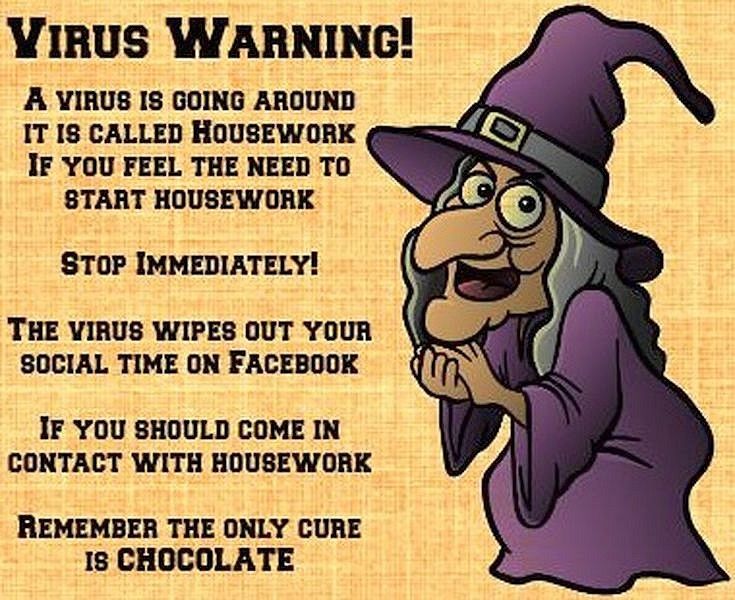
The virus can wipe out time you can spend with WOTC!
Good Day WOTC Family and Friends Here is a Thought for Today
We are keeping Dreamer as comfortable as we can using manmade medicine and an herbal tea until we take her in on June 22nd to enter her eternal sleep. We are asking for prayers that she crossed here at home before then, so she is in a familiar place surrounded by those who love her both 2 legged and 4 legged. Yes, this is an extremely hard prayer to ask for, but we are doing it because we love her so deeply and want her pain to end.
UGH Very Bad Brain Fog from a Fibromyalgia Flare Today
I will try to get the rest of the northern hemisphere’s tomorrow posts done by the time they are supposed to go live which is about 4:00 PM CDT. Between the stress and worry over Dreamer, lack of a even half-way decent night’s sleep, and a cool, rainy day my brain went out to brunch without the rest of me. I don’t mean any disrespect with my wording over my brain fog but if I don’t laugh and whatever I would be sitting here crying. Brain fog is a very serious condition that can cause the person not to be able to focus on any task. Please bear with me today if I don’t get all the regular scheduled posts done as I also have a tension migraine. I am going to meditate which usually helps to center and ground me more so I can stay focused.
A Little Humor for Your Day – “People Go To Psychics for Strange Reasons, lol! c.2016

Good Day WOTC Family and Friends Here is a Update on Dreamer and a Little Chuckle for Today
Big Dawg started teasing me yesterday that he has plane reservations for June 20th to go to Florida. Our wedding is on the 21st. We went to bed late last night as it was really early this morning when of those nights it is hard to fall asleep due do worry over Dreamer. When he looked at his alarm clock this morning the date read 6/21. So, even his alarm clock won’t let him miss our wedding…LOL. He is counting down the days with me now as on the tenth day from to today we will become Mrs. and Mr.! I Will be taking June 20th, 21st, 22nd and possibly the 23rd off. I will schedule the birthday horoscopes, current moon phase and planetary positions to go live on their correct date. The daily horoscopes will only be from one source on most of these dates.
Dreamer is getting worse by the day. We have an appointment for her on June 22nd when we have made the very heart wrenching and difficult decision that will we ease her way into eternal sleep. I find it hard to believe that it will be around $450.00 to do this. I think and feel it is a shame that not only do human funeral homes and crematoriums charge too high of a price for laying a loved one’s body to rest but that animal ones do it also. We will be getting her ashes back to put alongside my beloved Boots, who crossed the rainbow bridge November 6, 2007, in a prominent place in our home. We are keeping her as comfortable as possible and spoiling her all that we can until we have the money for her to cross the rainbow bridge.
May your day be peaceful and full of positive everything!
Good Day WOTC Family and Friends Here is a Song for Today
I Am Pagan Lyrics and Video by Spiral Rhythm
I am pagan, and I’m proud
I am pagan, gonna shout it loud
I am pagan, want the world to know
That I follow the Goddess
and she rocks my soul
Don’t need your bible
I’ve got the wisdom of the crone
Don’t need your heaven
Into this life I’m reborn
No ten commandments
One fills the bill
An’ it harm none, do what you will
Don’t need your churches
The world’s my sacred space
Don’t need your angels
I’ve got fairies in their place
We raise the spirit
Most every night
When we dance the fire
in the pale moonlight
Well you take your path
And I’ll take mine
A little tolerance
And we’ll both be fine
Keep an open mind
It’ll set you free
And Goddess bless,
so mote it be
Are you pagan? Are you proud?
Are you pagan? Then shout it loud!
If you’re pagan,
let the whole world know
That you follow the Goddess
‘cause she rocks your soul
June 9, 2023 Daily Horoscopes
Click here to read Georgia Nicols Daily Horoscopes
Moon Alert
After 6:30 AM EDT today (3:30 AM PDT) there are no restrictions to shopping or important decisions today. The Moon is in Pisces.
Aries (March 21-April 19)
This is an excellent day for you, especially financially speaking. You might see ways to boost your income, especially working behind the scenes. Meanwhile, research of some kind or the advice of someone older or more experienced might also help you to boost your wealth. Listen to what others have to say.
Taurus (April 20-May 20)
This is an excellent day to schmooze with friends and members of groups. Listen to the advice of someone older or more experienced because what they say might influence you into changing your future goals. Group endeavors will be a positive experience today.
Gemini (May 21-June 20)
Today you make a fabulous impression on others because people see you as open, generous, wise and successful. (And affluent – even if you aren’t.) This is good because appearances are everything. Nevertheless, you might also feel scrutinized or restricted by authority figures today. Perhaps they cramp your style?
Cancer (June 21-July 22)
This is an excellent day to make travel plans. It’s also a wonderful day to study or finish a writing project or manuscript. You’re in a realistic frame of mind and yet, you also feel optimistic and hopeful. Plans for the future look doable, which is encouraging. Although you might feel cautious – take a chance.
Leo (July 23-Aug. 22)
Discussions about shared property, inheritances, taxes, debt and other red-tape issues (including insurance) will go well today because for starters, financial decisions will tend to favour you. In addition to which, authority figures will be supportive.
Virgo (Aug. 23-Sept. 22)
This is a great day to schmooze. TGIF! Take a long lunch and enjoy time spent with others. Meet friends for Happy Hour. Enjoy group activities of any kind because they will be uplifting as well as informative and possibly, helpful in an instructive, practical way.
Libra (Sept. 23-Oct. 22)
This is a productive day for you. Work-related travel might be required but it will go favourably. Because you feel obligated to do something or finish tasks, do so because you will get the support from others you might not expect. Financial, practical and advice are all potential advantages for you today.
Scorpio (Oct. 23-Nov. 21)
This is a wonderful, playful, lighthearted day! Admittedly, children might be an increased responsibility. Nevertheless, enjoy social outings, sports events, the theatre and fun times with others. You might also benefit from practising a skill or talent.
Sagittarius (Nov. 22-Dec. 21)
This is an excellent day for family discussions or a family gathering. You might be involved with a parent today, or legal ramifications related to family or real estate. Whatever happens, things are on a solid footing today; plus, people are happy to see each other.
Capricorn (Dec. 22-Jan. 19)
Your communication skills today are excellent. This is why it’s a good day to wheel and deal with others. It’s also an excellent day to study, sell, market, act or teach. Your mind is serious and focused, but it is also positive, optimistic and upbeat. Good day for a short trip.
Aquarius (Jan. 20-Feb. 18)
Business and commerce are favoured today. Whatever financial negotiations you enter into will be on solid ground now and in the future. Furthermore, financial matters will tend increase your opportunities for wealth in the future. Listen to the advice of someone.
Pisces (Feb. 19-March 20)
Although you might feel a bit emotional today, it’s important to know that because the Moon is in your sign, you have a slight advantage over all the other signs. Use this! Discussions with others will be serious; nevertheless, they will ultimately benefit you or expand your world in some way. Travel is favoured.
If Your Birthday Is Today
Actor Johnny Depp (1963) shares your birthday today. You have a great zest for life. You are passionate and charismatic. You are also gentle. This year simplicity will be the key for you. Work to create solid foundations in your life. Explore martial arts or yoga. Stay grounded and levelheaded.
Click here for today’s or anyone’s birthday horoscope from thehoroscope.co
Aries (March 21-April 19)
Today you should be very careful to the interactions you are having with persons of the opposite sex. This is because someone might not have the righteous intentions with you and you might fall into an unexpected trap.
It might not be anything of great importance but you don’t need any troubles in your life now, not even small ones.
Taurus (April 20-May 20)
This Friday it seems you will be all focused on your roots and on the place you are coming from. Maybe you will even have a trip to the place where you grew up.
The melancholy will be especially big for those who reside abroad from their original home. Maybe it’s a good time to reconnect with your family or long lost relatives to whom you haven’t spoken in a while.
Gemini (May 21-June 20)
Today is going to be quite a peaceful day in terms of changes and personal activities but those natives whom are establishing contacts abroad, whom are living abroad or purchasing something from abroad will have to deal with some minor troubles.
Nothing to worry about, just minor delays that might prompt them to change some of their plans.
Cancer (June 21-July 22)
This Friday the center of interest for you changes in the direction of your love life. This is not necessarily a good thing because there isn’t everything to be all romantic and lovey gooey.
Some deep issues might surface, especially involving hidden feelings that can no longer stay hidden. These things will give you some headaches for the following days.
Leo (July 23-Aug. 22)
Maybe it’s time to focus more on the way you look and on your general health. It might not be a bad idea to start going to the gym or go buy yourself a whole new wardrobe.
Such changes will make you feel a lot better about yourself and even give you a sense of purpose for these days. However, you should double these changes with a great mood in order for them to work.
Virgo (Aug. 23-Sept. 22)
Everything you say or do the following days will have a great impact on your life. It might not define the outcome of something important but will teach you important lessons.
So make sure you don’t take any unnecessary risks or follow others ambitions. Be in charge with yourself completely and don’t ever abide by the rules you’ve already established.
Libra (Sept. 23-Oct. 22)
You might find it hard to concentrate even to the most mundane of tasks today. Your friends might also contribute to a feeling of anxiety and uncertainty due to them making all kinds of jokes and propositions.
You should mind your own priorities and stay out of trouble. You should also avoid any nutritional excesses as well as smoke less.
Scorpio (Oct. 23-Nov. 21)
Professionally speaking, it seems you are exactly where you need to be. Everything is going according to plan and even the apparent troubles you are having are just a way of making yourself work more efficiently.
You can be promised some unexpected news that will unravel some propositions and occasions you definitely don’t want to miss.
Sagittarius (Nov. 22-Dec. 21)
Your emotions are blooming today and this means you will be in touch with this sentimental side of yours for the whole day. You are able to broaden your horizon, talk about your feelings and in general get to know yourself better.
Not only the above but you also feel surrounded by a general sense of harmony and it seems that you will feel like everyone is supporting you.
Capricorn (Dec. 22-Jan. 19)
In the first part of the day you will be feeling all emotional and in need for affection. This means that you will be actively searching for the company of those around you that can offer you a general sense of security.
However, such a mood is temporary as by the end of the day you will have gained your confidence back and everything will get to normal.
Aquarius (Jan. 20-Feb. 18)
Today all personal activities or activities that require a small number of people are positively influenced so this means you will be successful in your personal endeavors.
You should however try to be as diplomatic and restrained as possible because you never know when people you trusted and considered close could turn on you.
Pisces (Feb. 19-March 20)
It’s a great time for well established couples to make another step together and get things to the next level. It is also a great time for families to make important decisions and change things in the family dynamics.
In any case, try to talk with those around you, share with them your worries and fears and make sure you get them resolved.
Sorry But I Cannot Post Today
I am typing this trying not to cry to hard, so I don’t make too many typos. THis has not been proof read either. I thank you for letting me pour my heart out again in a safe place! I have been up since 1:30 AM CDT with only 4 hours of sleep. Dreamer’s back legs are getting worse, but the doctor changed her medication 2 days ago and we are hoping it makes a difference. This is the last thing to try before we send her in to her eternal sleep.
This morning when it was time to take all of our fur kids out it took her 6 tries to be able to stand up, she went down the four steps fine but I had to help her back up them. Which is better than Star who is afraid to go down the new safer stairs we put in on Tuesday afternoon. But to be fair to both of the ladies I had a hard time being able to stand and go down and up the stairs this morning too. It looks like only our brave, protective male Merlin, who scared a poor baby rabbit by barking at it, likes the new stairs or he just doesn’t give a dam as long as he can get to his favorite bathroom spot.
Today we will be installing a ramp outside for Dreamer and Star to use. As our Cleo is 14 years old and hesitant to jump down off the cough or go down and up the new stairs, I am pretty sure she will choose the ramp also.
The ramp we got was given to us by a couple whose Chihuahua crossed over a few months ago. We need to make a couple of small adjustments to it, but Big Dawg and I work great on home repair and improvement stuff as we found out installing the new stairs.
Please say a prayer or light a candle for whatever is best for Dreamer be it that the new medicine helps or it is time for her to cross to be free from pain and whatever age she enjoyed being the most.
If any of you ever want to talk or vent or scream or need a prayer said and/or a candle lit please contact me at ladybeltane@witchesofthecraft.com. I am not a licensed therapist but I am an ordained minister so anything you want to talk about goes no further than my listening to you. If it wasn’t for first my Coven Life family when my mom crossed and than you my wonderful WOTC family helping me through the last 4 years or so I don’t know what shape my mind, bod, or spirit would be in. Thank you are inaquetue words for what my heart feels in graitude to each one of you for followingWOTC and “listening” to me when I need to pour out my feelings in a safe place. I hope WOTC can become a place for us all to feel safe sharing our laughs, happiness, sadness, losses, and any other thing you might like to share with us.
MAY THE GODDESSES AND GODS KEEP YOU SAFE IN THEIR WARM BRACE AND CONTENT IN YOUR LIFE! iF YOU WOULD LIKE TO ACCEPT THEM I SEND EACH OF YOU A RAINBOW OF BLESSINGS FROM MY HEART TO YOURS.
Good Day WOTC Family and Friends with A Thought for Today
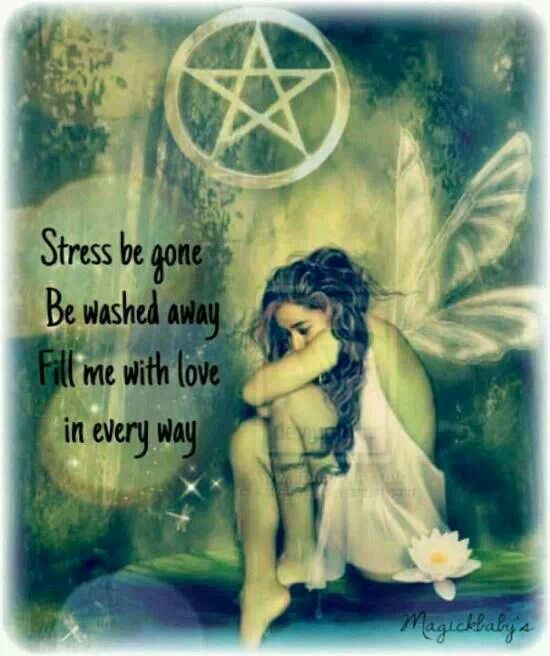
My mantra for the rest of this week!
My life has gone into the express lane and will be here through the weekend. Big Dawg started a new job that he needs me to go with him to teach him the jobs cellphone app. He’s a little bit technically challenged when it comes to smart phones as he just switched from using a flip phone until last fall. Besides riding along with him as he delivers important papers to people all over the county, we live in I also have to print out the paperwork for him as I will not let him near my desktop computer that I use for WOTC, and all things affiliated with it. He’s already crashed it once on me, but I was able to retrieve everything I needed too and get rid of the nasty virus he had inadvertently let in. So, if some of the tomorrow posts show up later than normal it is because I didn’t get up early enough, like today I am 1 1/2 hours behind schedule, to finish them all before, we leave for the day. I will try my absolute best to still get all the regular daily posts up with no pictures. The exceptions will be the rotating daily post, a thought and laugh for todays; those are history until this coming Monday. One last thing I will only be checking WOTC’s School of Witchcraft email until this coming Monday.
A Laugh for Today
You Know Someone Is New
To Magick And New Age Ideology
When They Think That …
An ATHAME is the gas you use for your grill.
A CENSOR is a drink you mix with alcohol.
ASTRAL PROJECTION is a home-made movie viewer.
A SYMPATHITIC LINK is when you feel sorry because your chain broke.
WICCA is that part of the candle that burns.
APHRODITE is a prehistoric bird.
ARCHETYPES is a kind of building structure.
BLESSED BE is the god of insects.
A BOOK OF SHADOWS contains silhouettes of friends or family members.
A BRAZIER is support wear for women.
CASTING is done with a fishing line, or on a set in Hollywood.
CHARGING is done with a credit card or battery.
The only way to get into a CIRCLE is to have the right of way.
Crystal CLEANSING is done with window cleaner.
CYCLES have to do with your washing machine and when to add fabric softener.
DEMETER is where you put your quarter when you park downtown.
A DOLMAN is a new brand of banana.
HANDFASTING is eating without utensils.
LEY LINES happen at the airport in Hawaii.
PAN is something you fry food in.
A QUARTER is 25 cents and still buys a cup of coffee. (Note: This person is not only new to magick, but they also haven’t been out in a while!)
SKYCLAD is a shade of blue clothing.
A TRAD is a type of geometrical figure.
WHEEL OF FORTUNE is the game show with Vanna White.
The Scientific Reasons Why You’re a Mosquito Magnet: Blood Type, Odor and More
Disclaimer: The information contained in this article is for educational and informational purposes only and is not intended as health or medical advice. Always consult a physician or other qualified health provider regarding any questions you may have about a medical condition or health objectives.

Mosquito season is officially here. Learn about how to prevent and treat bites.
Summer is by far my favorite season. The warm temperatures and consistent sunshine in North Carolina, where I live, mean I can spend more time outside doing things I love: hiking, walking my dog and spending time at the lake. But that time in nature is quickly spoiled when I find myself covered in red, itchy bumps after just a few minutes outdoors. Even though we’re just on the cusp of the summer season and the temperatures are still fairly temperate for most of the US, pesky mosquitoes are active starting in March. That means mosquito season is already in full swing.
If you’re like me, you get frustrated by the number of mosquito bites you acquire. It’s downright infuriating when I come inside sporting several new welts while my friends report that they don’t have a single one.
Why is that? It’s not that I’m particularly unlucky. There are actually scientific reasons why mosquitoes single out certain people. Here’s why mosquitoes bite and how you can make yourself less of a target this summer. For more, learn about how to safely remove a tick and how you can alter the colors of your hydrangeas.
Why do mosquitoes bite?
Contrary to what you might think, mosquitoes don’t bite people for food; they feed on plant nectar. Only female mosquitoes bite, and they do so to receive proteins from your blood needed to develop their eggs.
Why are some people more prone to bites?
There are several factors that impact why some people are more prone to mosquito bites than others:
Blood type
A common belief is that mosquitoes are attracted to certain blood types, considering mosquitoes bite humans for their blood. Blood type is determined by genetics, and each blood type is created based on the different sets of specific proteins, called antigens, on the surface of red blood cells. There are four main blood types: A, B, AB and O.
While there are no firm conclusions as to which blood type is more attractive to mosquitoes, several studies have suggested people with type O are most appetizing to mosquitoes. A 2019 study observed mosquito feeding behavior when presented with different blood type samples, and found mosquitoes fed from the type O feeder more than any other. A 2004 study also found that mosquitoes land on blood group O secretors (83.3%) significantly more than group A secretors (46.5%).
However, these studies are not definitive, and much is still up in the air about mosquito preferences when it comes to blood type.
Clothing color
Mosquitoes are highly visual hunters when it comes to finding a human to bite. This means movement and dark clothing colors like black, navy and red can stand out to a mosquito. Research has shown that mosquitoes are more attracted to the color black, but there has been little additional research into why this is the case.
Carbon dioxide
Mosquitoes use sight and smell to find hosts to bite. One of the quickest ways mosquitoes can sniff out a person is through the carbon dioxide emitted when we breathe. According to research published in the journal Chemical Senses, mosquitoes use an organ called a maxillary palp for carbon dioxide detection and can sense it from 164 feet away.
Because carbon dioxide is a huge attractor, people who emit more of it — larger individuals and people who are breathing heavily when working out — are more attractive to a mosquito.
Body odor and sweat
Mosquitoes are attracted to more substances and compounds than just carbon dioxide. Mosquitoes can find people to bite by smelling substances present on human skin and in sweat, including lactic acid, uric acid and ammonia.
A new study found that mosquitoes are attracted to compounds called carboxylic acids that every human produces through sebum, a waxy coating, on their skin. The sebum is eaten by the millions of beneficial microorganisms found on human skin, which produces more carboxylic acid — and will, in turn, produce an odor similar to cheese or smelly feet that appears to attract mosquitoes. Lead researchers on this study said mosquitoes are sensitive to human odor and that even perfumes or colognes can’t mask it.
Researchers are still learning why certain body odors are more attractive to mosquitoes, but they do know that genetics, bacteria on the skin and exercise all play a factor. Genetics impact the amount of uric acid emitted, while exercise increases lactic acid buildup.
Why do some people swell from mosquito bites more than others?
Mosquito bites can range in size from small little spots to large welts. Why is this the case?
Bites affect people differently. The size and severity of a bite relate to how your immune system responds to the saliva introduced by the mosquito when it bites. When mosquitoes bite, they inject some saliva when drawing blood. This saliva contains certain anticoagulants and proteins, triggering the immune system to respond to these foreign substances.
Our body responds by releasing histamine — a chemical released by white blood cells when your immune system is fighting allergens — which causes the itchiness and inflammation of the bite.
How to prevent mosquito bites
The best way to handle a mosquito bite is to not get them in the first place — but oftentimes, that’s easier said than done.
Some common ways to prevent mosquito bites include:
- Use repellents and bug sprays (Repel, Off Deep Woods and other brands that contain DEET)
- Use natural repellants (citronella essential oil, neem oil, thyme essential oil)
- Avoid going outside at dawn or dusk
- Avoid dark-colored clothing, specifically black
- Avoid standing water and try to eliminate standing water near your home
- Use mosquito netting when camping or sleeping outdoors
- Wear long sleeves and pants
- Prevent mosquito bites when traveling internationally
If you’re using DEET insect repellent, make sure to follow the Centers for Disease Control and Prevention’s guidelines (PDF) about the strength and proper application.
How to treat mosquito bites
Mosquito bites, while annoying, are often not severe and will resolve in a few days. In the meantime, there are several treatments to alleviate the itchiness and inflammation:
- Clean with rubbing alcohol if a fresh bite
- Take an oatmeal bath
- Use over-the-counter antihistamines such as Benadryl or Claritin
- Apply mild corticosteroid creams
- Use aloe vera to reduce inflammation
- Try a cold compress or ice pack for 10 minutes
Though difficult, try as best you can to not itch the bite too roughly to prevent any sort of skin reaction or infection.
Mosquito-borne diseases and illnesses
While the majority of mosquito bites result in welts that heal in a few days, mosquitoes are known carriers of many deadly diseases and illnesses, including but not limited to:
Mosquitoes are often considered one of the deadliest animals on earth. Mosquito-borne diseases kill more than 725,000 people a year the World Health Organization estimates, with malaria accounting for the vast majority of deaths (600,000).
While malaria and other mosquito-borne diseases hit Sub-Saharan Africa the hardest, mosquitoes pose a risk to every continent and nation. Most types of mosquitoes in the US are nuisance mosquitoes — mosquitoes that do not spread germs that make people sick — but there have been outbreaks of West Nile, dengue, chikungunya and Zika in a few states and territories.
There are several steps you can take to control mosquito populations and minimize risk. Make sure to properly cover and store water containers around your home and drain any standing water to prevent mosquitoes from laying eggs. For treatments, you can use an outdoor adulticide to kill adult mosquitoes or larvicides to treat bodies of standing water that will not be used for drinking and cannot be drained.
Infected bites will often look extremely red, swollen and warm or have a red streak that spreads outward from the bite. See a health care provider if you have signs of infection or if symptoms worsen.
For more, read about the five smart ways to repel mosquitoes this summer, the mosquito forecast tool*
launched by Google and Off, and how you can make your own DIY traps for mosquitoes, hornets and other flying pests.
More tips for your yard and garden
*OFF!Cast Mosquito Forecast Tool
(SIDE NOTE FROM Lady Carla Beltane: SO I have signed up for the 7-day forecasts to be sent to my email. I will wait to see how right or wrong they are and let you know towards the end of the month. I am lucky to hardly ever get bitten but I worry for our fur kids with living across the street from a small swampy area.)
A Laugh for Today – Witch Broom Jokes
Witches use broomsticks to travel. Rumor has it that they chose broomsticks as their mode of transport because vacuum cleaners were too heavy. Brooms tend to be the most prominent subject of witch jokes and witch puns. We’ve compiled a list of funny witch broom jokes to make being a witch pun for you.
How do witches play loud music? On their broom boxes.
What did the mother broom say to the baby broom? It’s time to go sweep.
What do you call a fast broomstick? A vroom-stick.
What does the little witch use to bake her birthday cake? The easy bake coven.
How did the witch invite the wizard to take an evening ride on her broomstick? Voodoo like to ride with me.
Why was the broom late? It over swept.
What did one broomstick say to the other? Did you hear the new dirt?
Why do witches only ride their broomsticks at night? That’s the time to sweep.
What do you call a witch’s spotless garage? A broom closet.
Why is the air so clean and healthy on Halloween? The witches sweep the sky.
How do you find out if a witch is carrying a bomb? You hear her brooms tick.
What do you call a witch who keeps crashing her brooms? A wreckless hag.
Why did the witch’s team lose the cricket game? Their bats flew away.
Why did the witch put her broomstick inside the washing machine? She wanted a clean sweep.
Some Humor for Your Day
Sometimes…
Sometimes
|
Goddesses – Echo A Greek Mountain Nymph
(While Echo is not a goddess, she did play an important part in Greek mythology for consorting with the gods.)

Echo was an Oread in Greek mythology, a mountain nymph that lived on Mount Kithairon.
The curse of Hera
Zeus was quite attracted to nymphs and often visited them. Hera, his wife, jealous of his various affairs, followed him trying to catch him. However, Echo would engage Hera in long-winded conversations, giving the time to Zeus to evade her. At some point, Hera realised the plot of Echo and cursed her to only be able to repeat the last words that another person just said.
Narcissus rejects Echo
After being cursed, Echo came across a beautiful young man named Narcissus, but was unable to talk to him because of the curse. She simply followed him in the woods. Narcissus, having lost his companions with whom he had gone hunting, started shouting “Is anyone there?” Echo, given the opportunity, repeated the words. He shouted again “Let’s come together” to which Echo rushed onto him repeating his words. However, Narcissus rejected Echo, and she was left in despair.
The end of Echo
Narcissus came across a lake and there, he fell in love with his own image, causing his death, unable to move. Echo mourned for him and eventually died away herself, leaving only her voice behind.
Source: https://www.greekmythology.com/Other_Gods/Minor_Gods/Echo/echo.html
Good Day WOTC Family and Friends Here is a Pome for Today
A poem from another one of my favorite authors. I have been getting my family’s poetry book out lately and just turn to a random poem. This poem is not in the book, but it is one I enjoy reading.
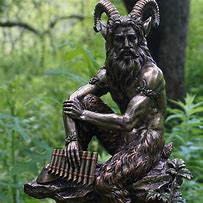
Greek God PAN
A Musical Instrument
WHAT was he doing, the great god Pan,
Down in the reeds by the river ?
Spreading ruin and scattering ban,
Splashing and paddling with hoofs of a goat,
And breaking the golden lilies afloat
With the dragon-fly on the river.
He tore out a reed, the great god Pan,
From the deep cool bed of the river :
The limpid water turbidly ran,
And the broken lilies a-dying lay,
And the dragon-fly had fled away,
Ere he brought it out of the river.
High on the shore sate the great god Pan,
While turbidly flowed the river ;
And hacked and hewed as a great god can,
With his hard bleak steel at the patient reed,
Till there was not a sign of a leaf indeed
To prove it fresh from the river.
He cut it short, did the great god Pan,
(How tall it stood in the river !)
Then drew the pith, like the heart of a man,
Steadily from the outside ring,
And notched the poor dry empty thing
In holes, as he sate by the river.
This is the way,’ laughed the great god Pan,
Laughed while he sate by the river,)
The only way, since gods began
To make sweet music, they could succeed.’
Then, dropping his mouth to a hole in the reed,
He blew in power by the river.
Sweet, sweet, sweet, O Pan !
Piercing sweet by the river !
Blinding sweet, O great god Pan !
The sun on the hill forgot to die,
And the lilies revived, and the dragon-fly
Came back to dream on the river.
Yet half a beast is the great god Pan,
To laugh as he sits by the river,
Making a poet out of a man :
The true gods sigh for the cost and pain, —
For the reed which grows nevermore again
As a reed with the reeds in the river.
Marriage (Fully Committed Relationship) Numerology Meanings

So, after my day off yesterday I am having a hard time focusing on work as it is beautiful outside and the temperature is mild. As I was doing the weekly horoscopes I looked to see if there was a weekly horoscope on thehoroscope.co but their wasn’t. I decided to scroll down the page a little way to see what else this website might have on it. Found out they have numerology stuff also. Below the picture of the numbers 1 through 9 I saw “Marriage Numerology Meaning” since our wedding is just 16 days away (eeks I need to get busy on the flowers…tee hee) I decided to see what our marriage number will be. It is a 7 as I was reading the meaning for this number, I was surprised that it fits us to a T.
I believe these numbers will work for anyone in a committed relationship if you have “pledged” yourself to your partner and they to you.
Here is the link and the information for how to figure it out your marriage number Marriage Numerology Meanings.
If you would like to share your number with us and let us know if it fits the two or more of you and your relationship, please put it in a comment below.

Here is the link and the information for how to figure it out your marriage number Marriage Numerology Meanings.
Let’s discover what the day we are married in has to say about our relationships and the way the marriage will unravel. In order to discover which your marriage numerology is you need to extract a single digit number out of your marriage date.
The marriage date is considered to be the first date when the two of you have said yes (for some cultures this refers to the first ceremony, the one in front of the law in which you are released the marriage certificate). You transform the month in a number, from 1 to 12 (1+2) then add the day (for the two digit days you need to add them separately) then the year unfolds just the same.
For instance, if the marriage date is February 29, 2010 it means: 2+2+9+2+0+1+0=16, 1+6=7. So the marriage number for the above example is 7. Below you will find the meanings for all nine numerology numbers.
When the number of your marriage is 1:
This suggests dynamism, enthusiasm and determination. This relationship gathers two powerful personalities that can deal on their own with everything that goes in their couple. Sometimes one of you would try to take charge but will definitely come to an agreement when the other starts persuading. Number 1 is a number of beginnings therefore shows that this marriage has been built on a heated passion that will in time switch to a mutual agreement to leading a responsible life. 1 is also a number of selfishness but in the case of marriage there is no such thing, both partners are there because they wanted to connect their lives and can behave in a mature and loving way.
When the number of your marriage is 2:
It suggests romance and peace. It is characteristic for two individuals that have decided to stay together and are connected through a strong feeling of belonging. Two is a number of the couple so you will probably discover in time that you match just like puzzle pieces as long as you lean on each other and spend as much time together as possible. However, a number 2 marriage might be under the risk of possessiveness and jealousy if the two of you don’t know how to balance your impulses. It’s also important for you to synchronize your activities or even work in the same domain. This marriage is also based on home comfort and you both have the desire to have a house and a big family.
When the number of your marriage is 3:
This number suggests modernism, exuberance and general success. It defines a couple that is sociable and open to new experiences but also relies on the comfort of each other. 3 is for a relationship that is liberal in movement, decision and thought and might represent quite a hard test for some people. If you manage to understand and be honest with yourself and with your partner it will definitely be a marriage in which both of you can grow and follow your paths. So don’t even think of changing any of your partner’s habits. This is a full of live relationship that can surpass many of life’s troubles. Just as 3 is the number of the 3 wishes this marriage can work if the two of you wish for it to work.
When the number of your marriage is 4:
This is the number of the four elements, of the four seasons and suggests stability and practicality. It defines a relationship that is soon to escalate and become serious. This couple is stable and reliable and usually with little chances to break apart. However, they are prone to frustration and to growing apart because of boredom and of not being able to resist to outer temptations. These two form a stable and safe family but should not forget of the feelings that first united them and just remember to be romantic from time to time. This is a marriage in which the two permanently invest in the base of their relationship and are often more interested in practicalities in life.
When the number of your marriage is 5:
This is a number of romance and entertainment. It suggests a marriage built on passion and common interests. It usually gathers complex personalities with a mind of their own that are in a permanent search for adventure and new experiences. It is a partnership between two creative persons that can help each other grow. These two are stubborn, fiery and quick to argue when things don’t go the way they want them to. On the long run this relationship has quite a risk to be under the influence of change and the two should be able to adapt and compromise in order for things to work out. This is also a number suggesting a big family and frequent challenges in family life.
When the number of your marriage is 6:
This is a powerful number that symbolizes equilibrium, love and good health. It is usually a lucky number and indicates mutual powerful feelings. The two persons involved in this marriage are close friends and life partners above all and usually their love develops from a great friendship relationship. These two know how to work together to raise a family and they rarely grow apart as they usually have the same view on how to live life. This marriage is optimistic, practical and usually build on affection and loyalty. This kind of union usually leaves behind a great legacy.
When the number of your marriage is 7:
(Side Note from LCB: This fits Big Dawg and I like a glove!)
This number suggests great attachment and love and it usually defines a couple that feels best when alone or just surrounded by close friends. These two know how to live their love in a protective far away place. This kind of marriage is above all based on intellectual affinity and cooperation. Both of the partners are aware of the great responsibility they have towards their significant other and they usually make sure to be as much supportive as they can. They might have moment in live when they feel stuck but otherwise, the number 7 couple the partners manage to keep their individuality but also build something new together.
When the number of your marriage is 8:
This number suggests wealth, prosperity and loyalty. This is a marriage that is entirely based on mutual affection and understanding that started as a heated passion. These two have complex personalities and a strong intellectual affinity so they usually have similar occupations or work as a team. This is that kind of relationship in which both partners have the same goals and expectations in life so they rarely argue. What these two need to learn is that sometimes they should be a lot more open to the outer world and not only count on their own powers.
When the number of your marriage is 9:
This is a number suggesting generosity, loyalty and romance. This is a marriage based entire on good communication and management of feelings. These two usually pair up quickly and can’t even remember how life was when they were single. They might come from different backgrounds or even cultures but this will only spice up their relationship. A couple like this won’t meet many outer obstacles but might have some difficulties in understanding and working with the need of freedom of one partner. Each of the partners tries to put the happiness of the other above his but there might be some sacrifices needed to get this goal to completion.
Some Humor for Monday
Why was the acid so rude on Monday?
He was a-mean-o-acid
Why does Sunday always beat Monday in arm wrestling?
Because Monday is a weakday.
What’s the most depressing sound on Monday?
Alarm clocks.
How do cheeses greet each other on Monday mornings?
Have a Gouda week.
Why did the skeleton do such a poor job in school on Mondays?
His heart wasn’t in it.
Why did the magicians in class get the best mark on their test on Monday?
They got all of the trick questions right.
How do hens feel on Mondays?
Eggshausted.
Why does Santa hand out candy canes on Mondays?
For encourage-mint.
What did the teacher say to her aardvark student when he walked into class on Monday morning?
Why the long face?
Why did the corrupt calendar go to prison?
Monday laundering.
Some Humor for Sunday
A man on a train gets up and moves to the doors. A conductor notices and says “Sorry sir, this train doesn’t stop at the next station on a Sunday night.” Seeing how disappointed he is, the conductor says “It does slow down going through the station though, perhaps there is a way I could help you if you like.”
So as the train slows down the conductor takes hold of the man’s coat collar and lifts him out over the platform, “Start running in the air so you don’t fall over as you touch the ground.”
The man starts running in the air as the conductor lowers him and he has so much momentum as he hits the platform that he runs past his carriage and comes alongside the next one, the door of that carriage opens and a passenger reaches out, grabs his coat collar and lifts him inside, slamming the door, saying “You’re lucky there mate, this train doesn’t stop here on a Sunday night.”
Good Day WOTC Family and Friends Here is a Poem for Today
Edgar Allen Poe is one of my favorite all time writers. As my right-hand witch Graphia has a special link with Ravens this is dedicated to her.

The Raven
Once upon a midnight dreary, while I pondered, weak and weary,
Over many a quaint and curious volume of forgotten lore—
While I nodded, nearly napping, suddenly there came a tapping,
As of some one gently rapping, rapping at my chamber door.
“’Tis some visitor,” I muttered, “tapping at my chamber door—
Only this and nothing more.”
Ah, distinctly I remember it was in the bleak December;
And each separate dying ember wrought its ghost upon the floor.
Eagerly I wished the morrow;—vainly I had sought to borrow
From my books surcease of sorrow—sorrow for the lost Lenore—
For the rare and radiant maiden whom the angels name Lenore—
Nameless here for evermore.
And the silken, sad, uncertain rustling of each purple curtain
Thrilled me—filled me with fantastic terrors never felt before;
So that now, to still the beating of my heart, I stood repeating
“’Tis some visitor entreating entrance at my chamber door—
Some late visitor entreating entrance at my chamber door;—
This it is and nothing more.”
Presently my soul grew stronger; hesitating then no longer,
“Sir,” said I, “or Madam, truly your forgiveness I implore;
But the fact is I was napping, and so gently you came rapping,
And so faintly you came tapping, tapping at my chamber door,
That I scarce was sure I heard you”—here I opened wide the door;—
Darkness there and nothing more.
Deep into that darkness peering, long I stood there wondering, fearing,
Doubting, dreaming dreams no mortal ever dared to dream before;
But the silence was unbroken, and the stillness gave no token,
And the only word there spoken was the whispered word, “Lenore?”
This I whispered, and an echo murmured back the word, “Lenore!”—
Merely this and nothing more.
Back into the chamber turning, all my soul within me burning,
Soon again I heard a tapping somewhat louder than before.
“Surely,” said I, “surely that is something at my window lattice;
Let me see, then, what thereat is, and this mystery explore—
Let my heart be still a moment and this mystery explore;—
’Tis the wind and nothing more!”
Open here I flung the shutter, when, with many a flirt and flutter,
In there stepped a stately Raven of the saintly days of yore;
Not the least obeisance made he; not a minute stopped or stayed he;
But, with mien of lord or lady, perched above my chamber door—
Perched upon a bust of Pallas just above my chamber door—
Perched, and sat, and nothing more.
Then this ebony bird beguiling my sad fancy into smiling,
By the grave and stern decorum of the countenance it wore,
“Though thy crest be shorn and shaven, thou,” I said, “art sure no craven,
Ghastly grim and ancient Raven wandering from the Nightly shore—
Tell me what thy lordly name is on the Night’s Plutonian shore!”
Quoth the Raven “Nevermore.”
Much I marvelled this ungainly fowl to hear discourse so plainly,
Though its answer little meaning—little relevancy bore;
For we cannot help agreeing that no living human being
Ever yet was blessed with seeing bird above his chamber door—
Bird or beast upon the sculptured bust above his chamber door,
With such name as “Nevermore.”
But the Raven, sitting lonely on the placid bust, spoke only
That one word, as if his soul in that one word he did outpour.
Nothing farther then he uttered—not a feather then he fluttered—
Till I scarcely more than muttered “Other friends have flown before—
On the morrow he will leave me, as my Hopes have flown before.”
Then the bird said “Nevermore.”
Startled at the stillness broken by reply so aptly spoken,
“Doubtless,” said I, “what it utters is its only stock and store
Caught from some unhappy master whom unmerciful Disaster
Followed fast and followed faster till his songs one burden bore—
Till the dirges of his Hope that melancholy burden bore
Of ‘Never—nevermore’.”
But the Raven still beguiling all my fancy into smiling,
Straight I wheeled a cushioned seat in front of bird, and bust and door;
Then, upon the velvet sinking, I betook myself to linking
Fancy unto fancy, thinking what this ominous bird of yore—
What this grim, ungainly, ghastly, gaunt, and ominous bird of yore
Meant in croaking “Nevermore.”
This I sat engaged in guessing, but no syllable expressing
To the fowl whose fiery eyes now burned into my bosom’s core;
This and more I sat divining, with my head at ease reclining
On the cushion’s velvet lining that the lamp-light gloated o’er,
But whose velvet-violet lining with the lamp-light gloating o’er,
She shall press, ah, nevermore!
Then, methought, the air grew denser, perfumed from an unseen censer
Swung by Seraphim whose foot-falls tinkled on the tufted floor.
“Wretch,” I cried, “thy God hath lent thee—by these angels he hath sent thee
Respite—respite and nepenthe from thy memories of Lenore;
Quaff, oh quaff this kind nepenthe and forget this lost Lenore!”
Quoth the Raven “Nevermore.”
“Prophet!” said I, “thing of evil!—prophet still, if bird or devil!—
Whether Tempter sent, or whether tempest tossed thee here ashore,
Desolate yet all undaunted, on this desert land enchanted—
On this home by Horror haunted—tell me truly, I implore—
Is there—is there balm in Gilead?—tell me—tell me, I implore!”
Quoth the Raven “Nevermore.”
“Prophet!” said I, “thing of evil!—prophet still, if bird or devil!
By that Heaven that bends above us—by that God we both adore—
Tell this soul with sorrow laden if, within the distant Aidenn,
It shall clasp a sainted maiden whom the angels name Lenore—
Clasp a rare and radiant maiden whom the angels name Lenore.”
Quoth the Raven “Nevermore.”
“Be that word our sign of parting, bird or fiend!” I shrieked, upstarting—
“Get thee back into the tempest and the Night’s Plutonian shore!
Leave no black plume as a token of that lie thy soul hath spoken!
Leave my loneliness unbroken!—quit the bust above my door!
Take thy beak from out my heart, and take thy form from off my door!”
Quoth the Raven “Nevermore.”
And the Raven, never flitting, still is sitting, still is sitting
On the pallid bust of Pallas just above my chamber door;
And his eyes have all the seeming of a demon’s that is dreaming,
And the lamp-light o’er him streaming throws his shadow on the floor;
And my soul from out that shadow that lies floating on the floor
Shall be lifted—nevermore!
Public domain. First published by Wiley and Putnam, 1845, in The Raven and Other Poems by Edgar Allan Poe.
 Witches Of The Craft®
You must be logged in to post a comment.